Some nights you want a bowl of noodles that tastes like summer — bright, juicy, and just a little tangy. Tomato pork stir-fried noodles, or 西红柿猪肉炒面, is exactly that: ripe tomatoes cooked down until they collapse into a glossy sauce, tender pork slices, and springy wheat noodles that soak up every drop. It is the kind of dish a Chinese home cook throws together on a weeknight, and it lands on the table in about 20 minutes.
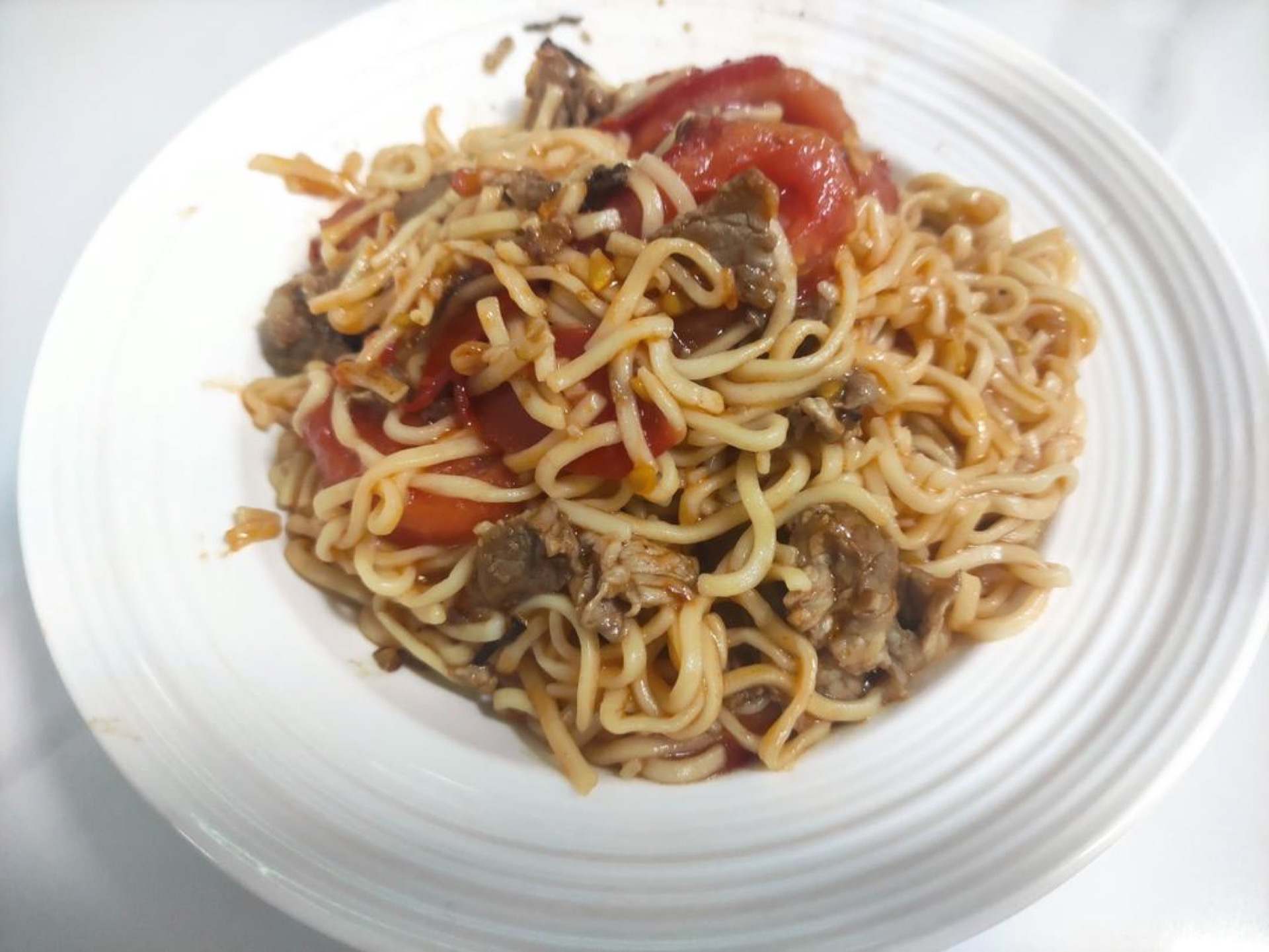
What makes this version work is the two-stage cooking: the pork gets seared first and set aside so it stays tender, while the tomatoes get their own time in the wok to break down into a sauce. The noodles are parboiled only to half-done and rinsed cold, which is the small trick that keeps them chewy instead of soggy. If you have ever had a bowl of tomato noodles that turned into mush, that single step is usually the fix.
It is also a forgiving recipe. The ingredient list is short, the technique is simple, and the whole thing scales up easily if you are feeding more than two people. Serve it as a main course for lunch or dinner, or as a side dish next to a bigger spread.
What Is Tomato Pork Stir-Fried Noodles?
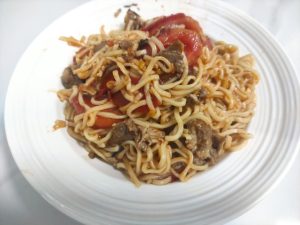
Tomato pork stir-fried noodles is a Chinese home-style noodle dish built on three things: fresh tomatoes, thinly sliced pork, and wheat noodles. The tomatoes are stir-fried hard until they release their juice, then loosened with a splash of water and a spoonful of tomato paste to deepen the color and tang. The pork is marinated briefly and seared separately so it stays silky, and the noodles are parboiled, rinsed, and finished in the sauce so they absorb all that tomato flavor.
It belongs to the same family of quick Chinese noodle stir-fries as chow mein and zhajiangmian, but it is lighter and more refreshing than either. There is no heavy bean paste or dark braising liquid here — just tomato, a little aromatics, and the natural sweetness of the pork. It is often eaten as a one-bowl meal, especially in southern China where tomatoes show up in home cooking far more often than in the north.
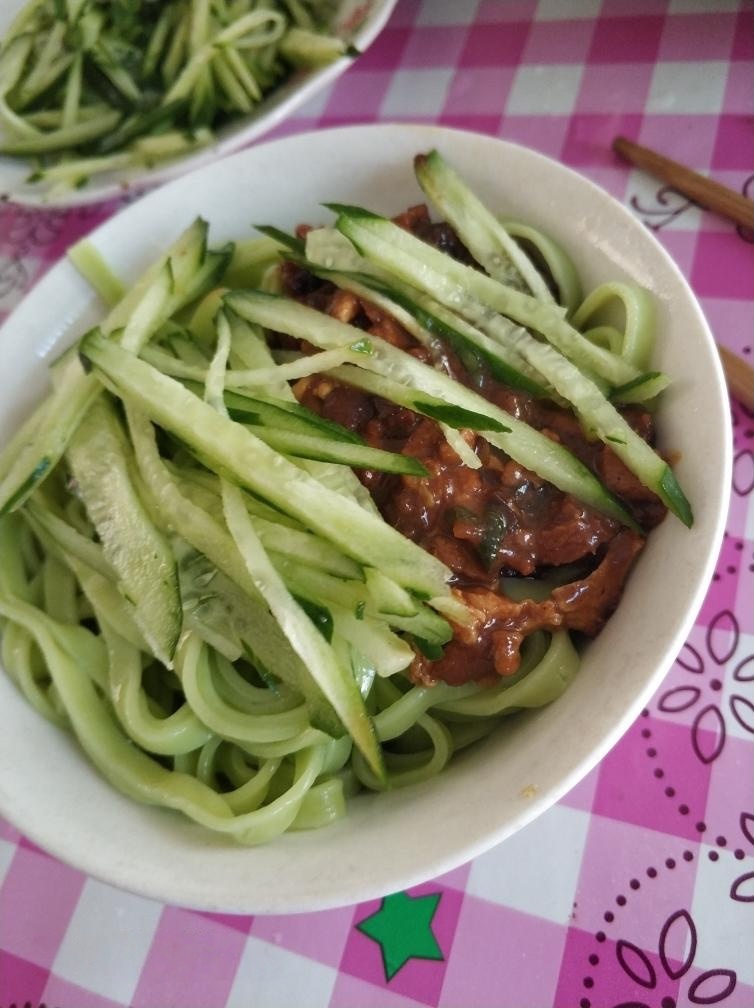
If you like the idea of noodles tossed in a tangy, glossy sauce, mushroom pork fried sauce noodles takes the same stir-fry logic in a deeper, savory direction.
1Mushroom Pork Fried Sauce Noodles (Zhajiangmian)A comforting homestyle noodle dish featuring diced pork, earthy shiitake mushrooms, and fluffy eggs in a savory soybean sauce. A family favorite that’s ready in 30 minutes.Check out this recipe
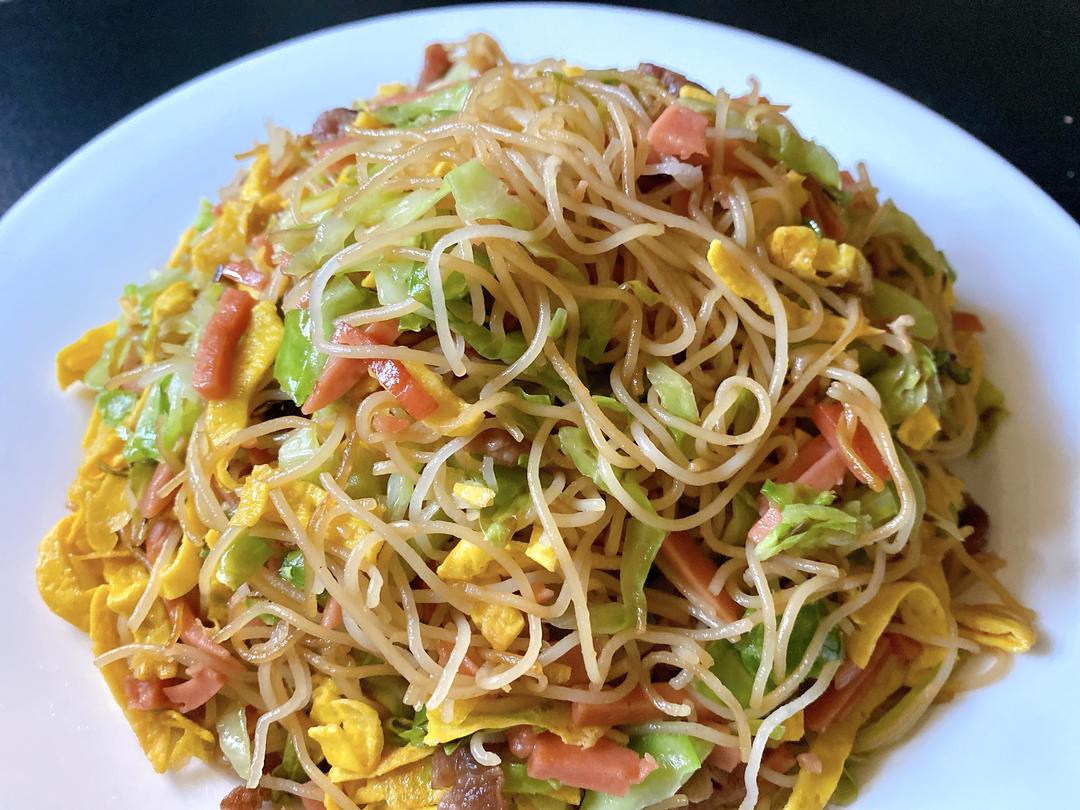
For a rice-noodle take on the same fast stir-fry format, stir fried rice noodles is a great next recipe to try.
2Authentic Stir-Fried Rice Noodles (Chao Mi Fen): Chef’s SecretLearn a professional chef’s secret ‘Tan’ method for perfectly bouncy, non-mushy Authentic Stir-Fried Rice Noodles (Chao Mi Fen). An easy 25-minute weeknight dinner.Check out this recipe
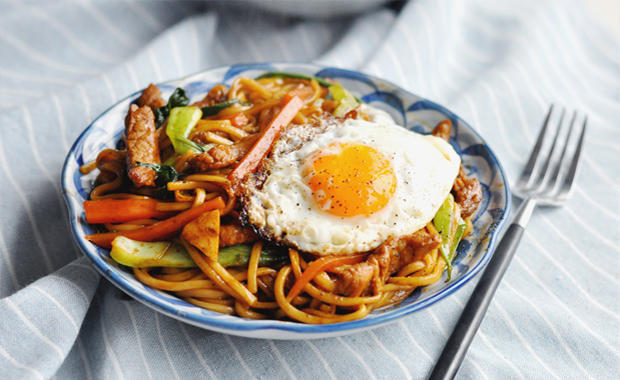
And if you want a heartier noodle bowl with a runny egg on top, pork chow mein with soft fried egg is the one to bookmark.
3Pork Chow Mein with Soft-Fried EggA restaurant-style Pork Chow Mein loaded with assorted vegetables and topped with a creamy, runny fried egg. The perfect satisfying noodle stir-fry for a quick dinner.Check out this recipe
Why This Recipe Works
The method here is deliberately split into stages, and each stage solves a specific problem. Searing the pork first and removing it from the wok means the slices never overcook while the tomatoes break down. Tomatoes need high heat and a little time to release their juices and concentrate, and if the pork were still in the pan during that window it would turn dry and rubbery.
The second key move is parboiling the noodles to half-done. Fresh wheat noodles are already partly cooked, but dropping them straight into the wok makes them drink up sauce too fast and go soft. Boiling them briefly and then rinsing them under cold water sets their texture so they finish cooking in the sauce instead of before it.
Finally, the tomato paste is not a shortcut — it is there for color and depth. Fresh tomatoes alone can look pale and taste thin once cooked, so a small amount of paste reinforces that bright red tang. The two additions of water, one to the tomato base and one with the noodles, are what create the glossy sauce that clings instead of pooling at the bottom of the plate.
Tomatoes are rich in glutamates, the same compounds responsible for the savory depth in soy sauce and aged cheeses. That is why a simple tomato sauce tastes fuller than its short ingredient list suggests — a natural umami boost that does the seasoning work for you. The FDA food safety guidance for home cooking is a useful reference for handling raw pork safely while you prep.
Ingredients
Everything here is supermarket-friendly. The pork is a small amount — just 70 g — because the noodles and tomatoes carry the dish, and the pork is there for richness rather than bulk. Fresh wheat noodles, the kind sold in the refrigerated section, give the best chew; dried noodles work but need a slightly longer parboil.
For the aromatics, ginger, garlic, and a whisper of bird’s eye chili build the base. The chili is optional but a tiny amount wakes up the tomato. Light soy sauce seasons the pork, and a spoonful of tomato paste reinforces the sauce. If you want to go deeper into Chinese pork cookery, shredded pork in sweet bean sauce is a classic to explore next.
Cooking Process
Step 1 — Prep the Tomato
You can peel the tomato if you like, but leaving the skin on is perfectly fine too.
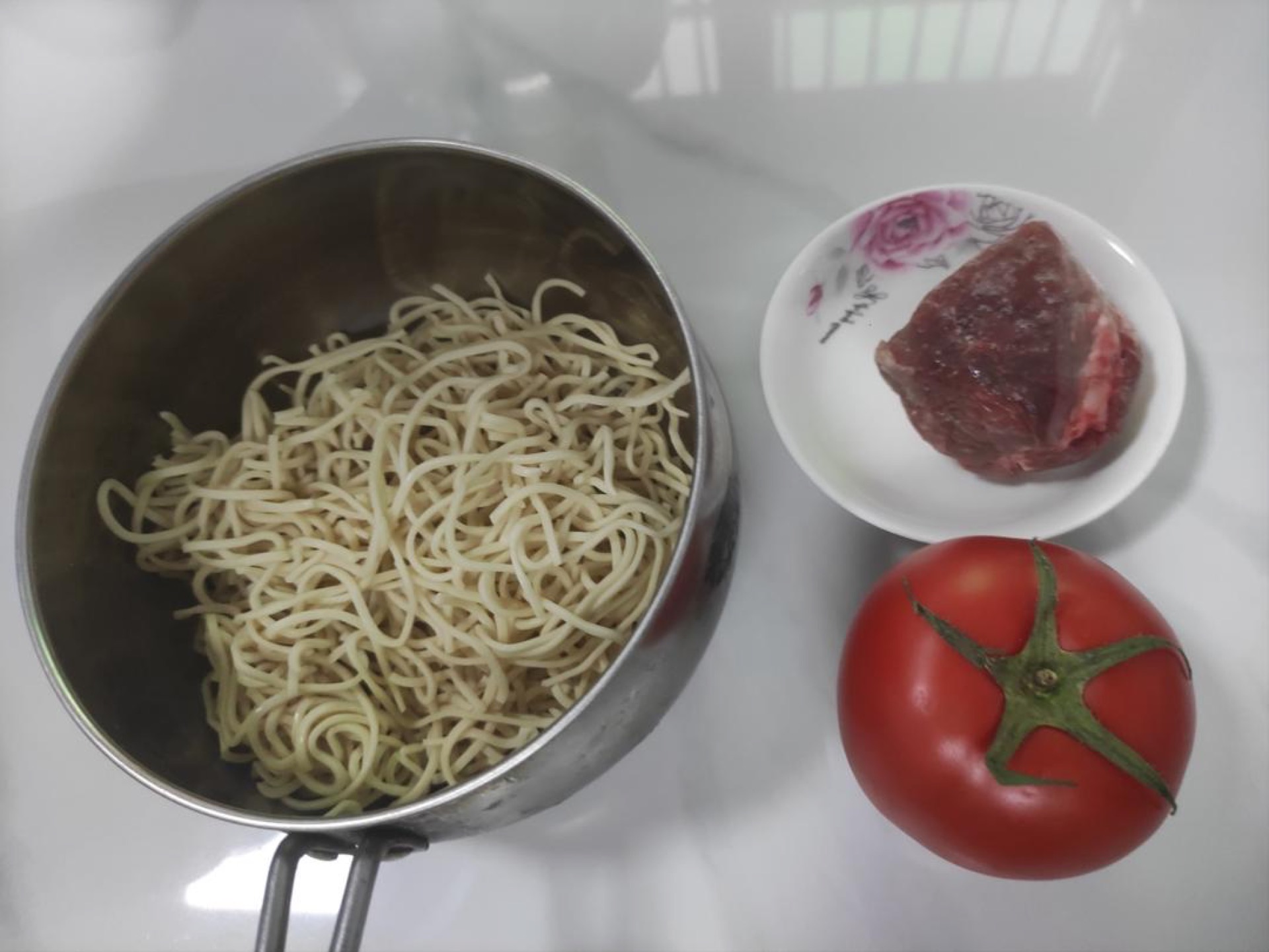
Step 2 — Chop the Aromatics
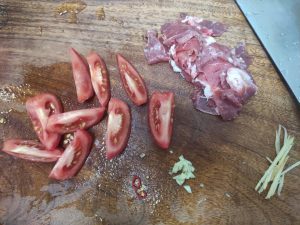
Cut the tomato into wedges, slice the pork, cut the chili into rings, mince the garlic, and julienne the ginger.
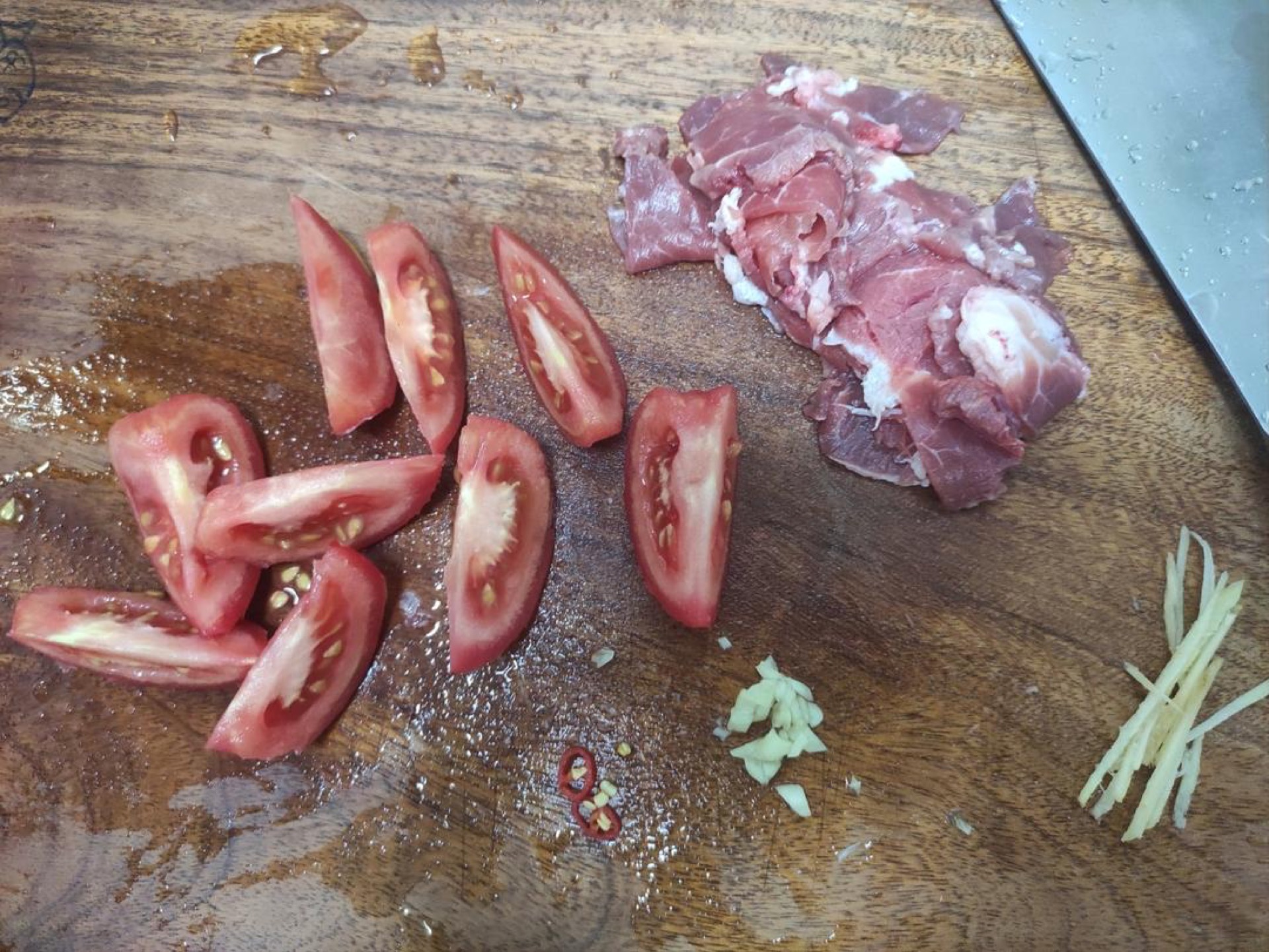
Step 3 — Sear the Pork
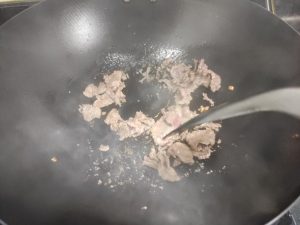
Add the ginger, garlic, and chili to the wok and fry until fragrant, then add the pork slices and stir-fry over high heat until nearly cooked through, then transfer to a plate.
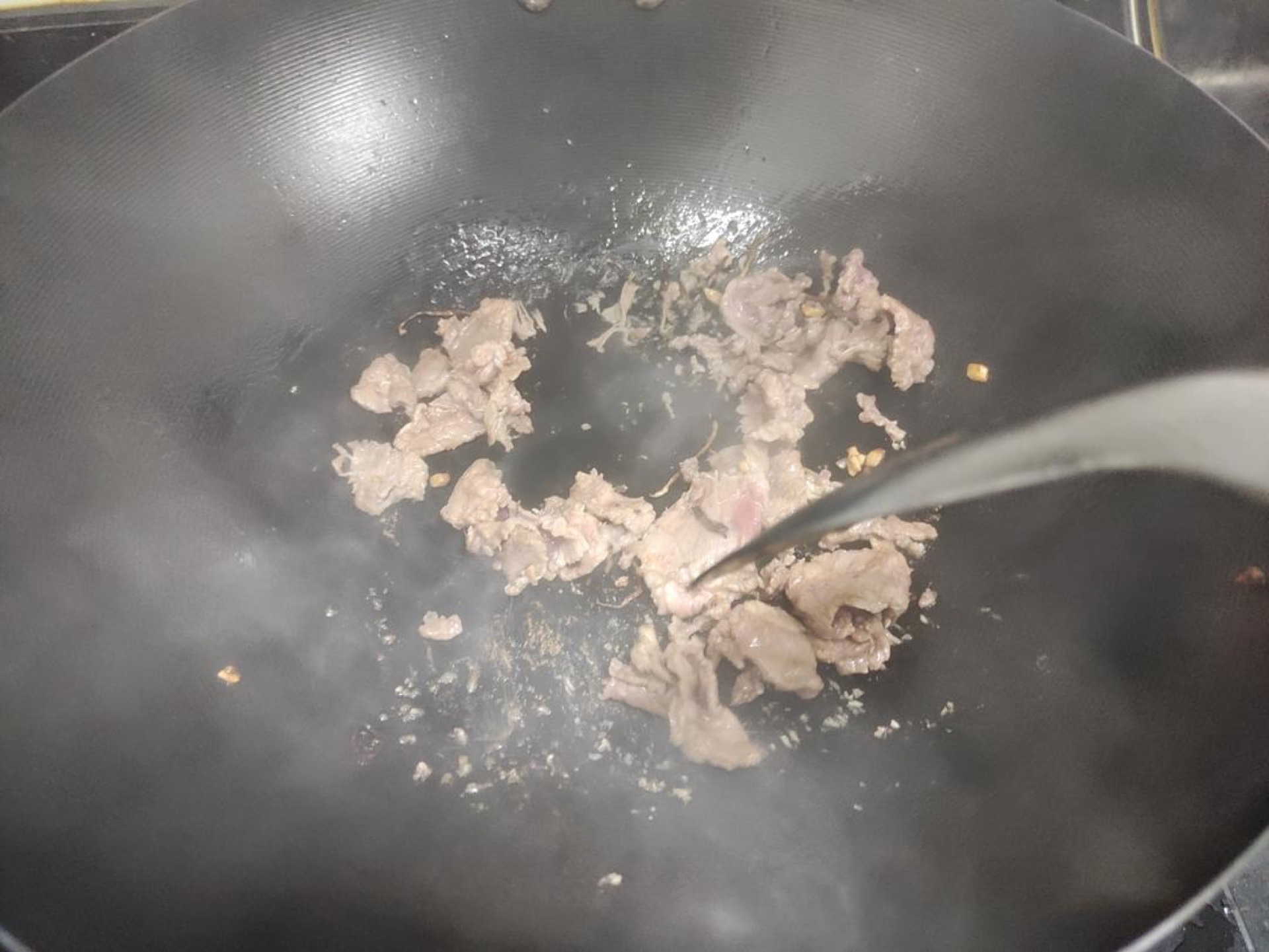
Step 4 — Build the Tomato Base
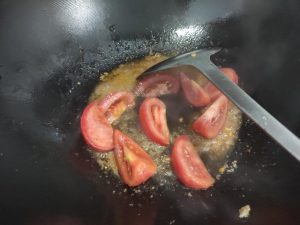
Stir-fry the tomato over high heat until it releases its juices, add about 20 g of water, then stir in the tomato paste.
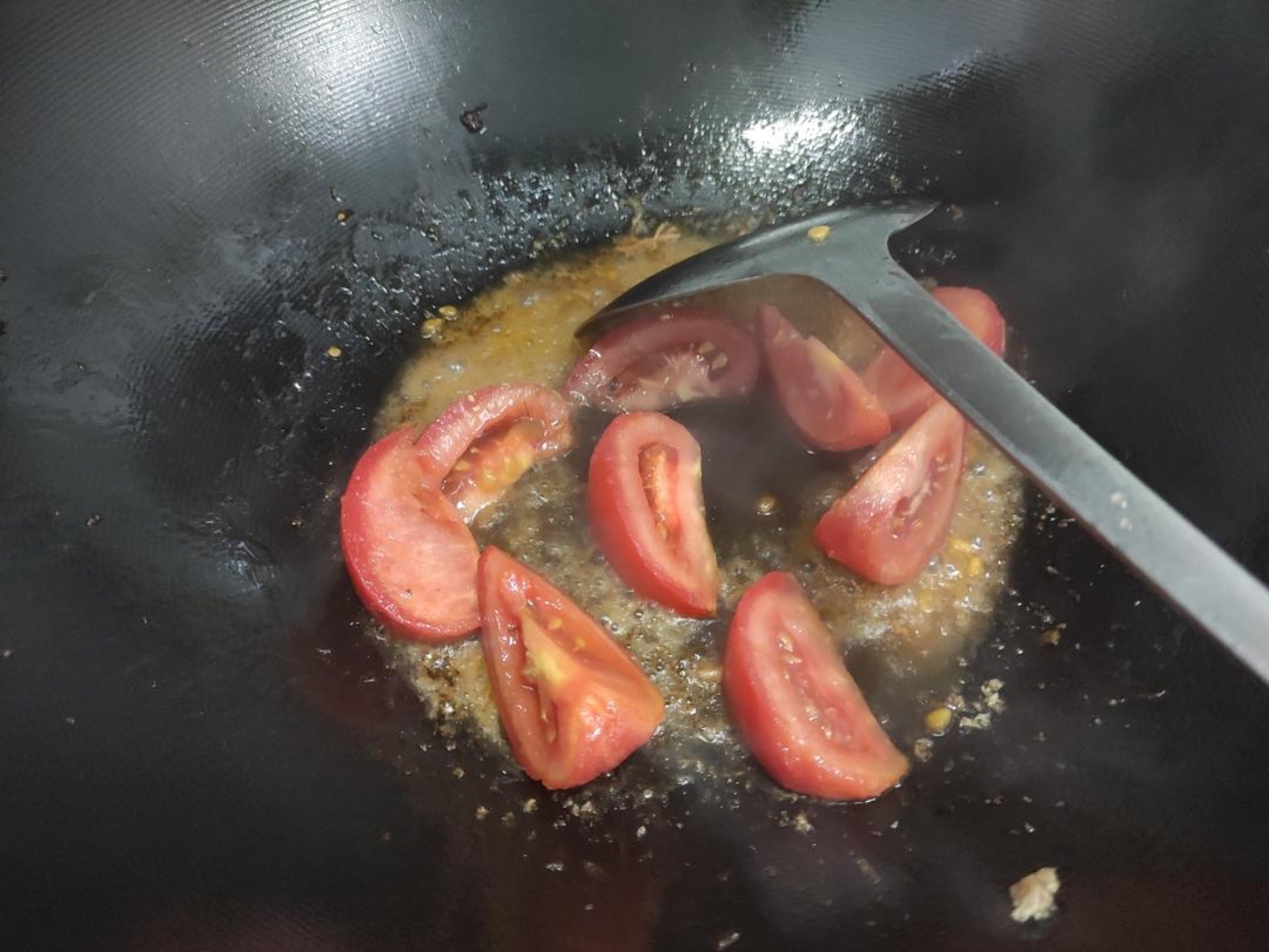
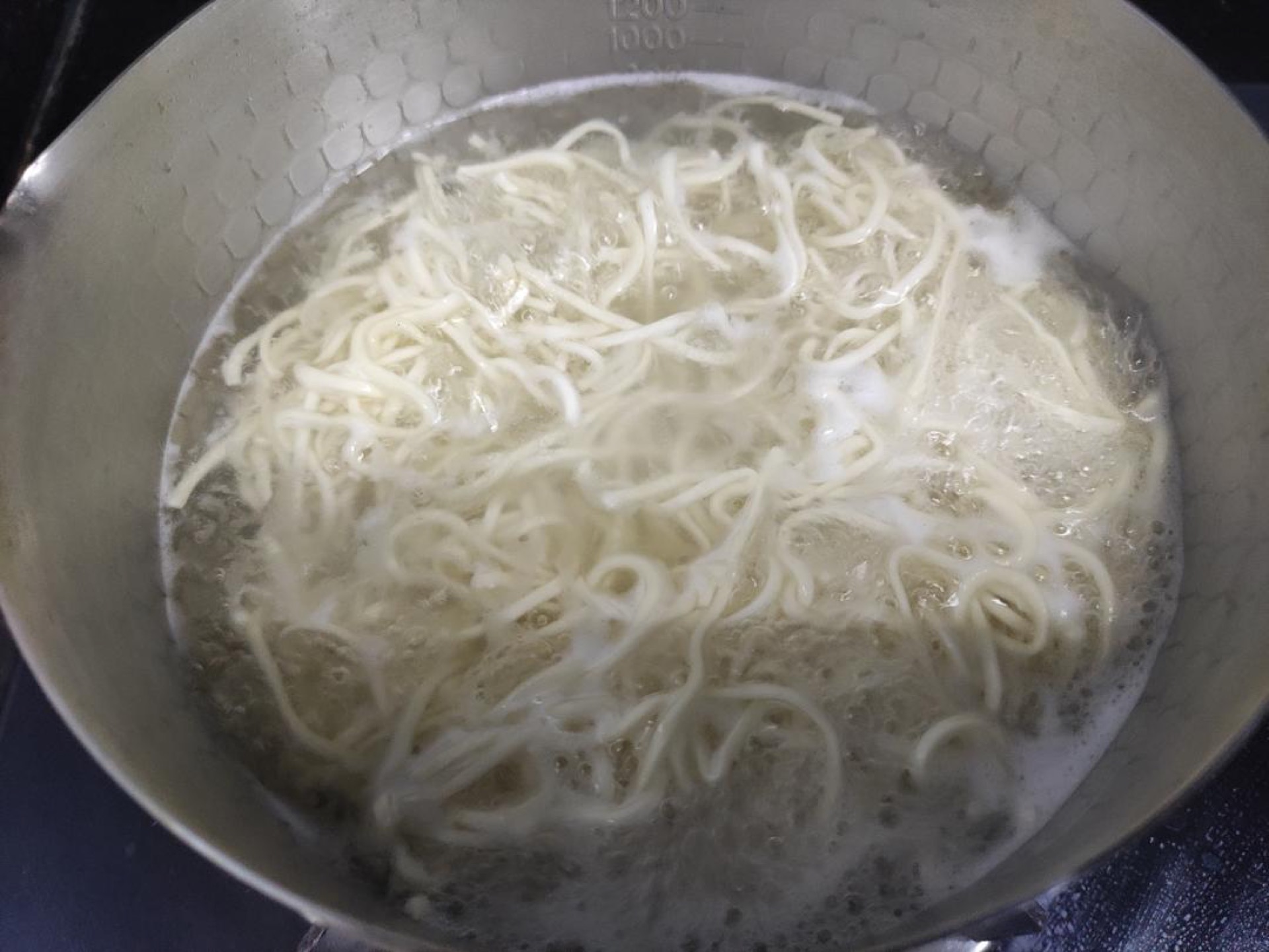
Step 5 — Parboil the Noodles
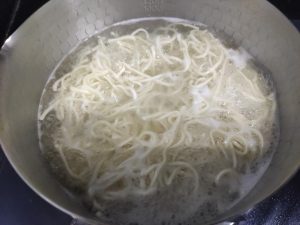
Boil the noodles until half-done first (they really must be half-done, or they will turn mushy after stir-frying), then rinse them under cold water.
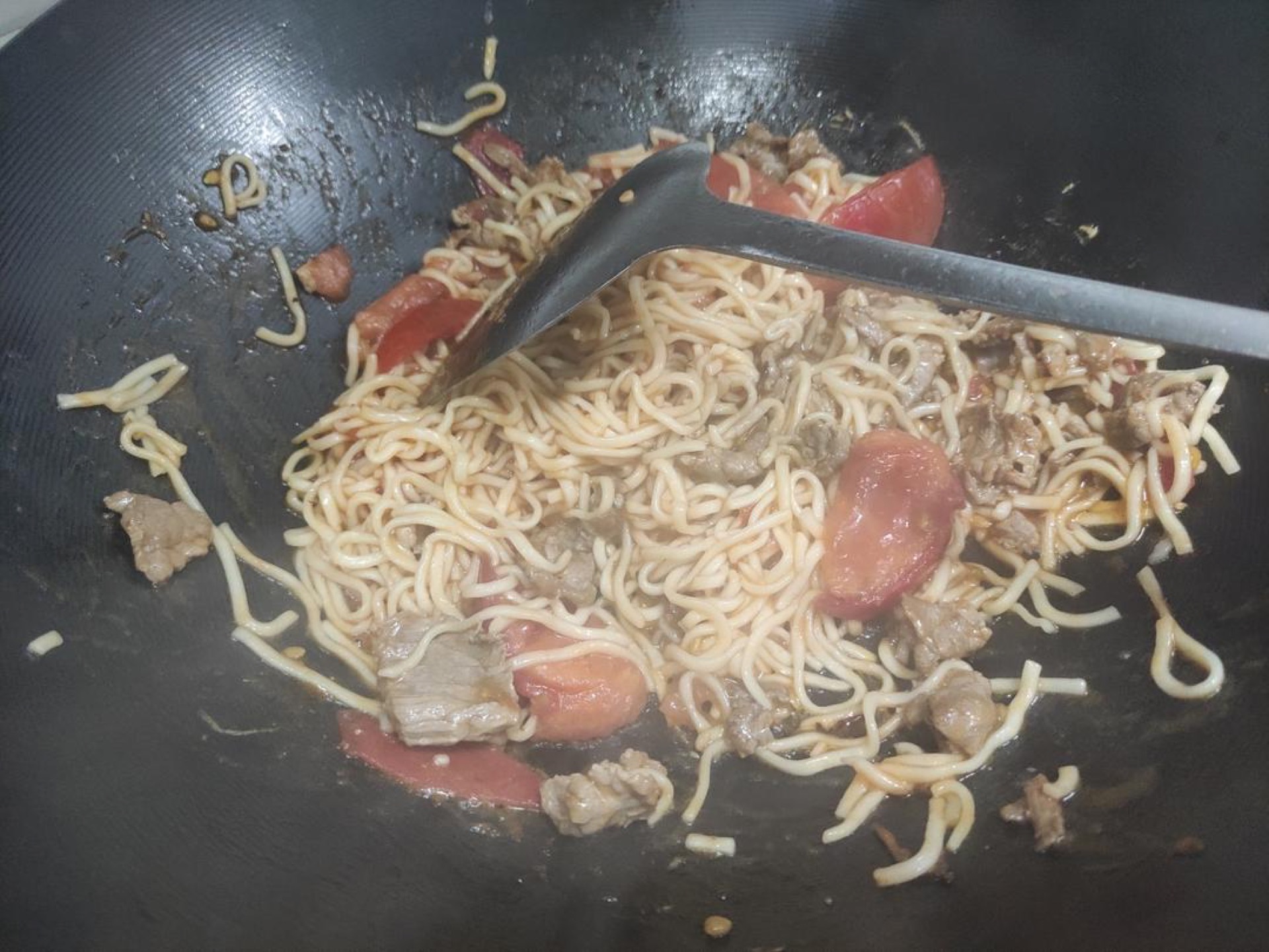
Step 6 — Finish the Noodles
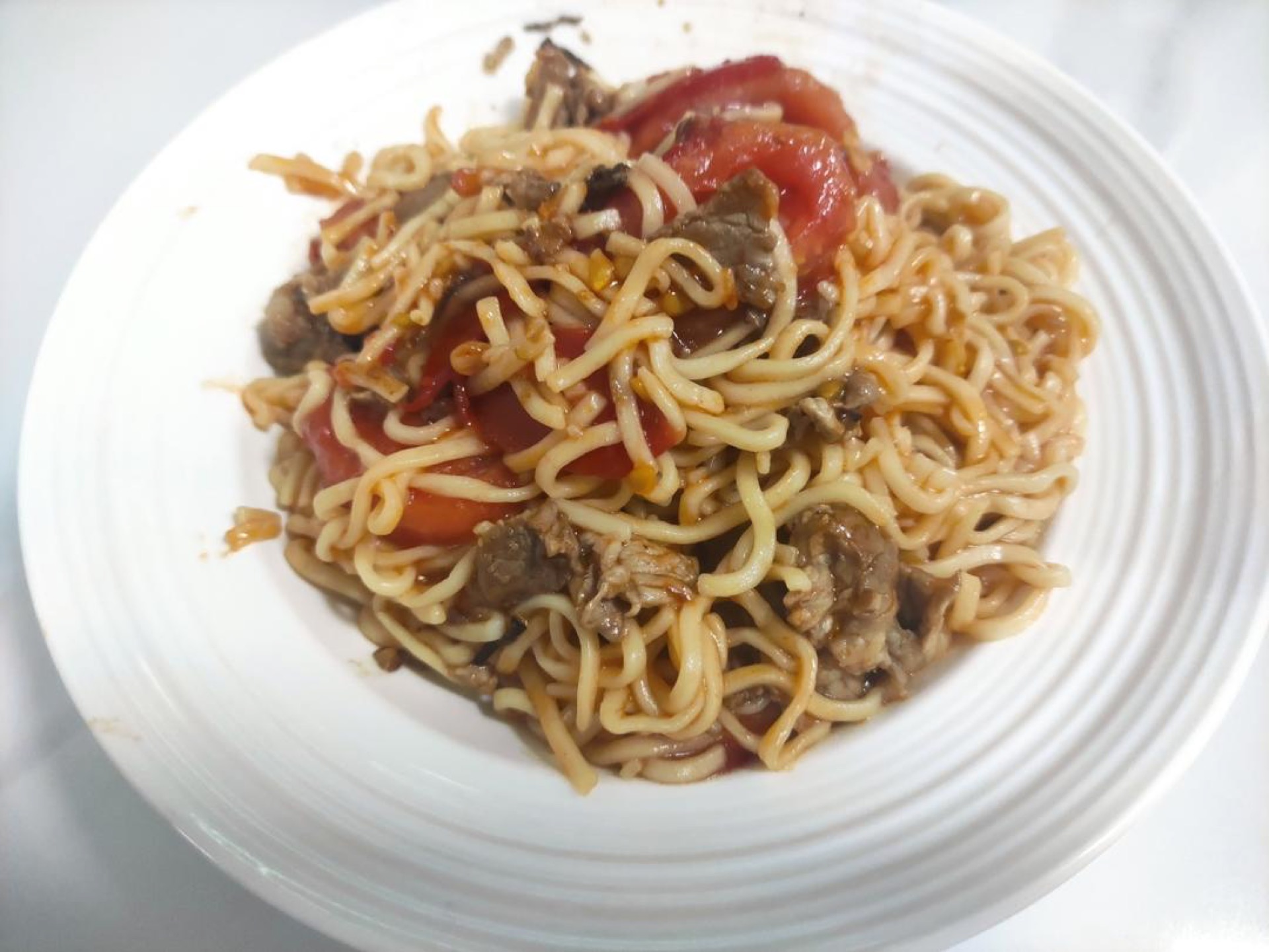
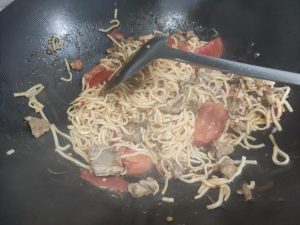
Add about 30 g of water to the wok, add the noodles, and simmer until only a little sauce remains, then add the pork slices and cook until the liquid is gone and the pork is cooked through, then plate.
Step 7 — Marinate the Pork
Slice pork loin thinly, then marinate briefly with light soy sauce, Shaoxing wine, cornstarch slurry, and neutral oil.
Common Mistakes When Making Tomato Pork Stir-Fried Noodles
1. Overcooking the noodles before they hit the wok. The most common failure is boiling the noodles until fully tender. They then continue cooking in the sauce and turn to mush. The fix: parboil only to half-done and rinse under cold water to stop the cooking.
2. Leaving the pork in the wok the whole time. If the pork stays in while the tomatoes cook down, it overcooks and turns tough. The fix: sear it until nearly done, then remove it and add it back only at the very end.
3. Not using high enough heat for the tomatoes. Tomatoes on low heat stew rather than sear, and they release water slowly without concentrating. The fix: crank the heat, stir-fry the tomatoes hard, and let them char slightly at the edges before adding water.
4. Skipping the tomato paste. Fresh tomatoes alone can taste thin and look pale once cooked. The fix: keep the tomato paste in. It takes a tablespoon and transforms the color and tang of the sauce.
5. Adding all the water at once. Dumping in too much liquid turns the dish into soup. The fix: add the water in the two measured stages in the recipe — about 20 g with the tomatoes and 30 g with the noodles — and let each reduce before the next addition.
6. Crowding the wok. Too many noodles in too small a pan steam instead of fry. The fix: use the widest wok or skillet you have, and if you double the recipe, cook it in two batches.
How to Serve
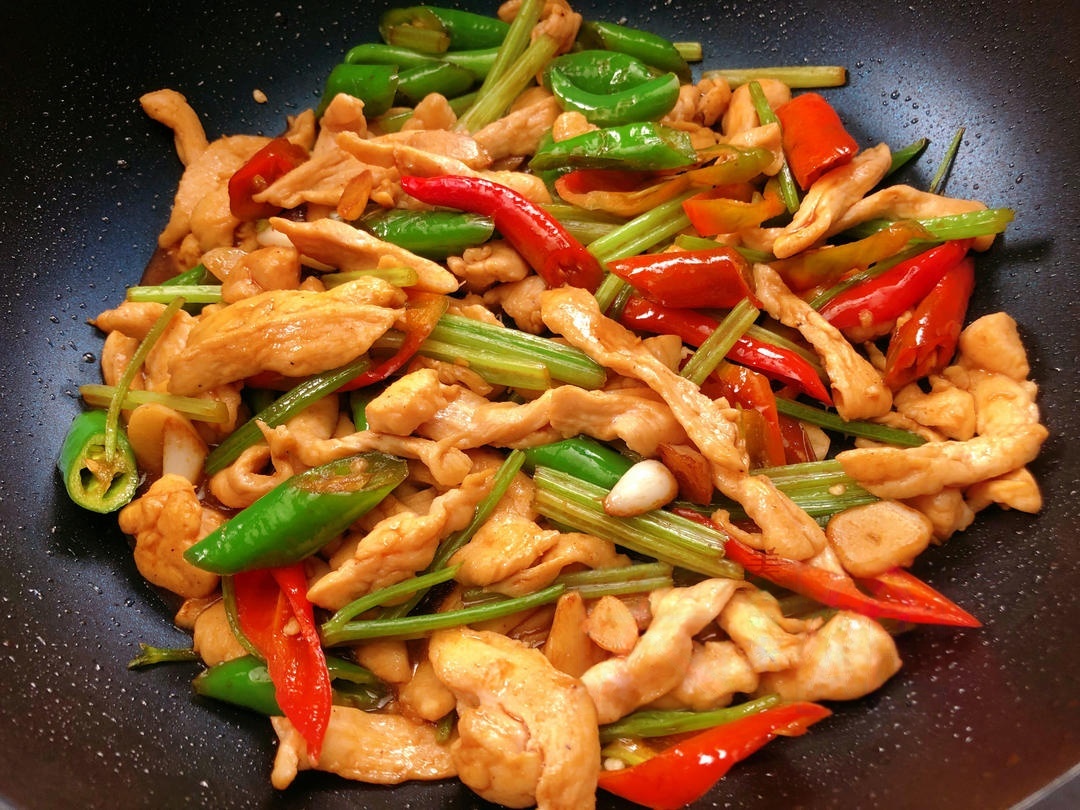
Tomato pork stir-fried noodles is a complete one-bowl meal on its own, but it also plays well with a few sides. A simple cucumber salad or a bowl of lightly pickled vegetables cuts through the tangy sauce nicely. If you want to add protein, a plate of tender stir fried chicken breast makes a good companion dish without competing for the same flavor space.
For a heartier table, serve the noodles alongside spicy chicken stir fry and a plain steamed green vegetable. The contrast of a spicy dish next to the sweet-tangy tomato noodles keeps the meal interesting.
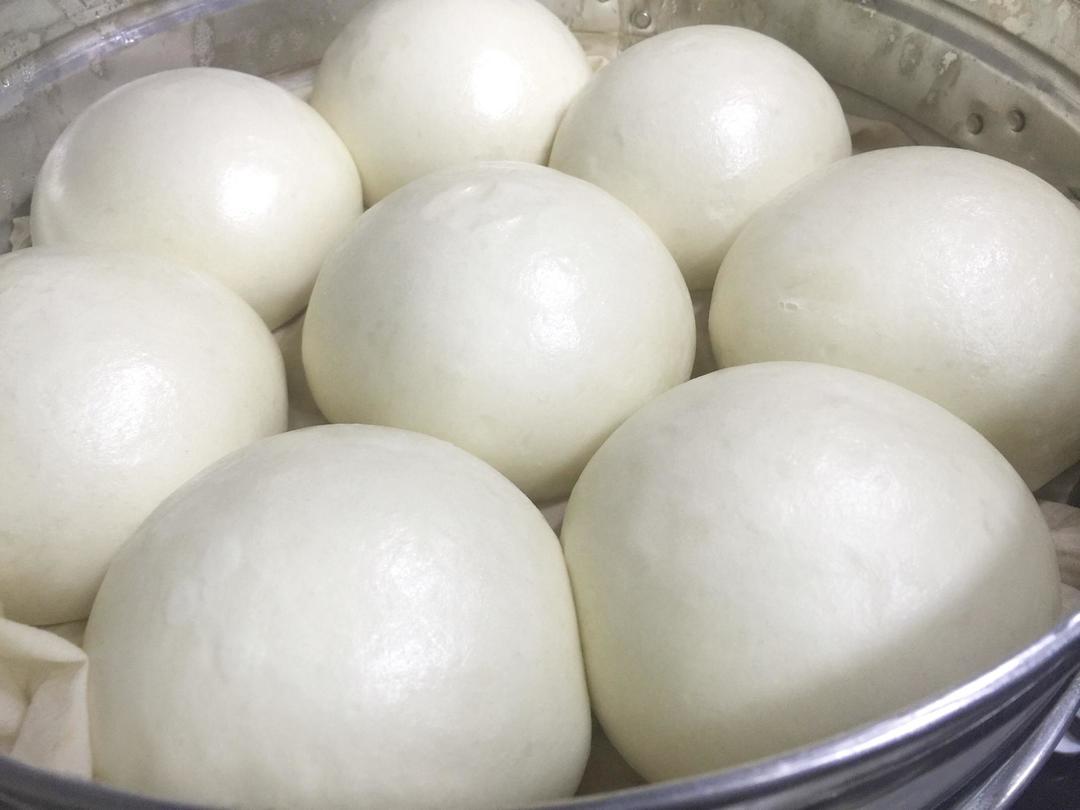
And if you are feeding a crowd, a basket of Shandong steamed buns on the side turns the noodles into part of a larger spread.

Storage & Reheat
Leftover tomato pork stir-fried noodles keep well in an airtight container in the refrigerator for up to 3 days. The noodles will absorb some of the sauce as they sit, so they may look a little drier the next day — that is normal.
To reheat, the best method is a hot wok or skillet with a splash of water. Add the noodles and a tablespoon or two of water, cover, and steam for 2 to 3 minutes, then toss until hot. This revives the sauce and keeps the noodles from drying out. A microwave works in a pinch: cover the bowl and heat in 30-second bursts, stirring between each, until steaming hot.
Do not freeze this dish. The noodles become mealy and the tomatoes lose their texture after thawing. If you need to make it ahead, prep the components separately and stir-fry fresh.
Allergen Notice
This recipe contains soy (light soy sauce) and wheat (wheat noodles). Depending on the brand of soy sauce and noodles you use, it may also contain gluten. If you are cooking for someone with a soy or wheat allergy, substitute tamari for the soy sauce and use a gluten-free noodle such as rice noodles or 100% buckwheat noodles. Always check the labels on your tomato paste and any prepared sauces, as some brands add thickeners or flavorings that may contain allergens.
Nutrition Disclaimer
Nutrition information is calculated using an ingredient database and should be considered an estimate. In cases where multiple ingredient alternatives are given, the first listed is calculated for nutrition. Garnishes and optional ingredients are not included.
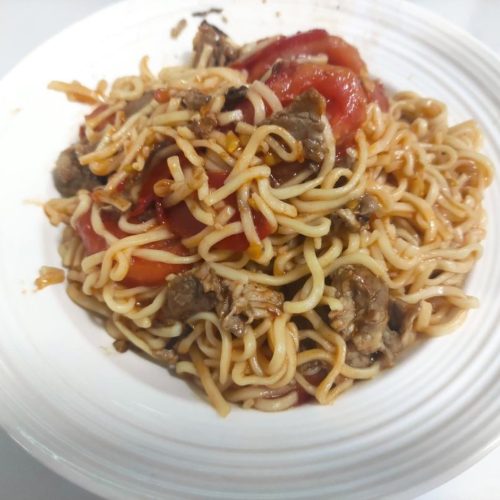
Tomato Pork Stir-Fried Noodles (西红柿猪肉炒面): Tangy Tomato, Tender

Equipment
- Wok
- Cutting Board
- Slotted Spoon
Ingredients
For the Pork Marinade
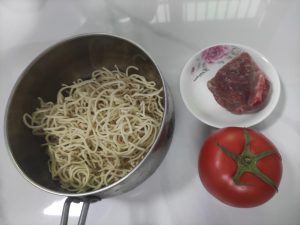
- 70 g pork loin thinly sliced
- 1 tbsp light soy sauce for marinating
- 1 tsp Shaoxing wine optional
- 1 tsp cornstarch mixed with 1 tsp water
- 1 tsp neutral oil to keep slices separate
For the Sauce
- 1 tbsp tomato paste about 15 g
- 20 g water for the tomato base
- 30 g water added with the noodles
For the Dish
- 130 g fresh noodles wheat noodles, parboiled
- 1 whole tomato about 150 g, cut into wedges
- 1 slice ginger julienned
- 1 clove garlic minced
- 0.3 g bird’s eye chili sliced into rings
Instructions
- You can peel the tomato if you like, but leaving the skin on is perfectly fine too.

- Cut the tomato into wedges, slice the pork, cut the chili into rings, mince the garlic, and julienne the ginger.
- Add the ginger, garlic, and chili to the wok and fry until fragrant, then add the pork slices and stir-fry over high heat until nearly cooked through, then transfer to a plate.
- Stir-fry the tomato over high heat until it releases its juices, add about 20 g of water, then stir in the tomato paste.
- Boil the noodles until half-done first (they really must be half-done, or they will turn mushy after stir-frying), then rinse them under cold water.
- Add about 30 g of water to the wok, add the noodles, and simmer until only a little sauce remains, then add the pork slices and cook until the liquid is gone and the pork is cooked through, then plate.
- Slice pork loin thinly, then marinate briefly with light soy sauce, Shaoxing wine, cornstarch slurry, and neutral oil.
Notes
About the Author & Recipe Development
Lin is the cook and writer behind Woks of Love, a site devoted to honest, home-kitchen Chinese cooking. This recipe was developed from a family-style 西红柿猪肉炒面 that shows up on southern Chinese weeknight tables when tomatoes are at their peak. It was tested with fresh wheat noodles, pork loin, and a standard carbon-steel wok, and adjusted until the sauce clung to the noodles without turning them soft.
The goal with this version was to keep the ingredient list short and the technique forgiving, while preserving the two things that make the dish worth cooking: the bright, tangy tomato sauce and the tender pork. If you try it and make changes, the notes above on variations and common mistakes should help you steer the result in the direction you want.
Authoritative References
For safe handling and cooking temperatures for pork, see the FDA home food safety guidance. For background on Chinese noodle stir-fry technique and regional home cooking, see the WHO food safety fact sheet and the USDA food safety resources.












Leave a Reply