Hello, I’m Lin! Growing up in a family of chefs and spending over a decade working in professional Chinese kitchens, I’ve cooked and eaten countless noodle dishes. One of the most common complaints I hear from home cooks is that their stir-fried noodles always end up breaking into small pieces or turning into a mushy clump in the wok.

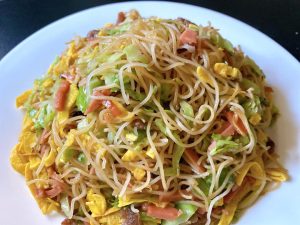
Today, I want to share a foolproof homestyle recipe for Stir-Fried Rice Noodles (Chao Mi Fen). The secret to this dish lies in a special preparation technique I learned from a veteran cook, Chef A Li, called “Tan” (袒) – a method of using trapped steam and residual heat to gently cook the noodles before they hit the wok. Your noodles will turn out dry, bouncy, and perfectly distinct every single time!
What Is Chao Mi Fen?
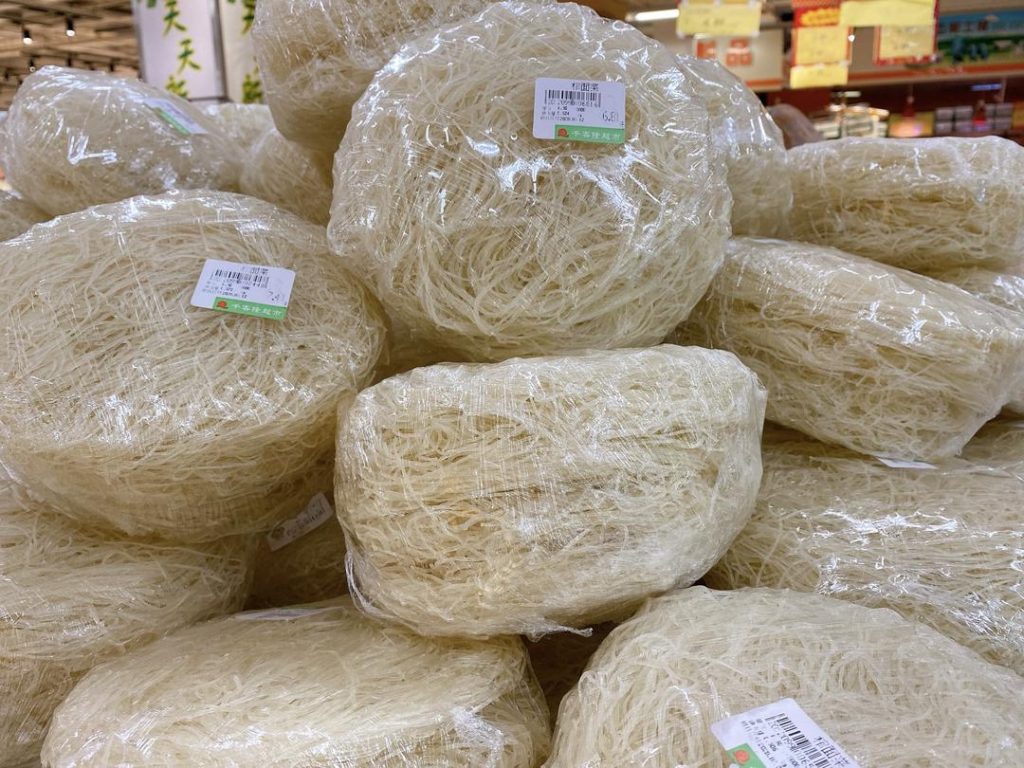
Chao Mi Fen (炒米粉) translates simply to stir-fried rice noodles. In this recipe, we use a specific regional specialty known as Shengzhou Zha Mian (嵊州榨面) or pressed rice noodles, often referred to as the “Number One Noodle of Jiangnan.” These noodles are celebrated for their slightly translucent appearance and a unique texture that is chewy but never hard, and dry but never brittle. If you can’t find them, standard thin dried rice vermicelli works wonderfully.
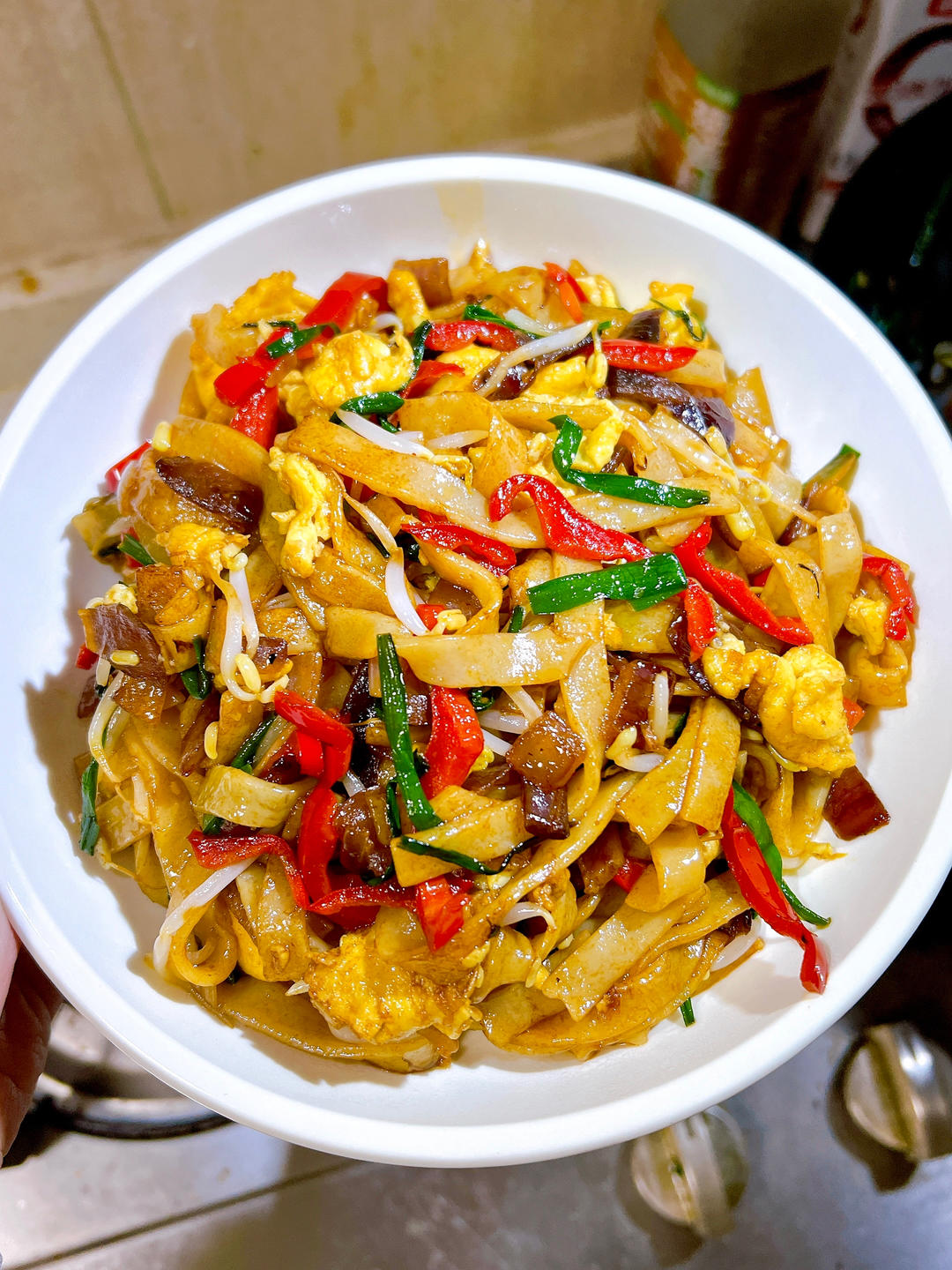
If you love flat rice noodles instead of thin vermicelli, you should also check out our excellent Chow Fun recipe!
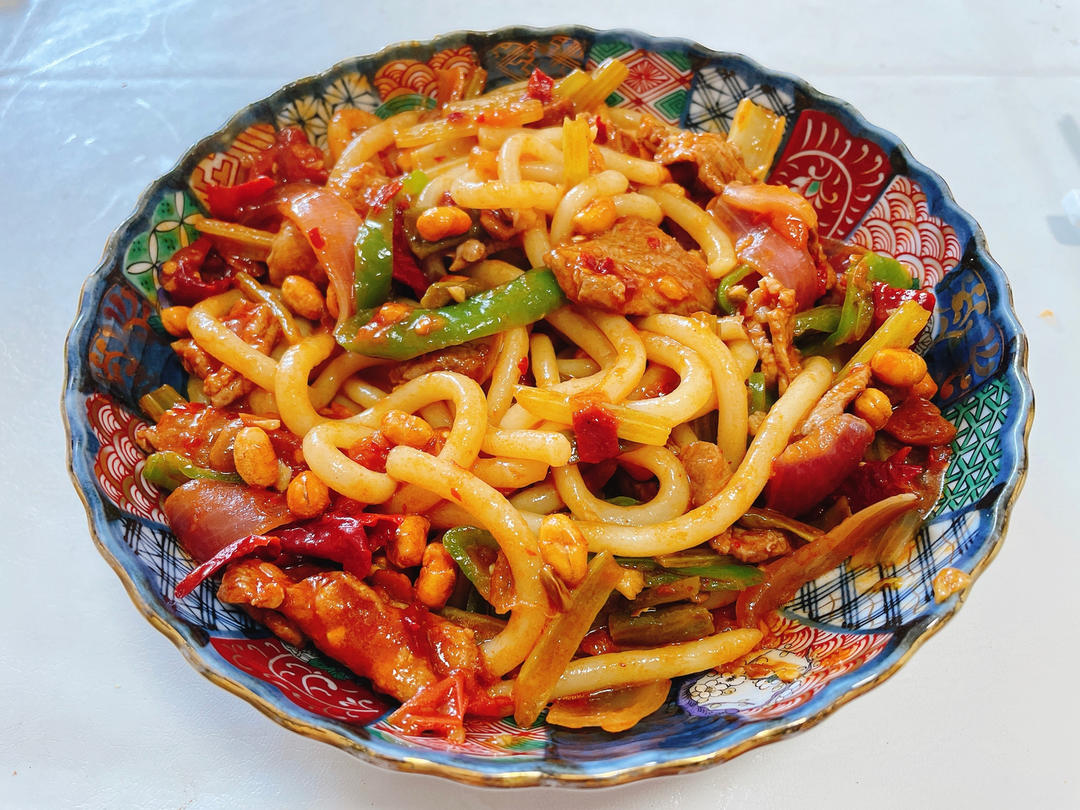
1Xinjiang Fried Rice Noodles (Xinjiang Chao Mifen)A spicy, saucy, and chewy rice noodle dish from Western China featuring a rich tomato and bean paste sauce, beef, and crisp vegetables. It is a bold ‘flavor bomb’ that perfectly bridges the gap between a stir-fry and a comforting pasta dish.Check out this recipe2Easy Vegetable Chow Fun (素炒河粉)A quick 15-minute recipe for restaurant-style Vegetable Chow Fun. Chewy rice noodles, crisp-tender vegetables, and a fluffy egg all tossed in a savory sauce.Check out this recipe
Ingredients
Noodles & Toppings:
- Dried Rice Noodles (Shengzhou Zha Mian or Vermicelli): 1 serving (approx. 3.5 oz / 100g).
- Egg: 1 large.
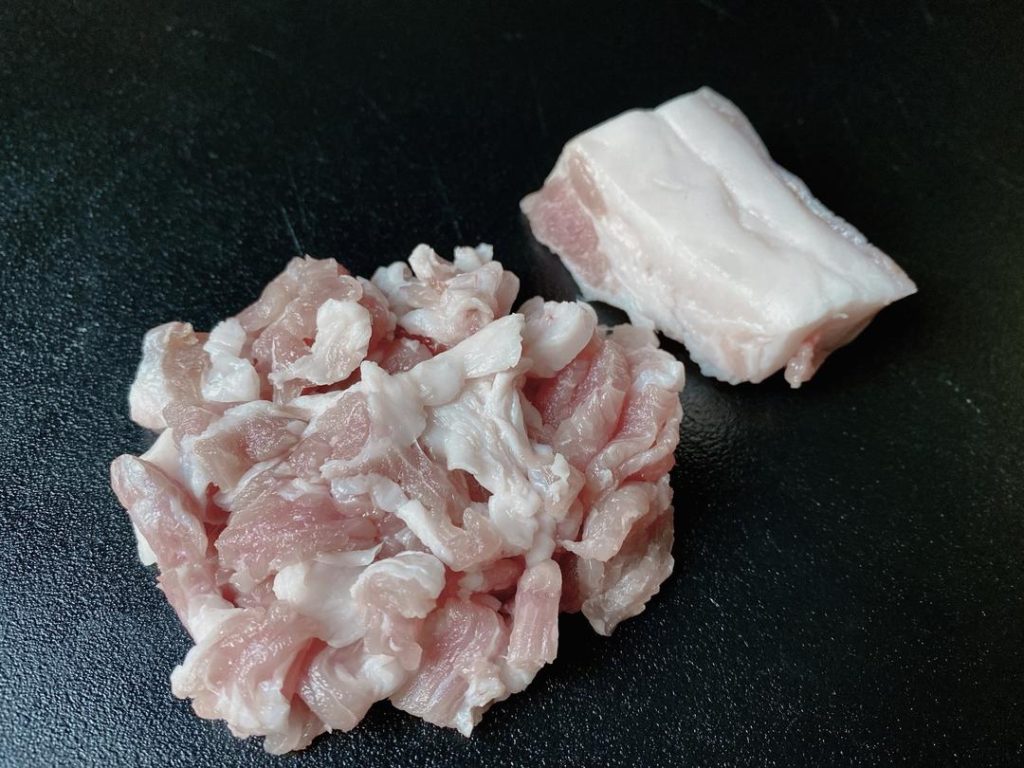
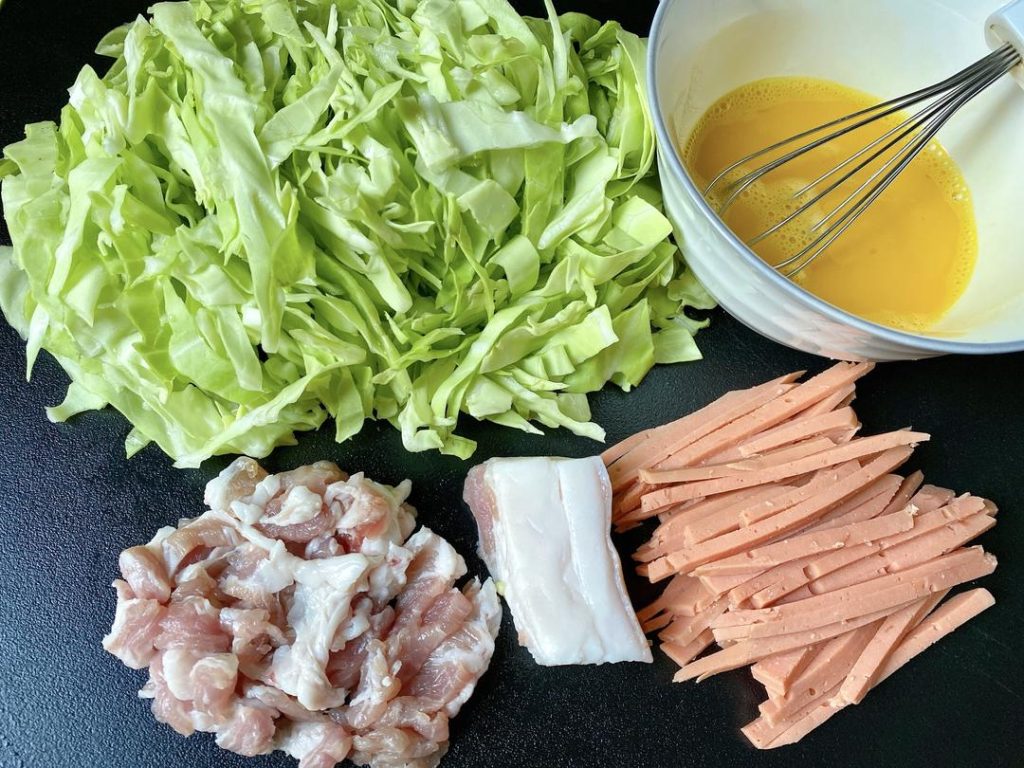
- Pork: 3 oz (80g) of lean Pork Shoulder, julienned.
- Ham or Sausage: 1 small link (approx. 1.5 oz / 40g), julienned.
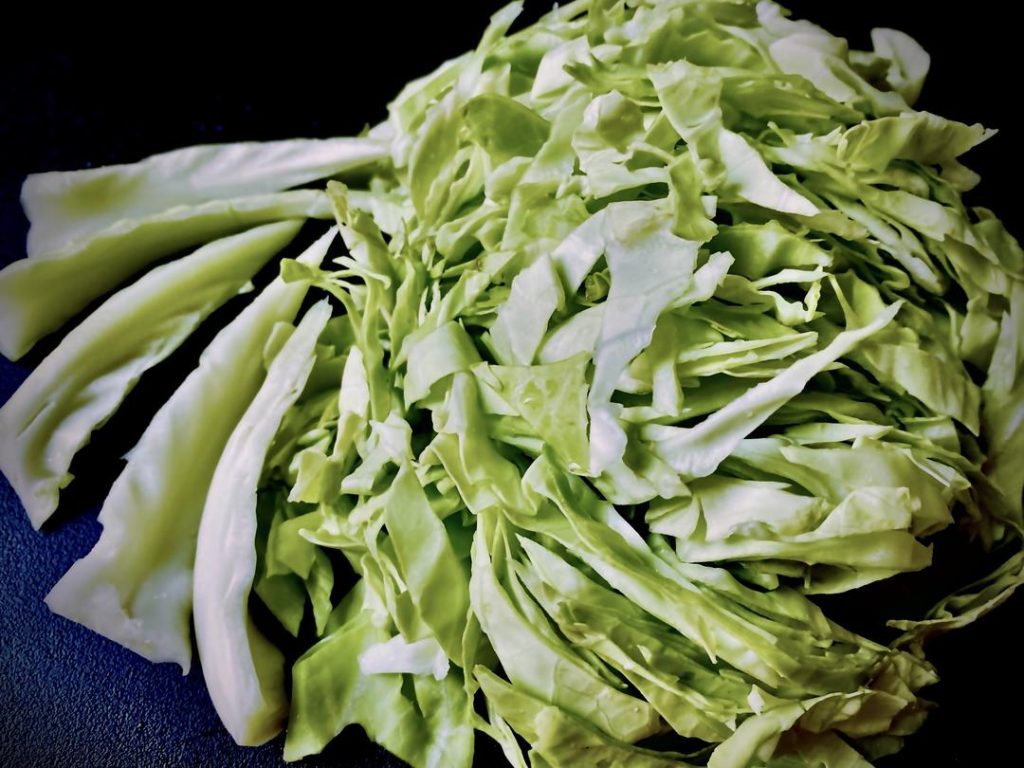
- Cabbage: 3-5 leaves (approx. 2 oz / 60g), washed and finely shredded.
- Pork Fat: A small piece (about 0.5 oz / 15g) to grease the wok.
Seasoning Sauce:
- Light Soy Sauce: 1 tbsp (15 ml) – See our guide on Light Soy Sauce for brand recommendations.
- Shaoxing Wine: 1 tbsp (15 ml) – Adds depth and removes the raw meat aroma. You can learn more about Shaoxing Wine here.
- Water: 1 tbsp (15 ml).
- Oyster Sauce: ½ tbsp (7.5 ml) – A key element for umami. Read more about Oyster Sauce.
- Salt: ¼ tsp (1 g) – Standard table Salt.
Equipment Needed
- A well-seasoned wok or a large non-stick skillet.
- A mesh strainer or colander.
- Two pairs of chopsticks (for tossing).
Prep & Mise en Place
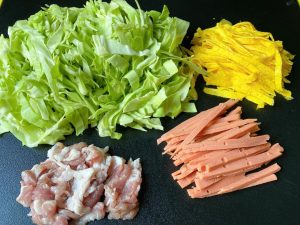
- Julienne Everything: Cut your lean pork, cabbage, and ham into thin, uniform strips. This ensures everything cooks at the same rate and mixes evenly with the thin noodles.
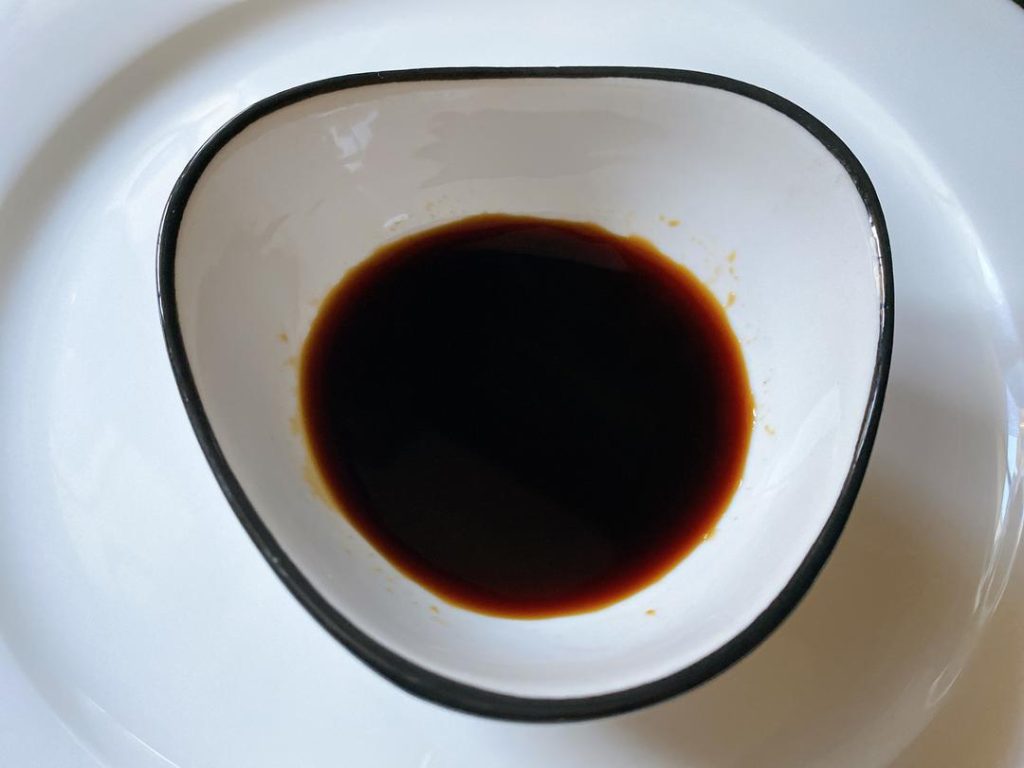
- Mix the Sauce: In a small bowl, whisk together the soy sauce, Shaoxing wine, water, oyster sauce, and a tiny pinch of salt.
- Whisk the Egg: Beat the egg lightly in a separate bowl.
Cooking Process
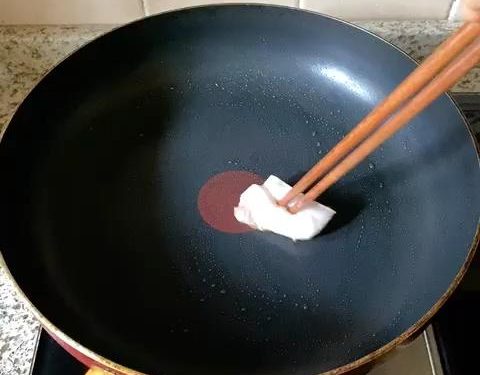
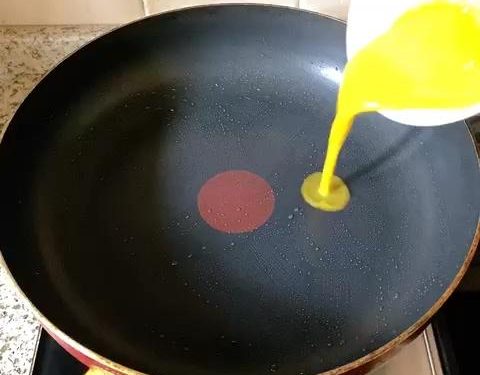
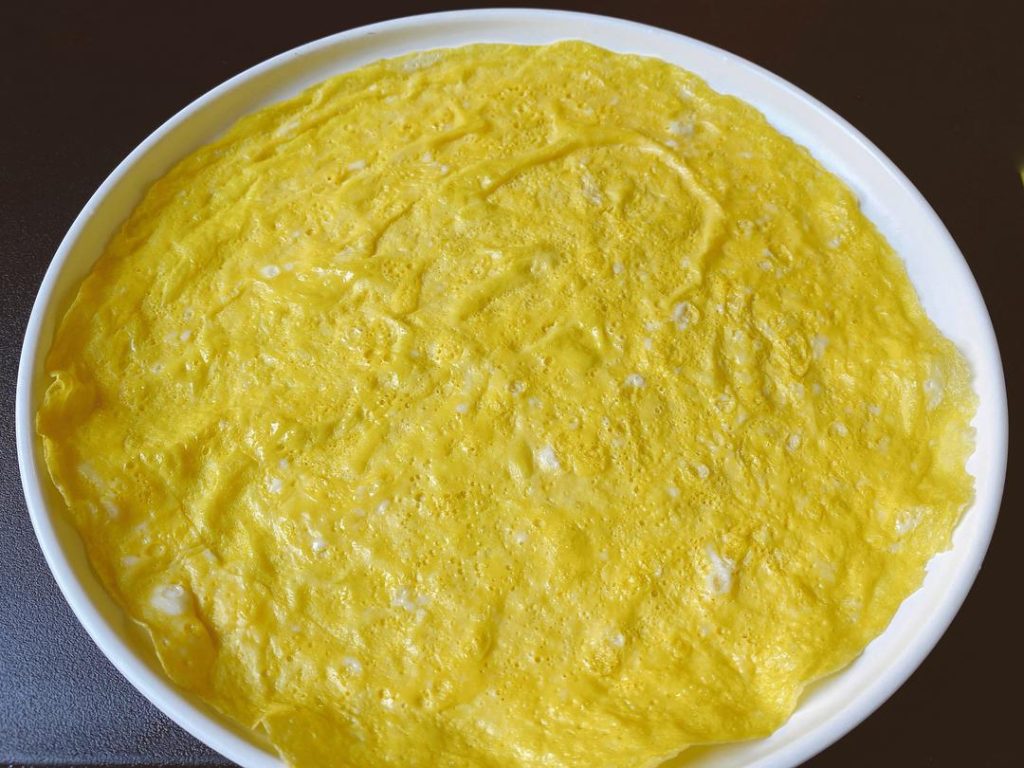
Step 1: Make the Egg Ribbons Using chopsticks, hold the small piece of pork fat and rub it evenly around the bottom of the wok over low heat. This coats the pan in a beautiful, flavorful layer of oil droplets. Pour in the beaten egg and swirl the wok to spread it into a thin crepe. Cook until set (about 1-2 minutes). Remove, let cool slightly, and slice into thin ribbons.
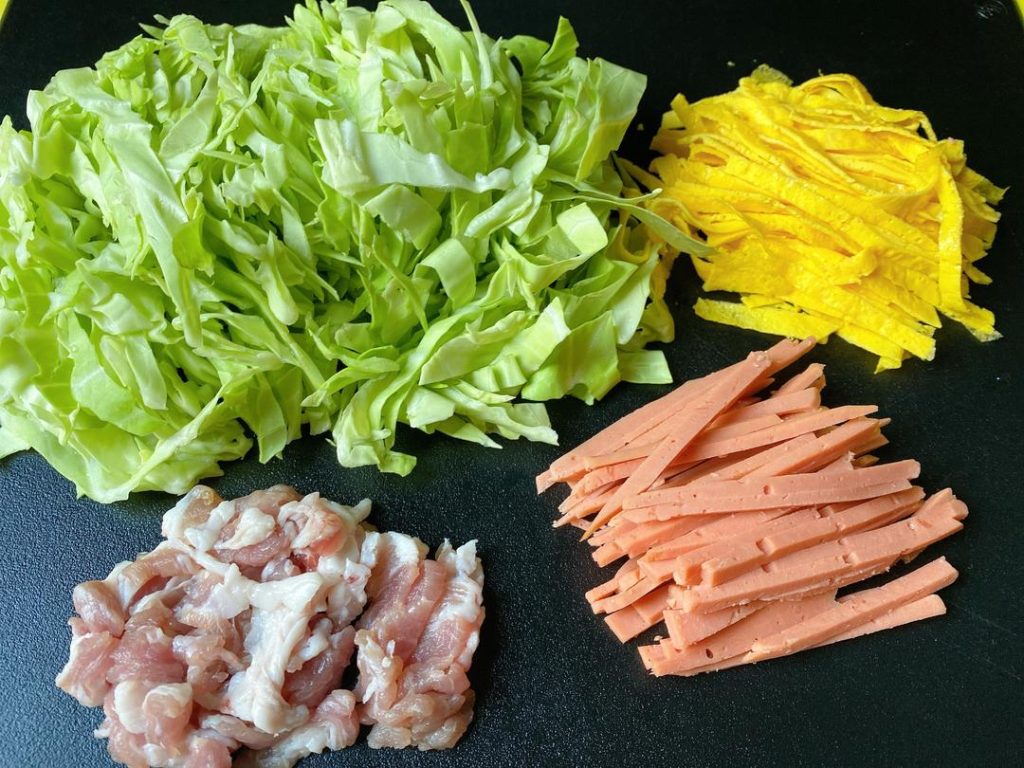
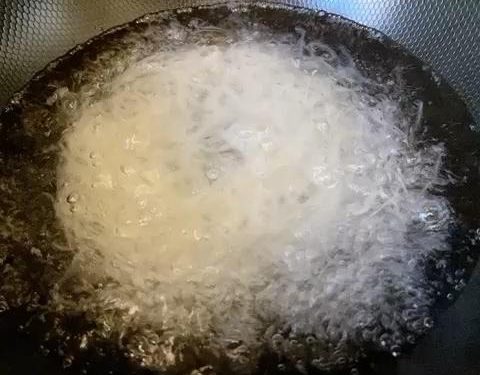
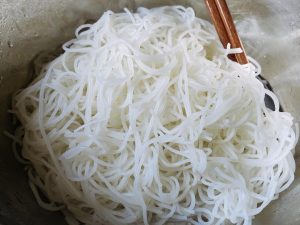
Step 2: The “Tan” Noodle Secret (Crucial Step) Bring a pot of water to a rolling boil. Add a few drops of oil and a pinch of salt. Drop in the dried rice noodles and boil for exactly 2 minutes over high heat. Quickly pour them into a strainer to drain all excess water, then transfer them immediately to a large bowl or container.
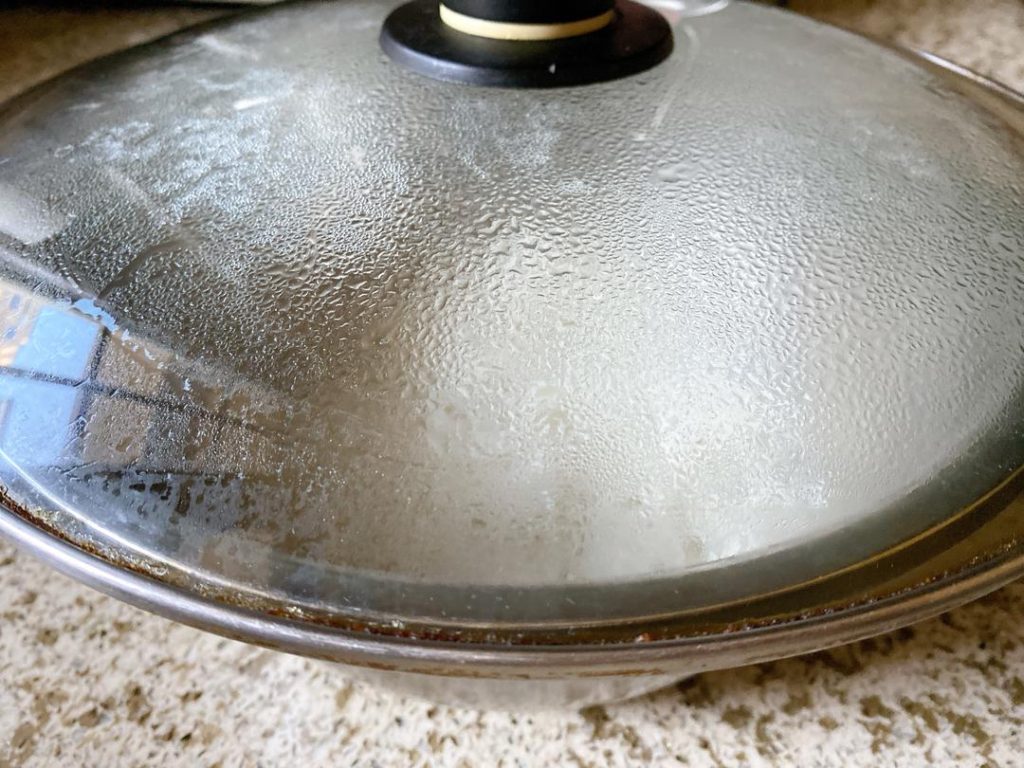
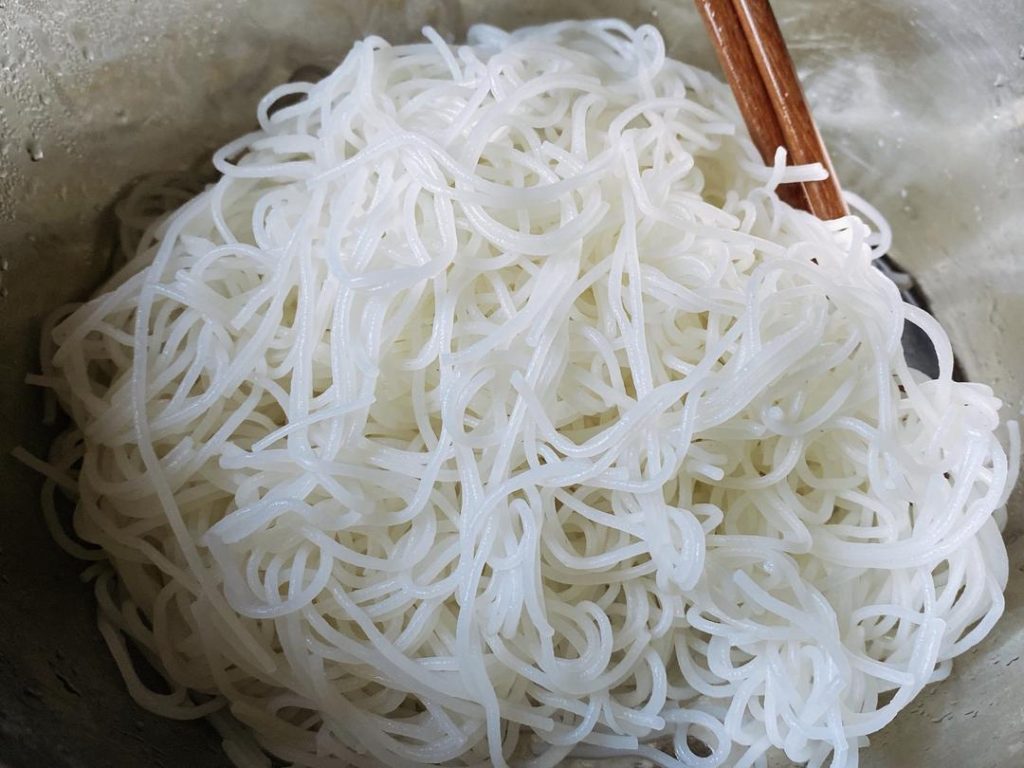
“Using residual heat and trapped steam causes the starches to undergo controlled gelatinization without becoming waterlogged. This prevents the noodles from breaking or clumping during the high-heat stir-fry.”
Cover the bowl and let the noodles steam in their own heat for 3 minutes. Gently toss them, then cover and steam for another 3 minutes.
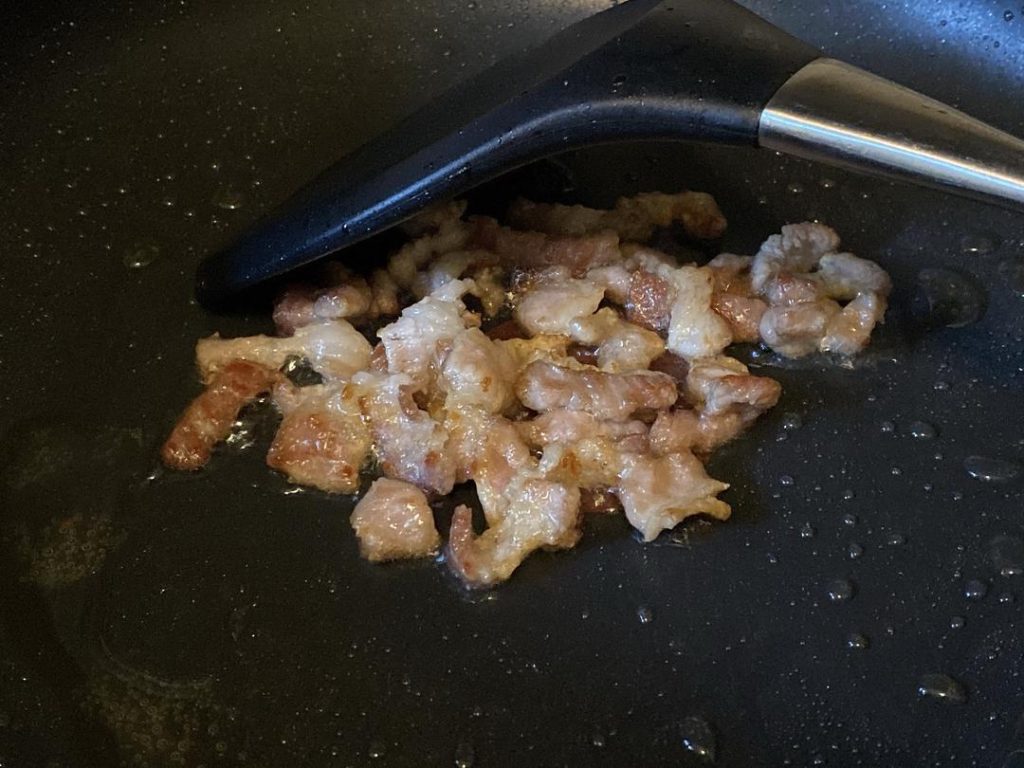
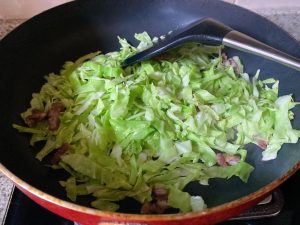
Step 3: Stir-Fry the Toppings Clean the wok and heat 1 tablespoon of cooking oil over medium-high heat. Add the julienned pork and stir-fry until the fat renders out and the meat is browned and cooked through (about 2-3 minutes). Always ensure pork reaches a safe internal temperature of 145°F (63°C). Add the shredded cabbage and toss.
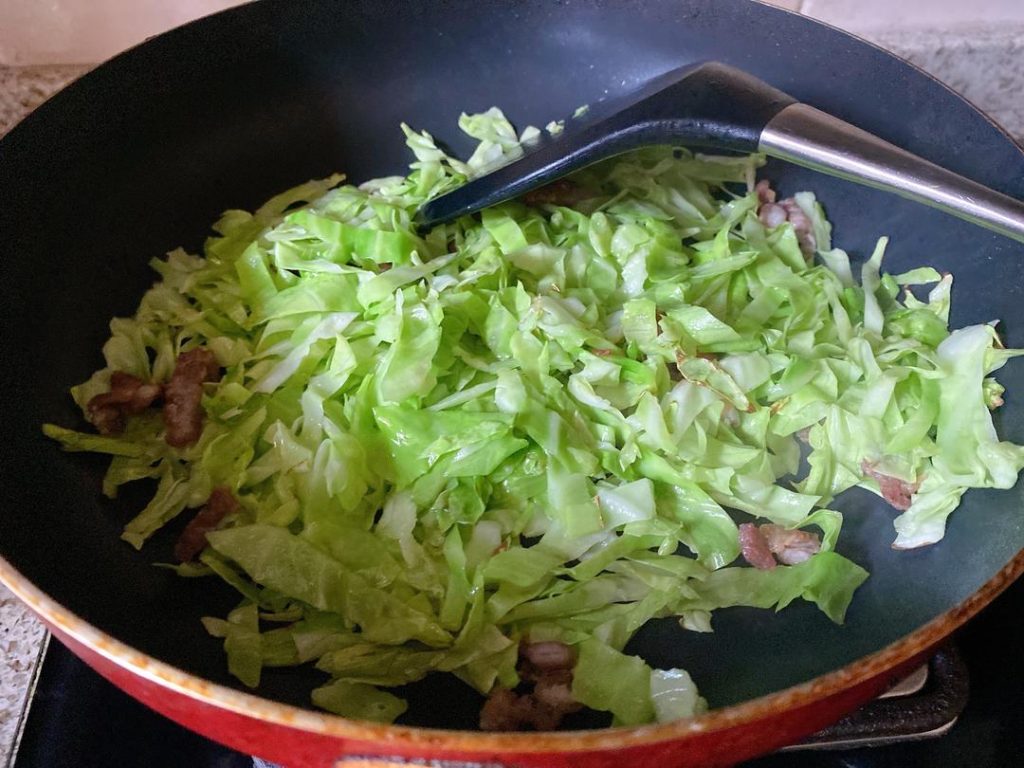
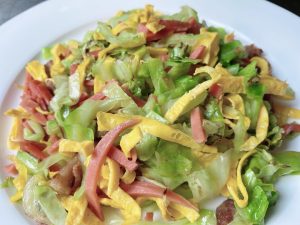
Step 4: Combine Toppings Once the cabbage has wilted and softened (about 1-2 minutes), add the egg ribbons and ham strips. Season lightly with a small pinch of salt (go easy, as the ham is already salty). Toss briefly to combine, then remove everything from the wok and set aside.
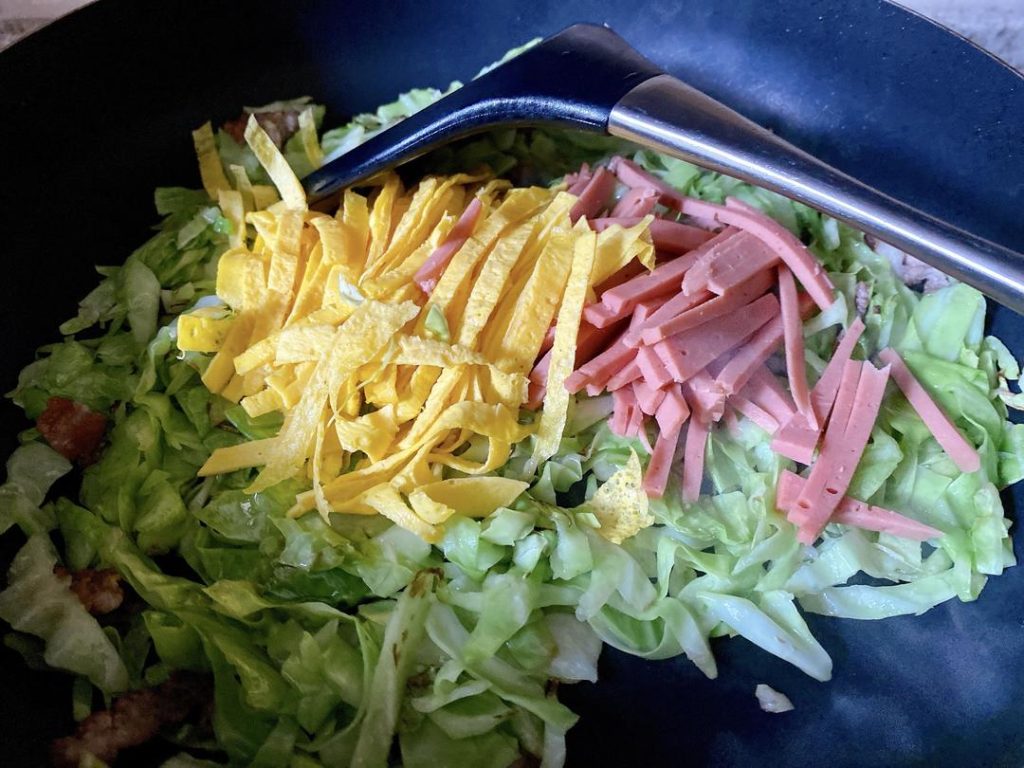
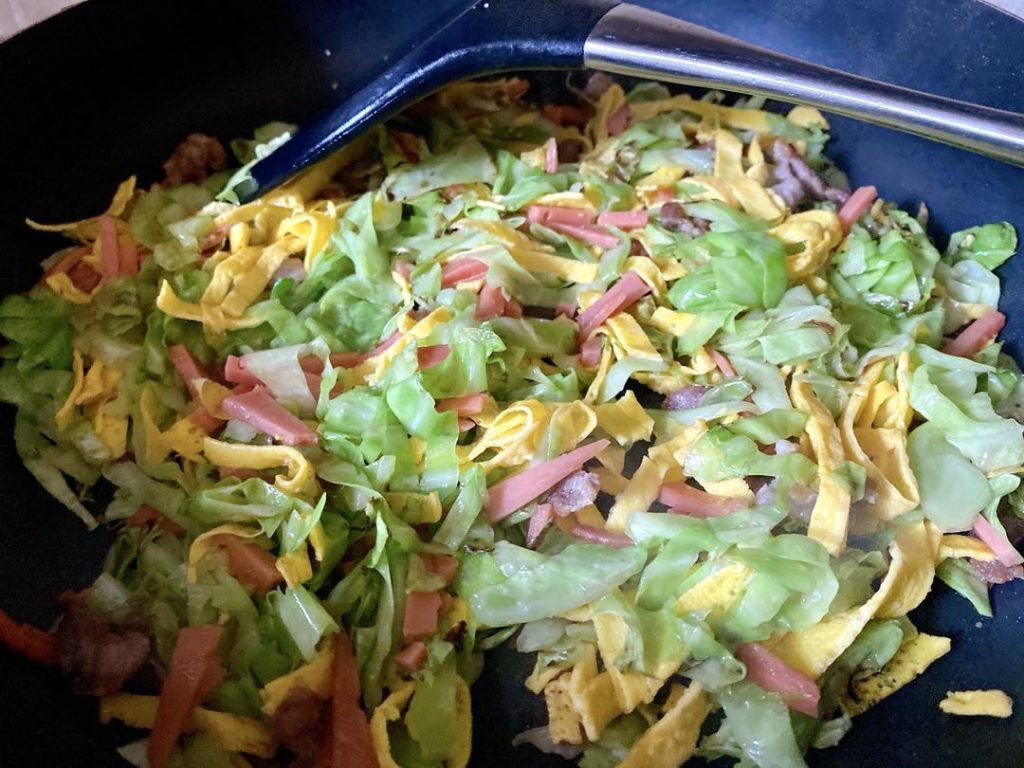
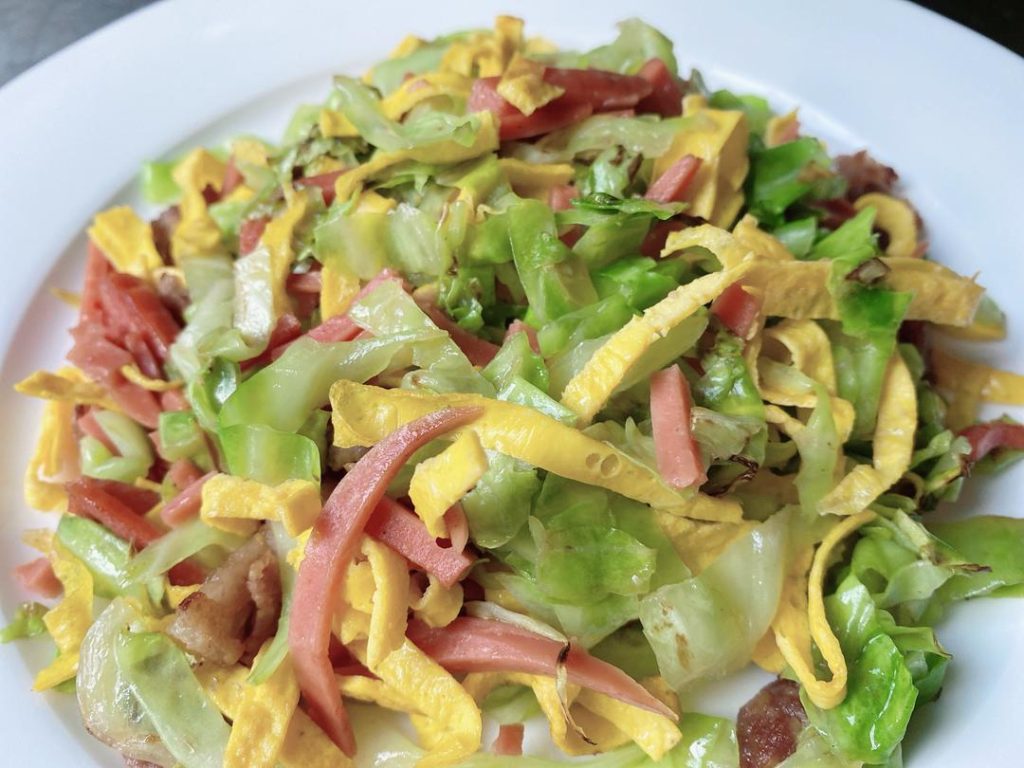
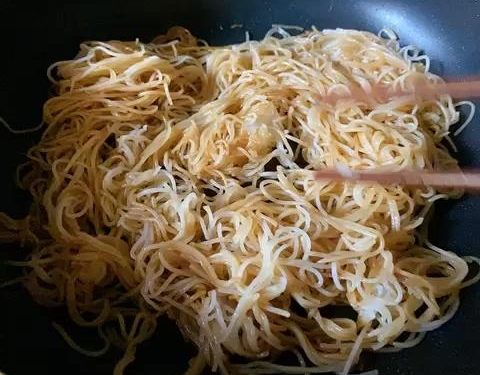
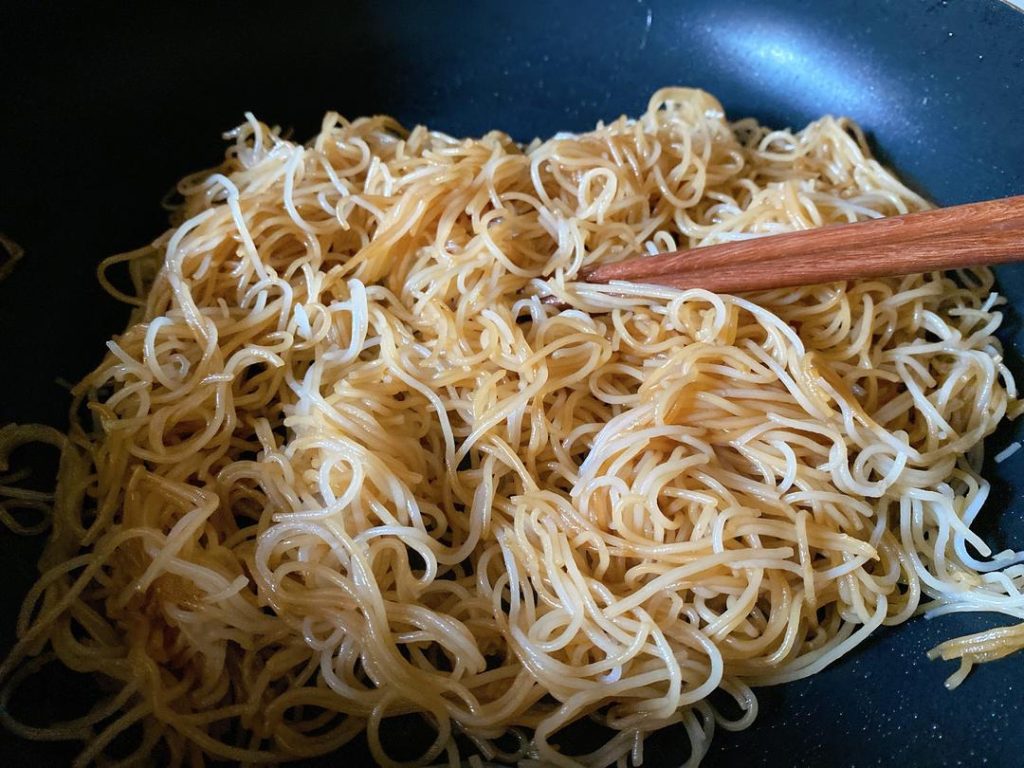
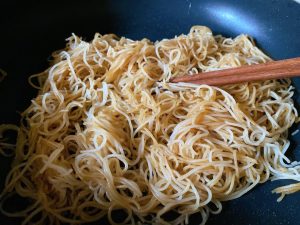
Step 5: Fry the Noodles In the same wok over medium heat, add the steamed noodles. Do not stir immediately. Let them sit for about 20–30 seconds so the bottom heats up evenly.
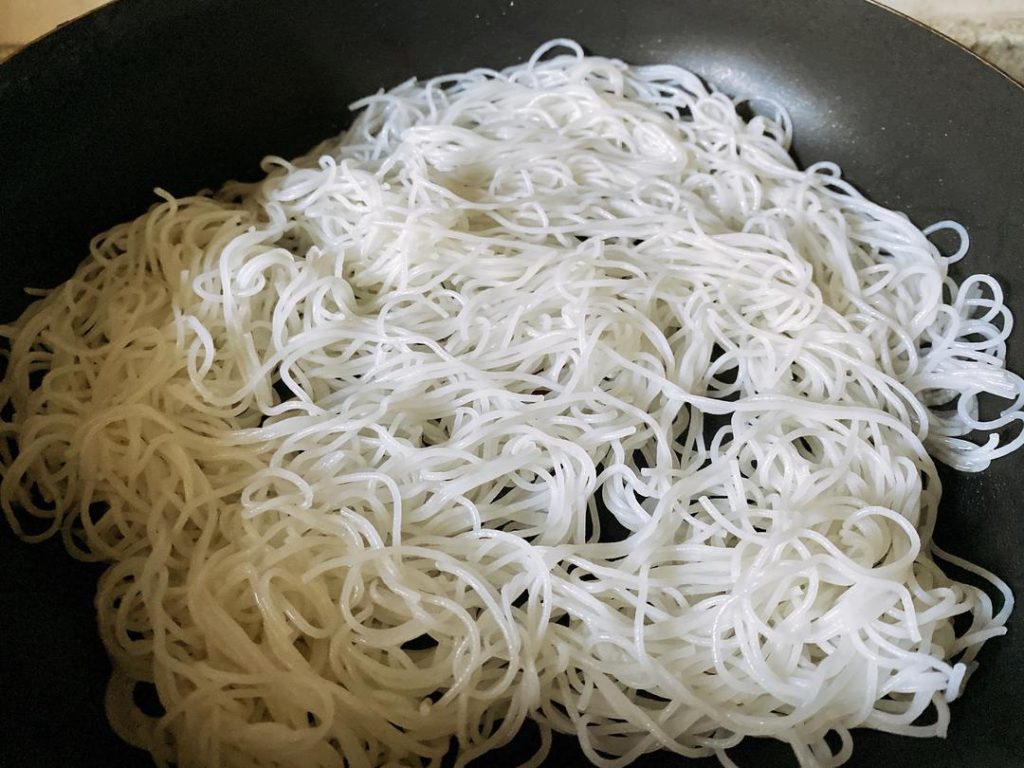
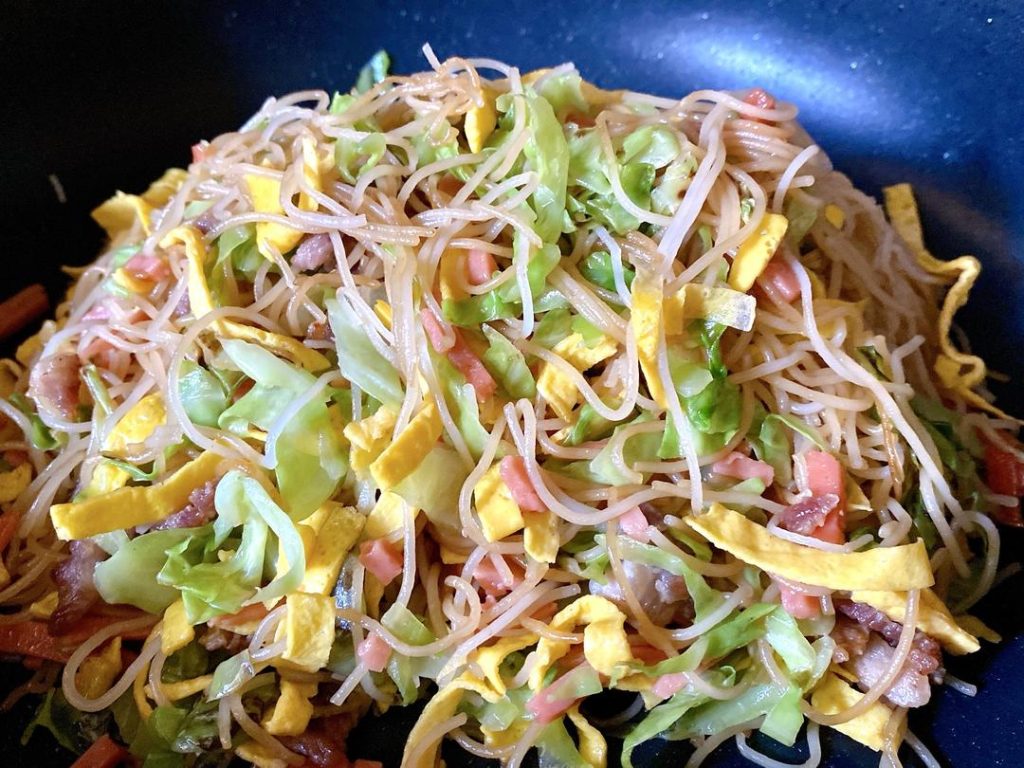
Step 6: Season and Finish Pour the prepared seasoning sauce evenly over the noodles. Using chopsticks, gently lift and separate the noodles so they absorb the sauce. Once the noodles are hot and evenly colored (about 1-2 minutes), add the cooked toppings back into the wok.
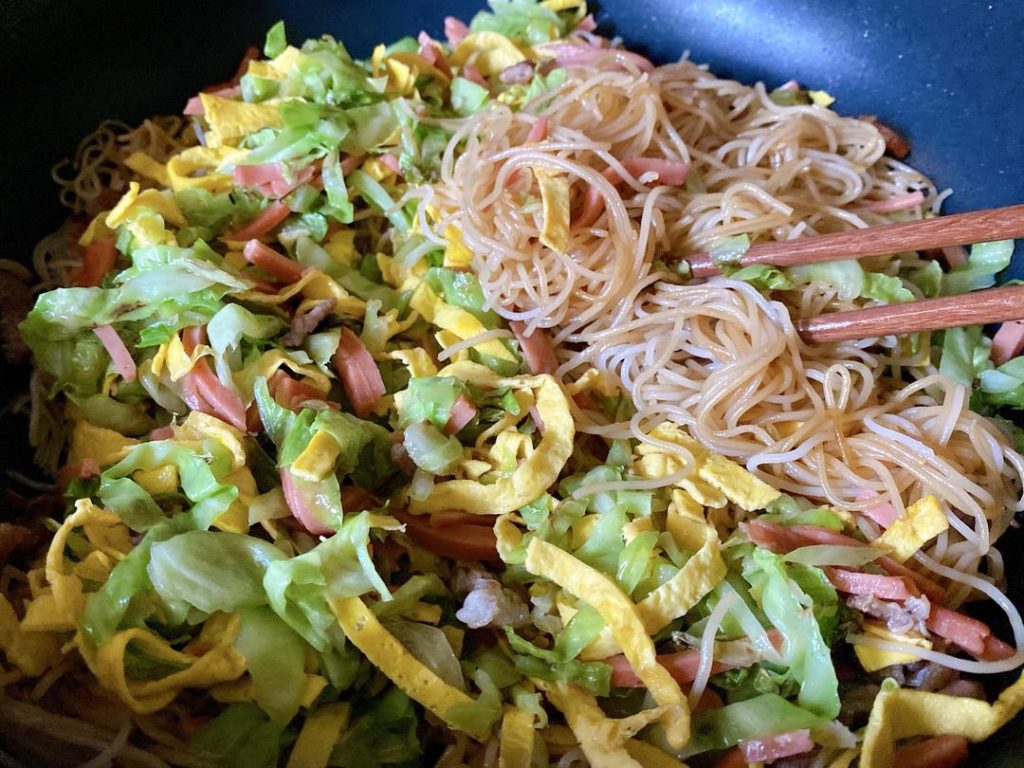
💡 Chef’s Tip: If you feel clumsy using a spatula, use two pairs of chopsticks—one in each hand—to lift and toss the noodles with the toppings. This mimics the gentle tossing action of a professional kitchen and prevents the noodles from snapping.
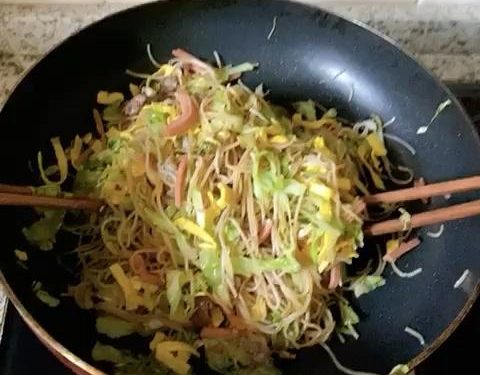
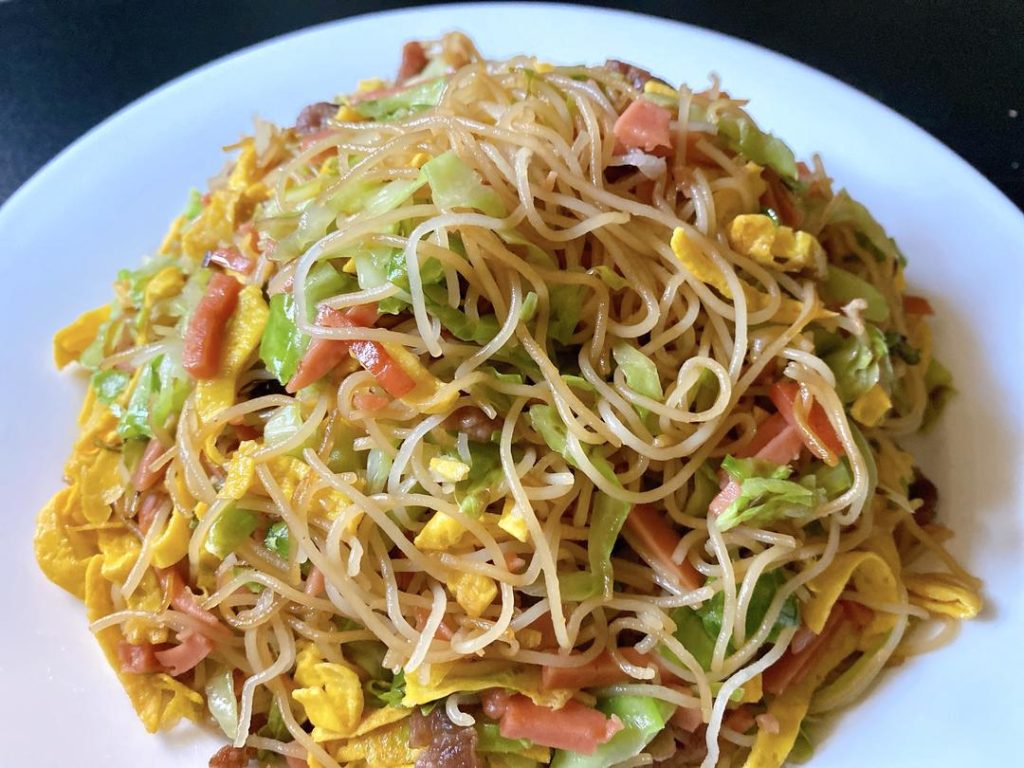
Toss until fully combined. Serve immediately while hot and aromatic!
Why This Recipe Works
- The “Tan” Method: By boiling briefly and finishing the hydration process via trapped steam, the noodles absorb just enough moisture to become pliable without turning into mush.
- Chopstick Tossing: Using chopsticks instead of a flat metal spatula preserves the integrity of the long noodle strands.
- Pork Fat: Greasing the pan with pork fat for the egg crepe adds an incredible, authentic layer of flavor that standard vegetable oil lacks.
Common Mistakes When Making Chao Mi Fen
- Mushy or Broken Noodles: This happens when noodles are boiled for too long. Stick strictly to the 2-minute boil and rely on the 6-minute residual steam.
- Noodles Sticking to the Wok: Make sure your wok is adequately heated before adding the noodles, and do not stir them the exact second they hit the pan. Let them heat up briefly first.
- Oily Pool at the Bottom: Unlike takeout which relies on heavy oil to prevent sticking, this recipe uses proper starch hydration, keeping the final dish delightfully dry and bouncy without pooling oil.
Frequently Asked Questions
Can I substitute the Shengzhou noodles? Yes. Any thin, high-quality dried rice vermicelli will work. Just monitor the boiling time, as some extra-thin brands may only need 1 minute in boiling water before the steaming phase.
Can I make it ahead? Stir-fried rice noodles are best enjoyed immediately. However, you can prep all your toppings and mix the sauce up to 24 hours in advance.
Is this authentic? Absolutely. This is a classic homestyle method used in eastern China, relying on simple, high-quality ingredients and smart techniques over heavy sauces.
Can I add different proteins? Yes! Small shrimp, shredded chicken, or marinated tofu strips make excellent additions.
How to Serve
This is a complete meal in itself, but in a Chinese household, it’s often paired with a comforting soup and a crisp side dish. I highly recommend serving it alongside a classic Tomato Egg Drop Soup and a refreshing Smashed Cucumber Salad.
Storage & Reheat
- Storage: Keep leftovers in an airtight container in the refrigerator for up to 3 days. Freezing is not recommended as it destroys the bouncy texture of the rice noodles.
- Reheat: Warm in a skillet over medium heat with a splash of water to rehydrate, or microwave covered with a damp paper towel.
Allergen Notice
- Contains Eggs and Soy.
- Contains Gluten (standard soy sauce and oyster sauce contain wheat. Use tamari and gluten-free oyster sauce to make this dish fully gluten-free).
Nutrition & Safety Disclaimer
Nutrition information is an estimate and provided for informational purposes only. Please ensure all raw meats, especially pork, are cooked to a safe internal temperature of 145°F (63°C) with a 3-minute rest time before consumption.
About the Author & Recipe Development
I’m Lin! My culinary foundation comes from growing up in a family of chefs, followed by over 10 years working as a professional chef with deep roots in Sichuan cuisine. While I am currently deep in preparation for my first cookbook, I spend my days developing and testing recipes for Woks of Love. I’ve rigorously tested this noodle recipe to adapt commercial kitchen techniques for the home stove, ensuring you get restaurant-quality texture without the industrial equipment.
Authoritative References
- To learn more about safe meat preparation, visit the USDA Food Safety and Inspection Service guidelines on safe minimum internal temperatures.
- To understand why the residual heat method works, you can read up on the science of starch gelatinization in noodles.
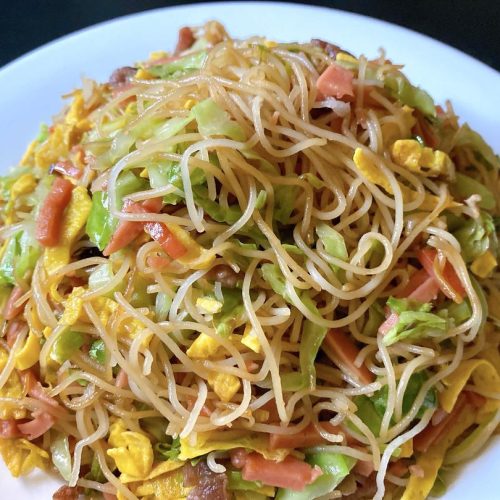
Authentic Stir-Fried Rice Noodles (Chao Mi Fen): Chef’s Secret

Equipment
- Wok or large non-stick skillet
- Strainer or Colander
Ingredients
Noodles & Toppings
- 3.5 oz Dried Rice Noodles (Shengzhou Zha Mian or Vermicelli)
- 1 large Egg beaten
- 3 oz Pork Shoulder (lean meat) julienned
- 1.5 oz Ham or Sausage julienned
- 2 oz Cabbage about 3-5 leaves, finely shredded
- 0.5 oz Pork Fat for greasing the pan
Seasoning Sauce
- 1 tbsp Light Soy Sauce
- 1 tbsp Shaoxing Wine
- 1 tbsp Water
- 0.5 tbsp Oyster Sauce
- 0.25 tsp Salt
Instructions
- Using chopsticks, hold the piece of pork fat and rub it over the bottom of a wok over low heat to grease it. Pour in the beaten egg, swirl into a thin crepe, and cook for 1-2 minutes until set. Remove and slice into thin ribbons.

- Bring a pot of water to a boil, adding a pinch of salt and a few drops of oil. Add the dried rice noodles and boil for exactly 2 minutes over high heat. Drain immediately.
- Transfer the drained noodles to a large container. Cover and let the residual heat steam them for 3 minutes. Gently toss, then cover and steam for another 3 minutes.
- Heat 1 tablespoon of oil in the wok over medium-high heat. Add the julienned pork and stir-fry until browned (2-3 minutes). Add the shredded cabbage and toss until wilted.
- Add the egg ribbons and ham to the wok. Season with a small pinch of salt, toss briefly, and remove the mixture from the wok.
- Add the steamed noodles to the wok over medium heat. Let them sit for 30 seconds to heat the bottom, then pour over the mixed seasoning sauce (soy sauce, Shaoxing wine, water, oyster sauce, salt).
- Gently toss the noodles using two pairs of chopsticks for 1-2 minutes. Add the cooked toppings back in, mix thoroughly, and serve immediately.


Leave a Reply