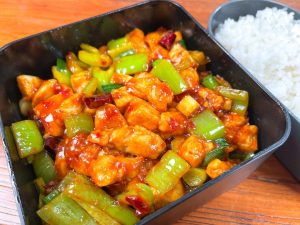
If you are looking for a dish that screams “authentic Sichuan home cooking” but comes together in under 30 minutes, this Spicy Chicken Stir-fry (La Zi Ji Ding) is it. Growing up in Sichuan, my family’s dinner table often featured this dish because it strikes the perfect balance between spicy, savory, and fresh.

Unlike the famous Chongqing Spicy Chicken (La Zi Ji), which is deep-fried and buried in a mountain of dried chilies, this homestyle version (Ji Ding) is a stir-fry. It uses chicken breast that remains incredibly tender thanks to a unique marinating technique, paired with the fresh crunch of green peppers and the rich umami of fermented bean paste.
I have tested this recipe multiple times in my US kitchen to ensure the measurements—originally based on my mother’s “ceramic spoons”—translate perfectly to standard tablespoons and teaspoons. It’s a simple, high-protein dinner that pairs perfectly with a bowl of steamed white rice.
What Is La Zi Ji Ding?
In Chinese, La Zi (辣子) refers to the spicy elements (chilies), and Ji Ding (鸡丁) means chicken cubes. This dish is a staple in Sichuan households. It features bite-sized cubes of chicken breast, marinated and “velveted” to preserve moisture, then flash-fried with fresh green peppers, garlic, ginger, and the soul of Sichuan cuisine: Doubanjiang (Pixian broad bean paste).
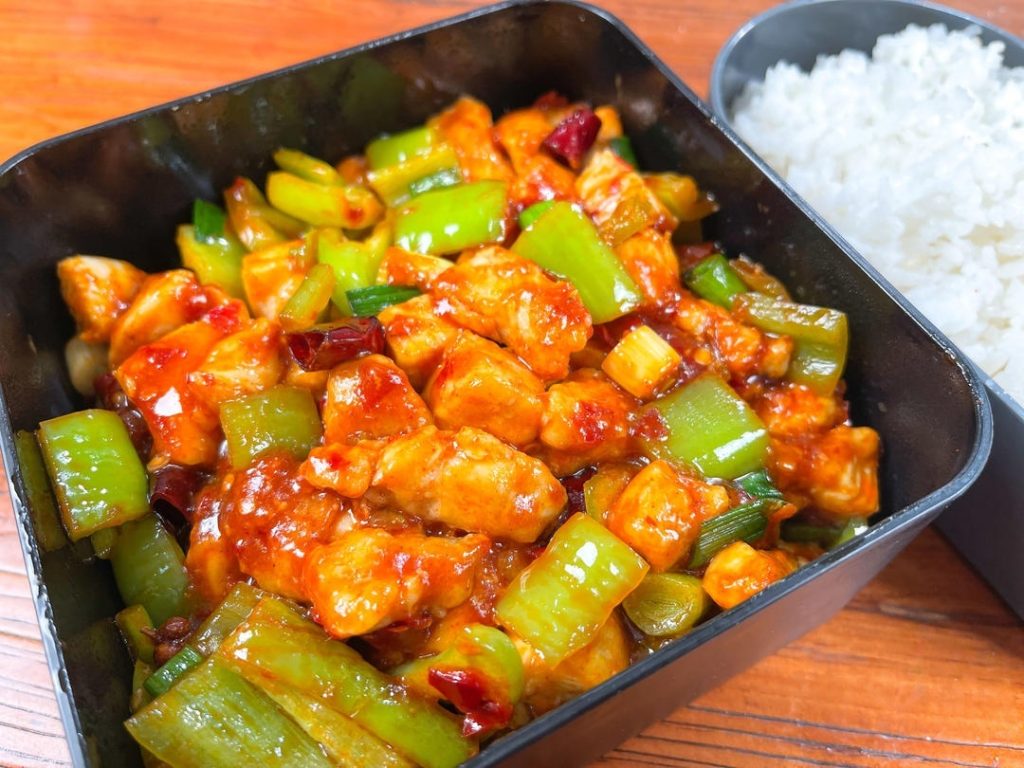
While many Westernized versions might drown the chicken in a heavy, sugary batter (like General Tso’s Chicken), this authentic recipe relies on a lighter cornstarch coating and a “mystery sauce” (a pre-mixed stir-fry sauce) to deliver flavor without the grease.
About the Author & Recipe Development
I am Jason Guo, a Sichuan-native chef and culinary writer. My passion for cooking began in my parents’ restaurant kitchen in Chengdu, where I spent my childhood peeling garlic and watching the wok station with fascination. I later formally trained at the Sichuan Culinary Institute, refining my skills in traditional Chinese techniques.
For the past 10 years, I have worked in professional kitchens across China and the US. I developed this specific recipe to bridge the gap between professional restaurant techniques and home kitchen limitations. I specifically tested the “velveting” time and sauce ratios to ensure that even on a standard home electric stove, you can achieve that signature tender texture.
Why This Recipe Works
- Velveting Technique: By coating the chicken in egg, salt, and cornstarch before cooking, we create a protective barrier. This keeps the juices inside, ensuring the breast meat never dries out.
- The “Mystery Sauce” (Wan Neng Jiang): In professional kitchens, we mix the sauce ingredients in a bowl before turning on the heat. This prevents scrambling for bottles while the wok is smoking, ensuring a consistent flavor every time.
- Layered Heat: We use dried chilies for smoky heat, Sichuan Peppercorns for a numbing aroma, and fresh peppers for a grassy, spicy kick.
Key Ingredients & Substitutions
- Chicken Breast: The original recipe calls for breast meat. You can substitute with boneless, skinless chicken thighs for a slightly richer flavor, though breast is traditional for “Ji Ding.”
- Green Peppers (Jian Jiao): In Sichuan, we use long green pointed peppers (Er Jing Tiao) which have a medium spice level.
- Substitute: Anaheim peppers or Poblano peppers work well. If you like it very spicy, use Jalapeños. For a mild version, use green Bell Peppers.
- Pixian Doubanjiang: This is spicy fermented broad bean paste. It is salty and savory. Note: If you cannot find it, you can try a mix of Sambal Oelek and soybean paste, though the flavor will differ.
- Green Garlic (Qing Suan): This looks like a leek but smells like garlic.
- Substitute: If you can’t find garlic sprouts/green garlic, use the white and green parts of scallions or baby leeks.
- Chinese Black Vinegar: We typically use Chinkiang vinegar. It adds a subtle acidity that balances the heat.
- Substitute: Chinkiang Vinegar is best, but Balsamic vinegar (mixed with a little water) is a passable emergency substitute.
Ingredients
The Main:
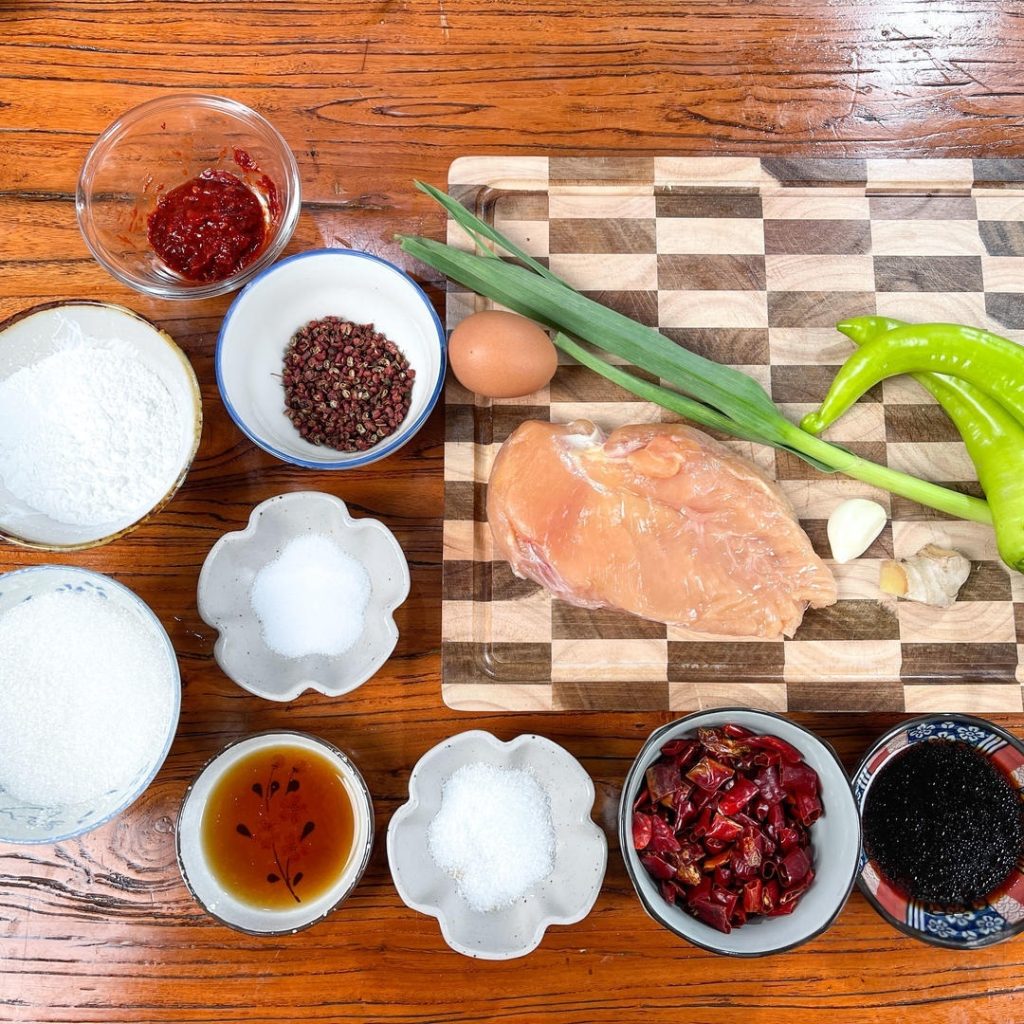
- 1 large Chicken Breast (approx. 8-10 oz / 250g)
- 2 Long Green Peppers (see substitution notes above)
- 1 large Egg (we will use half)
- 1 inch Ginger, sliced
- 2 cloves Garlic, sliced
- 1 stalk Green Garlic (or 2 scallions), cut into sections
The Aromatics:
- 6-8 Dried Red Chilies, cut into segments
- 1 tsp Sichuan Peppercorns
- 2 tbsp Doubanjiang (Pixian Bean Paste)
The Marinade:
- 1/2 tsp Salt
- 1 pinch MSG (Optional, but recommended for authenticity)
- 1 tbsp Cornstarch
- 1 tbsp Cooking Oil (neutral oil like canola or vegetable)
The “Mystery” Stir-fry Sauce:
- 4 tbsp Water
- 1 tbsp Chinkiang Vinegar
- 1 pinch Salt
- 1 pinch MSG
- 1 tbsp Sugar
- 1 tbsp Light Soy Sauce
- 1 tbsp Cornstarch
Recipe Notes Before You Start
- Knife Skills: Try to cut the chicken and the peppers into similar-sized cubes (about 1.5cm or 0.5 inch). Uniform cutting ensures uniform cooking.
- Wok vs. Pan: While a wok is traditional, this recipe works perfectly fine in a large 12-inch skillet or cast iron pan.
- Control the Salt: Doubanjiang and soy sauce are both salty. Be careful when adding extra salt to the sauce; taste as you go.
How to Make Spicy Chicken Stir-fry
Step 1: Prepare the Chicken
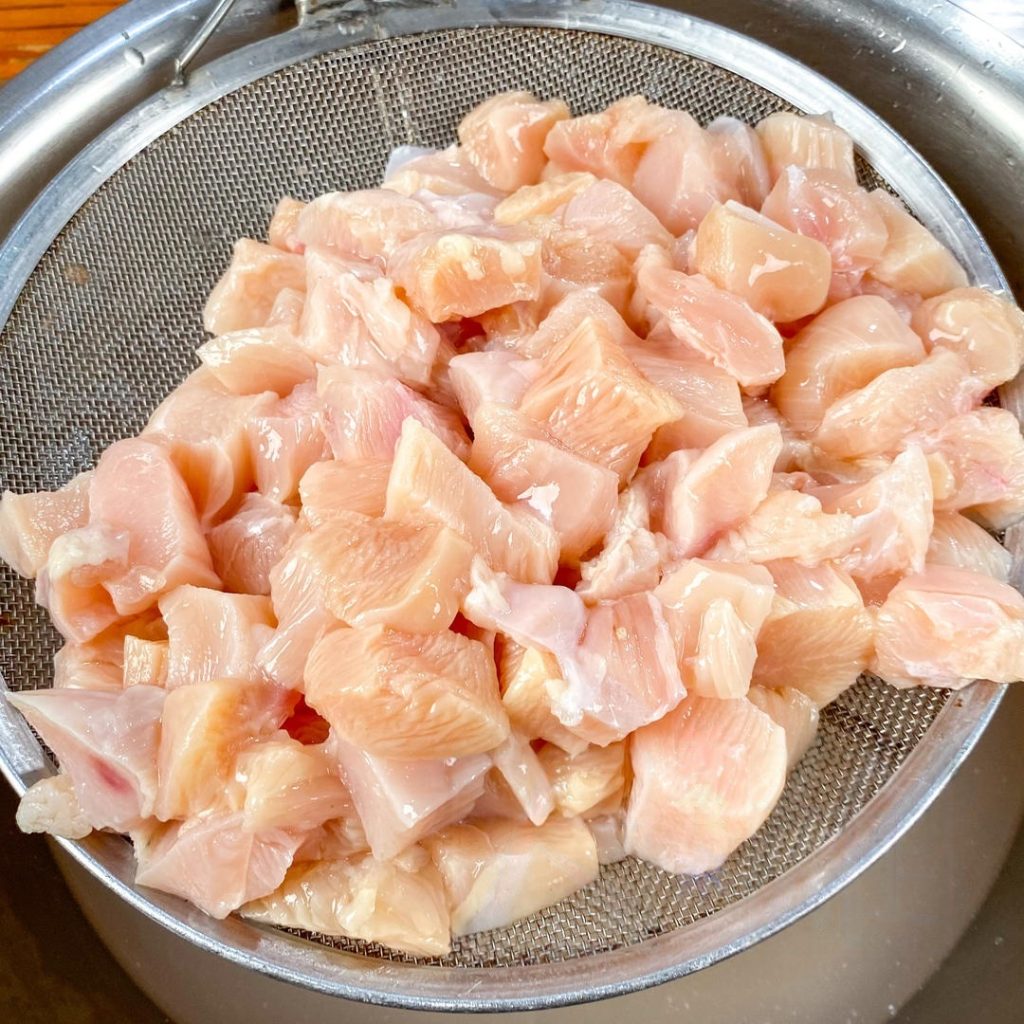
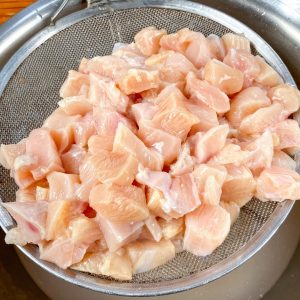
Cut the chicken breast into small cubes. Place the cubes in a bowl of water and rinse them gently. Drain well and pat dry with paper towels.
Why do this? Rinsing removes surface blood and impurities, resulting in a cleaner flavor and a lighter color after cooking. However, Safety Tip: Be extremely careful not to splash water to avoid spreading bacteria. Wash your sink immediately after.
Step 2: Marinate (The Velveting)
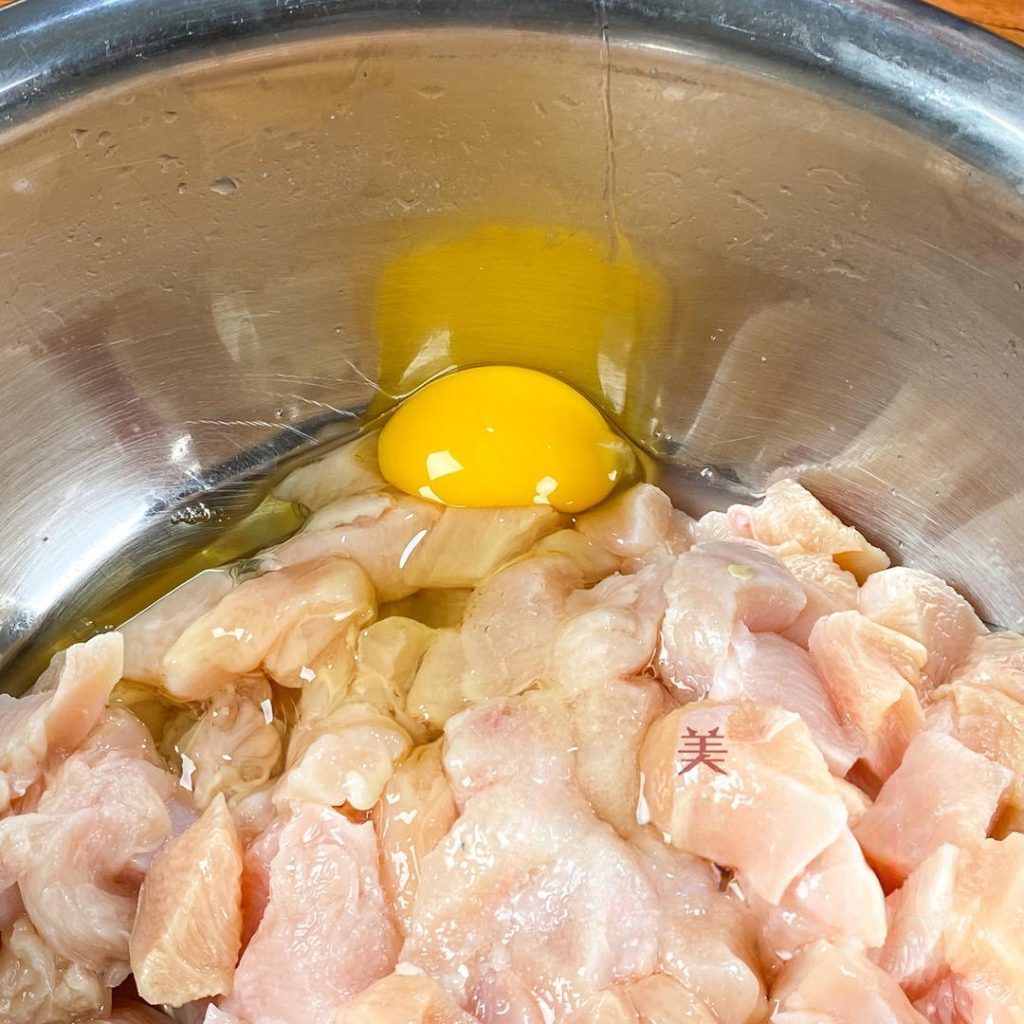
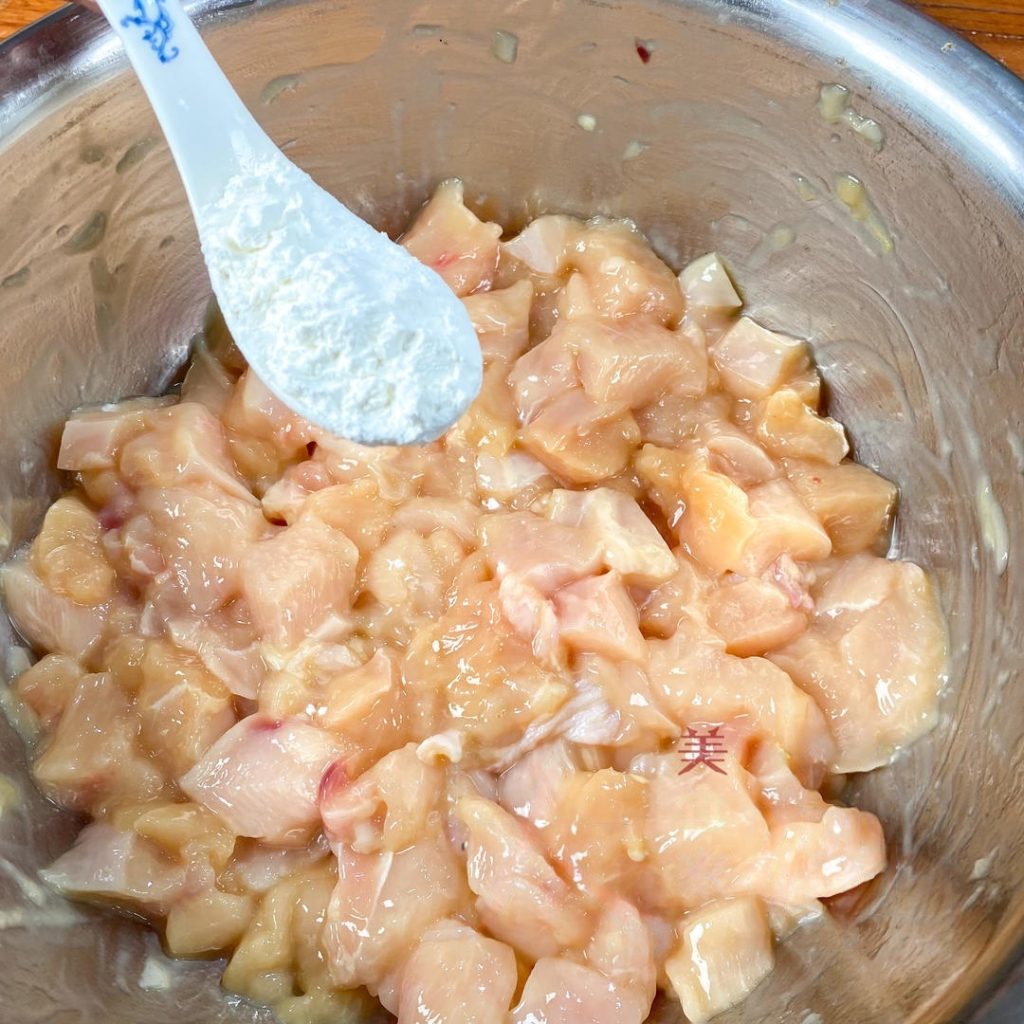
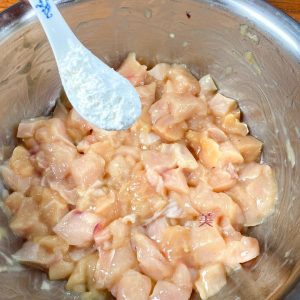
In a bowl, combine the dried chicken cubes with 1/2 tsp salt, a pinch of MSG, and half a beaten egg. Stir vigorously in one direction (clockwise) for about 1 minute until the liquid is absorbed and the meat feels sticky. Let it sit for 5 minutes.
Next, add 1 tablespoon of cornstarch and stir until coated. Finally, mix in 1 tablespoon of oil.
Expert Tip: The oil “seals” the starch layer, preventing the chicken pieces from sticking together when they hit the hot pan.
Step 3: Make the Sauce
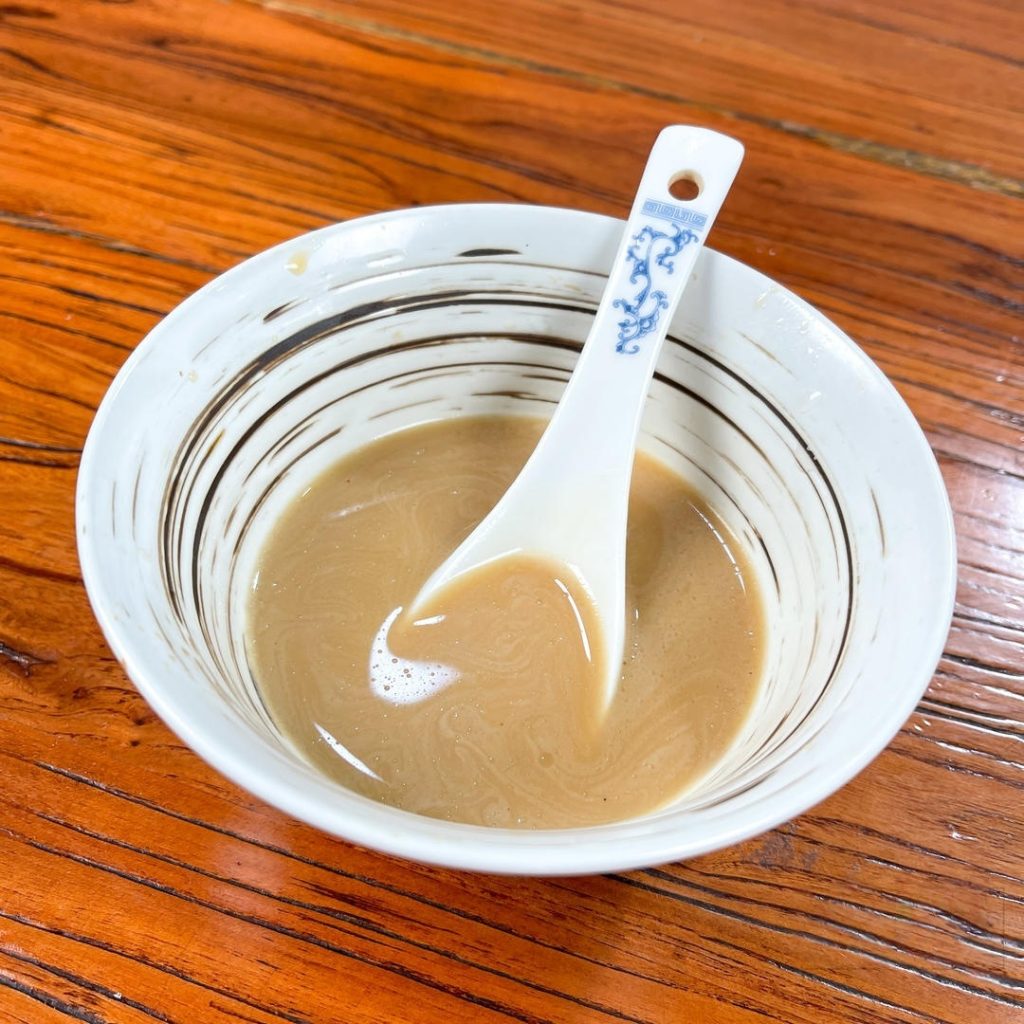
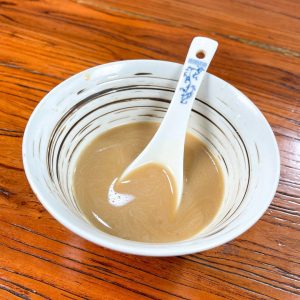
In a small bowl, combine 4 tbsp water, 1 tbsp vinegar, pinch of salt, pinch of MSG, 1 tbsp sugar, 1 tbsp light soy sauce, and 1 tbsp cornstarch. Stir until the sugar and starch are completely dissolved. Set this aside. This is your “Mystery Sauce.”
Step 4: Mise En Place
Slice your green peppers into small squares. Slice ginger and garlic. Cut green garlic (or scallions) into small sections. Have your dried chilies, peppercorns, and Doubanjiang ready.
Step 5: Sear the Chicken
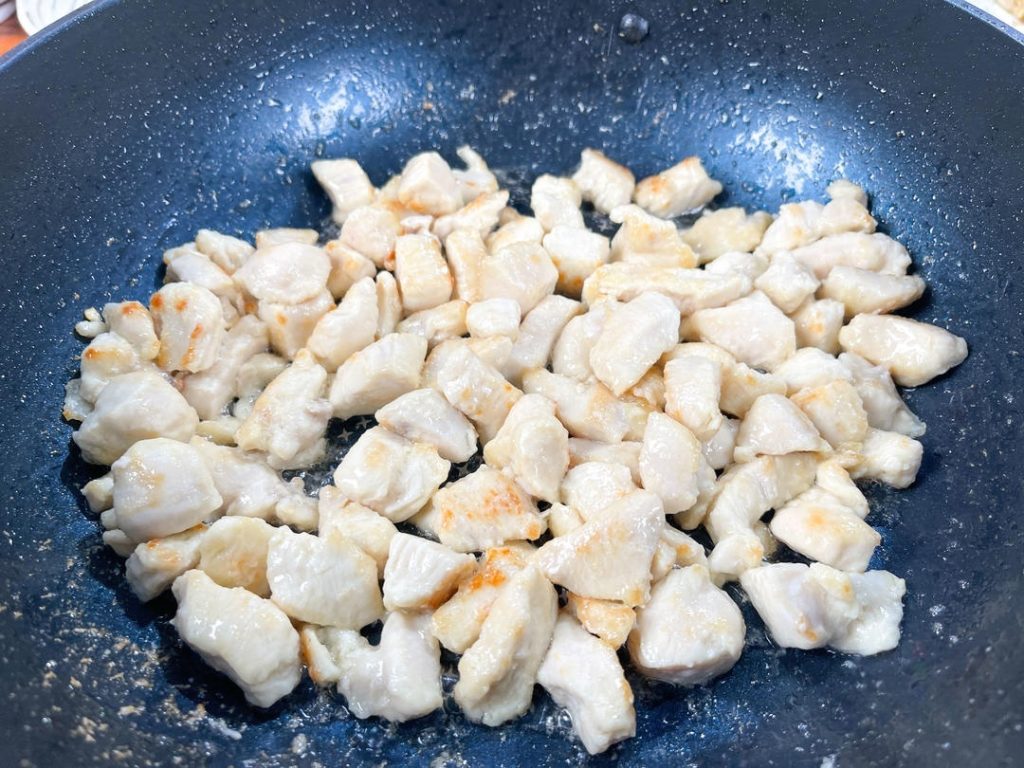
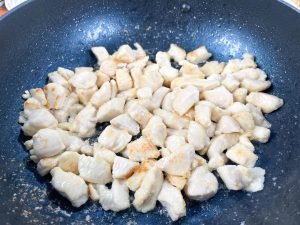
Heat your wok or skillet over medium-high heat. Add 2 tablespoons of oil. When the oil is hot (shimmering but not smoking), add the marinated chicken. Stir-fry for about 3 minutes until the chicken turns white and creates a firm shell (slightly golden). Remove the chicken from the pan and set aside.
Note: We cook the chicken to about 80-90% doneness here. It will finish cooking in the sauce later.
Step 6: Bloom the Aromatics
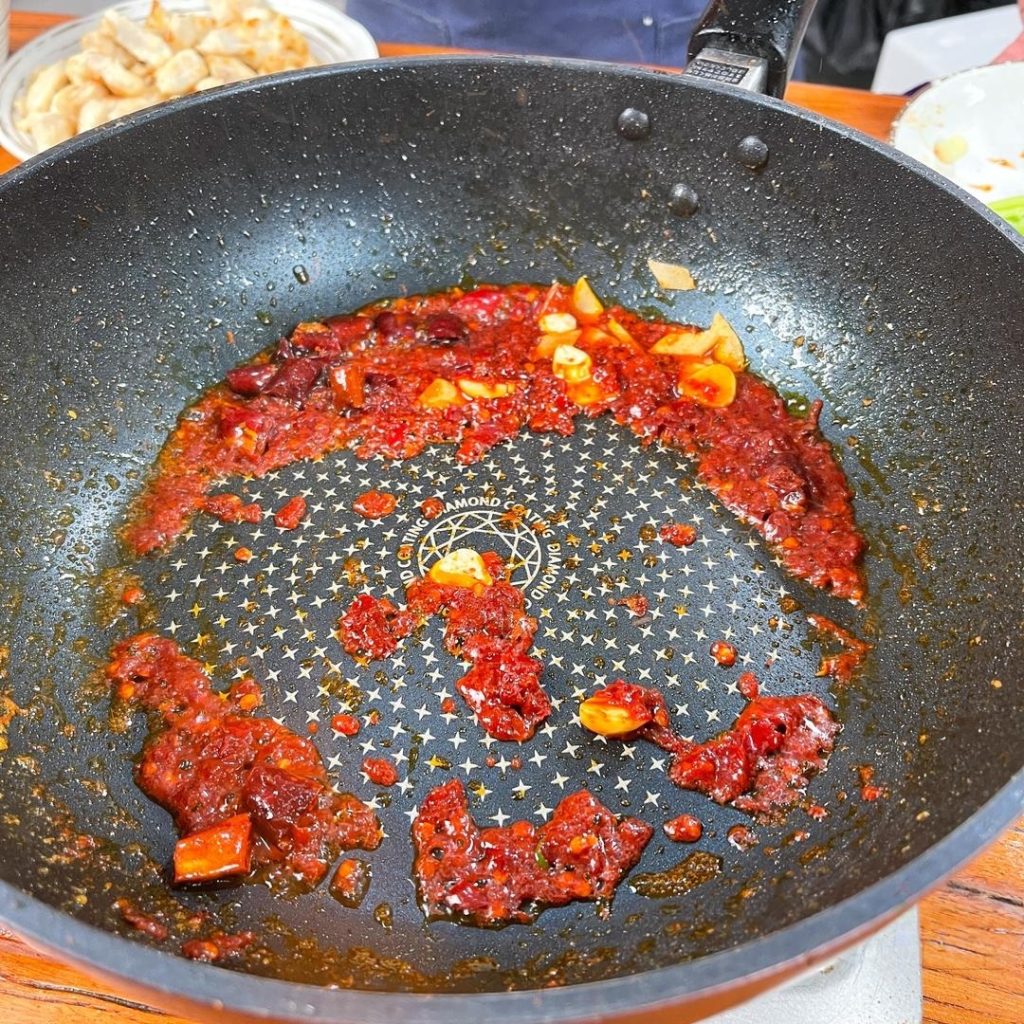
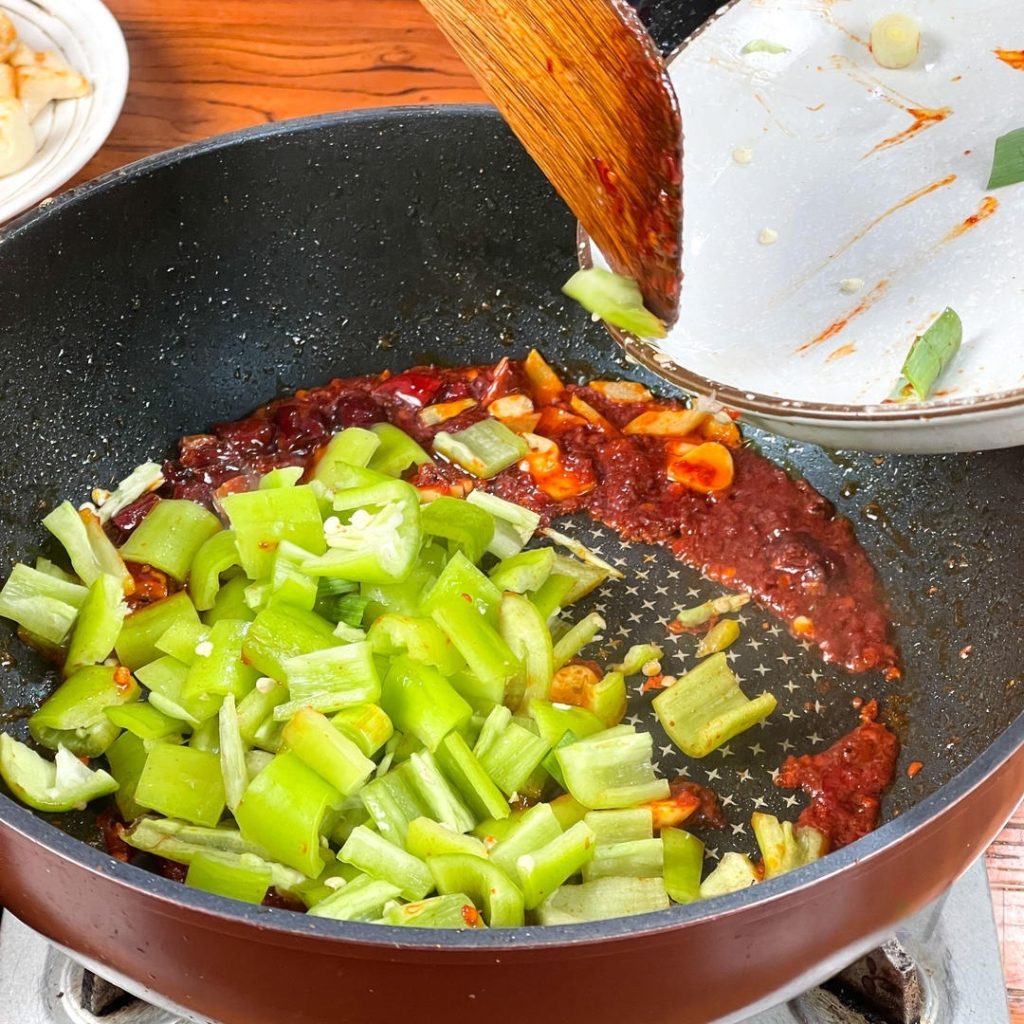
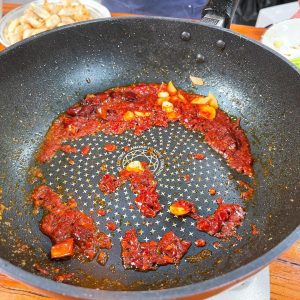
Add another 2 tablespoons of oil to the same pan. Turn heat to low-medium. Add the dried chili segments, Sichuan peppercorns, and the 2 tablespoons of Doubanjiang. Stir-fry gently until the oil turns red and smells fragrant.
Warning: Do not burn the chilies! If the oil is too hot, they will turn black and bitter.
Step 7: Stir-fry Vegetables
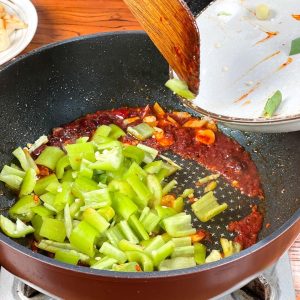
Increase heat to high. Add the sliced ginger, garlic, and the green pepper chunks. Stir-fry for 30 seconds until the peppers darken slightly but are still crisp.
Step 8: Combine and Serve
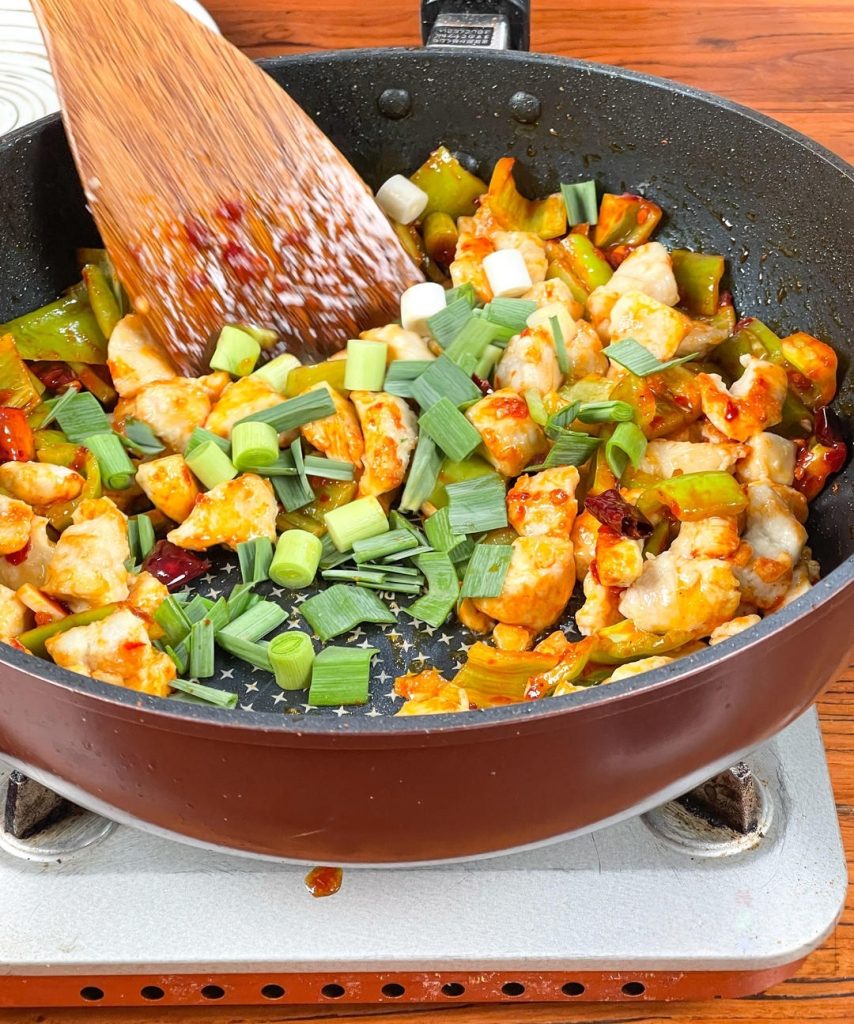
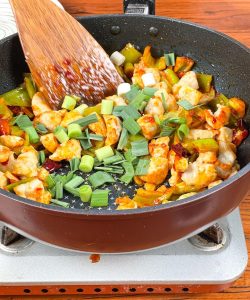
Return the cooked chicken to the pan. Add the green garlic sections. Toss everything together for 10 seconds.
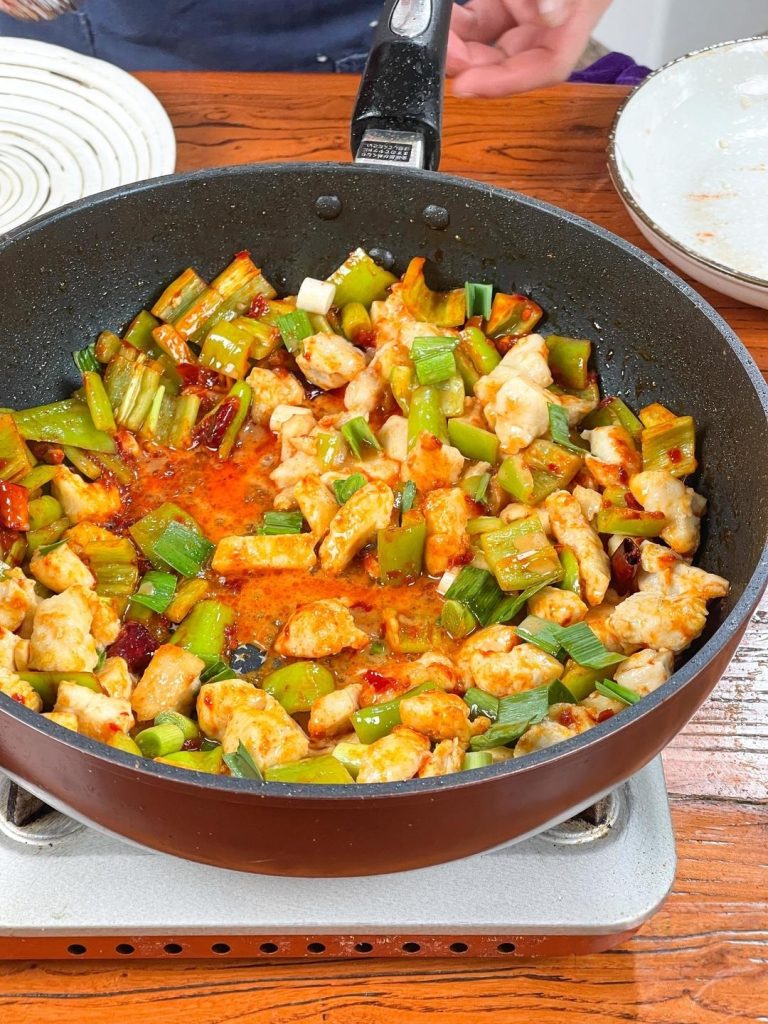
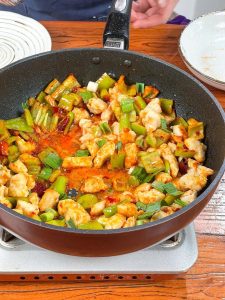
Give your sauce bowl a quick stir (cornstarch settles!), then pour it into the pan. Stir constantly. The sauce will bubble and thicken almost instantly, coating everything in a glossy, amber glaze.
Turn off the heat and serve immediately.
Serving Suggestions
This dish is a “Rice Killer” (Xia Fan Cai), meaning it is savory and spicy enough to make you eat extra rice.
- Grain: Serve with steamed jasmine rice or, for a change, try my One Pot Rice Cooker Pork Ribs and Rice.
- Vegetable Side: Balance the heat with a cooling vegetable like Smashed Cucumber Salad or a simple Stir-fried Lettuce with Garlic.
- Soup: A light soup like Tomato Egg Drop Soup works wonders to cleanse the palate.
Troubleshooting & FAQ
Q: My chicken turned out dry and tough. Why? A: This usually happens if you skip the marinating step or overcook the chicken during the first sear. Ensure you stir the egg and starch well into the meat, and remove the chicken from the pan as soon as it turns white and firm.
Q: Can I freeze this dish? A: I do not recommend freezing this stir-fry. The green peppers will become mushy upon thawing, and the cornstarch-thickened sauce may separate. It keeps in the fridge for up to 3 days.
Q: It’s too spicy! How can I fix it? A: If you are sensitive to spice, omit the dried chilies and reduce the Doubanjiang to 1 tablespoon. You can also add a splash more sugar to balance the heat.
Nutrition Information (Estimate)
- Serving Size: 1 portion (approx 1/2 of recipe)
- Calories: 380 kcal
- Protein: 28g
- Carbohydrates: 14g
- Fat: 22g
- Sodium: 950mg
- Fiber: 2g
(Disclaimer: Nutrition information is calculated using an ingredient database and should be considered an estimate. Garnishes and optional ingredients are not included. Sodium levels can vary greatly depending on the brand of Doubanjiang and Soy Sauce used.)
Food Safety & Preparation
- Raw Meat: Always wash your hands, knife, and cutting board thoroughly with hot soapy water after handling raw chicken to prevent salmonella.
- Cooking Temp: Ensure the internal temperature of the chicken reaches 165°F (74°C). Because the pieces are small, visual cues (white all the way through) are reliable, but a thermometer is best for beginners.
- Chili Fumes: When frying dried chilies and Doubanjiang, turn on your kitchen ventilation fan. The spicy fumes can be irritating to the eyes and throat.
Authoritative References
- Sichuan Cuisine Standards: For deeper understanding of Sichuan flavor profiles, refer to The Food of Sichuan by Fuchsia Dunlop.
- Food Safety: USDA Chicken Cooking Guidelines. USDA.gov
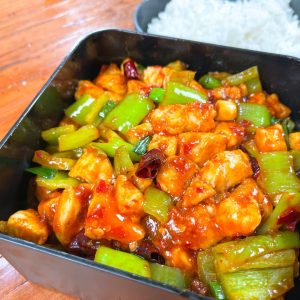
Spicy Chicken Stir-fry (La Zi Ji Ding)

Equipment
- Wok or large skillet
- Cutting Board
- Knife
Ingredients
Chicken & Marinade
- 10 oz Chicken breast cut into 1.5cm cubes (approx 280g)
- 0.5 tsp Salt
- 0.5 Egg beaten
- 1 tbsp Cornstarch
- 1 tbsp Cooking oil neutral oil
- 1 pinch MSG optional
Stir-Fry Aromatics
- 2 Long Green Peppers cut into squares
- 1 inch Ginger sliced
- 2 cloves Garlic sliced
- 1 stalk Green Garlic or Scallion cut into sections
- 6 Dried Red Chilies
- 1 tsp Sichuan Peppercorns
- 2 tbsp Doubanjiang Pixian Broad Bean Paste
- 2 tbsp Cooking oil for frying
Sauce
- 4 tbsp Water
- 1 tbsp Chinkiang Vinegar
- 1 tbsp Sugar
- 1 tbsp Light Soy Sauce
- 1 tbsp Cornstarch
- 1 pinch Salt
- 1 pinch MSG
Instructions
- Prep the Chicken: Cut chicken into cubes. Rinse briefly, drain, and pat dry.

- Marinate: Mix chicken with salt, MSG, and egg. Stir in one direction until sticky. Add cornstarch, mix well. Add oil, mix to seal. Let sit for 5 mins.
- Make Sauce: Whisk all sauce ingredients in a small bowl until sugar and starch dissolve.
- Sear Chicken: Heat 2 tbsp oil in a wok/skillet over medium heat. Fry chicken until pale golden (approx 3 mins). Remove and set aside.

- Fry Aromatics: Add remaining 2 tbsp oil. Low heat. Fry dried chilies, peppercorns, and Doubanjiang until red oil appears.
- Add Veggies: Turn heat to high. Add ginger, garlic, and green peppers. Stir-fry 30 seconds.
- Combine: Return chicken to pan. Add green garlic. Toss.

- Sauce It: Stir sauce bowl again, pour into pan. Stir constantly until sauce thickens and coats everything (about 20 seconds).

- Serve: Transfer to a plate and serve hot with rice.












Leave a Reply