I still remember the scent of my father’s kitchen in Sichuan. It wasn’t just the heat of chili peppers; it was the intoxicating, citrusy, floral aroma of fresh Sichuan Peppercorn Oil (Hua Jiao You) being gently infused on the back burner.

In the West, people often obsess over “spicy” (la), but in Sichuan, we value “ma” (numbing) just as much. This oil is the secret weapon that provides that tingly, electric sensation on your tongue without necessarily adding heat. While you can buy bottled versions at the store, they often taste flat, stale, or overly bitter.
Making it at home is incredibly simple, cost-effective, and yields a flavor profile that is vibrant and fresh. Just a spoonful of this liquid gold can transform a simple Smashed Cucumber Salad or elevate a bowl of Sesame Noodles into a restaurant-quality meal.
About the Author & Recipe Development
I grew up helping in my family’s restaurant in Sichuan, where making condiment oils was a weekly ritual. Later, during my professional culinary training, I learned the science behind oil infusion. We tested this recipe multiple times in our home kitchen to determine the optimal ratio of peppercorns to oil and the exact visual cues for when to turn off the heat to avoid bitterness. This method uses a “cold oil start” technique, which is the safest and most effective way to extract flavor for home cooks.
What is Sichuan Peppercorn Oil?
Sichuan Peppercorn Oil (花椒油, Huājiāo Yóu) is a finishing oil, not a cooking oil. It is made by infusing vegetable oil with Sichuan peppercorns. It captures the volatile oils of the peppercorn—responsible for the citrusy aroma and the numbing sensation—and suspends them in a fat that can be easily drizzled over cold dishes, soups, and stir-fries.
Why This Recipe Works
- Cold Oil Start: Unlike flash-frying (which risks burning the delicate peppercorns), starting with cold oil allows the flavor to extract slowly and evenly as the temperature rises.
- Washing the Peppercorns: This step removes dust and grit, ensuring a pure flavor, while the subsequent drying step prevents dangerous oil splattering.
- Visual Cues: We rely on the color change of the peppercorns (from red to dark red/maroon) rather than just a timer, ensuring you don’t burn the spices.
Key Ingredients & Substitutions
- Sichuan Peppercorns (Hua Jiao): You need high-quality peppercorns. Look for Da Hong Pao (Big Red Robe) peppercorns if possible. They should be bright red (or green, for a different flavor profile) and very fragrant.
- Contrast: Red Peppercorns provide a warm, woodsy, classic aroma. Green Peppercorns (Teng Jiao) are more floral, citrusy, and sharper. You can use either, or a mix, but Red is standard for this recipe.
- Oil: Use a neutral oil with a high smoke point.
- Best choices: Sunflower oil, Grapeseed oil, Corn oil, or Vegetable oil (rapeseed).
- Avoid: Olive oil (flavor is too strong) or toasted sesame oil (it burns too easily and masks the peppercorn flavor).
Recipe Notes Before We Begin
- Equipment: You will need a small saucepan (stainless steel or non-stick is fine), a fine-mesh strainer, and a clean, dry glass jar for storage.
- Ratio: A general rule of thumb for a potent oil is a 1:4 or 1:5 ratio of peppercorns to oil by volume.
- Safety First: We will be washing the peppercorns. Water and hot oil are enemies. You must dry the peppercorns thoroughly before they touch the oil to prevent dangerous popping.
Ingredients
- 1/2 cup (approx. 30g) Sichuan Peppercorns (high quality)
- 1 ½ cups (350ml) Neutral Oil (Sunflower, Vegetable, or Canola)
How to Make Sichuan Peppercorn Oil
Step 1: Rinse the Peppercorns
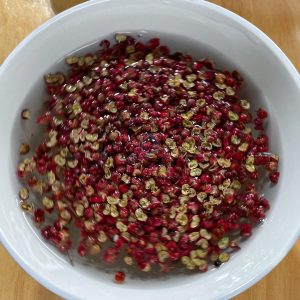
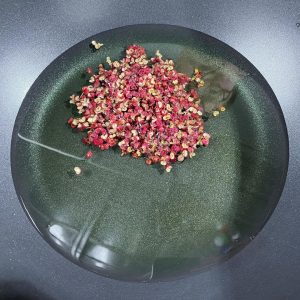
Place the Sichuan peppercorns in a fine-mesh strainer. Rinse them quickly under cool running water.
Why we do this: Dried spices from the market often carry dust and debris. A quick rinse ensures your oil tastes clean, not dusty.
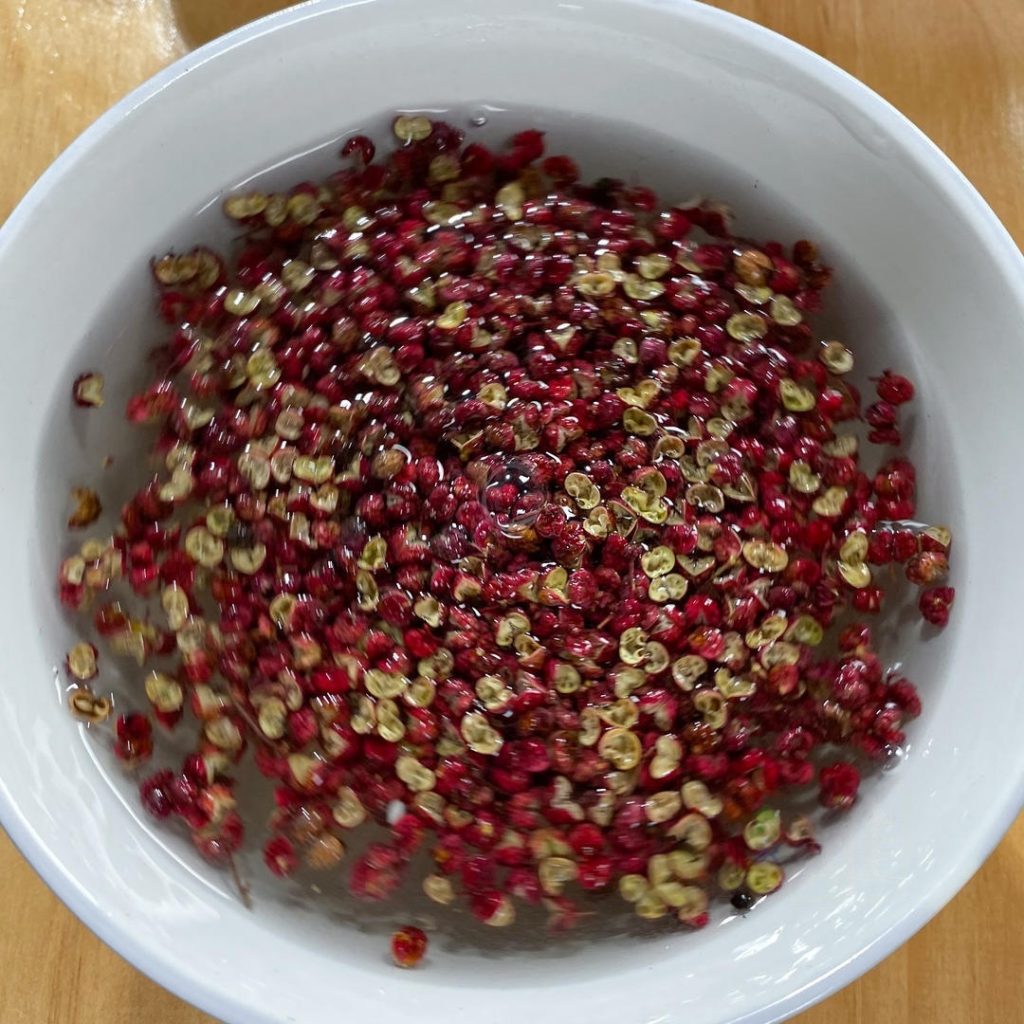
Step 2: Dry Thoroughly (Crucial Step)
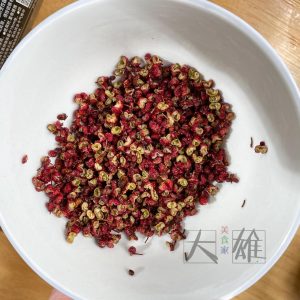
Shake off excess water. Lay the peppercorns out on paper towels and pat them completely dry. You can also let them air dry for 10-15 minutes.
Safety Note: Do not skip this. If the peppercorns are wet when added to the oil, the water will boil instantly, causing the hot oil to splatter aggressively, which can cause burns.
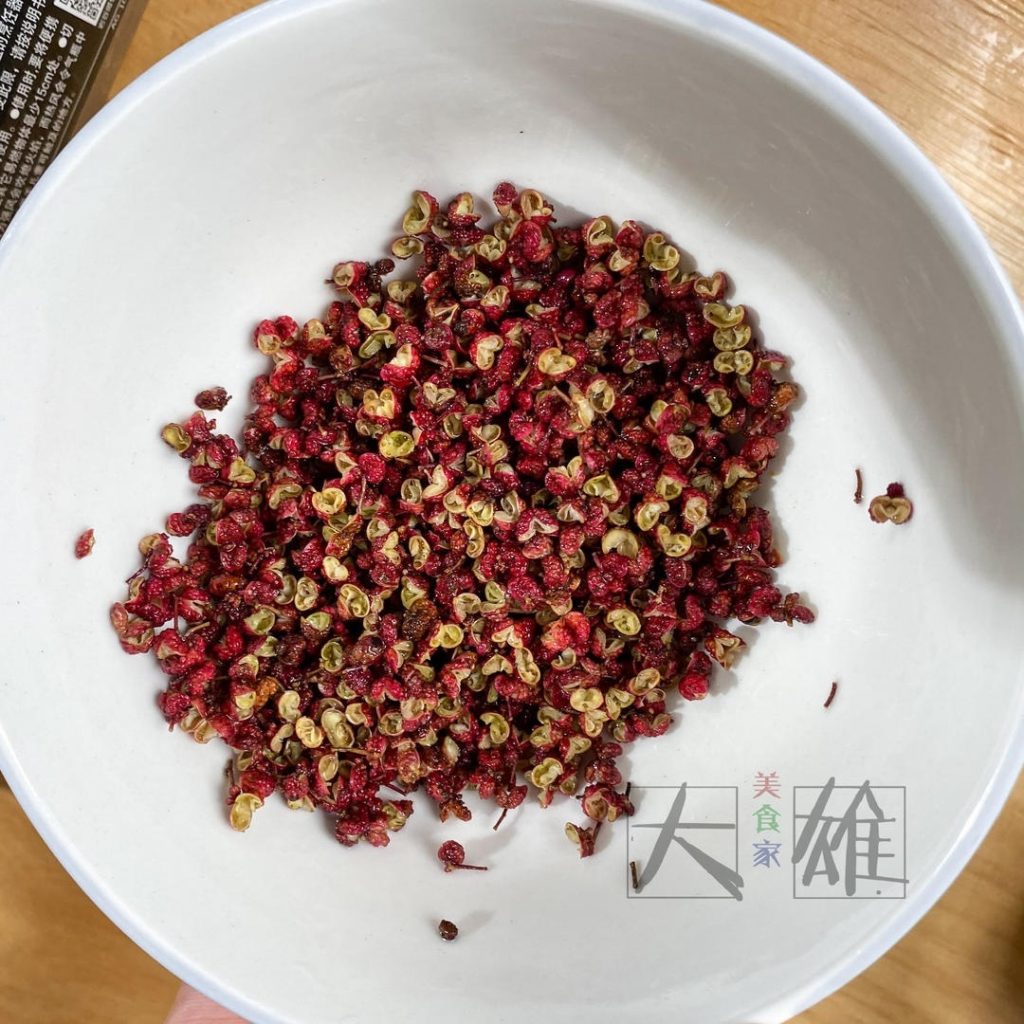
Step 3: The Cold Infusion Start
Pour the oil into a cool wok or saucepan. Add the dried peppercorns to the cold oil.
Why cold oil? If you throw peppercorns into hot oil, the outside will burn before the flavor releases from the inside. Heating them together allows for maximum flavor extraction.
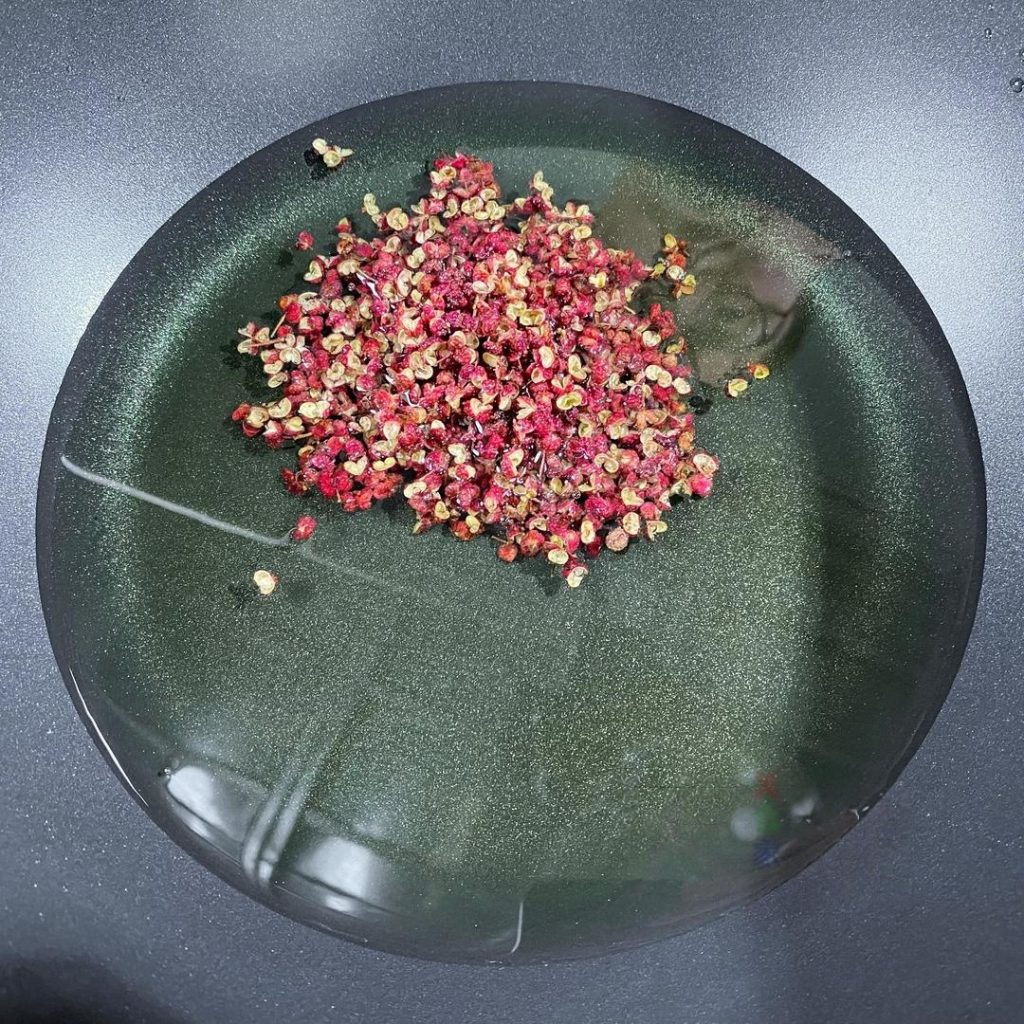
Step 4: Slow Simmer
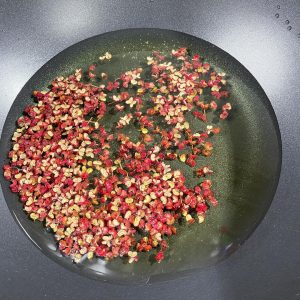
Turn the heat to low. Let the oil slowly heat up. You will see small bubbles forming around the peppercorns. Continue to infuse over low heat. Stir occasionally.
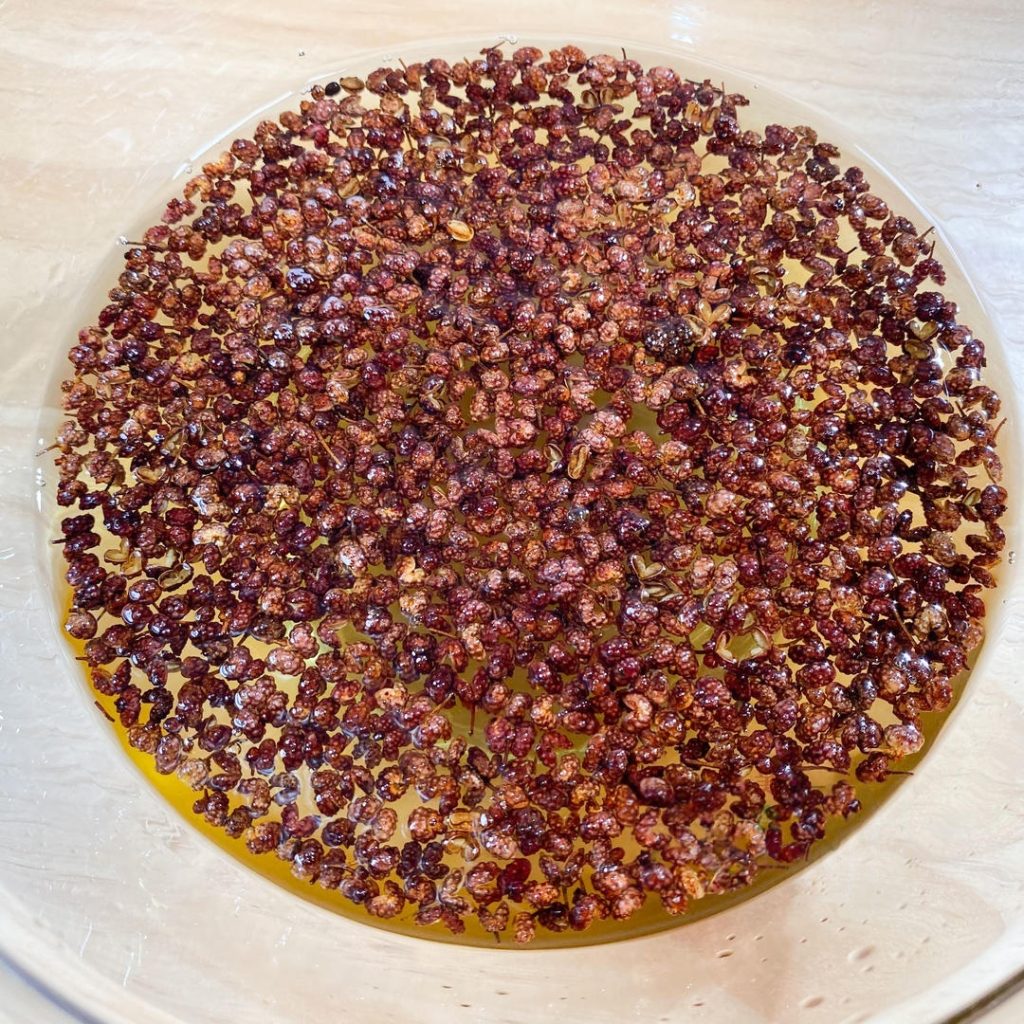
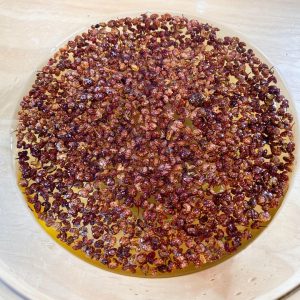
- Visual Cue: Watch the color closely. The peppercorns will darken from bright red to a deep maroon/dark brown. They will become very light and float easily.
- The “Stop” Point: Turn off the heat before they turn black. If they turn black, the oil will taste burnt and bitter. The residual heat will continue to cook them for a moment after you turn off the stove. This process usually takes 10-15 minutes depending on your stove.
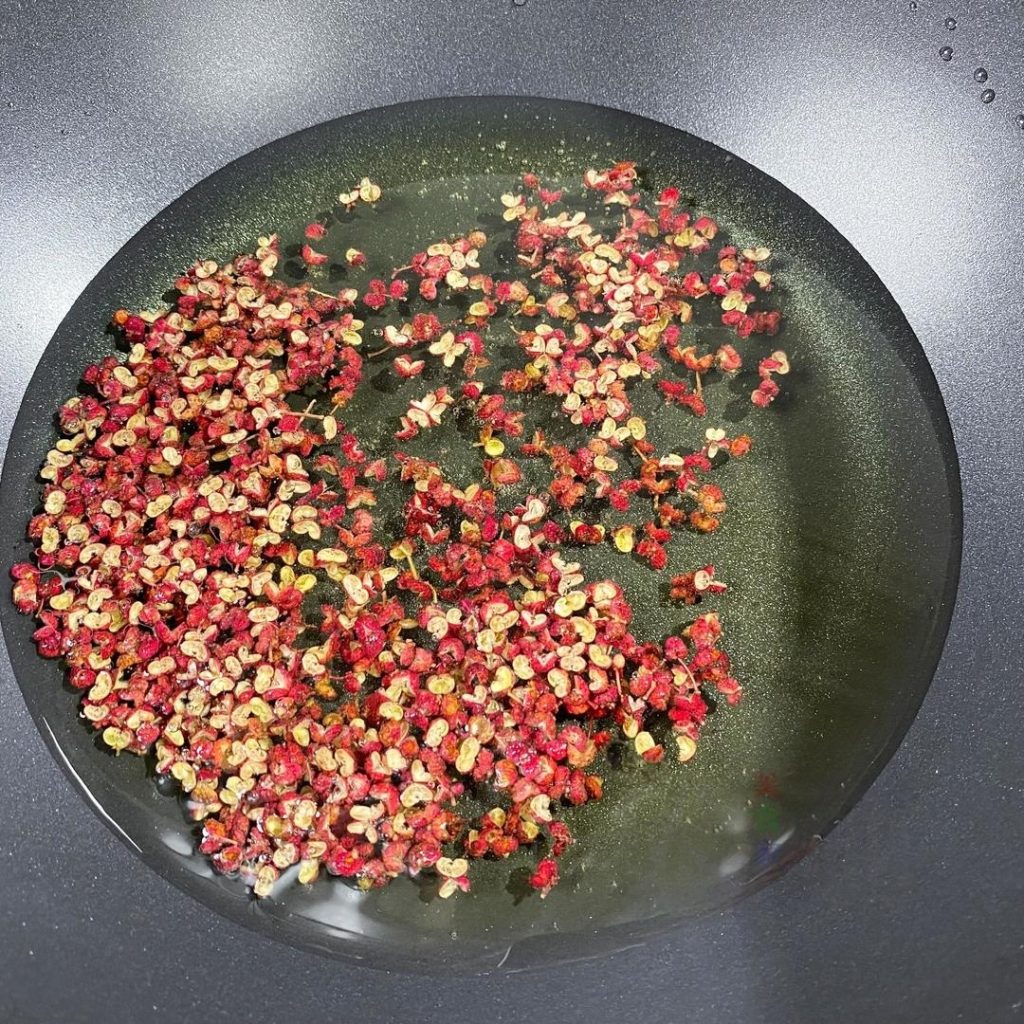
Step 5: Cool and Store
Let the oil cool completely in the pan with the peppercorns (this extracts the last bit of flavor). Once cool, pour the oil through a strainer into a clean, dry glass jar.
Tip: Some people like to leave a few peppercorns in the jar for aesthetics, but straining them out extends the shelf life of the oil.
Serving Suggestions
This oil is incredibly versatile in Chinese cooking.
- Dipping Sauces: Add a teaspoon to the dipping sauce for Sichuan Dumplings or San Xian Dumplings.
- Cold Dishes: It is essential for cold appetizers like Shredded Cold Salad or Spicy Cold-Tossed Pork Tenderloin.
- Soups: Drizzle over Hot and Sour Soup right before serving for an aromatic kick.
FAQ
1. Can I use olive oil? It is not recommended. Olive oil has a strong distinct flavor and a lower smoke point. It will overpower the floral fragrance of the Sichuan peppercorns. Stick to neutral oils like sunflower or canola.
2. How long does this oil last? If stored in an airtight container in a cool, dark place, it stays fresh for about 1 month. If refrigerated, it can last up to 3-4 months. After that, the aroma will start to fade.
3. What is the difference between Red and Green Peppercorn Oil? Red peppercorn oil (made in this recipe) is savory, warm, and woodsy—classic for Mapo Tofu. Green peppercorn oil (Teng Jiao You) is brighter, more citrusy, and sharper, often used in fish dishes or light vegetable stir-fries.
Common Troubleshooting & Variations (Our Test Notes)
- My oil tastes bitter.
- Cause: The peppercorns were cooked too long or at too high a heat. Once they carbonize (turn black), they release bitter compounds.
- Solution: Next time, keep the heat on low and remove the pan from heat as soon as the peppercorns turn a deep maroon color.
- The oil isn’t numbing enough.
- Cause: Old or low-quality peppercorns. Sichuan peppercorns lose their potency over time.
- Solution: Buy fresh peppercorns from a reputable source like The Mala Market or a high-turnover Asian grocer. You can also crush the peppercorns slightly before adding them to the oil to release more flavor.
Food Safety and Preparation
- Moisture Control: As emphasized in Step 2, ensure ingredients are dry to prevent oil splatter.
- Storage: Store this oil in a cool, dark place (like a pantry) or the refrigerator. Homemade oil doesn’t have industrial preservatives.
- Botulism Risk: Unlike garlic oil, peppercorn oil has a very low risk of botulism due to the low moisture content of dried spices, but always use clean, dry utensils to prevent introducing bacteria.
Authoritative References
- For a deeper understanding of the chemistry of spices, refer to On Food and Cooking by Harold McGee.
- For sourcing authentic Sichuan ingredients, The Mala Market is a highly respected importer in the US.
Nutrition Information (Estimate)
- Serving Size: 1 Tablespoon
- Calories: 120 kcal
- Fat: 14g
- Sodium: 0mg
- Carbohydrates: 0g
- Protein: 0g
(Disclaimer: Nutrition information is calculated using an ingredient database and should be considered an estimate. Garnishes and optional ingredients are not included.)
Homemade Sichuan Peppercorn Oil (Hua Jiao You)

Equipment
- 1 Small Saucepan Or wok
- 1 Fine-mesh strainer
- 1 Glass Jar Clean and dry, for storage
Ingredients
Ingredients
- 1/2 cup Sichuan Peppercorns Red or Green, approx. 30g. Use high quality for best numbing effect.
- 1.5 cups Neutral Oil Sunflower, Vegetable, or Canola oil work best.
Instructions
- Rinse the Peppercorns: Place the Sichuan peppercorns in a fine-mesh sieve and rinse quickly under cold running water to remove any dust or impurities.

- Dry Thoroughly: Shake off excess water and pat the peppercorns completely dry with paper towels. This is a critical safety step to prevent the oil from splattering.
- Cold Start: Pour the neutral oil into a wok or small saucepan. Add the dried peppercorns to the cold oil.
- Infuse: Turn the heat to low. Allow the oil to heat up slowly. Simmer gently for 10 to 15 minutes to extract the flavor.
- Watch the Color: Stir occasionally. When the peppercorns darken to a deep maroon/brown color and become very fragrant (but before they turn black), turn off the heat immediately.
- Cool and Strain: Let the oil cool completely in the pan to extract the last bit of flavor. Strain the oil through a fine-mesh sieve into a clean, dry glass jar.
Notes
Serving Size: 1 tbsp
Calories: 120 kcal
Fat: 14 g
Carbohydrates: 0 g
Protein: 0 g
Sodium: 0 mg (Disclaimer: Nutrition information is calculated using an ingredient database and should be considered an estimate. Garnishes and optional ingredients are not included.)












Leave a Reply