Growing up in my parents’ 20-year-running Sichuan restaurant, I saw my fair share of complex, time-intensive dishes. But behind the scenes, our family meals were often about speed and flavor. We needed something quick, satisfying, and delicious after a long service. This Spicy Cold-Tossed Pork Tenderloin, or Liangban Liji Rou (凉拌里脊肉), is exactly that kind of dish.
It’s a “liangban” (cold-tossed) dish, which is a huge category in Chinese cuisine, especially in my home province of Sichuan. And while you might think of “salad” as boring, this is anything but.
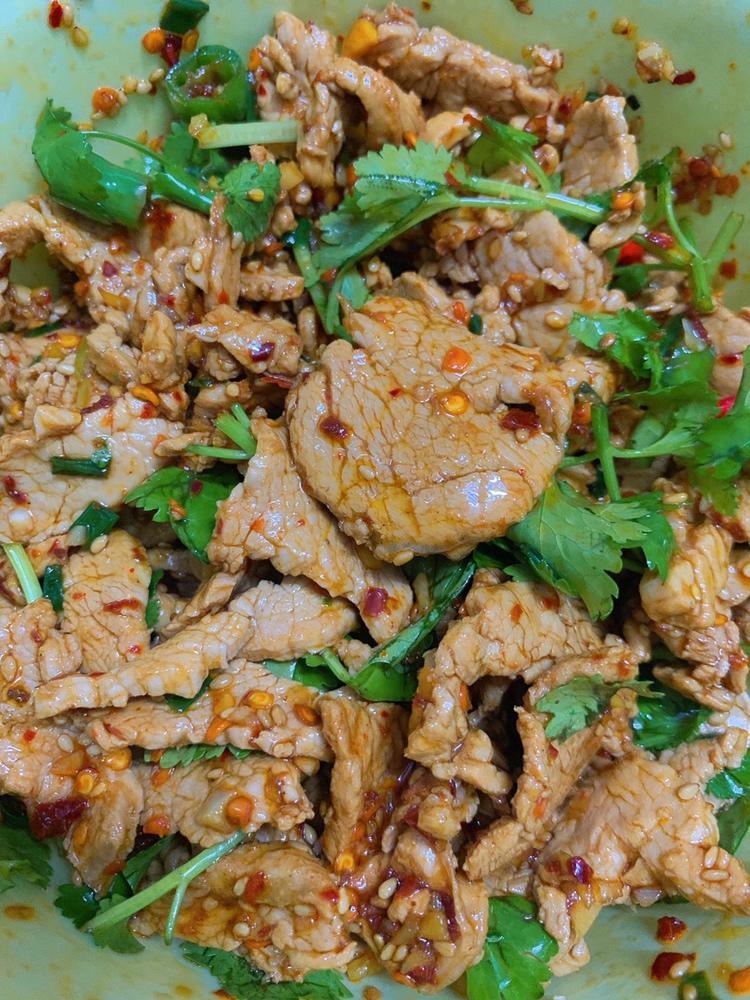
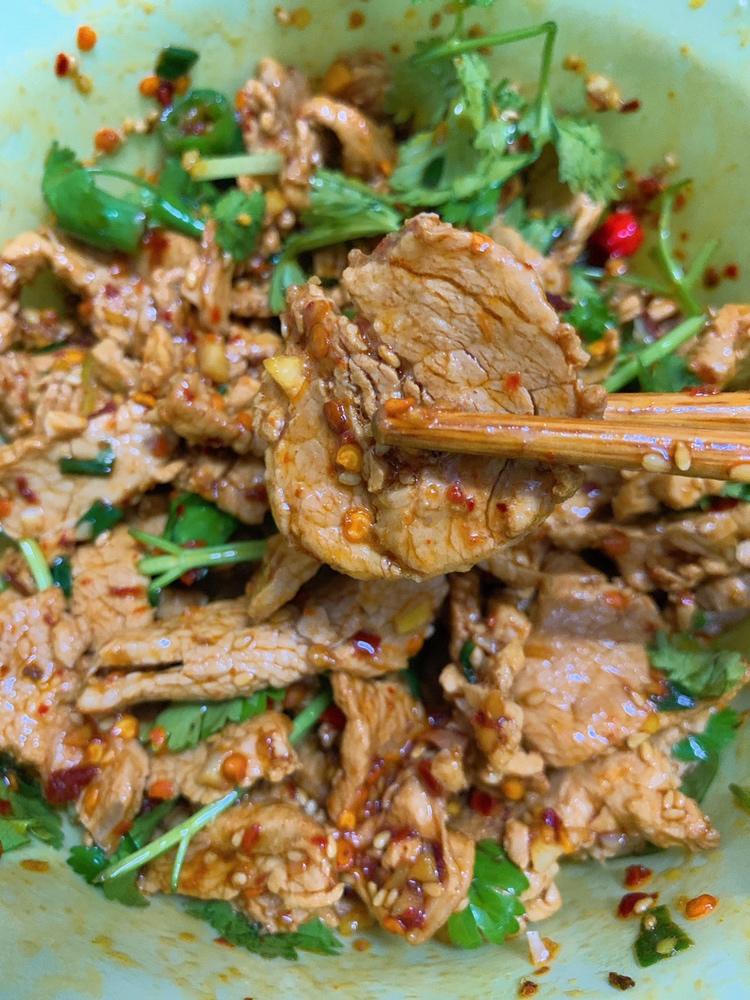
We don’t fry the pork; we gently poach it, keeping it incredibly tender and juicy. The real magic, however, happens in the sauce bowl. A pile of fresh aromatics—garlic, ginger, chiles, and scallions—is hit with sizzling-hot oil, instantly blooming the fragrance. That base is then balanced with savory soy sauce, tangy black vinegar, and a hint of sweetness. It’s a flavor explosion in under 30 minutes, and it’s one of my all-time favorite ways to eat pork tenderloin.
❓ What is Liangban Liji Rou?
Let’s break down the name! “Liangban” (凉拌) means “cold-tossed” or “cold-mixed,” referring to a whole style of Chinese salads and appetizers. “Liji Rou” (里脊肉) simply means “pork tenderloin.”
This is a classic jiachang (家常), or homestyle, dish. You might not find this exact preparation in every restaurant, as it’s more of a quick, satisfying meal a chef (like my dad) would whip up at home.
The technique is brilliant in its simplicity. The pork is “velveted” with a light coating of starch, which protects it during cooking. It’s then poached (a gentle cooking method) instead of stir-fried, making it nearly impossible to get wrong. The soul of the dish is the sauce, which uses the classic Sichuan technique of pouring sizzling oil over aromatics to create a fragrant, punchy dressing that coats every single piece of pork.
🔥 Why This Recipe Works
This recipe might seem simple, but it relies on a few key Chinese cooking principles that guarantee a perfect result every time.
- Velveting for Tenderness: The starch (淀粉, diànfěn) marinade isn’t for flavor; it’s a classic Chinese technique called “velveting.” It creates a microscopic, protective coating around the muscle fibers, locking in moisture. When the pork hits the hot water, this coating gels, preventing the lean meat from seizing up and turning tough.
- Sizzling Oil Activation: This is the most important step! Pouring hot oil over the raw garlic, chiles, and scallions instantly blooms their essential oils, creating a xiang (香), or fragrant, base. This is a form of bao xiang (爆香). It’s a completely different (and much more potent) flavor than just mixing raw garlic into a sauce.
- Poaching, Not Frying: Poaching is gentle. It cooks the lean tenderloin slices in just 2-3 minutes, keeping them succulent. It’s also a much healthier and cleaner way to cook than deep-frying or even stir-frying.
- The Perfect Flavor Balance: This sauce hits all the notes. You get savory (soy and oyster sauce), tangy (Chinkiang vinegar), spicy (chiles), aromatic (garlic, ginger), and a tiny bit of sweetness (sugar) to round it all out and make the other flavors pop.
Ingredients You’ll Need
One of the best things about this dish is that it relies mostly on pantry staples. Here’s what you’ll need and why.
For the Pork & Marinade
- Pork Tenderloin: This is the star. It’s lean, tender, and cooks in minutes. You can also use pork loin, but tenderloin is preferred.
- Starch: Potato starch is my preference for velveting as it creates a very light, translucent coating. Cornstarch is a perfect substitute and more commonly available.
- Cumin & White Pepper: These add a warm, earthy aroma to the pork itself. White pepper is classic in Chinese cooking for its sharp, floral heat that’s less pungent than black pepper.
For the Aromatic Sauce Base
- Garlic, Ginger & Scallions: The holy trinity of Chinese aromatics. Don’t skimp here.
- Fresh Chiles: The original recipe uses Thai chiles (小米椒, xiǎomǐ jiāo) for sharp heat and a green chile (线椒, xiàn jiāo) for a brighter, fresher spice.
- Substitution: You can easily use 1-2 serrano peppers (diced) or even 1 jalapeño for milder heat.
- Chinese Chili Powder (辣椒面, làjiāo miàn): This is for fragrance and color as much as heat. I recommend a coarse-ground Sichuan chili powder, which you can find at Asian markets.
- Substitution: Coarse-ground Korean gochugaru is a great sub. In a pinch, a mix of 1 tbsp paprika (for color) and 1 tsp cayenne (for heat) will work.
- Toasted Sesame Seeds: Adds a nutty flavor and great texture.
For the Sauce Liquids
- Light Soy Sauce (生抽, shēng chōu): This is for salt and umami (savory) flavor. Use a standard soy sauce like Kikkoman or Pearl River Bridge if you don’t have “light.”
- Oyster Sauce (蚝油, háoyóu): This is the secret to a savory-sweet, full-bodied sauce. It adds a wonderful velvety texture and umami.
- Chinkiang Vinegar (陈醋, chéncù): This is a Chinese black vinegar. It’s malty, slightly sweet, and tangy.
- Substitution: While the flavor is unique, you can substitute with rice vinegar (it will be sharper) or a splash of balsamic vinegar (it will be sweeter).
- Dark Soy Sauce (老抽, lǎo chōu): This is purely for that beautiful, rich, reddish-brown color. It’s thicker and has a molasses-like flavor. You can skip it, but the dish will look much paler.
- Salt & Sugar: A little bit of each to balance the sauce. The sugar doesn’t make it sweet; it rounds out the sharp edges of the vinegar and spice.
- Neutral Oil: For sizzling. Use canola, vegetable, grapeseed, or peanut oil. Do not use olive oil, as its flavor will clash.
For Assembly
- Cilantro (香菜, xiāngcài): Absolutely essential. It adds a bright, cooling freshness that cuts through the richness of the sauce.
- Poaching Aromatics (Optional but Recommended): A few slices of ginger, some scallion pieces, and a splash of Shaoxing wine in the poaching water infuses the pork with aroma and removes any “porky” smell.
🔪 How to Make Spicy Cold-Tossed Pork
This dish comes together very fast, so the most important part is the mise en place (getting all your ingredients prepped and ready before you start cooking).
Mise en Place (Prep First!)
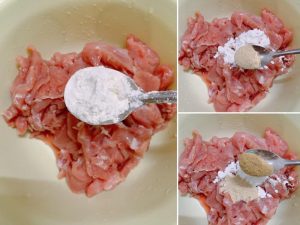
- Prep the Pork: Slice the pork tenderloin against the grain into thin (about 1/8-inch) slices. Place them in a medium bowl.
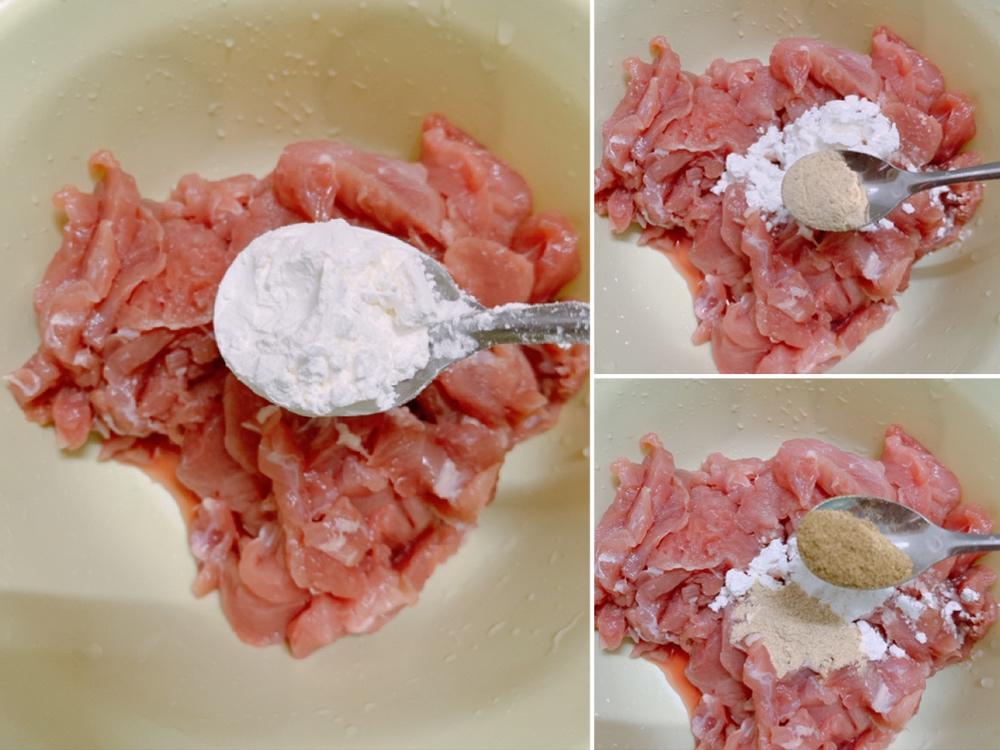
- Marinate the Pork: Add the starch, white pepper, and cumin powder to the pork. Mix with your hands or chopsticks until every piece is lightly coated. Set aside to marinate for 15 minutes.
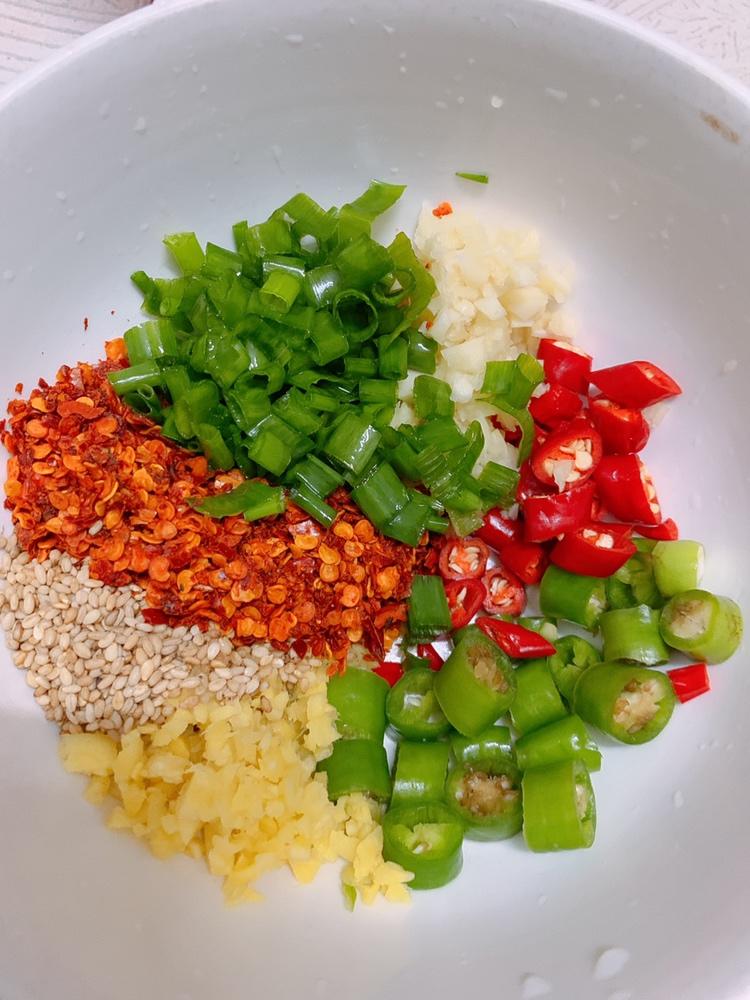
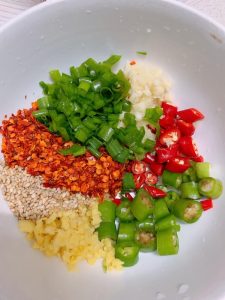
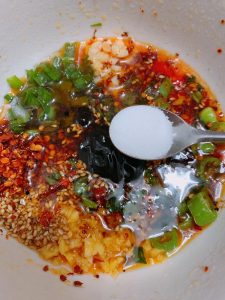
- Build the Sauce Base: In a large, heat-proof bowl (this is important!), combine the minced garlic, minced ginger, diced fresh chiles, chopped scallions, sesame seeds, and chili powder.
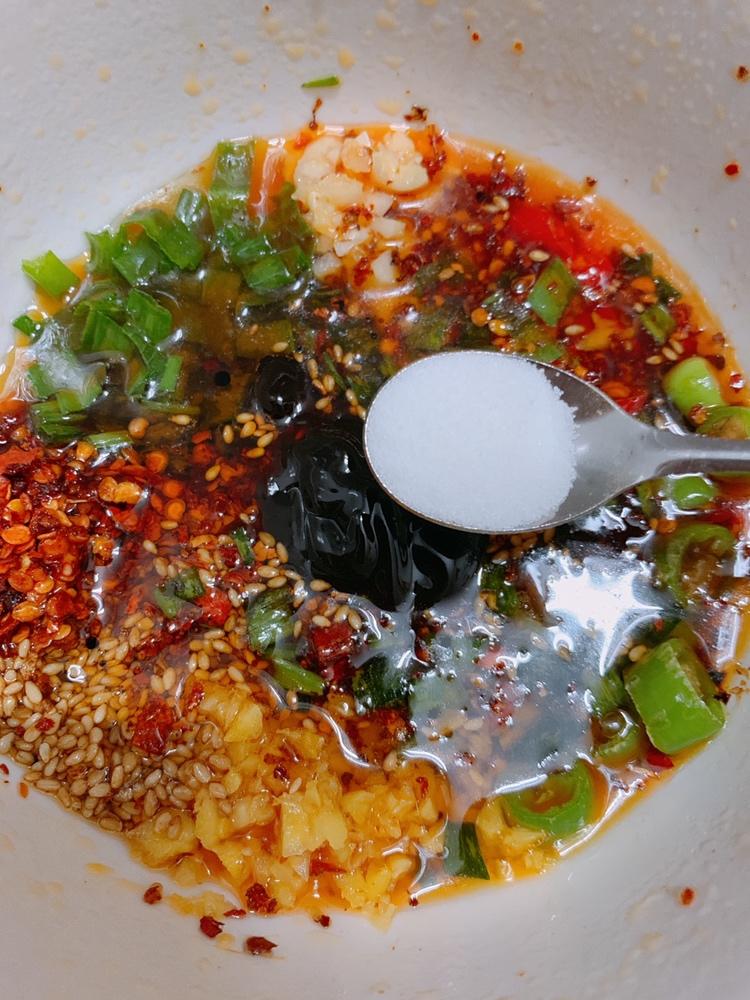
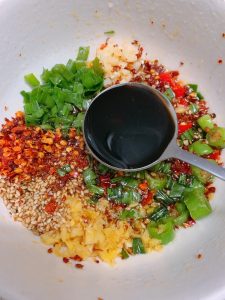
- Mix the Sauce Liquids: In a separate small bowl, whisk together the light soy sauce, oyster sauce, Chinkiang vinegar, dark soy sauce, salt, and sugar. Set this aside.
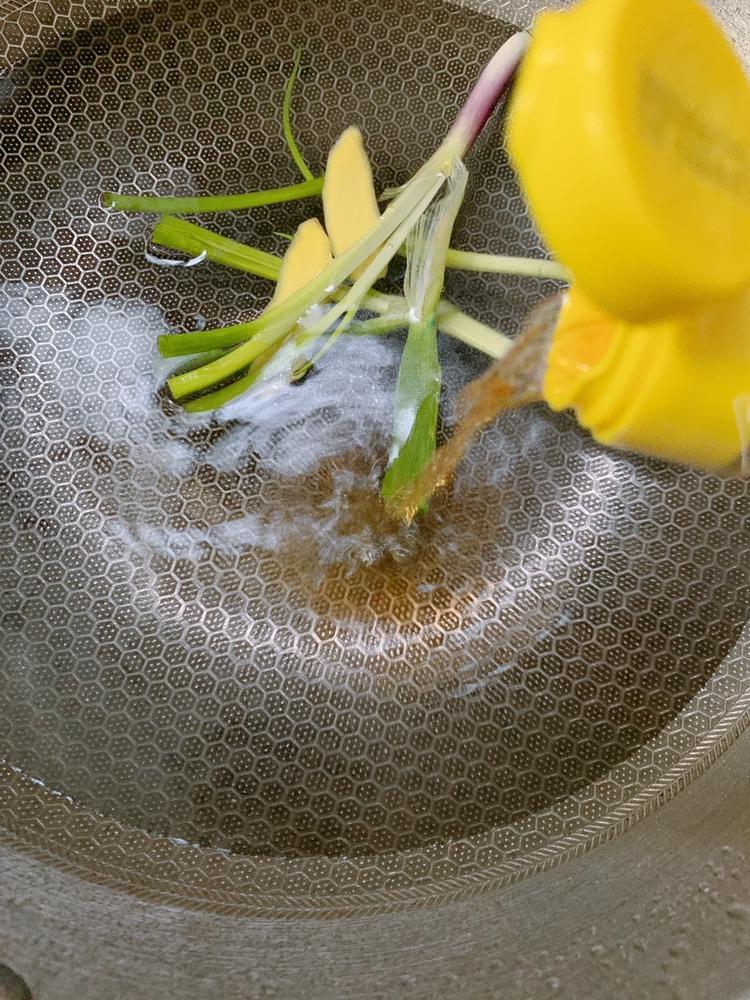
- Prep the Poaching Water: Fill a medium pot with water. Add a few slices of ginger, the white parts of a scallion, and a tablespoon of Shaoxing wine (if using).
Step-by-Step Cooking Process
- Activate the Sauce (Sizzling Oil): Heat 3-4 tablespoons of your neutral oil in a small saucepan over medium-high heat. You’ll know it’s ready when it shimmers and a wooden chopstick inserted in the oil sizzles instantly (around 350°F / 175°C).Safety Tip: Be very careful! Carefully pour this sizzling-hot oil directly over the aromatics in your heat-proof bowl. It will bubble and sizzle dramatically. Listen and smell—that’s the fragrance being released!
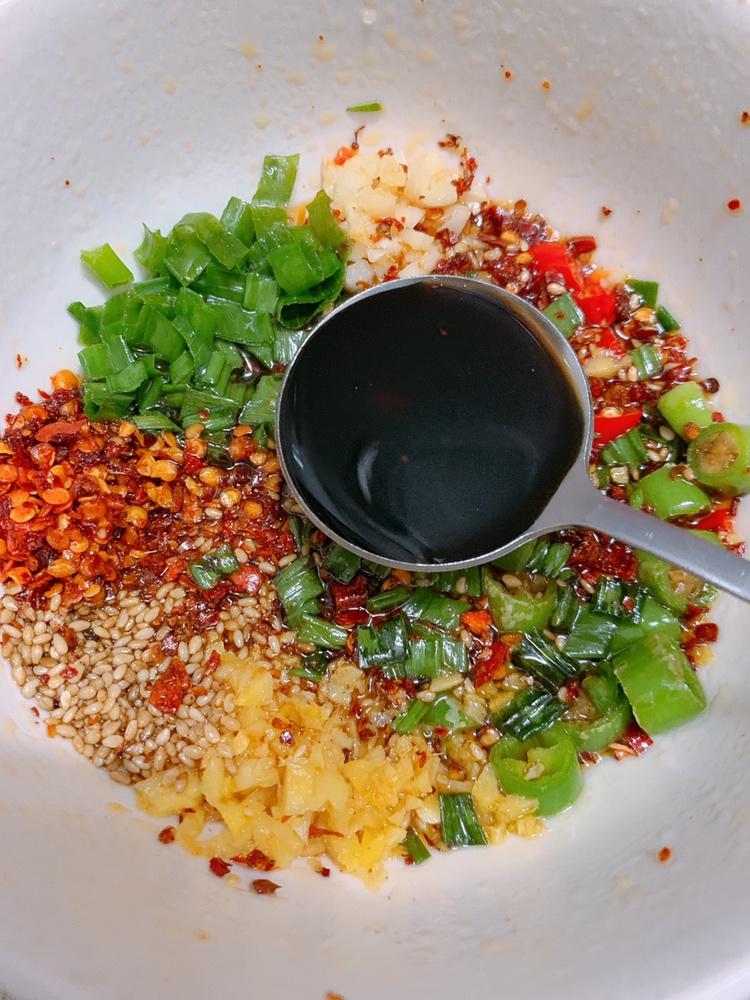
- Finish the Sauce: Pour the pre-mixed liquid seasonings (the soy-vinegar mixture) into the sizzling oil bowl. Whisk everything together to combine.
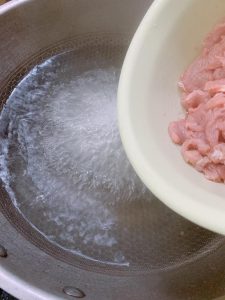
- Poach the Pork: Bring your pot of poaching water (with the ginger/scallion) to a full, rolling boil. Add the marinated pork slices, all at once. Immediately use chopsticks or a wooden spoon to stir and separate the pieces so they don’t clump together.
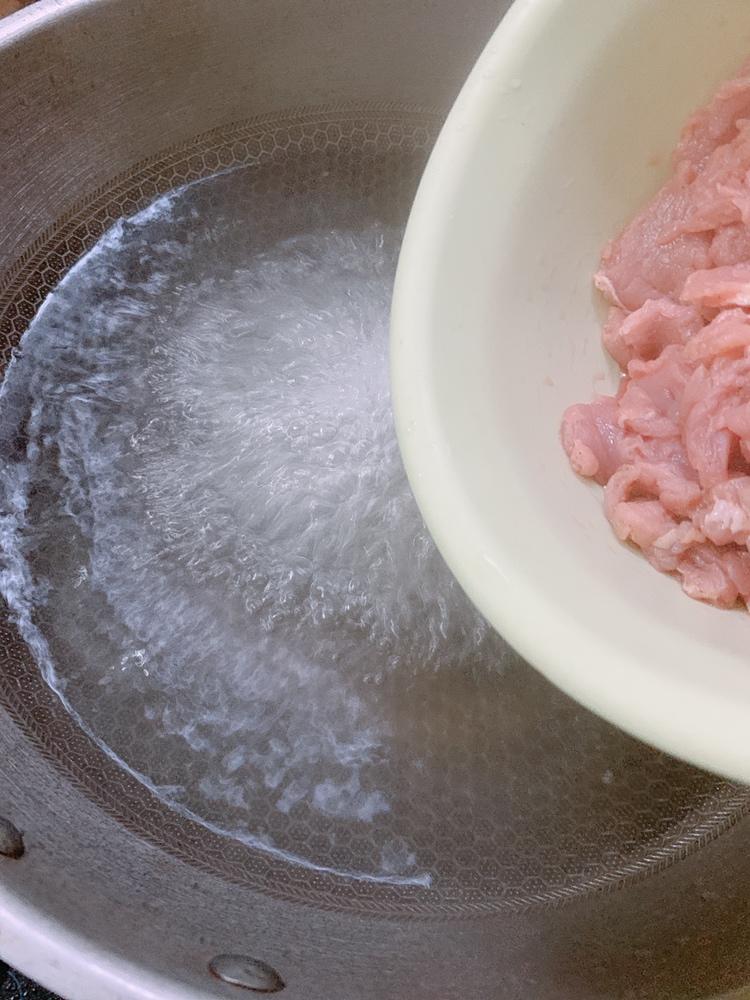
- Cook & Drain: Let the pork cook for just 2-3 minutes. The moment the slices are no longer pink, they are done. Do not overcook!Note: Lean pork cooks extremely fast. Overcooking is the only way to make this dish tough.
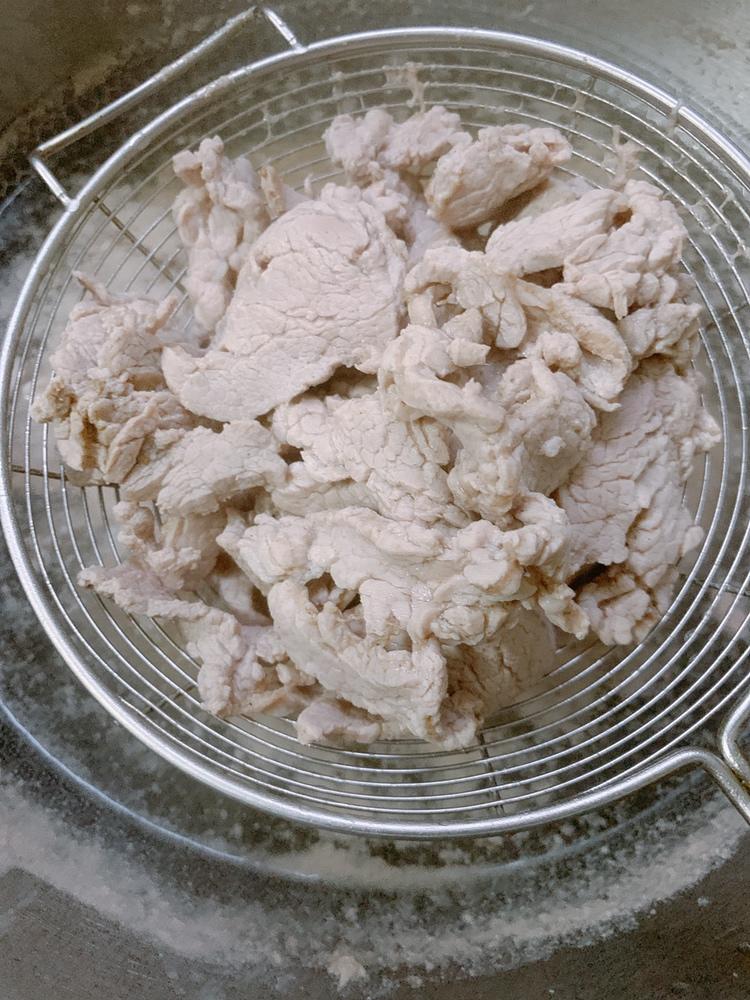
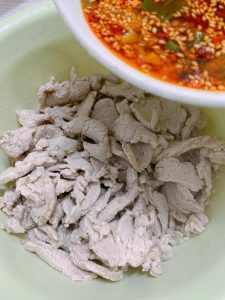
- Combine & Toss: Use a spider strainer or slotted spoon to immediately remove the pork from the water, letting excess water drain off. Add the hot, drained pork directly into the bowl with the sauce.
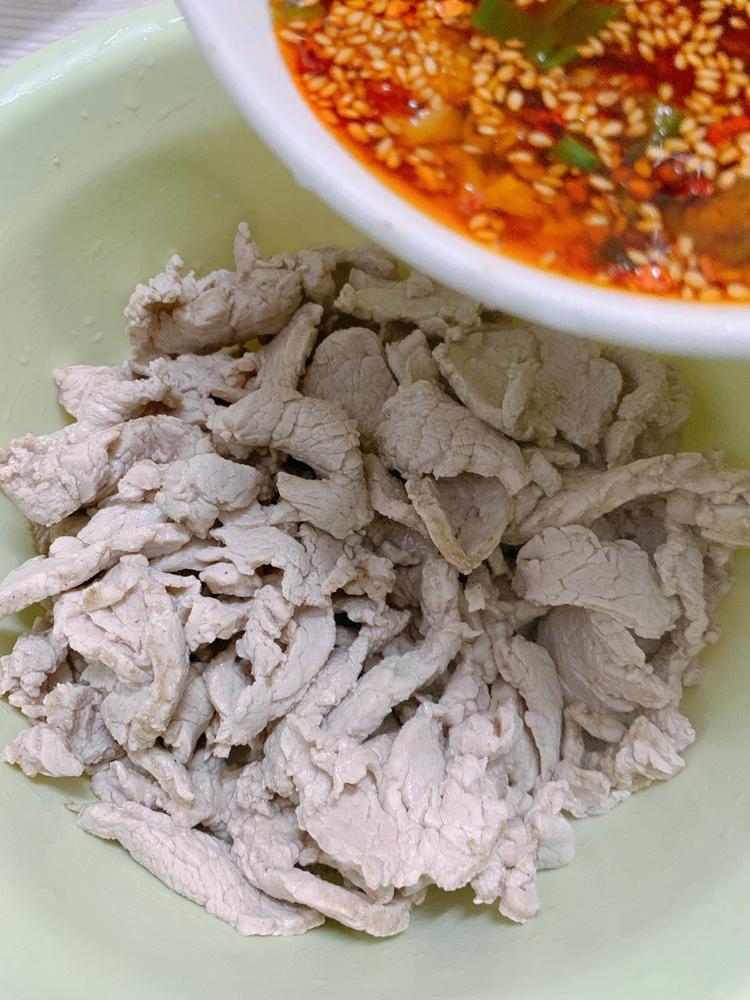
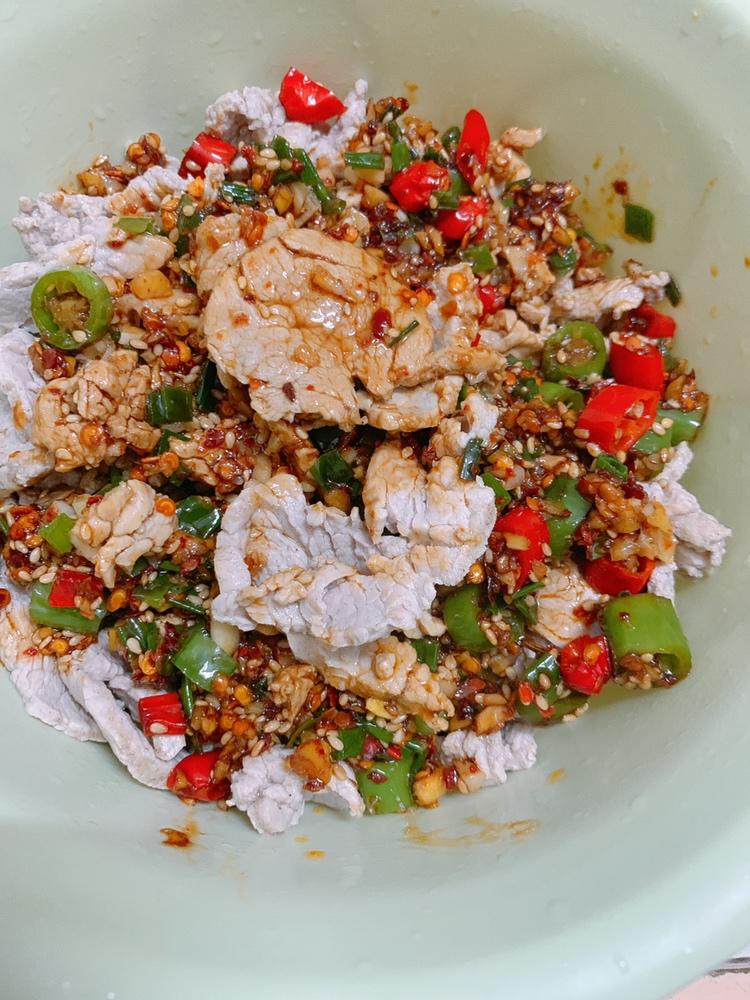
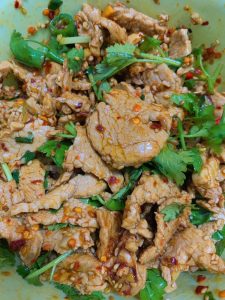
- Garnish & Serve: Add a large handful of fresh cilantro. Toss everything together until the pork is fully coated in the glossy, fragrant sauce.
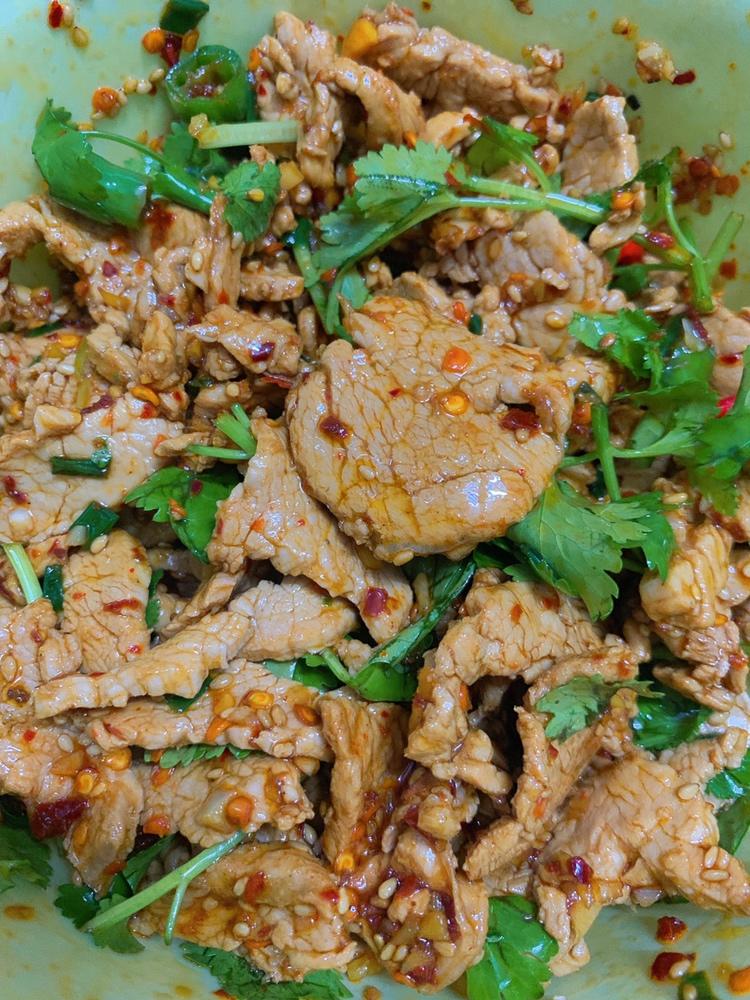
🍽️ How to Serve
This dish is fantastic served immediately while the pork is warm, but it’s also a “liangban” dish, meaning it’s equally delicious at room temperature.
- As a Main: Serve it over a bed of hot, fluffy steamed rice. The rice is the perfect vehicle to soak up all of that incredible sauce.
- As an Appetizer: This is a perfect starter for a multi-course Chinese meal. Because it’s so bold, it pairs wonderfully with a cool, crunchy vegetable dish. I highly recommend serving it alongside my Easy Smashed Cucumber Salad.
✨ Variations & Tips for Success
- For a Milder Version: This recipe has a kick! To make it mild, omit the fresh chiles and use only 1 teaspoon of chili powder (or sweet paprika for color).
- For the “Mala” (Numbing-Spicy) Flavor: For a truly authentic Sichuan experience, add 1 teaspoon of ground, toasted Sichuan peppercorns to the aromatic base before you pour the hot oil. This will give you that signature “málà” (numbing-spicy) tingle.
- Gluten-Free? No problem. Use gluten-free tamari (instead of soy sauce), a gluten-free oyster sauce, and ensure your starches are pure.
- Don’t have fresh chiles? You can substitute 2-3 tablespoons of a high-quality chili oil or chili-garlic sauce. If you have some Homemade Chili Garlic Sauce on hand, that’s a perfect shortcut (just reduce the fresh garlic slightly).
- For another classic cold-tossed dish, check out this fantastic recipe for Suan Ni Bai Rou (Sliced Pork with Garlic Sauce) from Serious Eats.
🥡 How to Store Leftovers
Store any leftovers in an airtight container in the refrigerator for up to 3 days. The pork and sauce will firm up when chilled. You can eat it cold, let it come to room temperature for 30 minutes, or gently microwave for 30-45 seconds, just until the chill is off.
❓ Frequently Asked Questions (FAQ)
Can I use a different cut of pork?
Yes, pork loin works well. I would avoid tougher, fattier cuts like pork shoulder for this recipe, as the quick poaching time isn’t enough to render the fat.
My pork turned out tough! What went wrong?
Two likely culprits: 1) You sliced the pork with the grain instead of against it, or 2) You overcooked it. This pork cooks in 2-3 minutes, maximum. As soon as it’s no longer pink, get it out of the water!
Can I make this non-spicy?
Absolutely. Just omit the fresh chiles and the chili powder. The sauce will still be incredibly flavorful and aromatic from the garlic, ginger, scallions, soy sauce, and Chinkiang vinegar.
What if I don’t have a heat-proof bowl?
You can use any ceramic or glass (like Pyrex) bowl. Do not use a thin plastic bowl, as the hot oil may warp or melt it.
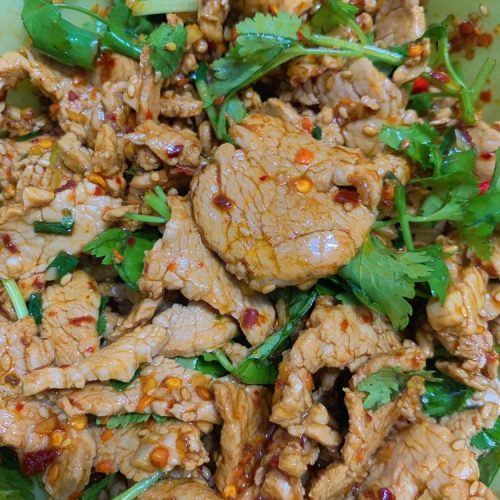
Spicy Cold-Tossed Pork Tenderloin (Liangban Liji Rou)

Equipment
- Large Heat-Proof Bowl
- Medium pot
- Small Saucepan
- Spider Strainer or slotted spoon
Ingredients
For the Pork & Marinade:
- 1.1 lbs pork tenderloin (about 500g) sliced thin against the grain
- 2 tbsp potato starch (or cornstarch)
- 1 tsp white pepper ground
- 1 tsp cumin powder
For the Aromatic Sauce Base:
- 3 cloves garlic finely minced
- 1 tsp ginger finely minced
- 2 tbsp scallions finely chopped
- 3 Thai chiles (or 1 Serrano) finely diced (optional, for spicy)
- 1 small green chile (like Serrano) finely diced (optional, for spicy)
- 2 tbsp Chinese chili powder (or flakes) see notes for subs
- 2 tbsp toasted sesame seeds
- 3-4 tbsp neutral oil (like canola or vegetable) for sizzling
For the Sauce Liquids:
- 3 tbsp light soy sauce (or regular)
- 2 tbsp oyster sauce
- 2 tbsp Chinkiang vinegar (Chinese black vinegar) sub rice vinegar
- 1 tbsp dark soy sauce for color, optional
- 0.5 tsp salt or to taste
- 0.5 tsp white sugar
For Poaching & Assembly:
- Slices of ginger and scallion for the poaching water (optional)
- 1 tbsp Shaoxing wine (or dry sherry) for the poaching water (optional)
- 1 cup cilantro roughly chopped
Instructions
- Prep & Marinate Pork: Slice the pork tenderloin thinly against the grain. In a medium bowl, combine the pork slices, starch, white pepper, and cumin powder. Mix well to coat every piece. Let it marinate for 15 minutes while you prep the other ingredients.

- Build Sauce Base: In a large, heat-proof bowl, combine the minced garlic, minced ginger, chopped scallions, diced fresh chiles (if using), Chinese chili powder, and toasted sesame seeds. Set this bowl near your stove.

- Mix Sauce Liquids: In a separate small bowl, whisk together the light soy sauce, oyster sauce, Chinkiang vinegar, dark soy sauce, salt, and sugar. Set this aside.
- Prep Poaching Water: Fill a medium pot with 6-8 cups of water. Add the optional ginger slices, scallion pieces, and Shaoxing wine. Bring to a rolling boil over high heat.
- Activate Sauce (Sizzling Oil): While the water heats, place the 3-4 tbsp of neutral oil in a small saucepan. Heat over medium-high heat until it’s shimmering and very hot (about 350°F / 175°C). Carefully pour the sizzling hot oil directly over the aromatics in the heat-proof bowl. It will bubble and smell amazing. Immediately pour the (unheated) sauce liquids mixture into the same bowl and whisk to combine.
- Poach Pork: Once the poaching water is at a rolling boil, add the marinated pork slices. Immediately stir with chopsticks to separate the pieces. Let it cook for 2-3 minutes, just until the pork is opaque and cooked through. Do not overcook.
- Combine & Toss: Using a spider strainer or slotted spoon, lift the cooked pork out of the water, letting the excess water drain off well. Transfer the hot pork directly into the large bowl with the prepared sauce.
- Finish: Add the fresh chopped cilantro to the bowl. Toss everything together until the pork is thoroughly coated in the glossy sauce. Serve immediately or at room temperature.
Notes
- Calories: 410
- Protein: 38g
- Fat: 20g
- Saturated Fat: 3g
- Carbohydrates: 15g
- Sugar: 4g
- Sodium: 1250mg
- Fiber: 2g
- Cholesterol: 110mg












Leave a Reply