When people first start cooking Chinese food, vinegar is often one of the most confusing pantry ingredients. Many recipes mention “rice vinegar,” others specifically call for “black vinegar,” and Western vinegar substitutions rarely deliver the right flavor.
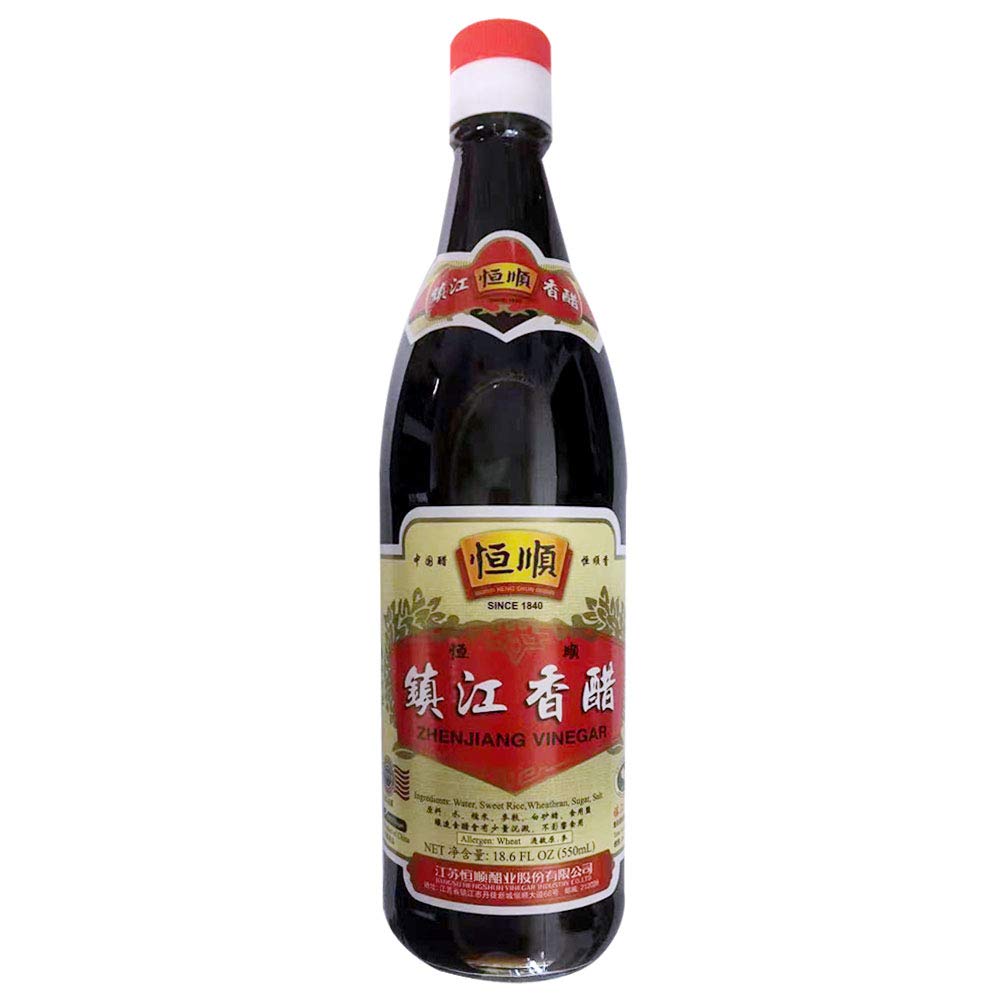
In authentic Chinese cooking, Chinese black vinegar—most commonly Chinkiang vinegar—is the default vinegar. It’s used more often than light rice vinegar because it brings something Chinese cuisine relies on constantly: deep acidity with savory complexity, not just sharp sourness.
If you’re building a trustworthy Chinese pantry, black vinegar belongs right alongside light soy sauce, dark soy sauce, and Shaoxing wine. Those four ingredients show up across countless regions and cooking methods, and they work together to create the signature balance of Chinese flavor.
What Is Chinese Black Vinegar?
Chinkiang vinegar (镇江香醋), also called Zhenjiang vinegar, is a traditional Chinese aged grain vinegar. It’s brewed from grains (often including glutinous rice) and aged until the color becomes dark brown to nearly black.
Flavor-wise, it’s bold and aromatic—tart, pungent, and malty, sometimes with a gentle sweetness and a faint woody depth. That fermented, almost “toasty” character is what distinguishes it from pale rice vinegar, which tastes much cleaner and more straightforward.
Black Vinegar vs. Rice Vinegar: Why the Difference Matters
Although both vinegars exist in Chinese kitchens, they play different roles:
- Black vinegar: savory, rounded, and built for balancing oil, chili heat, and soy-based sauces.
- Light rice vinegar: bright, clean acidity—ideal when you want a lighter, clearer finish.
This is why, in many authentic recipes, if vinegar is listed without clarification, the intended ingredient is often black vinegar (especially in northern-style flavor profiles and many household sauces).
A good example of black vinegar doing exactly what it’s meant to do is in stir-fry dishes with layered aromatics and sauce depth—like Kung Pao Chicken, where the vinegar helps sharpen the sauce and keep it from tasting flat or overly sweet.
Major Types of Chinese Black Vinegar
China produces several regional styles of black vinegar. They’re all “black vinegar,” but they don’t taste identical.
Chinkiang Vinegar (镇江香醋)
Chinkiang is the most commonly used style outside China, and it’s the best place to start. It’s moderately sour, balanced, and versatile—excellent for everyday cooking, dumpling dips, and quick cold appetizers.
Shanxi Extra-Aged Vinegar (山西老陈醋)
Shanxi vinegar is deeper, darker, and more pungent, often with a strong umami finish. Many Chinese cooks prefer it for noodles—especially when the dish needs a bold vinegar backbone rather than a light splash of acidity.
Tianjin Duliu Vinegar (天津独流醋)
This style is often milder and slightly sweeter. It’s especially nice for dipping sauces and cold dishes where you want vinegar presence without aggressive sharpness.
Which Black Vinegar Should You Use First?
If you’re new to Chinese cooking, start with Chinkiang vinegar. It’s forgiving, widely available, and works across the most recipes.
Once you’re comfortable with it, you can add a second vinegar (like Shanxi extra-aged) for noodle dishes where vinegar is meant to be a starring flavor.
How Chinese Black Vinegar Is Used in Chinese Cooking
Chinese black vinegar is rarely used “alone.” Most of the time, it’s paired with soy sauce, sugar, aromatics, and sometimes chili oil to create contrast.
1) Dumpling and bun dipping sauces
Black vinegar is the classic foundation for dumpling dipping. If you want a practical way to experience the difference between black vinegar and rice vinegar, try it with dumplings first—especially with wrappers and fillings that are lightly seasoned. It pairs beautifully with Vegetable Steamed Dumplings and also works well with richer bites like Crystal Shrimp Dumplings.
If you’re making your own dumplings, black vinegar also “fits” the flavor profile of many traditional fillings—especially pork-based ones like Pork Dumpling Filling.
2) Cold appetizers (where vinegar is the main character)
For cold dishes, black vinegar provides fragrance and depth rather than just sourness. This is exactly why it works so well in bright, crunchy plates like Smashed Cucumber Salad, where the vinegar needs to taste rounded—not sharp and “salad-dressing-like.”
3) Stir-fries and sauce-driven dishes
In many stir-fries, vinegar is used to lift the sauce, cut oil, and sharpen aromatics. A strong example is Fish-Fragrant Pork Stir-fry, where vinegar is part of what creates the signature “yu xiang” balance (sweet, sour, savory, aromatic).
4) Noodles and pantry meals
In noodle dishes, vinegar can be central rather than secondary. If you want a pantry-friendly demonstration of how vinegar transforms starch and sauce, try it in saucy noodle setups like Sesame Noodles—a small amount of black vinegar can make the whole bowl taste more vivid and less heavy.
5) Balancing rich braises and meat dishes
Black vinegar is often used to cut richness in meat-forward dishes, especially those built on soy sauce and aromatic cooking wine. This pairing is common because vinegar interacts beautifully with both light soy sauce and Shaoxing wine in a sauce base.
Shopping Tips: What to Look For
You can find Chinkiang vinegar in most Chinese/Asian markets and many online retailers. Look for labels that indicate:
- 镇江香醋 (Zhenjiang Xiang Cu)
- Chinese black vinegar / aged vinegar
If you’re buying another brand of black vinegar, expect noticeable variation. Some are sweeter, some are sharper, and some have a deeper aged character. That isn’t “wrong,” but it means you may need to adjust sugar or salt slightly in the final dish for balance.
When to Use Rice Vinegar Instead
Light rice vinegar is better when you need clean acidity and minimal color impact—such as certain sweet-and-sour sauces or lighter dips where you don’t want the deep malty notes of black vinegar.
The key takeaway: black vinegar and rice vinegar are not interchangeable, even though both are labeled “vinegar.”
Final Takeaway
Chinese black vinegar—especially Chinkiang vinegar—is not an optional specialty ingredient. It’s a foundational seasoning that shapes the balance of countless Chinese dishes.
If you cook Chinese food regularly, keeping a bottle of black vinegar in your pantry will do more for authenticity than many “one-off” specialty sauces. Pair it with the core pantry trio—light soy sauce, dark soy sauce, and Shaoxing wine—and you’ll be able to build a huge range of real Chinese flavors with confidence.












Leave a Reply