Growing up in my family’s restaurant kitchen in Sichuan, the rhythm of chopping meat for dumplings was the soundtrack of our mornings. My father, a chef who demanded precision, always insisted that a good dumpling isn’t just about the wrapper—it’s about the soul inside: the filling (馅, xiàn).

I’ve spent over a decade cooking professionally, from the bustling back-of-house in Chengdu to testing recipes for home cooks in the West. One thing remains constant: the disappointment of biting into a dry, rubbery meatball inside a dumpling.
Today, I am sharing the “Golden Ratio” technique my family uses. It follows a strict sequence we call “Salt, Water, Oil” (盐水油). This method transforms simple ground pork into a filling that is tender, bouncy, and literally bursts with juice (what we call baozhi or explosive juice) when you bite into it. Whether you are making Pork and Chive Dumplings or delicate Wonton Soup, this master filling is your foundation.
Why This Recipe Works
Through years of testing this recipe in both professional wok stations and standard home kitchens, I’ve found this specific method yields superior results for three reasons:
- The “Salt-Water-Oil” Sequence: By adding salt first, we break down the meat proteins (myosin), allowing them to absorb the liquid (aromatic water). We finish with oil to “lock” that moisture in. If you add oil too early, it coats the meat and prevents water absorption, leading to a greasy, dry filling.
- Aromatic Water (Da Shui): Instead of plain water or heavy stocks, we use water infused with Sichuan peppercorns, ginger, and scallion. This eliminates the need for cooking wine (which doesn’t evaporate well inside a boiled dumpling) and removes any gaminess from the pork.
- Hand-Chopped Texture: While a machine works, hand-chopping the pork shoulder preserves the meat’s integrity, giving you a satisfying, chewy texture rather than a mushy paste.
What Is Jiaozi Filling?
In China, Jiaozi (dumplings) are more than food; they are a symbol of reunion. The filling varies by region, but the technique of Da Shui (beating water into meat) is universal among professional dim sum chefs.
Unlike Western meatballs which might use breadcrumbs and eggs for binding, Chinese dumpling fillings rely on the protein structure of the meat itself, agitated vigorously with liquid, to create a bouncy, cohesive texture. This recipe specifically targets the “Savory and Juicy” profile typical of Northern and Sichuan dumplings, avoiding the sweetness found in some Southern variations.
Key Ingredients & Substitutions
- Pork (The Cut Matters):
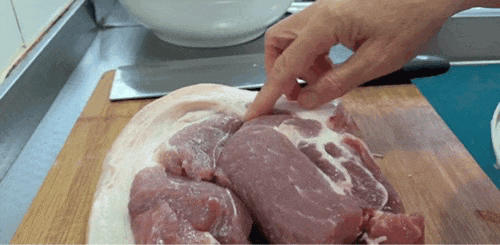
- Best Choice: Pork Shoulder / Pork Butt (Anterior Leg – Qian Tui Rou). This cut is firmer and has more connective tissue than the hind leg, providing a better mouthfeel.
- Ratio: You need fat. A ratio of 70% lean to 30% fat is non-negotiable for juicy dumplings. If you buy lean ground pork from a supermarket, consider mincing some pork belly or bacon fat to mix in.
- Sichuan Peppercorns (Hua Jiao): Essential for the aromatic water. They provide a citrusy, floral aroma that cuts through the rich pork fat.
- Soy Sauce:
- Light Soy Sauce: For saltiness and umami.
- Dark Soy Sauce: Optional, but recommended for adding that appetizing amber color.
- The “No-Nos”:
- No Cooking Wine: In a boiled dumpling, the alcohol cannot evaporate, leaving a strange aftertaste.
- No Five Spice Powder: My father taught me that strong spices like Five Spice or Thirteen Spice cover up the natural sweetness of fresh pork. We rely on ginger and scallion water instead.
Ingredients
The Meat Base:
- 1.1 lbs (500g) Pork shoulder or pork butt (ideally 70% lean, 30% fat)
Aromatic Water:
- scant 1 cup (200g) Warm water
- 1 tsp Sichuan peppercorns
- 1 thumb-sized piece Ginger, shredded
- 2-3 stalks Scallion (green onions), white parts cut into sections
Seasonings:
- 1 tsp (5g) Salt (for initial mixing)
- 2.5 tbsp (40g) Light soy sauce
- 2 tsp (8-10g) Dark soy sauce (optional, for color)
- 1 tbsp Ginger, minced
The Oil Seal:
- 2 tbsp Scallions, finely chopped (green parts)
- 1/4 cup (50g) Neutral cooking oil (vegetable, canola, or peanut oil)
- 1/2 tsp Sichuan peppercorns (for frying the oil)
(Note: If adding vegetables later, you may need an additional 5g of salt, adjusted to taste.)
Recipe Notes Before We Begin
- Temperature Matters: Use warm water to soak the aromatics (it releases flavor faster), but let it cool to room temperature before adding it to the meat so you don’t “cook” the proteins.
- Equipment: A pair of chopsticks or a sturdy wooden spoon (or a stand mixer with a paddle attachment) is essential for the whipping process.
- Food Safety: Keep your meat cold until you are ready to mix. If using a wooden cutting board for chopping pork, sanitize it thoroughly afterward to prevent cross-contamination.
Mise en Place / Prep
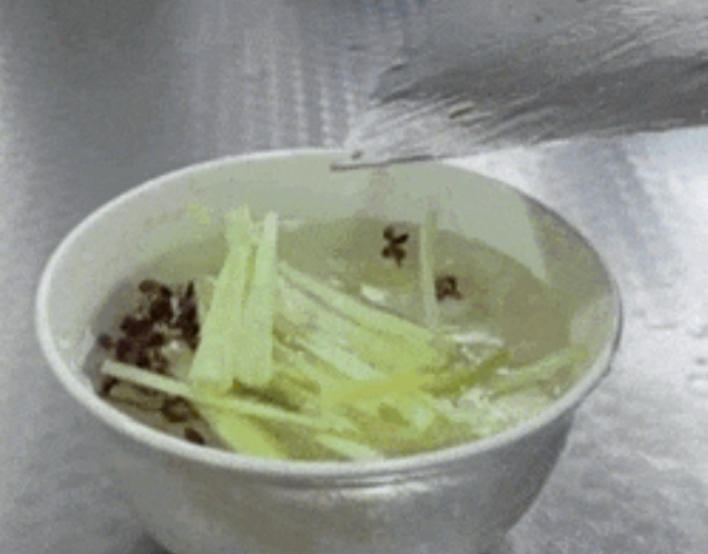
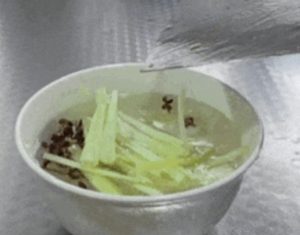
- Soak the Aromatics: In a small bowl, combine the 200g warm water, shredded ginger, Sichuan peppercorns, and scallion sections. Squeeze the onions and ginger with your hands to release their juices. Let this sit for 30 minutes. This is your “magic water.”
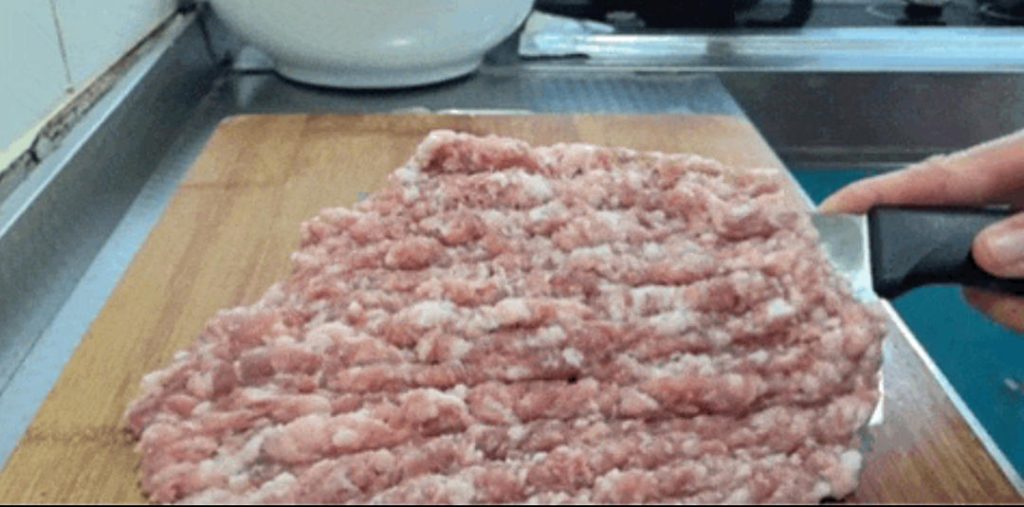
- Prep the Meat: If you have time, cut the pork into small cubes and hand-chop it until it is fine but still has distinct granules (like small pebbles). This provides a superior chew compared to machine-ground paste. If using store-bought ground pork, you can skip this, but the texture will be softer.
How to Make Juicy Pork Filling
Step 1: The First Seasoning (Salt)
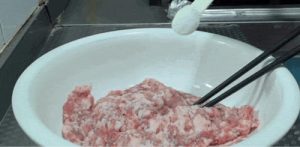
Place the chopped pork in a large mixing bowl. Add 5g of salt. Stir well.
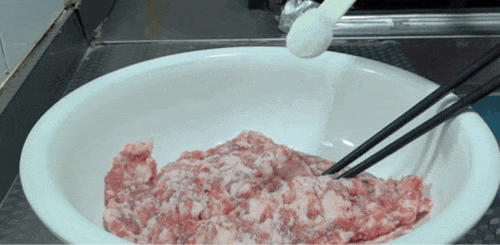
- Why? Adding salt first exposes the protein structures, preparing them to absorb the water in the next step. It creates the “base flavor” (di wei).
Step 2: Incorporating the Water (Da Shui)
Strain your aromatic water (discard the solids). Divide the water into 3 parts.
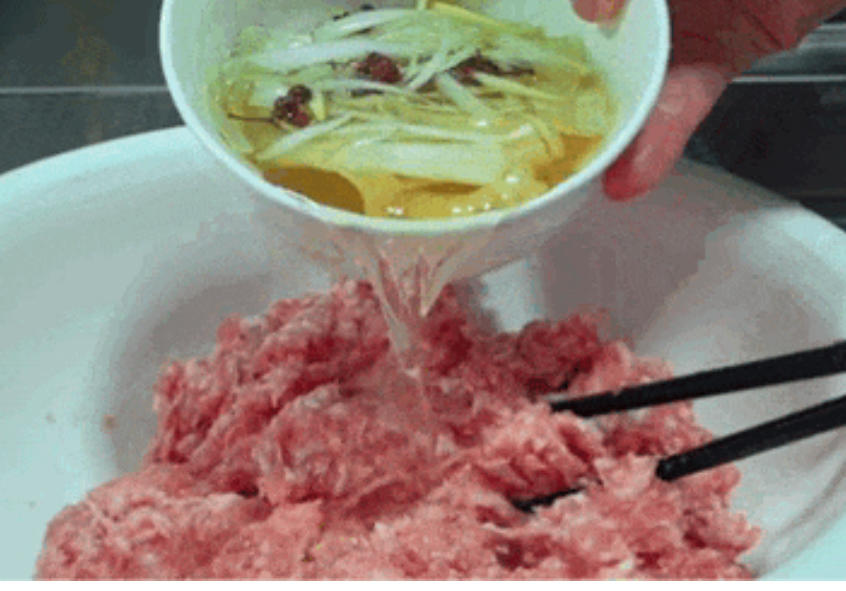
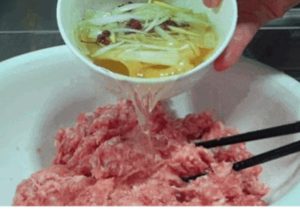
- Pour the first 1/3 of the water into the meat.
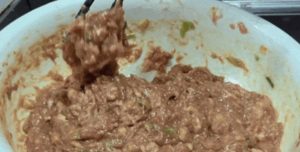
- Stir vigorously in one direction (clockwise or counter-clockwise, do not switch).
- Wait until the meat has fully absorbed the liquid and looks sticky before adding the next 1/3.
- Repeat until all 200g of water is absorbed.
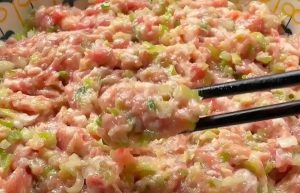
- Visual Cue: The meat should look gelatinous, sticky, and lighter in color. It should cling to the bowl. This is the secret to the “soup” inside the dumpling.
Step 3: Flavoring
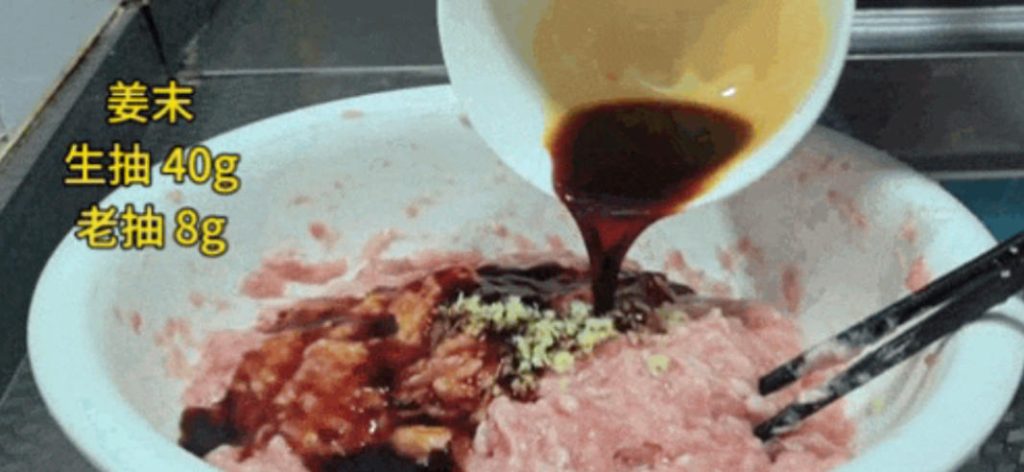
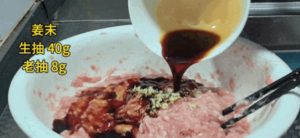
Add the minced ginger, 40g light soy sauce, and 8-10g dark soy sauce (if using). Continue stirring in the same direction until incorporated.
Step 4: The Hot Oil Seal
This is a professional kitchen trick to amplify aroma.
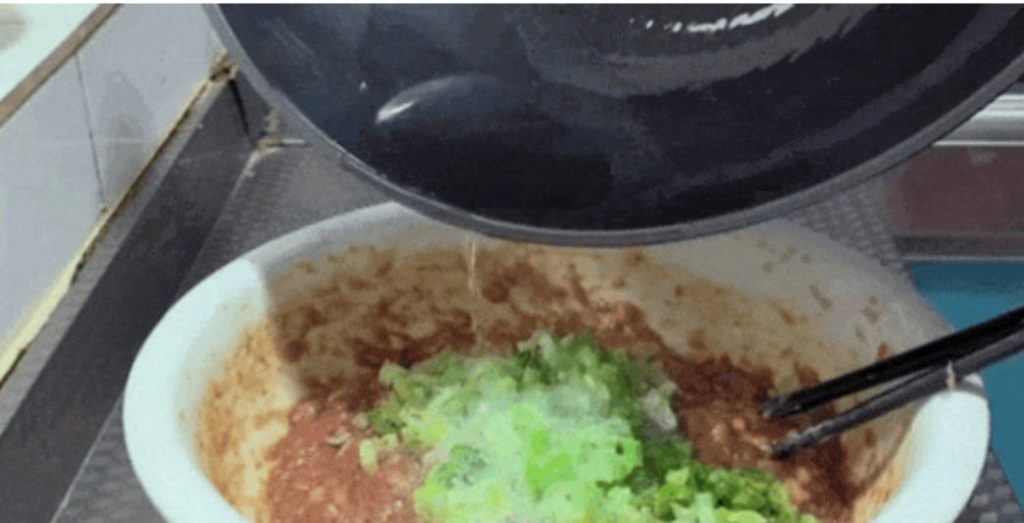
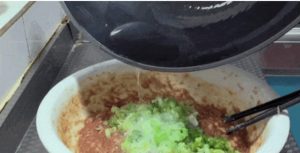
- Place the chopped scallion greens on top of the meat mixture. Do not stir yet.
- In a small pan or wok, heat the 50g oil with a few Sichuan peppercorns over medium heat until the peppercorns darken and the oil smokes slightly. Discard the peppercorns.
- Pour the hot oil directly onto the pile of chopped scallions. You should hear a satisfying sizzle.
- Why? This “explodes” the scallion aroma and instantly cooks the raw garlic/onion flavor out, preventing that raw onion breath later.
Step 5: Final Mix
Stir the mixture again (same direction!) until the oil is fully incorporated. The oil creates an emulsion that seals the water inside the meat protein.
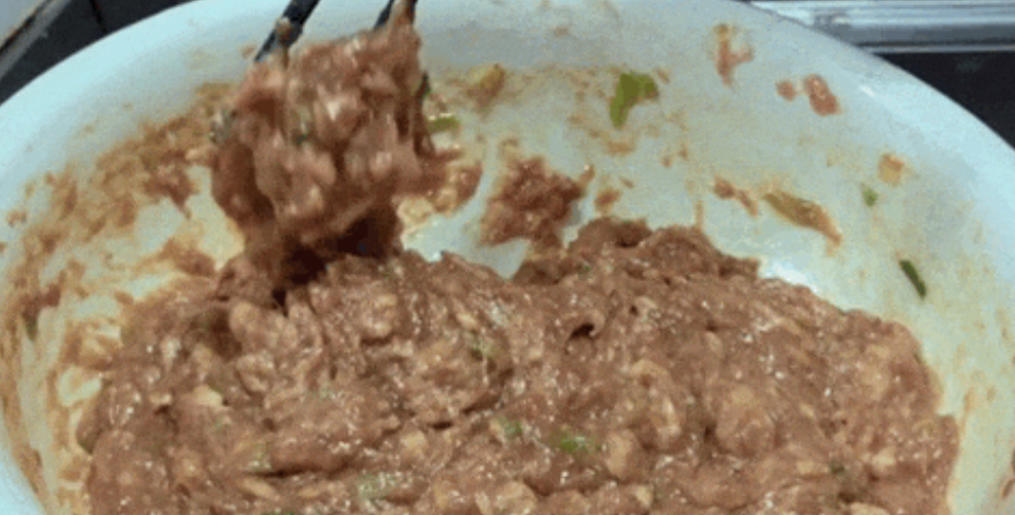
Your Master Filling is done! At this stage, you can mix in any vegetables you like (such as Napa cabbage, chives, or shiitake mushrooms). If adding vegetables, remember to add a pinch more salt (approx. 5g) to season the veggies.
FAQ / Troubleshooting
Q: Why is my filling watery and hard to wrap?
A: You may not have stirred the meat vigorously enough (the protein structure didn’t form to hold the water), or you didn’t let the meat rest. Tip: Refrigerate the finished filling for 30 minutes before wrapping; the fat will solidify, making it much easier to handle.
Q: Can I use beef or chicken?
A: Yes, but these meats are leaner. If using chicken, use thigh meat and add 1 tablespoon of extra oil. For beef, the ginger water is crucial to offset the iron taste. You might enjoy our Chinese Beef and Eggs stir-fry if you have extra beef.
Q: Can I use a stand mixer?
A: Absolutely. Use the paddle attachment on low-medium speed. It saves your arm strength! Stop as soon as the mixture becomes “ropey” and sticky.
What to Serve With It
This filling is versatile. It is the heart of:
- Boiled Dumplings (Shui Jiao): Serve with Homemade Chili Garlic Sauce and black vinegar.
- Potstickers (Guo Tie): Pan-fry them for a crispy bottom.
- Wontons: Wrap in thinner skins for a Deconstructed Wonton Soup.
How to Store
- Fridge: The raw filling can be stored in an airtight container for up to 24 hours. The flavor actually melds and improves after a few hours.
- Freezer: I do not recommend freezing raw filling on its own as it releases too much water when thawing. However, you can freeze the wrapped dumplings. Place them on a baking sheet not touching, freeze until solid, then transfer to a bag. Cook from frozen (add 2 minutes to cooking time).
Notes:
- Why No Cooking Wine? In boiled dumplings, alcohol trapped inside the wrapper does not evaporate properly and can leave a sour taste. We use ginger-scallion water to remove gaminess instead.
- Direction Matters: Always stir in one direction to realign the protein strands, which trap the water. Stirring back and forth will result in a loose filling.
- Resting: For easier wrapping, refrigerate the filling for 30 minutes to firm up the fat.
Nutrition Information (Estimate)
- Calories: ~280 kcal per 100g serving
- Protein: 18g
- Fat: 22g
- Carbohydrates: 2g
Disclaimer: Nutrition information is calculated using an ingredient database and should be considered an estimate. Garnishes and optional items are not included. Actual values vary based on the specific cut of pork used.

Juicy Pork Dumpling Filling (Master Recipe)

Ingredients
The Meat Base
- 1.1 lbs pork shoulder or pork butt minced or hand-chopped, 70% lean/30% fat
Aromatic Water
- 1 cup warm water scant
- 1 tsp Sichuan peppercorns
- 1 thumb ginger shredded
- 2 stalks scallions white parts only, cut into sections
Seasonings
- 1 tsp salt approx 5g
- 2.5 tbsp light soy sauce 40g
- 2 tsp dark soy sauce 8g, optional
- 1 tbsp ginger minced
The Oil Seal
- 2 tbsp scallions green parts only, finely chopped
- 0.25 cup neutral oil 50g, vegetable or peanut
- 0.5 tsp Sichuan peppercorns for frying oil
Instructions
- Prepare Aromatic Water: In a small bowl, combine warm water, shredded ginger, scallion whites, and 1 tsp Sichuan peppercorns. Squeeze with your hands to release flavor. Soak for 30 minutes. Strain and discard solids.

- Season Meat: Place the pork in a large bowl. Add 5g salt. Stir well to establish the base flavor.

- Incorporate Water (Important): Pour 1/3 of the aromatic water into the pork. Stir vigorously in one direction until absorbed. Repeat two more times until all 200g of water is incorporated and the meat looks sticky and gelatinous.

- Add Flavors: Add the minced ginger, light soy sauce, and dark soy sauce. Stir in the same direction until uniform.

- Hot Oil Seal: Place the chopped scallion greens on top of the meat. Heat 50g oil with 1/2 tsp Sichuan peppercorns until smoking slightly (remove peppercorns before pouring). Pour the hot oil directly onto the scallions to release their aroma.

- Final Mix: Stir everything together until the oil is emulsified into the meat.

- Optional Veggies: At this point, you can mix in chopped vegetables (like cabbage or chives) with an additional pinch of salt if desired.

Notes
Direction Matters: Always stir in one direction to realign the protein strands, which trap the water. Stirring back and forth will result in a loose filling.
Resting: For easier wrapping, refrigerate the filling for 30 minutes to firm up the fat.
Nutrition information is calculated using an ingredient database and should be considered an estimate. Garnishes and optional ingredients are not included. Nutrition:
- Calories: 45 kcal (per dumpling filling approx)
- Carbohydrates: 0.5g
- Protein: 3g
- Fat: 3.5g
- Sodium: 90mg (Disclaimer: Nutrition information is calculated using an ingredient database and should be considered an estimate. Values are per dumpling assuming 60 dumplings per batch.)












Leave a Reply