Some stir-fries are built on contrast — hot against cold, crisp against soft. Pineapple beef fried rice noodles are built on harmony. The pineapple is sweet and juicy, the beef is savory and silky, and the rice noodles soak up every drop of the sauce until each strand glistens. It is the kind of plate that disappears before you sit down.
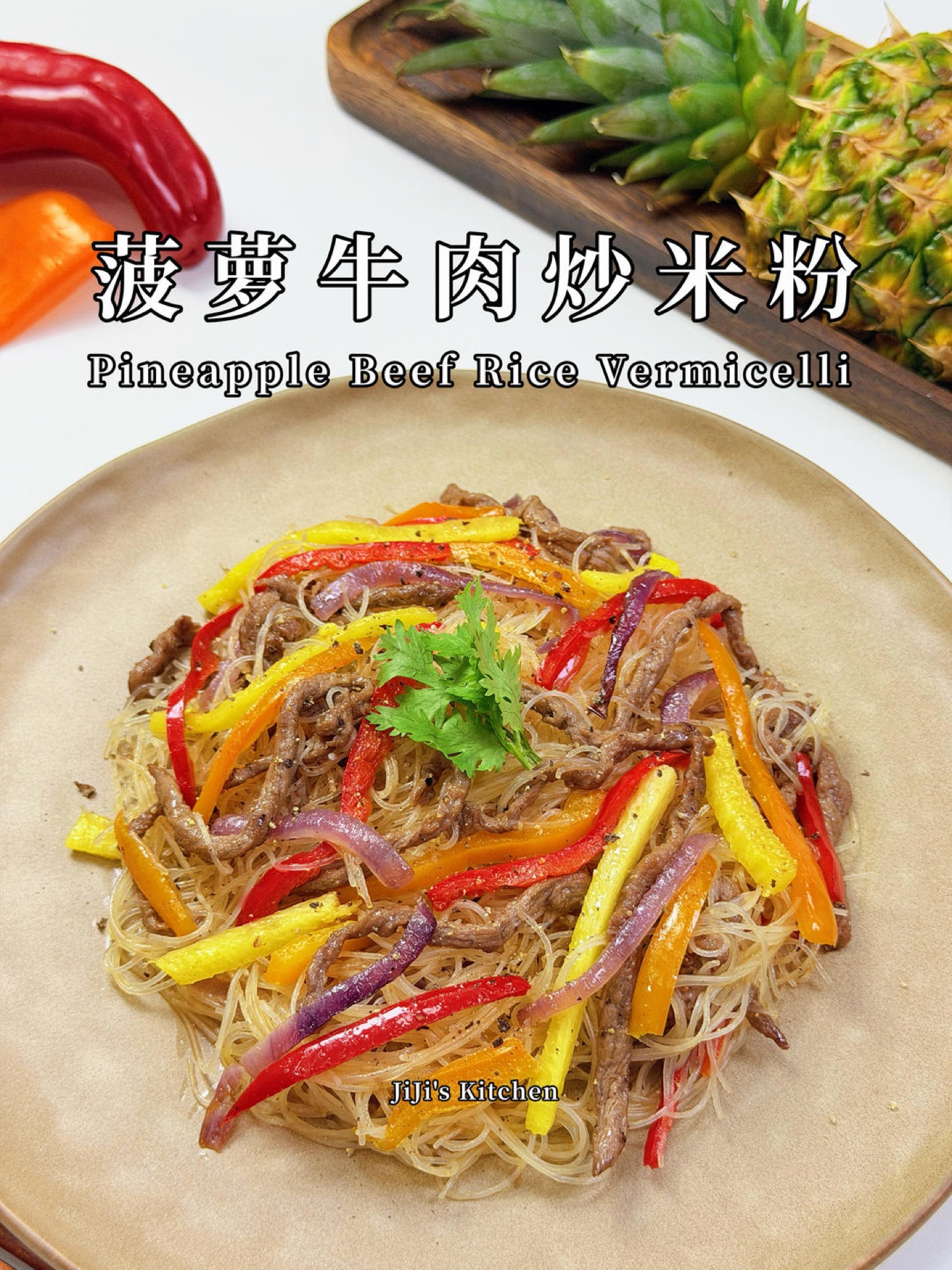
What makes this version different from a standard beef chow fun is the fruit. Pineapple brings acidity and sugar at the same time, so you need far less seasoning to make the noodles taste full. A splash of fish sauce does the savory work, a pinch of sugar balances the fruit, and freshly ground black pepper ties the whole thing together at the end. It is a fifteen-minute stir-fry once your mise en place is ready, and it is endlessly forgiving — swap the peppers, use canned pineapple in a pinch, or make it as spicy as you like.
If you have ever ordered pineapple fried rice at a Cantonese restaurant and wondered why yours never tastes the same at home, the answer is almost always heat and sequencing. The wok has to be genuinely hot, the beef has to go in before the noodles, and the pineapple has to go in late. Get those three things right and this dish tastes like takeout — except better, because you control the salt.
What Is Pineapple Beef Fried Rice Noodles?
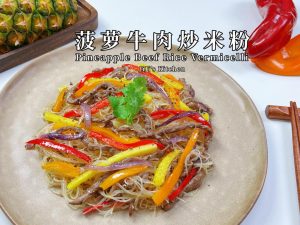
Pineapple beef fried rice noodles is a Cantonese-leaning stir-fry of soaked rice noodles, marinated beef, sweet bell pepper, onion, and fresh pineapple, seasoned with fish sauce and sugar. In Chinese it is written 菠萝凤梨牛肉炒米粉 — boluo and fengli are simply two names for pineapple, one borrowed and one native, and the doubled name signals that the fruit is the point of the dish. The word chaomifen means fried rice noodles, the same family as the classic fried rice noodles you will find all over southern China.
It sits in the same family as the great southern Chinese noodle stir-fries: rice vermicelli or flat rice noodles, a quick-seared protein, a small amount of sauce, and a very hot wok. What separates it is the fruit. Because pineapple carries both sugar and acid, the dish needs almost no vinegar or sweetness added — the fruit does both jobs. The result is glossy rather than saucy, and it eats lighter than its richness suggests.
What is 菠萝凤梨牛肉炒米粉? It is a fast home stir-fry built on the Cantonese principle that a little sweet, a little savory, and a lot of wok heat beats any complicated sauce. If you like the flavor logic of sweet-and-savory Cantonese cooking, you already understand this dish.
Food science note: pineapple contains bromelain, a protease that breaks down protein. That is why pineapple is often used as a meat tenderizer — but it also means fresh pineapple left in contact with raw beef for too long will turn the meat mushy. Keep the fruit out of the marinade and add it at the end of cooking, which is exactly what this recipe does.
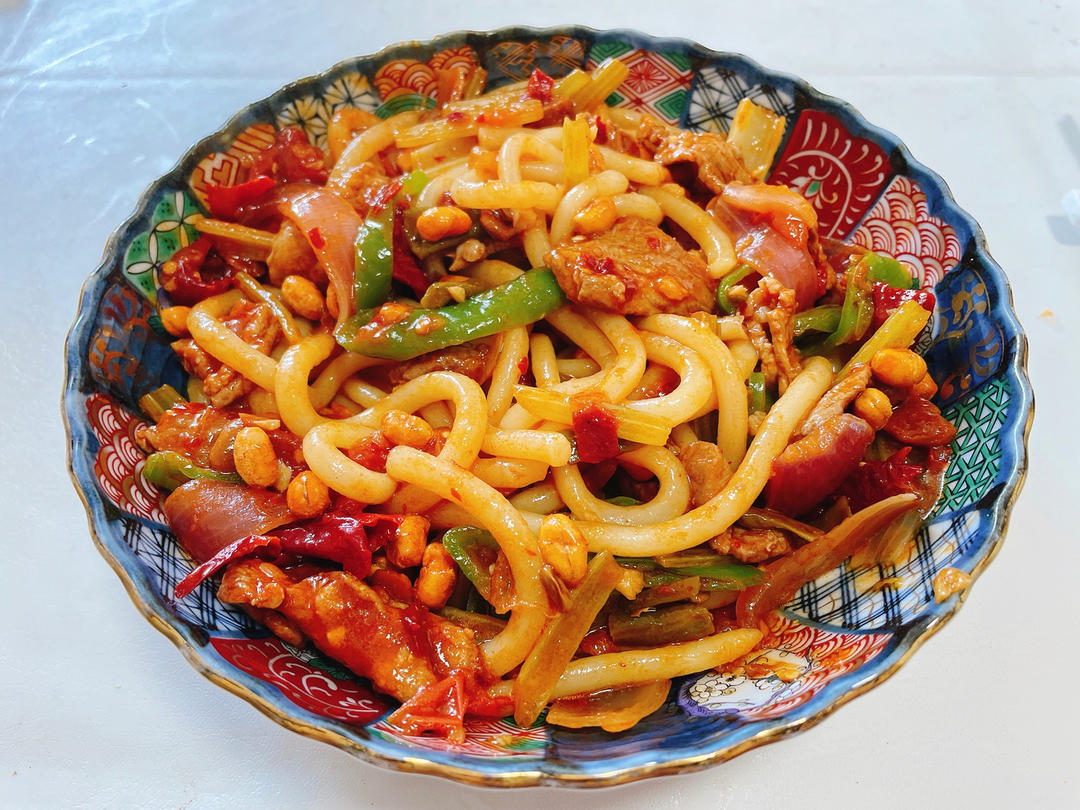
If you enjoy this style of rice noodle cooking, our Xinjiang fried rice noodles take the same noodles in a completely different, cumin-forward direction. For a rice-based version of the same sweet-savory idea, try our black truffle beef fried rice, which swaps noodles for day-old rice and adds an earthy aroma. And if mushrooms are more your thing, our beef and king oyster mushroom fried rice is a meaty, deeply savory alternative.
1Xinjiang Fried Rice Noodles (Xinjiang Chao Mifen)A spicy, saucy, and chewy rice noodle dish from Western China featuring a rich tomato and bean paste sauce, beef, and crisp vegetables. It is a bold ‘flavor bomb’ that perfectly bridges the gap between a stir-fry and a comforting pasta dish.Check out this recipe
Cooked this way once, you will want the next one too: black truffle beef fried rice starts from the same base and the same pan.
2Black Truffle Beef Fried RiceThis Black Truffle Beef Fried Rice is a quick luxury meal that uses the natural fat from beef patties to flavor the rice, combined with the earthy aroma of truffle sauce and savory mushrooms. Ready in under 20 minutes!Check out this recipe

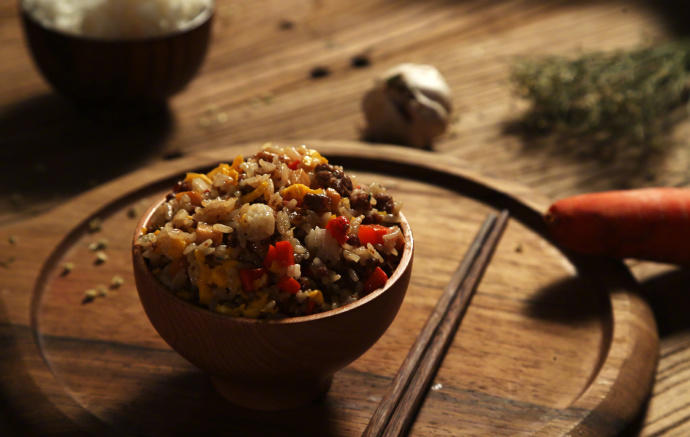
For the next cook from the same playbook, beef and king oyster mushroom fried rice is the recipe I point people to.
3Beef and King Oyster Mushroom Fried RiceA savory, homestyle fried rice featuring the meaty texture of King Oyster mushrooms, sweet carrots, and ground beef. A balanced one-bowl meal ready in 25 minutes.Check out this recipe
Why This Recipe Works
Three decisions do most of the work here. First, the beef gets a proper marinade: salt, black pepper, Shaoxing wine, and cornstarch, then a final coat of oil. The cornstarch holds moisture in, the oil keeps the strands from clumping in the wok, and the result is beef that stays tender even at high heat. Skipping this step is the single biggest reason home stir-fried beef turns out chewy.
Second, the noodles are soaked, not boiled. Dried rice noodles that are boiled and then stir-fried almost always break and turn gluey. Soaking them in cool water until they are pliable but still firm lets them finish cooking in the wok, where they absorb the sauce instead of water.
Third, the pineapple goes in late. Fresh pineapple is mostly water, and water is the enemy of a hot wok. Adding it toward the end means it warms through, releases just enough juice to glaze the noodles, and keeps its shape and bright flavor instead of collapsing into the sauce.
Equipment Needed
A wok is ideal because its curved walls let you push ingredients up and out of the hottest zone while you sear something else. A large, heavy skillet works too — you just need more room than you think. You will also want a cutting board and a sharp knife for slicing the beef thinly and evenly, which matters more than any seasoning.
A slotted spoon or spider is genuinely useful for lifting the soaked noodles out of the water without dragging a puddle along with them. Have a small bowl of the fish sauce and sugar measured out before you turn on the heat, because once the wok is hot there is no time to measure anything. If you want to explore another wok technique from the same family, our guide to stir fried rice noodles walks through the fundamentals.
Ingredients
Every ingredient here is easy to find, and the list is short. The beef should be a tender cut — flank, sirloin, or thinly sliced ribeye all work. The rice noodles should be dried rice vermicelli or thin dried rice noodles. Fresh pineapple is best, but canned pineapple in juice, drained well, is a perfectly good substitute. The bell peppers are there for color and crunch; red and orange are sweeter than green, which is why this recipe calls for them specifically.
Fish sauce is the backbone of the seasoning. It smells strong out of the bottle and tastes mellow and savory once it hits the wok. If you do not have it, light soy sauce plus a pinch of sugar will get you close, though the flavor will be flatter. Shaoxing wine is the standard Chinese cooking wine; dry sherry is the closest substitute.
Ingredient Notes
Rice noodles. Dried rice noodles vary a lot in thickness. Thin vermicelli soaks in about 20 to 30 minutes in cool water; thicker ones may need 45 minutes. They should be flexible and bend without snapping but still have a firm bite in the center. Drain them thoroughly and let them sit in a colander until you are ready.
Beef. Slice it against the grain and as thinly as you can manage — partially freezing the meat for 20 minutes makes this much easier. The marinade ratio matters more than the cut. If you want to understand how Chinese cooks think about beef and heat, our black pepper chicken rice bowls use the same black-pepper-and-wok-hei logic with a different protein.
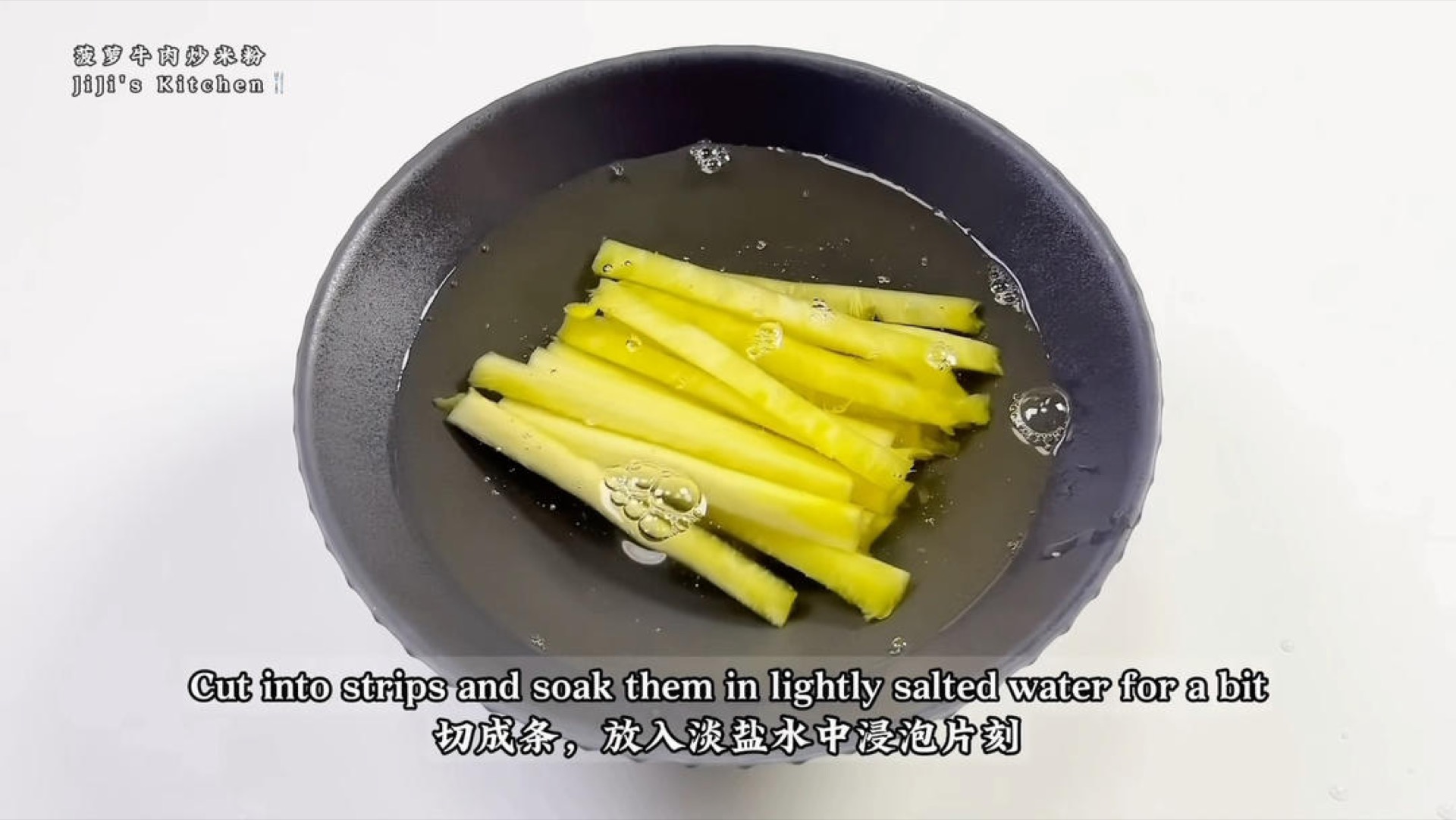
Pineapple. Fresh pineapple cut into thin strips soaks briefly in lightly salted water, which tames any harsh edge and keeps the pieces crisp. Drain it very well — a wet pineapple will cool your wok instantly. If you are using canned, drain and pat dry.
Fish sauce and sugar. Start with one tablespoon of fish sauce and one teaspoon of sugar, then adjust after tasting. The pineapple’s own sweetness varies enormously from fruit to fruit, so taste a piece before you decide how much sugar to add.
Prep & Mise en Place
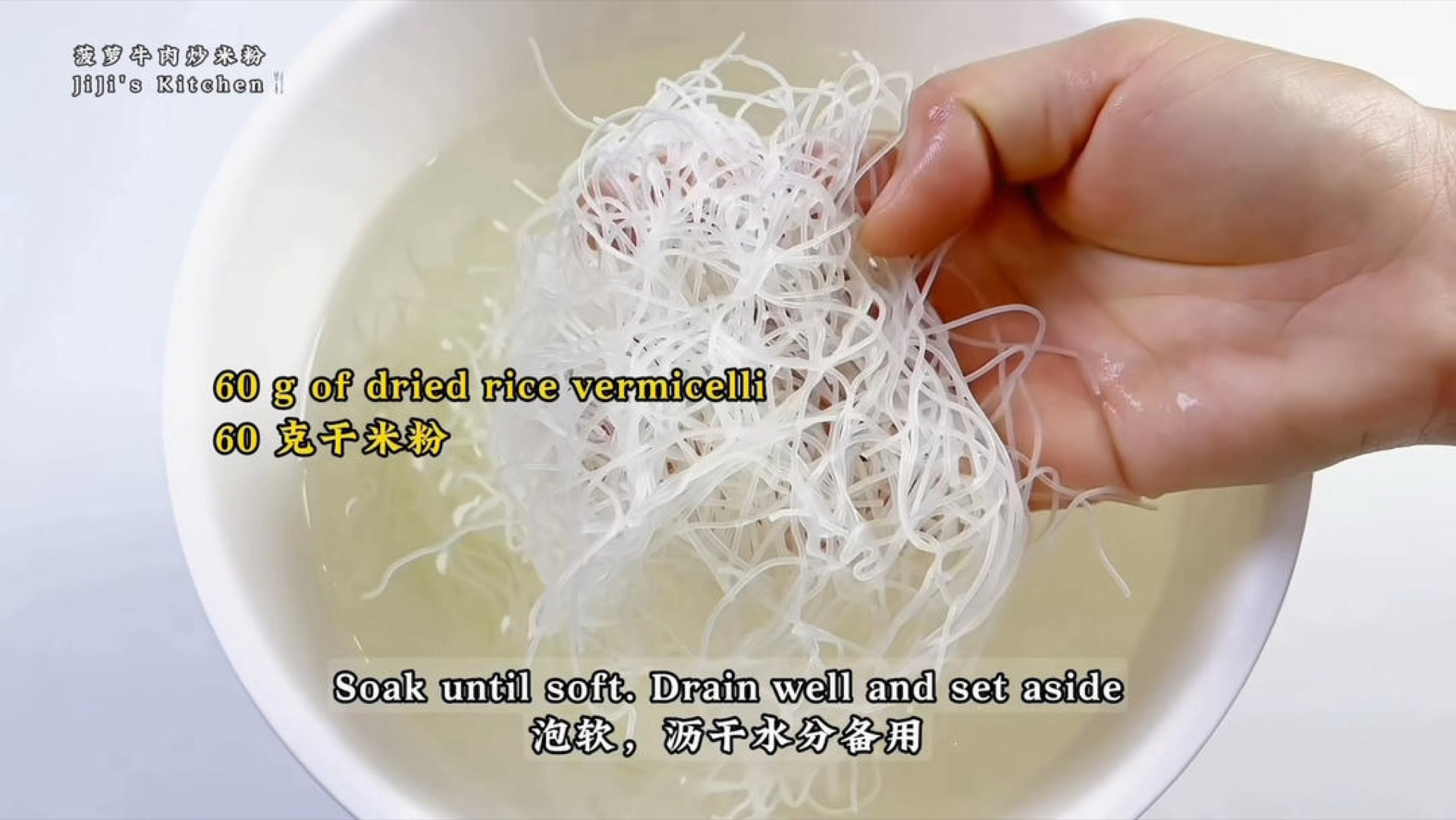
Start with the noodles, because they need the most time. Put the dried rice noodles in a large bowl of cool water and let them soak until pliable. This is the step that cannot be rushed — hot water will soften the outside before the inside is ready and leave you with mushy noodles that break in the wok.
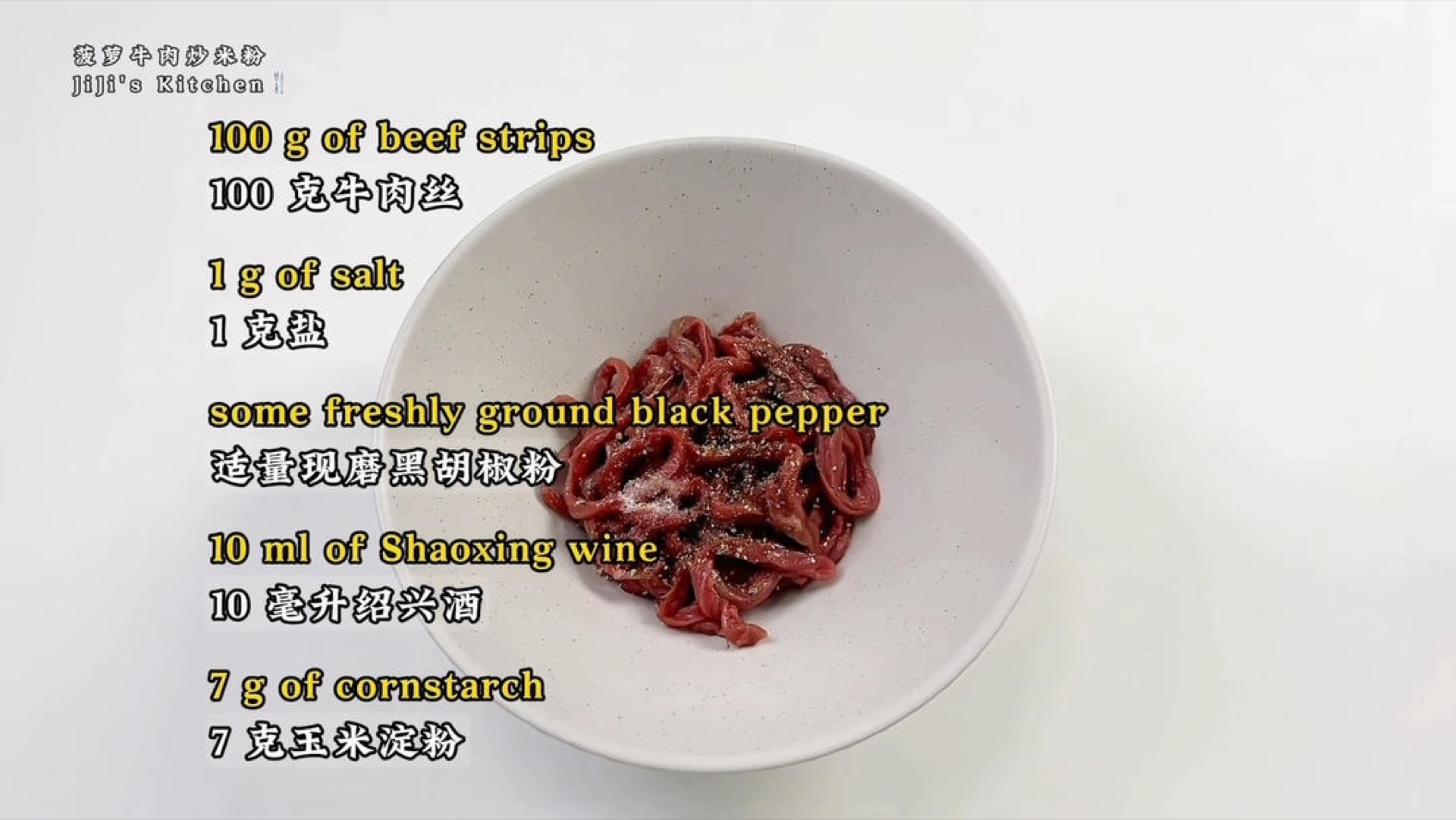
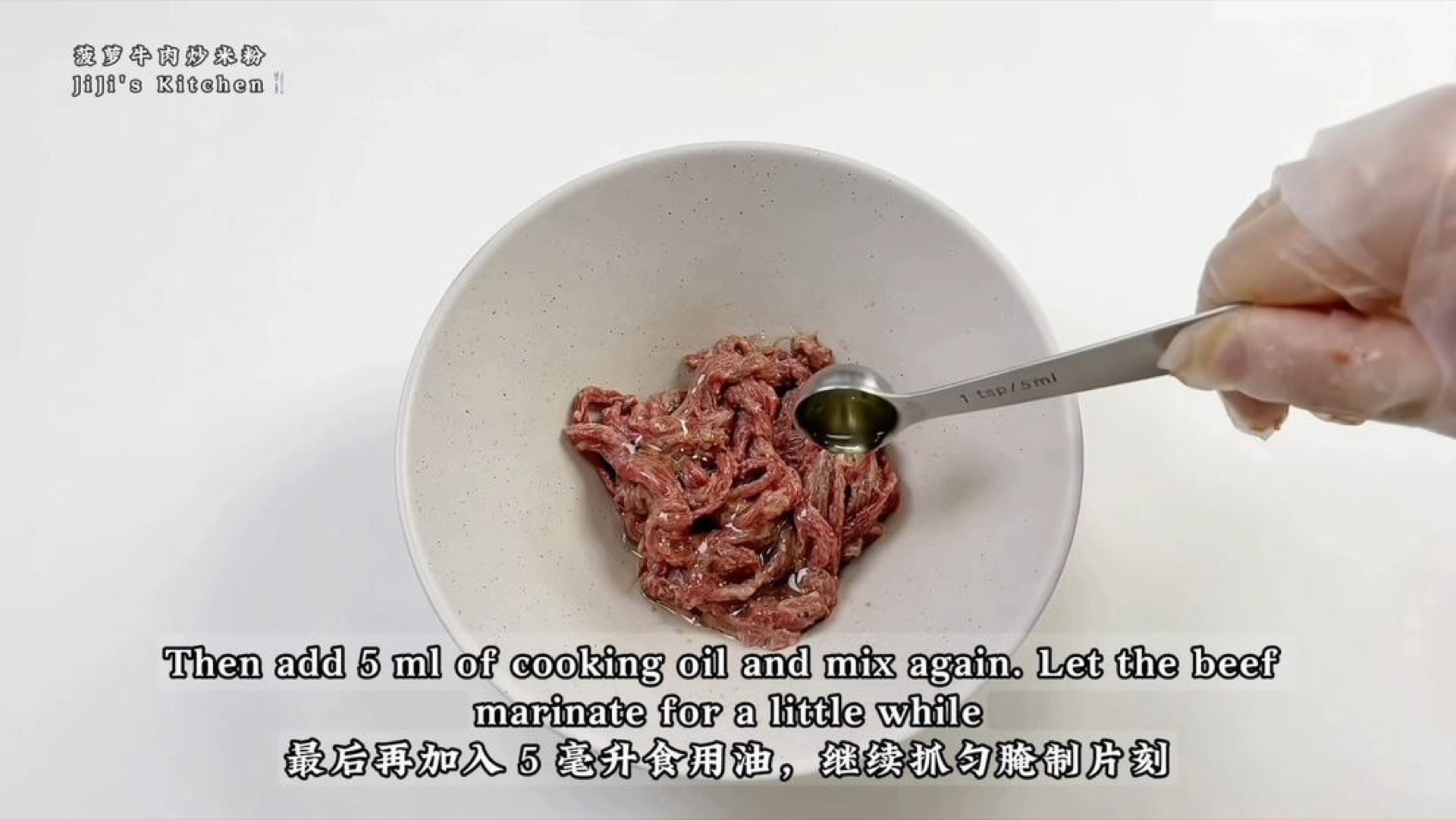
While the noodles soak, slice the beef and get it into the marinade. Add the salt, black pepper, Shaoxing wine, and cornstarch and mix with your hand until the beef feels slightly tacky, then add the oil and mix again. Let it sit while you do everything else.
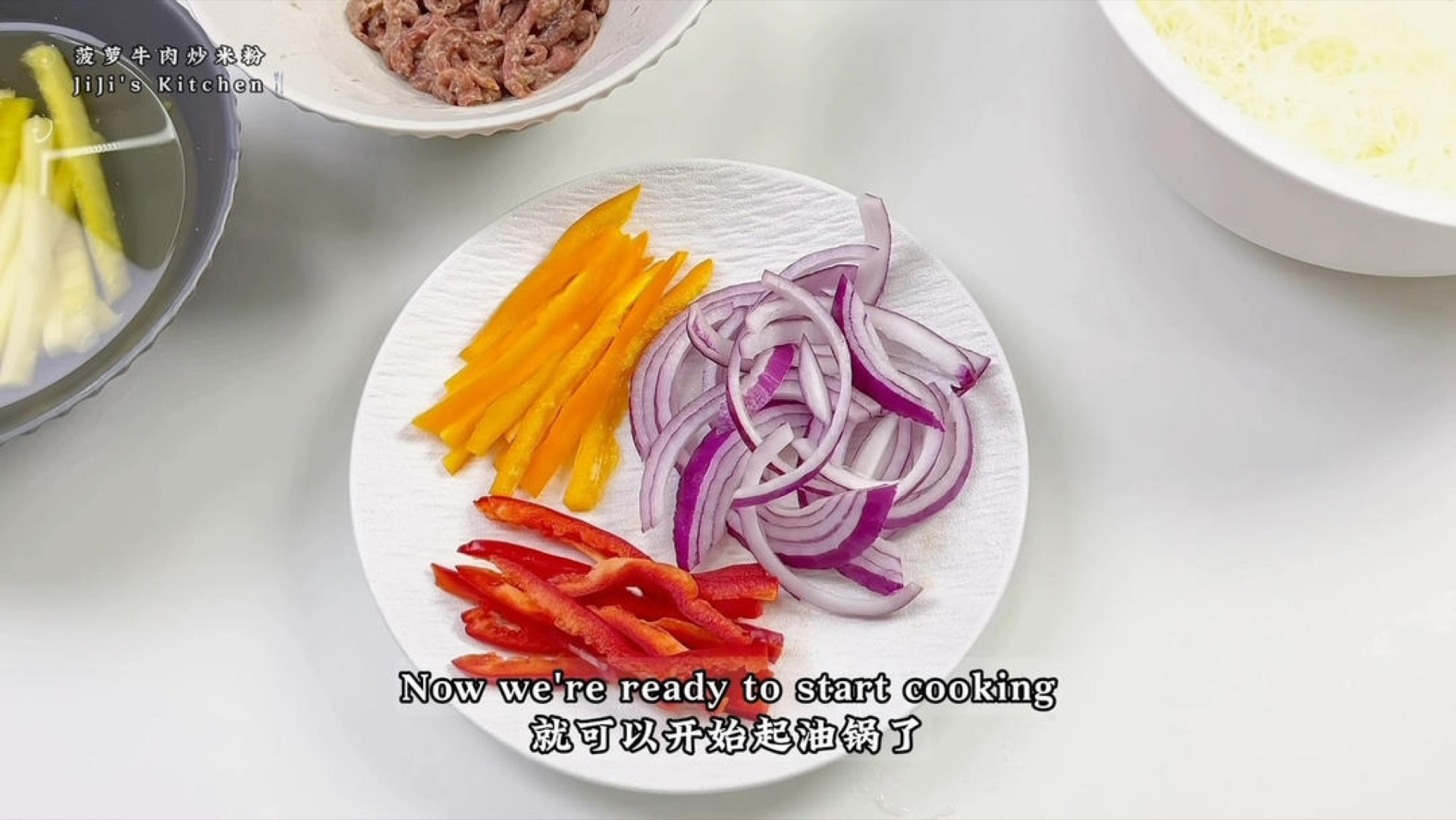
Next, cut the pineapple into thin strips and soak them briefly in lightly salted water, then drain. Slice the bell peppers and onion into thin, even strips. Measure the fish sauce, sugar, and the 30 milliliters of water into small bowls and set them next to the stove. Drain the noodles completely. Once the wok is hot, everything happens in under five minutes, so the counter should look like a prep station, not a pantry.
Cooking Process
Step 1 — Soak the Pineapple
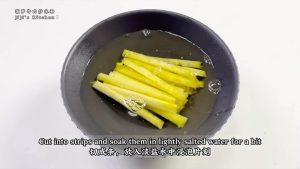
Cut the pineapple flesh into strips, soak them briefly in lightly salted water, then lift them out and drain well.
Step 2 — Soak the Rice Noodles
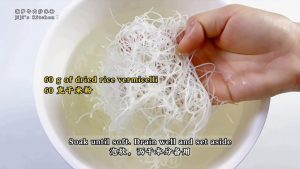
Soak 60 grams of dried rice noodles in advance until soft, then drain off all the water and set them aside.
Step 3 — Marinate the Beef
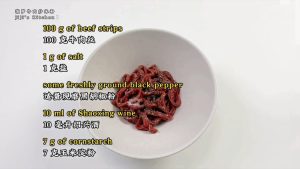
Add salt, freshly ground black pepper, Shaoxing wine, and cornstarch to the sliced beef, then mix with your hand until every strand is coated.
Step 4 — Seal with Oil
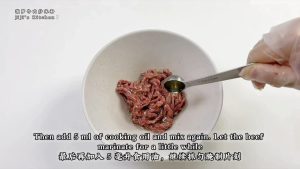
Add cooking oil and mix again, then let the beef marinate for a short while. This is what makes the beef come out extra silky and tender after frying.
Step 5 — Slice the Vegetables
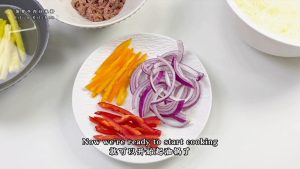
Cut the red and orange sweet peppers into thin strips, and slice the onion into thin strips as well.
Step 6 — Aromatics First
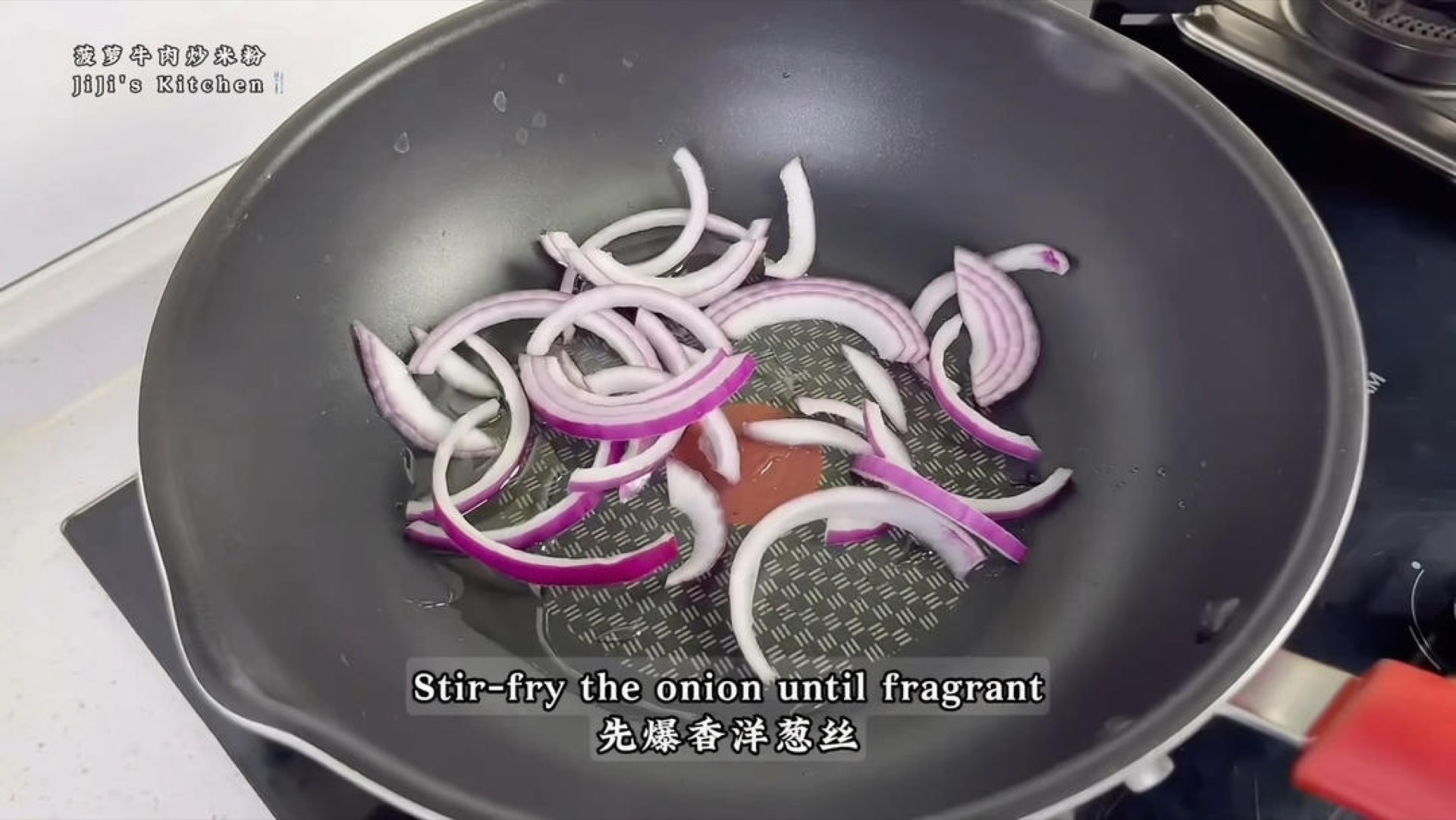
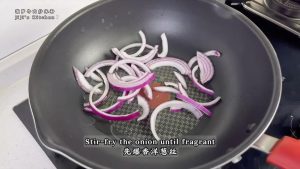
Heat 30 grams of cooking oil in the wok, then add the onion strips first and fry them until fragrant.
Step 7 — Sear the Beef
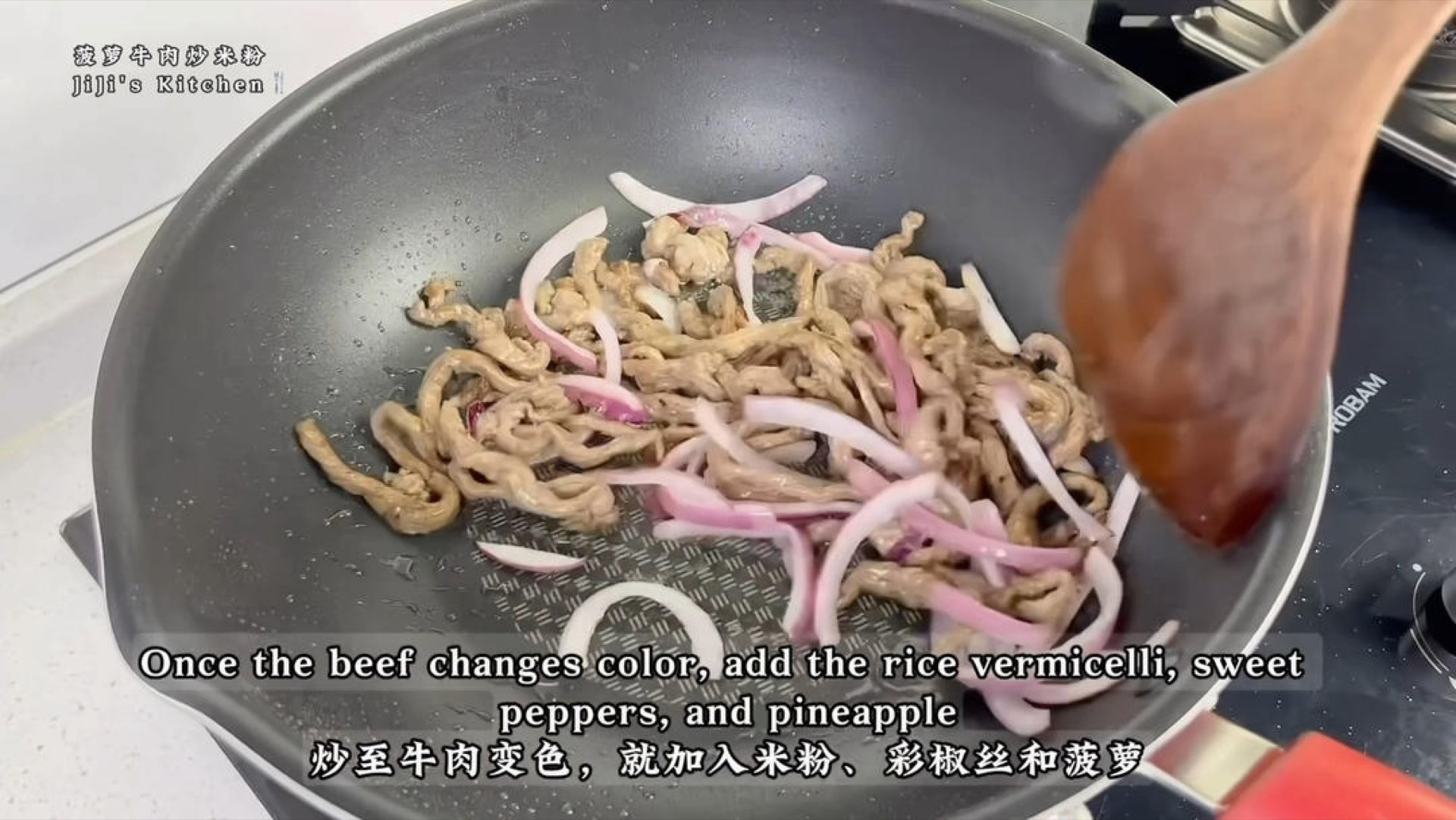
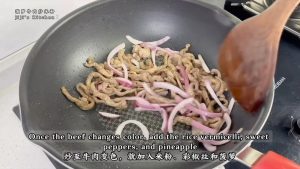
Add the marinated beef strips and stir-fry quickly until the beef changes color.
Step 8 — Add Noodles and Season
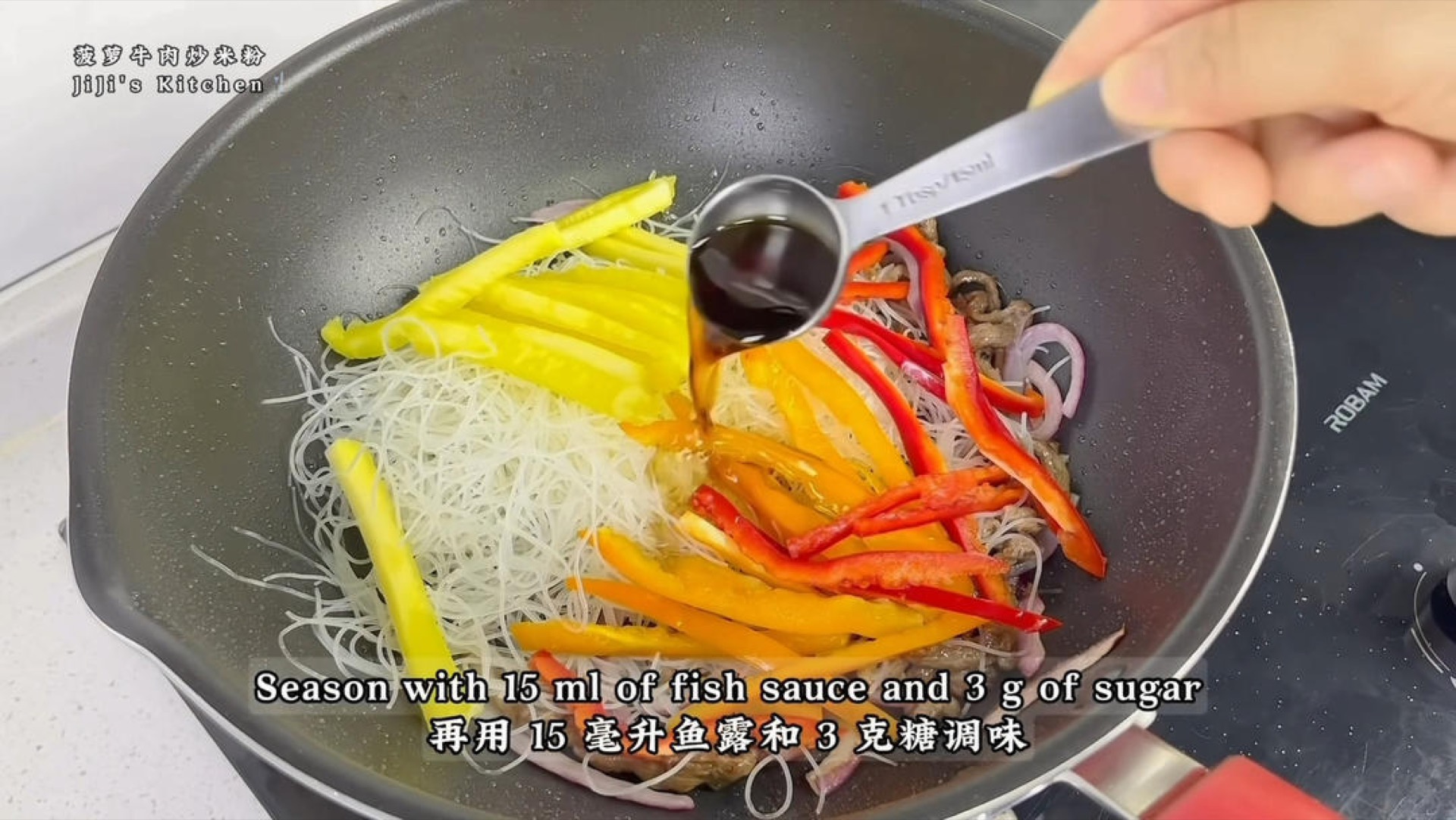
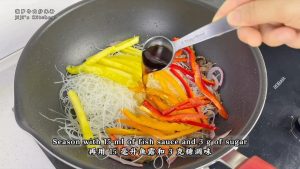
Add the rice noodles, the pepper strips, and the pineapple, season with fish sauce and sugar, and keep tossing everything quickly.
Step 9 — Loosen with Water
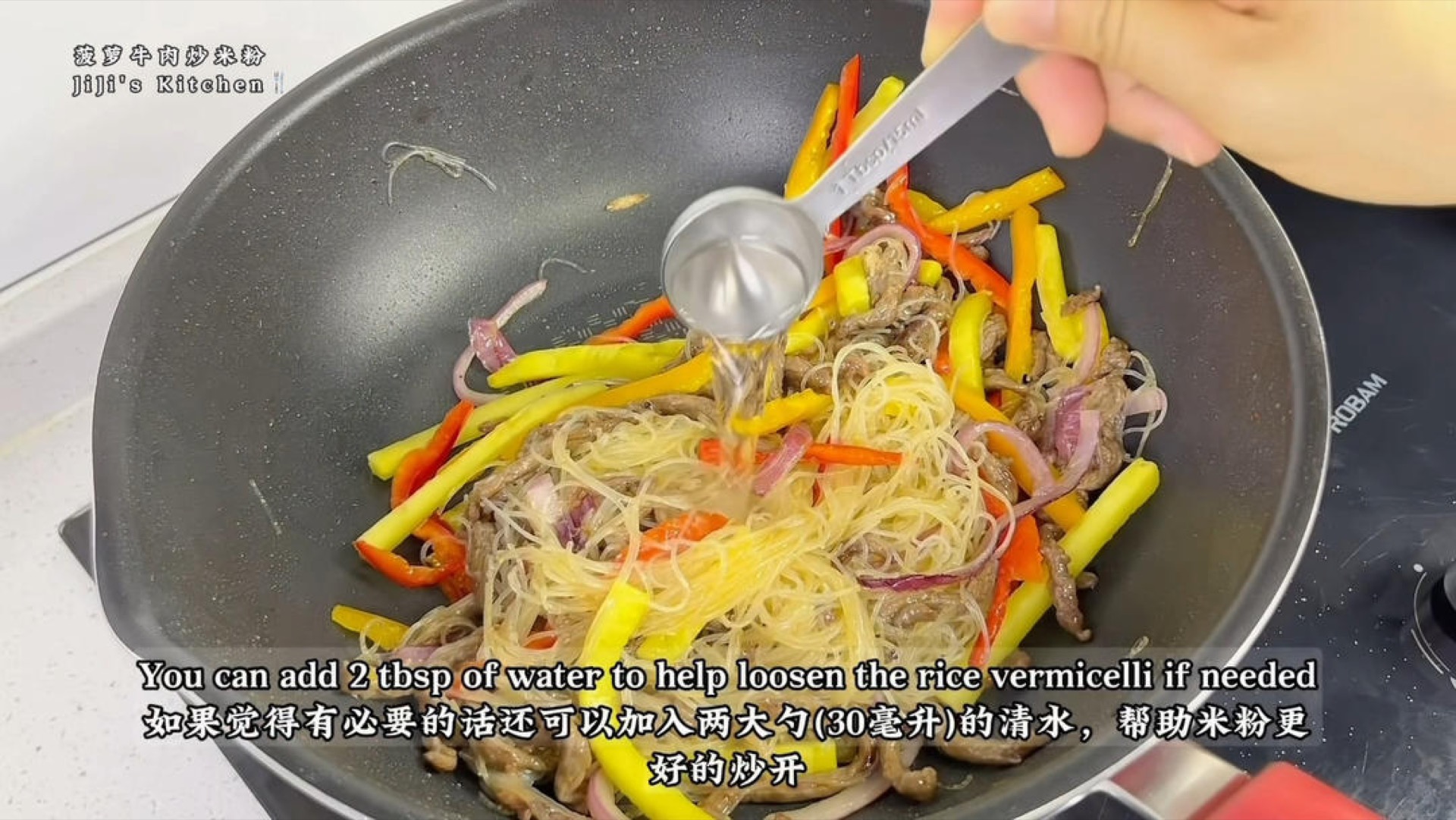
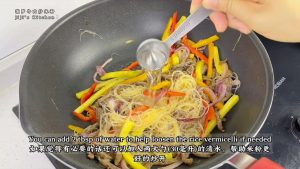
If the rice noodles are hard to separate, add 30 milliliters of water to help them spread out and separate more easily.
Step 10 — Finish and Plate
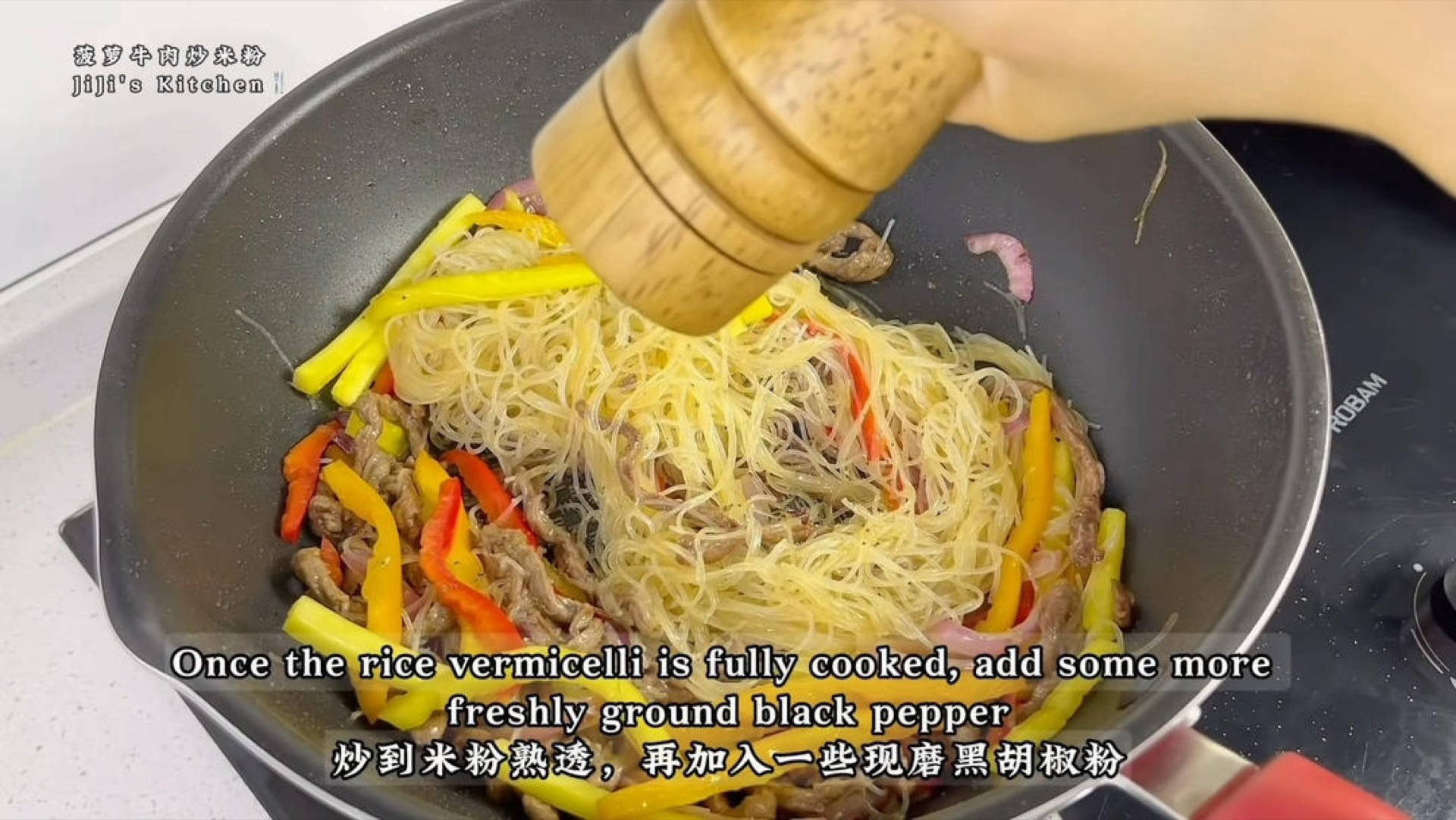
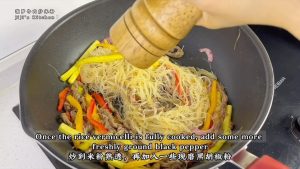
Stir-fry until the rice noodles are fully cooked, then add a little more freshly ground black pepper, toss everything evenly, and take it out of the wok.
Step 11 — Simple but Delicious
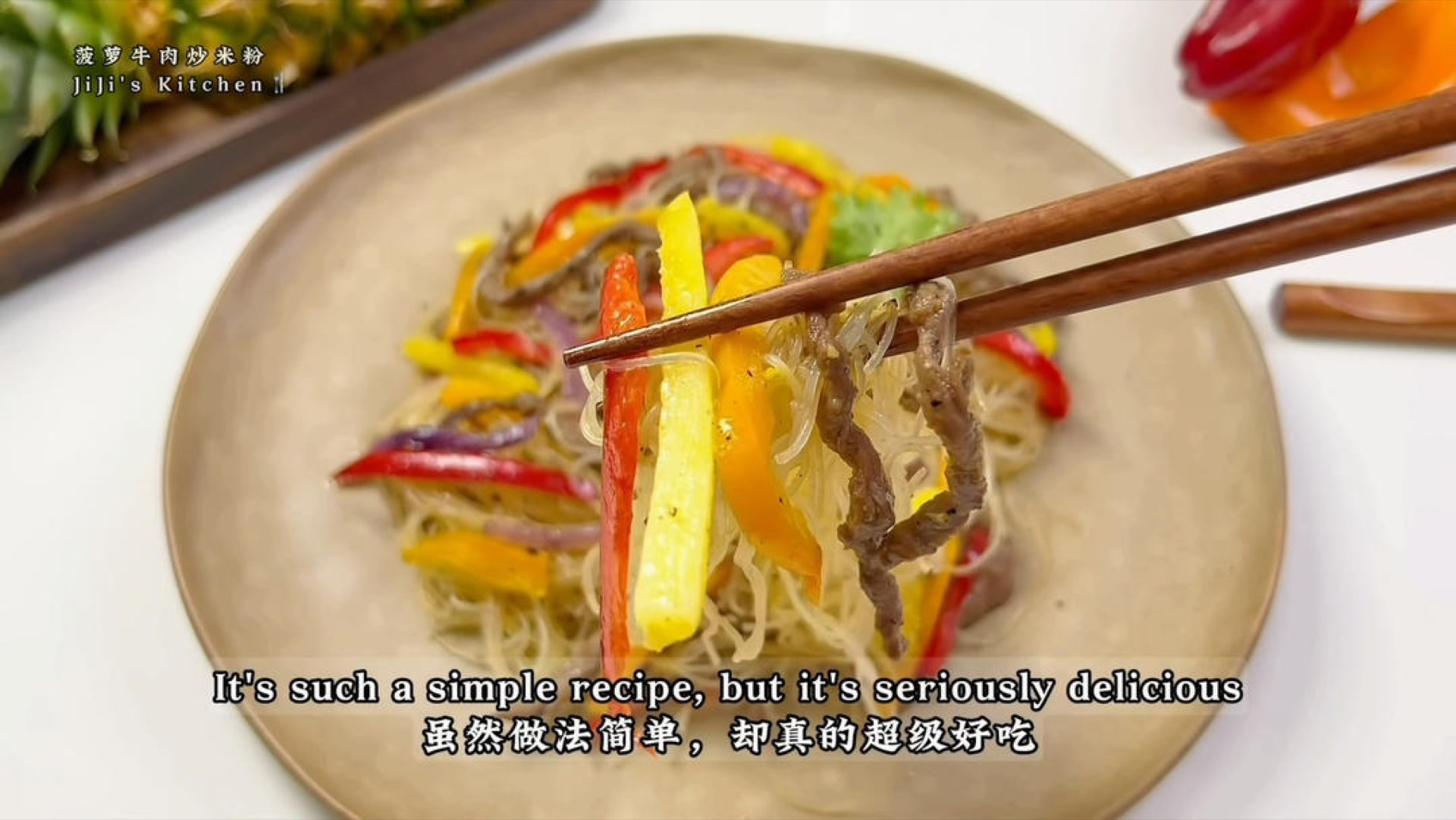
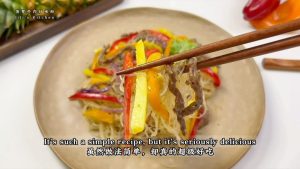
Simple, yet incredibly delicious.
Step 12 — Looks Beautiful Too
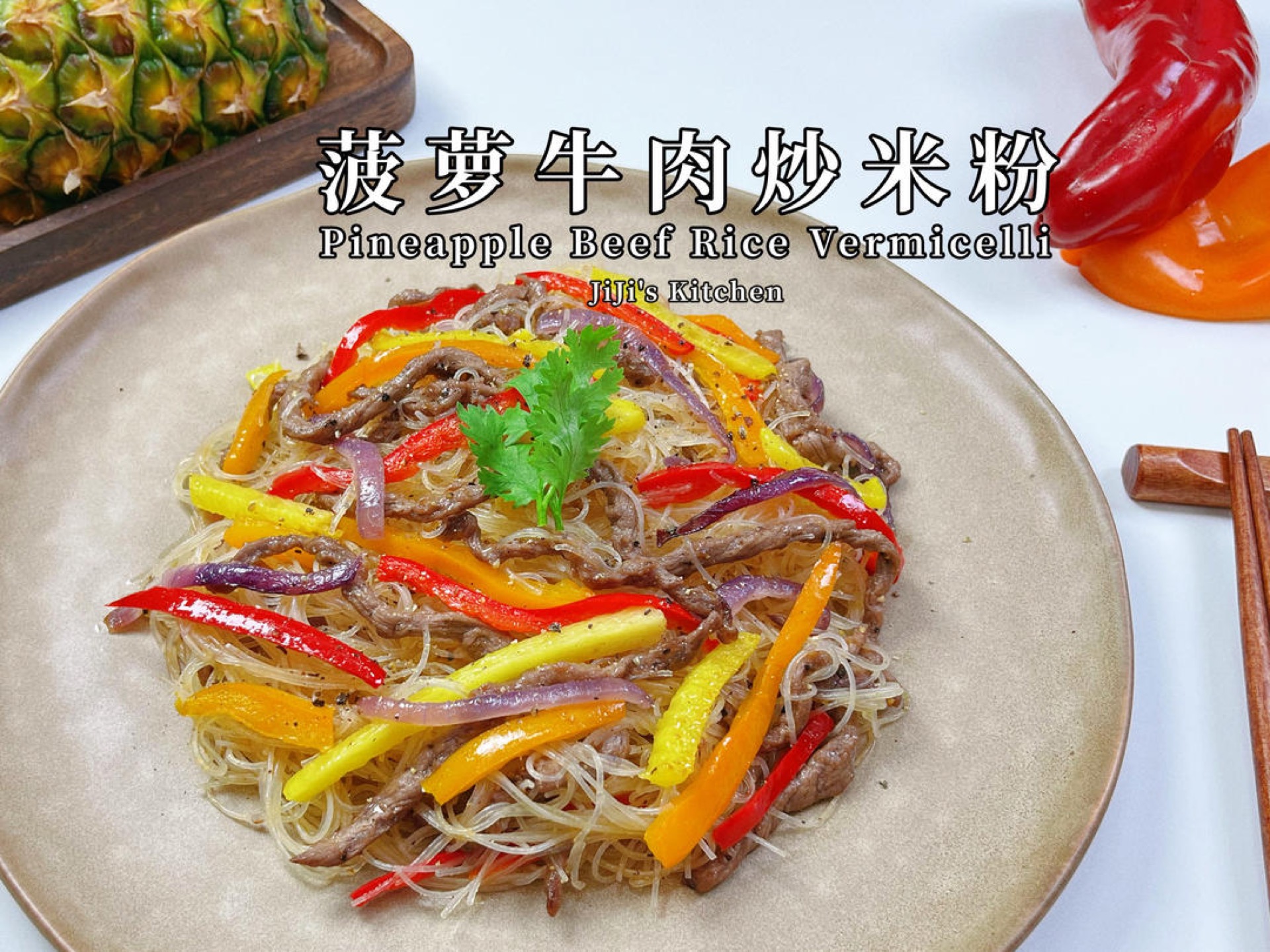
And it looks beautiful too.
Common Mistakes When Making Pineapple Beef Fried Rice Noodles
1. Boiling the noodles instead of soaking them. Boiled rice noodles are already fully cooked and waterlogged, so they break apart and turn gummy in the wok. The cause is impatience. The fix is cool-water soaking until pliable, then draining thoroughly and letting the wok finish the job.
2. Adding the pineapple too early. Pineapple is mostly water, and water drops the wok temperature and steams everything around it. The cause is treating the fruit like a vegetable. The fix is to add it with the noodles and peppers at the end, so it warms through and glazes the noodles without breaking down.
3. Skipping the oil in the beef marinade. Without that final oil coating, the cornstarch-coated beef strands stick to each other and to the wok, and they cook unevenly. The cause is thinking the oil is optional. The fix is one tablespoon of neutral oil worked in by hand right before cooking.
4. A crowded or not-hot-enough wok. If the beef steams instead of searing, it releases its juices and turns gray and tough. The cause is either too much food in too small a pan or a wok that was not preheated long enough. The fix is to heat the wok until a drop of water evaporates on contact, and to cook in batches if your pan is small.
5. Over-seasoning before tasting the fruit. Pineapple sweetness swings wildly, so a fixed amount of sugar can leave the dish cloying or flat. The cause is measuring without tasting. The fix is to start with a teaspoon of sugar, taste a strand of noodle, and adjust.
6. Letting the noodles sit in the wok after cooking. Rice noodles keep absorbing liquid as they cool, so a plate left in the hot wok turns into a solid block. The cause is leaving the pan on the burner. The fix is to slide everything onto a serving plate the moment the noodles are done.
Variations
Chicken or shrimp instead of beef. Boneless chicken thigh, sliced thin and marinated the same way, works beautifully. Shrimp needs no marinade at all — just a pinch of salt and a quick sear, then remove it and add it back at the end with the pineapple.
Canned pineapple. Use chunks packed in juice, not syrup, and drain them very well. Pat them dry with paper towels. The flavor is slightly less bright but the dish still works, and it makes this a year-round recipe.
Spicier version. Add a teaspoon of chili flakes or a sliced fresh chili with the onion. A drizzle of chili oil at the table is even easier. If you like heat with aromatic depth, a pinch of cumin seeds bloomed in the oil at the start gives the dish a completely different, northwestern character.
Vegetable-forward version. Add thin green bean or carrot strips along with the peppers. If you have leftover cooked vegetables on hand, a scoop of stir fried green beans and potatoes folded in at the end turns this into a heartier one-plate meal.
Gluten-free. Use a gluten-free fish sauce and confirm your rice noodles are 100 percent rice with no wheat starch. Shaoxing wine is usually gluten-free, but check the label.
Frequently Asked Questions
Can I use fresh rice noodles instead of dried? Yes. Fresh rice noodles need no soaking — just loosen them gently by hand, separating the strands, and add them to the wok at the same point. They cook faster, so reduce the water addition or skip it entirely.
Why did my rice noodles clump together? Almost always because they were too wet or the wok was not hot enough. Drain the soaked noodles in a colander for at least ten minutes, and preheat the wok until a drop of water evaporates instantly. If they still clump, the 30 milliliters of water in this recipe helps them separate.
Is fresh pineapple really necessary? No, but it is better. Fresh pineapple has more acidity and a firmer texture. Canned pineapple is sweeter and softer, so reduce the added sugar to a pinch and drain it very well.
Can I make this ahead of time? You can soak the noodles, marinate the beef, and cut all the vegetables up to a day ahead and refrigerate them separately. The stir-fry itself should be cooked to order — it takes five minutes and does not benefit from sitting.
How do I keep the beef tender? Slice against the grain, marinate with cornstarch and oil, and cook it fast over high heat. Do not crowd the wok and do not walk away — beef that sits in the pan goes from silky to rubbery in about sixty seconds.
How to Serve
Pineapple beef fried rice noodles is a complete one-plate meal, but it also works as part of a larger Chinese table. Serve it hot, straight from the wok, with extra black pepper and chili oil on the side. A crisp, lightly dressed cucumber salad or a bowl of plain steamed greens cuts the richness nicely.
If you are building a bigger spread, our shui zhu rou pian brings dramatic heat and numbing spice to the table and contrasts beautifully with the sweet, mild noodles. For a slower-cooked centerpiece to anchor the meal, a properly braised pork hock is a classic pairing that makes the noodle dish feel like part of a banquet rather than a weeknight dinner.
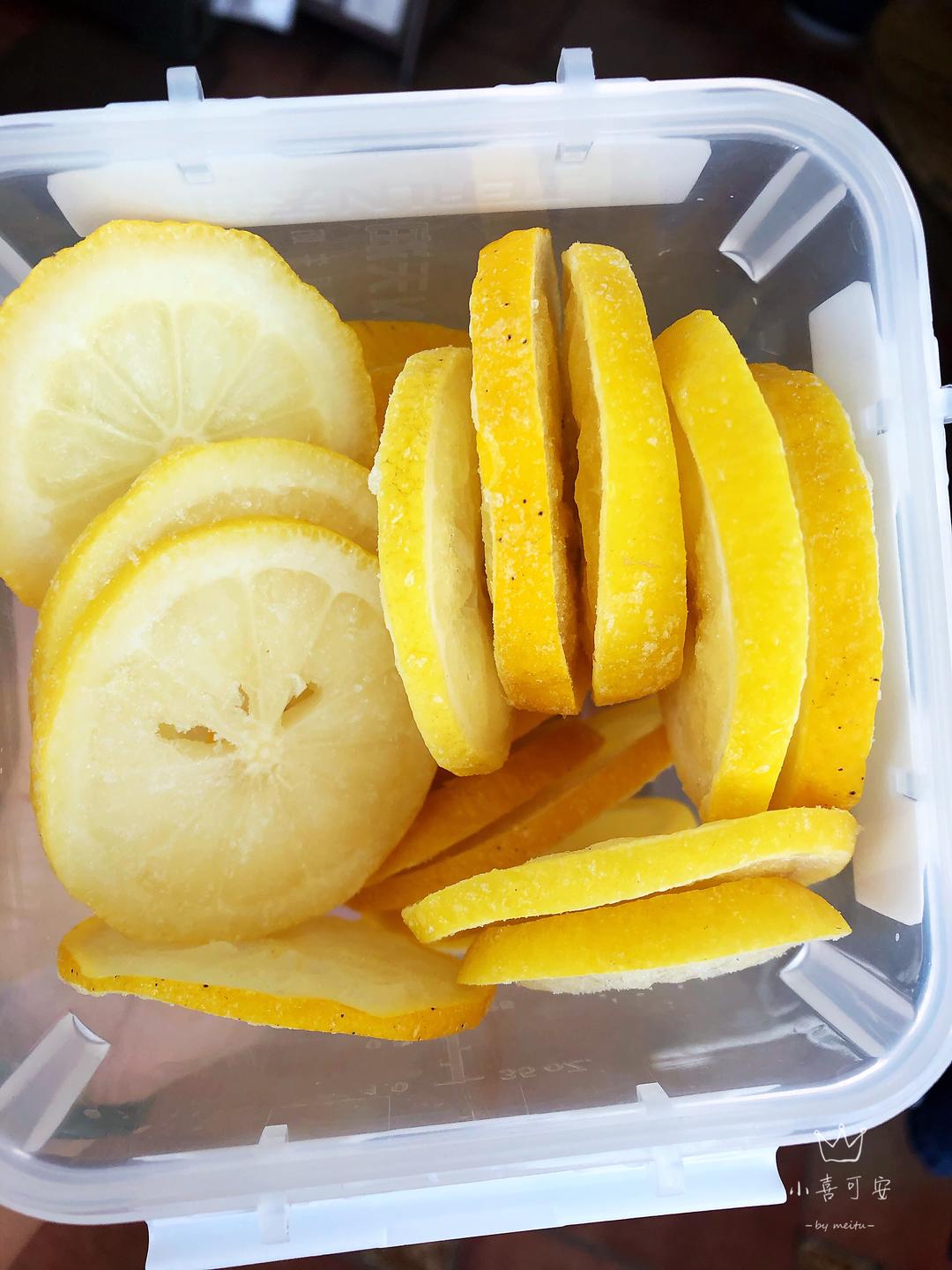
For dessert or drinks, keep it simple. A slice of lime squeezed over the noodles at the table brightens everything, and if you have extra citrus on hand, our tip on freezing fresh lemon slices means you always have a wedge ready for exactly this purpose.
Storage & Reheat
Cool any leftovers within two hours and refrigerate them in a shallow, airtight container for up to three days. Rice noodles firm up considerably in the fridge, so expect a solid block — that is normal, not a sign the dish has gone bad.
The best way to reheat is in a hot wok or skillet with a splash of water, tossing constantly until the noodles separate and steam through. A microwave works in a pinch: cover the bowl, add a teaspoon of water, and heat in 30-second bursts, stirring between each. Reheat to 165°F (74°C) and do not reheat more than once. This dish does not freeze well, because the pineapple and peppers turn soft and watery on thawing.
Allergen Notice
This recipe contains fish, in the form of fish sauce. It may also contain wheat or gluten depending on the brand of fish sauce and the rice noodles you buy, since some packaged rice noodles include wheat starch. If you are cooking for someone with a fish allergy, replace the fish sauce with light soy sauce and a pinch of sugar. If you are cooking gluten-free, verify every packaged ingredient label. Shaoxing wine is typically gluten-free, but confirm the brand.
Nutrition Disclaimer
Nutrition information is calculated using an ingredient database and should be considered an estimate. In cases where multiple ingredient alternatives are given, the first listed is calculated for nutrition. Garnishes and optional ingredients are not included.
About the Author & Recipe Development
Hi, I am Lin, the cook and writer behind Woks of Love. I grew up eating Cantonese home cooking and have spent years translating the techniques I learned in my family’s kitchen into recipes that work in an ordinary Western kitchen. This pineapple beef fried rice noodles recipe was developed by testing the same dish repeatedly with different noodle-soaking times, different beef cuts, and both fresh and canned pineapple, until the version that tasted best was also the version that was hardest to get wrong.
The goal with every recipe on this site is the same: honest measurements, real technique explained in plain language, and food that tastes like it came from a restaurant even when it came from your own stove. If you make this one, I would love to hear how it turned out.
Authoritative References
For safe handling and cooking temperatures for beef and leftovers, see the USDA safe minimum internal temperature chart. For guidance on cooling and reheating cooked food safely, see the FDA food safety guidance for home refrigeration. For background on bromelain and its effect on proteins, see this review of bromelain in food and medicine.
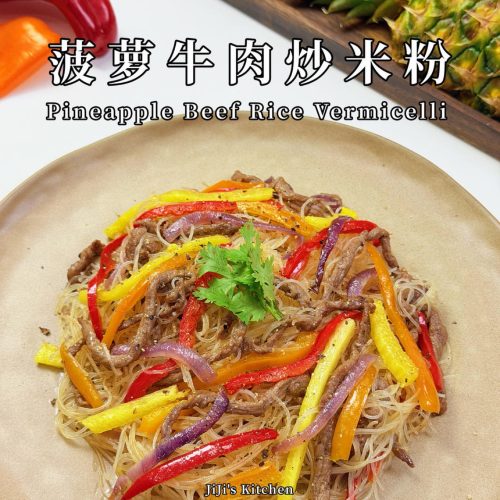
Pineapple Beef Fried Rice Noodles (菠萝凤梨牛肉炒米粉): Sweet Pineapple, Savory Beef

Equipment
- Wok
- Cutting Board
- Slotted Spoon
Ingredients
For the Beef Marinade
- 100 g beef thinly sliced against the grain
- 1/4 tsp salt fine salt
- 1/8 tsp black pepper freshly ground
- 1 tsp Shaoxing wine or dry sherry
- 2 tsp cornstarch
- 1 tbsp neutral oil for sealing the marinade
For the Stir-Fry
- 60 g dried rice noodles about 2 oz, soaked until pliable
- 60 g pineapple fresh, cut into thin strips
- 50 g bell pepper red and orange, thinly sliced
- 50 g onion thinly sliced
- 30 g neutral oil for the wok
- 1 tbsp fish sauce or to taste
- 1 tsp sugar adjust to the sweetness of the pineapple
- 30 ml water only if the noodles need loosening
- 1/8 tsp black pepper freshly ground, to finish
Instructions
- Cut the pineapple flesh into strips, soak them briefly in lightly salted water, then lift them out and drain well.

- Soak 60 grams of dried rice noodles in advance until soft, then drain off all the water and set them aside.
- Add salt, freshly ground black pepper, Shaoxing wine, and cornstarch to the sliced beef, then mix with your hand until every strand is coated.
- Add cooking oil and mix again, then let the beef marinate for a short while. This is what makes the beef come out extra silky and tender after frying.
- Cut the red and orange sweet peppers into thin strips, and slice the onion into thin strips as well.
- Heat 30 grams of cooking oil in the wok, then add the onion strips first and fry them until fragrant.
- Add the marinated beef strips and stir-fry quickly until the beef changes color.
- Add the rice noodles, the pepper strips, and the pineapple, season with fish sauce and sugar, and keep tossing everything quickly.
- If the rice noodles are hard to separate, add 30 milliliters of water to help them spread out and separate more easily.
- Stir-fry until the rice noodles are fully cooked, then add a little more freshly ground black pepper, toss everything evenly, and take it out of the wok.
- Simple, yet incredibly delicious.

- And it looks beautiful too.












Leave a Reply