There is a whole category of northern Chinese home cooking built on the idea that a vegetable should be cooked until it gives up — until it slumps, sweetens, and turns almost creamy. Braised napa cabbage with vermicelli is the purest example of that instinct, and it is one of the cheapest, fastest, most quietly satisfying dinners in the whole repertoire. The cabbage softens into something silky, the sweet potato noodles turn glassy and springy, and the two of them swap flavors until you cannot quite tell where the vegetable ends and the noodle begins.
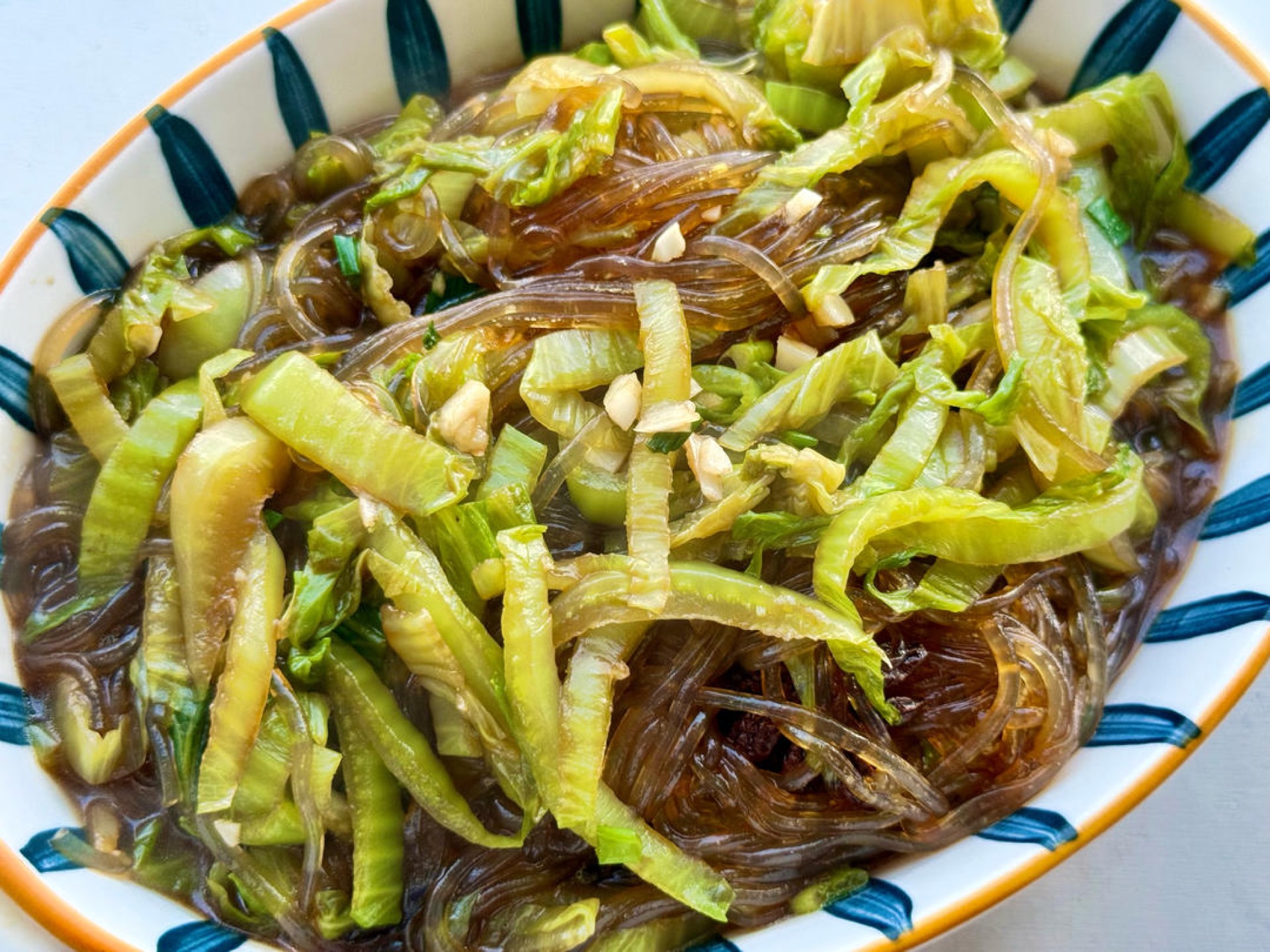
What makes it special is how little it asks of you. There is no long marinade, no stock simmered for hours, no technique more advanced than covering a wok with a lid. Two star anise, a handful of scallions, a few cloves of garlic, and a splash of broth do all the heavy lifting. The dish is known in Chinese as 烂糊 (làn hú), a word that literally means “cooked to a mush” — and here it is a compliment, not a complaint.
If you have ever eaten at a northern Chinese family table in winter, you have probably met a version of this. It shows up alongside steamed buns, next to a bowl of plain rice, or on its own with a spoon. It is the kind of food that tastes better after ten minutes of resting and better again the next day, which makes it a reliable candidate for a big pot on a cold evening.
What Is Braised Napa Cabbage with Vermicelli?
Braised napa cabbage with vermicelli — 白菜烧粉条, or báicài shāo féntiáo — is a northern Chinese home dish of napa cabbage slowly softened in a covered wok with aromatics and a little broth, then finished with soaked sweet potato vermicelli. The cabbage is cooked past crisp, into that silky, sweet, almost collapsed state the Chinese call 烂糊, and the noodles absorb the savory liquid until they are glossy and tender.
The “vermicelli” here are not rice noodles. They are 粉条 (féntiáo), starch noodles made from sweet potato (or sometimes mung bean or potato), sold dried in brittle, semi-translucent bundles. They have a distinctive springy, slightly chewy bite and a remarkable ability to soak up sauce without turning to paste. That texture is the whole point of the pairing: soft cabbage needs something with a little resistance, and the noodles provide it.
If you enjoy this style of dish — vegetable and starch braised together until the two become one — our braised green beans and noodles with pork is the same family of cooking, built on hand-pulled noodles and a pork-enriched braise.
1Braised Green Beans and Noodles (Men Mian)This traditional Northern Chinese Braised Green Beans and Noodles (Men Mian) creates chewy, flavorful noodles by steaming them directly on top of a savory stew of pork, potatoes, and tomatoes. It is a hearty one-pot meal that captures the essence of home cooking.Check out this recipe

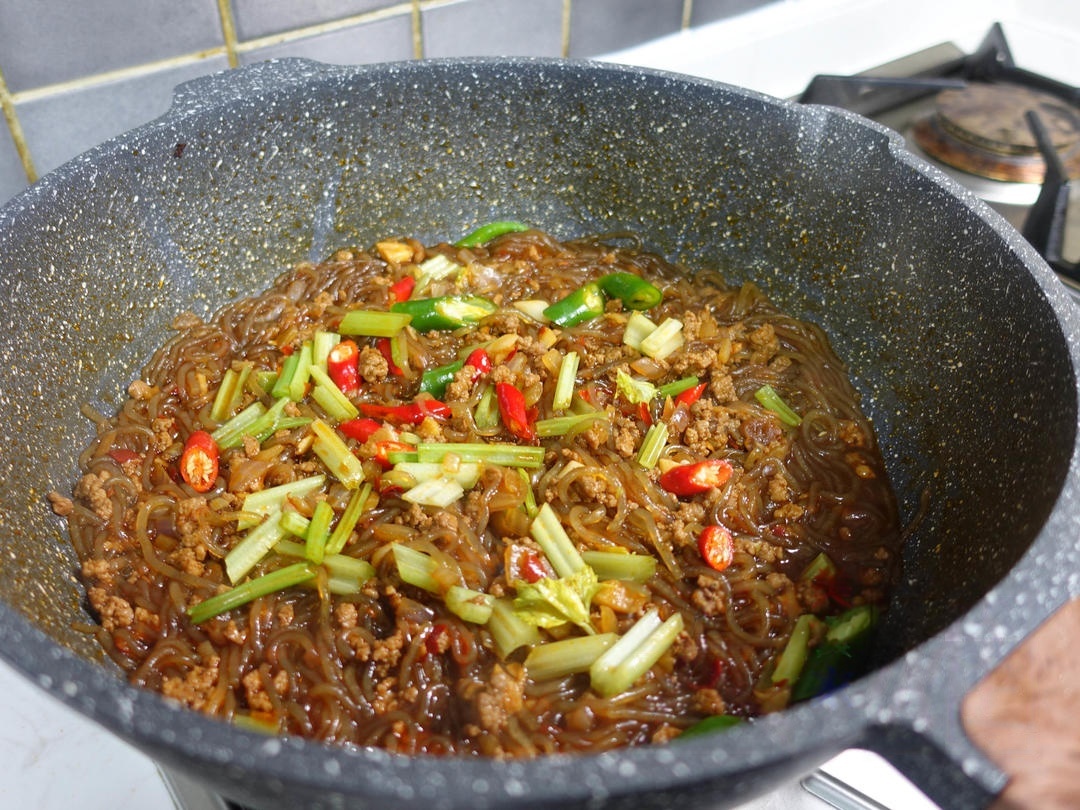
For a richer, meatier take on the same idea, see our braised vermicelli with minced pork, where the noodles carry a savory pork sauce instead of a cabbage broth.
2Braised Vermicelli with Minced PorkA rich, savory Sichuan dish featuring chewy sweet potato noodles braised with minced pork and spicy broad bean paste. A perfect comfort meal ready in 30 minutes.Check out this recipe
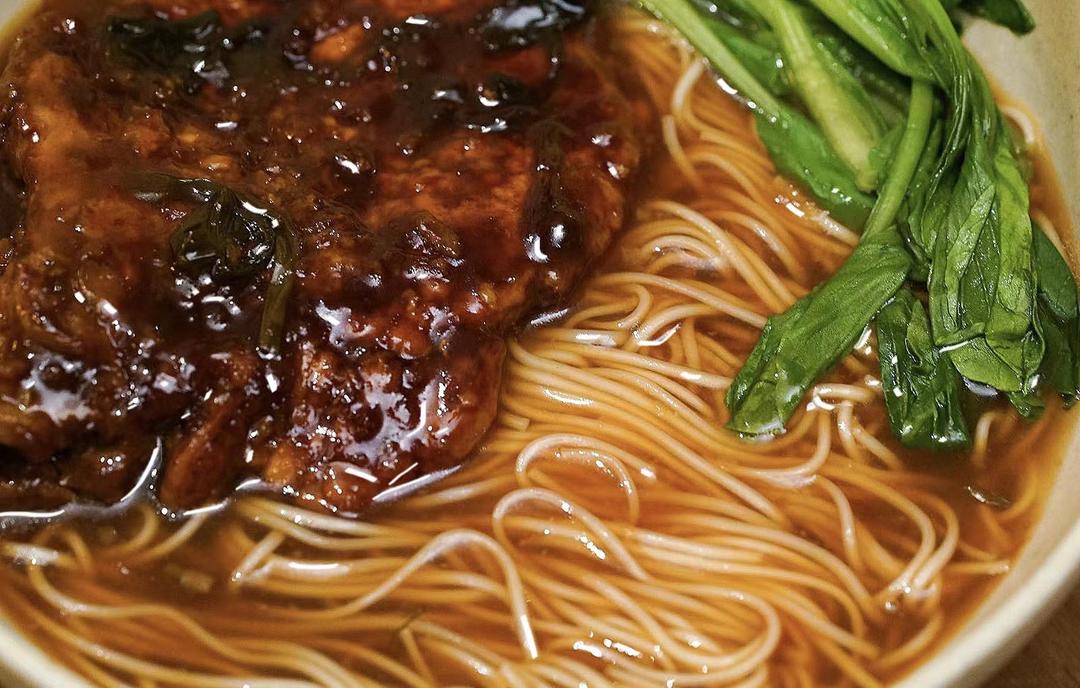
And if you like the way braising coaxes sweetness out of aromatics, our scallion braised pork chop noodles uses the same scallion-and-soy logic over a pork chop and a bowl of noodles.
3Scallion Braised Pork Chop Noodles (Cong Shao Da Pai Mian)A classic Shanghainese comfort dish featuring tenderized bone-in pork chops braised in a rich, aromatic scallion sauce. The noodles are cooked directly in the savory juices, ensuring every strand is packed with flavor.Check out this recipe
Ingredient Notes
Napa cabbage (白菜). Also sold as Chinese cabbage or sui choy, this is the workhorse of the northern winter kitchen. Look for a head that feels heavy for its size with tight, pale ribs and no brown spots. The leaves cook down far faster than the ribs, so keep them separate and add the ribs first if your cabbage is on the mature, thick side. Regular green cabbage will work in a pinch, but it stays firmer and tastes sharper — it never quite reaches that melting texture.
Sweet potato vermicelli (粉条). These come in a range of thicknesses. For this dish you want the thin-to-medium “fine” noodles, about the width of a thick spaghetti strand, not the wide flat sweet potato sheets used for 宽粉. They must be soaked in warm water before cooking — a dry noodle dropped straight into a wok will steal every bit of liquid and still stay hard in the middle. Thirty minutes in warm (not boiling) water is usually right; they should bend without snapping but still have a firm core.
Dark soy sauce. This is for color, not salt. A single tablespoon turns the pale noodles a deep amber so they read as “braised” rather than “boiled.” If you only have light soy sauce, the dish will still taste right but look washed out.
Star anise (八角). Two whole pods, bloomed in the oil before the cabbage goes in, give the braise its warm, faintly sweet backbone. This is the signature note of northern braised dishes. Do not crush them — you want a slow release, and you want to be able to fish them out or leave them whole for diners to avoid.
Oyster sauce. Added at the very end, it brings a rounded savoriness and a little gloss. Use a good brand, and if you want the dish fully vegan, a mushroom-based “oyster” sauce substitutes directly. A small splash of toasted sesame oil is a fine finishing alternative.
Broth. The source recipe uses pork bone broth left over from making soup — a lovely bit of kitchen economy. Any light stock works: chicken, vegetable, or even hot water with a pinch of extra seasoning. The broth is what turns the cabbage from steamed to braised, so do not omit it.
Scallions and garlic. Both go in near the end, not the beginning. Their job is aroma, and long cooking dulls it. Scattering them over the noodles just before the final covered braise lets them steam gently into the dish without losing their punch.
Ingredients
- 2 tbsp neutral oil (peanut or canola)
- 2 whole star anise
- 3 cloves garlic, minced
- 2 stalks scallions, finely chopped, whites and greens separated
- 1.5 lb (about 680 g) napa cabbage, cut into 1-inch strips
- 1 cup (240 ml) pork bone broth or vegetable broth, plus more as needed
- 1 tsp salt, plus more to taste
- 7 oz (200 g) dried sweet potato vermicelli
- 1 tbsp dark soy sauce
- 1.5 tbsp oyster sauce (or mushroom oyster sauce)
These quantities make four generous side servings or two to three main-course bowls over rice. The dish scales easily — just add a little more broth if you double the cabbage, since a bigger pile of vegetables will need more liquid to braise down.
Equipment Needed
A wok is the traditional vessel and the best one here, because its wide sloping sides let the cabbage wilt quickly before you clamp on a lid. A large deep skillet or a Dutch oven works too; anything with a tight-fitting lid and enough room to toss noodles without flinging them over the edge. You will also want a cutting board and a sharp chef’s knife for the cabbage, a slotted spoon or spider for lifting the noodles out of their soaking water, measuring spoons, and a small bowl for the broth.
One small note on heat: if your wok or pan is not getting hot enough, the cabbage will steam in its own water and turn limp rather than sweet. Our guide to getting your pan hot enough covers the usual culprits, from undersized burners to overcrowding.
Why This Recipe Works
The technique is a two-stage braise, and each stage does something specific. First the cabbage goes in with the star anise, the broth, and the salt, under a lid. The salt draws water out of the cabbage, that water mixes with the broth, and the whole thing simmers in a concentrated cabbage-flavored liquid. Napa cabbage is naturally sweet, and gentle covered cooking converts some of its sharper notes into that mellow, almost buttery flavor.
Second, the soaked and soy-colored noodles go in on top with the scallions and garlic, and the lid goes back on. The noodles are already hydrated, so they do not need to cook so much as absorb. Sitting above the cabbage, they steam and drink up the reduced braising liquid from below, turning glossy and savory. The garlic and scallions perfume them from above. A final drizzle of oyster sauce adds savoriness and sheen.
This is essentially a starch-and-vegetable braise, and the science is simple: starch granules in the noodles gelatinize as they absorb hot liquid, which is why the noodles turn translucent and springy rather than mushy, while the pectin in the cabbage ribs breaks down under sustained moist heat and lets the leaves collapse. The FDA’s food safety guidance on moist-heat cooking is a useful reference if you want to understand why covered braising is such an efficient way to cook vegetables through.
Because there is no meat to brown and no sauce to reduce separately, the whole dish comes together in one pan in about twenty minutes of active cooking. That is the appeal: it tastes like something that simmered for an hour.
Prep & Mise en Place
This dish moves fast once the wok is hot, so get everything ready before you turn on the burner. Start by soaking the vermicelli in a bowl of warm water — this takes about 30 minutes, so begin here first. While they soak, wash and cut the cabbage, keeping the firm white ribs and the tender green leaves in separate piles. Chop the scallions, keeping whites and greens apart, and mince the garlic. Measure out the broth, salt, dark soy sauce, and oyster sauce into small bowls so you can add them without thinking.
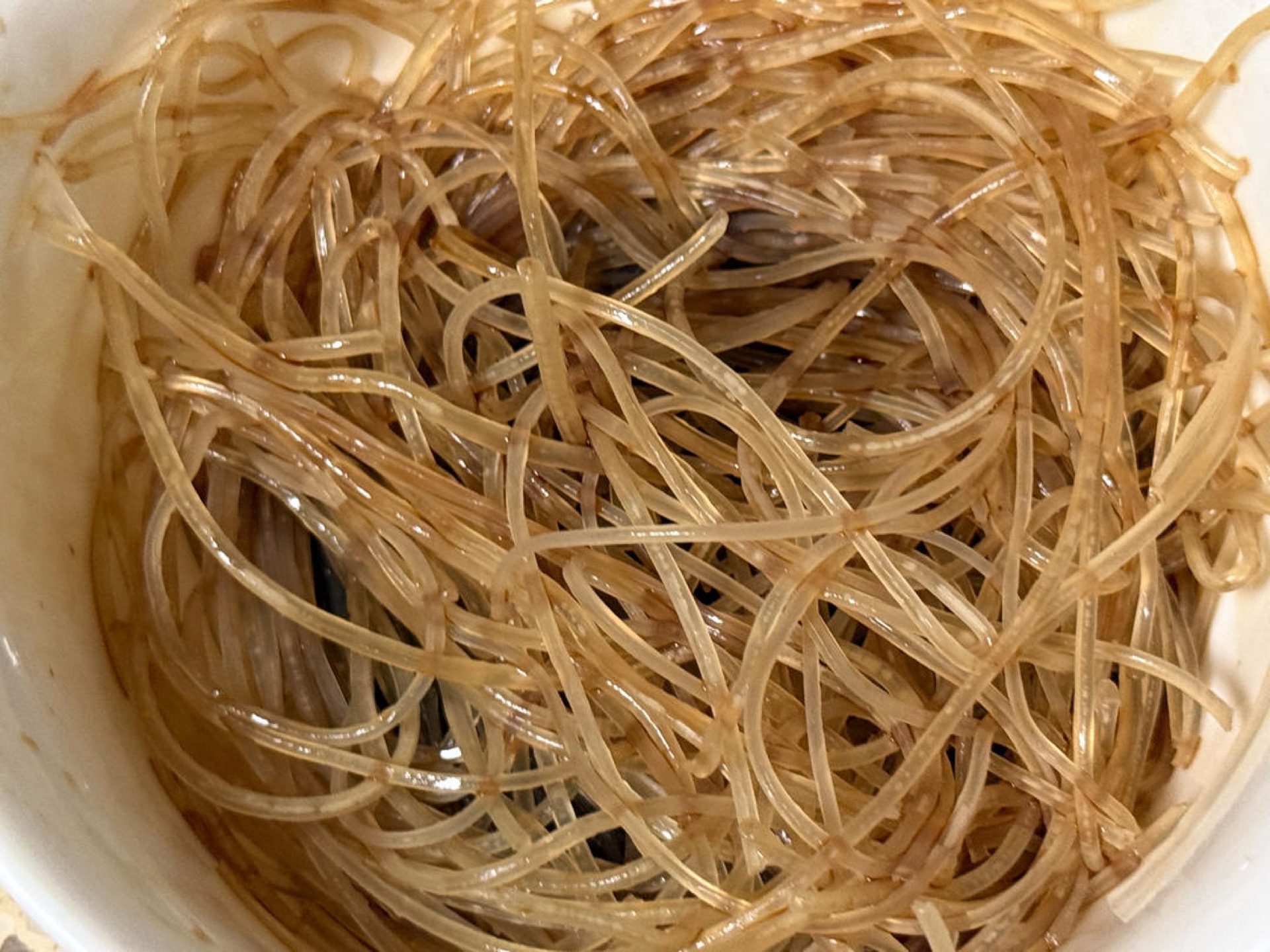
When the noodles are pliable, drain them well in a colander and toss them with the dark soy sauce right in the colander or a bowl, using your hands or tongs to coat every strand. They will look alarmingly dark — that is correct. Let them sit while you heat the wok; the color will even out.
Have a lid within arm’s reach. The two covered braising stages are the heart of the recipe, and you do not want to be hunting for a lid while the cabbage scorches.
Cooking Process
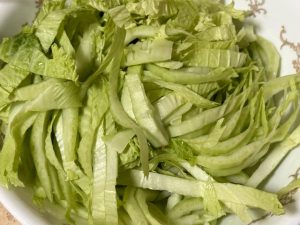
Step 1 — Cut the Cabbage
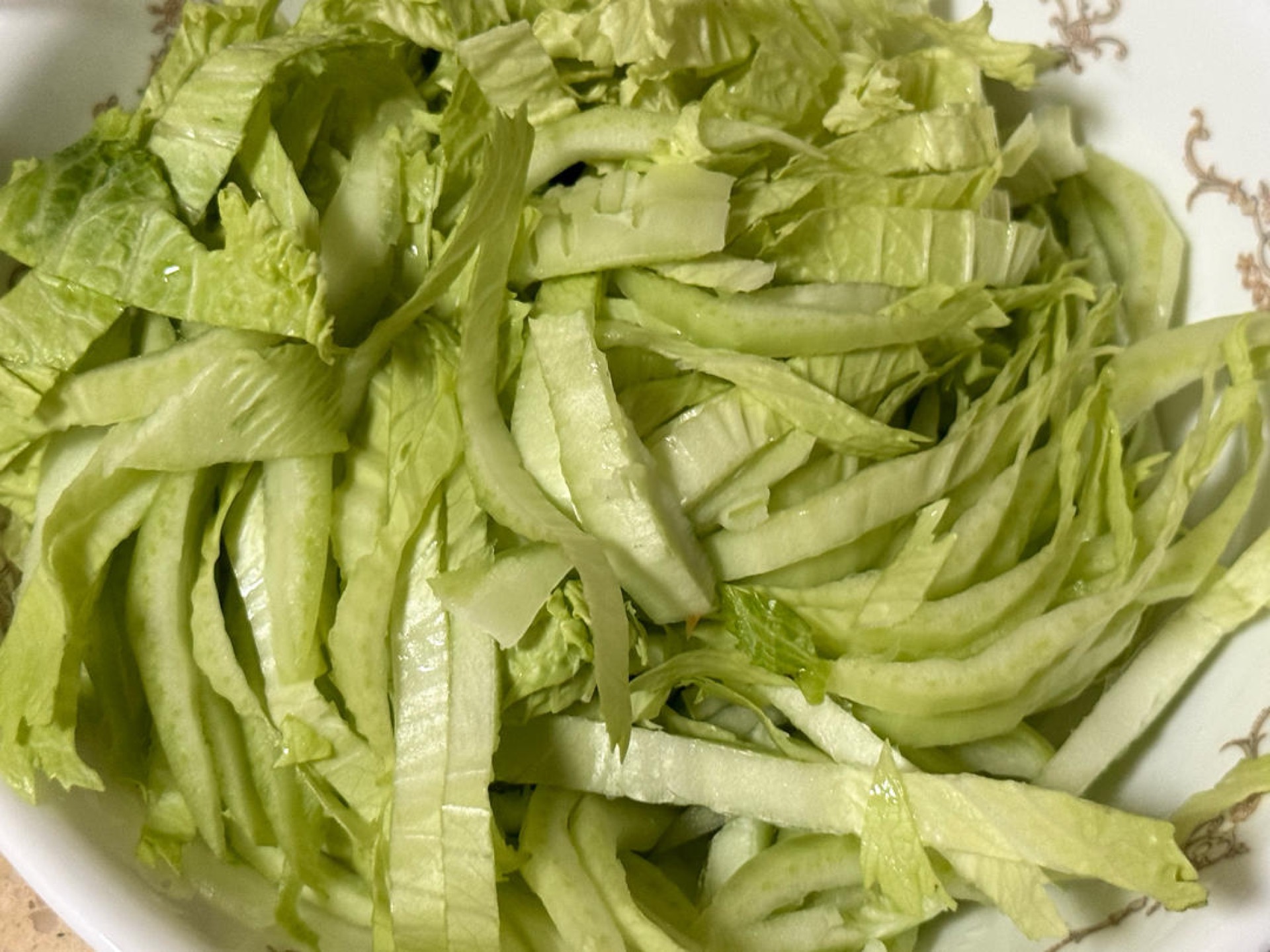
Wash the napa cabbage well, drain it, and cut it crosswise into strips about 1 inch wide, keeping the tender leaves and the thicker white ribs separate.
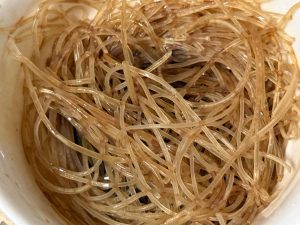
Step 2 — Soak and Color the Vermicelli
Soak the dried sweet potato vermicelli in warm water until pliable, about 30 minutes, then drain and toss with the dark soy sauce so every strand takes on an even amber color.
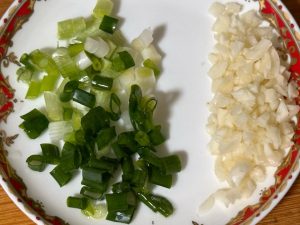
Step 3 — Chop the Scallions and Garlic
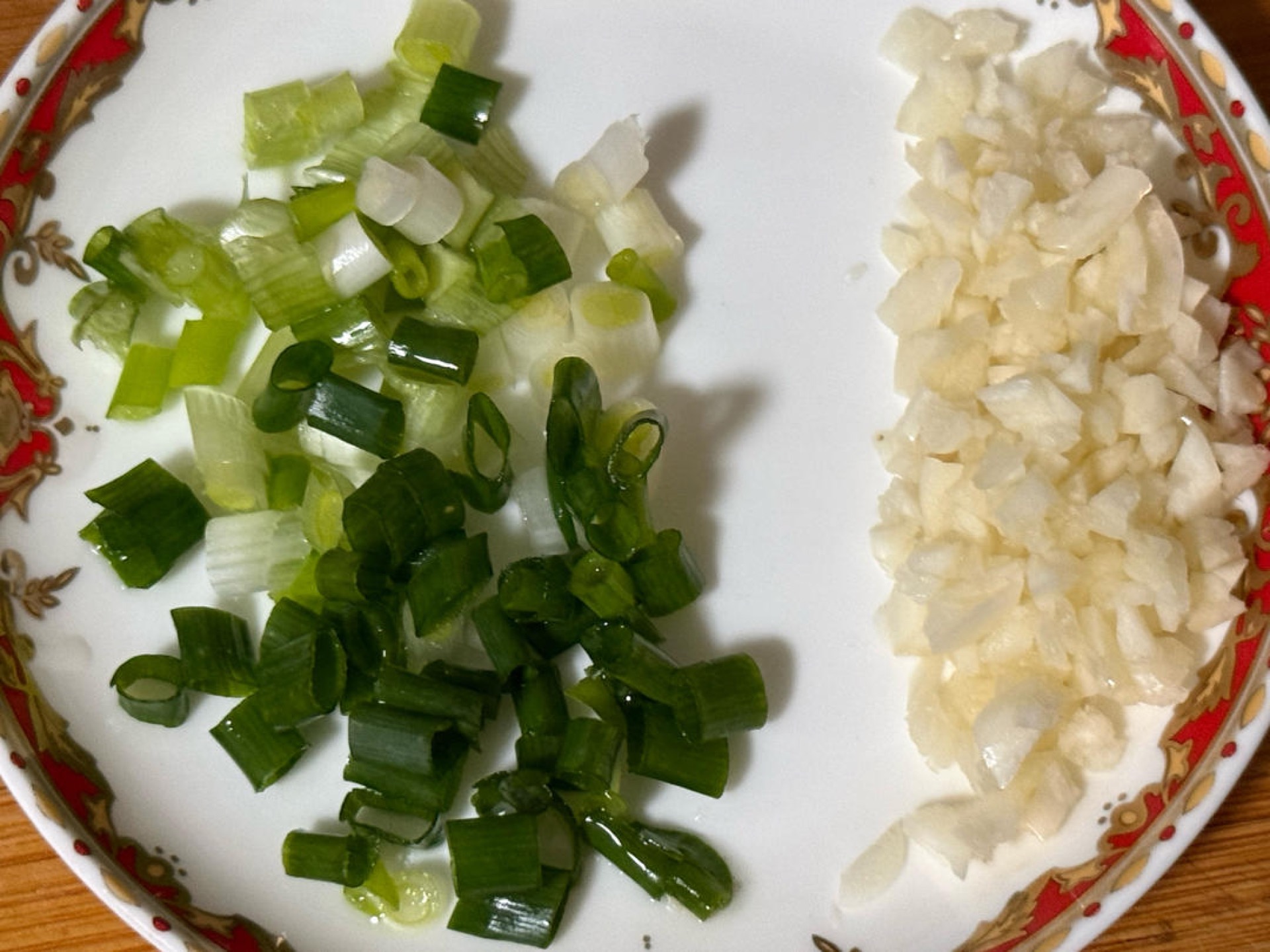
Finely chop the scallions, keeping the white parts and green parts separate, and mince the garlic.
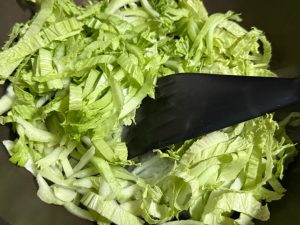
Step 4 — Braise the Cabbage
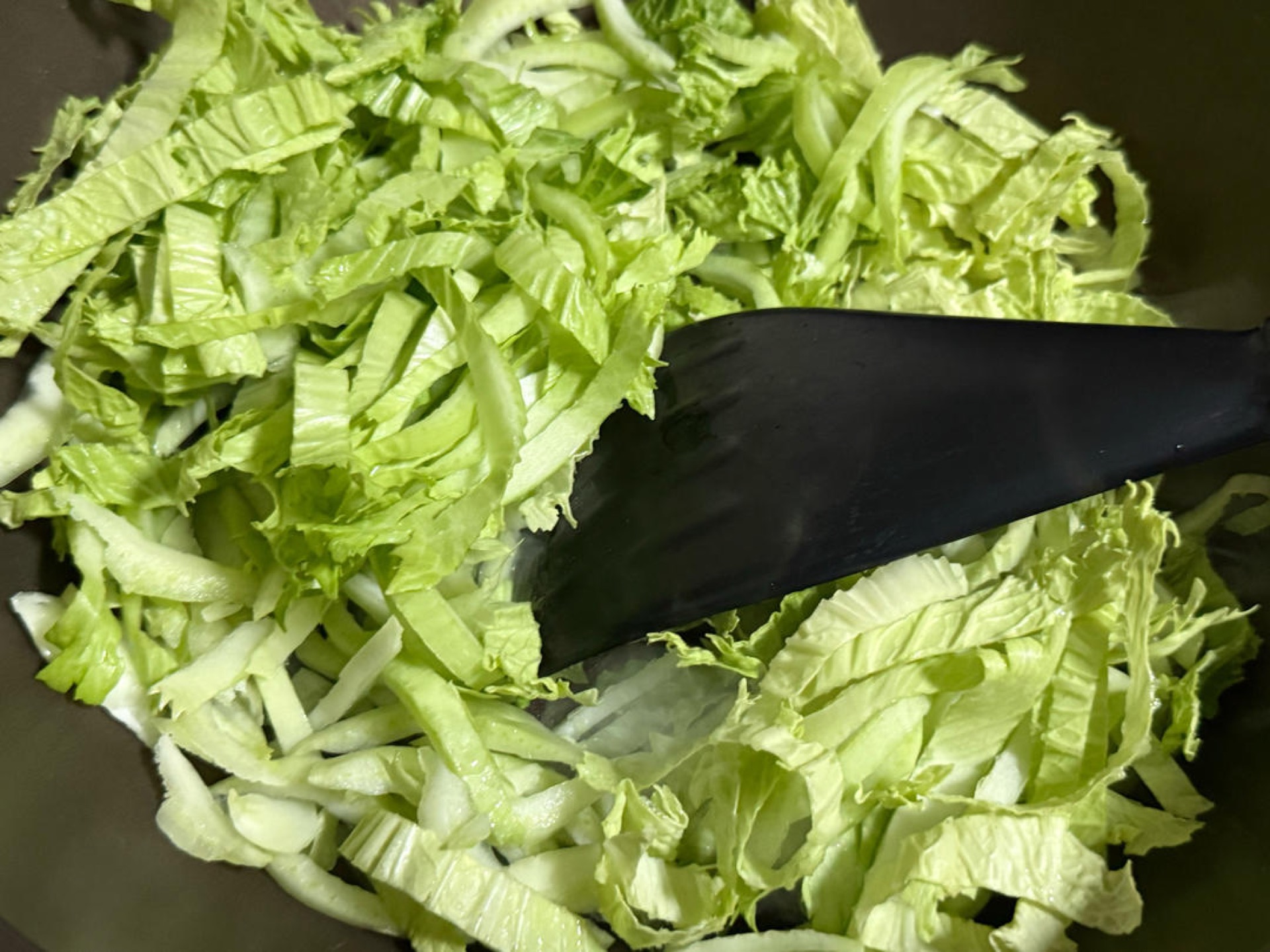
Heat the wok over medium heat, add the oil and the two star anise, then add the cabbage, pour in a small bowl of pork bone broth, sprinkle in some salt, cover with a lid, and let it braise for a few minutes until the cabbage softens.
Step 5 — Add the Vermicelli
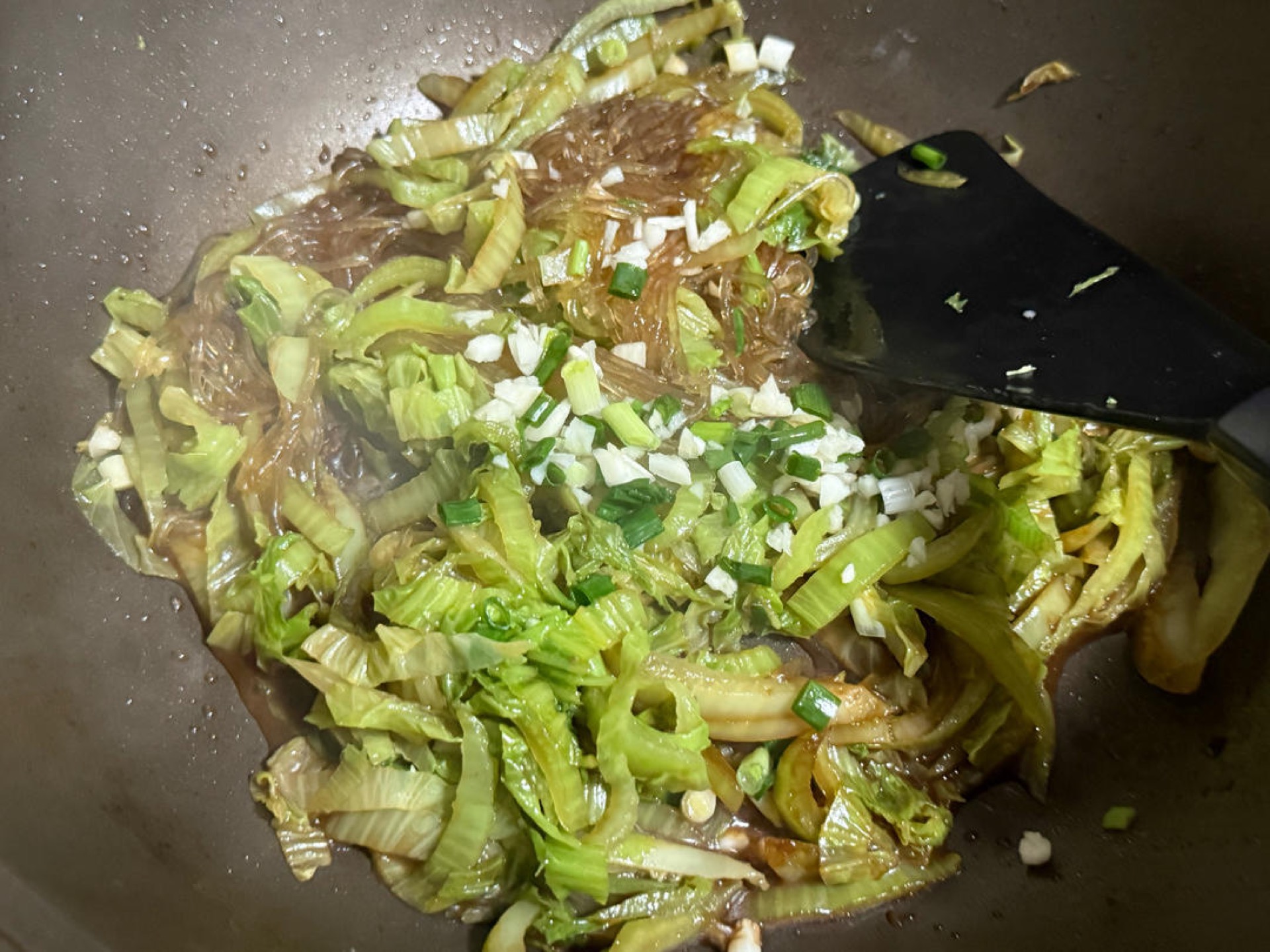
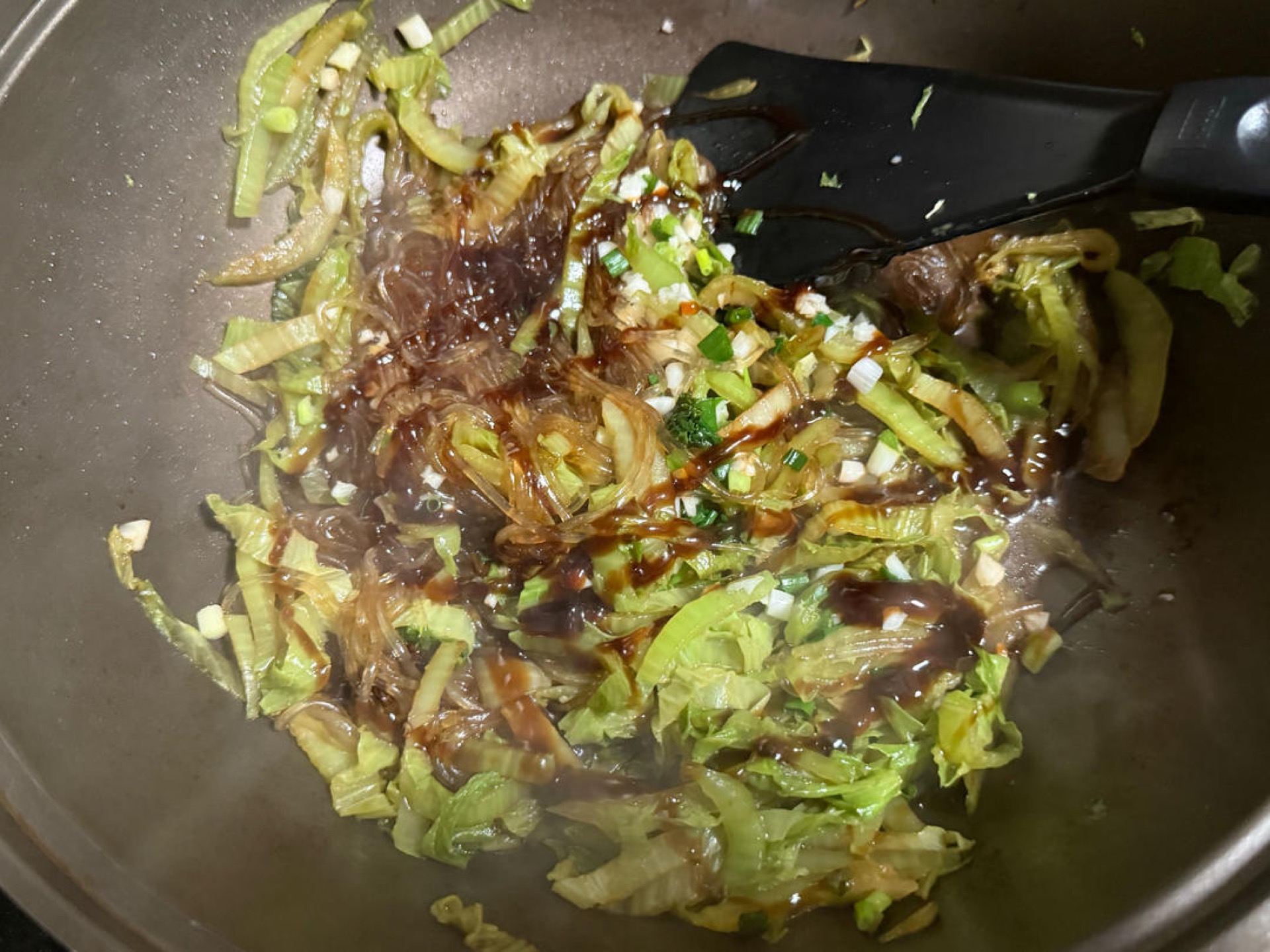
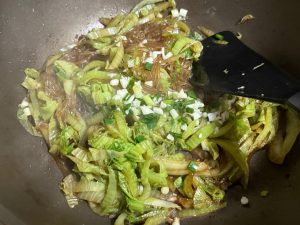
Add the soaked vermicelli to the wok and scatter the chopped scallions and minced garlic over the top.
Step 6 — Finish with Oyster Sauce
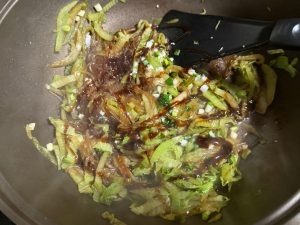
Drizzle in the oyster sauce, cover again, and braise a little longer until the vermicelli is soft and tender, then serve hot.
Common Mistakes When Making Braised Napa Cabbage with Vermicelli
1. Skipping the soak and adding dry noodles. Dry sweet potato vermicelli are rock-hard and will absorb every drop of broth in the wok, leaving you with a dry, sticky pan and noodles that are still chalky in the center. The cause is simply impatience. The fix is to soak them in warm water for a full 30 minutes, until they bend without snapping, and to drain them well before they go in.
2. Cutting the cabbage into uneven pieces. If the thick white ribs are the same size as the delicate leaves, the leaves will dissolve into nothing while the ribs are still crunchy. The cause is cutting the whole head the same way. The fix is to slice the ribs a little thinner, or to start the ribs in the wok a minute or two before the leaves.
3. Not using enough broth — or using too much. Too little liquid and the cabbage scorches before it softens; too much and you end up with cabbage soup with noodles floating in it. The cause is eyeballing it. The fix is to start with one cup for a standard head of cabbage and add more only in quarter-cup splashes if the pan looks dry.
4. Adding the garlic and scallions at the start. Garlic burned in hot oil turns bitter, and scallions cooked for ten minutes lose all their brightness. The cause is treating them like a stir-fry base. The fix is to add them with the noodles, where they steam gently and stay sweet and aromatic.
5. Stirring the noodles constantly. Sweet potato vermicelli are long and fragile once soft, and aggressive stirring snaps them into short stubs. The cause is habit — we stir stir-fries. The fix is to lift and fold gently with a slotted spoon or chopsticks, or simply to let the noodles sit on top of the cabbage under the lid and steam.
6. Under-salting because the soy sauce “looks like enough.” Dark soy sauce is for color and contributes very little salt, and oyster sauce is sweet-salty but not a seasoning base. The cause is assuming the dark liquid is doing the work. The fix is to salt the cabbage at the start, as the recipe says, then taste and adjust at the very end.
7. Crowding the wok. A small wok packed with cabbage will steam instead of braise, and the bottom layer will scorch while the top stays raw. The cause is doubling a recipe in the same pan. The fix is to cook in two batches or move up to a larger vessel — a Dutch oven is ideal for a double batch.
Variations
With pork. A handful of thinly sliced pork belly or ground pork, browned in the wok before the cabbage goes in, turns this into a heartier one-dish meal. If you are working with a fattier cut, our notes on pork jowl explain why that particular cut braises so beautifully in dishes like this.
With dried shrimp or prawns. A tablespoon of soaked dried shrimp added with the aromatics gives the braise a deep seafood savoriness. For a more substantial version, the same flavor logic appears in our king prawn vermicelli clay pot, where noodles soak up a prawn-scented broth.
With tomato. A chopped tomato added with the cabbage brings acidity and a lovely pink tint to the sauce. It is a different dish, but a good one — our rich tomato shrimp soup with vermicelli shows how well tomato and starch noodles get along.
With potato or tofu. Sliced potato added with the cabbage braises into soft, savory coins; cubes of firm tofu soak up the broth and add protein. Both are common northern additions.
Vegan. Swap the pork bone broth for vegetable stock and the oyster sauce for mushroom oyster sauce. The dish loses nothing.
Spicier. A dried red chili or a teaspoon of chili crisp added with the star anise gives the braise a gentle backnote of heat.
Frequently Asked Questions
Can I use rice vermicelli instead of sweet potato noodles? You can, but the dish changes character. Rice vermicelli are thinner, softer, and dissolve more readily under long moist heat. They will work if you add them very late and only braise for a minute or two. Sweet potato vermicelli are the right choice for the springy, chewy texture this dish is known for.
My noodles turned into a gluey lump. What went wrong? Almost always overcooking or over-stirring. Sweet potato starch continues to soften as it sits in hot liquid, so pull the dish off the heat as soon as the noodles are tender, and fold rather than stir. If they have already clumped, a splash of hot broth and a gentle toss will usually loosen them.
How soft should the cabbage actually be? Softer than you think. The goal is 烂糊 — the ribs should offer no resistance to a spoon, and the leaves should be silky and almost translucent. If you can still hear a crunch, keep the lid on for another few minutes.
Can I make this ahead of time? Yes, and many cooks think it improves. The noodles continue to absorb flavor as it sits. Make it up to a day ahead, refrigerate, and reheat gently on the stovetop with a splash of broth or water to loosen it.
Is this dish gluten-free? Sweet potato vermicelli are naturally gluten-free, and tamari can replace the soy sauce. Check both the noodle and the oyster sauce labels carefully — some brands of vermicelli blend in wheat starch, and many oyster sauces contain wheat.
How to Serve
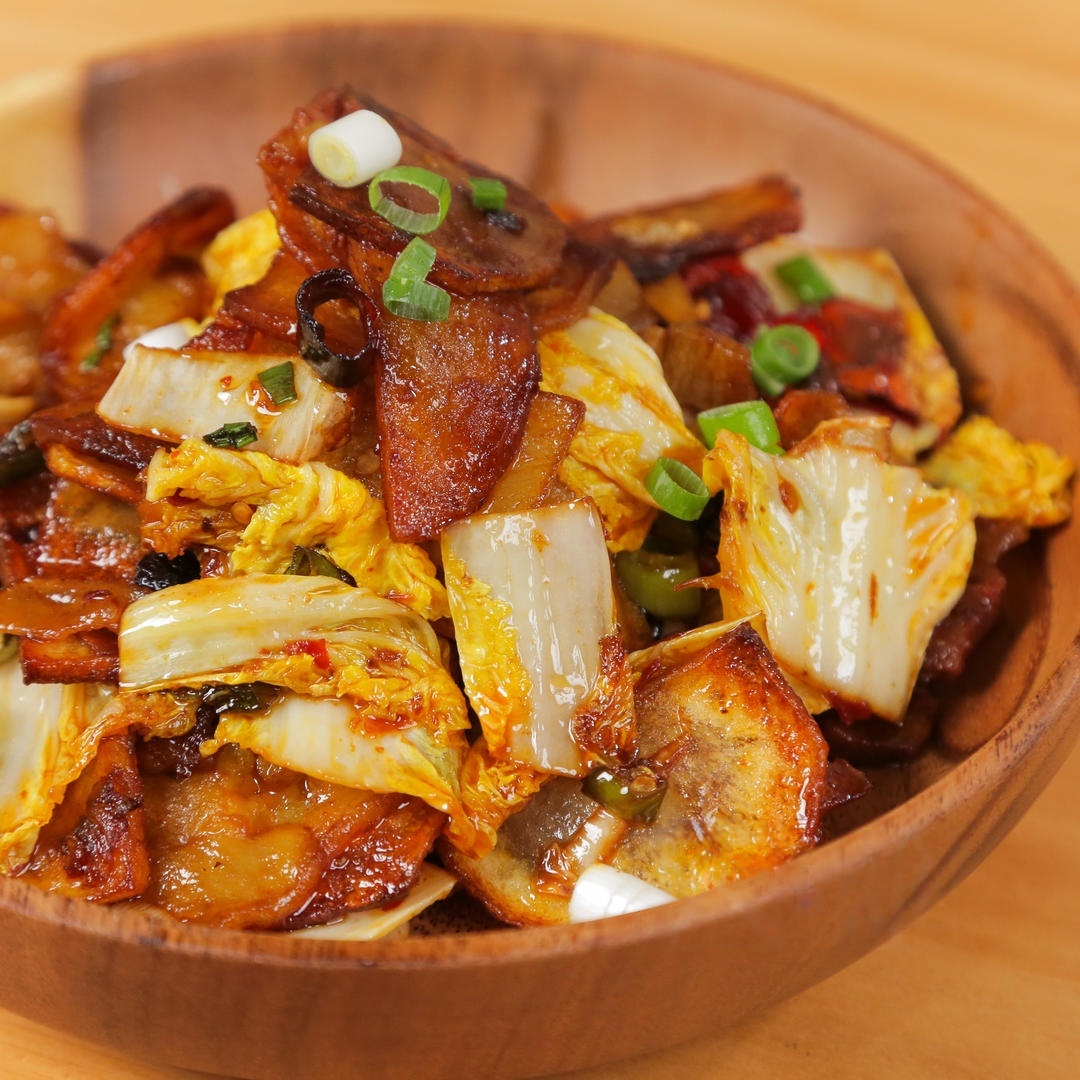
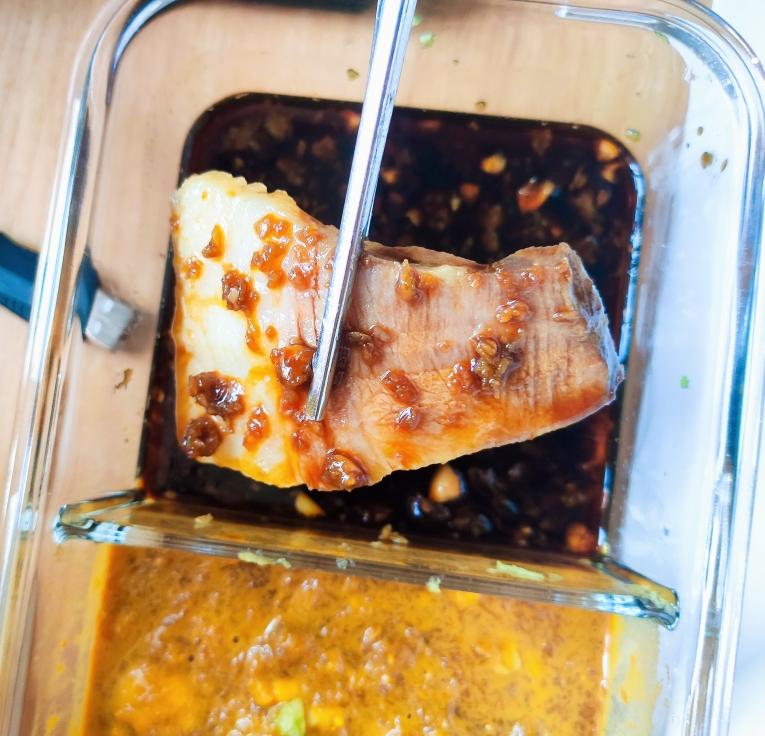
This is a flexible dish: serve it as a main course in deep bowls with a spoon, or as a side dish alongside rice and another stir-fry. Because it is soft and savory rather than crisp, it pairs especially well with something with a bit of texture. Our stir fried baby napa cabbage with crispy potato makes a nice contrast if you are building a cabbage-themed table, and a plate of poached pork belly with garlic sauce adds a cool, garlicky counterpoint to the warm braise. A bowl of plain rice and a spoonful of chili crisp is really all you need.
Storage & Reheat
Let leftovers cool to room temperature, then transfer to an airtight container and refrigerate for up to 3 days. The noodles will soak up most of the remaining liquid overnight, so expect a firmer, more concentrated dish the next day. Reheat in a covered pan over medium-low heat with a splash of water or broth, stirring gently, until steaming hot. The microwave works too — cover the bowl and heat in 30-second bursts, adding a teaspoon of water each time.
This dish does not freeze well. Sweet potato vermicelli become spongy and grainy after freezing and thawing, and the cabbage loses its silky texture. If you want to plan ahead, cook the cabbage base and refrigerate it, then soak and add fresh noodles when you reheat.
Allergen Notice
This recipe contains soy (from the soy sauce) and shellfish (from standard oyster sauce). Most sweet potato vermicelli is gluten-free, but some brands blend in wheat starch, so read the label if you are cooking for someone with celiac disease. To make the dish vegan, use mushroom oyster sauce and vegetable broth; to make it shellfish-free, do the same. If you are serving anyone with a soy allergy, coconut aminos can replace the soy sauce, though the color will be lighter.
Nutrition Disclaimer
Nutrition information is calculated using an ingredient database and should be considered an estimate. In cases where multiple ingredient alternatives are given, the first listed is calculated for nutrition. Garnishes and optional ingredients are not included.
About the Author & Recipe Development
Lin is the cook, writer, and recipe developer behind Woks of Love, where she has spent years documenting the home cooking of China — the weeknight stir-fries, the long braises, the dumplings folded at the kitchen table — for cooks working in Western kitchens with Western equipment. Her approach is to keep the technique honest and the ingredients findable, so that a dish like this one tastes the way it does at a family table in the north rather than the way it looks on a restaurant menu.
This recipe was developed from a northern Chinese home method for 烂糊白菜烧粉条 and tested in a carbon steel wok on a standard home gas range. The quantities were adjusted so that a single small head of napa cabbage and one bundle of sweet potato vermicelli make a balanced pot — enough cabbage to give the noodles something to cling to, and enough noodles to make the dish a meal. If you make it, tell us how it turned out.
Authoritative References
For safe handling and storage of cooked vegetable and starch dishes, see the FDA Food Safety Modernization Act guidance and the USDA safe minimum internal temperature chart. For background on starch gelatinization and how root-starch noodles behave in moist heat, the World Health Organization’s food safety resources are a useful general reference, and Harold McGee’s On Food and Cooking remains the standard text on the subject.
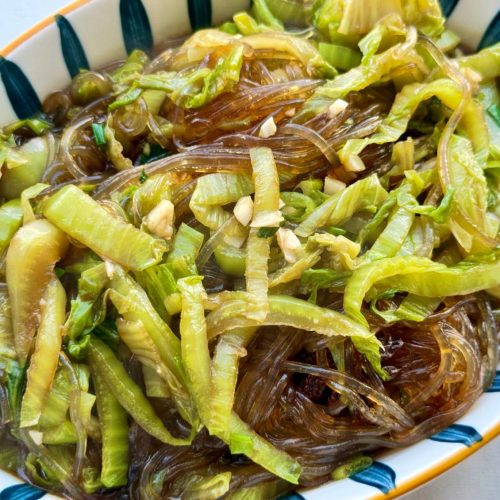
Braised Napa Cabbage with Vermicelli (白菜烧粉条): Silky Cabbage, Springy Noodles

Equipment
- Wok
- Cutting Board
- Chef’s knife
- Slotted Spoon
- Measuring spoons
- Lid for the wok
Ingredients
For the Aromatics
- 2 tbsp neutral oil such as peanut or canola
- 2 whole star anise
- 3 cloves garlic minced
- 2 stalks scallions finely chopped, whites and greens separated
For the Braise
- 1.5 lb napa cabbage about 1 small head, cut into 1-inch strips
- 1 cup pork bone broth or vegetable broth, plus more as needed
- 1 tsp salt plus more to taste
For the Noodles and Finish
- 7 oz sweet potato vermicelli dried, about 200 g
- 1 tbsp dark soy sauce for coloring the noodles
- 1.5 tbsp oyster sauce or mushroom oyster sauce
Instructions
- Wash the napa cabbage well, drain it, and cut it crosswise into strips about 1 inch wide, keeping the tender leaves and the thicker white ribs separate.

- Soak the dried sweet potato vermicelli in warm water until pliable, about 30 minutes, then drain and toss with the dark soy sauce so every strand takes on an even amber color.
- Finely chop the scallions, keeping the white parts and green parts separate, and mince the garlic.
- Heat the wok over medium heat, add the oil and the two star anise, then add the cabbage, pour in a small bowl of pork bone broth, sprinkle in some salt, cover with a lid, and let it braise for a few minutes until the cabbage softens.
- Add the soaked vermicelli to the wok and scatter the chopped scallions and minced garlic over the top.
- Drizzle in the oyster sauce, cover again, and braise a little longer until the vermicelli is soft and tender, then serve hot.












Leave a Reply