Hey there! Welcome back to my kitchen.
If you grew up hanging around a restaurant kitchen like I did in Chengdu, you learn pretty quickly that the best cuts of meat never make it to the customer’s table. The chefs keep the “good stuff” for their own family meal.
For years, I watched the head chefs at my parents’ restaurant carefully trim a specific part of the pig head, slicing it thin and flash-frying it with cumin and chili. It wasn’t pork belly, and it wasn’t loin. It was pork jowl.
Let’s be real: usually, when people hear “jowl,” they think of cured Italian guanciale or just a lump of fat. But fresh pork jowl is one of the most underrated, texturally incredible proteins you can put in your wok. In culinary school, we learned the anatomy, but in the restaurant, I learned the soul of this cut.
Today, I’m going to break down exactly what pork jowl is, why its “crunchy” texture is a culinary miracle, and how you can bring this restaurant-secret cut into your home kitchen.
The “Snowflake” Cut: Understanding the Science
Pork jowl (often called tontoro in Japanese cooking or zhu jing rou in Chinese) comes from the cheek area of the pig.
Why is this cut so special? It comes down to the intramuscular fat. Unlike pork belly, where you have distinct layers of fat and meat, the jowl is heavily marbled, looking almost like a snowflake. Because the cheek muscle is constantly working (chewing), the meat is incredibly tight and muscular, but the fat keeps it juicy.
The Texture Secret: When cooked quickly over high heat, pork jowl doesn’t just get soft; it develops a unique “snap.” It is bouncy, crisp, and incredibly savory. It’s a texture we prize in Chinese cuisine called shuang (爽)—refreshing, crisp, and clean, despite being a fatty cut.
If you enjoy the marbling of a good steak but want the richness of pork, this is your cut. It actually shares some similarities with Pork Neck, another well-marbled cut, but the jowl has a more distinct, snappy bite that is unmistakable once you try it.

Traditional Applications: The Wok and The Flame
In the West, jowl is often cured or braised slowly. But in Chinese and Asian cooking, we treat it like a steak: hot and fast.
1. The Stir-Fry
Because jowl is rich, it pairs perfectly with aromatics that can cut through the grease. In Sichuan, we often slice it paper-thin and stir-fry it with fiery green peppers. The high heat renders some of the fat, leaving the edges golden and crispy while the center remains juicy.
If you’ve ever tried my recipe for Pork Stir-fry with Green Peppers, try swapping the pork loin or belly for jowl. Trust me on this—the upgrade in texture is life-changing. You just need to be careful not to crowd your pan. If you are using an electric stove at home, cook the jowl in batches so it sears rather than steams.
2. The “Toro” Char Siu
You know classic BBQ pork? While usually made with shoulder or belly, high-end Cantonese restaurants serve “Toro Char Siu” made from the jowl. It is incredibly decadent. The high fat content bastes the meat from the inside out as it roasts. If you are feeling adventurous, use my Char Siu marinade on a whole jowl strip. The result is a sticky, sweet, savory masterpiece that literally melts in your mouth.
3. Simple Pan-Sear
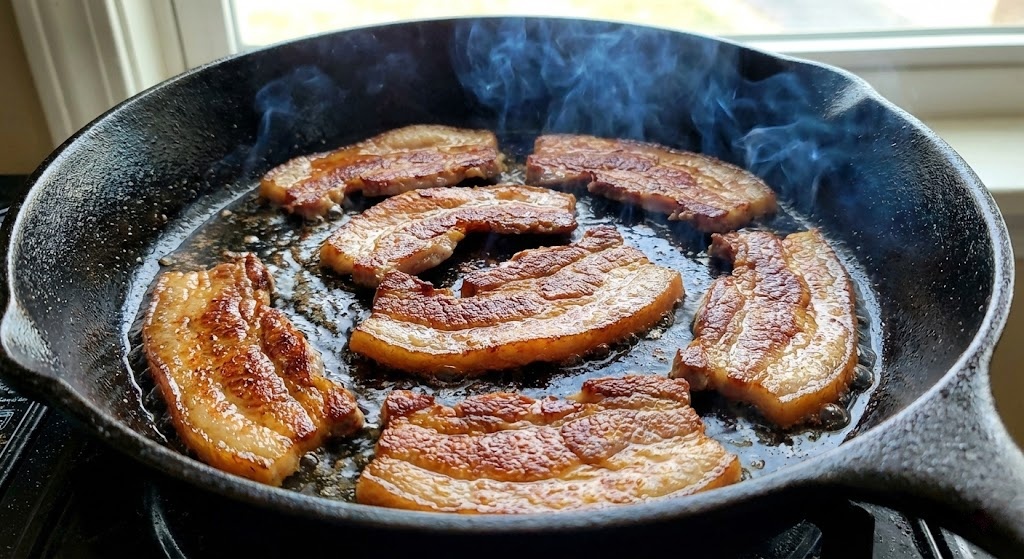
You don’t need complex sauces to make this shine. Sometimes, I just season it with salt, white pepper, and a dash of Soy Sauce for color. Fry it until it’s deep golden brown and sounds scratchy when you run your chopstick over it.
Lin’s “No Secrets” Prep Guide
Working with jowl requires a little bit of prep work, but don’t be intimidated.
- Trimming: Sometimes jowl comes with the skin or a layer of glands attached. You want to trim this off carefully. Don’t throw away that skin, though! You can check out my guide on Pork Skin Uses in Chinese Cooking so nothing goes to waste.
- Slicing: Slice against the grain at a 45-degree angle. This shortens the muscle fibers and ensures that “snap” doesn’t turn into “chewy.”
- The Marinade: Unlike lean pork, jowl doesn’t need much “velveting” with cornstarch because the fat protects it. A simple toss in Oyster Sauce and a splash of Shaoxing wine is usually enough.
Pro Tip: Because pork jowl is rich, I always serve it with a refreshing, acidic side dish to cleanse the palate. A cold appetizer like a Smashed Cucumber Salad is the perfect partner. The garlic and vinegar cut right through the fat, making you ready for the next bite.

Where to Buy It
You usually won’t find fresh pork jowl at a standard Western grocery store (where it’s often already cured into bacon or guanciale). Head to your local Asian butcher or a Mexican market (look for buche or carrillera, though distinctions vary). Ask for the cheek meat with the fat cap on.
Give this cut a try. It might just become your new favorite secret ingredient.
Authoritative References
For more information on pork anatomy, safe cooking temperatures, and food science, please refer to these trusted sources:
- USDA Food Safety and Inspection Service: Fresh Pork from Farm to Table – Comprehensive guide on pork selection and safety.
- The Science of Cooking (Exploratorium): Muscle & Fat – A breakdown of how marbling affects flavor and texture in meats.
- Pork Checkoff: Pork Cuts Guide – Detailed diagrams and descriptions of various pork cuts including the head and cheek.





Leave a Reply