Growing up as a Sichuan girl in my parents’ restaurant, I watched my dad—a chef for over 30 years—make the classic Suan Ni Bai Rou (蒜泥白肉). His version was an art form: paper-thin slices of pork, intricately rolled with cucumber, standing perfectly on the plate, drizzled with a complex, fragrant chili sauce. It was a banquet-level dish.
But this… this is not that recipe.
This is the one my mom would make on a busy Tuesday night. It’s the “simple, crude, big-mouthfuls-of-meat” version that’s all about pure, unadulterated comfort. It’s what we ate as a family, elbow-to-elbow, after the last customers had left.

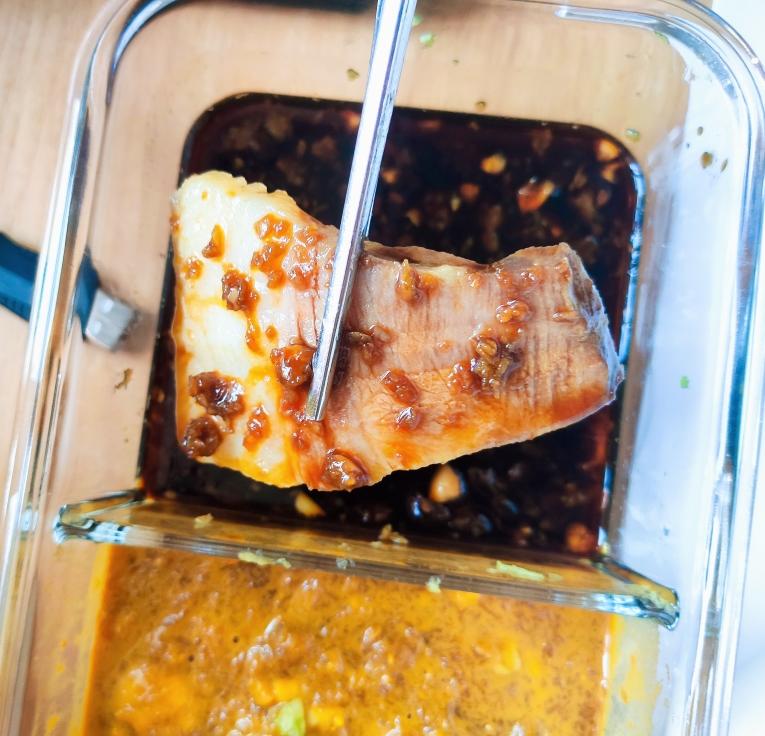
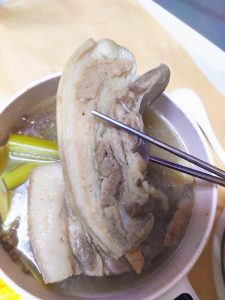
This recipe is the soul of homestyle cooking. We simply poach a whole piece of pork belly in a fragrant broth until it’s melt-in-your-mouth tender, slice it up, and dip it in a killer garlic-chili sauce. It’s incredibly satisfying, and sometimes, it’s all you really need.
What is Suan Ni Bai Rou (蒜泥白肉)?
Suan Ni Bai Rou (pronounced swahn-nee-bye-roh) literally translates to “garlic-mashed white meat.” It’s a classic and beloved dish from my home province of Sichuan.
- “Bai Rou” (White Meat): This refers to the pork belly, which is poached in water. This gentle cooking method keeps the meat’s color pale (or “white”) compared to the deep, glossy red of dishes like braised pork belly.
- “Suan Ni” (Garlic Mash): This is the soul of the dish. It’s not just chopped garlic; it’s garlic pounded or mashed into a fine paste, which releases its intense, pungent flavor. This paste forms the base of a savory, spicy dipping sauce.
The magic of the dish is the contrast: the rich, tender, clean-tasting pork belly meets a powerful, aromatic, and fiery sauce. It’s a perfect balance.
Why This Recipe Works
- Foolproof Poaching: This is the easiest way to cook pork belly. By simmering it in an aromatic broth with ginger, scallions, and spices, you infuse the meat with flavor while it cooks. It’s virtually impossible to mess up.
- Melt-in-Your-Mouth Fat: The key to great pork belly is rendering the fat. The 30-45 minute simmer does exactly that, transforming the fatty layers from chewy to succulent. Cooking it longer, as the original recipe notes, makes it less greasy, not more.
- The Sauce is the Star: The rich pork is just a vehicle for the incredible dipping sauce. The sharp raw garlic, savory soy sauce, tangy vinegar, and fragrant Sichuan chili oil cut through the richness and make you want another piece.
- Ultimate Homestyle Comfort: This recipe skips the fussy rolling, chilling, and perfect slicing of restaurant versions. It delivers 90% of the flavor for 20% of the effort.
Key Ingredients
The ingredient list is split into two parts: the poaching liquid for the pork and the all-important dipping sauce.
For the Poached Pork (The “White Meat”)
- Pork Belly: You’ll want about 2.2 lbs (1000g) of skin-on pork belly. Try to get a piece with even, distinct layers of fat and meat.
- Aromatics: Scallions, ginger, and garlic form the classic holy trinity of Chinese cooking, removing any gamey-ness from the pork.
- Spices:
- Sichuan Peppercorns: Just a teaspoon adds that authentic, numbing ma tingle characteristic of Sichuan food.
- 13-Spice Powder (十三香): This is a common Chinese pantry blend. If you don’t have it, you can easily substitute it with 1/2 teaspoon of five-spice powder, or just leave it out.
- Seasonings:
- Shaoxing Wine: An absolute must for authentic flavor. You can substitute with dry sherry if you can’t find it.
- Rock Sugar: Adds a clean, mild sweetness to balance the broth. You can use 1 tablespoon of granulated or brown sugar.
- Light Soy Sauce & Oyster Sauce: These add a savory (umami) backbone to the broth.
For the Garlic Dipping Sauce (The “Suan Ni”)
This is where the Sichuan “expert” in me (thanks, Dad!) comes out. A truly great garlic sauce needs balance.
- Garlic: The star. You must mash it into a paste. This is not a time for the pre-minced jarred stuff.
- Light Soy Sauce: The primary source of salt and umami.
- Chinkiang Vinegar: This is a black vinegar with a deep, malty, and slightly sweet flavor. It’s essential for cutting the pork’s richness. You can find it at any Asian market or online. In a pinch, a small amount of balsamic vinegar could work, but the flavor is different.
- Chili Oil (红油): This is non-negotiable for a Sichuan dish! It adds fragrance, spice, and that beautiful red color. You can use a store-bought one (like Laoganma) or make your own Chili Garlic Sauce.
- Sugar & Sesame Oil: The sugar balances the vinegar and soy, while the sesame oil adds a final nutty aroma.
How to Make Poached Pork Belly with Garlic Sauce
This is a “set it and forget it” kind of dish. Your main job is just making the sauce while the pork cooks.
Mise en Place (Preparation)
- Pork: Wash the pork belly slab.
- Broth Aromatics: Cut scallions into 2-inch pieces. Slice the ginger. Smash the 5 cloves of poaching garlic.
- Sauce Ingredients: Peel and finely mash or pound the 5-6 cloves of garlic for the sauce. Measure out all other sauce ingredients into a small bowl.
Cooking Process
- Poach the Pork:
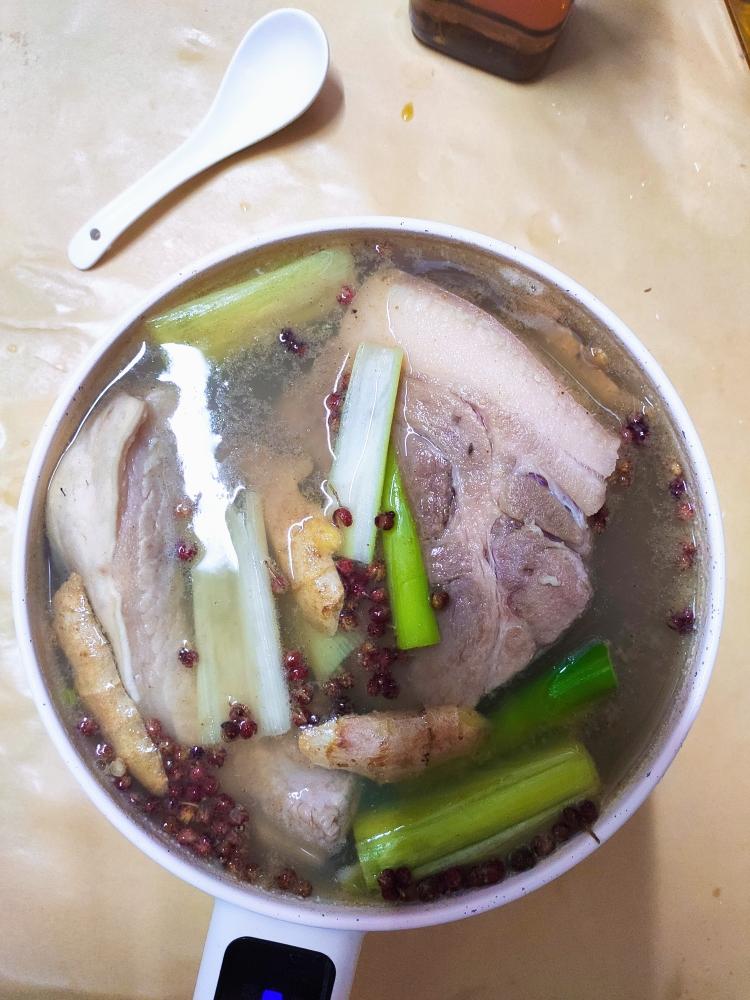
- Place the entire pork belly slab in a large pot or Dutch oven.
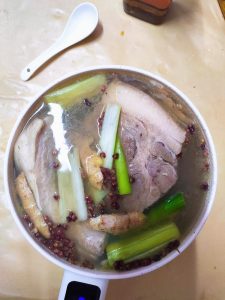
- Add all the poaching ingredients: scallions, ginger, smashed garlic, Sichuan peppercorns, Shaoxing wine, rock sugar, light soy sauce, oyster sauce, 13-spice powder (or five-spice), and salt.
- Add enough cold water to cover the pork by at least 1 inch (about 2.5 cm).
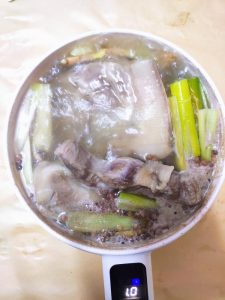
- Bring the pot to a rolling boil over high heat. As it heats, use a spoon to skim off any foam or scum that rises to the surface. This ensures a cleaner-tasting broth.
- Simmer for Tenderness:
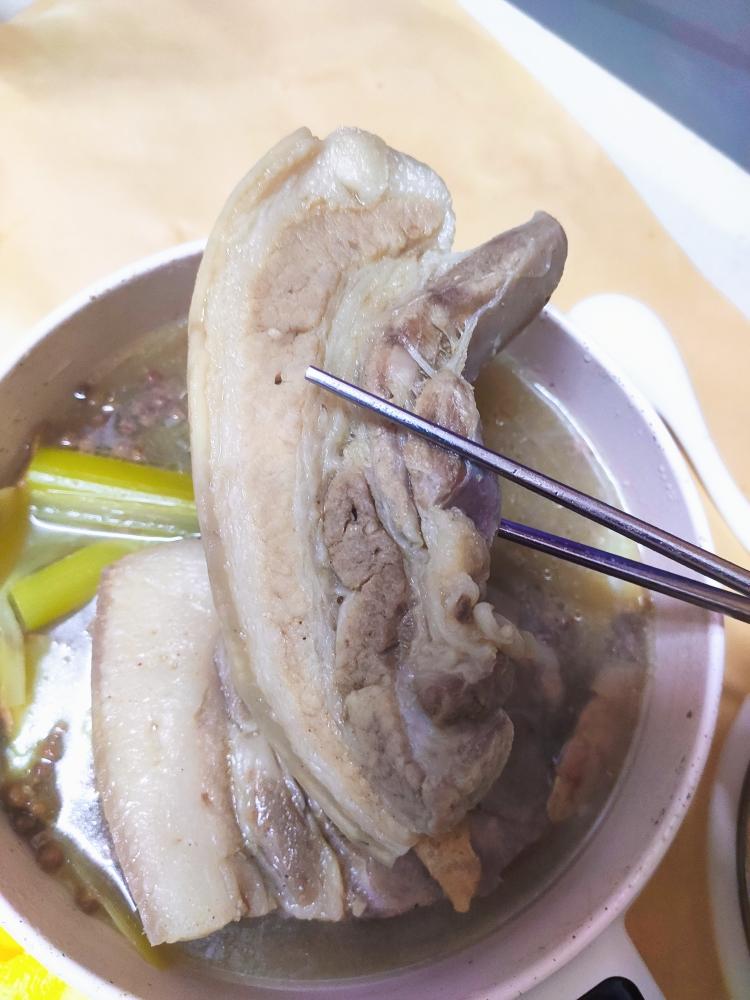
- Once boiling, reduce the heat to a low, steady simmer. Cover the pot and let it cook for 30 to 45 minutes.
- Expert Tip: The exact time depends on the thickness of your pork. The goal is tenderness. You’ll know it’s done when a chopstick or fork can be inserted into the thickest part (including the skin) with very little resistance. A longer, gentle cook is your friend—it makes the fat incredibly tender and not at all greasy.
- Make the Dipping Sauce:
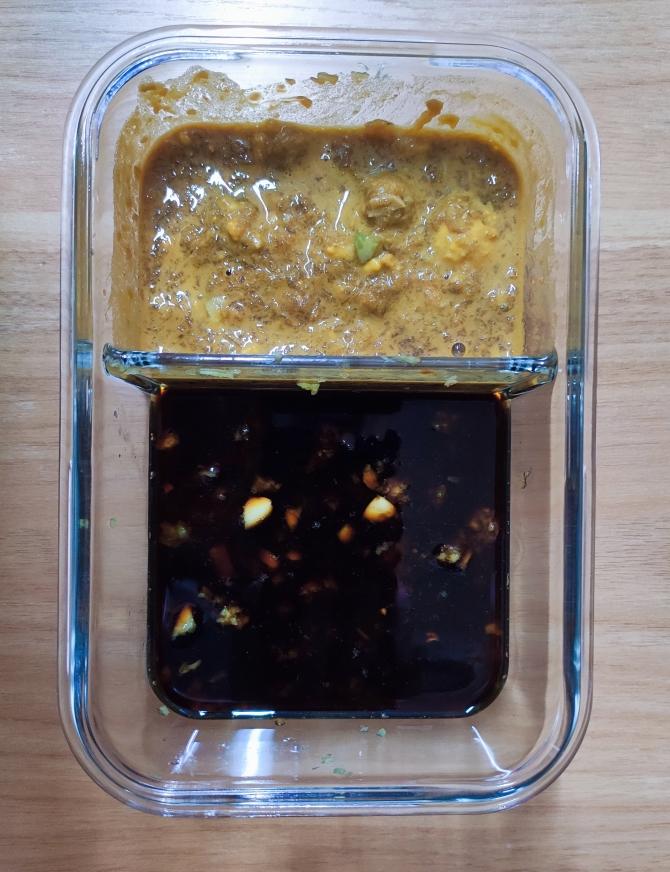
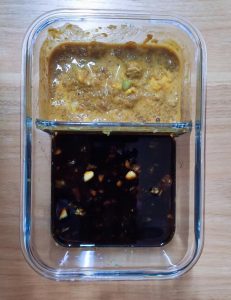
- While the pork is poaching, make the sauce. In your serving bowl, add the mashed garlic paste.
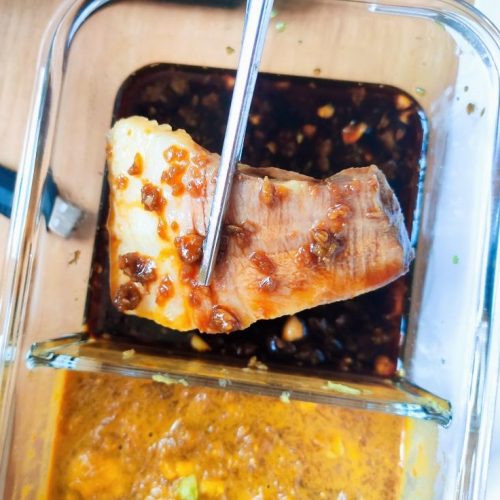
- Add the light soy sauce, Chinkiang vinegar, sugar, sesame oil, and your desired amount of chili oil.
- Whisk everything together until the sugar is dissolved. Set it aside to let the flavors meld.
- Slice the Pork:
- Once the pork is fork-tender, turn off the heat. Carefully remove the pork belly from the pot (save that broth!).
- A Critical Homestyle Tip: The original recipe includes this fantastic tip that my mom also swears by. Rinse the hot pork slab under cool running water (or in a bowl of purified water). This does two things: it washes off any residual scum or spices that can taste bitter, and it cools the meat just enough to make it easier to slice.
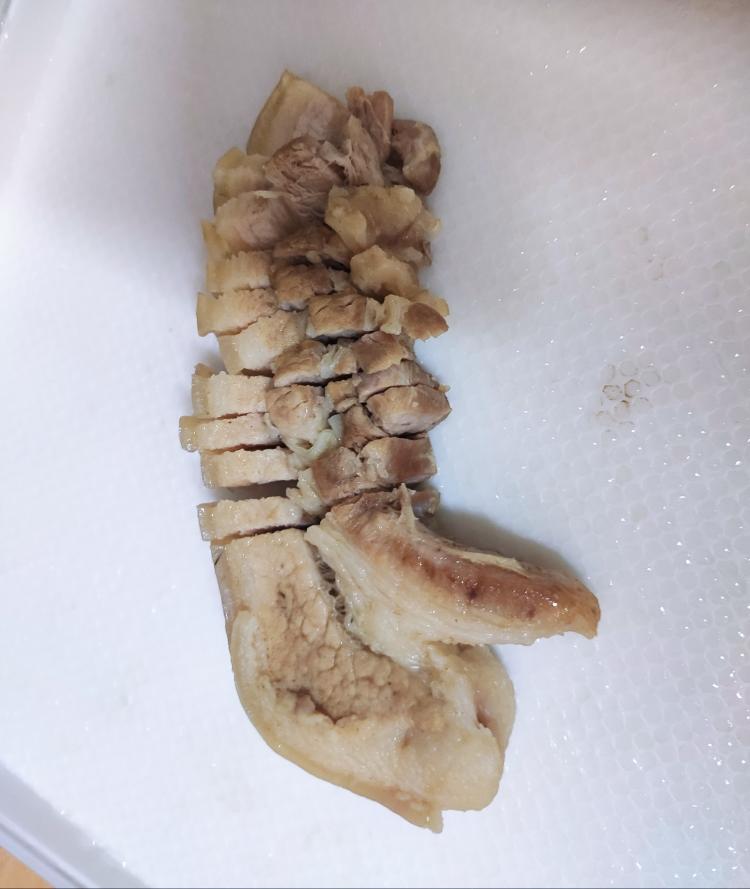
- Pat the pork dry with paper towels. Place it on a cutting board and, using your sharpest knife, slice it into thin, bite-sized pieces.
Serve
How to Serve and Store
Serving Suggestions
This dish is best served immediately, while the pork is hot and steamy.
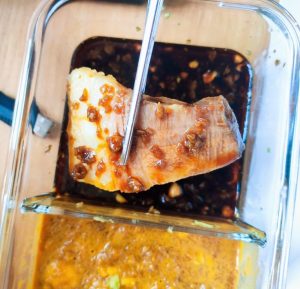
- Arrange the “white meat” slices on a platter with the bowl of garlic sauce right in the middle for communal dipping.
- The original recipe notes (and I wholeheartedly agree) that the poaching liquid is liquid gold. Do not throw it out! Skim the fat off the top and use that fragrant broth to boil some fresh noodles or blanch vegetables (like bok choy).
- Serve the pork slices alongside a bowl of noodles cooked in its own broth. It’s the ultimate two-for-one meal. For a little freshness, it’s perfect with a side of Smashed Cucumber Salad.
Storage and Reheating
- Pork: Store leftover sliced pork and the poaching broth separately in airtight containers in the refrigerator for up to 3 days. To reheat, simply bring a small amount of the broth to a simmer and add the pork slices for 30-60 seconds to warm them through.
- Sauce: The garlic sauce will keep in the fridge for up to a week. The garlic flavor will get even stronger!
Food Safety
- Always cook pork thoroughly. While this dish is cooked for tenderness (well past the minimum), the USDA recommends a minimum internal temperature of 145°F (63°C) for fresh pork.
- When poaching, ensure the water comes to a full boil before reducing to a simmer to kill any surface bacteria.
- Store leftovers promptly and refrigerate within 2 hours.
Common Questions & Troubleshooting
- Why is my pork belly chewy or greasy?
- You almost certainly undercooked it. Unlike a steak, pork belly needs more time to break down its connective tissues and render the fat. If it’s chewy, it’s not done. Put it back in the pot and simmer longer.
- My dipping sauce tastes harsh/bitter. What’s wrong?
- Two possibilities. First, did you mash the garlic or just chop it? Mashing gives a “hotter,” more pungent flavor that’s correct for this dish, but some find it intense. Second, did you rinse the pork after poaching? The spices, especially the Sichuan peppercorns, can leave a slightly bitter residue on the meat after a long boil.
- Can I use a different cut of pork?
- You could use pork shoulder (butt), but it will be much leaner and won’t have the same succulent, rich texture. The magic of Suan Ni Bai Rou is really in the rendered fat of the belly.
Easy Poached Pork Belly with Garlic Sauce (蒜泥白肉)

Equipment
- 1 Large pot or Dutch oven For poaching the pork belly.
- 1 Sharp Knife Essential for slicing the cooked pork belly thinly.
- 1 Cutting Board
Ingredients
For the Poached Pork:
- 2.2 lbs (1000g) skin-on pork belly, (in one or two large pieces)
- 1 bunch scallions, (cut into 2-inch pieces)
- 5 slices ginger
- 5 cloves garlic, (smashed)
- 1 tbsp Shaoxing wine, (or dry sherry)
- 2 tbsp light soy sauce
- 1 tbsp oyster sauce
- 1 tbsp rock sugar, (or brown sugar)
- 1 tsp Sichuan peppercorns
- 1 tsp 13-spice powder, (or 1/2 tsp five-spice powder)
- 1 tsp salt
- 8-10 cups water, (or enough to cover)
For the Garlic Dipping Sauce:
- 5-6 cloves garlic, (mashed into a fine paste)
- 3 tbsp light soy sauce
- 1 tbsp Chinkiang black vinegar, (or rice vinegar)
- 1 tsp dark soy sauce
- 1 tsp sugar
- 1 tsp sesame oil
- 2-3 tbsp chili oil, (preferably a Sichuan-style one with flakes)
Instructions
- Prepare the Poaching Broth: Place the pork belly in a large pot or Dutch oven. Add all the poaching ingredients: scallions, ginger, smashed garlic, Shaoxing wine, light soy sauce, oyster sauce, rock sugar, Sichuan peppercorns, 13-spice powder, and salt. Add enough cold water to cover the pork by at least 1 inch.

- Boil and Simmer: Bring the pot to a full boil over high heat. Skim off any foam that rises to the surface. Once boiling, reduce the heat to a low, steady simmer. Cover the pot and cook for 30-45 minutes.
- Check for Tenderness: The pork is done when a chopstick or fork can be inserted into the thickest part of the skin and meat with very little resistance.
- Make the Dipping Sauce: While the pork is simmering, prepare the sauce. In a small serving bowl, combine the mashed garlic paste, light soy sauce, Chinkiang vinegar, dark soy sauce, sugar, sesame oil, and chili oil. Whisk well to dissolve the sugar.

- Rinse and Slice: Once the pork is tender, remove it from the pot. (Save the broth!). Rinse the hot pork slab under cool running water to wash off any spice residue. Pat it dry with paper towels.
- Serve: Place the pork on a cutting board and slice it thinly. Arrange the slices on a platter and serve immediately with the dipping sauce on the side.

Notes
Nutrition (Disclaimer)
Nutrition information is calculated using an ingredient database and should be considered an estimate. In cases where multiple ingredient alternatives are given, the first listed is calculated for nutrition. Garnishes and optional ingredients are not included.- Serving Size: 1/8th of the recipe
- Calories: 680 kcal
- Protein: 18g
- Fat: 65g
- Saturated Fat: 24g
- Carbohydrates: 4g
- Sugar: 2g
- Sodium: 980mg




Leave a Reply