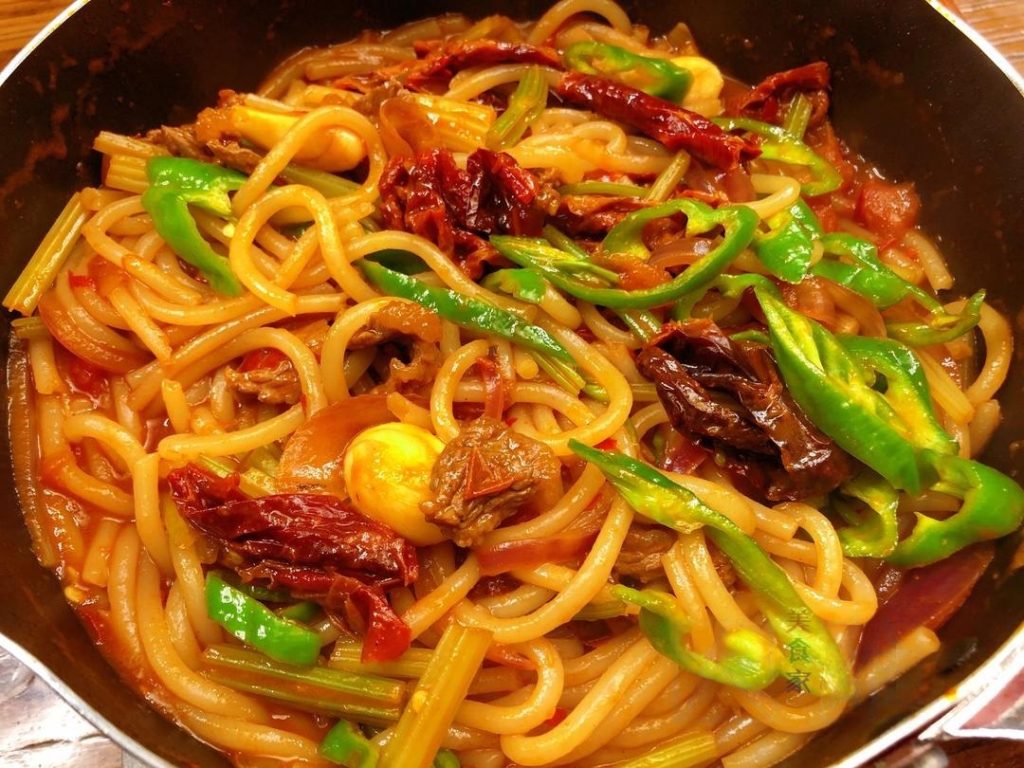
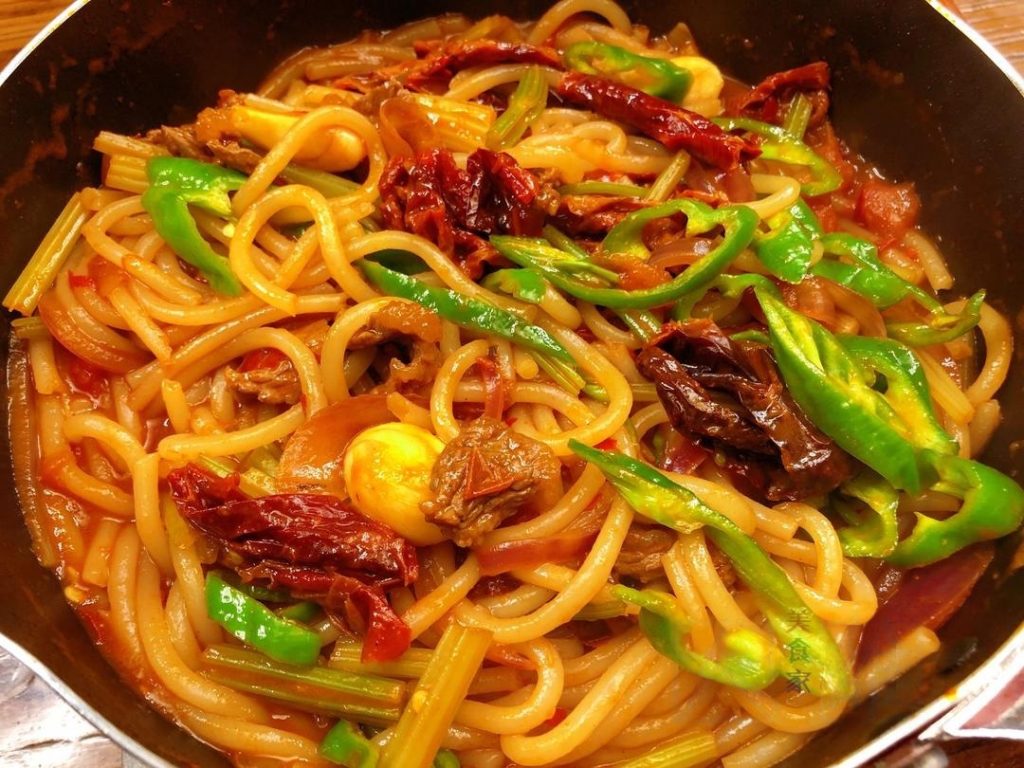
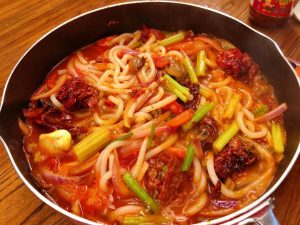
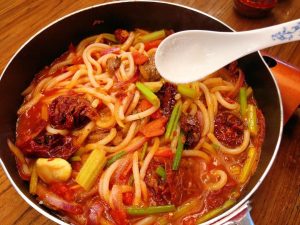
If you ask me about a dish that perfectly bridges the gap between a spicy stir-fry and a comforting pasta dish, it has to be Xinjiang Stir-Fried Rice Noodles, or Xinjiang Chao Mifen (新疆炒米粉).

Growing up in a restaurant family, I learned early on that Chinese cuisine is incredibly diverse. While Cantonese Beef Chow Fun is dry and smoky, and Sichuan Mapo Tofu is oily and numbing, this Xinjiang specialty is famous for being incredibly saucy, heavy on the flavors, and deliciously chewy.
I remember the first time I tried to recreate this at home after a trip to Western China. I was blown away by how the thick rice noodles soaked up the rich, red sauce made from a unique combination of tomato paste and spicy bean paste. It is a “flavor bomb” in the truest sense.
Today, I’m sharing a home-style version that is surprisingly simple to pull together. We are going to focus on the “golden ratio” of the sauce and the braising technique that makes the noodles distinctively flavorful.
What is Xinjiang Chao Mifen?
Xinjiang Chao Mifen is a popular street food and comfort dish originating from the Xinjiang Uyghur Autonomous Region in Northwest China. Unlike the thin vermicelli used in Singapore Noodles, this dish uses extra-thick rice noodles that resemble udon in girth but have the distinct “bounce” (Q-texture) of rice.
The flavor profile is a fusion typical of the region: the savory heat of Sichuan influence mixed with the heavy use of tomatoes and beef common in Central Asian diets.
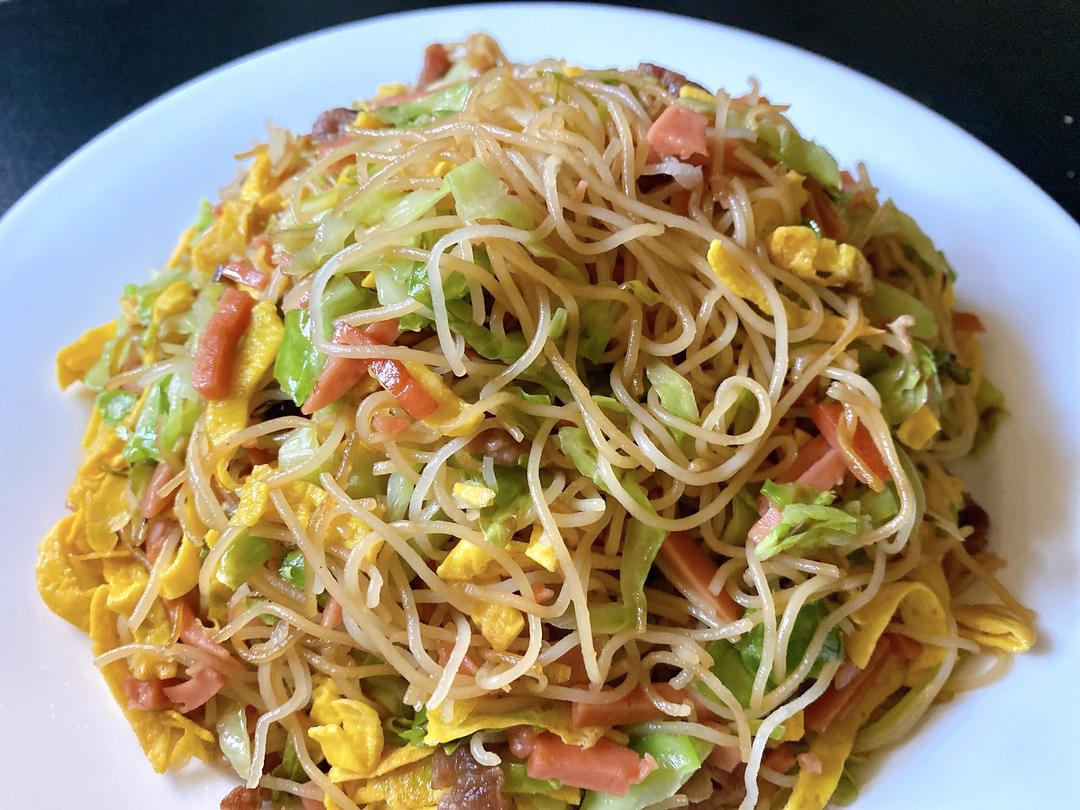
While Xinjiang Fried Rice Noodles are famous for their intense heat, rich sauce, and thick, chewy texture, sometimes you might crave a lighter, more classic noodle dish. If you love rice vermicelli, you absolutely have to check out my Authentic Stir-Fried Rice Noodles (Chao Mi Fen). In that recipe, I share a foolproof chef’s secret called the ‘Tan’ method—a unique preparation technique that guarantees your thin noodles will turn out perfectly bouncy and dry, without ever breaking or turning into a mushy clump in the wok!
1Authentic Stir-Fried Rice Noodles (Chao Mi Fen): Chef’s SecretLearn a professional chef’s secret ‘Tan’ method for perfectly bouncy, non-mushy Authentic Stir-Fried Rice Noodles (Chao Mi Fen). An easy 25-minute weeknight dinner.Check out this recipe
Why This Recipe Works
- The “Sauce Braise” Technique: Unlike standard stir-fries where you toss quickly, this recipe involves a short braising period (simmering the noodles in the sauce). This allows the starch in the noodles to thicken the sauce naturally while absorbing the flavors.
- Umami Layering: We use a combination of Doubanjiang (fermented bean paste) and soy sauce for depth, balanced by the acidity and sweetness of tomato paste.
- Texture Contrast: The crunchy celery and crisp onions provide a necessary freshness to cut through the rich, heavy sauce.
About the Author & Recipe Development
I’m Lin, and I’ve spent decades in kitchens both in China and the US. For this recipe, I tested various ratios of tomato paste to chili paste to ensure it mimics the authentic street-stall taste found in Urumqi, while ensuring the ingredients are accessible in Western supermarkets. I also adjusted the cooking time for the beef to ensure it remains tender, drawing on techniques I use for our Cumin Lamb stir-fry.
Ingredients & Substitutions
To make this dish authentic yet accessible, here is what you will need:
- Thick Rice Noodles (1.1 lb / 500g): Look for “Jiangxi Rice Noodles” or “Guilin Rice Vermicelli” in Asian markets. They are dried and thick.
- Substitute: If you absolutely cannot find thick rice noodles, Udon is the closest textural match, though not traditional. Thick spaghetti can work in a pinch but lacks the “bouncy” texture.
- Beef (1.7 oz / 50g): Flank steak or sirloin works best. Slice it thinly. You can also use chicken breast.
- Dried Chilies (Lapi Zi): The original recipe calls for “Lapi Zi” (辣皮子), a specific Xinjiang dried chili that is not too spicy but very fragrant.
- Substitute: Use mild dried red chilies (like California chiles) or Arbol chilies if you like heat. Soaking them is key.
- Doubanjiang (Pixian Bean Paste): This provides the fermented, salty kick.
- Note: See our guide on Doubanjiang for brands we recommend.
- Tomato Paste: Use concentrated tomato paste, not ketchup (tomato sauce). This provides the signature red color and tang.
- Soy Sauce: We use a “fresh flavor” or Light Soy Sauce for saltiness.
- Aromatics: Purple onion (red onion), garlic, and celery are essential.
- Sichuan Peppercorn Powder: For a slight tingle and citrusy aroma.
- Screw Pepper (Luosijiao): These are spicy, crinkly green peppers.
- Substitute: Anaheim peppers or Long Hot Green Peppers work perfectly.
Recipe Notes Before You Start
1. Managing the Spice Level This dish is traditionally very spicy. However, you can control the heat by reducing the amount of dried chilies. If you are serving this alongside a cooling side dish like Smashed Cucumber Salad, you might be brave enough to keep the full heat!
2. Prepping the Noodles Thick rice noodles take a long time to cook. You must boil them until they are cooked through but still firm (al dente) because they will cook further in the sauce. Do not overboil them initially, or they will break apart in the wok.
3. The “Lapi Zi” Prep The recipe requires soaking the dried chilies. This rehydrates the skin, preventing them from burning instantly in the oil and giving them a chewy texture similar to sun-dried tomatoes.
How to Make Xinjiang Fried Rice Noodles
Step 1: Prepare the Noodles
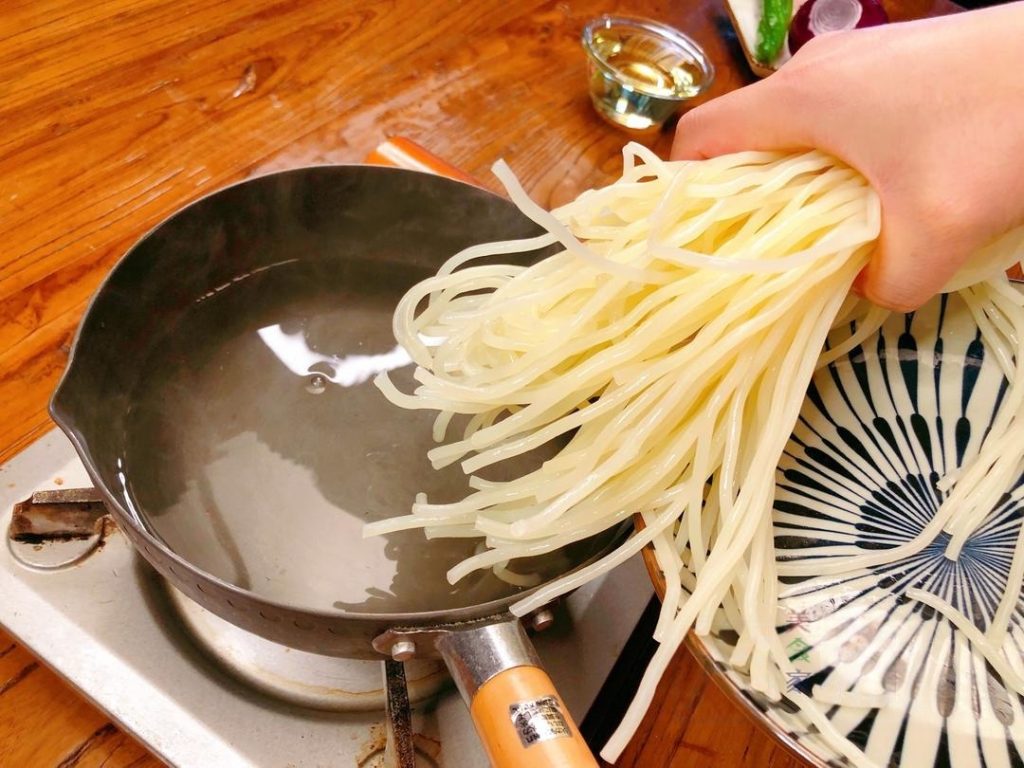
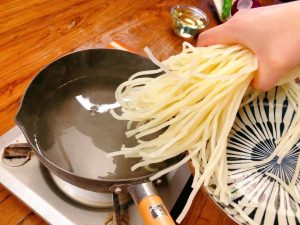
Boil the thick rice noodles according to the package instructions. Usually, this takes 10-15 minutes. Test a noodle; it should be chewy but have no hard white core. Drain immediately and rinse under cold water to stop the cooking and wash away excess starch. Drain well and set aside.
Step 2: Mise en Place (Prep Work)
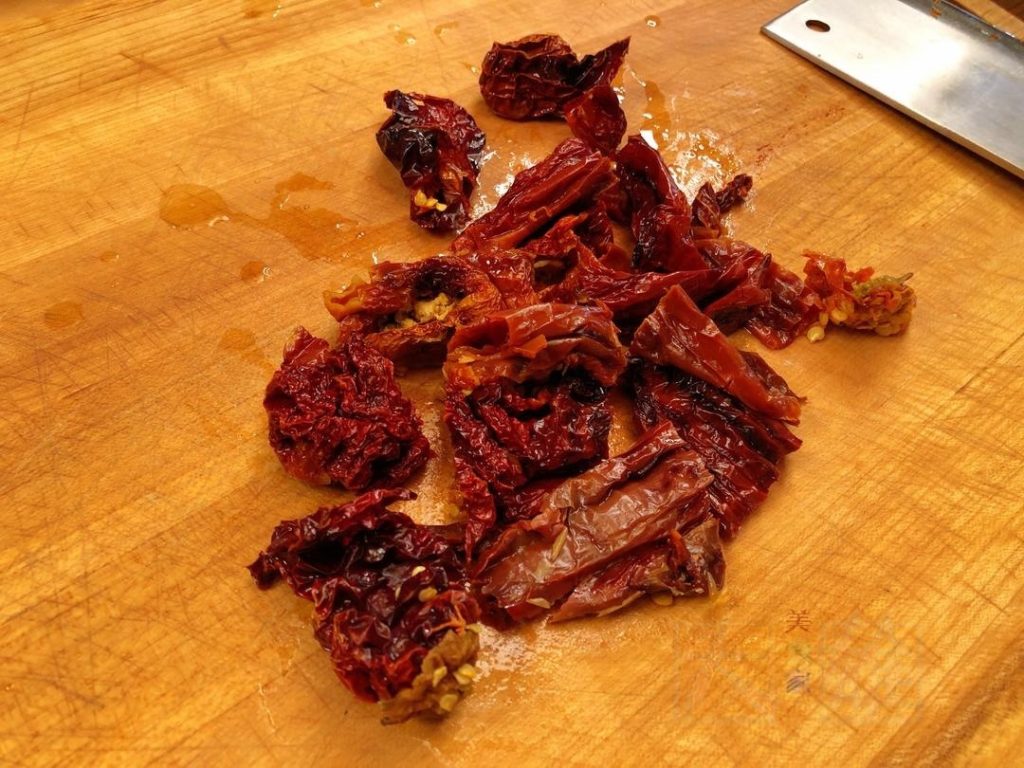
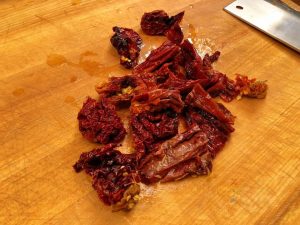
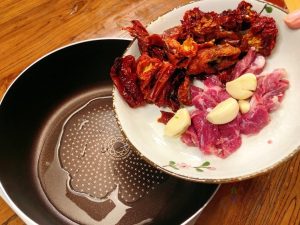
- Chilies: Soak the 4 dried chilies (or more if you like it hot) in cold water until soft. Drain, squeeze out excess water, and chop into segments.
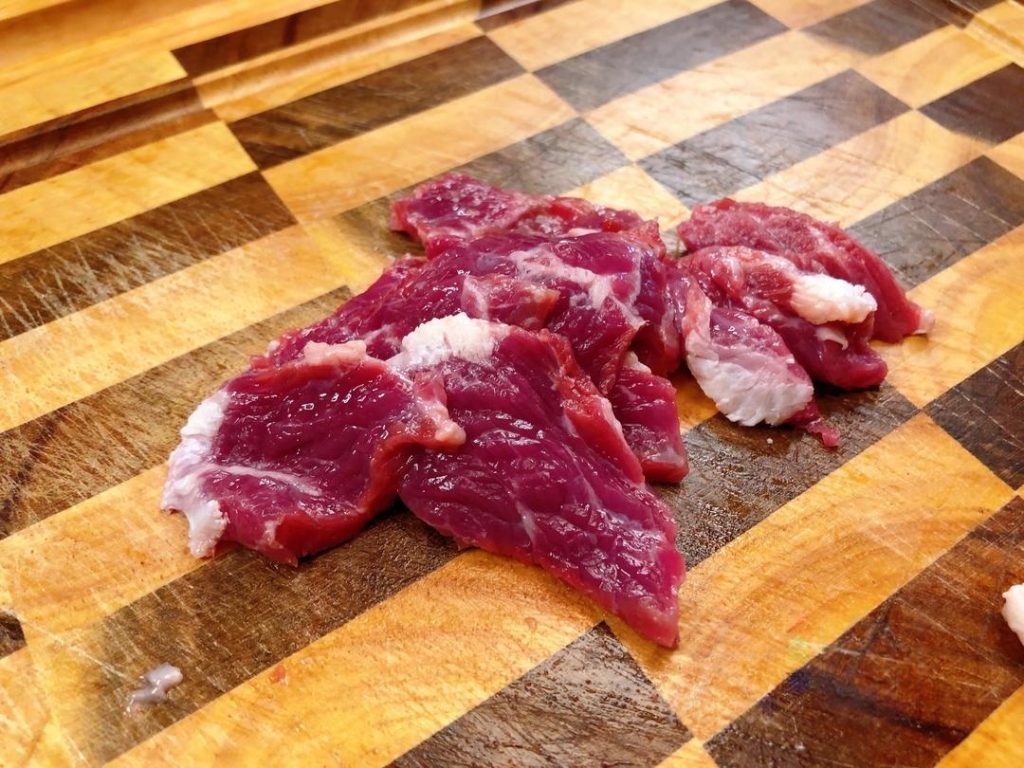
- Beef: Thinly slice the beef.
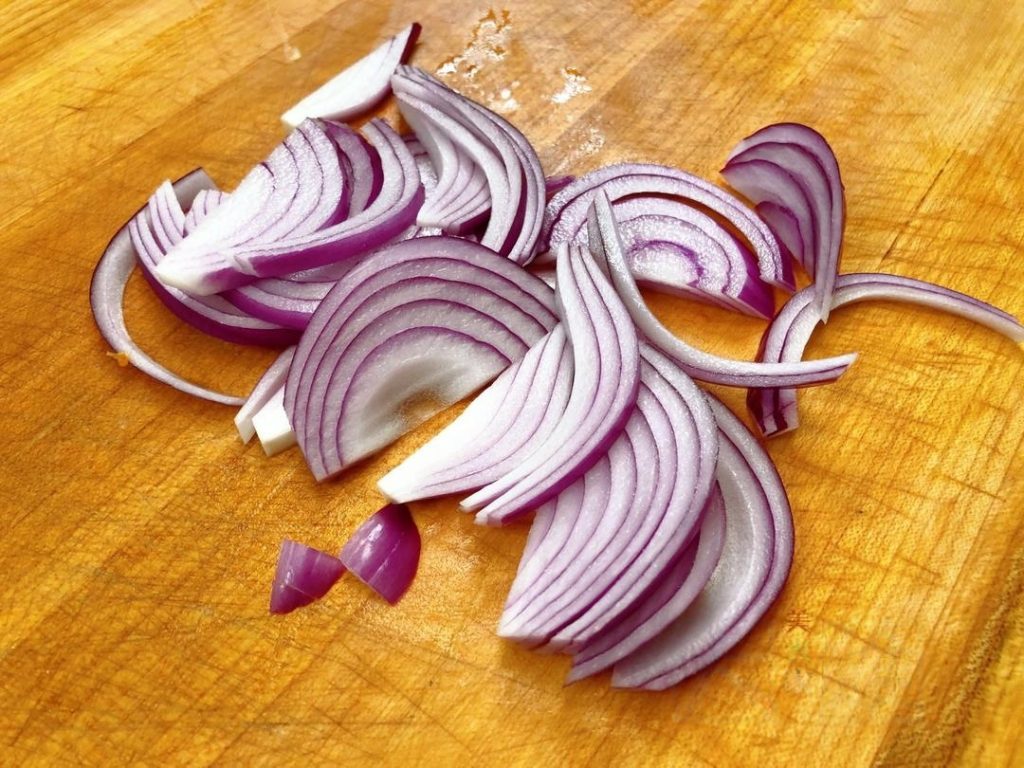
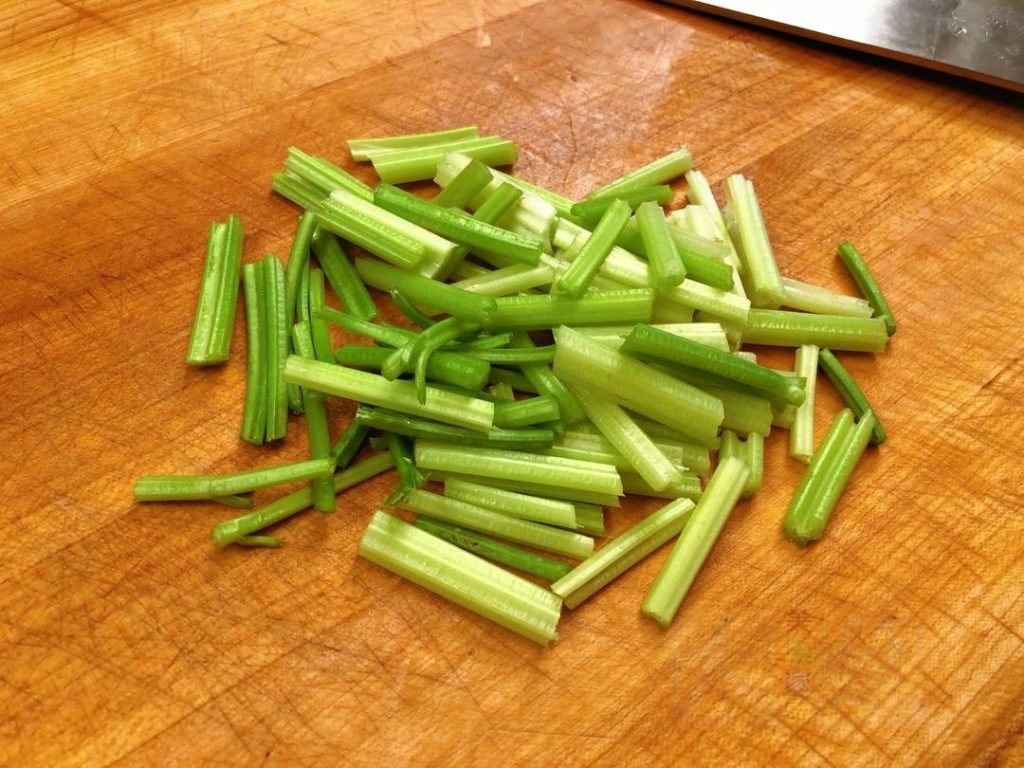
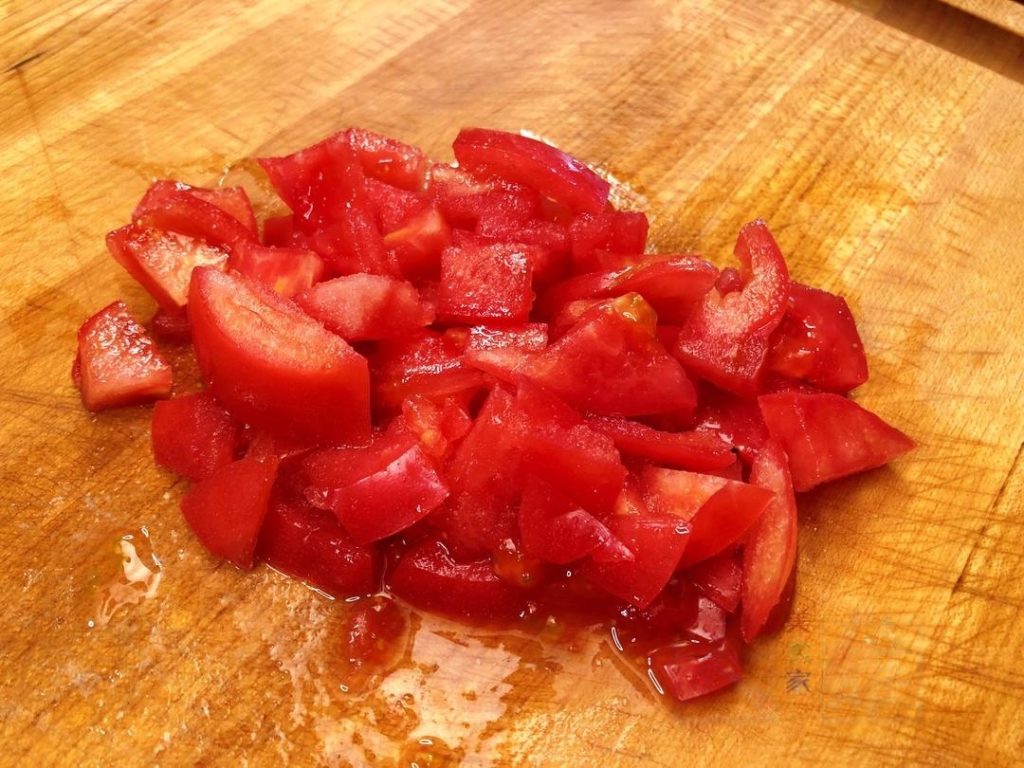
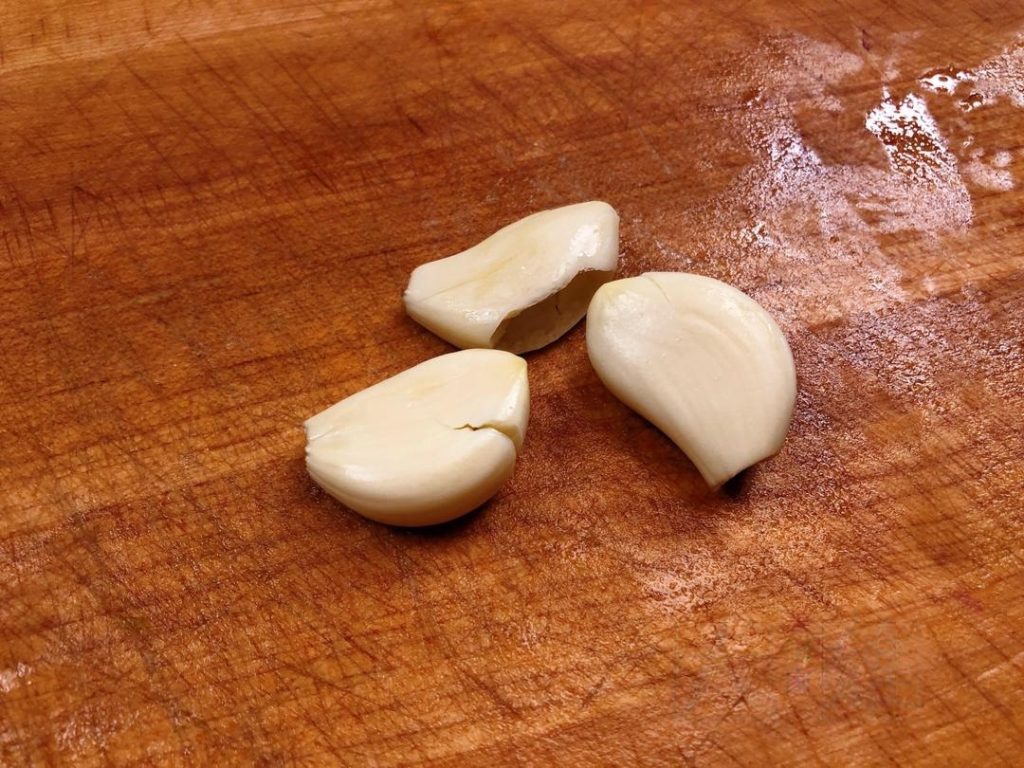
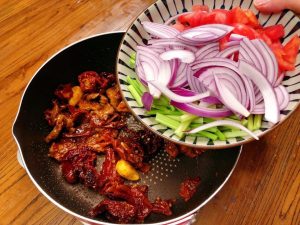
- Vegetables: Cut the red onion into chunks. Cut the celery stems into segments. Cut the tomato into chunks. Crush and peel the garlic cloves. Slice the green pepper.
Step 3: Make the Sauce Mixture
In a small bowl, combine:
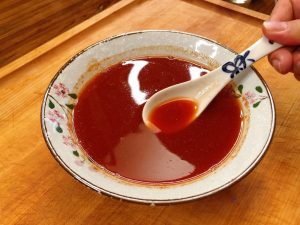
- 4 tbsp Light Soy Sauce
- 2 tbsp Tomato Paste
- 1/3 tsp Sichuan Peppercorn Powder
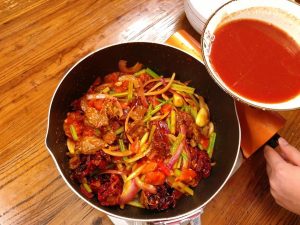
- 1 cup Water (approx. 200ml) Mix well until the tomato paste is dissolved.

Step 4: Stir-fry the Base
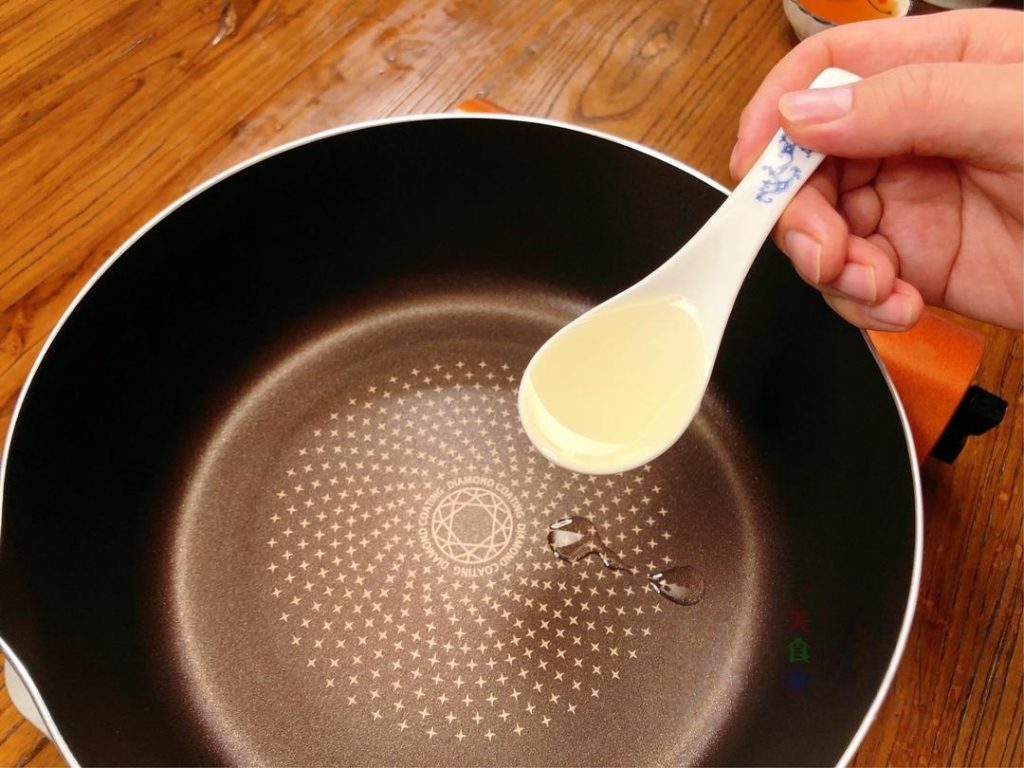
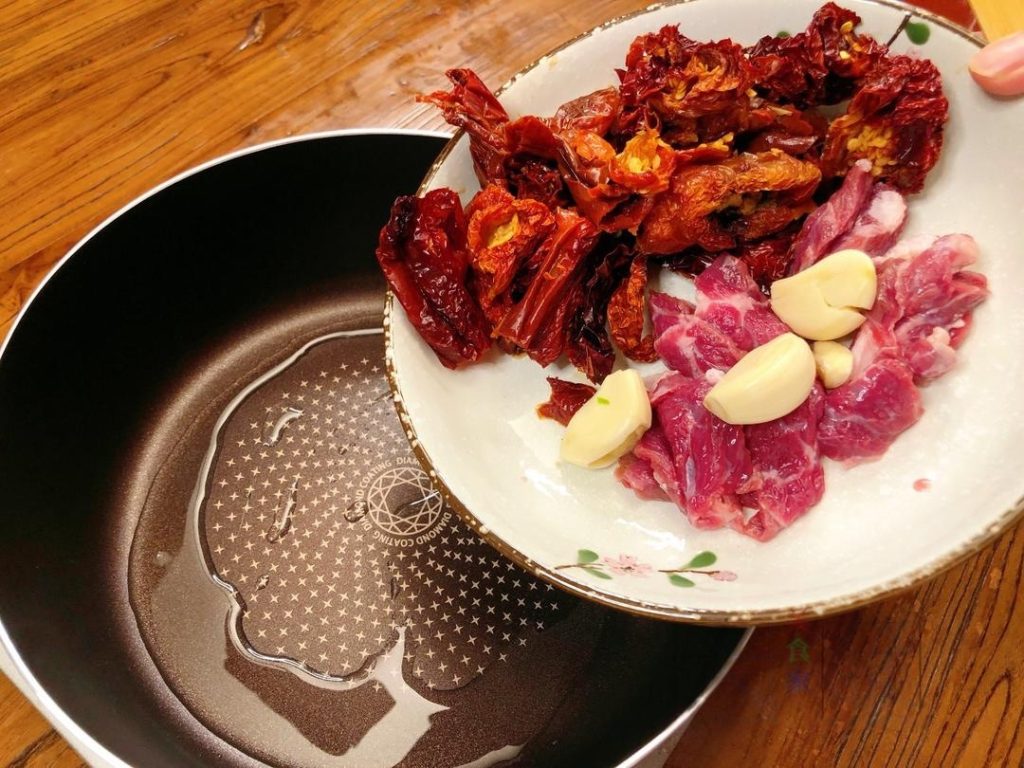
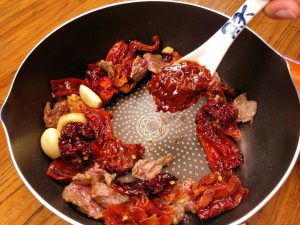
Heat a wok or large frying pan over medium heat. Add 2 tablespoons of oil. Add the soaked chilies, sliced beef, and smashed garlic. Stir-fry until the beef changes color and is no longer pink.
Step 5: Fry the Paste
Add 2 tablespoons of Doubanjiang. Stir-fry continuously for about 30 seconds until the oil turns red and the sauce smells fragrant.
- Tip: Frying the paste is crucial to release its flavor. Add 2 tablespoons of Shaoxing wine (or cooking wine) here to deglaze the pan.

Step 6: Add Vegetables
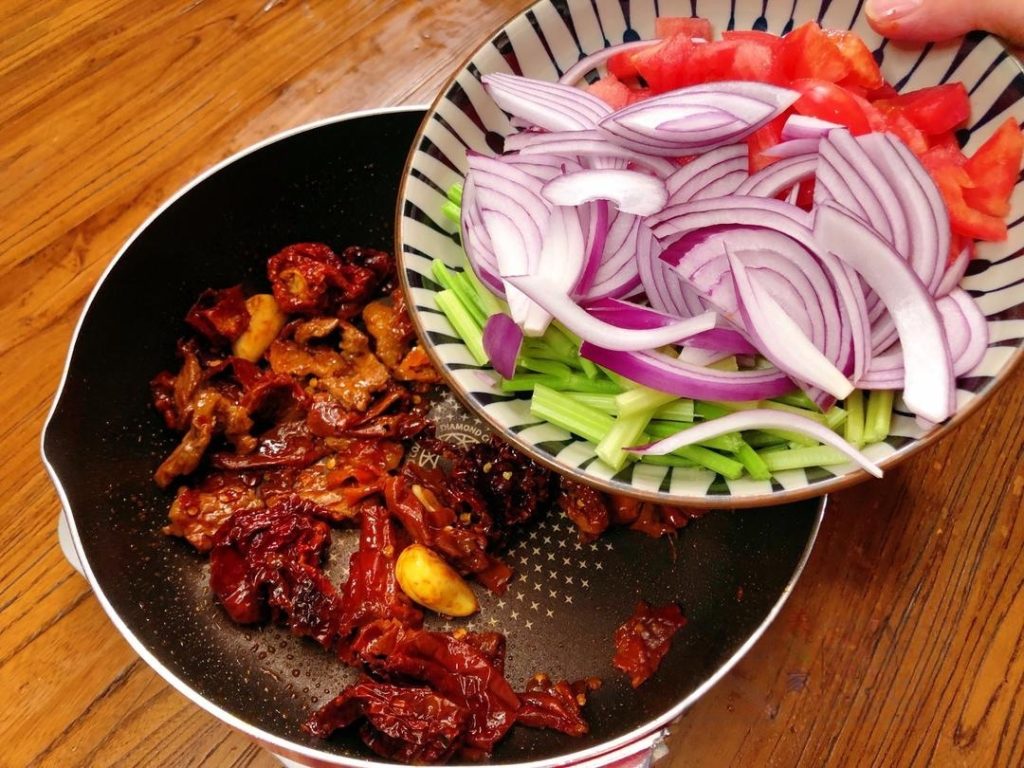
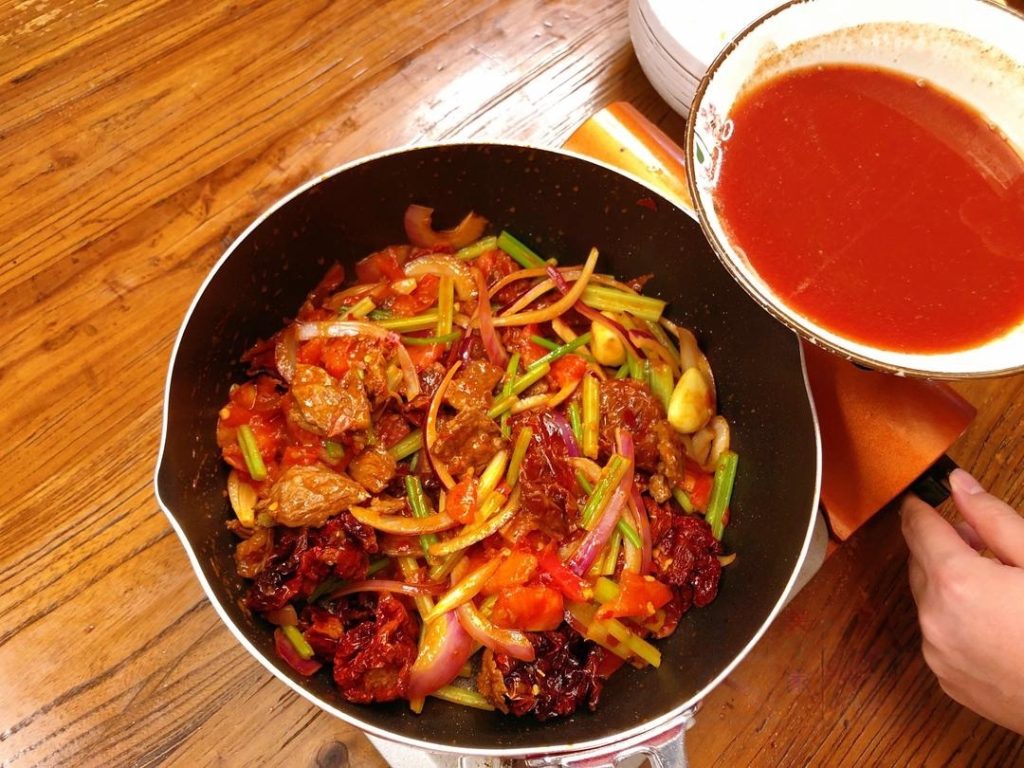
Increase heat to medium-high. Add the purple onion, tomato chunks, and celery. Stir-fry for 1-2 minutes until the onion becomes slightly translucent but still retains a crunch.
Step 7: Braise the Noodles
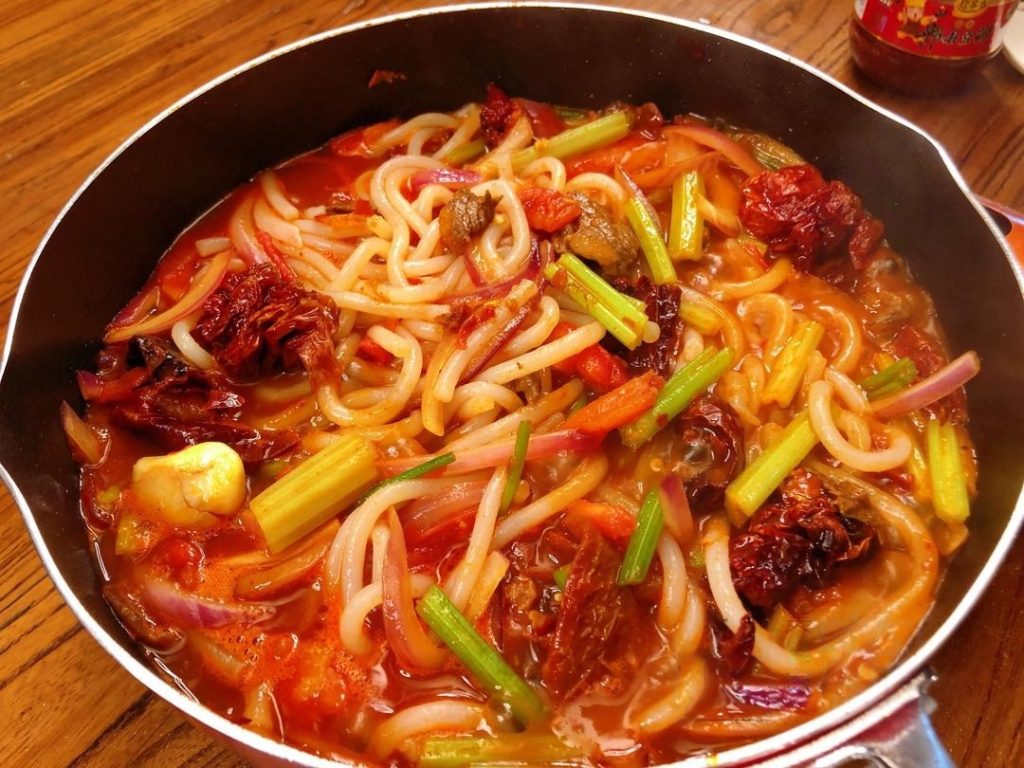
Pour in the pre-mixed sauce liquid (from Step 3). Add the drained rice noodles. Stir gently to coat the noodles.
Once the liquid boils, turn the heat down to low. Cover the wok with a lid and simmer for 5 minutes.
- Why do we do this? This braising step allows the thick noodles to absorb the flavors of the beef and tomato sauce.
Step 8: Reduce and Finish
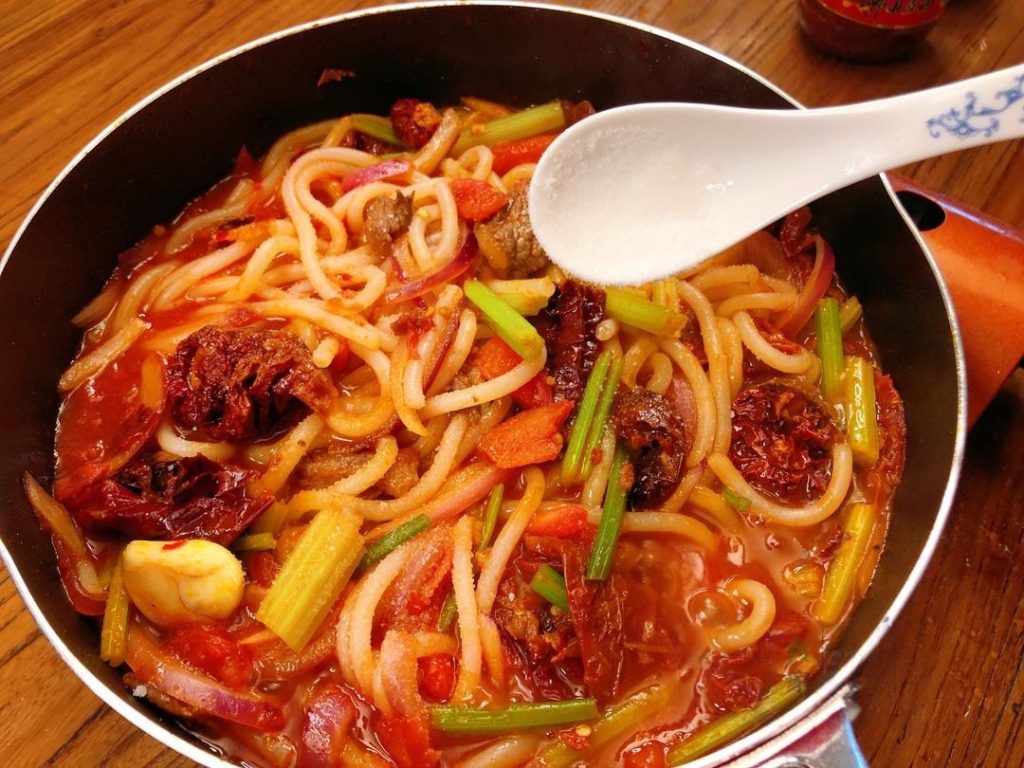
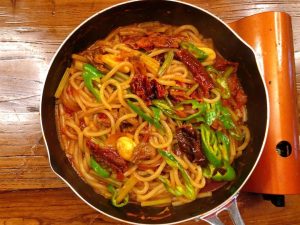
Remove the lid. Turn the heat up to high. Stir-fry quickly to reduce the sauce. The sauce should thicken and cling to the noodles; it should not be a watery soup. Taste a noodle—if it needs more salt, add a pinch now (though the sauces are usually salty enough).
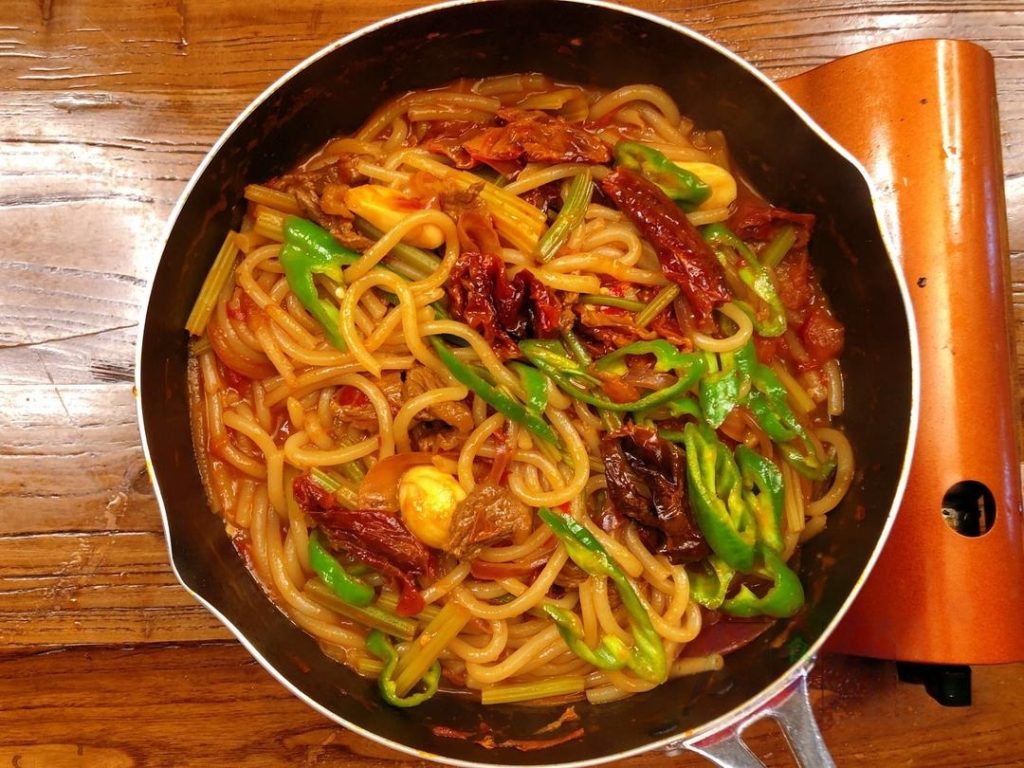
Add the sliced green peppers (screw peppers). Toss for another 30 seconds until the peppers are bright green but slightly tender.
Step 9: Serve
Transfer to a large plate or bowl. Serve immediately while piping hot!
Common Mistakes When Making Xinjiang Rice Noodles
- Using Ketchup: Do not substitute the tomato paste with ketchup. Ketchup is too sweet and vinegary. The depth of this dish comes from the concentrated savory flavor of pure tomato paste mixed with the fermented bean paste.
- Skipping the Cold Rinse: If you don’t rinse the noodles in cold water after boiling, they will become gummy and clump together in the wok.
- Burning the Chilies: Because we soak the dried chilies first, they are less likely to burn, but keep an eye on the heat in Step 4. If the oil is too hot, they will turn bitter.
Serving Suggestions
This dish is heavy, spicy, and satisfying. To balance the meal, I recommend serving it with:
- A refreshing cold appetizer, like Hot and Sour Shredded Potatoes.
- If you really love spice, you can add a drizzle of Homemade Chinese Chili Oil at the end.
FAQ
Q: Can I make this vegetarian? A: Yes! Simply omit the beef. The sauce is flavorful enough on its own. You could add fried tofu puffs or mushrooms for protein.
Q: Is this dish gluten-free? A: Rice noodles are naturally gluten-free. However, you must ensure your Soy Sauce and Doubanjiang are certified gluten-free, as many brands contain wheat flour.
Q: Can I use fresh noodles? A: Yes, if you can find fresh thick rice noodles, you can skip the boiling step. Just rinse them in warm water to separate them before adding to the wok.
Authoritative References
- For understanding the fermentation process of the key ingredient, refer to the Science of Fermented Bean Pastes by the Jiangnan University School of Food Science.
- Guidelines on safe meat preparation temperatures can be found via the USDA Food Safety and Inspection Service.
Food Safety & Storage
- Storage: Leftovers can be stored in an airtight container in the refrigerator for up to 3 days. Note that rice noodles tend to break into smaller pieces when reheated.
- Reheating: Microwave with a splash of water, or stir-fry again in a pan.
- Beef Safety: Ensure the beef is cooked until it is no longer pink in the center before serving.

Xinjiang Fried Rice Noodles (Xinjiang Chao Mifen)

Equipment
- Wok or large skillet
- Pot for boiling noodles
Ingredients
Main Ingredients
- 1.1 lb thick rice noodles (dried) Jiangxi or Guilin style
- 1.7 oz beef thinly sliced (flank or sirloin)
- 4 dried red chilies Xinjiang Lapi Zi or Arbol, soaked
- 2 tbsp vegetable oil
- 2 tbsp Doubanjiang Pixian bean paste
- 3 cloves garlic smashed
- 1/2 red onion chopped
- 1 tomato chopped
- 2 stalks celery chopped
- 1 green pepper Anaheim or Long Hot, sliced
- 2 tbsp Shaoxing wine
Sauce Mixture
- 4 tbsp light soy sauce
- 2 tbsp tomato paste
- 1/3 tsp Sichuan peppercorn powder
- 1 cup water
Instructions
- Boil the thick rice noodles according to package instructions until al dente (cooked through but firm). Drain immediately and rinse thoroughly under cold water to stop cooking and remove excess starch.

- Soak the dried chilies in cold water for about 10 minutes until soft. Drain, squeeze out excess water, and chop into segments.
- Make the sauce mixture: In a small bowl, mix the light soy sauce, tomato paste, Sichuan peppercorn powder, and water. Stir until the tomato paste is fully dissolved.
- Heat the vegetable oil in a wok or large pan over medium heat. Add the soaked chilies, sliced beef, and smashed garlic. Stir-fry until the beef changes color and is no longer pink.
- Add the Doubanjiang (bean paste) and stir-fry for 30 seconds until the oil turns red and fragrant. Pour in the Shaoxing wine to deglaze.
- Add the red onion, tomato, and celery. Stir-fry for 1-2 minutes until the onion is slightly translucent but still crunchy.
- Pour in the pre-mixed sauce liquid and add the drained rice noodles. Stir gently to combine and coat the noodles.
- Once the liquid boils, reduce heat to low, cover the wok, and simmer for 5 minutes to let noodles absorb the flavors.
- Uncover the wok and turn heat to high. Stir-fry quickly to thicken the sauce so it clings to the noodles. Taste and add a pinch of salt if necessary.
- Add the sliced green peppers and toss for 30 seconds until bright green. Remove from heat and serve immediately.



Leave a Reply