I still remember the first time I heard the sound of Shui Zhu Rou Pian being finished in my family’s restaurant kitchen in Sichuan. It wasn’t the chopping or the wok tossing; it was the distinct sizzle of smoking hot oil being poured over raw garlic and chilies at the very end. That sound promised a fragrance that would fill the entire dining room.

Many of my American friends are confused by the name “Boiled Pork.” In Western cooking, boiling meat often implies bland, tough results. But in Sichuan cuisine, Shui Zhu (水煮) is a technique of poaching velveted meat in a rich, spicy, and savory broth. The result is pork that is impossibly tender—slippery, spicy, and perfect for soaking into a bowl of steamed white rice.
If you are looking for a show-stopping main dish that delivers the true “mala” (numbing and spicy) experience of Mapo Tofu, this is it.
Why This Recipe Works
- Velveting Technique: We coat the pork in egg white and cornstarch. This creates a protective barrier, keeping the meat silky and tender even in boiling broth.
- Layered Heat: We use both Doubanjiang (broad bean paste) and a small piece of Hot Pot Base. This is a restaurant secret to getting that deep, complex red broth without simmering bones for hours.
- The Oil Flash: Pouring hot oil over the raw garlic and dried chilies at the end releases their essential oils instantly, creating a layer of aromatics that hits your nose before you even take a bite.
What is Sichuan Boiled Pork (Shui Zhu Rou Pian)?
Originating from the Zigong region of Sichuan (known for its salt mines and cattle), this dish traditionally uses beef (Shui Zhu Niu Rou), but the pork version is arguably more popular in home kitchens today.

It consists of three layers:
- The Base: Blanching vegetables like bean sprouts and enoki mushrooms.
- The Meat: Thinly sliced pork loin poached quickly in a spicy red broth.
- The Topping: A crown of garlic, scallions, and chilies, activated by hot oil.
Key Ingredients & Substitutions
The Soul of the Dish
- Pork Loin (Li Ji): You want a lean cut. Pork tenderloin or boneless pork loin works best.
- Pixian Doubanjiang: This is spicy fermented broad bean paste. It is salty and savory. Substitute: If you cannot find Pixian brand, Lee Kum Kee “Chili Bean Sauce” is widely available in US supermarkets, though slightly sweeter.
- Hot Pot Base (Huo Guo Di Liao): The original recipe calls for a small chunk of solid hot pot base. This adds tallow and spices. Substitute: If you can’t find this, use 1 tablespoon of store-bought Chili Oil (like Homemade Chili Garlic Sauce) or simply omit it and add more dried chilies.
- Vegetables: We use Bean Sprouts and Enoki Mushrooms. You can also use Napa cabbage, celery, or romaine lettuce.
The Marinade (Velveting)
- Cornstarch & Egg White: Essential for tenderness.
- Shaoxing Wine: Neutralizes gamey flavors. Substitute: Dry Sherry or just water.
Ingredients
For the Pork & Marinade:
- 7 oz (200g) Pork loin or tenderloin
- 1 tbsp Shaoxing Wine (or dry sherry)
- 2 tsp Light Soy Sauce (e.g., Kikkoman)
- 1 tsp Neutral Oil (vegetable or canola)
- 1 tbsp Cornstarch
- 1 Egg White
The Vegetables:
- 1 handful (approx. 4 oz) Soybean sprouts, washed
- 1 handful (approx. 3 oz) Enoki mushrooms, roots trimmed
The Soup Base & Aromatics:
- 2 tbsp Neutral Oil (for frying paste)
- 2 stalks Scallions (green onions), whites chopped for base, greens for topping
- 3 cloves Garlic, sliced for base
- 5 slices Ginger
- 1 small chunk (approx. 1 tbsp) Spicy Hot Pot Soup Base (solid type)
- 1 tbsp Doubanjiang (Spicy Broad Bean Paste)
- 2-3 cups Water (or unsalted chicken stock)
- 1 tsp Salt (adjust to taste)
The Topping (The “Sizzle”):
- 3 cloves Garlic, minced fine
- 1 stalk Scallion greens, chopped
- 5-8 Dried Red Chilies (adjust heat to preference)
- 2 tbsp Neutral Oil (for the final pour)
Recipe Notes Before You Start
- Freezing Tip: If your pork is fresh, freeze it for 20 minutes before slicing. This firms up the meat, allowing you to cut paper-thin slices effortlessly.
- Knife Skills: Always slice against the grain. Look for the parallel lines of muscle fiber and cut perpendicular to them. This shortens the fibers and guarantees tenderness.
- Heat Management: You will need a pot or deep skillet for the soup, and a small separate pan (or ladle) to heat the finishing oil.
How to Make Sichuan Boiled Pork Slices
Step 1: Prep and Marinate the Pork (Velveting)
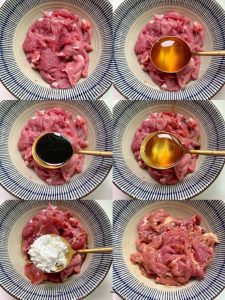
Slice the pork loin into thin slices (about 1/8 inch thick). Place them in a bowl. Add 1 tbsp cooking wine, 2 tsp light soy sauce, 1 tsp oil, 1 tbsp cornstarch, and 1 egg white.

- Chef’s Tip: Use your hand to massage the marinade into the meat until it feels sticky and the liquid is absorbed. This is called “shang jiang” (mounting the starch). Let it marinate for at least 10 minutes.
Step 2: Make the Soup Base
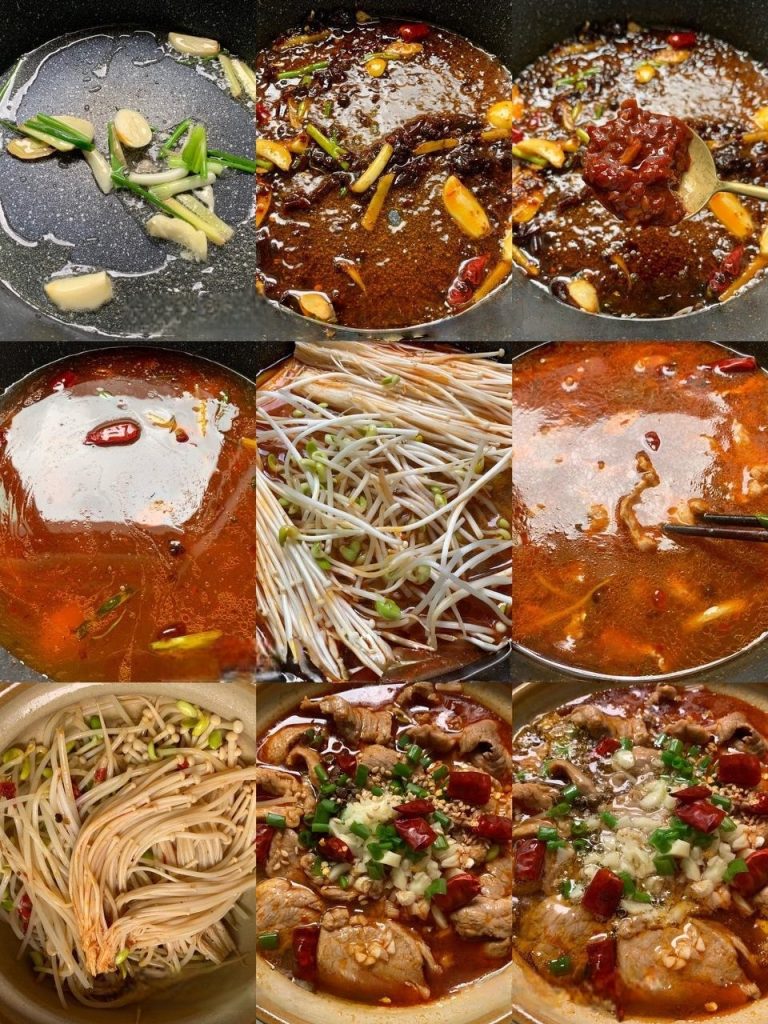
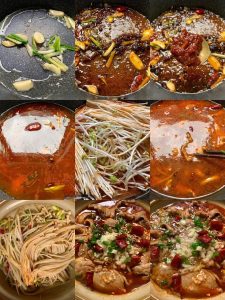
Heat a wok or deep pot over medium heat. Add 2 tbsp oil. Stir-fry the scallion whites, ginger slices, and sliced garlic until fragrant. Add the chunk of hot pot base. Stir until melted and red oil releases. Add 1 tbsp Doubanjiang. Stir-fry for another 30 seconds to cook out the raw bean taste. Pour in a large bowl of water (about 2-3 cups) and bring to a full boil. Add 1 tsp salt (taste first, as the pastes are salty).
Step 3: Blanch the Vegetables
Add the bean sprouts and enoki mushrooms to the boiling broth. Cook for about 1-2 minutes until soft but still crunchy.
- Serving Tip: Using a slotted spoon, remove the vegetables and place them at the bottom of your serving bowl. Leave the broth in the pot.
Step 4: Poach the Pork
Keep the broth boiling. Reduce heat slightly to a simmer. Spread the marinated pork slices into the broth one by one so they don’t clump together. Do not stir immediately or the starch will wash off. Let them set for 30 seconds, then gently push with a ladle. Cook for just 1-2 minutes until the meat turns white and is fully cooked.
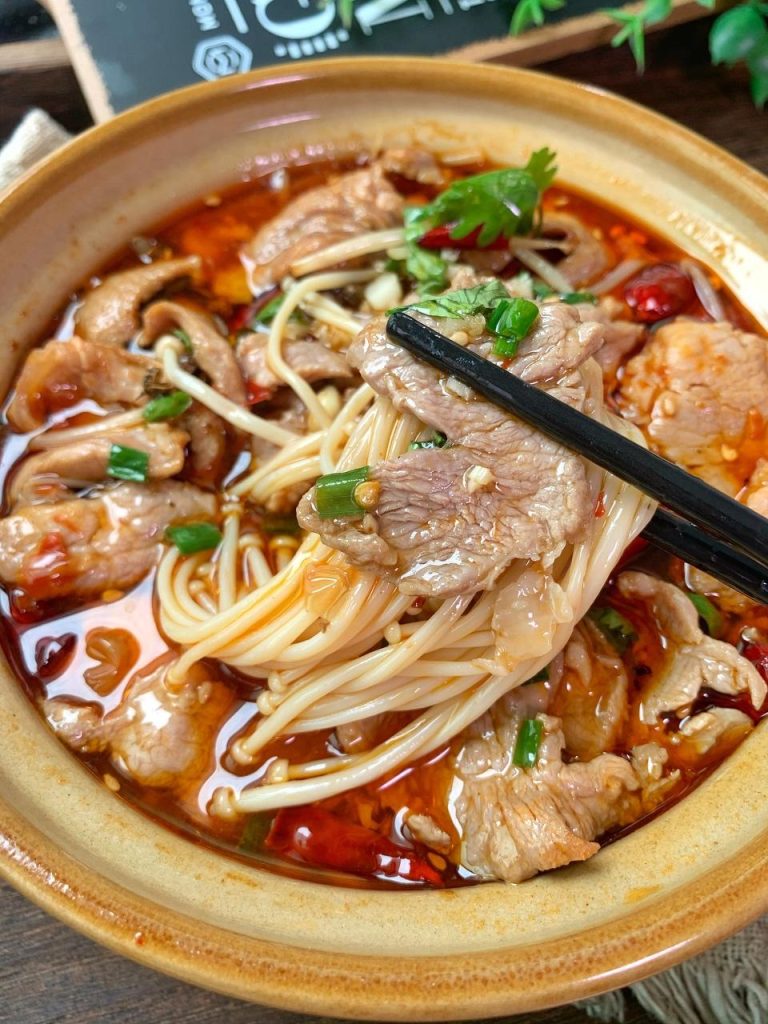
- Safety Check: Pork is safe at 145°F (63°C), but for thin slices, visual cues are best—they should be completely opaque white. Pour the meat and broth into the serving bowl, covering the vegetables.
Step 5: The Hot Oil Flash
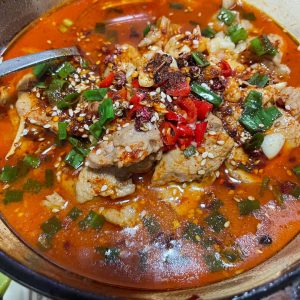
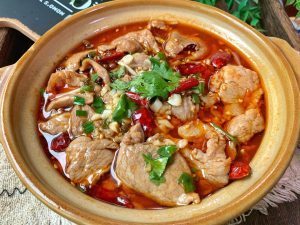
Place the minced garlic, chopped scallion greens, and dried chilies on top of the pile of meat. In a small pan or ladle, heat 2 tbsp oil until it is smoking hot (approx 375°F / 190°C). Carefully pour the hot oil directly onto the garlic and chilies. You should hear a loud sizzle and smell the garlic instantly. Serve immediately with rice.
Our Systematic Test Kitchen Notes
We tested this recipe using different vessels and heat sources.
- Stove vs. Wok: While a carbon steel wok is traditional, a standard 12-inch stainless steel sauté pan works perfectly for this dish because of the volume of liquid.
- The “Base” Variable: We compared using only Doubanjiang versus Doubanjiang plus Hot Pot Base. The version with the Hot Pot Base had significantly more depth and that signature restaurant-style “tallow” mouthfeel. If you omit it, consider adding a pinch of five-spice powder and sugar to compensate.
- Vegetable Crunch: Don’t overcook the bean sprouts. They provide a necessary textural contrast to the soft meat.
Common Troubleshooting
- Why is my meat tough? You likely boiled it too long. Thinly sliced velveted pork only needs about 90 seconds to 2 minutes. Also, ensure you sliced against the grain.
- Why is the soup too salty? Hot pot bases and Doubanjiang vary wildly in sodium content. Always taste the broth before adding the extra teaspoon of salt.
- My oil didn’t sizzle. The oil must be smoking hot. If it doesn’t sizzle when it hits the garlic, it wasn’t hot enough to “bloom” the aromatics.
Serving Suggestions
This dish is rich and spicy, so it needs balance.
- Rice: Plenty of steamed white rice is mandatory.
- Cooling Side: A cold appetizer like Smashed Cucumber Salad is the perfect refreshing counterpoint to the heat.
- Greens: A simple Stir-fried Lettuce with Garlic or bok choy helps cut the richness.
How to Store and Reheat
- Storage: Store leftovers in an airtight container in the fridge for up to 3 days.
- Reheating: Reheat gently on the stovetop. Note that the starch on the pork may thicken the soup further upon reheating; add a splash of water if needed.
- Freezing: Not recommended. The texture of the bean sprouts and velveted pork degrades significantly when frozen and thawed.
Nutrition Information
Serves: 2 People Serving Size: Approx. 1.5 cups (meat, vegetables, and broth)
- Calories: 350 kcal
- Total Fat: 25g
- Saturated Fat: 5g
- Cholesterol: 60mg
- Sodium: 1200mg (Note: High sodium due to Doubanjiang and soy sauce; adjust salt to taste)
- Total Carbohydrates: 12g
- Dietary Fiber: 2g
- Sugars: 2g
- Protein: 24g
Allergen Warning: Contains Soy (Soy sauce, Doubanjiang), Wheat (Soy sauce, Doubanjiang), and Egg (Marinade).
Disclaimer: Nutrition information is calculated using an ingredient database and should be considered an estimate. In cases where multiple ingredient alternatives are given, the first listed is calculated for nutrition. Garnishes and optional ingredients are not included. Actual values may vary depending on the specific brands of sauces used.
Food Safety & Preparation Tips
Sodium Content: The hot pot base and Doubanjiang are very salty. Taste the broth before adding any extra salt to avoid making the dish inedible.
Pork Cooking Temperature: While pork is technically safe to eat at an internal temperature of 145°F (63°C), thinly sliced meat cooks very fast. Ensure the pork slices turn completely opaque (white) and are no longer pink. Do not overcook, or they will become tough.
Hot Oil Safety: This recipe involves heating oil until it smokes and pouring it over wet ingredients (garlic/scallions). This causes a vigorous sizzle and potential splashing. Use a stable, small saucepan or a ladle to heat the oil, and pour slowly and carefully to avoid burns. Keep your face back from the bowl when pouring.
Raw Meat Handling: Wash hands, cutting boards, and knives thoroughly with soapy water after handling raw pork and eggs to prevent cross-contamination.
Bean Sprouts: Ensure bean sprouts are thoroughly cooked in the boiling broth for at least 1-2 minutes, as raw sprouts can carry bacteria.
FAQ
Q: Can I use chicken instead of pork? A: Absolutely. Sliced chicken breast works very well with this method. The velveting process keeps it incredibly moist.
Q: Is it spicy? A: Yes, this is a Sichuan dish. However, you can control the heat by reducing the dried chilies on top or choosing a “mild” hot pot base.
Q: What if I don’t have a hot pot base? A: You can just use 2 tablespoons of Doubanjiang and perhaps a teaspoon of sugar and fennel seeds to mimic the flavor complexity.
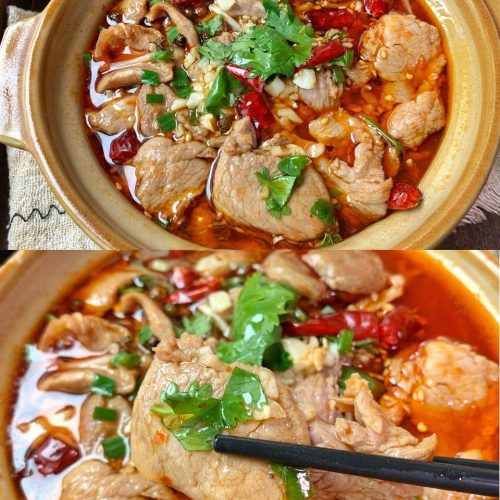
Sichuan Boiled Pork Slices (Shui Zhu Rou Pian)

Equipment
- 1 Wok or Deep Skillet For cooking the broth
- 1 Small Saucepan For heating the finishing oil
Ingredients
Pork Marinade
- 7 oz pork loin or tenderloin approx 200g, sliced thinly against the grain
- 1 tbsp Shaoxing wine or dry sherry
- 2 tsp light soy sauce
- 1 tsp neutral cooking oil
- 1 tbsp cornstarch
- 1 egg white
Soup Base
- 2 tbsp neutral cooking oil
- 2 stalks scallions whites for base, greens reserved for topping
- 3 cloves garlic sliced
- 5 slices ginger
- 1 tbsp Hot Pot Soup Base solid chunk
- 1 tbsp Doubanjiang spicy broad bean paste
- 3 cups water or unsalted chicken stock
- 1 tsp salt to taste
Vegetables & Topping
- 4 oz soybean sprouts approx 1 handful
- 3 oz enoki mushrooms approx 1 handful
- 3 cloves garlic minced finely (for topping)
- 5 dried red chilies
- 2 tbsp neutral cooking oil smoking hot, for finishing
Instructions
- Slice the pork loin thinly (against the grain). In a bowl, combine the pork with Shaoxing wine, light soy sauce, 1 tsp oil, cornstarch, and egg white. Massage by hand until sticky. Marinate for 10 minutes.

- Heat 2 tbsp oil in a wok over medium heat. Stir-fry scallion whites, ginger, and sliced garlic until fragrant. Add the hot pot base and Doubanjiang. Stir-fry until the red oil releases and the paste smells aromatic.
- Pour in the water and bring to a boil. Add salt to taste.
- Add bean sprouts and enoki mushrooms. Cook for 1-2 minutes until soft. Remove vegetables with a slotted spoon and place them at the bottom of your serving bowl.
- Reduce heat to a simmer. Gently place pork slices into the broth one by one. Do not stir immediately. Let cook for 30 seconds, then gently push. Cook for 1-2 minutes until meat is white and opaque.
- Pour the meat and broth into the serving bowl over the vegetables. Top with minced garlic, chopped scallion greens, and dried chilies.

- Heat 2 tbsp oil in a small pan or ladle until smoking hot. Carefully pour the hot oil over the garlic and chilies to sizzle. Serve immediately.













Leave a Reply