Jiangxi braised duck with kelp is the kind of dish that fills a kitchen with the smell of rice wine and dark soy before you even lift the lid. Duck pieces go into a hot wok with nothing but ginger and salt, cook down until their water is gone, then braise in wine with chilies and lemongrass until the meat gives way at the touch of a chopstick. Only then does the kelp go in, laid flat across the top like a lid of its own.
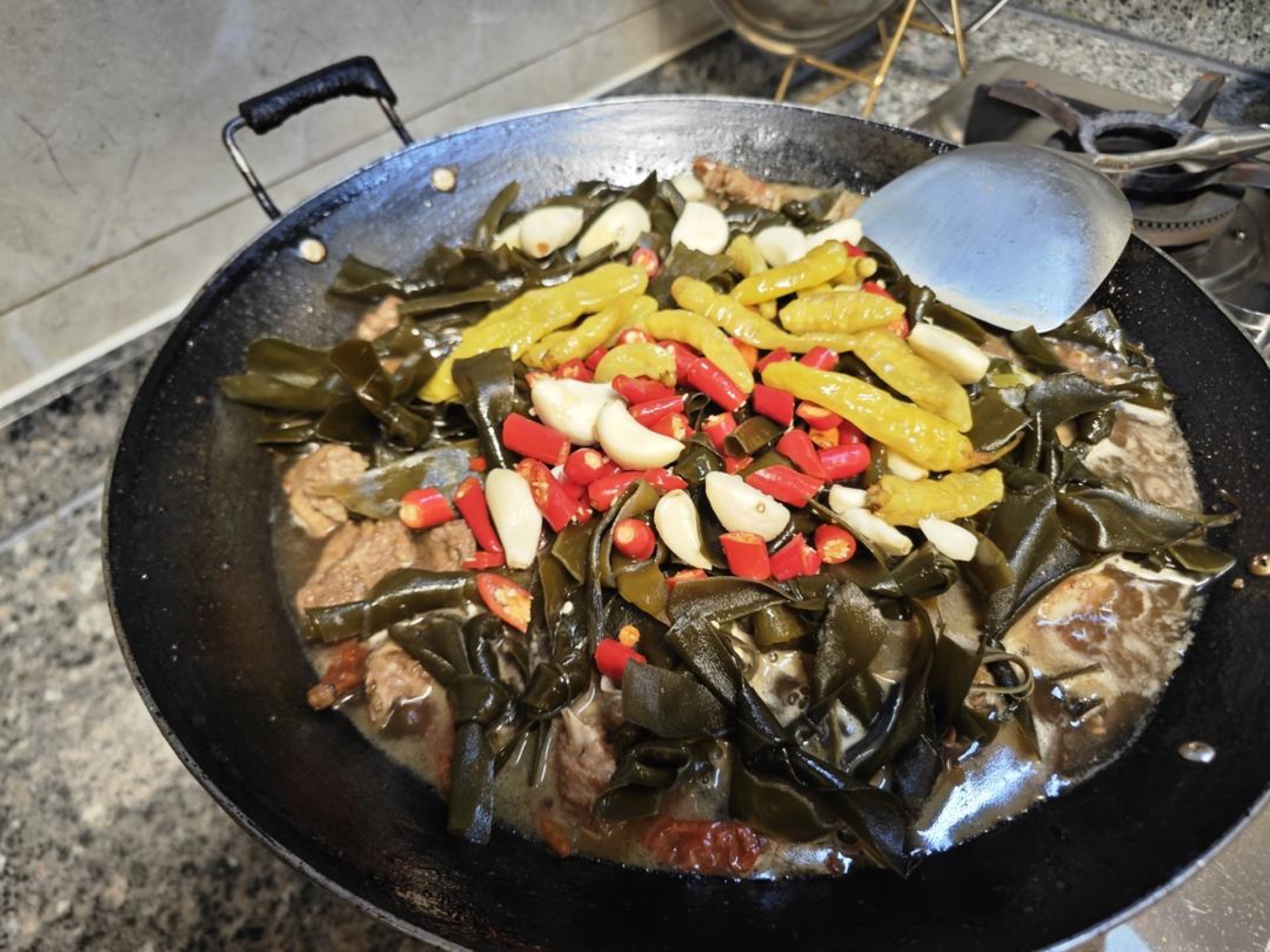
It is a home braise from Jiangxi, where 海带 (kelp) is a pantry staple and duck is the Sunday bird. The kelp does the quiet work here: it soaks up the reduced wine sauce and turns silky, almost meaty, so that a bowl of plain rice and a few ribbons of kelp are enough to make a meal.
If you have ever made braised duck before, you already know the rhythm of this cooking. What changes here is the wine — rice wine if you have it, beer if you do not — and the finish, where oyster sauce and a cornstarch slurry pull everything into a sauce that clings instead of puddles.
What Is Jiangxi Braised Duck with Kelp?
海带焖鸭 (hǎidài mèn yā) is a Jiangxi braise of duck pieces and kelp ribbons cooked down in rice wine or beer with ginger, chilies, and lemongrass. The duck is dry-fried first to drive off its moisture and build 酱香 (sauce aroma) with dark soy, then braised until tender; the kelp goes in near the end so it keeps its bite and absorbs the reduced sauce.
Unlike a Shanghai-style red braise, there is no rock-sugar glaze and no long marinating. The seasoning comes almost entirely from the braising liquid, the pickled chilies, and a final taste-and-adjust at the wok. That is why the recipe reads less like a formula and more like a conversation with the pot.
If you like the deep, glossy flavor of a red braise but want something with more heat and a little fermented tang from pickled chilies, this is the dish to try next.
For a pork version of the same technique, braised pork belly follows a very similar arc: dry-fry, sauce, braise, reduce.
If you like this kind of cooking, my apple braised pork steaks is the closest recipe on the site — the same technique and the same pantry.
1Apple Braised Pork Steaks (Ping Guo Dun Zhu Pai)A comforting homestyle dish featuring tender pork shoulder steaks braised in a glossy, savory-sweet sauce with fresh apples and onions. The natural fruit enzymes tenderize the meat while the soy glaze provides a rich umami finish.Check out this recipe

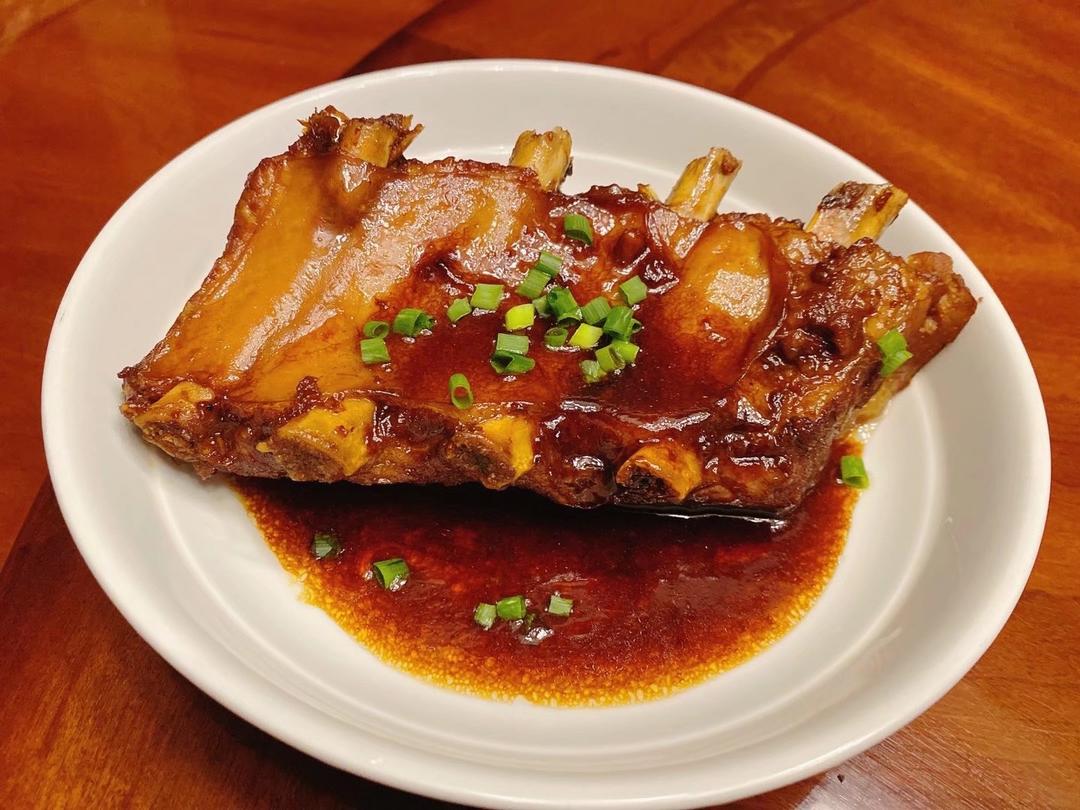
One more braise worth knowing is braised pork ribs, which uses the same dark-soy-and-sugar logic on a different cut.
2Authentic Braised Pork Ribs (Hong Shao Pai Gu): Fall-Off-The-BoneA rustic, Zhuji-style approach to Chinese Red Braised Pork Ribs. Cooked in large, intact slabs over a bed of scallions, these ribs simmer low and slow until you can pull the rich, savory-sweet meat apart with chopsticks.Check out this recipe
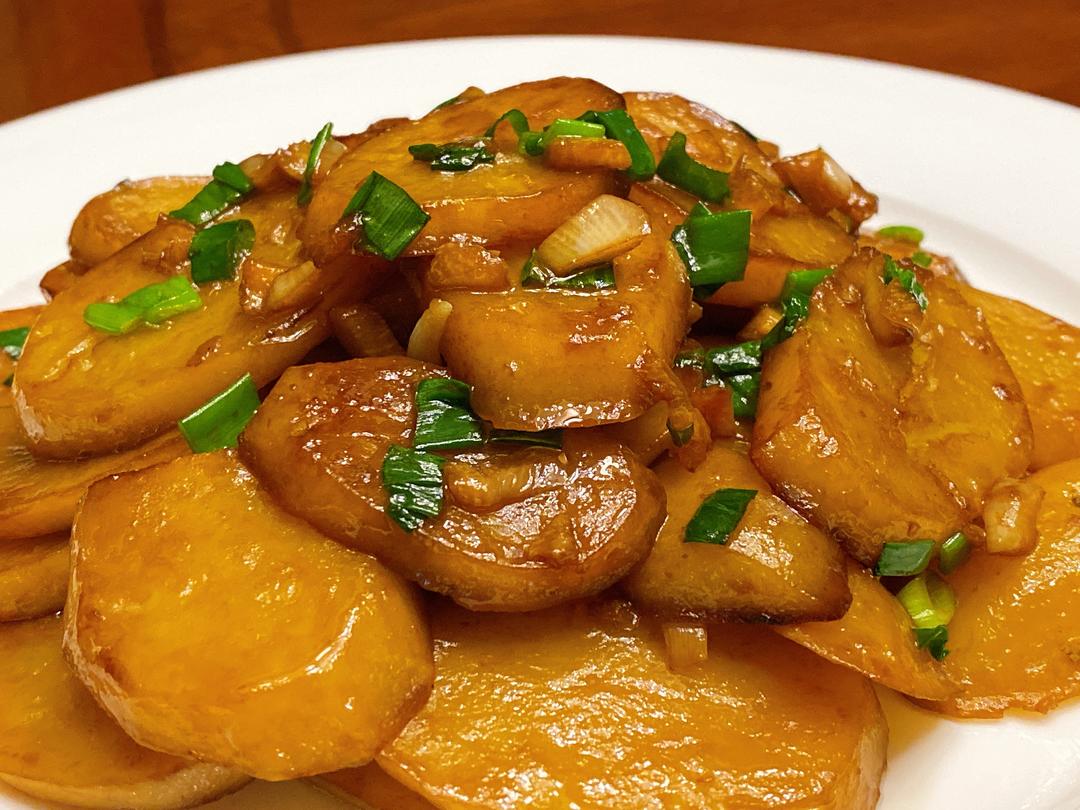
And if you want a vegetable braise to round out the table, braised potato slices is a gentle, homey side that soaks up sauce the way kelp does.
3Authentic Braised Potato Slices (Hong Shao Tu Dou Pian)A quick, comforting 20-minute recipe featuring tender potatoes in a savory soy and oyster sauce glaze. The ultimate Chinese homestyle side dish.Check out this recipe
Why This Recipe Works
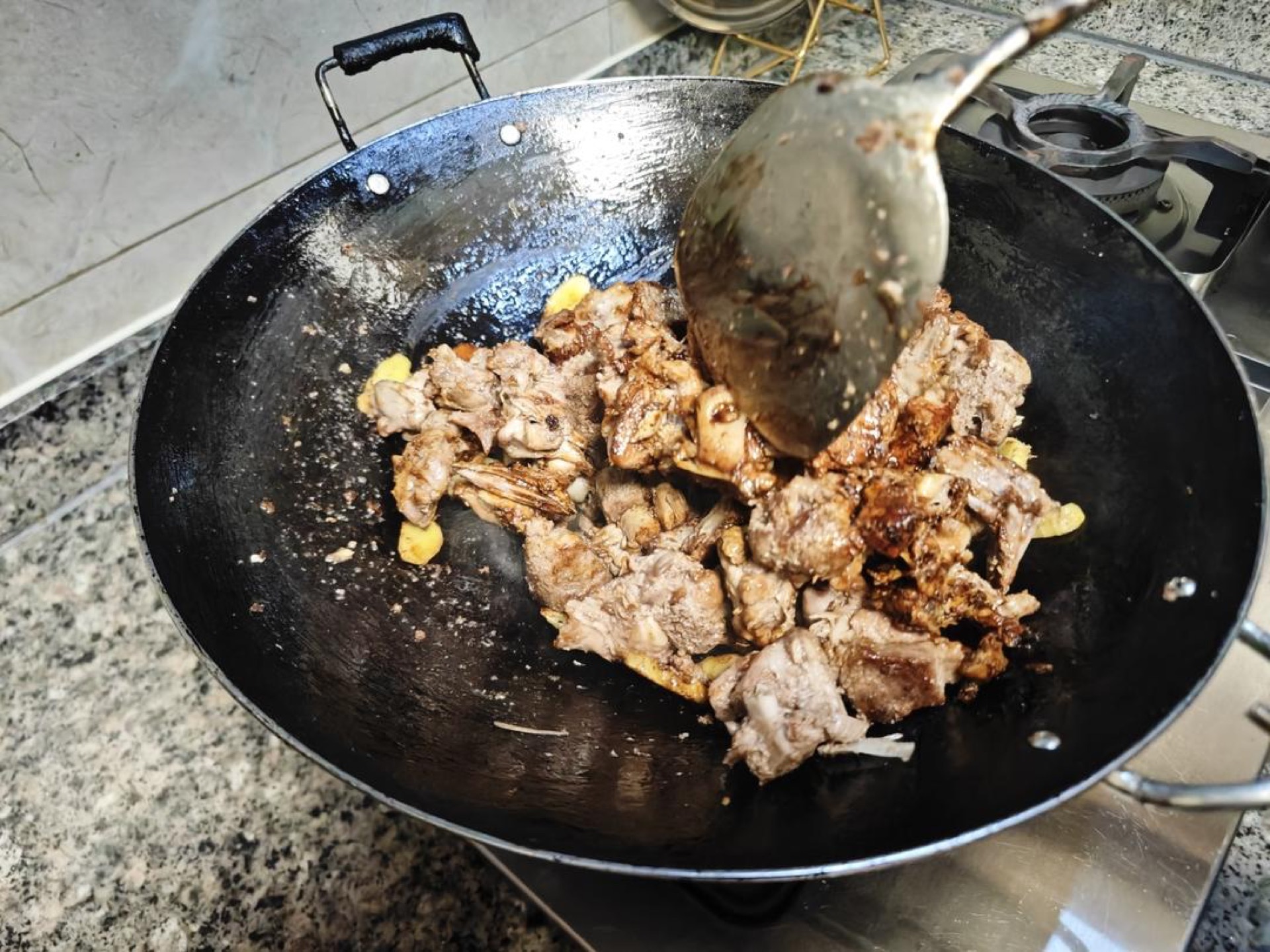
The dry-fry step is the whole foundation. Duck releases a startling amount of water when it first hits the wok, and if you add soy sauce before that water cooks off, you get a steamed, gray bird instead of a browned one. Cooking the pieces until the pan is dry and the fat renders gives you the browned base that the wine then deglazes.
Rice wine is the traditional braising liquid for a reason. It is sweeter and more aromatic than beer, and its alcohol carries the lemongrass and chili aromatics into the meat. Beer works, but it brings a hoppier, slightly bitter edge — still good, just a different dish.
Adding the kelp late, and without stirring it in, is not laziness. Kelp laid on the surface steams gently and stays intact, so you get ribbons rather than mush, and the sauce beneath reduces while the kelp rehydrates in the steam.
Finally, the finish is done by taste, not by the clock. Oyster sauce, light soy, and salt go in at the end because the braise reduces unpredictably depending on your wok, your heat, and how much water the duck gave up. Trust your tongue.
Equipment Needed
A wok is the right vessel here — its wide, sloped sides give you room to dry-fry a whole cut-up duck without crowding, and the shape encourages fast reduction later. A heavy Dutch oven or a wide braising pot will also work; just expect the liquid to reduce more slowly.
You will also want a cutting board sturdy enough for chopping through duck bones, a slotted spoon or spider for lifting pieces out, and a small bowl for the cornstarch slurry. A lid that fits your wok is essential for the kelp stage, since that 20 minutes is a covered steam-and-simmer.
If you keep a braising packet on hand, a Chinese spice packet can be dropped in with the wine for extra depth, though this recipe does not require one.
Ingredients
The full ingredient list with amounts is in the recipe card below. Here is what matters most: a whole duck cut into pieces, plenty of ginger, dark soy sauce for color, rice wine or beer for the braise, dried chilies and lemongrass for aroma, and a generous amount of kelp.
For the finish you need garlic, small fresh chilies, pickled chilies, oyster sauce, light soy sauce, salt, and a cornstarch slurry. Most of these are pantry items in a Chinese home kitchen, which is exactly why this dish shows up on weeknights as often as it does on weekends.
Ingredient Notes
Duck: A whole duck, cut into 2-inch pieces with the skin on and bone in, gives the best flavor. You can ask your butcher to cut it for you — chopping through duck bones at home is doable but demands a heavy cleaver and a steady hand. If you can only find duck legs or duck breasts, use them; legs are ideal, breasts will cook faster and should be added later.
Kelp (海带): Dried kelp needs a good 8-hour soak in cold water, or a 30-minute soak in warm water if you are in a hurry. Fresh or vacuum-packed kelp just needs a rinse and a cut. Either way, cut it into 2-inch ribbons — long enough to twirl, short enough to eat with chopsticks.
Rice wine vs. beer: Mijiu (Chinese rice wine) is the traditional choice and gives a rounder, more fragrant braise. A light beer is the practical substitute. Avoid strongly hopped IPAs, which turn bitter when reduced.
Dark soy sauce (老抽): This is for color and sauce aroma, not salt. Do not swap it for more light soy — you will end up with a pale, salty braise.
Pickled chilies (泡椒): These bring a fermented tang that fresh chilies cannot. If you cannot find them, a spoonful of chopped pickled mustard green or a splash of rice vinegar added at the end will get you partway there.
Lemongrass: Bruise the stalks with the back of your knife before adding them so they release their oils. They are removed before serving — they are there for aroma, not eating.
Prep & Mise en Place
Soak the dried kelp in cold water for at least 8 hours (or warm water for 30 minutes), then drain and cut into 2-inch ribbons. This is the one step you cannot rush, and it is why the recipe carries a soaking time.
Cut the duck into 2-inch pieces if your butcher has not done it. Slice the ginger, smash the garlic cloves, slice the small chilies, chop the pickled chilies, and bruise the lemongrass stalks. Measure out the dark soy sauce, salt, and sugar into small dishes so you can add them quickly once the wok is hot.
Mix the cornstarch slurry in a small bowl and set it aside. Have the beer or rice wine open and within reach — you will pour it into a very hot wok, and you do not want to be fumbling with a bottle cap at that moment.
Cooking Process
Step 1 — Dry-Fry the Duck
Heat oil in a wok with the ginger slices and stir-fry the duck until the pieces are dry and no longer releasing water, then season with salt and sugar.
Step 2 — Build the Sauce Aroma
Once the duck’s moisture has cooked off, add the dark soy sauce and stir-fry until the sauce aroma rises.
Step 3 — Braise with Wine
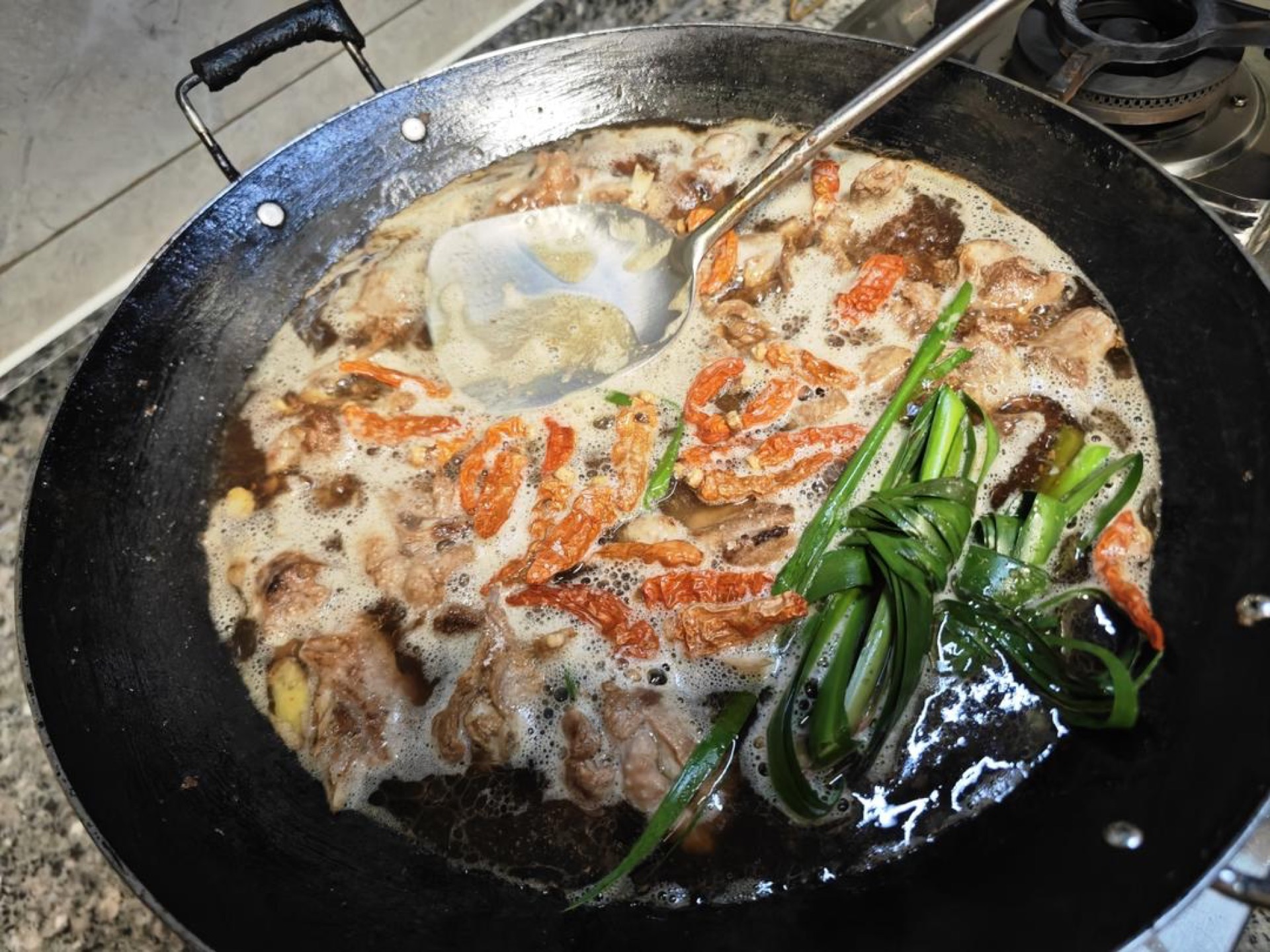
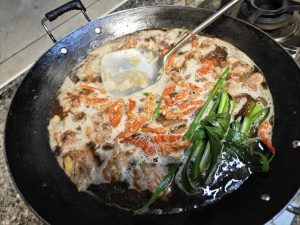
Pour in the bottle of beer, or 2/3 cup of rice wine if you have it — rice wine braises more fragrantly, but beer works if not — add the dried chilies and lemongrass, and simmer for about 30 minutes until tender, testing with a chopstick or a taste.
Step 4 — Add the Kelp
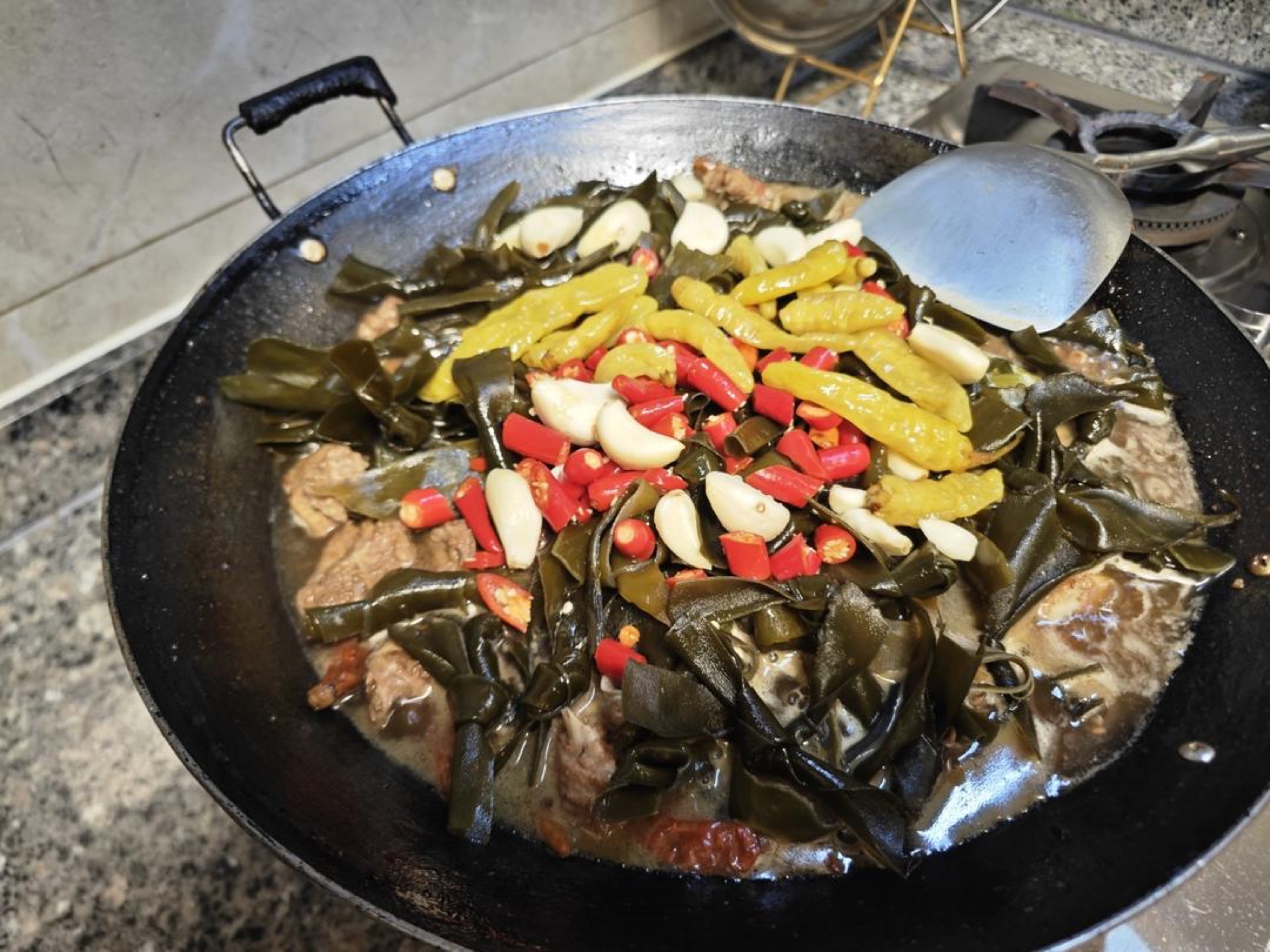
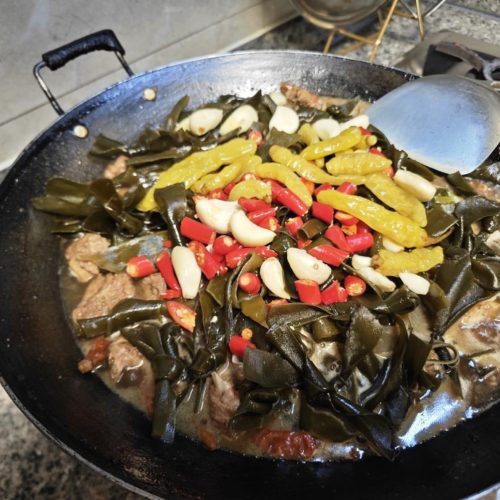
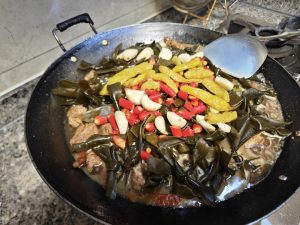
Add the kelp, garlic, small chili peppers, and pickled chilies, cover, and simmer for 20 minutes without stirring them in evenly — just lay them on the surface, cover, and let them steam for about 20 minutes.
Step 5 — Finish and Thicken
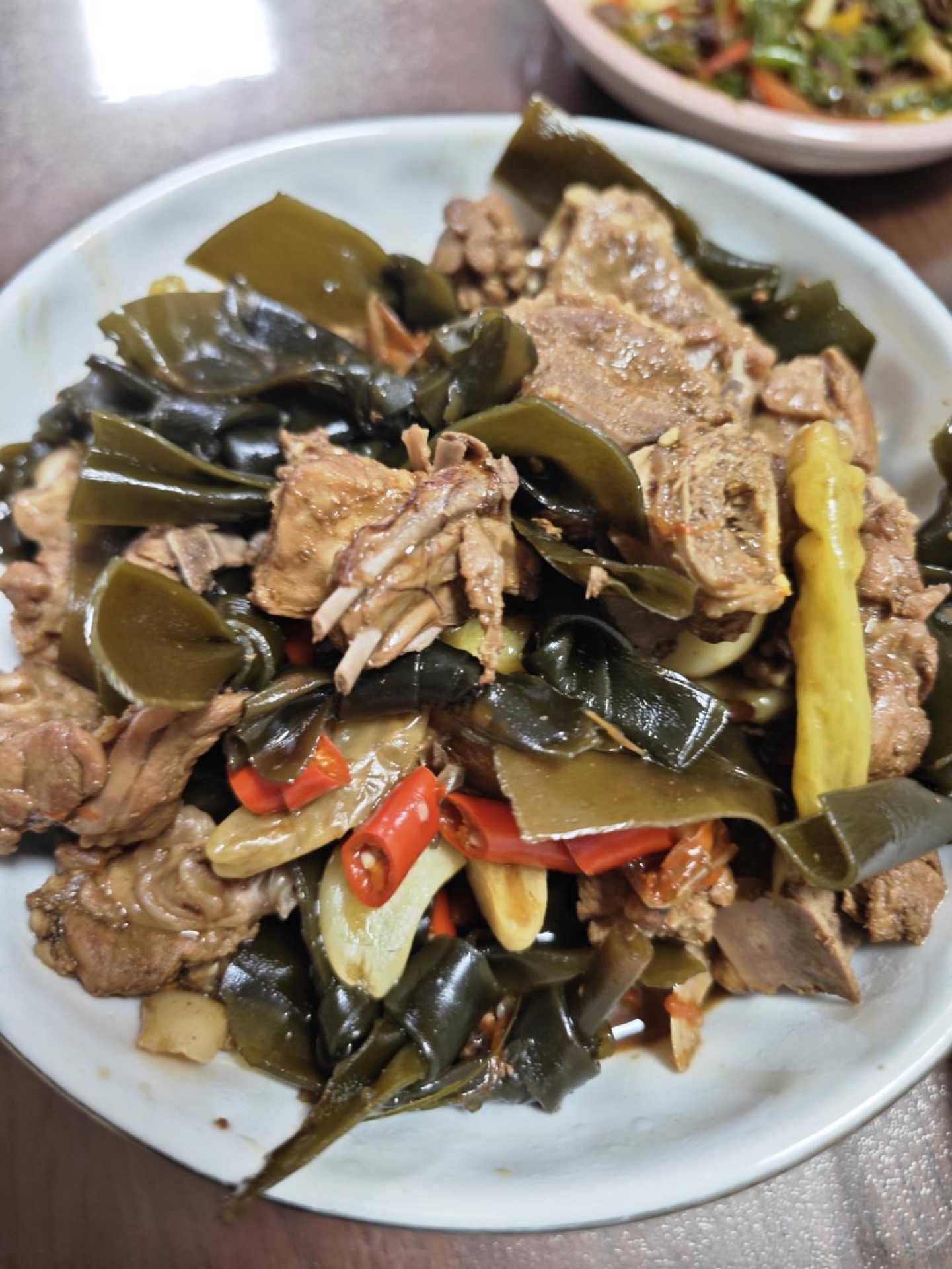
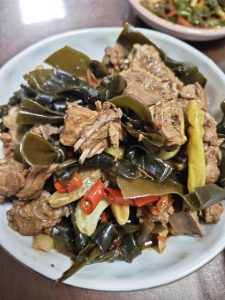
Before serving, check whether it is salty enough and add oyster sauce, light soy sauce, and salt to taste, then thicken with cornstarch slurry, and discard the lemongrass before serving.
Common Mistakes When Making Jiangxi Braised Duck with Kelp
1. Adding soy sauce before the duck is dry. If the duck is still releasing water when the dark soy goes in, the sauce steams instead of caramelizing, and you lose the 酱香 that defines this dish. Cause: impatience. Fix: wait until the wok is nearly dry and the fat has rendered before the soy goes in.
2. Using the wrong braising liquid. Water produces a flat braise, and a heavily hopped beer turns bitter as it reduces. Cause: grabbing whatever is in the fridge. Fix: use rice wine if you can, a light lager if you cannot, and never plain water.
3. Undersoaking the kelp. Kelp that has not fully rehydrated stays tough and leathery no matter how long it simmers. Cause: a short soak. Fix: 8 hours in cold water, or 30 minutes in warm water, until the ribbons are pliable and slightly slippery.
4. Stirring the kelp in. Tossing the kelp through the braise breaks the ribbons and turns them to mush. Cause: habit. Fix: lay the kelp, garlic, and chilies on the surface, cover, and let them steam for 20 minutes without stirring.
5. Skipping the final taste. The braise reduces unpredictably, so a recipe’s salt amount is only a starting point. Cause: following the card too literally. Fix: taste before serving and adjust with oyster sauce, light soy, and salt — then thicken.
6. Thickening too early or too much. A slurry added before the seasoning is right locks in the wrong flavor, and too much cornstarch turns the sauce gluey. Cause: rushing the finish. Fix: season first, then add the slurry a little at a time over medium heat until the sauce coats a spoon.
Variations
With pork instead of duck: The same method works beautifully with pork belly or ribs. Brown the pork first, then follow the braise as written. The air fryer crispy pork belly is a different treatment entirely, but it will show you how much flavor a well-rendered pork skin can carry.
Extra vegetables: Add cubed daikon, bamboo shoots, or fried tofu puffs along with the kelp. They will soak up the sauce the same way and stretch the dish for a bigger table.
Less heat: Omit the small chilies and reduce the pickled chilies to one tablespoon. The braise is still fragrant from the lemongrass and dried chilies, just gentler.
More heat: Add a spoonful of chili bean paste (doubanjiang) with the dark soy sauce, or finish with a drizzle of chili oil.
Drier braise: If you prefer a glazed, almost sticky duck, uncover the wok for the last 10 minutes of the kelp stage and let the sauce reduce further before thickening.
With a braising packet: Drop a spice packet in with the wine for a warmer, more aromatic braise, then remove it with the lemongrass before serving.
Frequently Asked Questions
Can I use duck breasts instead of a whole duck? Yes. Sear them skin-side down first, braise for only 15 minutes, then add the kelp and simmer 10 more. Breasts overcook quickly, so pull them as soon as they are tender.
Do I have to soak the kelp overnight? Dried kelp needs a long soak to rehydrate fully. Eight hours in cold water is ideal; 30 minutes in warm water works in a pinch, but the texture will be slightly firmer.
Can I make this without rice wine? Yes — that is exactly what the beer is for. Use a light lager or a plain pale ale, not an IPA. The braise will be slightly less sweet and a touch more bitter, which is still perfectly good.
How do I know when the duck is done? Pierce the thickest part of a thigh with a chopstick. If it slides in with almost no resistance, the duck is tender. You can also taste a piece — it should give way without any chew.
Is this dish very spicy? It is moderately spicy as written, thanks to the small chilies and pickled chilies. You can dial it down by halving the fresh chilies or leaving them out entirely.
How to Serve
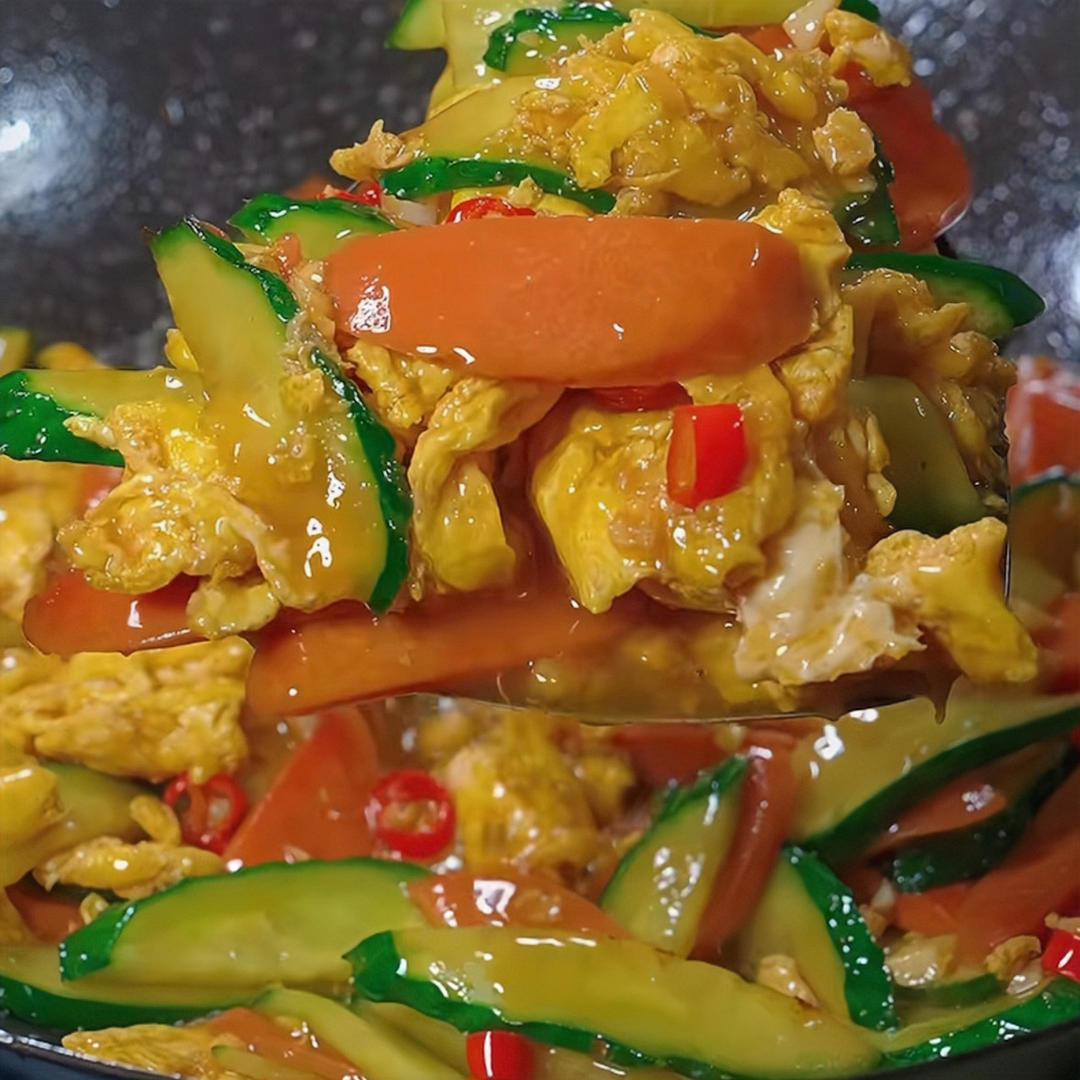
Serve the duck and kelp over steamed white rice, with the sauce spooned generously over the top. A simple vegetable alongside keeps the meal balanced — a quick cucumber and egg stir fry with ham is ready in the time it takes the rice to finish, and its cool, mild flavor is a nice counterpoint to the rich braise.
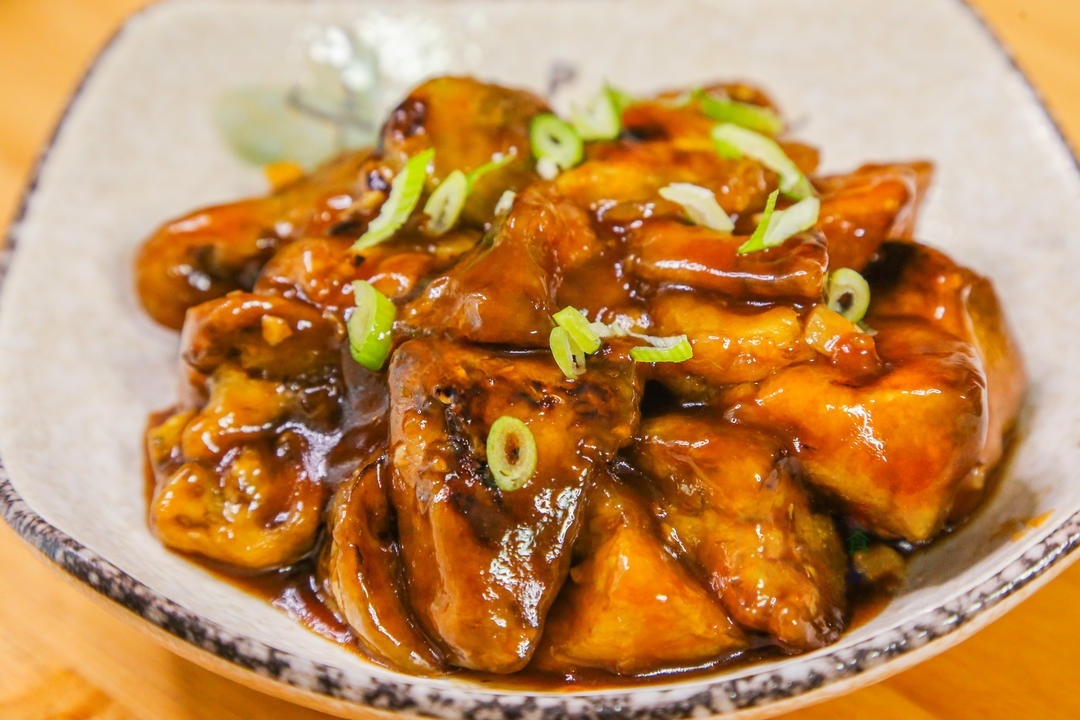
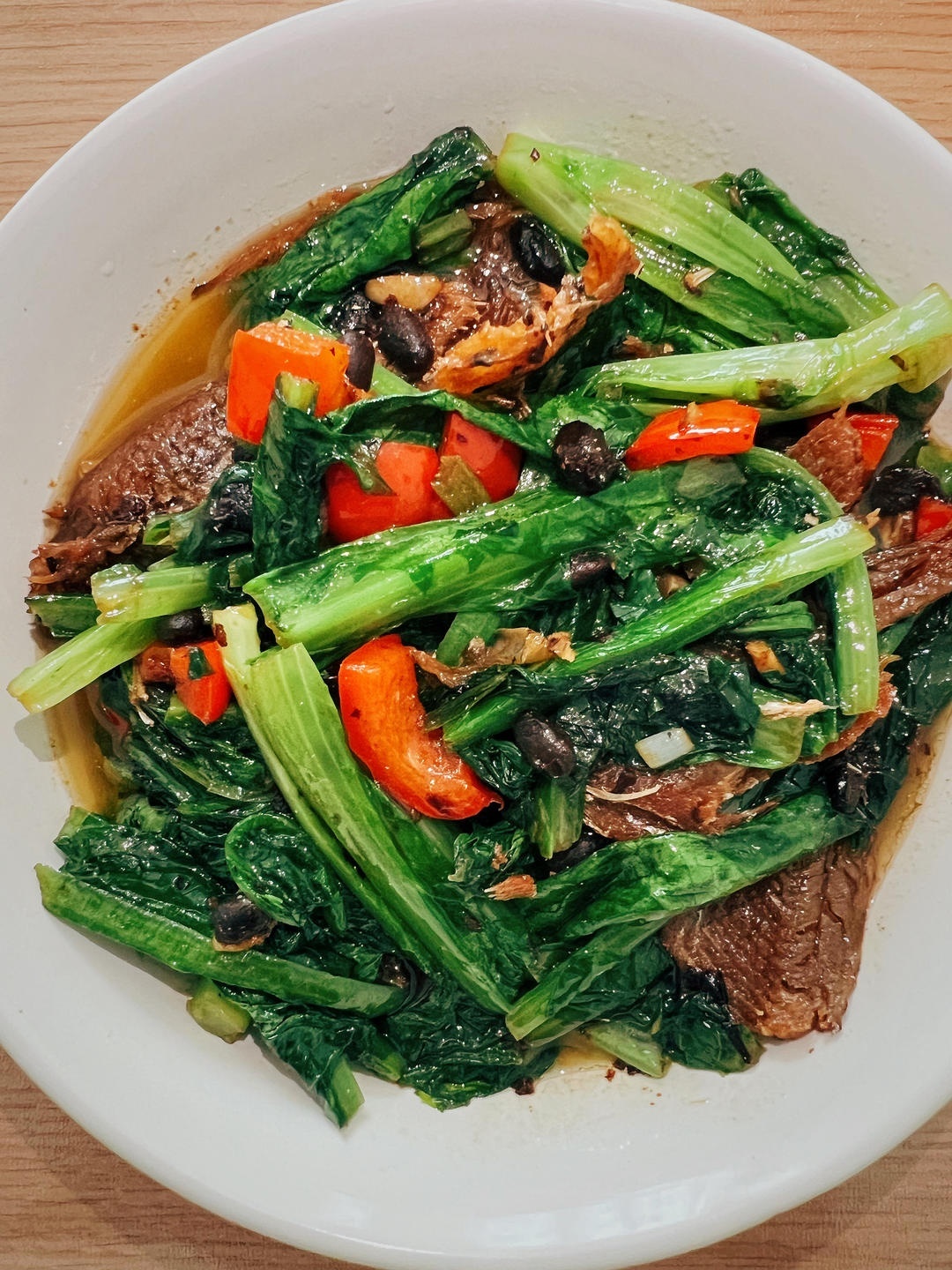
If you want a second vegetable dish, sweet and sour eggplant brings a tangy note that cuts through the duck’s fat, and stir fried aa choy with fried dace adds a crisp, savory green to the table.
For a heartier spread, crispy stuffed lotus root makes a lovely appetizer before the braise comes out, and garlic cumin chicken is a good option if you are feeding a crowd and want a second protein.
Storage & Reheat
Let leftovers cool to room temperature, then transfer to an airtight container and refrigerate for up to 3 days. The flavor actually improves overnight as the kelp and duck continue to absorb the sauce.
Reheat gently in a covered wok or saucepan over medium-low heat with a splash of water or stock to loosen the sauce. Bring to 165°F (74°C) before serving. Avoid the microwave for the duck — it toughens the meat — though it is fine for a quick single portion in a pinch.
To freeze, pack the duck and kelp in the sauce in a freezer-safe container for up to 2 months. Thaw overnight in the refrigerator, then reheat as above. The kelp may soften slightly after freezing, which is entirely normal.
Allergen Notice
This dish contains soy (soy sauce, oyster sauce) and wheat (soy sauce, and beer if you use it). Check your rice wine and oyster sauce labels carefully, as some brands add wheat or barley. If you are avoiding gluten, use tamari in place of both soy sauces and a gluten-free braising liquid such as dry sherry or gluten-free rice wine.
Nutrition Disclaimer
Nutrition information is calculated using an ingredient database and should be considered an estimate. In cases where multiple ingredient alternatives are given, the first listed is calculated for nutrition. Garnishes and optional ingredients are not included.
About the Author & Recipe Development
Lin is the cook and writer behind Woks of Love, where she shares the home-style Chinese food she grew up eating and the dishes she has learned from cooks across China. This Jiangxi braise was developed from a home cook’s method that relies on taste rather than exact measurements — the kind of recipe that lives in a family’s memory rather than on a card.
The recipe was tested with both rice wine and beer, with dried and fresh kelp, and with duck cut at home and by a butcher. The version here keeps the original five-step structure intact, including the dry-fry and the late kelp addition, because those two choices are what make the dish taste like itself.
Authoritative References
For safe internal temperatures for poultry, see the USDA safe temperature chart.
For food safety guidance on cooling and storing cooked foods, see the FDA Food Code.
For general food safety principles on leftovers and reheating, see the WHO food safety fact sheet.
Jiangxi Braised Duck with Kelp (海带焖鸭): Tender Braised Duck with

Equipment
- Wok
- Cutting Board
- Slotted Spoon
Ingredients
For the Duck
- 1 whole duck about 4-5 lb, cut into 2-inch pieces, skin on
- 2 tbsp ginger sliced
- 1 tsp salt for the initial fry
- 1 tbsp sugar white or rock sugar
- 2 tbsp dark soy sauce 老抽, for color and sauce aroma
- 1 bottle beer 12 oz, or 3/4 cup rice wine (mijiu)
- 6 whole dried red chilies or to taste
- 3 stalks lemongrass bruised, or 1 tbsp dried lemongrass
For the Kelp and Finish
- 8 oz kelp 海带, dried or fresh, soaked and cut into 2-inch ribbons
- 6 cloves garlic smashed
- 4 whole small chili peppers 小米辣, sliced
- 3 tbsp pickled chilies 泡椒, chopped
- 2 tbsp oyster sauce 耗油
- 1 tbsp light soy sauce 生抽, or to taste
- 1 tsp salt or to taste
- 1 tbsp cornstarch mixed with 2 tbsp water, for the slurry
Instructions
- Heat oil in a wok with the ginger slices and stir-fry the duck until the pieces are dry and no longer releasing water, then season with salt and sugar.
- Once the duck’s moisture has cooked off, add the dark soy sauce and stir-fry until the sauce aroma rises.

- Pour in the bottle of beer, or 2/3 cup of rice wine if you have it — rice wine braises more fragrantly, but beer works if not — add the dried chilies and lemongrass, and simmer for about 30 minutes until tender, testing with a chopstick or a taste.
- Add the kelp, garlic, small chili peppers, and pickled chilies, cover, and simmer for 20 minutes without stirring them in evenly — just lay them on the surface, cover, and let them steam for about 20 minutes.
- Before serving, check whether it is salty enough and add oyster sauce, light soy sauce, and salt to taste, then thicken with cornstarch slurry, and discard the lemongrass before serving.













Leave a Reply