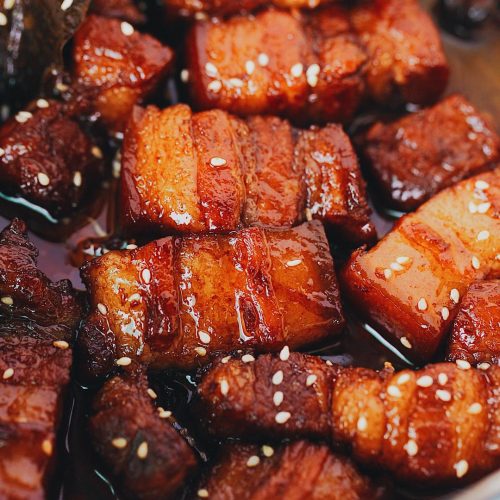
When I think of comfort food, I don’t think of mac and cheese. I think of a clay pot bubbling on my mother’s stove, filling the kitchen with the sweet, savory aroma of caramelizing sugar and star anise. This is Braised Pork Belly (Hong Shao Rou).
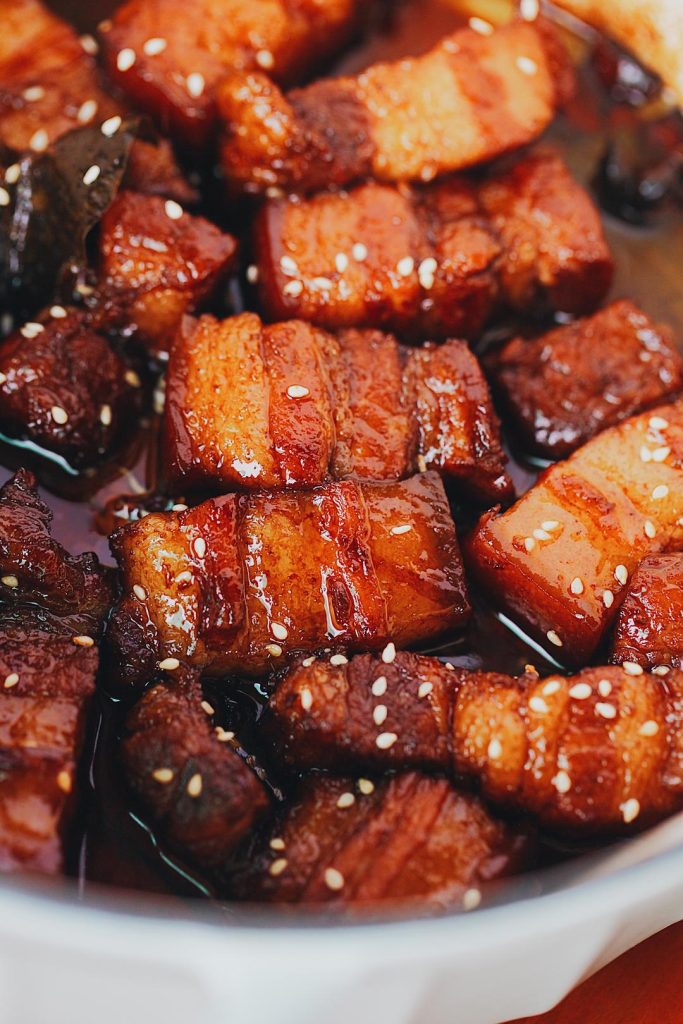
Growing up in Sichuan, my father was the professional chef with strict rules, but my mother was the master of home cooking efficiency. While traditional restaurant methods often involve complex steps like deep-frying or par-boiling (blanching) the meat, my mother had a simpler way. She believed that if you treat the ingredients right, you don’t need a dozen pots and pans to create magic.
This recipe is based on her “one-pot” technique. It’s the method I’ve used for over a decade in my own kitchens, from Chengdu to California. It involves no blanching and uses no cooking oil—we rely entirely on the rendered fat from the pork itself. The result is a dish that is deeply flavorful, gelatinous without being greasy, and incredibly satisfying.
If you enjoy rich pork dishes like our Braised Pork Belly (Bazi Rou), you are going to fall in love with this classic version.
Why This Recipe Works
- No Blanching Required: Unlike many recipes that require boiling the meat first to remove impurities, this method uses a slow sear to brown the meat and lock in juices, saving you time and effort.
- Pure Pork Flavor: By not adding cooking oil and instead rendering the fat from the pork belly, the dish is less greasy and has a more concentrated meaty flavor.
- One-Pot Method: Everything—from searing to caramelizing the sugar to braising—happens in a single wok or Dutch oven.
- Texture Mastery: The slow braise converts the connective tissue in the pork skin into gelatin, giving it that signature “Q-texture” (bouncy and chewy) that is prized in Chinese cuisine.
What Is Hong Shao Rou?
Hong Shao Rou (Red Braised Pork) is perhaps the most famous pork dish in China. It is loved across the country, though different regions have their own spins. In Hunan, it is famously spicy and savory (Chairman Mao’s favorite); in Shanghai, it is sweeter.
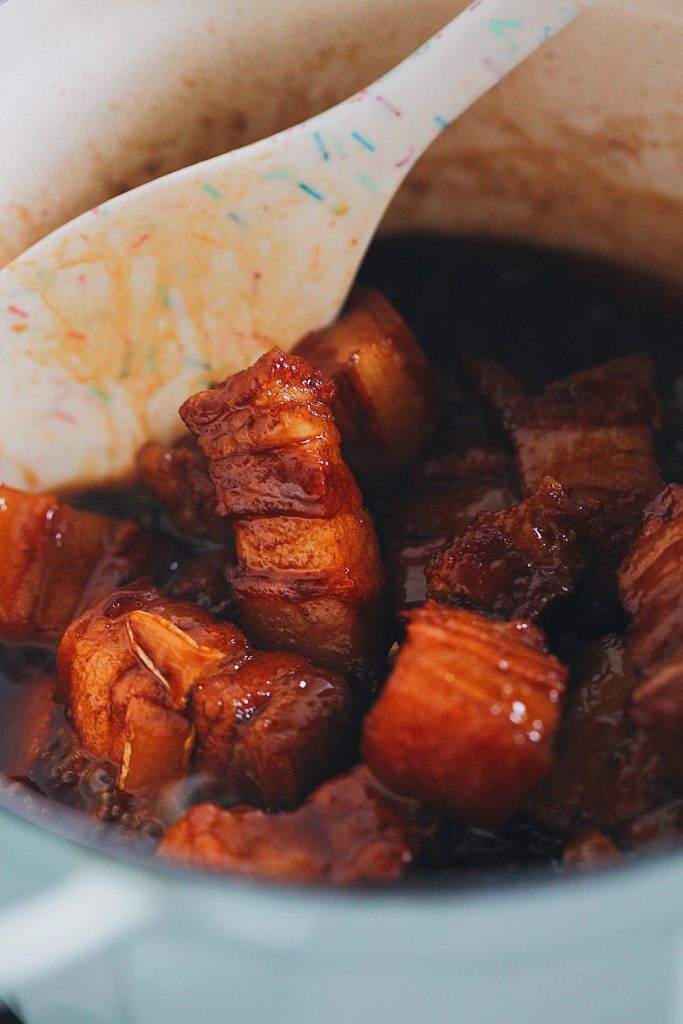
This version is a classic “Home Style” preparation. “Hong Shao” refers to the cooking method “Red Braising,” where meat is cooked with soy sauce, sugar (often rock sugar), and aromatics until it takes on a deep, cherry-red color.
Key Ingredients & Substitutions
Before we head to the stove, let’s look at the pantry staples you will need.
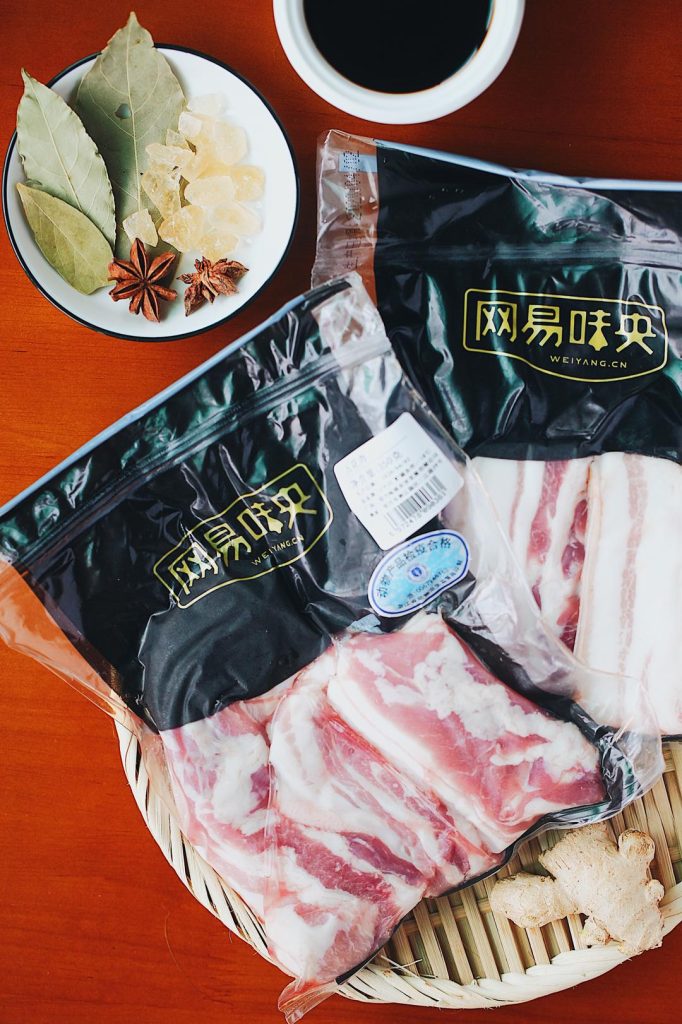
- Pork Belly (Skin-on): This is non-negotiable for authentic texture. The skin provides the gelatin that thickens the sauce and gives the dish its glossy sheen. Look for a slab with even layers of fat and meat.
- Rock Sugar (Bing Tang): This gives the pork a glossy, translucent finish that regular granulated sugar cannot achieve. If you can’t find it, you can substitute with brown sugar or regular white sugar, but the glaze won’t be quite as shiny.
- Shaoxing Wine: This Chinese rice wine adds depth and neutralizes any “gamey” odors from the pork. Substitute: Dry Sherry is the best alternative.
- Soy Sauces: We use two types. Light Soy Sauce (like Kikkoman or Pearl River Bridge) provides the salty, savory flavor (umami). Dark Soy Sauce is thicker and less salty; its primary job is to provide that rich, dark red color.
- Aromatics: Ginger, Star Anise, and Bay Leaves are classic. I also add a dried chili pepper—not to make it spicy, but to cut through the richness of the fat.
A Note on Equipment
For this recipe, a carbon steel wok or a heavy-bottomed Dutch oven (like Le Creuset) works best. You need a vessel that retains heat well for the braise but also allows for evaporation during the final glaze reduction.
Ingredients
The Main:
- 1.5 lbs (approx. 700g) Pork belly, skin-on
- Boiling water (enough to cover the meat completely)
The Seasonings:
- 10-12 small pieces Rock sugar (about 2 tbsp crushed)
- 4 slices Fresh ginger
- 1-2 Whole Star anise (optional but recommended)
- 2-3 Bay leaves
- 1 Dried red chili pepper (optional, for balance)
- 2 tbsp Shaoxing wine (or Dry Sherry)
- 2 tbsp Dark soy sauce
- 2 tbsp Light soy sauce
Recipe Notes Before You Start
Preparation is Key: Because we are caramelizing sugar, things can move quickly. Have all your sauces measured and your aromatics sliced before you turn on the heat.
The “Hot Water” Rule: This is the most critical scientific principle in this recipe. When adding water to the braise, it must be boiling. Adding cold water to hot, seared meat will cause the proteins to seize up immediately, resulting in tough, chewy pork that no amount of cooking will fix.
Mise en Place / Prep
Clean the Pork: Wash the pork belly thoroughly. I recommend rinsing it 2-3 times until the water runs clear to remove surface blood.
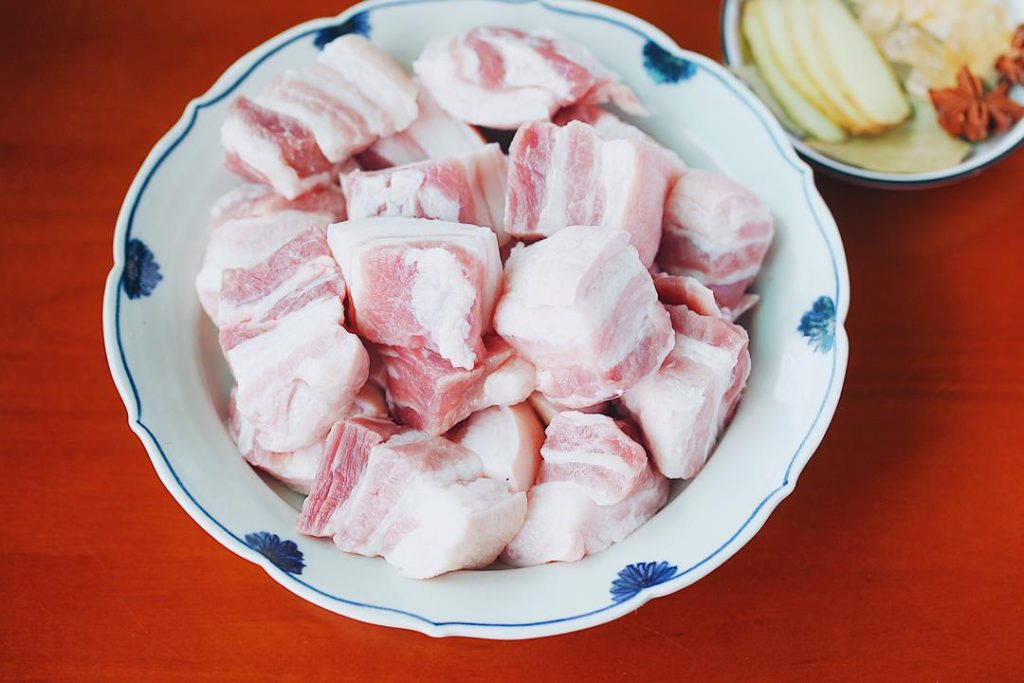
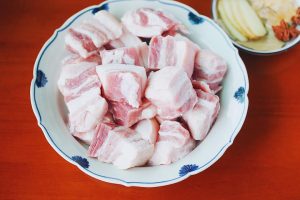
Dry and Cut: Pat the pork completely dry with paper towels. This is crucial—wet meat will steam instead of sear, and water hitting a hot pan causes dangerous oil splatter. Cut the pork into 1.5-inch cubes (about the size of a Mahjong tile).
Boil Water: Start a kettle of water now so it is ready when you need it.
How to Make Braised Pork Belly (Step-by-Step)
Step 1: Pan-Fry the Pork (No Oil!)
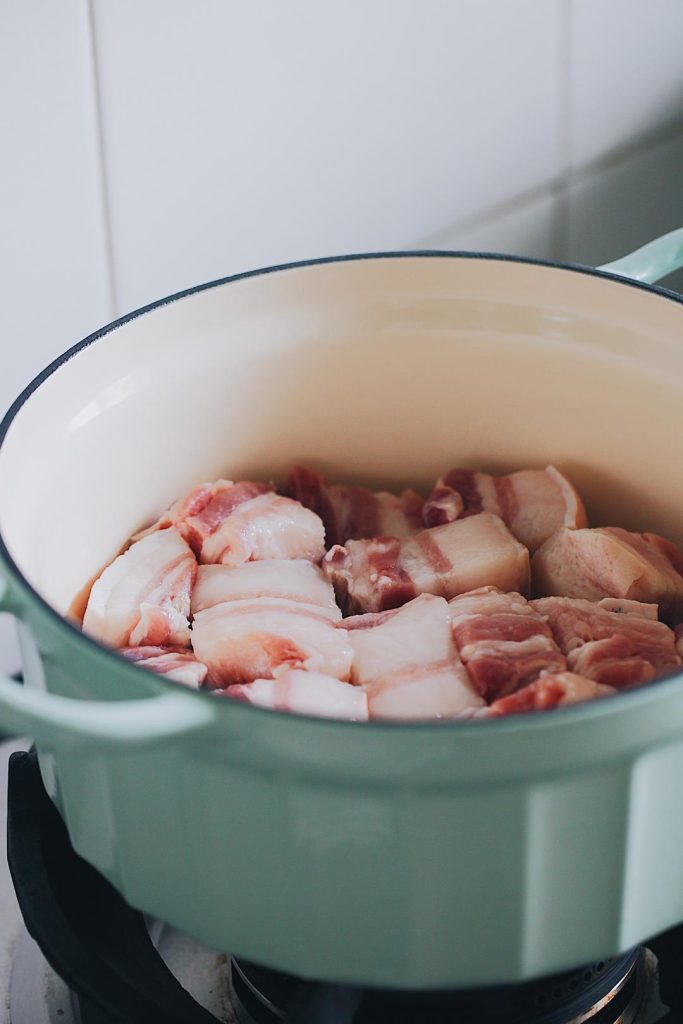
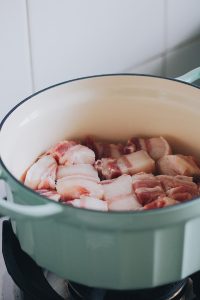
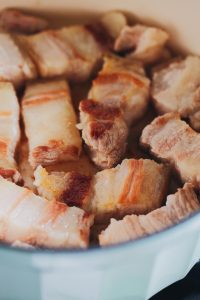
Heat your wok or pan over medium heat. Do not add oil. Place the pork cubes in a single layer, spreading them out as much as possible.
Why? We want to render the fat out of the pork belly. Let them sear undisturbed for a minute or two until they release naturally from the pan. If they stick, they aren’t ready to flip.
Step 2: Render and Brown
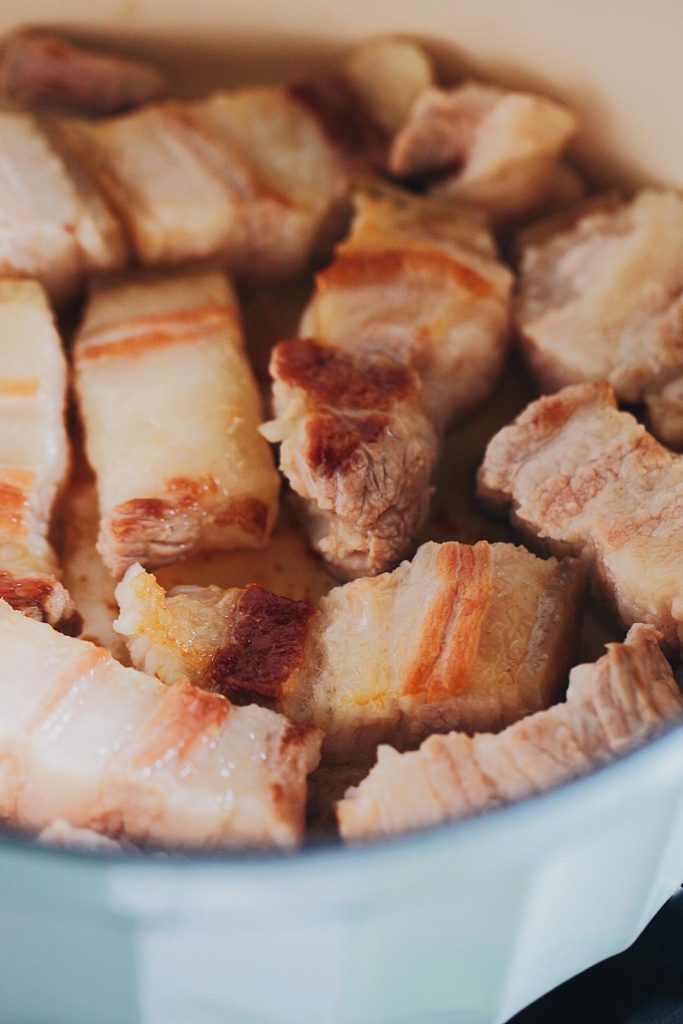
Turn the heat to low. Patiently flip the pieces until all sides are pale golden brown and you see liquid fat pooling in the bottom of the pan. This creates the “Maillard reaction” for flavor and removes excess grease.
Tip: If you want a lighter dish, you can carefully pour out some of this rendered lard and save it for stir-frying vegetables later!
Step 3: The “Sugar Coloring”
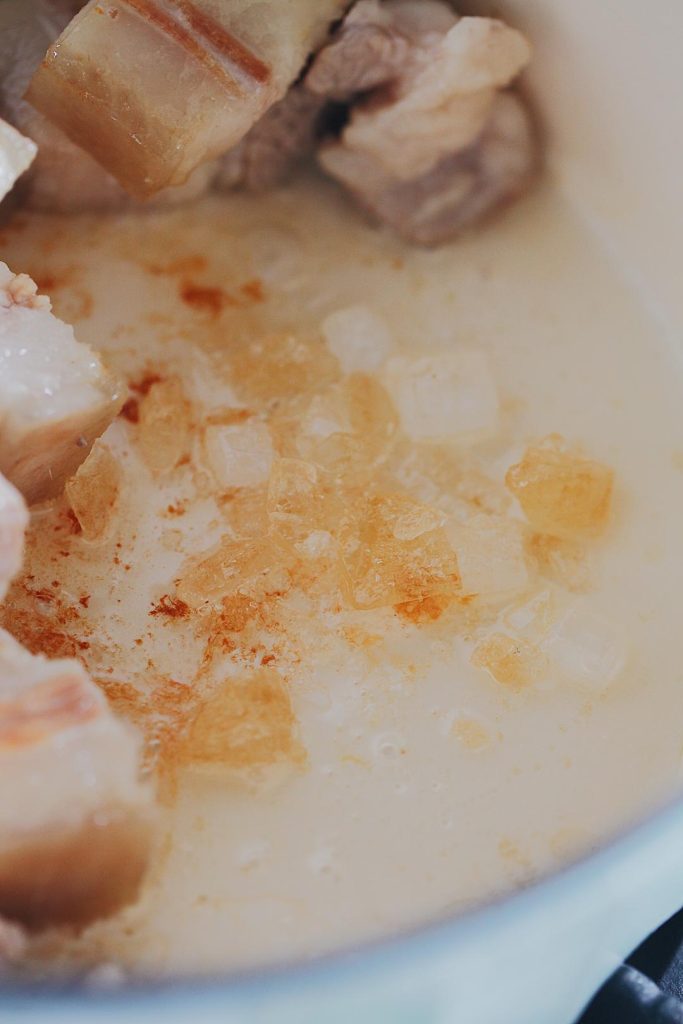
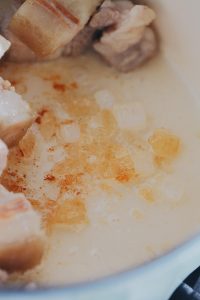
Push the meat to the side and add the rock sugar into the pool of hot oil in the center. Stir the sugar gently over low heat until it melts and turns a light amber color. Toss the pork immediately to coat it in the melting sugar.
Chef’s Insight: This is a simplified Chao Tang Se (frying sugar color). It creates a base flavor more complex than just adding sugar to water. Watch closely—sugar burns in seconds and will taste bitter.
Step 4: Aromatics and Deglazing
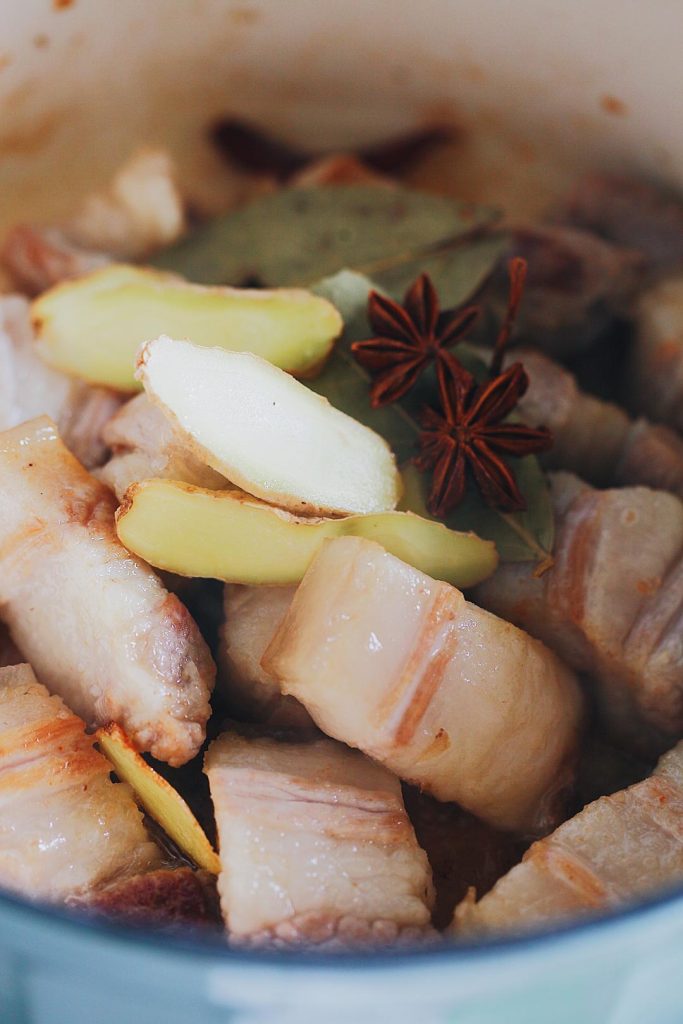
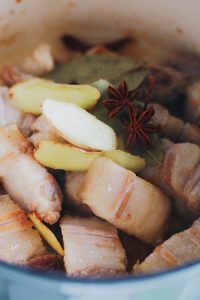
Add the ginger, star anise, bay leaves, and dried chili. Stir-fry for about 30 seconds until fragrant. Pour in the Shaoxing wine. It will hiss and steam—this is good! The steam helps carry away the raw alcohol smell. Add the Light Soy Sauce and Dark Soy Sauce. Stir until every piece of meat is coated in that dark, rich color.
Step 5: The Braise
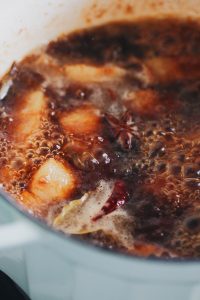
Pour in the boiling water. Ensure the meat is completely submerged.
Safety Note: Be careful of steam burns when pouring water into the hot pan. Bring to a boil, then reduce the heat to the lowest setting. Cover the pot with a tight-fitting lid. Simmer gently for 40 to 60 minutes.
Step 6: Reduce and Glaze (Shou Zhi)
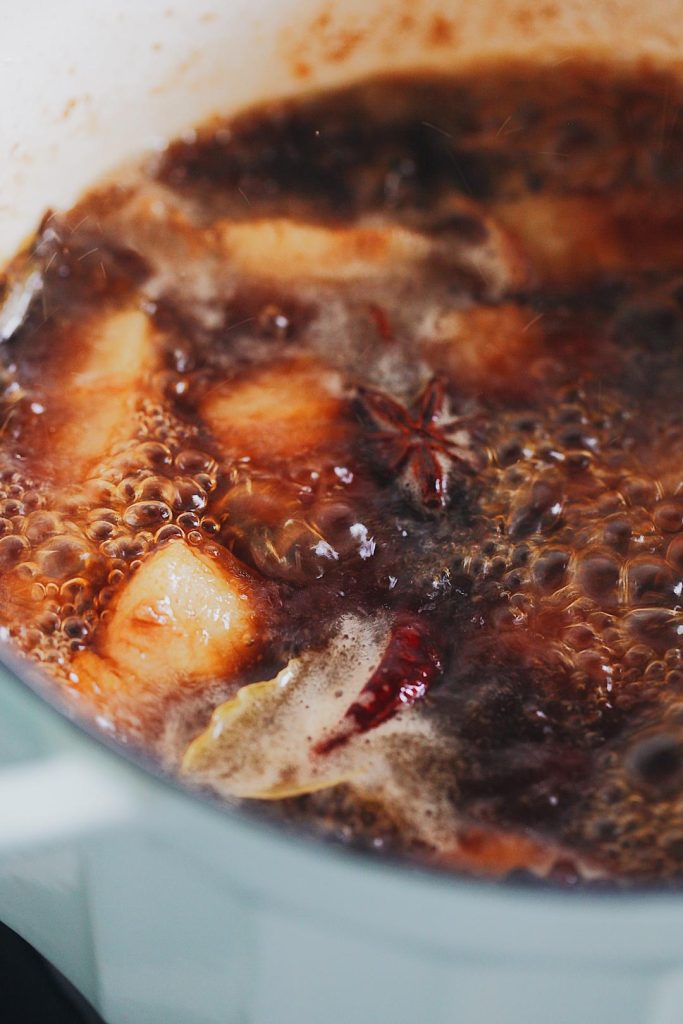
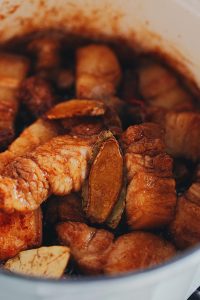
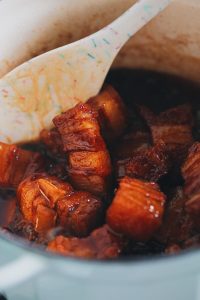
After 45 minutes, check the pork. It should be fork-tender. If the water has evaporated too much but the meat isn’t tender, add a splash more boiling water. If the meat is tender, remove the lid and turn the heat up to high. This step is called Shou Zhi (collecting the juice). Stir constantly as the liquid evaporates. The sauce will thicken, the bubbles will get large and shiny, and the sauce will cling tightly to the meat. Stop when there is almost no liquid left, just a thick, glossy oil/sauce coating the pork.
Serving Suggestions
This dish is rich and savory, so it needs a neutral base to balance it.
- Rice: A bowl of fluffy steamed white jasmine rice is mandatory. The sauce is “rice killer” (xia fan cai).
- Vegetables: Serve with a crisp, refreshing side like our Smashed Cucumber Salad or simply blanched bok choy to cut through the richness.
Common Troubleshooting (FAQ)
Q: Why is my pork tough?
A: You likely added cold water during the braising step, or you boiled it too aggressively. The braise should be a gentle simmer, not a rolling boil.
Q: Can I use beer instead of water?
A: Yes! Beer contains enzymes that help tenderize meat fibers. If using beer, you don’t need to worry as much about the temperature (cold beer is okay), but I recommend a light lager so the dish doesn’t become bitter.
Q: My sugar burnt. Can I save it?
A: Unfortunately, no. Burnt sugar is extremely bitter. If you burn the sugar in Step 3, it is best to rinse the meat in hot water, wash the pan, and start the seasoning process again.
How to Store & Reheat
- Fridge: Store in an airtight container for up to 3 days. The fat will solidify at the top; this is normal.
- Reheat: Reheat in a steamer or on the stovetop with a splash of water. Microwave reheating can cause the lean parts of the meat to explode or become tough, so use low power if you must.
Nutrition Information (Estimate)
- Calories: 380 kcal
- Carbohydrates: 9g
- Protein: 14g
- Fat: 32g
- Saturated Fat: 11g
- Sodium: 680mg
- Sugar: 7g
- Fiber: 0g
Disclaimer: Nutrition information is calculated using an ingredient database and should be considered an estimate. Garnishes and optional items are not included. Actual values vary significantly based on the fat-to-meat ratio of the specific pork belly used and how much rendered fat is consumed versus discarded.
Food Safety and Preparation
- Sugar Burns: Be extremely cautious when melting rock sugar (step 3). Caramelized sugar reaches temperatures far exceeding boiling water and can cause severe burns if it splatters onto skin. Do not touch or taste the hot sugar syrup.
- Oil Splatter: When adding the pork belly to the pan, ensure it is completely dry. Any residual water on the meat will cause the hot fat to pop and splatter aggressively.
- Adding Liquids: When pouring the soy sauce and wine into the hot rendered fat/sugar mixture, stand back as it will create a burst of steam and vigorous bubbling.
- Meat Doneness: Pork should be cooked to an internal temperature of at least 145°F (63°C), though this dish requires a much longer cooking time to break down connective tissue, naturally exceeding safe minimums.
Chef’s Tips for Success
- The “No-Blanch” Philosophy: Many recipes call for boiling the pork first, but I find this removes some of the natural pork flavor. By slowly searing the raw meat in the pan, we not only brown it for better flavor (Maillard reaction) but also push out the excess “fishy” odors along with the steam, achieving the same clean taste without the extra pot.
- Water Temperature is Critical: I cannot stress this enough—you must use boiling water when starting the braise. If you pour cold water over the hot, seared meat, the muscle fibers will shock and seize up, resulting in tough, chewy meat that may never become tender, no matter how long you cook it.
- Beer Variation: If you want to experiment, you can substitute the boiling water with a light beer. The enzymes in the beer help soften the meat fibers even further. Just ensure you use a light lager; darker beers or IPAs can turn the reduction bitter.
- Adjusting the Glaze: The amount of sugar and soy sauce in the recipe creates a balanced savory-sweet profile. However, soy sauce brands vary in salinity (especially between brands like Pearl River Bridge and Kikkoman). Taste the sauce towards the end of the braising time. If you prefer a sweeter “Shanghai-style” finish, you can add a teaspoon of sugar during the final reduction.
- Rendered Fat: Since we start with no oil, all the oil in the pan comes from the pork itself. If you find the dish too heavy, you can spoon out some of the clear liquid fat that floats to the top before you turn up the heat for the final glaze (Step 6). Save this lard—it is liquid gold for stir-frying vegetables later!
Braised Pork Belly (Hong Shao Rou)

Equipment
- 1 Wok or Dutch Oven Heavy-bottomed is best for heat retention
- 1 Kitchen Knife Sharp chef’s knife or cleaver
Ingredients
Main Ingredients
- 1.5 lbs pork belly skin-on, cut into 1.5-inch cubes (approx 700g)
- boiling water enough to completely cover the meat
Seasonings & Aromatics
- 2 tbsp rock sugar approx 10-12 small pieces; can sub brown sugar
- 4 slices ginger
- 2 star anise optional
- 2 bay leaves optional
- 1 dried chili pepper optional, for balance
- 2 tbsp Shaoxing wine or dry sherry
- 2 tbsp dark soy sauce for color
- 2 tbsp light soy sauce for savory flavor
Instructions
- Clean the pork belly thoroughly and pat completely dry with paper towels. Cut into 1.5-inch cubes.

- Heat a wok or heavy pot over medium heat. Do not add oil. Add pork cubes in a single layer.

- Sear slowly, flipping occasionally, until the pork is lightly browned and has rendered out liquid fat. This takes about 5-8 minutes.
- Push the meat to the side. Add rock sugar to the hot rendered fat. Stir gently over low heat until melted and amber-colored. Toss the meat to coat in the sugar.
- Add ginger, star anise, bay leaves, and dried chili. Stir-fry for 30 seconds until fragrant.
- Pour in Shaoxing wine (it will sizzle), followed by dark soy sauce and light soy sauce. Stir to coat the meat evenly.
- Pour in boiling water to cover the meat completely. Bring to a boil.
- Cover tightly, reduce heat to low, and simmer for 40 to 60 minutes until the pork is fork-tender.
- Remove the lid and turn heat to high. Stir constantly to reduce the liquid until it becomes a thick, sticky glaze coating the pork. Serve immediately.












Leave a Reply