I still remember the first time I served this dish to my friends here in the States. The table went silent, save for the sound of chopsticks hitting bowls, until someone finally mumbled, “I literally cannot stop eating these.”
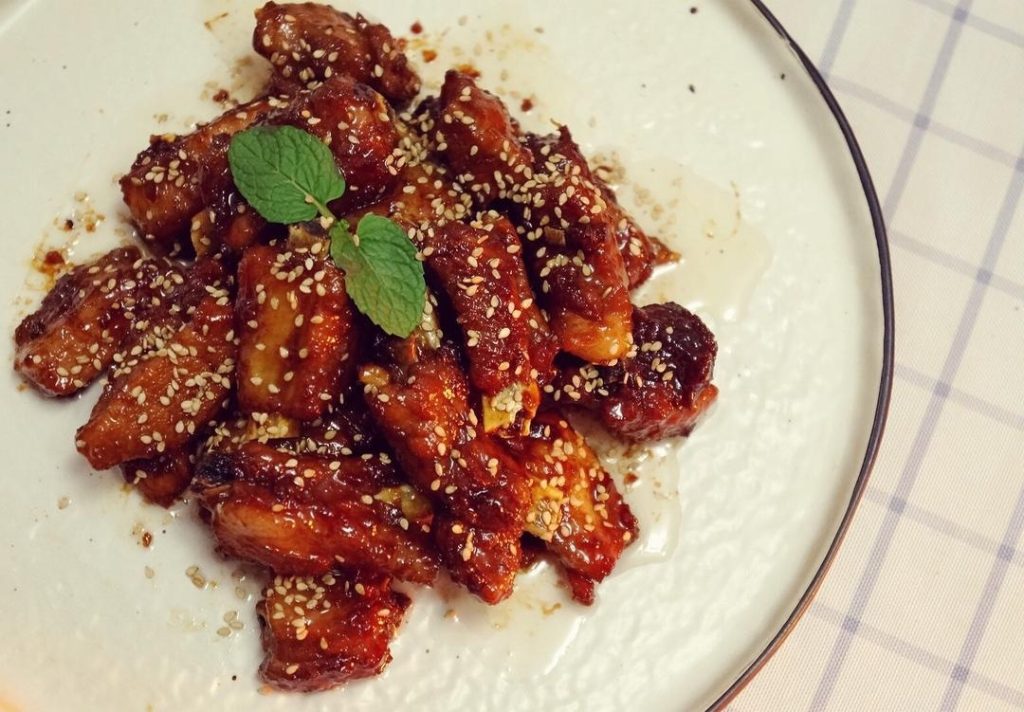
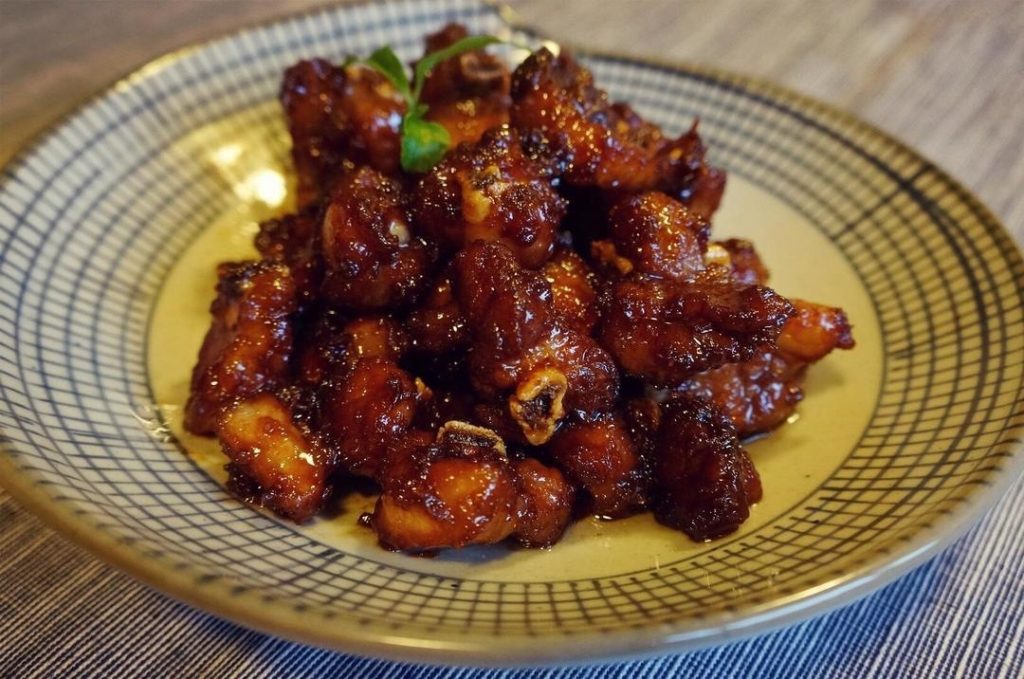
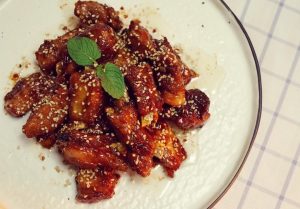
That is the magic of Sweet and Sour Pork Ribs (Tang Cu Pai Gu). Unlike the neon-red, battered, and deep-fried version often found in takeout boxes—which is closer to Sweet and Sour Pork with Pineapple (Guo Bao Rou)—this homestyle version relies on a slow braise. The ribs are coated in a glistening, mahogany sauce that strikes the perfect balance between savory, sweet, and tangy. It’s like a relationship that keeps just enough distance to remain interesting: sweet but not cloying, rich but not greasy.
Growing up in my family’s restaurant kitchen, I learned that the best dishes often rely on simple math rather than complex techniques. For this recipe, we use the famous “Golden Ratio” of seasonings. You don’t need to be a master chef to memorize it, and you certainly don’t need to master the difficult technique of chao tang se (frying sugar to caramelize it). We are going straight to the flavor.
What is Tang Cu Pai Gu?
Tang Cu means “sugar and vinegar,” and Pai Gu means “spare ribs.” It is one of the most ubiquitous cold appetizers or hot main dishes in China, popular in Jiangsu, Zhejiang, and Sichuan cuisines.
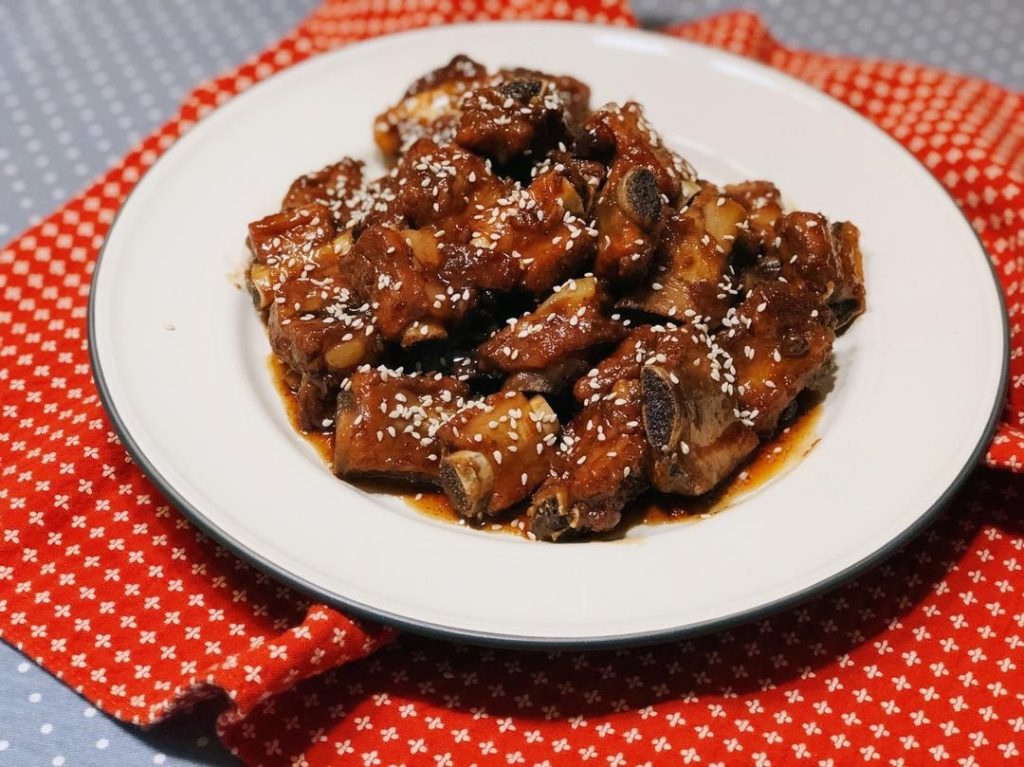
While traditional restaurant versions might deep-fry the ribs to lock in juices, this home-cooking method uses a braising technique. We sear the ribs to generate flavor and then simmer them until the sauce naturally reduces into a sticky glaze. It is cleaner, healthier, and frankly, easier to clean up after.
Why This Recipe Works (The “1-2-3-4” Secret)
- The Golden Ratio: The secret to the sauce is the ratio 1:2:3:4. That stands for 1 tablespoon Cooking Wine, 2 tablespoons Soy Sauce, 3 tablespoons Sugar, and 4 tablespoons Vinegar. It guarantees a perfectly balanced flavor profile every single time.
- No Deep Frying: By searing the ribs in a small amount of oil first, we utilize the pork’s natural fat to brown the meat (Maillard reaction), creating depth without the hassle of a deep fryer.
- The Glaze: We use Rock Sugar (Bing Tang). Unlike granulated sugar, rock sugar creates a translucent, shiny finish that makes the ribs look like they were lacquered by a professional.
Key Ingredients & Substitutions
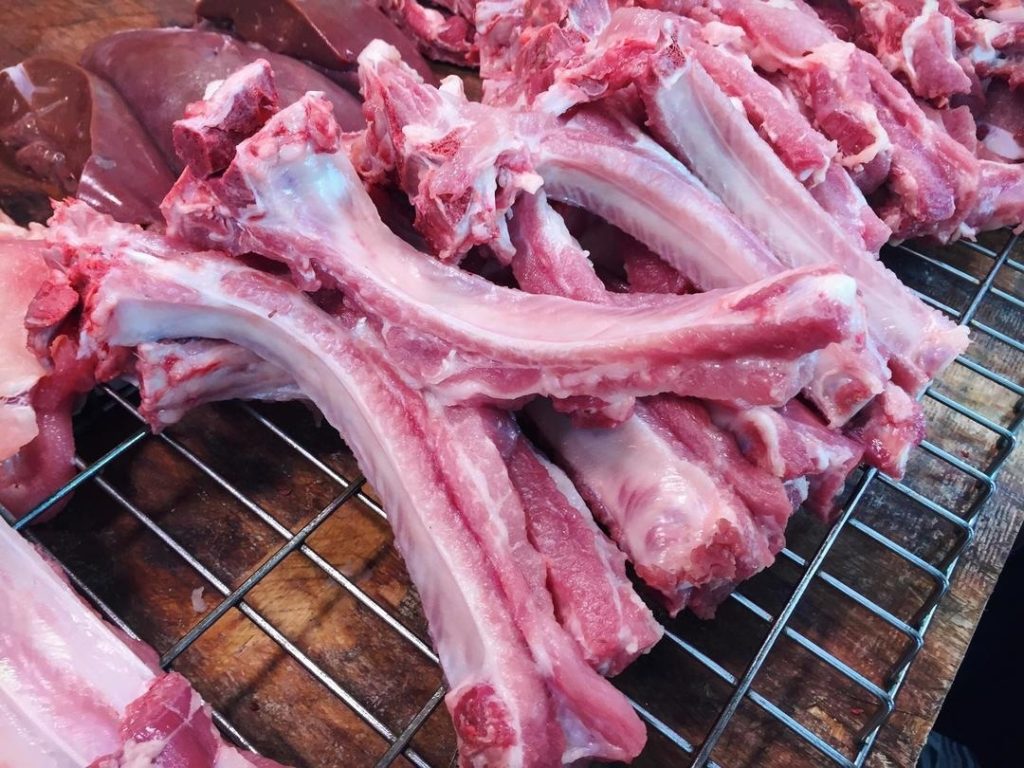
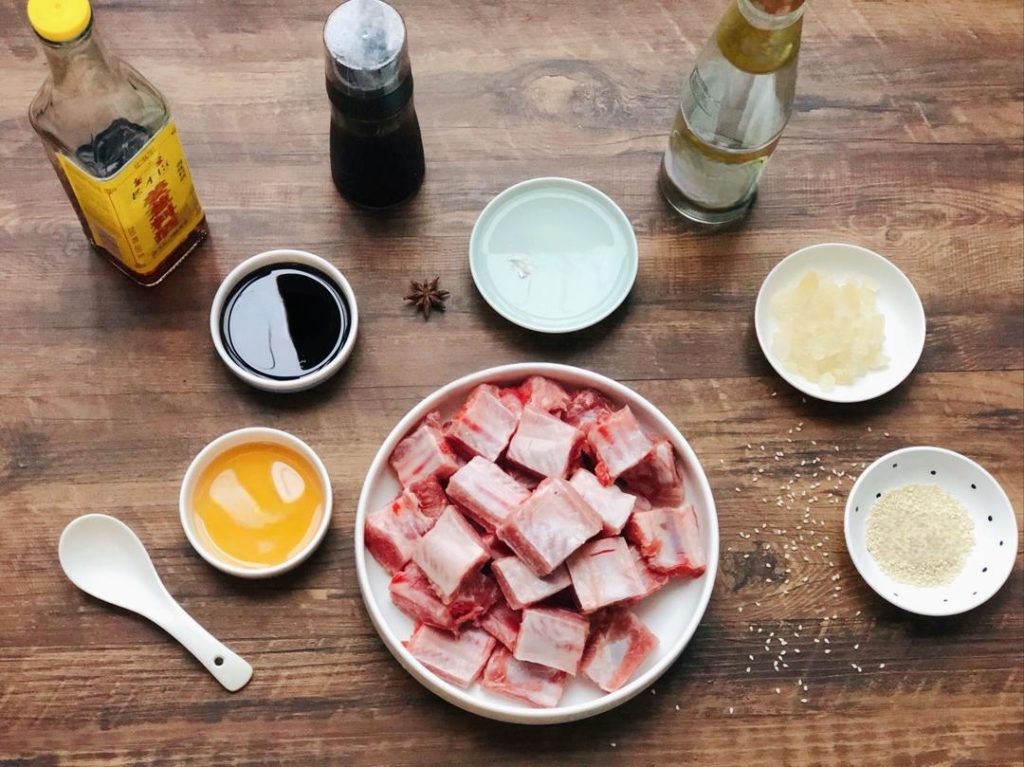
- Pork Ribs: You want pork spare ribs or rib tips. Ask your butcher to cut them across the bone into 1-inch (3-4cm) strips so you have bite-sized pieces.
- Selection Tip: Choose ribs with a good balance of fat and lean meat. Avoid large soup bones or lean loin ribs, as they will turn dry and fibrous (chai) during braising.
- Vinegar: The source recipe calls for White Vinegar or Rice Vinegar. This provides a sharp, clean acidity.
- Note: If you prefer a deeper, maltier flavor, you can substitute Chinkiang Black Vinegar, but standard white rice vinegar yields that bright, traditional “Tang Cu” pop.
- Rock Sugar (Bing Tang): This is crystallized cane sugar. It tastes less cloying than white sugar and gives the sauce a “3D” depth and gloss.
- Substitute: If you can’t find it, yellow rock sugar or regular granulated white sugar works, though the shine won’t be quite as brilliant.
- Soy Sauce: We use Light Soy Sauce for the savory saltiness (umami).
- Comparison: If you want a darker color, you can add a few drops of Dark Soy Sauce at the very end, but the caramelization of the sugar usually provides enough color.
Recipe Notes Before You Start
- The Spoon: When I say “1 tablespoon” in the ratio, I refer to a standard 15ml tablespoon. If you use a large soup ladle, you must scale everything up by that same ladle. The ratio matters more than the specific unit.
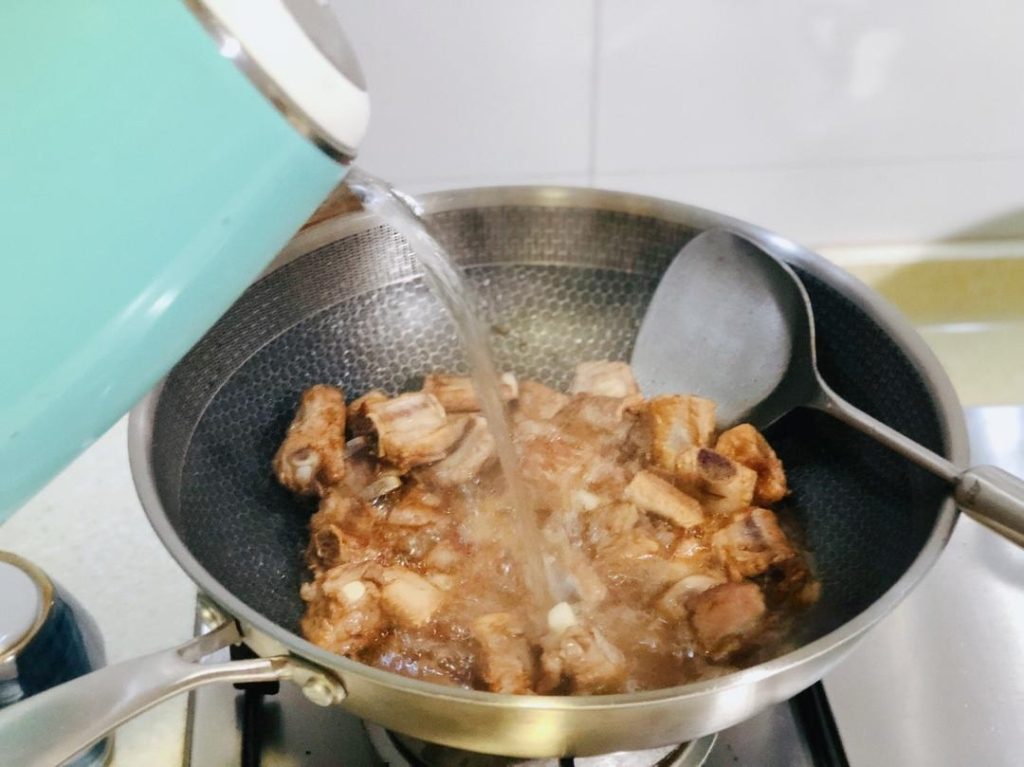
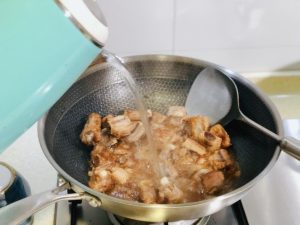
- The Water Temperature: This is the most critical rule in Chinese braising. Never add cold water to hot meat. It will cause the proteins to seize immediately, resulting in tough, chewy ribs. Always use boiling water.
How to Make Sweet and Sour Ribs
1. Blanch the Ribs (The “Baptism”)
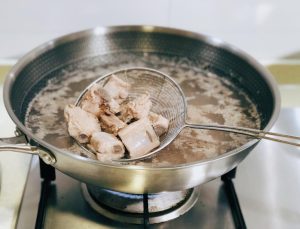
Place the ribs in a pot of cold water. Bring it to a boil. This slow heating process draws out the blood foam and impurities. Once the ribs turn white and the water boils, skim the scum, remove the ribs, and drain them well.
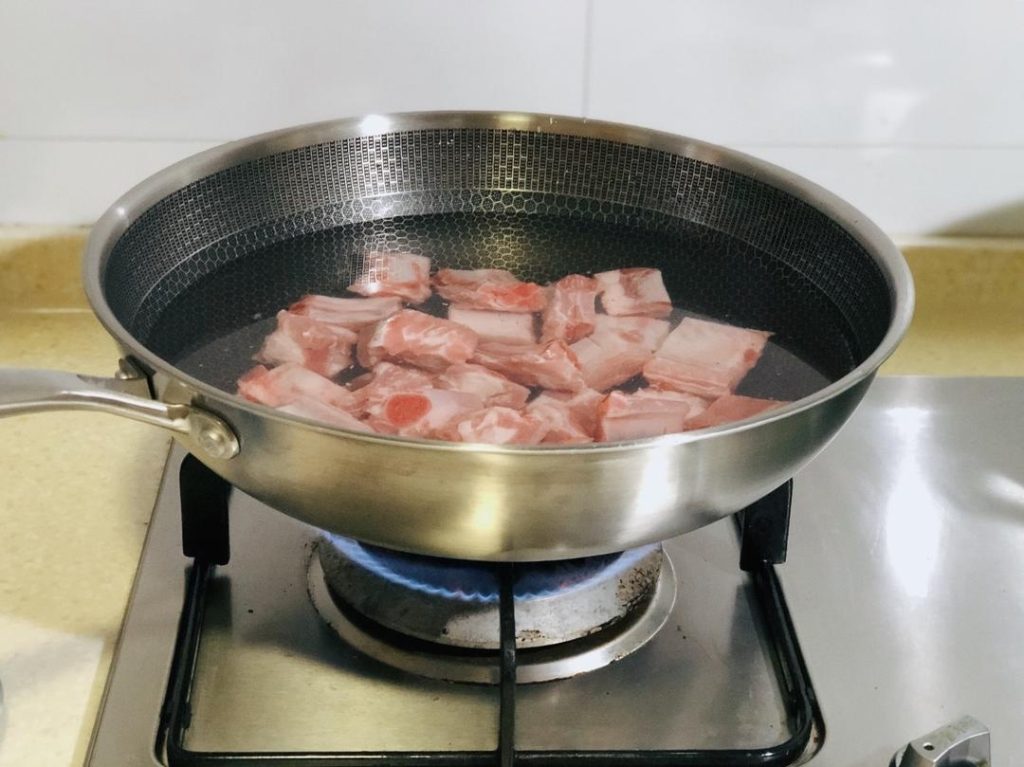
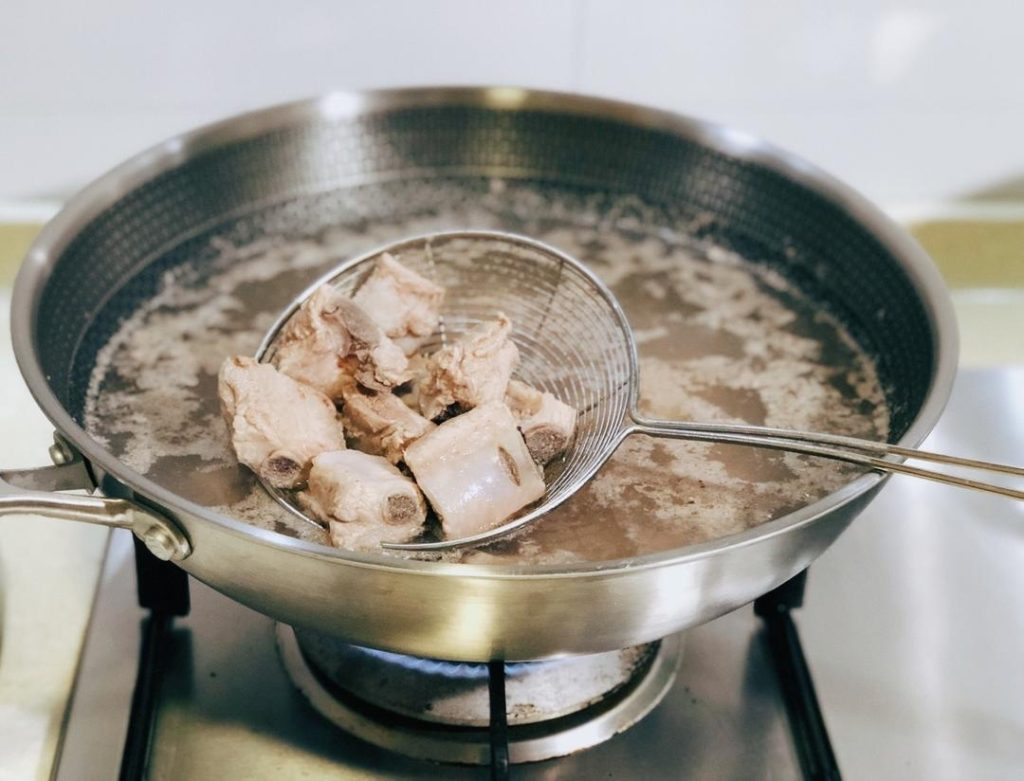
Why cold water? Starting hot seals the impurities inside the bone. Starting cold cleans the meat thoroughly.
2. Sear for Flavor
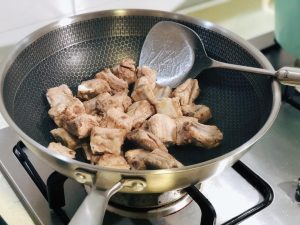
Heat a wok or heavy-bottomed pot (like a Dutch oven) over medium heat. Add a tiny splash of oil—don’t overdo it, as the ribs will release their own fat. Add the ribs and stir-fry until they are slightly browned and golden.
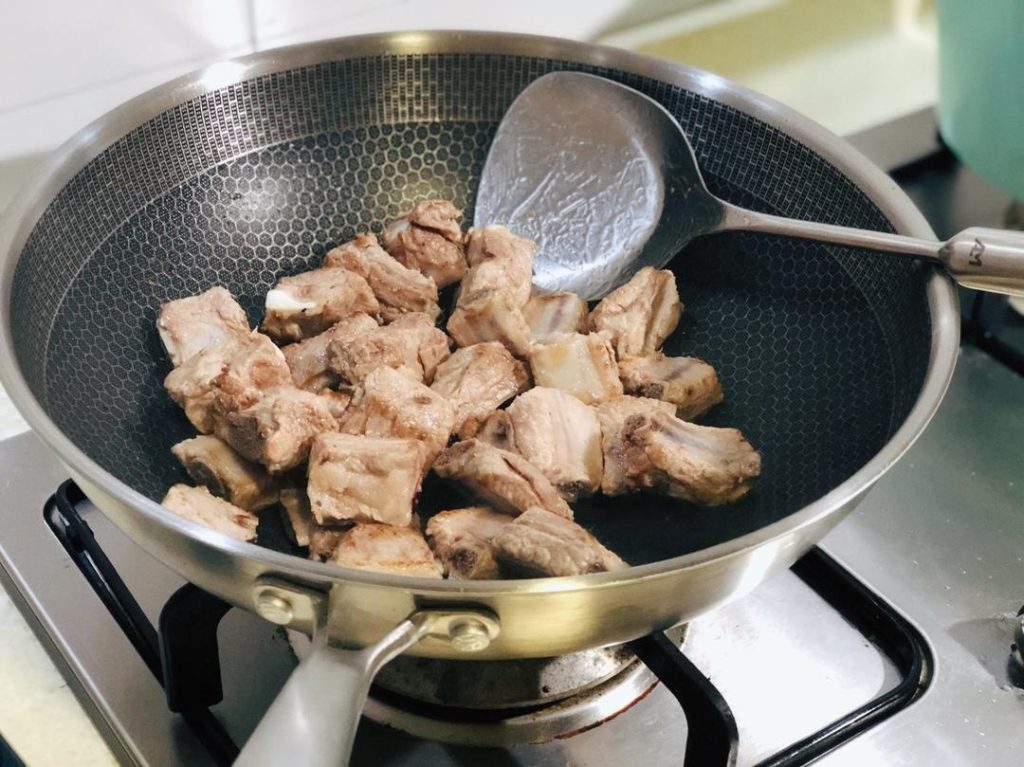
Chef Tip: Don’t rush this. Searing builds the flavor foundation.
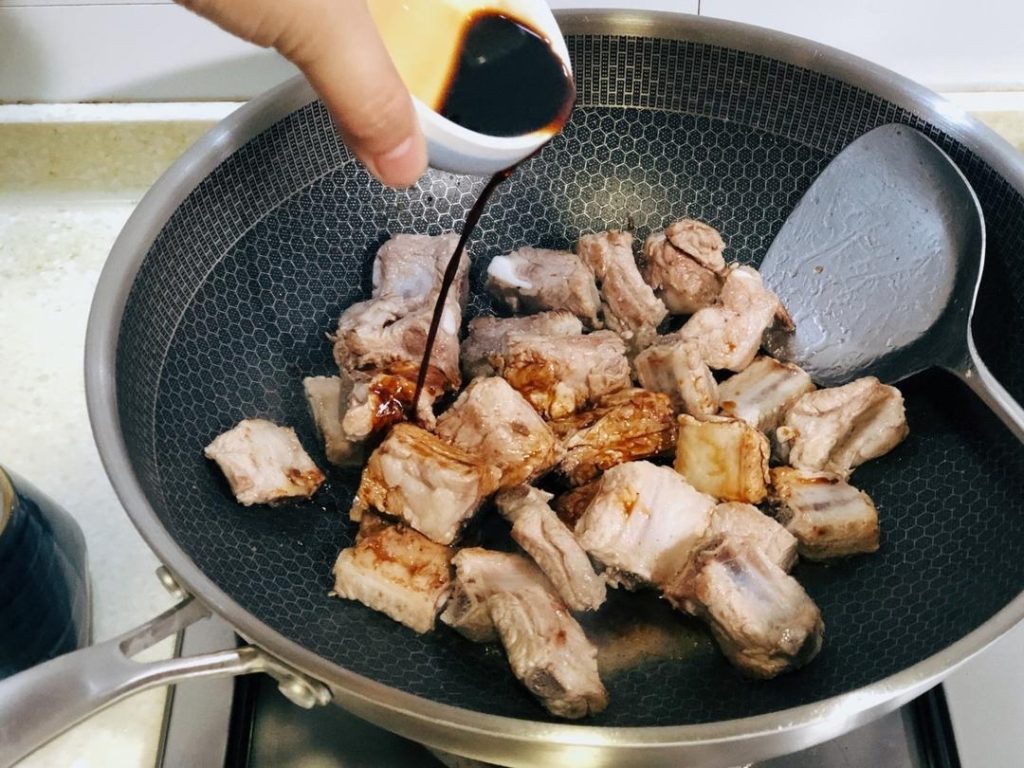
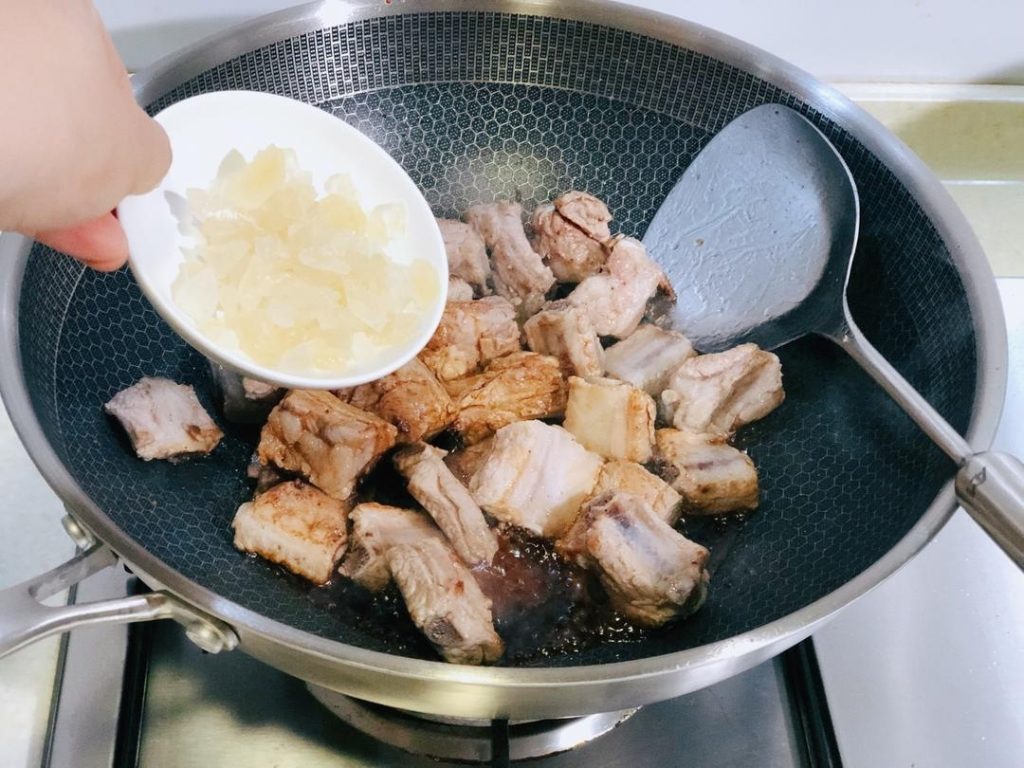
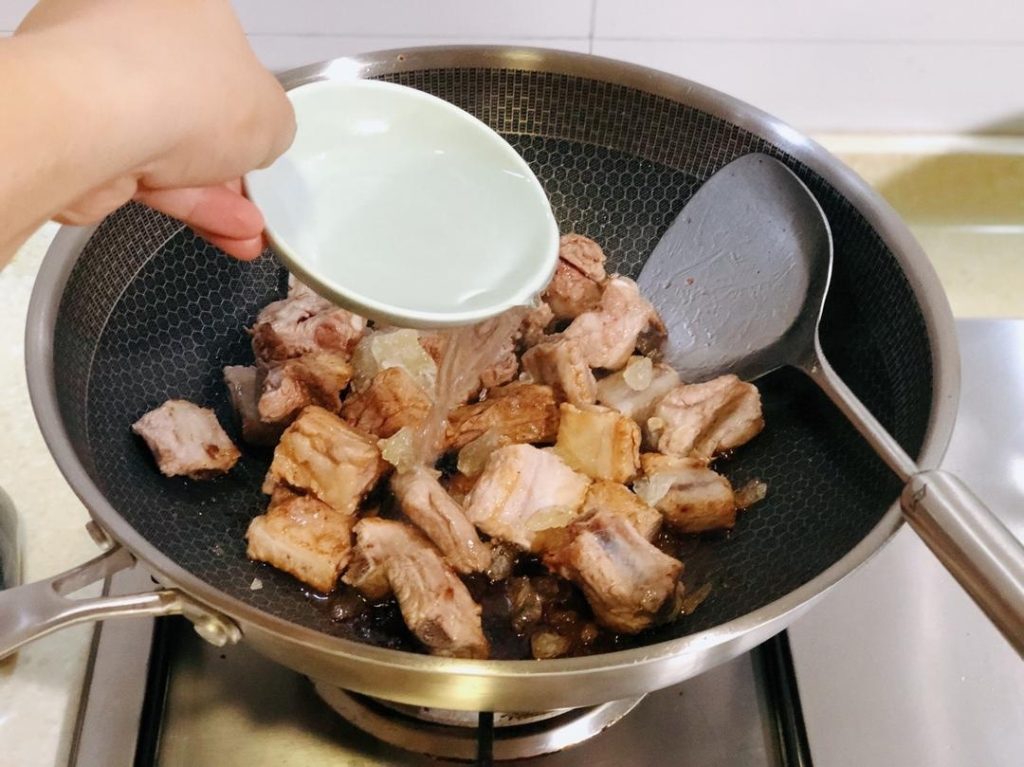
3. The Golden Ratio (1-2-3-4)
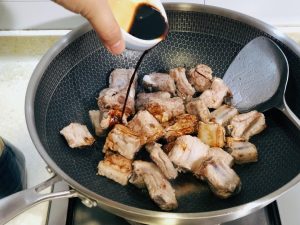
Now, we add our seasonings directly to the ribs in the pot. Let’s recite the magic numbers:
- 1 tbsp Cooking Wine (Shaoxing wine)
- 2 tbsp Light Soy Sauce
- 3 tbsp Rock Sugar (approx. 45g)
- 4 tbsp Vinegar (60ml)
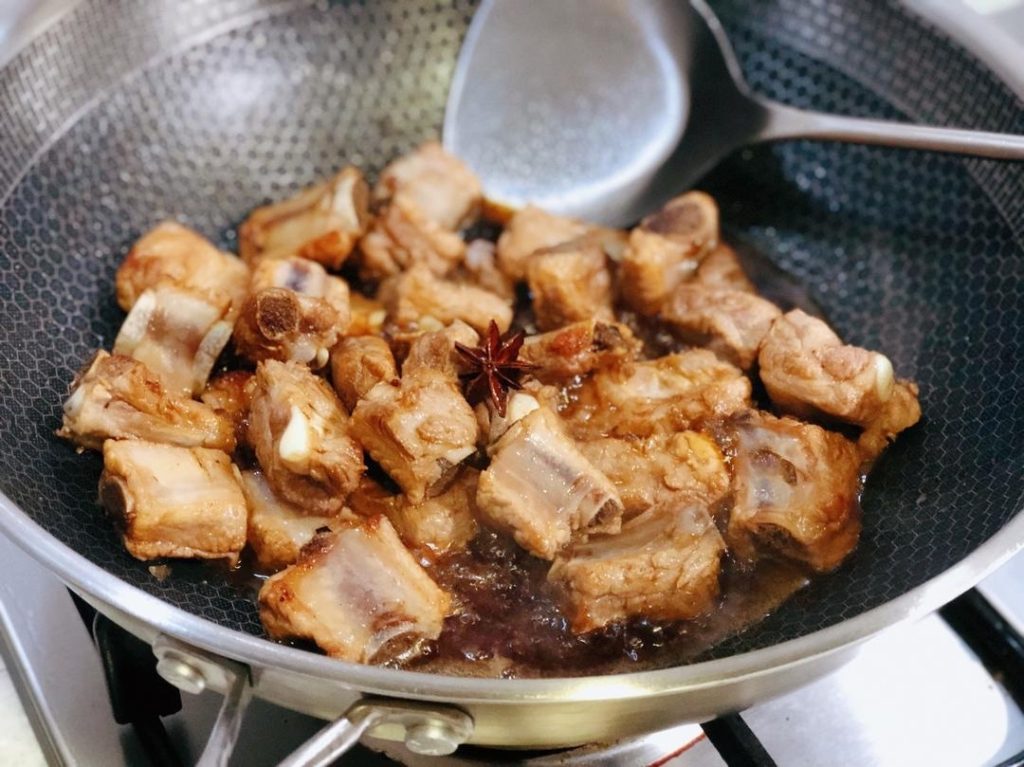
- Throw in 1 Star Anise.
Stir everything together so the ribs are coated in the mixture.
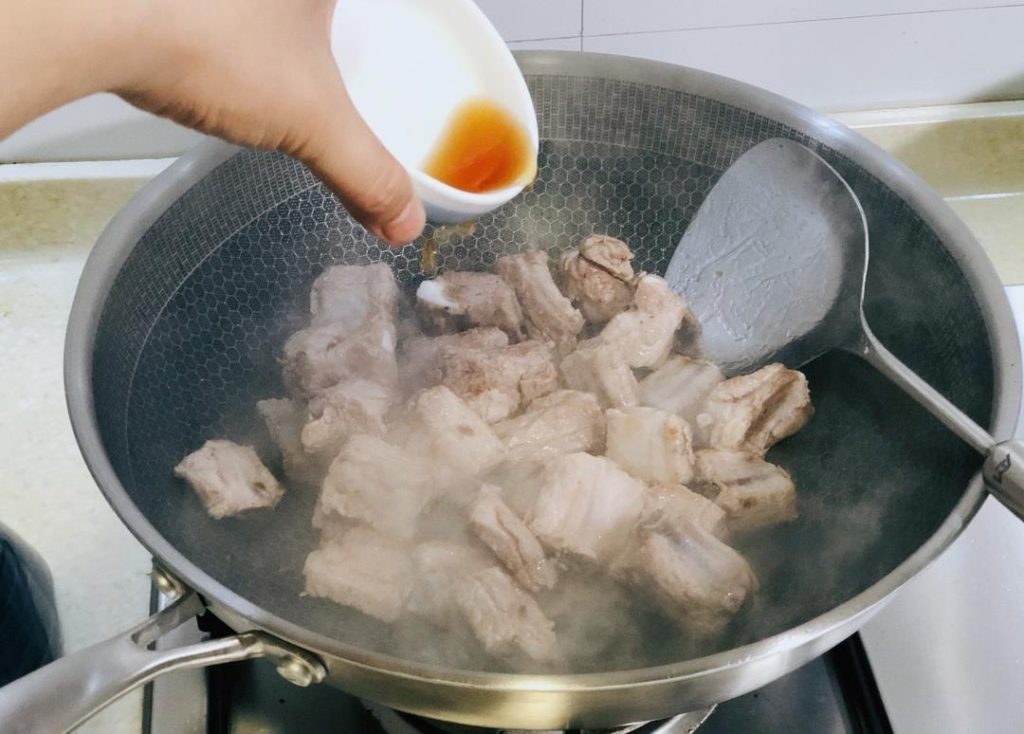
4. The Braise
Pour in boiling hot water. Add just enough to barely cover the ribs.
Reminder: “Dead pigs aren’t afraid of boiling water,” as the saying goes, but for texture, cold water is the enemy here!
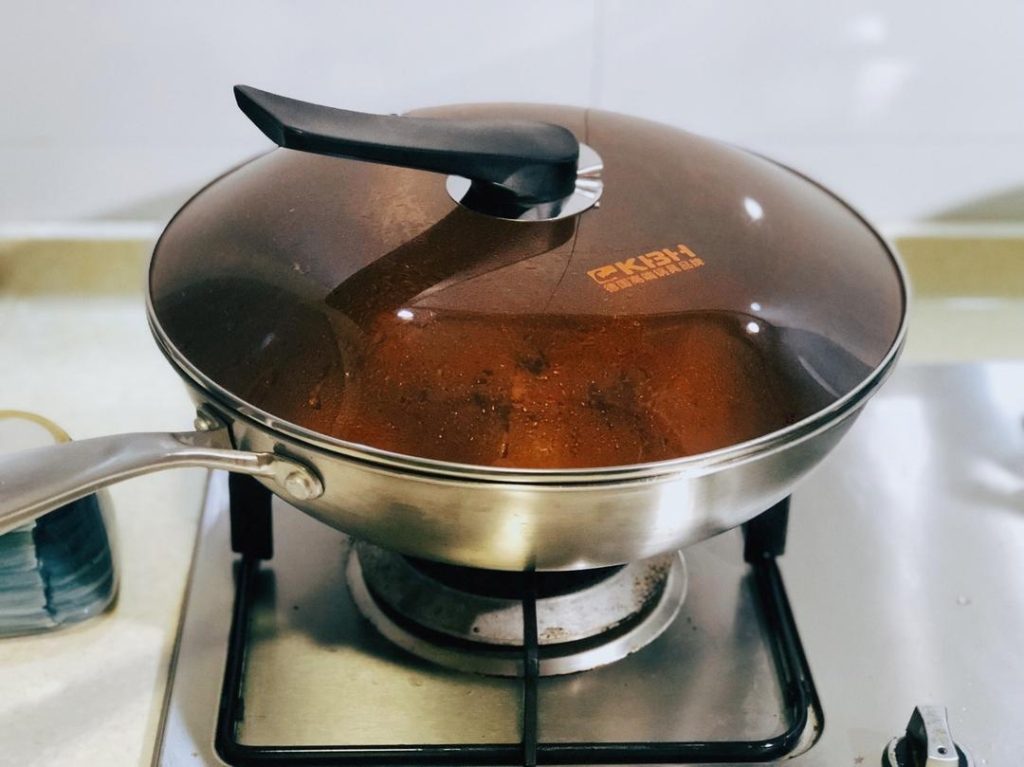
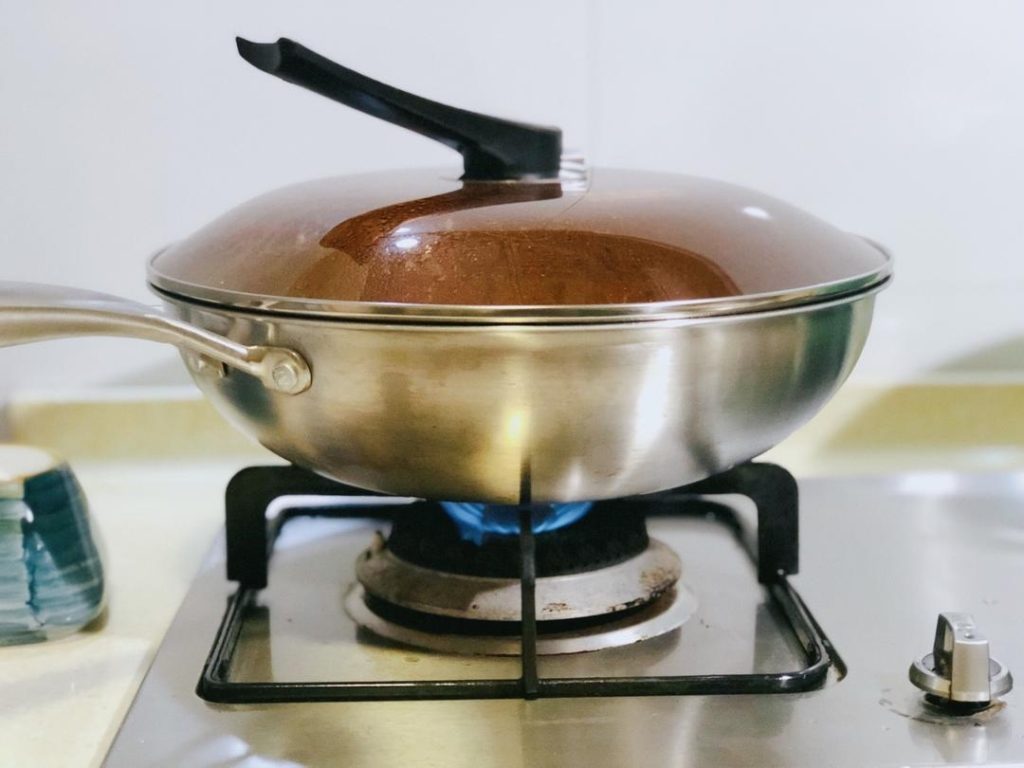
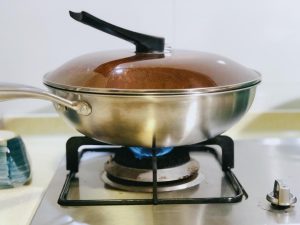
Cover the pot, turn the heat down to the lowest setting, and simmer for 30 minutes. Patience is key. High heat will evaporate the water before the meat is tender.
5. Reduce the Sauce (Shou Zhi)
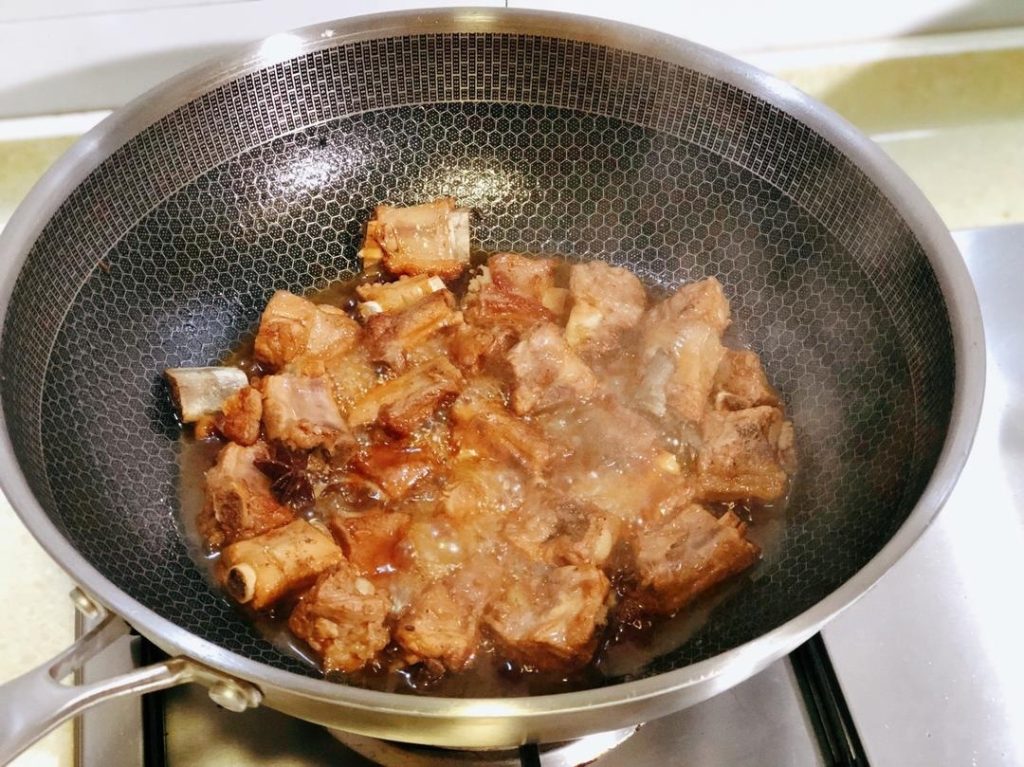
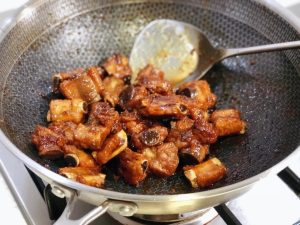
When the water has reduced to about one-third, remove the lid. Turn the heat up to high. This is the “Shou Zhi” (collecting juice) stage. You must stir continuously now. As the water evaporates, the sugar and vinegar will thicken into a syrup.
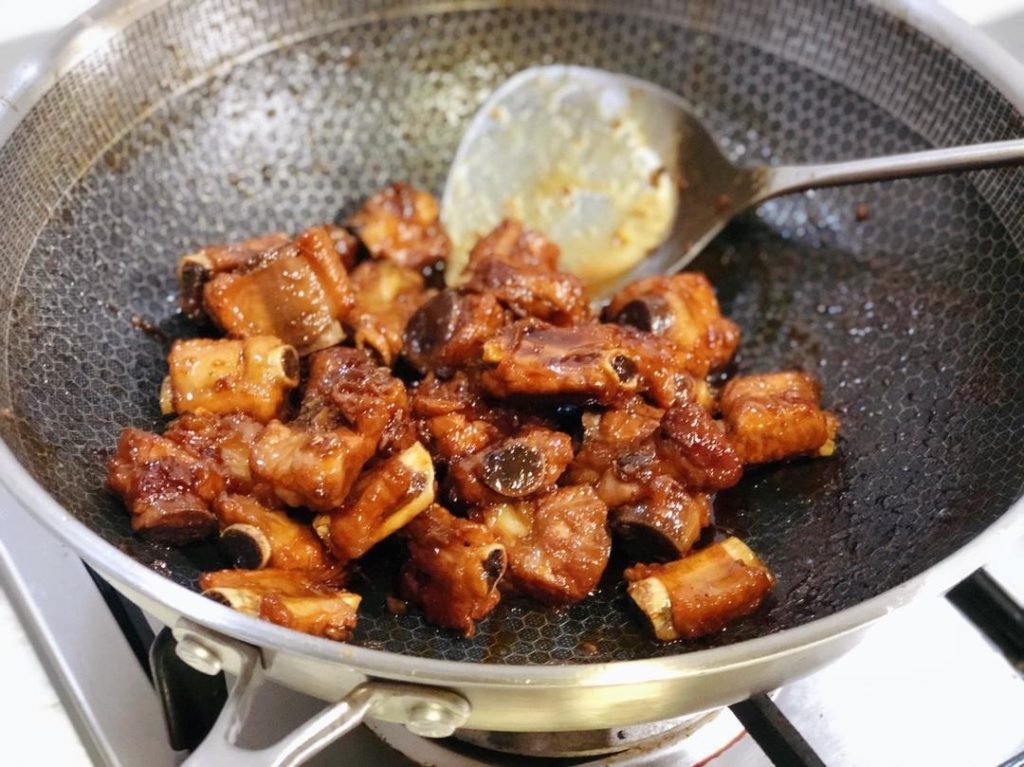
Visual Cue: The sauce will turn into big bubbling blisters and coat the ribs in a shiny, dark amber glaze. This takes about 1-2 minutes.
6. Serve
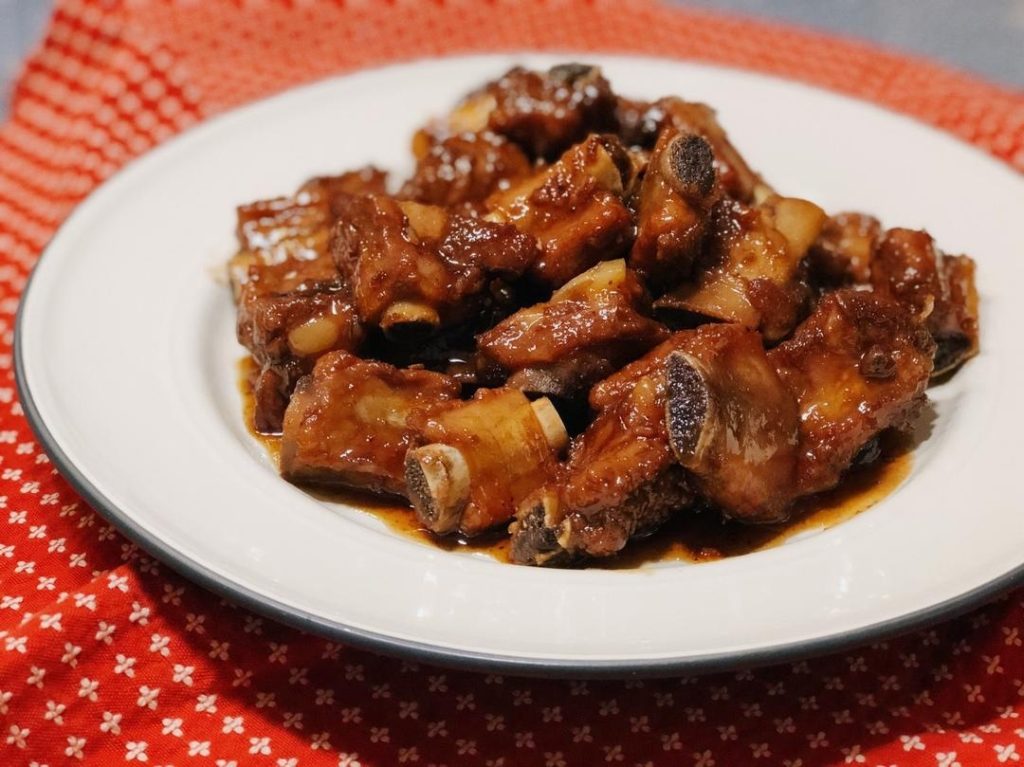
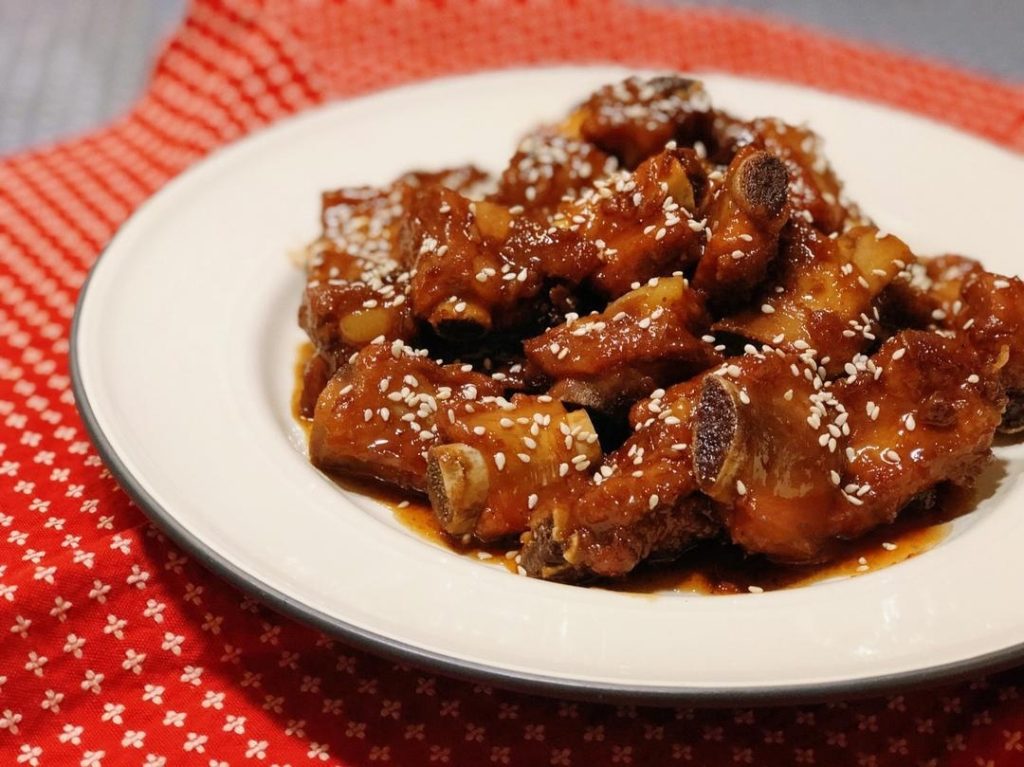
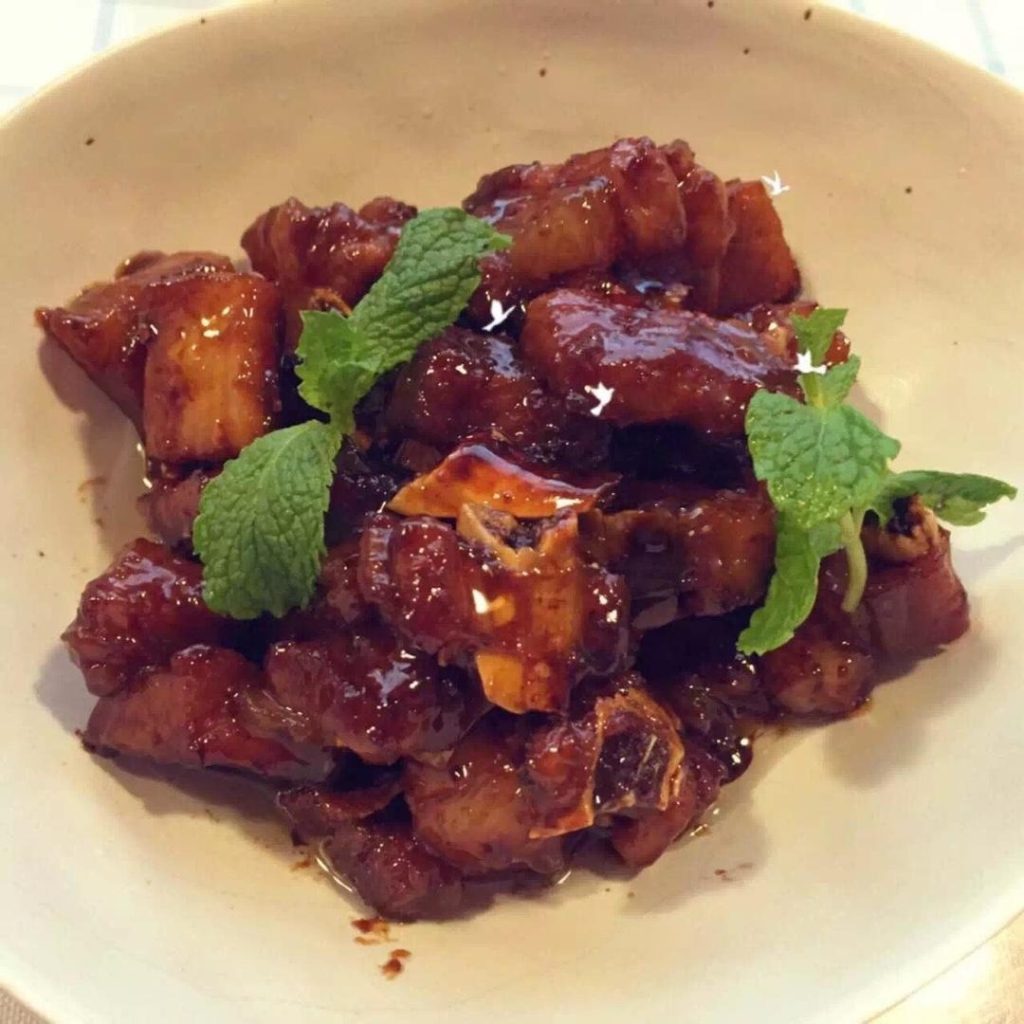
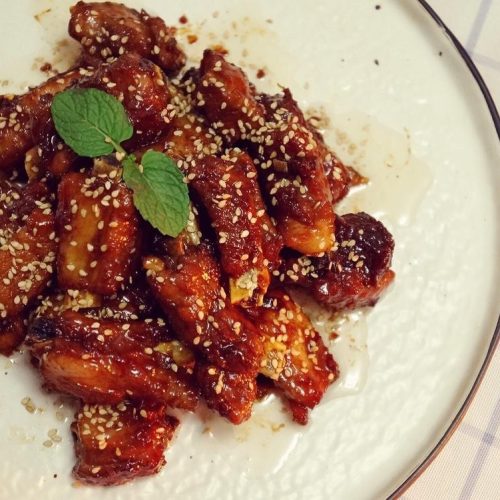
Sprinkle with toasted white sesame seeds for a nuttiness and visual contrast. Serve immediately with a bowl of steamed white rice. The leftover sauce is incredible drizzled over Rice or noodles.
FAQ & Troubleshooting
Q: My ribs turned out tough. What happened?
A: This usually happens for two reasons: either you used a lean cut of pork (like loin chops) instead of fatty spare ribs, or you added cold water to the pot after searing the meat.
Q: Can I use black vinegar?
A: Yes. While this specific recipe calls for white vinegar for a brighter taste, Chinkiang black vinegar is very traditional in many regions. It will result in a darker, earthier flavor.
Q: It’s too sweet/too sour!
A: The 1:2:3:4 ratio is a classic starting point. If you prefer less sweet, reduce the sugar to 2 tablespoons, but be aware the glaze won’t be as shiny. If you love acid, add a splash of fresh vinegar right before serving, as cooking evaporates some of the sharp acidity.
Q: Do I need to marinate the ribs? A: For this specific “quick” braise method, no. The blanching and braising steps infuse plenty of flavor.
Here is the Nutrition Information, Safety Guide, and Recipe Notes for the Sweet and Sour Pork Ribs (Tang Cu Pai Gu) recipe.
Nutrition Information (Per Serving)
- Calories: 485 kcal
- Total Fat: 32g
- Saturated Fat: 11g
- Cholesterol: 95mg
- Sodium: 980mg
- Total Carbohydrates: 26g
- Dietary Fiber: 0g
- Sugars: 24g
- Protein: 24g
Disclaimer: Nutrition information is calculated using an ingredient database and should be considered an estimate. In cases where multiple ingredient alternatives are given, the first listed is calculated for nutrition. Garnishes and optional ingredients are not included. Actual values may vary based on the specific cut of ribs and brands of sauces used.
Food Safety and Preparation
- Pork Temperature: While this braising method cooks the meat well beyond the safety threshold, always ensure pork reaches an internal temperature of at least 145°F (63°C) to prevent foodborne illness.
- Bone Hazard: This dish uses bone-in spare ribs chopped into small pieces. Be mindful of small bone fragments or shards that may have occurred during chopping.
- Sugar Burns: When reducing the sauce at the end (the Shou Zhi stage), the sugar-vinegar mixture becomes extremely hot and sticky (much hotter than boiling water). Be careful not to let it splatter on your skin.
Recipe Notes
Golden Ratio Adjustments: The “1-2-3-4” ratio (Wine, Soy Sauce, Sugar, Vinegar) creates the classic sweet and sour profile. However, palates vary! If you prefer a savory dish over a sweet one, you can reduce the sugar to 2 tablespoons, though the final glaze will be less glossy. If you love a sharper acidic kick, add an extra teaspoon of vinegar right before turning off the heat, as much of the initial vinegar flavor mellows out during the long braise.
Color Tips: Authentic homestyle Tang Cu Pai Gu relies on the caramelization of the rock sugar for its color. If your ribs look too pale after the sauce reduces, feel free to add ½ teaspoon of Dark Soy Sauce. This won’t change the flavor much but will give you that deep, restaurant-quality mahogany hue.
Storage and Reheating: These ribs keep well in the refrigerator for up to 3 days. To reheat, place them in a pan with a splash of water and cover with a lid on low heat until warmed through. This steams them gently so the glaze doesn’t burn before the meat is hot. Avoid the microwave if possible, as it can make the texture rubbery.
Sweet and Sour Pork Ribs (Tang Cu Pai Gu)

Equipment
- Wok or Dutch Oven
- Pot (for blanching)
Ingredients
- 1.1 lbs pork spare ribs cut into 1-inch pieces (approx 500g)
- 1 tbsp cooking wine Shaoxing wine (15ml)
- 2 tbsp light soy sauce (30ml)
- 3 tbsp rock sugar crushed, or granulated sugar (45g)
- 4 tbsp white vinegar or rice vinegar (60ml)
- 1 star anise
- 1 tbsp oil vegetable or neutral oil
- 1 tsp toasted sesame seeds optional, for garnish
Instructions
- Place the pork ribs in a pot of cold water. Bring to a boil to blanch them. Once the water boils and ribs turn white, skim off the foam, remove ribs, and drain well.

- Heat a wok or pot over medium heat. Add the oil. Add the ribs and stir-fry until they are lightly browned and golden. Do not add too much oil as the ribs will release fat.

- Add the seasonings in the 1-2-3-4 ratio: 1 tbsp cooking wine, 2 tbsp soy sauce, 3 tbsp rock sugar, and 4 tbsp vinegar. Add the star anise. Stir to coat the ribs.
- Pour in boiling water until it just covers the ribs. (Important: Do not use cold water).
- Cover the pot, reduce heat to the lowest setting, and simmer for 30 minutes.
- When the liquid has reduced to about 1/3, remove the lid and turn heat to high. Stir continuously to reduce the sauce until it becomes a thick, shiny glaze that coats the ribs.
- Garnish with sesame seeds and serve immediately.

Notes
If you prefer a darker color, you can add a splash of dark soy sauce during the reduction phase.
Allergy Info: Contains Soy, Wheat (in soy sauce), Pork.
Nutrition Disclaimer: Nutrition information is calculated using an ingredient database and should be considered an estimate. Garnishes and optional ingredients are not included.












Leave a Reply