There is a misconception that authentic Chinese cooking requires exotic ingredients found only in the depths of a Sichuan market. But growing up in my family’s restaurant kitchen, I learned that the best “Jia Chang Cai” (homestyle dishes) often come from improvising with what is fresh and available.

Apple Braised Pork Steaks (苹果炖猪排) is a perfect example of this practical creativity. It combines the savory depth of traditional soy braising with the natural sweetness of fruit. While pork and apples are a classic Western pairing, this recipe introduces Chinese aromatics—ginger, garlic, and soy sauce—to create a glaze that is sticky, savory, and aromatic.
I remember my father, a chef who usually adhered to strict tradition, occasionally tossing sliced pears or apples into stews to tenderize the meat. The fruit enzymes break down the proteins naturally, while the sugar caramelizes to create a stunning gloss. If you are looking for a dinner that bridges the gap between East and West, this is it.
Why This Recipe Works
- Natural Tenderizer: The malic acid and enzymes in the fresh apple help break down the muscle fibers in the pork, ensuring the steaks remain tender even after pan-frying.
- Layered Flavor Profile: We build flavor in stages—first by searing the meat for the Maillard reaction, then by sautéing aromatics, and finally by reducing the sauce (Shou Zhi) to concentrate the umami.
- Texture Contrast: The pork develops a slightly crispy exterior from the sear, while the inside remains juicy. The apples soften into the sauce, acting almost like a chutney.
What is Apple Braised Pork Steaks?
This dish is a modern “fusion” style recipe often seen in urban Chinese households. Unlike traditional red-braised pork (Hong Shao Rou) which uses pork belly cubes, this recipe uses Meihua Rou (梅花肉), or pork collar/shoulder butt, cut into steaks.
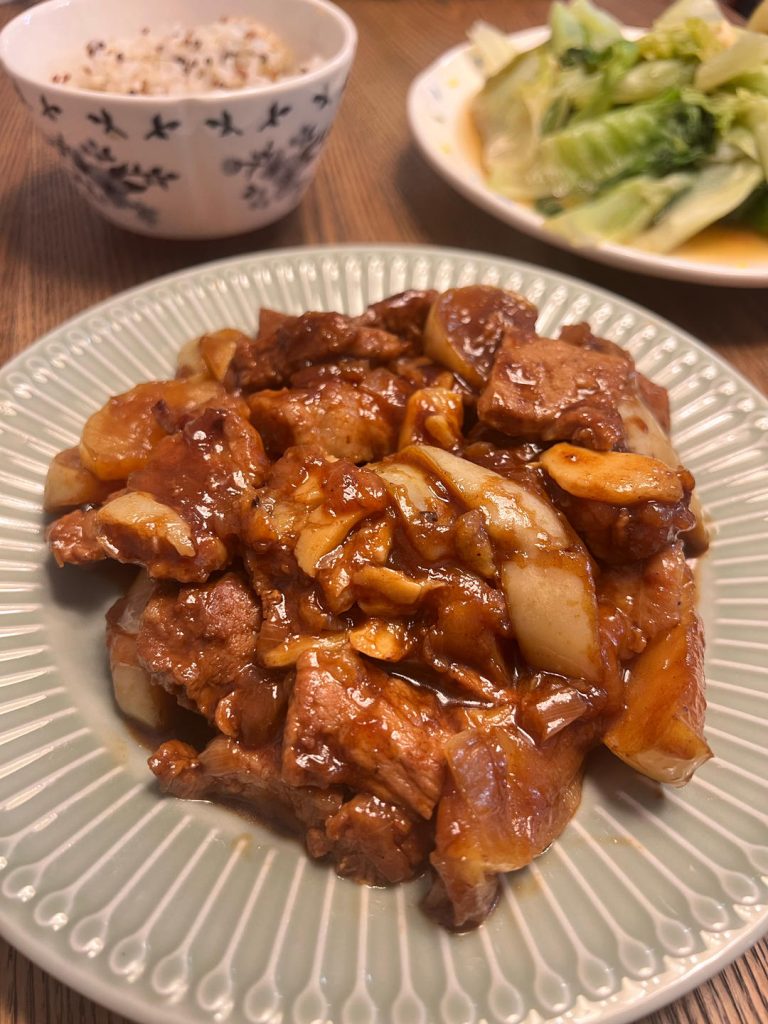
It is less greasy than pork belly but more flavorful than a lean loin chop. The addition of cinnamon and rice wine elevates it from a simple stir-fry to a fragrant braise.
Key Ingredients & Substitutions
- Pork Shoulder Steaks (Meihua Rou): This cut comes from the upper shoulder. It has beautiful marbling (looking like a plum blossom, hence the Chinese name).
- Substitution: If you can’t find “pork steaks,” buy a boneless pork shoulder/butt roast and slice it into 1/2-inch thick slabs. Avoid lean center-cut pork chops (loin) as they will dry out during the braise.
- Apple: A crisp, sweet variety works best.
- Recommendation: Fuji, Gala, or Honeycrisp. Avoid Red Delicious (too mealy) or Granny Smith (too tart for this savory balance).
- Rice Wine (Mi Jiu): This adds aroma and masks any gaminess in the pork.
- Substitution: Shaoxing Wine is the standard Chinese substitute. For a Western pantry, dry sherry or even a splash of white wine works perfectly to enhance the fruit notes.
- Dark Soy Sauce: Used primarily for that rich, caramel color.
- Substitution: If you don’t have it, use more light soy sauce and a pinch of brown sugar, though the color will be lighter.
- Cinnamon Powder: Just a pinch adds a warming spice note that pairs beautifully with pork and apple. You can also use a small stick of cassia bark.
Ingredients
The Meat & Marinade
- 10-11 oz (300g) Pork shoulder steaks (approx. 2 steaks)
- 1/2 tsp Salt (or to taste)
- 1/4 tsp White pepper powder
- 1 tbsp Neutral oil (for marinating)
- 5-6 cloves Garlic, smashed
The Braise
- 1 Apple (Fuji or Gala), cored and cut into chunks
- 1/2 Yellow onion, sliced
- 1 tbsp Neutral oil (for frying)
- 200 ml (approx. 3/4 cup + 1 tbsp) Hot water
- 3 shakes Cinnamon powder (approx. 1/8 tsp) or 1 small cinnamon stick
The Sauce Mix
- 2 tbsp Light soy sauce (e.g., LKK or Kikkoman)
- 1 tbsp Oyster sauce
- 1/2 tbsp Dark soy sauce
- 2 tbsp Rice wine (or Shaoxing wine)
- 1 tbsp Sugar (white or rock sugar)
Recipe Notes Before You Start
- Equipment: I recommend using a 10-inch or 12-inch skillet. A cast iron skillet is excellent for getting a good sear on the pork, but a non-stick pan is easier for the sugar-heavy sauce reduction to prevent burning.
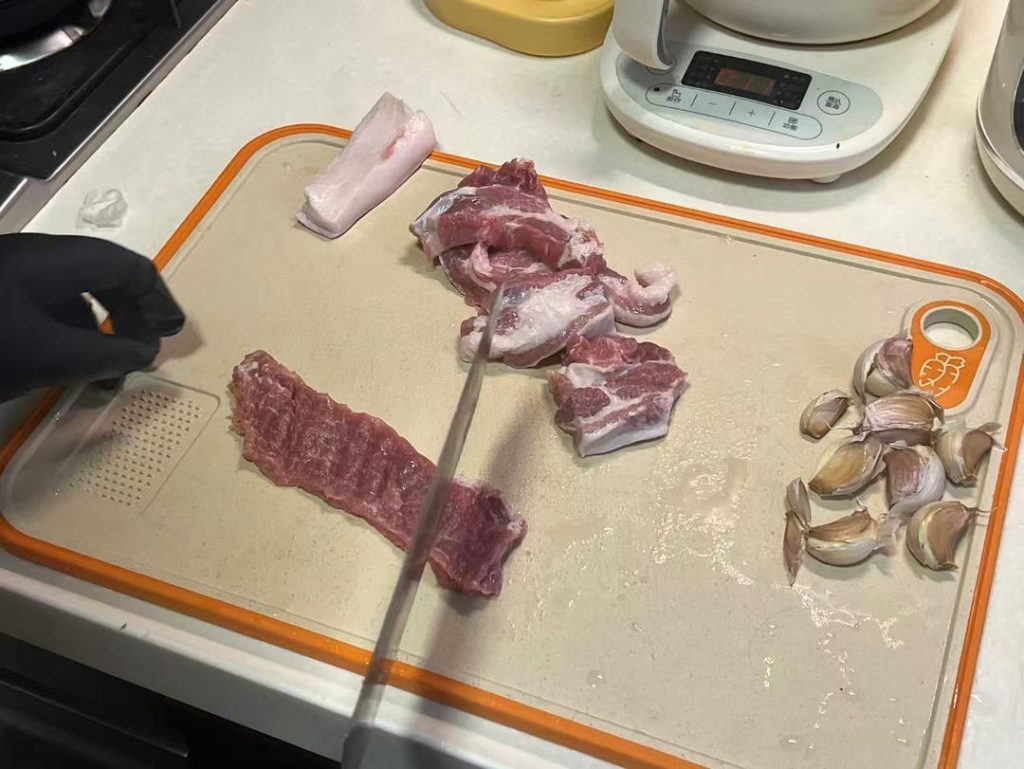
- The “Pound”: Do not skip pounding the meat with the back of your knife. This mechanical tenderization breaks the connective tissue, preventing the steak from curling up and ensuring it stays soft.
- Sauce Prep: Mix your sauce ingredients in a bowl before you start cooking. The process moves fast once the heat is on.
How to Make Apple Braised Pork Steaks
Step 1: Prep and Marinate the Pork
Slice your pork shoulder into large steaks about 1/2-inch thick. Using the back of a heavy knife (or a meat mallet), gently pound the meat in a crosshatch pattern to loosen the fibers.
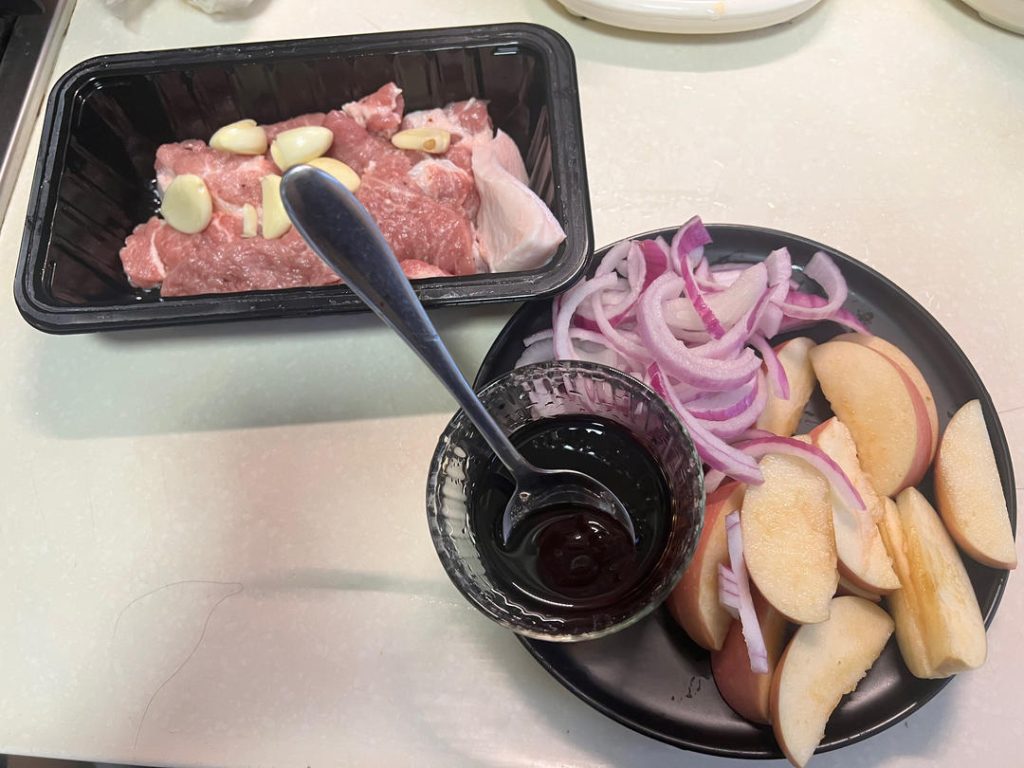
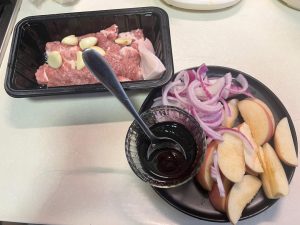
In a bowl, combine the pork with the salt, white pepper, 1 tablespoon of oil, and the smashed garlic cloves. Massage the seasonings into the meat. Let it marinate for at least 15 minutes at room temperature.
Why marinate with oil? The oil coats the meat, sealing in moisture and helping the spices adhere. It also prevents the meat from sticking to the pan immediately.
Step 2: Prepare the Sauce and Aromatics
While the meat marinates, cut the apple into bite-sized chunks and slice the onion into strips.
In a small bowl or measuring cup, mix the sauce ingredients: light soy sauce, oyster sauce, dark soy sauce, rice wine, and sugar. Stir until combined.
Step 3: Pan-Fry the Pork
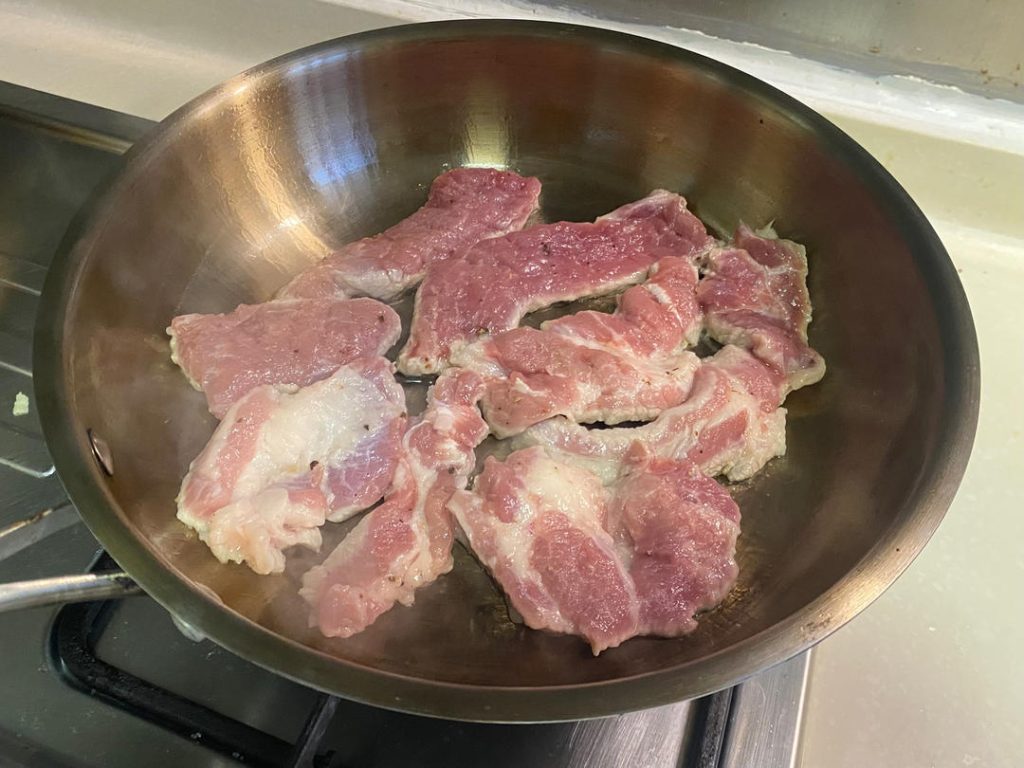
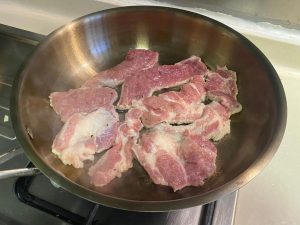
Heat your skillet over medium-high heat. Place the pork steaks in the pan (shake off the excess garlic first so it doesn’t burn).
Sear for about 2 minutes per side. Do not flip frequently. You want a nice golden-brown crust to form. Once both sides are browned and savory-smelling, remove the steaks and set them aside. They do not need to be fully cooked yet.
Step 4: Sauté Aromatics and Apple
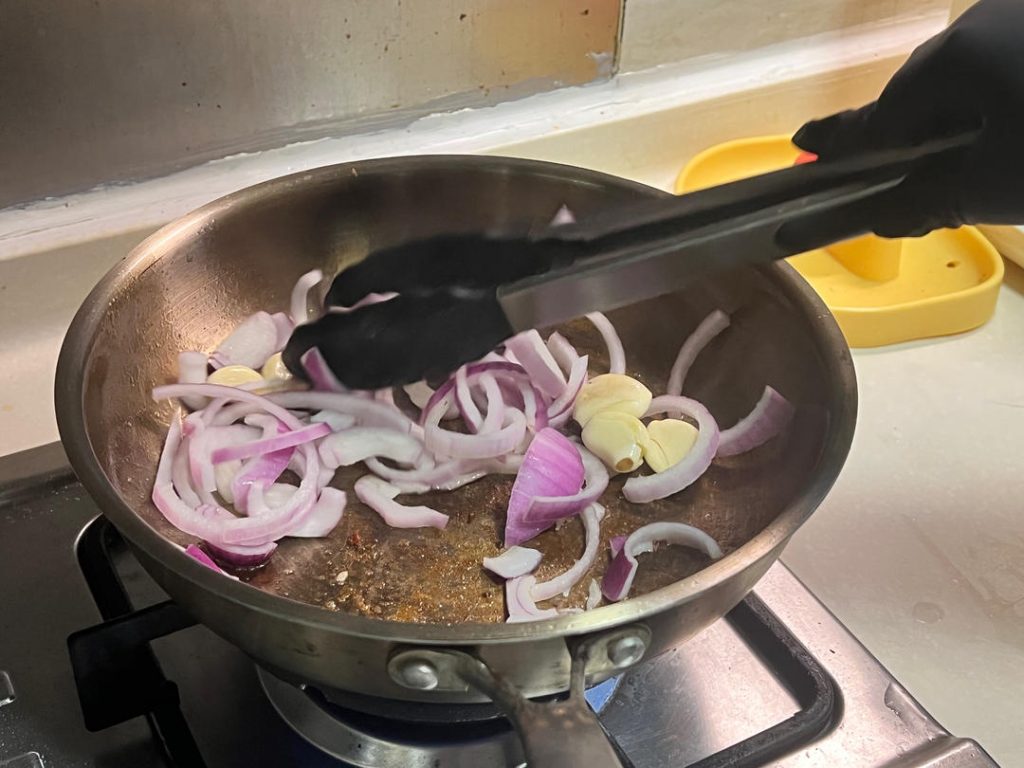
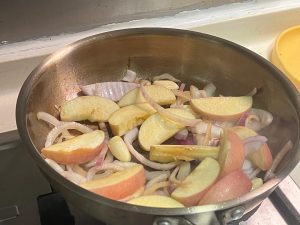
In the same pan (don’t wash it, that flavor is gold!), add the onions and the garlic cloves from the marinade. Stir-fry until fragrant and the onions turn translucent.
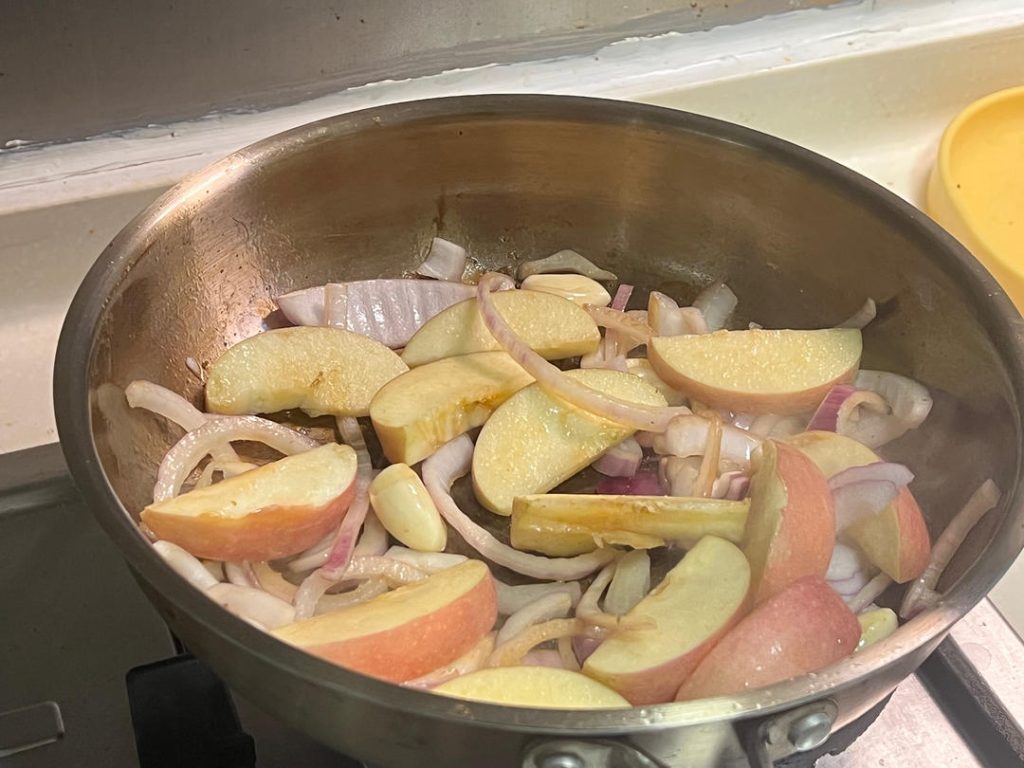
Add the apple chunks and stir-fry for another minute until they are slightly coated in the oil.
Step 5: Braise
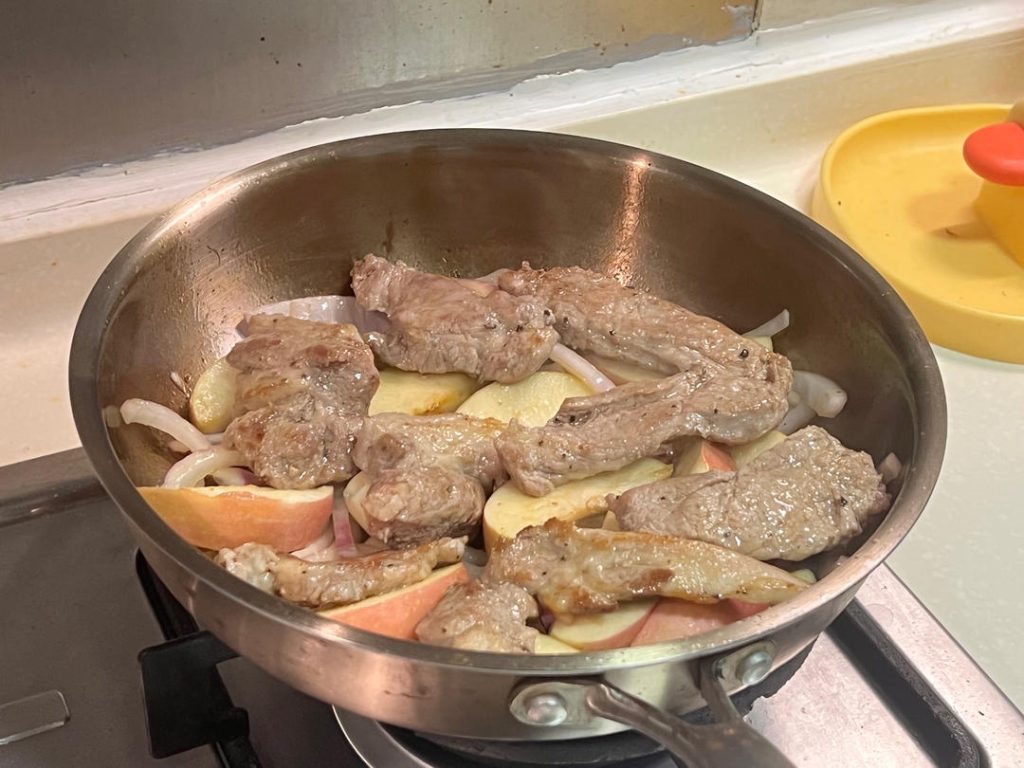
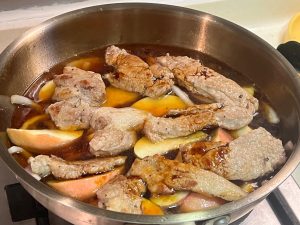
Lay the seared pork steaks on top of the bed of onions and apples. Pour the prepared sauce mix over the pork.
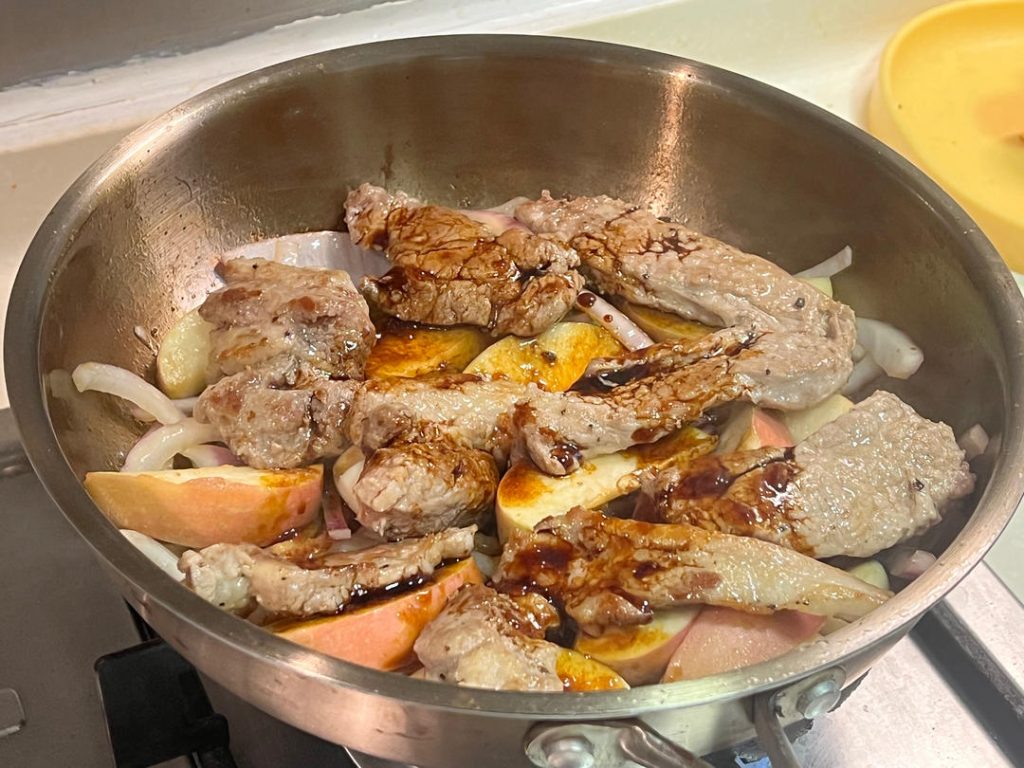
Add the 200ml hot water. The water should come up just underneath the pork—you don’t need to completely submerge it. Sprinkle with the cinnamon powder (or add the stick).
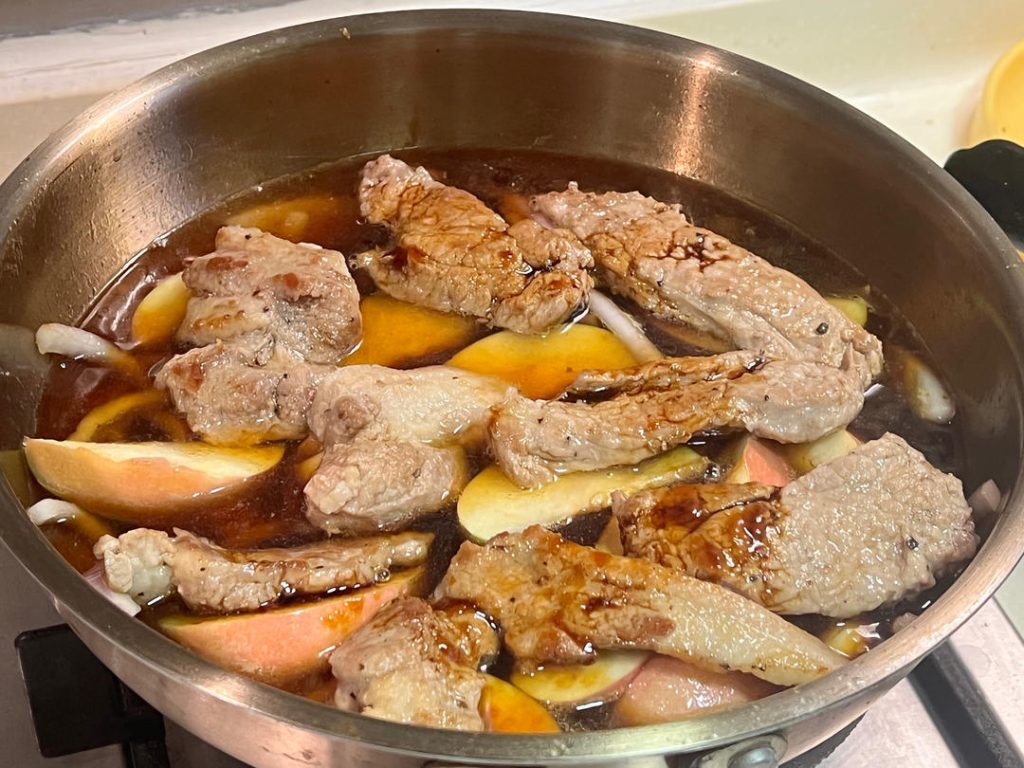
Note: Use hot water, not cold. Adding cold water to hot meat can cause the muscle fibers to seize up, making the meat tough.
Step 6: Simmer and Reduce
Cover the pan with a lid. Turn the heat down to low and simmer for 15 minutes. This gentle heat allows the pork to cook through and the apples to release their sweetness.
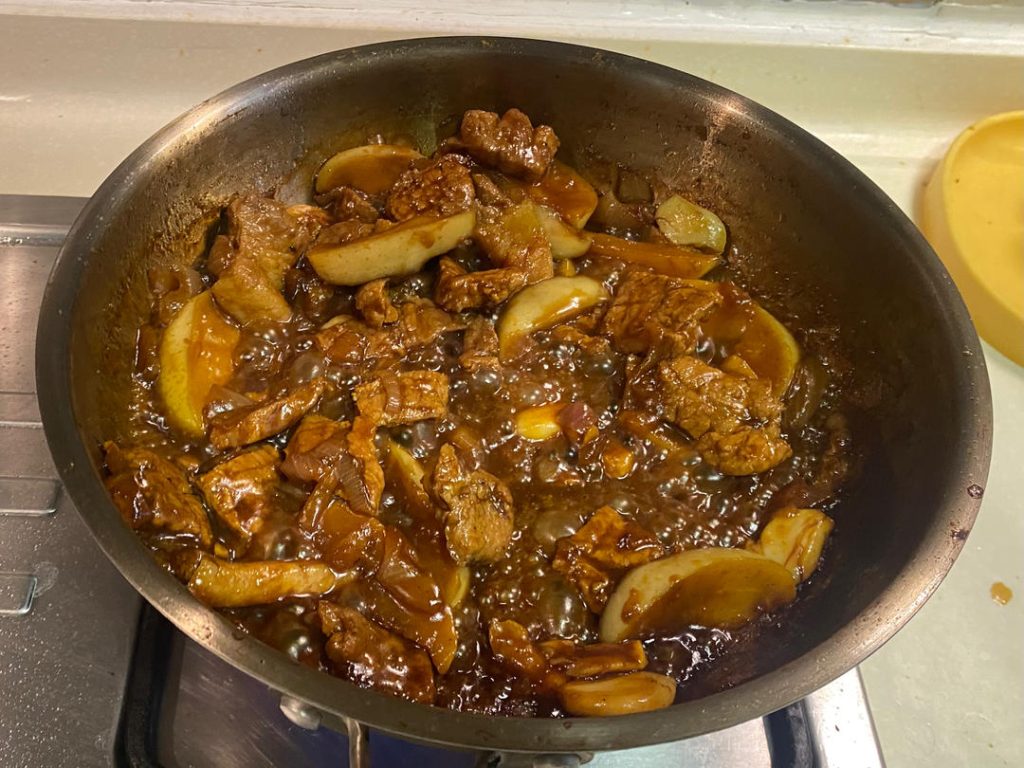
Step 7: The “Shou Zhi” (Thicken Sauce)
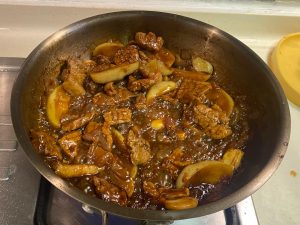
Remove the lid. Turn the heat up to high. This step is called Shou Zhi (收汁 – harvesting the juice). Watch the pan closely. The sauce will bubble vigorously and thicken rapidly as the water evaporates.
Flip the pork steaks once or twice to coat them in the thickening glaze. Once the sauce creates a glossy, thick sheen that clings to the meat (nappe consistency), turn off the heat immediately.
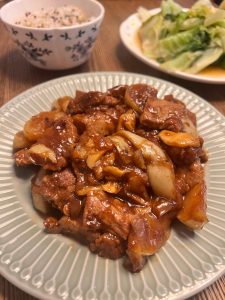
Transfer to a plate and serve hot.
Tips for Success
- Don’t Over-Reduce: The sauce contains sugar and oyster sauce, both of which burn easily. Once the bubbles turn large and slow (lava-like), it’s done. If you go too far, it will turn bitter.
- The Apple Matters: If you use a very soft apple, it might disintegrate into applesauce. This actually tastes delicious (like a thick gravy), but if you want chunks of fruit, stick to Fuji or Gala.
- Serve With: This dish has a strong flavor profile. Pair it with neutral sides like steamed jasmine rice, Stir-fried Lettuce with Garlic, or simple steamed broccoli to balance the richness.
Common Troubleshooting & Variations (Test Kitchen Notes)
- Why is my pork tough?
- Reason 1: You might have used a lean loin chop (pork chop) instead of the shoulder (butt). Loin has very little fat and dries out in braises.
- Reason 2: You skipped the pounding step. Mechanical tenderizing is crucial for quick-braised meats.
- Can I use other fruit?
- Yes! Pears (Asian pears or Bosc) work wonderfully. I have also seen versions using pineapple chunks, similar to Sweet and Sour Pork with Pineapple.
- Cast Iron vs. Non-Stick:
- I tested this in both. The Cast Iron gave a better crust on the pork during the searing phase, adding a nice smoky flavor. However, the Non-Stick made the reduction step much less stressful, as the sugary sauce didn’t stick to the corners. For beginners, use non-stick.
Food Safety & Storage
- Internal Temperature: Pork should be cooked to an internal temperature of 145°F (63°C) followed by a 3-minute rest. Since this is a braise, it will likely exceed this, which is fine for shoulder cuts as they become more tender with heat.
- Storage: Store leftovers in an airtight container in the fridge for up to 3 days.
- Reheating: Reheat gently in a pan with a splash of water to loosen the sauce, or microwave covered.
- Allergens: This recipe contains Soy and Wheat (in the soy sauce). For a gluten-free version, use Tamari and GF Oyster sauce.
Frequently Asked Questions
Q: Can I make this alcohol-free?
A: Yes. You can omit the rice wine. To replace the acidity and complexity, try adding a teaspoon of apple cider vinegar or just use chicken stock instead.
Q: Do I have to peel the apples?
A: It is recommended. The skin can become tough and separate from the flesh during the braise, creating an unpleasant texture.
Q: Is this spicy?
A: No, this is a savory-sweet dish. If you want heat, you can add dried chili peppers during the sauté step, but the sweetness of the apple usually pairs better with black pepper or cinnamon warmth.
Nutrition Information (Per Serving):
- Calories: 485 kcal
- Carbohydrates: 22g
- Protein: 32g
- Fat: 29g
- Saturated Fat: 8g
- Cholesterol: 95mg
- Sodium: 1250mg
- Potassium: 580mg
- Fiber: 2g
- Sugar: 16g
- Vitamin A: 50 IU
- Vitamin C: 6mg
- Calcium: 40mg
- Iron: 2.5mg
Disclaimer: Nutrition information is calculated using an ingredient database and should be considered an estimate. In cases where multiple ingredient alternatives are given, the first listed is calculated for nutrition. Garnishes and optional ingredients are not included.
Recipe Notes
Apples Matter: I highly recommend using a crisp, sweet apple like Fuji or Gala for this braise. They hold their shape better during the cooking process compared to softer varieties like Red Delicious, which can turn mushy. If you prefer a tart contrast to the savory pork, a Granny Smith apple works wonderfully, but you may want to add an extra half-teaspoon of sugar to balance the acidity.
Don’t Skip the Pound: Pounding the pork steaks with the back of your knife (or a meat mallet) isn’t just about tenderness; it helps the meat absorb the marinade more effectively and prevents the steaks from curling up in the hot pan. If you find the sauce reducing too quickly before the pork is tender, splash in a little extra hot water—just remember to let it reduce back down to a sticky glaze at the end!
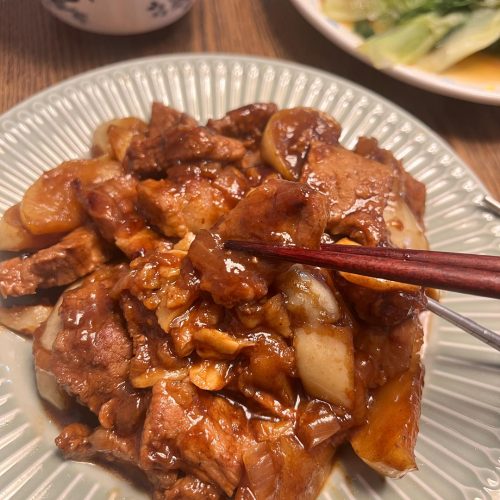
Apple Braised Pork Steaks (Ping Guo Dun Zhu Pai)

Equipment
- 1 Frying Pan or Skillet 10-inch or 12-inch, non-stick recommended for sauce reduction
- 1 Meat Mallet or Heavy Knife For tenderizing the meat
Ingredients
Meat & Marinade
- 300 g pork shoulder steaks (Meihua Rou) approx. 10-11 oz, or 2 large steaks
- 5 cloves garlic smashed
- 1 tbsp neutral oil for marinating
- 1/2 tsp salt adjust to taste
- 1/4 tsp white pepper powder freshly ground preferred
Vegetables & Braise
- 1 apple Fuji or Gala, cored and cubed
- 1/2 onion sliced into strips
- 200 ml hot water approx. 3/4 cup + 1 tbsp
- 3 shakes cinnamon powder approx. 1/8 tsp, or 1 small stick
Sauce Mix
- 2 tbsp light soy sauce Kikkoman or Pearl River Bridge
- 1 tbsp oyster sauce
- 1/2 tbsp dark soy sauce mainly for color
- 2 tbsp rice wine or Shaoxing wine / dry sherry
- 1 tbsp sugar white sugar or rock sugar
Instructions
- Prep the Meat: Slice the pork shoulder into large steaks. Use the back of a knife or a meat mallet to pound the meat in a crosshatch pattern to loosen the fibers.

- Marinate: In a bowl, combine pork with salt, white pepper, 1 tbsp oil, and smashed garlic. Mix well and let sit for 15 minutes.
- Make the Sauce: While meat marinates, mix light soy sauce, oyster sauce, dark soy sauce, rice wine, and sugar in a small bowl. Stir until combined.
- Sear the Pork: Heat a skillet over medium-high heat. Add the pork steaks (shake off excess garlic to prevent burning). Pan-fry for about 2 minutes per side until golden brown. Remove pork and set aside.
- Sauté Aromatics: In the same pan with residual oil, add the onions and the garlic from the marinade. Stir-fry until fragrant. Add apple chunks and toss for 1 minute.
- Braise: Place pork steaks on top of the onions and apples. Pour the sauce mix over the pork. Pour in the hot water (it should reach just below the top of the pork). Sprinkle with cinnamon powder.
- Simmer: Cover with a lid, reduce heat to low, and simmer for 15 minutes.
- Reduce Sauce (Shou Zhi): Uncover the pan. Turn heat to high. Let the sauce boil vigorously to thicken. Flip the pork to coat in the glaze. Once the sauce is thick and sticky, remove from heat immediately.
- Serve: Transfer to a plate and serve hot with steamed rice.













Leave a Reply