If you have ever walked past a Cantonese BBQ shop window, you’ve likely been mesmerized by the rows of glistening chickens hanging on hooks. While many assume these are roasted, one of the most beloved varieties—Soy Sauce Chicken (Si You Ji)—is actually poached and braised.

I remember my time training in southern China, watching the Cantonese chefs carefully bathe chickens in a bubbling, aromatic dark liquid. Unlike the fiery heat of the Sichuan dishes I grew up with, this dish is all about balance. It is savory from the soy sauce, complexly sweet from the slab sugar, and carries a signature floral aroma from the rose wine.
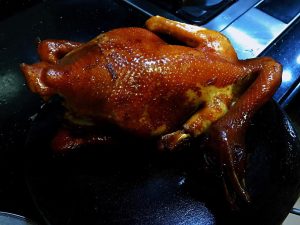
Many Western cooks are intimidated by whole chicken recipes, thinking they require roasting racks or deep fryers. This recipe changes that. It is done entirely in one pot. The result is meat that is incredibly silky (never dry) with a skin that has a beautiful, deep amber lacquer. It’s easier than roasting and arguably more flavorful.
What Is Cantonese Soy Sauce Chicken?
Cantonese Soy Sauce Chicken, or Si You Ji (豉油鸡), is a staple “Siu Mei” (roasted meat) dish, though it isn’t roasted. It involves poaching a whole chicken in a master stock made of soy sauce, aromatics, and sugar.
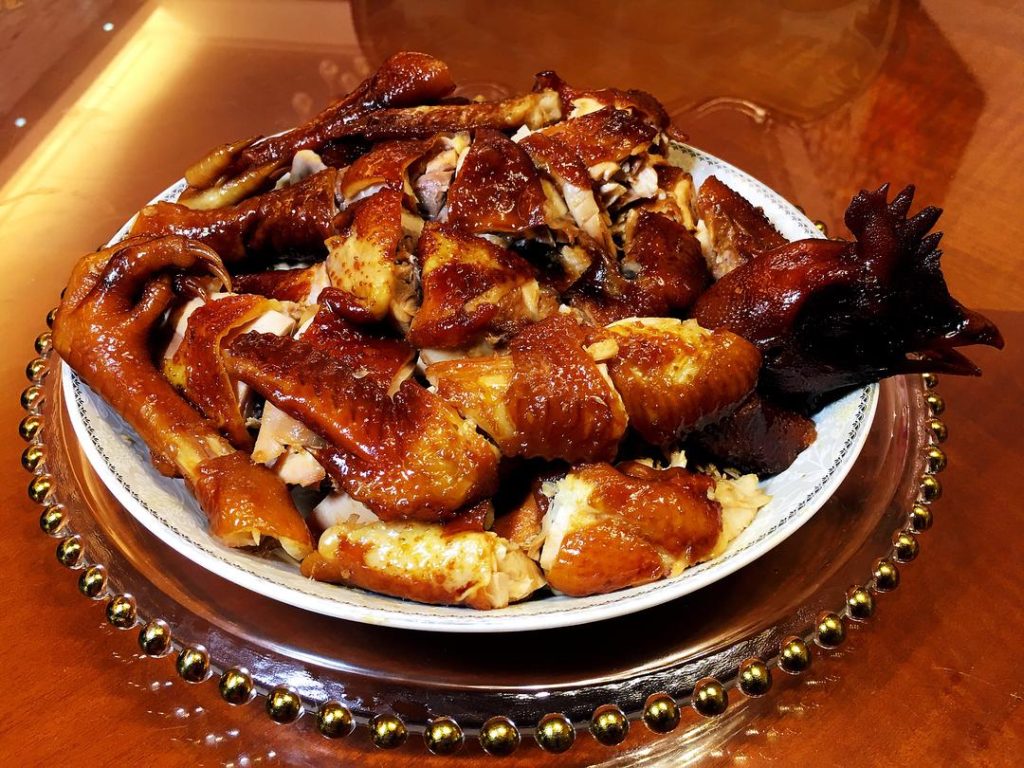
In a professional Cantonese kitchen, the master stock is often reused for months, developing a deep, complex flavor profile over time. However, for the home cook, making a fresh batch is perfectly delicious.
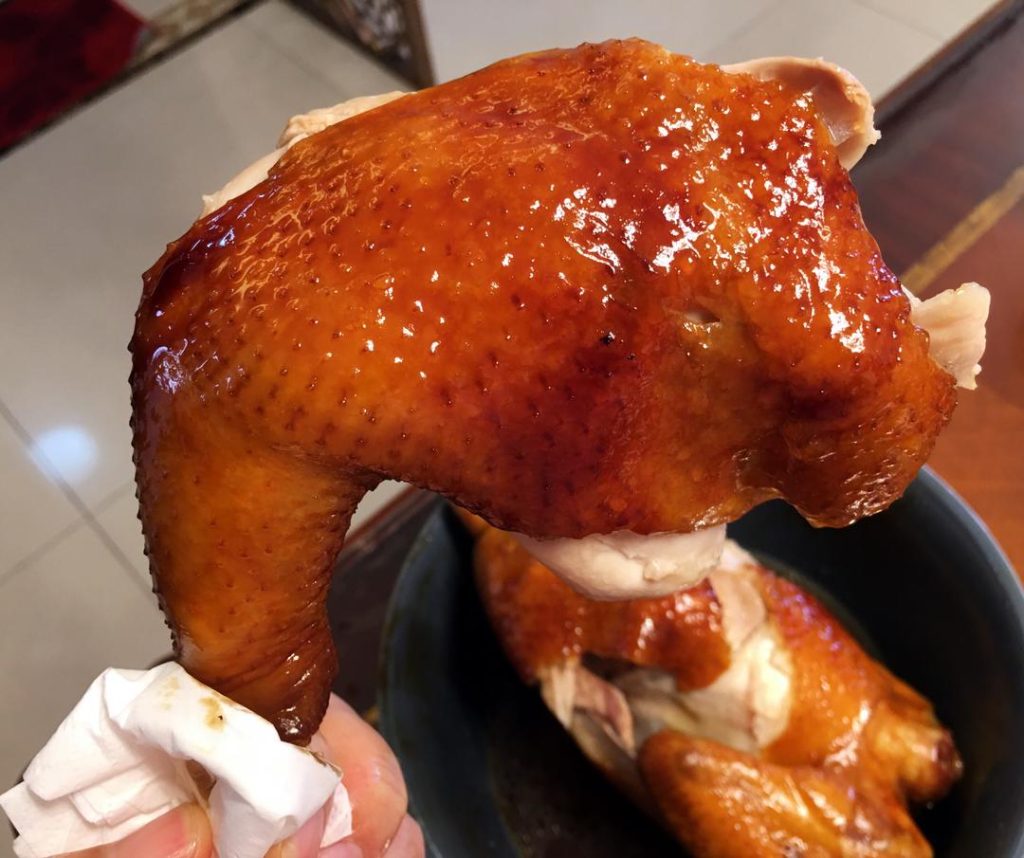
The texture is key here. Unlike American roast chicken where the goal is crispy skin, the goal here is smooth, taut, and glossy skin with meat that is juicy to the bone. It serves as a perfect centerpiece for a family dinner or a festive gathering.
If you enjoy the sweet and savory profile of Char Siu (Cantonese Honey Glazed Char Siu), you will absolutely love this chicken.
Why This Recipe Works
- Dual Sugar Technique: This recipe uses both Slab Sugar (Yellow Rock Sugar) and White Rock Sugar. The slab sugar provides a molasses-like depth, while the rock sugar gives the skin that signature “glassy” shine that regular granulated sugar simply cannot achieve.
- The Basting Method: Rather than just boiling the chicken, this recipe calls for constant basting. This ensures the skin colors evenly and prevents the delicate breast meat from overcooking while the dark meat finishes.
- Rose Wine: The inclusion of Mei Gui Lu Jiu (Rose Essence Wine) cuts through the richness of the soy and adds a floral fragrance that defines the authentic taste.
Key Ingredients & Substitutions
To get the authentic flavor, you need to source a few specific ingredients. Most are available at Asian grocery stores or online.
- Whole Chicken: The recipe calls for a “Guang Ji” (smooth chicken), roughly 2 lbs (1kg). In the US, look for a small fryer chicken or a yellow-feathered chicken from an Asian market. Avoid massive roasting birds (5lb+) as they won’t absorb the flavor well in the short cooking time.
- Soy Sauces: You need both Light Soy Sauce (for saltiness and umami) and Dark Soy Sauce (mainly for that rich dark color). Recommendation: Pearl River Bridge or Lee Kum Kee.
- Rose Wine (Mei Gui Lu Jiu): This is the soul of the dish. It is a sorghum liquor infused with rose flowers.
- Substitute: If you absolutely cannot find it, you can use Shaoxing Wine, but you will miss that specific floral note.
- Yellow Slab Sugar (Huang Pian Tang): This is cane sugar sold in rectangular slabs. It tastes like high-quality brown sugar.
- Substitute: Dark brown sugar.
- Rock Sugar (Bing Tang): Crystallized sugar. It creates a glossy glaze.
- Substitute: You can use regular white sugar, but the skin won’t be as shiny.
Ingredients
The Meat:
- 1 Whole Chicken (approx. 2.2 lbs / 1 kg), fresh, head and feet optional.
The Braising Liquid:
- 1 cup (240g) Light Soy Sauce
- 1/3 cup (80g) Dark Soy Sauce
- 2 cups (500ml) Water
- 2 tbsp Rose Wine (Mei Gui Lu Jiu)
- 2 pieces Yellow Slab Sugar (approx. 2.5 oz / 70g total)
- 1.7 oz (50g) Rock Sugar
- 6 slices Fresh Ginger
- 2 stalks Scallions (Green Onions), whole
Recipe Notes Before You Start
- Pot Selection: Use a deep pot (like a Dutch oven) that fits the chicken snugly. If the pot is too wide, the liquid level will be too low, and the chicken won’t color evenly.
- Sugar Adjustment: Some cooks find this authentic ratio sweet; others find it perfect. As noted in the original recipe source, “Radishes and greens, each has their own love.” Feel free to reduce the rock sugar slightly if you prefer a more savory profile, but don’t eliminate it, or the glaze will fail.
- Temperature Control: We are not boiling the chicken aggressively. This is a gentle braise/poach. High heat will tear the skin.
Mise en Place / Prep
- Clean the Chicken: Rinse the chicken thoroughly inside and out. Pat it completely dry with paper towels. If the chicken still has feet, tuck them into the body cavity for a compact shape.
- Aromatics: Slice your ginger and wash the scallions.
- Liquids: Measure out your soy sauces and water.
How to Make Cantonese Soy Sauce Chicken
Step 1: Create the Master Stock
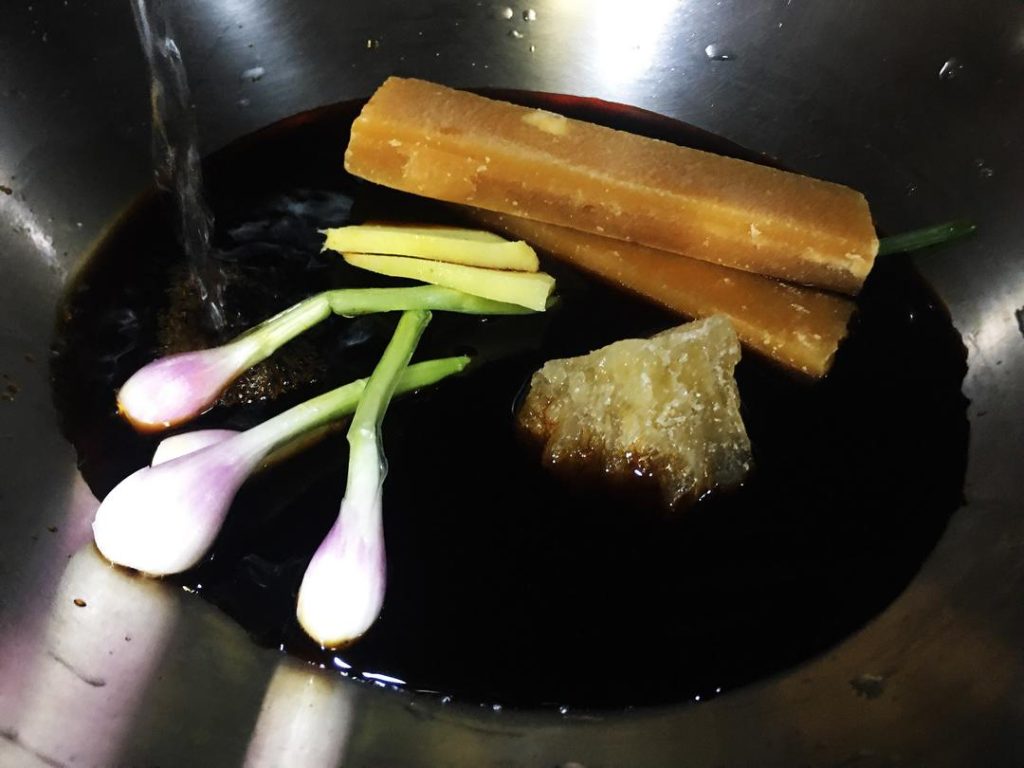
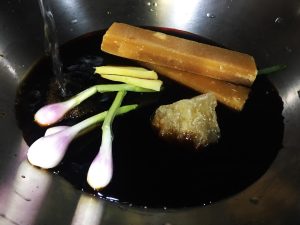
Place a deep pot over high heat. Add the light soy sauce, dark soy sauce, rose wine, slab sugar, rock sugar, ginger slices, scallions, and water. Bring the mixture to a boil. Stir occasionally to ensure the sugars dissolve.
Step 2: The First Bath (10 Minutes)
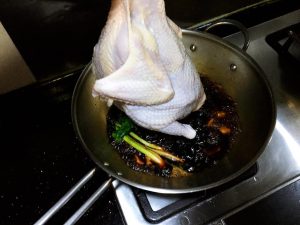
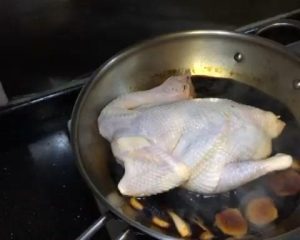
Once the liquid is boiling, carefully lower the chicken into the pot. Turn the heat down to medium-low. The liquid should be simmering, not violently boiling.
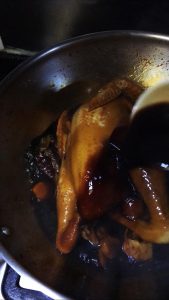
For the next 10 minutes, use a ladle to constantly scoop the hot soy sauce liquid and pour it over the exposed parts of the chicken. This basting process is crucial for even coloring and heating.
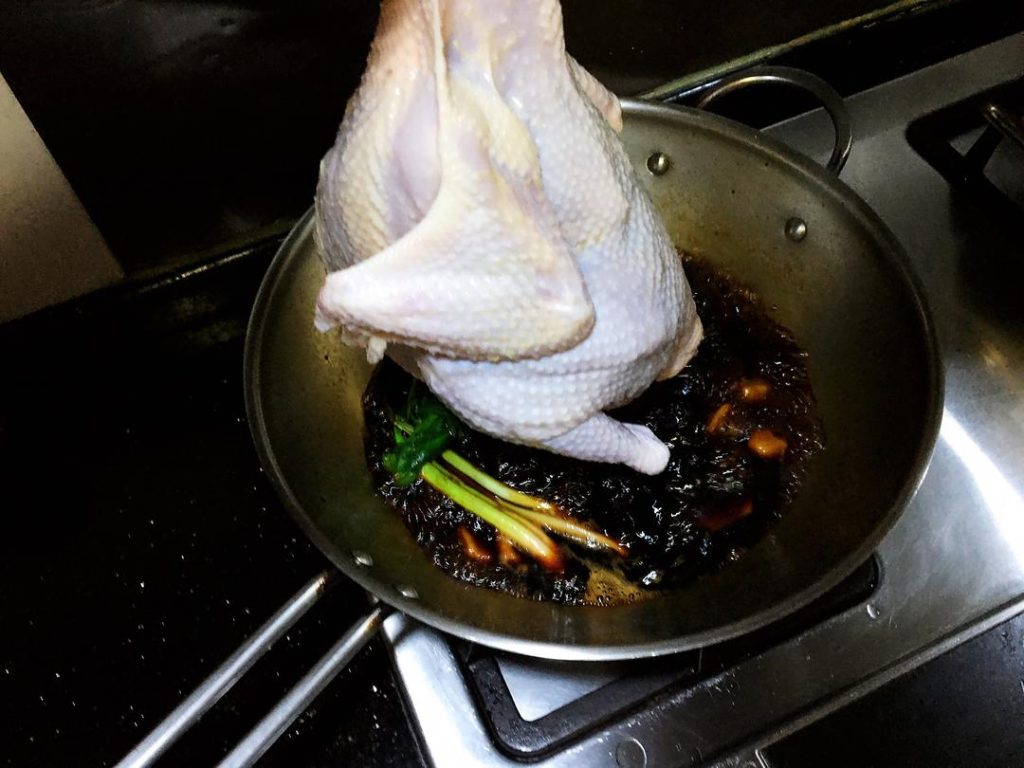
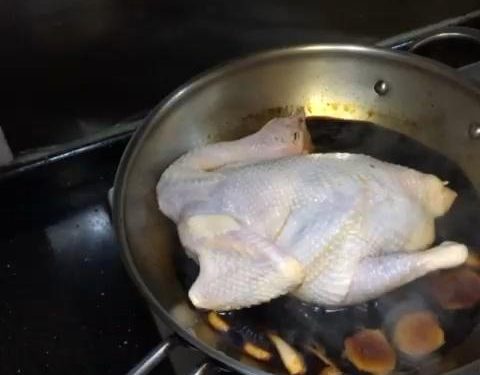
Why do we do this? Constant basting acts like a gentle rotisserie, ensuring the skin gets that beautiful dark amber color without drying out.
Step 3: Flip and Baste (10 Minutes)
Carefully flip the chicken over. Continue the same process: simmer on medium-low heat and baste the chicken constantly for another 10 minutes. By now, the skin should look dark and glossy.
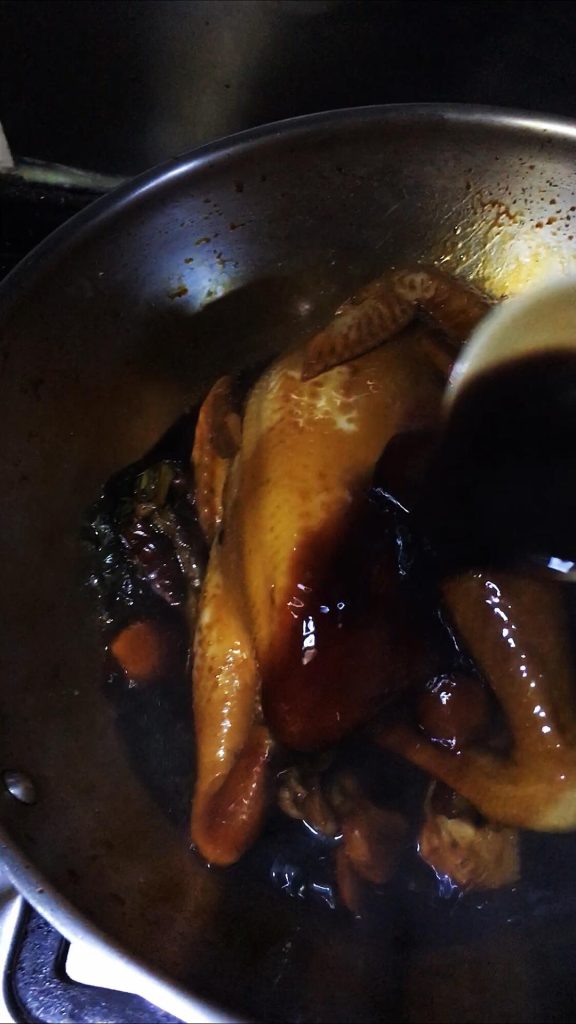
Step 4: The Covered Simmer (5 Minutes)
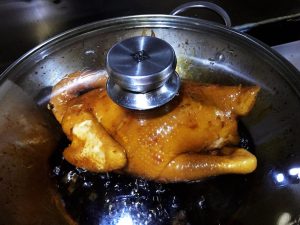
Place the lid on the pot. Let it simmer (braise) for 5 minutes. Do not lift the lid during this time; the steam is cooking the inside of the meat.
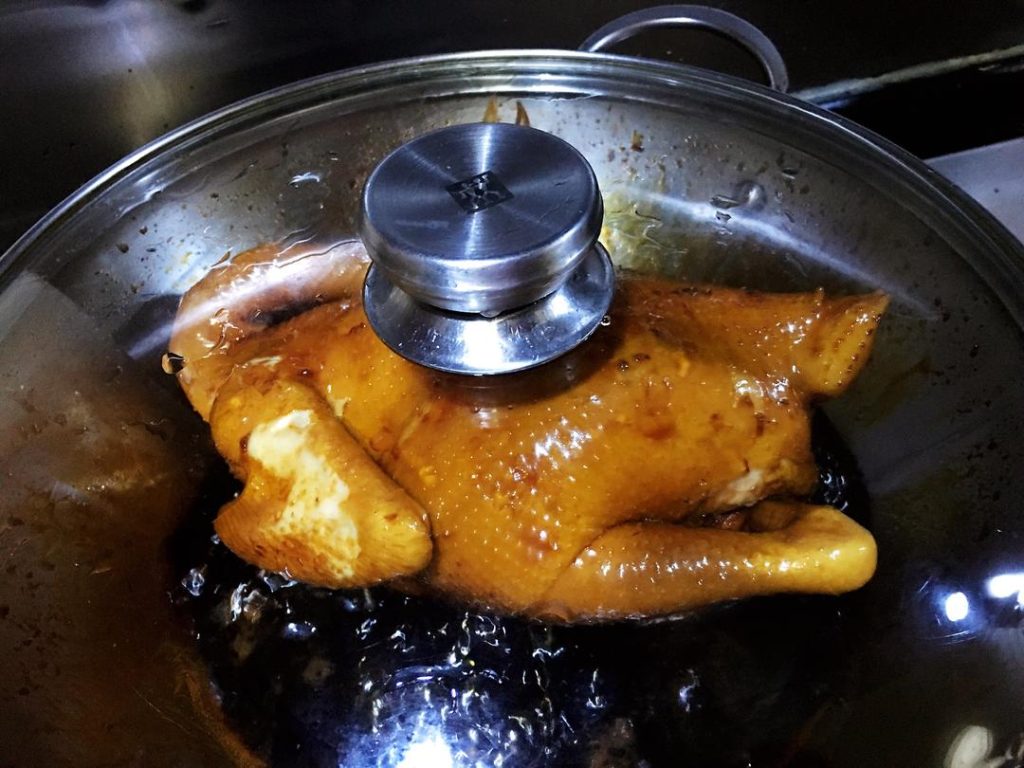
Step 5: Final Flip and Simmer (5 Minutes)
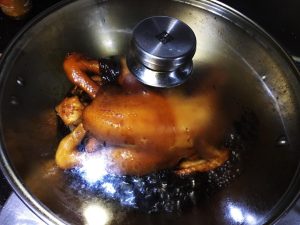
Remove the lid, flip the chicken one last time, cover the pot again, and simmer for a final 5 minutes.
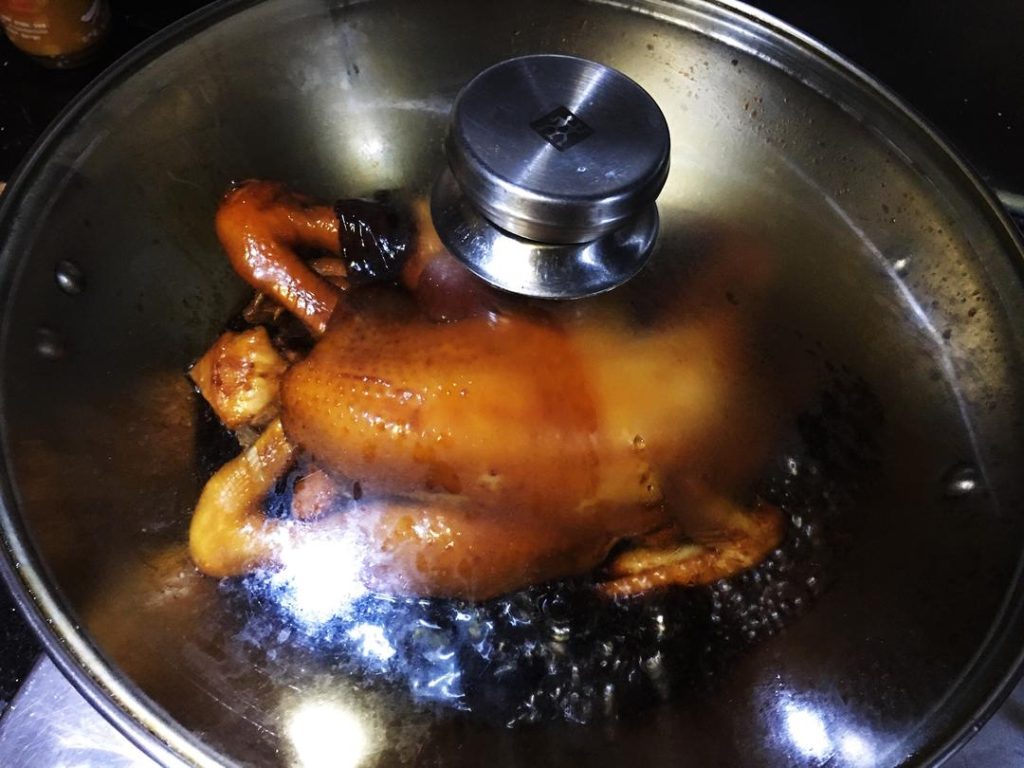
Step 6: Rest and Cool
Turn off the heat. Carefully remove the chicken from the pot. Place it on a clean cutting board or a wire rack. Let it cool completely.
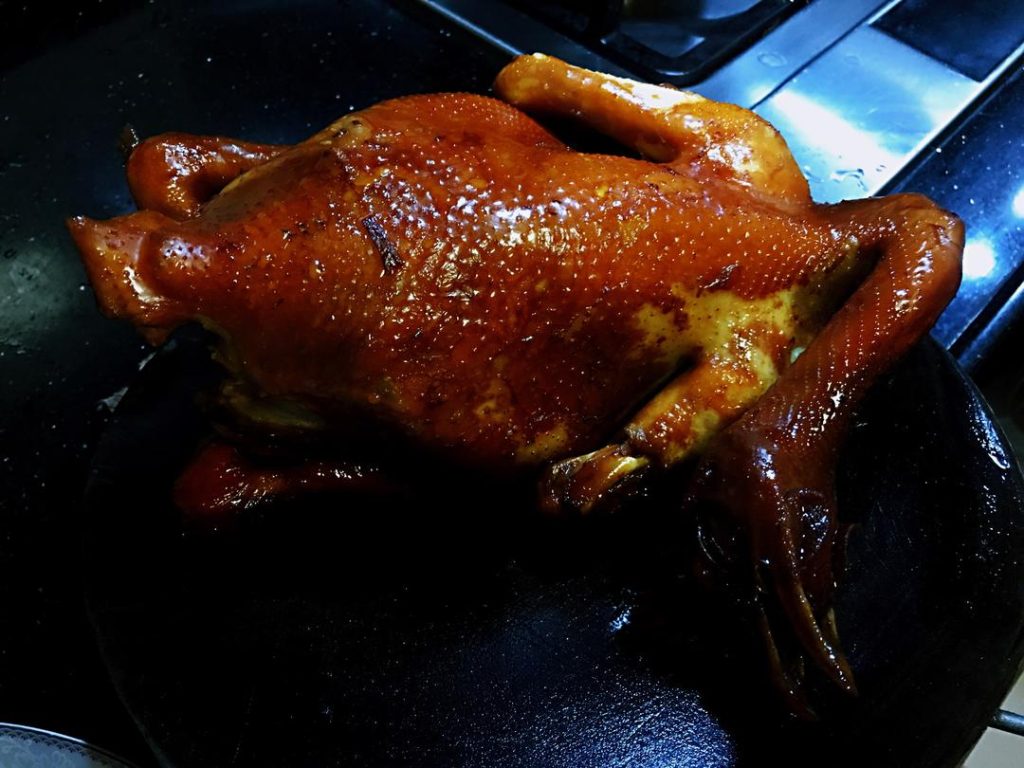
Chef’s Tip: Do not chop the chicken while it is hot. The juices will run out, the meat will shred, and the skin will detach. It must be room temperature or lukewarm for clean cuts.
Step 7: Serve
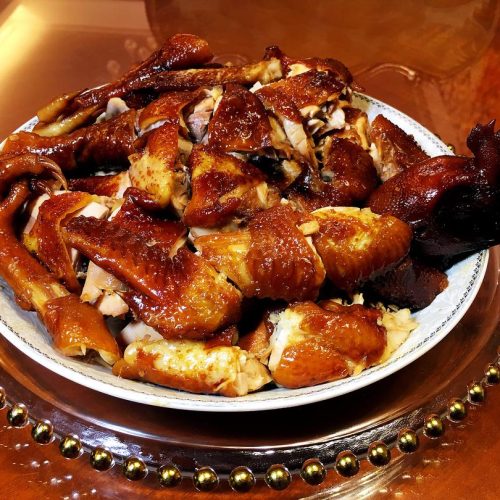
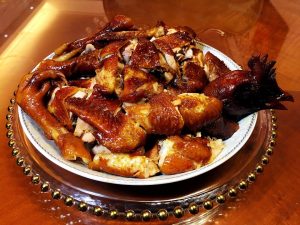
Once cool, chop the chicken into bite-sized pieces (cleaver skills help here!). Arrange it on a plate. You can drizzle a little of the thickened braising liquid over the top for extra moisture. Serve with steamed white rice.
Troubleshooting & FAQ
Q: My chicken skin tore. What happened?
A: This usually happens if the heat was too high (violent boiling bubbles break the skin) or if the chicken was handled roughly when flipping. Use two wooden spoons or silicone tongs to turn it gently.
Q: The sauce is too salty/sweet for me.
A: Soy sauce brands vary wildly in salinity. If you are using a very salty brand (like Kikkoman), you might need a splash more water. If it is too sweet, reduce the slab sugar next time.
Q: Can I reuse the sauce?
A: Yes! Strain out the ginger and scallions. Boil the liquid again, let it cool, and freeze it. It becomes a “Master Stock.” Next time, just add a little fresh soy sauce, sugar, and aromatics to refresh it.
Q: How do I know if the chicken is cooked safely?
A: If you are unsure, use a meat thermometer. Insert it into the thickest part of the thigh (avoiding bone). It should read 165°F (74°C).
Serving Suggestions
This dish is rich and savory, so it pairs best with simple sides that cleanse the palate.
- Rice: Steamed Jasmine rice is non-negotiable.
- Vegetables: Blanched leafy greens like Stir-Fried Lettuce with Garlic or Choy Sum are excellent.
- Soup: A light broth, like Tomato Egg Drop Soup, balances the meal well.
Nutrition Information (Estimate)
- Calories: ~350 kcal per serving (with skin)
- Protein: 25g
- Carbohydrates: 12g (from glaze)
- Fat: 20g
- Sodium: High (due to soy sauce)
Disclaimer: Nutrition information is calculated using an ingredient database and should be considered an estimate. In cases where multiple ingredient alternatives are given, the first listed is calculated for nutrition. Garnishes and optional ingredients are not included.
Food Safety & Preparation Notes
- Raw Poultry: Always wash your hands and sanitize surfaces immediately after handling raw chicken to prevent cross-contamination.
- Temperature: While traditional Chinese methods rely on timing, I highly recommend using an instant-read thermometer to ensure the internal temperature reaches 165°F (74°C), especially if your chicken is larger than the 2lb bird specified.
- Cooling: Do not leave the cooked chicken out at room temperature for more than 2 hours.
Cantonese Soy Sauce Chicken (Si You Ji)

Equipment
- 1 Deep Pot or Dutch Oven Must be deep enough to hold the chicken.
- 1 Ladle For basting the chicken.
- 1 Meat Thermometer To ensure food safety.
Ingredients
The Meat
- 1 whole Chicken Approx 2.2 lbs / 1 kg. Cleaned and dried.
Braising Liquid
- 240 g Light Soy Sauce Approx 1 cup. (Kikkoman or Pearl River Bridge)
- 80 g Dark Soy Sauce Approx 1/3 cup. Adds color.
- 2 tbsp Rose Wine (Mei Gui Lu Jiu) Can substitute with Shaoxing Wine if unavailable.
- 2 pieces Yellow Slab Sugar (Huang Pian Tang) Approx 2.5 oz / 70g. Can substitute with brown sugar.
- 50 g Rock Sugar Approx 1.7 oz. For glossy finish.
- 6 slices Ginger Fresh
- 2 stalks Scallions Whole, washed.
- 500 ml Water Approx 2 cups.
Instructions
- Place all ingredients (except the chicken) into a deep pot. Bring to a boil over high heat.

- Once boiling, add the clean chicken (tuck feet into the belly if applicable).
- Reduce heat to medium-low. Baste the chicken constantly with the liquid for 10 minutes.

- Flip the chicken over. Continue to baste constantly for another 10 minutes.

- Cover the pot with a lid. Simmer for 5 minutes.
- Flip the chicken one last time. Cover and simmer for a final 5 minutes.
- Remove the chicken to a cutting board or rack. Let it cool completely.
- Chop into pieces and serve. You can tear the meat by hand for a more rustic feel.












Leave a Reply