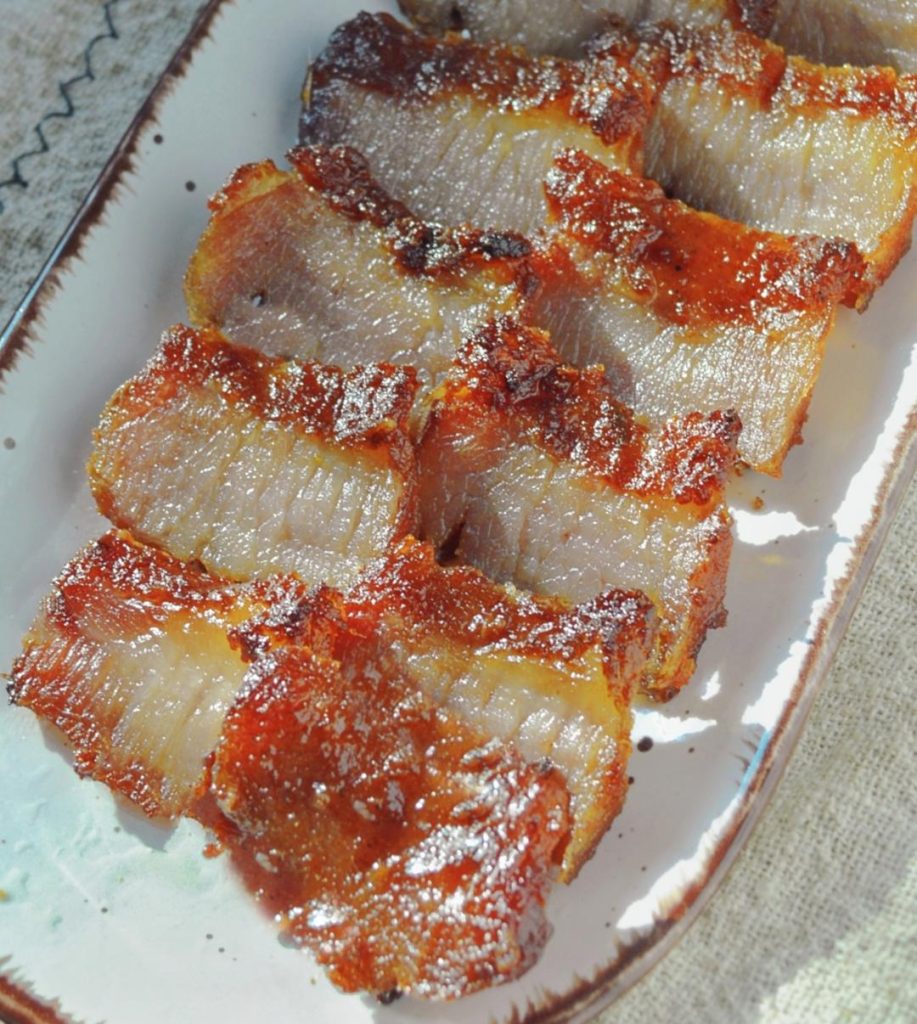
There is Char Siu, and then there is this Char Siu.
Growing up, the gold standard for Cantonese BBQ pork (Char Siu) was always the legendary Guangzhou Restaurant (Guangzhou Jiu Jia) in China. Their version—savory, sweet, glossy, and deeply aromatic—actually won a gold medal.

I have a bit of a confession (and a brag) to make. This recipe comes from a primary school classmate of mine who apprenticed under the master chefs at Guangzhou Restaurant. For years, he guarded this secret jealously. It took a small circle gathering where he needed an extra pair of hands to marinate the meat for me to finally learn his secrets.
Unlike the simplified versions you might find elsewhere that just use jarred hoisin and five-spice, this traditional recipe builds a complex, bone-deep fragrance using ingredients like peanut butter, sesame paste, and dried aromatics. It is a labor of love, but one bite, and you will understand why it’s the “signature dish” of my family banquets.
Why This Recipe Works
- Complex Flavor Profile: Instead of relying solely on bottled Char Siu sauce, this recipe uses peanut butter, sesame paste, and fermented red bean curd (Nam Yue). These ingredients add a nutty, savory depth (umami) that simple sugar-soy glazes lack.
- The “Double-Bake” Technique: We start with a high-heat blast to seal the juices (the “envelope” method) and finish with a lower temperature to tenderize the meat, ensuring it remains juicy, not dry.
- Authentic Glaze: Using maltose instead of just honey gives the Char Siu that iconic, sticky, glass-like sheen that stays glossy even after cooling.
What is Char Siu?
Char Siu (叉烧), literally meaning “fork roasted,” is a Cantonese style of roasted pork. Traditionally, long strips of boneless pork are skewered with long forks and placed in a covered oven or over a fire. The meat is marinated in a sweet and savory sauce, roasted until tender, and glazed with maltose syrup. It is one of the most beloved dishes in the Siu Mei (Chinese BBQ) repertoire.
Key Ingredients & Substitutions
This recipe uses a robust list of ingredients to recreate that authentic restaurant taste. Don’t be intimidated; most are available at Asian grocers.
- Pork: You have three main options (see the “Deep Dive” below for a comparison).
- Nam Yue (Red Fermented Bean Curd): This adds a distinct savory funk and red hue. If you absolutely can’t find it, you can omit it, but the flavor won’t be quite as deep.
- Rose Wine (Mei Kuei Lu Chiew): This clear liquor infused with rose petals provides the signature floral aroma of Cantonese BBQ. Substitution: You can use Shaoxing wine, but the aroma will be different.
- Peanut Butter & Sesame Paste: These might seem unusual, but they act as emulsifiers and flavor enhancers, creating a rich, nutty background note.
- Maltose: A thick, stiff syrup used for the final glaze. It is less sweet than honey and creates a better shine. Substitution: Honey works, but the finish will be less glossy and slightly sweeter.
- Aromatics: Fresh garlic, ginger, cilantro (coriander), and dry red shallots are crucial. They are blended into the sauce for maximum flavor infusion.
💡 A Note on Sugar
This recipe calls for a significant amount of sugar (125g). As someone who watches their sugar intake, I once tried to reduce it. The result? My family immediately complained, “It doesn’t taste right.” Authentic Char Siu is sweet. The sugar is necessary not just for flavor, but for the caramelization and the glossy finish. You can adjust it slightly, but be warned: if you reduce the sugar without reducing the salt, the pork will taste too salty.
Choosing the Best Cut of Pork
The cut of meat you choose defines the texture of your Char Siu. Here is how to choose:
- Pork Belly (The Indulgent Choice): My family’s favorite. It yields a melt-in-your-mouth, fatty, and juicy result. Choose a piece with even layers of fat and lean meat.
- Pork Shoulder/Butt (The Balanced Choice): Also known as “Mui Tou” meat. This cut is marbled but not overly fatty. It produces a “Char Siu” that is tender but meaty—great for kids or those who dislike eating visible fat.
- Pork Neck/Jowl (The “Golden” Choice): Known as “Golden Three Taels,” this cut has a unique crunch and springy texture (shuang kou). It is incredibly delicious but can be harder to find.
Recipe Notes Before You Start
- Marinating Time: This is not a 30-minute meal. The pork needs to marinate for at least 24 hours. This allows the salt and sugar to penetrate the meat fibers and the alcohol to tenderize the proteins.
- Oven Temperature: Ovens vary wildly. The temperatures listed below (475°F/245°C for searing, 350°F/180°C for roasting) are benchmarks. If your oven runs hot, reduce the temperature to prevent burning the high-sugar marinade.
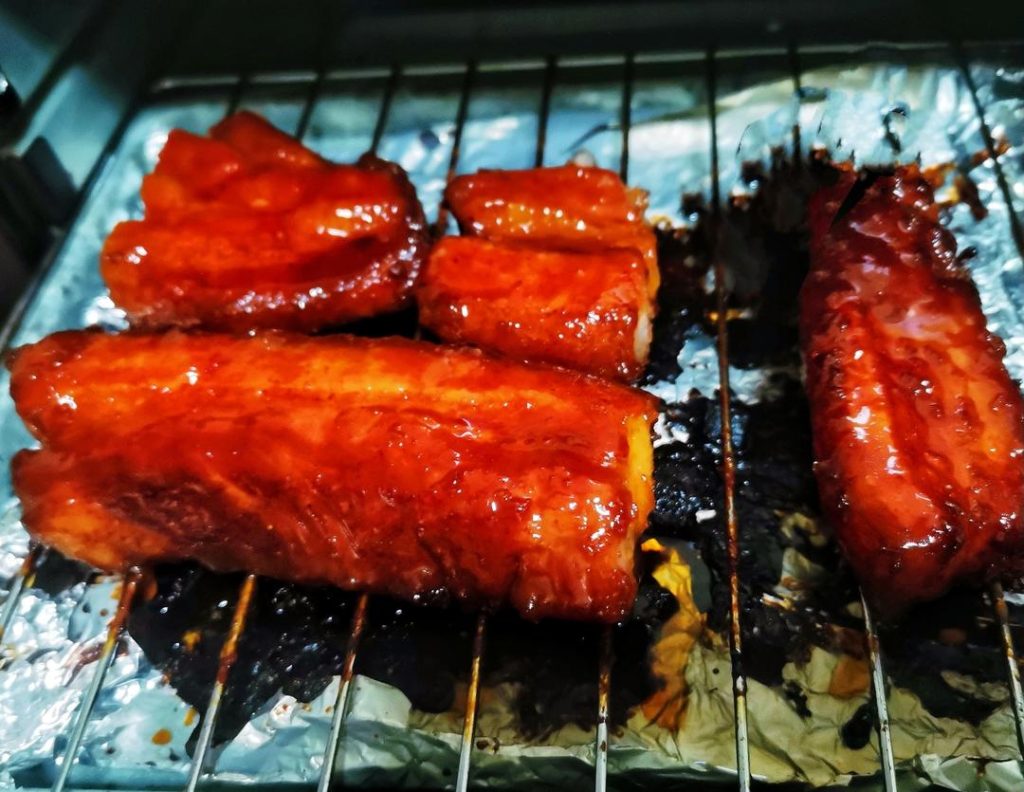
- Cleaning: Line your baking tray with foil. The dripping marinade will burn on the pan, and you don’t want to scrub that later!
Mise en Place
- The Meat: Wash the pork and pat it dry. Remove the skin. Cut into long strips about 1.5 to 2 inches thick and 6-8 inches long.
- The Aromatics: Peel the garlic, ginger, and red shallots. Wash the cilantro and scallions.
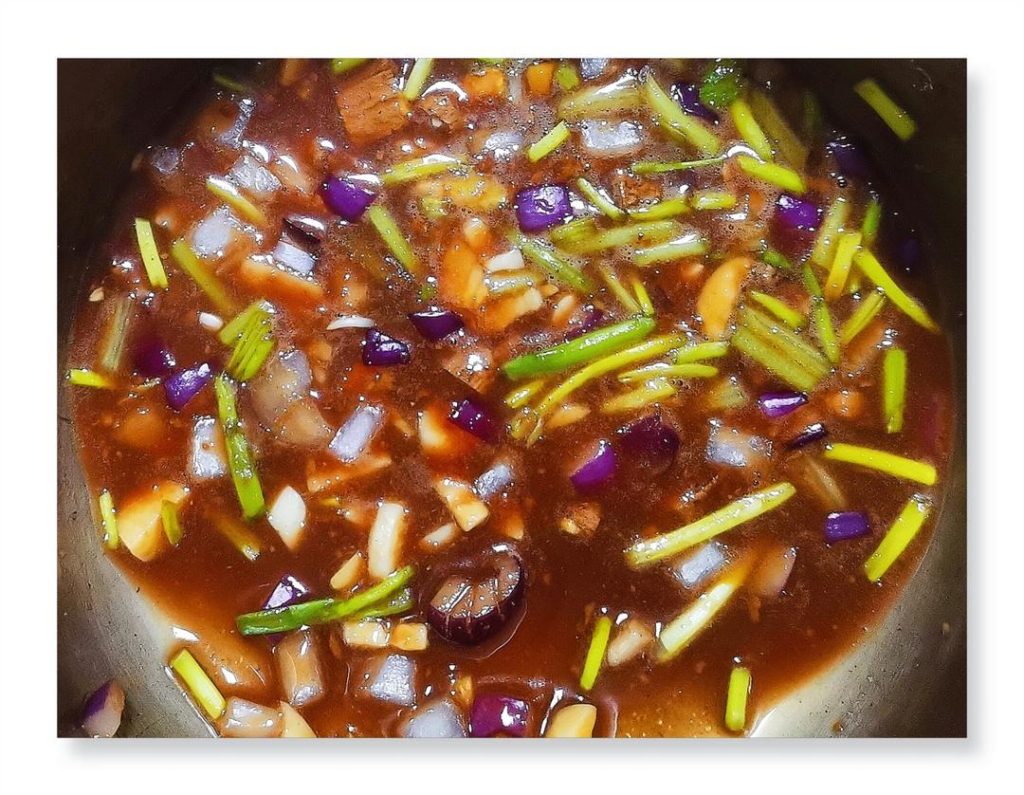
- The Sauce: Measure out all your pastes, sauces, and powders into a large mixing bowl.

How to Make Authentic Char Siu
Step 1: Prepare the Marinade
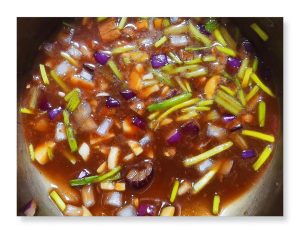
Mix the sugar, salt, five-spice powder, Nam Yue (and its juice), peanut butter, sesame paste, char siu sauce, chu hou paste, chicken powder, and liquors together. Add the eggs and whisk until smooth. If you are using red yeast rice powder for color, dissolve it in a little water first, then add it. Add the fresh aromatics (ginger, garlic, cilantro, shallots).
Why do we add eggs? The egg helps to tenderize the meat and creates a microscopic “crust” on the surface during roasting, contributing to a unique texture.
Step 2: The “Spa” Treatment
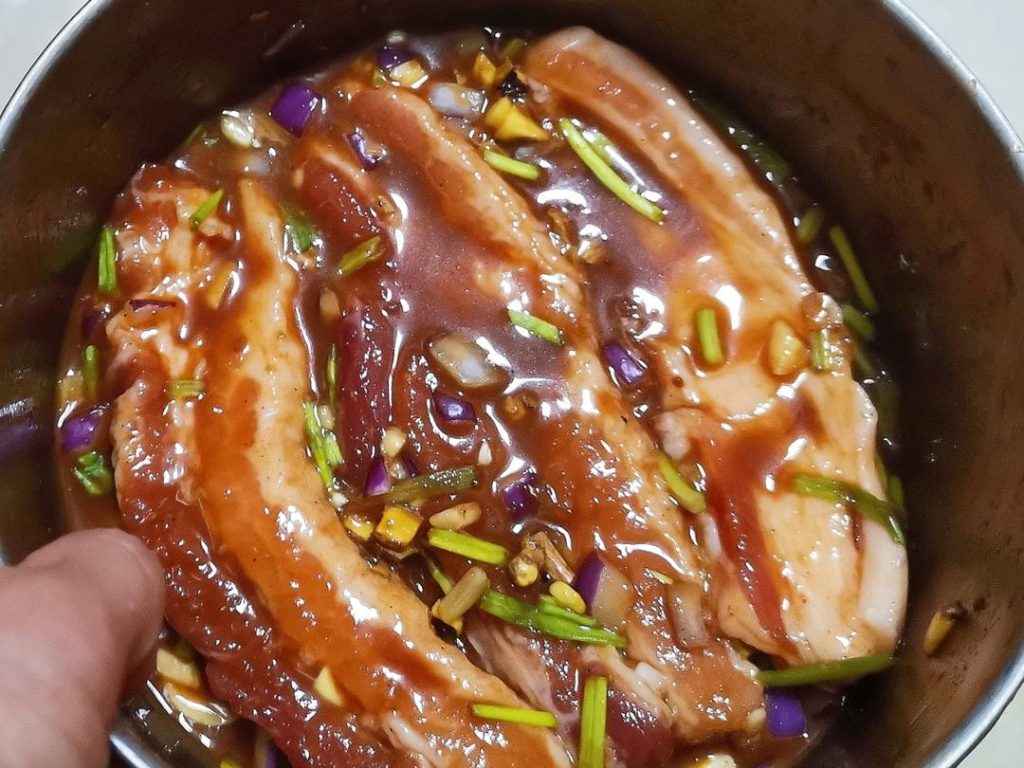
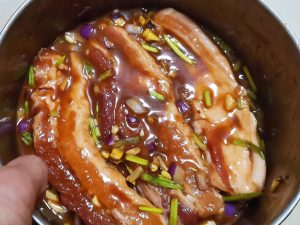
Place the pork strips into the marinade. Massage the sauce into the meat thoroughly. Cover with plastic wrap and refrigerate for 24 hours, flipping the meat a few times to ensure even coating.
Step 3: High-Heat Seal
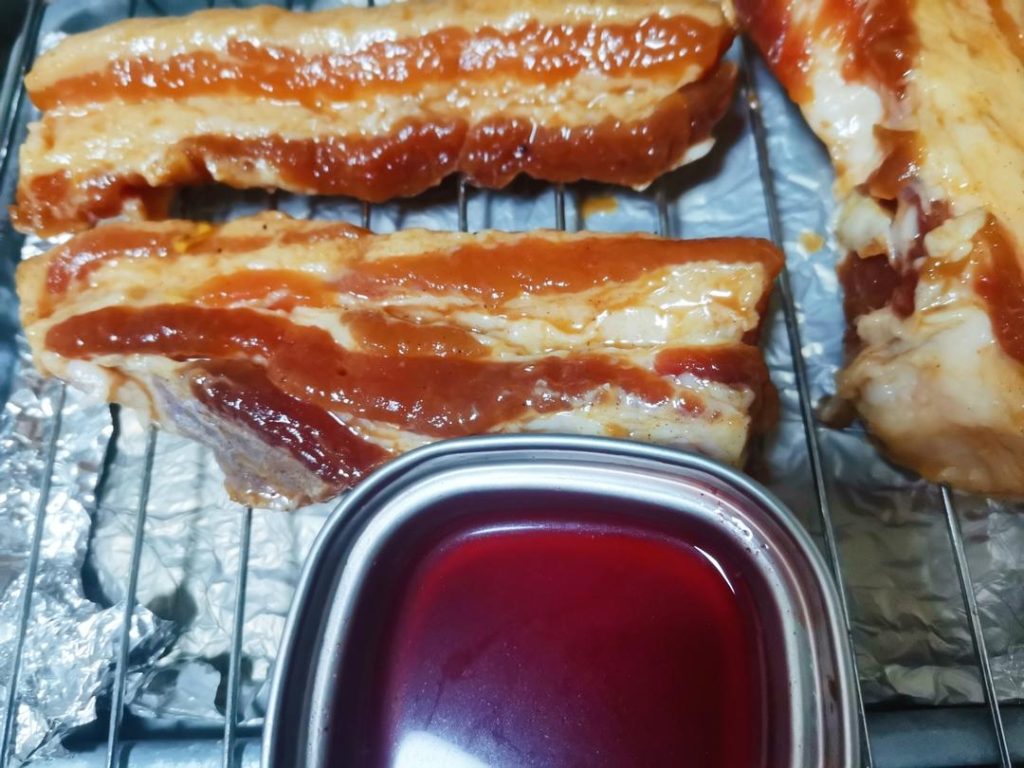
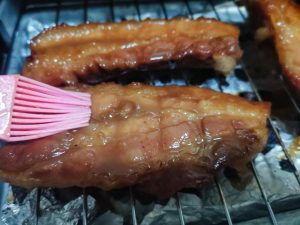
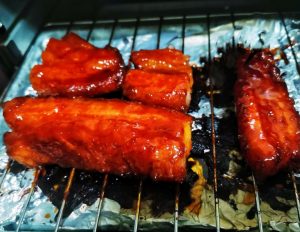
Preheat your oven to its highest setting, around 475°F (245°C). Place the pork on a wire rack over a foil-lined baking sheet. Remove excess aromatics (like cilantro stems) from the surface so they don’t burn. Brush a layer of the marinade on the meat. Roast for 10 minutes. This high heat “seals” the surface, locking in the juices.
Step 4: Low-Heat Roasting
Lower the oven temperature to 350°F (180°C).
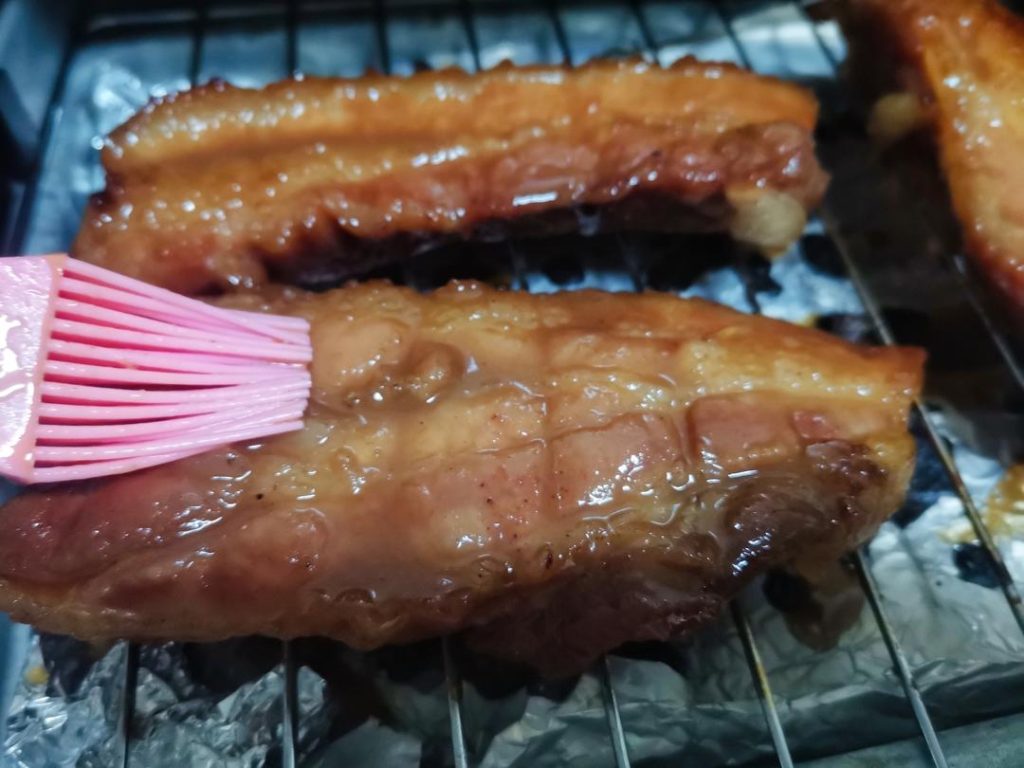
- First Flip: Take the meat out, flip it, brush with marinade, and roast for 10 minutes.
- Second Flip: Flip again, brush with marinade, and roast for another 10 minutes.
- Check: If you have thick cuts (like shoulder), you might need a third flip and another 10 minutes.
Tip: Don’t worry if the color isn’t bright red yet. The magic of the Maillard reaction happens over time.
Step 5: The Candy Glaze
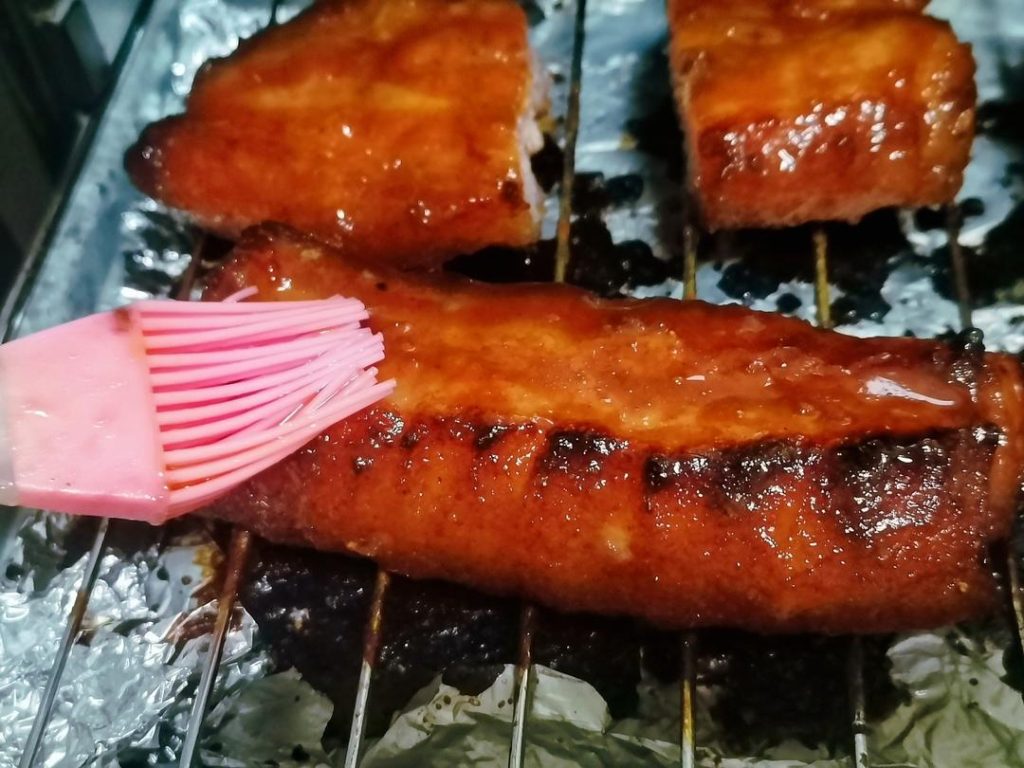
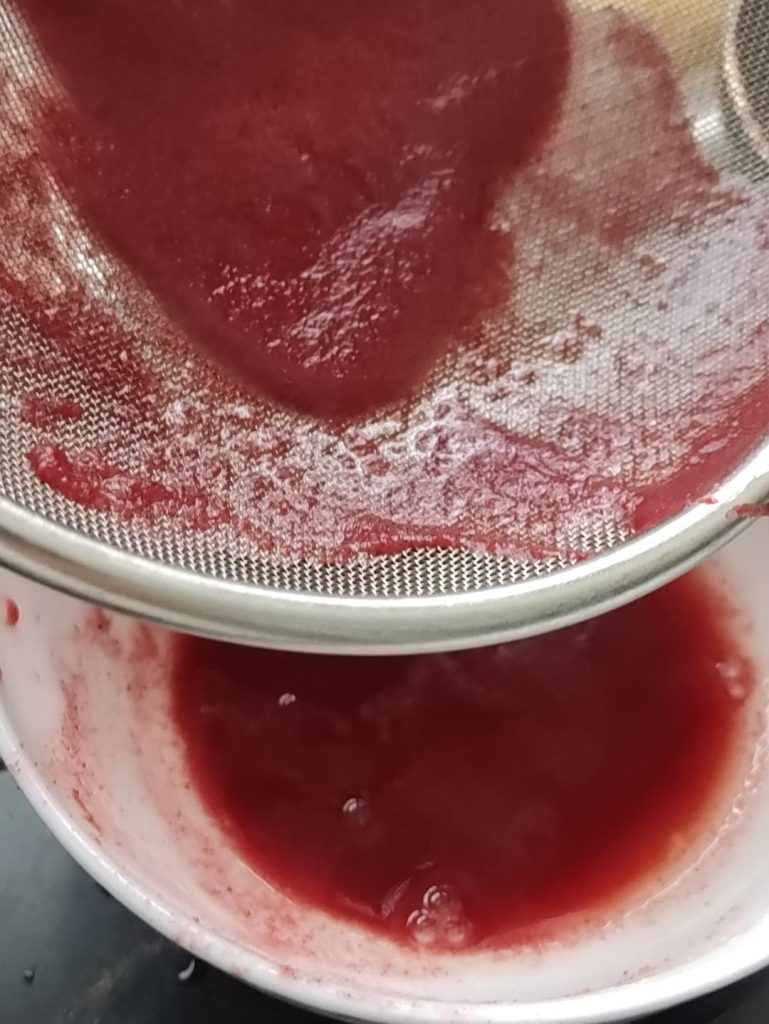
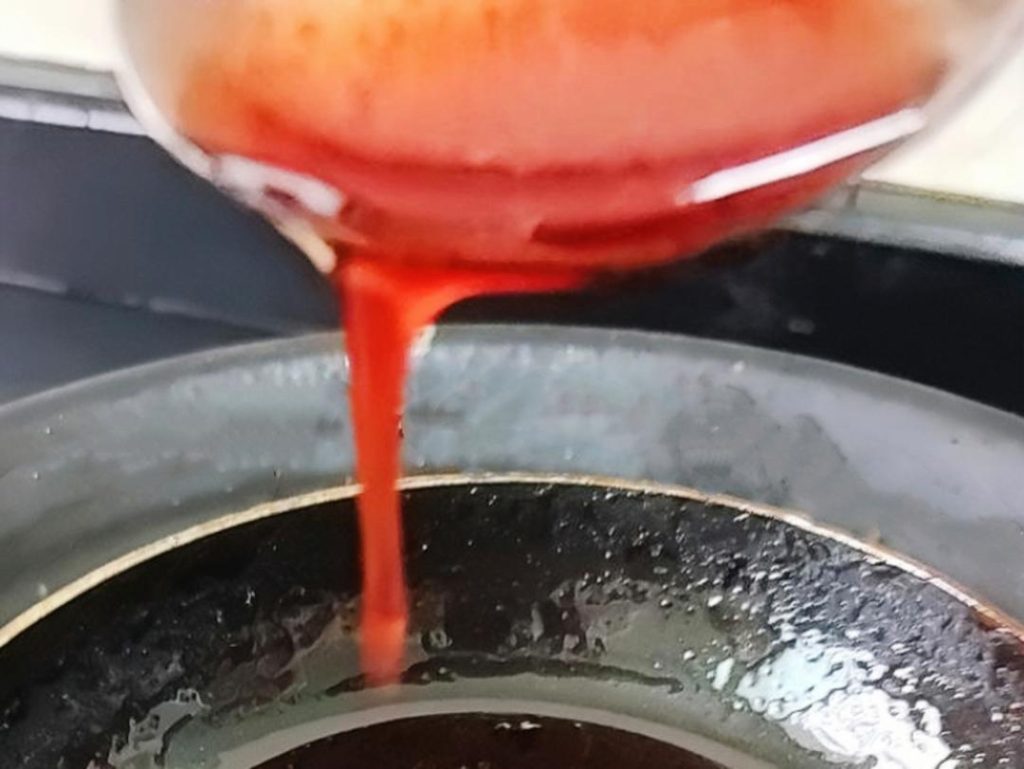
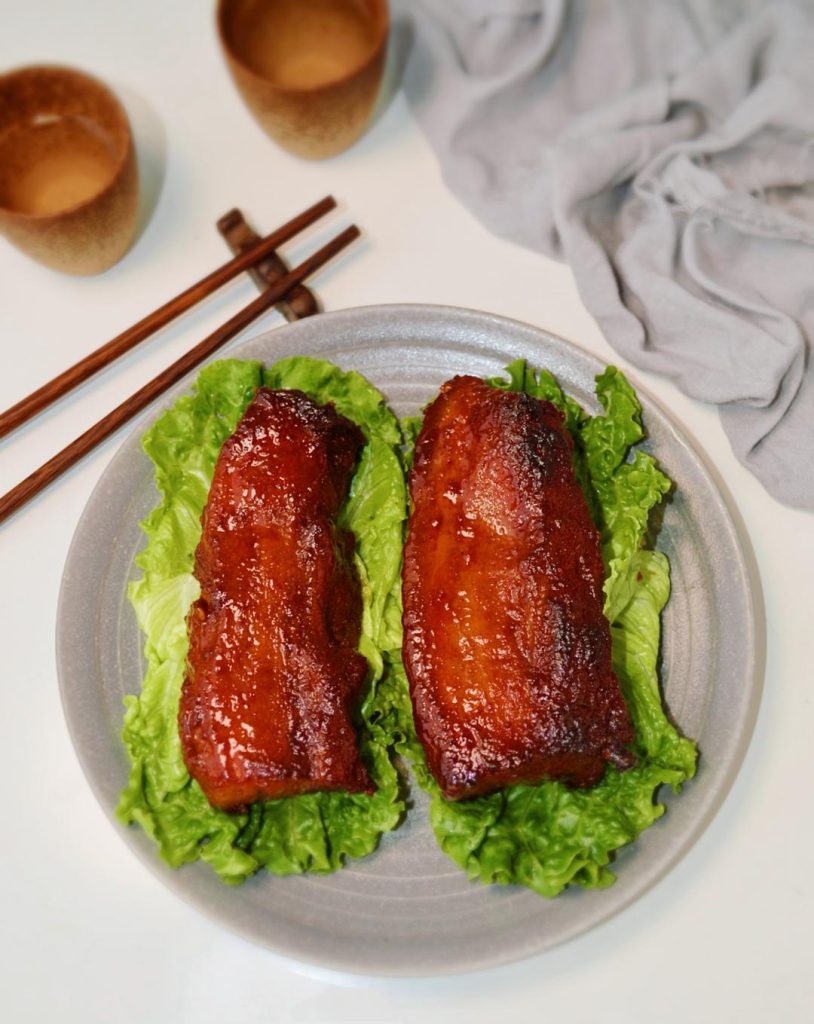
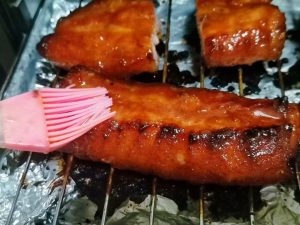
This is the secret to the shine. Dissolve the maltose (or honey) with a tiny bit of hot water to make it spreadable. If you want that classic red hue, you can add a little red yeast rice water to this syrup. Brush the pork generously on both sides with the syrup. Roast at 350°F (180°C) for a final 5-10 minutes. Watch closely! Sugar burns quickly. You want a bubbling, charred (but not burnt) exterior.
Deep Dive: Choosing the Perfect Cut for Char Siu
In traditional Cantonese roasting, the cut of meat you choose dictates the final texture and cooking method. While the marinade remains the same, the results are distinct. Here is how to choose the right one for your table:
1. Pork Belly (The Indulgent Family Favorite)
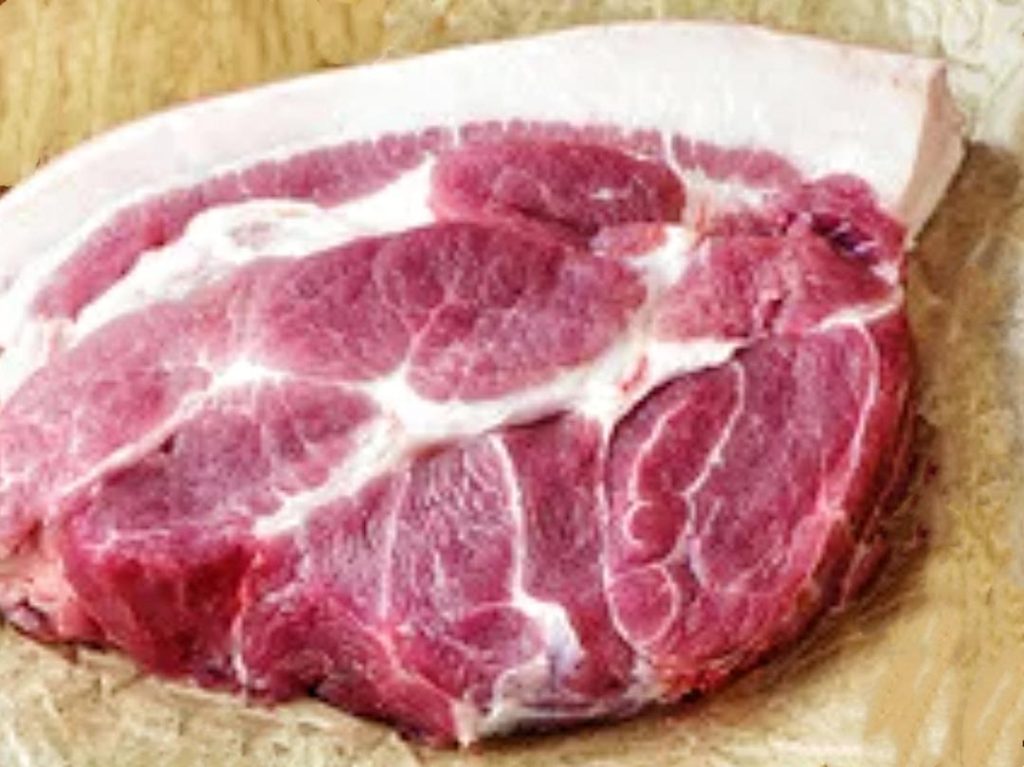
- Why choose it: This is my family’s top choice. When roasted slowly, the fat renders out, leaving layers that are fatty but not greasy, with a texture that is incredibly soft and tender.
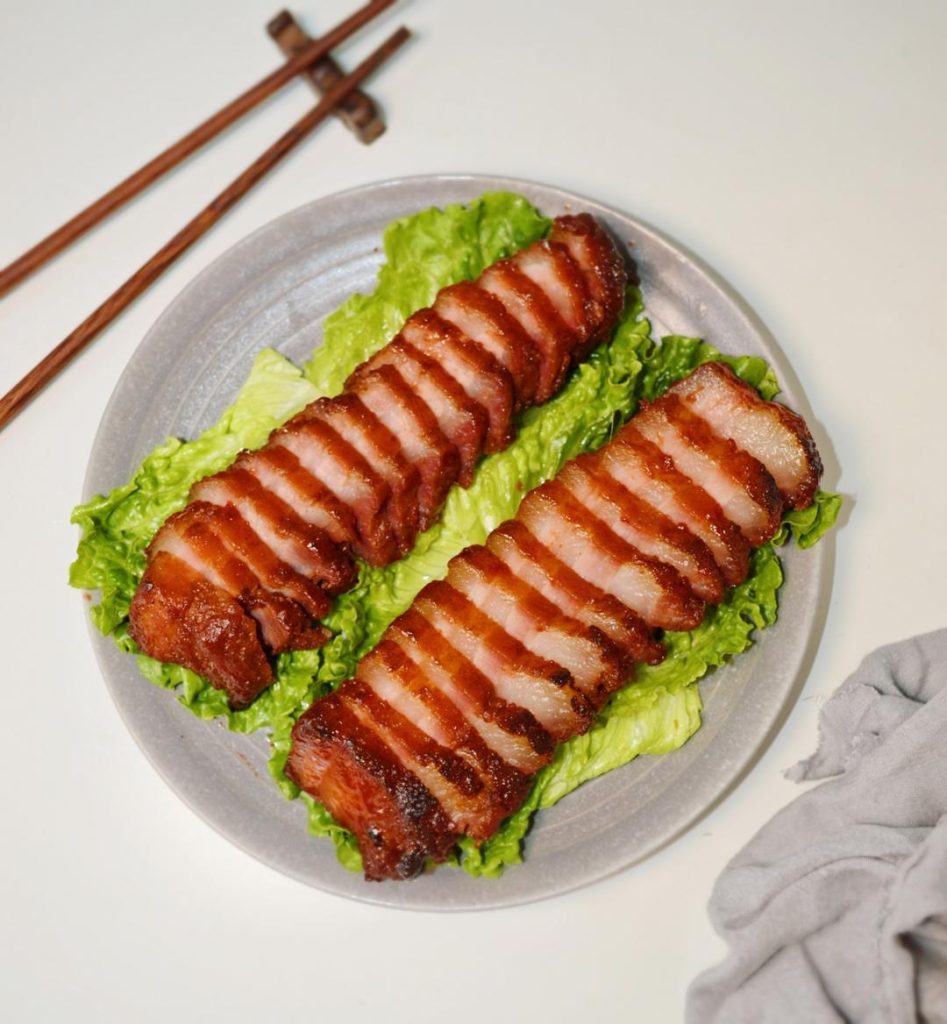
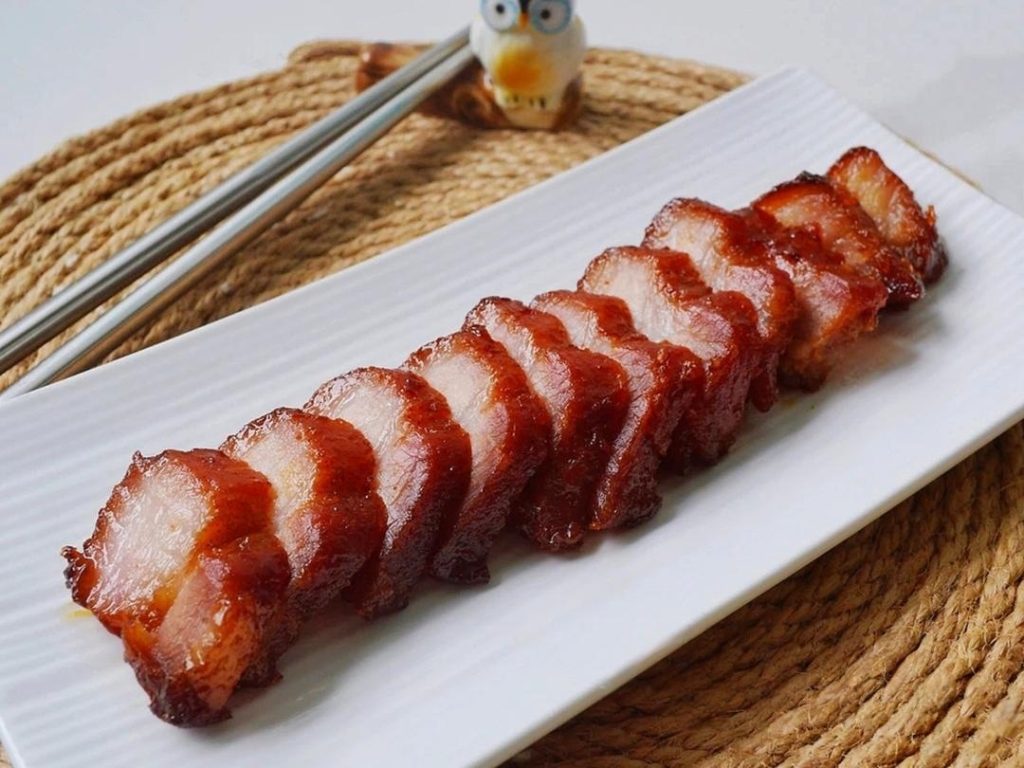
- Cooking & Serving Tip: If your pork belly is on the leaner side, cut it into slightly thicker slices to maintain a satisfying chew. However, if the belly is quite fatty, slice it thinner so you can experience the sensation of the fat melting instantly in your mouth.
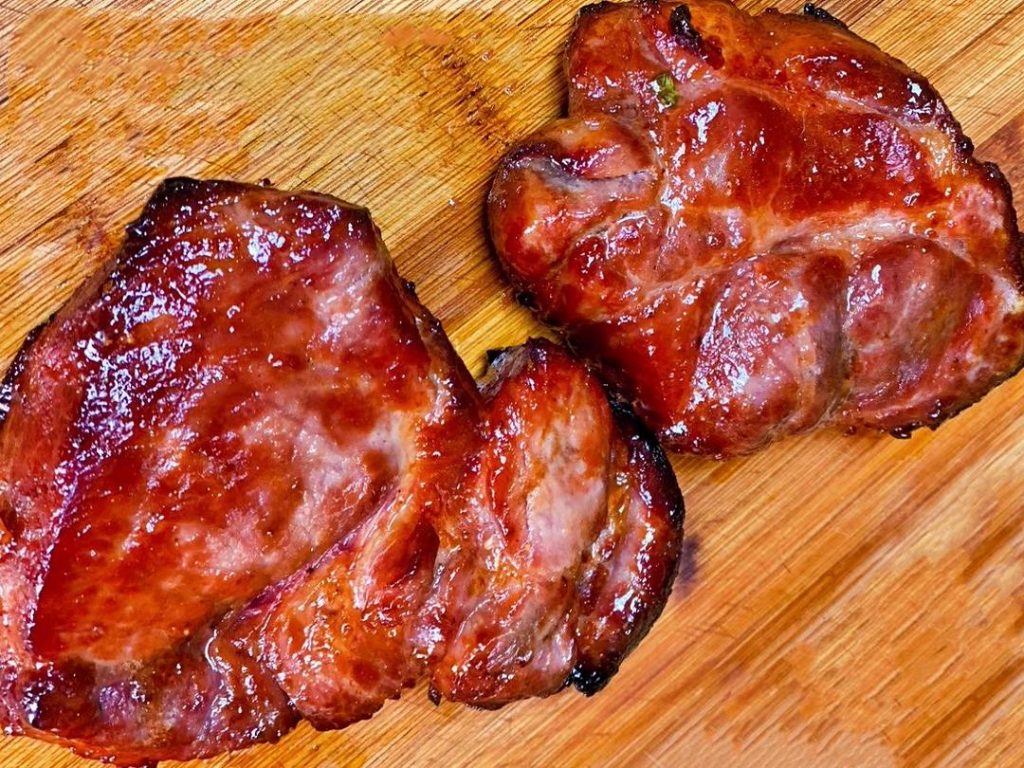
2. Pork Shoulder / Pork Collar / “Mui Tou” (The Lean & Kid-Friendly Choice)
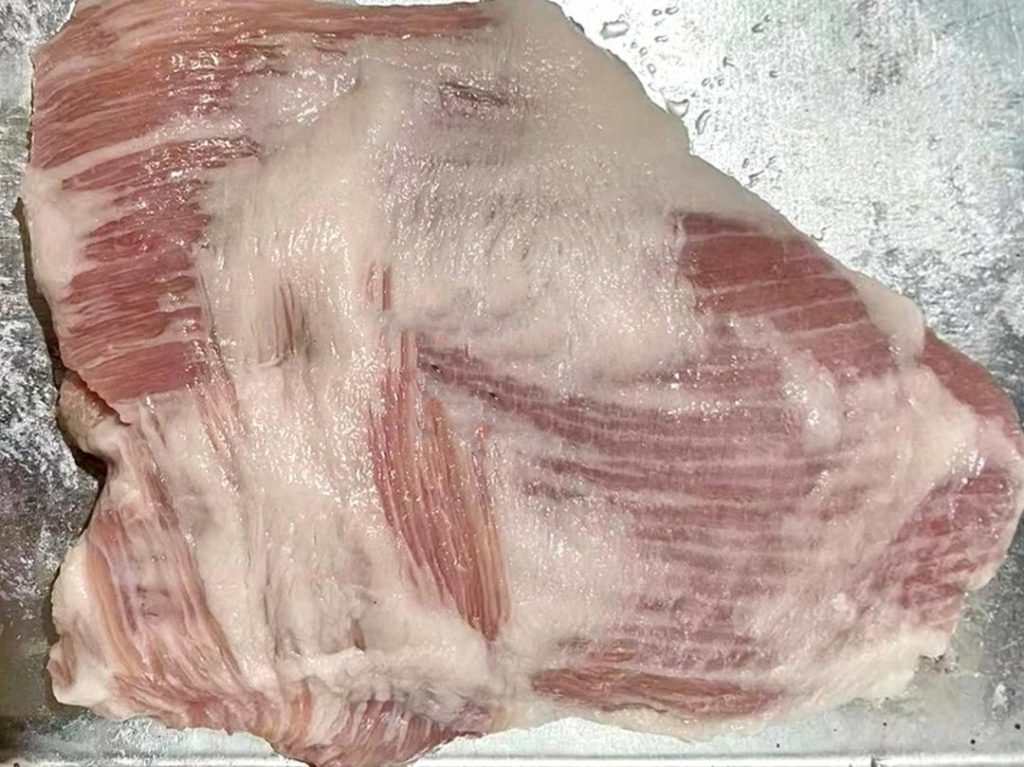
- Why choose it: Known as Mei Hua Rou (Plum Blossom Meat), this cut is lean but never dry or woody. It absorbs the marinade beautifully and produces the reddest, most vibrant finished color.
- Who it’s for: Because it is tender without heavy layers of fat, this is the best option for children or anyone watching their fat intake.
3. Pork Jowl / Neck (The “Golden” Premium Choice)
- Why choose it: This is my personal favorite. A pig only yields two small strips of this meat, earning it the nickname “Golden Three Taels”. It has intricate marbling (snowflake pattern) and a unique texture that is “bouncy” and crunchy (shuang kou) rather than just soft.
- Cooking Nuances:
- Prep: Cut this meat into strips for marinating. Note that because jowl has a Q-bouncy layer of fat on the surface, it doesn’t absorb the red color as deeply as the shoulder.
- Roasting: Because jowl strips are thinner, they require a shorter roasting time than belly or shoulder.
- Saucing: Be careful not to over-brush the sauce. Because the strips are thin and have a large surface area, brushing too much can make the flavor too intense or salty.
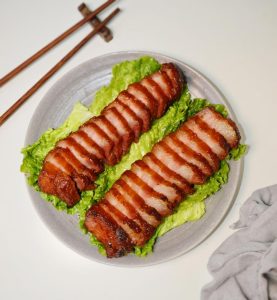
- Serving: Slice this cut diagonally (on a bias). For a fusion twist, try dipping thinly sliced jowl Char Siu in a lemon chili sauce—it tastes fantastic, almost like a Thai dish.
Troubleshooting & FAQ
Q: Why is my Char Siu dry?
A: You likely used a cut that was too lean (like pork loin) or overcooked it. Stick to pork belly or shoulder (butt). Also, ensure you didn’t skip the high-heat sealing step.
Q: Why isn’t my pork red like the restaurants?
A: Restaurants often use red food coloring. For a natural approach, we use red fermented bean curd (Nam Yue) and red yeast rice powder. If you skip these, the pork will be a delicious mahogany brown, which is perfectly normal for home cooking.
Q: Can I use the leftovers?
A: Absolutely! Leftover Char Siu is gold. Dice it up to make Steamed BBQ Pork Buns (Char Siu Bao), stir-fry it into Yangchow Fried Rice, or slice it into Rice Noodles.
Serving Suggestions
Let the meat rest for at least 10 minutes before slicing. This allows the juices to redistribute.
- Classic: Serve sliced over steamed white rice with some blanched choy sum and a drizzle of the pan drippings (if not too burnt).
- Noodle Soup: Top a bowl of Cantonese Wonton Soup with sliced Char Siu for a luxurious upgrade.
Food Safety & Preparation Notes
Because this recipe involves handling raw pork and marinating for long periods, please follow these safety guidelines to ensure a delicious and safe meal:
- Marination Safety: Always marinate the pork in the refrigerator (below 40°F/4°C), never at room temperature. Ensure the container is sealed tightly with plastic wrap to prevent cross-contamination with other foods in your fridge.
- Internal Temperature: While the exterior char is desirable, the internal temperature is the only way to guarantee safety. Use an instant-read thermometer to ensure the thickest part of the pork reaches at least 145°F (63°C). For pork shoulder or belly, I actually recommend cooking it to 160°F-170°F (71°C-77°C) to allow the connective tissues and fat to render properly for a better texture.
- Sugar Burn Risk: This marinade has a high sugar content (maltose/honey/sugar). Sugar burns at high temperatures. During the final high-heat glazing stages, do not walk away from the oven. It can go from “beautifully caramelized” to “bitter and burnt” in less than a minute.
- Allergen Alert: This authentic recipe contains Peanuts (peanut butter), Sesame (sesame paste), Soy and Wheat/Gluten (soy sauces, bean pastes), and Eggs. If you are cooking for guests with allergies, please be aware that these are hidden ingredients in the sauce.
Nutrition Information (Estimate)
- Calories: ~450 kcal per serving
- Carbohydrates: 28g
- Protein: 25g
- Fat: 28g (varies significantly based on pork cut—belly will be higher, shoulder lower)
- Sodium: 1200mg
- Sugar: 24g
Nutrition information is calculated using an ingredient database and should be considered an estimate. Actual values will vary depending on the specific cut of meat used (fat-to-lean ratio) and how much marinade is discarded versus consumed. Garnishes and optional ingredients are not included.
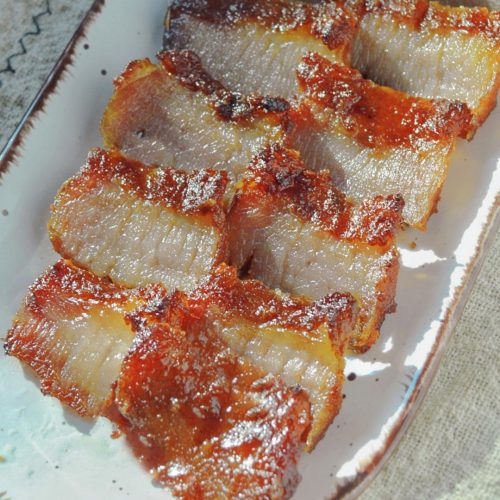
Cantonese Honey Glazed Char Siu (Authentic)

Equipment
- Oven
- Wire Rack and Baking Sheet
Ingredients
The Meat
- 2.2 lbs Pork Belly or Pork Shoulder (cut into strips) About 1kg
The Marinade
- 125 g White Sugar
- 25 g Salt
- 30 ml Light Soy Sauce
- 10 g Peanut Butter
- 10 g Sesame Paste
- 10 g Red Fermented Bean Curd (Nam Yue) Plus some juice from the jar
- 1 tbsp Rose Wine (Mei Kuei Lu Chiew) Optional but recommended for aroma
- 2 Large Eggs
Aromatics
- 2 Dry Red Shallots Minced
- 5 cloves Garlic Minced
- 1 stalk Cilantro Chopped
The Glaze
- 2 tbsp Maltose Can substitute with Honey
Instructions
- Mix all marinade ingredients (sauces, pastes, spices, eggs, alcohol) and aromatics (garlic, ginger, shallot, cilantro) in a large bowl until well combined.

- Place the pork strips into the marinade. Massage well to coat. Cover and refrigerate for 24 hours.

- Preheat oven to 475°F (245°C). Place pork on a wire rack over a foil-lined tray. Brush with marinade. Roast for 10 minutes to seal the meat.
- Reduce heat to 350°F (180°C). Flip the pork, brush with marinade, and roast for 10 minutes. Flip and brush again, roasting for another 10 minutes.
- Dissolve maltose with a little hot water. Brush the pork generously with this glaze. Roast for a final 5-10 minutes until sticky and slightly charred.

- Rest the meat for 10 minutes before slicing.

Notes
- Calories: ~450 kcal per serving
- Carbohydrates: 28g
- Protein: 25g
- Fat: 28g (varies significantly based on pork cut—belly will be higher, shoulder lower)
- Sodium: 1200mg
- Sugar: 24g












Leave a Reply