Growing up in a Chinese household, braised ribs were almost always chopped into neat, bite-sized pieces before hitting the wok. It’s practical and makes them easy to eat with chopsticks. But when I was introduced to the Zhuji-style method—braising massive, intact slabs of pork ribs until they literally fall apart at the slightest touch—my entire perspective changed.

This method feels hearty, rustic, and incredibly satisfying. You don’t need to labor over chopping through bones with a heavy cleaver. Instead, you let time, a heavy pot, and a rich, aromatic soy-based broth do all the heavy lifting. The result is a stunning centerpiece of tender meat that you can effortlessly pull apart into juicy shreds.
What Is Zhuji-Style Braised Pork Ribs?
Hong Shao Pai Gu (Red Braised Pork Ribs) is a quintessential Chinese comfort food characterized by its savory, sweet, and sticky soy sauce glaze. While standard recipes call for chopping the ribs, the people of Zhuji (a city in Zhejiang province) are known for their generous, hearty cooking style. They braise large, half-rack portions slowly until the meat practically melts off the bone.
If you prefer the traditional restaurant style where ribs are chopped into small pieces before cooking, check out our classic Braised Pork Ribs recipe. Both are incredibly flavorful, but this Zhuji method offers a uniquely dramatic presentation and a pull-apart texture that is perfect for family gatherings.
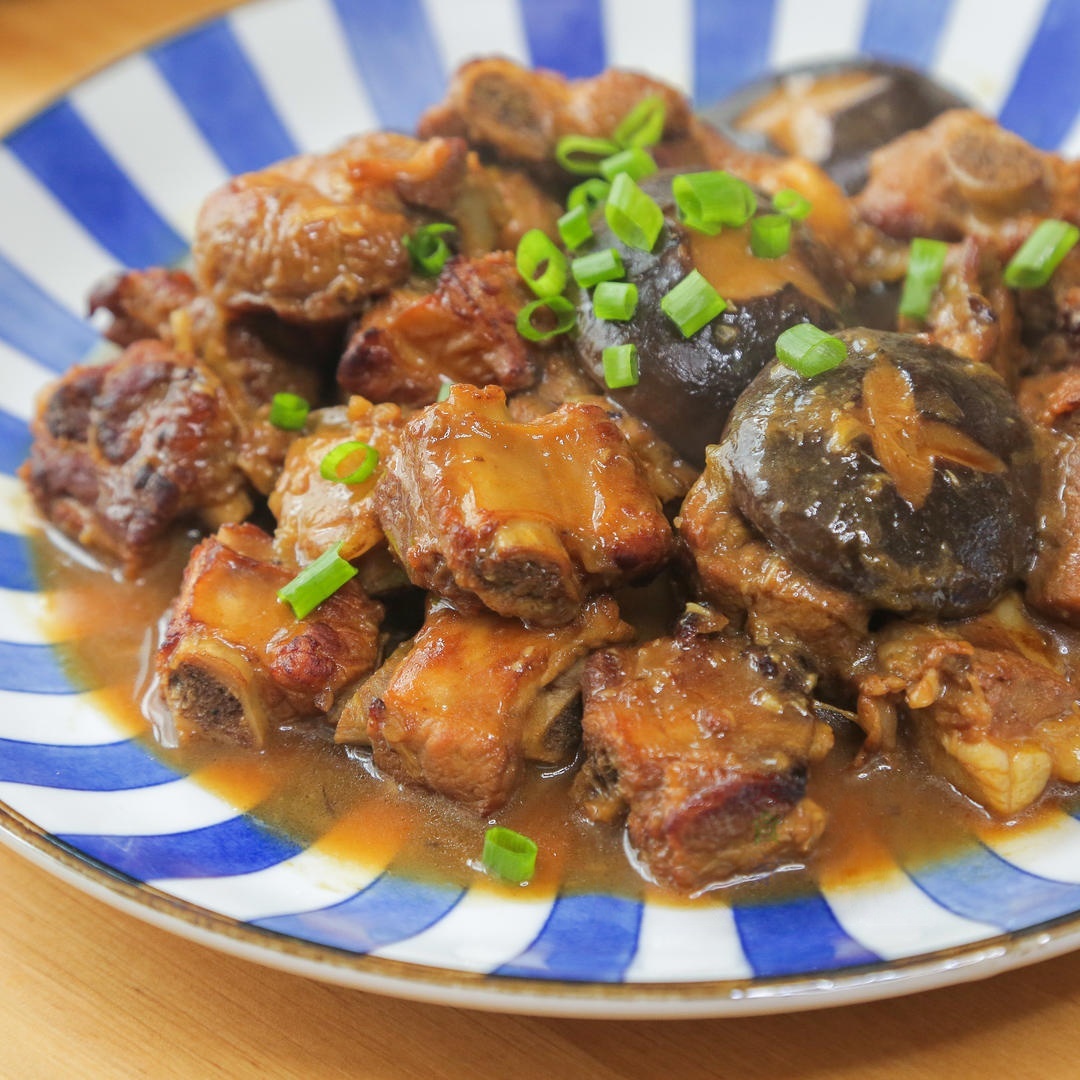
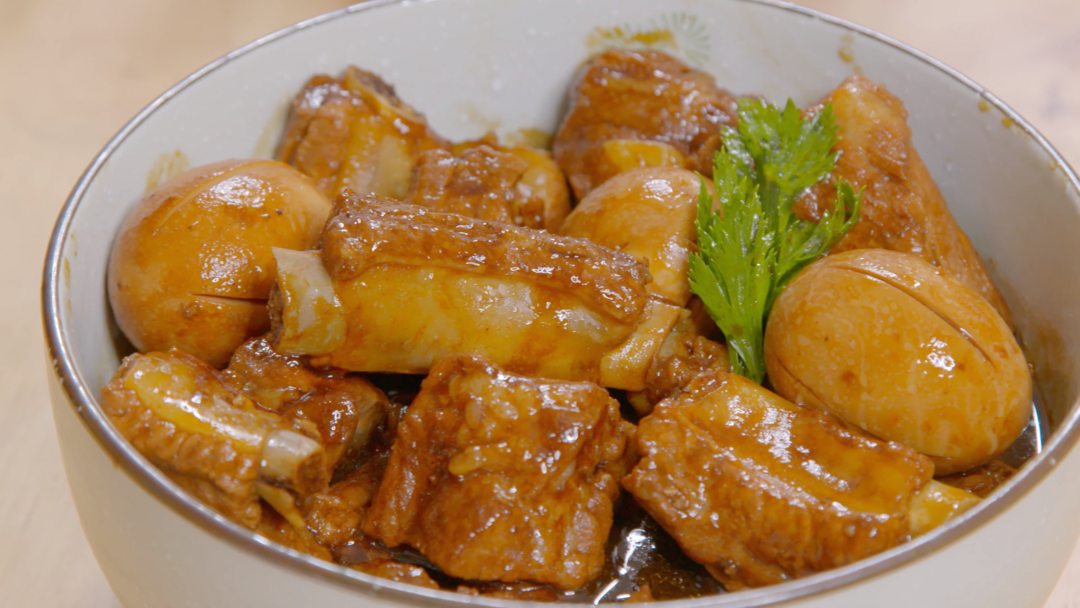
1Braised Pork Ribs (Hong Shao Pai Gu)This authentic Braised Pork Ribs (Hong Shao Pai Gu) recipe features tender ribs and shiitake mushrooms in a rich, glossy savory glaze. A classic Chinese comfort dish.Check out this recipe2Braised Pork Ribs with Eggs (Hong Shao Pai Gu)A simplified, restaurant-quality recipe for Braised Pork Ribs with Eggs using a ‘soul sauce’ ratio and red fermented bean curd. No sugar caramelization required!Check out this recipe
Ingredients
The Ribs & Marinade:
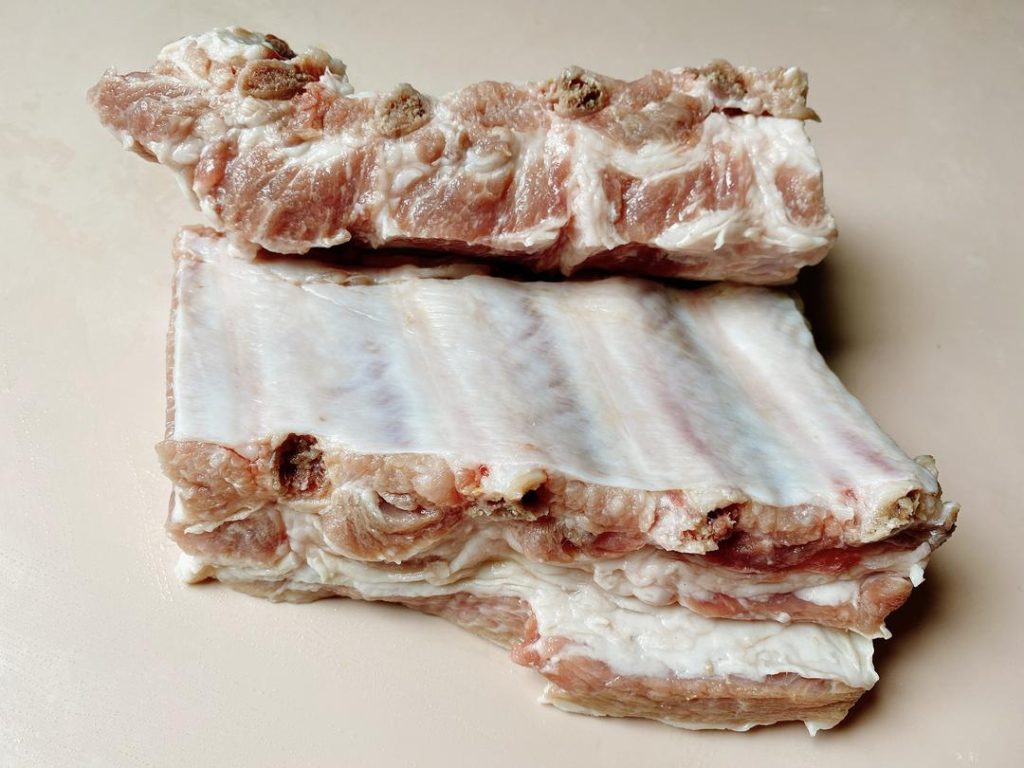
- Pork Ribs (Spare Ribs): 1 lb (500g). Ask your butcher for an intact slab with thick meat, then cut it in half so you have large sheets of ribs. For more details on choosing the right cut, see our Chinese Pork Ribs Guide (Spare Ribs vs Baby Back).
- Shaoxing Wine: 1.5 tablespoons (20g) for the marinade.
- Light Soy Sauce: 2 teaspoons (10g) for the marinade.
- Salt: 1/2 teaspoon (2g). Check out our guide on how to choose Salt for Chinese cooking.
The Braising Liquid & Aromatics:
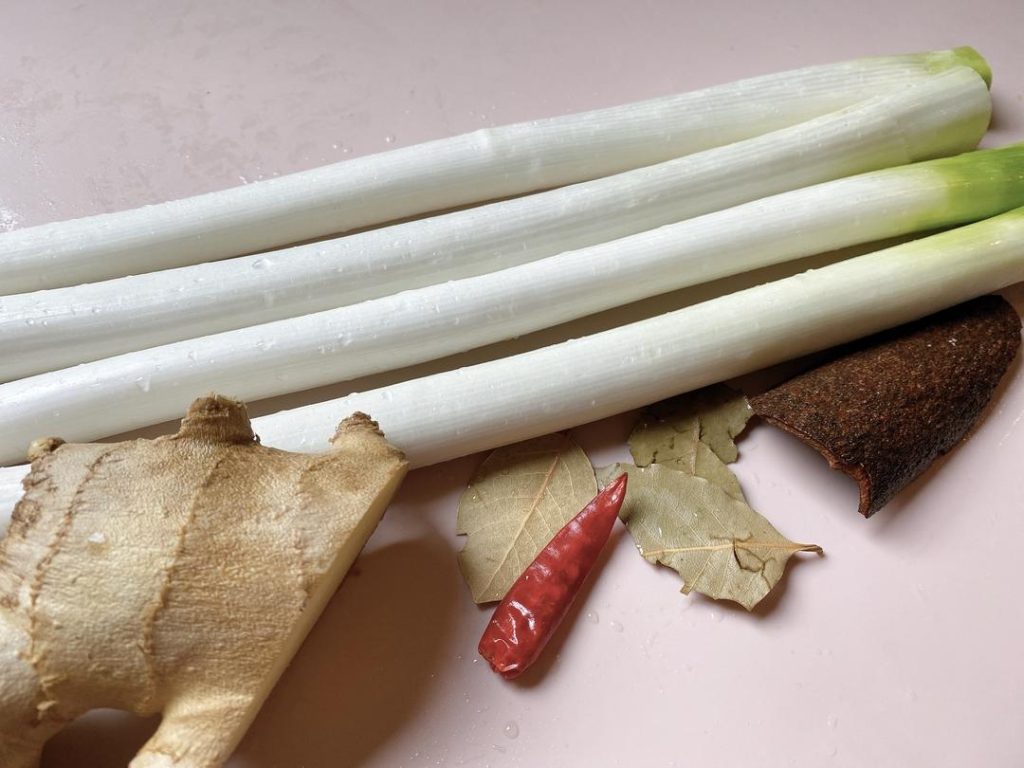
- Green Onions (Scallions/Leeks): 4 whole stalks, cut into large sections. These will line the bottom of the pot.
- Fresh Ginger: 6 thick slices, unpeeled. Leaving the skin on provides a warmer flavor profile in traditional Chinese medicine and cooking.
- Shaoxing Wine: 1/3 cup + 1 tablespoon (100g). You need a generous amount to tenderize the meat and build the broth. Read more about Shaoxing Wine.
- Light Soy Sauce: 2 tablespoons (30g). Our go-to for savory umami. Learn about picking the best Light Soy Sauce.
- Dark Soy Sauce: 2 teaspoons (10g). This gives the ribs their signature mahogany color. Here is our guide to Dark Soy Sauce.
- Chinese Rock Sugar: 2.5 tablespoons (30g). Rock sugar provides a brilliant glossy finish that regular white sugar can’t match. Grab some at your local Asian market, or read our Chinese Rock Sugar guide.
- Cassia Bark (Chinese Cinnamon): 1 piece.
- Dried Chili Pepper: 1 whole pepper, just for a subtle warmth.
- Bay Leaves: 3 leaves.
- Cornstarch: 2 tablespoons (mixed with 2 tablespoons water) to thicken the final glaze.
Equipment Needed
- Heavy-Bottomed Pot or Dutch Oven: Essential for distributing heat evenly over a 90-minute braise.
- Meat Thermometer: To ensure the internal collagen has broken down properly.
Prep & Mise en Place
The secret to this dish is layering the flavors. We start by blanching the ribs to remove impurities, which ensures a clean-tasting sauce. Then, we apply a short 30-minute marinade. This gives the thick cuts of meat a head start on absorbing salt and umami before they go into the braising pot.
Cooking Process
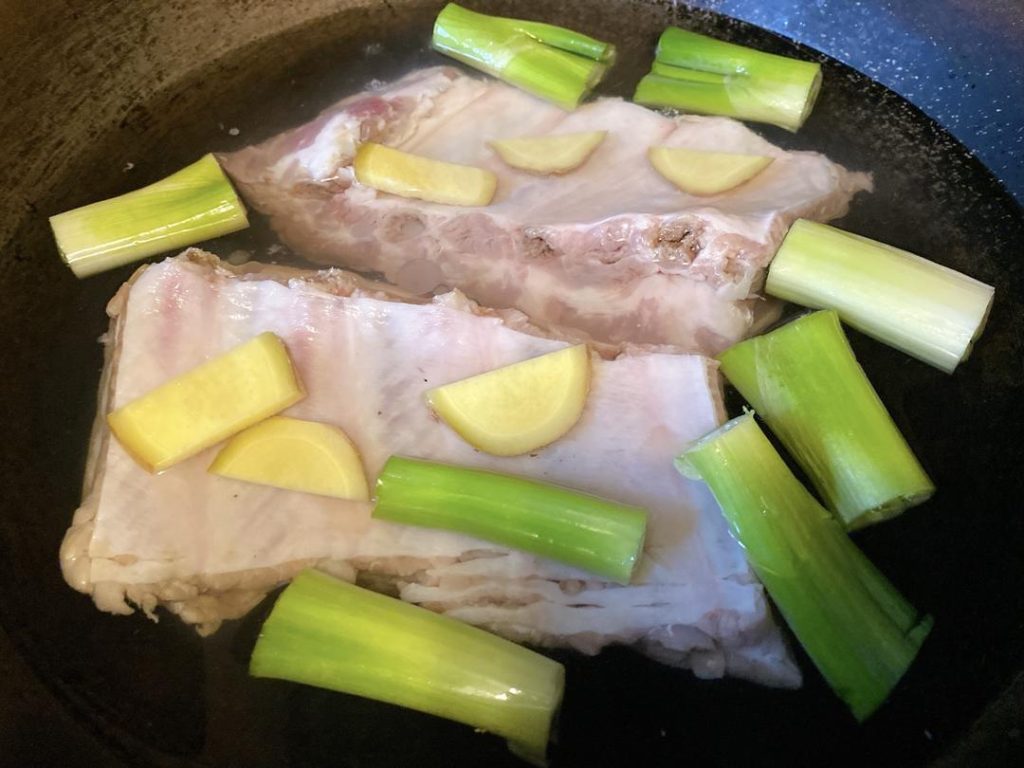
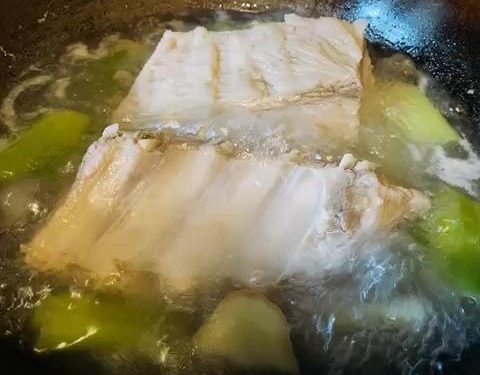
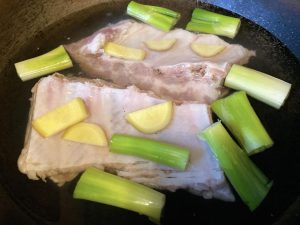
- Blanch the Ribs: Place the large rib pieces into a pot of cold water. Add 1 tablespoon of Shaoxing wine, 2 slices of ginger, and 1 scallion (tied into a knot). Bring to a boil over medium-high heat and let it actively boil for 2 minutes to draw out impurities.
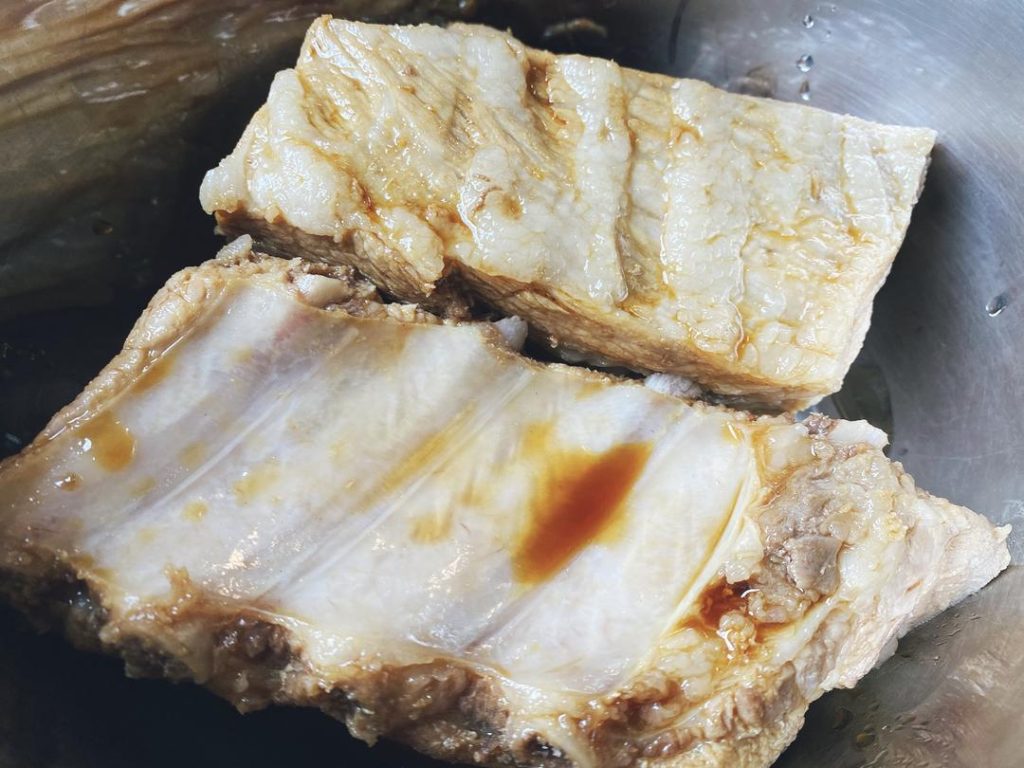
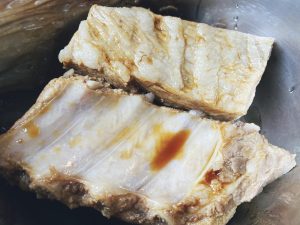
- Marinate: Remove the ribs, rinse them under warm water, and pat them dry. In a large bowl, toss the ribs with 1.5 tablespoons (20g) Shaoxing wine, 2 teaspoons (10g) light soy sauce, and 1/2 teaspoon (2g) salt. Let them marinate at room temperature for 30 minutes.
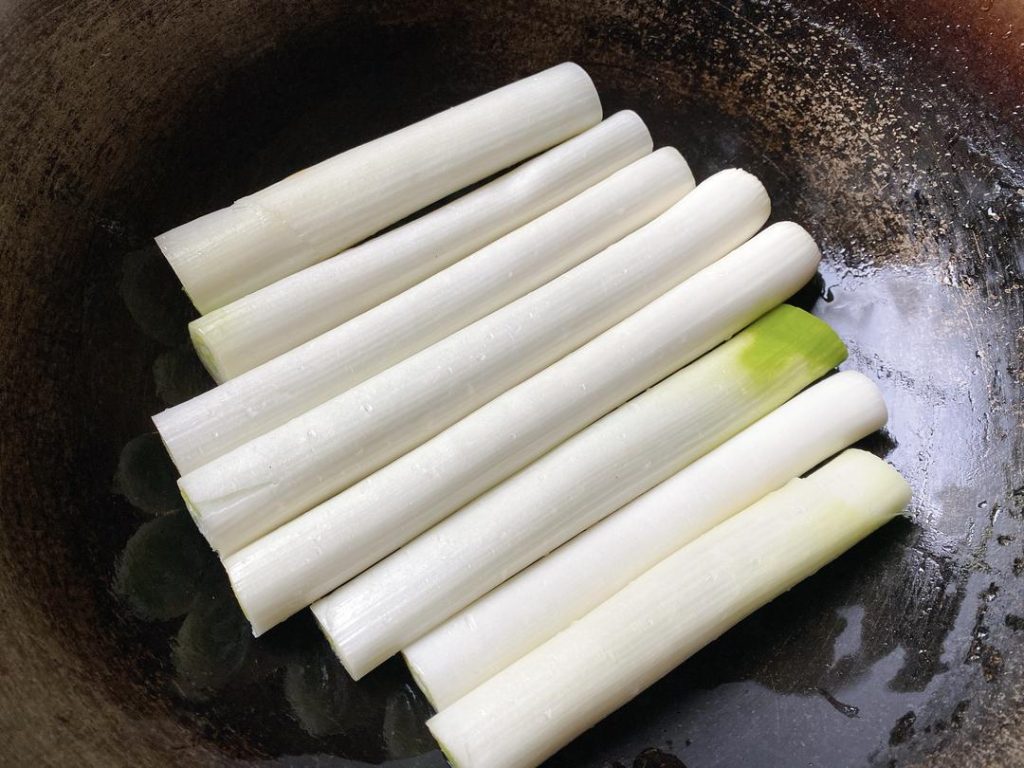
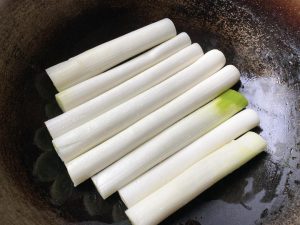
- Build the Aromatic Base: In your heavy-bottomed pot, spread the remaining green onion sections evenly across the bottom. This acts as a protective barrier to prevent the large slabs of ribs from sticking and scorching during the long cook.
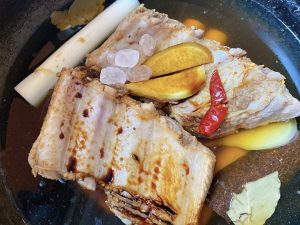
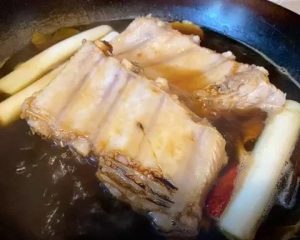
- Assemble the Braise: Place the marinated ribs on top of the scallion bed. Pour in the 100g Shaoxing wine, remaining 3 slices of ginger, 1 dried chili, cassia bark, bay leaves, 30g light soy sauce, 10g dark soy sauce, and 30g rock sugar.
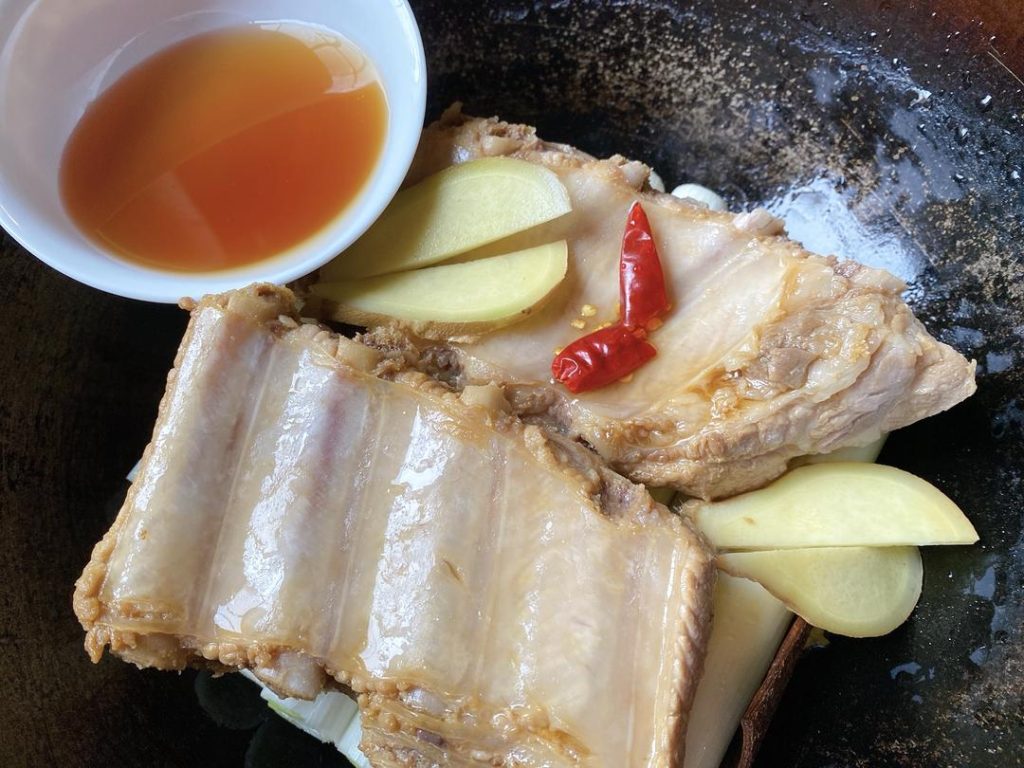
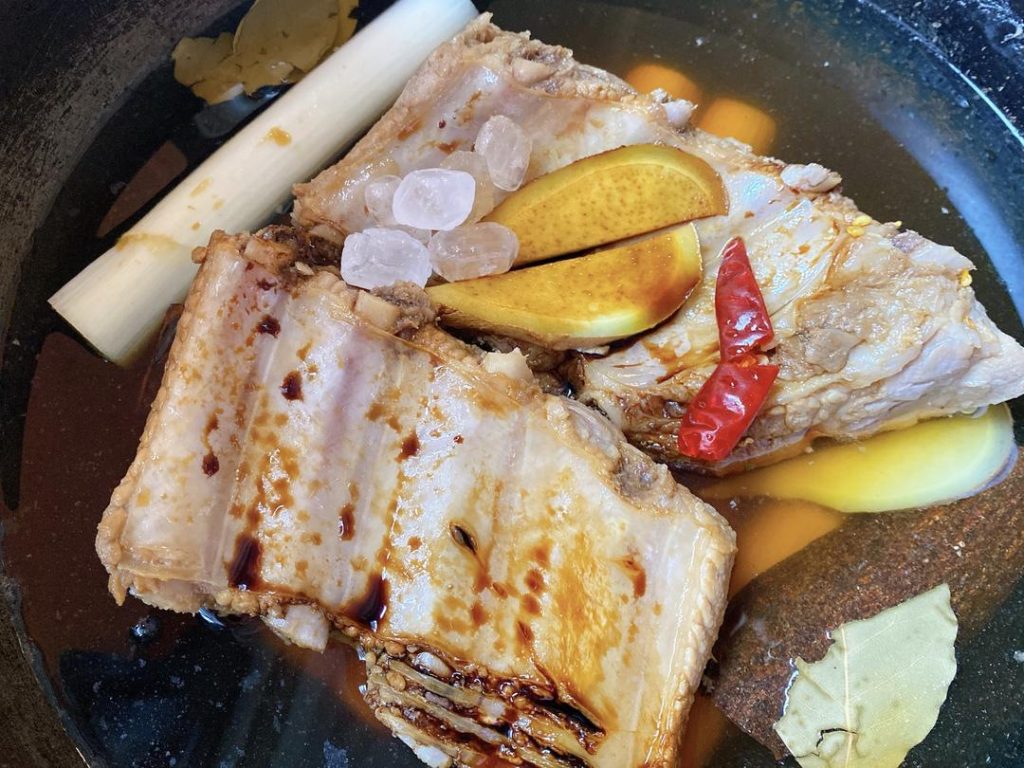
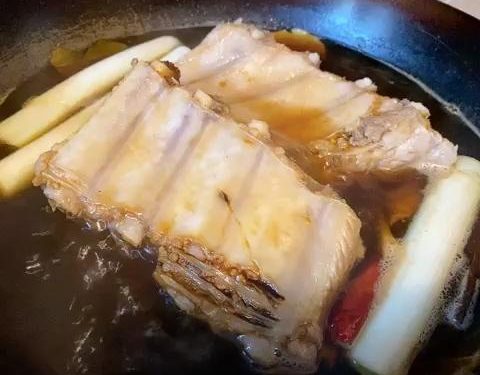
- Simmer: Pour in enough boiling water to come up right to the top level of the ribs (do not use cold water, as it seizes the meat fibers). Bring everything to a rolling boil, then immediately drop the heat to medium-low, cover the pot, and let it simmer gently.
Maintaining a gentle simmer (around 190°F to 200°F) rather than a rolling boil allows the collagen in the tough pork connective tissues to slowly break down into luscious gelatin. Boiling too hard will squeeze the moisture out of the muscle fibers, leaving the meat dry and stringy.
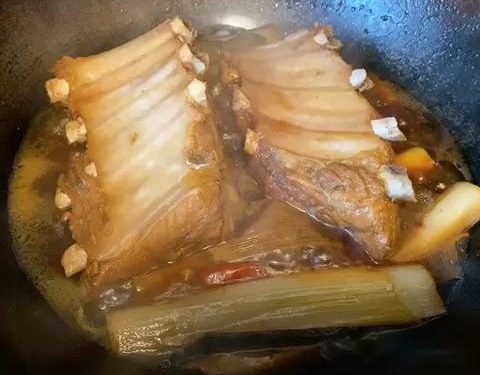
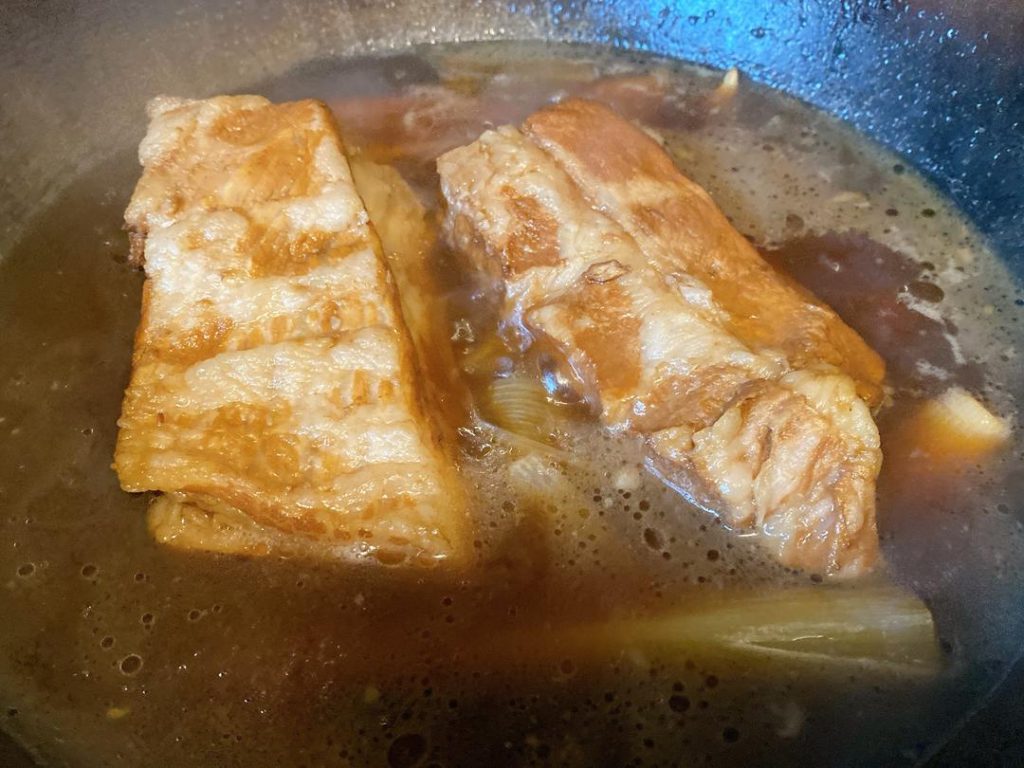
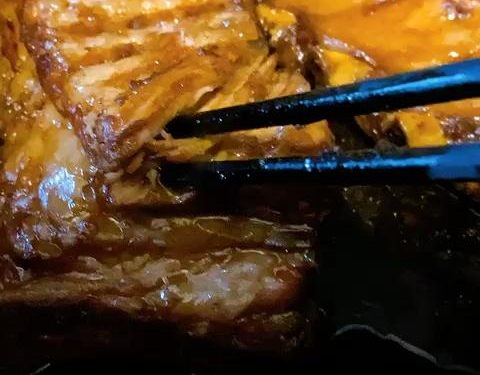
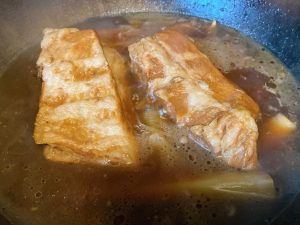
- The Long Cook (1.5 Hours): Let the ribs braise for a total of 90 minutes. Halfway through, when the liquid has reduced by about half, carefully flip the ribs over. If the water level looks dangerously low, add a splash of boiling water. By the 90-minute mark, a chopstick should pierce straight through the thickest part of the meat with zero resistance (aim for an internal temperature around 195°F–200°F).
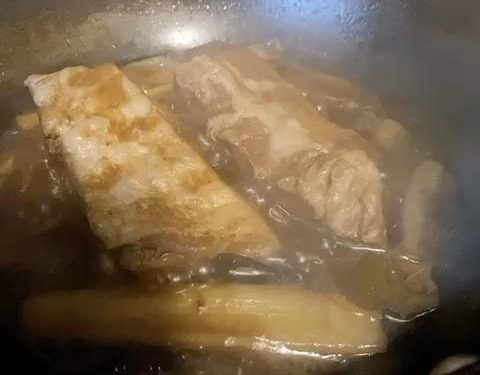
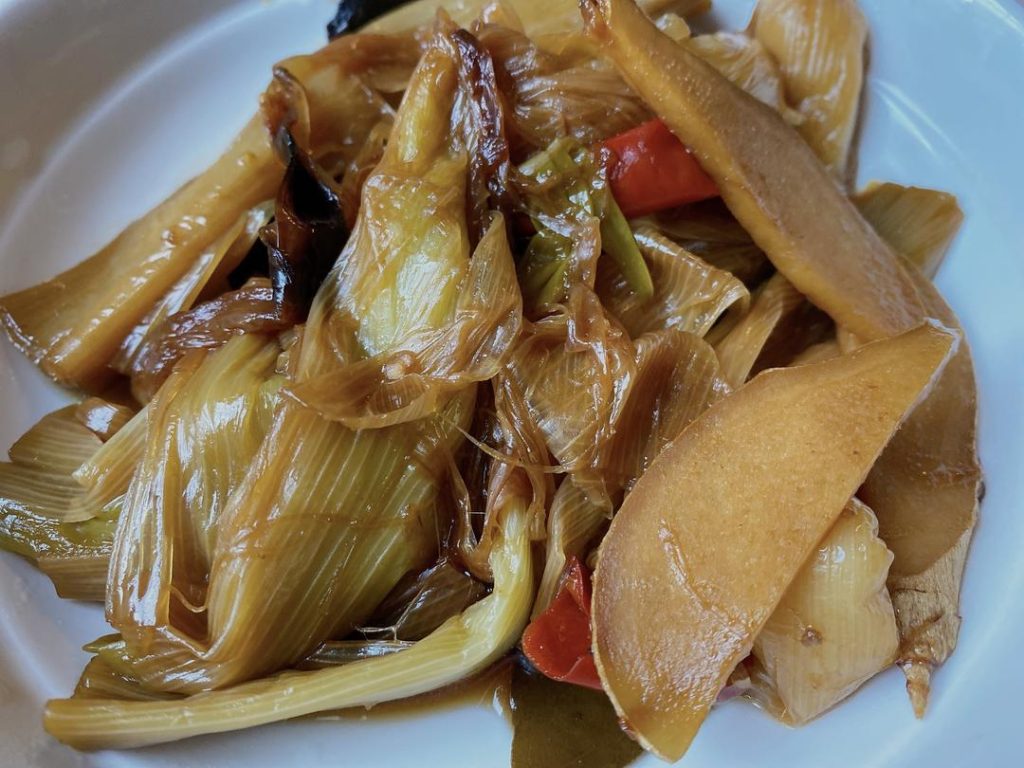
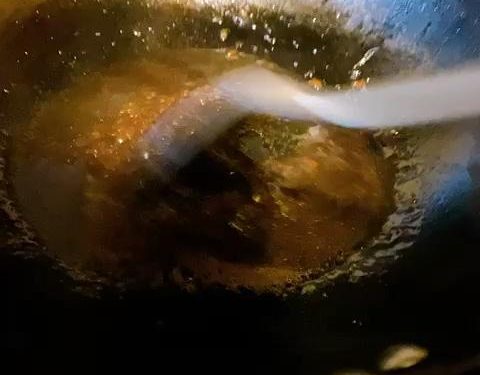
- Reduce and Glaze: Carefully remove the tender ribs to a serving platter. Use a slotted spoon to scoop out and discard all the aromatics (ginger, scallions, spices) from the pot. Turn the heat up to high and boil the remaining sauce for 3–5 minutes to concentrate the flavors.
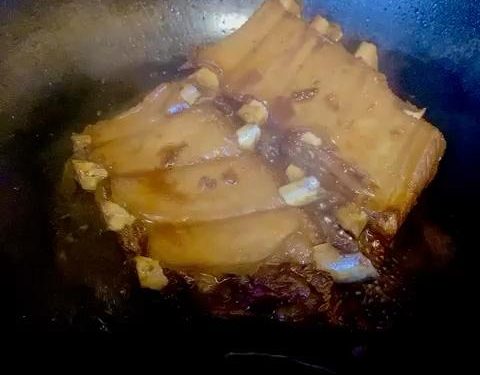
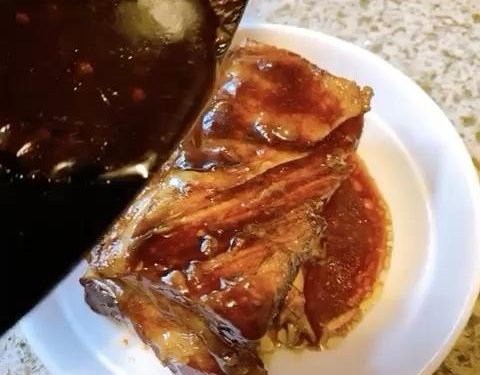
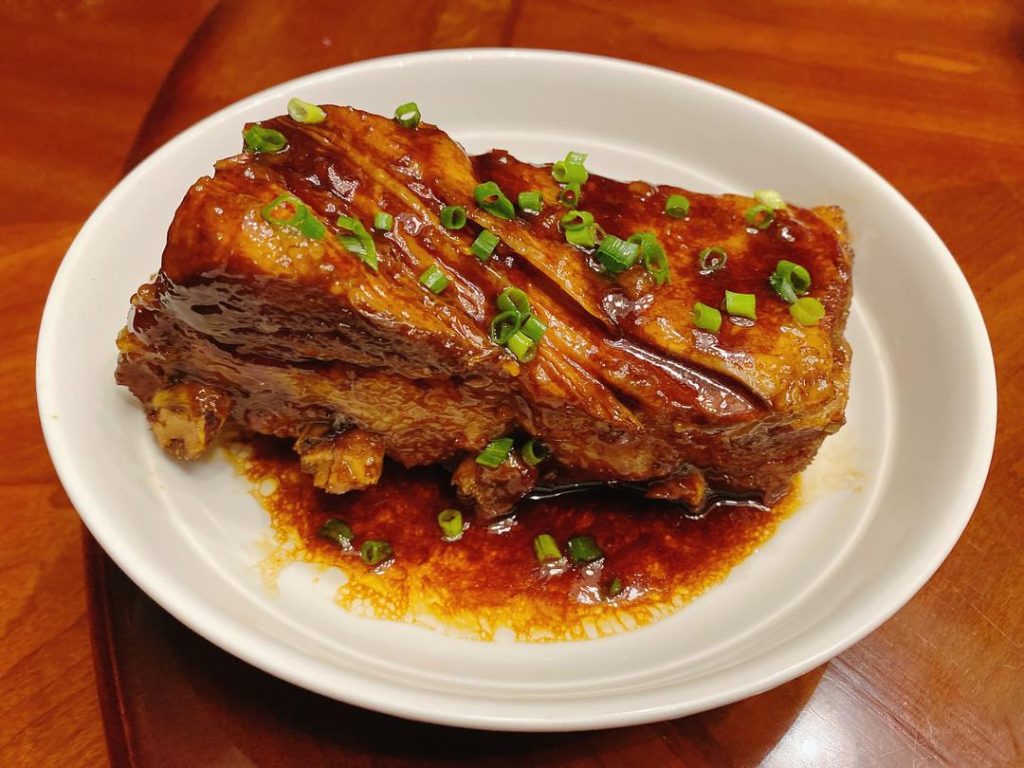
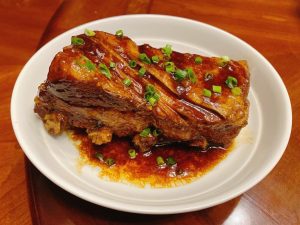
- Thicken: Stir the cornstarch and water together into a slurry. Pour it into the bubbling sauce and stir constantly for 30–60 seconds until glossy and thick enough to coat the back of a spoon. Pour this rich glaze generously over the ribs, garnish with a sprinkle of fresh chopped scallions, and serve!
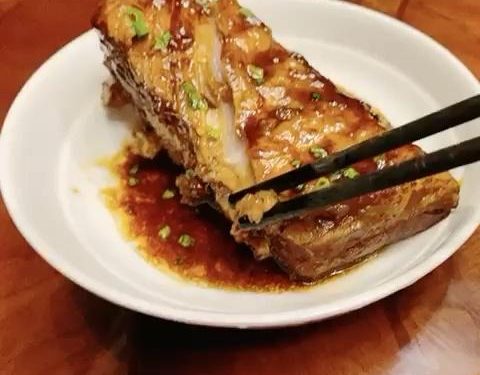
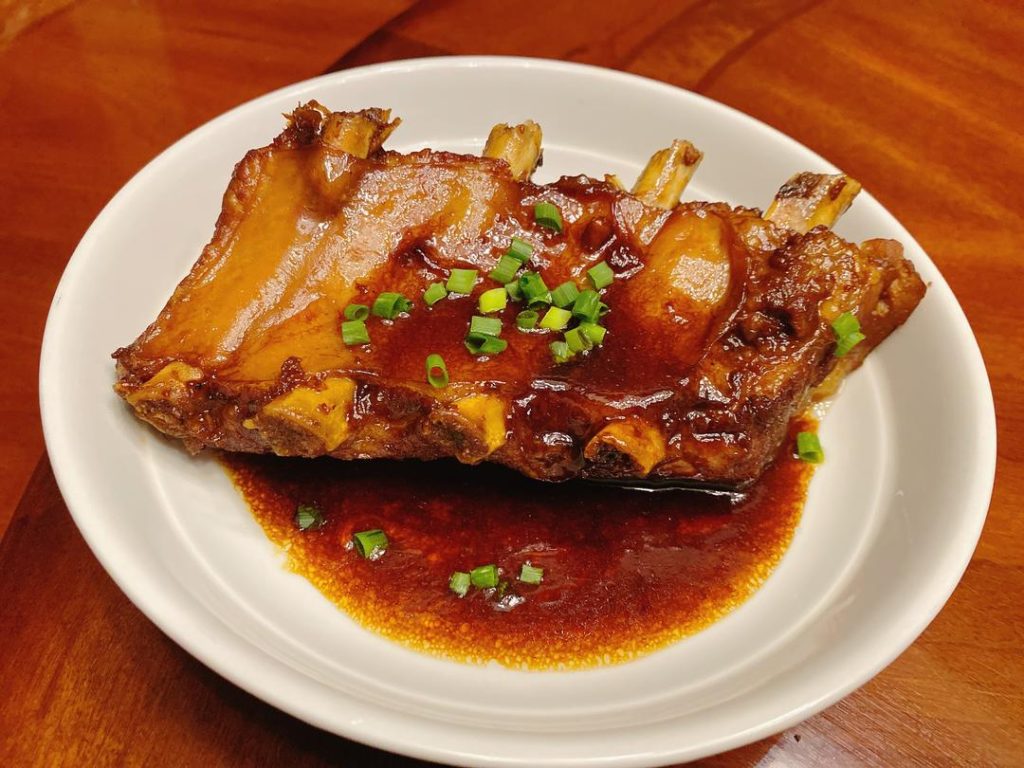
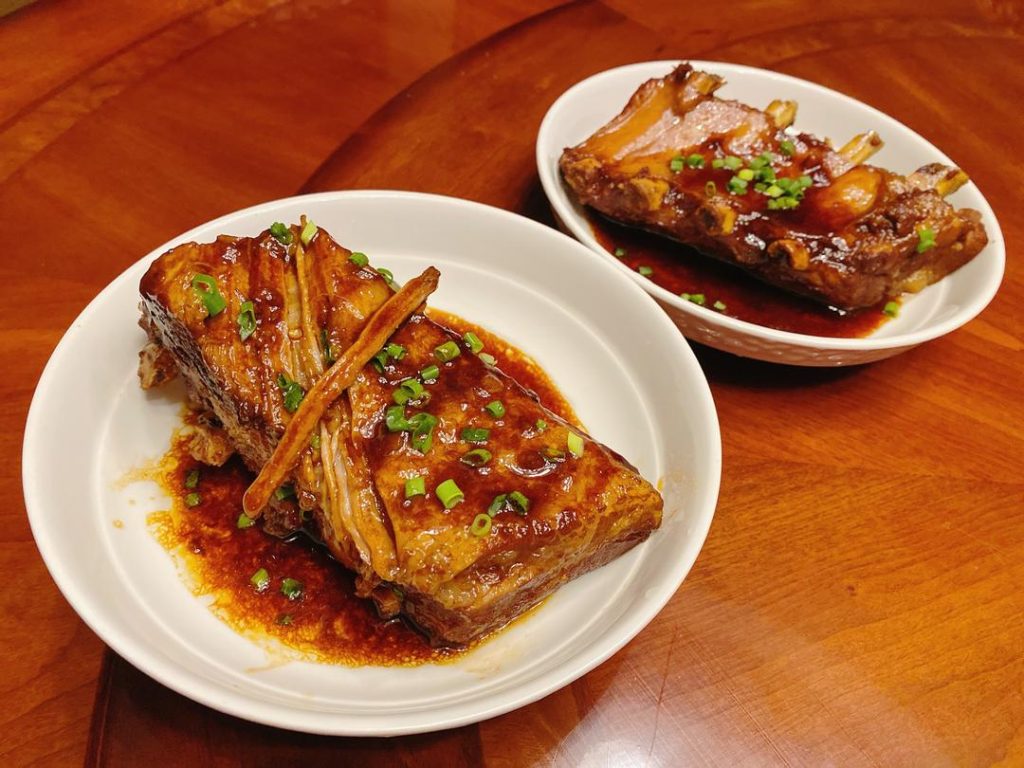
Why This Recipe Works
- The Scallion Barrier: Lining the bottom of the pot with green onions completely eliminates the need to constantly stir the heavy ribs, protecting the meat from burning.
- Pre-Marination: Thick slabs of meat can taste bland in the center. The 30-minute soy and wine soak ensures flavor penetrates deeply before the braise even begins.
- Low and Slow: Giving the ribs 90 minutes of gentle heat guarantees the proteins relax and the fat renders perfectly.
Common Mistakes When Making Hong Shao Pai Gu
- Mistake: The meat is tough and chewy.
- Cause: The heat was too high, or the braise was too short.
- Solution: Always maintain a gentle simmer, never a rolling boil. If they are still tough after 90 minutes, add a half cup of boiling water and keep simmering for another 20 minutes.
- Mistake: The sauce tastes overly salty at the end.
- Cause: You reduced the liquid too much, concentrating the soy sauce.
- Solution: Add a pinch of sugar and a splash of hot water to balance it out. Remember, this highly concentrated sauce is meant to be a glaze, not a soup!
Frequently Asked Questions
- Can I use baby back ribs instead of spare ribs? Yes, but baby back ribs are leaner and will cook slightly faster. Check them at the 60-minute mark to prevent them from drying out.
- Do I have to use Rock Sugar? If you don’t have Chinese rock sugar, you can substitute it with an equal amount of granulated sugar or brown sugar. However, rock sugar provides a superior, mirror-like gloss to the final sauce.
- Can I make this ahead of time? Absolutely. Braised meats often taste even better the next day as the flavors continue to meld in the fridge.
- Is it necessary to use boiling water for the braise? Yes! Adding cold water to hot meat causes the proteins to seize up and tighten, which prolongs the cooking time and makes the meat tougher.
How to Serve
These impressive, pull-apart ribs need nothing more than a giant bowl of steaming white rice to soak up that incredible sticky sauce. To cut through the richness, pair them with a light, crisp vegetable side dish like our Stir-fried Lettuce with Garlic or a refreshing Smashed Cucumber Salad.
Storage & Reheat
- Fridge: Store leftovers in an airtight container for up to 4 days. The sauce will turn into a firm jelly when cold—this is normal and a sign of a great braise!
- Freezer: Freeze in a sealed container for up to 3 months.
- Reheating: Heat gently in a covered pan on the stove over medium-low heat. Add a tablespoon of water to help loosen the sauce and steam the meat until heated through.
Allergen Notice
This recipe contains Soy and Gluten (from the soy sauce and Shaoxing wine).
Nutrition Disclaimer
Nutrition information is an estimate and provided for informational purposes only. Actual values may vary based on the specific cut of ribs, fat content, and exact ingredients used.
About the Author & Recipe Development
Lin here! When developing this recipe for the blog, I wanted to capture the sheer joy of tearing into a massive, tender cut of meat without the fuss of deep-frying or outdoor smoking. I tested the water-to-sauce ratio multiple times to ensure the liquid reduces perfectly by the end of the 90-minute mark without burning the bottom of the pot. The “scallion barrier” technique is a lifesaver in my home kitchen—it makes this impressive dish surprisingly hands-off, perfect for a lazy Sunday dinner.
Authoritative References
To understand why cooking past the standard safe temperature is necessary for tough cuts, we can look at collagen breakdown in meat science. The USDA guidelines state pork is safe to consume at 145°F, but for braised ribs and other tough cuts, pushing the internal temperature to 195°F–205°F is required to successfully melt connective tissue into gelatin, resulting in that fall-off-the-bone texture.
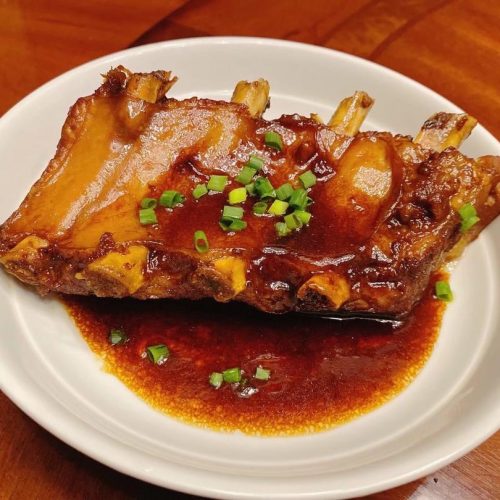
Authentic Braised Pork Ribs (Hong Shao Pai Gu): Fall-Off-The-Bone

Equipment
- Heavy-bottomed Pot or Dutch Oven
- Meat Thermometer
Ingredients
Marinade & Ribs
- 1 lb pork spare ribs cut into large half-rack portions
- 1.5 tbsp Shaoxing wine for marinade
- 2 tsp light soy sauce for marinade
- 0.5 tsp salt
Braising Liquid & Aromatics
- 4 stalks green onions (scallions) cut into 2-inch sections
- 6 slices fresh ginger unpeeled
- 1/3 cup Shaoxing wine plus 1 tbsp for braise
- 2 tbsp light soy sauce for braise
- 2 tsp dark soy sauce
- 2.5 tbsp Chinese rock sugar
- 1 piece cassia bark or cinnamon stick
- 1 whole dried chili pepper
- 3 whole bay leaves
- 2 tbsp cornstarch mixed with 2 tbsp water for slurry
Instructions
- Blanch the ribs: Place ribs in a pot of cold water. Add 1 tbsp Shaoxing wine, 2 slices of ginger, and 1 knotted scallion. Bring to a boil over medium-high heat and boil for 2 minutes. Skim the scum, remove ribs, rinse, and pat dry.

- Marinate: In a bowl, toss the blanched ribs with 1.5 tbsp Shaoxing wine, 2 tsp light soy sauce, and 1/2 tsp salt. Let sit for 30 minutes.
- Prep the pot: Line the bottom of a heavy Dutch oven or braising pot with the remaining green onion sections to prevent sticking.
- Assemble: Place the ribs on top of the scallions. Pour in the remaining Shaoxing wine (1/3 cup + 1 tbsp), 3 slices ginger, dried chili, cassia bark, bay leaves, 2 tbsp light soy sauce, 2 tsp dark soy sauce, and the rock sugar.
- Braise: Pour in enough boiling water to just cover the ribs. Bring to a boil over high heat, then immediately reduce to medium-low. Cover and simmer gently for 1.5 hours. Turn the ribs over halfway through. (Add a little more boiling water if it reduces too fast).

- Glaze: Once the ribs can be easily pierced with a chopstick, remove them from the pot and set on a serving plate. Discard the aromatics from the pot.
- Thicken sauce: Turn the heat to high and boil the remaining liquid for 3-5 minutes until reduced by half. Stir in the cornstarch slurry and cook for 1 minute until glossy and thick. Pour over the ribs and serve.







Leave a Reply