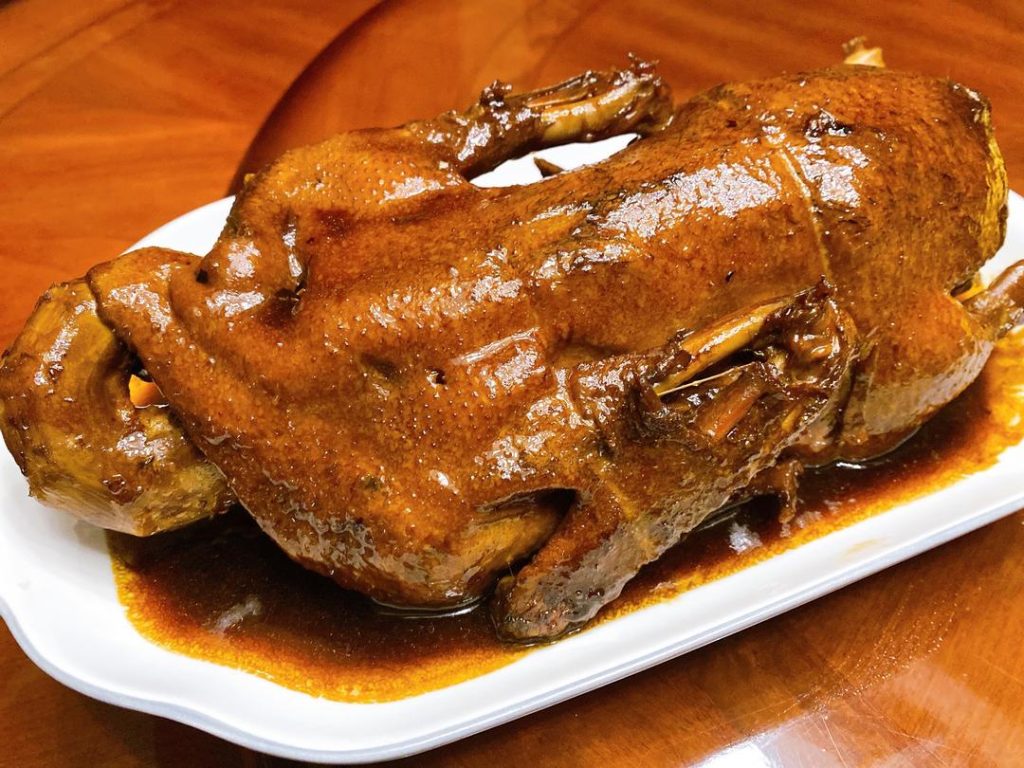
Growing up, my parents were both chefs in Sichuan, and they instilled in me a deep respect for patience in the kitchen. When I’m not testing recipes for my upcoming cookbook, I love preparing large, comforting centerpieces for my wife and five-year-old daughter. This traditional Chinese red-braised duck is one of those dishes. It takes time, but the resulting melt-in-your-mouth texture and rich, savory sauce make it the perfect weekend or holiday meal.

What Is Hong Shao Dun Ya?
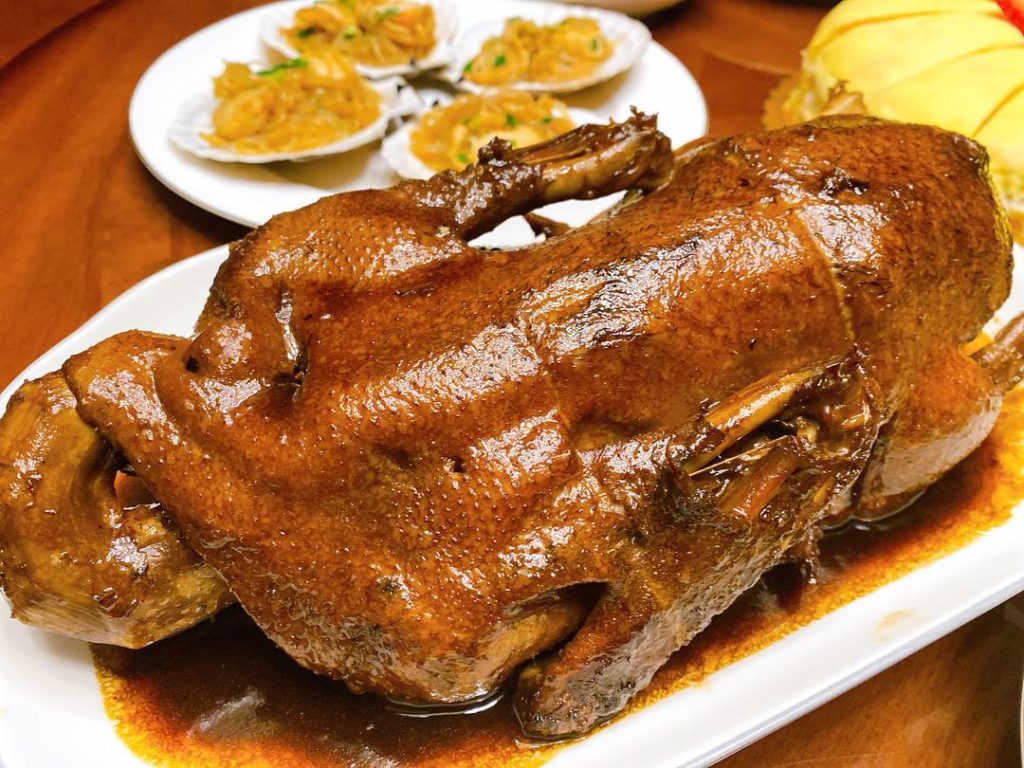
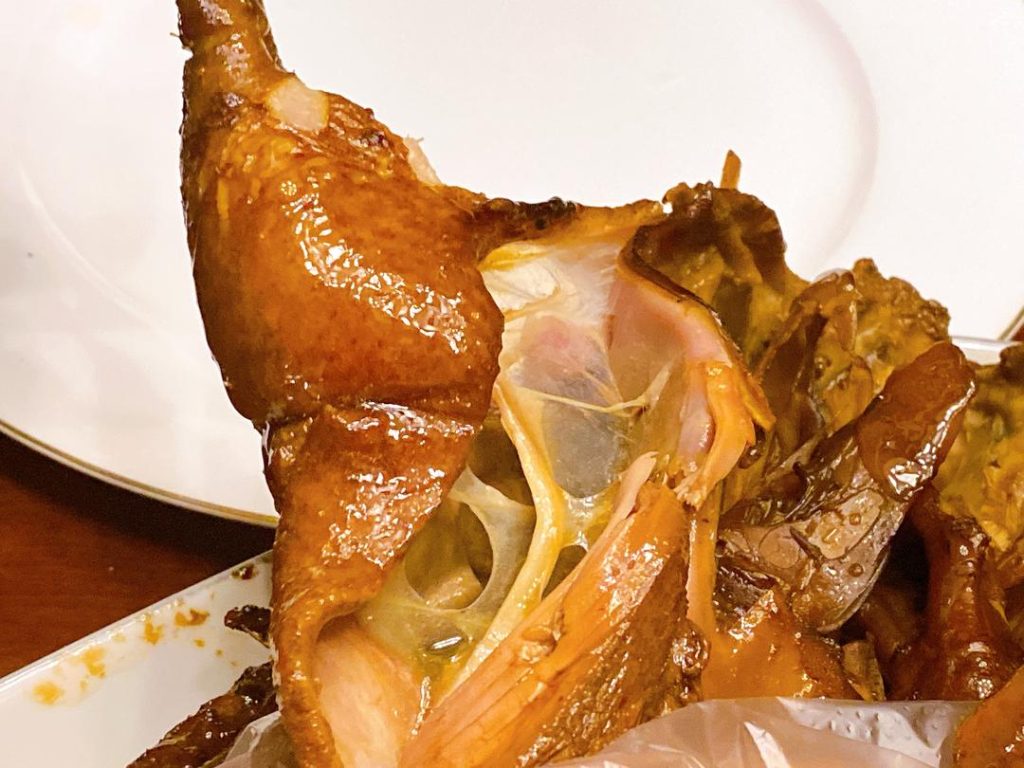
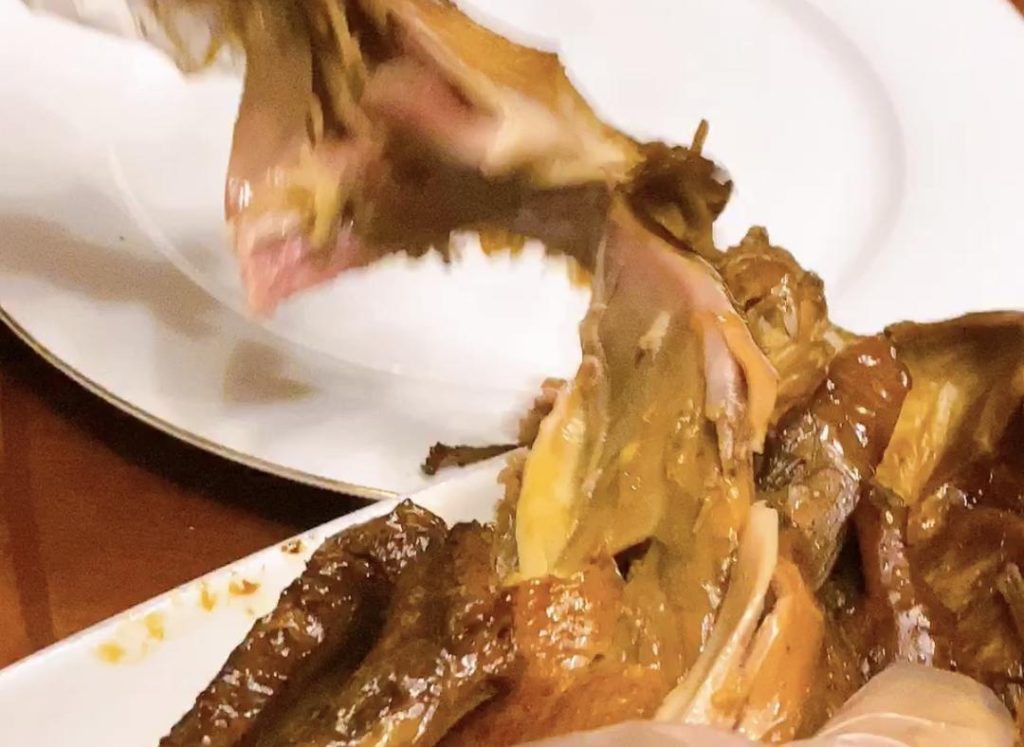
Hong Shao Dun Ya (红烧炖鸭) is a classic Chinese preparation where a whole duck is slowly braised in a savory, aromatic broth of soy sauce, spices, and aromatics. The slow-cooking process tenderizes the tough meat of the duck while rendering the fat, resulting in a deeply flavorful and fall-off-the-bone tender dish.
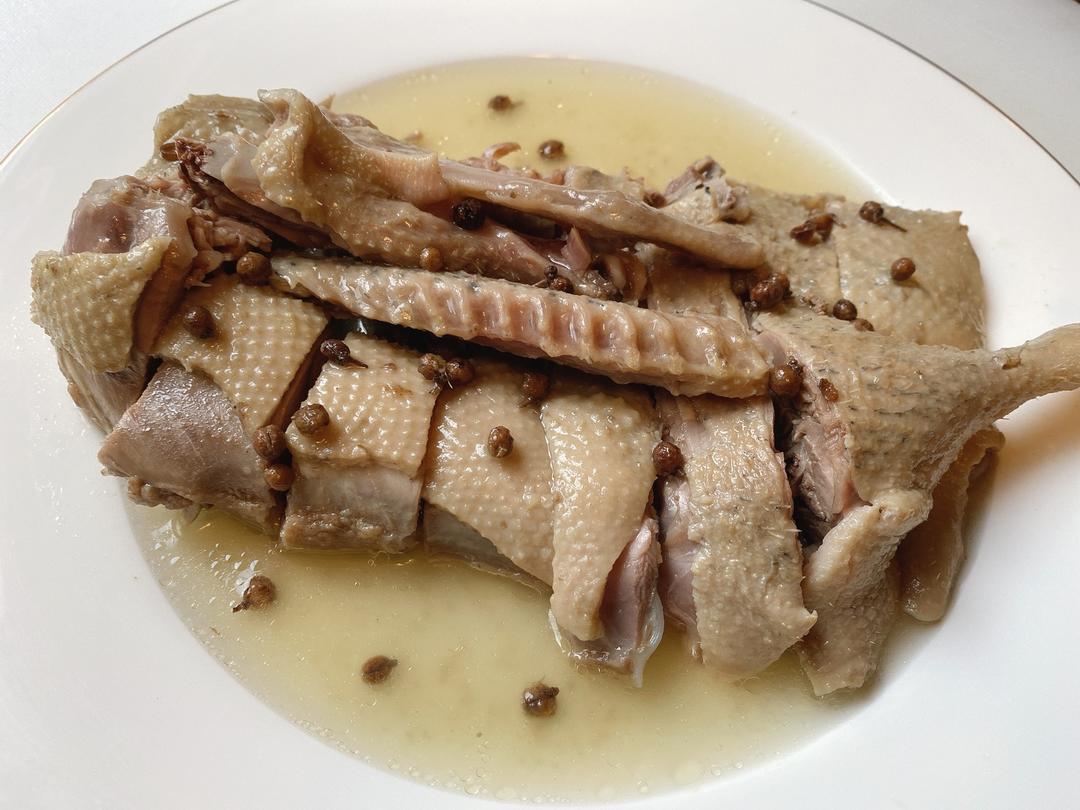
If you are a fan of this method, you might also want to check out my recipe for Sichuan Peppercorn Duck for a different flavor profile, or my classic Braised Pork Belly for more red-braised goodness.
1Authentic Hua Jiao Ya (Sichuan Peppercorn Duck in 90 Mins)A traditional Shaoxing dish featuring tender duck infused with aromatic toasted Sichuan peppercorns and salt, finished with a skin-tightening ice bath for the perfect texture.Check out this recipe
Ingredients
For the Duck & Blanching:
- 1 Whole Duck: Approximately 4.5 lbs (2 kg). Preferably an autumn duck; avoid overly fatty “white” duck breeds if possible.
- 4 slices Fresh Ginger: About 1/8 inch (3 mm) thick.
- 1/2 large Scallion (Green Onion): Cut into 2-inch (5 cm) sections.
- 2 tbsp Shaoxing Wine: Essential for removing gamey odors.
For the Braising Liquid:
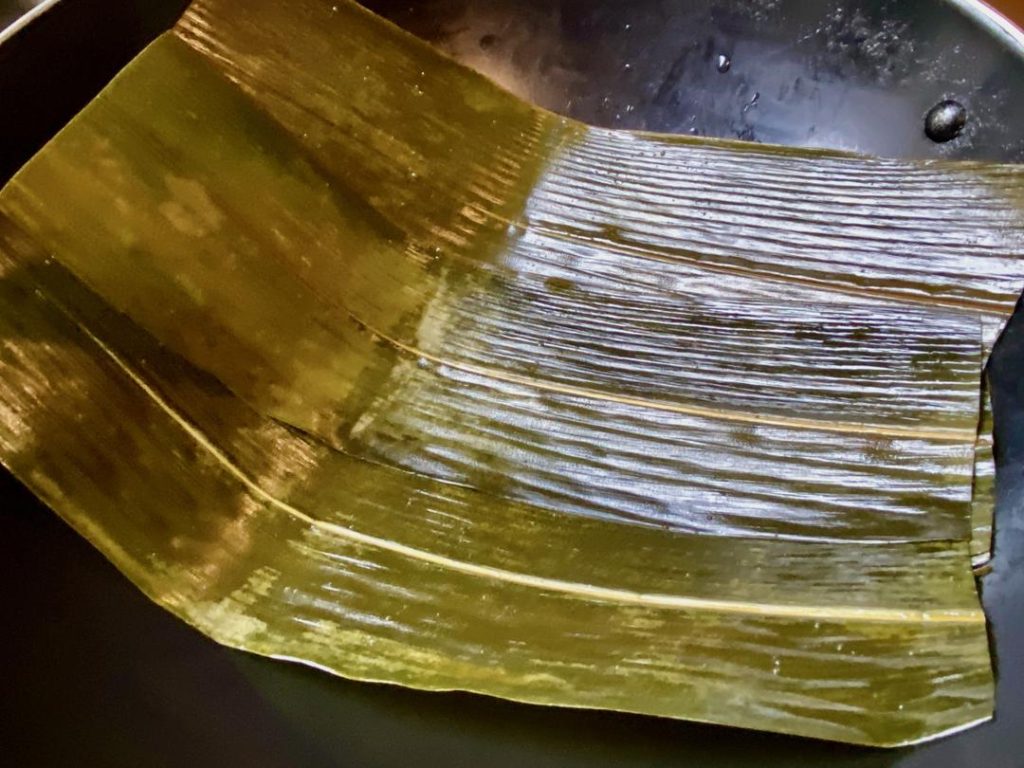
- 4 Bamboo Leaves (Zong Ye): Used to line the pot and prevent sticking while adding a subtle earthy aroma. (Available dried in Asian markets; soak to soften) .
- 4 tbsp Light Soy Sauce: Provides the salty, umami base.
- 2 tbsp Dark Soy Sauce: Crucial for the rich mahogany color.
- 1 tbsp Oyster Sauce: Adds depth and slight sweetness.
- 4 tbsp Shaoxing Wine: Additional wine for the braise.
- 1/2 large Scallion: Cut into sections.
- 3 slices Fresh Ginger: For aromatics.
- 2 Dried Bay Leaves.
- 1 Whole Star Anise: For a subtle licorice note.
- 1 piece Dried Tangerine Peel (Chenpi): Cuts through the duck’s richness.
- 2-3 Dried Red Chilies: Adjust based on heat preference.
- 1 tsp Sugar: Or 3 grams zero-calorie sweetener.
- 1/2 tsp Salt: To be adjusted at the very end.
Equipment Needed
- Large Dutch Oven or Heavy-Bottomed Pot: Must be wide enough to fit the whole duck.
- Kitchen Twine: To truss the duck.
- Instant-Read Meat Thermometer: For ensuring food safety.
Prep & Mise en Place
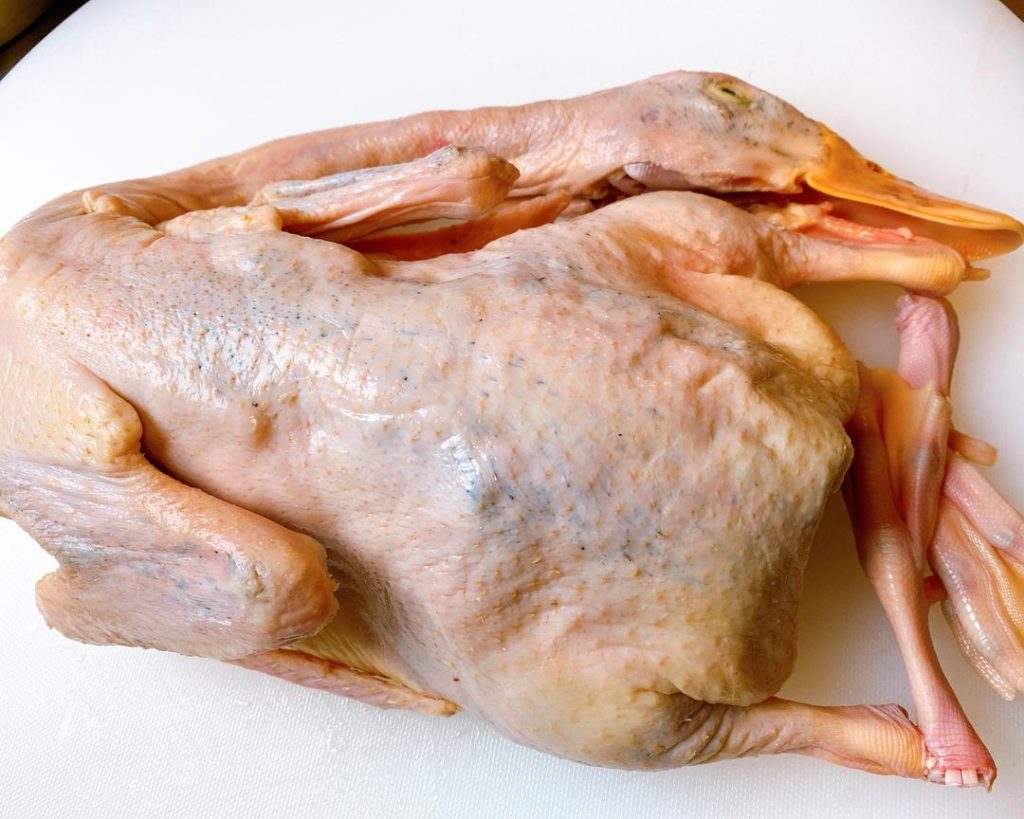
- Clean the Duck: Thoroughly remove any leftover pinfeathers, the tail gland (parson’s nose), and the lymphatic nodes in the neck.
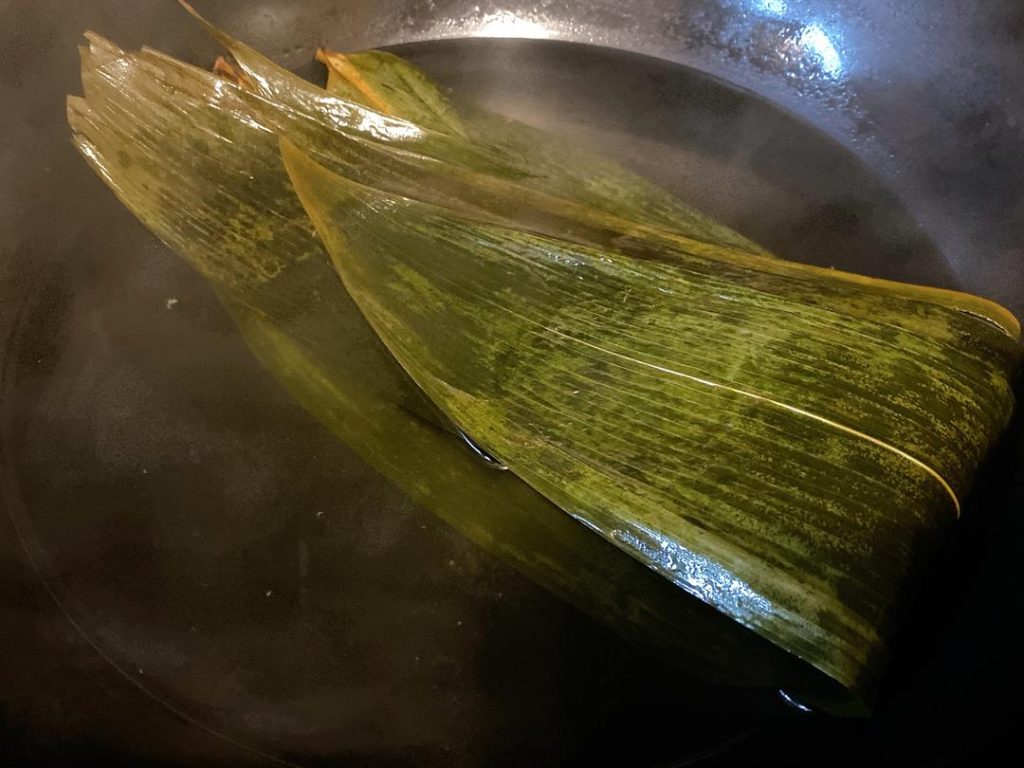
- Soak the Leaves: Boil the bamboo leaves (Zong Ye) for 5 minutes until pliable, then rinse. This prevents the duck’s skin from sticking to the bottom of the pot during the long braise.
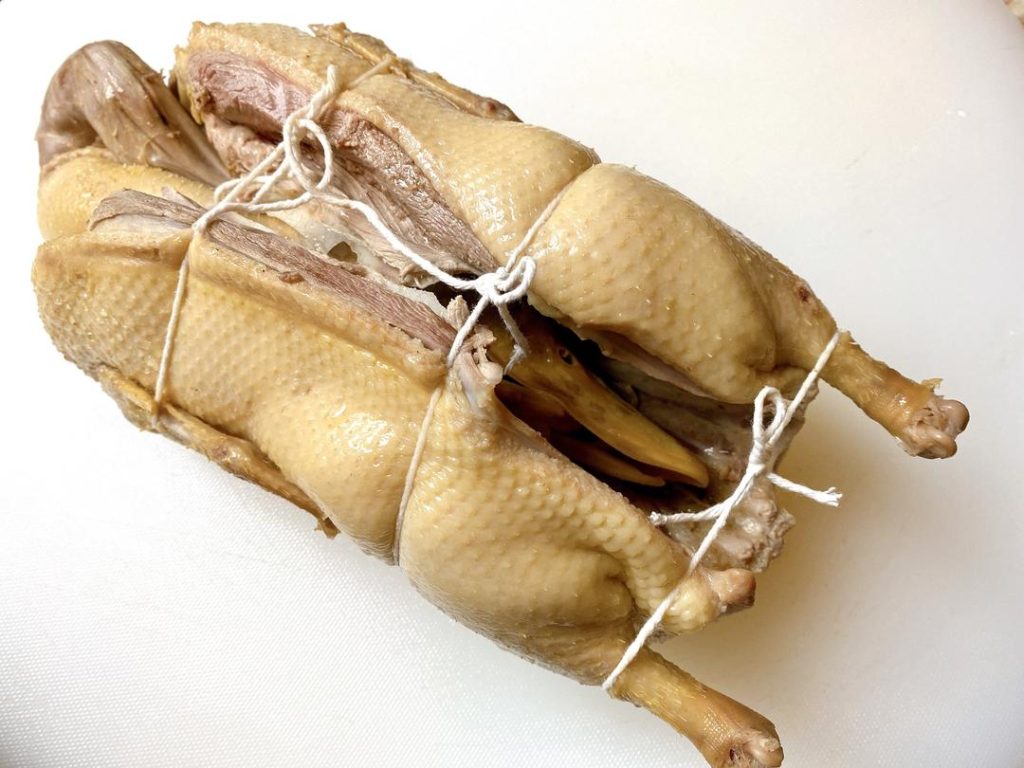
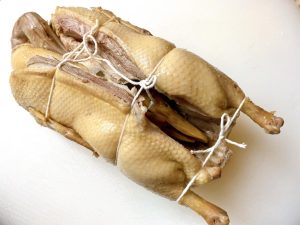
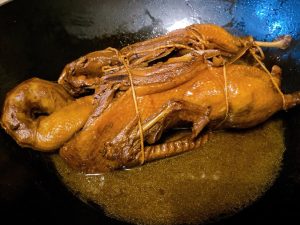
- Trussing: Tucking the neck, head, and feet into the cavity and tying the duck with kitchen twine is critical. It ensures the duck maintains a beautiful shape and doesn’t fall apart when it becomes fork-tender.
Cooking Process
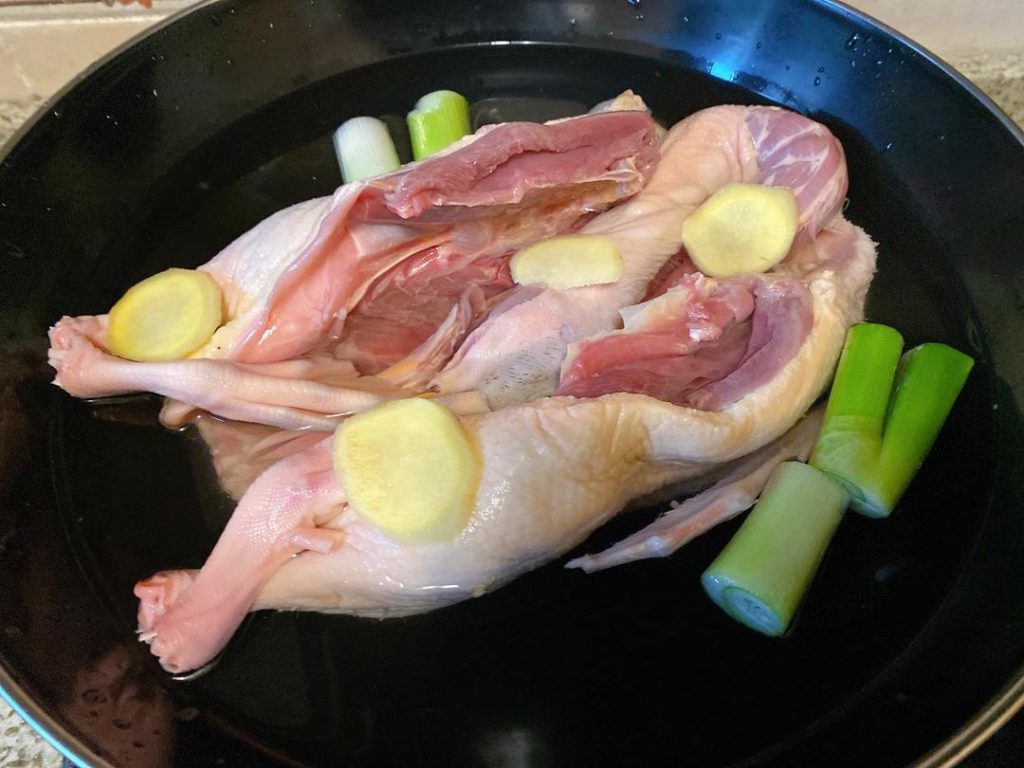
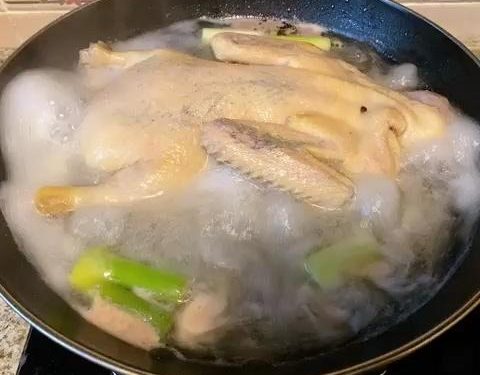
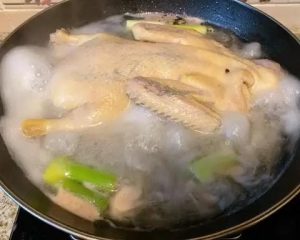
- Blanch the Duck (10 minutes): Place the cleaned duck in your large pot. Cover entirely with cold water. Add the blanching ginger, scallion, and 2 tbsp Shaoxing wine. Bring to a boil over high heat (212°F/100°C) and boil for 5 minutes, flipping the duck halfway to ensure both sides are blanched. Remove the duck and drain well. Discard the water.
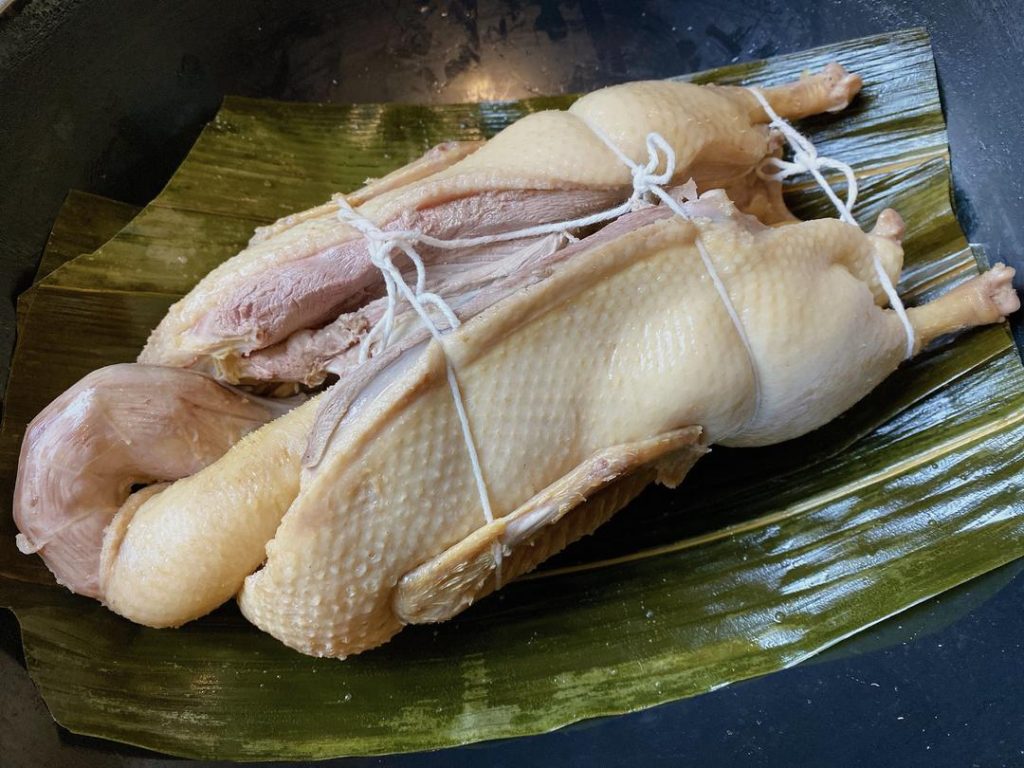
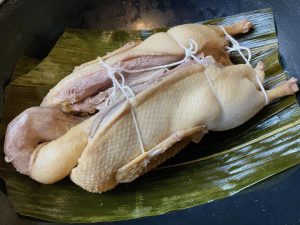
- Prepare the Pot: Trim the ends off the softened bamboo leaves. Line the bottom of your empty, clean pot with them. Place the trussed duck directly on top of the leaves.
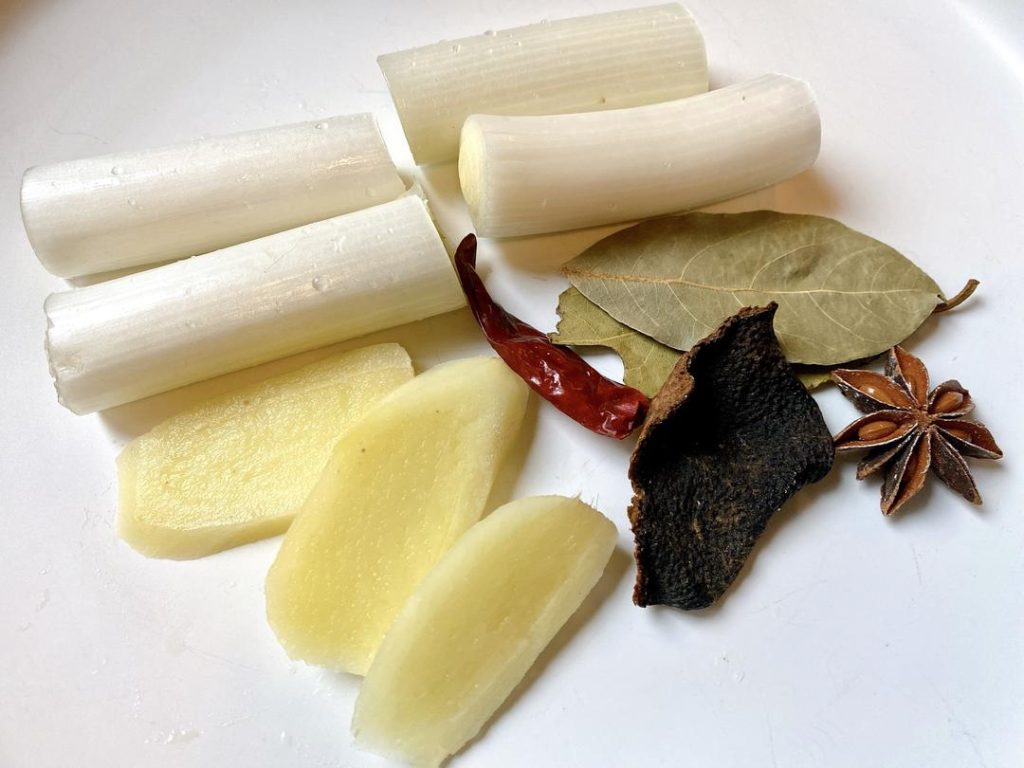
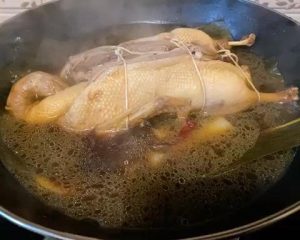
- Build the Braise: Add the braising ginger, scallion, bay leaves, star anise, tangerine peel, and chilies. Pour in the light soy sauce, dark soy sauce, oyster sauce, sugar, and remaining 4 tbsp Shaoxing wine. Fill the pot with enough water to submerge the duck halfway. Do not add the salt yet.
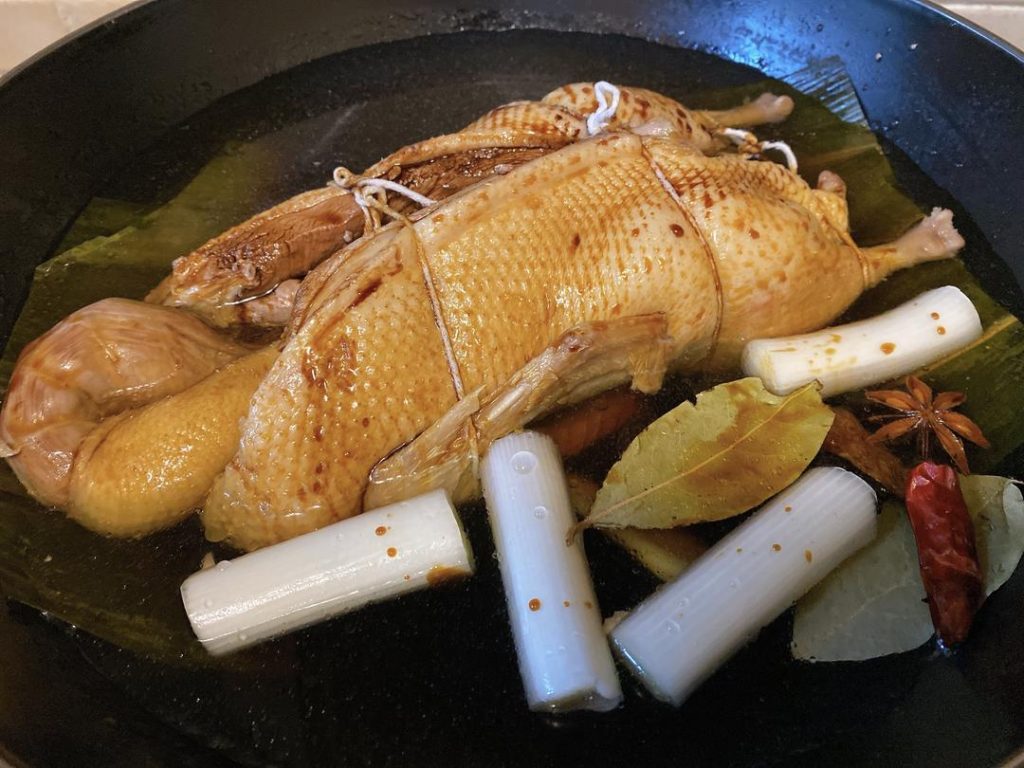
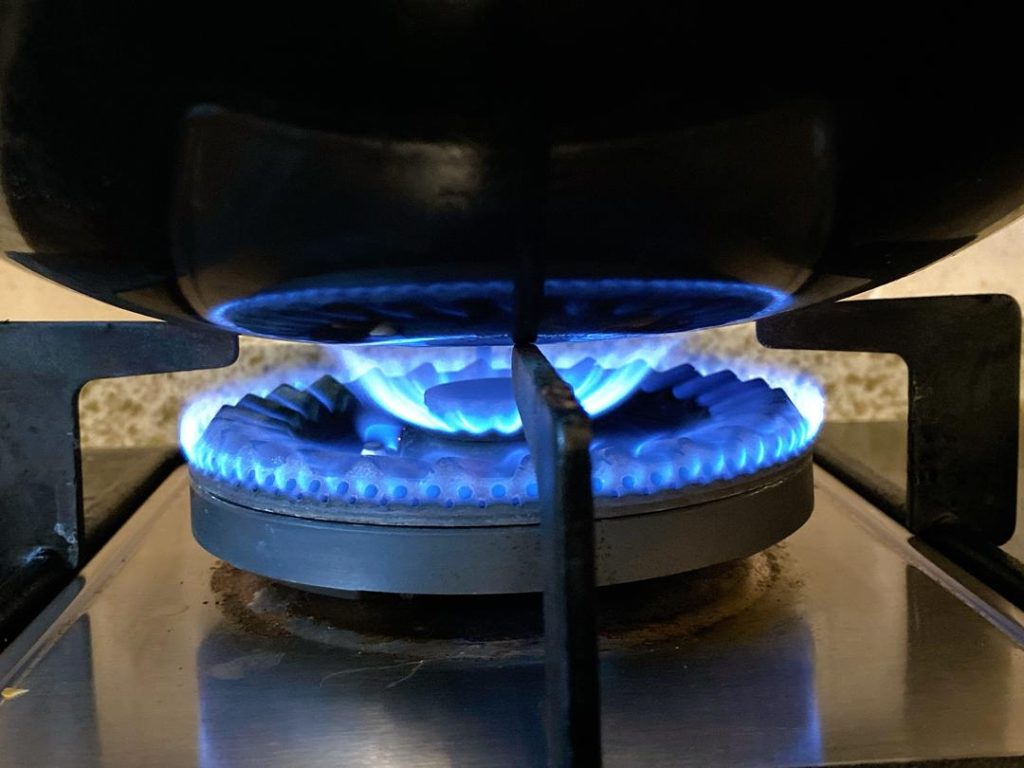
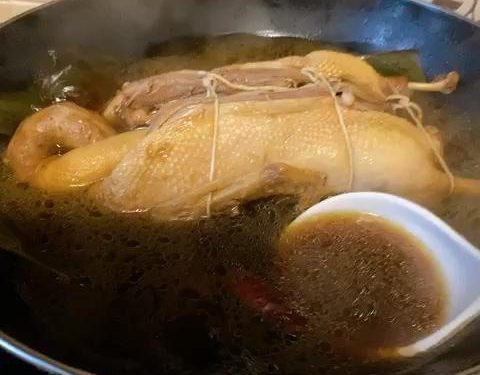
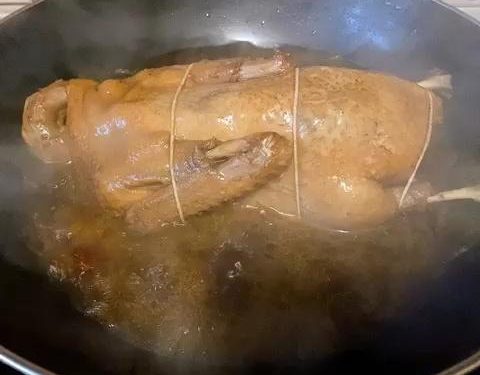
- The Long Simmer (2 Hours at 200°F/95°C): Bring the liquid to a rolling boil over high heat, then immediately reduce the heat to medium-low. Cover and simmer gently. Baste the exposed part of the duck with the hot liquid every 30 minutes.
💡 Chef’s Science: The long, slow simmer breaks down the tough connective tissues in the duck, converting collagen into gelatin. This gives the meat a melt-in-your-mouth texture without drying out the muscle fibers, while the soy sauce and sugars facilitate the Maillard reaction on the skin for deep flavor.
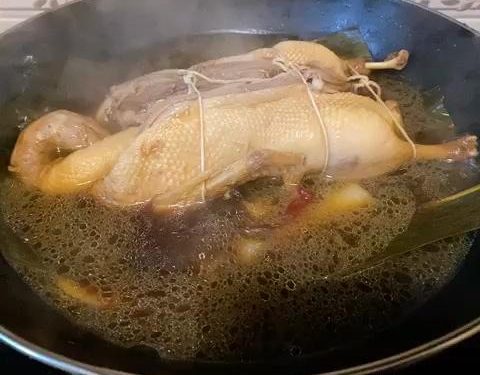
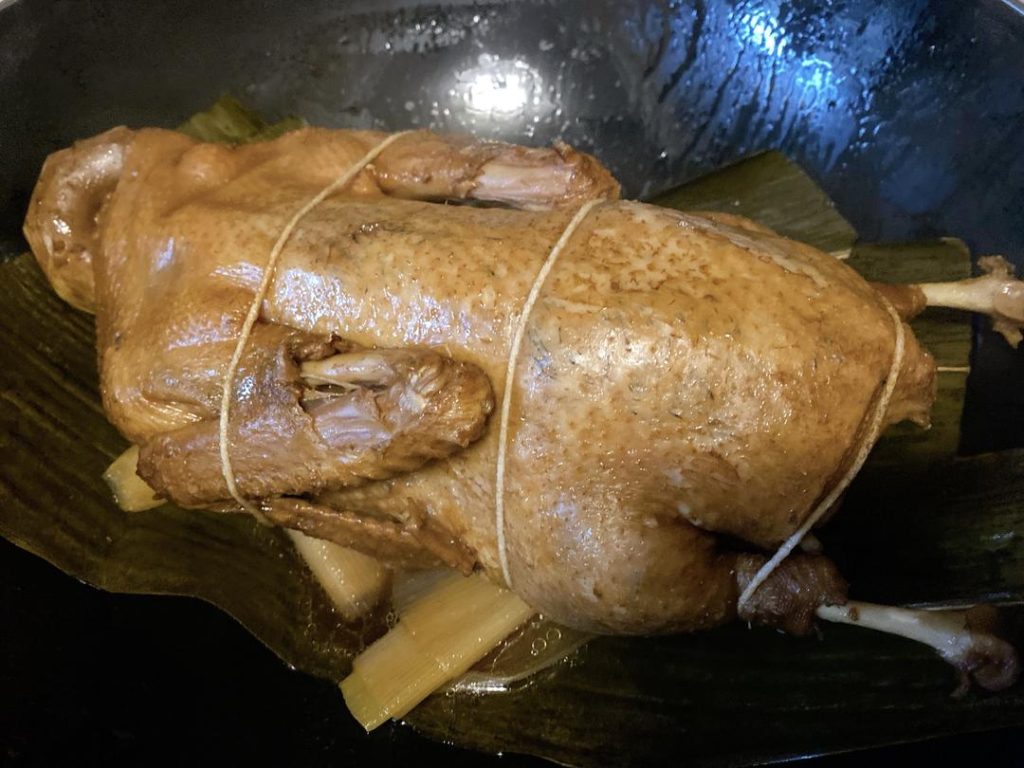
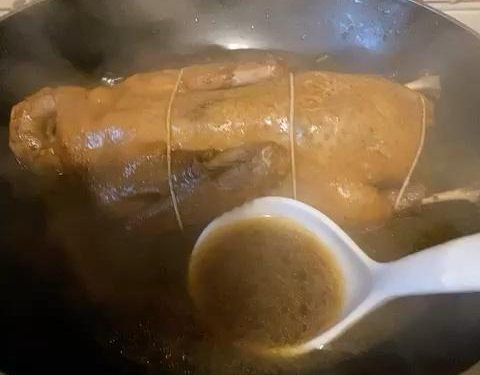
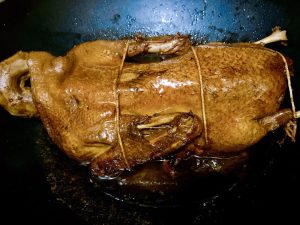
- The Flip (1 Hour mark): At the halfway point, carefully remove the duck to a platter. Pour the braising liquid into a large bowl. Re-align the bamboo leaves flat on the bottom of the pot. Return the duck (flipped over) and pour the liquid back over it. Continue simmering.
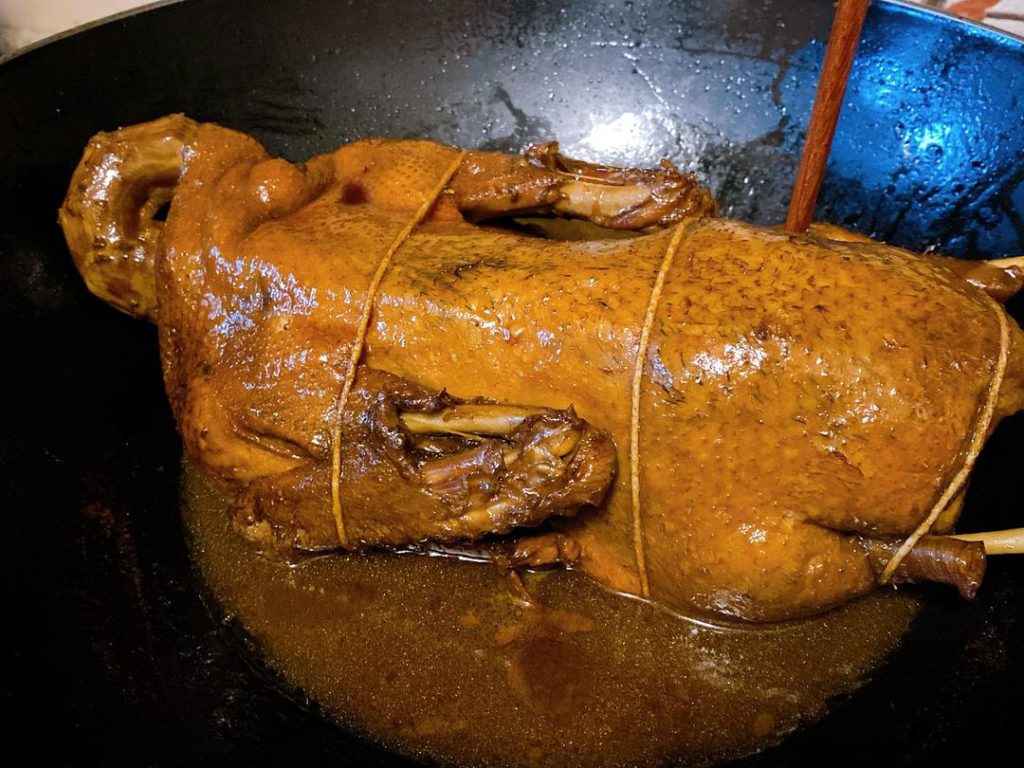
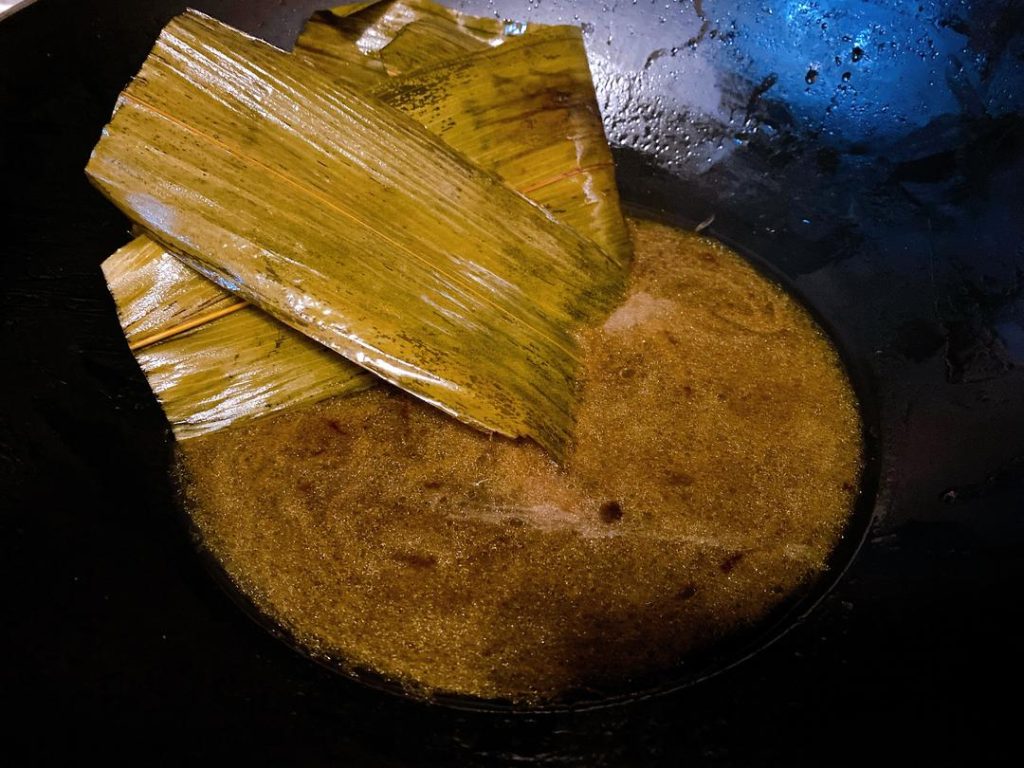
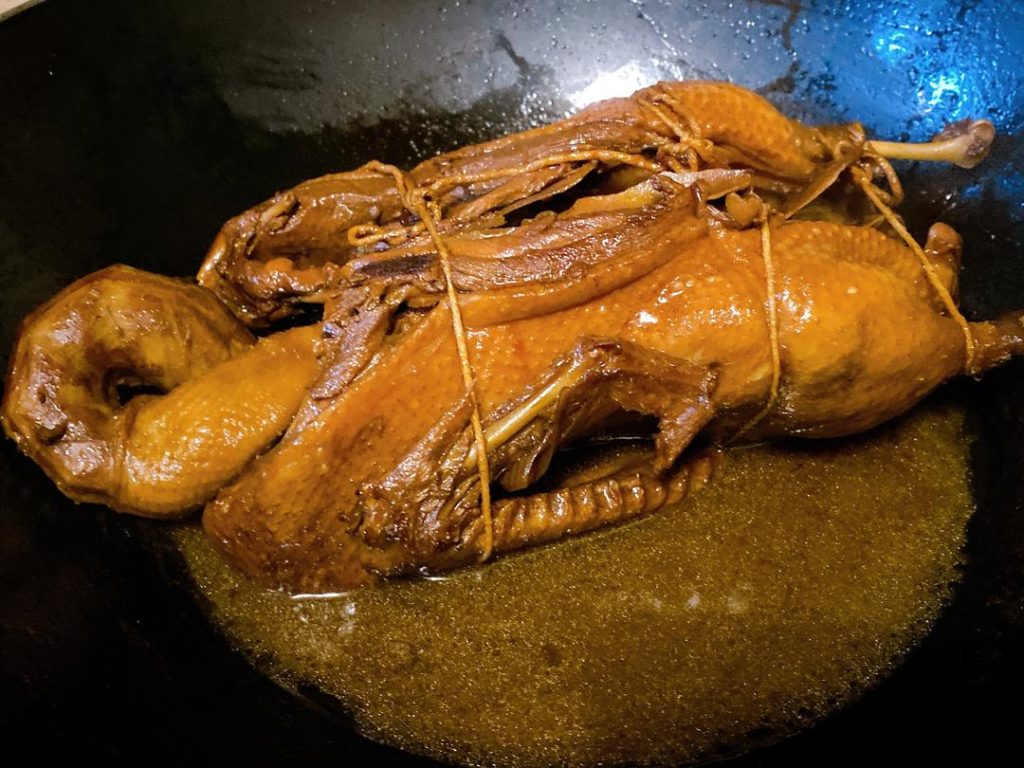
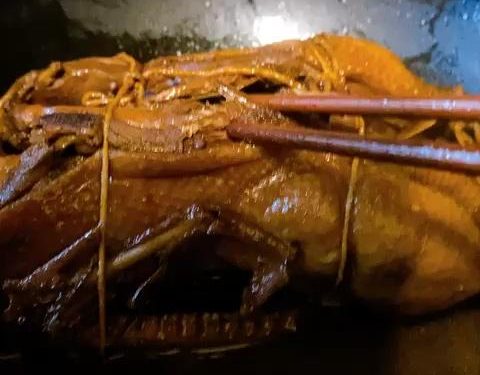
- Final Seasoning & Glazing (Last 15 minutes): After about 2 hours, poke the thickest part of the thigh with a chopstick; it should pierce through with zero resistance. The internal temperature must reach at least 165°F (74°C). Taste the reduced sauce and stir in the 1/2 tsp salt if needed.
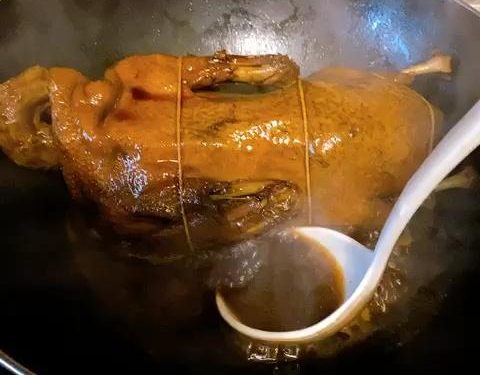
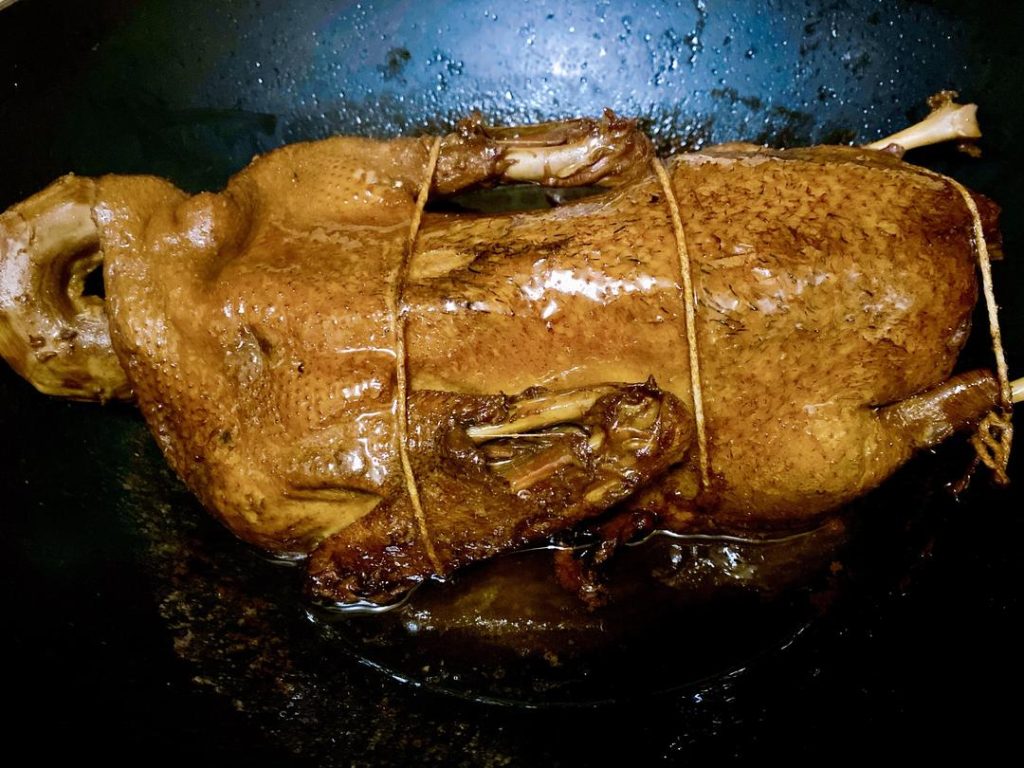
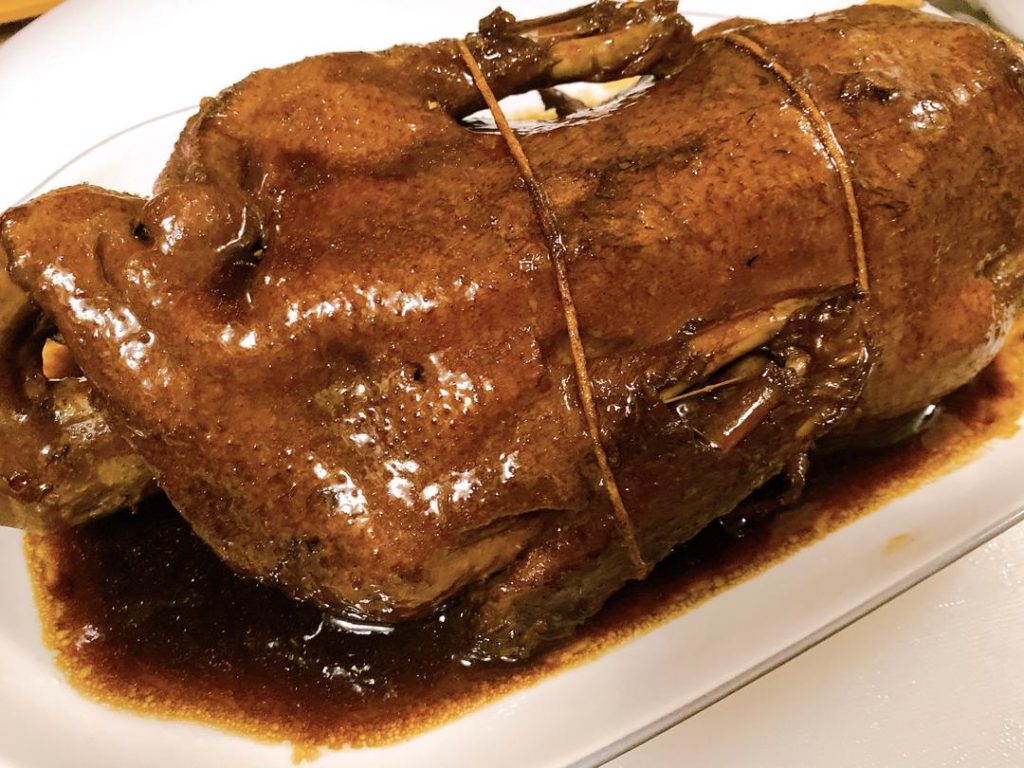
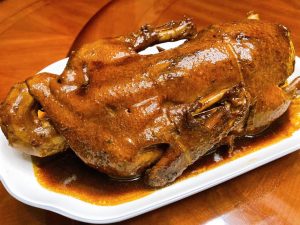
- Serve: Carefully transfer the duck to a serving platter. Remove the kitchen twine. Strain the remaining liquid, discard the solids, and optionally thicken the sauce with a cornstarch slurry (1 tbsp cornstarch mixed with 1 tbsp water). Pour the glossy sauce over the duck.
Why This Recipe Works
- Bamboo Leaf Foundation: Lining the pot eliminates the risk of scorching the delicate duck skin during the two-hour cook time.
- Trussing for Structure: Because the meat becomes so tender it falls off the bone, the twine acts as a corset, keeping the presentation elegant for your dining table.
- Delayed Salting: Because soy sauce concentrates as the liquid reduces, withholding salt until the very end prevents an overly salty disaster.
Common Mistakes When Making Braised Duck
- Mistake: The sauce is overwhelmingly salty.
- Cause: Salting the broth at the beginning before evaporation takes place.
- Solution: Always wait until the sauce has reduced by at least half before adding additional granular salt.
- Mistake: The duck skin tears and sticks to the pot.
- Cause: The braise was left unattended on a bare metal bottom.
- Solution: Do not skip the bamboo leaves. If you cannot find them, thick slices of ginger and scallions arranged in a raft at the bottom of the pot can serve as a substitute.
Frequently Asked Questions
- Can I substitute the bamboo leaves? Yes, you can use thick slices of daikon radish or extra scallions to create a barrier at the bottom of the pot.
- Can I make it ahead? Braised duck tastes even better the next day after resting in its own juices. Reheat gently on the stove.
- Why is my sauce too thin? If your pot lid trapped too much moisture, the sauce won’t reduce. Remove the lid for the final 20 minutes of cooking, or use a cornstarch slurry at the end.
- Is this authentic? Yes, this mimics the traditional slow-cooking techniques found in homestyle Chinese kitchens.
How to Serve
This rich dish demands simple pairings. Serve it with steamed white rice, a side of Stir-fried Lettuce with Garlic, or an appetizer like Smashed Cucumber Salad to cut through the richness.
Storage & Reheat
- Refrigerator: Store leftover duck and sauce in an airtight container for up to 4 days.
- Freezer: Freeze the meat and sauce together for up to 2 months.
- Reheating: Simmer gently on the stovetop in a covered pan until the duck reaches an internal temperature of 165°F (74°C).
Allergen Notice
- Soy
- Gluten (from soy sauce)
Nutrition Disclaimer
Nutrition information is an estimate and provided for informational purposes only.
About the Author & Recipe Development
I’m Lin, a 33-year-old chef specializing in Chinese cuisine. I grew up in Sichuan province, where my parents—both exceptional chefs—taught me the foundational techniques of our culinary heritage. At Woks of Love, my goal is to translate these authentic, restaurant-quality recipes into approachable methods for your home kitchen. This braised duck was refined over several family dinners, perfectly balanced to satisfy without being overly complicated. Currently, I am pouring this passion into writing my very first cookbook!
Authoritative References
- Safe Poultry Temperatures: The USDA recommends cooking all whole poultry to a safe minimum internal temperature of 165°F (74°C). Read more at FoodSafety.gov.
- The Maillard Reaction: For a deeper dive into the science of why browning meat creates such incredible flavor, check out this guide on the Maillard Reaction from Serious Eats.
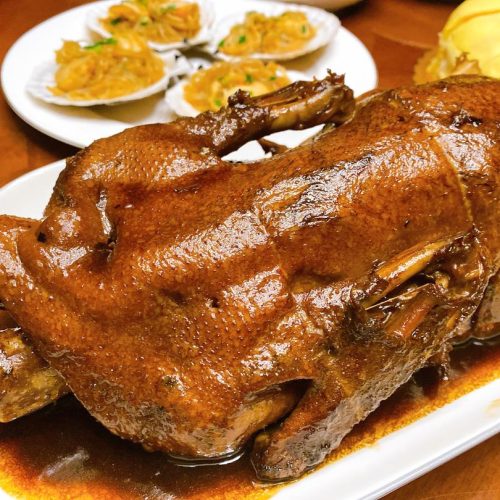
Authentic Braised Duck (Hong Shao Dun Ya)

Equipment
- Large Dutch Oven
- Kitchen Twine
- Instant-Read Meat Thermometer
Ingredients
Duck Preparation
- 1 whole duck approx 4.5 lbs / 2 kg
- 4 slices fresh ginger
- 0.5 scallion cut into 2-inch pieces
- 2 tbsp Shaoxing wine
Braising Liquid
- 4 bamboo leaves (Zong Ye) softened in boiling water
- 4 tbsp light soy sauce
- 2 tbsp dark soy sauce
- 1 tbsp oyster sauce
- 4 tbsp Shaoxing wine
- 3 slices fresh ginger
- 0.5 scallion cut into pieces
- 2 dried bay leaves
- 1 star anise
- 1 piece dried tangerine peel
- 2 dried red chilies optional
- 1 tsp sugar or 3g zero-calorie sweetener
- 0.5 tsp salt to taste
Instructions
- Clean the duck thoroughly. Place in a pot with cold water, 4 slices ginger, half a scallion, and 2 tbsp Shaoxing wine. Boil for 5 minutes, then drain.

- Tuck the head, neck, and feet into the duck’s cavity. Tie securely with kitchen twine.

- Line the bottom of a large Dutch oven with the softened bamboo leaves. Place the duck on top.
- Add the braising aromatics, soy sauces, oyster sauce, wine, and sugar. Add enough water to come halfway up the duck. Bring to a boil, then reduce heat to medium-low, cover, and simmer.
- After 1 hour, carefully remove the duck, adjust the bamboo leaves if they moved, flip the duck over, and return it to the pot. Continue simmering for another hour.
- Check for tenderness (a chopstick should easily pierce the thigh) and ensure an internal temperature of at least 165°F (74°C). Taste the sauce and add the salt if needed.
- Remove duck, strain sauce (thicken with a cornstarch slurry if desired), and pour the glaze over the duck before serving.







Leave a Reply