Twice-cooked pork is one of those dishes that sounds like a project and turns out to be a weeknight dinner. The pork belly gets simmered first, which is the “first cook,” and then it comes back to a hot wok with doubanjiang and green peppers, which is the “second cook.” The name 回锅肉 literally means “returned-to-the-pot meat,” and that two-step rhythm is the whole trick.
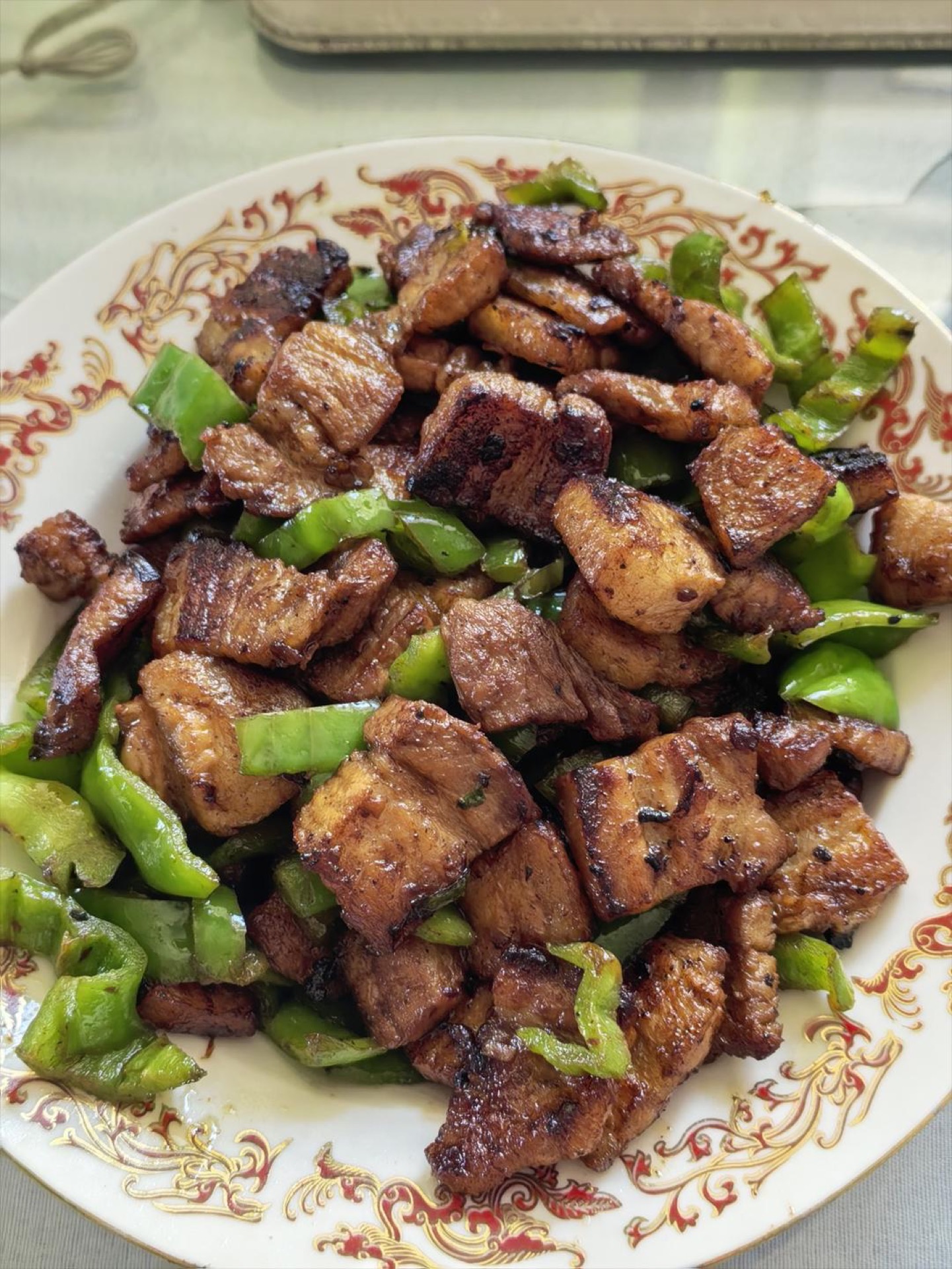
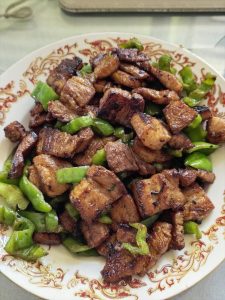
What you get at the end is pork that is tender inside with a lightly crisped edge, a glossy red-orange coating of fermented broad bean paste, and green peppers that still have a little snap. It is salty, savory, faintly sweet, and it wants rice. If you have ever ordered this in a Sichuan restaurant and wondered why yours never tasted the same, it is almost always the doubanjiang and the heat level of the wok.
This version is written for a home kitchen with a regular wok and a regular stove. You do not need a blowtorch, a restaurant burner, or a long list of specialty ingredients. The one thing worth buying properly is the doubanjiang, because it carries most of the flavor.
What Is Twice-Cooked Pork?
Twice-cooked pork, or huiguorou (回锅肉), is a classic Sichuan dish made by simmering pork belly until just cooked, slicing it thin, and then stir-frying those slices with fermented broad bean paste, aromatics, and usually green peppers, leeks, or garlic sprouts. The “twice-cooked” name refers to those two stages: the boil and the stir-fry.
It is one of the most common home dishes in Sichuan and one of the most ordered dishes in Sichuan restaurants abroad. Every family has its own version, and the differences usually come down to which vegetable goes in and how much sugar goes into the sauce. Some cooks add a splash of Shaoxing wine, some add a few dried chilies, and some finish with a pinch of MSG.
The defining ingredient is doubanjiang, the fermented chili-and-broad-bean paste from Pixian in Sichuan. It is salty, funky, and deeply savory, and it is what gives the dish its color and its backbone. Without it, you are making a pork stir-fry, not huiguorou.
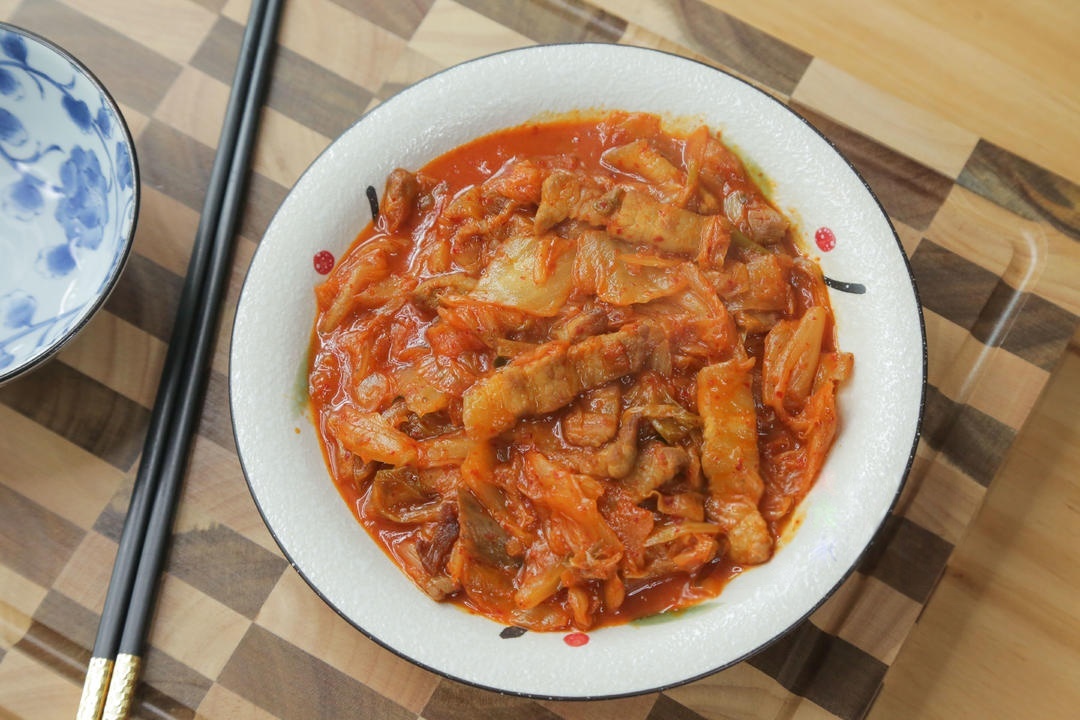
If you like this kind of cooking, my kimchi pork belly stir fry is the closest recipe on the site — the same technique and the same pantry.
1Kimchi Pork Belly Stir-fry (La Bai Cai Chao Wu Hua Rou)A 15-minute savory, spicy, and tangy stir-fry featuring crispy rendered pork belly and fermented kimchi. This easy homestyle dish is the perfect appetite stimulant.Check out this recipe
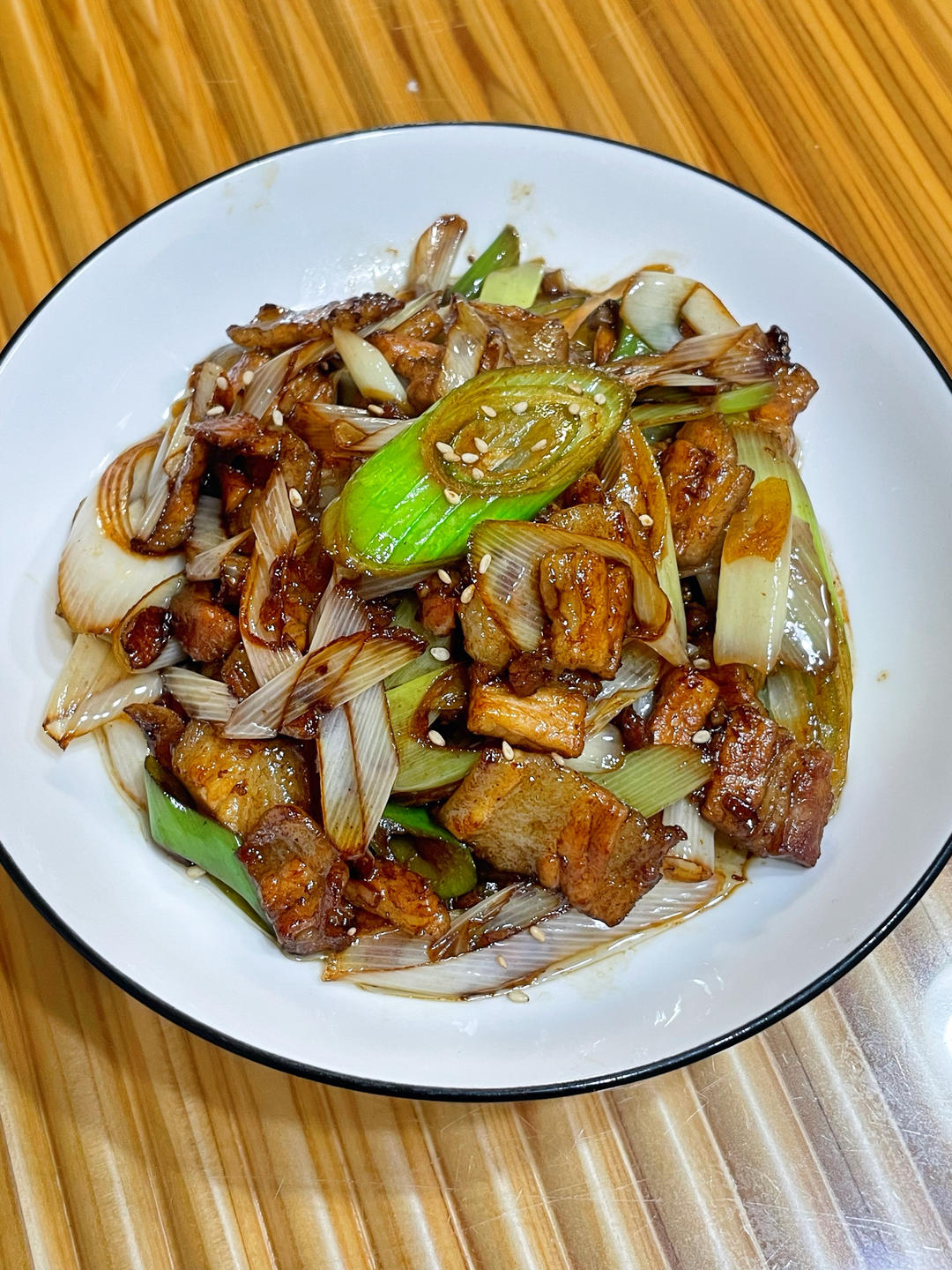
For a version that leans on the sweetness of scallions instead of the heat of green peppers, this scallion pork belly stir fry is the same family of dish and comes together just as fast.
2Scallion Stir-Fried Pork Belly (Cong Bao Rou)This classic Scallion Pork Belly Stir-Fry (Cong Bao Rou) is a savory, aromatic dish ready in 15 minutes. By rendering the pork belly until crisp and adding scallions in two stages, you get a perfect balance of texture and flavor without the grease.Check out this recipe
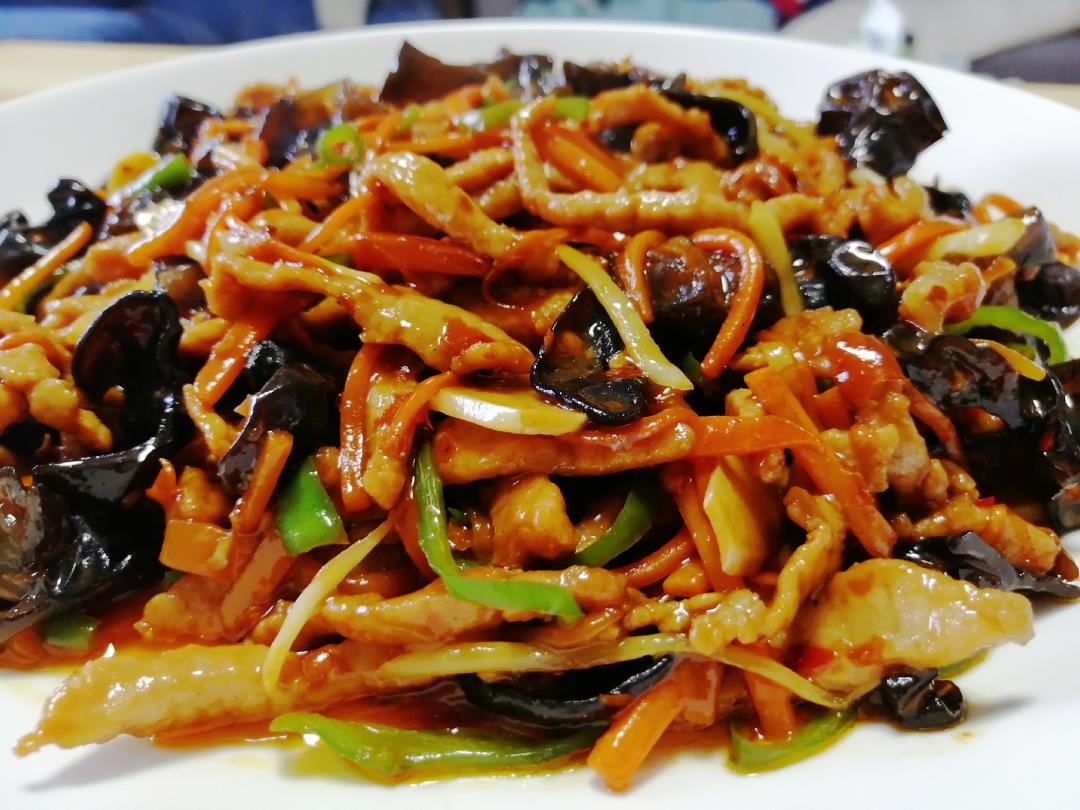
And if you like the sweet-sour-spicy balance of Sichuan cooking, this Sichuan fish fragrant pork takes the same doubanjiang base in a completely different direction with shredded pork and a vinegar-sugar sauce.
3Sichuan “Fish-Fragrant” Pork Stir-fry (Yu Xiang Rou Si)Learn to make authentic Sichuan “Fish-Fragrant” Pork (Yu Xiang Rou Si). This classic “rice killer” dish from a 30-year chef’s daughter features tender pork slivers in a sweet, sour, and spicy garlic sauce.Check out this recipe
Ingredient Notes
Pork belly. Look for skin-on pork belly with clear layers of fat and meat. A piece that is mostly fat will render down to almost nothing, and a piece that is mostly lean will turn dry. The ideal slab has three or four visible layers. Ask the butcher for a piece from the middle of the belly if you can, and have them leave the skin on.
Doubanjiang. This is the one ingredient worth seeking out. Pixian doubanjiang is aged for months or years and has a deep, almost cheesy fermented flavor that no substitute really matches. If your jar is very coarse, chop the paste on the cutting board for a few seconds before using it so it distributes evenly. If you can only find a smoother chili bean paste, the dish will still work, but add it a little more cautiously because some brands are much saltier.
Green peppers. Regular green bell peppers are the easiest choice, and they hold their shape well. If you want more heat, use long green chilies or a mix of both. Whatever you choose, cut the pieces roughly the same size so they cook at the same rate.
Soy sauce. Dark soy sauce gives a deeper color and a slightly less salty flavor, which is what the original home cook here landed on after finding light soy made the dish too salty. If you only have light soy sauce, reduce it to about 2 teaspoons and taste before adding more.
Sugar. A teaspoon of sugar is not there to make the dish sweet. It rounds off the saltiness of the doubanjiang and helps the sauce glaze the meat. Do not skip it.
Oil. You need very little, because the pork belly will render its own fat. One tablespoon is plenty, and if your pork belly is very fatty you can use even less.
Ingredients
Here is everything you need for four servings. The full amounts are in the recipe card at the bottom of this post.
- 1 lb skin-on pork belly, cut into 2-inch blocks
- 4 cups water, for simmering
- 2 scallions and 3 slices ginger, optional, for the simmering water
- 1 tbsp doubanjiang (Pixian broad bean paste), finely chopped
- 1 tbsp light soy sauce, or dark soy sauce for deeper color
- 1 tsp granulated sugar
- 3 cloves garlic, minced
- 1 tsp Shaoxing wine, optional
- 2 green bell peppers, seeded and cut into 1-inch pieces
- 1 tbsp neutral oil
Equipment Needed
A wok is the traditional vessel and the one that gives you the best char, but a wide skillet or a cast-iron pan will also work. You want something with enough surface area that the pork slices can sit in a single layer rather than pile up and steam.
Beyond that, you need a cutting board and a sharp knife for slicing the pork, a pot or a deep pan for the initial simmer, a slotted spoon for lifting the pork out of the water, and a small bowl for mixing the sauce. A pair of chopsticks or a spatula for stirring is useful, and a plate lined with paper towels helps drain the boiled pork before slicing.
One more thing: a lid for the pot during the simmer. It is not strictly required, but it keeps the water from evaporating too quickly.
Why This Recipe Works
The first cook is what makes the second cook possible. Simmering the pork belly gently in water cooks the meat through, firms up the fat, and sets the shape so you can slice it thin. If you tried to slice raw pork belly this thin, you would end up with ragged, uneven pieces that cook unevenly.
Searing the skin before simmering is a small step that pays off. It gives the skin a head start on tenderness and adds a little roasted flavor to the simmering liquid. It also renders a bit of surface fat, which means less spitting later.
Chilling the pork before slicing is the step most home cooks skip. Cold pork belly slices cleanly and holds its shape in the wok, so the pieces sear against the hot metal instead of collapsing into a soft pile. Even 30 minutes in the refrigerator makes a noticeable difference.
There is real food science behind the two-stage cooking. Simmering pork belly in water keeps the meat temperature relatively low and gentle, which breaks down connective tissue without squeezing out moisture, while the later high-heat stir-fry drives off surface water and triggers the Maillard reaction, the browning that creates the roasted, savory notes. The Maillard reaction explainer from Serious Eats covers why a dry, hot surface is the whole point.
Finally, frying the doubanjiang in the oil before the meat goes back in is what gives the dish its signature red oil. The paste needs a few seconds of direct contact with hot fat to bloom, and that is where the color and the aroma come from.
Prep & Mise en Place
Get everything ready before the wok goes on the heat, because once the stir-fry starts it moves quickly. Here is the order that works best.
First, cut the pork belly into 2-inch blocks and set them aside. Second, wash the green peppers, remove the seeds and membranes, and cut them into 1-inch pieces. Third, mince the garlic and set it in a small bowl. Fourth, measure the doubanjiang, soy sauce, sugar, and Shaoxing wine into one small bowl and stir them together so the sugar starts to dissolve.
If you are using the optional scallions and ginger for the simmering water, smash the scallions lightly with the side of your knife and slice the ginger into coins. Have your slotted spoon and a plate lined with paper towels within arm’s reach of the stove.
Once the pork has simmered, transfer it to the plate, let it cool enough to handle, and then refrigerate it for at least 30 minutes, or up to overnight. When you are ready to cook, slice it against the grain into pieces about an eighth of an inch thick. If the slices are uneven, the thin ones will overcook before the thick ones are done.
Cooking Process
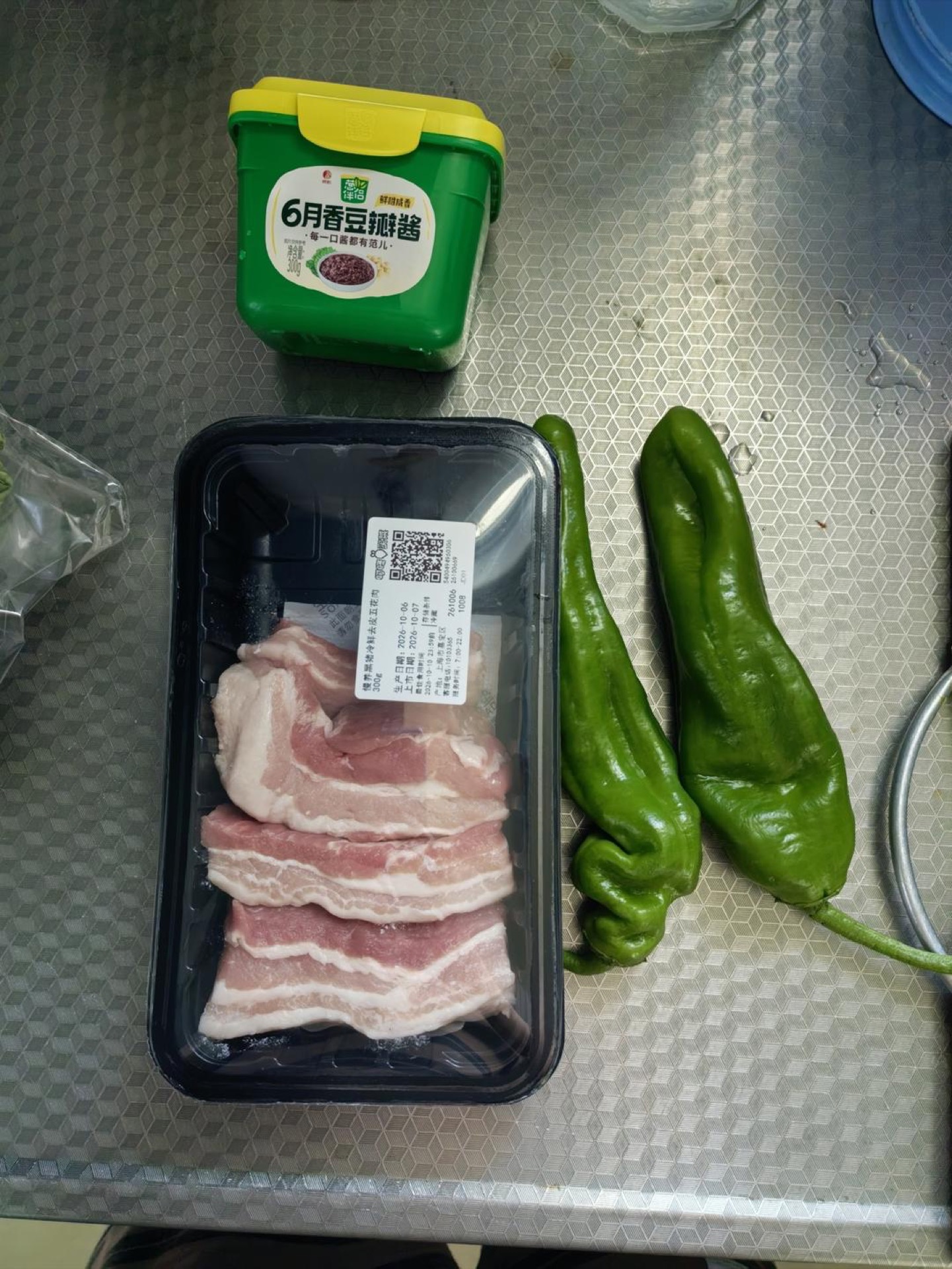
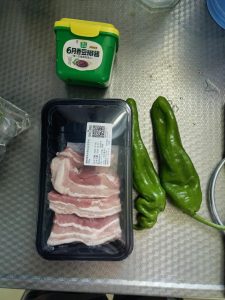
Step 1 — Gather the Main Ingredients
Set out the doubanjiang, the pork belly, and the green peppers so everything is ready before you turn on the heat.
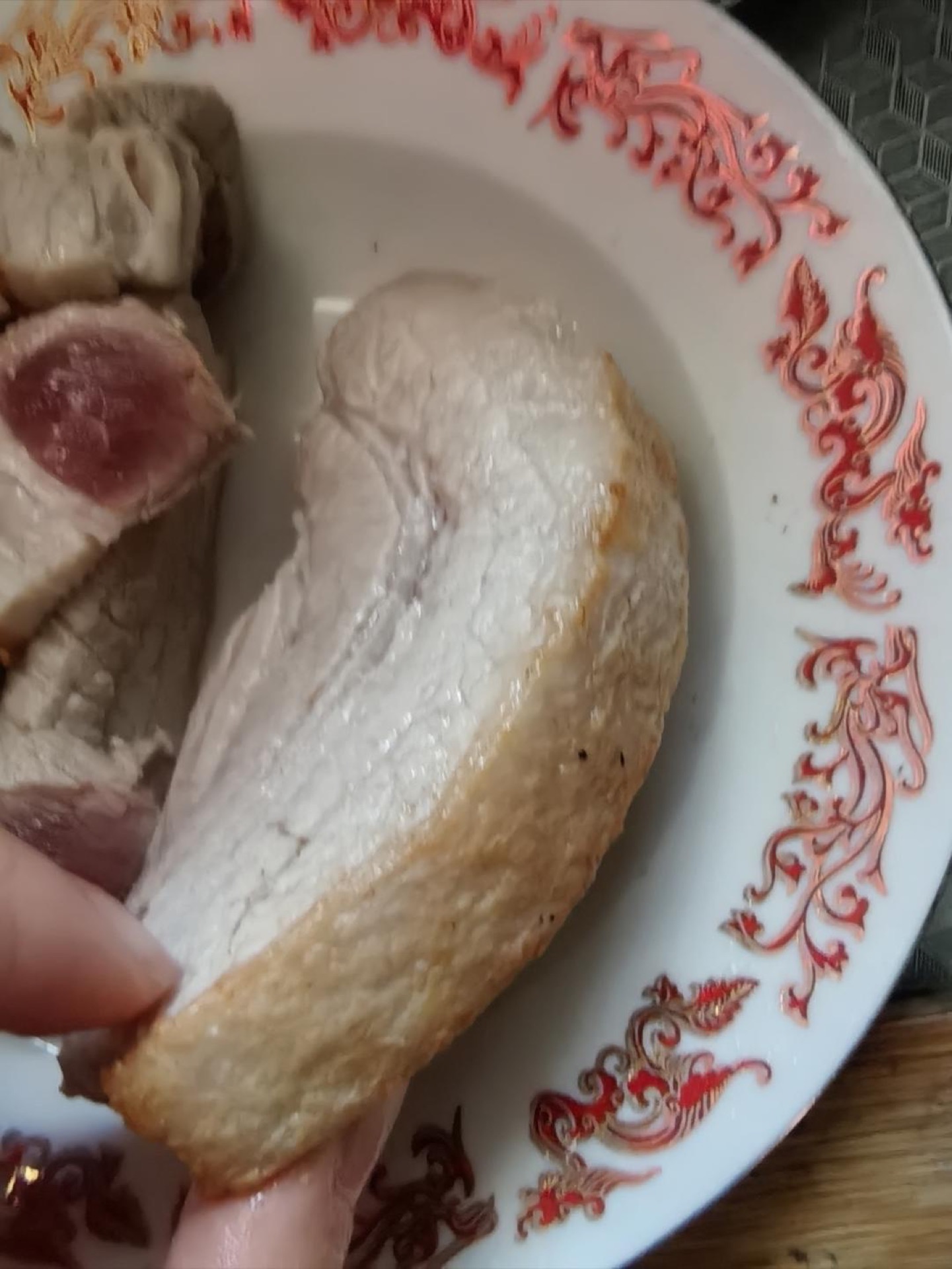
Step 2 — Sear the Skin and Simmer
Heat the wok, place the pork skin-side down, and sear until golden. Add water and simmer until the meat changes color, then scoop it out. While it simmers, wash and cut the green peppers.
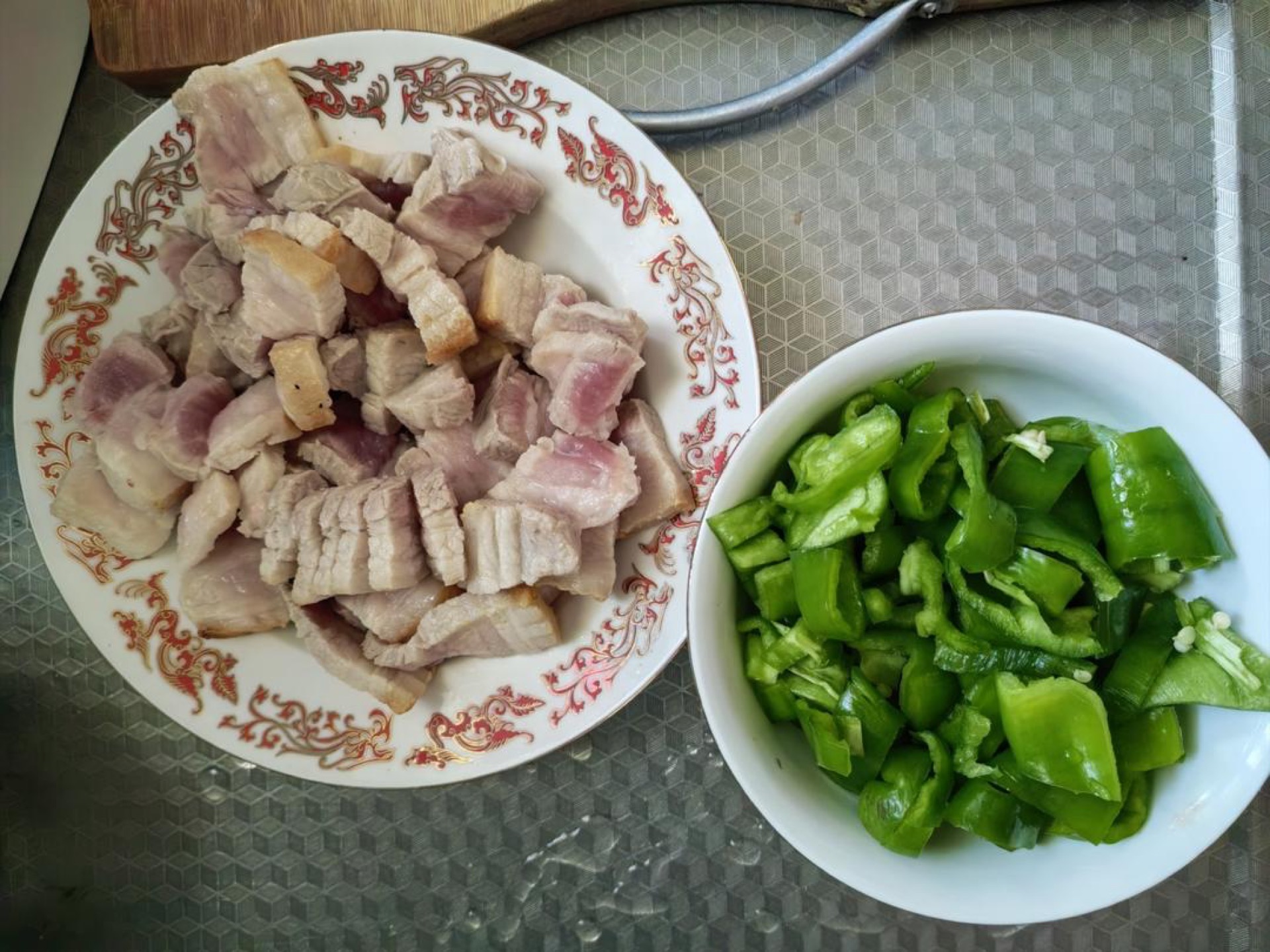
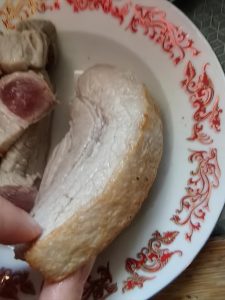
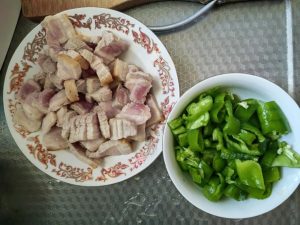
Step 3 — Slice the Pork Belly
Cut the cooled pork belly into thin, even slices.
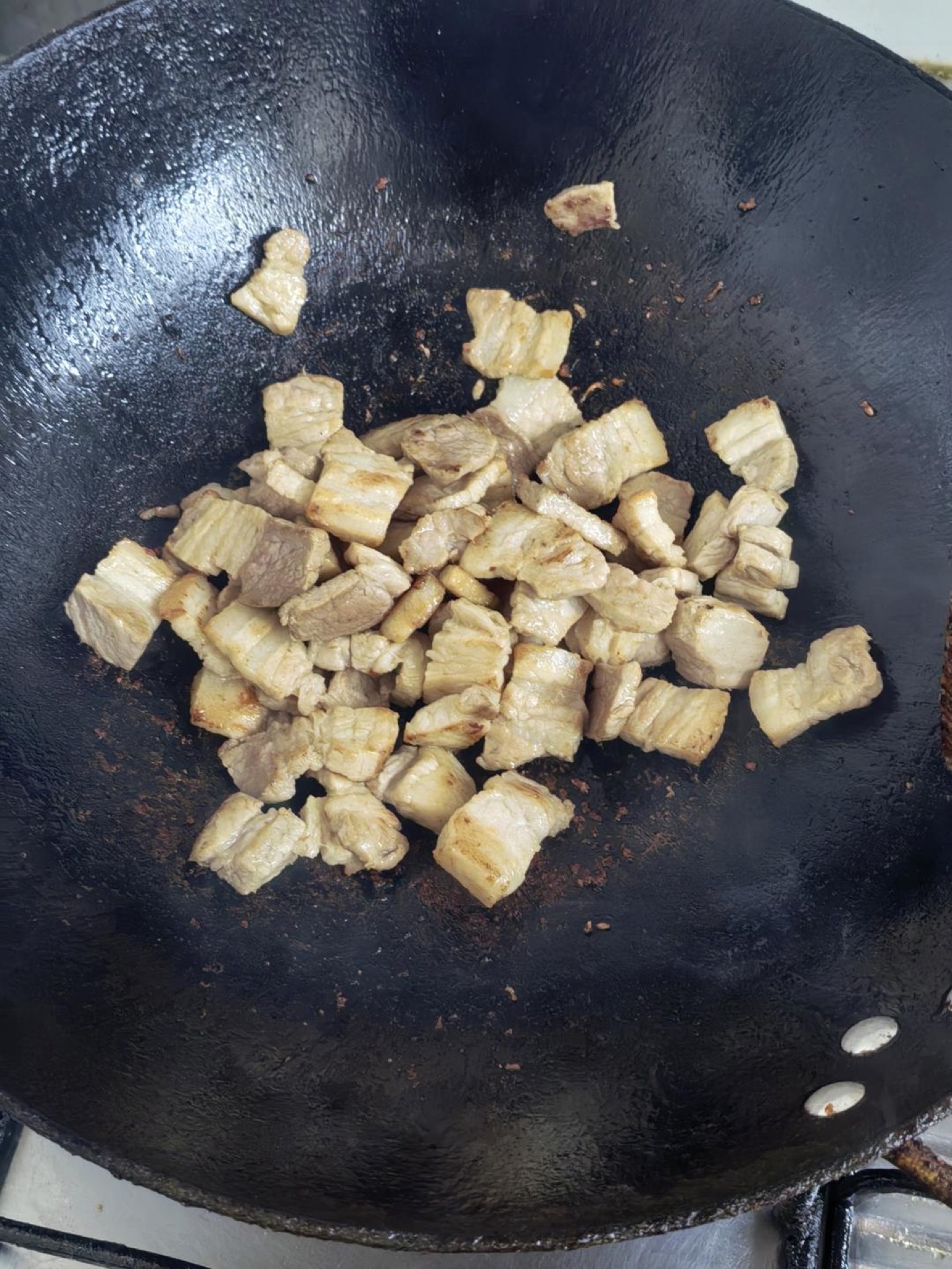
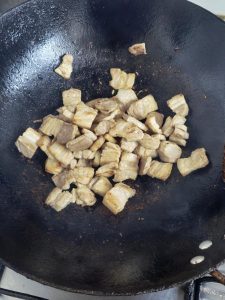
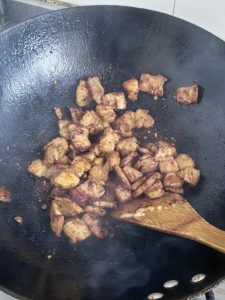
Step 4 — Render the Pork
Add a little oil to the wok, tip in the sliced pork belly, and fry until the fat renders and both sides are lightly browned.
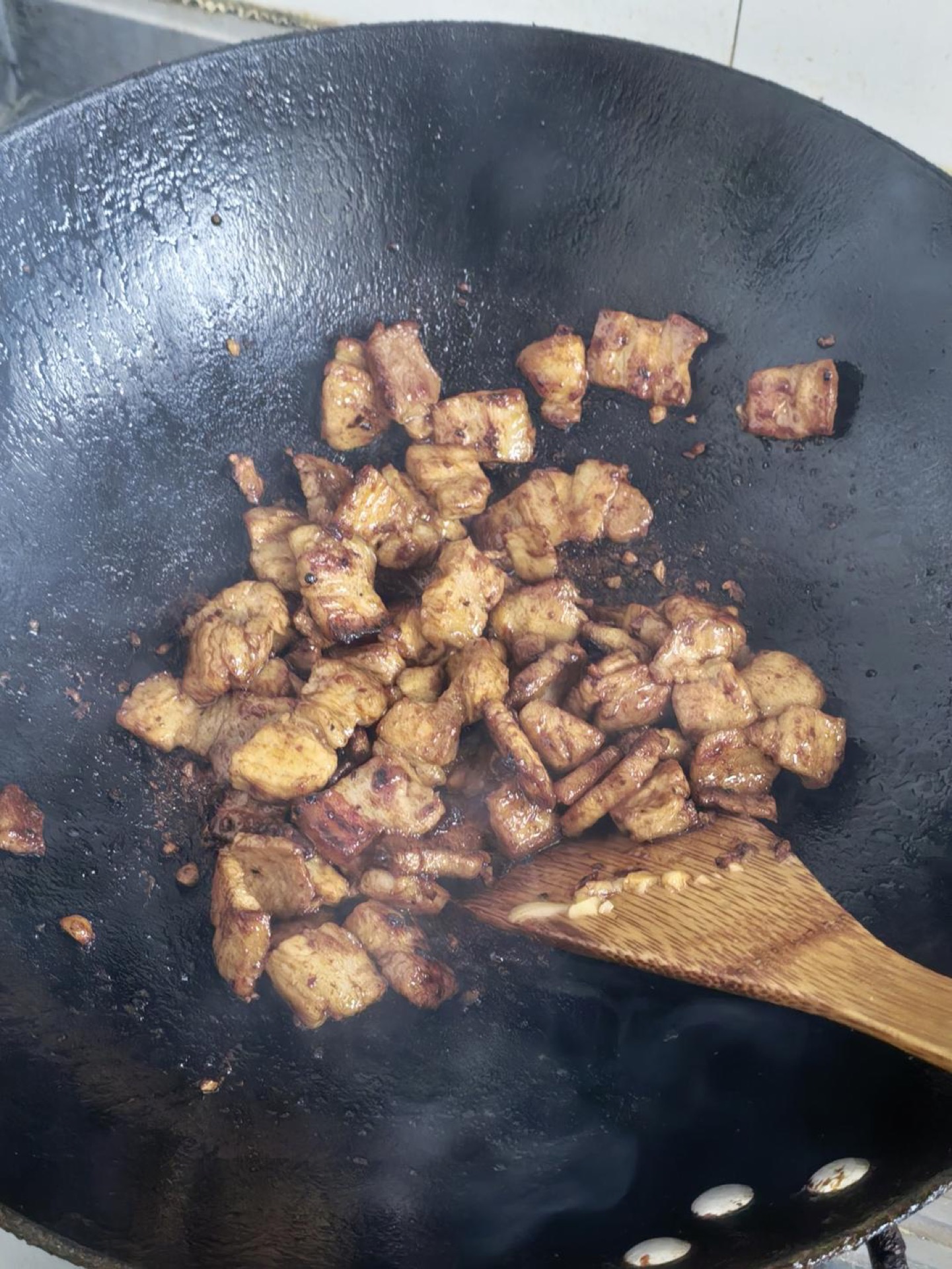
Step 5 — Add the Aromatics and Sauce
Add the minced garlic, soy sauce, doubanjiang, and sugar, and stir until the meat is evenly coated and glossy.
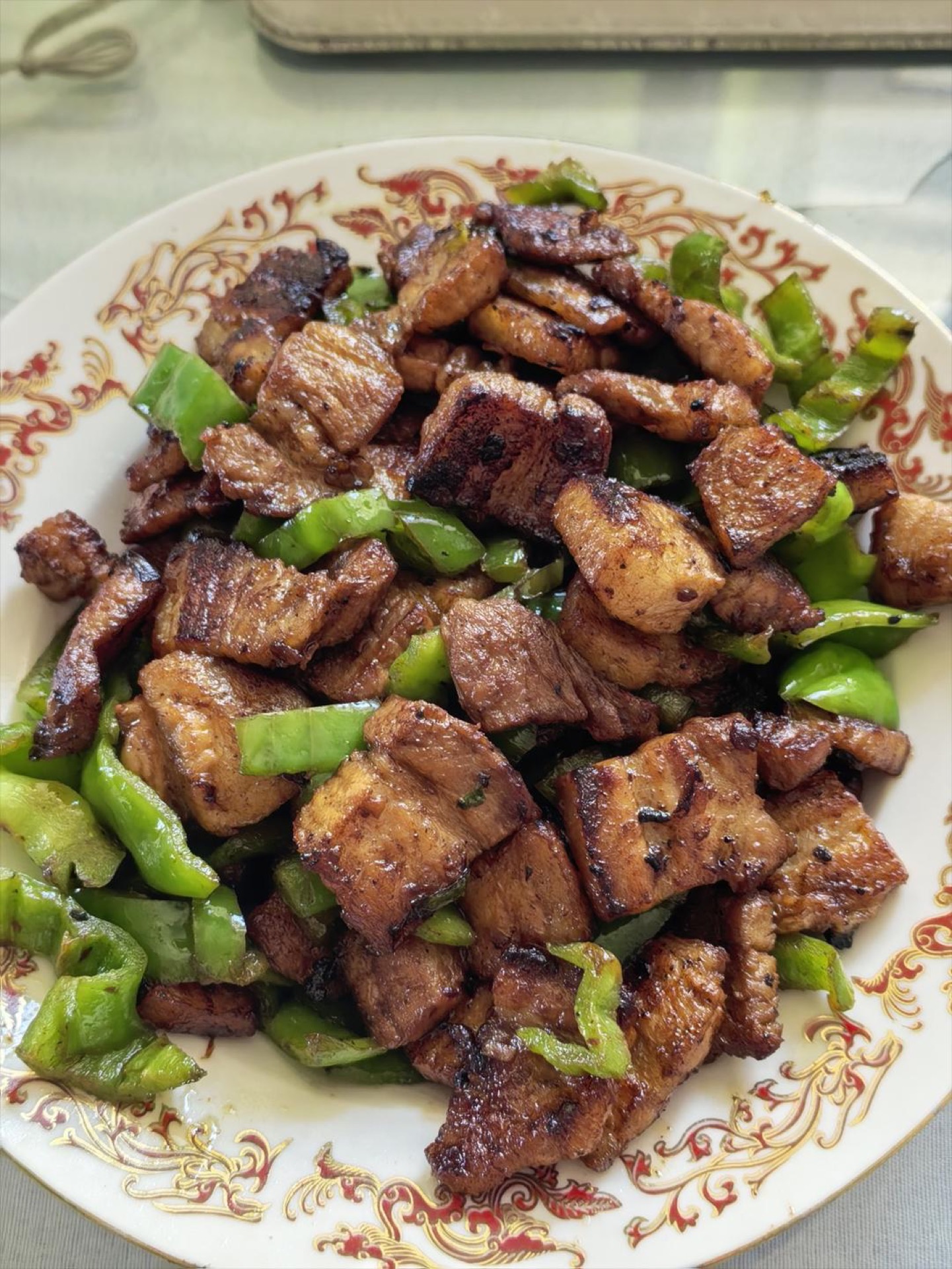
Step 6 — Add the Peppers and Finish
Once the pork is well colored, add the green peppers and stir-fry until they smell fragrant. Season with a pinch of MSG if you like, or leave it out, then plate and serve.
Common Mistakes When Making Twice-Cooked Pork
1. Slicing the pork while it is still hot. Warm pork belly is soft and slippery, so the slices come out thick, ragged, and uneven. The cause is impatience, and the fix is simple: chill the boiled pork for at least 30 minutes, or overnight, before you slice it. Cold meat gives you clean, thin slices every time.
2. Boiling the pork too long. If the pork simmers until it is falling apart, it will shred in the wok instead of holding its shape. The cause is leaving it on the stove while you do something else. The fix is to simmer it just until the meat is cooked through and the color has changed, usually 15 to 20 minutes for a 1-pound piece, then pull it out right away.
3. Crowding the wok. If the pork slices are piled on top of each other, they steam instead of sear, and you lose the browned edges that make the dish. The cause is using a pan that is too small. The fix is to cook the pork in two batches if needed, or to use your widest skillet, and to give the slices room in a single layer.
4. Burning the doubanjiang. Doubanjiang has a lot of solids and sugar from the fermented beans, so it scorches quickly if the wok is too hot or if it sits in one spot. The cause is adding it to a smoking wok and then not stirring. The fix is to push the pork to one side, add the paste to the oil, stir it for 10 to 15 seconds until it smells fragrant, and then toss everything together.
5. Over-salting the dish. Doubanjiang is already very salty, and soy sauce adds more. The cause is seasoning by habit rather than by taste. The fix is to use dark soy sauce, which is less salty than light soy, keep it to about a tablespoon, and taste the sauce before the peppers go in. If it is already salty enough, leave out the extra soy sauce entirely.
6. Cooking the peppers into mush. Green peppers should keep a little bite and a fresh, slightly grassy flavor. The cause is adding them too early or stirring them for too long. The fix is to add them only after the pork is fully coated and glossy, and to stir-fry them for just a minute or two, until they smell fragrant and the edges soften slightly.
Variations
With leeks or garlic sprouts. This is the most traditional vegetable pairing in Sichuan. Replace the green peppers with 2 cups of sliced leeks or garlic sprouts, using the white and light green parts, and stir-fry them for about the same amount of time.
With cabbage. Green cabbage cut into rough squares works well and stretches the dish further. Add it a minute before the peppers would go in, since it takes slightly longer to soften.
Spicier version. Add three or four dried red chilies to the oil at the start, or use long hot green chilies in place of half the bell peppers. If you want more heat without more salt, a teaspoon of chili oil at the end does the job.
With tofu or mushrooms. Firm tofu, pressed and cubed, or thick slices of king oyster mushroom can stand in for part of the pork. Brown them well first so they have some texture, then continue with the sauce as written.
Less salty version. Use only 2 teaspoons of doubanjiang, add a teaspoon of Shaoxing wine, and finish with a pinch of sugar. The dish will be milder but still recognizably huiguorou.
If you want to explore other ways to cook this cut, this pan fried pork belly is a good next step, and this air fryer crispy pork belly gives you the crackling without a wok. For a completely different texture, try this poached pork belly with garlic sauce, which is served cold.
Frequently Asked Questions
Can I make twice-cooked pork without doubanjiang? You can make a pork belly stir-fry without it, but it will not taste like huiguorou. The closest substitute is a fermented chili bean paste, sometimes sold as chili bean sauce. If you use one, taste it first, because salt levels vary a lot between brands.
Do I have to boil the pork first? Yes, that is the defining step. Boiling cooks the meat through and firms it up so it can be sliced thin. Skipping it means you are stir-frying raw pork belly, which takes much longer and gives you a very different texture.
How thin should I slice the pork belly? Aim for about an eighth of an inch, roughly the thickness of a coin. Thicker slices take longer to render and can turn chewy, while paper-thin slices fall apart. A sharp knife and cold meat are the two things that make this easier.
Can I use regular bacon instead of pork belly? You can, but bacon is cured and much saltier, so you would need to cut the doubanjiang and soy sauce significantly. The texture will also be firmer and less tender than fresh pork belly.
Why did my pork belly render so little fat? It usually means the wok was not hot enough, or the slices were crowded and steamed instead of seared. Get the wok properly hot, use a wide pan, and give the slices space. Some pork bellies are simply leaner than others, so a little variation is normal.
How to Serve
Twice-cooked pork is a rice dish at heart. Serve it over steamed white rice, or with a bowl of rice on the side, and let the sauce soak in. It also works as part of a larger Sichuan-style table with a cold vegetable dish, a soup, and something pickled.
For a heartier meal, pair it with this braised pork belly for a pork-forward spread, or add a second vegetable dish with this braised pork belly with potatoes. If you want a quick extra green on the table, a plain garlicky stir-fry of leafy greens is the classic companion.

Storage & Reheat
Let leftovers cool to room temperature within two hours, then transfer them to an airtight container. Refrigerate for up to 3 days. The fat will solidify in the fridge, which is normal; it melts again on reheating.
The best way to reheat is in a hot wok or skillet over medium-high heat, with a splash of water to loosen the sauce. Stir for two to three minutes, until the pork is hot all the way through and the peppers are warmed. A microwave works in a pinch, but the peppers will soften and the pork will lose its edge.
Freezing is possible but not ideal. The peppers turn mushy after thawing, so if you plan to freeze, consider picking them out first and adding fresh ones when you reheat. Frozen twice-cooked pork keeps for up to 2 months.
Allergen Notice
This dish contains soy and wheat. Doubanjiang is made from fermented broad beans and wheat flour, and most soy sauces contain both soy and wheat. If you are cooking for someone with a soy or gluten allergy, look for a certified gluten-free soy sauce or tamari and a doubanjiang that is labeled gluten-free, and check every label before you start.
If you are avoiding soy entirely, this dish is difficult to adapt because the doubanjiang is the flavor base. A fermented chili paste without soy is the closest option, but the result will be a different dish. Serve with caution and confirm all ingredients with your guests.
Nutrition Disclaimer
Nutrition information is calculated using an ingredient database and should be considered an estimate. In cases where multiple ingredient alternatives are given, the first listed is calculated for nutrition. Garnishes and optional ingredients are not included.
About the Author & Recipe Development
This recipe was developed and tested by Lin, the cook and writer behind Woks of Love. Lin grew up cooking Chinese home food and has spent years adapting restaurant and family recipes for a normal home kitchen, with an emphasis on honest technique and ingredients you can actually find.
This version of huiguorou started from a home cook’s own notes, including the honest observation that light soy sauce made the dish a little too salty and that dark soy sauce would have been the better choice for color. That note shaped the recipe you see here: dark soy for color, doubanjiang for salt, and sugar to round it out.
The recipe was tested with skin-on pork belly from a standard supermarket, a carbon steel wok on a gas stove, and a cast-iron skillet on an electric stove. Both worked. The timing in the steps reflects the gas wok, so if you are cooking on electric, give the wok a little longer to heat before the pork goes in.
Authoritative References
For safe handling and cooking temperatures, see the USDA safe temperature chart. For guidance on cooling and storing cooked food, see the FDA food safety guidance on refrigeration. For the science behind browning and flavor development, see the Maillard reaction explainer from Serious Eats.
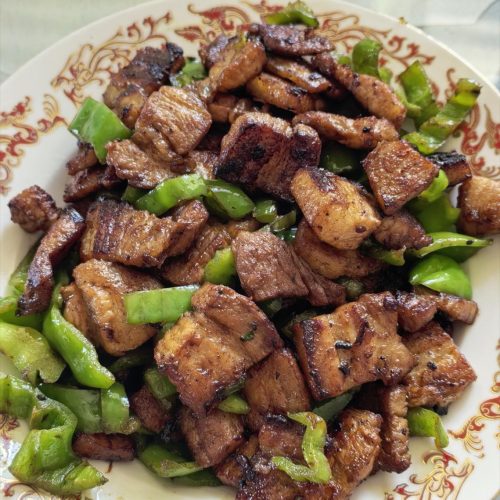
Twice-Cooked Pork (回锅肉): Savory, Tender Pork with Crisp Peppers

Equipment
- Wok
- Cutting Board
- Slotted Spoon
Ingredients
For the Pork
- 1 lb pork belly skin on, cut into 2-inch blocks
- 4 cups water for simmering
- 2 scallions optional, for the simmering water
- 3 slices ginger optional, for the simmering water
For the Sauce
- 1 tbsp doubanjiang Pixian broad bean paste, finely chopped
- 1 tbsp light soy sauce or dark soy sauce for deeper color
- 1 tsp granulated sugar balances the saltiness
- 3 cloves garlic minced
- 1 tsp Shaoxing wine optional
For the Stir-Fry
- 2 green bell peppers seeded, cut into 1-inch pieces
- 1 tbsp neutral oil for the wok
Instructions
- Set out the doubanjiang, the pork belly, and the green peppers so everything is ready before you turn on the heat.

- Heat the wok, place the pork skin-side down, and sear until golden. Add water and simmer until the meat changes color, then scoop it out. While it simmers, wash and cut the green peppers.
- Cut the cooled pork belly into thin, even slices.

- Add a little oil to the wok, tip in the sliced pork belly, and fry until the fat renders and both sides are lightly browned.
- Add the minced garlic, soy sauce, doubanjiang, and sugar, and stir until the meat is evenly coated and glossy.
- Once the pork is well colored, add the green peppers and stir-fry until they smell fragrant. Season with a pinch of MSG if you like, or leave it out, then plate and serve.












Leave a Reply