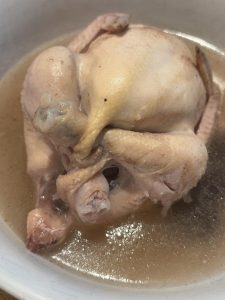
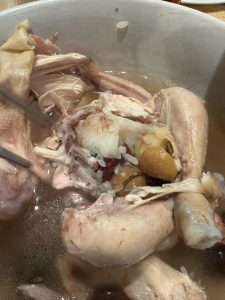
There is a moment in every good ginseng chicken soup when the spoon breaks through the taut skin and the belly gives way, and a small mountain of sweet rice, jujubes and chestnuts spills into the broth. That moment is the whole point of 参鸡汤 — a whole young chicken, stuffed and simmered until it is barely holding together, served in its own clear broth. It is the kind of dish that looks like a project and behaves like a hug.
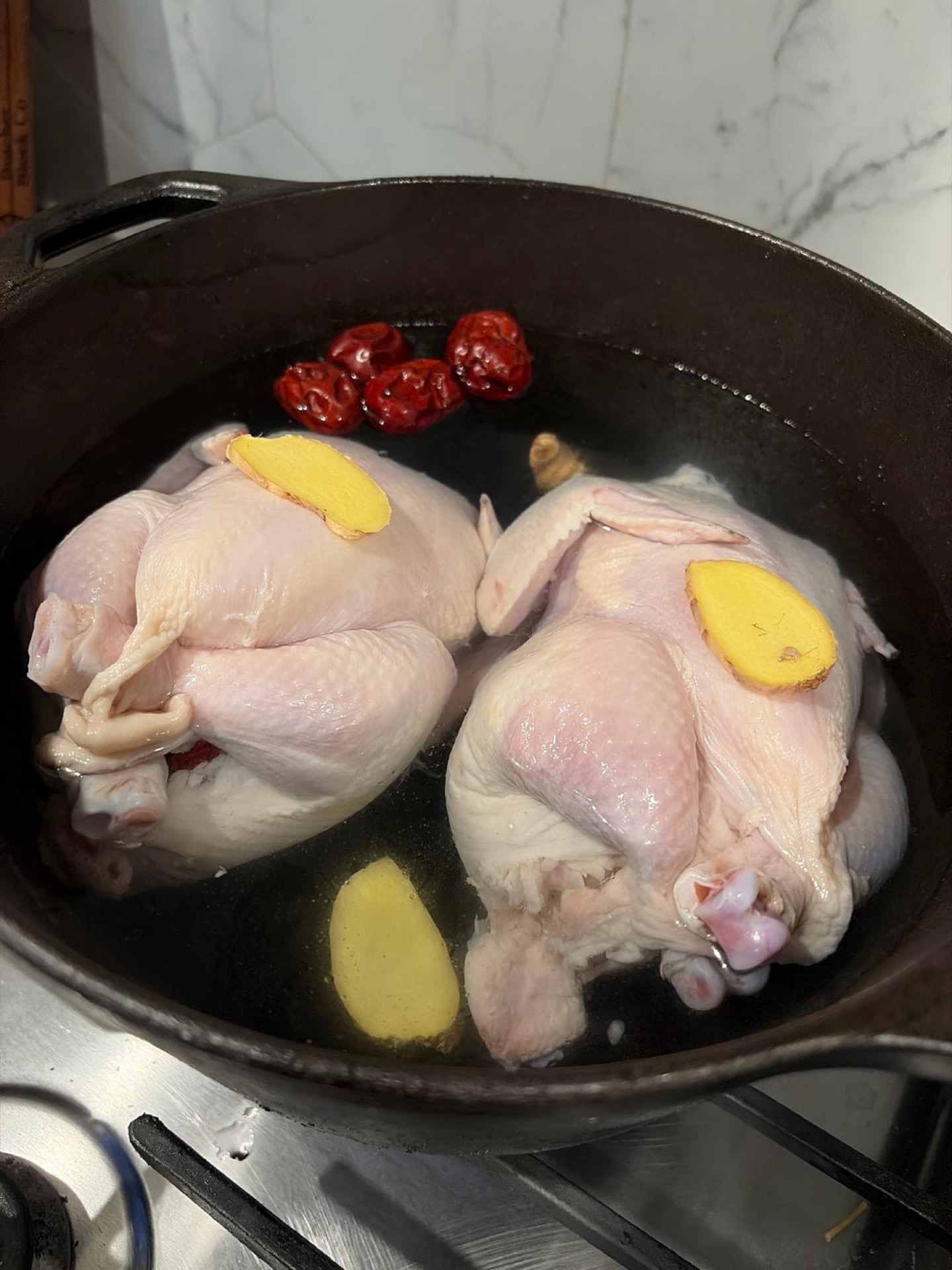
Most people meet this soup in a Korean restaurant, where it arrives in a stone bowl still bubbling, with a little dish of salt on the side. What surprises them is how few ingredients it actually needs. A chicken, some glutinous rice, a handful of dried jujubes, a few chestnuts, garlic and ginger. No long braise, no complicated sauce, no special technique beyond a gentle hand with the heat. The soup is clean and faintly sweet, the chicken is falling-apart tender, and the rice inside has absorbed everything.
I make this at the end of summer when the weather is still heavy and nobody wants to stand over a wok, and I make it in the depths of winter when the house is cold. It works both times. If you have ever made a rice cooker whole chicken, you already know how forgiving a whole bird can be — this is the stovetop, soupier cousin of that idea.
What Is Ginseng Chicken Soup?
Ginseng chicken soup is a Korean dish called samgyetang (삼계탕), and it is also eaten in northeastern China, where it is known as 参鸡汤. The name breaks down simply: 参 is ginseng, 鸡 is chicken, 汤 is soup. A small whole chicken — usually a young bird or a Cornish hen weighing around two pounds — is cleaned, stuffed with soaked glutinous rice, dried jujubes, chestnuts and garlic, and then simmered whole in water with more aromatics until everything is tender.
The broth is not a rich, long-simmered stock. It is light, faintly milky from the rice that escapes the cavity, and slightly sweet from the dates. The chicken is poached rather than braised, which keeps the meat soft and the flavour delicate. Traditionally a piece of ginseng root goes into the cavity too; many home cooks, including me, make it without, and it is still excellent. What you get at the table is a complete meal in one pot: meat, rice, broth and garnish, all from the same vessel.
If you like the idea of a whole bird doing all the work for you, this is one of the simplest ways to cook one — and it doubles as soup and side dish at the same time.
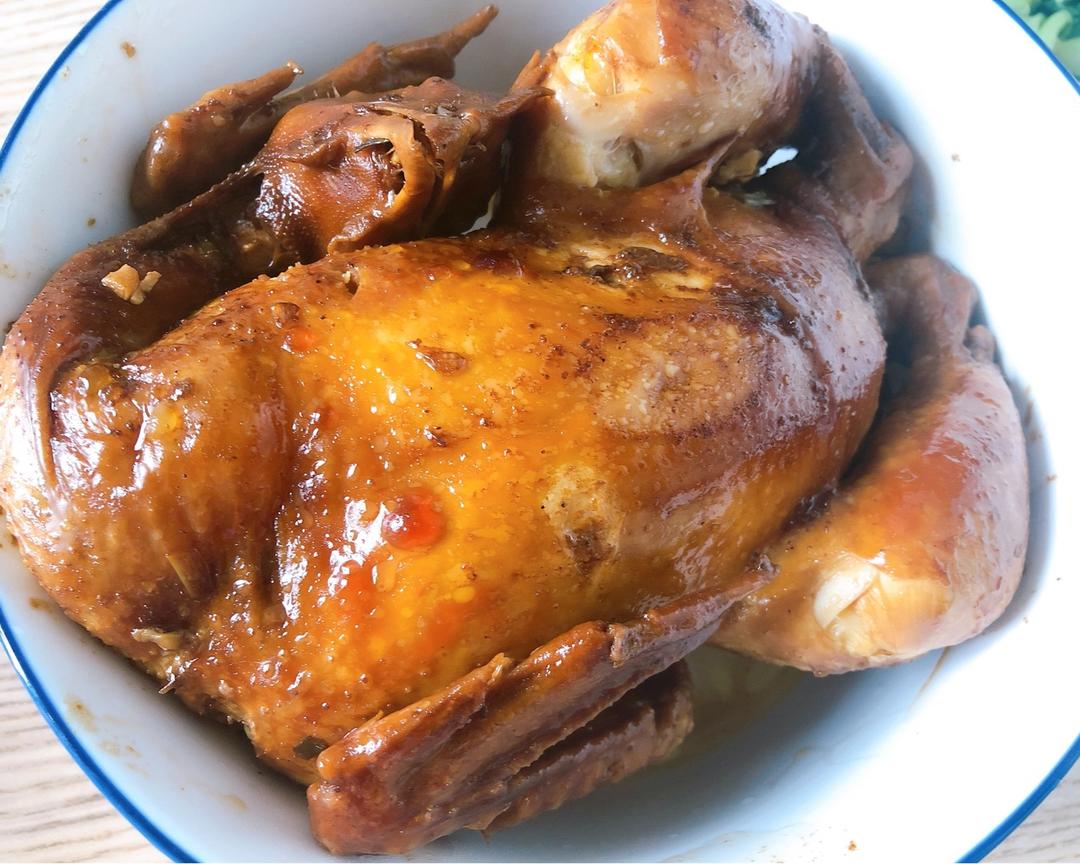
If you like this kind of cooking, my rice cooker whole chicken is the closest recipe on the site — the same technique and the same pantry.
1Easy Rice Cooker Whole Chicken (Dian Fan Guo Men Ji)A “lazy” but incredibly delicious way to cook a whole chicken using just a rice cooker. No water is added, resulting in a concentrated, savory soy sauce glaze and fall-off-the-bone tender meat.Check out this recipe
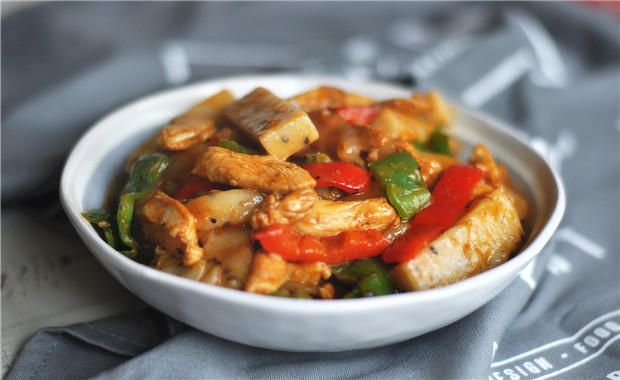
For a version that leans on the same sweet-savoury chicken-and-rice pairing but goes in a completely different direction, korean spicy chicken and rice cakes is a great next stop. It uses the same cut of bird, the same sticky rice energy, and a gochujang sauce that wakes everything up.
2Korean Spicy Chicken and Rice Cakes (Dakgalbi Style Stir-fry)A fast, spicy, and savory stir-fry featuring tender chicken breast, chewy Korean rice cakes, and crisp vegetables in a rich Gochujang sauce. Inspired by Korean Dakgalbi but adapted for a quick home-cooked meal.Check out this recipe
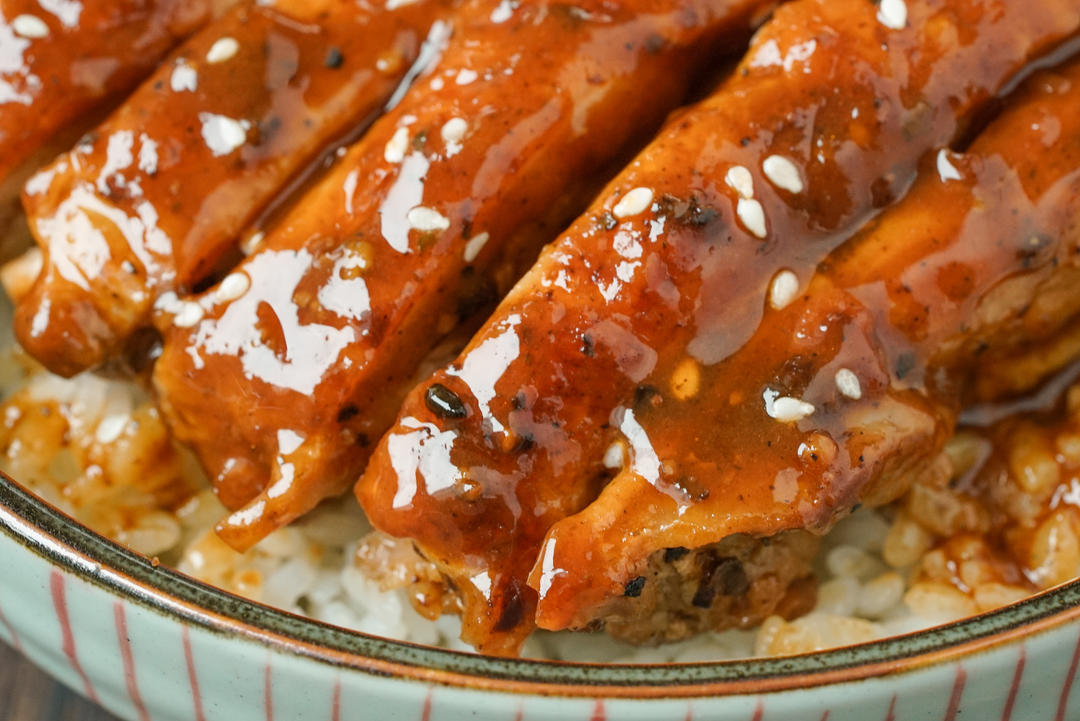
And if you want something in between — chicken, rice, a glossy sauce, all in one bowl — black pepper chicken rice bowls takes the same ingredients and turns them into a fast weeknight dinner. It is the opposite of a slow simmer, and it is very good.
3Black Pepper Chicken Rice Bowls (Hei Jiao Ji Tui Fan)Juicy pan-seared chicken thighs glazed in a rich, savory black pepper sauce served over steamed rice. A quick, comforting 30-minute meal inspired by Asian rice bowls.Check out this recipe
Why This Recipe Works
The technique here is really about restraint. You are not browning, not building a fond, not reducing anything. You are letting a whole chicken and a handful of sweet ingredients sit in water at the barest simmer until they turn into something more than the sum of their parts.
Three things make it work. First, soaking the glutinous rice before it goes into the bird. Dry rice would pull liquid out of the chicken as it cooks and stay chalky in the middle; soaked rice cooks evenly and plumps into a soft, sticky stuffing. Second, trussing the legs through small holes poked in the skin near the tail. This is the trick that keeps the cavity closed without twine, so the rice stays inside instead of floating out into the broth. Third, the low, partially covered simmer. A hard boil would shred the skin, cloud the broth and leave the meat stringy. A gentle simmer keeps the liquid clear and the chicken silky.
There is also a practical reason this dish is so reliable: everything goes into one pot at once. There is no staging, no sauce to reduce, no last-minute sautéing. Once the pot is on, you have an hour to do something else.
Equipment Needed
You need less than you think. A pot large enough to hold the chicken with the water just covering it is the main requirement — a deep Dutch oven or a heavy stockpot works well, and a wok with a lid can do the job in a pinch if the bird is small. A cutting board and a sharp knife for trimming the chicken, and kitchen scissors for poking the two small holes in the skin near the tail. A slotted spoon for skimming the foam is genuinely useful; a ladle works too but is clumsier.
An instant-read thermometer is the one piece of equipment I would not skip. Poached whole chicken is hard to judge by eye, and the difference between perfectly cooked and slightly underdone is invisible from the outside. Finally, a pair of clean kitchen gloves or just well-washed hands for packing the cavity — it is the fastest way to get the stuffing in.
Ingredients
The ingredient list is short, which means each item matters. A whole young chicken or Cornish hen, glutinous rice (often sold as sweet rice), dried jujubes, peeled chestnuts, garlic, ginger, scallions, salt and black pepper. That is essentially it.
Use US measures as written: about 1 cup of glutinous rice for a 2-pound bird, 8 jujubes in the stuffing plus 4 more for the pot, 6 chestnuts, and 6 cloves of garlic for the cavity with 4 more for the broth. Four slices of fresh ginger and 8 cups of water to start, adding more as needed to keep the chicken just covered.
Ingredient Notes
Glutinous rice. Also called sweet rice or sticky rice, this is not the same as regular long-grain rice and it is not the same as sushi rice. It is what gives the stuffing its characteristic cling and chew. Short-grain rice will work in a pinch but will be softer and less cohesive.
Jujubes. Dried red dates, sold in Chinese and Korean groceries. They add a mild sweetness and a faintly smoky note to the broth. If yours are very hard, soak them in warm water for ten minutes before using. If you cannot find them, a few dried longan or a small handful of raisins will approximate the sweetness, though the flavour will be different.
Chestnuts. Vacuum-packed peeled chestnuts are a huge time-saver and taste nearly as good as fresh ones in a simmered dish. Fresh chestnuts need scoring and roasting before peeling, which is a job in itself.
Ginseng. Traditional recipes include a small root, fresh or dried, tucked into the cavity. It is optional here. If you use it, a 2-inch piece of fresh root or 3–4 slices of dried root is plenty; more than that and the soup turns bitter.
Salt. Do not salt the pot at the start. Season at the table. The broth reduces slightly as it simmers and salting early can push it over. A small dish of flaky salt on the table, plus black pepper, is the traditional setup.
Prep & Mise en Place
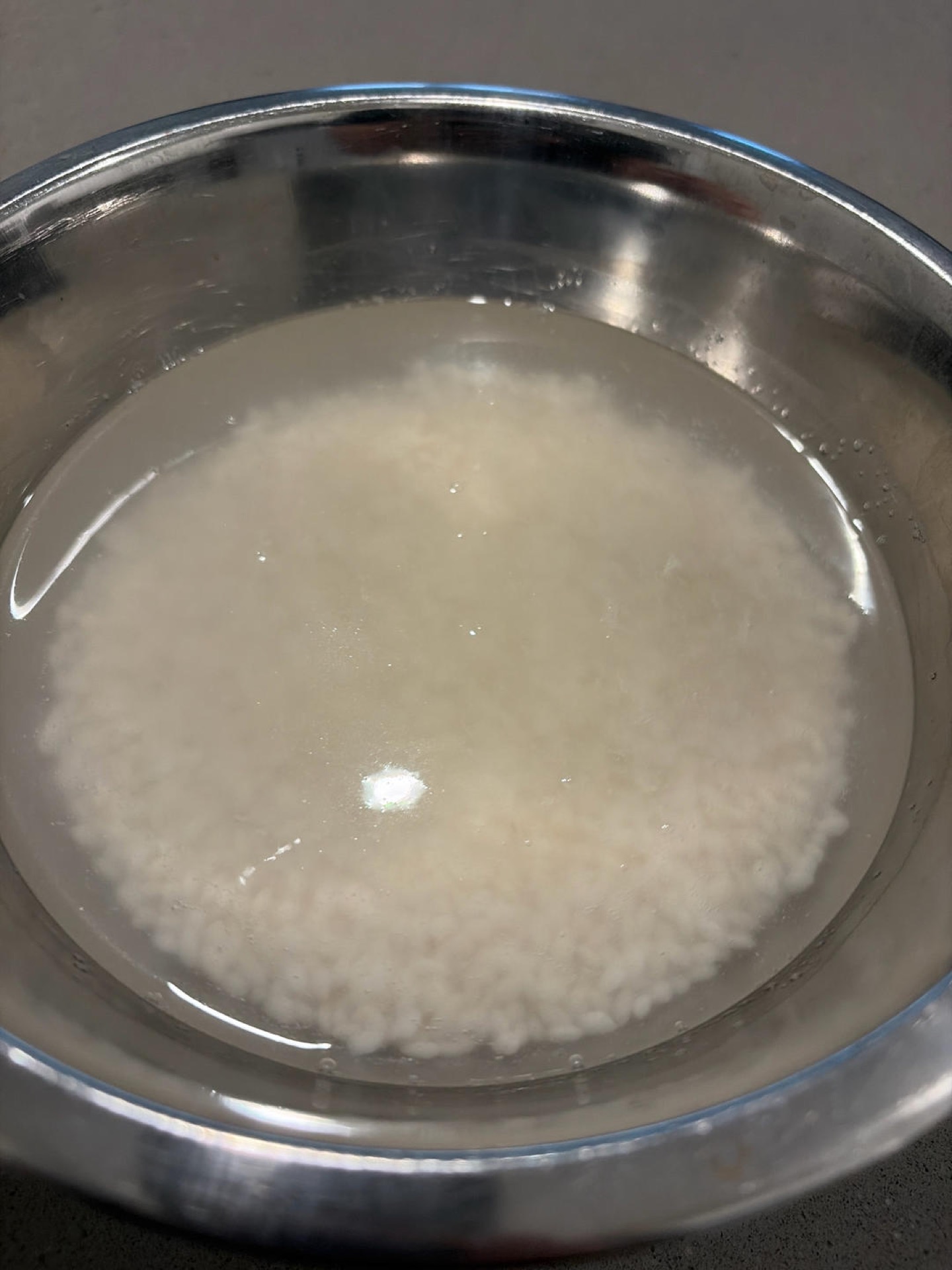
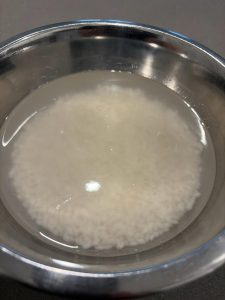
Start with the rice, because it needs the most time. Rinse the glutinous rice in cold water until the water runs mostly clear, then cover it with fresh cold water and let it soak for 30 to 60 minutes. Drain it well before stuffing — excess water in the cavity dilutes the broth.
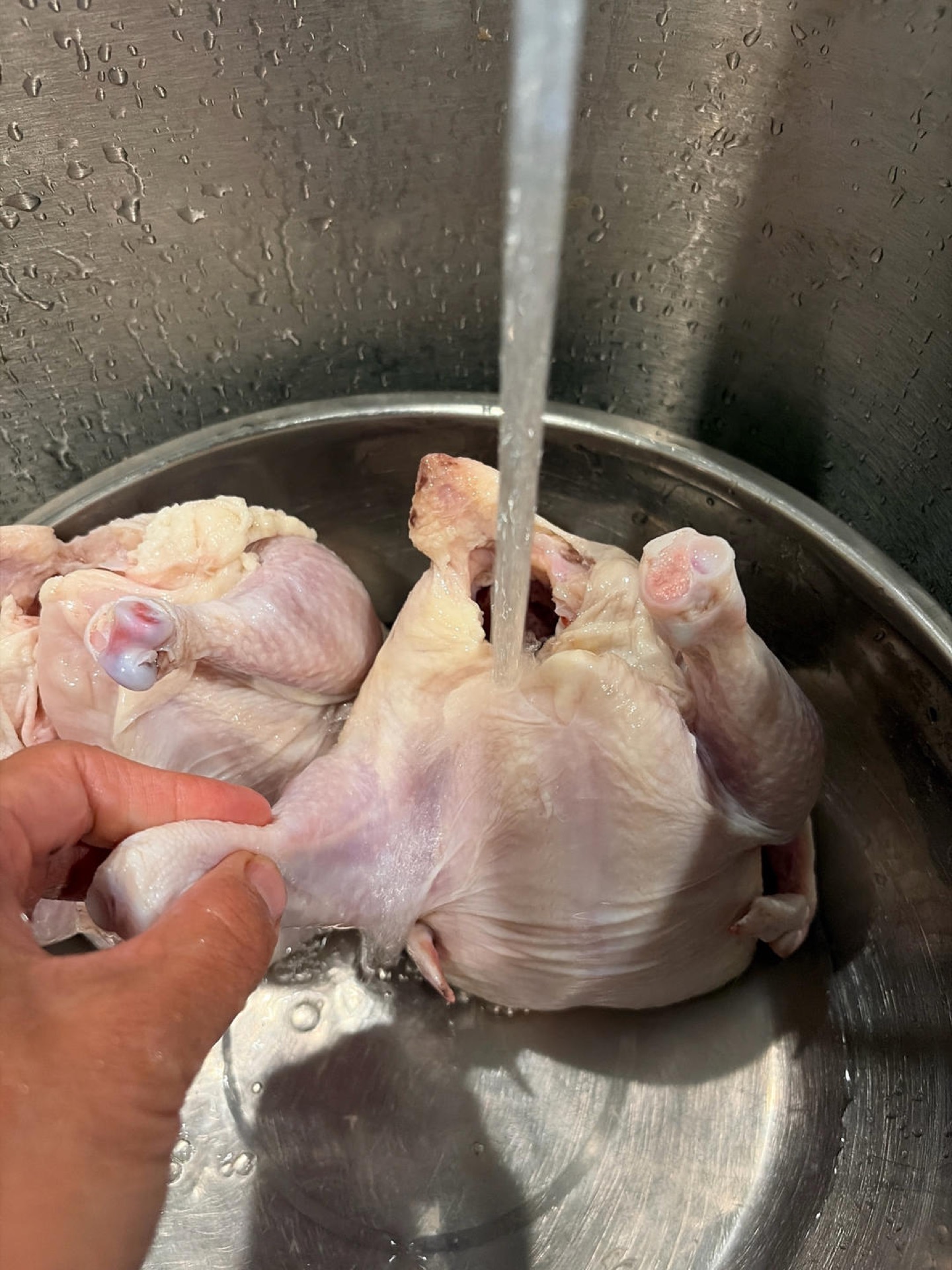
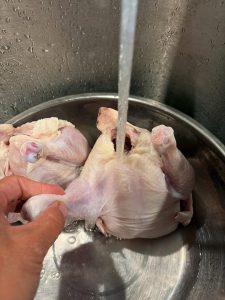
While the rice soaks, deal with the chicken. Rinse it inside and out under cold running water, pulling away any pockets of fat just inside the tail end and any stray pinfeathers. Pat it dry. If your bird came with giblets, remove them and set them aside; they can go into the pot for extra flavour or be saved for another use.
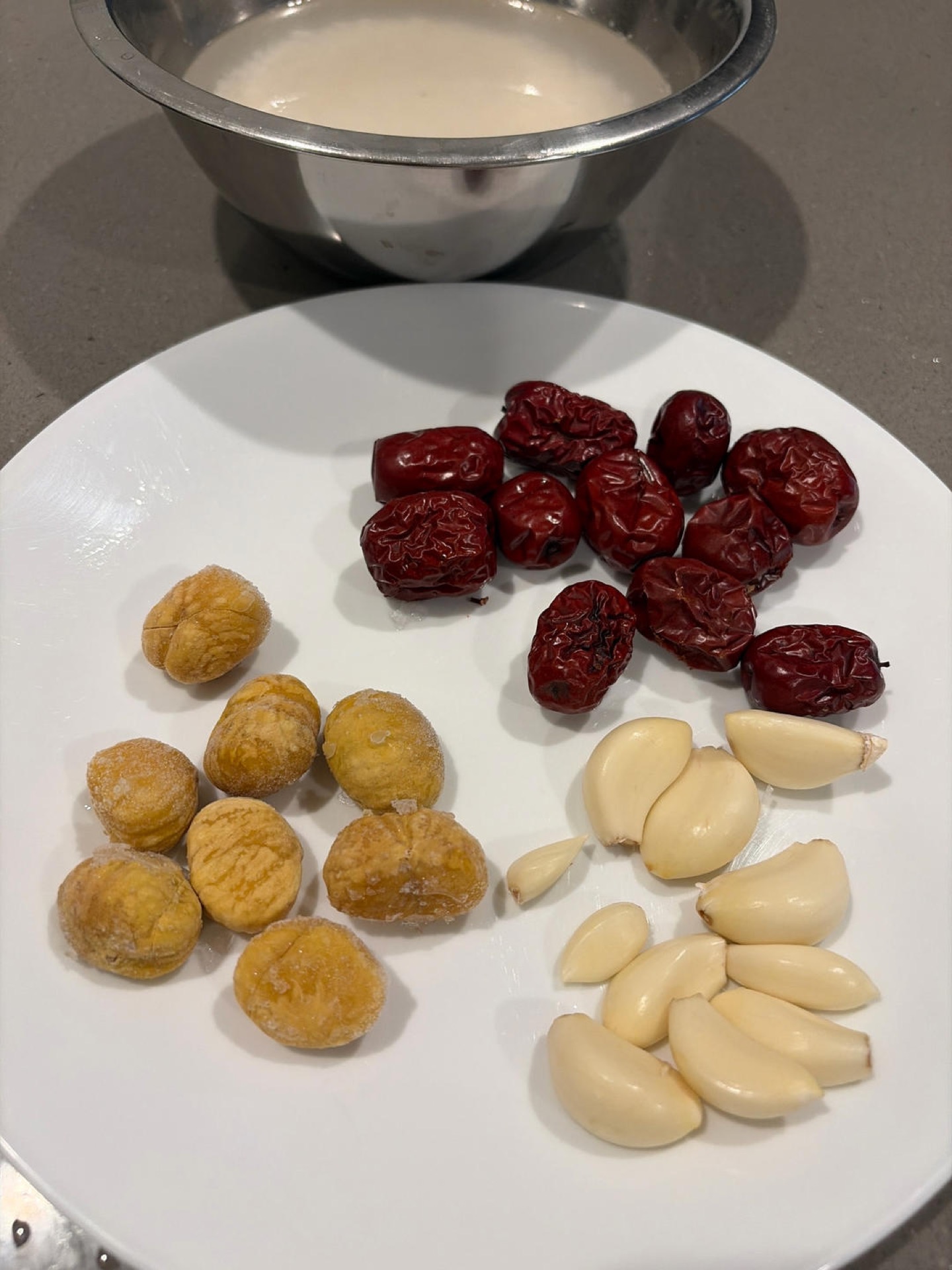
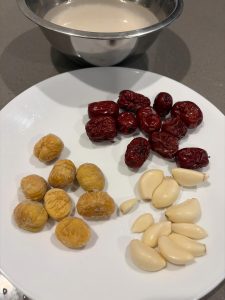
Then get the aromatics ready. Peel the garlic cloves, peel the chestnuts if they are not already done, and check the jujubes. Slice the ginger. Slice the scallions and set them aside for the finish. Once the rice is drained, everything should be in bowls within arm’s reach, because the stuffing step goes fast and having wet hands and a scattered counter is the main way this gets messy.
Cooking Process
Step 1 — Clean the Chicken
Rinse the chicken inside and out and pull away any stray fat or pinfeathers.
Step 2 — Soak the Sweet Rice
Soak the glutinous rice in cold water for 30 to 60 minutes, then drain well.
Step 3 — Ready the Aromatics
Prepare the jujubes, garlic cloves and chestnuts so they are all within reach.
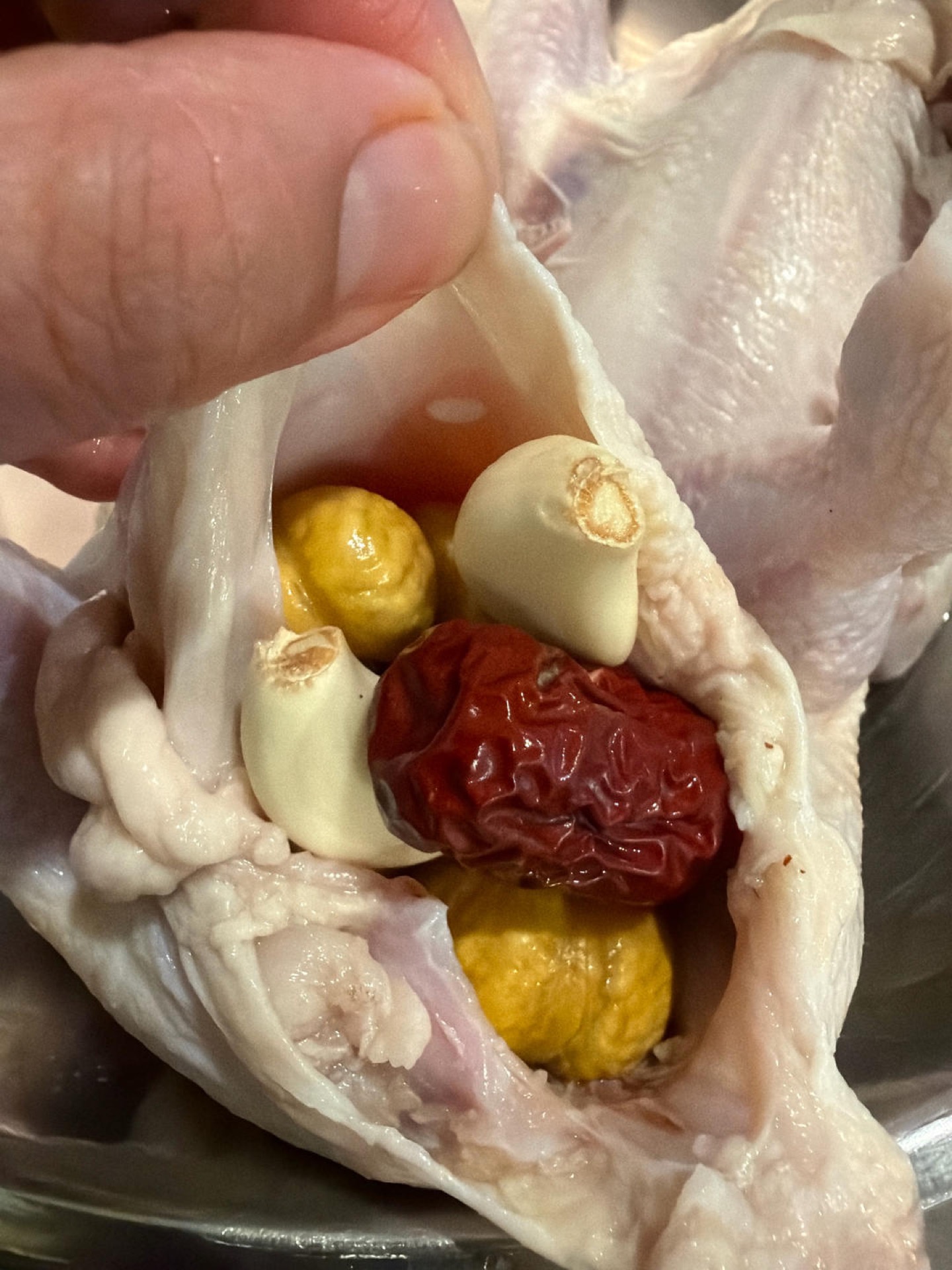
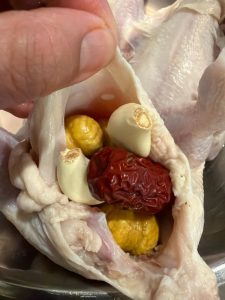
Step 4 — Stuff the Cavity
Pack the soaked rice, jujubes, garlic and chestnuts into the chicken’s cavity, using as much as you like.
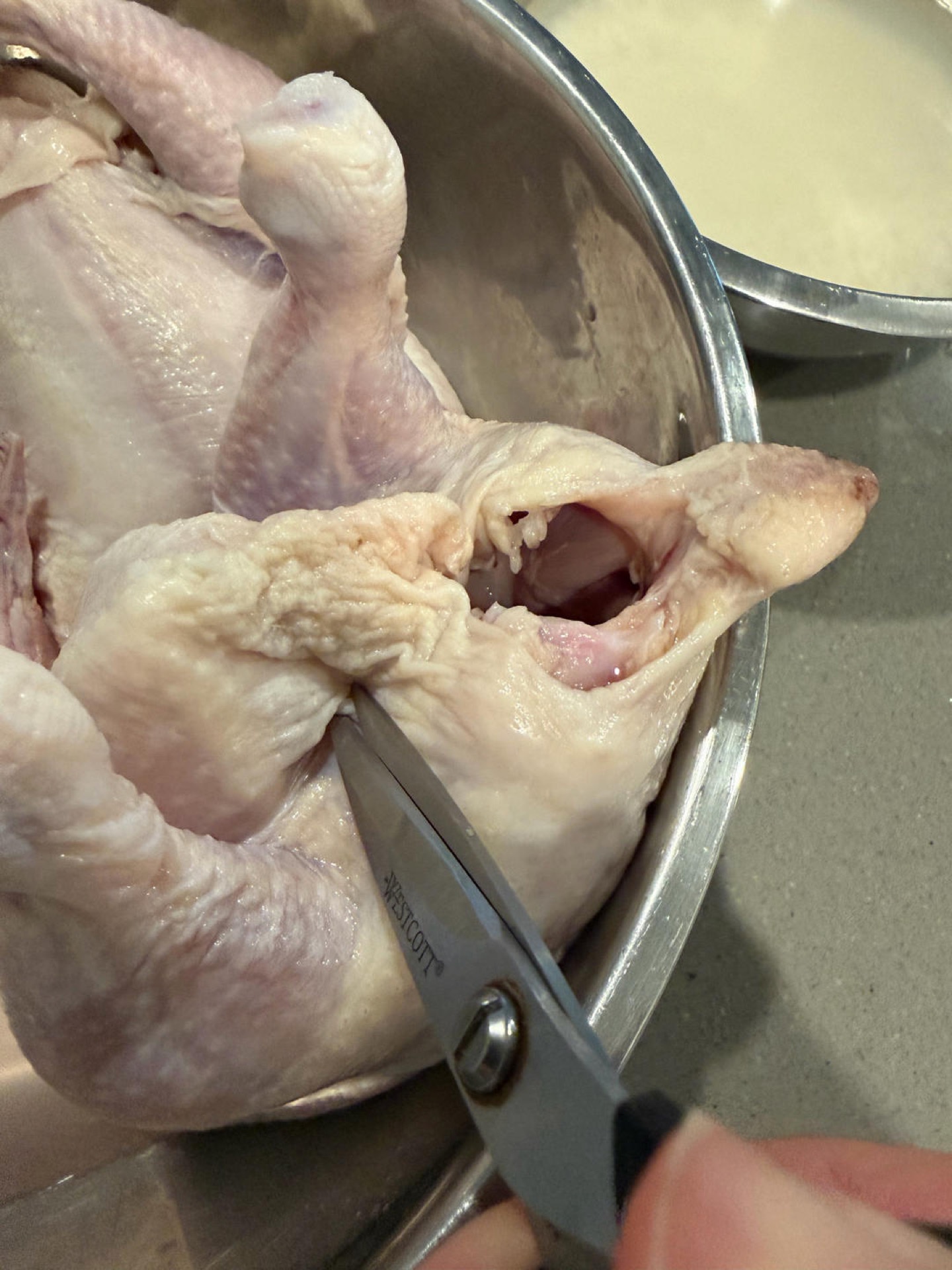
Step 5 — Pierce the Skin
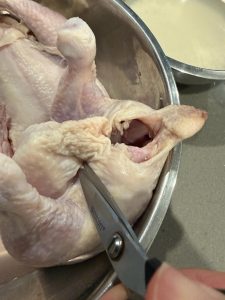
Use kitchen scissors to poke one small hole through the skin on each side near the tail.
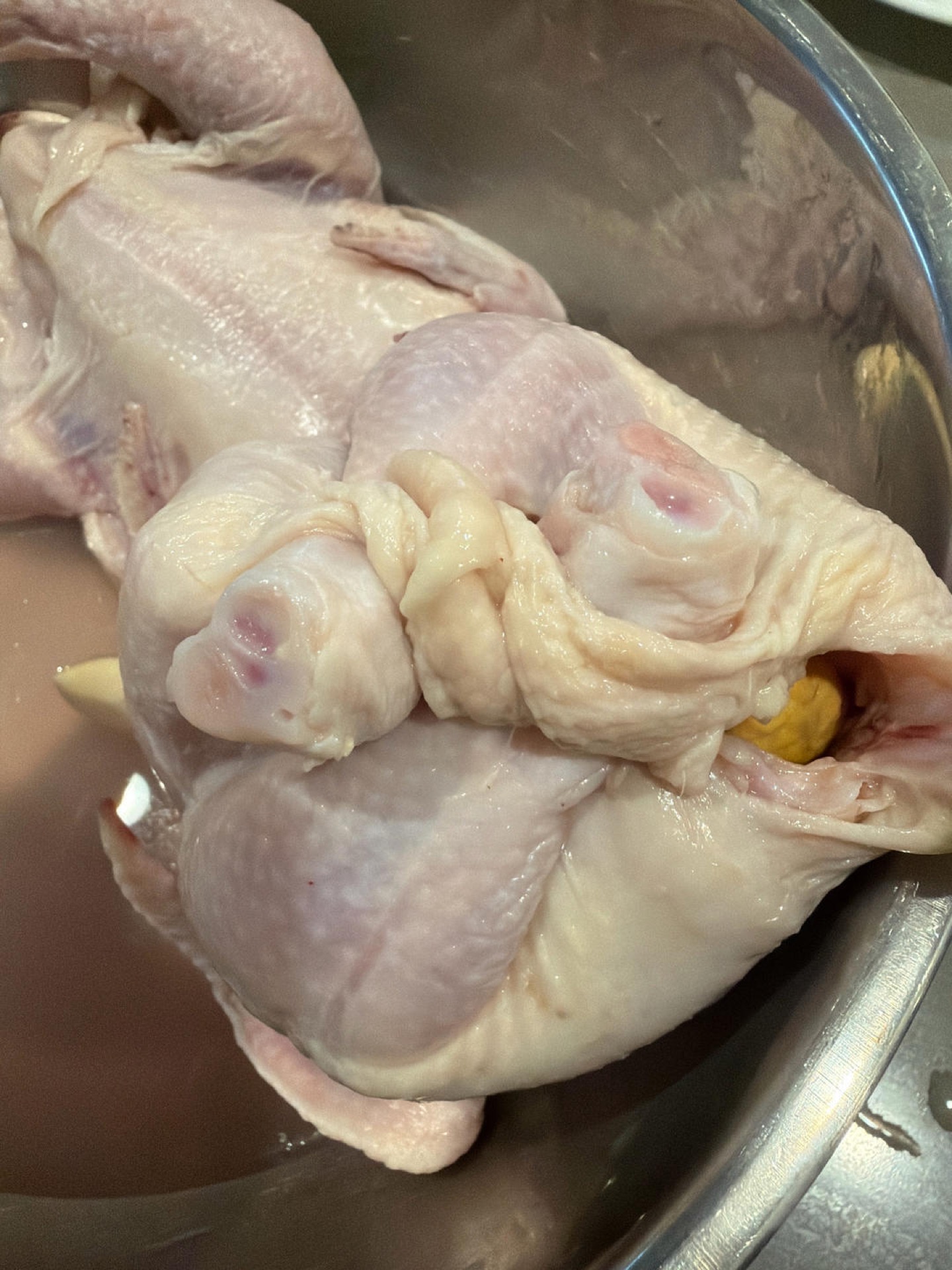
Step 6 — Truss the Legs
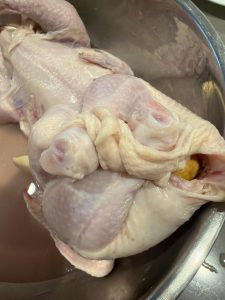
Push the left leg through the right-hand hole and the right leg through the left-hand hole.
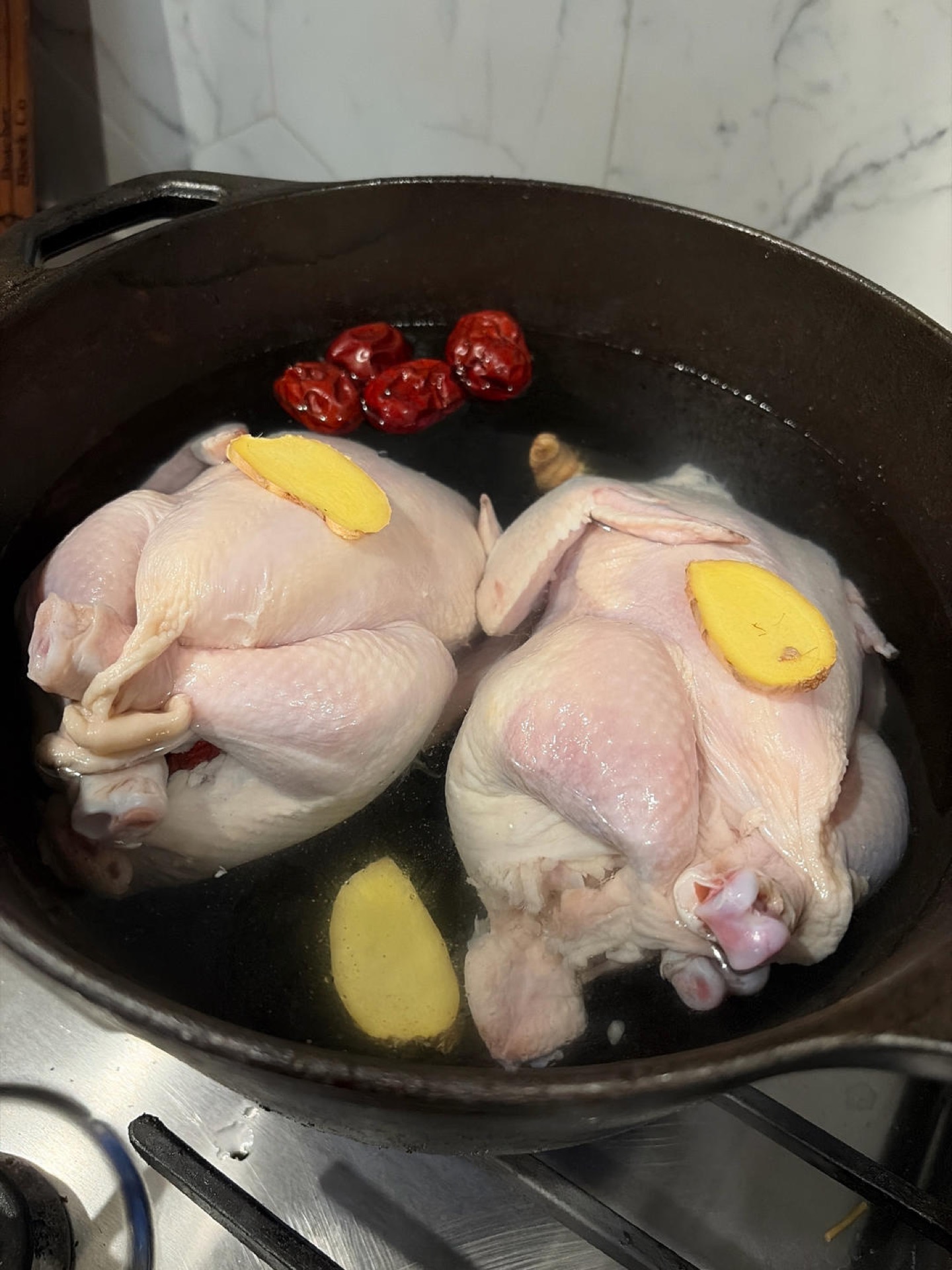
Step 7 — Build the Pot
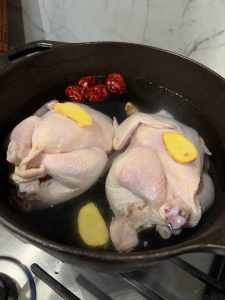
Put the chicken in a pot, add the remaining garlic, ginger slices and jujubes, then add water until the chicken is just covered.
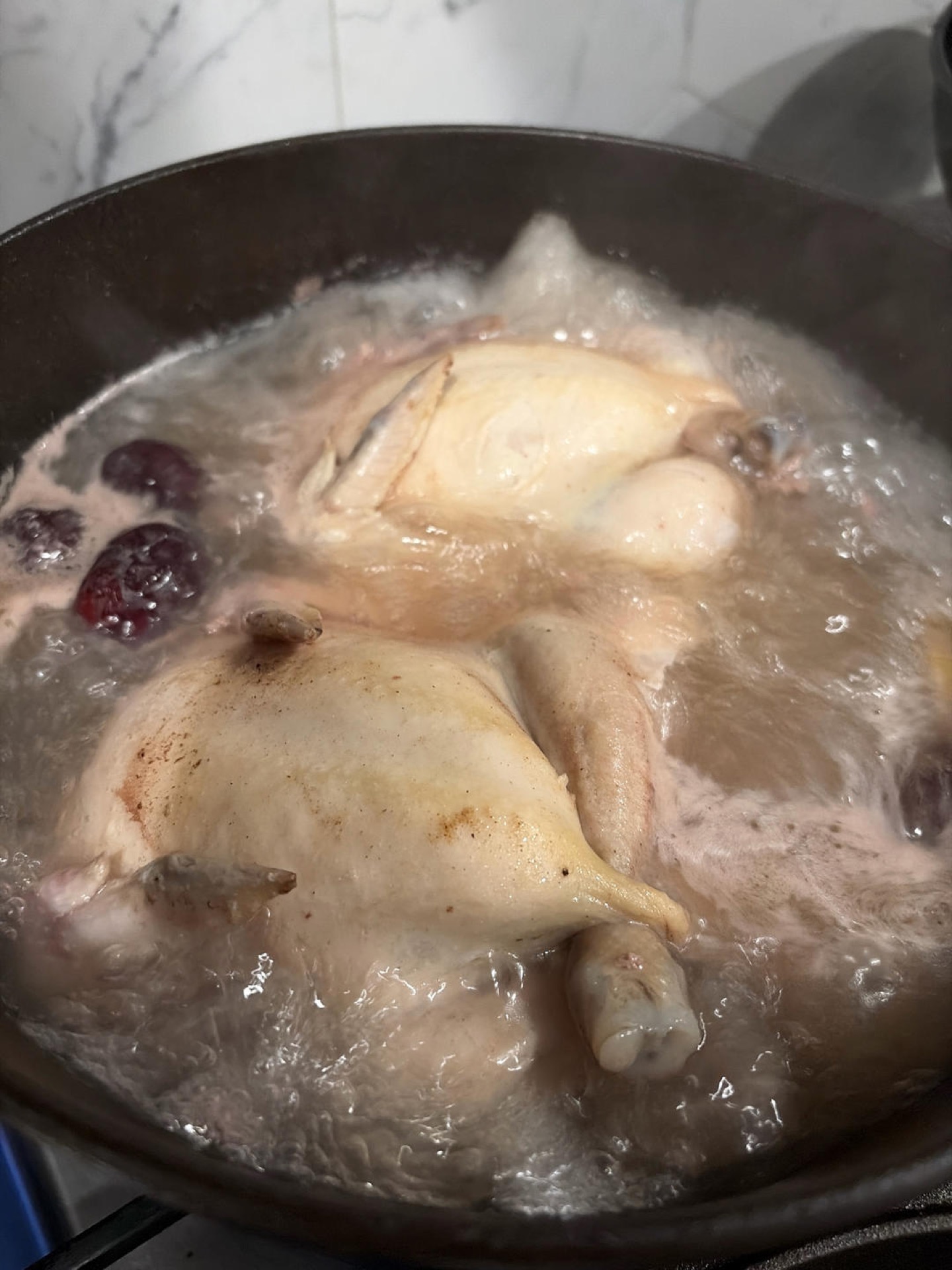
Step 8 — Skim the Broth
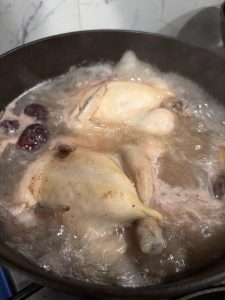
Bring to a boil, then skim off the foam that rises to the surface.
Step 9 — Simmer Gently
Leave the lid slightly ajar and simmer on low. A small young chicken needs about 45–60 minutes; two need about 70–90 minutes. The chicken should be cooked through and tender and the rice soft.
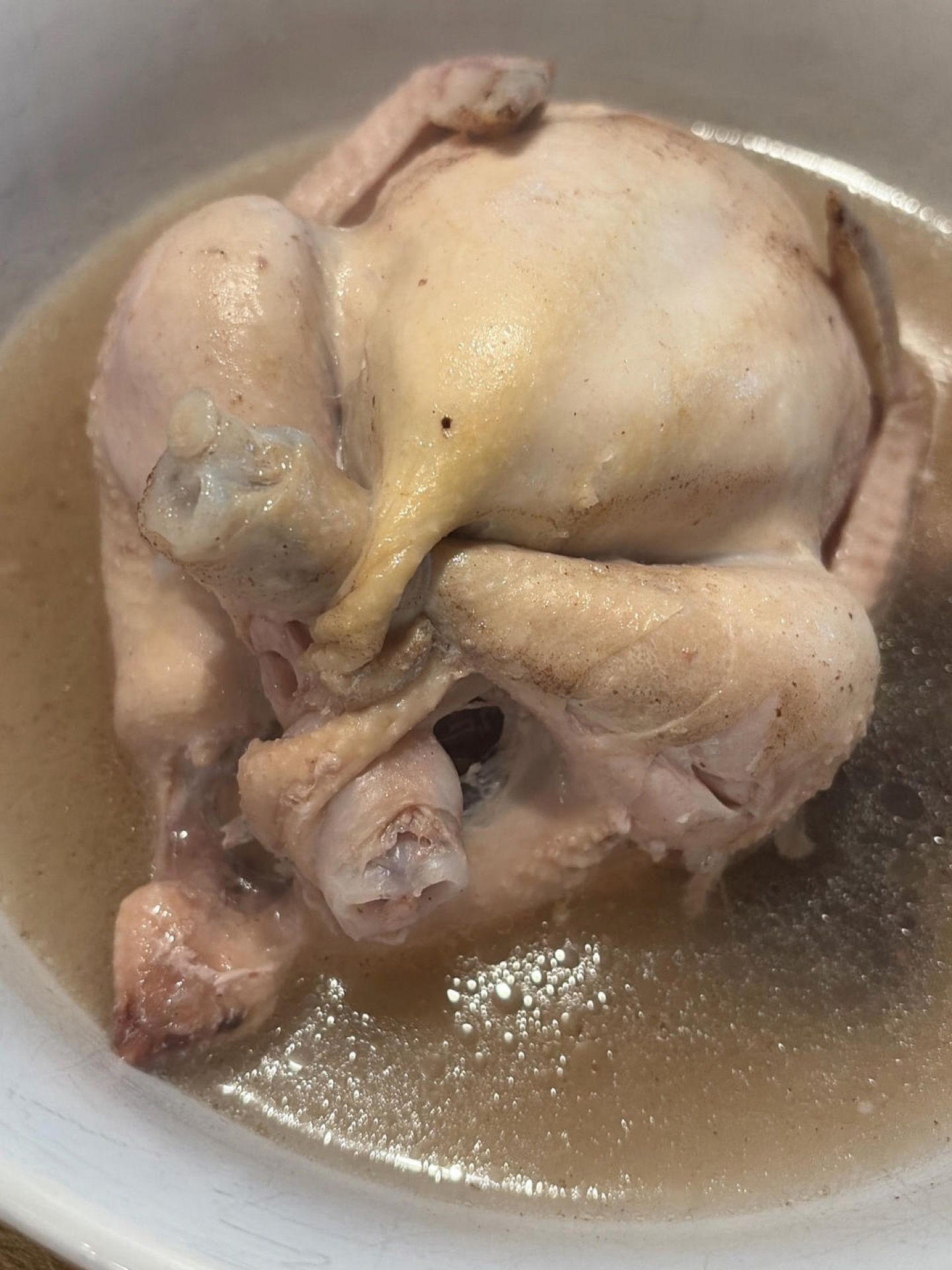
Step 10 — Finish and Serve
If you prefer a cleaner broth, lift out the onion and ginger. Ladle into bowls, scatter with scallions, and season with salt and black pepper to taste. The fun part comes at the table — split the belly open and find all the treasures inside.
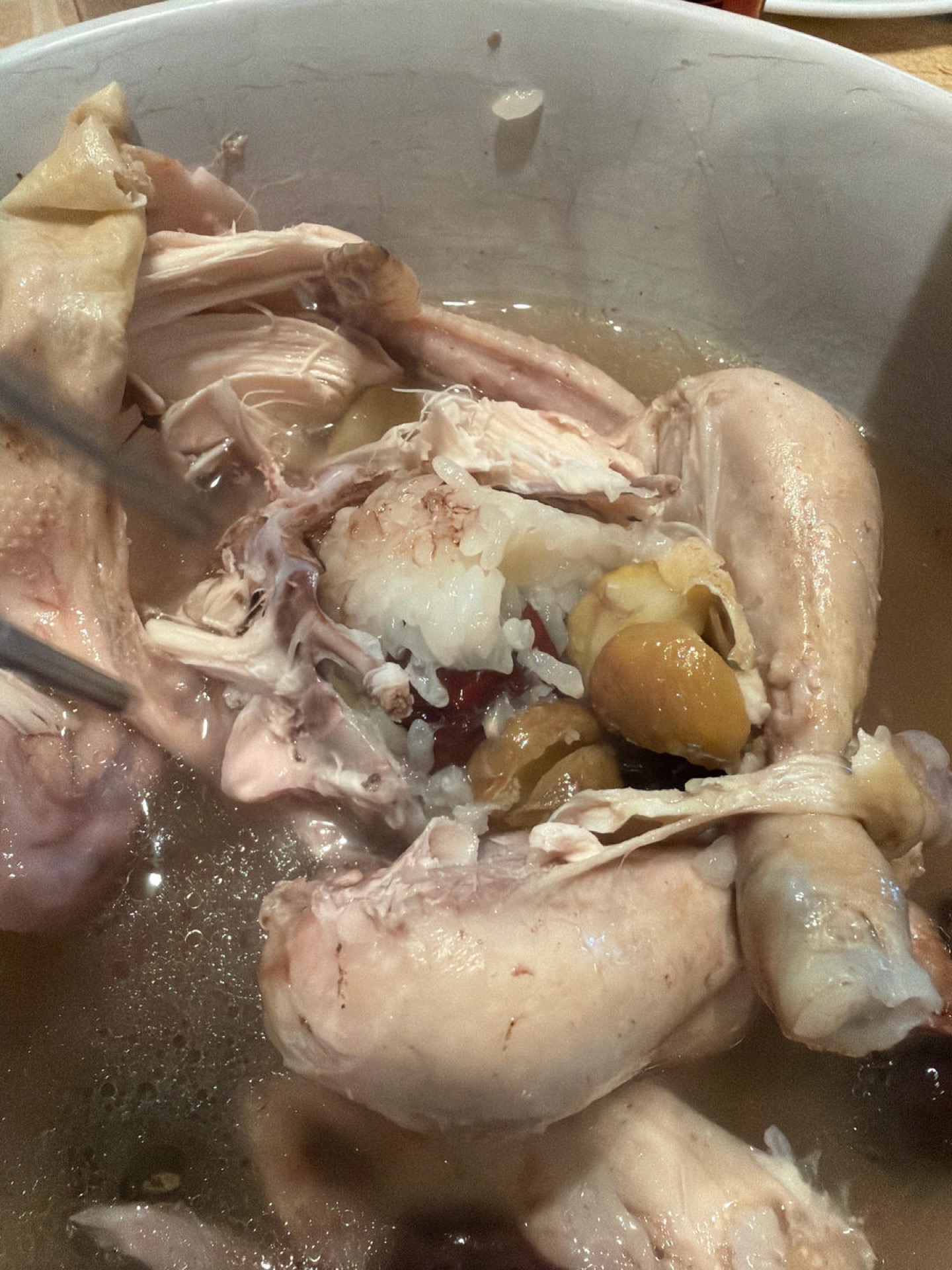
Common Mistakes When Making Ginseng Chicken Soup
1. Stuffing the cavity too full. The rice expands as it cooks, roughly doubling in volume. If you pack the bird tight, the skin splits and the stuffing bursts out into the broth, leaving you with a cloudy soup and a sad chicken. Fill it about two-thirds full and leave room to expand.
2. Skipping the leg trussing. Without the two small holes and the crossed legs, the cavity stays open, the rice floats out, and the whole point of the dish ends up at the bottom of the pot. It takes thirty seconds with kitchen scissors and it is the single most important structural step.
3. Boiling instead of simmering. A rolling boil agitates the bird, tears the skin and emulsifies fat into the broth, turning a clear golden soup into a cloudy one. It also toughens the meat. Keep it at a bare simmer with the lid ajar and be patient.
4. Adding salt at the start. The broth concentrates as it cooks. Salting at the beginning almost always means an oversalted pot by the end. Season in the bowl, where each person can adjust.
5. Judging doneness by time alone. A 2-pound bird and a 3-pound bird behave differently, and so do two small birds cooked together. Use a thermometer: 165°F (74°C) in the thickest part of the thigh. The rice should be soft and the meat should pull away from the bone easily.
6. Using unsoaked rice. Dry glutinous rice will not cook through in the same time as the chicken. You end up with tender meat and crunchy rice, which is a disappointing combination. Soak it, every time.
Variations
With ginseng. Add a 2-inch piece of fresh ginseng root or 3–4 slices of dried root to the cavity. The broth becomes more aromatic and slightly bitter in a pleasant way. This is the traditional version and worth trying at least once.
With Korean red ginseng and a stone pot. Some restaurants serve it in a preheated stone bowl so the soup keeps bubbling at the table. You can mimic this by warming your serving bowls with hot water before ladling in.
With a larger chicken. A 3–4 pound bird works, but you will need a bigger pot, more water, and roughly 90 minutes to 2 hours of simmering. Increase the rice to about 1½ cups and the aromatics accordingly.
With a lighter, clearer broth. Skim more aggressively, keep the lid fully off for the first ten minutes, and strain the broth through a fine sieve before serving. Some cooks also remove the ginger and any onion before serving for a cleaner taste.
Without chestnuts. Replace them with a few extra jujubes and a small handful of peeled gingko nuts if you can find them. The soup will be slightly sweeter and less starchy.
Frequently Asked Questions
Can I make this in a pressure cooker or Instant Pot? Yes. Use the same assembly, add about 6 cups of water instead of 8, and cook at high pressure for 25 minutes for a 2-pound bird, with a natural release. The broth will be slightly cloudier and the skin less intact, but the flavour is very close.
Do I have to use glutinous rice? It is strongly preferred because it gives the stuffing its sticky, cohesive texture. Short-grain rice works but falls apart more easily; long-grain rice is the weakest substitute and tends to stay separate and dry.
Can I cook two chickens in one pot? Yes, if the pot is wide enough for them to sit side by side without being crammed. Add more water to keep them just covered and simmer for 70–90 minutes instead of 45–60. Check both birds with a thermometer.
Why is my broth cloudy? Almost always because the pot boiled rather than simmered, or because the rice escaped the cavity and broke down into the liquid. Keep the heat low, keep the lid ajar, and truss the legs properly.
Can I make it ahead? The soup is best the day it is made, but it reheats well. Cool it quickly, refrigerate for up to 3 days, and reheat gently on the stovetop with a splash of water to loosen the broth. The rice will soften further on reheating.
How to Serve
Serve the chicken whole in a deep bowl with plenty of broth, and let people pull it apart at the table. Put flaky salt and freshly ground black pepper on the side, plus a small dish of sliced scallions. The traditional way to eat it is to split the belly open first, spoon some of the rice into the broth, and then tackle the meat with chopsticks and a spoon.
If you want something green and crisp alongside, a quick cucumber or radish pickle cuts through the richness beautifully. Steamed greens with a drizzle of sesame oil also work. And if you are feeding a crowd and want a second dish on the table, braised tofu and mushrooms is a soft, savoury companion that will not compete with the soup.
For a starch on the side that is not rice, flaky scallion pancakes are excellent for dipping into the broth. And if you want to round out the meal with something a little richer, braised chicken feet with tiger skin eggs brings a deep, glossy savouriness that contrasts nicely with the clean soup.


Storage & Reheat
Cool the soup within two hours of cooking. If you are storing it with the chicken still in the pot, remove the bird first and pull the meat off the bone, then return the meat to the broth — leaving a whole chicken in the liquid makes it cool too slowly and the meat goes mushy. Store in shallow containers in the refrigerator for up to 3 days. The rice will continue to absorb liquid, so expect a thicker soup the next day; add a splash of water or stock when reheating.
To reheat, bring gently to a simmer on the stovetop, or microwave in a covered bowl, until steaming hot throughout. Reheat to 165°F (74°C). Do not boil hard, or the meat will toughen. Freezing is possible but the rice becomes grainy and the texture of the chicken suffers; if you must freeze, freeze the broth and meat separately for up to 2 months and cook fresh rice to serve alongside.
Allergen Notice
This recipe contains chicken. It does not contain soy, wheat, dairy, egg, peanuts or tree nuts as written. If you add a commercial seasoning blend, a stock cube or a prepared ginseng soup packet, check the label — soy, wheat and yeast extract are common hidden ingredients. Anyone with a poultry allergy should not make this dish.
Nutrition Disclaimer
Nutrition information is calculated using an ingredient database and should be considered an estimate. In cases where multiple ingredient alternatives are given, the first listed is calculated for nutrition. Garnishes and optional ingredients are not included.
About the Author & Recipe Development
I am Lin, and I have been cooking Chinese and Korean home food for most of my adult life, mostly in a small kitchen with a wok that is older than some of my readers. I learned this soup from a Korean friend’s mother in Seoul one summer, and I have been making it ever since, usually without ginseng, always with too many jujubes.
This version is the one I actually cook at home: a two-pound bird, a cup of soaked sweet rice, a bare simmer, and salt at the table. I have tested it with Cornish hens and with small free-range chickens, with and without ginseng, and in a pressure cooker. The stovetop version remains my favourite because the broth stays clear and the skin stays intact. If you make it, I would love to hear how it turned out.
Authoritative References
For safe handling and cooking temperatures for poultry, see the USDA safe minimum internal temperature chart. For food safety guidance on cooling and storing leftovers, see the FDA guidance on refrigerator thermometers and cold food storage. For a broader look at how rice behaves when cooked and cooled, our own piece on day-old rice science explains the starch side of things.
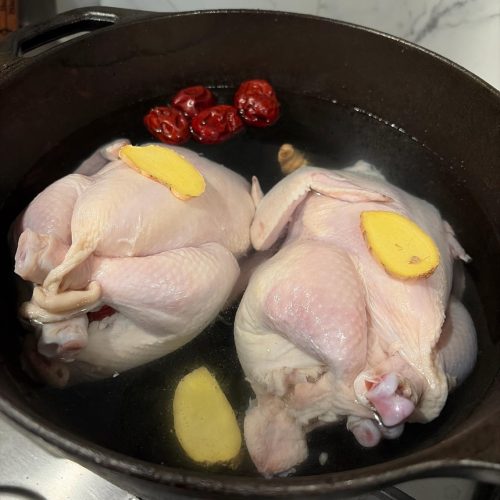
Ginseng Chicken Soup (参鸡汤): Tender Chicken Stuffed with Sweet Rice

Equipment
- Wok
- Cutting Board
- Slotted Spoon
Ingredients
For the Stuffing
- 1 cup glutinous rice sweet rice, soaked 30–60 minutes
- 8 whole jujubes dried red dates, pitted or left whole
- 6 whole chestnuts peeled, fresh or vacuum-packed
- 6 cloves garlic peeled
For the Soup
- 2 lb whole young chicken cornish hen or small chicken, giblets removed
- 4 slices ginger fresh
- 4 whole jujubes extra, for the pot
- 4 cloves garlic extra, whole
- 8 cups water plus more to cover
To Finish
- 2 whole scallions thinly sliced
- 1 tsp salt or to taste
- 1/2 tsp black pepper freshly ground
Instructions
- Rinse the chicken inside and out and pull away any stray fat or pinfeathers.

- Soak the glutinous rice in cold water for 30 to 60 minutes, then drain well.
- Prepare the jujubes, garlic cloves and chestnuts so they are all within reach.
- Pack the soaked rice, jujubes, garlic and chestnuts into the chicken’s cavity, using as much as you like.
- Use kitchen scissors to poke one small hole through the skin on each side near the tail.
- Push the left leg through the right-hand hole and the right leg through the left-hand hole.
- Put the chicken in a pot, add the remaining garlic, ginger slices and jujubes, then add water until the chicken is just covered.
- Bring to a boil, then skim off the foam that rises to the surface.
- Leave the lid slightly ajar and simmer on low. A small young chicken needs about 45–60 minutes; two need about 70–90 minutes. The chicken should be cooked through and tender and the rice soft.
- If you prefer a cleaner broth, lift out the onion and ginger. Ladle into bowls, scatter with scallions, and season with salt and black pepper to taste. The fun part comes at the table — split the belly open and find all the treasures inside.












Leave a Reply