Some dinners are built on big gestures. This one is built on a single, perfect wok toss. 西葫芦炒肉 — stir-fried zucchini with pork belly — is the kind of dish that shows up on northern Chinese tables on a random Tuesday, when someone has twenty minutes, a zucchini in the fridge, and a few slices of pork belly that need using. The zucchini goes in crisp and comes out crisp, just warmed through and lacquered in a glossy, savory sauce. The pork renders down to golden, chewy-edged coins that taste like they’ve been cooking for an hour.
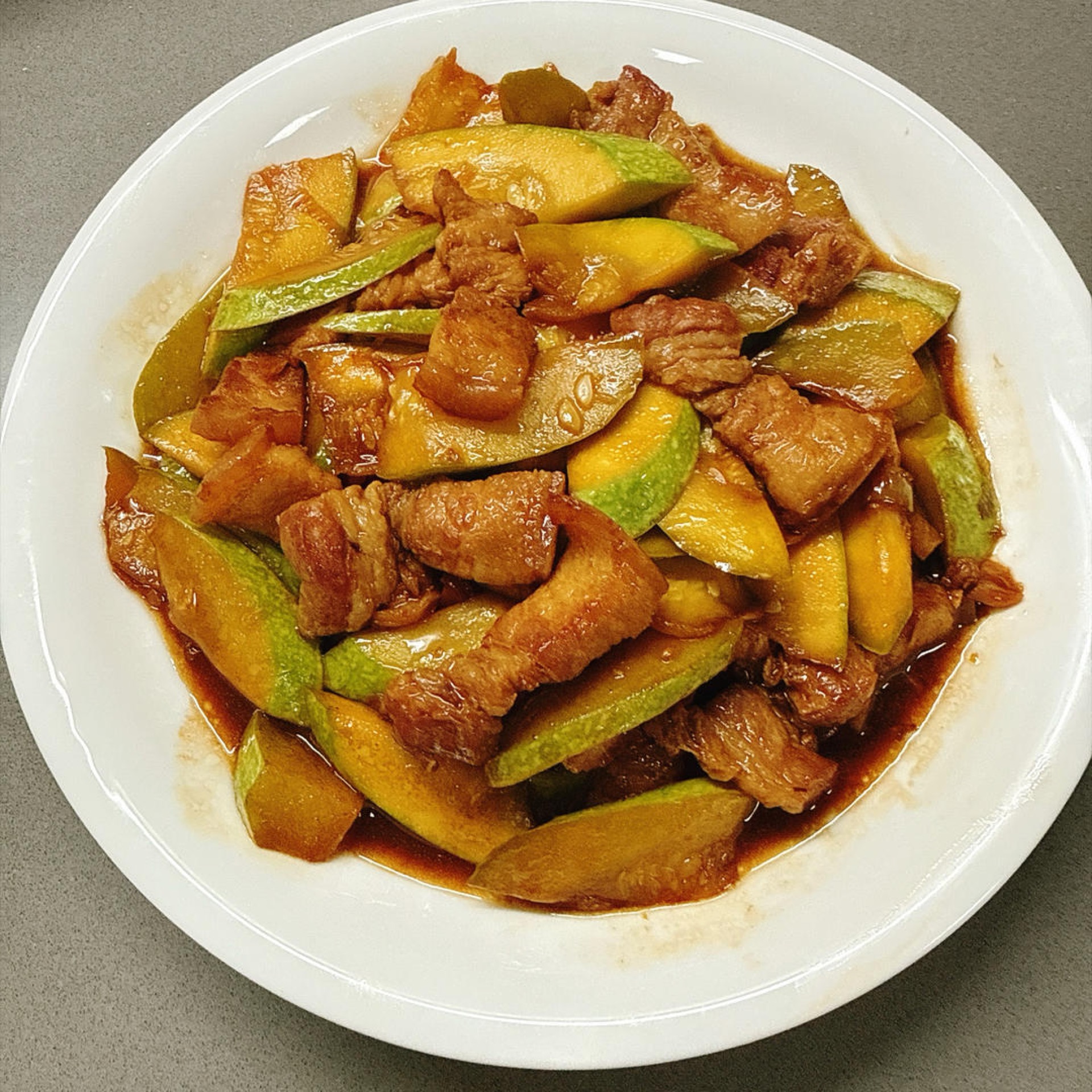
What makes it special is the balance. Zucchini is mostly water, and water is the enemy of a good stir-fry — it steams the vegetable and dilutes the sauce into a puddle. The trick here is a 30-second blanch followed by a cold-water shock, which sets the zucchini’s texture before it ever touches the wok. After that, everything happens fast: pork fat renders, aromatics bloom, sauces go in, and the whole thing thickens into something you’ll want to spoon over rice.
And because it’s a home dish, it’s forgiving. There’s no deep-frying, no long marinade, no special equipment beyond a wok and a cutting board. You can have it on the table in about 35 minutes, most of which is chopping. It’s also a recipe that rewards attention to a few small details — the order of the sauces, the temperature of the pan, the moment the vinegar hits the hot metal — and those details are exactly what we’ll walk through below.
If you’ve ever made a zucchini stir-fry that turned into a soupy, limp disappointment, this recipe is the correction. The zucchini stays bright and snappy. The pork belly stays tender with a crisp edge. The sauce clings instead of pooling. And the whole plate tastes like the kind of Chinese home cooking that doesn’t need a restaurant to be impressive.
What Is 西葫芦炒肉?
西葫芦炒肉 (xī hú lu chǎo ròu) is a quick stir-fry of zucchini and pork — the name literally means “zucchini stir-fried with meat.” It belongs to the huge family of Chinese home stir-fries where a cheap, fast-cooking vegetable is paired with a small amount of pork for flavor and body. In northern China, where zucchini is abundant in summer and early autumn, this is one of the most common ways to use it.
The dish is not a restaurant showpiece. It’s a 家常菜 (jiā cháng cài) — a “home-style dish” — which is precisely why it’s so good. The cooking is simple but the technique is not careless: the zucchini is cut thick so it holds its shape, the pork belly is sliced thin so it renders quickly, and the sauce is built in layers rather than dumped in all at once. The result is a plate with real depth, made from almost nothing.
One thing worth knowing: this is not the same as a zucchini stir-fry made with lean pork. Pork belly is the point. Its fat melts into the pan and becomes the base of the sauce, which is why the zucchini tastes seasoned all the way through instead of just on the surface. If you swap in lean pork loin, you’ll need to add extra oil, and the dish will lose some of its richness.
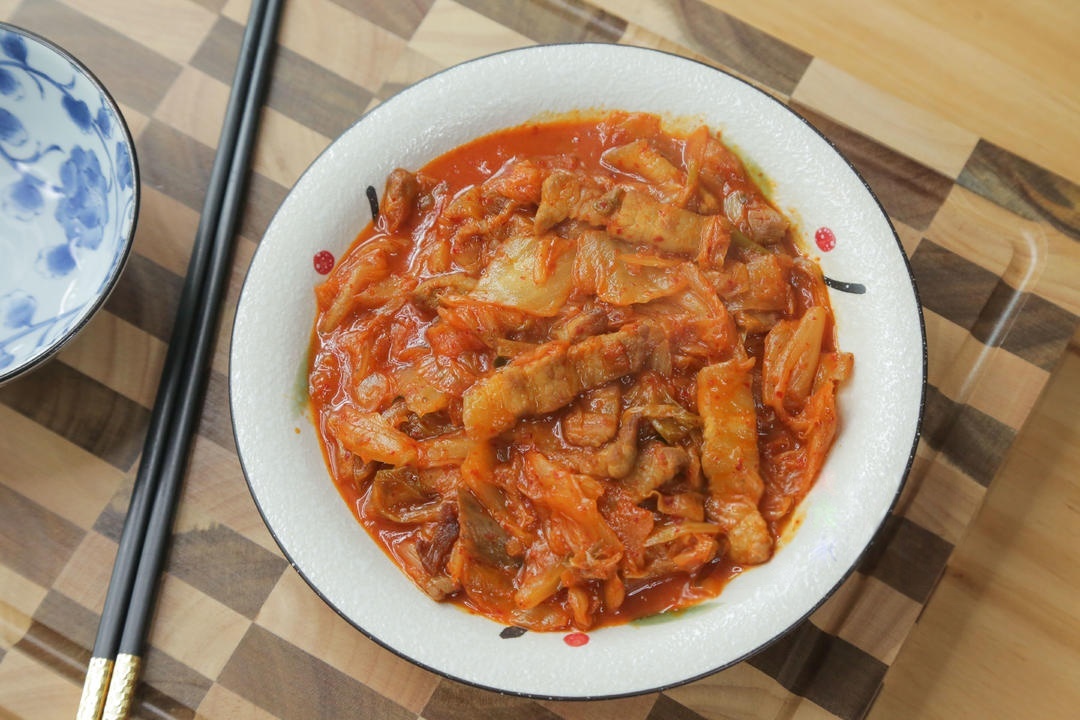
If you like this style of cooking — a vegetable and a rich cut of pork built into one fast stir-fry — then the kimchi pork belly stir fry is the next one to try: kimchi pork belly stir fry brings the same rendered-fat technique together with fermented cabbage for a punchier, tangier plate.
1Kimchi Pork Belly Stir-fry (La Bai Cai Chao Wu Hua Rou)A 15-minute savory, spicy, and tangy stir-fry featuring crispy rendered pork belly and fermented kimchi. This easy homestyle dish is the perfect appetite stimulant.Check out this recipe
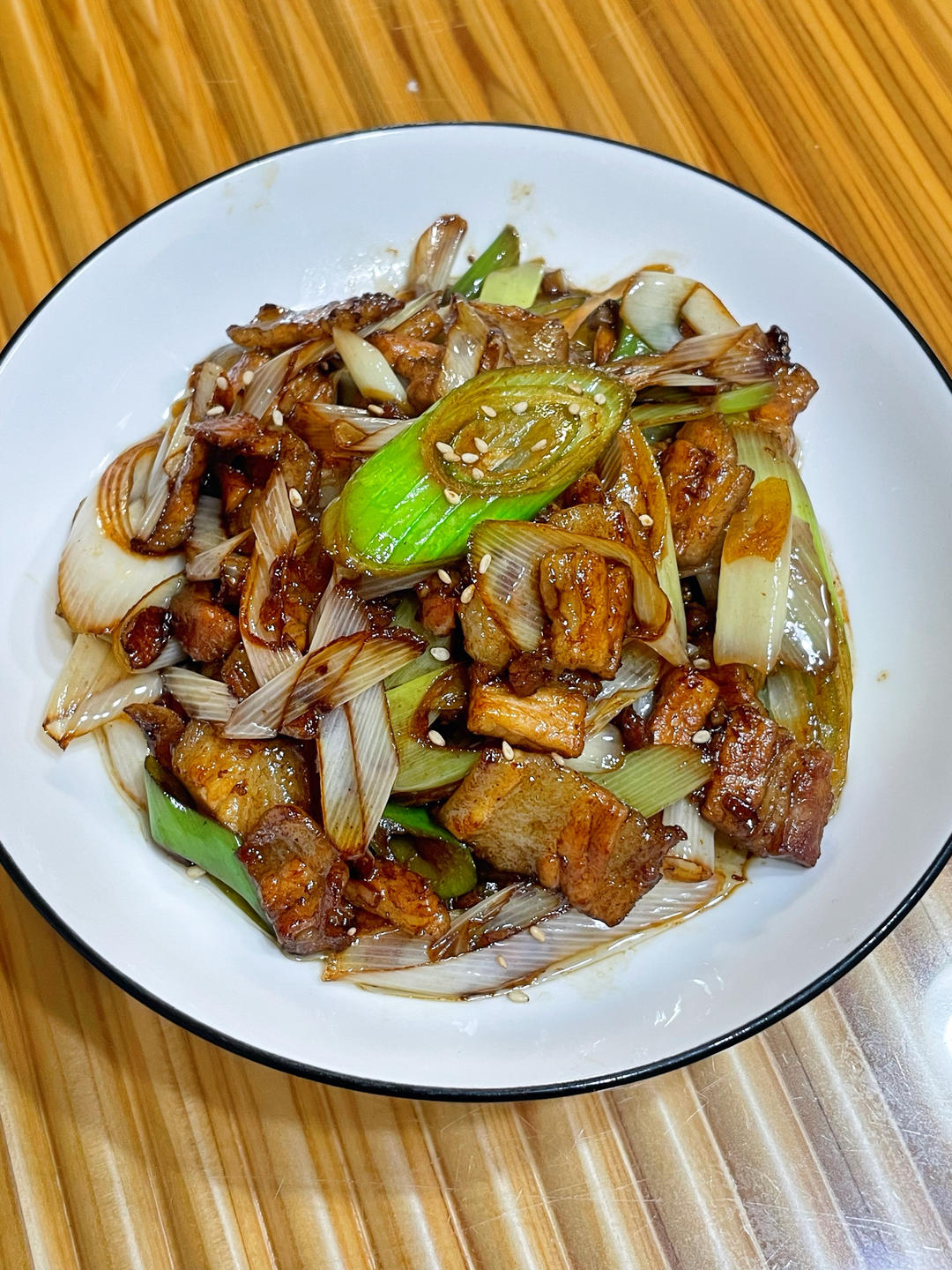
For a version that leans on aromatics instead of acid, the scallion pork belly stir fry is a beautiful companion dish: scallion pork belly stir fry uses a mountain of scallions to sweeten and mellow the pork, and it’s ready in about the same amount of time.
2Scallion Stir-Fried Pork Belly (Cong Bao Rou)This classic Scallion Pork Belly Stir-Fry (Cong Bao Rou) is a savory, aromatic dish ready in 15 minutes. By rendering the pork belly until crisp and adding scallions in two stages, you get a perfect balance of texture and flavor without the grease.Check out this recipe
And if you want to see the same “small dice, big flavor” stir-fry logic applied to a different cut, try the stir fried diced pork: stir fried diced pork is a 30-minute Jiang-style dish with the same glossy, savory finish and a similar weeknight rhythm.
3Authentic Jiang Bao San Ding (Stir-Fried Diced Pork)A quick, comforting Chinese homestyle meal featuring diced pork, tofu, radish, and soybeans in a deeply savory yellow soybean paste sauce.Check out this recipe

Ingredient Notes
Five ingredients carry this dish. Get them right and the rest is timing.
Zucchini (西葫芦). Look for small to medium zucchini, roughly 8 to 10 inches long and firm, with glossy skin and no soft spots. Smaller zucchini have fewer seeds and denser flesh, which means less water and a better bite. If yours are large and seedy, scoop out the seed core with a spoon before slicing. You do not need to peel them — the skin holds the slices together and adds a pleasant chew.
Pork belly. Skin-on or skin-off both work; skin-off is easier to slice thin. Ask for a piece with clear layers of fat and lean rather than a thick cap of pure fat. Partially freezing the pork belly for 20 to 30 minutes makes it dramatically easier to cut into even 1/8-inch slices. Even slices are what let the pork render at the same rate instead of some pieces drying out while others stay flabby.
Light soy sauce vs. dark soy sauce. These are not interchangeable. Light soy (生抽) is the salty, savory workhorse — it seasons the dish. Dark soy (老抽) is thicker, slightly sweet, and mostly there for color. Using only dark soy makes a dish that looks right but tastes flat and slightly muddy. If you’re choosing brands, our guide to soy sauce brands breaks down which bottles are worth buying for stir-frying.
Chinkiang vinegar (陈醋). This is Chinese black vinegar — malty, faintly smoky, and much softer than rice vinegar. It goes in at the very end, splashed against the hot side of the wok, where it sizzles and loses its raw sharpness while keeping its aroma. If you don’t have it, balsamic is the closest substitute, though sweeter. Rice vinegar works in a pinch but will taste brighter and thinner.
Potato starch slurry. Potato starch (土豆淀粉) gives the clearest, glossiest sauce and doesn’t turn gluey the way cornstarch sometimes can when it’s overworked. Cornstarch is a fine substitute — use the same amount. The slurry must be stirred again right before it goes in, because it settles within a minute or two.
Shaoxing wine. A splash goes in with the aromatics to deglaze and add a faintly nutty, fermented note. Dry sherry is the standard substitute. If you avoid alcohol entirely, skip it and add an extra tablespoon of water plus a few drops of rice vinegar.
MSG. Optional, but it’s what makes the dish taste like it came from a restaurant rather than a home kitchen. A small pinch — about 1/8 teaspoon — is enough. It doesn’t make food taste “MSG-y”; it makes the savory notes of the pork and soy sauce read more clearly.
Ingredients
Here’s everything you’ll need for four servings. Full quantities are in the recipe card below.
- Zucchini — 2 medium (about 1 lb / 450g), quartered and sliced thick on the diagonal
- Pork belly — 1 lb / 450g, thinly sliced
- Garlic — 3 cloves, minced
- Scallions — 2 stalks, whites and greens separated
- Neutral oil — 1 tbsp, for the wok
- Shaoxing wine — 1/2 tbsp
- Light soy sauce — 1/2 tbsp, plus more to taste
- Dark soy sauce — 1/4 tsp, for color
- White vinegar — 1 tsp, for the blanching water
- Salt — 1 tsp, plus more to taste
- Sugar — about 1/4 tsp
- MSG — a pinch, optional
- Chinkiang vinegar — 1 tsp, added at the wok edge
- Toasted sesame oil — 1 tsp, to finish
- Potato starch — 1 tbsp mixed with 1 tbsp water
Everything here is a pantry or supermarket staple. If you cook Chinese food regularly, you probably already have all of it. If not, a single trip to an Asian grocery store will stock you for a dozen stir-fries.
Equipment Needed
You don’t need much, but a couple of pieces genuinely matter.
A wok. A carbon steel wok is ideal because it takes high heat, has sloped sides for tossing, and develops a nonstick patina over time. A large skillet or a flat-bottomed wok also works — just use the widest pan you own, because crowding is what steams zucchini instead of searing it. If you’re cooking for more than four, work in two batches.
A sharp chef’s knife and a cutting board. Thin, even pork slices and thick, uniform zucchini slices are the entire texture story of this dish. A dull knife will crush the zucchini and tear the pork.
A slotted spoon or spider. Essential for pulling the blanched zucchini out of the boiling water without carrying a cup of water with it.
A large bowl of ice water. For shocking the zucchini. This is the step that keeps it crisp and stops it from cooking through before it hits the wok.
A small bowl for the slurry and another for the sauces, so you can add them in the right order without fumbling. Once the wok is hot, there’s no time to measure.
Why This Recipe Works
Three decisions separate this from a mediocre zucchini stir-fry.
First, the blanch-and-shock. Zucchini is roughly 95% water, and when it hits a hot wok directly, the cell walls rupture and release that water into the pan. You end up with a pool of liquid and zucchini that’s simultaneously soggy and under-seasoned. A brief 30-second blanch sets the pectin in the cell walls, and the cold-water shock halts the cooking immediately so the interior stays firm. When the zucchini finally meets the wok, it only needs to be tossed with the sauce — not cooked through.
Second, rendering the pork belly properly. Too many cooks rush this. The pork goes into a moderately hot wok and gets a full 3 to 4 minutes of undisturbed contact until the fat turns translucent and the edges curl and brown. That rendered fat becomes the cooking medium for everything that follows. It’s the reason the aromatics taste richer and the sauce tastes like it has a backbone.
Third, the sauces go in a specific order: aromatics, then wine, then light soy, then dark soy, then the vegetable, then seasoning, then starch, then vinegar at the edge, then sesame oil off the heat. Each addition builds on the last. Vinegar added early would cook off entirely; sesame oil added early would turn bitter and lose its perfume. The order is the recipe.
This is also why garlic burns so easily in a stir-fry: it contains sugars and amino acids that scorch within seconds once the pan is above the smoke point. If your garlic is turning bitter before the pork is done, our explainer on why garlic burns so fast in a stir fry covers the timing fix — the short answer is to add it after the pork has rendered and to keep the slices moving.
Finally, the starch slurry. A thin slurry added at the end does two things: it thickens the small amount of liquid in the pan into a glossy sauce, and it helps that sauce cling to the zucchini instead of sliding off. The result is a plate where every bite is seasoned, not just the bites that happen to catch the sauce.
Prep & Mise en Place
This dish cooks in under five minutes once the wok is hot, so all the prep has to happen before you turn on the burner. Set yourself up like a restaurant line cook: everything cut, everything measured, everything within arm’s reach of the stove.
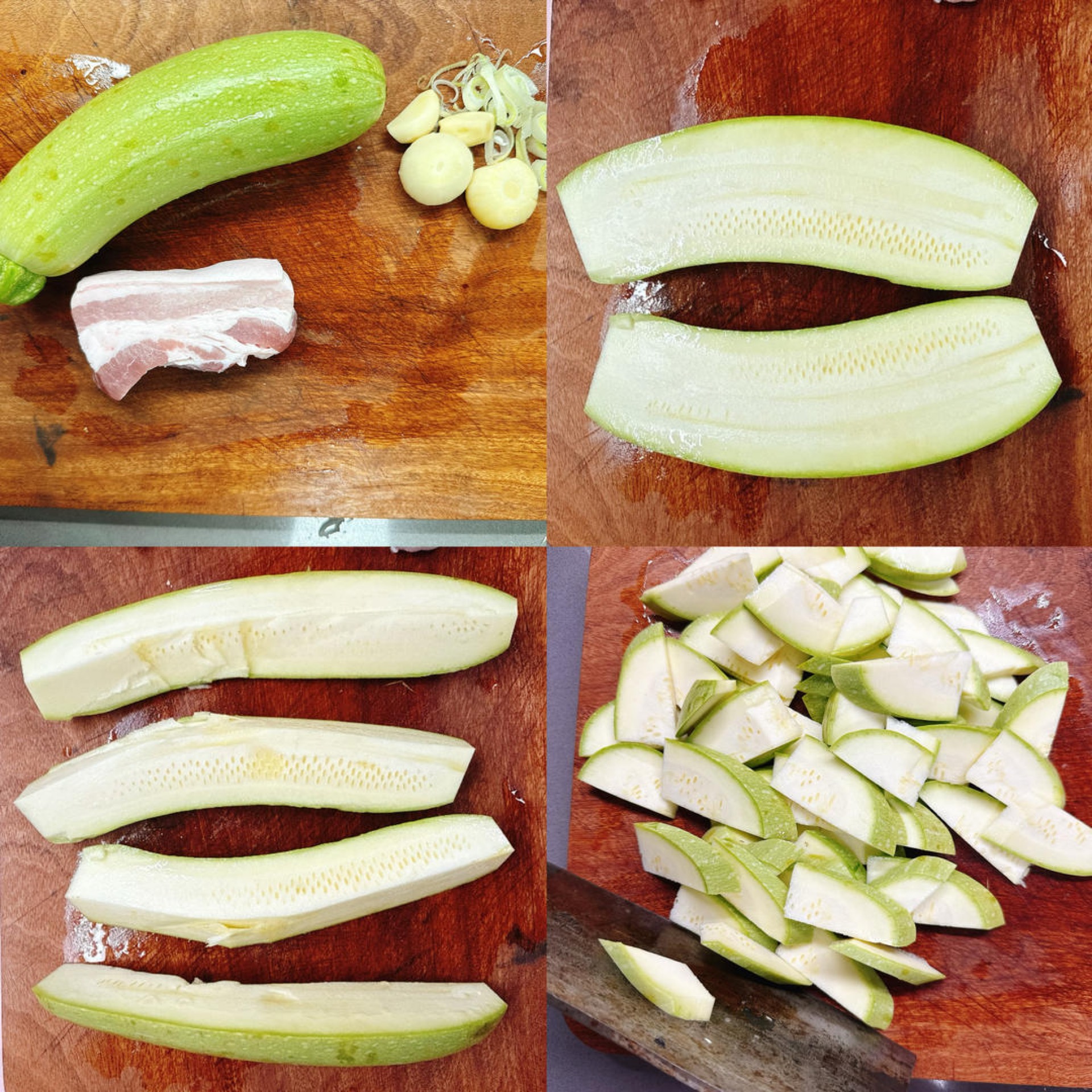
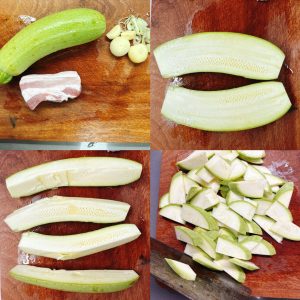
1. Cut the zucchini. Halve each zucchini lengthwise, then halve each half again so you have quarters. Lay a quarter flat and slice it on the diagonal into pieces about 1/4 inch thick. The diagonal cut gives more surface area for the sauce to cling to and makes the pieces look generous. Keep the pieces uniform so they cook at the same rate.
2. Chill and slice the pork. If your pork belly is soft from the fridge, put it in the freezer for 20 to 30 minutes. Firm pork slices cleanly into thin, even pieces. Aim for about 1/8 inch. Thicker slices take longer to render and can end up chewy.
3. Chop the aromatics. Mince the garlic. Slice the scallions, keeping the white and light green parts separate from the darker green tops — the whites go into the wok, the greens are for garnish.
4. Mix the slurry. Stir 1 tablespoon of potato starch into 1 tablespoon of cold water. Set it right next to the stove, and plan to stir it again just before you use it.
5. Set up your bowls. One small bowl with the Shaoxing wine, one with the light soy, one with the dark soy, and a little dish with the salt, sugar, and MSG combined. This is the difference between a calm stir-fry and a frantic one.
6. Set the table. Stir-fries are best eaten immediately, so have rice cooked, plates out, and diners seated before the wok goes on. If you’re serving this alongside other dishes, this is the one to cook last.
Cooking Process
Step 1 — Cut the Zucchini
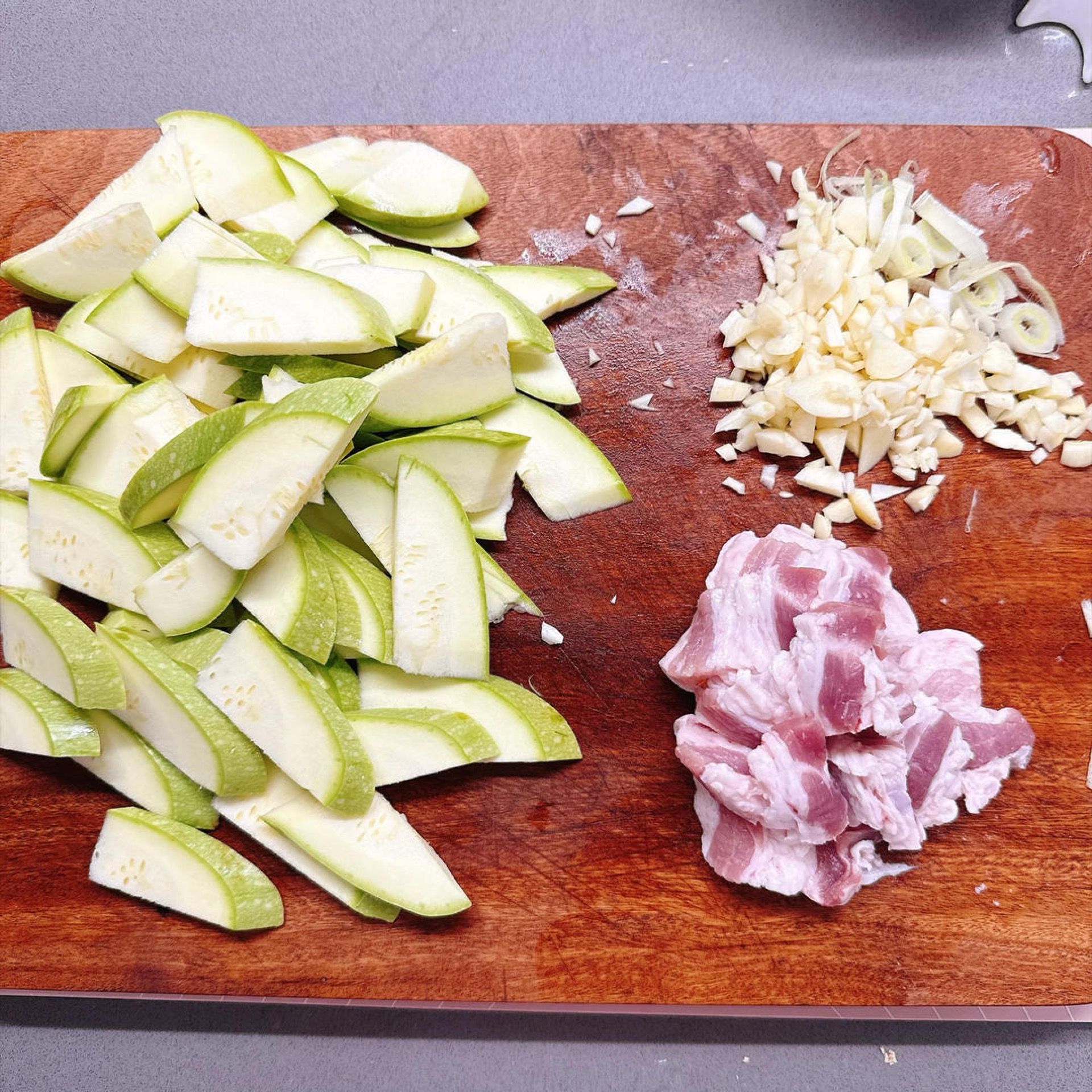
Prepare the ingredients: halve the zucchini lengthwise, quarter it, then cut it on the diagonal into thick slices.
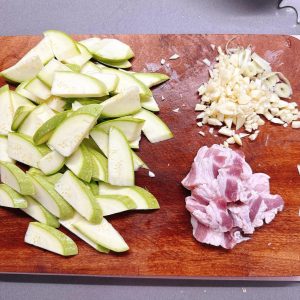
Step 2 — Slice the Pork and Aromatics
Slice the pork belly thinly, and finely chop the scallion and garlic.
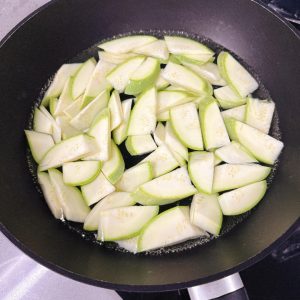
Step 3 — Vinegar in the Water
Bring a pot of water to a boil and add a little white vinegar.

Step 4 — Blanch the Zucchini
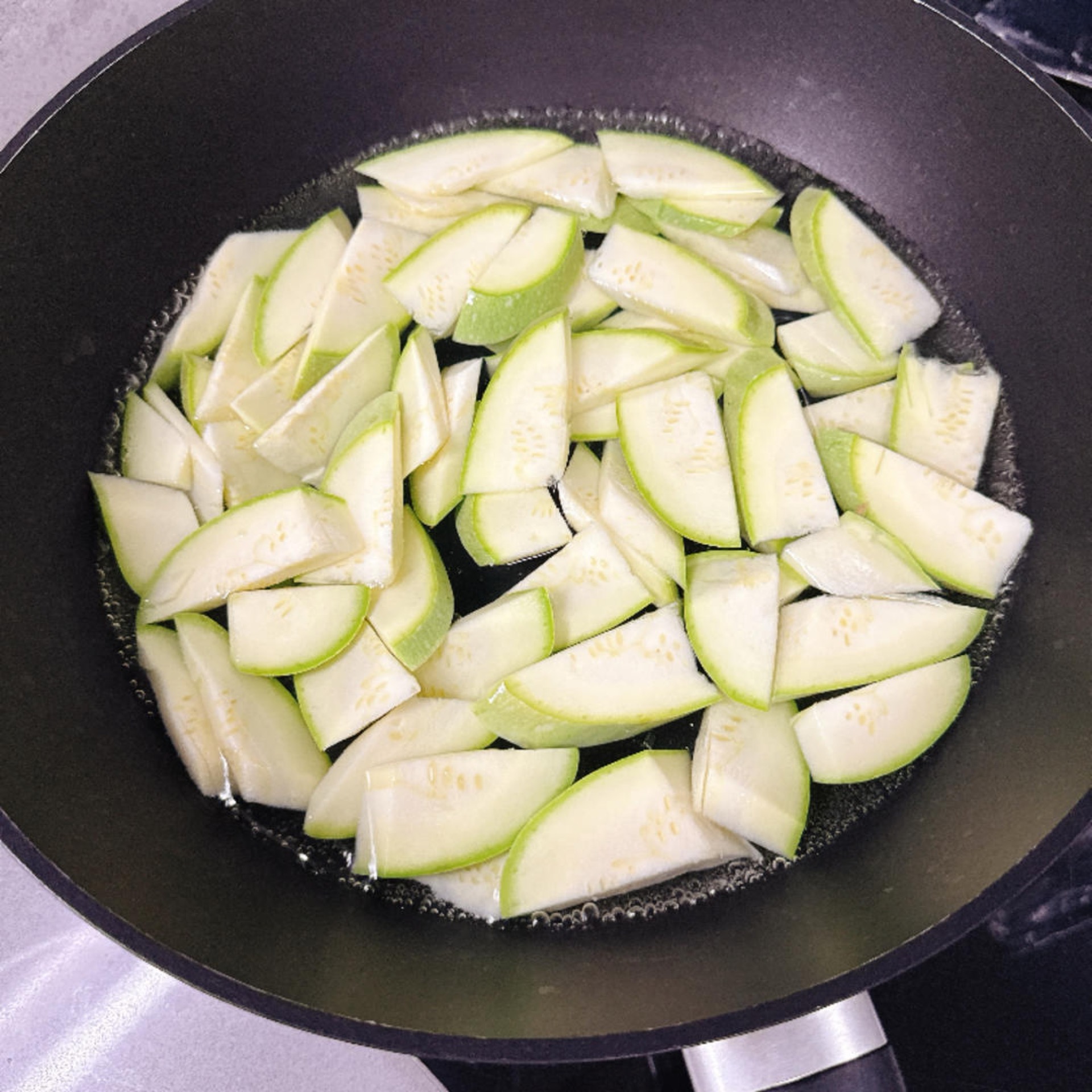
When the water returns to a boil, add the zucchini and blanch it briefly.
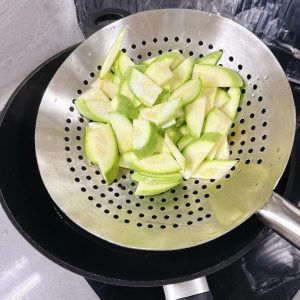
Step 5 — Drain
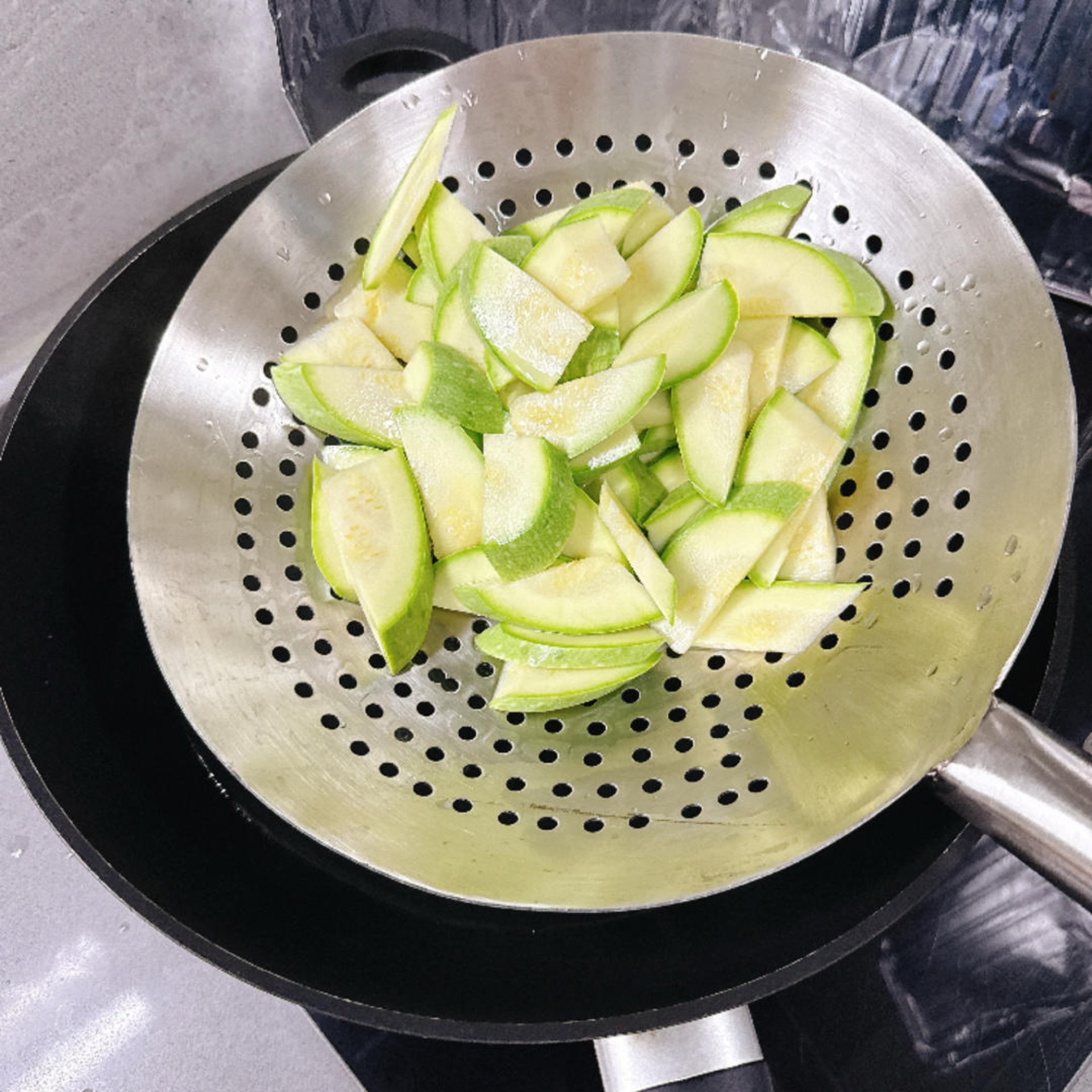
Once the water boils again, scoop the zucchini out and drain it well.
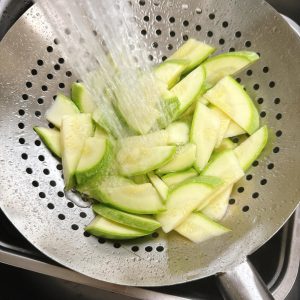
Step 6 — Shock It Cold
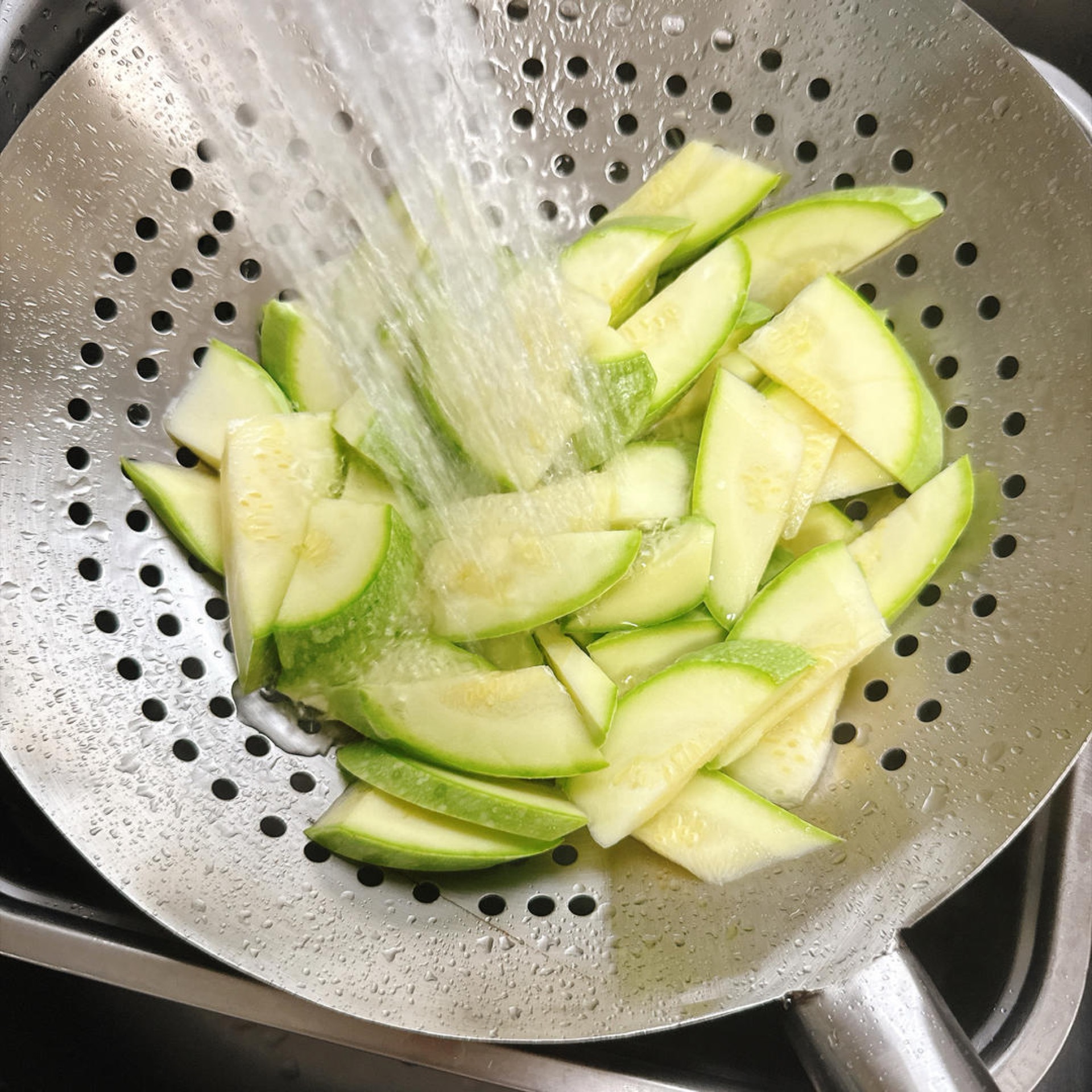
Rinse it under cold water so it stops cooking, then set it aside.
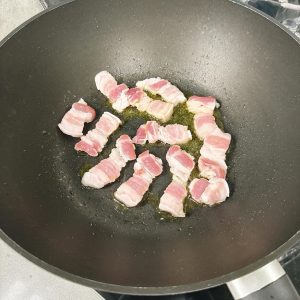
Step 7 — Sear the Pork
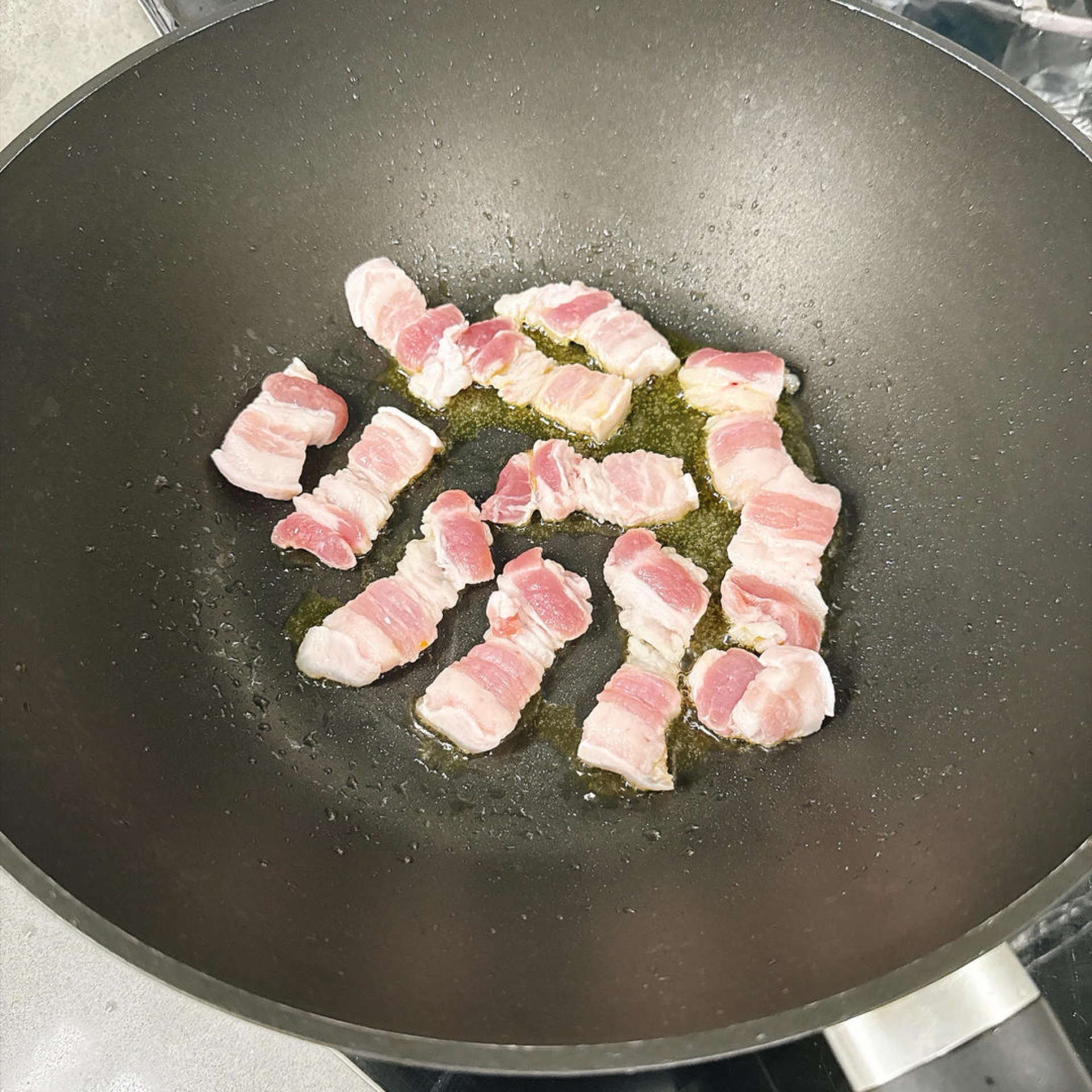
Heat oil in the wok and add the pork belly to sear.
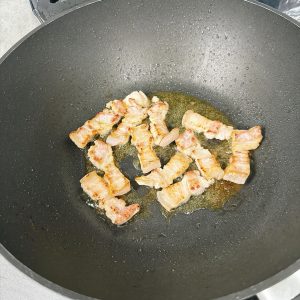
Step 8 — Render the Fat
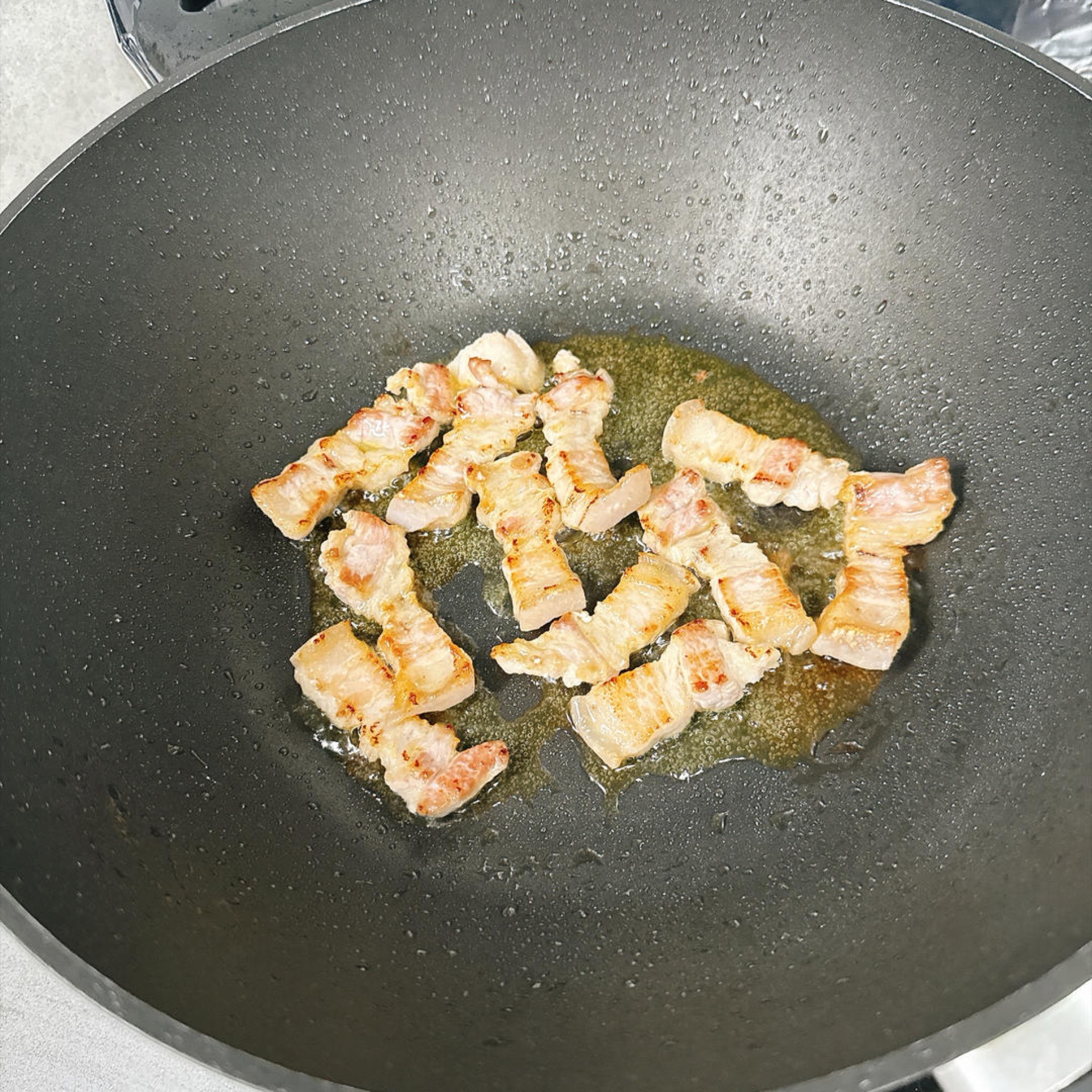
Fry the pork belly until it renders its fat and the edges turn golden.
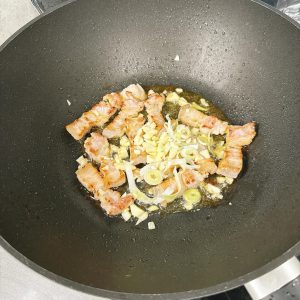
Step 9 — Aromatics In
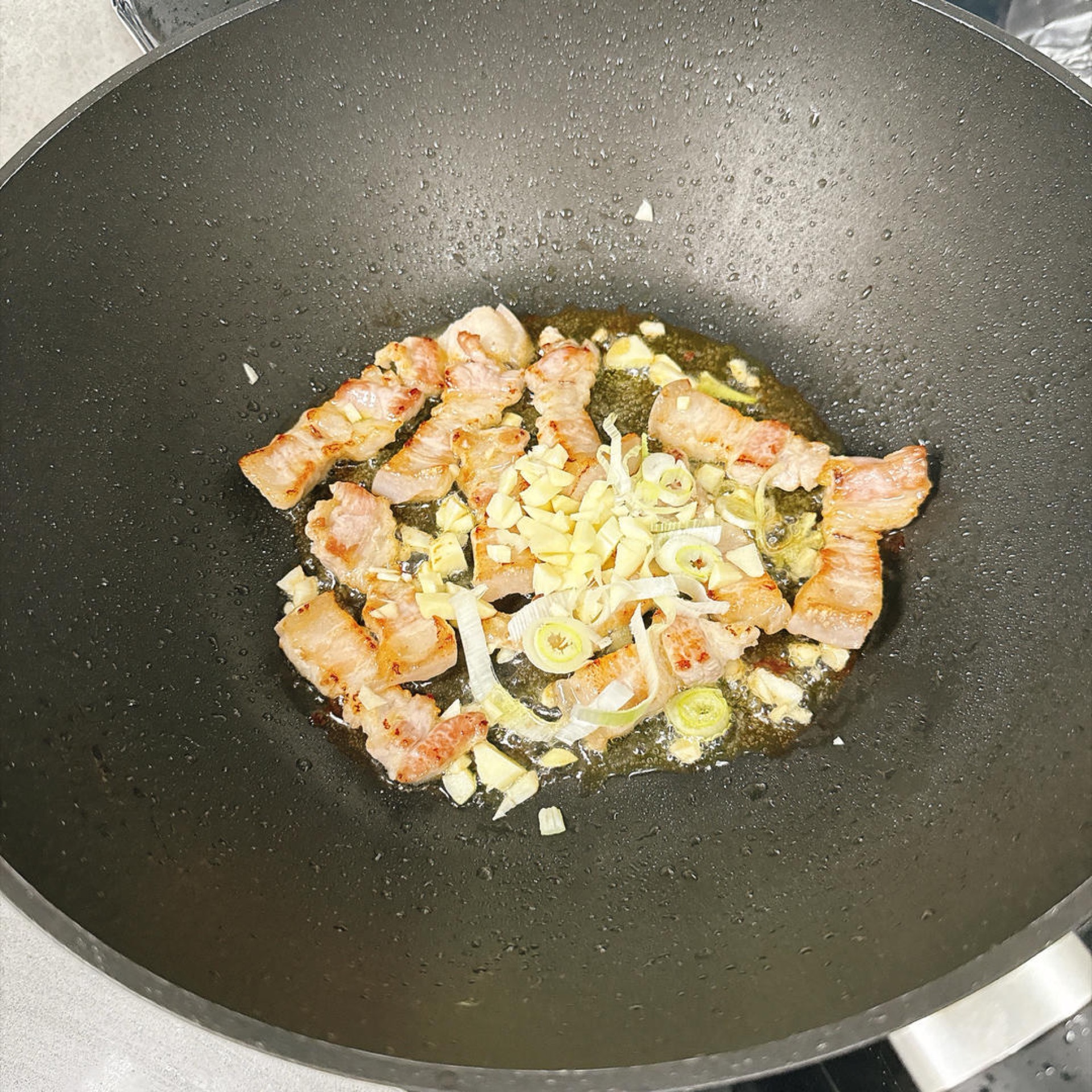
Add the chopped scallion and garlic and stir until fragrant.
Step 10 — Splash of Wine
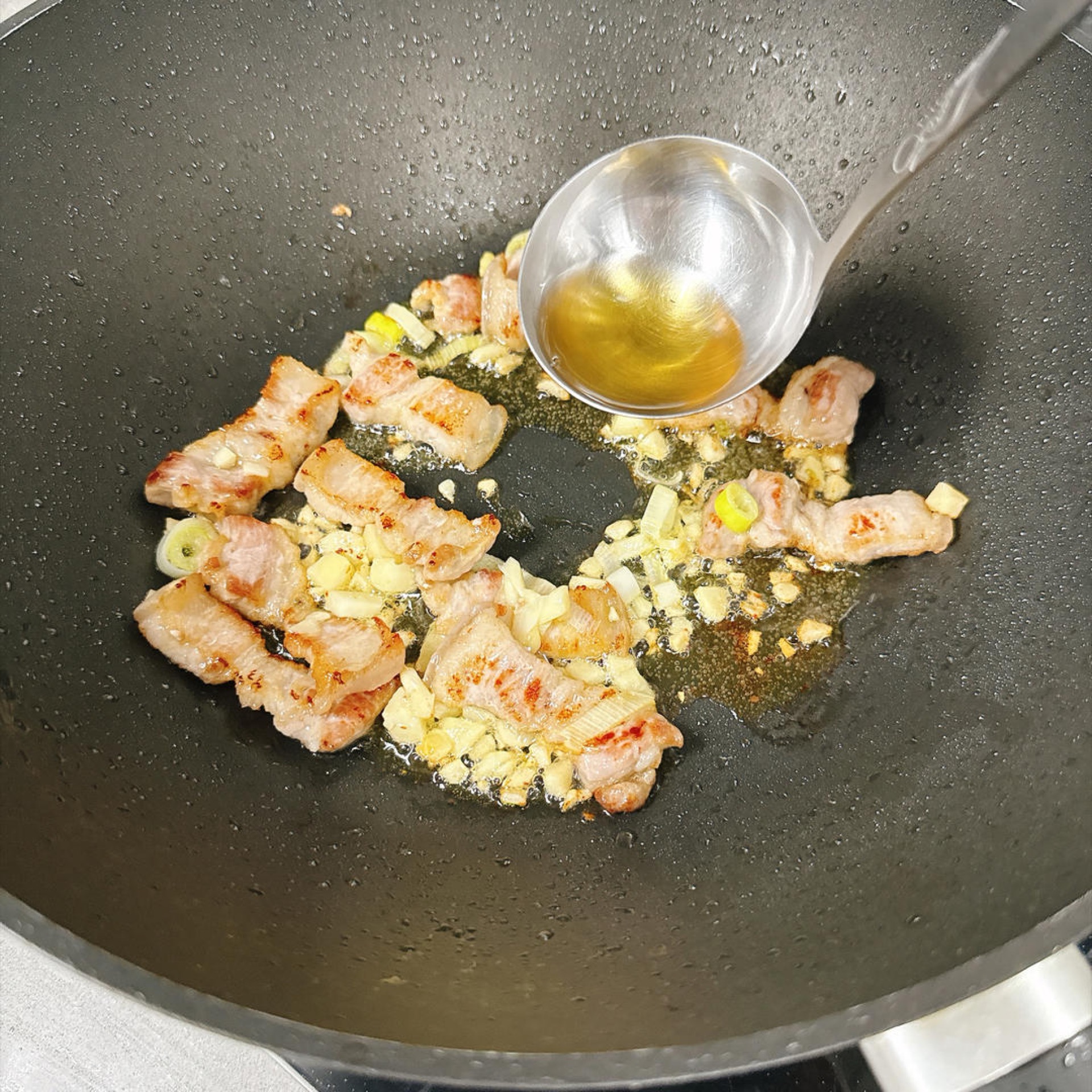
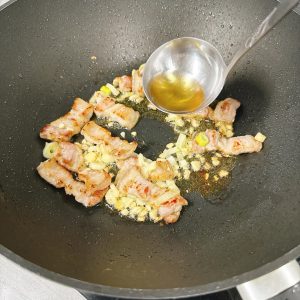
Add a splash of Shaoxing wine.
Step 11 — Light Soy
Add half a spoonful of light soy sauce.
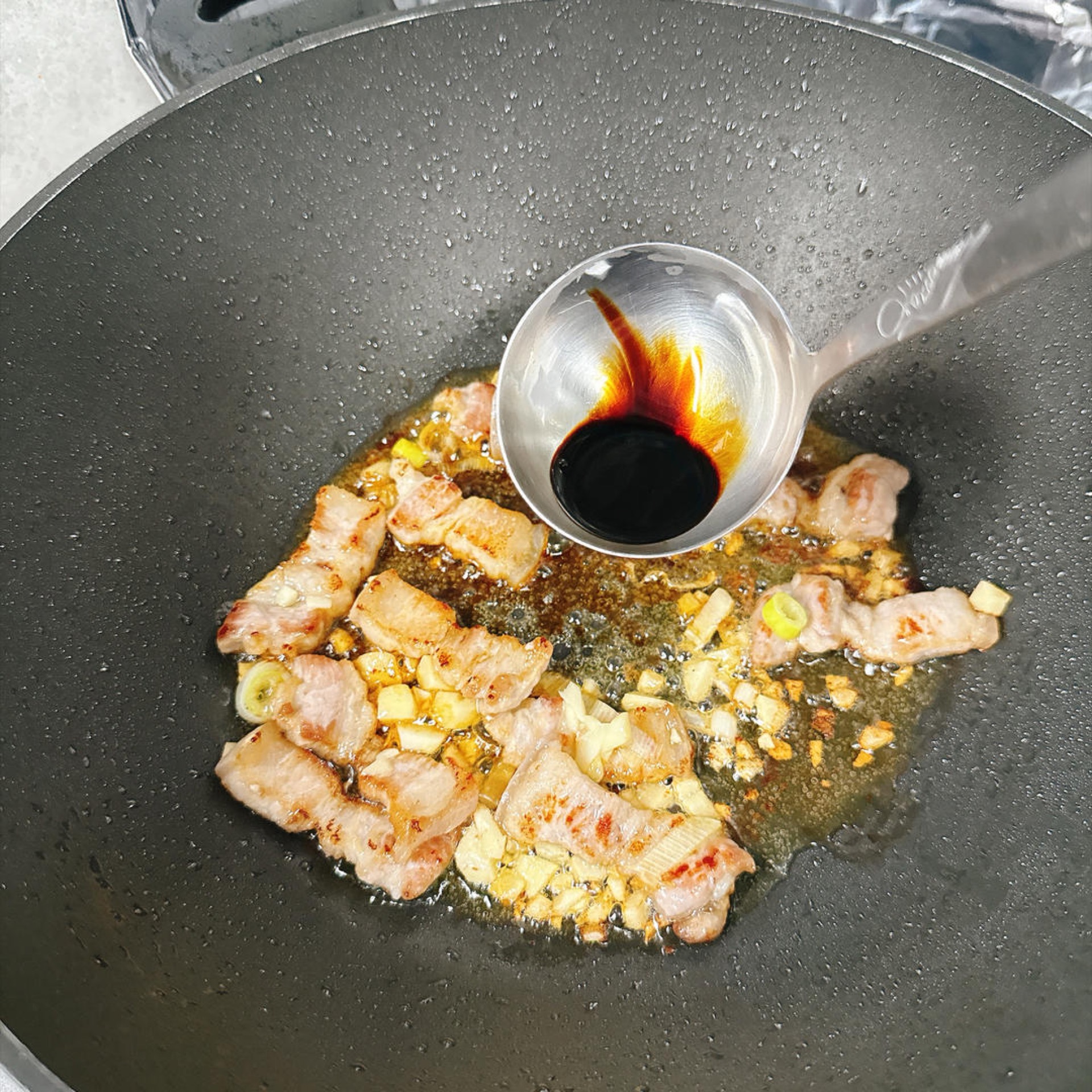
Step 12 — Dark Soy
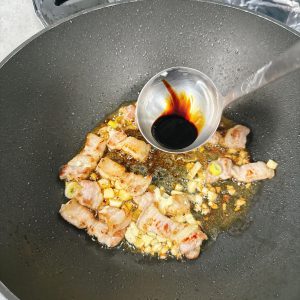
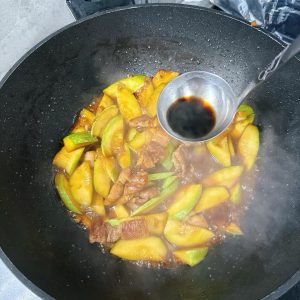
Add a little dark soy sauce — not too much, just enough for color — and stir until it blends in.
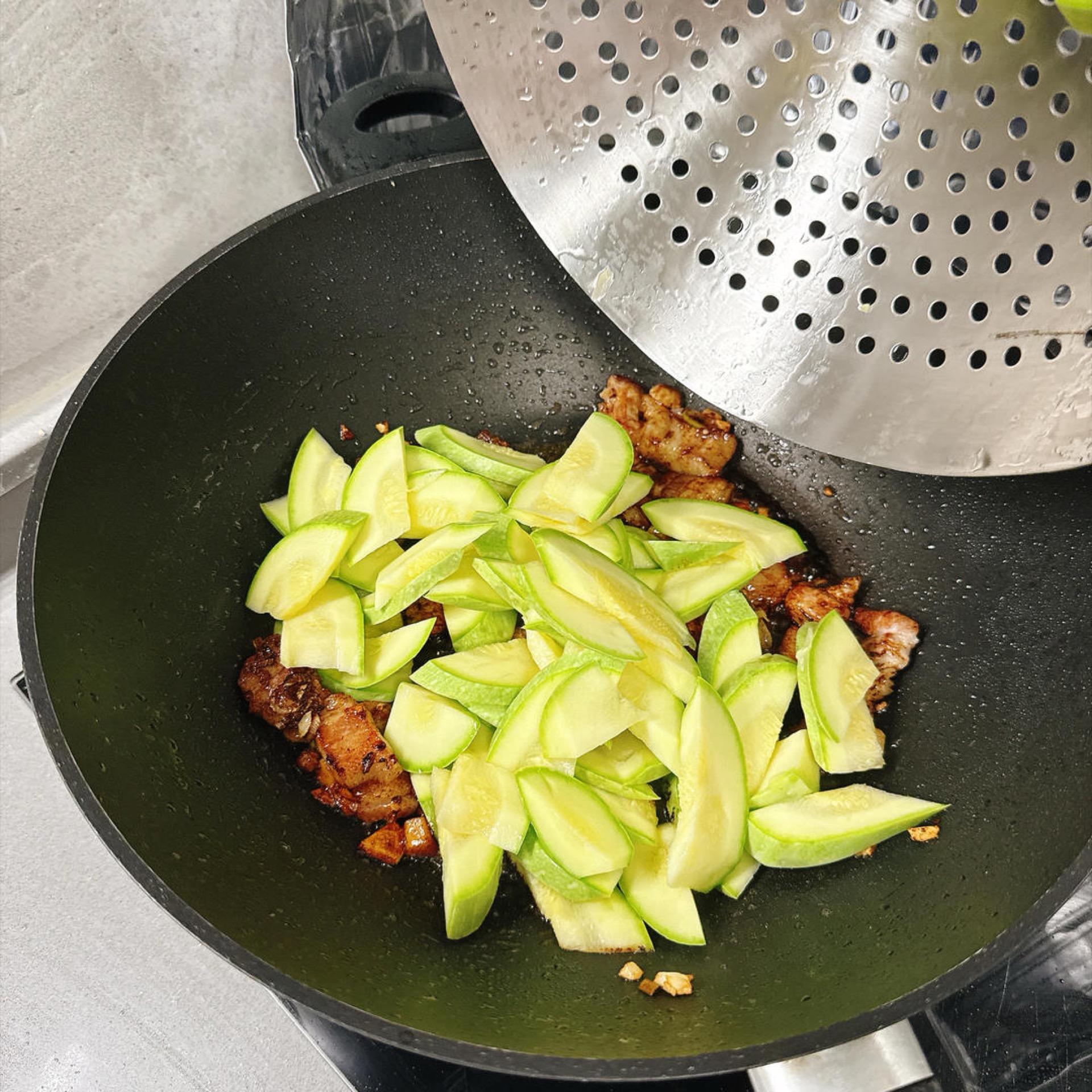
Step 13 — Add the Zucchini
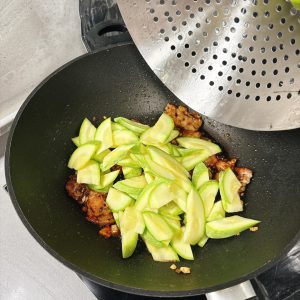
Add the zucchini to the wok.
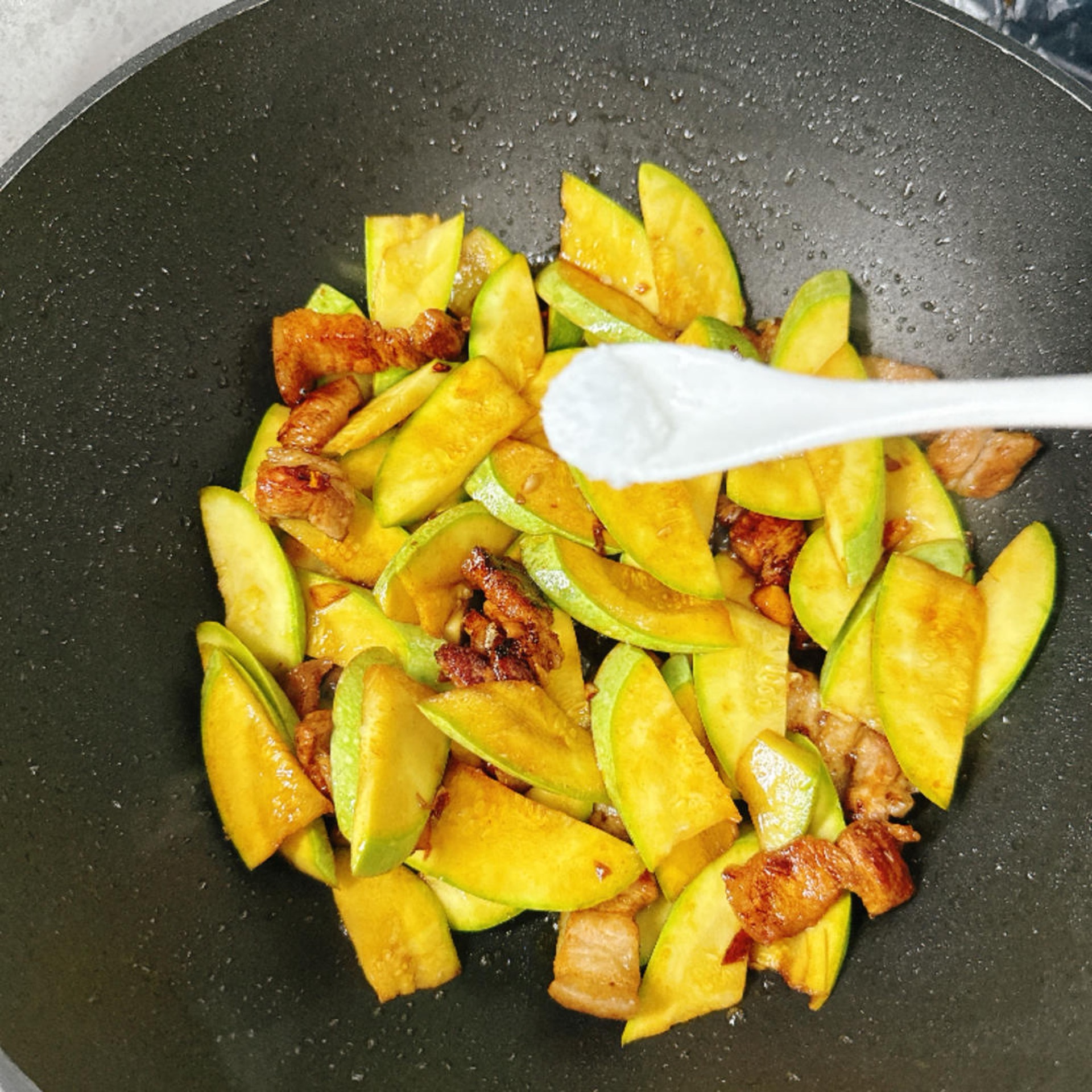
Step 14 — Season
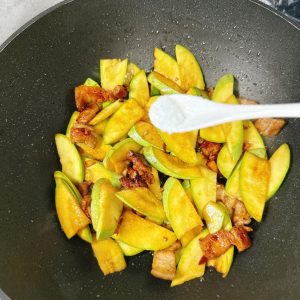
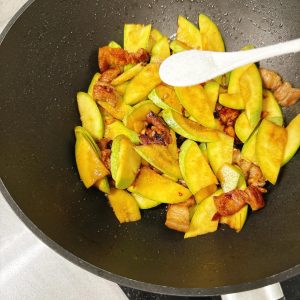
Season with salt and a pinch of MSG.
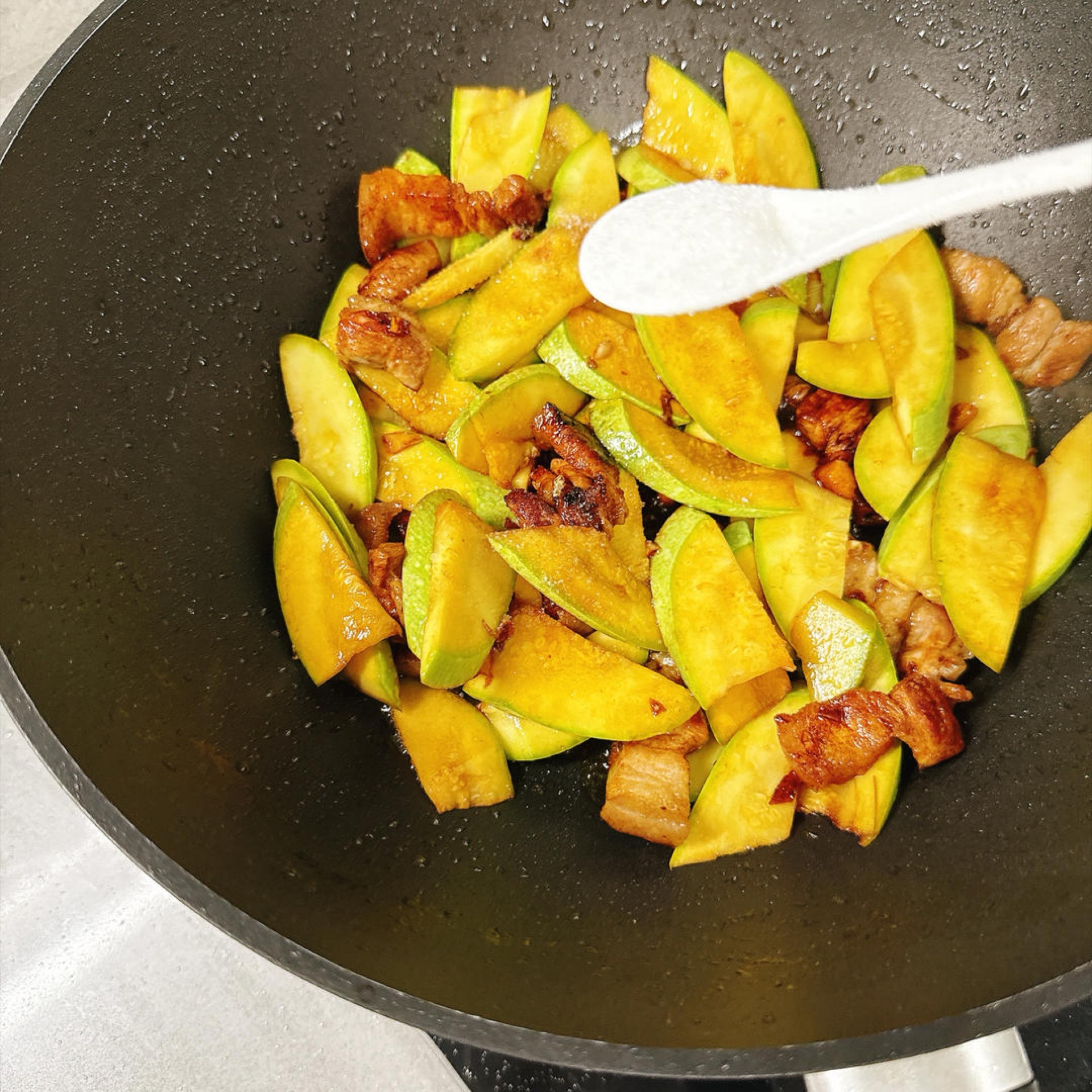
Step 15 — A Touch of Sugar
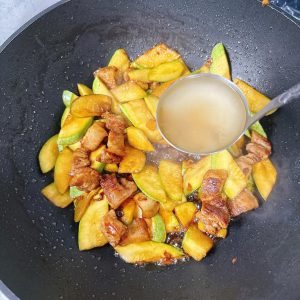
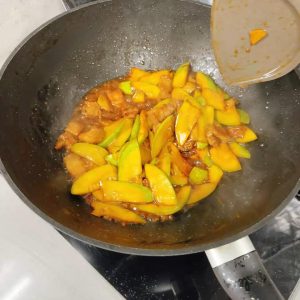
Add a little sugar to round out the flavors.
Step 16 — Thicken
Add a spoonful of the starch slurry and toss to coat.
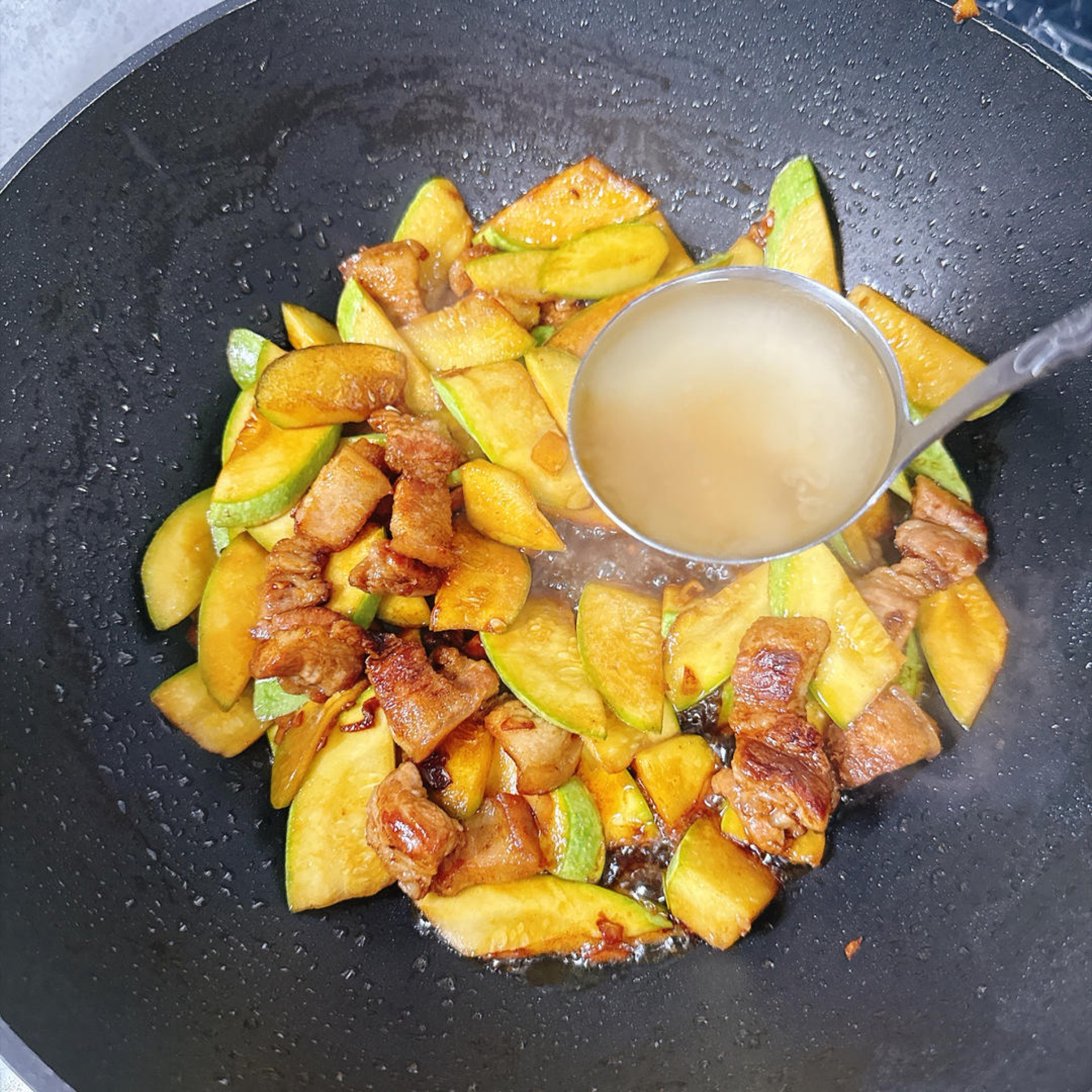
Step 17 — Vinegar at the Edge
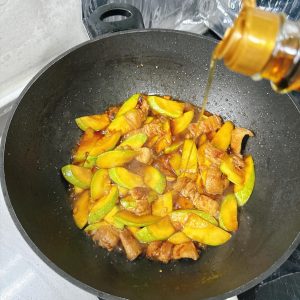
Finally, splash the Chinkiang vinegar down the side of the wok.
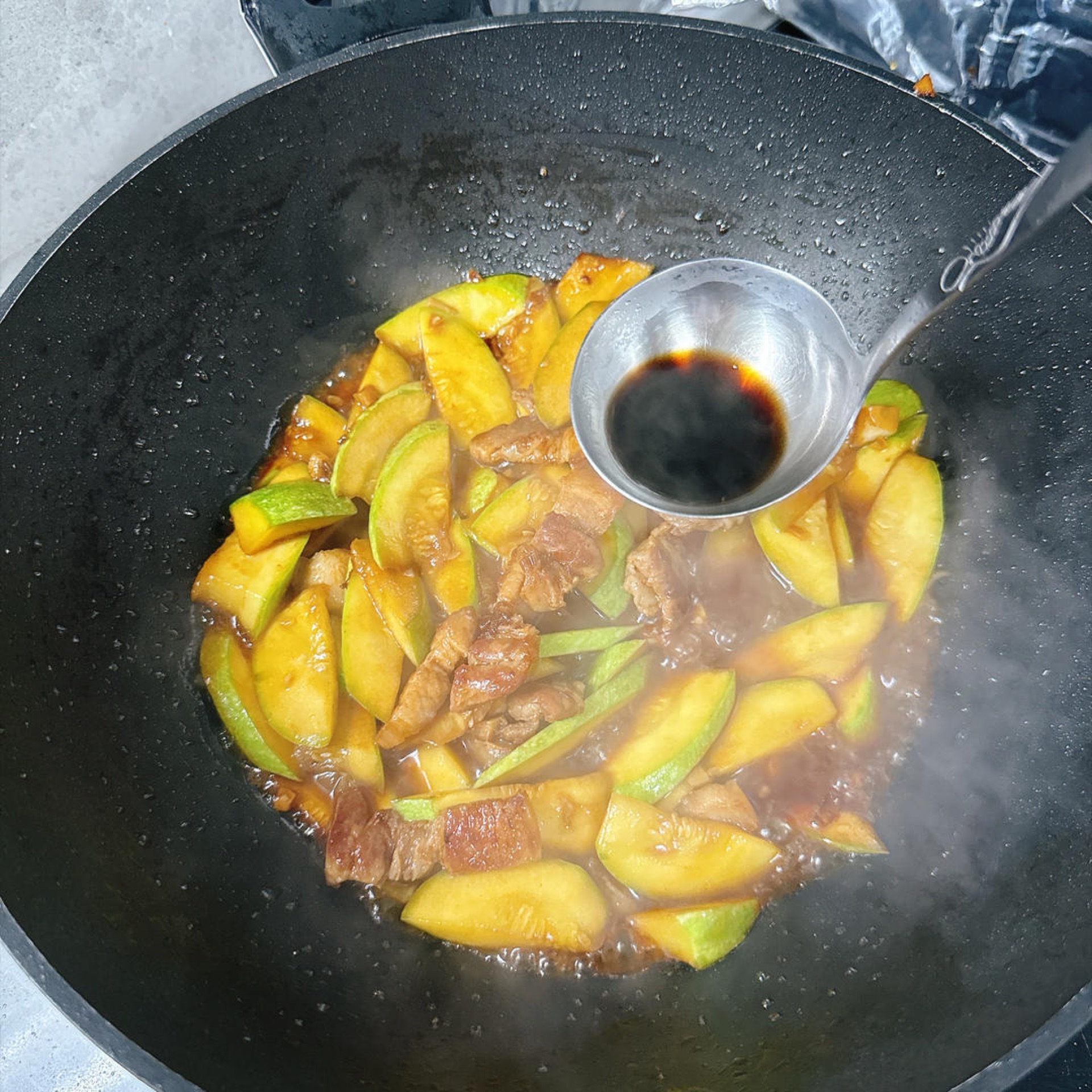
Step 18 — Sesame Oil
Add a little sesame oil just before taking it off the heat.
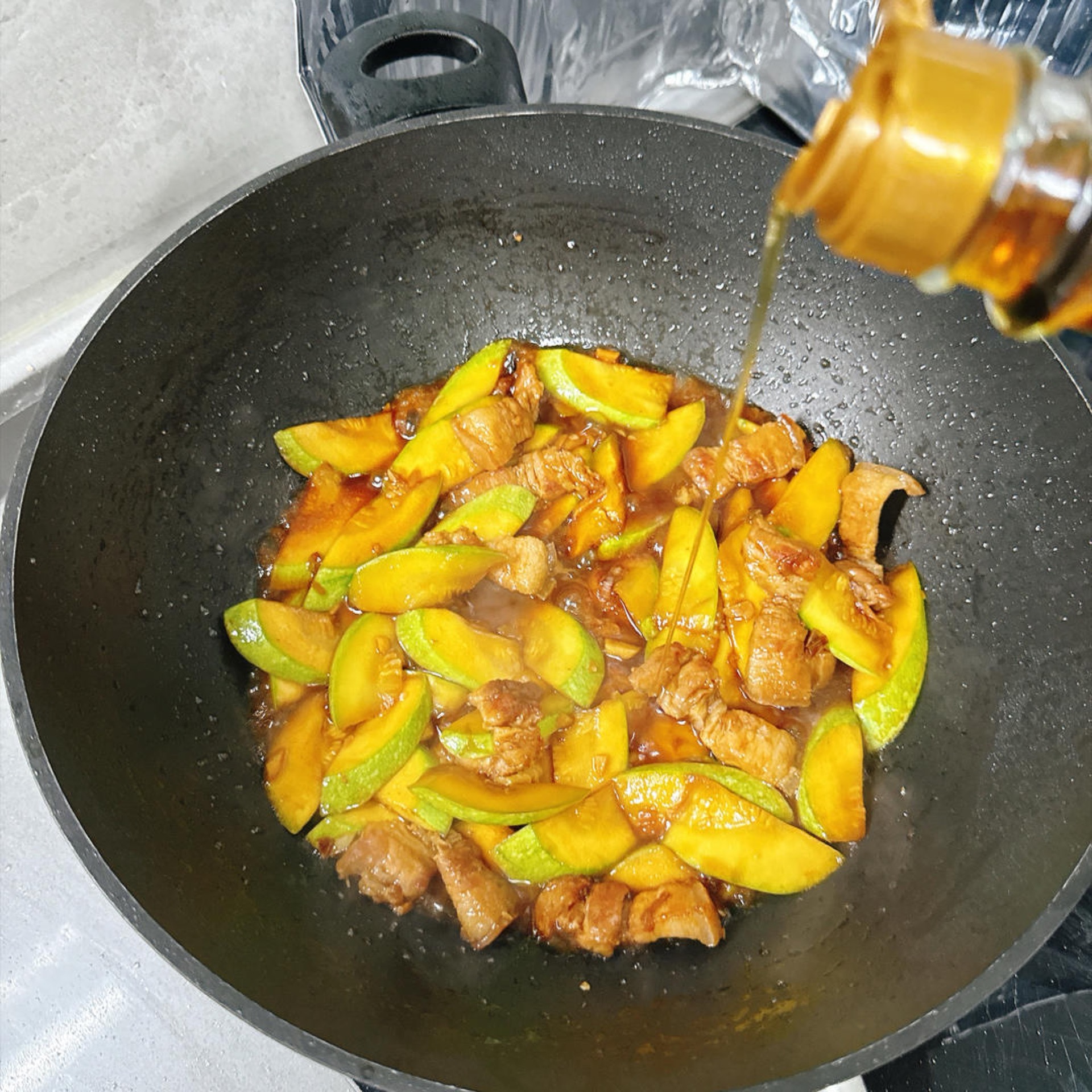
Step 19 — Plate It
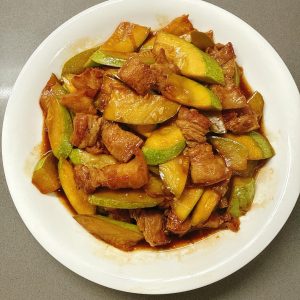
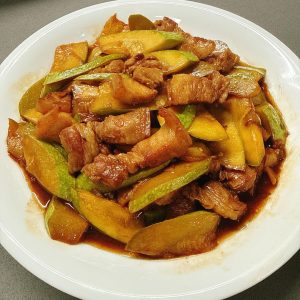
Slide it out of the wok and onto a serving plate.
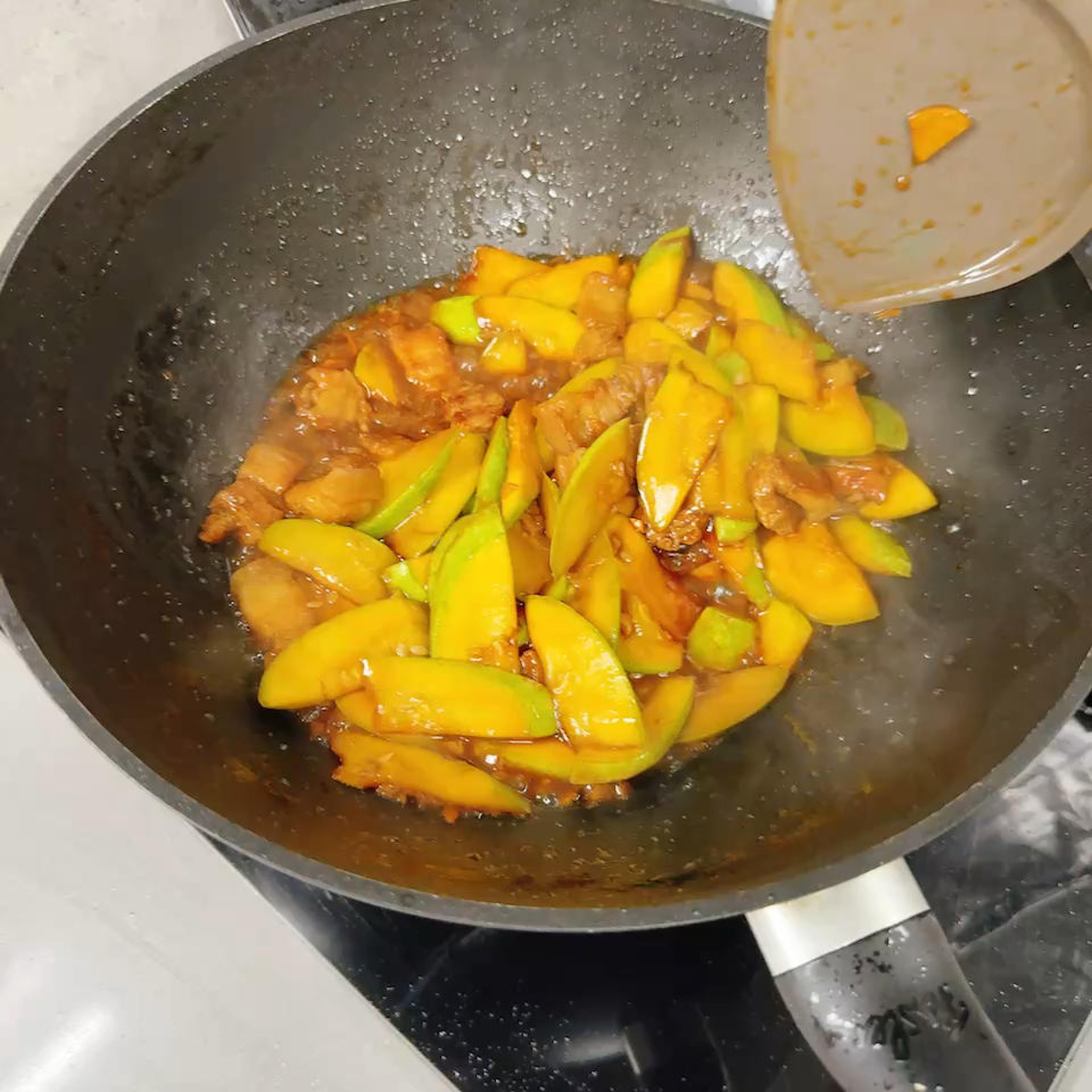
Step 20 — The Texture
The zucchini comes out coated in meaty sauce — crisp and juicy with a sweet savoriness, and the pork slices stay tender, never dry.
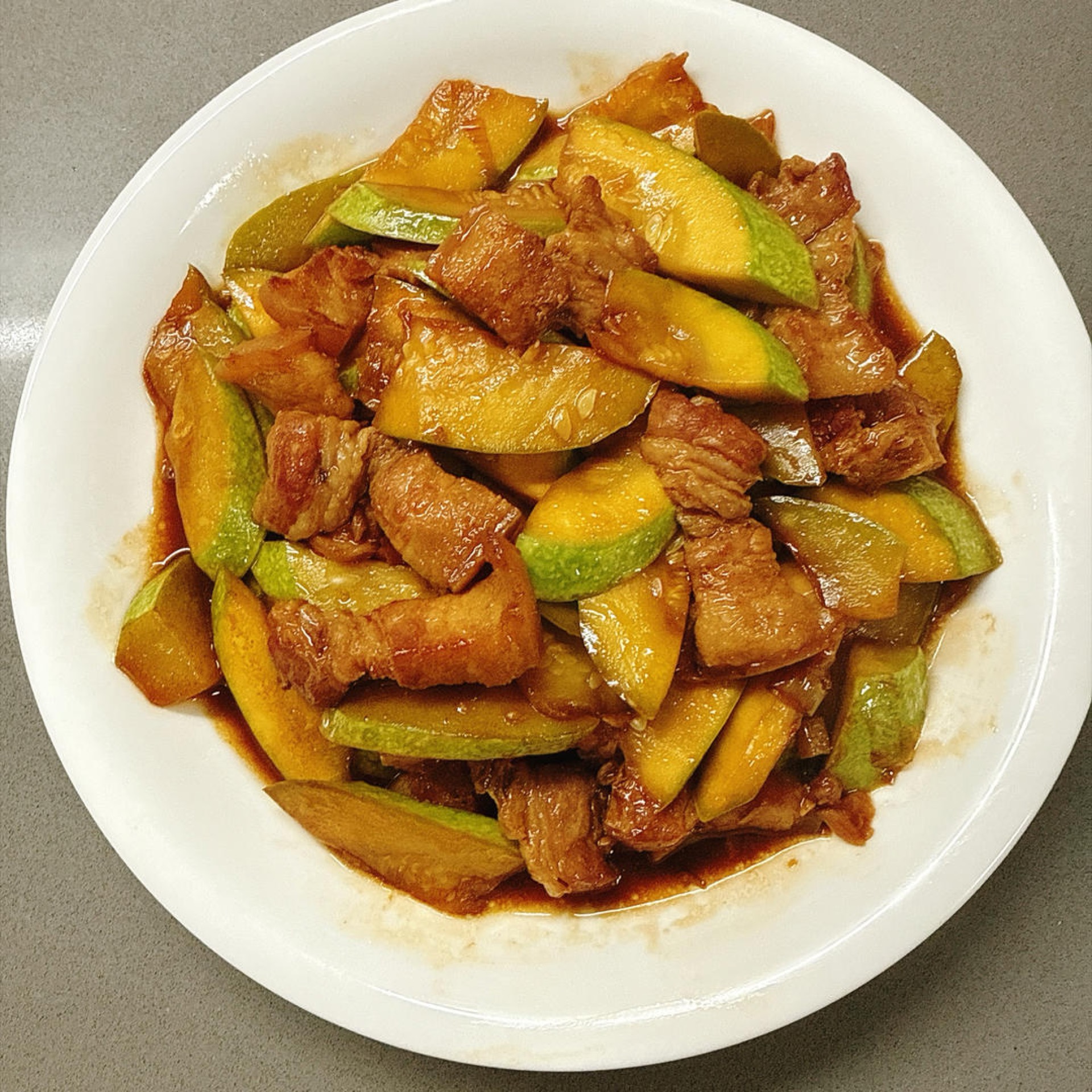
Step 21 — Why It Works
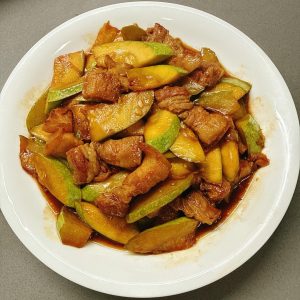
This is how zucchini should be stir-fried: crisp and tender without releasing water, with pork slices that are silky and never stringy. Spoon it with the sauce over rice and three bowls will not be enough — this is home cooking at its best.
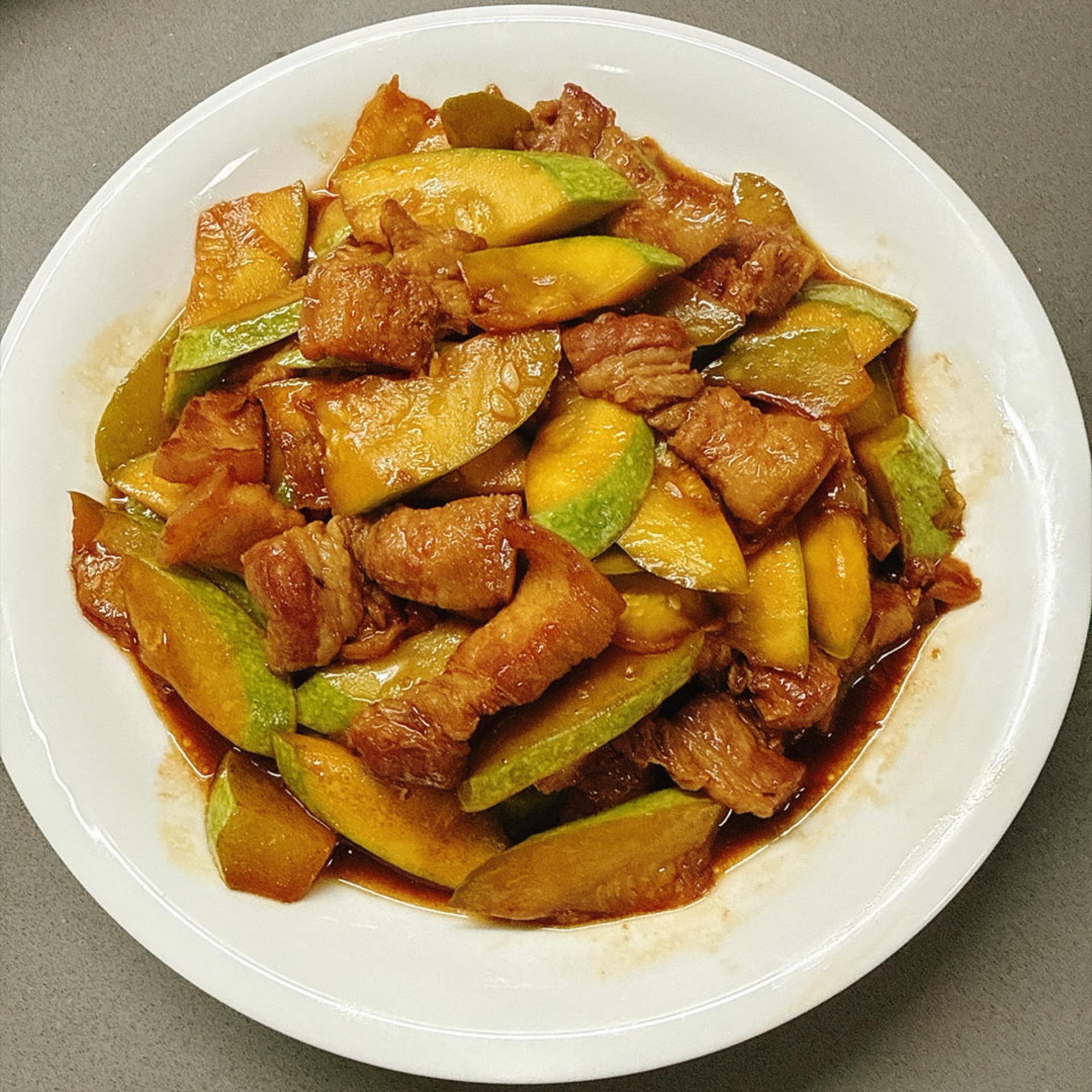
Step 22 — The Balance
The natural sweetness of the zucchini cuts right through the richness of the pork. That collision of fresh and savory is one bite of home.
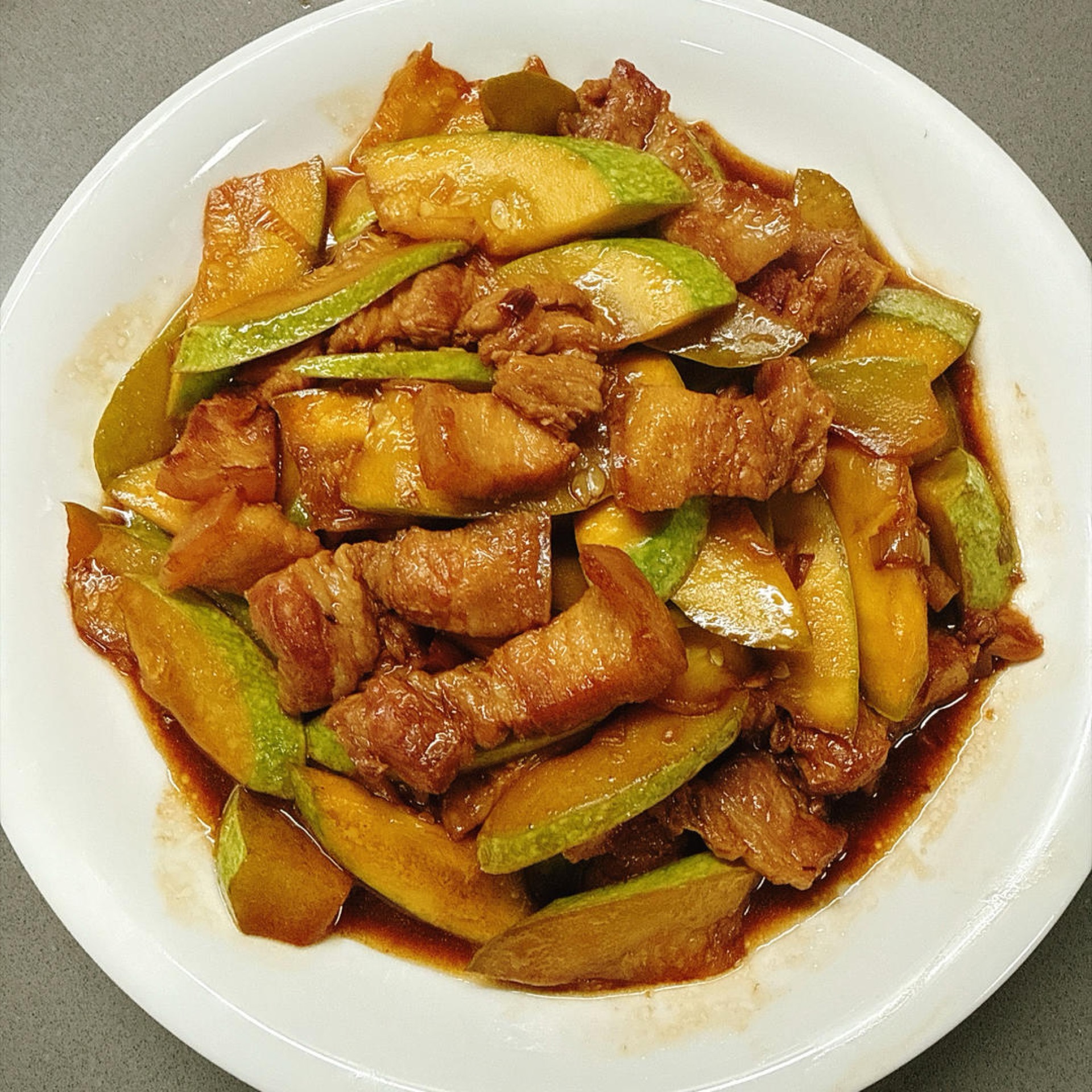
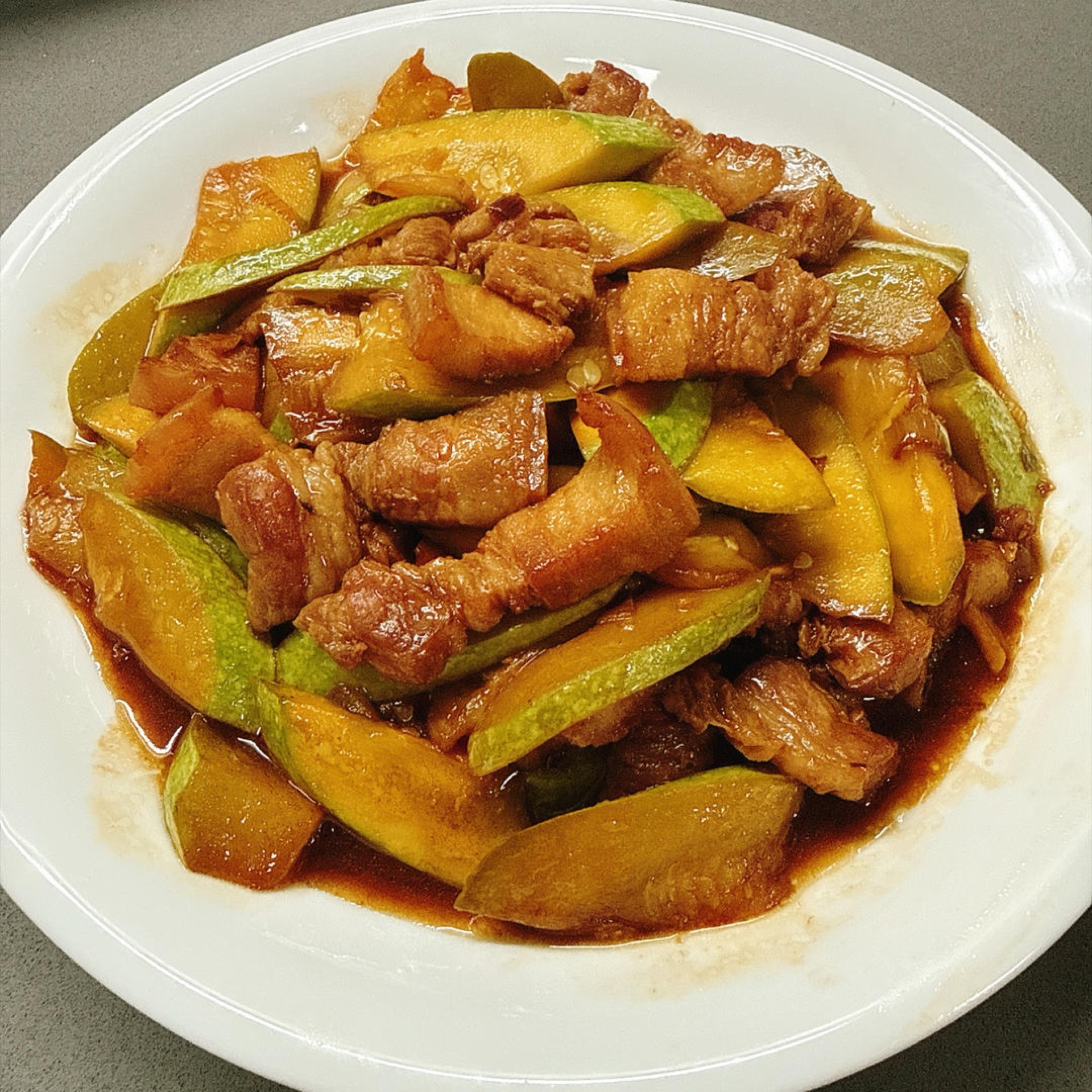
Step 23 — A Plate of Comfort
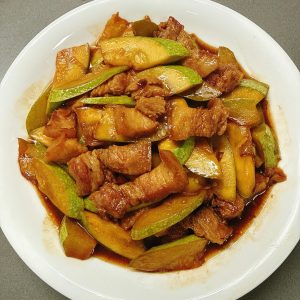
One simple home stir-fry to soothe a busy day’s stomach. A kitchen with some smoke and fire in it is a kitchen with warmth in it.
Common Mistakes When Making 西葫芦炒肉
1. Skipping the blanch and shock. This is the single biggest cause of watery zucchini stir-fry. If you drop raw zucchini into the wok, it will release water, steam instead of sear, and dilute the sauce. The fix: blanch for 30 seconds, drain, and shock in ice water. It adds three minutes and changes everything.
2. Slicing the zucchini too thin. Thin coins turn to mush the moment they hit the pan. You want about 1/4 inch — thick enough to stay crisp in the center, thin enough to warm through. If your slices are translucent when you hold them up to the light, they’re too thin.
3. Crowding the wok. If the zucchini and pork are piled more than an inch deep, the pan temperature drops and everything steams. Use a large wok or skillet, and if you’re doubling the recipe, cook it in two batches. A crowded pan is a steamed pan.
4. Not rendering the pork long enough. Pale, flabby pork belly ruins the dish. The slices need 3 to 4 minutes of contact until the fat turns translucent, the edges curl, and the meat is golden brown. If you pull it early, the final dish tastes greasy rather than rich.
5. Adding the vinegar too early. Chinkiang vinegar is aromatic, and its aroma is volatile. Added at the start, it cooks off completely and you lose the point of it. Add it at the very end, poured down the hot side of the wok so it sizzles on contact.
6. Letting the slurry sit. Potato starch settles to the bottom of the bowl within a minute or two. If you pour without stirring, you’ll get a splash of cloudy water followed by a lump of starch. Stir it immediately before it goes into the wok.
7. Over-seasoning with dark soy. Dark soy is powerful. A quarter teaspoon is enough for a pound of pork and two zucchini; more than that and the dish turns nearly black and tastes slightly bitter. It’s for color, not flavor.
Variations
With dried shrimp. Soak a tablespoon of small dried shrimp in warm water for 10 minutes, then add them with the aromatics. They add a deep, savory brininess that works beautifully with the sweet zucchini. Skip the MSG if you do this.
Spicy version. Add 3 to 4 dried red chilies, torn and seeded, to the oil before the pork, or a spoonful of doubanjiang (fermented chili bean paste) with the aromatics. The fermented paste adds salt, so reduce the light soy by half.
With black fungus. Soak a small handful of dried wood ear mushrooms in warm water for 30 minutes, then blanch them with the zucchini. They add a satisfying crunch and a subtle earthiness that pairs well with pork.
Vegetarian. Replace the pork belly with 8 ounces of firm or extra-firm tofu, pressed and cubed, plus an extra tablespoon of oil. Sear the tofu until golden before adding the aromatics. Add a teaspoon of mushroom seasoning to replace the savory depth the pork would have provided.
With eggs. Scramble two eggs in the wok first, remove them, and fold them back in at the very end. This turns the dish into a fuller one-pan meal and softens the richness of the pork. It’s also a great way to stretch a smaller amount of meat.
Different vegetable, same technique. The blanch-and-shock method works for broccoli too, though broccoli needs closer to 60 seconds. If your broccoli has ever gone dull and yellow on you, our notes on why broccoli turns yellow when cooking explain the chemistry, and the same logic applies here: brief heat, fast cooling, high-heat finish.
Frequently Asked Questions
Can I make this without blanching the zucchini? You can, but you’ll get a wetter dish. If you want to skip the blanch, salt the sliced zucchini in a colander for 15 minutes, then squeeze it dry in a clean towel. That draws out a good amount of water and gets you closer to the blanched texture, though the bite won’t be quite as snappy.
What can I use instead of pork belly? Pork shoulder or skinless pork butt sliced thin works well, though you’ll need an extra tablespoon of oil since there’s less fat to render. Bacon is a decent shortcut — use 6 slices, cut crosswise, and reduce the added salt because bacon is already salty.
Why did my sauce turn out watery? Almost always one of two things: the zucchini wasn’t drained well after blanching, or the wok wasn’t hot enough when the zucchini went in. Drain the zucchini thoroughly, pat it dry if needed, and make sure the pan is shimmering before anything goes in. A second tablespoon of slurry will also rescue a thin sauce.
Is this dish spicy? No, not as written. It’s savory, lightly sweet, and gently tangy from the black vinegar. If you want heat, add dried chilies or a spoonful of chili oil at the end.
Can I prep this ahead of time? Yes, up to a point. The zucchini can be cut and blanched up to a day ahead and stored in the fridge in a sealed container lined with paper towel. The pork can be sliced and kept cold for up to 24 hours. Do all the cooking right before serving — a reheated stir-fry loses its texture.
How to Serve
This is a rice dish at heart. Steamed jasmine or short-grain rice is the classic partner, and the sauce is designed to be spooned over it — the zucchini releases just enough liquid to season a bowl of rice without turning it soggy. If you want a fuller table, pair it with a cold dish and a soup, and keep everything else light so the pork doesn’t overwhelm the meal.
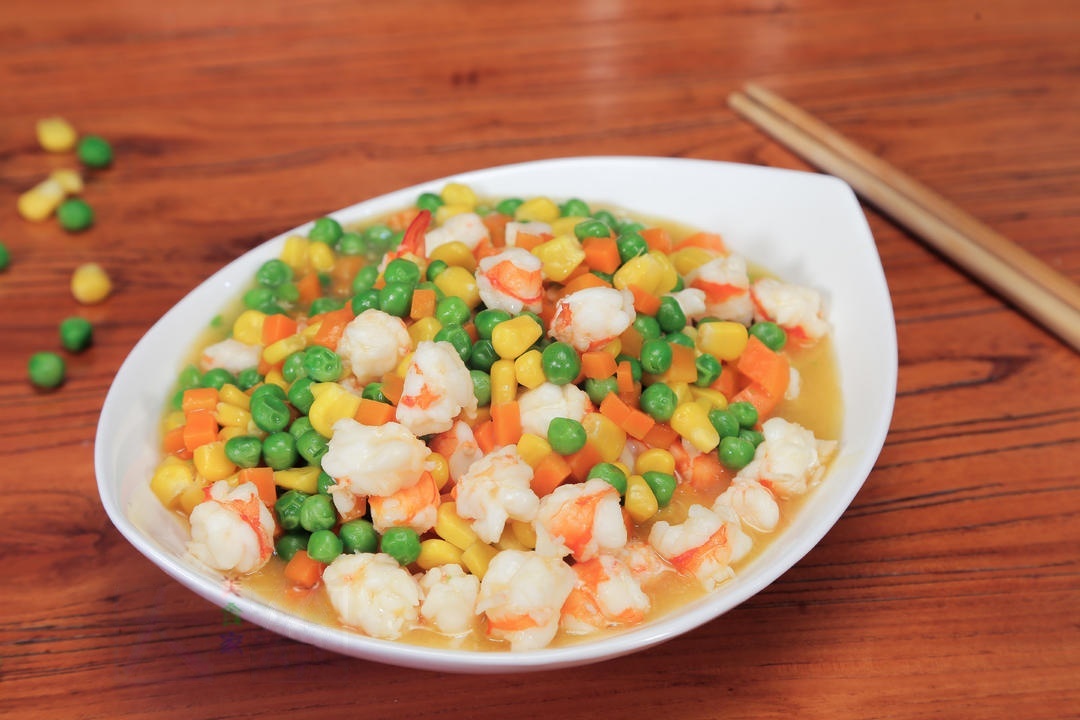
For a vegetable-forward second dish, the colorful shrimp and vegetable stir fry is a natural fit: colorful shrimp and vegetable stir fry brings bright, crunchy vegetables and a lighter sauce that balances the richness of the pork belly beautifully.
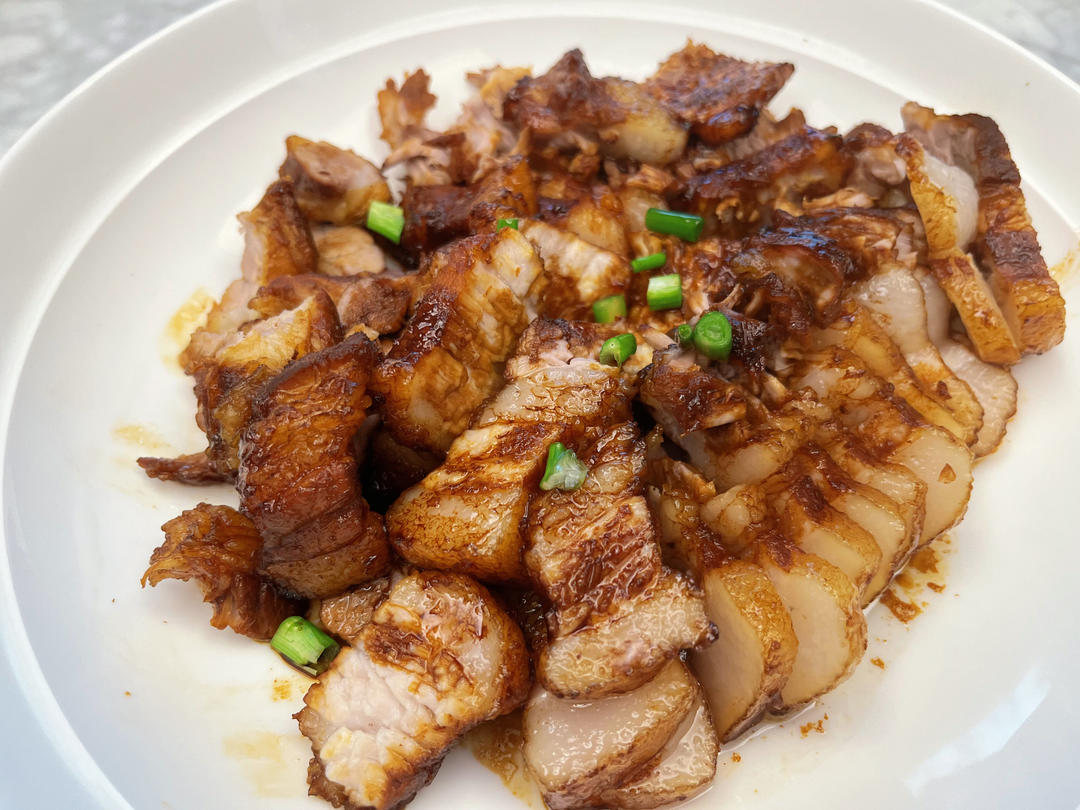
If you’d rather go deeper into pork, the Wenzhou braised pork belly is the slow-cooked counterpart to this fast stir-fry: Wenzhou braised pork belly is soy-braised until meltingly tender, and it makes a wonderful centerpiece if you’re cooking a larger Chinese meal.
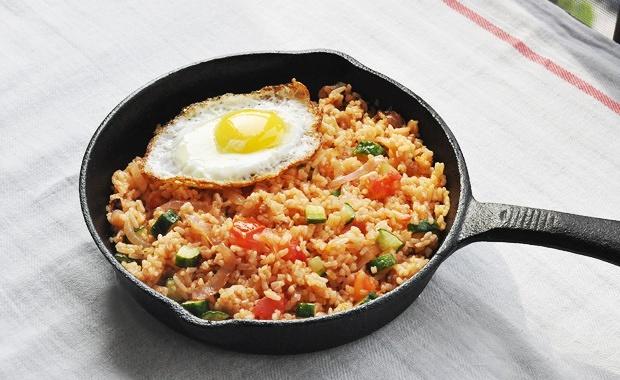
And if you’re feeding a crowd and want a one-pan starch to go with it, the nasi goreng indonesian fried rice is an easy, deeply savory side that comes together in the same wok: nasi goreng indonesian fried rice carries a similar sweet-savory profile and pairs well with a simple zucchini stir-fry.
Storage & Reheat
Stir-fries are at their best fresh, but this one holds up better than most because the zucchini was blanched and shocked before cooking. Cool any leftovers within two hours, then transfer them to a shallow, airtight container. Refrigerate for up to 3 days.
To reheat, the goal is to warm it through without cooking the zucchini any further. The best method is a hot wok or skillet over medium-high heat for 2 to 3 minutes, tossing constantly, with a splash of water if the pan looks dry. A microwave works in a pinch — cover the bowl and heat in 30-second bursts — but the zucchini will soften noticeably. Avoid reheating more than once.
This dish does not freeze well. Zucchini becomes mushy when frozen and thawed, and the sauce separates. If you want to plan ahead, freeze the cooked pork and sauce separately, then stir-fry fresh zucchini to combine when you’re ready to eat.
Allergen Notice
This recipe contains soy (light and dark soy sauce), wheat (standard soy sauce is brewed with wheat — use tamari for a gluten-free version), and sesame (toasted sesame oil). Shaoxing wine is rice-based and typically gluten-free, but check the label if you’re highly sensitive. If you’re avoiding soy entirely, coconut aminos can replace the light soy, though you’ll need to adjust the salt.
Nutrition Disclaimer
Nutrition information is calculated using an ingredient database and should be considered an estimate. In cases where multiple ingredient alternatives are given, the first listed is calculated for nutrition. Garnishes and optional ingredients are not included.
About the Author & Recipe Development
Hi, I’m Lin — I grew up in a Chinese household where dinner was almost always a wok, a cleaver, and whatever was in the fridge, and I’ve been cooking and writing about Chinese home food at Woks of Love ever since. My goal is simple: to make the everyday dishes that Chinese families actually cook on weeknights feel approachable for anyone with a stove and a sharp knife.
This recipe comes from the northern Chinese home tradition of pairing a summer vegetable with a little pork for flavor. I tested it against several versions to land on the blanch-and-shock method, because it consistently produced the crisp-tender zucchini and clinging sauce that the dish is supposed to have. If you’ve made a watery zucchini stir-fry before, this is the version that fixes it.
If you make this, I’d love to hear how it turned out — especially if you tried one of the variations. And if you’re new here, the pork belly recipes on the site are a good place to keep exploring.
Authoritative References
For safe handling and cooking temperatures, I rely on the USDA’s food safety guidance, which you can find in the USDA safe minimum internal temperature chart. Pork, including pork belly, should reach 145°F (63°C) with a three-minute rest.
For storage and cooling guidance, the FDA’s Food Code guidance on refrigeration and leftovers is the reference I use: cool food within two hours, refrigerate at or below 40°F (4°C), and reheat to 165°F (74°C).
For the food science behind blanching and the effect of heat on vegetable texture, Harold McGee’s On Food and Cooking remains the standard reference, and serious cooks will find the sections on plant cell walls and pectin especially useful for understanding why the blanch-and-shock step works.
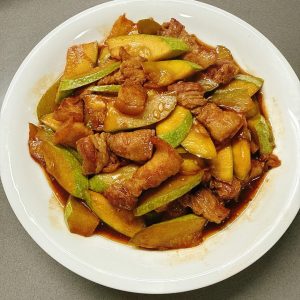
Stir-Fried Zucchini with Pork Belly (西葫芦炒肉): Tender Zucchini, Savory Pork

Equipment
- Wok
- Cutting Board
- Slotted Spoon
Ingredients
For the Pork Belly
- 1 lb pork belly 450g, thinly sliced
- 1/2 tbsp Shaoxing wine or dry sherry
- 1/2 tbsp light soy sauce plus more to taste
- 1/4 tsp dark soy sauce for color only
For the Zucchini
- 2 medium zucchini 西葫芦, about 1 lb / 450g
- 1 tsp white vinegar for the blanching water
- 1 tbsp neutral oil for stir-frying
For the Aromatics
- 3 cloves garlic minced
- 2 stalks scallion white and green parts separated, finely chopped
For the Sauce
- 1 tsp salt plus more to taste
- 1 pinch MSG optional
- 1 pinch sugar about 1/4 tsp
- 1 tsp Chinkiang vinegar black vinegar, added at the wok edge
- 1 tsp toasted sesame oil finishing
- 1 tbsp potato starch mixed with 1 tbsp water for a slurry
Instructions
- Prepare the ingredients: halve the zucchini lengthwise, quarter it, then cut it on the diagonal into thick slices.

- Slice the pork belly thinly, and finely chop the scallion and garlic.
- Bring a pot of water to a boil and add a little white vinegar.
- When the water returns to a boil, add the zucchini and blanch it briefly.
- Once the water boils again, scoop the zucchini out and drain it well.
- Rinse it under cold water so it stops cooking, then set it aside.
- Heat oil in the wok and add the pork belly to sear.
- Fry the pork belly until it renders its fat and the edges turn golden.
- Add the chopped scallion and garlic and stir until fragrant.
- Add a splash of Shaoxing wine.
- Add half a spoonful of light soy sauce.
- Add a little dark soy sauce — not too much, just enough for color — and stir until it blends in.
- Add the zucchini to the wok.
- Season with salt and a pinch of MSG.
- Add a little sugar to round out the flavors.
- Add a spoonful of the starch slurry and toss to coat.
- Finally, splash the Chinkiang vinegar down the side of the wok.
- Add a little sesame oil just before taking it off the heat.
- Slide it out of the wok and onto a serving plate.
- The zucchini comes out coated in meaty sauce — crisp and juicy with a sweet savoriness, and the pork slices stay tender, never dry.
- This is how zucchini should be stir-fried: crisp and tender without releasing water, with pork slices that are silky and never stringy. Spoon it with the sauce over rice and three bowls will not be enough — this is home cooking at its best.
- The natural sweetness of the zucchini cuts right through the richness of the pork. That collision of fresh and savory is one bite of home.
- One simple home stir-fry to soothe a busy day’s stomach. A kitchen with some smoke and fire in it is a kitchen with warmth in it.













Leave a Reply