Growing up in Sichuan, my palate was trained on the numbing buzz of Sichuan peppercorns and the fiery heat of dried chilis. We believe that spice brings life to food. However, my culinary journey has taught me that sometimes, less is truly more.
I was introduced to this Wenzhou-style Braised Pork Belly (Lu Rou) by a friend from the Zhejiang province. In Wenzhou, locals flock to small “rice stalls” (fan tan) for this specific dish. Unlike our complex Sichuan stews, this recipe relies on the philosophy of Yuan Zhi Yuan Wei (原汁原味)—literally “original juice, original taste.”
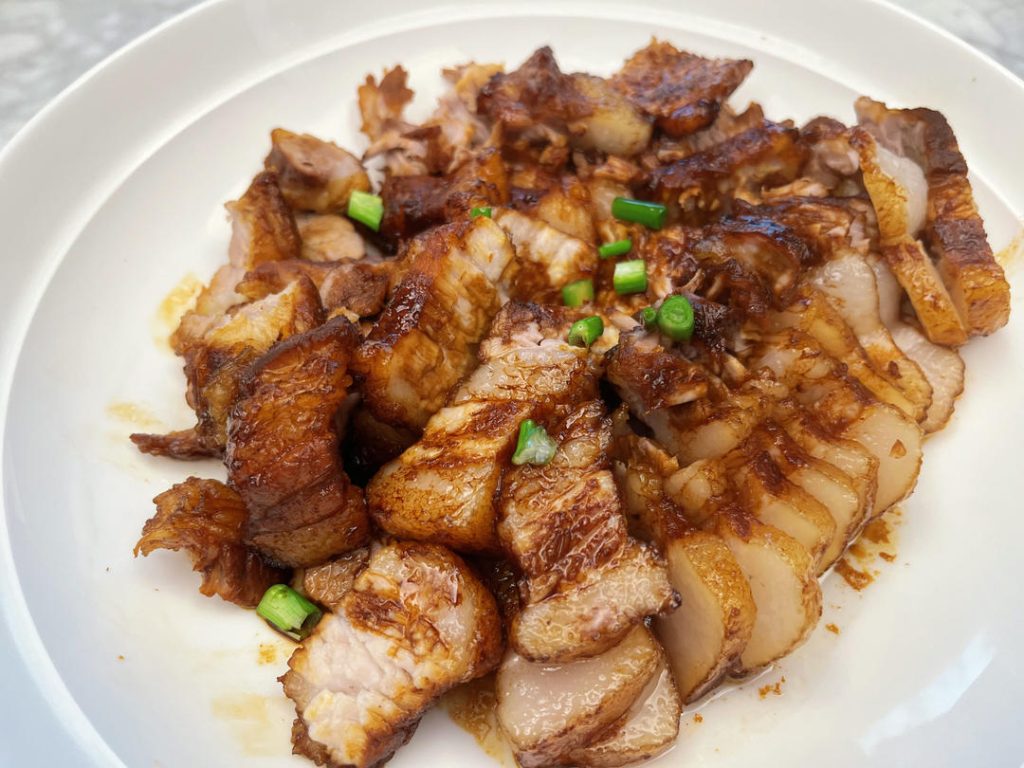
There are no star anise, no cinnamon bark, and absolutely no Sichuan peppercorns here. By stripping away the heavy spices, you allow the natural, savory sweetness of the pork belly to shine, amplified only by quality soy sauce and ginger. It is luscious, savory, and incredibly easy to make at home.
What Is Wenzhou Lu Rou?
While many Westerners are familiar with Braised Pork Belly (Hong Shao Rou), which creates a sticky, caramelized coating using rock sugar and spices, Wenzhou Lu Rou is different.
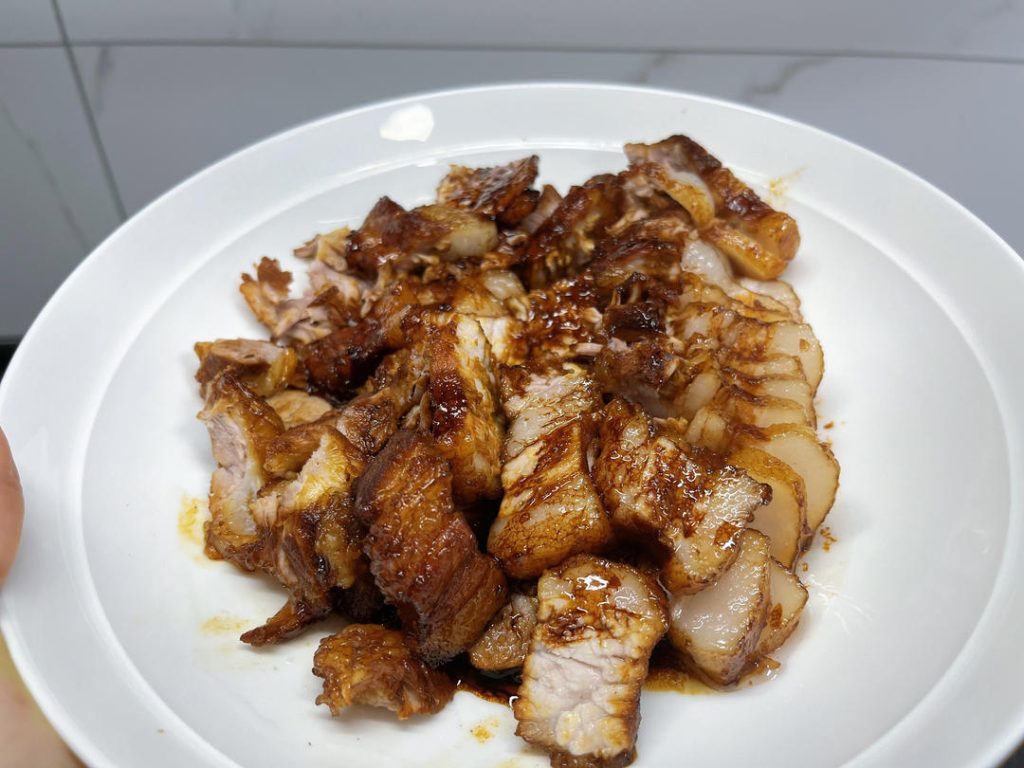
It involves boiling the meat first to cook it through, and then briefly braising it in a concentrated savory sauce. The result is a texture that is tender but holds its shape, with a sauce that tastes pure and clean rather than heavy or cloying. It shares some DNA with the famous Taiwanese Lu Rou Fan, but instead of minced meat, we serve generous, satisfying slices.
Why This Recipe Works
- Purity of Flavor: By omitting heavy spices, the quality of the pork and soy sauce takes center stage.
- Foolproof Texture: Boiling the meat before braising ensures it is fully cooked and tender without falling apart, a technique similar to the first step of Twice-Cooked Pork.
- Minimal Ingredients: You only need 5 pantry staples plus the pork.
- Quick Reduction: High-heat reduction creates a glossy glaze in just minutes.
Key Ingredients & Substitutions
- Pork Belly: The star of the show. For this recipe, try to select a cut that is roughly “30% fat and 70% lean.” This ratio ensures the dish is juicy without being greasy.
- Light Soy Sauce: This provides the salty, savory “umami” base. We recommend using a high-quality Light Soy Sauce like Pearl River Bridge or Lee Kum Kee.
- Dark Soy Sauce: This is primarily for color. A good Dark Soy Sauce gives the pork that appetizing, deep amber hue.
- Shaoxing Wine: Essential for neutralizing any gaminess in the pork. You can learn more about Shaoxing Wine in our pantry guide. Dry sherry is an acceptable substitute.
- Sugar: A small amount of Sugar balances the saltiness. The original recipe calls for white sugar, but you can use rock sugar for a glossier finish.
About the Author & Recipe Development
I’m Lin, a chef born and raised in Sichuan with over a decade of professional kitchen experience. While my heritage is spicy, my training at the culinary institute exposed me to the vast diversity of Chinese regional cuisines. This recipe was developed to bridge the gap between restaurant-quality taste and home-kitchen convenience. I have tested this method three times in my US-based kitchen to ensure that standard supermarket pork belly works just as well as the meat found in Chinese wet markets.
Recipe Notes Before We Begin
- Skin On or Off? The traditional Wenzhou recipe often calls for removing the skin for a more tender mouthfeel, though you can leave it on if you enjoy the gelatinous texture.
- The Chopstick Test: We don’t rely on timers alone. The meat is ready for the sauce when a chopstick can easily pierce through the thickest part of the meat.
- Choosing the Meat: Visit our guide on Pork Belly to learn how to select the best cut. Avoid belly that is too thin or overly fatty.
How to Make Wenzhou Braised Pork Belly
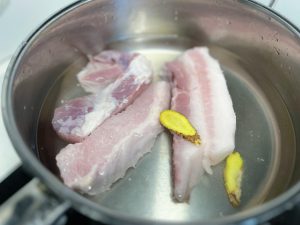
1. Prep the Pork Wash the fresh pork belly thoroughly. Remove the skin if preferred (this recipe suggests skinless for a cleaner bite). Place the pork in a pot of cold water—enough to submerge it completely. Add two slices of ginger.
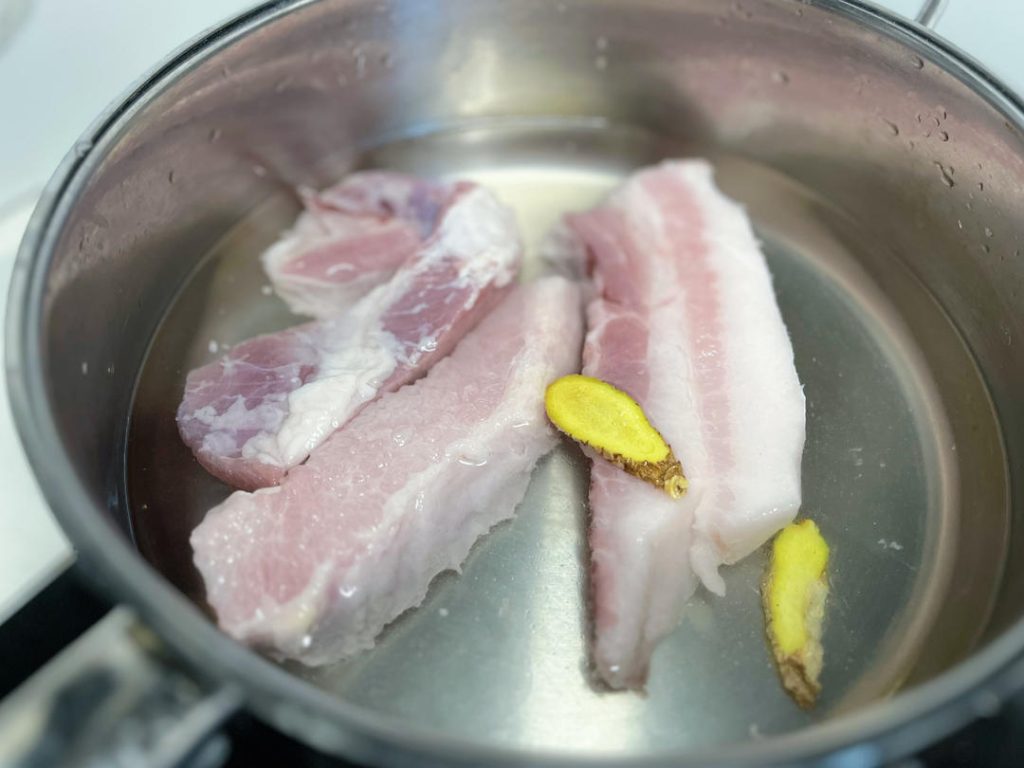
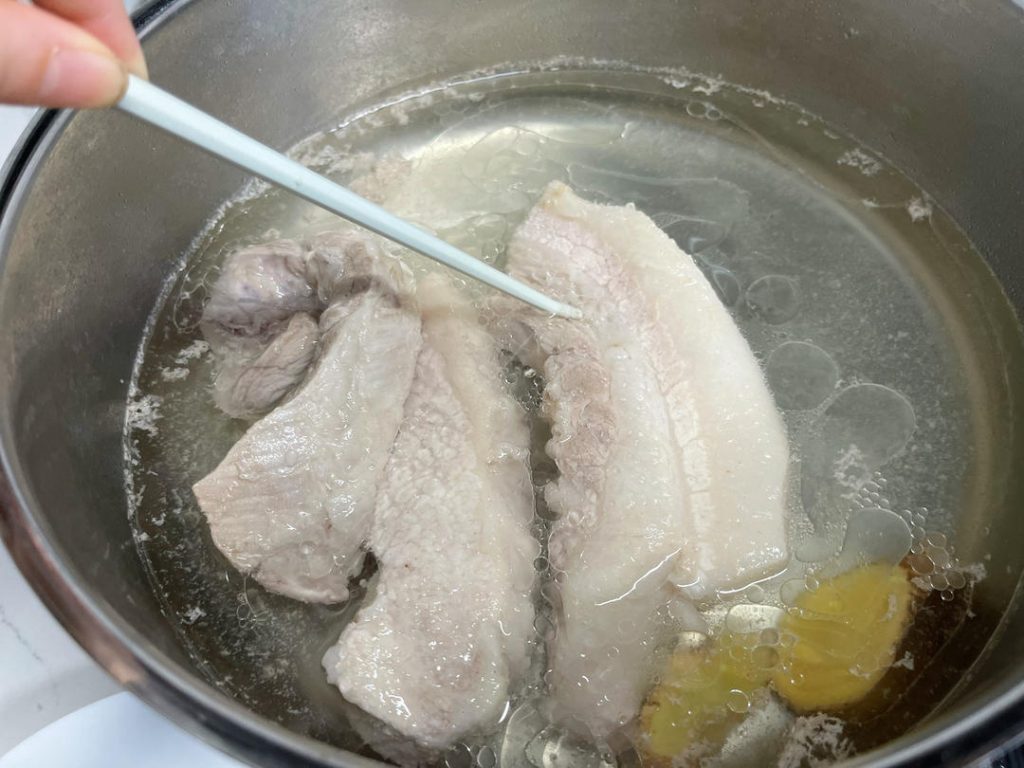
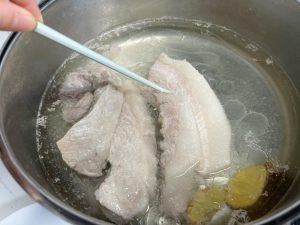
2. Boil the Meat Bring the pot to a boil over high heat. Skim off any scum that floats to the surface. Turn the heat down to low, cover, and simmer for about 25 minutes.
Chef’s Tip: Use a chopstick to poke the meat. If it slides through with little resistance, it is cooked.
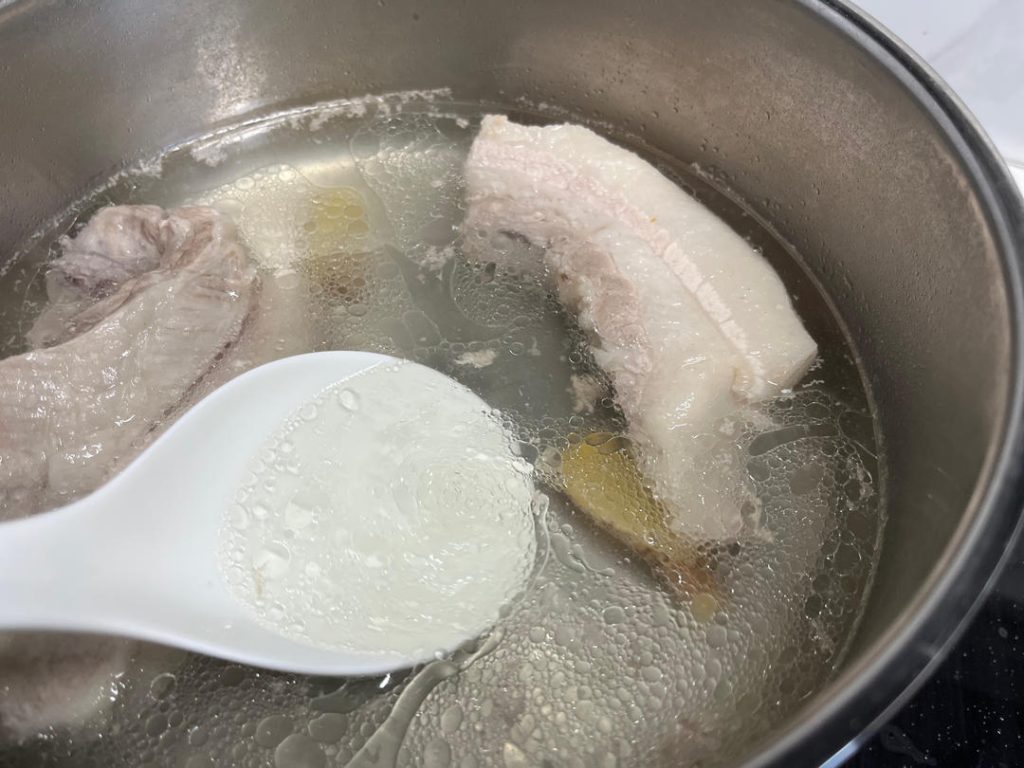
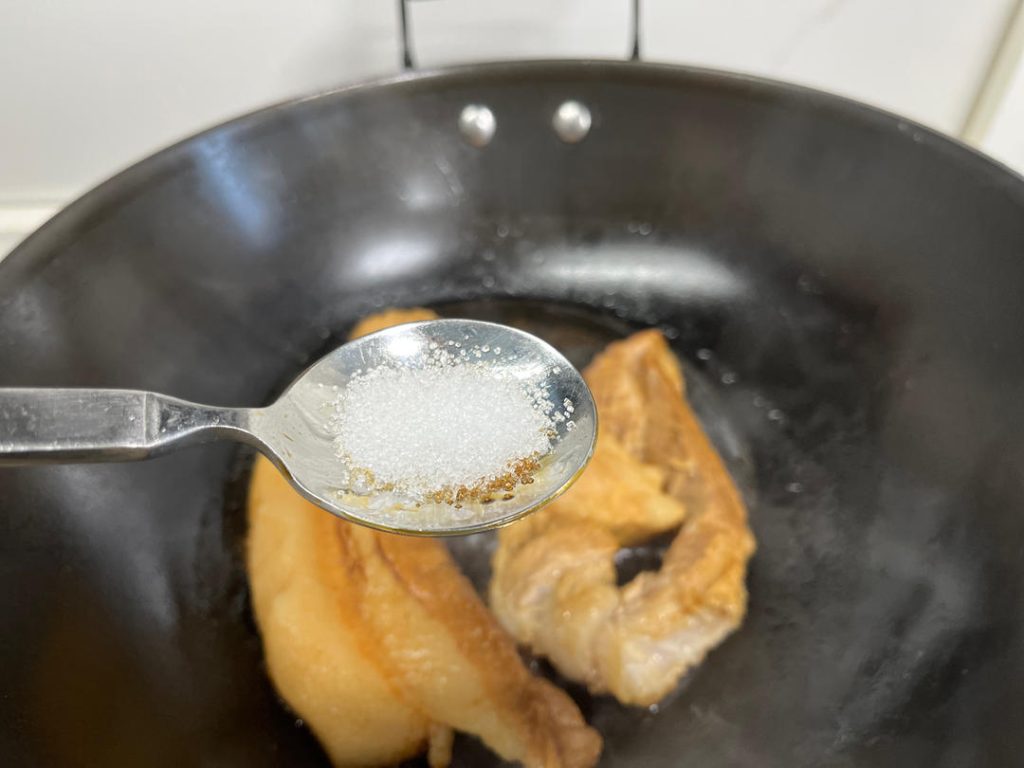
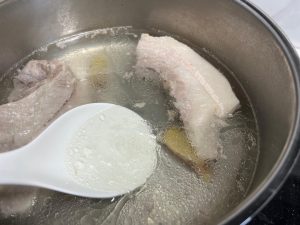
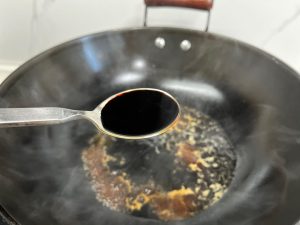
3. Create the Braising Liquid Do not discard all the water! Ladle out about 2 large scoops (approx. 1/2 cup to 3/4 cup) of the pork cooking broth into a clean wok or sauté pan. Add 2 tablespoons of light soy sauce, 2 tablespoons of dark soy sauce, 1 tablespoon of Shaoxing wine, and 1 tablespoon of sugar.
Note: If you prefer a sweeter profile (like Shanghai style), you can increase the sugar, but the Wenzhou style is savory-forward.
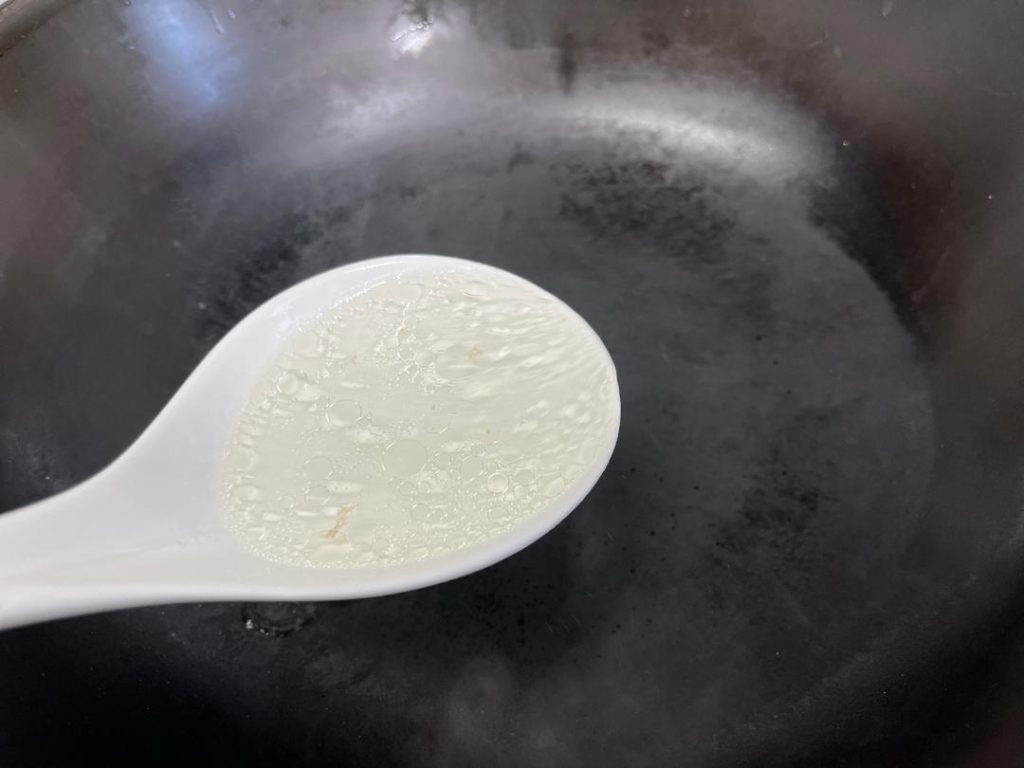
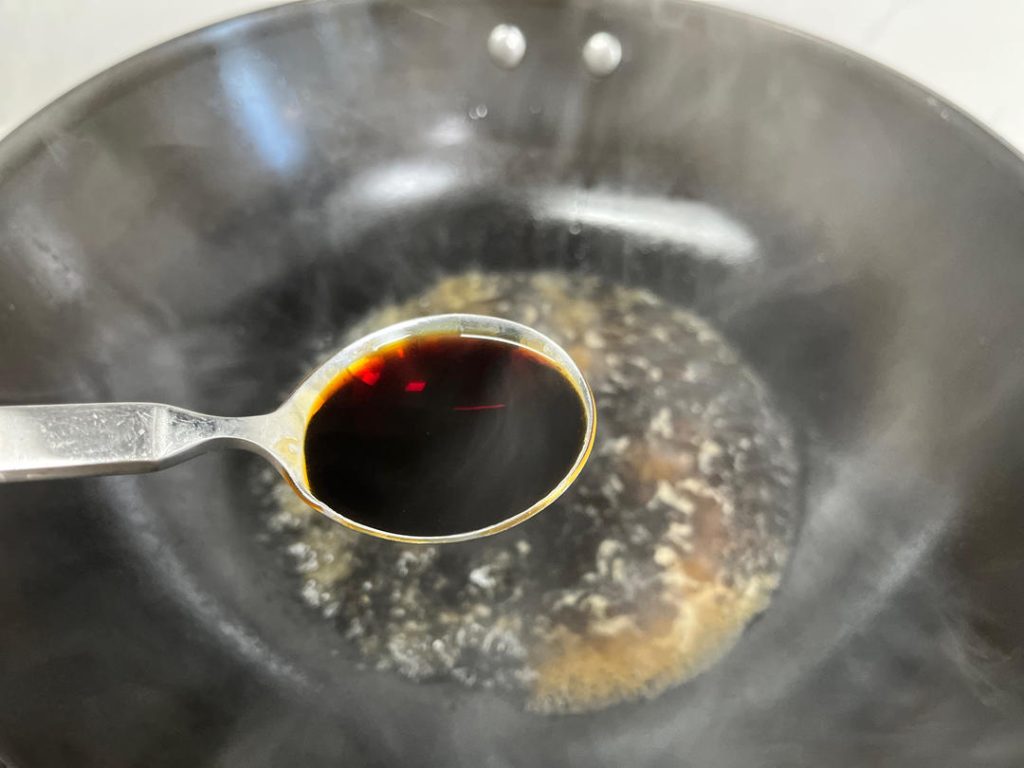
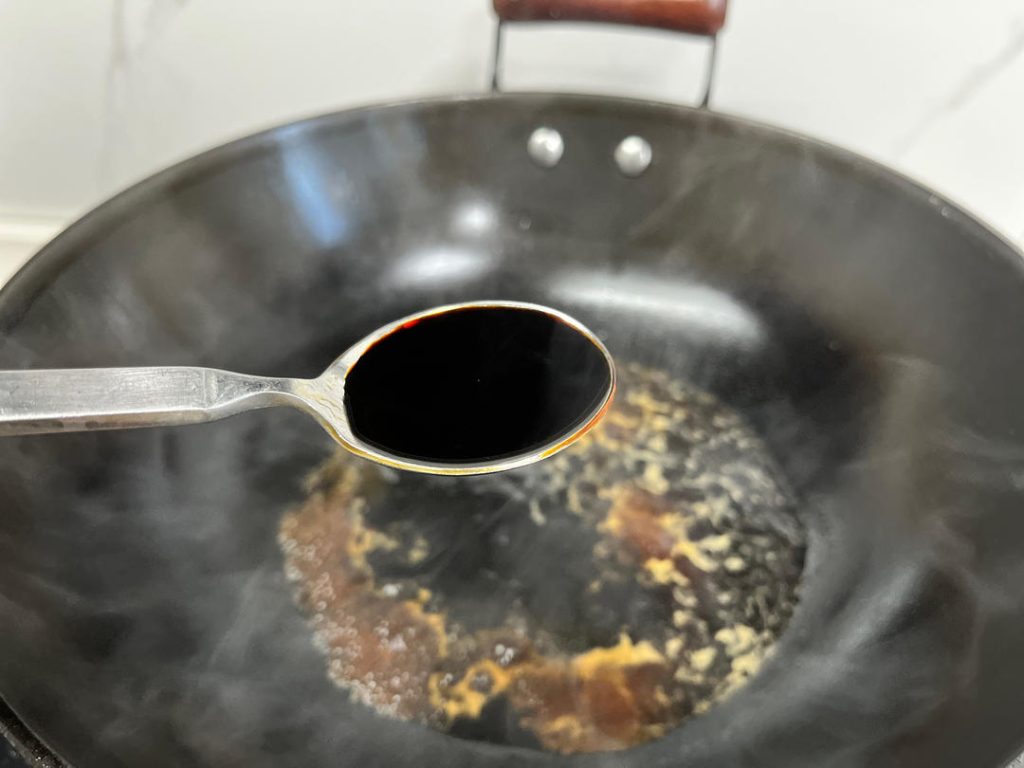
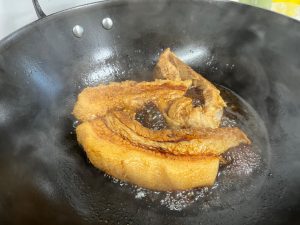
4. Braise and Glaze Transfer the cooked pork belly into the wok with the sauce. Turn the heat to medium. Cook for 2-3 minutes, flipping the meat halfway to ensure it takes on that beautiful dark color evenly.
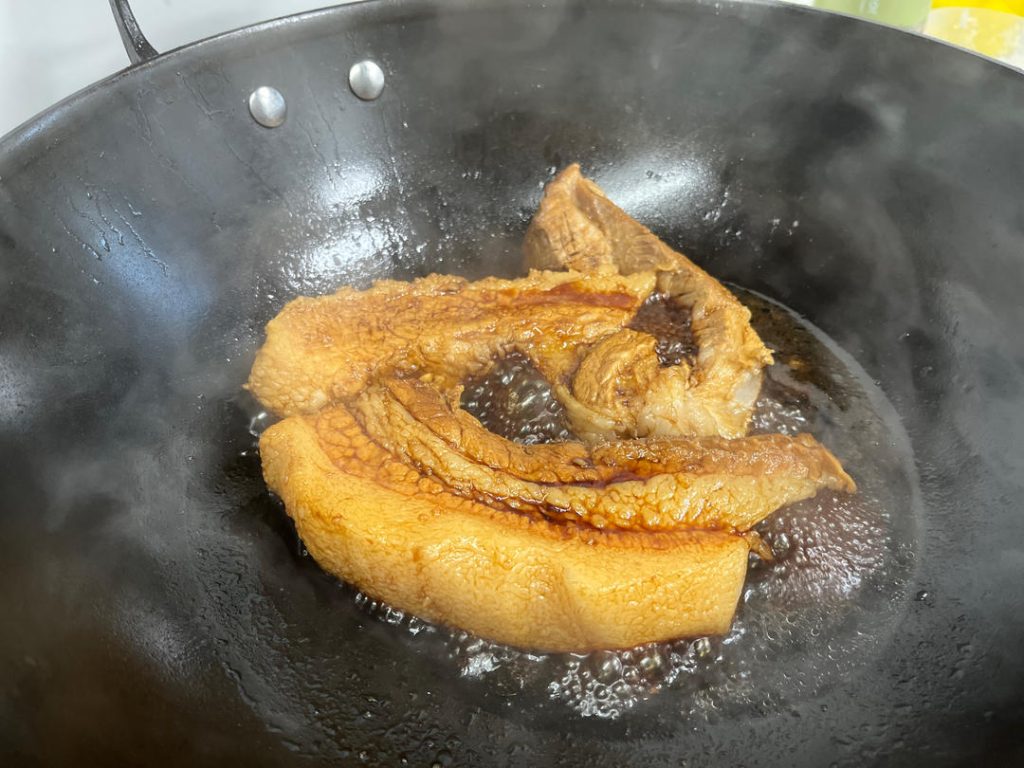
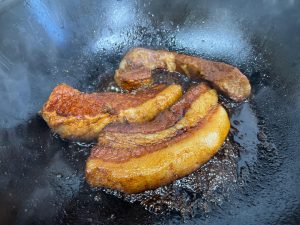
5. Reduce the Sauce Turn the heat up to high to reduce the sauce. Watch closely! The sugars in the sauce will bubble and thicken rapidly. You want to reduce it until it is a thick, glossy glaze, leaving just a little bit of liquid in the pan.
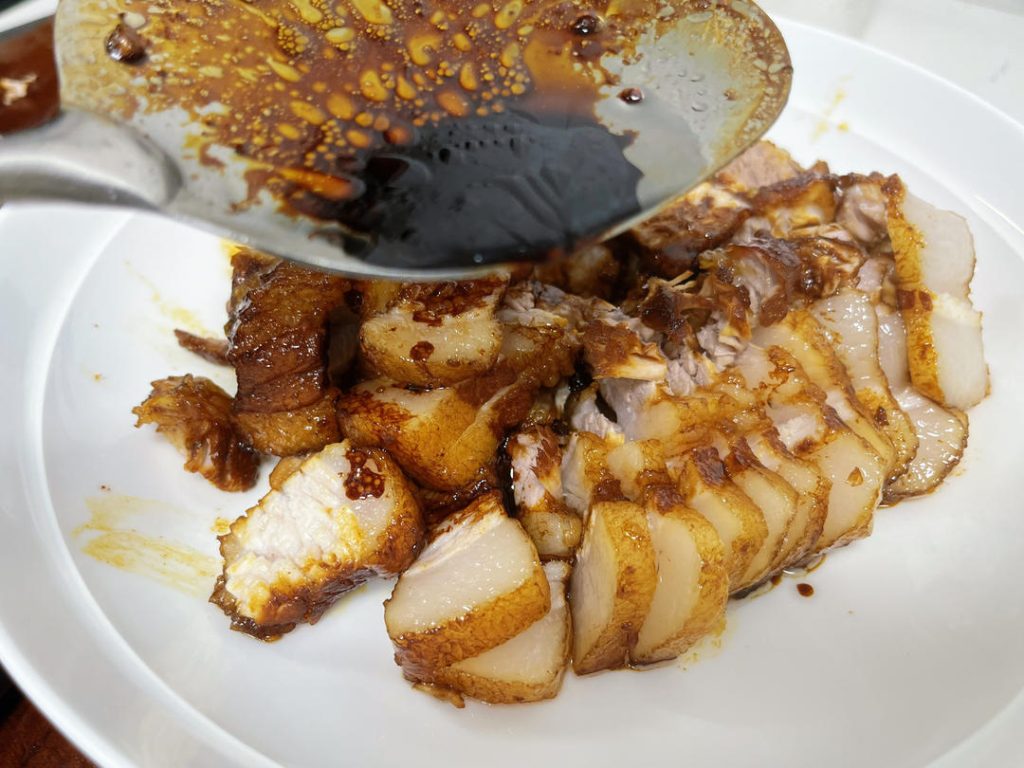
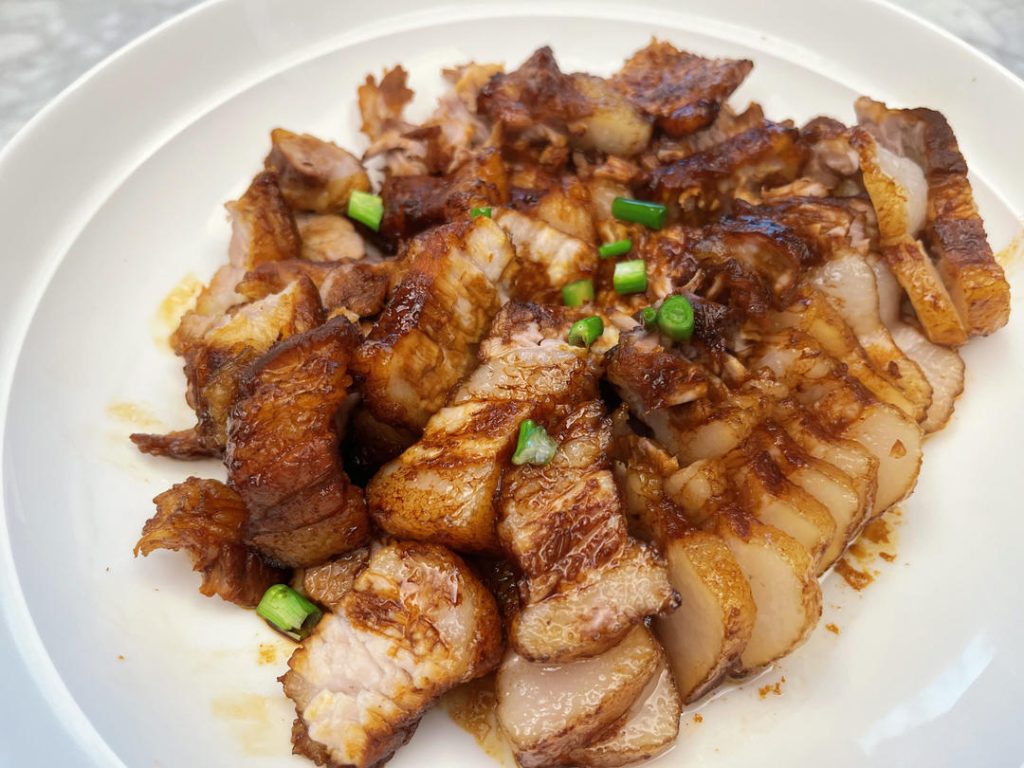
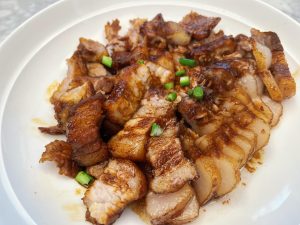
6. Slice and Serve Remove the pork from the pan. Slice it into thick, bite-sized pieces. Arrange them on a plate and drizzle the remaining thickened sauce over the top. Garnish with chopped scallions for a pop of freshness.
Common Mistakes When Making Braised Pork
- Over-reducing the sauce: The sauce contains sugar and soy sauce, which can burn quickly at the end. Once the bubbles become large and slow (the “fish eye” bubble stage), take it off the heat immediately.
- Using too much water: When making the sauce in step 3, don’t use too much broth, or it will take forever to reduce, and the meat might become mushy.
- Cutting the meat too early: Always braise the block of meat whole before slicing. If you slice it before putting it in the sauce, the meat can dry out.
Authoritative References
For more information on the safety of cooking pork, you can refer to the USDA Food Safety and Inspection Service regarding fresh pork preparation. Additionally, understanding the role of fermented soy products can help you appreciate the science behind the flavor profile of this dish.
FAQ & Troubleshooting
Q: Can I use pork shoulder instead? A: Yes, pork shoulder (butt) is a good alternative if you want less fat, but it won’t be as succulent as belly.
Q: My sauce tastes bitter. What happened? A: You likely burned the soy sauce or sugar during the high-heat reduction phase. Next time, lower the heat slightly as the liquid evaporates.
Q: Is this gluten-free? A: Traditional soy sauce contains wheat. To make this gluten-free, use Tamari or a certified gluten-free soy sauce.
Serving Suggestions
This dish is rich and savory, so it pairs perfectly with steamed white rice and a simple vegetable side. I recommend pairing it with:
Nutrition Information (Estimate)
- Calories: 350 kcal
- Protein: 12g
- Fat: 30g
- Carbohydrates: 4g
- Sodium: 650mg
Disclaimer: Nutrition information is calculated using an ingredient database and should be considered an estimate. Garnishes and optional items are not included. Actual values vary depending on the specific brands of ingredients used.
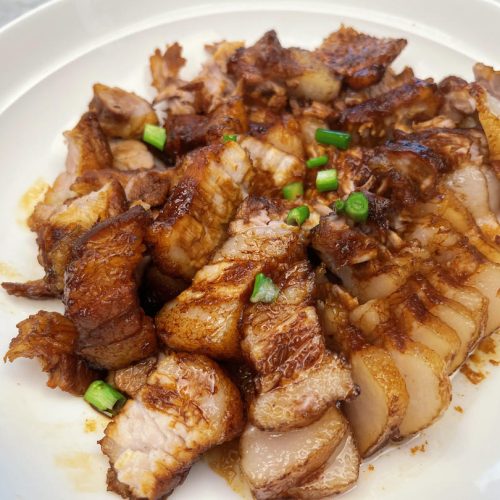
Wenzhou Braised Pork Belly (Lu Rou)

Equipment
- Pot
- Wok or Skillet
Ingredients
Main Ingredients
- 1 lb pork belly skin removed, rinsed
- 2 slices ginger
The Sauce
- 2 tbsp light soy sauce
- 2 tbsp dark soy sauce
- 1 tbsp Shaoxing wine or dry sherry
- 1 tbsp sugar adjust to taste
- scallions finely chopped for garnish
Instructions
- Place the clean, skinless pork belly in a pot with cold water (enough to cover the meat) and the ginger slices.

- Bring to a boil over high heat. Skim off any foam. Reduce heat to low, cover, and simmer for 25 minutes.
- Check doneness by poking the meat with a chopstick; it should pierce through easily. Do not discard the water yet.
- In a separate wok or pan, combine about 1/2 cup (2 large ladles) of the pork cooking broth, light soy sauce, dark soy sauce, Shaoxing wine, and sugar.
- Transfer the boiled pork belly into the wok. Simmer over medium heat for 2-3 minutes, flipping once to coat evenly.
- Turn heat to high to reduce the sauce. Cook until the sauce thickens into a glossy glaze and coats the meat. Leave a small amount of sauce in the pan.
- Remove the pork, slice into bite-sized pieces, plate, and pour the remaining thick sauce over the top. Garnish with scallions and serve.
Notes
Food Safety & Tips
- Ensure the internal temperature of the pork reaches at least 145°F (63°C) after the boiling stage, though for this braise, we cook it longer for tenderness.
- Reheat leftovers in a pan with a splash of water to loosen the glaze.
Nutrition Estimate
Calories: 350kcal | Protein: 12g | Fat: 30g | Carbs: 4g | Sodium: 650mg(Disclaimer: Nutrition information is calculated using an ingredient database and should be considered an estimate. Garnishes and optional items are not included. Actual values vary.)










Leave a Reply