As a busy mom with an energetic 3-year-old running around the house, I rely heavily on quick, reliable, and deeply flavorful stir-fries to get dinner on the table. Lately, I’ve been spending hours in the kitchen testing and refining recipes for my very first upcoming cookbook, and this homestyle Jiang Bao San Ding has been my absolute go-to comfort meal after a long day of writing.
It is incredibly savory, packed with contrasting textures, and pairs so perfectly with a big bowl of steamed rice that my family requests it weekly. Let me show you how to master this simple yet satisfying technique.

What Is Jiang Bao San Ding?
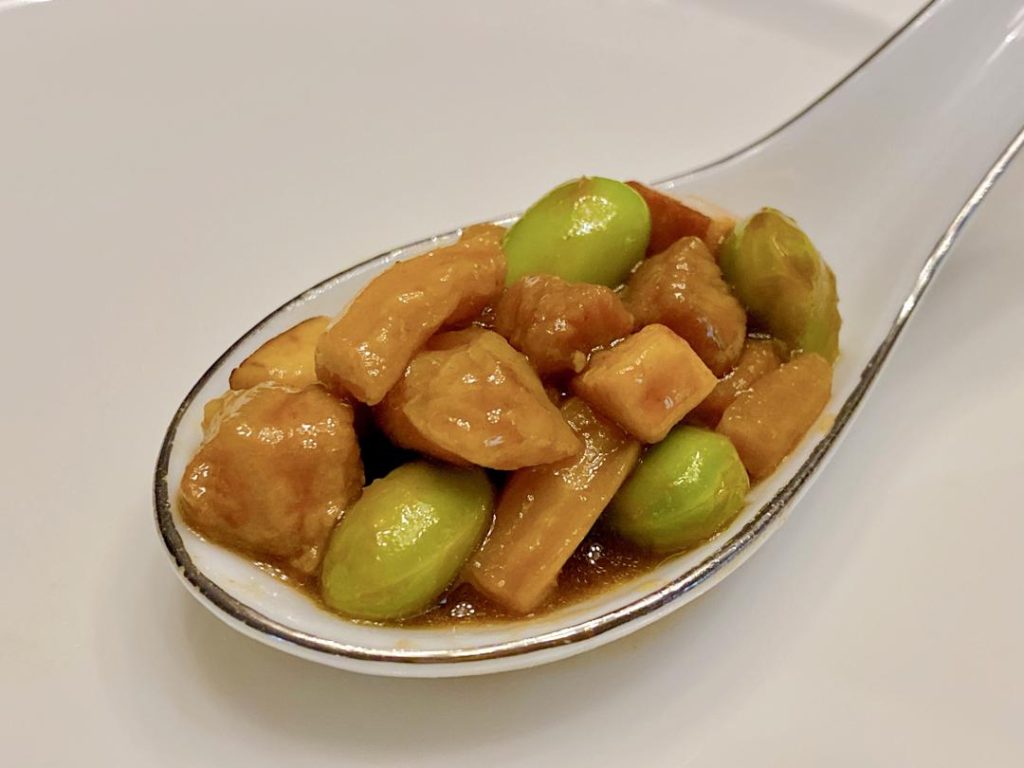
“San Ding” (三丁) literally translates to “three diced ingredients.” In standard traditional preparations, this often refers to a simple vegetable medley of diced potatoes, carrots, and cucumbers. However, homestyle cooking is all about flexibility and adapting to what tastes best. In this version—which honestly features four diced main components—we use green soybeans, lean pork, dried tofu, and pickled radish.
The magic lies in the “Jiang Bao” (酱爆) technique, which means rapid stir-frying with a rich, umami-heavy fermented sauce. It’s a classic Chinese culinary method that coats every single ingredient in a glossy, savory glaze.
If you love the contrasting textures of perfectly diced ingredients coated in a savory sauce, you might also enjoy my Homestyle Kung Pao Chicken. It follows a very similar culinary logic of cutting everything into uniform pieces for a quick, even stir-fry. Another fantastic and efficient dinner option is my Pork Stir-fry with Green Peppers.
Ingredients
The Diced Ingredients:
- Green Soybeans (青黄豆): 150 g (approx. 1 cup)
- Lean Pork (瘦肉): 100 g (3.5 oz)
- Dried Pickled Radish (腌萝卜干): 80 g (3 oz)
- Firm Dried Tofu (豆腐干): 80 g (3 oz)
- Garlic: 5 cloves
- Fresh Chili Peppers: 2 whole peppers (adjust based on heat preference)
The Pork Marinade:
- Cornstarch: 1 tsp
- Light Soy Sauce: 5 g (1 tsp)
- Oyster Sauce: 5 g (1 tsp)
- Shaoxing Wine: 5 g (1 tsp)
The Sauce Mixture:
- Yellow Soybean Paste (黄豆酱): 15 g (1 tbsp) – A local Shaoxing soybean paste yields the best traditional flavor.
- Oyster Sauce: 10 g (2 tsp)
- Light Soy Sauce: 10 g (2 tsp)
- Shaoxing Wine: 10 g (2 tsp)
- Cornstarch: 1 tbsp
- Sugar: 2 g (1/2 tsp)
- Water: 50 ml (3.5 tbsp)
Ingredient Notes
- Dried Pickled Radish (萝卜干): This provides an essential crunchy texture. However, brands vary wildly in salt content. Always taste a small piece raw first. If it is overwhelmingly salty, soak it in cold water for 10-15 minutes to draw out the excess sodium before cooking.
- Yellow Soybean Paste: This paste is fundamentally salty and packed with umami. Because the paste, the oyster sauce, the soy sauce, and the radish all contain sodium, do not add any extra salt to this recipe.
Equipment Needed
- A well-seasoned carbon steel wok or a large non-stick skillet.
- A pot for boiling the soybeans.
Prep & Mise en Place
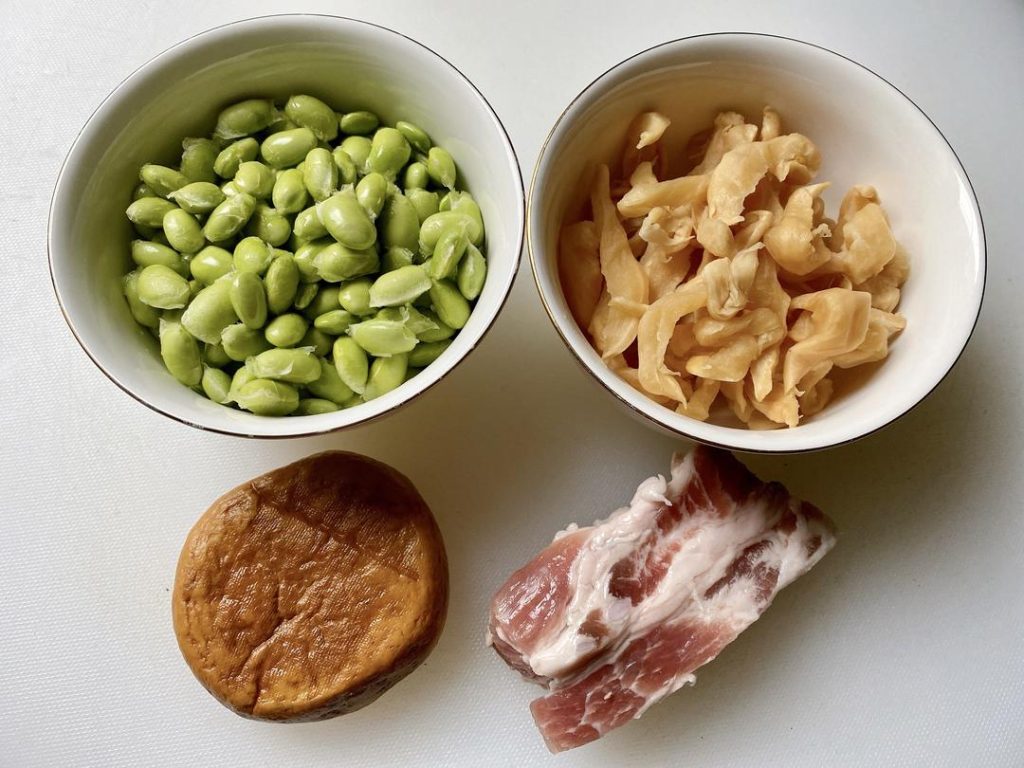
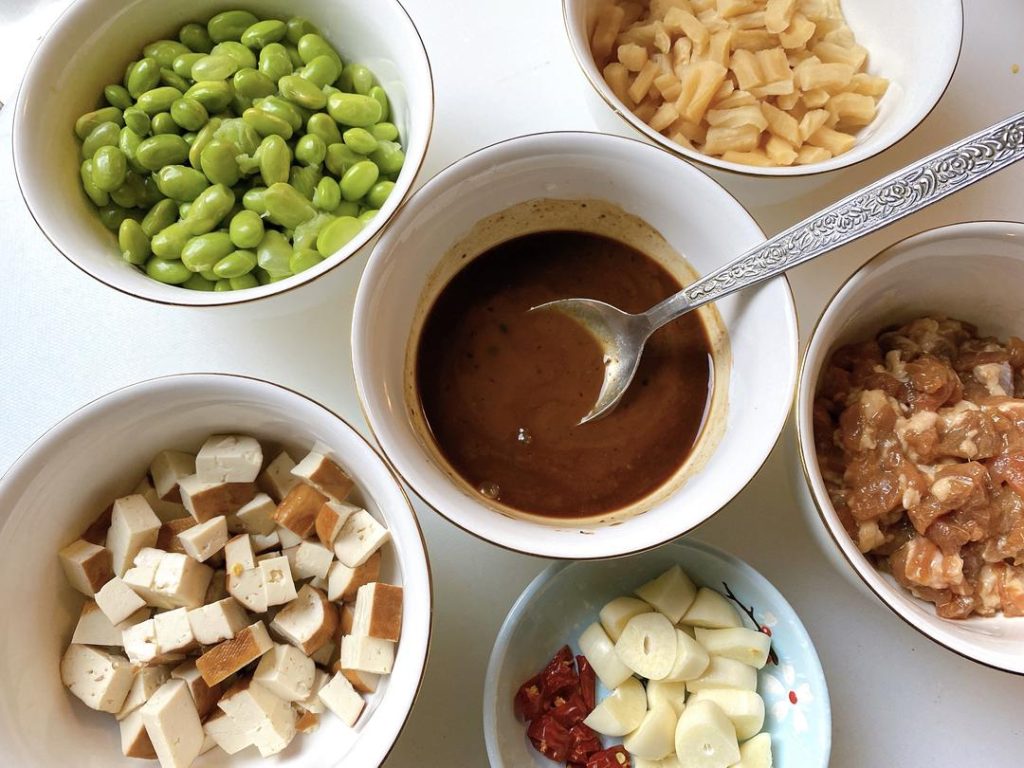
- Uniform Dicing: Wash the soybeans, radish, tofu, and pork. Cut the radish, tofu, and pork into uniform small cubes (about the size of the soybeans). Consistent sizing ensures everything cooks at the same rate and is easy to eat with a spoon.
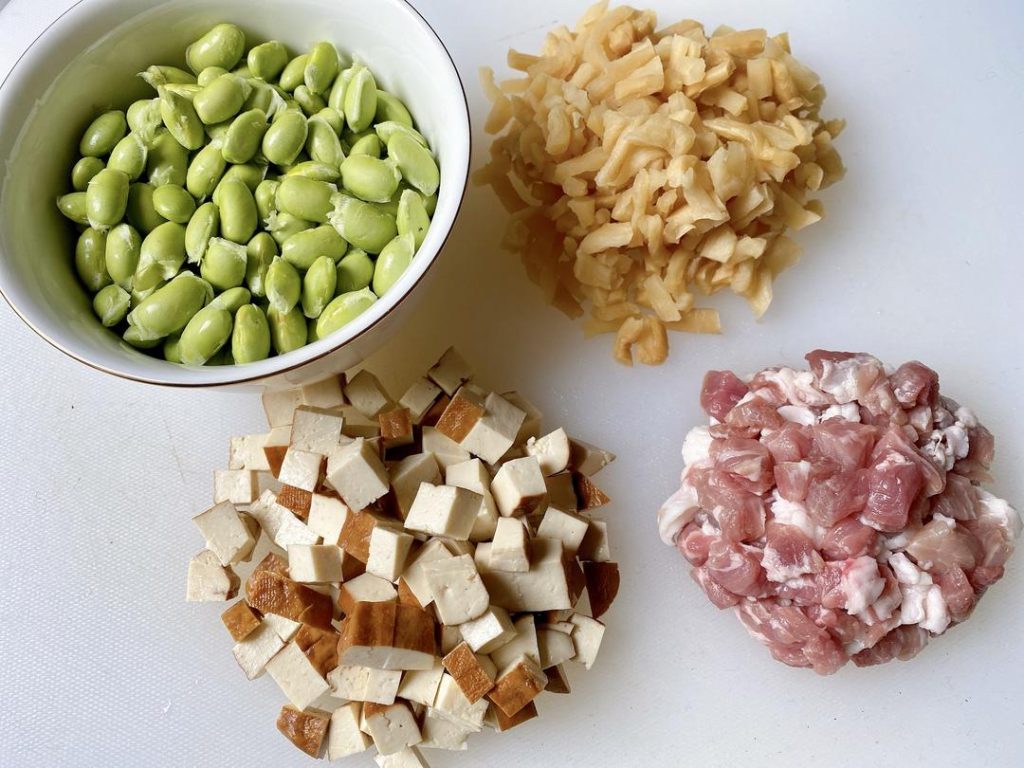
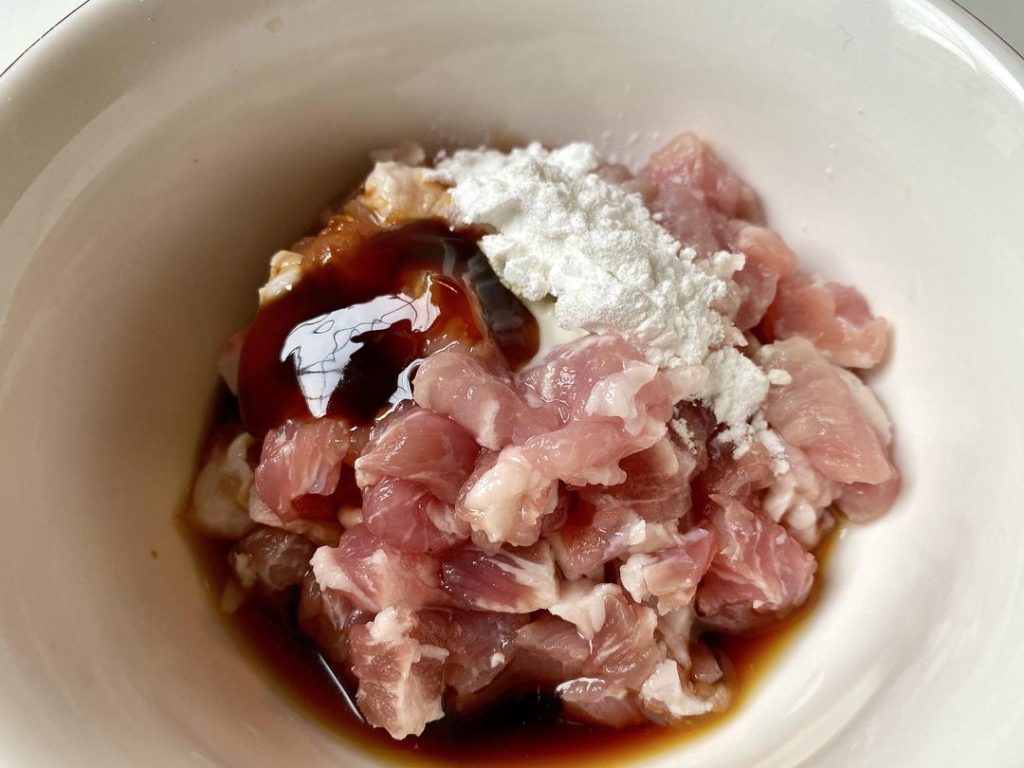
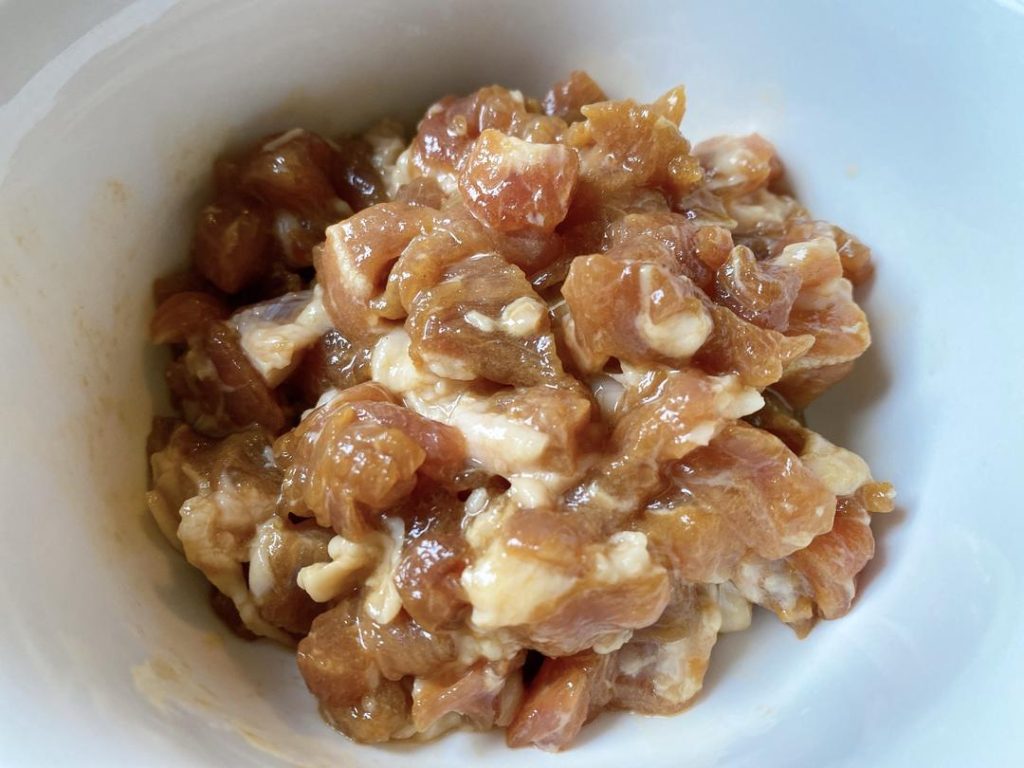
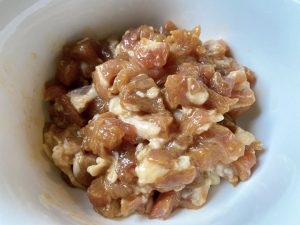
- Marinate the Pork: In a small bowl, thoroughly mix the diced pork with the marinade ingredients (cornstarch, soy sauce, oyster sauce, and Shaoxing wine). Let it sit for 10 minutes. This coats the meat, protecting it from the high heat and keeping it tender.
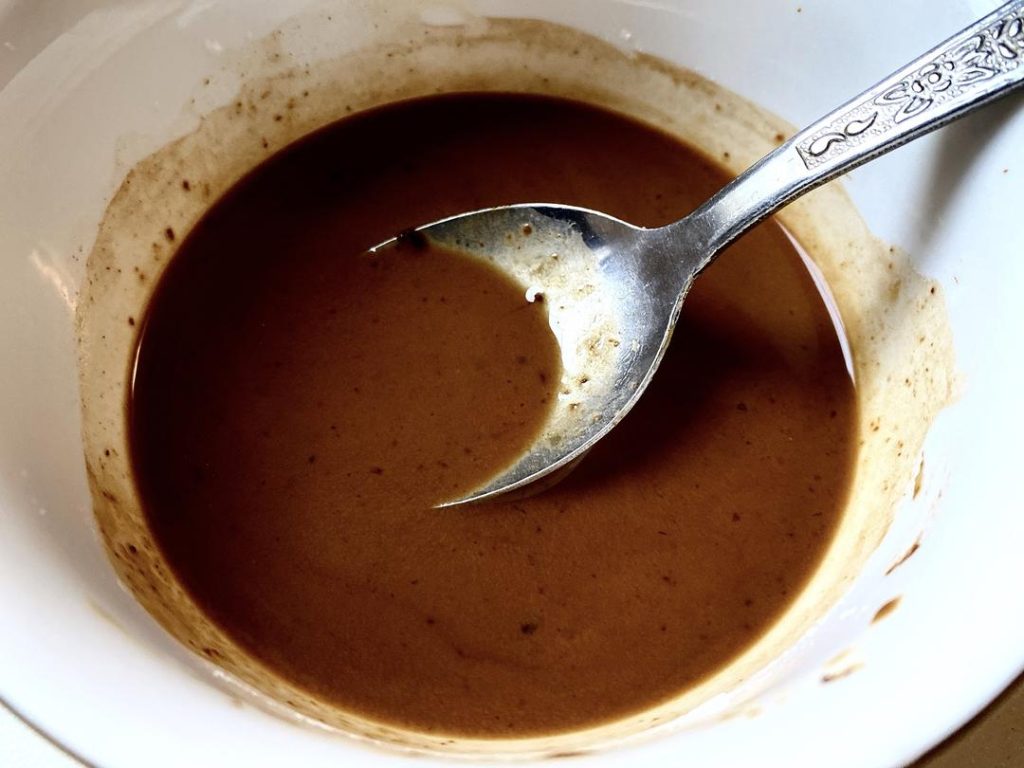
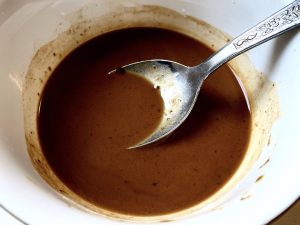
- Mix the Sauce: Combine all the “Sauce Mixture” ingredients in a bowl. Stir well to ensure the cornstarch and sugar are fully dissolved.
Cooking Process
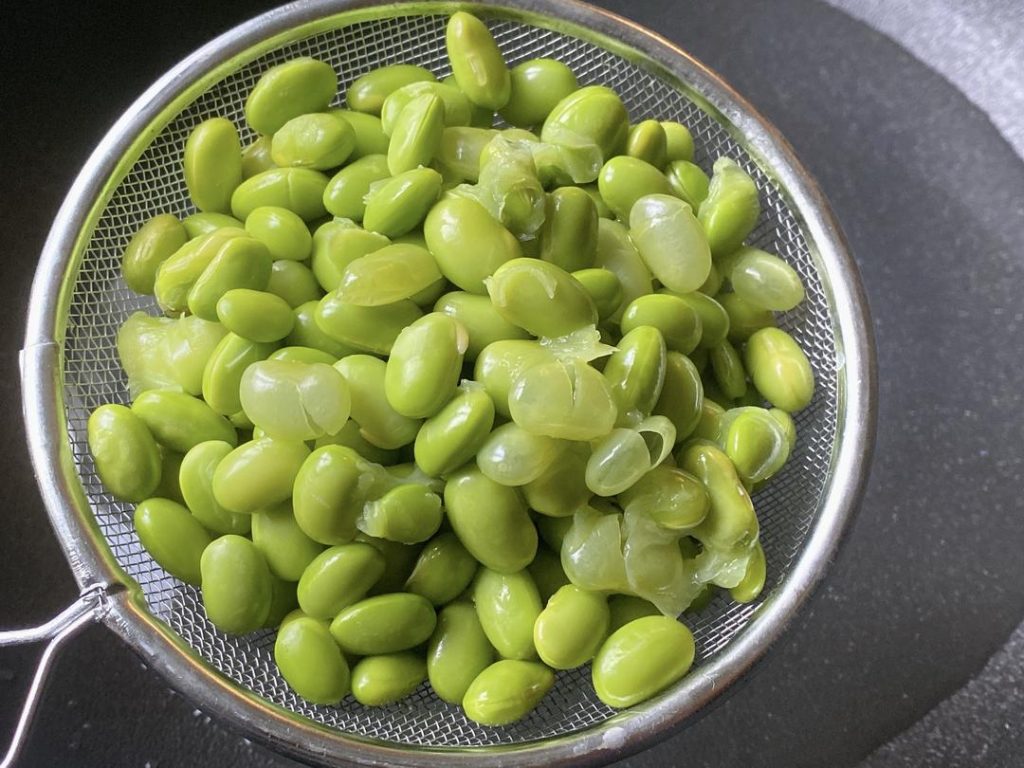
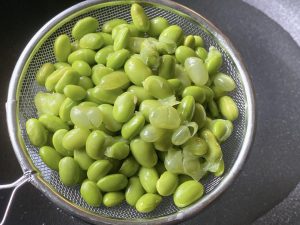
- Boil the Beans (10 minutes): Place the green soybeans in a pot with cold water. Bring to a boil and cook for about 10 minutes until tender. (If using a pressure cooker or heavy-lidded pot, this time will be shorter). Drain well and set aside.

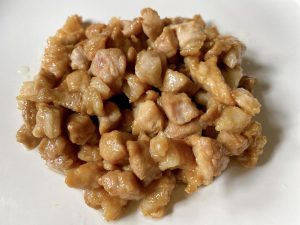
- Sear the Pork (2–3 minutes): Heat 1 to 2 tablespoons of cooking oil in your wok over medium-high heat (around 350°F/175°C). Add the marinated pork and quickly stir-fry until the exterior changes color and is cooked through. Remove the pork from the wok and set it aside.
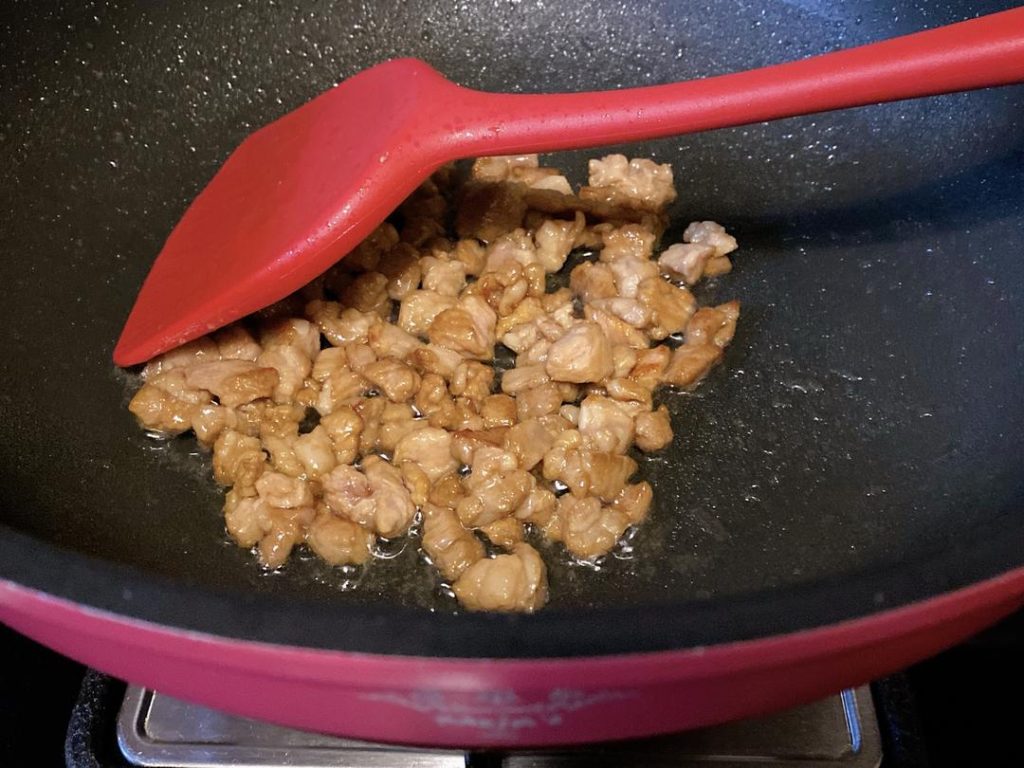
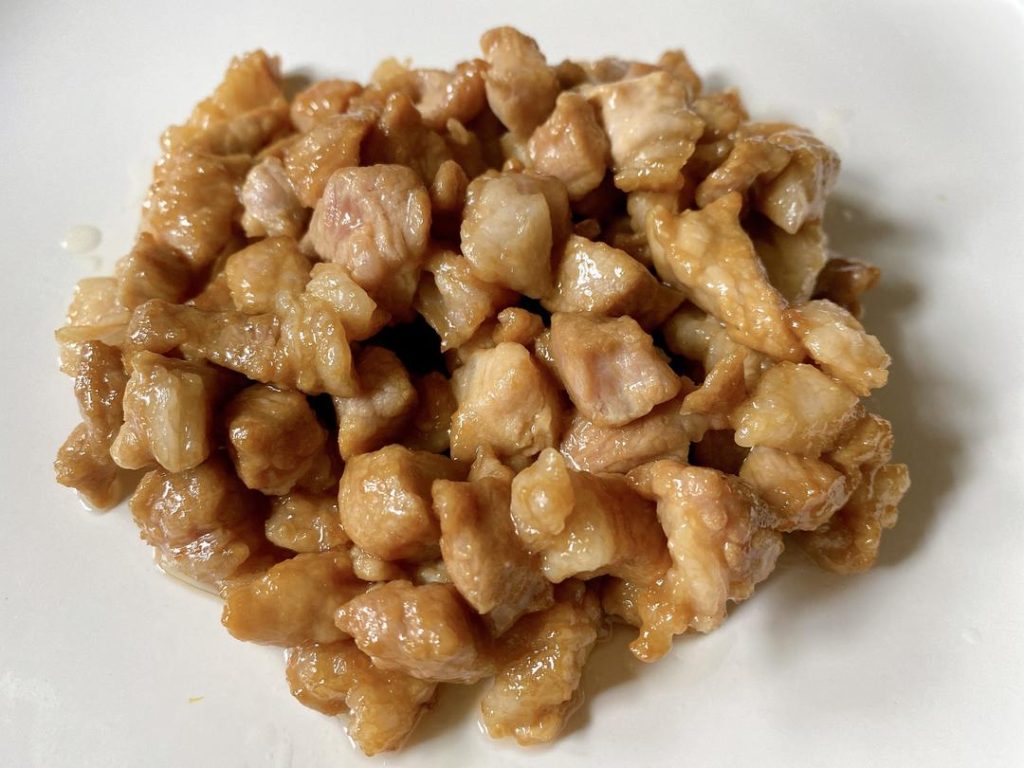
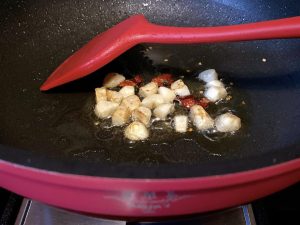
- Sauté Aromatics (1 minute): Mince the garlic and chop the chilies into small segments. In the remaining oil in the wok, add the minced garlic and fry for 30 seconds until fragrant. Add the chilies next. 💡 Tip: Adding chilies slightly after the garlic prevents them from burning and turning bitter.
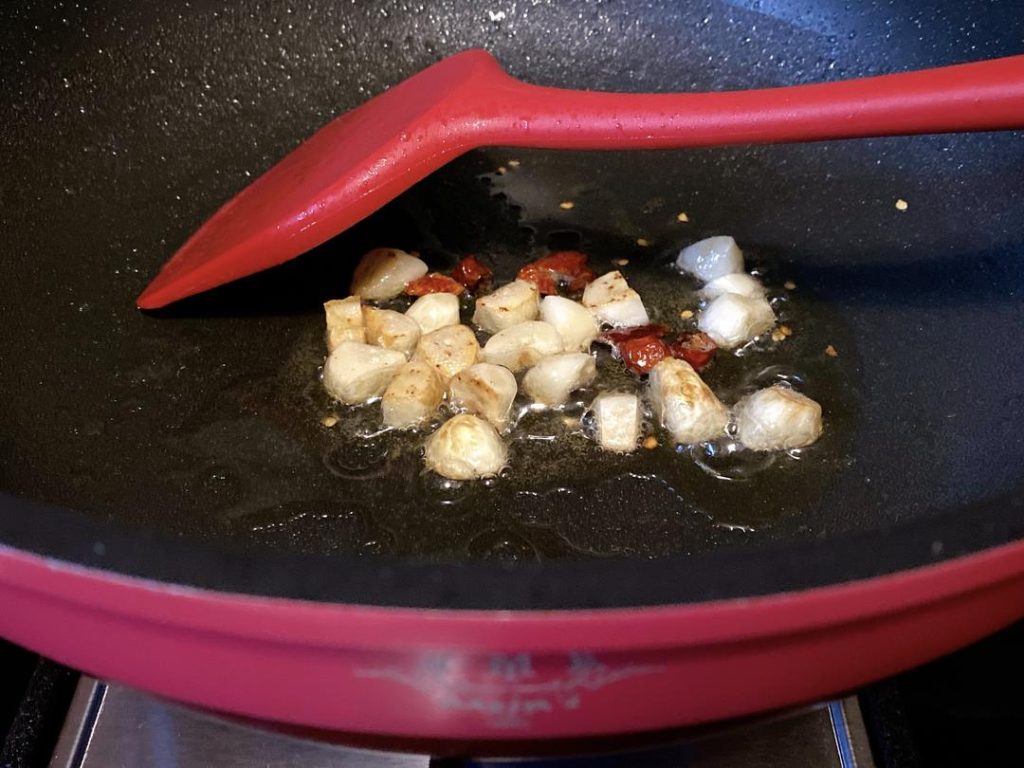
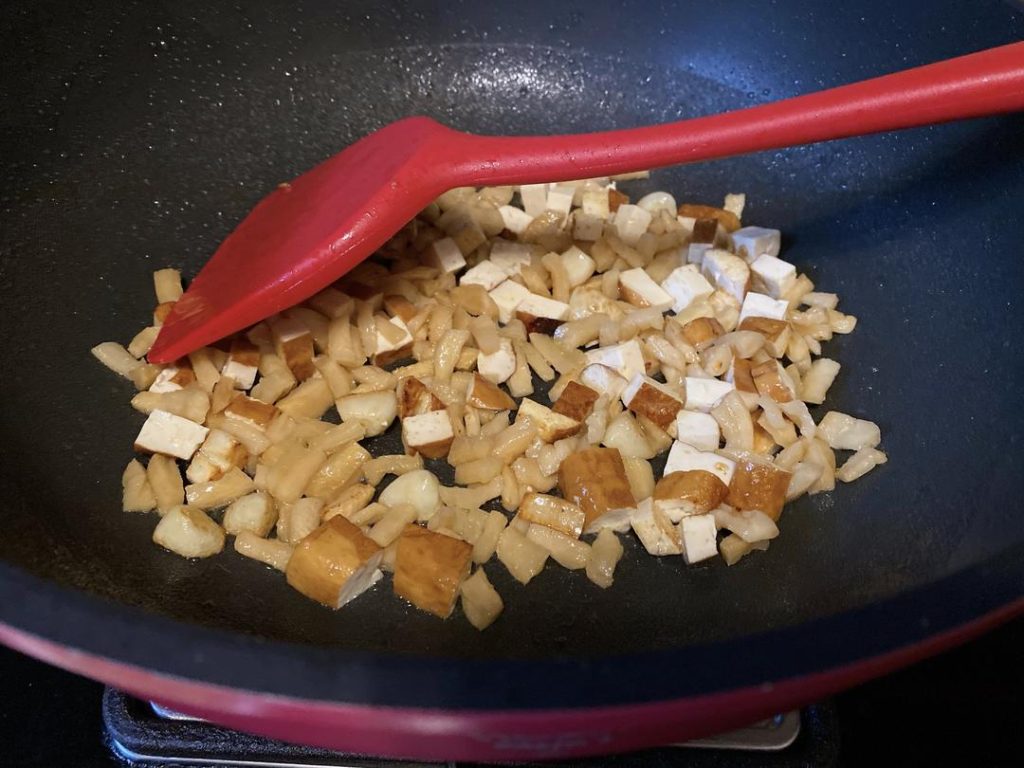
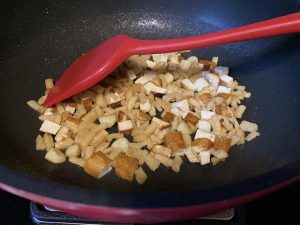
- Stir-fry the Tofu and Radish (2 minutes): Add the diced tofu and radish to the wok. Toss vigorously to release their inherent flavors and absorb the aromatic oil.
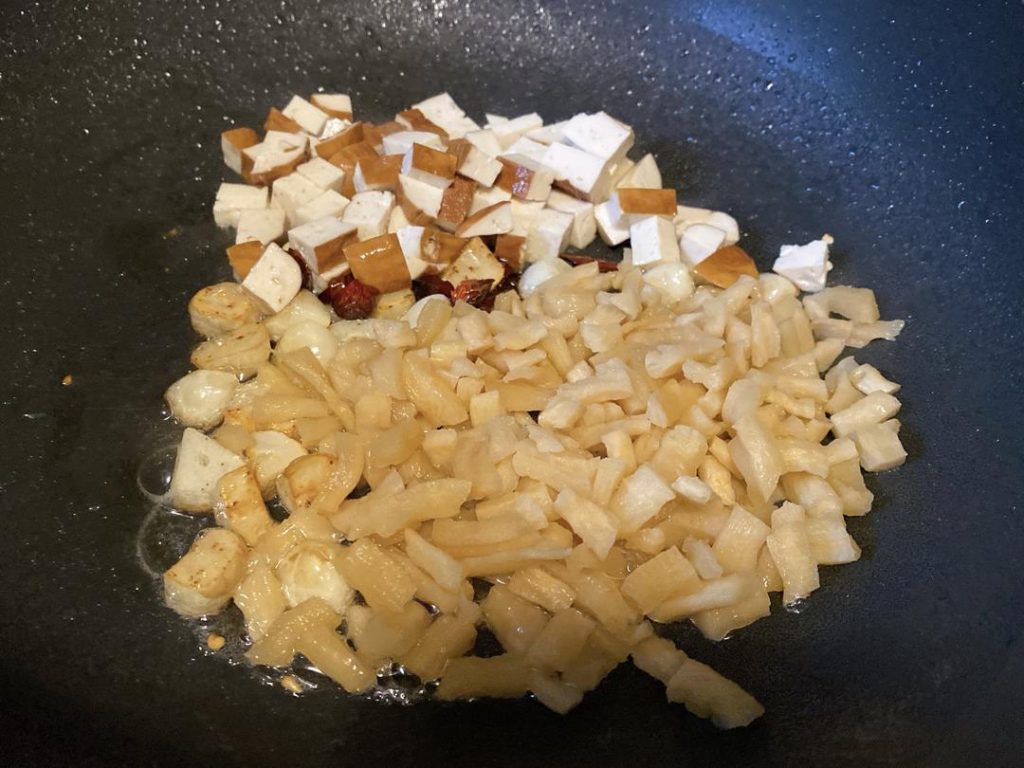
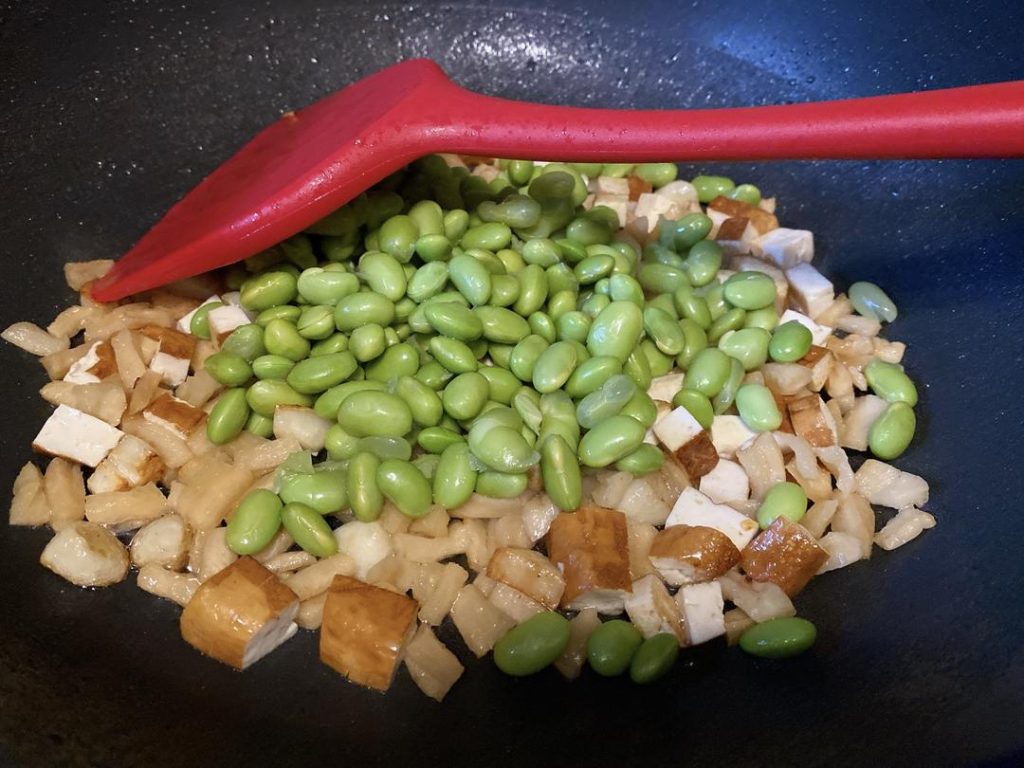
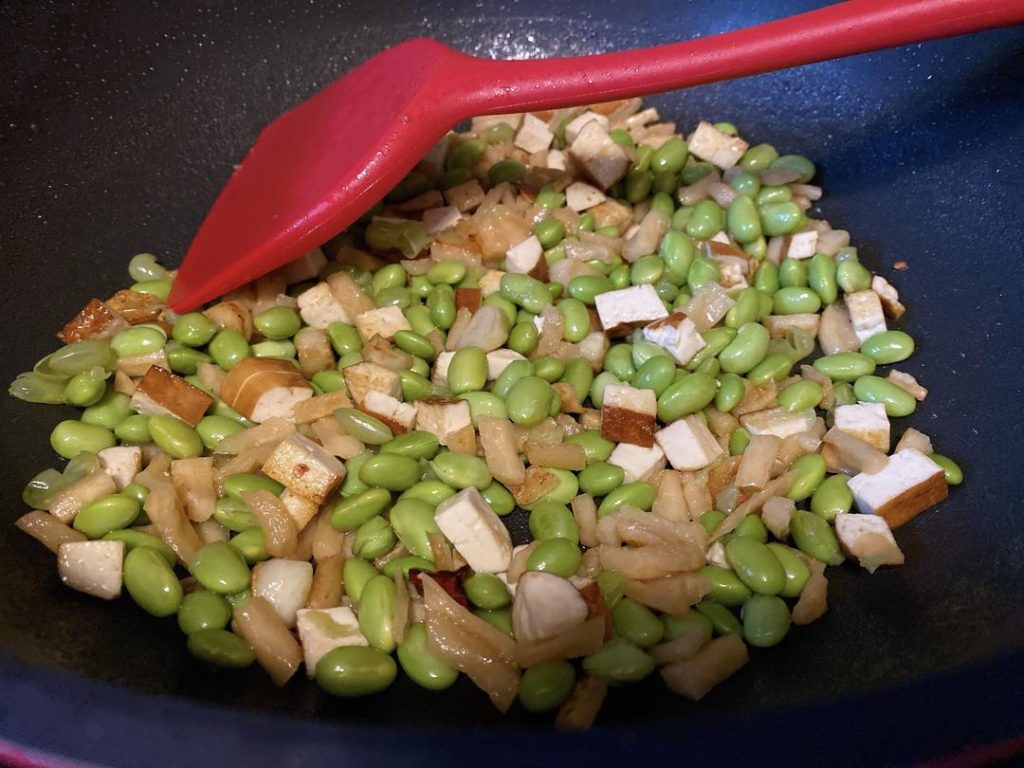
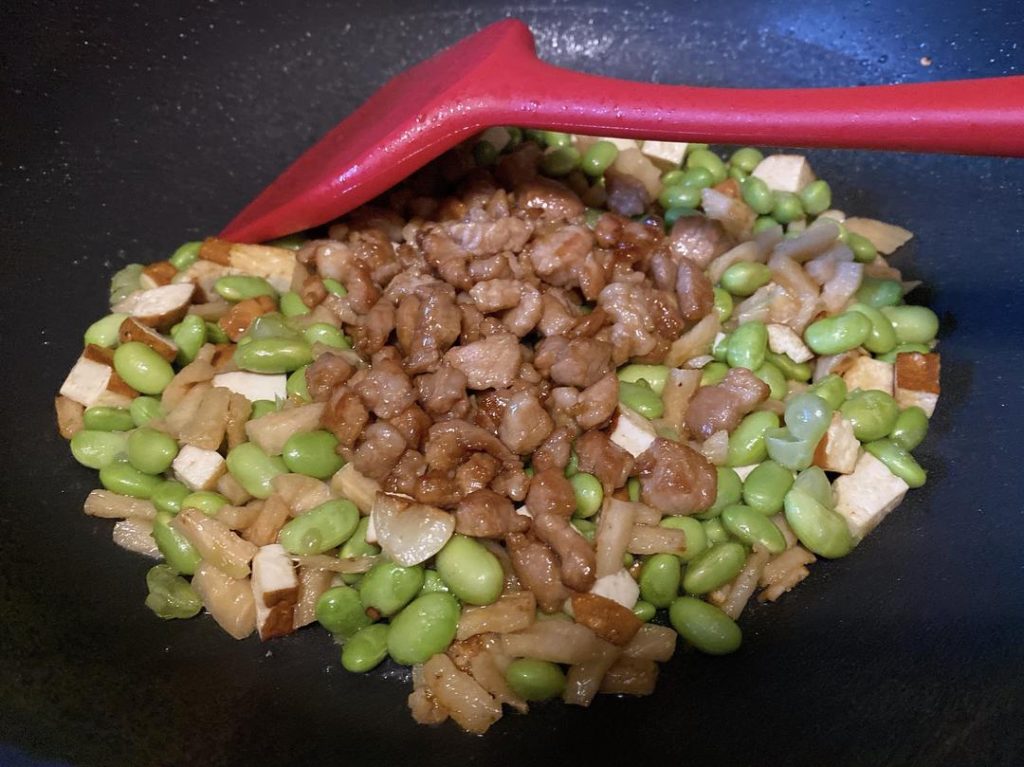
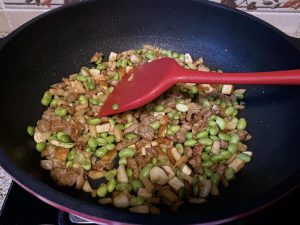
- Combine the Ingredients (1 minute): Toss in the boiled soybeans and stir well. Next, return the cooked pork to the wok. We add the pork at the end because it is already cooked; exposing it to prolonged wok heat will make it tough.
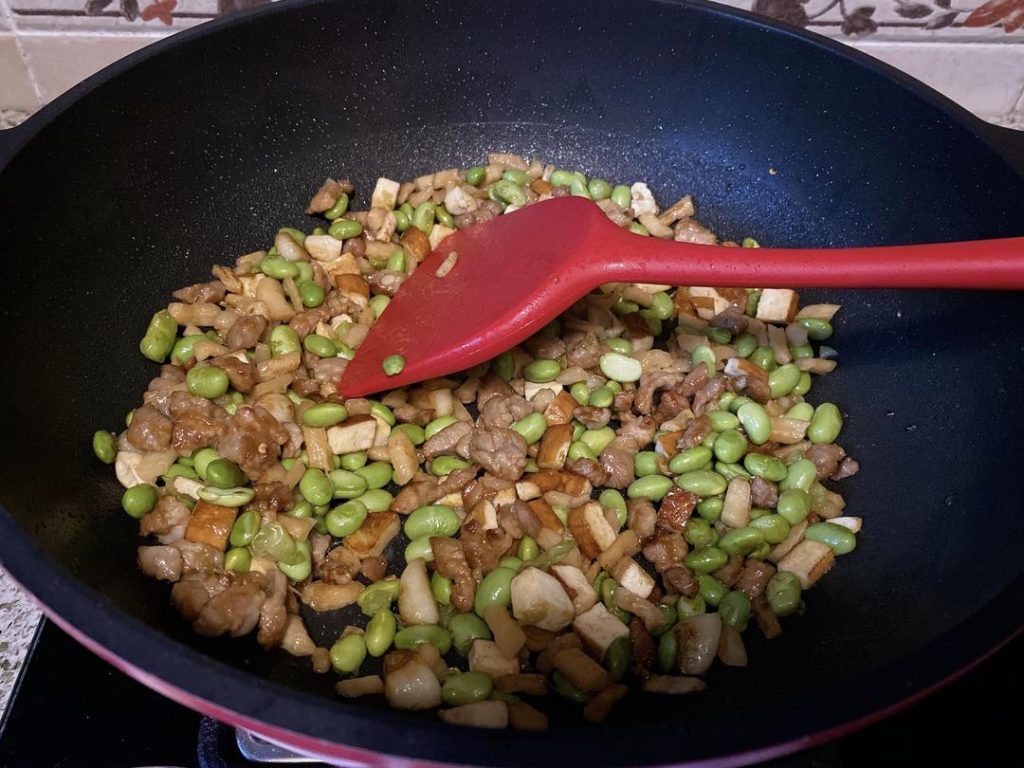
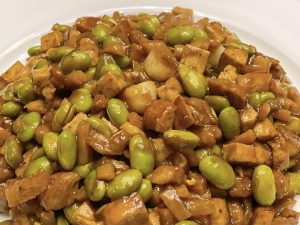
- Glaze with Sauce (1–2 minutes): Give your sauce mixture a quick stir to lift any settled cornstarch from the bottom of the bowl, then pour it over the ingredients in the wok.When the cornstarch hits the heat, it undergoes a process called starch gelatinization. It absorbs the surrounding liquid and swells rapidly, transforming the watery mixture into a glossy, thick glaze that instantly clings to your diced ingredients.
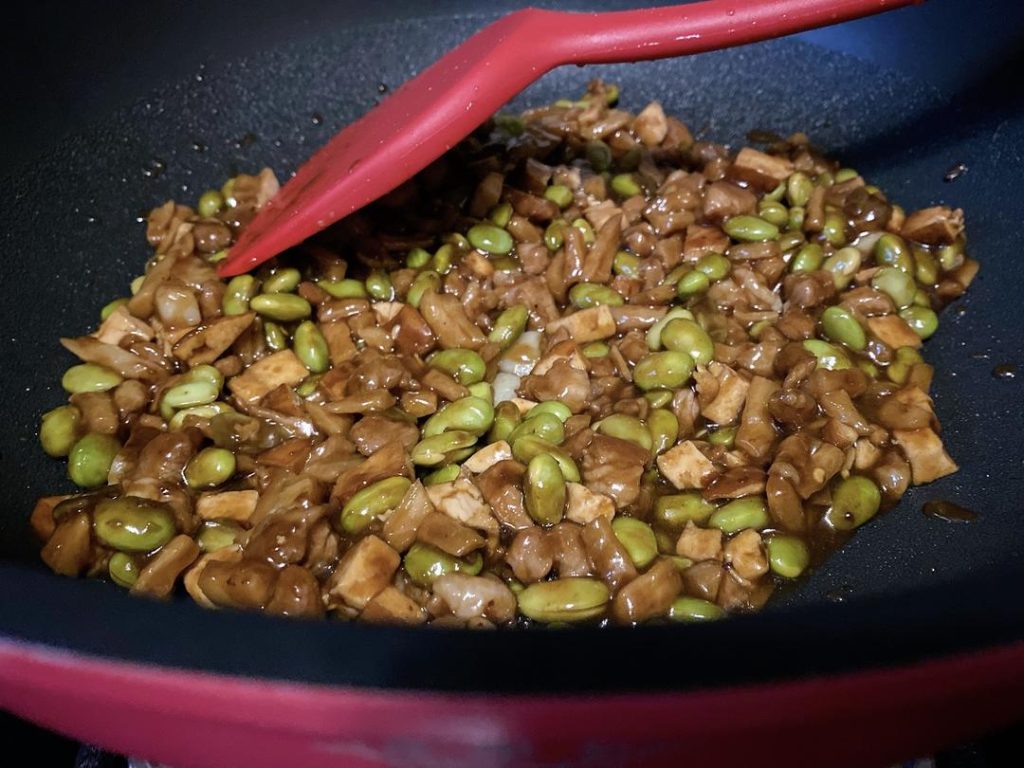
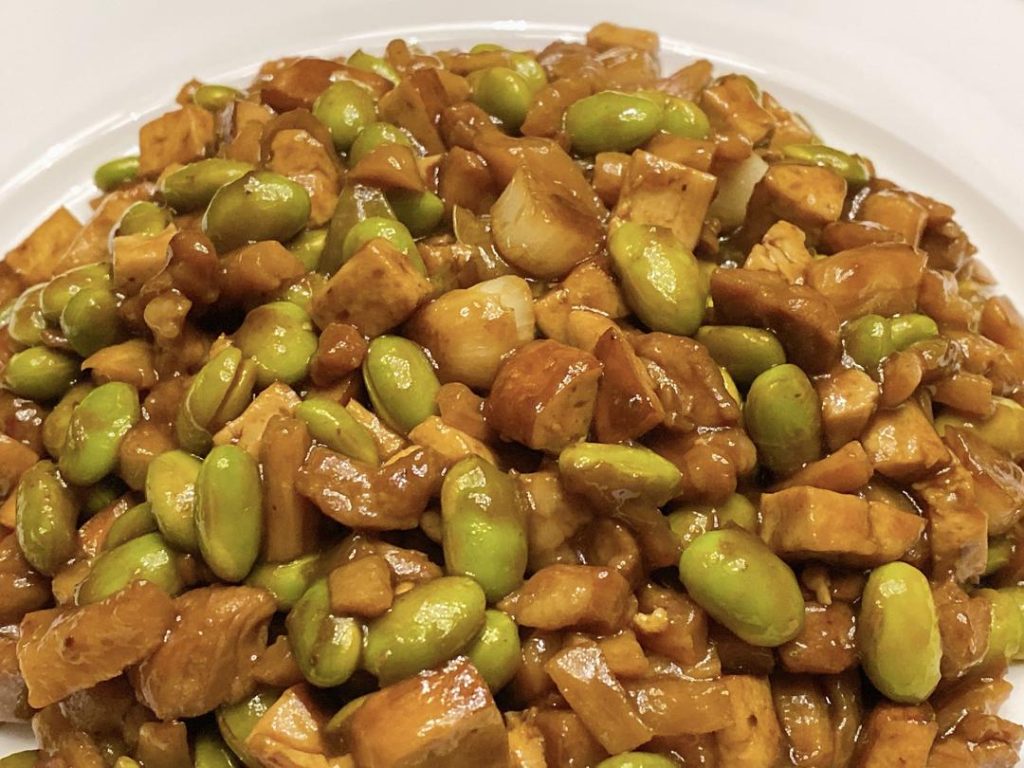
- Final Toss: Simmer and toss for 1-2 minutes until every piece is beautifully coated. If the sauce reduces too quickly and looks dry, add a splash of hot water. Serve immediately.
Why This Recipe Works
- No Additional Salt: By utilizing the natural salinity of the soybean paste, oyster sauce, and pickled radish, the dish achieves a deep, complex umami flavor without the risk of over-salting.
- Textural Harmony: The dish succeeds entirely on its contrasting mouthfeel—the tender bite of the pork, the firm chew of the dried tofu, the soft pop of the beans, and the loud crunch of the pickled radish.
- Phased Cooking: Cooking the pork first and reintroducing it at the very end ensures it remains juicy and melt-in-your-mouth tender rather than chewy and dry.
Common Mistakes & Troubleshooting
- Problem: The dish is way too salty.
- Cause: The pickled radish was heavily salted from the packaging, or extra salt was accidentally added to the sauce.
- Solution: Always taste the raw pickled radish before dicing. If it’s too salty, soak it in fresh water for 15 minutes, then drain. Never add raw table salt to a “Jiang Bao” (酱爆) recipe.
- Problem: The pork is tough and rubbery.
- Cause: Skipping the cornstarch marinade or leaving the pork in the wok during the entire cooking process.
- Solution: The light cornstarch coating acts as a protective barrier against the intense wok heat. Always remove the pork after its initial sear and only add it back during the final sauce reduction.
Frequently Asked Questions
- Can I substitute the green soybeans? Yes! If you can’t find green soybeans, edamame beans, fresh green peas, or even diced cucumber work wonderfully as substitutes.
- Can I use a different type of paste? Yellow soybean paste has a specific savory and slightly sweet profile. If you can’t find it, you can substitute it with Sweet Bean Sauce (Tianmianjiang) mixed with a tiny pinch of regular miso paste, though the flavor will shift slightly.
- Can I make it ahead? Yes, this is an excellent meal-prep dish. The flavors actually meld beautifully in the fridge overnight.
- Is this dish spicy? The base sauce is completely mild. The heat comes entirely from the 2 fresh chilies added during the stir-fry. Omit them completely for a kid-friendly version!
How to Serve
This dish is heavily flavored and practically demands a neutral carbohydrate. Serve it spooned generously over a bowl of freshly steamed white rice. For a complete family-style meal, pair it with a light, simple vegetable side, or follow it up with a classic crowd-pleaser like Sweet and Sour Pork.
Storage & Reheat
- Fridge: Store in an airtight container in the refrigerator for up to 3-4 days.
- Reheat: Microwave on high for 1-2 minutes, or quickly toss it in a skillet with a tiny splash of water until heated through.
- Food Safety: Since this dish contains pork, ensure leftovers are refrigerated promptly.
Allergen Notice
- Soy: Contains multiple soy products (soybeans, tofu, soybean paste, soy sauce).
- Gluten: Most commercial soy sauces and soybean pastes contain wheat. For a gluten-free version, use tamari and a certified gluten-free soybean/miso paste.
Nutrition & Safety Disclaimer
Nutrition information is an estimate and provided for informational purposes only. When cooking pork, ensure it reaches a safe internal temperature to prevent foodborne illness.
About the Author & Recipe Development
Hi, I’m Lin, the recipe developer and writer behind Woks of Love. Right now, alongside sharing my favorite daily recipes with you here, I’m pouring my passion into writing my very first cookbook! Balancing recipe testing with chasing after my 3-year-old son means I heavily value meals that are fast, reliable, and deeply comforting. I lean on this Jiang Bao San Ding recipe constantly because it delivers complex, slow-cooked flavors in a fraction of the time.
Authoritative References
To ensure the utmost safety in your kitchen, it is vital to cook raw meat to the proper temperature. According to the authoritative Safe Minimum Internal Temperature Chart by the USDA Food Safety and Inspection Service, fresh pork should be cooked to a minimum internal temperature of 145°F (62.8°C). When dicing pork finely for a rapid wok stir-fry, it reaches this safe temperature very quickly once it becomes fully opaque and changes color.

Authentic Jiang Bao San Ding (Stir-Fried Diced Pork)

Equipment
- Wok or large skillet
- Saucepan
Ingredients
Main Ingredients
- 150 g green soybeans approx. 1 cup
- 100 g lean pork diced
- 80 g dried pickled radish diced
- 80 g firm dried tofu diced
- 5 cloves garlic minced
- 2 whole fresh chili peppers chopped
Pork Marinade
- 1 tsp cornstarch
- 5 g light soy sauce
- 5 g oyster sauce
- 5 g Shaoxing wine
Sauce Mixture
- 15 g yellow soybean paste
- 10 g oyster sauce
- 10 g light soy sauce
- 10 g Shaoxing wine
- 1 tbsp cornstarch
- 2 g sugar
- 50 ml water
Instructions
- Boil the green soybeans in a pot of cold water for 10 minutes until tender. Drain and set aside.

- Combine the diced pork with the marinade ingredients (cornstarch, light soy sauce, oyster sauce, and Shaoxing wine). Let sit for 10 minutes.
- Mix all the ‘Sauce Mixture’ ingredients in a small bowl until the cornstarch and sugar are dissolved.
- Heat oil in a wok over medium-high heat. Stir-fry the marinated pork for 2-3 minutes until the color changes. Remove the pork and set it aside.
- In the remaining oil, sauté the minced garlic for 30 seconds, then add the chopped chilies.
- Add the diced tofu and pickled radish. Stir-fry for 2 minutes.
- Add the boiled soybeans and return the cooked pork to the wok. Toss to combine.
- Pour in the prepared sauce mixture. Simmer and stir for 1-2 minutes until the sauce thickens and coats all ingredients evenly. Serve immediately.










Leave a Reply