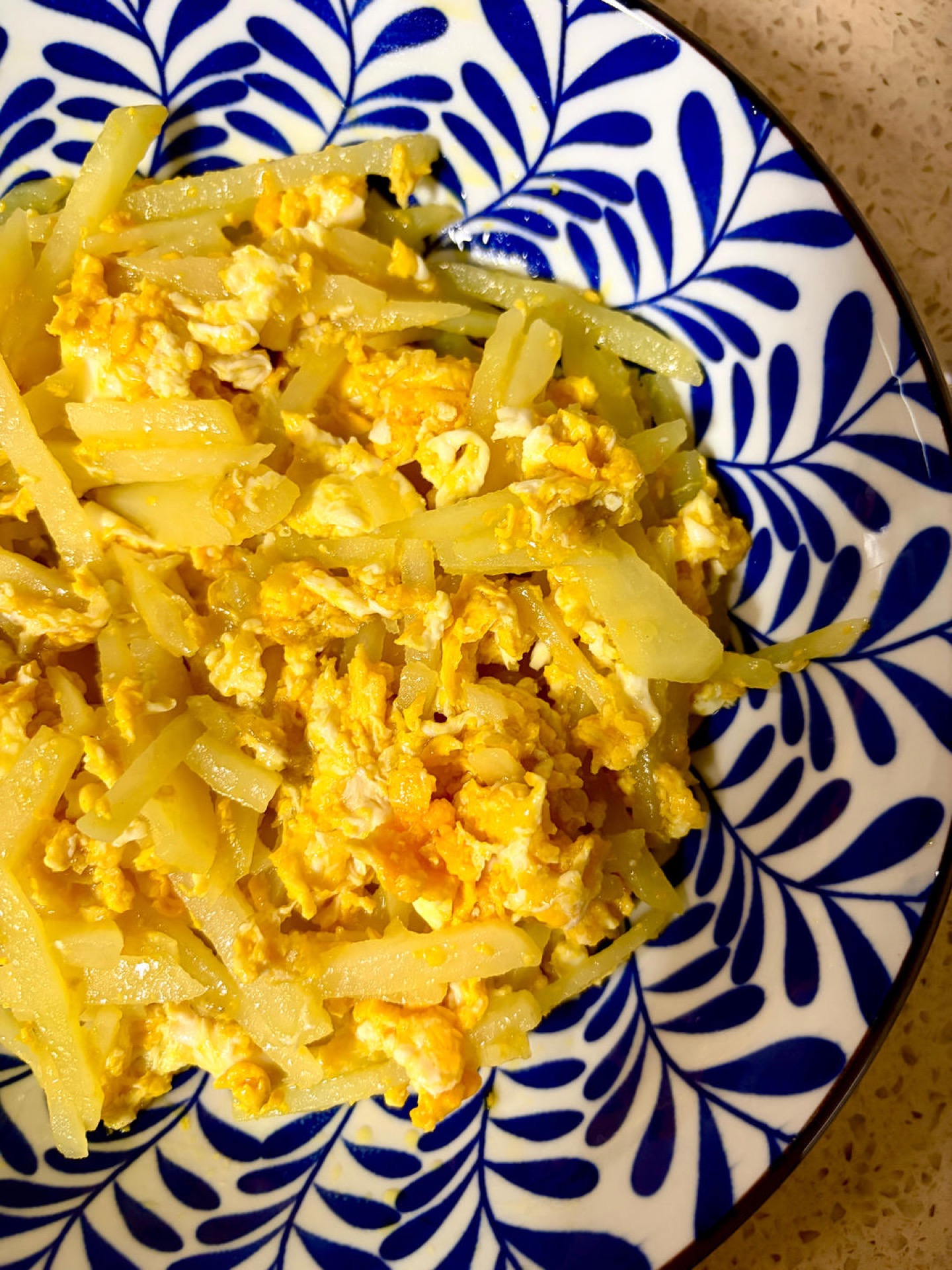
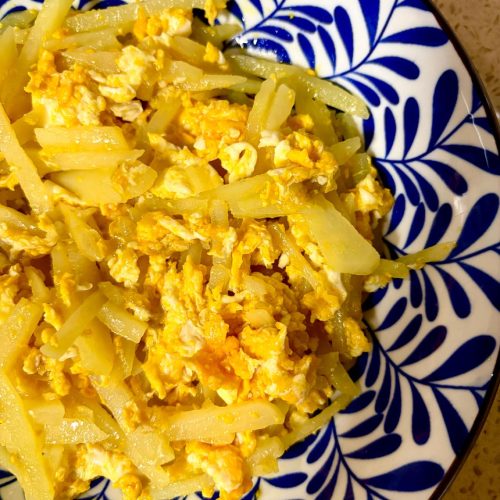
Some dishes announce themselves. This one does not. Stir-fried potato and egg looks like nothing much on the plate — pale gold strands, soft yellow curds, a little shine of oil — and then you take a bite and suddenly the rice bowl is empty. It is the kind of food that shows up on a Chinese family table three times a day, three hundred and thirty-five days a year, never photographed, never ordered in restaurants, and always finished.
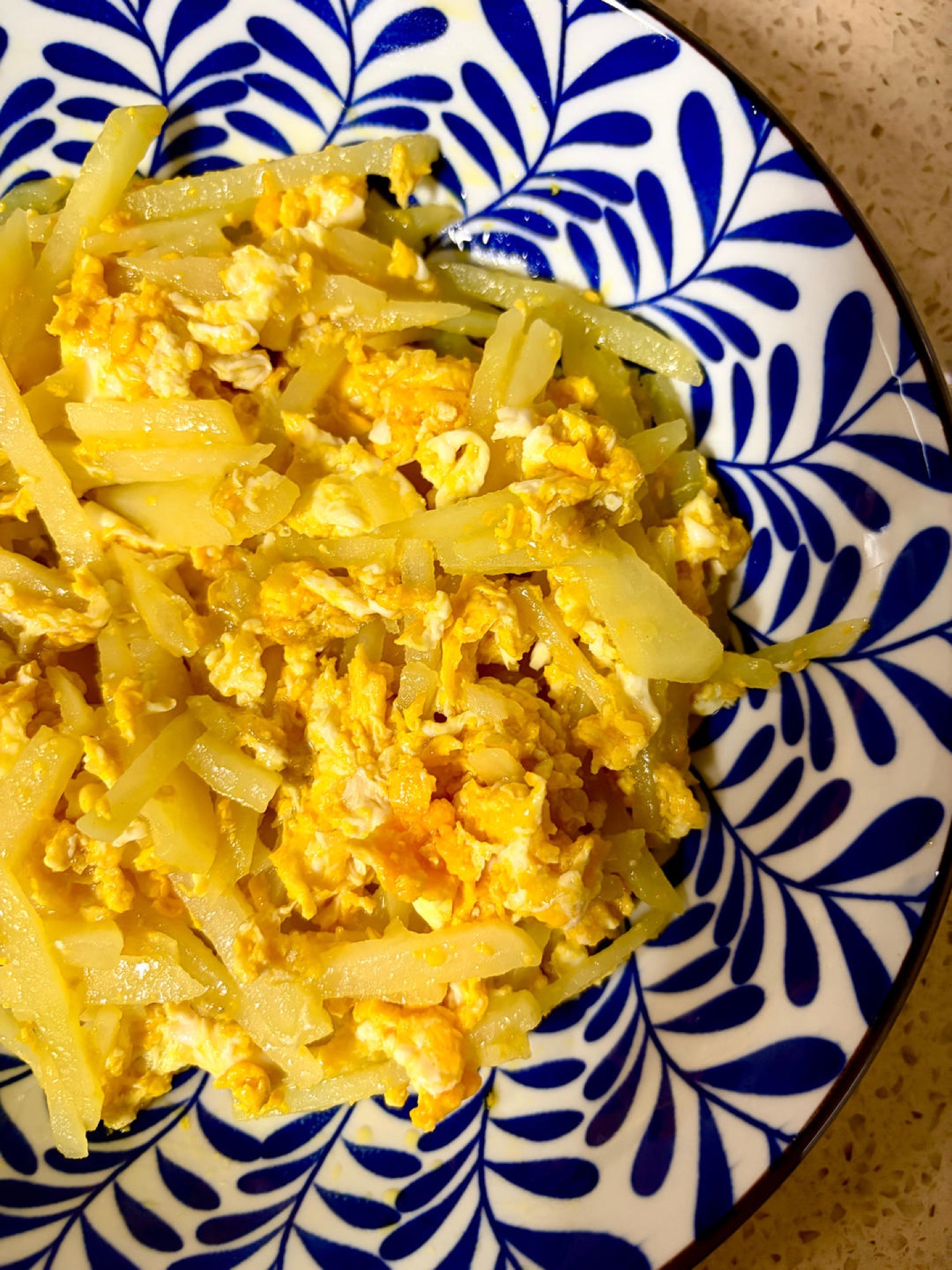
What makes it work is the contrast in texture: potato that has gone silky and yielding, egg that stayed fluffy and tender, both coated in the same light savory glaze. Nothing is crisp, nothing is crunchy, and that is entirely the point. It is comfort food in the plainest possible sense.
It is also fast. From a cold pan to the table is about twenty minutes of actual cooking, and most of that time the potato is quietly simmering while you clean up. If you already know how to get started cooking Chinese food, you already have everything this recipe needs.
What Is Stir-Fried Potato and Egg?
Stir-fried potato and egg — 土豆炒鸡蛋, tudou chao jidan — is a home-style Chinese dish (家常菜) made from julienned potato and scrambled egg, cooked quickly in a wok with a splash of water, salt, and a pinch of MSG. It belongs to the same family of everyday egg stir-fries as tomato and egg or cucumber and egg: cheap, fast, vegetable-forward, and designed to be eaten with plain steamed rice.
The technique is a little unusual for a stir-fry. Instead of frying the potato hard, you add hot water partway through and let the strands steam until they soften and the liquid reduces to a glaze. That is what gives the dish its signature texture — potato that is tender all the way through but still holds its shape as delicate strands rather than collapsing into mash.
In Chinese home cooking, potato is treated as a vegetable, not a starch. That is why it can share a plate with rice without anyone thinking twice about it — the potato is the vegetable course, and the rice is the rice.
Because the ingredient list is so short, the dish is a good place to practice fundamentals: how hot your wok should be, how to scramble egg so it stays soft, and how much water a stir-fry actually wants. Get those right here and they carry over to everything else you cook.
Egg proteins set at around 63°C (145°F) and turn rubbery quickly past 80°C (176°F), which is why Chinese cooks scramble eggs first, remove them from the wok, and add them back only at the very end. The residual heat of the finished dish finishes the cooking without over-coagulating the proteins.
If you like this kind of cooking, my stir fried rice noodles is the closest recipe on the site — the same technique and the same pantry.
1Authentic Stir-Fried Rice Noodles (Chao Mi Fen): Chef’s SecretLearn a professional chef’s secret ‘Tan’ method for perfectly bouncy, non-mushy Authentic Stir-Fried Rice Noodles (Chao Mi Fen). An easy 25-minute weeknight dinner.Check out this recipe
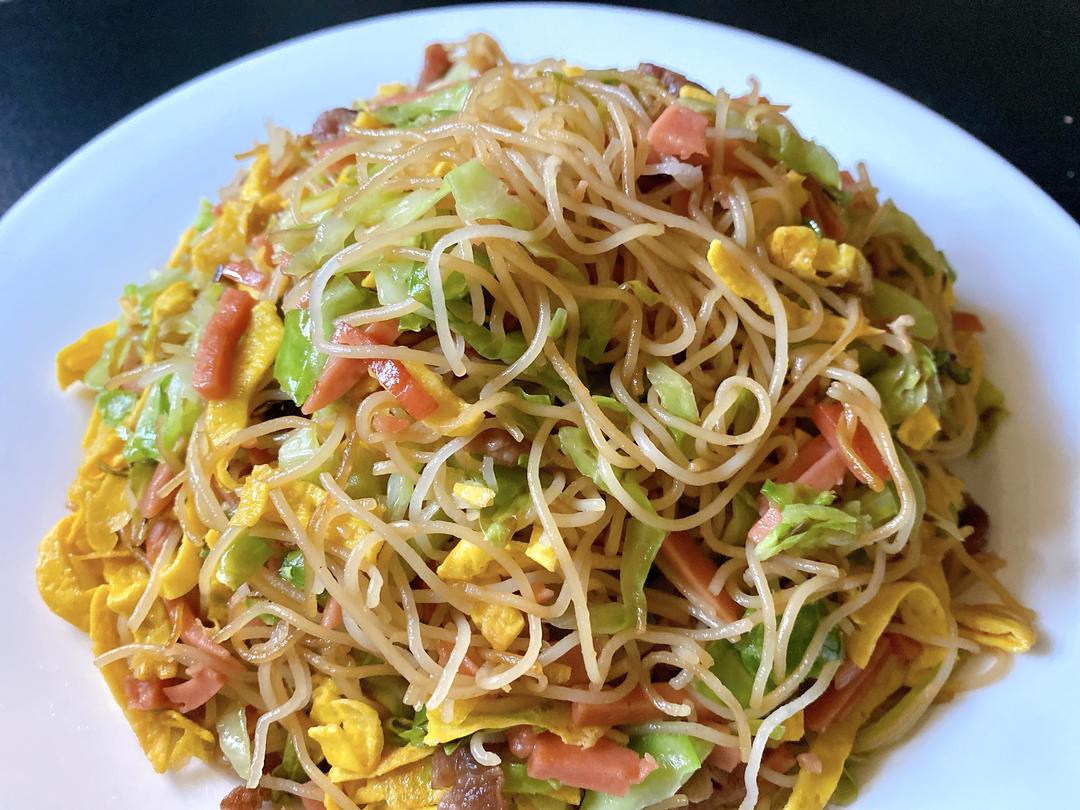
If you like this style of quick, egg-based stir-fry, the same instincts show up in broccoli egg fried rice, where egg and vegetable are folded through rice instead of served alongside it.
215-Minute Broccoli Egg Fried Rice (Xi Lan Hua Chao Fan)A healthy, low-calorie alternative to traditional fried rice. By swapping out a portion of the rice for finely chopped broccoli, you get a highly nutritious, volume-packed meal that is perfect for a quick weeknight dinner.Check out this recipe
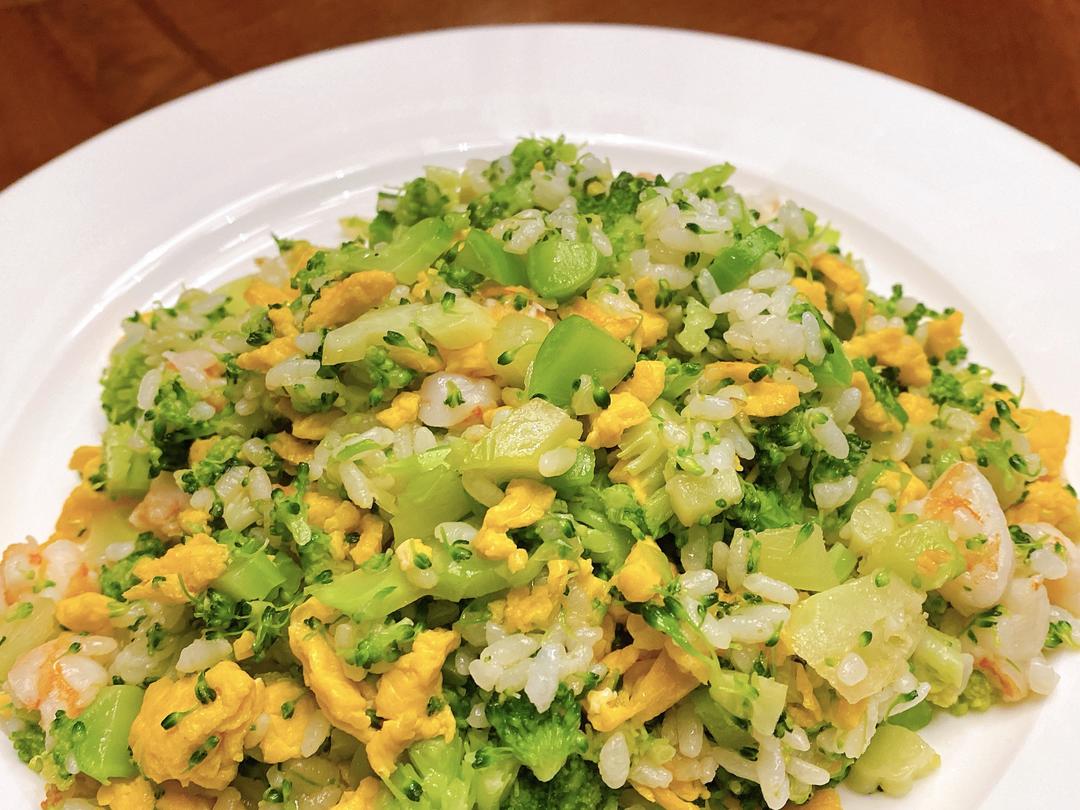
Another dish that leans on the same soft-texture logic is black truffle beef fried rice, where the egg is cooked gently so it stays creamy rather than dry.
3Black Truffle Beef Fried RiceThis Black Truffle Beef Fried Rice is a quick luxury meal that uses the natural fat from beef patties to flavor the rice, combined with the earthy aroma of truffle sauce and savory mushrooms. Ready in under 20 minutes!Check out this recipe

Ingredient Notes
Potatoes. Any all-purpose or waxy potato works. Waxy varieties hold their shape better after julienning, so they are the safer choice if you have a choice. Russets will work but soften faster, so pull them off the heat a minute earlier. Two medium potatoes, about 1 pound or 450 grams total, is the right amount for three eggs.
Cutting the potato. Julienne means matchsticks roughly 2-3mm thick and 5cm long. A mandoline makes short work of it, but a sharp knife and a steady hand is fine. The size matters more than the perfection: uneven strands cook unevenly, and the thin ones will turn to mush while the thick ones stay raw.
Eggs. Three large eggs, beaten until the whites and yolks are fully combined. Beating thoroughly matters more than people expect — streaks of unbroken white will scramble into rubbery patches. A pinch of salt in the egg mixture seasons from the inside.
Oil. A neutral vegetable oil, peanut oil, or any mild-tasting oil. Do not use olive oil here; its flavor fights the dish. You need a little more oil than feels comfortable, because both the egg and the potato need a proper film to keep from sticking.
Hot water. This is the one ingredient people forget to prepare. Have about a third of a cup of hot water ready before the potato hits the wok. Cold water will drop the pan temperature and turn the stir-fry into a stew.
Salt and MSG. MSG is traditional here and is what gives the dish its rounded, savory depth. If you prefer to skip it, add an extra teaspoon of light soy sauce instead. Either way, season the potato while it is still in the pan and the water has reduced, so the seasoning clings rather than pooling.
Ingredients
- 2 medium potatoes (about 1 lb / 450g), peeled and julienned
- 1 tsp salt, for the soaking water
- 3 large eggs, beaten with a pinch of salt
- 1 tbsp vegetable oil, for scrambling the egg
- 2 tbsp vegetable oil, for the wok
- 1/3 cup hot water, plus more if needed
- 1 tsp salt, or to taste
- 1/4 tsp MSG (optional but traditional)
- 1 tsp light soy sauce (optional)
If you want to build the rest of the meal around this, a plate of pan fried pork belly alongside it makes a very complete dinner.
Equipment Needed
- Wok or large skillet. A carbon steel wok is ideal for the high heat and quick tossing, but a wide nonstick or stainless skillet works fine. The key is surface area — you want the potato in a relatively thin layer, not piled up.
- Cutting board and sharp knife. Or a mandoline if you have one. A dull knife makes julienning potatoes genuinely dangerous; the blade slips on the hard, smooth surface.
- Slotted spoon or spider. For lifting the scrambled egg out of the wok and leaving the oil behind.
- Bowl for the eggs and a bowl of cold water for soaking the potato.
- Wok spatula. A metal chuan or a sturdy silicone spatula, whichever suits your pan surface.
Why This Recipe Works
The method solves the central problem of cooking potato and egg together: they need completely different treatment. Egg wants seconds of high heat and then it is done. Potato wants minutes of gentle moisture to soften through. If you cook them together from the start, you get rubbery egg and raw potato.
So the recipe splits them. The egg gets scrambled first, fast, in hot oil, and comes out while it is still slightly underdone. The potato then gets the wok to itself, first with a quick fry to coat the strands in oil, then with hot water to steam them tender. Only when the potato is soft and the water has cooked away does the egg come back.
That final reunion is quick — just enough tossing to warm the egg through and coat everything in the same glaze. The egg never sits in liquid, so it never weeps or turns spongy.
The soaking step is the other quiet trick. Rinsing the julienned potato removes surface starch, which is what causes strands to fuse into a sticky mass in the pan. Soak for at least ten minutes, rinse until the water runs clear, and drain well. This is the same principle behind authentic stir fried rice noodles, where rinsing and draining keeps the strands separate.
Prep & Mise en Place
This dish moves fast once the wok is hot, so set everything up before you turn on the burner.
- Soak the potato. Peel the potatoes, cut them into 2-3mm julienne, and drop them straight into a bowl of cold water with a teaspoon of salt. Let them soak for at least 10 minutes (up to 8 hours in the refrigerator if you are prepping ahead), then drain and rinse under running water until the water runs clear. Drain very well and pat dry if you have time — wet potato splatters in hot oil.
- Beat the eggs. Crack three eggs into a bowl, add a pinch of salt, and beat until completely uniform. Set the bowl next to the stove.
- Measure the water. Have 1/3 cup of hot water ready in a small cup or measuring jug, within arm’s reach of the wok.
- Pre-measure the seasonings. Salt and MSG in a small dish, soy sauce in another if you are using it. Once the potato is in the pan you will not have a free hand for measuring.
- Set out your tools. Slotted spoon, wok spatula, and a plate or bowl for the cooked egg.
With the mise en place done, the active cooking takes about eight minutes. That is the whole appeal of this dish — long on prep patience, short on stove time.
If you enjoy this kind of vegetable-forward home cooking, braised eggplant and green beans follows the same unhurried-then-fast rhythm.
Cooking Process
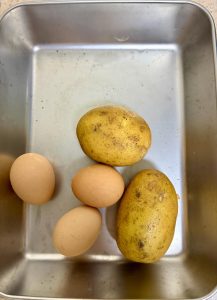
Step 1 — Prep the Potato and Egg
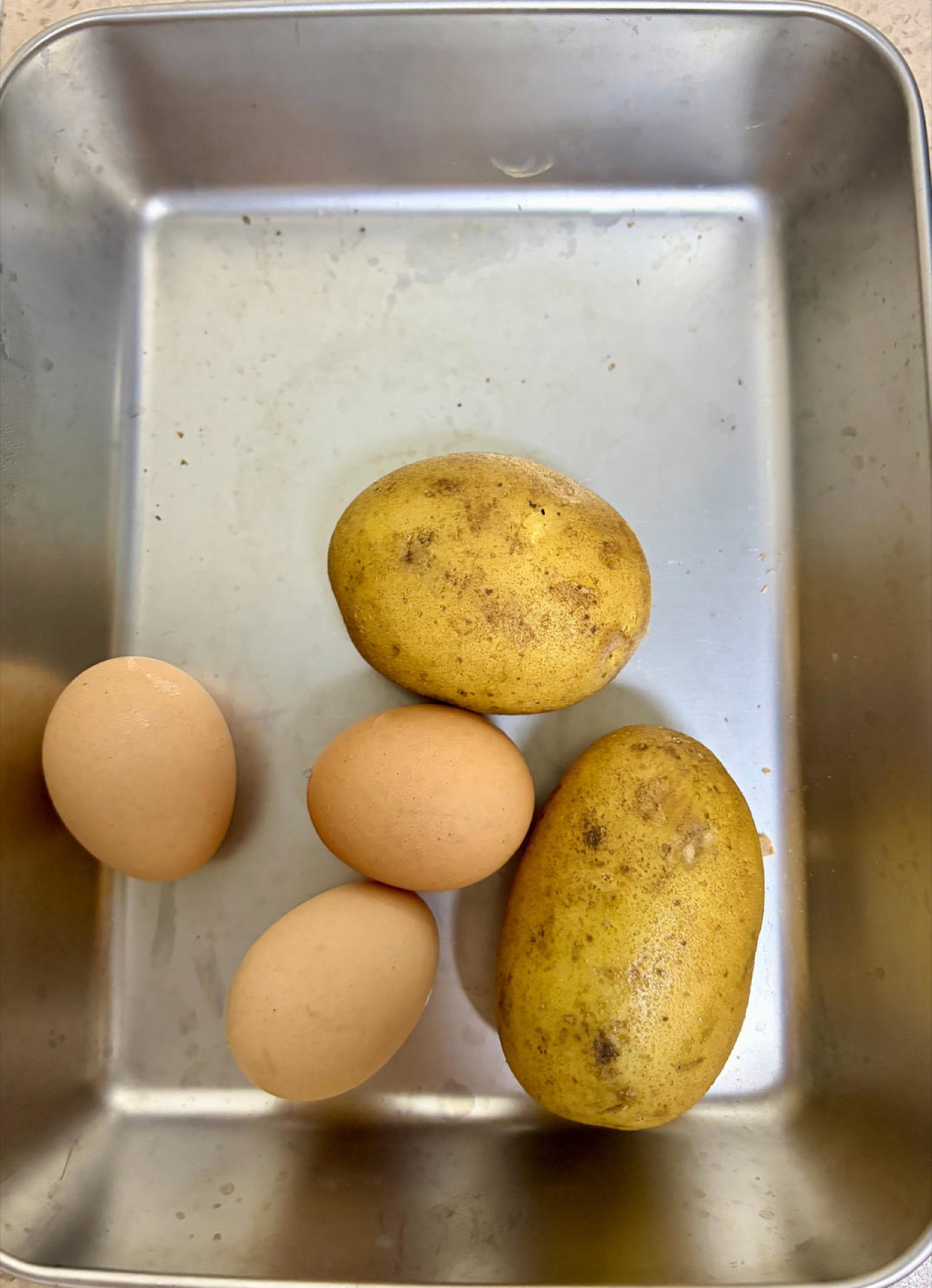
Prepare 2 small potatoes and 3 free-range eggs. Peel the potatoes and cut them into thin julienne strands. Crack the eggs into a bowl and beat them until smooth.
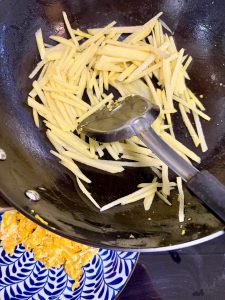
Step 2 — Scramble the Egg, Start the Potato
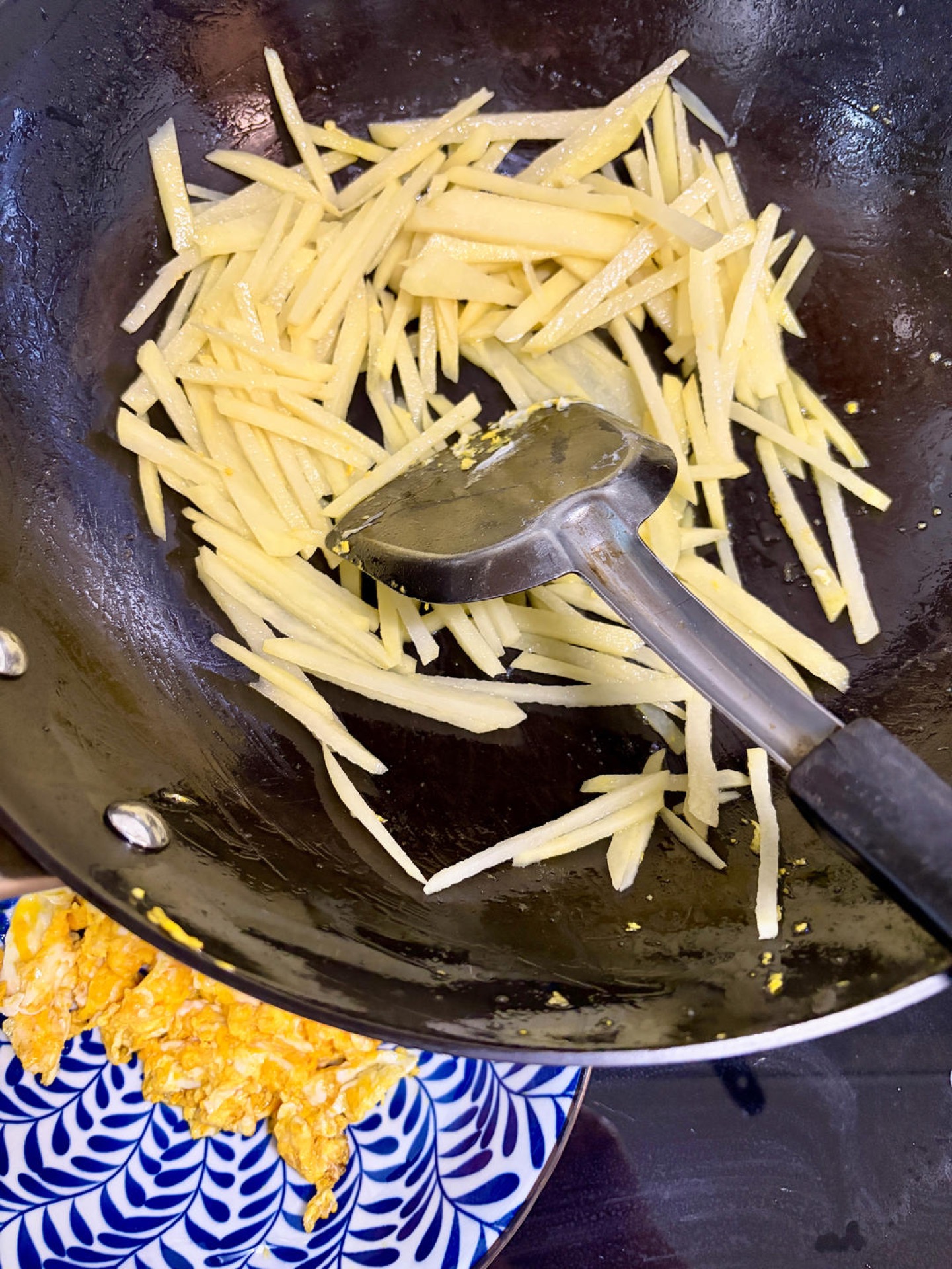
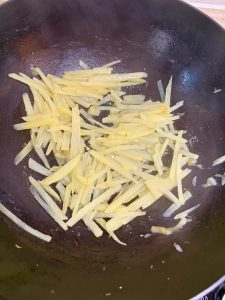
Heat vegetable oil in the wok and scramble the eggs first, then scoop them out and set them aside. Pour the potato strands into the remaining oil in the wok and stir-fry them for a few turns.
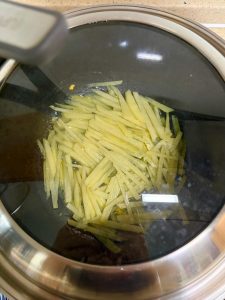
Step 3 — Steam Until Tender
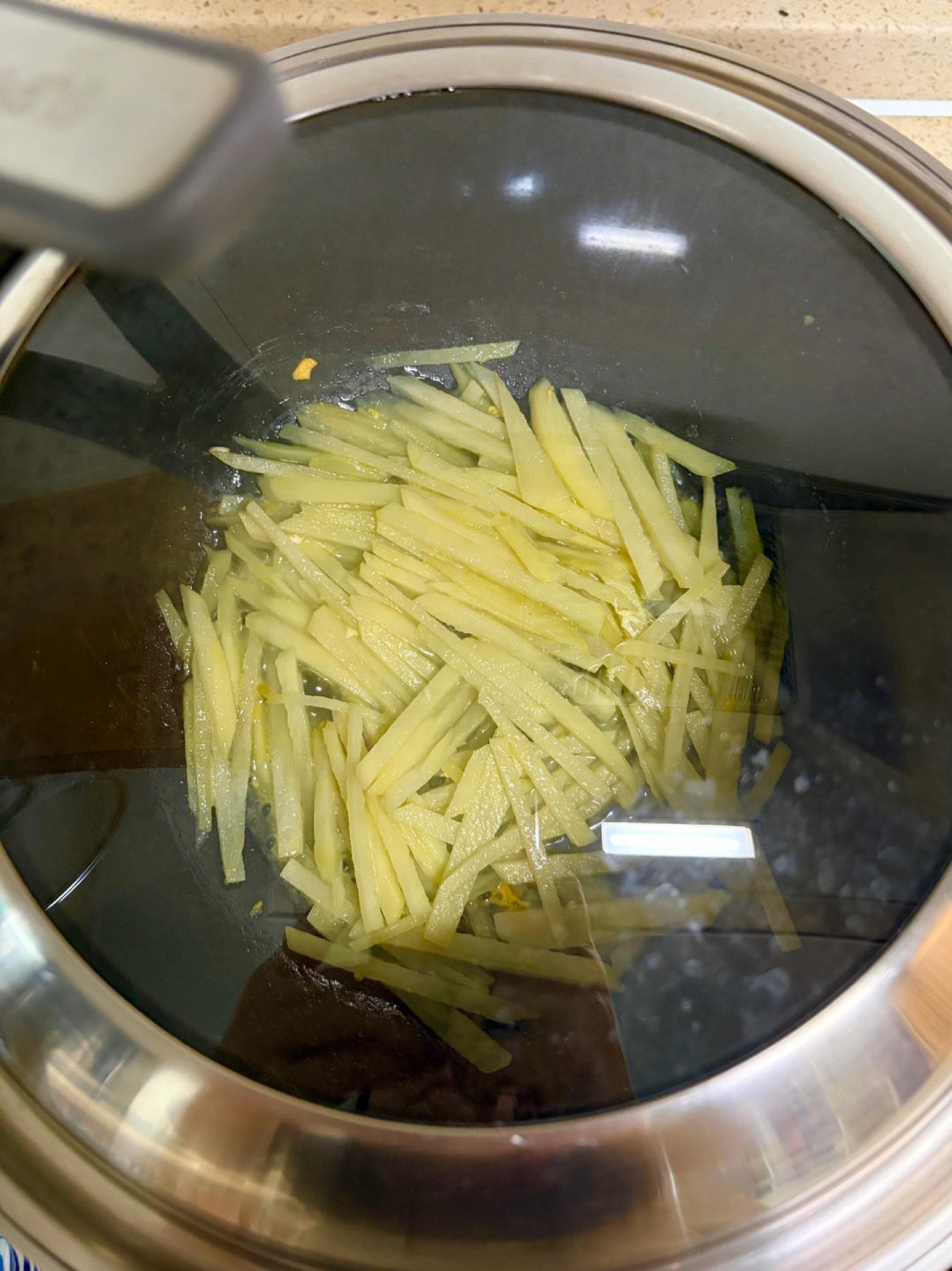
Add an appropriate amount of hot water and simmer for 3-5 minutes until the potato is soft and cooked through.
Step 4 — Season the Potato
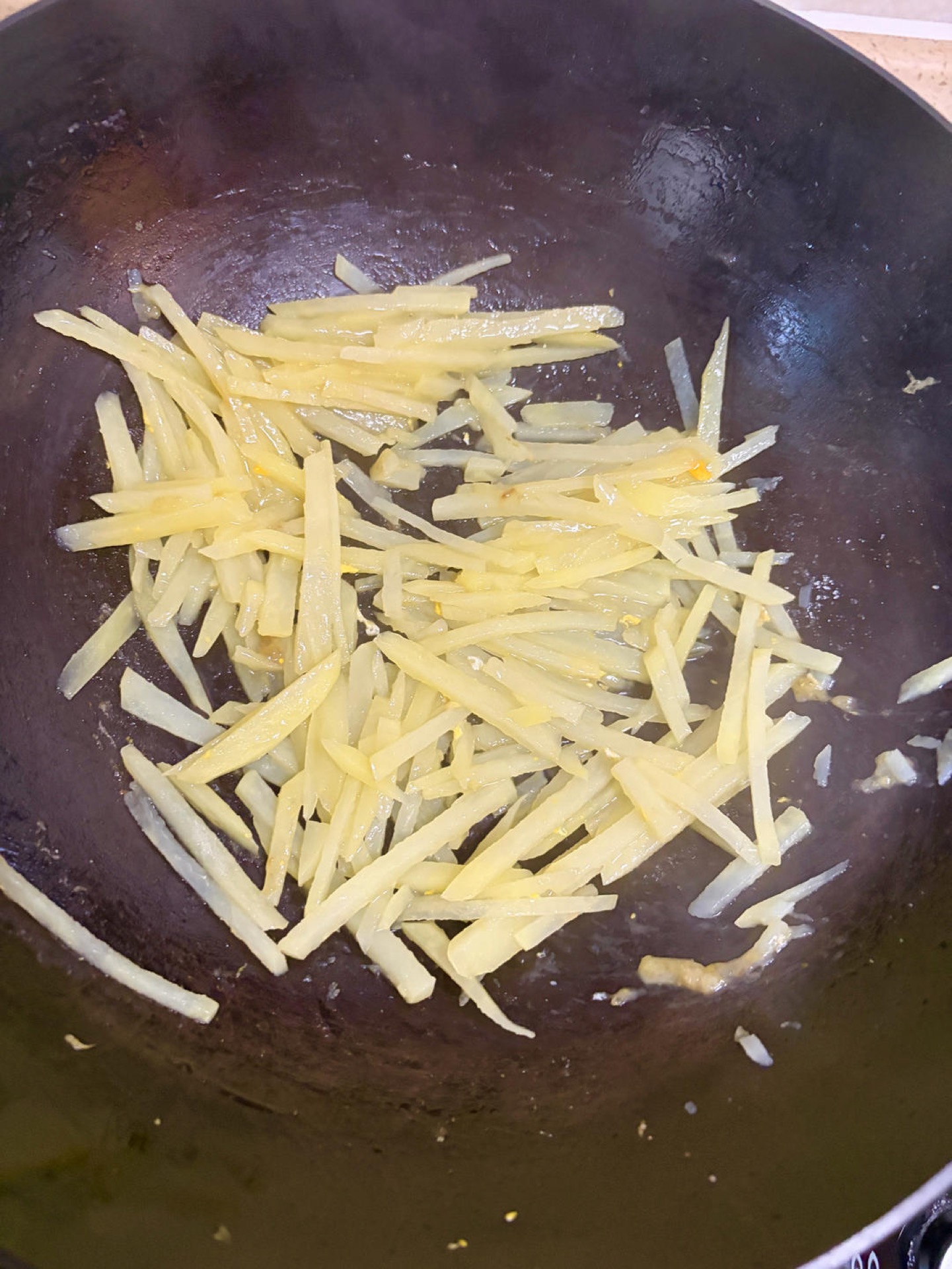
By the time the potato is cooked, the water has more or less reduced away. Add an appropriate amount of salt and MSG and stir-fry to season.
Step 5 — Return the Egg
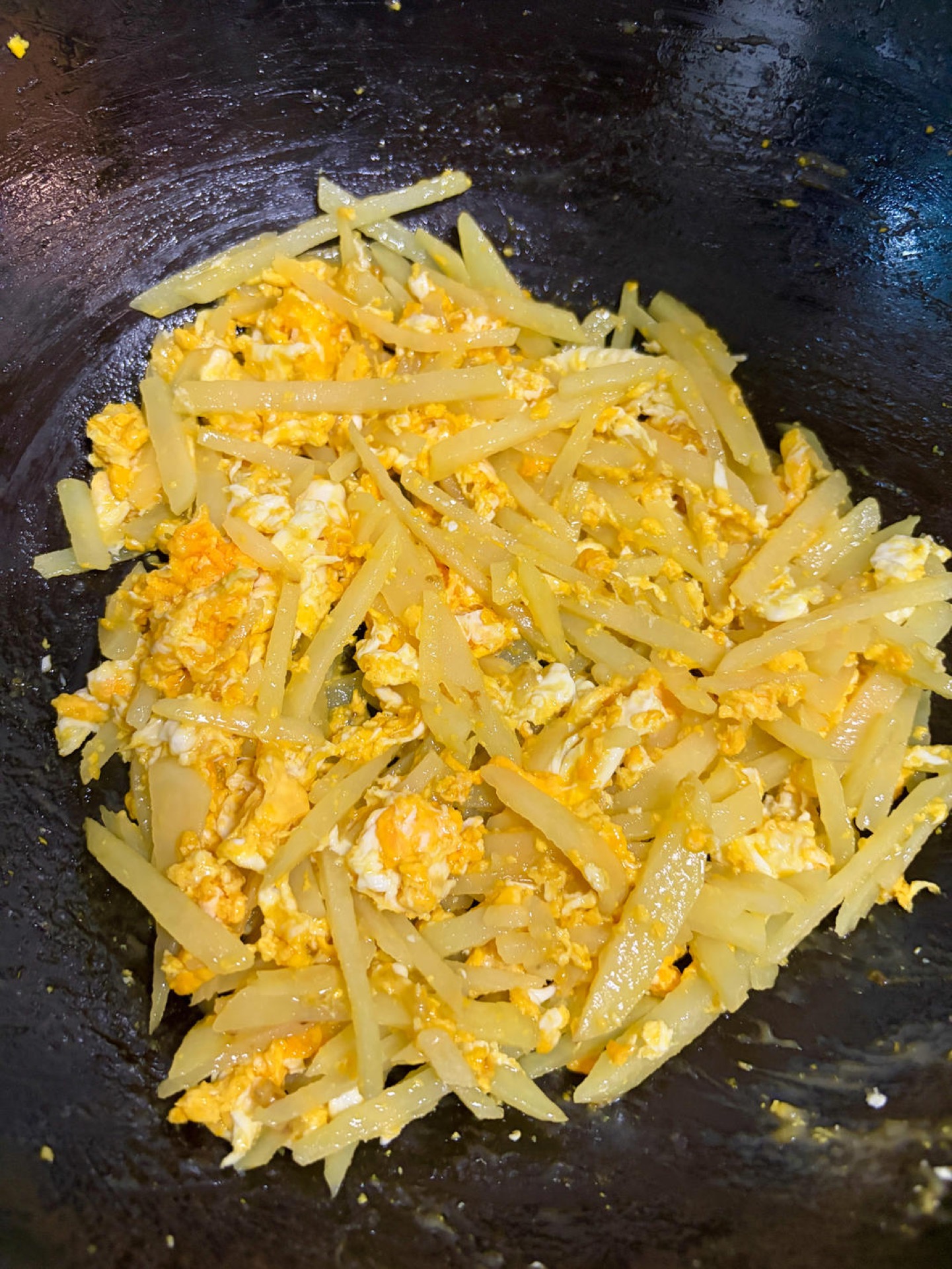
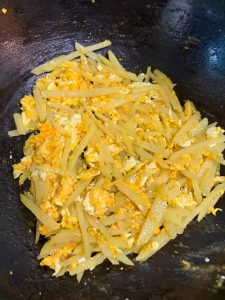
Pour the scrambled egg back in and stir-fry until everything is evenly combined.
Step 6 — Plate and Serve
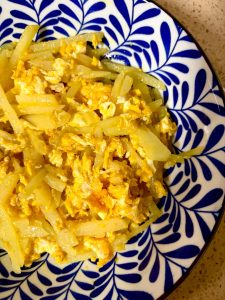
Transfer to a plate. It looks plain, but it is savory, fragrant, and made for rice.
Common Mistakes When Making Stir-Fried Potato and Egg
1. Skipping the soak. Potato straight from the cutting board is coated in surface starch. In the wok that starch turns gummy and the strands weld together into a lump. Fix: soak in cold salted water for at least 10 minutes and rinse until the water runs clear.
2. Overcooking the egg. If you scramble the egg until it is fully set and dry in the pan, it will be rubbery by the time it comes back at the end. Fix: pull the egg out while it is still glossy and slightly soft in the middle — it finishes cooking in the residual heat of the dish.
3. Adding cold water. Cold water kills the pan temperature, and the potato starts stewing instead of steaming. The texture goes mushy and the cooking time stretches. Fix: always use hot water, straight from the kettle.
4. Cutting the potato too thick. Thick batons will not soften in 3-5 minutes, so you end up either with crunchy potato or with overcooked, broken strands by the time they do soften. Fix: aim for 2-3mm matchsticks, and cut them as evenly as you can.
5. Crowding the wok. Piling too much potato into a small pan traps steam unevenly and the bottom layer scorches while the top stays firm. Fix: use a wide wok or skillet, or cook in two batches if you are doubling the recipe.
6. Seasoning too early. Salt added while there is still a lot of water in the pan dissolves into the liquid and then reduces into an overly salty glaze. Fix: wait until the water has nearly cooked away, then season and toss.
7. Not draining the potato well. Wet strands hitting hot oil spit aggressively and steam rather than fry, so you lose the light oil coating that keeps them separate. Fix: drain in a colander and shake dry, or spread on a towel for a minute.
8. Using the wrong potato. A very floury baking potato will break down into paste with this much moisture. Fix: choose waxy or all-purpose potatoes, and reduce the simmering time slightly if they are on the soft side.
Variations
With green pepper. Add a julienned green bell pepper or a couple of shishito peppers with the potato. The slight bitterness cuts the richness nicely. Something like the filling in shishito pepper pork potstickers gives you a sense of how that flavor pairs with a soft, mild base.
With tomato. Add one diced tomato after the potato has softened. It will break down into a light sauce and push the dish toward the classic tomato-and-egg profile. Reduce the added water by half.
With dried chili and Sichuan pepper. Bloom a few dried chilies and a pinch of ground Sichuan pepper in the oil before adding the potato for a ma-la version. Keep the egg plain so the contrast stays clear.
With scallion and sesame oil. Finish with a handful of sliced scallions and a few drops of toasted sesame oil off the heat. This is the gentlest variation and probably the closest to how it is served in northern homes.
With pork. A small amount of thinly sliced pork, browned first and set aside with the egg, turns this into a fuller one-plate meal. The technique in Shanghai fried pork chops — thin cuts, quick high heat — is the right approach here too.
Vegan version. Replace the egg with firm tofu that has been pressed, crumbled, and pan-fried until golden. Season a little more aggressively, since tofu absorbs salt less readily than egg.
Frequently Asked Questions
Can I make this ahead of time? It is best fresh, but it holds reasonably well. Cook it fully, cool it quickly, and refrigerate within two hours. Reheat in a hot wok for a minute or two rather than a microwave, which will toughen the egg.
Why did my potato turn mushy? Almost always too much water or too long a simmer. The potato only needs 3-5 minutes once the hot water goes in. If your strands are thin, check at 3 minutes and pull them off the heat as soon as they are tender.
Do I have to use MSG? No. It is traditional and it does make the dish taste fuller, but a teaspoon of light soy sauce plus a pinch of sugar gets you most of the way there.
Can I use a nonstick pan instead of a wok? Yes, and it is actually more forgiving for beginners. Just keep the heat moderate — nonstick coatings do not like the screaming-high temperatures a carbon steel wok can take.
Is this dish supposed to be saucy? No. The water should reduce almost completely, leaving just enough glaze to coat the strands. If there is liquid pooling in the pan when the potato is tender, raise the heat and let it cook off before adding the egg.
Can I double the recipe? Yes, but cook it in two batches. Doubling the volume in one wok crowds the potato and you lose the steam-fry texture that makes the dish work.
How to Serve
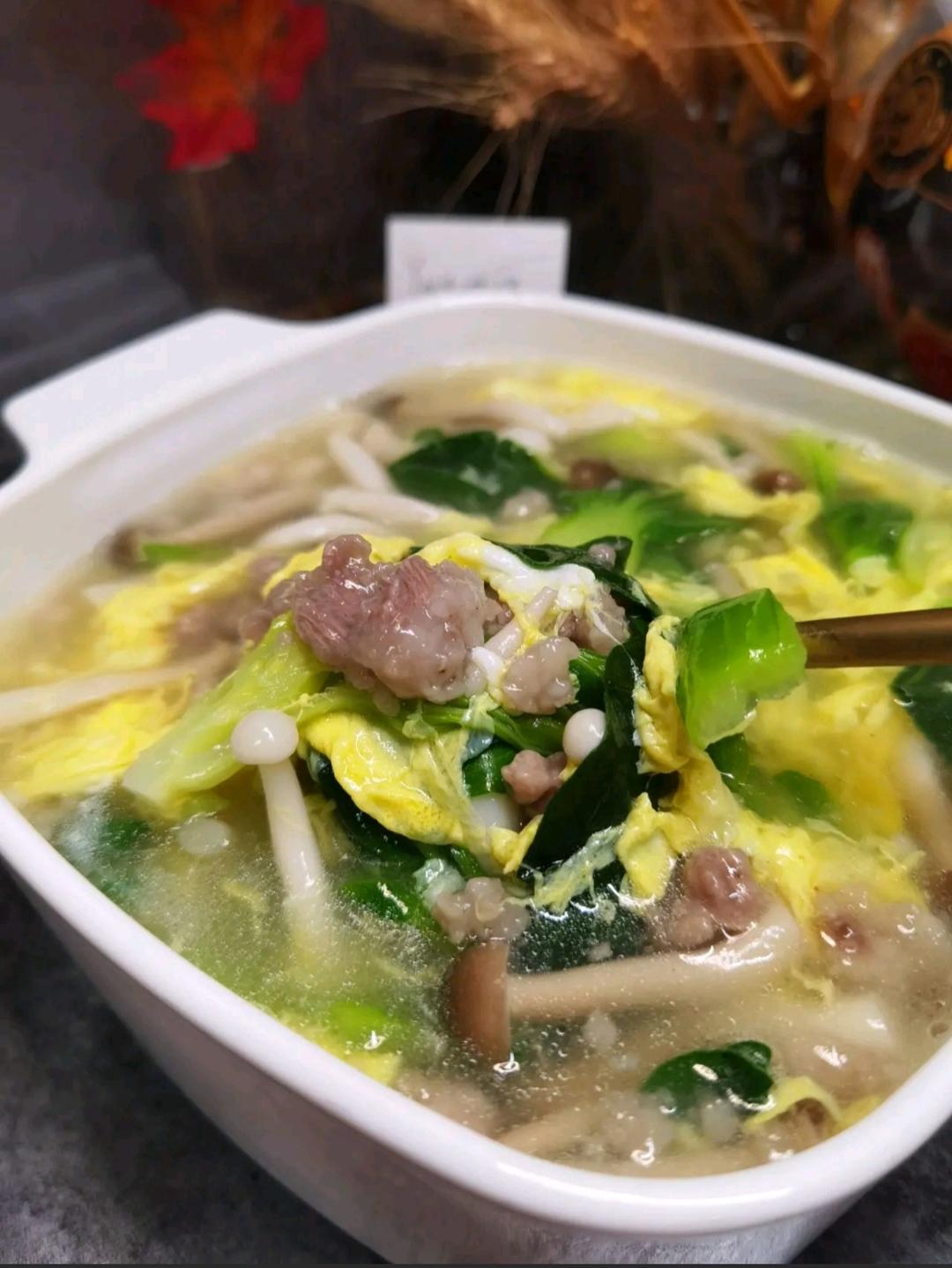
Stir-fried potato and egg is designed to sit next to plain steamed white rice, and that is genuinely the best way to eat it. The dish is soft and lightly seasoned, so it works as a foil for stronger, saucier plates on the same table. A bowl of moms poached pork soup alongside it rounds out the meal with something warm and brothy.
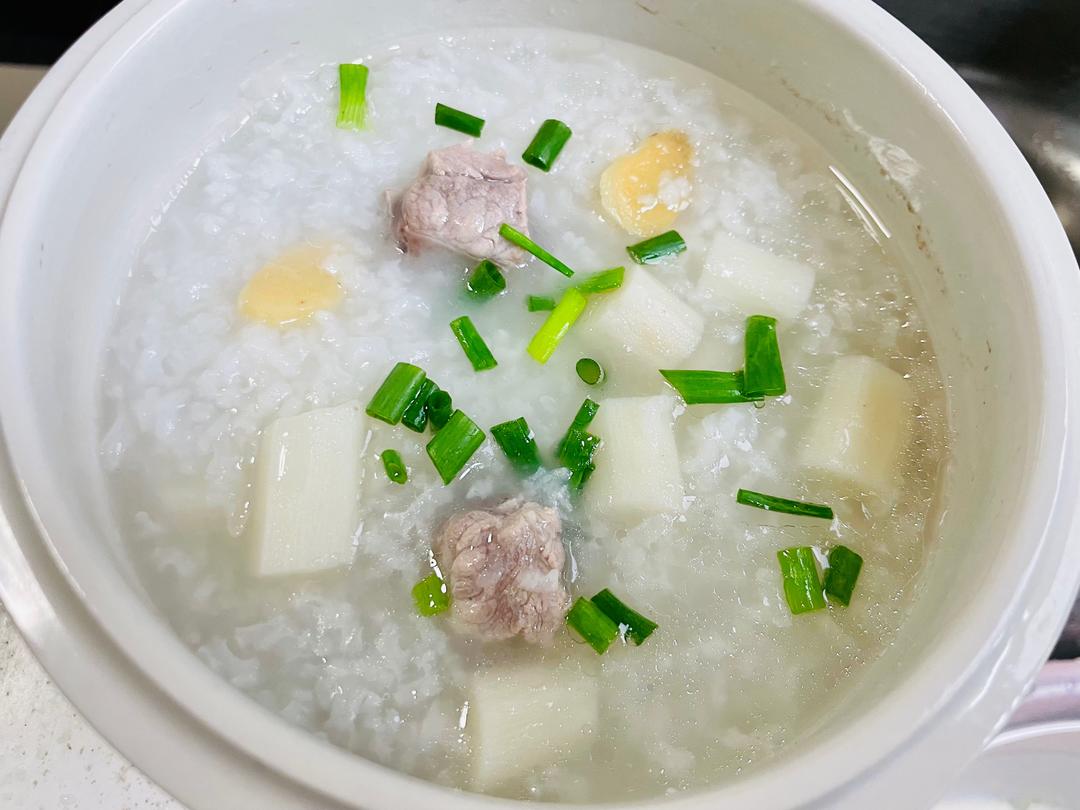
For a lighter, more breakfast-leaning table, serve it with congee instead of rice — something like nourishing pork rib and chinese yam congee is a natural partner, since both dishes share that soft, gentle texture.
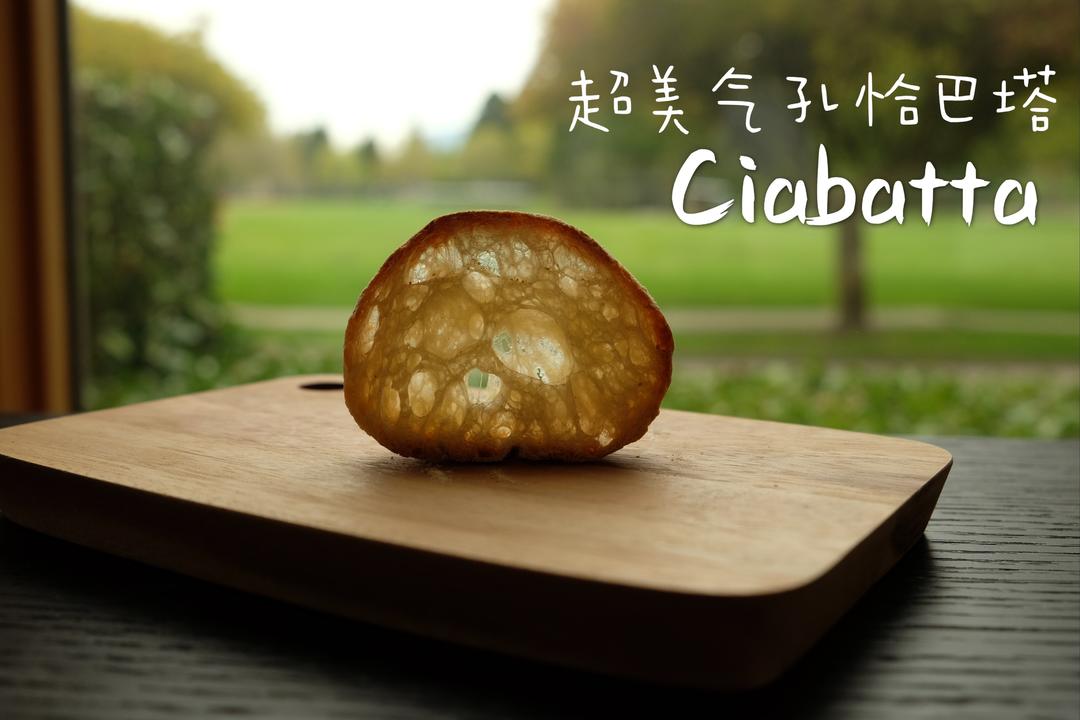
And if you want a starch that is not rice, a thick slice of no-knead ciabatta bread does an unexpectedly good job of mopping up the last of the glaze.
Storage & Reheat
Cool leftovers to room temperature within two hours, then transfer to a shallow airtight container. Refrigerate for up to 3 days. Do not leave it out overnight — cooked egg and cooked potato are both perishable, and the combination is not one to push.
Reheating is best done in a wok or skillet over medium-high heat with a teaspoon of oil, tossing for a minute or two until steaming hot all the way through. The egg will firm up a little on the second pass; that is unavoidable, but a quick, hot reheat keeps it from going tough. A microwave works in a pinch — cover and heat in 30-second bursts — but the texture suffers.
This dish does not freeze well. The potato turns grainy and watery after thawing, and the egg becomes spongy. If you have a large batch, it is better to share it than to freeze it.
Allergen Notice
This recipe contains eggs. If you use light soy sauce, note that standard soy sauce contains soy and wheat; use a tamari or certified gluten-free soy sauce if you are avoiding either. MSG is a flavor enhancer, not an allergen, but some people prefer to avoid it — simply omit it. Always check the labels of any packaged ingredient you add, since formulations vary by brand and region.
Nutrition Disclaimer
Nutrition information is calculated using an ingredient database and should be considered an estimate. In cases where multiple ingredient alternatives are given, the first listed is calculated for nutrition. Garnishes and optional ingredients are not included.
About the Author & Recipe Development
Lin grew up watching this dish appear on the table without ceremony — no recipe card, no measuring, just a potato, a couple of eggs, and whatever the wok already had in it. That is how most Chinese home cooking actually works, and it is why dishes like this one rarely make it into restaurants or cookbooks.
This version was developed by cooking it repeatedly and paying attention to the things home cooks do by feel: how much water the potato actually wants, how far to take the egg before pulling it out, and how long the strands need before they cross the line from tender to mushy. The quantities here are a starting point, not a rule. Once you have made it twice, you will season it by eye like everyone else does.
For a broader look at the pantry and tools that make this kind of cooking easy, see our guide on what you need to start cooking Chinese food.
Authoritative References
- USDA FoodSafety.gov, Safe Minimum Internal Temperatures chart — used for the 160°F (71°C) egg and 165°F (74°C) reheat guidance above.
- U.S. Food and Drug Administration, Food Code produce safety requirements — background on handling and washing fresh produce such as potatoes.
- U.S. Department of Agriculture, Agricultural Research Service — nutrient composition data used to estimate the nutrition panel.
Stir-Fried Potato and Egg (土豆炒鸡蛋): Soft Potato, Fluffy Egg,

Equipment
- Wok
- Cutting Board
- Slotted Spoon
Ingredients
For the Potato
- 2 medium potatoes about 1 lb / 450g, peeled and julienned
- 1 tsp salt for the soaking water
For the Egg
- 3 large eggs beaten with a pinch of salt
- 1 tbsp vegetable oil for scrambling
For the Stir-Fry
- 2 tbsp vegetable oil for the wok
- 1/3 cup hot water plus more if needed
- 1 tsp salt or to taste
- 1/4 tsp MSG optional but traditional
- 1 tsp light soy sauce optional, for a little more savoriness
Instructions
- Prepare 2 small potatoes and 3 free-range eggs. Peel the potatoes and cut them into thin julienne strands. Crack the eggs into a bowl and beat them until smooth.

- Heat vegetable oil in the wok and scramble the eggs first, then scoop them out and set them aside. Pour the potato strands into the remaining oil in the wok and stir-fry them for a few turns.

- Add an appropriate amount of hot water and simmer for 3-5 minutes until the potato is soft and cooked through.
- By the time the potato is cooked, the water has more or less reduced away. Add an appropriate amount of salt and MSG and stir-fry to season.
- Pour the scrambled egg back in and stir-fry until everything is evenly combined.
- Transfer to a plate. It looks plain, but it is savory, fragrant, and made for rice.












Leave a Reply