The soup my mother made on cold evenings was never fancy. She would come home from work, slide a piece of lean pork out of the fridge, and have a steaming bowl of what she simply called cuan rou tang in front of me before the rice cooker had even clicked over to warm. The broth was barely seasoned — salt, a whisper of black pepper, a handful of greens — yet the pork tasted impossibly rich, every piece wrapped in a silky coat I could never quite explain as a child.
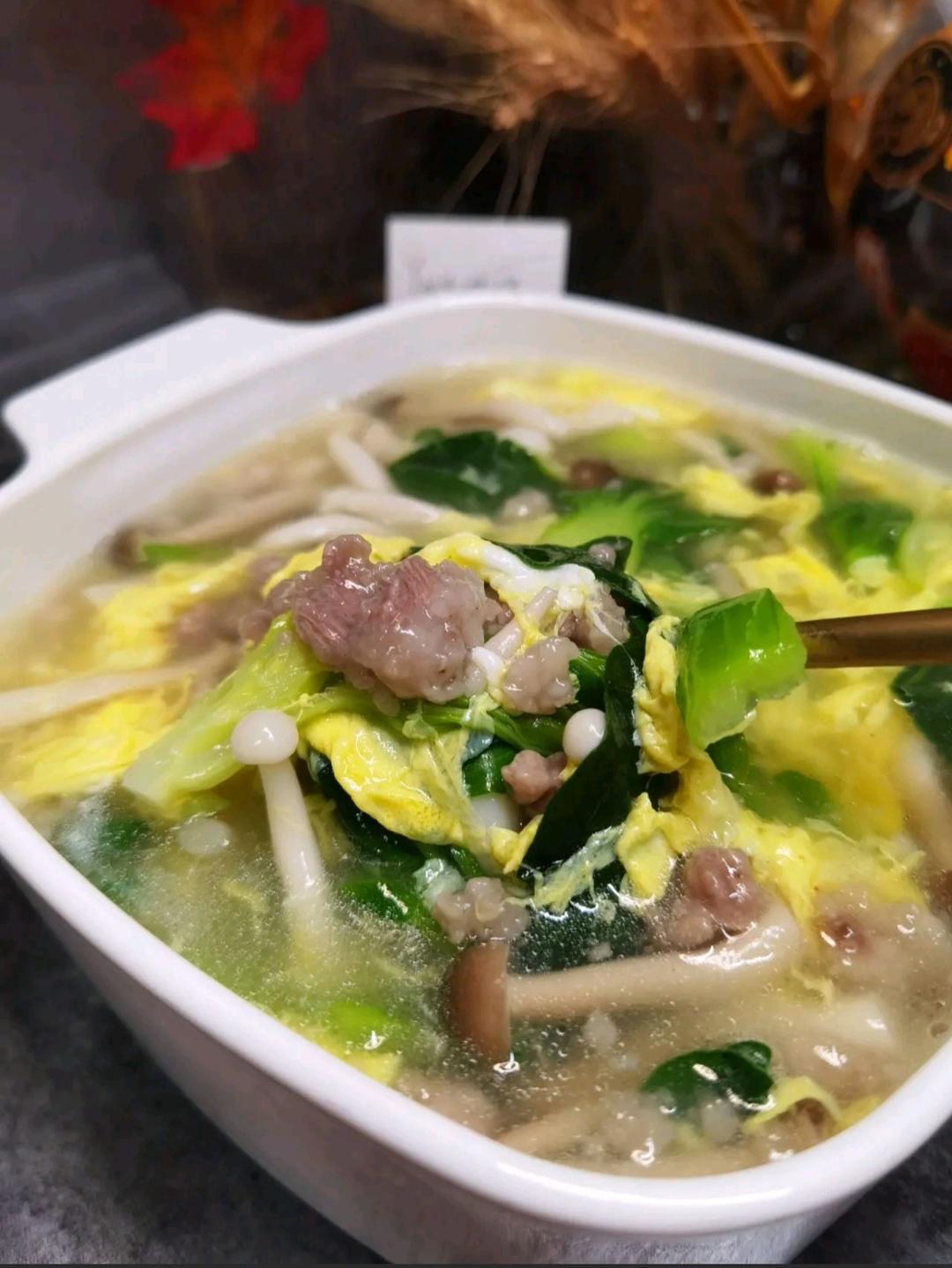
The secret, I learned years later in my own kitchen, is hiding in the word cuan (汆), which means to quickly poach — to drop something into a large pot of boiling water and let the heat do the work in under a minute. And that silky coat is sweet potato starch (红薯粉, hong shu fen), rubbed into the meat by hand until every piece wears a pale, floury jacket. When the coated pork hits the boiling water, the starch sets instantly into a soft jelly shell, sealing the juices inside.
This is comfort and speed in one bowl: clear, warming, quietly satisfying, and on the table in about fifteen minutes from a pantry you probably already have. It is the soup my mother made when she had nothing left in the tank — and the bowl I now make for the same reason, and for the same people.
What Is Cuan Rou Tang (汆肉汤)?
In Mandarin, cuan rou tang (汆肉汤) translates plainly as “poached pork soup.” The character 汆 is a happy accident of Chinese writing: 入 (“to enter”) stacked on top of 水 (“water”) — literally “to plunge into water,” which is exactly what the little pieces of pork do. It is a home-kitchen category, not a restaurant dish: across households in central and southern China, it is what you make when you want soup but have no time, no stock, and one modest piece of pork.
It belongs to a family of quick “cuan” dishes — poached fish slices, poached chicken meatballs — where a starchy coating and a pot of boiling water stand in for hours of simmering. Home versions are bare and honest: water, meat, greens, an egg if you happen to have one, salt. Restaurant versions dress the idea up with bone broth and fancier garnishes, but the soul is the same — and, honestly, the home version tastes more like what the dish is supposed to be. It shares that clear-broth soul with my tomato egg drop soup, another weeknight classic that asks almost nothing of you.
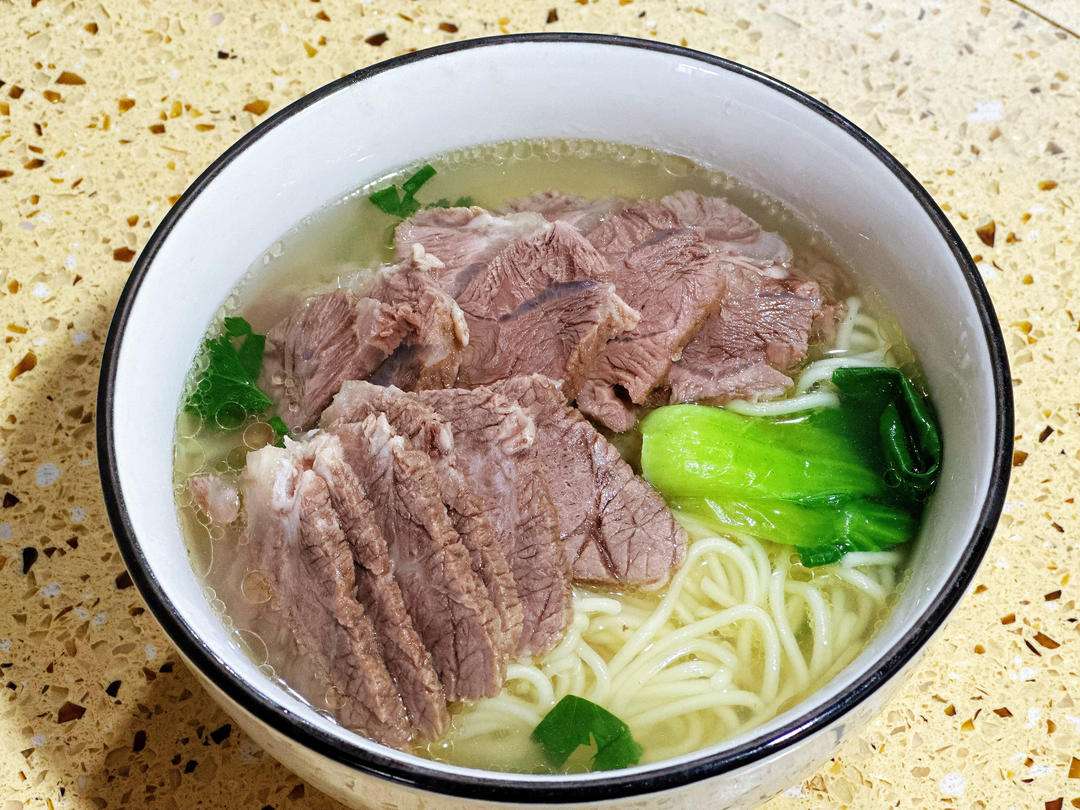
If you love a clear, gently seasoned broth with tender meat and no stock pot required, you will love my simple clear beef noodle soup just as much. It uses the same bright-broth philosophy, this time with shaved beef and chewy noodles for a more filling bowl. Make it on the days you want soup to be the whole meal.
1Simple Clear Beef Noodle Soup (清汤牛肉面)A simple, homestyle recipe for Clear Beef Noodle Soup (Qing Tang Niu Rou Mian). This recipe focuses on a “cook and steep” method and an overnight soak to create a crystal-clear, aromatic broth and perfectly tender, sliceable beef.Check out this recipe
Why This Recipe Works
- The starch coat is the whole trick: sweet potato starch sets into a silky jelly the moment it touches boiling water, forming a protective shell that locks in the pork’s juices.
- Boiling water, not a slow simmer: the brisk rolling boil sets the coating instantly and cooks the thin pork pieces in under a minute, so they stay juicy instead of turning leathery.
- One piece at a time, no stirring: adding the pork piece by piece keeps the water at a boil, and leaving it alone lets the coating set before anything knocks it off.
- Seasoning happens at the end: salt and shrimp powder go in after the pork is cooked, so the clear broth stays clear and you can tune the seasoning to the greens.
- No stock, no bones, no long simmer: the whole soup comes together in one pot in about 15 minutes with ingredients a Chinese pantry already has. It is the same gentle-poaching principle I rely on for my easy poached pork belly with garlic sauce, scaled down to a weeknight ten-minute cook.
Equipment Needed
- A medium pot, about 4 to 5 L (4 to 5 qt), with a lid
- A sharp chef’s knife and a cutting board
- A medium mixing bowl for coating the pork
- A spatula or slotted spoon for releasing and lifting the pork
- A ladle and deep soup bowls
Ingredients
For the Pork
- 200 g (7 oz) lean pork, loin or tenderloin
- 1/2 tsp (2 g) fine sea salt
- 1/2 tsp (1 g) freshly ground black pepper
- 3 tbsp (30 g) sweet potato starch (红薯粉, hong shu fen)
- 2 tbsp (30 ml) water, for the starch slurry
For the Soup
- 1.2 L (5 cups) water
- 1 tbsp (15 ml) neutral oil
- 4 shiitake mushrooms, sliced
- 1 bunch (about 200 g / 7 oz) leafy greens, bok choy or spinach
- 1 large egg, beaten
- 1 tsp (5 g) fine sea salt
- 1/2 tsp (2 g) shrimp powder, or 1 tsp (3 g) chicken bouillon powder
- 2 scallions, sliced
Ingredient Notes
Sweet potato starch (红薯粉, hong shu fen) is the ingredient that makes this soup. It sets into a smooth, slightly bouncy jelly that coats the pork and lightly thickens the broth — cornstarch comes closest in a pinch, while potato starch works but gives a softer, less defined coat. Do not substitute sweet potato flour, which is a different product. Lean pork from the loin or tenderloin is best: it is mild, cooks fast, and needs no time to break down. Shrimp powder is dried, ground shrimp that dissolves into instant, clean seafood umami — the classic home-cook shortcut. If you cannot find it, chicken bouillon powder is the standard replacement.
Prep & Mise en Place
Everything here is quick, so set up before the water boils. Slice the pork into thin pieces about 2 to 3 mm thick, then chop a few extra times into rough, bite-sized shards. Slice the mushrooms, wash and trim the greens, beat the egg, and slice the scallions. Measure the salt and shrimp powder into little piles so you are not fumbling while the pot boils over. The only real “technique” happens in the mixing bowl, so give yourself room to use your hands.
Cooking Process
Step 1 — Slice and Chop the Pork
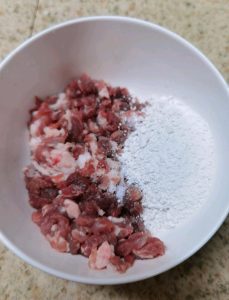
Slice the pork, then chop it a few more times until you have coarse, irregular pieces. Season with the black pepper and salt, add a generous amount of sweet potato starch and a little water.
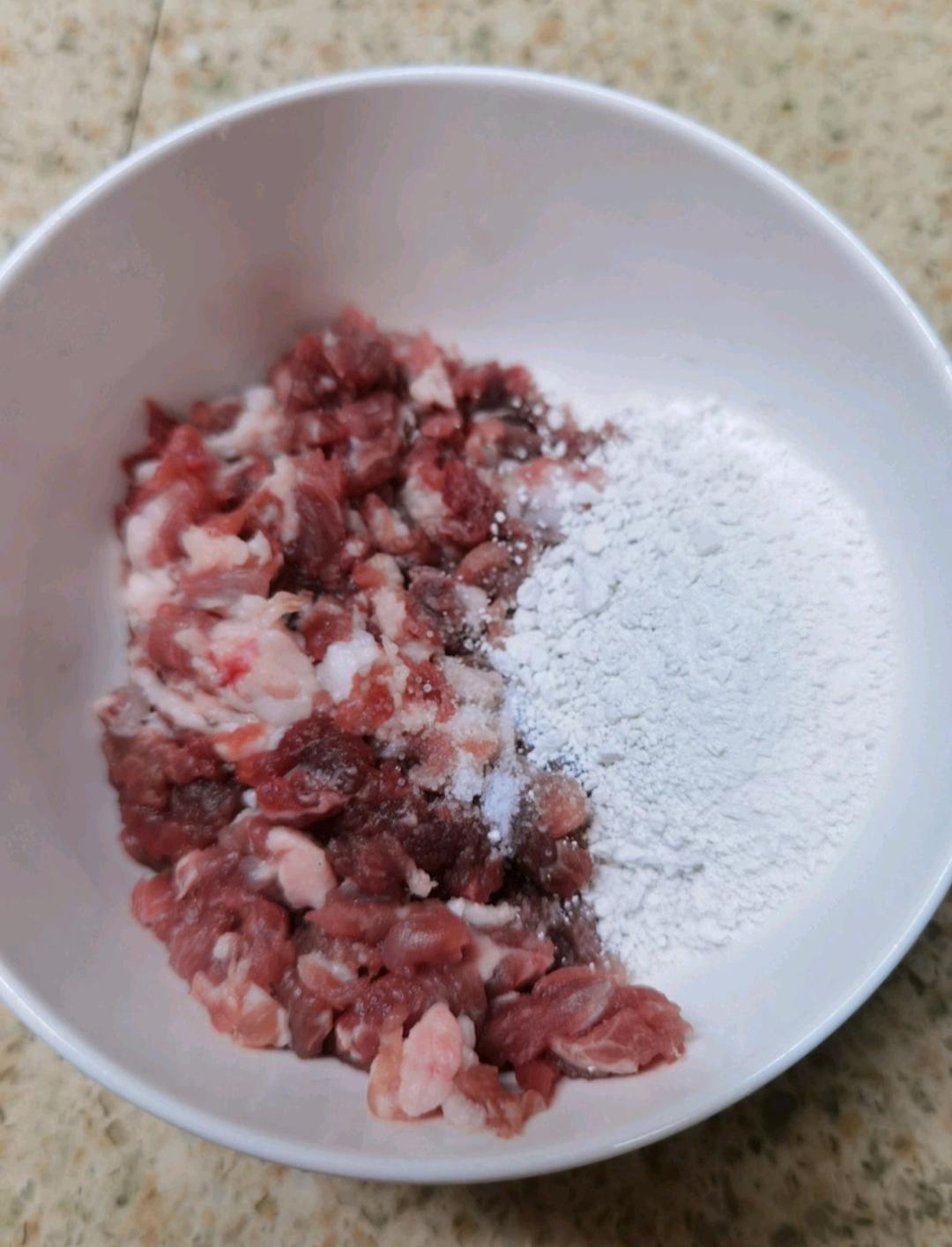
Chopping the slices a few extra times is not about looks — it multiplies the surface area the starch can cling to and shortens the muscle fibers so the pork feels tender rather than tough. Keep the pieces coarse; if you mince them, the starch-to-meat ratio gets out of balance and the pork turns into little dumpling-like blobs.
Step 2 — Coat the Pork by Hand
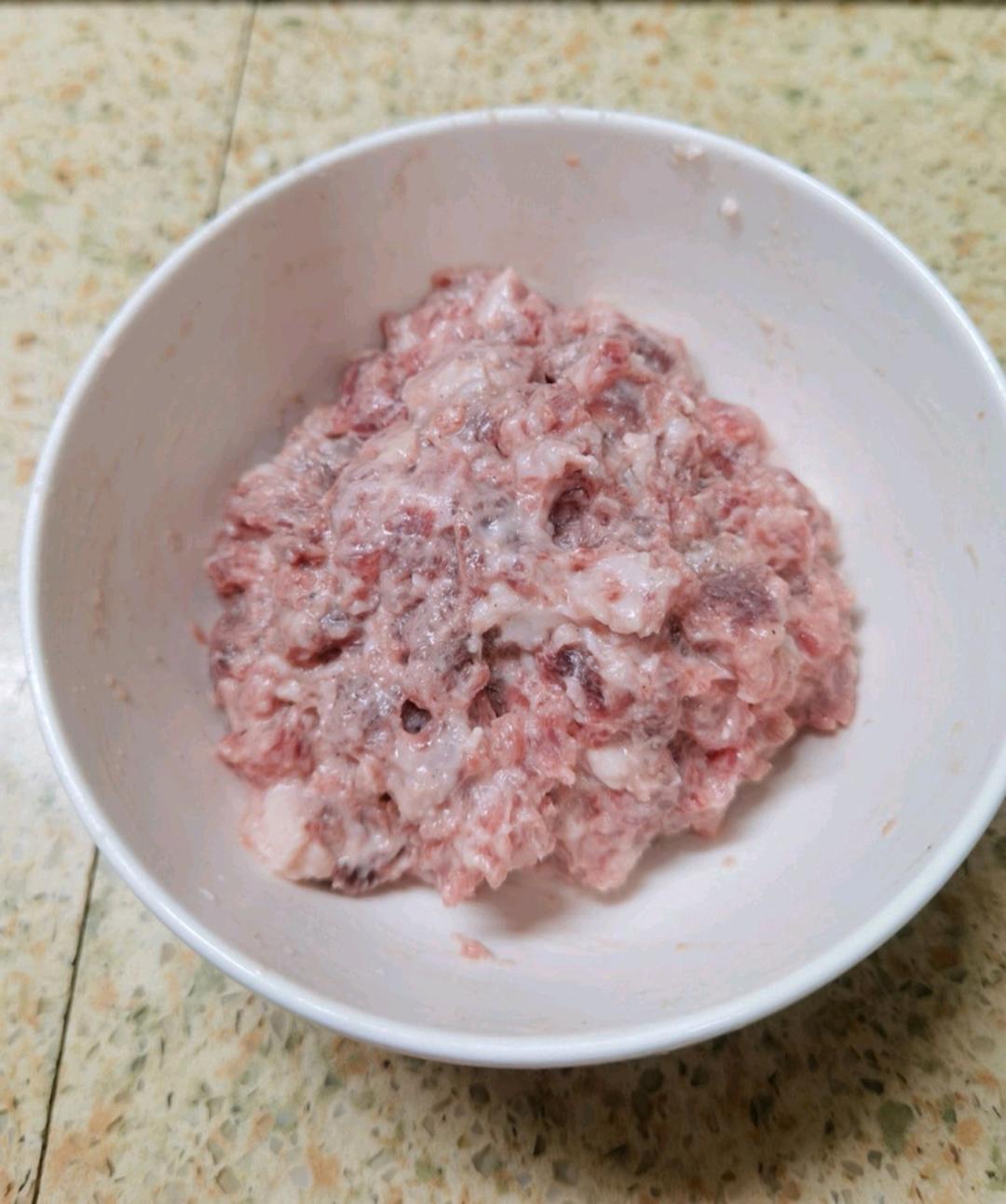
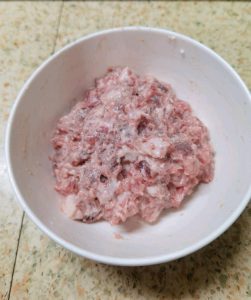
Mix with your hand until every single piece is coated in the starchy slurry, with no dry flour left in the bowl and no bare patches of pink meat.
Step 3 — Bring the Water to a Boil and Add the Pork
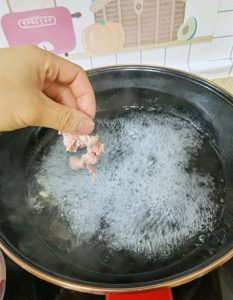
Bring the water to a full rolling boil in the pot, add a little oil, and drop the coated pork pieces in one at a time. Do not stir after adding — the coating needs a moment to set.
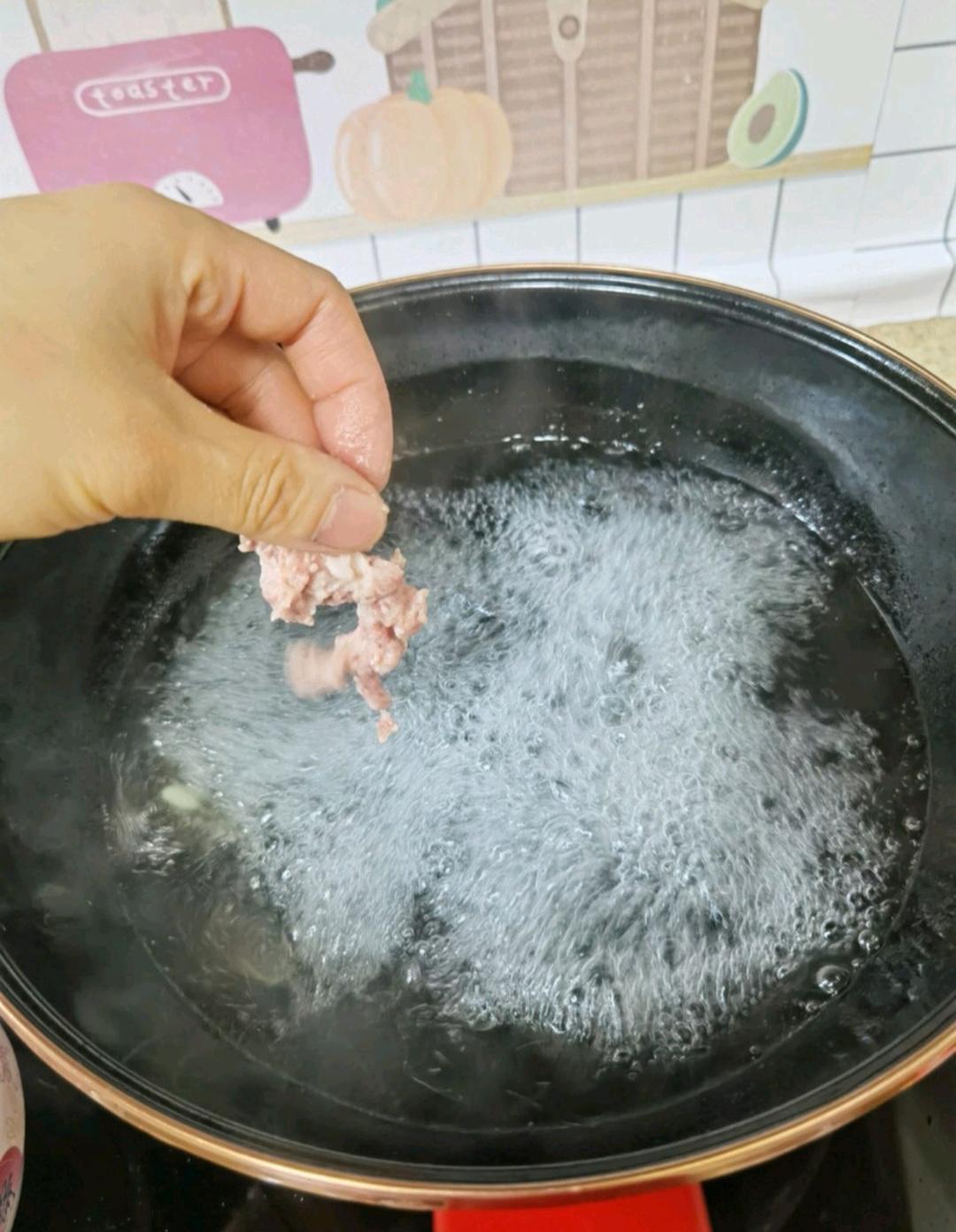
Sweet potato starch is mostly amylopectin, which gelatinizes — swells and turns translucent — quickly at high heat. The instant a coated piece hits the rolling boil, a thin layer of starch sets into a jelly film that traps the pork’s moisture inside. Stirring too early knocks the not-yet-set starch off the meat and into the water, turning the clear broth cloudy and gluey. The oil keeps the pieces from sticking to each other and the pot.
Step 4 — Bring Back to a Boil and Release Stuck Pieces
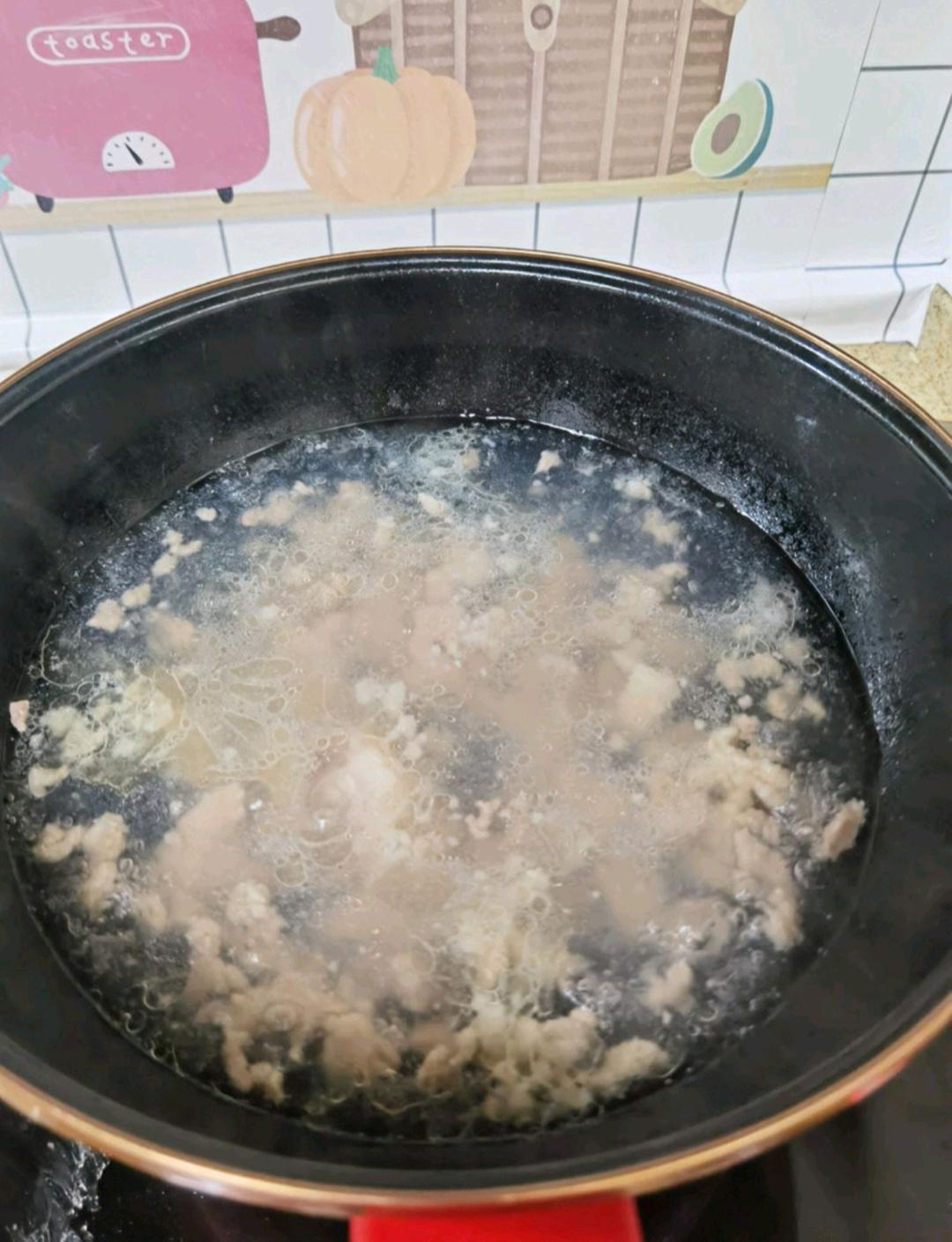
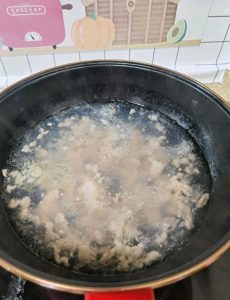
When all the pork is in, bring the pot back to a full boil, then use a spatula to gently release any pieces that have settled and stuck to the bottom.
Step 5 — Add the Mushrooms and Greens
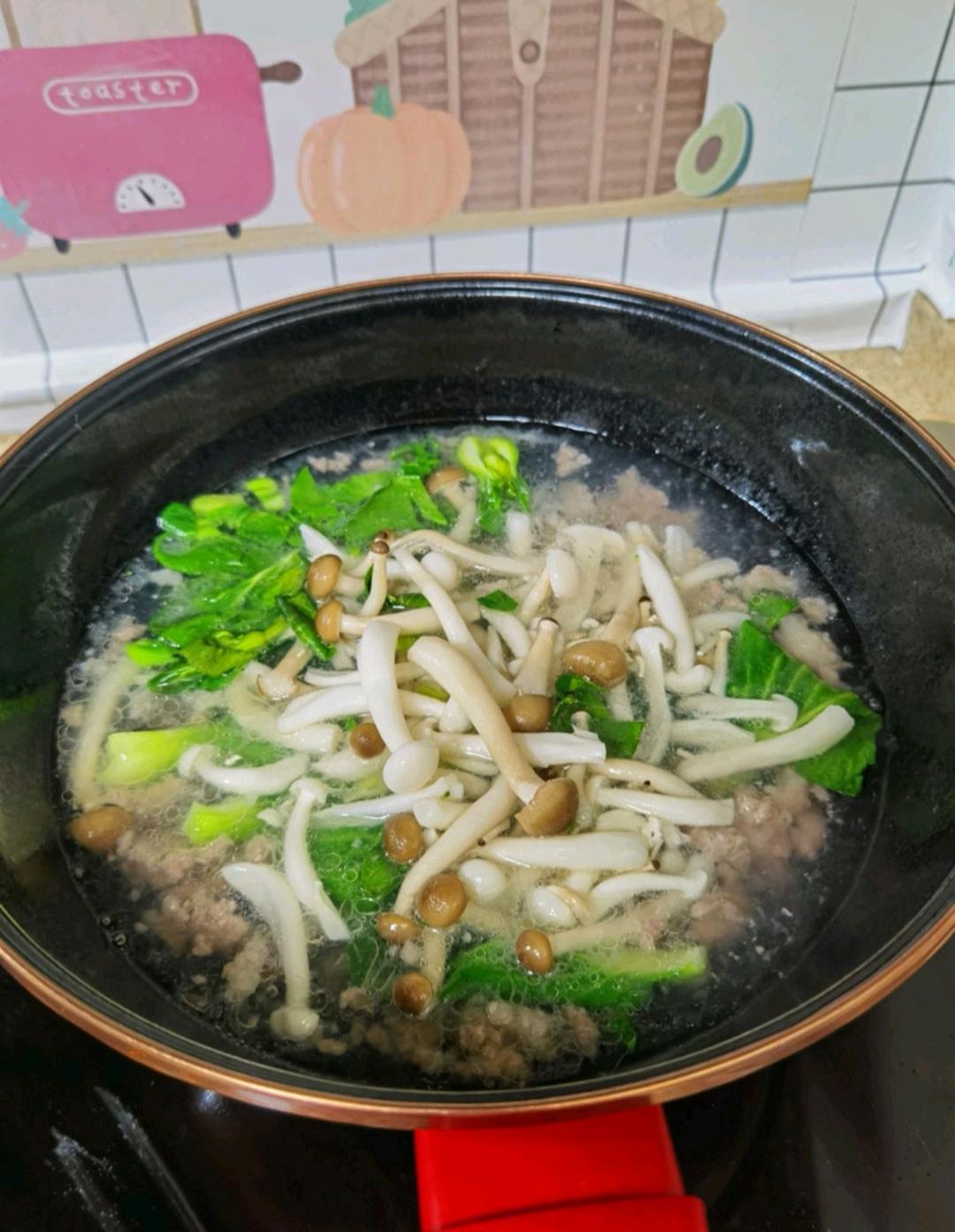
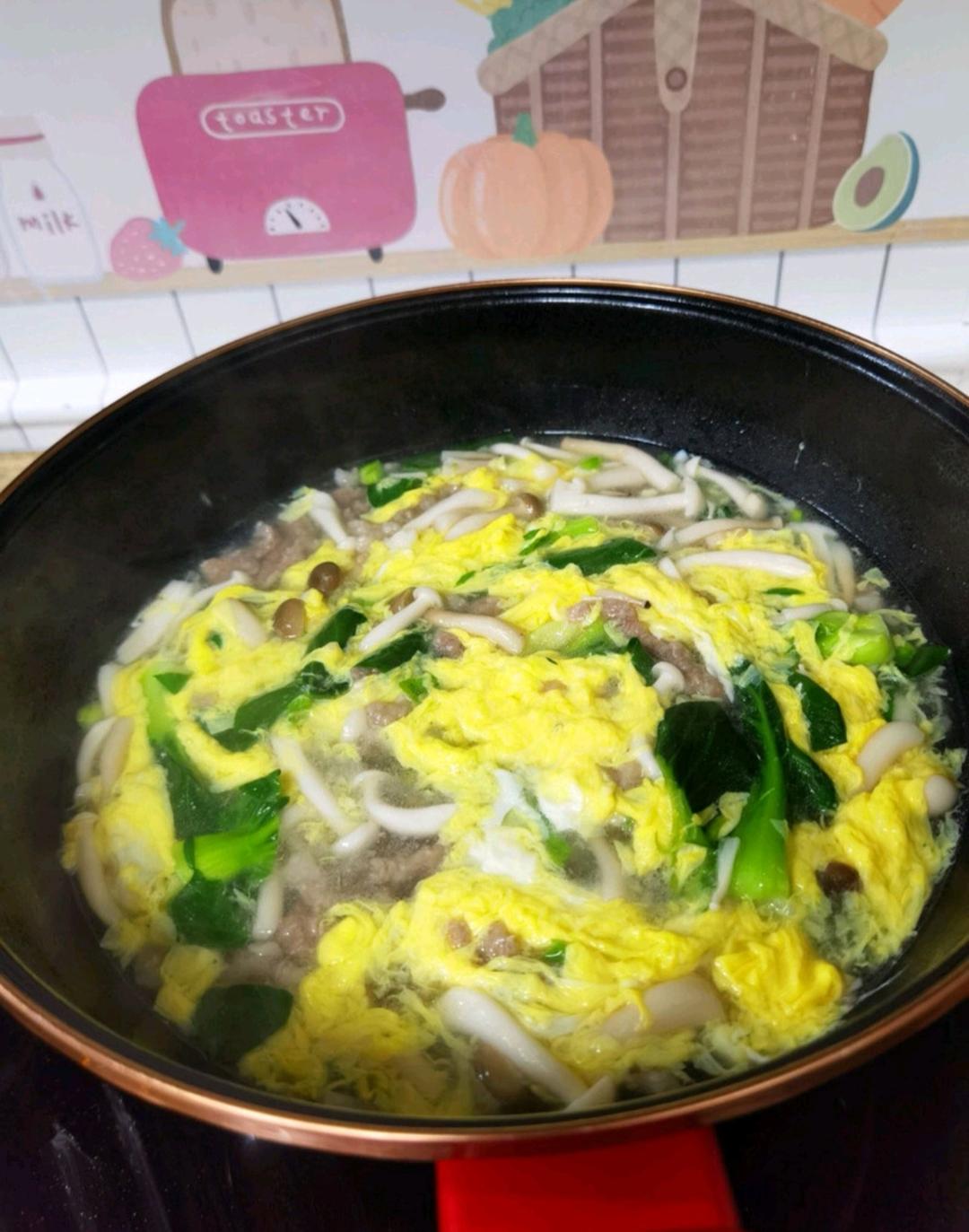
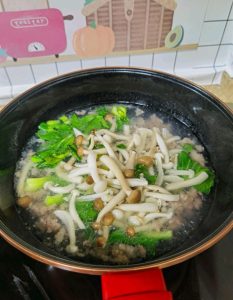
Add the sliced mushrooms and leafy greens and cook until the greens are just tender — bok choy needs a minute or two, spinach barely thirty seconds.
Step 6 — Swirl in the Egg and Season
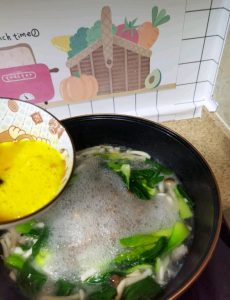
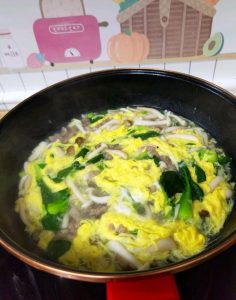
Finally, drizzle the beaten egg into the pot in a slow, steady stream while the soup is still hot, then turn off the heat. Season with salt and shrimp powder (or chicken bouillon) and give it one gentle stir.
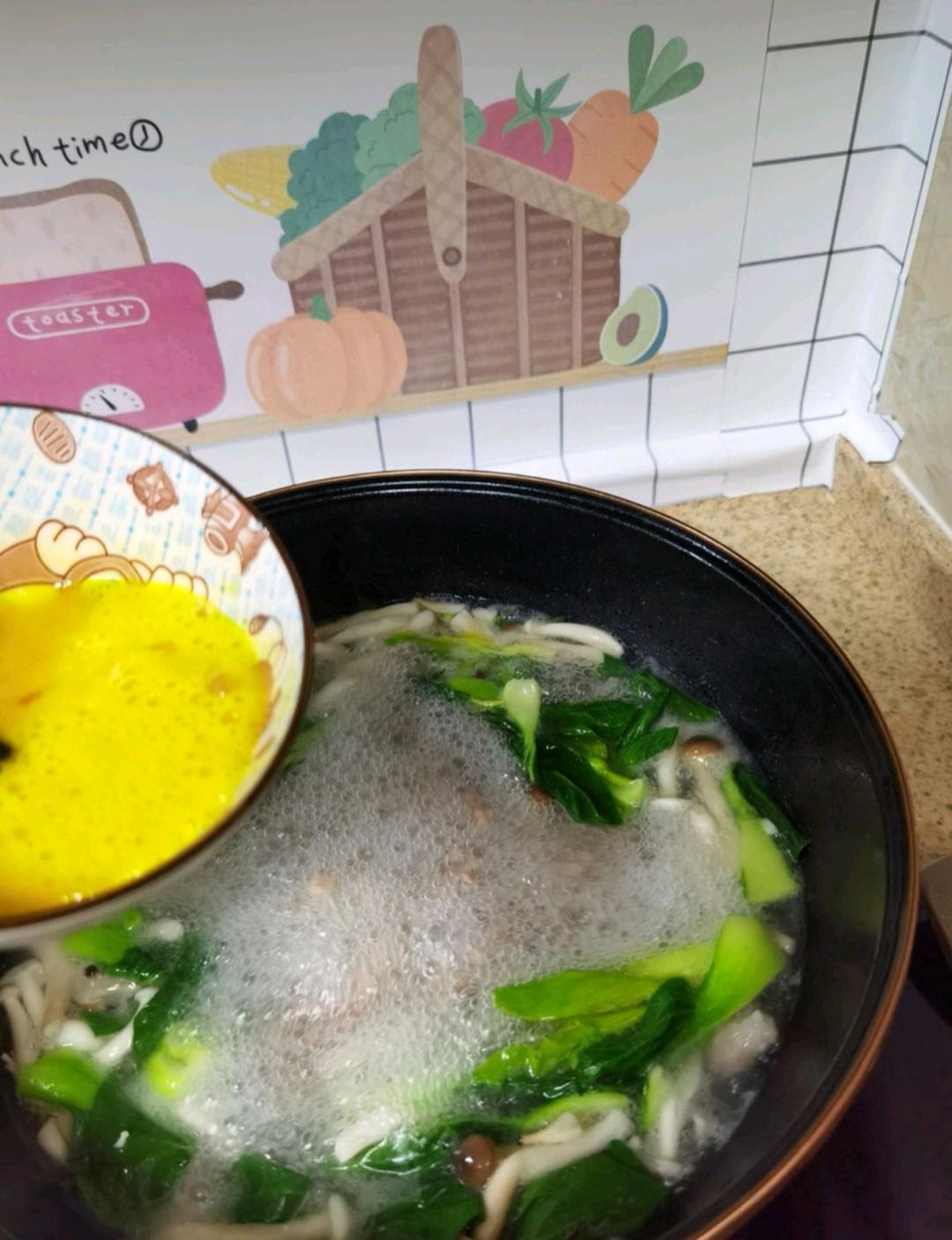
The egg works because of how egg proteins set: they coagulate gradually in hot — not boiling — liquid. Drizzling into water that is just off a boil, then turning the heat off, lets the egg form soft, silky ribbons instead of turning into a cloud of foam. A rolling boil would shred the egg instantly; patience gives you those soft streaks through the clear broth.
Step 7 — Sprinkle with Scallions and Serve
Sprinkle with the sliced scallions and serve immediately, ladling pork, greens and broth into warmed bowls.
Common Mistakes When Making Poached Pork Soup
1. The broth turns cloudy and gluey. Cause: stirring right after adding the pork, before the starch sets. Fix: drop the pieces in one at a time, leave the pot alone until it returns to a boil, and only then scrape gently.
2. The pork is tough and dry. Cause: the water was not at a full rolling boil, so the pork cooked slowly and lost moisture. Fix: wait for a proper boil before the first piece goes in, and keep the heat high while the rest follow.
3. The coating slides off and sinks. Cause: too much water in the slurry, or the pork was jostled too early. Fix: the starch should form a thick paste, not a runny batter, with an extra splash only if pieces look dry.
4. The pieces stick together in clumps. Cause: dropping them all in at once, so they fuse before the coating sets. Fix: go one at a time; if a couple clump, nudge them apart after the boil returns.
5. The egg turns into foam instead of ribbons. Cause: pouring it into a furious boil. Fix: drizzle it in just off the heat, or at a bare shimmer.
6. The soup tastes flat or bland. Cause: underseasoning — salt and shrimp powder are doing all the work in a plain broth. Fix: season generously and taste; a clear soup can handle more salt than you think.
Variations
The template is endlessly adaptable. Swap the greens for baby napa cabbage, chrysanthemum greens, or water spinach. Add a handful of silken tofu cubes with the mushrooms for extra body, or float a few thin ginger slices in the water for warmth. Shrimp or fish fillets poach even faster than pork — just skip the extra chopping. For a spicier bowl, drop in a few slices of fresh chili or a spoonful of chili oil at the end. And if you are in the mood for a saucy, slurpy noodle version of comfort food instead, my easy tomato meat sauce noodles deliver the same weeknight warmth on a plate.
Frequently Asked Questions
What is sweet potato starch, and can I substitute it? It is a fine, powdery starch made from sweet potatoes, sold at most Asian grocers. Cornstarch is the closest everyday substitute, though the coating will be less glossy; potato starch gives a softer set.
Why do you not simmer the pork? Because the starch coating and thin cut mean the pork is fully cooked in under a minute. Simmering overcooks the meat and washes the starch into the broth, leaving tough pork in cloudy soup.
Can I make this with chicken or shrimp instead of pork? Yes. Chicken breast should be sliced thinly and coated the same way; shrimp need no coating and just 1 to 2 minutes once the water returns to a boil.
How do I keep the broth clear? Skim any foam after the pork goes in, do not stir too early, and add the egg only after turning the heat down.
Is this soup gluten-free? Yes — all the base ingredients are naturally gluten-free. Just check your shrimp powder or bouillon label, since some blends contain wheat.
How to Serve
Serve the soup steaming hot with plain steamed rice — the rice soaks up the clean broth and the soft pork in the most comforting way. Because it is so light, it is a natural partner for a second soup: ladle it alongside my easy seaweed egg drop soup for a two-soup supper, or pair it with a heartier braised beef noodle soup when you want a feast. It also sits nicely next to a plate of easy Cantonese wonton soup, or with my Shanghai pork and vegetable wontons for a whole pork-themed table. Keep the seasonings modest so the soup stays the quiet star.
Storage & Reheat
This soup is at its very best in the first twenty minutes, while the coating is still silky. Leftovers keep refrigerated in an airtight container for up to 2 days, but expect the pork coating to soften and the broth to thicken slightly as the starch settles. Reheat gently over medium-low heat, stirring occasionally, until piping hot; add a splash of water if it has thickened too much. Reheat any pork-containing leftovers to an internal temperature of 165°F (74°C). I would not freeze this one — poached pork does not survive freezing and thawing well.
Allergen Notice
This recipe contains egg. The shrimp powder is shellfish; use chicken bouillon powder to make the soup shellfish-free. The base recipe is gluten-free as written, but always check the labels of shrimp powder and bouillon, as some commercial blends contain wheat.
Nutrition Disclaimer
Nutrition information is calculated using an ingredient database and should be considered an estimate. In cases where multiple ingredient alternatives are given, the first listed is calculated for nutrition. Garnishes and optional ingredients are not included. Nutrition information is an estimate and provided for informational purposes only.
About the Author & Recipe Development
I’m Lin, and I spent a decade working line jobs in Chinese restaurants before turning to writing recipes for home cooks. Cuan rou tang was one of the first things I ever cooked with my mother, and one of the first dishes I re-tested when I started this site — because a “simple” soup leaves nowhere to hide. I tested the coating with sweet potato starch, cornstarch and potato starch side by side, and kept the version whose coating stayed silky and whose broth stayed clear. I also tested the timing of the egg, since it changes the whole character of the bowl. The recipe below is exactly how I make it at home.
Authoritative References
For safe handling of pork, I follow the USDA safe minimum internal temperature chart, which recommends 145°F (63°C) with a rest for whole cuts and 160°F (71°C) for ground meat. The science of the starch coating is covered in this overview of starch gelatinization from ScienceDirect, and the setting behavior of egg proteins by the American Egg Board’s cooking techniques.
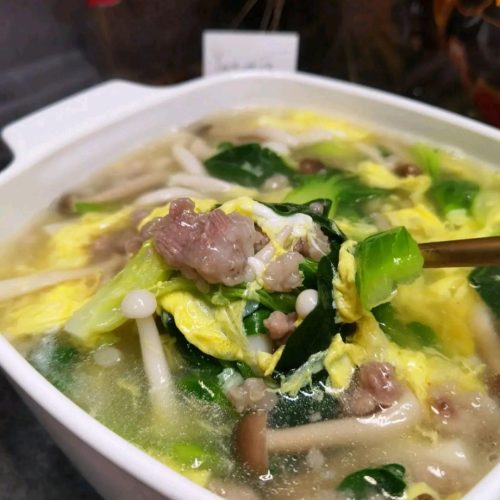
Mom’s Poached Pork Soup (Cuan Rou Tang)

Equipment
- Medium Pot (4 to 5 L / 4 to 5 qt) with Lid
- Sharp Chef’s Knife and Cutting Board
- Mixing Bowl
- Spatula or Slotted Spoon
- Ladle and Soup Bowls
Ingredients
For the Pork
- 7 oz lean pork loin or tenderloin, sliced then roughly chopped
- 0.5 tsp fine sea salt
- 0.5 tsp freshly ground black pepper
- 3 tbsp sweet potato starch (红薯粉, hong shu fen) do not substitute sweet potato flour
- 2 tbsp water for the starch slurry
For the Soup
- 5 cups water
- 1 tbsp neutral oil a little, for the water
- 4 shiitake mushrooms fresh, sliced
- 1 bunch leafy greens bok choy or spinach, about 7 oz (200 g)
- 1 large egg beaten
- 1 tsp fine sea salt
- 0.5 tsp shrimp powder or 1 tsp (3 g) chicken bouillon powder
- 2 scallions sliced
Instructions
- Slice the pork, then chop it a few more times until you have coarse, irregular pieces. Season with black pepper and salt, add a generous amount of sweet potato starch and a little water.

- Mix with your hand until every piece is coated in the starchy slurry, with no dry flour left in the bowl.

- Bring the water to a full rolling boil, add a little oil, and drop the pork pieces in one at a time. Do not stir after adding.

- When all the pork is in, bring the pot back to a full boil, then use a spatula to gently release any pieces stuck to the bottom.

- Add the sliced mushrooms and leafy greens and cook until the greens are just tender.
- Drizzle in the beaten egg in a slow, steady stream, then turn off the heat. Season with salt and shrimp powder (or chicken bouillon) and stir gently.
- Sprinkle with sliced scallions and serve immediately.







Leave a Reply