Growing up in my family’s restaurant kitchen in Sichuan, mornings were always busy. However, my mother always ensured we had a warm, comforting bowl of congee before the breakfast rush. I vividly remember her standing by the steaming pots, quickly prepping the pork ribs using a clever “lazy blanching” trick to save time.

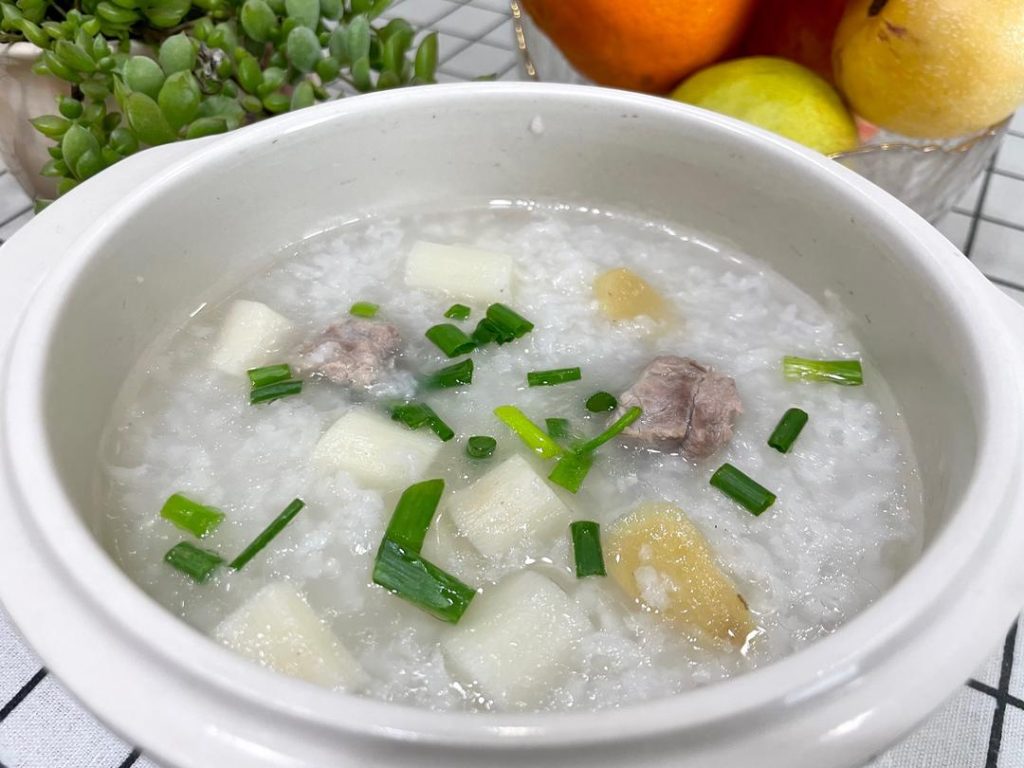
Today, I am sharing her exact method for Pork Rib and Chinese Yam Congee (Pai Gu Shan Yao Zhou). This recipe is incredibly close to my heart. It is simple, requires very little hands-on time, and yields a savory, deeply comforting porridge that is perfect for a chilly morning or a soothing weeknight dinner.
About the Author & Recipe Development
I am Lin, and I have spent over a decade working in professional Chinese kitchens after graduating from the Sichuan Higher Institute of Cuisine. In restaurant environments, we often simmer master stocks for hours. However, home cooking requires practical adaptations without sacrificing flavor.
I tested this specific recipe three times in my own Western-style home kitchen to ensure the liquid ratios and cooking times translate perfectly to standard stovetops and slow cookers. By using my mother’s rapid water-flushing technique for the ribs, you can achieve a clean, pristine broth without dirtying an extra boiling pot.
Why This Recipe Works
- The “Lazy Blanching” Technique: Instead of boiling a separate pot of water to blanch the pork ribs, we simply pour boiling water over them in the cooking vessel, stir, and drain. Doing this two to three times removes impurities and blood, ensuring a clear, clean-tasting congee.
- Optimal Starch Release: Cooking the raw rice directly with the meat and yam for an hour allows the rice grains to break down completely, naturally thickening the broth into a silky, luxurious texture.
- Convenience: You can easily set this up in a slow cooker or a programmable stew pot (炖盅) the night before. Consequently, you will wake up to a hot, ready-to-eat breakfast.
What Is Pork Rib and Chinese Yam Congee?
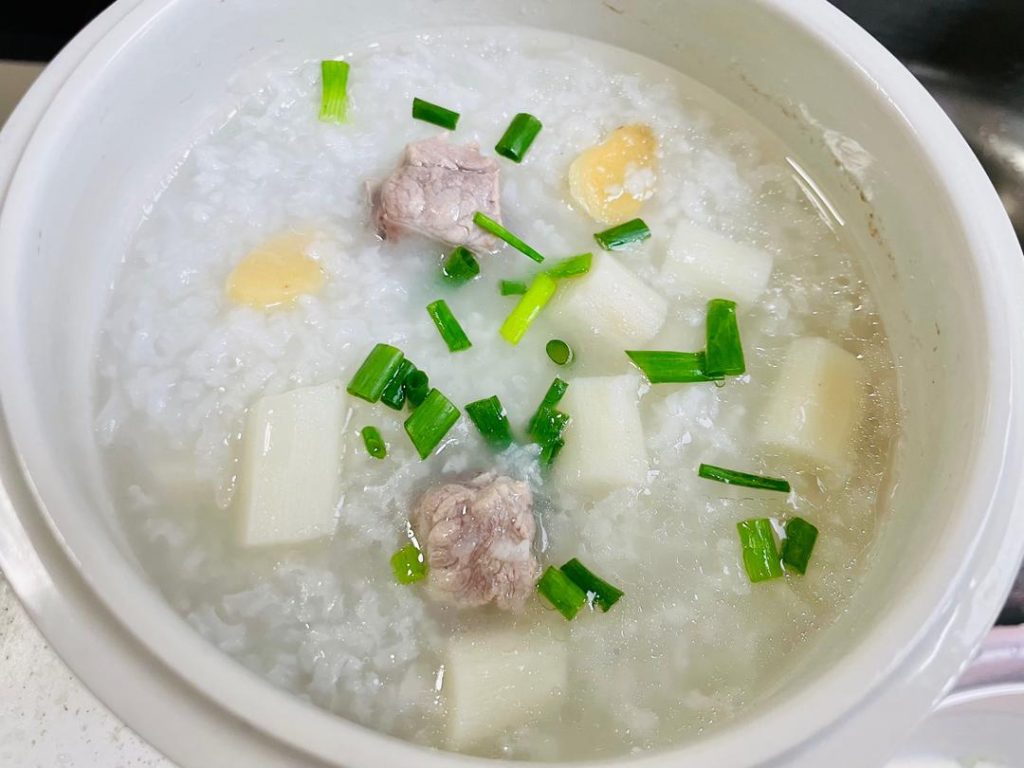
Pork Rib and Chinese Yam Congee is a traditional Chinese home-style dish. It features short segments of pork ribs and chunks of Chinese yam (often the slender “iron stick” variety) slowly simmered with white rice, ginger, and water.
In traditional Chinese culinary philosophy, dishes like this are prized for being gentle on the digestive system. While Western-Chinese takeout often focuses on heavily sauced stir-fries, authentic Chinese home cooking heavily features soothing, nourishing soups and porridges.
If you love savory, meat-based porridges, you must also try our classic Century Egg and Pork Congee! Both recipes share a similar comforting profile, though this yam version is slightly earthier and milder. You might also enjoy our Savory Millet Congee with Fish for another easy breakfast option.
Key Ingredients & Substitutions
- Pork Ribs (排骨): You will need about 4 small segments of pork ribs. Baby back ribs or spare ribs chopped into 1-inch pieces work best. We highly recommend reading our Chinese Pork Ribs Guide (Spare Ribs vs Baby Back) to understand the best cuts. For another great rib recipe, check out our Corn and Pork Rib Soup.
- Chinese Yam (铁棍山药): Look for the slender “iron stick” yam at your local Asian market. It has a slightly crunchy yet starchy texture. This is the exact same yam we use in our Sweet and Sour Chinese Yam.
- White Rice (大米): Standard short-grain or medium-grain white rice yields the best, silkiest texture.
- Aromatics: Fresh ginger slices neutralize the meat’s richness, while chopped scallions add a fresh finish.
- Seasoning: We keep it simple. Just use high-quality Salt to taste. You can also add a pinch of White Pepper or a drizzle of Universal Scallion Oil if you prefer a punchier flavor.
Chinese Yam vs. Regular Potatoes (Ingredient Contrast)
If you cannot find Chinese yam, you might be tempted to use regular russet potatoes. However, Chinese yam has a distinct mucilaginous (slightly slimy) texture when raw, which transforms into a dense, satisfying bite when cooked. It does not disintegrate into mush as quickly as standard potatoes do. If you absolutely must substitute it, taro root or cassava are closer matches in texture than Western potatoes.
Recipe Notes Before You Start
- Wear Gloves for the Yam: Raw Chinese yam contains oxalate crystals in its sap, which can cause severe skin irritation and itching. Always wear kitchen gloves when peeling and cutting the yam.
- Water Ratio: The golden ratio for a medium-thick congee is usually 1 part rice to 8 or 10 parts water. We are using 1 cup of rice to about 1000ml (roughly 4 cups) of water here, but the moisture from the meat and yam balances it out perfectly.
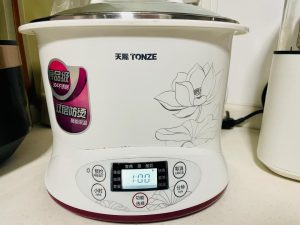
- Equipment: A heavy-bottomed Dutch oven, an electric stew pot (炖盅), or a slow cooker is ideal.
Mise en Place / Prep
Before you begin cooking, measure out your ingredients. First, rinse your rice under cold water until the water runs clear, then drain it. Next, put on your gloves, peel the Chinese yam, and cut it into 1-inch segments. Slice the ginger into 2-3 thin pieces. Chop the scallion and set it aside for the garnish. Having everything prepared ensures the cooking process is seamless and stress-free.
How to Make Pork Rib and Chinese Yam Congee
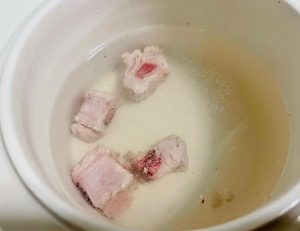
- Execute the Lazy Blanching Method: Place your raw pork rib segments into your cooking pot. Pour freshly boiled water over them. Use chopsticks to stir the ribs vigorously for about 30 seconds. You will see the water turn cloudy as blood and impurities seep out.
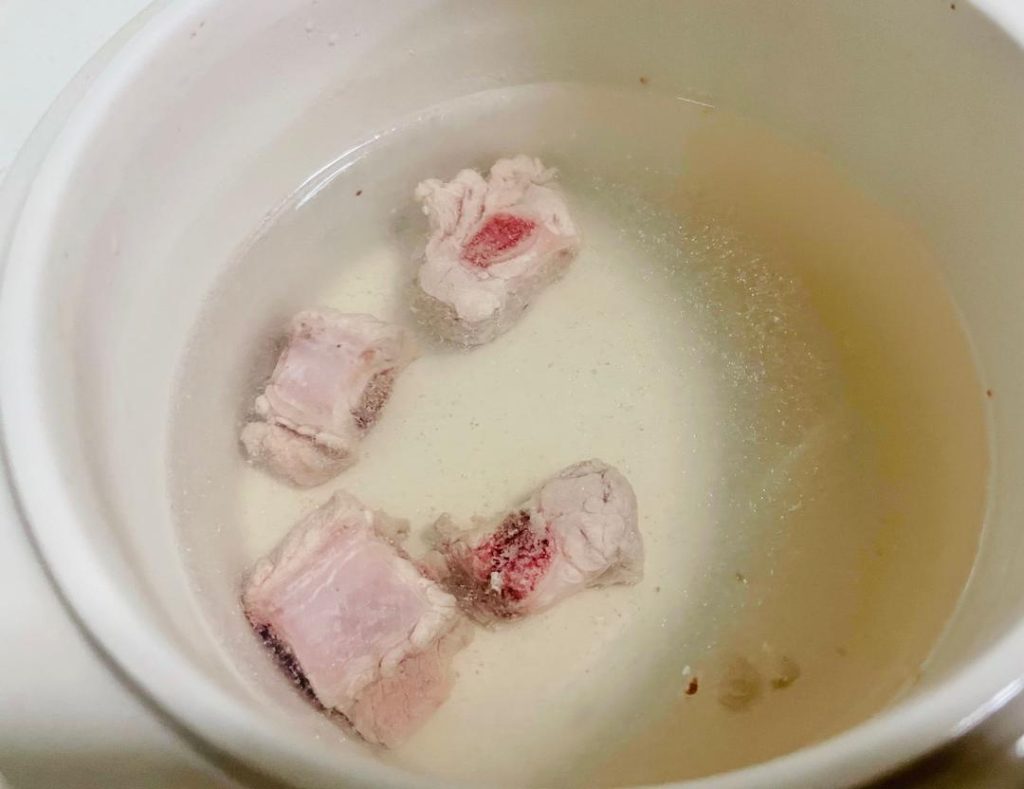
- Rinse and Repeat: Carefully pour out the dirty water. Pour a second batch of freshly boiled water over the ribs and stir again. Pour this water out.
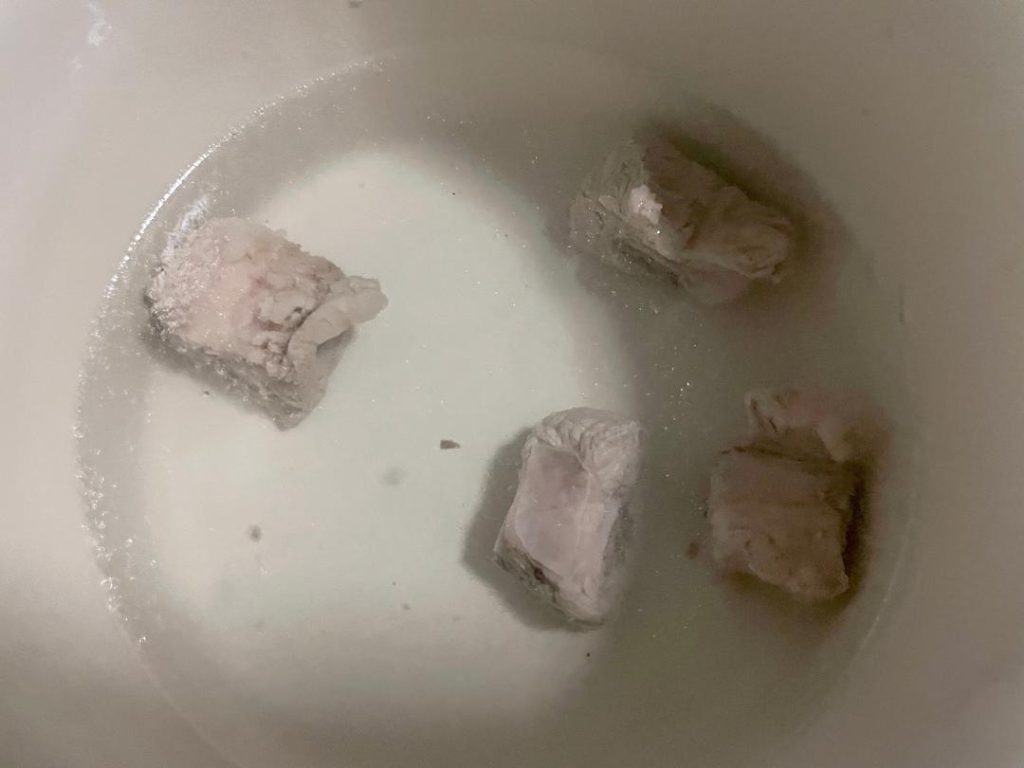
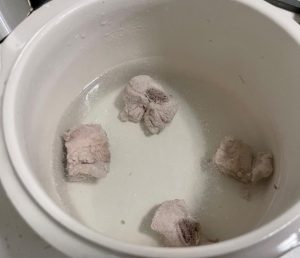
- Final Check: By the third pour (or sometimes just the second), the ribs will look pale and clean, and the water will remain clear. Drain the water completely. Why do we do this? This rapid hot-water flushing seals the exterior of the meat and removes myoglobin, guaranteeing a pristine, scum-free congee without boiling a separate pot.
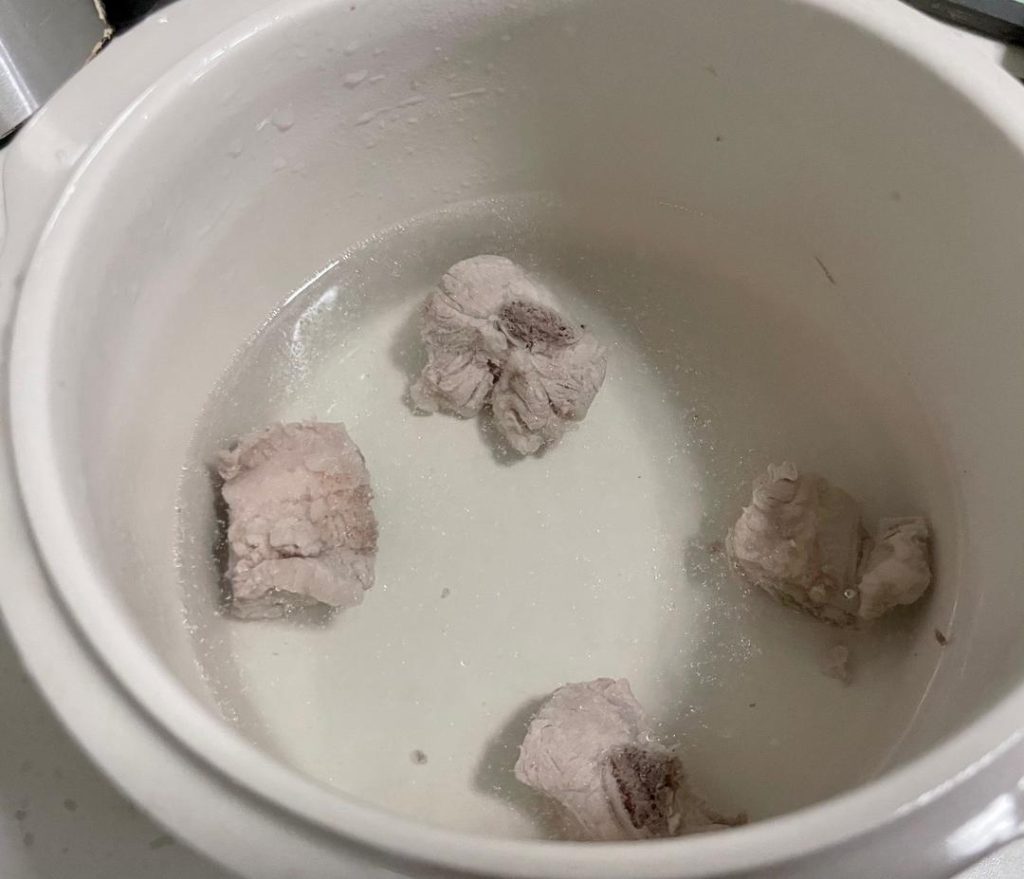
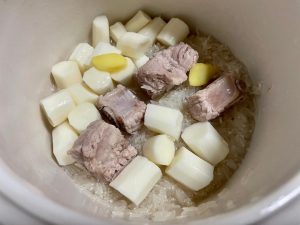
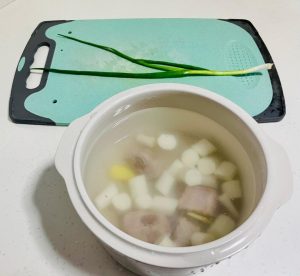
- Combine Ingredients: To the pot with the clean ribs, add your peeled yam segments, the rinsed white rice, and the 2-3 slices of fresh ginger.

- Add Water and Simmer: Pour 1000ml (about 4 cups) of purified water into the pot. Bring the mixture to a gentle boil, then immediately reduce the heat to the lowest setting. Cover the pot.
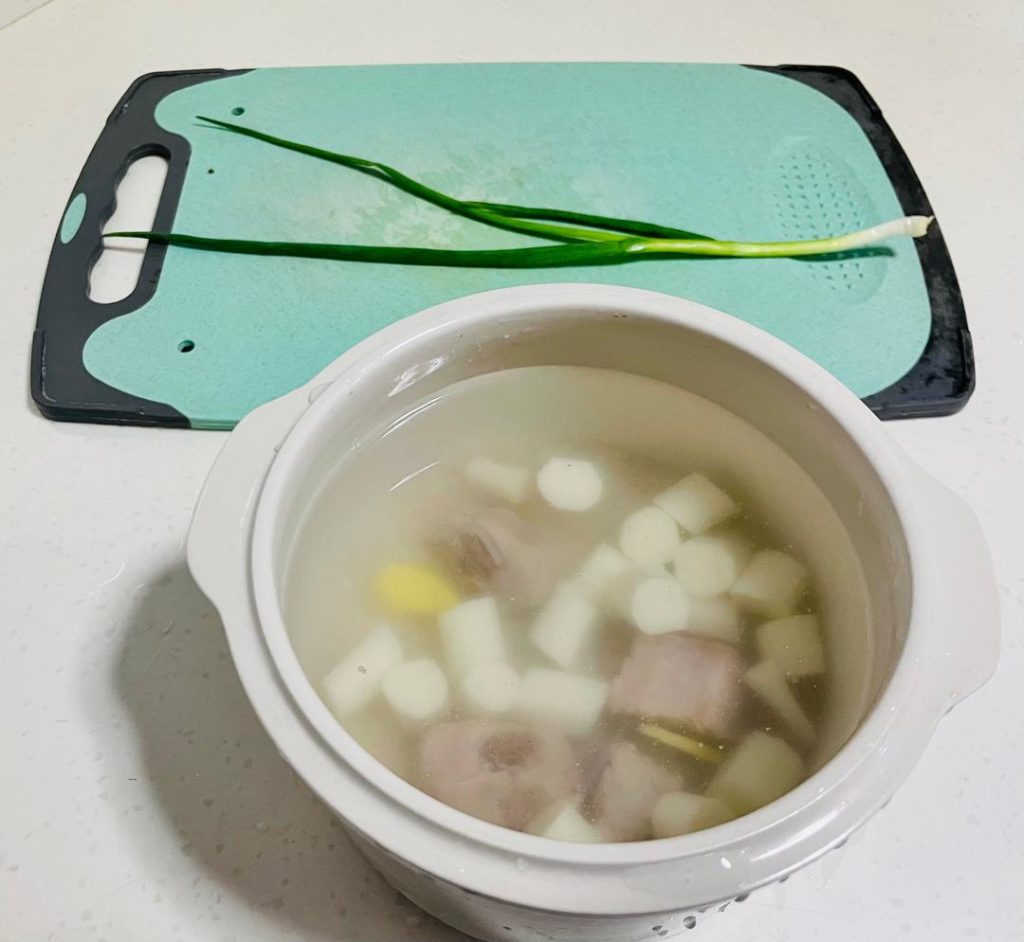
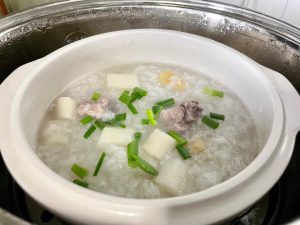
- Stew for 1 Hour: Let the congee simmer gently for exactly 1 hour. Stir occasionally to prevent the rice from sticking to the bottom. Visual cue: The congee is done when the rice grains have burst open and the liquid is thick and creamy. The pork should easily pull away from the bone.
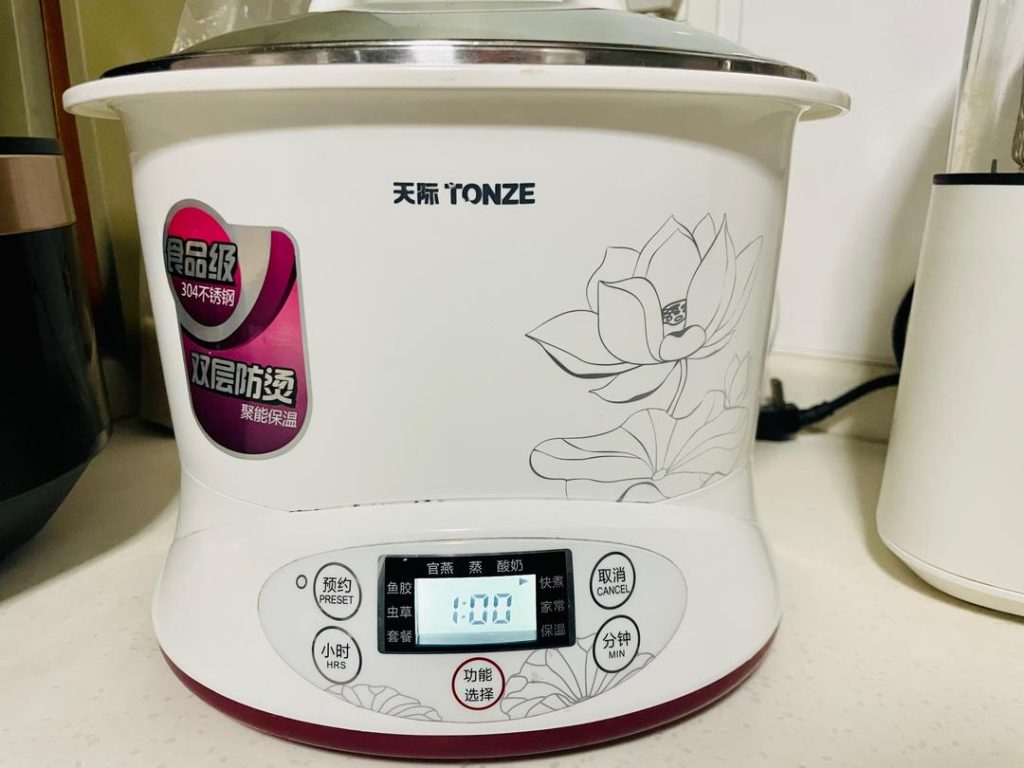
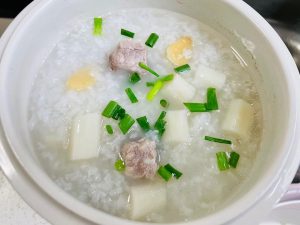
- Season and Serve: Turn off the heat. Stir in salt to taste. Ladle the hot congee into bowls and garnish generously with chopped scallions.
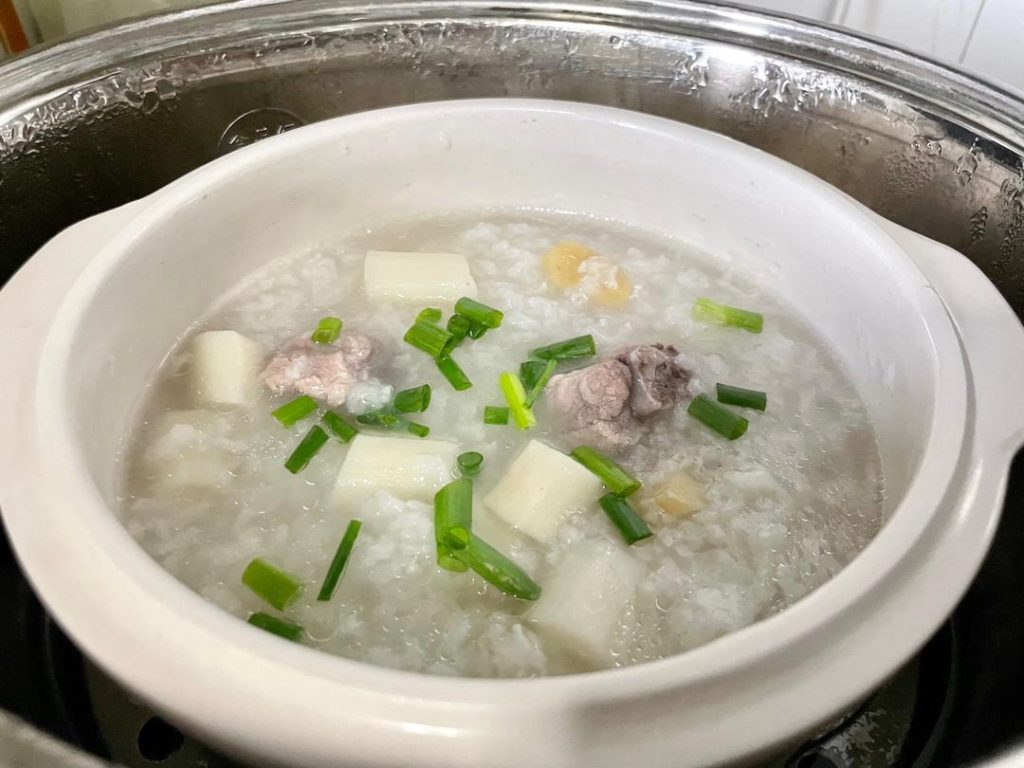
Common Mistakes When Making Pork Rib Congee
- Skipping the Blanching Step: If you do not flush the ribs with boiling water, the blood will coagulate into gray foam during the slow simmer, making your congee look dirty and taste metallic.
- Not Stirring: Rice is heavy and sinks to the bottom of the pot. If cooking on a stovetop, you must stir the bottom every 15-20 minutes. Otherwise, the starches will stick and burn, ruining the entire pot with a scorched flavor.
- Adding Salt Too Early: Always add salt at the very end of the cooking process. Adding salt at the beginning can draw moisture out of the meat prematurely, making the pork ribs tough and dry.
FAQ / Troubleshooting
Why did my yam turn brown? Chinese yam oxidizes quickly when exposed to air. If you prep it ahead of time, submerge the cut yam pieces in a bowl of cold water with a splash of white vinegar until you are ready to cook.
Can I cook this in a slow cooker overnight? Absolutely. This recipe is perfect for slow cookers. Add all the prepped ingredients (after blanching the ribs) into your slow cooker, add the water, and set it to “Low” for 6-8 hours. You will wake up to a perfect breakfast.
Is it safe to eat pork boiled this way? Yes. The FDA recommends cooking whole cuts of pork to an internal temperature of 145°F (63°C). Simmering the ribs in liquid for an hour easily brings the internal temperature well past 165°F, ensuring it is completely safe and fall-apart tender.
How to Store & Reheat
Allow any leftover congee to cool completely before transferring it to an airtight container. It will keep in the refrigerator for up to 3 days.
Because rice acts like a sponge, the congee will thicken significantly in the fridge. To reheat, transfer the congee to a saucepan, add a splash of water or chicken broth to loosen it, and heat gently over medium-low heat. Stir constantly until it reaches a rolling simmer and is heated through completely (at least 165°F / 74°C for food safety).
Food Safety and Preparation
- Cross-Contamination: Always use separate cutting boards for raw pork and fresh vegetables. Wash your hands thoroughly after handling raw meat.
- Meat Doneness: Ensure the pork ribs are fully cooked. For official guidelines, refer to the USDA’s safe minimum internal temperature chart.
- Allergens: This recipe is naturally dairy-free and gluten-free. However, please ensure your salt and any optional garnishes are processed in allergy-friendly facilities if you are cooking for someone with severe sensitivities.
Authoritative References
To ensure the highest standards of culinary safety and nutritional accuracy in our kitchen, we rely on established guidelines.
- For safe meat preparation temperatures, we adhere to the USDA Food Safety and Inspection Service Guidelines.
- For nutritional profiling and the dietary benefits of complex carbohydrates like rice and yams, we reference data from the USDA FoodData Central.
Nutrition Information (Estimate)
- Calories: 310 kcal
- Carbohydrates: 45g
- Protein: 15g
- Fat: 8g
- Sodium: 450mg (varies by salt added)
- Fiber: 3g
Disclaimer: Nutrition information is calculated using an ingredient database and should be considered an estimate. In cases where multiple ingredient alternatives are given, the first listed is calculated for nutrition. Garnishes and optional ingredients are not included. Actual values vary based on the specific cuts of meat and ingredient brands used.
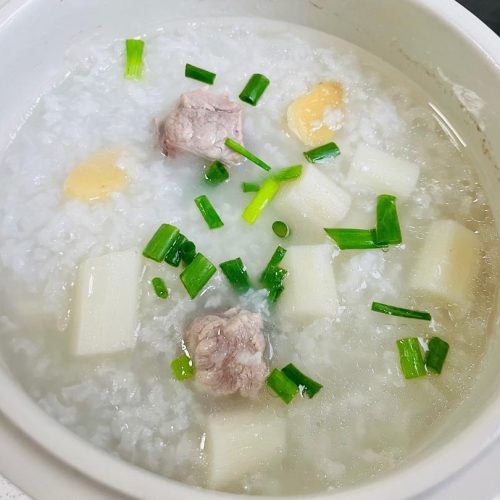
Nourishing Pork Rib and Chinese Yam Congee

Equipment
- Stew Pot or Dutch Oven A heavy-bottomed pot prevents the rice from burning.
Ingredients
Main Ingredients
- 4 pieces pork ribs baby back or spare ribs, chopped into 1-inch segments
- 1 Chinese yam (Iron stick yam) peeled and cut into 1-inch segments (wear gloves when peeling)
- 1 cup white rice rinsed and drained
- 1000 ml purified water about 4 cups
Aromatics & Seasoning
- 2 slices fresh ginger
- 1 scallion finely chopped, for garnish
- salt to taste
Instructions
- Place the raw pork rib segments into your cooking pot. Pour freshly boiled water over them. Use chopsticks to stir vigorously for about 30 seconds to release the blood and impurities.

- Carefully pour out the dirty water. Pour a second batch of freshly boiled water over the ribs, stir again, and drain. Repeat a third time if necessary, until the ribs look pale and the water runs clear.

- To the pot with the clean ribs, add the peeled Chinese yam segments, the rinsed white rice, and the fresh ginger slices.

- Pour 1000ml (about 4 cups) of purified water into the pot. Bring the mixture to a gentle boil over medium-high heat.

- Immediately reduce the heat to the lowest setting. Cover the pot and let the congee simmer gently for exactly 1 hour. Stir the bottom every 15 minutes to prevent the rice from sticking and burning.
- Once the rice grains have burst open and the liquid is thick and creamy, turn off the heat. Stir in salt to taste.
- Ladle the hot congee into bowls and garnish generously with chopped scallions before serving.


Leave a Reply