There is a whole category of Chinese home cooking that never makes it onto restaurant menus, and stir-fried yam with black fungus sits right at the top of it. It is the dish a cook throws together on a Tuesday when the fridge holds a knob of Chinese yam, a handful of dried wood ear, and a scallion. Nothing about it looks impressive. Everything about it tastes like home.
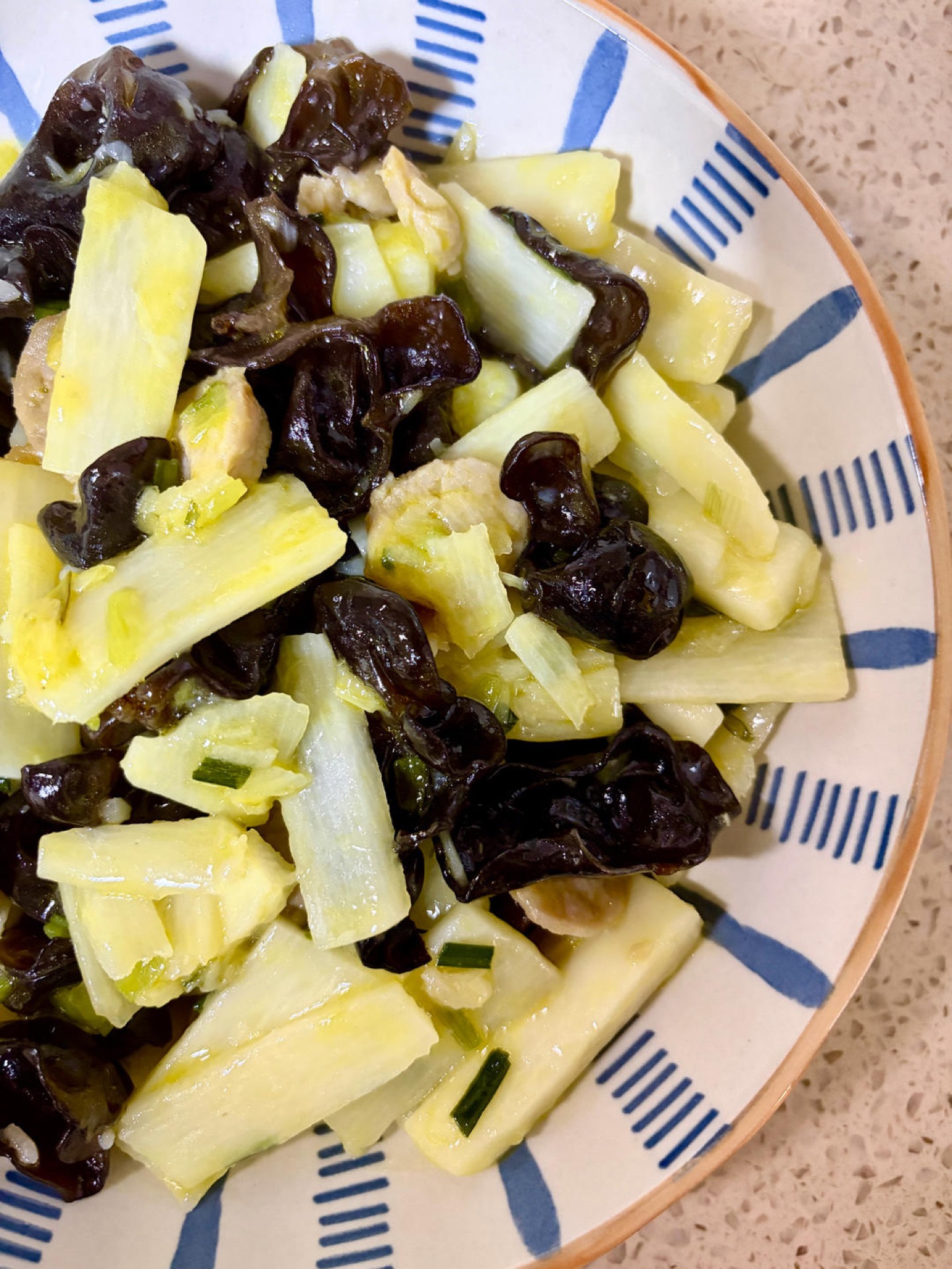
What makes it worth writing down is the contrast. Chinese yam, shanyao, cooks down to something silky and faintly sweet, almost like a savory pudding in the mouth. Wood ear mushrooms, heimuer, stay stubbornly springy, snapping and squeaking between your teeth. Toss them together in scallion oil with a splash of water and a pinch of sugar, and you get a dish that is somehow both soft and crunchy in every single bite.
It is also a dish that rewards precision more than most. The yam can turn to paste if you crowd the wok. The wood ear can taste flat and watery if you skip the blanch. The whole thing can go gray and dull if you let the yam sit out peeled. None of those are hard problems, but they are the difference between a plate of vegetables and a plate you keep going back to. This recipe walks through the small moves that make the difference.
What Is Stir-Fried Yam with Black Fungus?
Stir-fried yam with black fungus, or shanyao chao heimuer (山药炒黑木耳), is a Chinese home stir-fry built on two ingredients: Chinese yam and wood ear mushroom. It belongs to the same everyday family as garlicky greens, lotus root stir-fry, and celery with dried tofu, the quick vegetable dishes that fill out a table alongside a braise or a soup.
Chinese yam, also called shanyao or nagaimo, is a long, pale, hairy tuber sold in Asian groceries and increasingly in mainstream supermarkets. Unlike the starchy yams of West Africa and the Caribbean, it is eaten as a vegetable, not a starch. Sliced thin and cooked briefly, it turns tender and slightly sticky, with a clean, milky sweetness.
Wood ear, meanwhile, is a dried fungus that rehydrates into dark, ruffled, gelatinous sheets. It has almost no flavor of its own, which sounds like a flaw and is actually its best quality. It carries sauce, adds crunch, and gives the dish its signature squeaky snap. Together the two ingredients make a stir-fry that is light, cheap, fast, and genuinely good for you.
If you have never cooked Chinese yam before, think of it as a cross between a potato and a water chestnut: it softens when cooked but keeps a faint bite, and it drinks up whatever sauce you give it.
The dish turns up all over northern and central China, where shanyao is a winter staple and dried wood ear lives in every pantry. It is often served as one of several dishes at a home meal, but it is substantial enough to be the main vegetable course on a busy night. If you enjoy this style of quick mushroom stir-fry, our black pepper beef and king oyster mushroom stir fry takes the same approach with a much beefier, pepperier result.
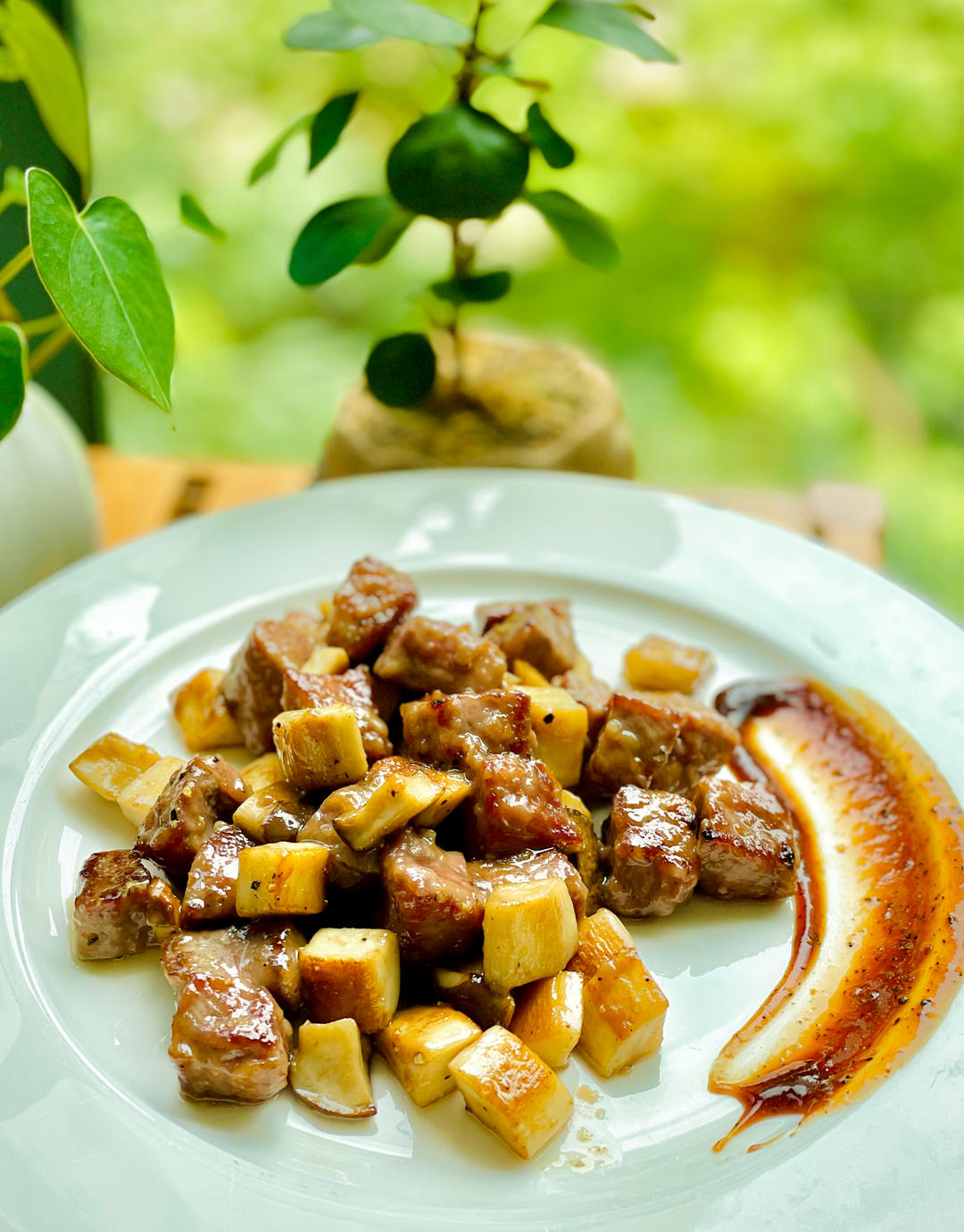
1Black Pepper Beef and King Oyster Mushroom Stir-FryA quick, healthy, and incredibly tender 20-minute Chinese stir-fry featuring cubed beef tenderloin and hearty king oyster mushrooms, seasoned with fresh black pepper.Check out this recipe
For a porkier, more savory take on the mushroom-and-meat formula, our pork and enoki mushroom stir fry swaps the wood ear for delicate enoki and leans on a glossy sauce. And if what you really want is a carb-heavy one-pan dinner in the same spirit, our stir fried rice noodles is the noodle answer to the same question.
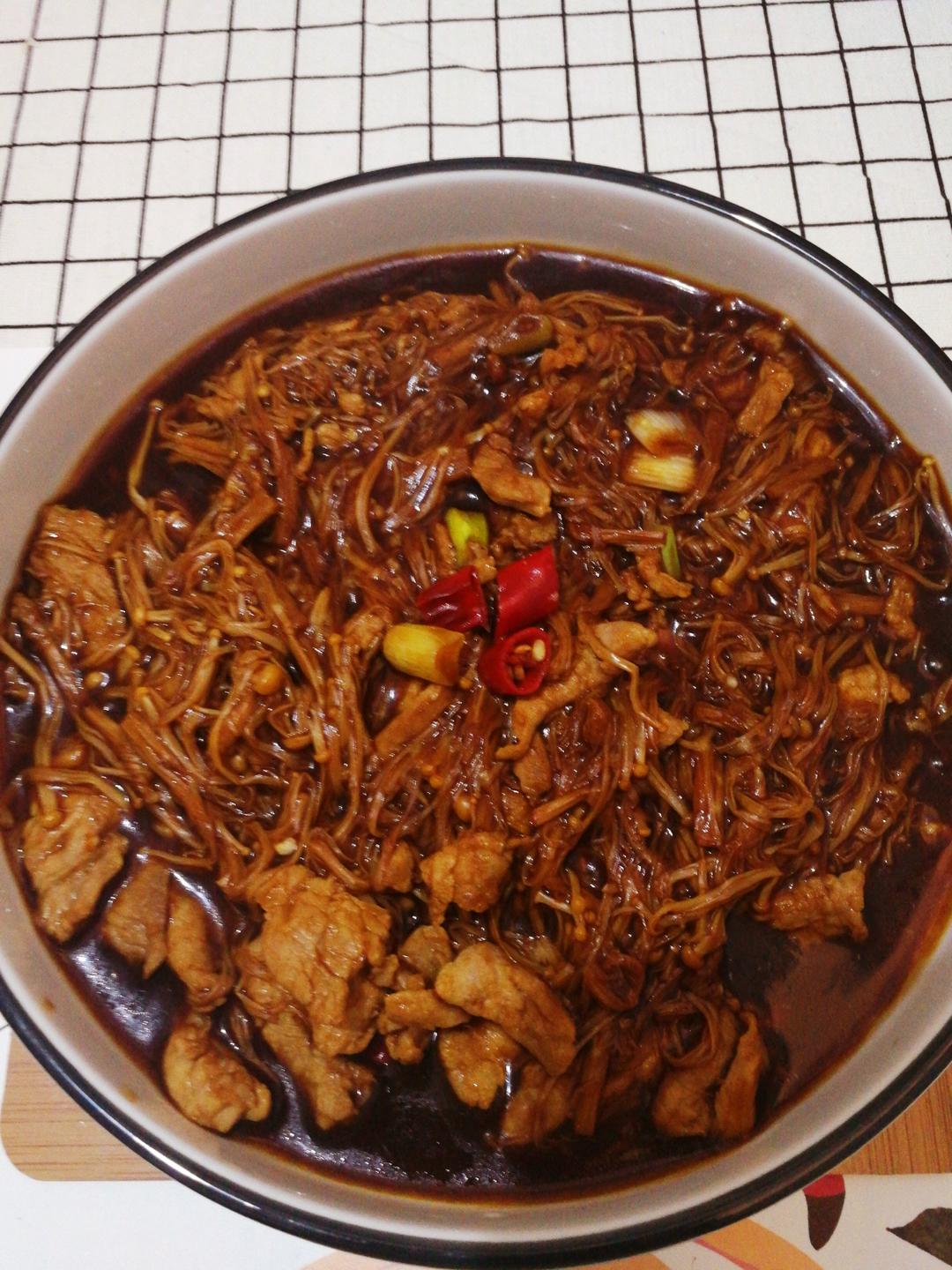
2Pork and Enoki Mushroom Stir-fry (Jin Zhen Gu Chao Rou)A quick, savory, and homestyle Chinese stir-fry featuring tender velveted pork and crisp enoki mushrooms in a rich soy glaze. Ready in 20 minutes.Check out this recipe
For the next cook from the same playbook, stir fried rice noodles is the recipe I point people to.
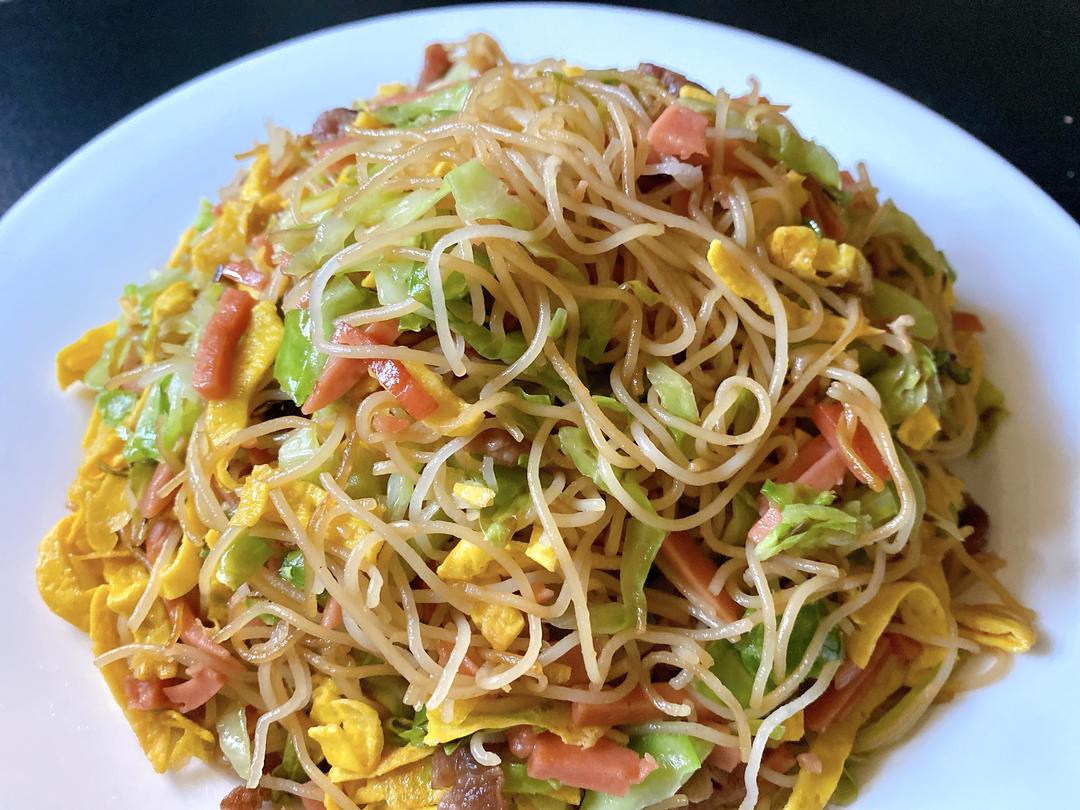
3Authentic Stir-Fried Rice Noodles (Chao Mi Fen): Chef’s SecretLearn a professional chef’s secret ‘Tan’ method for perfectly bouncy, non-mushy Authentic Stir-Fried Rice Noodles (Chao Mi Fen). An easy 25-minute weeknight dinner.Check out this recipe
Why This Recipe Works
The method here is deliberately minimal, but every choice has a reason behind it.
- Blanching the wood ear first. Dried fungus rehydrates into something floppy and slightly raw-tasting. A three-minute blanch firms the texture, removes any lingering grit, and lets the stir-fry itself stay fast and hot.
- Thin, even yam slices. Chinese yam cooks unevenly if the slices are thick. Slicing it into coins about an eighth of an inch thick means every piece is tender at the same moment.
- A splash of hot water and a lid. Yam needs a little steam to go from raw and chalky to soft and silky. A small bowl of hot water plus three minutes covered does that without turning the dish into a stew.
- Sugar, not just salt. The yam is sweet on its own, and a teaspoon of sugar rounds out the saltiness so the finished dish tastes balanced rather than flat.
- Scallion oil as the base. Frying minced scallion in oil before anything else goes in gives the whole stir-fry a savory backbone without needing garlic, ginger, or a heavy sauce.
The result is a dish that tastes seasoned rather than sauced. There is no cornstarch slurry, no dark braising liquid, no glaze. Just vegetables, salt, sugar, and the natural starch the yam releases into the pan.
Equipment Needed
You do not need much for this one, which is part of its appeal.
- A wok or a wide skillet. A carbon steel wok is ideal because it holds high heat and lets you toss without crowding. A 12-inch skillet works fine if that is what you have. If you want a deeper look at wok cooking, our sizzling dry pot fish head shows what a wok can do with bigger, bolder ingredients.
- A cutting board and a sharp knife. Thin, even yam slices come from a sharp blade, not from force.
- A slotted spoon or spider. For lifting the blanched fungus out of the boiling water without carrying a cup of water with it.
- A lid that fits your pan. Needed for the three-minute braise.
- Kitchen gloves. Optional but genuinely useful. Raw Chinese yam sap can irritate skin, and gloves solve it completely.
Ingredients
Four main ingredients plus seasoning. That is the whole list.
- Chinese yam (shanyao, 山药) — about half a pound of the long, thin iron-stick variety if you can find it, or a section of the thicker Japanese nagaimo. Peel it, rinse it, slice it thin.
- Dried black fungus (heimuer, 黑木耳) — 10 grams dried, which rehydrates into roughly a cup and a half. Buy whole pieces rather than pre-shredded if you have the choice; the texture is better.
- Scallions — two stalks, white parts minced for the oil, green parts saved for finishing.
- Vegetable oil — a neutral oil. Peanut oil is traditional and adds a nice nutty note.
- Salt, sugar, and MSG — the whole seasoning. The sugar is not optional; it is what makes the yam taste like itself.
- Optional add-ins — a small piece of Chinese sausage (lap cheong) sliced thin, or two scrambled eggs, both of which add richness and turn the dish into a fuller meal.
Ingredient Notes
Which yam to buy. Chinese yam comes in two main shapes. The thin, knobby iron-stick yam (tie gun shanyao) is denser, sweeter, and starchier, and it is the one most Chinese cooks reach for. The thicker, straighter Japanese nagaimo is easier to peel and slice and tastes milder. Both work here. Avoid anything soft, spotted, or sprouting.
Handling raw yam. The sap contains calcium oxalate crystals that can make your hands itch and prickle. Some cooks are immune; many are not. Wear gloves, or peel under running water, or hold the yam with a paper towel. If your hands do itch, rinse them in warm water and avoid touching your face.
Buying wood ear. Look for dark, firm, ruffled pieces with a clean mushroom smell. Avoid anything powdery or damp. Dried wood ear keeps for a year or more in a sealed jar in a dark cupboard.
Soaking wood ear. Hot water, ten minutes, and it is done. Do not soak it overnight at room temperature, and do not eat it raw. If you are ever unsure about a batch that has been sitting out wet for a long time, throw it away; wood ear is cheap and food safety is not.
Soy sauce and seasoning. This recipe uses only salt, sugar, and MSG, which keeps the yam pale and lets the natural sweetness come through. If you want a splash of soy sauce for color, add it at the very end. If you are cooking around a soy allergy, our soy sauce substitute for stir fry guide covers the best swaps.
Prep & Mise en Place
This dish cooks in about six minutes once the wok is hot, so everything needs to be ready before you turn on the burner.
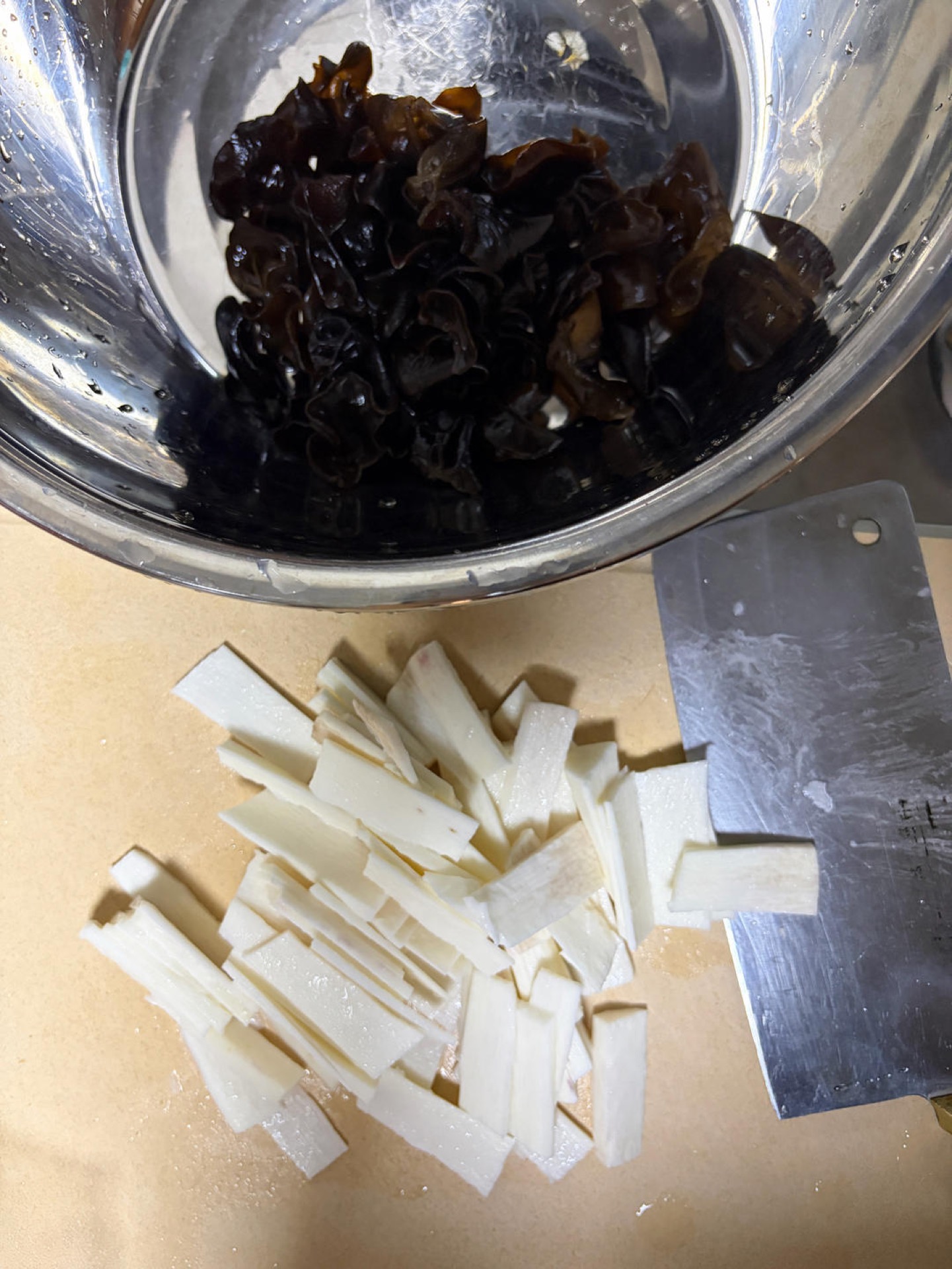
- Soak the fungus. Cover the dried wood ear with hot water and let it sit for ten minutes. Rinse well, trim off any hard knobby bases, and tear or cut larger pieces into bite-sized sections.
- Peel and slice the yam. Peel the yam, rinse it, and cut it into thin coins, about an eighth of an inch thick. Keep them in a bowl of cold water if you are not cooking immediately, so they do not discolor.
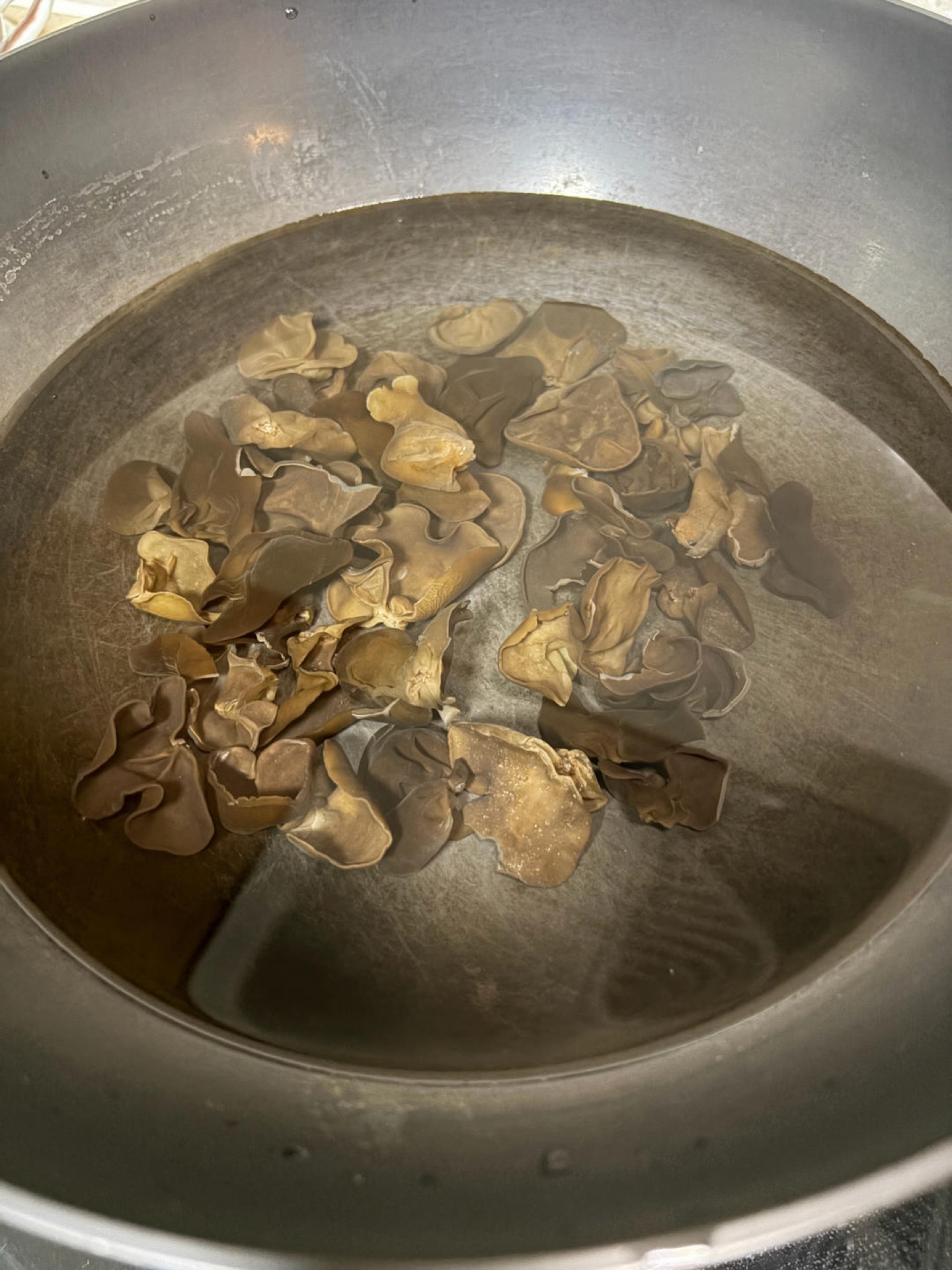
- Blanch the fungus. Bring a pot of water to a boil, add the wood ear, and cook for three minutes. Drain thoroughly.
- Prep the add-in. If using sausage, slice it thin. If using egg, beat it and scramble it in the wok first, then set it aside to fold back in at the end.
- Mince the scallions and set out your salt, sugar, and MSG within arm’s reach of the stove.
If you are also making a second dish, this is a good moment to think about timing. A quick soup like our clear beef noodle soup can simmer unattended while you stir-fry, so both hit the table at once.
Cooking Process
Step 1 — Soak and Slice
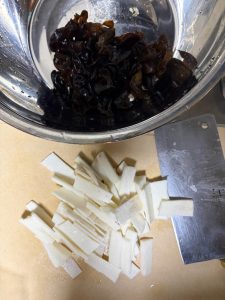
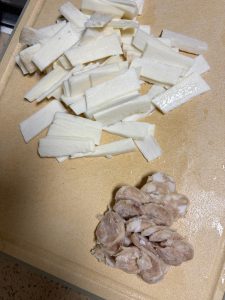
Soak the black fungus in hot water for ten minutes, rinse it clean, and drain off the water; peel and wash the Chinese yam and cut it into thin slices (wear kitchen gloves to prevent itchy hands).
Step 2 — Blanch the Fungus
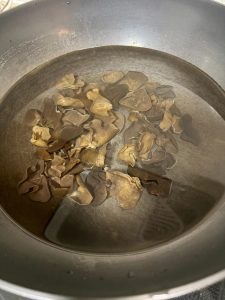
Blanch the black fungus in boiling water for 3 minutes, then drain it well.
Step 3 — Decide the Add-in
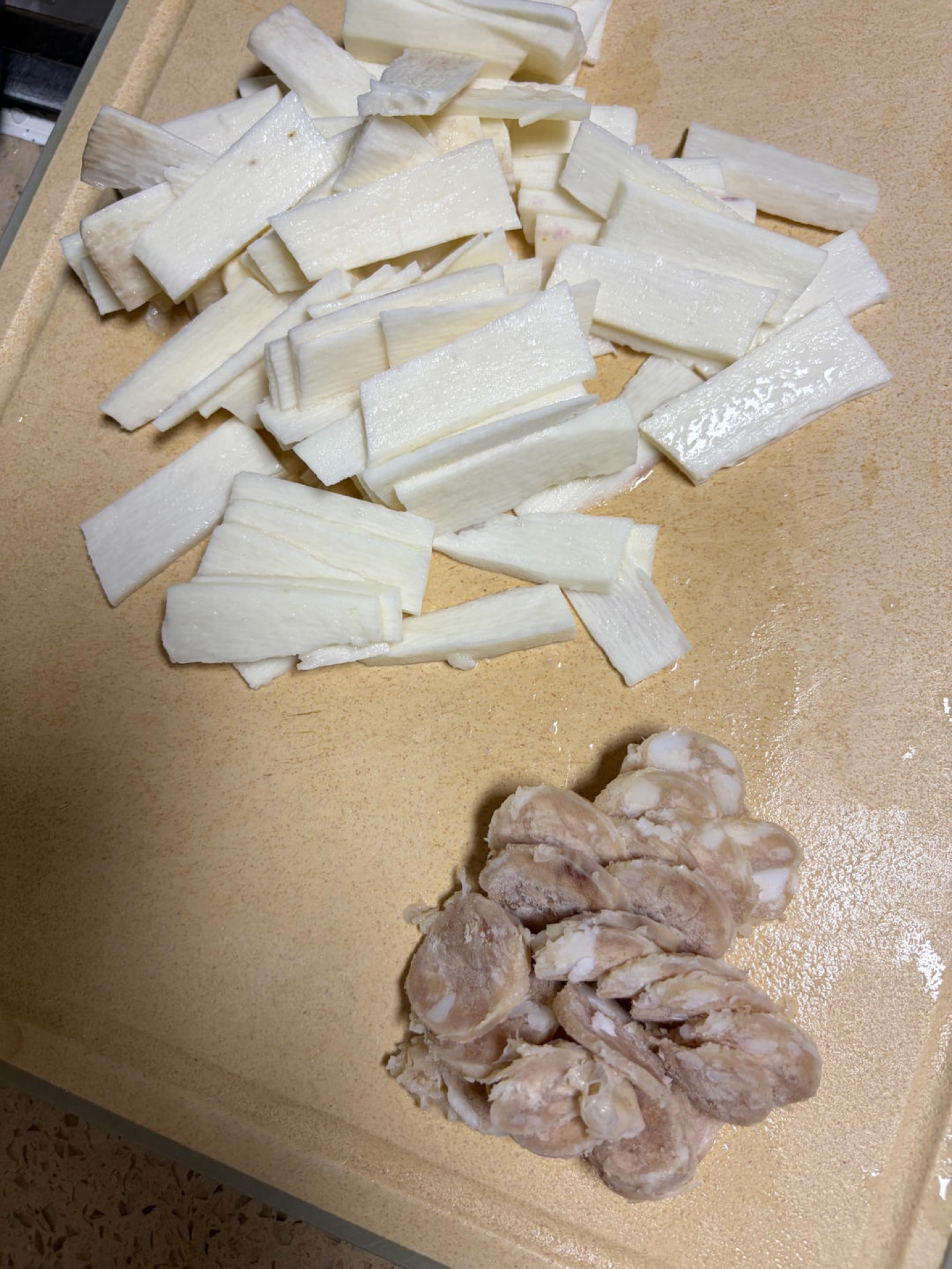
While the fungus is blanching, decide whether to slice a small piece of black pork sausage to enrich the texture (skip this step if making a vegetarian stir-fry); you could also add some scrambled egg for extra body.
Step 4 — Aromatics and Fungus
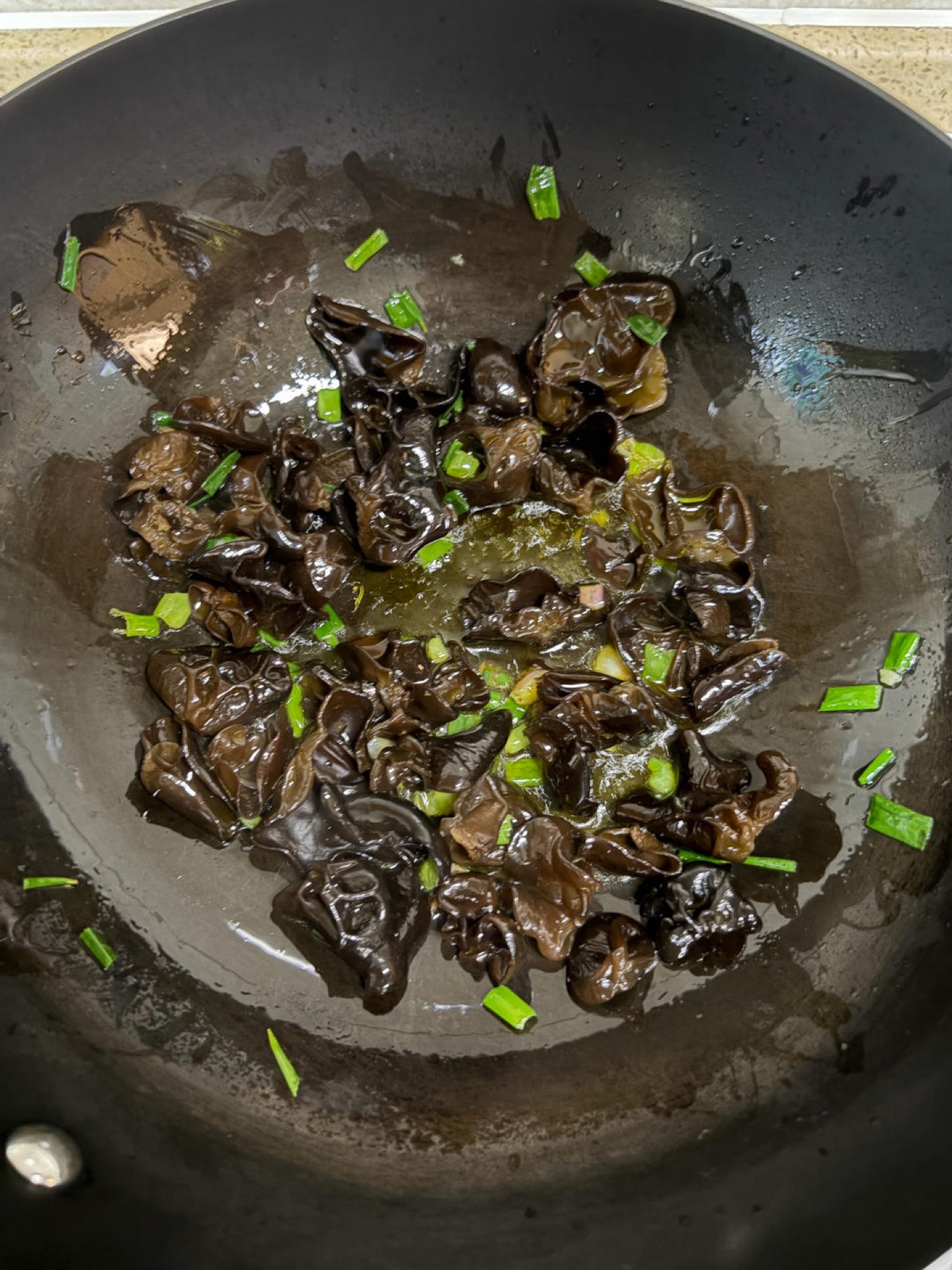
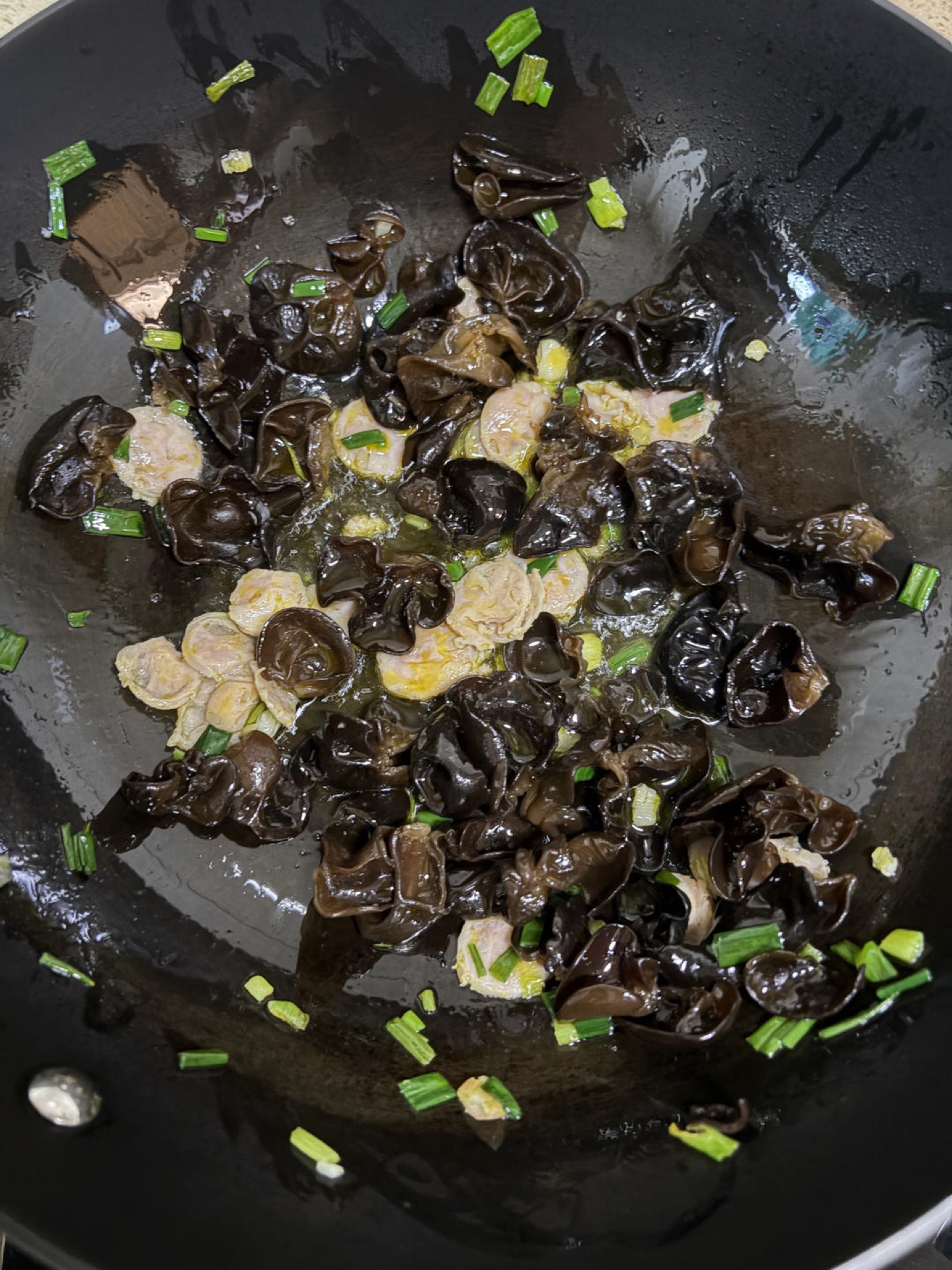
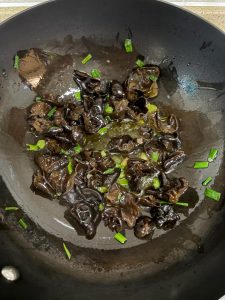
Heat vegetable oil in the wok and fry the minced scallion until fragrant, then add the black fungus and stir-fry for a dozen or so tosses.
Step 5 — Add the Meat
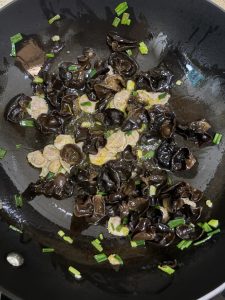
Add the sliced meat and stir-fry for another dozen or so tosses.
Step 6 — Yam and Braise
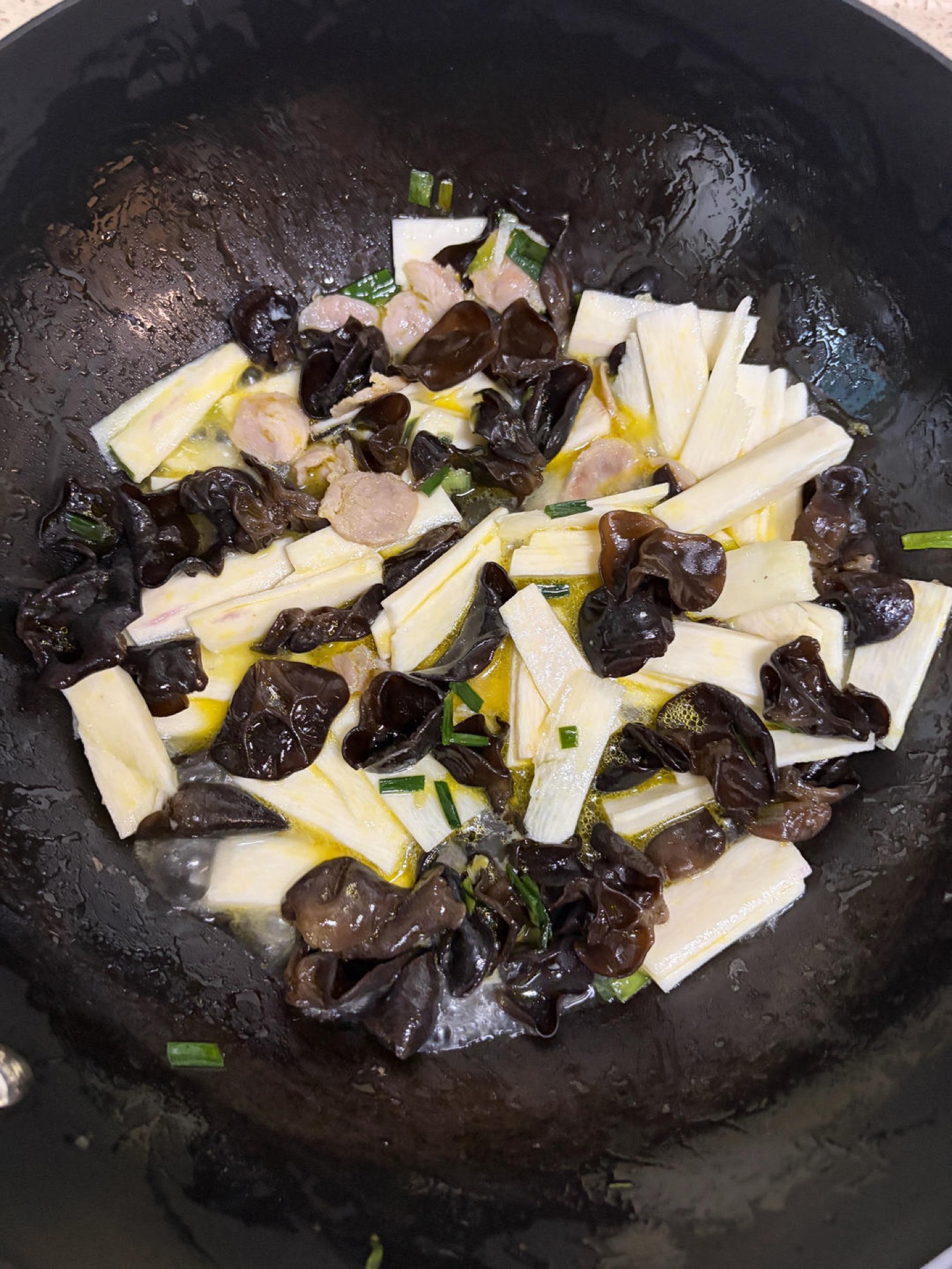
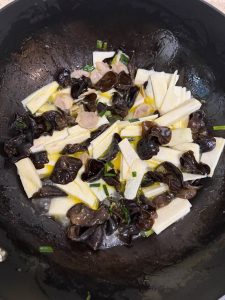
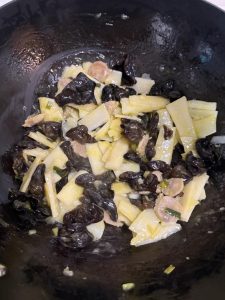
Add the yam and stir-fry for a dozen tosses, pour in a small bowl of hot water, season with salt and sugar, cover with a lid, and simmer over low heat for about 3 minutes.
Step 7 — Reduce and Season
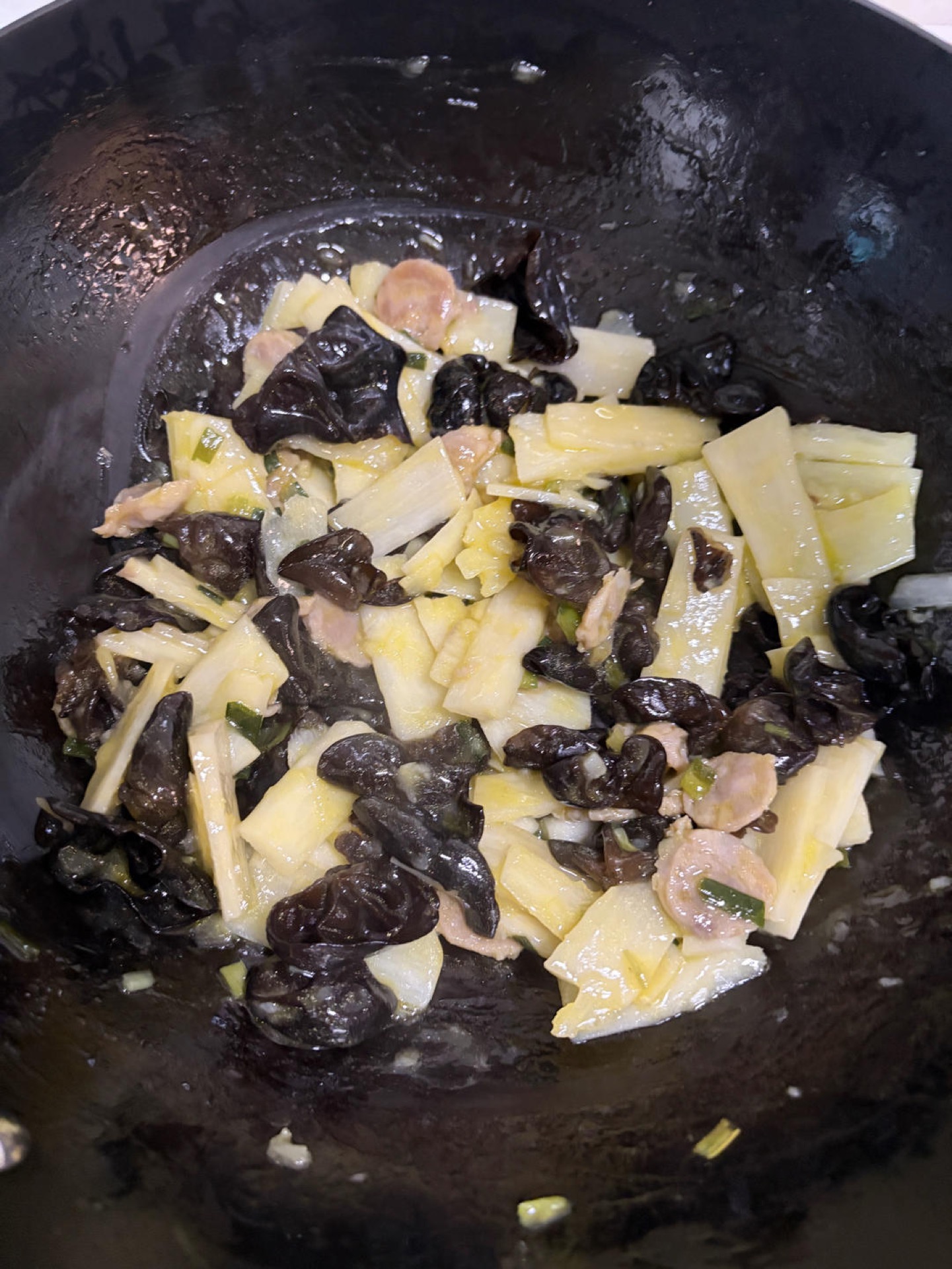
After 3 minutes the water should be nearly gone; adjust the saltiness to taste, then add MSG for seasoning.
Step 8 — Plate and Serve
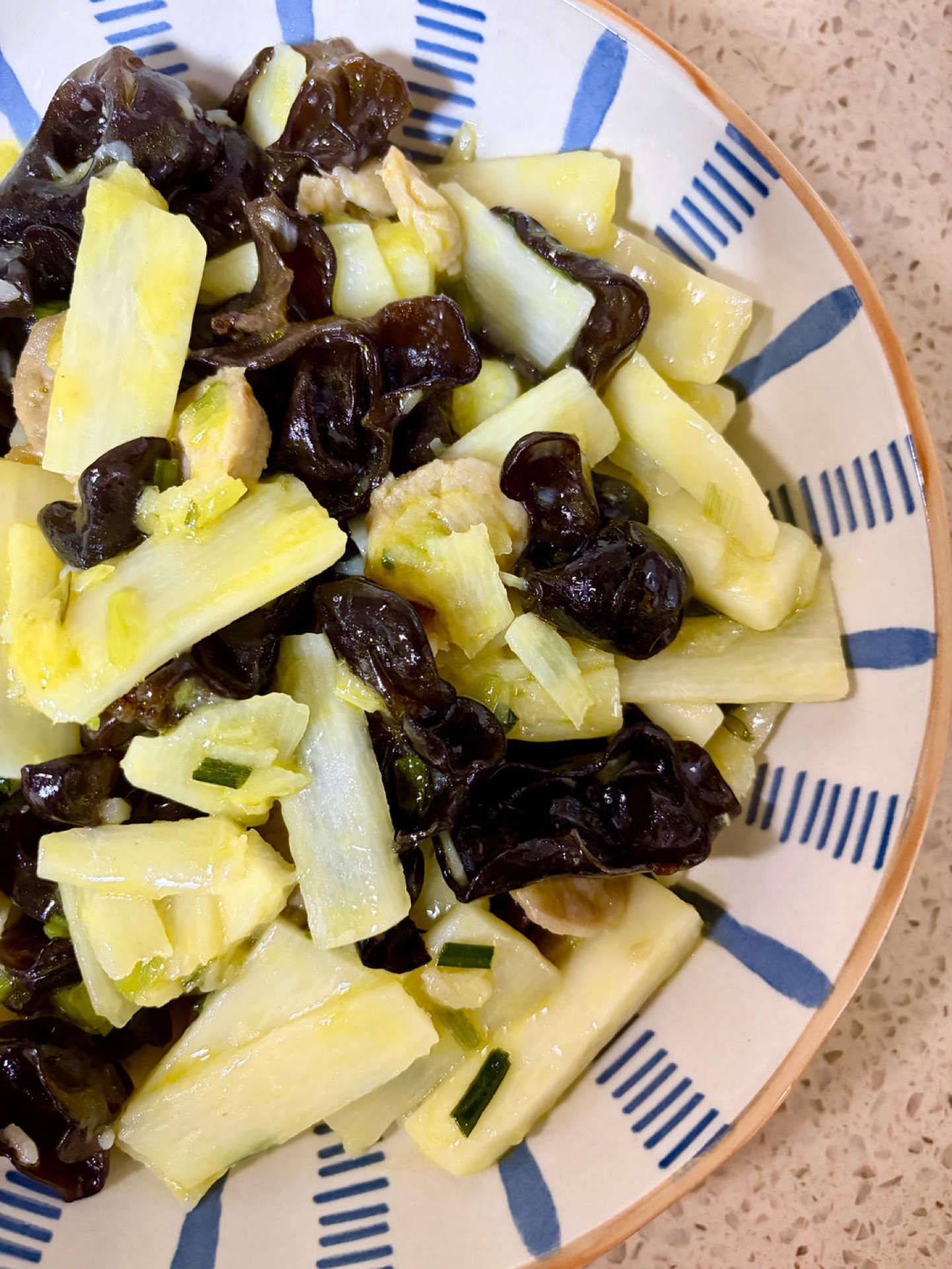
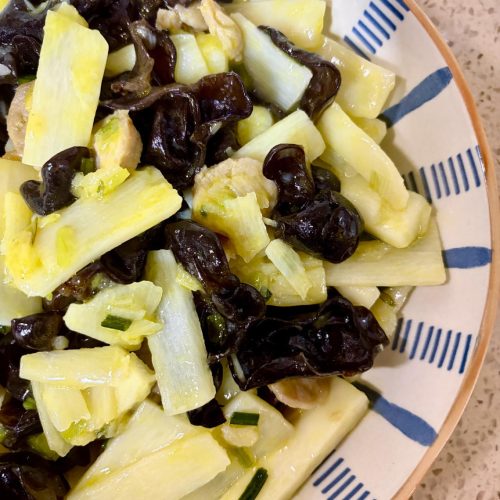
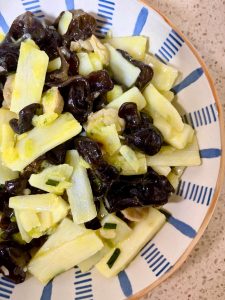
Take it off the heat and serve; the yam is soft, glutinous and savory, the fungus crisp with a touch of chew, and it goes wonderfully with rice.
Common Mistakes When Making Stir-Fried Yam with Black Fungus
These are the five things that most often go wrong, and how to avoid them.
- Skipping the blanch on the wood ear. Rehydrated fungus straight from the bowl tastes watery and slightly raw, and it releases liquid into the wok. Fix: always blanch for three minutes and drain well before it hits the oil.
- Slicing the yam too thick. Thick coins stay chalky in the center while the outside goes mushy. Fix: aim for an eighth of an inch, and use a sharp knife or a mandoline.
- Crowding the wok. Too much food in the pan drops the temperature and the vegetables steam instead of fry. Fix: use a wide pan, cook in a single layer, and if you double the recipe, cook it in two batches.
- Forgetting the splash of water. Yam needs a little moisture to turn silky. Without it, the slices stay firm and dry. Fix: add about a cup of hot water, cover, and let it steam for three minutes.
- Seasoning with salt alone. Salt without sugar leaves the dish tasting flat and slightly bitter. Fix: add a teaspoon of sugar with the salt, and taste before plating.
- Letting peeled yam sit out dry. It oxidizes and turns gray. Fix: keep peeled slices in cold water until the moment they go into the wok.
Variations
The base recipe is flexible enough to bend in several directions.
- Vegetarian version. Skip the sausage entirely and use a second tablespoon of oil. The dish is already almost vegan; check your MSG and any sauces for additives.
- With egg. Scramble two eggs in the wok first, remove them, and fold them back in at the very end. This adds protein and a soft, custardy contrast to the crunchy fungus.
- With Chinese sausage. Slice a small lap cheong thin and fry it with the scallions so the fat renders into the oil. The dish becomes sweeter, smokier, and more substantial.
- With soy sauce. A teaspoon of light soy sauce at the end deepens the color and adds umami. Do not add it early or the yam will darken.
- With a little chili. A few dried red chilies fried with the scallion oil gives the dish a gentle heat that works well alongside rice.
- With other vegetables. Sliced celery, carrot coins, or snow peas can be added with the yam, though they will change the cooking time slightly.
If you like this kind of vegetable-forward stir-fry, our beef and broccoli is the same technique with a much heartier protein load.
Frequently Asked Questions
Can I use a different kind of yam? You can use Japanese nagaimo, which is milder and easier to handle, or even a firm potato in a pinch, though the texture will be starchier. Avoid sweet potatoes and the fibrous African yams, which behave very differently.
Why did my yam turn slimy? Chinese yam releases a sticky mucilage when cut, especially the grated or very thin slices. That is normal and mostly disappears with cooking. If it bothers you, rinse the slices in cold water before cooking.
Can I make this dish ahead? It is best fresh, but you can blanch the fungus and peel and slice the yam up to a day ahead, storing the yam in cold water in the fridge. The final stir-fry takes six minutes, so it is not worth cooking in advance.
Is wood ear safe to eat? Yes, cooked wood ear is a normal, safe ingredient. The important rules are to rehydrate it in the fridge or with hot water for a short time, never to leave it soaking at room temperature for many hours, and never to eat it raw.
How do I keep the yam from itching my hands? Wear gloves, or peel it under running water, or hold it with a paper towel. If your hands do itch, wash them with warm soapy water and avoid touching your eyes or face.
How to Serve
Stir-fried yam with black fungus is a rice dish at heart. Serve it over steamed jasmine rice with a bowl of soup on the side, and you have a complete weeknight meal. It also works as one of several dishes at a larger table, sitting happily next to a braise, a steamed fish, or a cold appetizer.
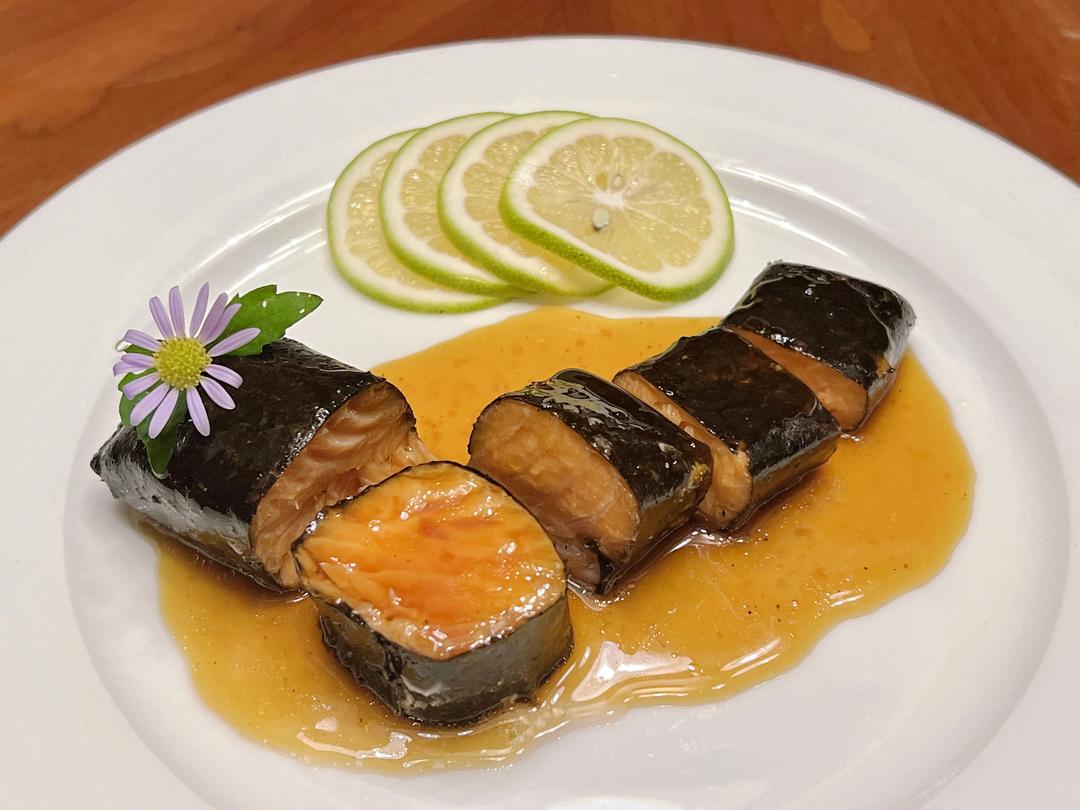
Because the flavors are gentle, it pairs well with something bolder. Our slow baked nori salmon is a good match: the salmon brings richness and umami, the yam brings freshness and crunch, and neither overwhelms the other.
For a heartier pairing, our thousand-layer meat pie turns the meal into something closer to a northern Chinese spread, with flaky pastry and scallion pork alongside the clean vegetable stir-fry.

Storage & Reheat
Leftovers keep in an airtight container in the refrigerator for up to three days. The yam will soften further overnight, and the fungus will stay springy, so the texture changes but the flavor holds up well.
To reheat, warm the dish in a covered pan over medium-low heat with a tablespoon of water, or microwave it in a covered bowl for 60 to 90 seconds. Avoid reheating it in a dry pan, which will toughen the yam. Do not freeze this dish; the yam turns grainy and watery after thawing.
If you have leftovers, they are excellent folded into a bowl of hot rice with a fried egg on top, or stirred into a simple noodle soup. For a noodle option, our Beijing eggplant noodle soup is a fine base to build on.
Allergen Notice
This recipe as written contains soy if you add soy sauce or use a sausage that contains soy. Wood ear is a fungus, which is not a top allergen but is worth noting for anyone with fungal sensitivities. Chinese sausage brands vary widely; check the label for wheat, soy, and sulfites. If you are cooking for someone with a soy allergy, omit the soy sauce entirely and season with salt and sugar only.
Nutrition Disclaimer
Nutrition information is calculated using an ingredient database and should be considered an estimate. In cases where multiple ingredient alternatives are given, the first listed is calculated for nutrition. Garnishes and optional ingredients are not included.
About the Author & Recipe Development
Lin has been cooking Chinese food at home for over two decades, and this recipe comes straight out of her family’s weeknight rotation. It started as a way to use up the last knob of shanyao in the vegetable drawer and became a dish her family asks for by name. The version here keeps the original method intact, with notes added for cooks new to Chinese yam and wood ear.
Every recipe on woksoflove.com is tested in a home kitchen with ingredients you can actually find, and the notes reflect the mistakes Lin has made herself. If you cook this dish, leave a comment and tell her how it turned out.
Authoritative References
For food safety guidance on reheating leftovers and safe internal temperatures, see the FDA Food Safety at Home guidance and the USDA safe minimum internal temperature chart.
For more on Chinese yam and its culinary uses, see the Chinese yam entry and the wood ear mushroom entry.
Stir-Fried Yam with Black Fungus (山药炒黑木耳): Crisp Yam, Springy

Equipment
- Wok
- Cutting Board
- Slotted Spoon
Ingredients
For the Yam and Fungus
- 250 g Chinese yam 铁棍山药, peeled, cut into thin slices
- 10 g dried black fungus wood ear mushrooms
For the Aromatics and Seasoning
- 2 tbsp vegetable oil
- 2 stalks scallions white parts minced, greens reserved
- 1 tsp salt to taste
- 1 tsp sugar
- 1 pinch MSG optional
- 1 cup hot water for braising
Optional Add-ins
- 1 small Chinese sausage lap cheong, sliced, or 2 eggs scrambled
Instructions
- Soak the black fungus in hot water for ten minutes, rinse it clean, and drain off the water; peel and wash the Chinese yam and cut it into thin slices (wear kitchen gloves to prevent itchy hands).

- Blanch the black fungus in boiling water for 3 minutes, then drain it well.
- While the fungus is blanching, decide whether to slice a small piece of black pork sausage to enrich the texture (skip this step if making a vegetarian stir-fry); you could also add some scrambled egg for extra body.
- Heat vegetable oil in the wok and fry the minced scallion until fragrant, then add the black fungus and stir-fry for a dozen or so tosses.
- Add the sliced meat and stir-fry for another dozen or so tosses.
- Add the yam and stir-fry for a dozen tosses, pour in a small bowl of hot water, season with salt and sugar, cover with a lid, and simmer over low heat for about 3 minutes.
- After 3 minutes the water should be nearly gone; adjust the saltiness to taste, then add MSG for seasoning.
- Take it off the heat and serve; the yam is soft, glutinous and savory, the fungus crisp with a touch of chew, and it goes wonderfully with rice.












Leave a Reply