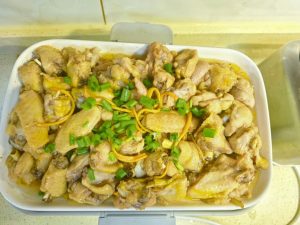
There are dishes that announce themselves with smoke and sizzle, and then there is 虫草花蒸鸡 — a plate of chicken that arrives almost silently, glossy with its own juices, crowned with a tangle of golden-orange blossoms. It is the kind of food Cantonese home cooks make on a weeknight without thinking twice: chicken, a handful of pantry seasonings, a little cornstarch, and a steamer doing the quiet work. The chicken comes out impossibly tender, the cordyceps flowers soak up the savory juices, and the whole thing tastes clean, nourishing and far more elegant than the effort it took.
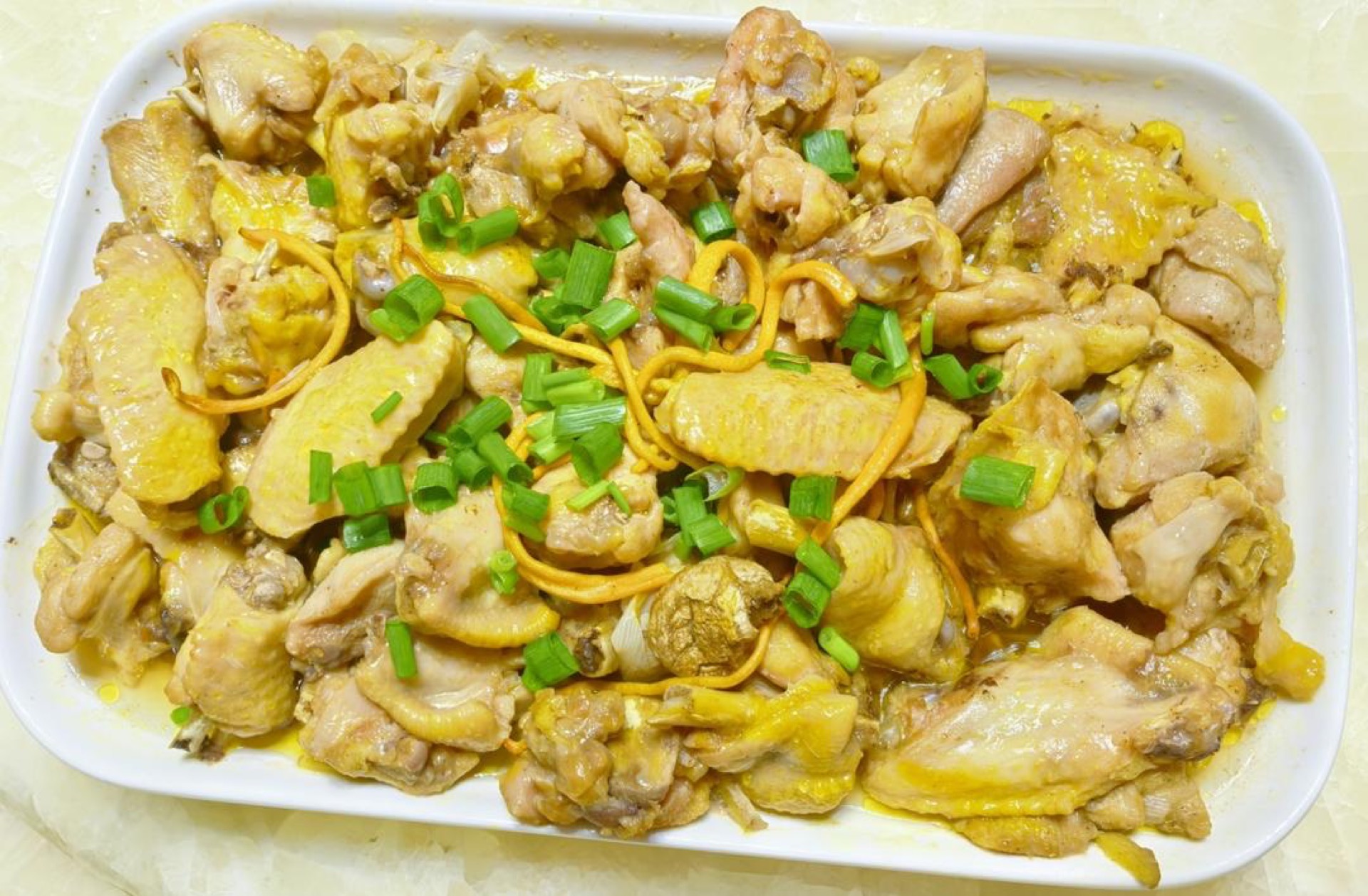
What makes this version work is the three-stage mixing: oil first to seal the meat, then the aromatics and seasonings, then the cornstarch last. That order isn’t fussiness for its own sake — it’s the difference between chicken that steams up juicy and chicken that steams up dry. Add a short rest before steaming and you get a marinade that clings instead of pooling, which means every piece tastes seasoned all the way through.
The cordyceps flowers are the other half of the story. Despite the name, they aren’t flowers and they aren’t the rare wild caterpillar fungus of Tibetan legend — they’re the cultivated fruiting bodies of Cordyceps militaris, sold cheaply in every Chinese grocery. They have a mild, faintly earthy-sweet flavor and a pleasant slight chew, and they drink up chicken juices like a sponge. If you’ve never cooked with them, this is the gentlest possible introduction.
What Is Steamed Chicken with Cordyceps Flowers?
Steamed chicken with cordyceps flowers, or 虫草花蒸鸡 (chóngcǎohuā zhēng jī), is a Cantonese home dish of bone-in chicken pieces marinated with ginger, scallion, Shaoxing wine, soy sauce, oyster sauce, salt and white pepper, bound with a little cornstarch, then steamed with rehydrated cordyceps flowers scattered over the top. Everything happens in one shallow dish, and the dish comes to the table with its own sauce already made — the chicken’s juices, loosened by the marinade and thickened just slightly by the starch.
It belongs to the family of Cantonese “steamed with aromatics” dishes, where the technique is less about adding flavor than about not losing it. The chicken is never browned, never boiled, never tossed in a hot wok. Steam surrounds it evenly, the meat stays at a gentle temperature, and the result is the silky, almost slippery texture that Cantonese cooks prize in poached and steamed poultry. The cordyceps flowers are both an ingredient and a garnish, threading through the chicken and turning a plain plate into something that looks ceremonial.
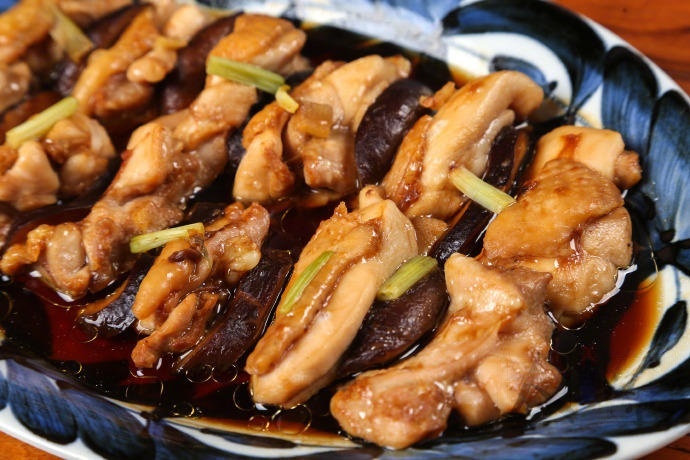
If you enjoy this style of gentle, sauce-in-the-dish chicken, our steamed mushroom chicken uses the same marinate-and-steam logic with shiitake mushrooms doing the work that cordyceps flowers do here.
1Steamed Mushroom Chicken (Xiang Gu Zheng Hua Ji)This Steamed Mushroom Chicken is a classic Chinese home-style dish. By using a ‘velveting’ technique with cornstarch and steaming, the chicken thighs remain incredibly slippery, tender, and juicy. It creates its own savory gravy that is perfect over steamed rice.Check out this recipe
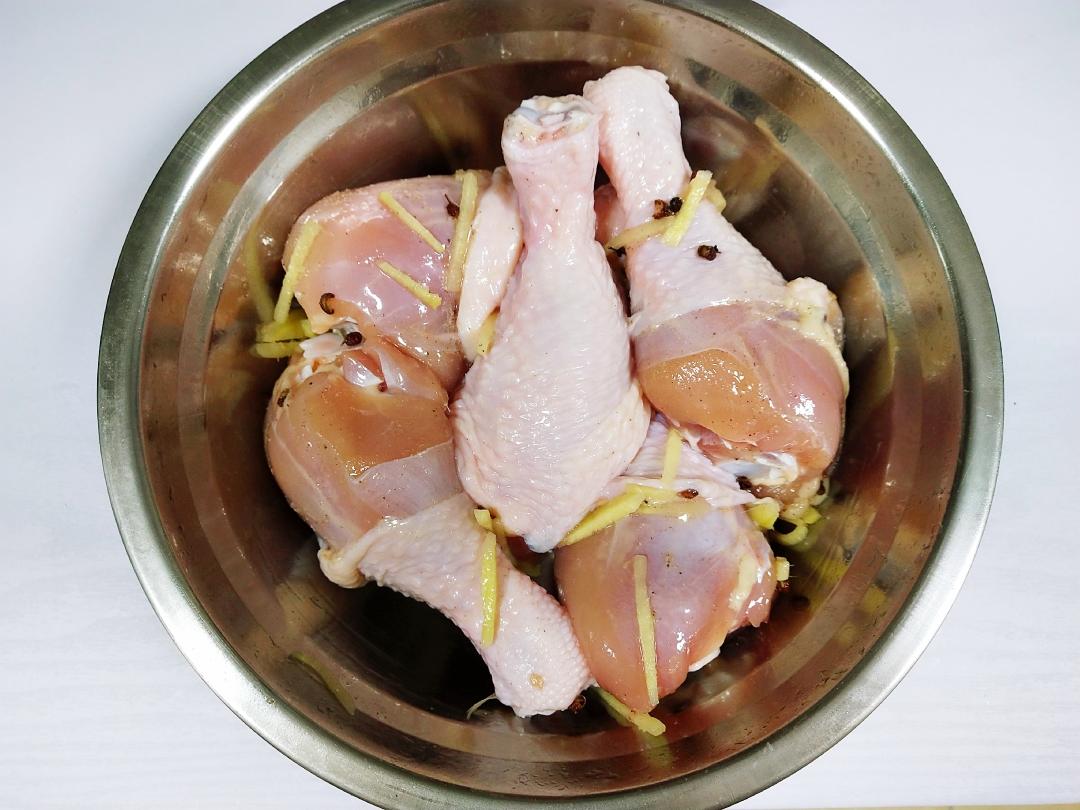
For a slightly different cut, our tender steamed chicken drumsticks shows how drumsticks behave in the steamer and how to keep them juicy without overcooking.
2Tender Steamed Chicken Drumsticks (Qing Zheng Ji Tui)An authentic Chinese homestyle recipe featuring fresh chicken drumsticks marinated overnight with Sichuan peppercorns and ginger, then steamed to tender perfection in a savory broth.Check out this recipe
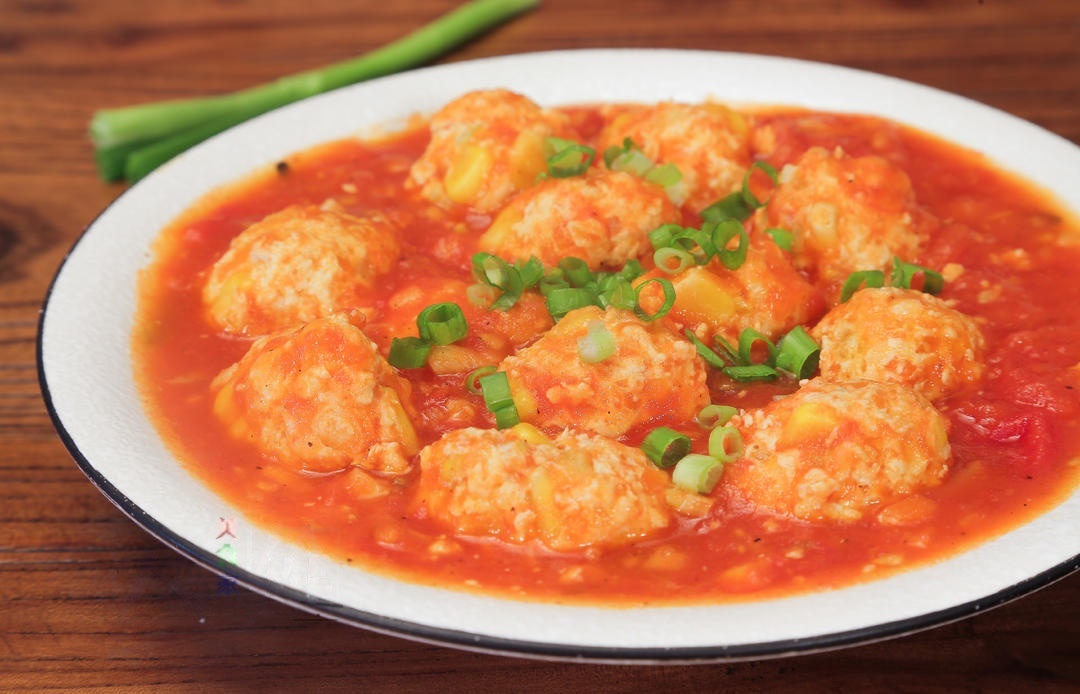
And if you like the idea of chicken lightened with vegetables and a touch of sweetness, our tomato corn chicken meatballs is the same gentle, kid-friendly spirit in meatball form.
3Tomato Corn Chicken MeatballsThese healthy Tomato Corn Chicken Meatballs are tender, bouncy, and packed with nutritious vegetables. Simmered in a savory fresh tomato sauce, this recipe uses lean chicken breast but remains juicy thanks to traditional Chinese mixing techniques. Perfect for a light, high-protein dinner.Check out this recipe
Ingredient Notes
Chicken. Bone-in, skin-on chicken is not negotiable here. Bones and skin are where the flavor and the gelatinous, lip-sticking quality come from, and boneless breast will steam into something dry and forgettable. Whole chicken legs (thigh plus drumstick) are ideal; a mix of legs and wings, as in the original home version, is even better because the different cuts cook at slightly different rates and give you a range of textures. Ask your butcher to cut them into 1½-inch pieces, or do it yourself with a cleaver — the pieces should be small enough to cook through in 25 minutes but big enough to stay juicy.
Cordyceps flowers (虫草花). Look for bright orange-gold strands that smell faintly earthy and sweet, not musty. They’re sold dried in cellophane bags in the dried-goods aisle. Twenty grams of dried flowers is a generous handful and enough to cover a plate of chicken without burying it. Fresh cordyceps flowers, when you can find them, need only a quick rinse and can go straight on the chicken.
Sesame oil or chicken fat. This is the first thing that touches the chicken, and its job is to coat each piece and slow the loss of moisture during steaming. Toasted sesame oil gives a nutty aroma; rendered chicken fat gives a richer, more old-fashioned flavor. Either works — use what you have, but don’t skip it.
Light soy sauce and oyster sauce. Light soy sauce brings salt and umami without darkening the chicken; oyster sauce adds a round, briny sweetness. If you avoid shellfish, substitute a teaspoon of mushroom-flavored vegetarian oyster sauce or an extra half-teaspoon of soy sauce plus a pinch of sugar. For gluten-free cooking, use tamari and a gluten-free oyster sauce.
Shaoxing wine. A splash of this fermented rice wine cuts the chicken’s raw edge and adds depth. Dry sherry is the closest substitute if you don’t keep Shaoxing wine on hand.
Cornstarch. This is the quiet hero. Ten grams — about a tablespoon — hydrates during the rest and forms a thin, silky sheath around each piece, which is what gives the finished dish its glossy, velvety sauce instead of a watery pool.
White pepper. A small amount goes a long way. It’s the classic Cantonese partner to chicken, warm and slightly floral rather than sharp.
Ginger and scallion. Six slices of each is the baseline. The ginger coins and scallion whites go into the marinade; the green tops get chopped for a fresh finish after steaming.
Ingredients
Here’s everything you’ll need. Full quantities are in the recipe card at the bottom of this post.
- 1000 g (about 2¼ lb) bone-in, skin-on chicken legs, cut into 1½-inch pieces
- 20 g dried cordyceps flowers (虫草花)
- 2 g toasted sesame oil or rendered chicken fat (about ½ teaspoon)
- 5 g Shaoxing wine (about 1 teaspoon)
- 2 g oyster sauce (about ½ teaspoon)
- 5 g light soy sauce (about 1 teaspoon)
- 6 g salt (about 1 teaspoon, or to taste)
- 1 g white pepper (about ¼ teaspoon)
- 10 g cornstarch (about 1 tablespoon)
- 6 slices ginger
- 6 slices scallion, white parts
- Chopped scallion greens and a few goji berries, to finish (optional)
Equipment Needed
You don’t need much, but the steamer matters. A wok with a steaming rack and lid is the traditional setup — you get plenty of headroom and even, powerful steam. A dedicated electric steamer with a “quick steam” setting is what the original home cook used, and it’s the most hands-off option because it beeps and switches to keep-warm when the timer ends. A large pot with a steamer insert works too, as long as the lid fits snugly and the plate fits inside without touching the sides.
You’ll also want a shallow heatproof plate — ceramic or stainless steel, deep enough to catch the juices but shallow enough that the chicken sits in a single layer. A cutting board and a heavy cleaver or chef’s knife handle the chicken, and a slotted spoon is handy for lifting the cordyceps flowers out of their soaking water without dragging sediment along. A pair of chopsticks for mixing the marinade is the traditional tool and, honestly, the best one — they break up the chicken without crushing it. If you’re new to wok cooking, our guide on how to season wok covers the basics of getting your pan ready for steaming duty.
Why This Recipe Works
Oil first, starch last. The three-stage mixing order is the whole technique in miniature. Coating the chicken in fat before anything else creates a barrier that slows moisture loss during steaming. Seasonings go in next so they can dissolve into that fat layer and cling to the meat. Cornstarch goes in last so it hydrates in the marinade rather than clumping, and during steaming it gelatinizes into a thin, glossy sauce.
The rest does real work. Thirty minutes isn’t a suggestion. During that time the salt draws moisture out of the chicken and then, through osmosis, draws seasoned liquid back in. The cornstarch fully hydrates. The ginger and scallion infuse. Skip the rest and you’ll taste the difference immediately — the seasoning sits on the surface instead of in the meat.
Steam is a gentle, even heat. Unlike a wok sear, which drives off moisture quickly, steam surrounds the chicken at a steady 212°F (100°C) and cooks it from all sides at once. That’s why steamed chicken stays silky where stir-fried chicken can toughen. The closed environment also means nothing is lost — every drop of juice the chicken gives off ends up in the plate as sauce.
Steam transfers heat more efficiently than dry oven air at the same temperature, because condensing steam releases latent heat directly onto the food’s surface. That’s why a 25-minute steam can cook chicken through completely while an oven at a similar temperature would dry the exterior — a principle explained in food-science references such as Serious Eats’ guide to steam cooking.
Cordyceps flowers season the sauce from above. As the chicken steams, its juices rise and the flowers steep in them, releasing their mild earthy sweetness back into the plate. The result is a sauce that tastes layered without a single drop of stock.
Prep & Mise en Place
Soak the dried cordyceps flowers in cold water for about 30 minutes, or up to 8 hours if you’re planning ahead — the soaking water should be discarded, and the flowers rinsed once more to remove any grit. Drain them well and set aside. While they soak, cut the chicken into 1½-inch pieces and put them in a bowl of cold water to soak for 10 minutes, then rinse twice and drain thoroughly. This step is what keeps the finished dish clean-tasting; the water pulls out the last of the blood.
Dry the chicken well — a colander plus a few minutes on paper towels is enough. Patting it dry matters because a wet surface dilutes the marinade. Now slice the ginger into six thin coins and cut six bias slices from the white parts of the scallions. Measure out the sesame oil, Shaoxing wine, oyster sauce, soy sauce, salt, white pepper and cornstarch into small dishes so the mixing goes quickly. Chop a handful of scallion greens for the finish and, if you’re using them, rinse a few goji berries.
Set up your steamer and add water to the base — enough for 25 minutes of vigorous steaming, which usually means filling it to the marked line or about 2 inches deep in a wok setup. Have your shallow plate ready next to the stove. Once the chicken has rested its full 30 minutes, everything moves fast, so this is the moment to make sure nothing is missing.
Cooking Process
Step 1 — Rinse and Dry the Chicken
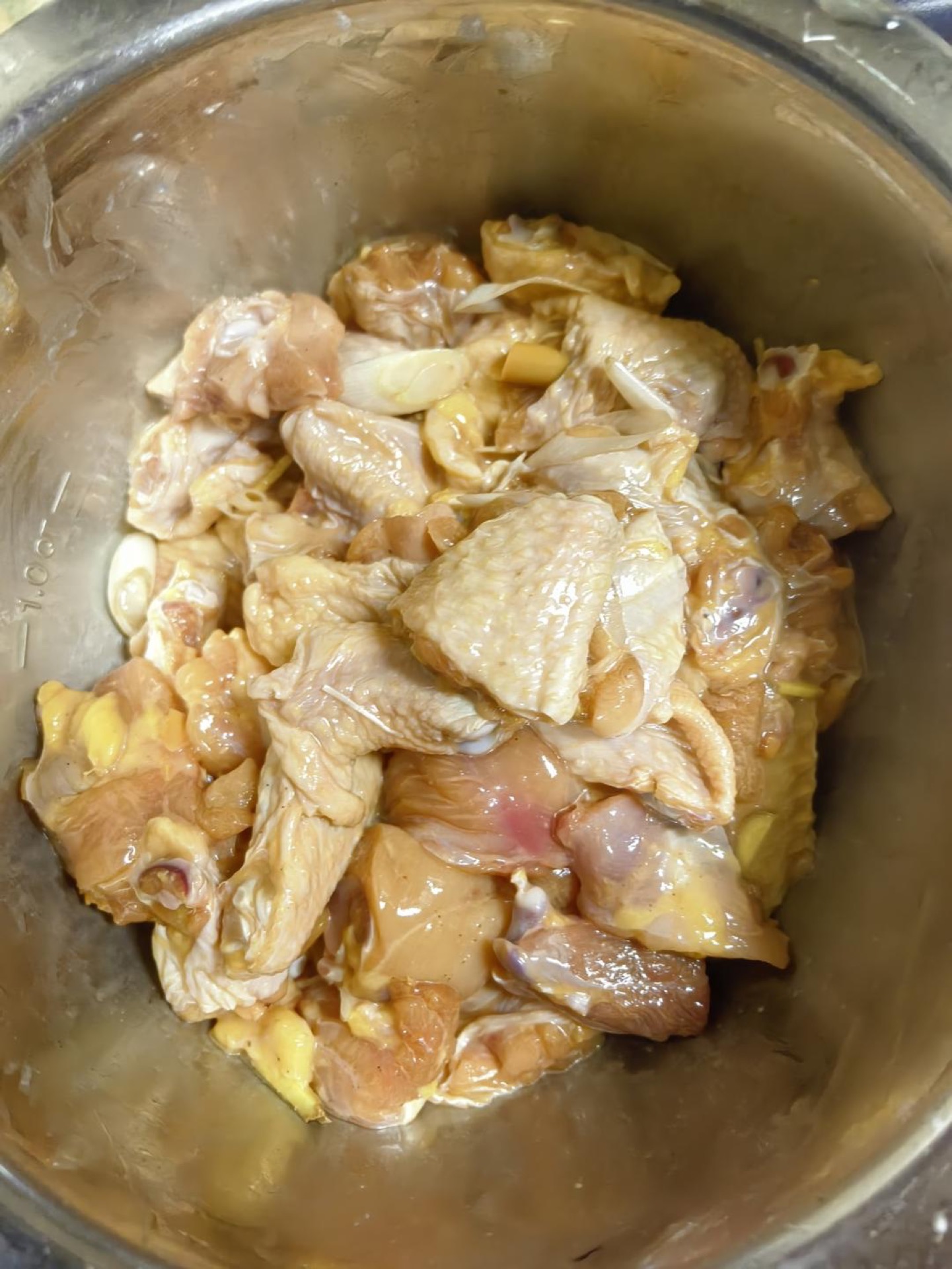
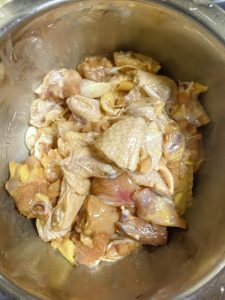
Cut the whole chicken legs into small pieces, soak them in cold water and rinse twice to draw out the blood, then drain well and toss with about 2 grams of sesame oil or chicken fat until every piece is coated and the moisture is locked in.
Step 2 — Marinate the Chicken
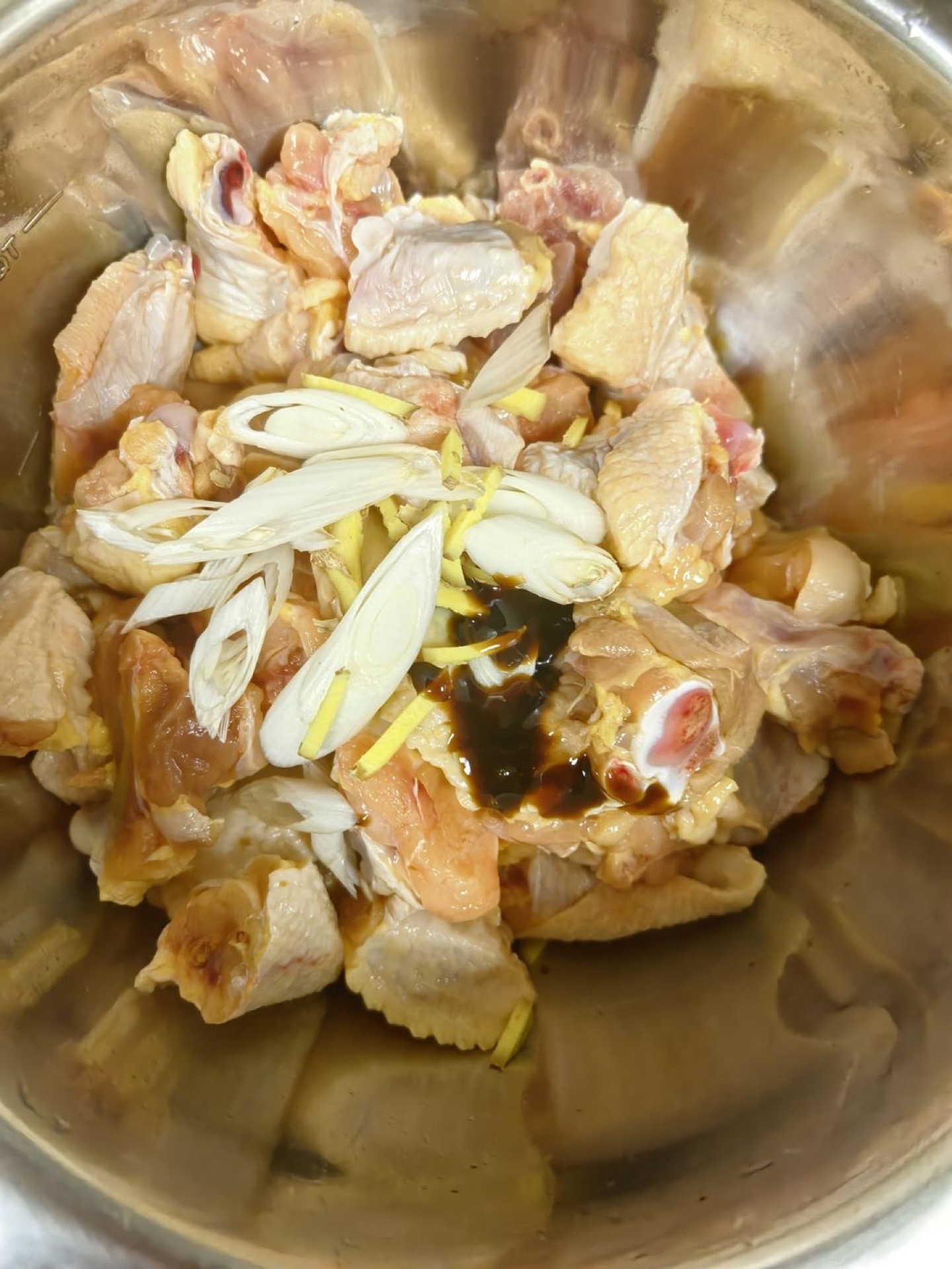
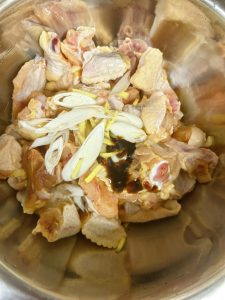
Add the ginger slices, scallion slices, Shaoxing wine, oyster sauce, salt and white pepper, then mix again until everything is evenly combined.
Step 3 — Add Cornstarch and Rest
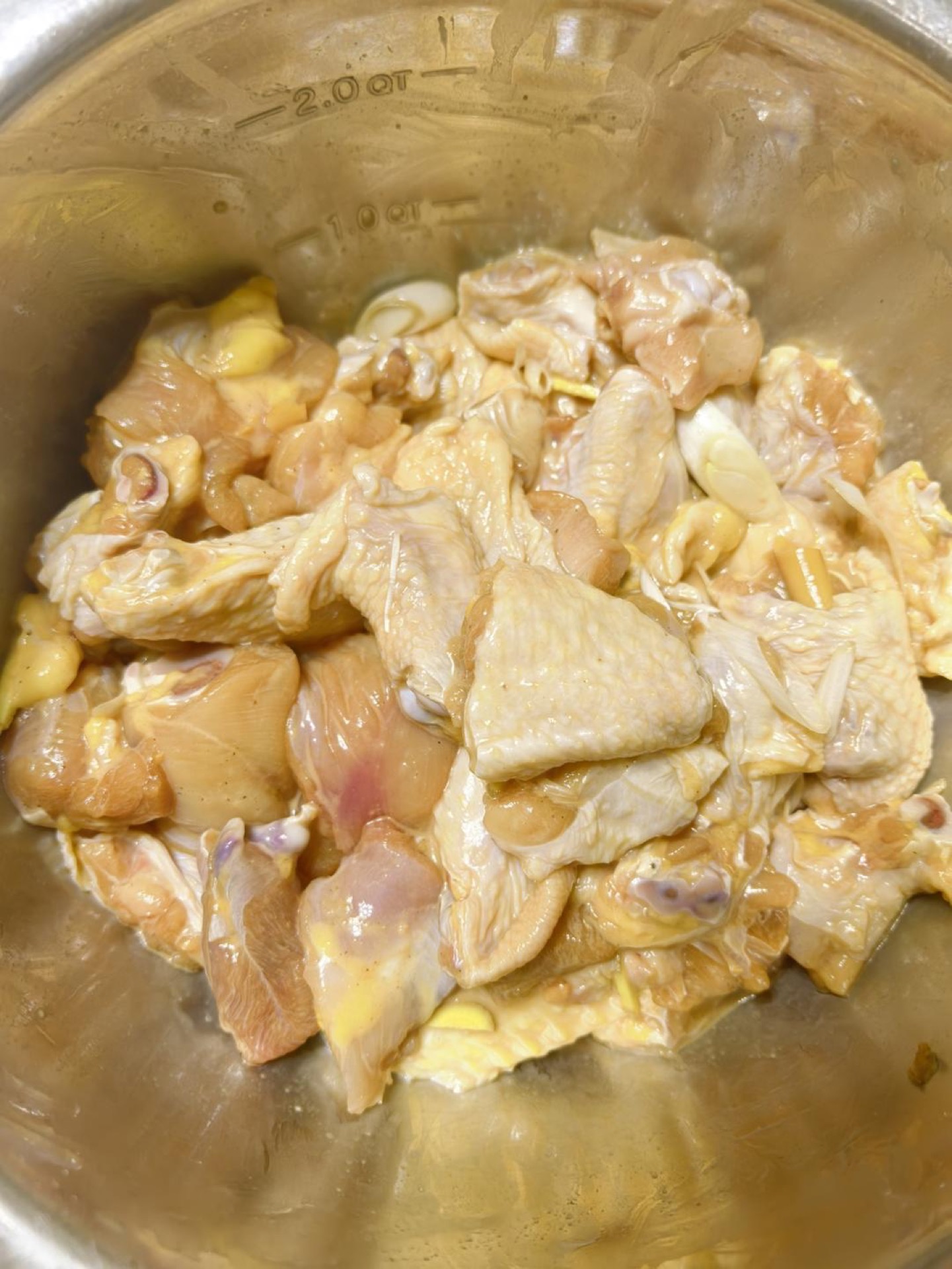
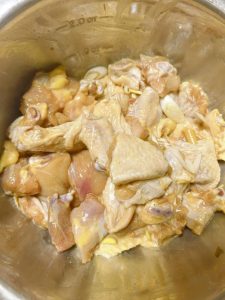
Add the cornstarch and give it a third mixing, then let the chicken sit for at least half an hour so the marinade penetrates and the starch hydrates.
Step 4 — Arrange and Steam
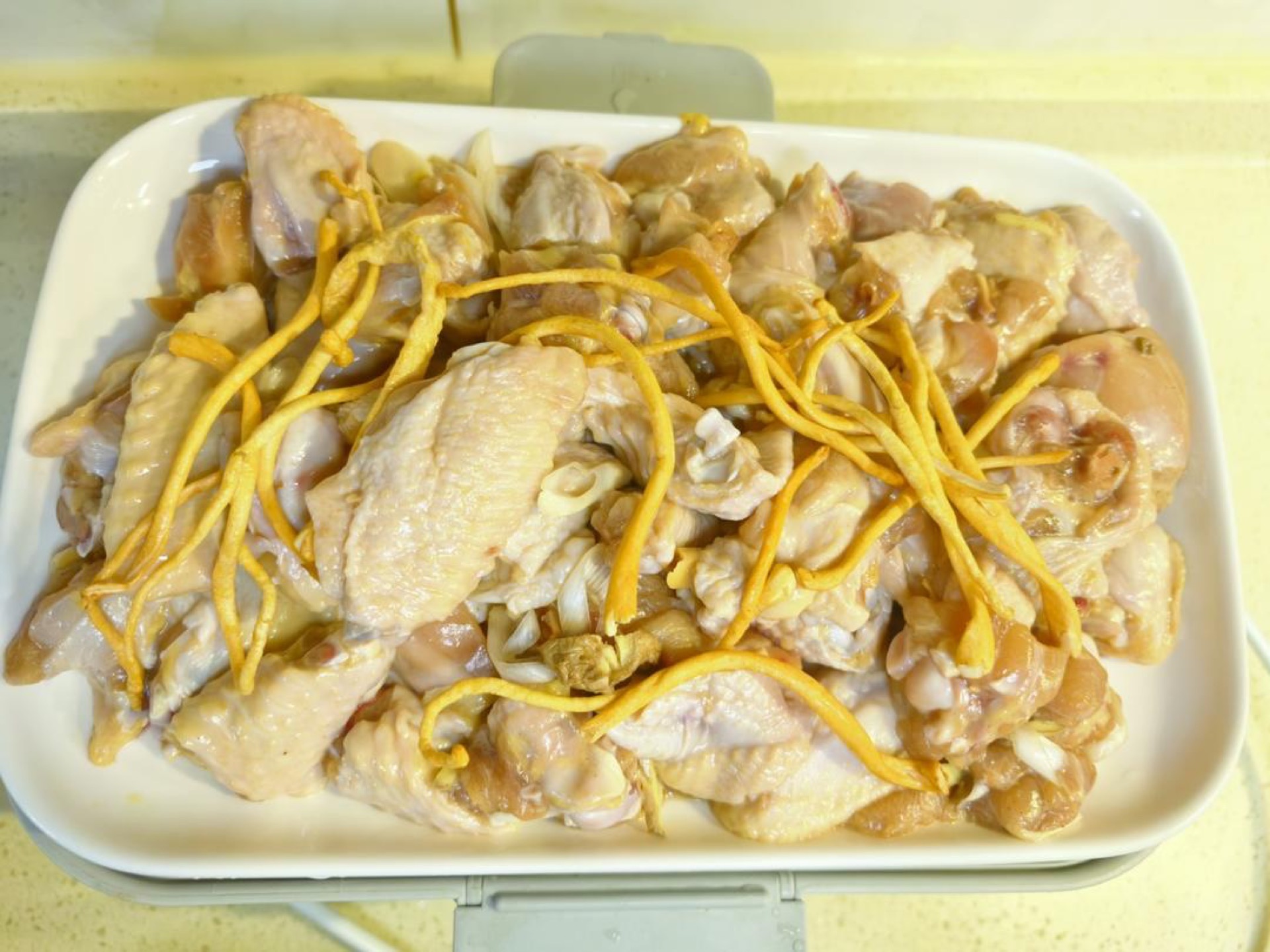
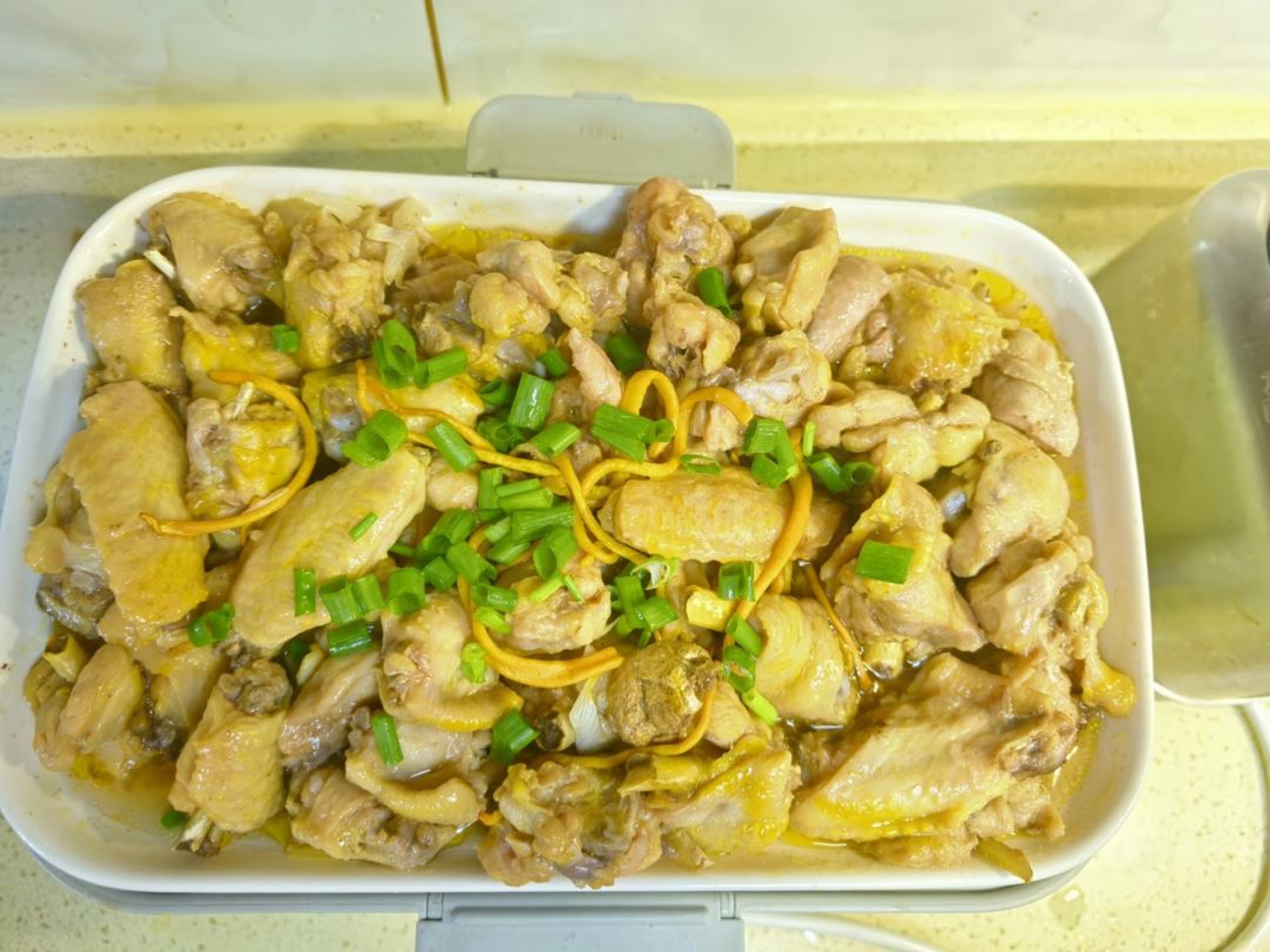
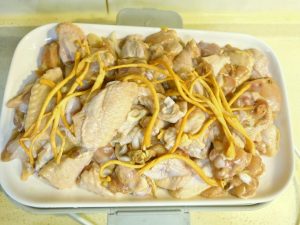
Transfer the chicken to a steaming plate, scatter the rinsed cordyceps flowers over the top, and steam at high heat for 25 minutes — for an older bird use the gentle setting for 45 to 60 minutes; a mix of whole legs and wings from a 3-to-4-month-old yellow-feather chicken is perfect at 25 minutes.
Step 5 — Rest, Garnish and Serve
When the time is up the steamer beeps and switches to keep-warm, so open the lid, scatter over chopped scallion, and add a few goji berries if you want extra color — the chicken is tender, silky and deeply savory.
Common Mistakes When Making Steamed Chicken with Cordyceps Flowers
1. Using boneless, skinless chicken breast. The cause is habit — it’s what many of us keep in the freezer. The fix is to buy bone-in, skin-on legs for this dish. Bones and skin contribute collagen and fat that keep the meat succulent, and they flavor the sauce. If you truly must use breast, reduce the steaming time to about 15 minutes and expect a firmer result.
2. Skipping the cold-water soak and rinse. The cause is impatience. The fix is to give the cut chicken 10 minutes in cold water followed by two rinses. Skipping this leaves blood in the meat, which steams into a dark, murky sauce and a faintly metallic taste.
3. Adding the cornstarch first, or all at once with everything else. The cause is treating the marinade as a single dump-and-mix step. The fix is to follow the order: oil, then seasonings, then cornstarch. Cornstarch added to bare chicken clumps and steams into gummy patches instead of a smooth glaze.
4. Steaming immediately after mixing. The cause is hunger. The fix is to wait at least 30 minutes, and up to an hour in the refrigerator if you have time. Without the rest, the salt hasn’t penetrated and the starch hasn’t hydrated, so the chicken tastes flat on the inside and the sauce stays thin.
5. Crowding the plate or stacking the pieces. The cause is using a plate that’s too small. The fix is to use a wide, shallow dish and arrange the chicken in a single layer with a little space between pieces. Stacked chicken steams unevenly — the pieces on top finish while the ones underneath are still raw.
6. Letting the steamer run dry or opening the lid repeatedly. The cause is curiosity and an under-filled reservoir. The fix is to check the water level before you start and then leave the lid alone. Every time you lift it, you lose a full charge of steam and add minutes to the cook time.
7. Cooking an old bird for 25 minutes. The cause is assuming all chicken behaves the same. The fix is to know your bird. A 3-to-4-month-old yellow-feather chicken steams through in 25 minutes; a mature stewing hen needs 45 to 60 minutes on a gentler setting. If you’re unsure, steam for 25 minutes and check the thickest piece with a thermometer.
Variations
With goji berries. Scatter a dozen rinsed goji berries over the chicken in the last 5 minutes of steaming, or add them with the cordyceps flowers. They plump up, add a sweet-tart note and turn the plate a beautiful red-gold.
With shiitake mushrooms. Soak 4 to 5 dried shiitakes until soft, slice them, and tuck them under and around the chicken. They add a deeper, smokier earthiness that plays well with the cordyceps flowers.
With a touch of sugar and dark soy. For a slightly glossier, deeper-colored finish, add 2 g sugar and 2 g dark soy sauce to the marinade. This pushes the dish toward a red-braised flavor profile.
With black fungus and lily buds. A classic Cantonese combination — rehydrate a small handful of wood ear mushrooms and a few dried lily buds, and layer them with the chicken. The wood ear adds a satisfying crunch.
With chicken wings only. Wings steam faster and have more skin per bite. Reduce the time to about 18 to 20 minutes and check early.
Steamed in individual portions. Divide the marinated chicken among small bowls or ramekins and steam them individually. They cook in about 20 minutes and make elegant single servings.
Frequently Asked Questions
What exactly are cordyceps flowers? They’re the cultivated fruiting bodies of Cordyceps militaris, a fungus grown on rice or grain substrate. They are not the wild caterpillar fungus (Ophiocordyceps sinensis) that commands astronomical prices, and they are not flowers at all. They’re inexpensive, widely available in Chinese groceries, and prized for their mild earthy-sweet flavor and pleasant chew.
Can I use fresh cordyceps flowers instead of dried? Yes. Fresh ones need only a rinse — no soaking — and can go straight onto the chicken. Use about 40 g fresh in place of the 20 g dried, since dried flowers lose water weight and concentrate.
Do I have to use bone-in chicken? For the best texture, yes. The bones and skin keep the meat juicy and give the sauce body. If you use boneless thigh, reduce the steaming time to 15 to 18 minutes; if you use breast, 12 to 15 minutes.
How do I know the chicken is cooked through? Insert an instant-read thermometer into the thickest piece, avoiding bone. It should read 165°F (74°C). Visually, the juices should run clear and the meat should pull away from the bone without resistance. The USDA safe minimum internal temperature chart lists 165°F (74°C) for all poultry.
Can I make this ahead of time? You can marinate the chicken up to 24 hours in advance and keep it covered in the refrigerator. Steaming is best done right before serving, but the finished dish reheats well — see the storage section below.
My sauce came out watery. What went wrong? Usually too little cornstarch, or the chicken was still wet when it went into the marinade. Use the full 10 g of cornstarch and pat the chicken dry before mixing. A little watery sauce is normal and delicious over rice, but if you want it tighter, add an extra teaspoon of cornstarch next time.
How to Serve
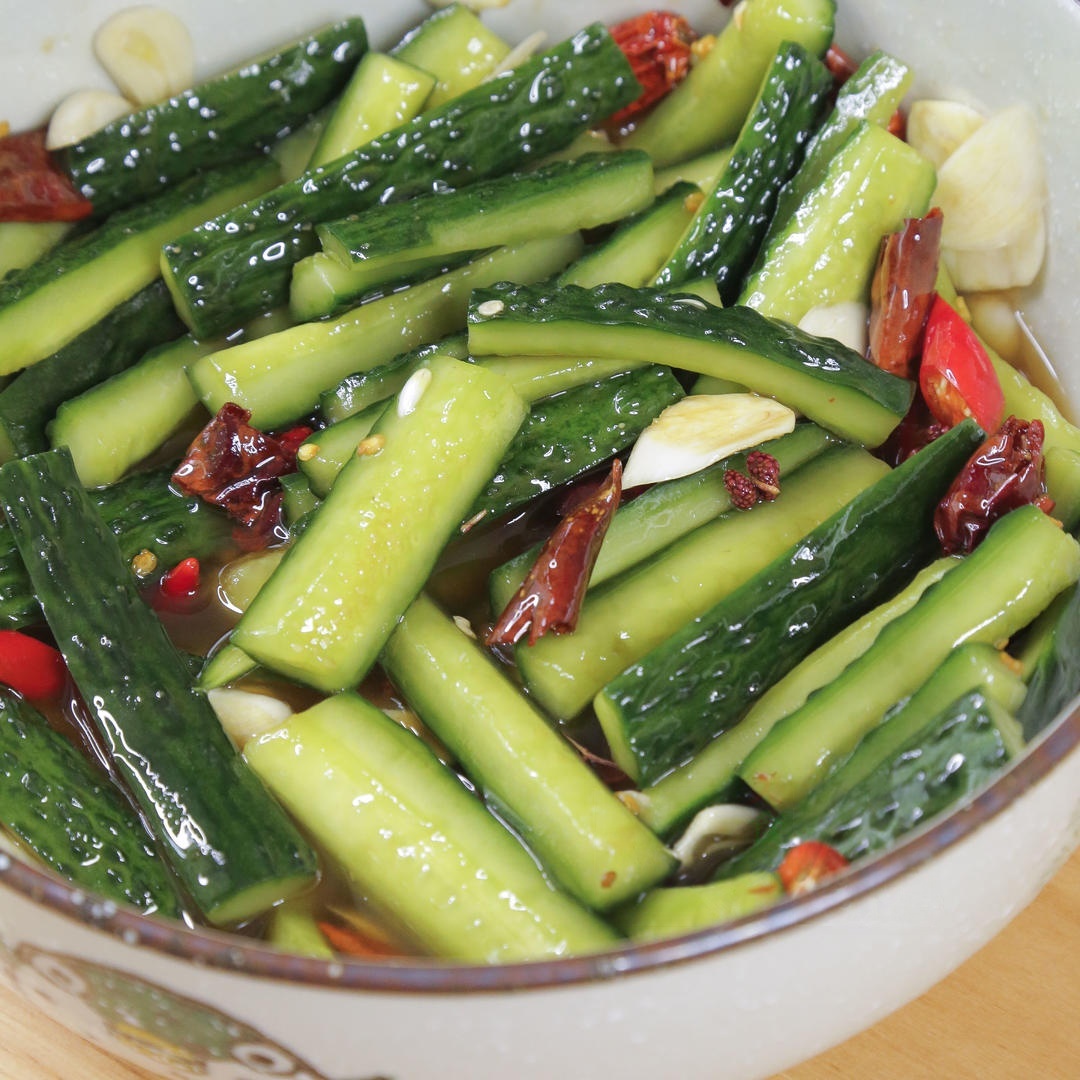
Steamed chicken with cordyceps flowers is a main course that wants plain steamed jasmine rice and a vegetable alongside. The sauce in the plate is the point — spoon it over the rice. A crisp, cold vegetable cuts the richness beautifully, and our sour and spicy cucumber salad is exactly the right kind of bright, crunchy counterpoint to serve in a small bowl on the side.
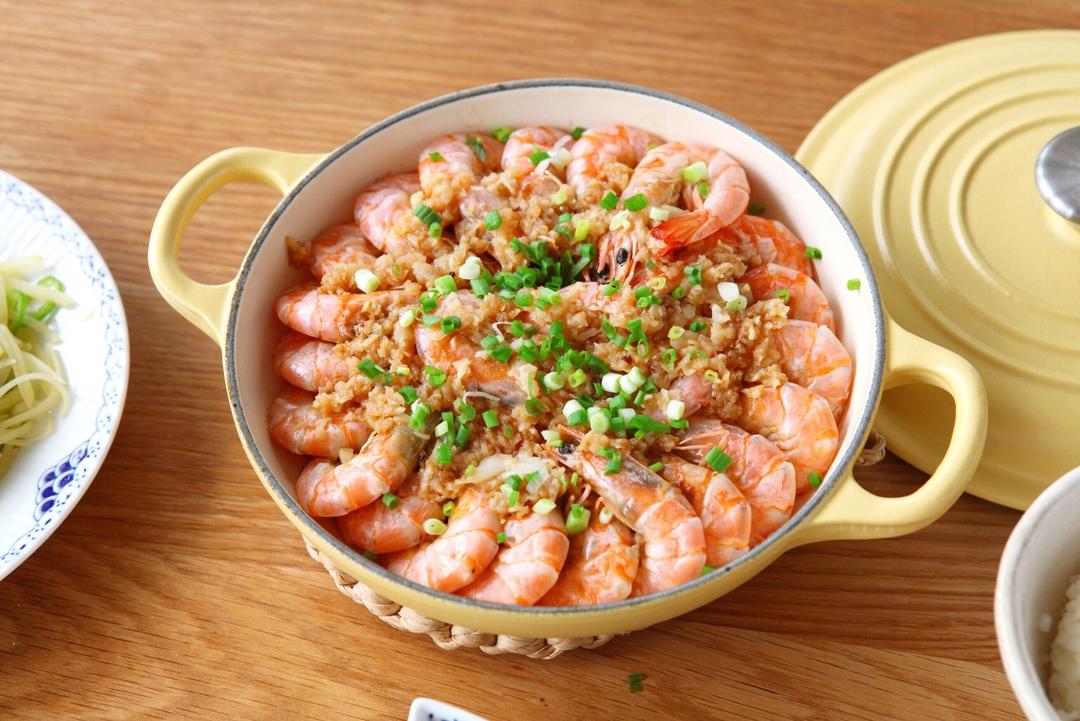
If you’d like a second protein on the table, our garlic shrimp in cast iron pot cooks in minutes and adds a savory, garlicky contrast without competing with the chicken. And for a heartier meal with a deeper sauce, our red braised chicken makes a natural companion dish if you’re feeding a crowd.

Storage & Reheat
Cool leftovers within 2 hours and refrigerate them in a covered container for up to 3 to 4 days. The chicken actually improves overnight as it sits in its own sauce, though the cordyceps flowers soften further and lose a little texture. Keep the chicken and flowers together with the sauce — that liquid is what keeps the meat from drying out.
To reheat, the gentlest method is the steamer again: 8 to 10 minutes over high heat, or until the chicken reaches 165°F (74°C). A microwave works in a pinch — cover the dish, add a splash of water, and heat in 45-second bursts on medium power, stirring between bursts so the edges don’t toughen. Avoid reheating in a dry pan, which will undo everything the steam did.
I don’t recommend freezing this dish. The cornstarch-based sauce separates on thawing and the texture of the steamed chicken suffers noticeably. If you must freeze it, do so for no more than one month and reheat gently from thawed.
Allergen Notice
This recipe contains soy (light soy sauce, oyster sauce) and wheat/gluten (standard soy sauce and oyster sauce are brewed with wheat). If you use oyster sauce, note that it also contains shellfish. To make the dish gluten-free, use tamari in place of light soy sauce and a certified gluten-free oyster sauce, or swap the oyster sauce for an extra half-teaspoon of tamari plus a pinch of sugar. To make it shellfish-free, use vegetarian mushroom oyster sauce. Sesame oil is a sesame allergen. Always check the labels of your specific brands, as formulations vary.
Nutrition Disclaimer
Nutrition information is calculated using an ingredient database and should be considered an estimate. In cases where multiple ingredient alternatives are given, the first listed is calculated for nutrition. Garnishes and optional ingredients are not included.
About the Author & Recipe Development
Lin is the cook, writer and photographer behind Woks of Love, a site devoted to honest Chinese home cooking — the dishes families actually make on a Tuesday night, not just the restaurant showpieces. This recipe came from a reader’s request for the 虫草花蒸鸡 her grandmother used to make in Anhui, and it was developed over several rounds of testing to nail the three-stage mixing order and the right steaming time for a young yellow-feather bird. The 25-minute timing reflects testing with a mix of whole chicken legs and wings from a 3-to-4-month-old chicken; older birds need the longer, gentler steam noted in the recipe. Every recipe on the site is tested in a home kitchen with ingredients you can find at an ordinary Chinese grocery.
If you’ve cooked this and want to compare technique notes, our kung pao chicken post covers how different cuts of chicken behave under high heat, and our Chinese brown sauce master formula is a useful reference for understanding how soy, oyster sauce and starch work together in a sauce. For a completely different direction with the same bird, our twice-cooked pork and Chinese butterfly pastry posts show the range of what a home wok can do.
Authoritative References
Safe cooking temperatures for poultry: USDA FSIS Safe Minimum Internal Temperature Chart. Food safety guidance on cooling and storing cooked food: FDA refrigerator and food storage guidance. Steam cooking science: Serious Eats steam cooking guide. Background on Cordyceps militaris cultivation and use: Cordyceps militaris overview.
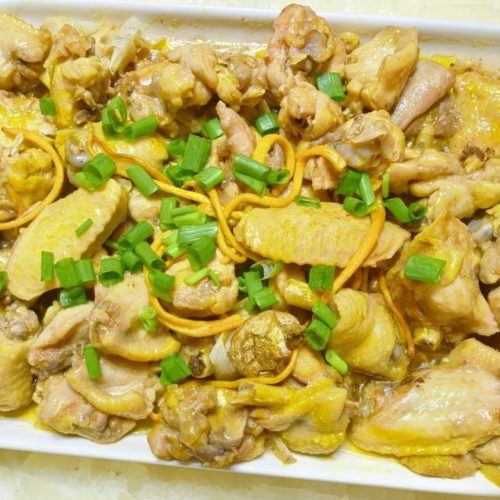
Steamed Chicken with Cordyceps Flowers (虫草花蒸鸡): Tender Chicken,

Equipment
- Wok
- Cutting Board
- Slotted Spoon
Ingredients
For the Chicken
- 1000 g whole chicken legs bone-in, skin on, cut into 1½-inch pieces
- 2 g sesame oil or rendered chicken fat, about ½ teaspoon
- 6 slices ginger about 6 thin coins
- 6 slices scallion white parts, cut on the bias
- 5 g Shaoxing wine about 1 teaspoon
- 2 g oyster sauce about ½ teaspoon
- 5 g light soy sauce about 1 teaspoon
- 6 g salt about 1 teaspoon, or to taste
- 1 g white pepper about ¼ teaspoon
- 10 g cornstarch about 1 tablespoon
For Steaming
- 20 g cordyceps flowers dried, soaked and rinsed
Instructions
- Cut the whole chicken legs into small pieces, soak them in cold water and rinse twice to draw out the blood, then drain well and toss with about 2 grams of sesame oil or chicken fat until every piece is coated and the moisture is locked in.

- Add the ginger slices, scallion slices, Shaoxing wine, oyster sauce, salt and white pepper, then mix again until everything is evenly combined.
- Add the cornstarch and give it a third mixing, then let the chicken sit for at least half an hour so the marinade penetrates and the starch hydrates.
- Transfer the chicken to a steaming plate, scatter the rinsed cordyceps flowers over the top, and steam at high heat for 25 minutes — for an older bird use the gentle setting for 45 to 60 minutes; a mix of whole legs and wings from a 3-to-4-month-old yellow-feather chicken is perfect at 25 minutes.

- When the time is up the steamer beeps and switches to keep-warm, so open the lid, scatter over chopped scallion, and add a few goji berries if you want extra color — the chicken is tender, silky and deeply savory.












Leave a Reply