This guide provides a technical breakdown of seasoning a carbon steel wok—a process known in Chinese kitchens as Lian Guo (炼锅). Proper seasoning is not just about preventing rust; it is the chemical foundation of patina, which creates a naturally non-stick surface and enables the elusive Wok Hei.
Direct Answer: What is Wok Seasoning?
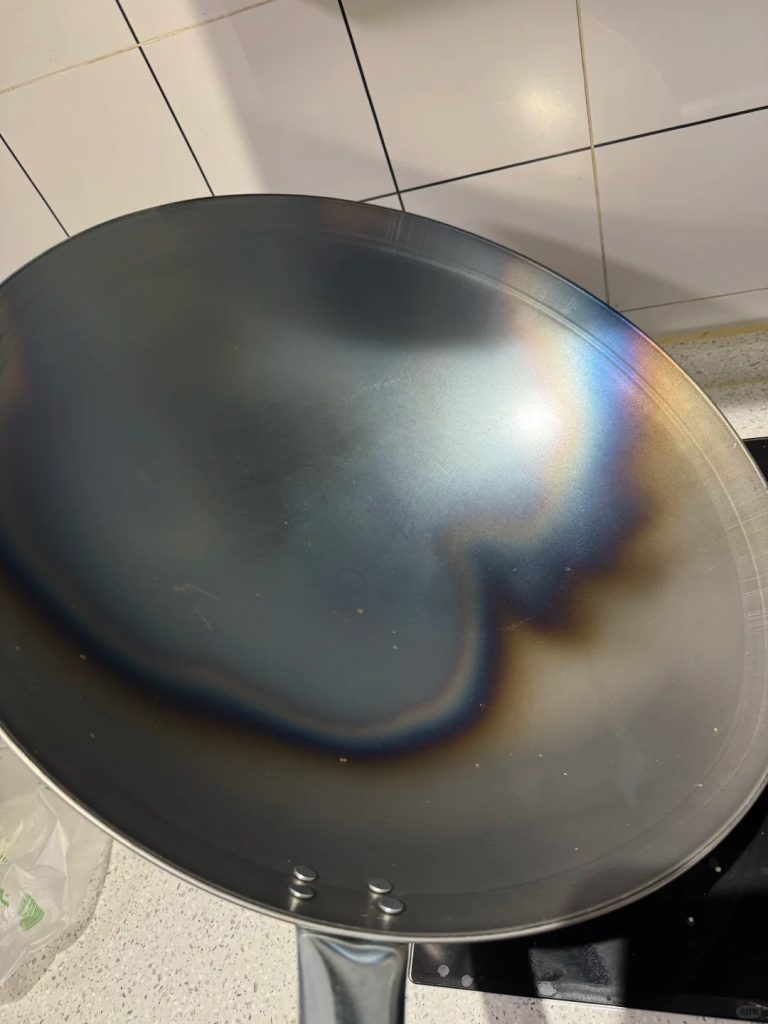
Seasoning is the process of bonding a layer of polymerized oil to the surface of a carbon steel or cast iron wok. Through high heat, liquid fats undergo a chemical reaction to become a hard, plastic-like solid that fills the microscopic pores of the metal. A properly seasoned wok is hydrophobic, rust-resistant, and develops a deep black finish over time.
Why It Works: The Science of Polymerization
The “non-stick” property of a wok is not a coating applied at a factory; it is a result of thermal polymerization. When unsaturated fats are heated to their smoke point in the presence of iron and oxygen, they break down and cross-link into a solid polymer matrix.
- Carbon Steel Porosity: Under a microscope, carbon steel is jagged. Seasoning fills these “valleys,” creating a smooth plane.
- The Iron Catalyst: Iron acts as a catalyst for this reaction, which is why Carbon Steel vs Cast Iron Woks are the preferred vessels for this technique.
- Carbonization: As you continue to cook, small amounts of carbon from food particles integrate into this layer, toughening the patina.
The Initial Seasoning: Step-by-Step
If you have a brand-new wok, it likely has a factory coating of machine oil to prevent rusting during shipping. This must be removed before seasoning.
1. The Industrial Scrub
Use hot soapy water and a stainless steel scrubber. This is the only time you will use heavy abrasives on your wok. Scrub until the water no longer turns grey and the metallic smell of the factory oil is gone. Dry immediately over low heat.
2. Blueing the Steel (Thermal Treatment)
This is a critical step for modern carbon steel. Increase the heat to the highest setting.
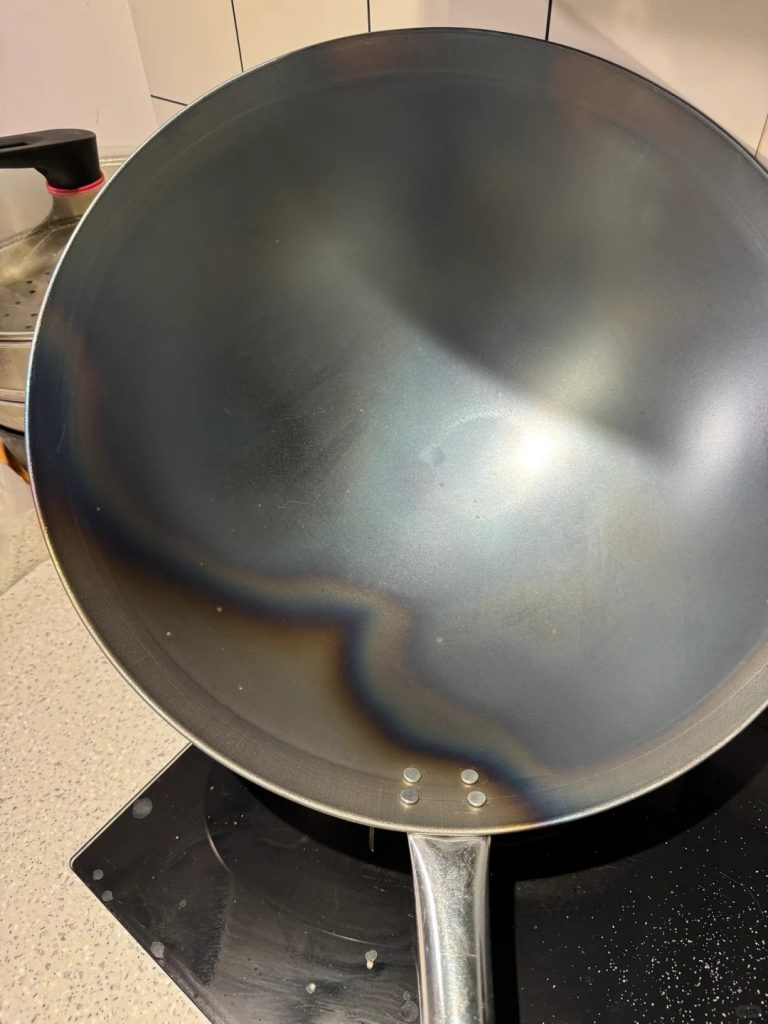
- Boundary: The steel will turn from silver to blue, then straw-colored, and finally a deep, iridescent blue.
- Technique: Tilt the wok so the flame hits every inch of the surface, including the high sides. This “blueing” creates a layer of magnetite (black iron oxide), which provides superior rust protection and a better grip for the oil.
3. The First Oil Layer
Once the wok has blued, turn off the heat and let it cool for 2 minutes. Applying oil to a glowing hot wok can cause the oil to ignite or create a “thick” gummy layer that will eventually peel.
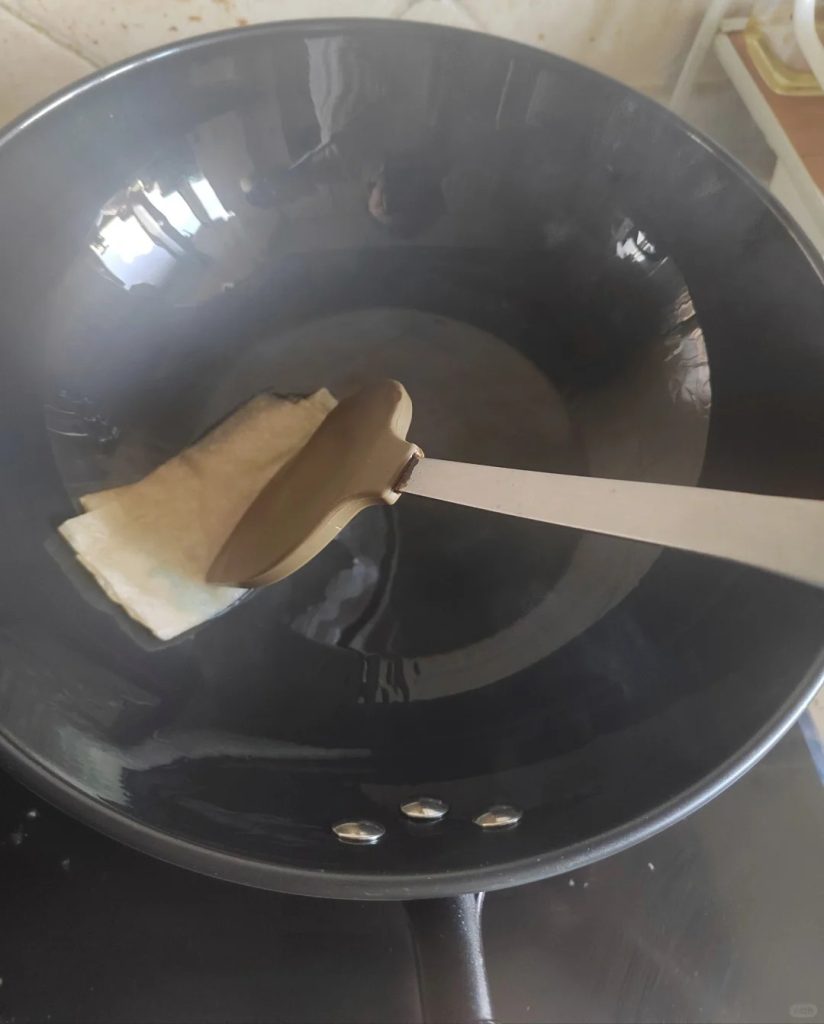
- Oil Choice: Use a high smoke point oil. Refer to our Best Oil for Stir Frying guide; soybean, peanut, or grapeseed oils are ideal.
- The Ratio: You only need approximately 1 teaspoon of oil. Wipe it across the entire interior with a paper towel held by tongs.
- The Burn: Turn the heat back to medium-high. Heat until the oil stops smoking and the surface looks matte.
4. The Aromatics (The “Sacrificial” Stir-Fry)
To remove any lingering metallic taste and further the polymerization, stir-fry a bunch of scallions and ginger.
- Why: These aromatics contain sulfur compounds that help stabilize the oil layer.
- Boundary: Stir-fry for 10–15 minutes, pushing the aromatics up the sides. Discard the charred vegetables afterward.
Professional Seasoning Boundaries
| Variable | Home Kitchen Boundary | Restaurant Kitchen Difference |
| Heat Output | 10k–15k BTU (Standard burner) | 100k+ BTU (Power burner/Jet wok) |
| Surface Temp | 230°C to 290°C (450°F to 550°F) | Reached in seconds; requires constant motion |
| Oil Layer | Thin, buffed layer (polymerization) | Often “Long Yao” (heat oil, pour out) |
| Cooling | 2–3 minutes before oiling | Forced cooling with water if needed |
Maintenance: The “No-Soap” Rule
Once seasoned, the wok’s greatest enemy is moisture and detergents.
- Wash: Use hot water and a bamboo brush or soft sponge.
- Dry: Always place the wok back on the burner for 30 seconds to evaporate all micro-moisture.
- Oil: If the patina is young, wipe a tiny drop of oil onto the surface before storage.
When this method does NOT work
- Non-Stick/Teflon Woks: Do not attempt to “blue” or season a wok with a chemical non-stick coating. High heat will release toxic fumes and destroy the pan.
- Stainless Steel Woks: While you can “season” them temporarily, they do not hold a long-term patina like carbon steel.
Common Mistakes & Troubleshooting
- The Surface is Sticky: This happens when you use too much oil or insufficient heat. The oil has partially polymerized into a resin rather than a hard solid. Fix: Scrub the sticky area with salt and a little oil, then reheat until it smokes clear.
- The Seasoning is Peeling: This usually indicates the factory oil wasn’t fully removed or the oil layer was too thick. Fix: Scrub back to the bare metal and restart the blueing process.
- Rust Spots: Usually caused by air-drying without heat. Fix: Scrub the rust off, perform a “mini-seasoning” by heating the wok and applying a thin layer of oil.
Related Techniques & Recipes
Once your wok is seasoned, you are ready to master the Stir Fry Order of Ingredients. A well-seasoned wok is the key to executing high-heat dishes like:
- Beef Chow Fun (Requires a perfect non-stick surface for the rice noodles).
- Kung Pao Chicken (High-heat searing of dried chilis).
- Sizzling Dry Pot Potato Slices.
FAQ
Q: Can I use a flat pan if I don’t have a wok? A: Yes, but the heat distribution is different. See our guide on Flat Pan vs Wok for Stir Fry for adjustments.
Q: How often should I re-season? A: You should only need to “deep season” once. Regular cooking, especially with fatty meats like Pork Belly, will naturally maintain and darken the patina.






Leave a Reply