The first time I tried to make palmiers, my kitchen looked like a butter crime scene. Chunks of golden fat leaking out of the dough, layers that refused to puff, and a batch of flat, tough biscuits that tasted nothing like the shattering, caramel-laced shells I grew up buying in Shanghai. The problem was never my oven or my patience — it was that I had skipped the two steps that make this pastry work: letting the dough rest, and letting the sugar do its job.
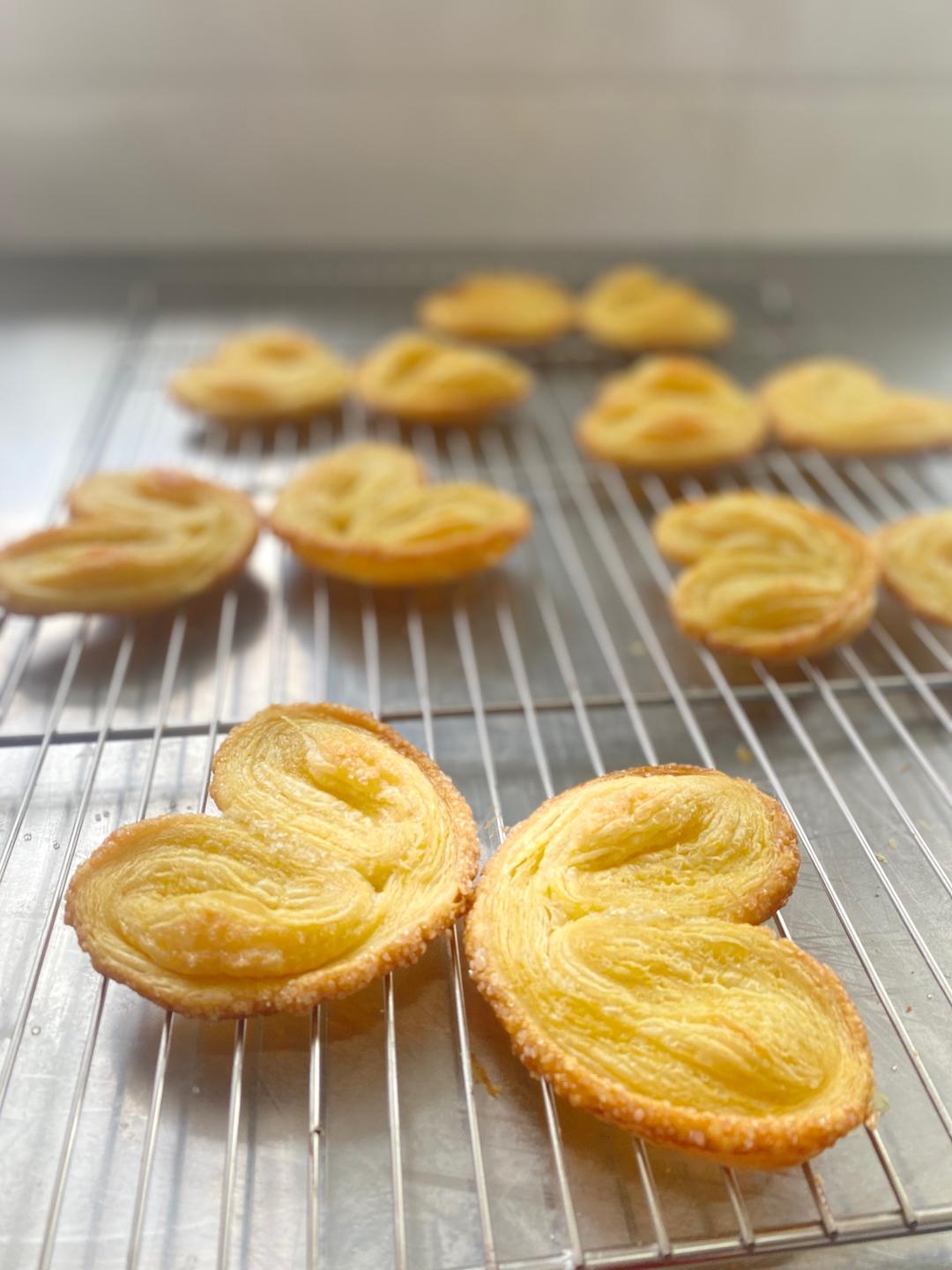
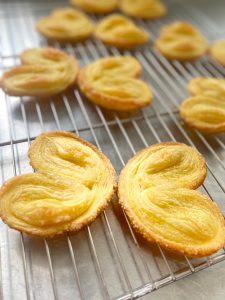
Butterfly pastry — hu die su (蝴蝶酥) in Chinese — is the Chinese name for the classic French palmier. The dough is laminated, meaning butter is folded into the dough again and again until it forms dozens of thin layers. Rolled with sugar, folded like a paper fan, and baked, each strip spreads into a butterfly-wing shape with a crispy, caramelized outside and tender, flaky inside.
The version I am sharing today comes from a home baker’s recipe that uses a dough sheeter, but I tested it in a normal kitchen with a rolling pin — no machine required. It needs a little patience for the rests and chills, but the technique is forgiving, and the result is one of the most impressive things you can pull out of a home oven.
What Is Butterfly Pastry (Hu Die Su)?
Hu die su (蝴蝶酥) is the Chinese name for the palmier, a French pastry that arrived in China through the treaty-port bakeries of Shanghai and has been a bakery counter staple ever since. A palmier starts with puff pastry — dough and butter folded together into layers — that is rolled out, dusted with sugar, folded like a fan, sliced into strips, and baked. As the strips bake, the sugar caramelizes into a crackly shell while the butter layers steam and push the pastry apart into the shape of a butterfly, wings spread.
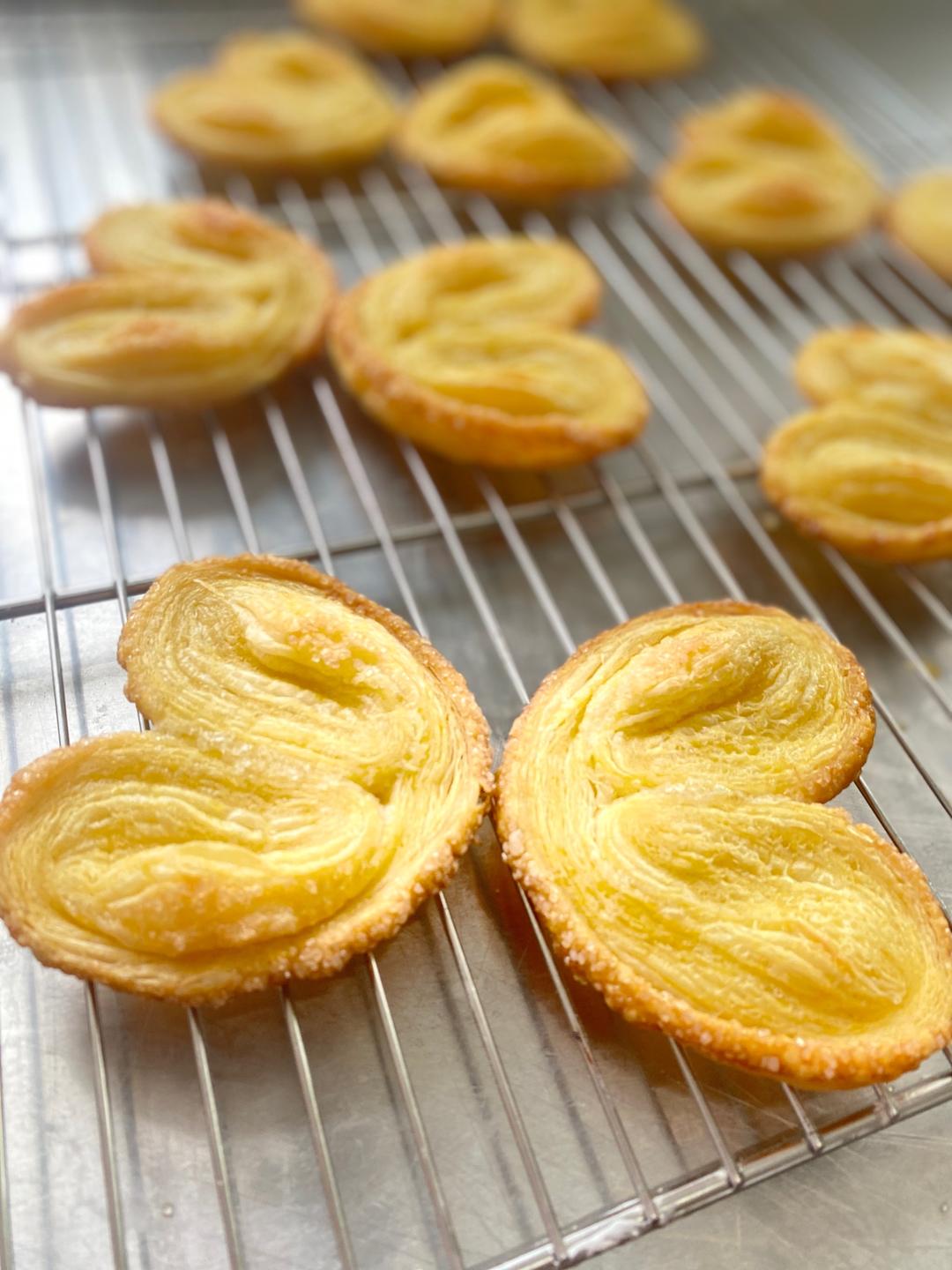
Chinese bakeries make it in two sizes: the small crispy bites you pick up by the bag, and the giant palm-sized versions from places like the famous Shanghai International Hotel bakery, which are flaky, buttery, and faintly salty to balance the caramel. The best ones are golden amber at the edges, shattering when you bite them, with a chew just at the center where the sugar has gone slightly sticky.
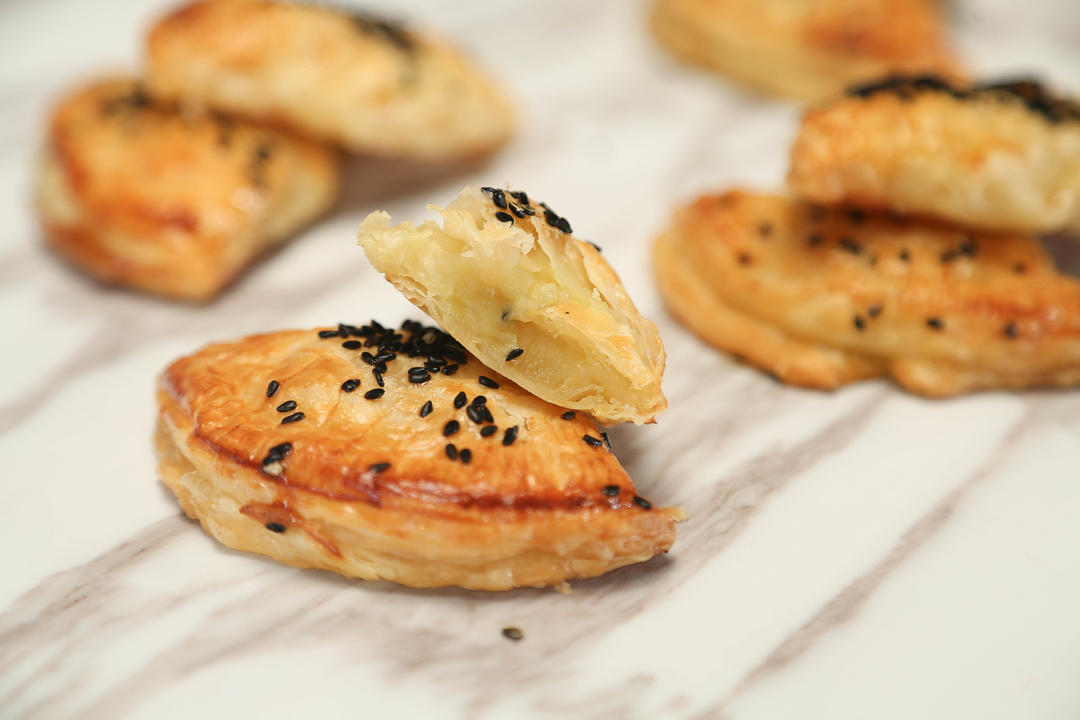
If you enjoy the crisp, layered magic of laminated pastry, you will love my durian puffs (liu lian su) — the same flaky, golden shell wrapped around a creamy durian filling. One is baked, one is fried, but both celebrate what butter and thin layers can do.
1Easy Durian Pastry (Liu Lian Su)A simplified, 5-ingredient version of the classic Dim Sum dessert. By using frozen egg tart shells or puff pastry, you can create these crispy, creamy, and aromatic treats in under 30 minutes.Check out this recipe
Why This Recipe Works
- The sugar is folded into the dough, not dusted on top: as the layers bake, the sugar melts into the dough and caramelizes in the cracks, giving each strip that signature amber shell instead of a plain sugar crust.
- Resting keeps the butter in its layers: the 15-minute rest before laminating relaxes the gluten, so the dough rolls out without springing back and tearing around the butter block.
- The freeze sets the shape: a 30-minute chill firms the folded strips so they slice into clean, even 1 cm pieces that bake into uniform butterflies instead of squashing flat.
- High heat and a flip build the crunch: 190°C (375°F) with a flip at the halfway mark browns both sides evenly and drives off moisture, so every bite is crisp, not chewy.
- No sheeter required: the original recipe uses a dough sheeter, but four simple folds with a rolling pin produce the same layers at home.
Equipment Needed
- A rolling pin (a long, straight one makes the folds easier)
- A bench scraper for cutting and cleaning up the dough
- A ruler or tape measure — precise sizes matter for even layers
- Plastic wrap or a reusable cover for resting the dough
- A baking tray lined with parchment paper
- A dough sheeter (optional; the recipe includes the manual method)
Ingredients
- 200 g (1 1/2 cups) all-purpose flour
- 10 g (2 tsp) egg wash, beaten egg
- 108 g (1/2 cup) water
- 10 g (2 tsp) unsalted butter, softened
- 160 g (5.6 oz / 2/3 cup) cold unsalted butter, for laminating
- 40 g (3 tbsp) granulated sugar, for sprinkling
Ingredient Notes
Butter is everything here. Use a good-quality unsalted butter with a high fat content — European-style butter (82% fat or more) rolls out more plastically and produces cleaner layers than lower-fat butter, which tends to crack and leak. The 10 g of butter in the dough itself is just for tenderness; the real work is done by the 160 g cold block folded inside. All-purpose flour is right for this — bread flour has too much gluten and makes the dough tough, while pastry flour can tear under the weight of the butter. Granulated white sugar caramelizes cleanly; brown sugar would work but gives a deeper, more molasses-like flavor that changes the character of the pastry. If you want to experiment with a richer, more traditional Chinese shortening, rendered lard can replace part of the laminating butter for an even flakier, more savory shell — though the flavor will be noticeably different.
Prep & Mise en Place
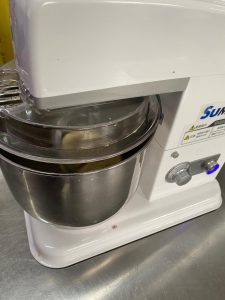
Take the 160 g laminating butter out of the fridge about 15 minutes before you need it so it softens just enough to roll without cracking — it should be cold but pliable, like clay. Meanwhile, mix the dough: combine the flour, beaten egg, water, and the 10 g softened butter, and knead briefly until it comes together into a smooth, slightly tacky ball. Do not overwork it — you want the gluten relaxed, not developed, which is exactly what the rest in the next step is for.
Cooking Process
Step 1 — Make the Dough and Let It Rest
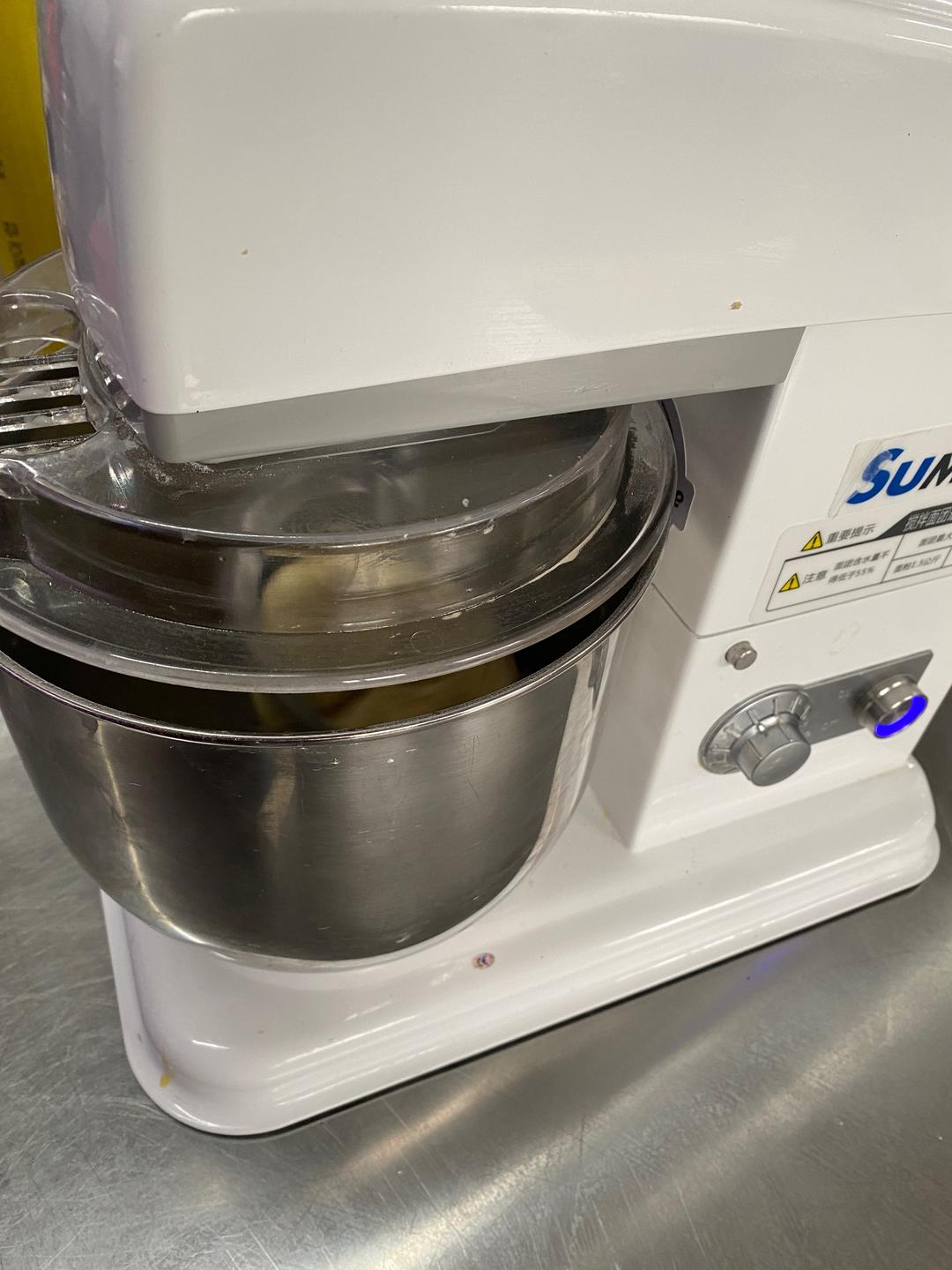
Mix the flour, egg, water, and softened butter into a dough. Cover with plastic wrap and let it rest at room temperature for about 15 minutes so the gluten relaxes and the dough rolls out without snapping back.
Step 2 — Shape the Butter Block
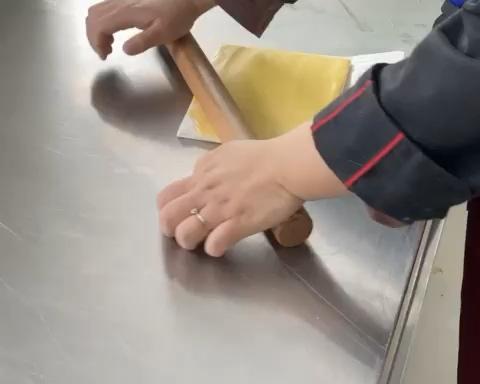
While the dough rests, place the softened laminating butter between two sheets of plastic wrap or parchment and roll it into a rectangle about 18 x 15 cm (7 x 6 in). Keep the thickness even — a uniform block folds into uniform layers.
Step 3 — Enclose the Butter in the Dough
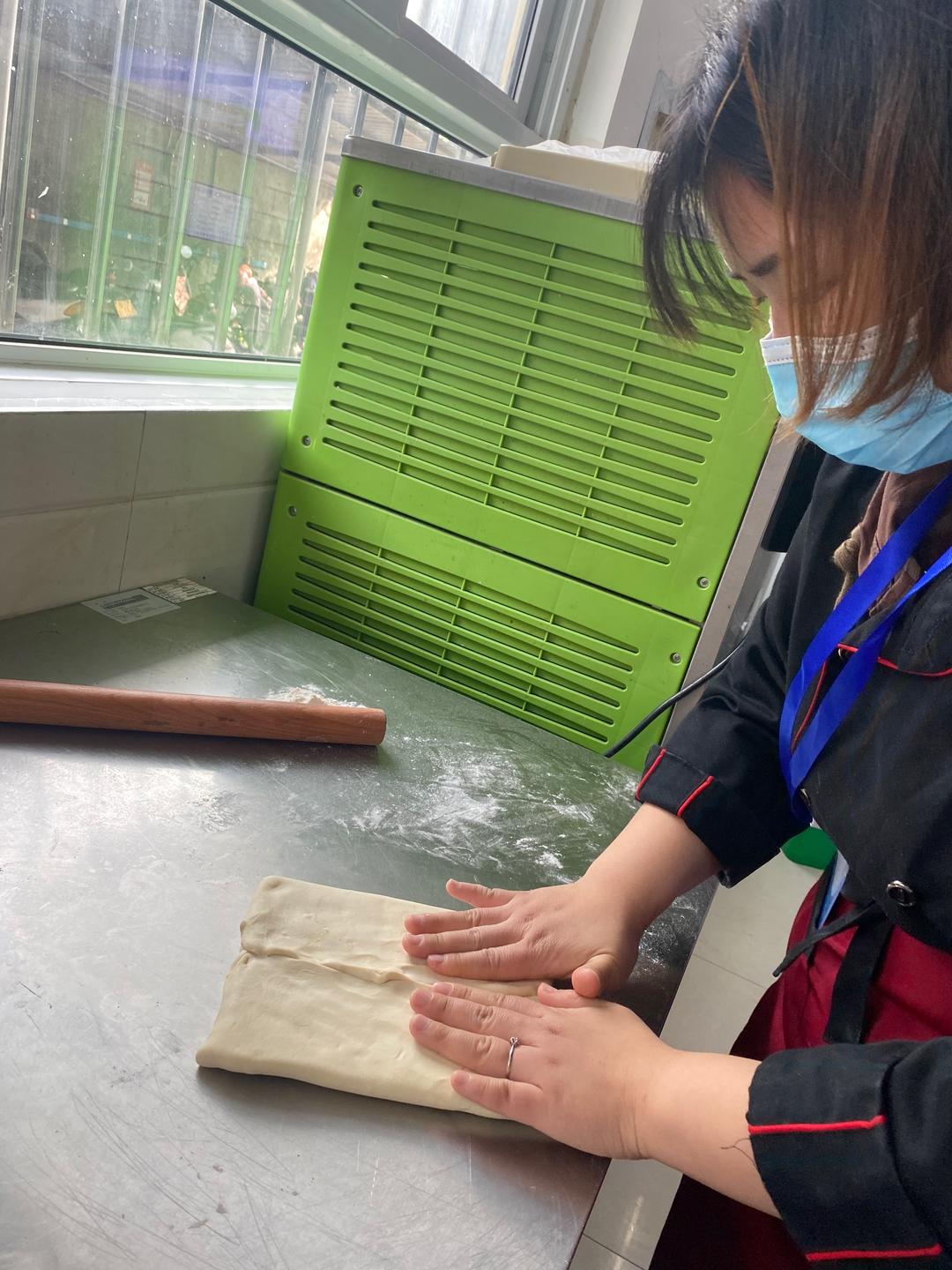
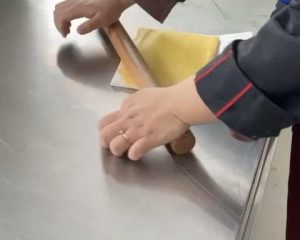
Roll the rested dough into a rectangle about 20 x 32 cm (8 x 12.5 in). Place the butter block in the center, then fold the left and right sides of the dough over the butter like a letter, meeting in the middle. Pinch the seam shut firmly so no butter escapes during the next rolls.
Step 4 — Laminate with Four Three-Folds
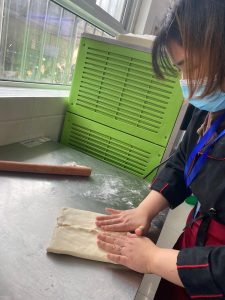
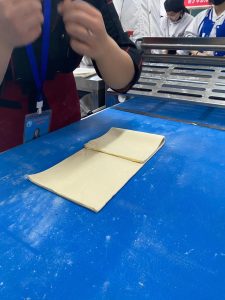
Roll the dough out to about 20 x 48 cm (8 x 19 in), then fold it into thirds like a business letter — this is one three-fold. Rotate the dough 90 degrees and repeat three more times, rolling and folding a total of four times. If the butter starts to soften or leak, chill the dough for 10 minutes between folds. A sheeter set to 20 cm wide and 48 cm long makes this quick, but a rolling pin works exactly the same.
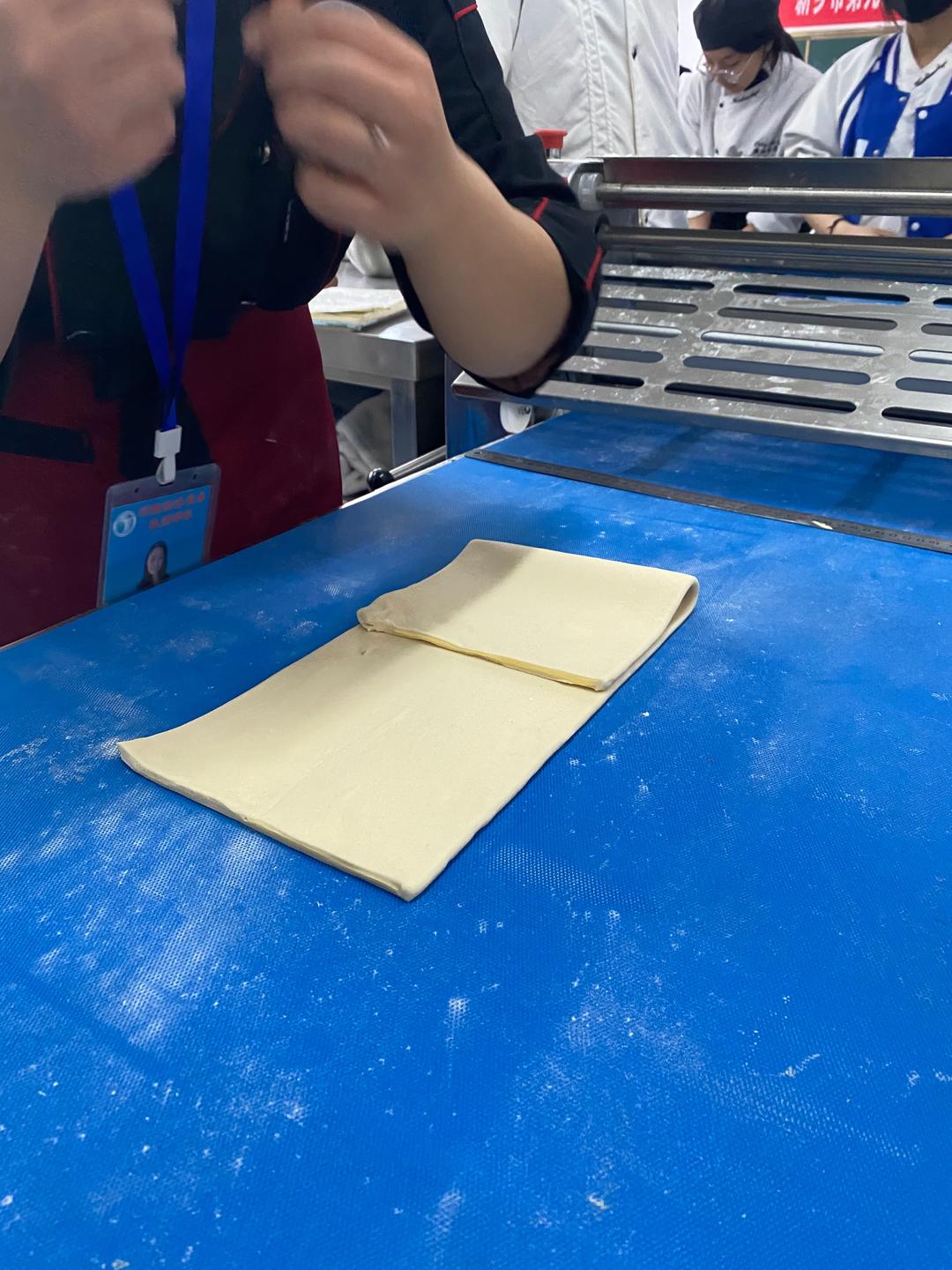
Four three-folds give you 81 layers of dough and butter (3 to the power of 4). Each layer is only fractions of a millimeter thick, which is what makes the finished pastry shatter instead of chew. The trick to clean layers is temperature: if the butter is too soft, it smears into the dough instead of staying in distinct sheets; if it is too hard, it cracks. Cold but pliable, with a quick chill whenever you feel resistance, is the balance.
Step 5 — Roll Out and Sprinkle with Sugar
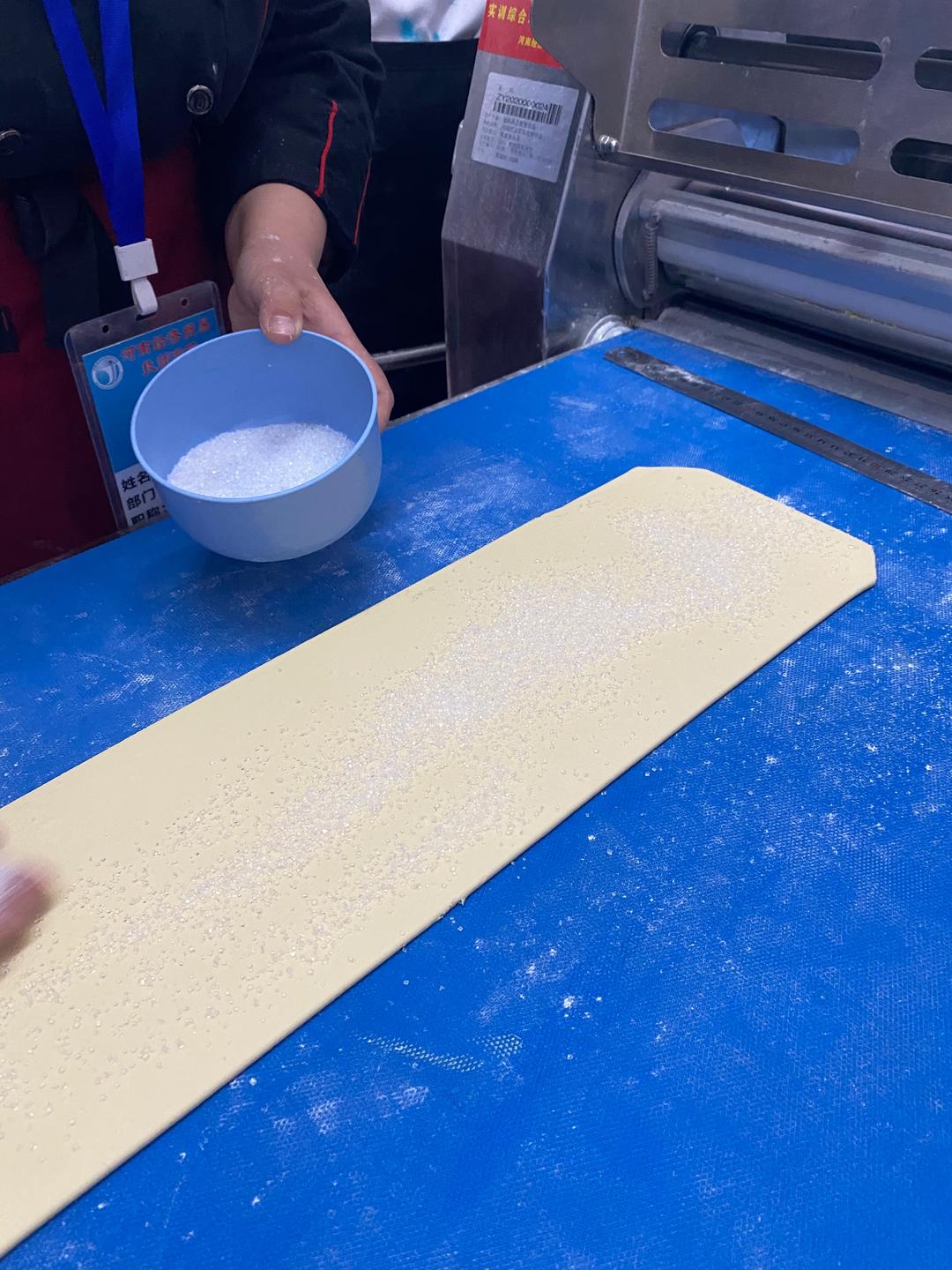
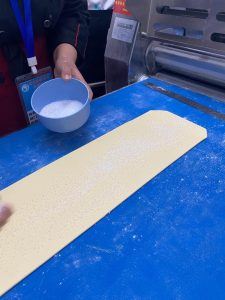
Roll the laminated dough out to about 20 x 57 cm (8 x 22.5 in). Sprinkle the granulated sugar evenly over the whole surface, then trim the edges to a clean 18 x 56 cm (7 x 22 in) rectangle.
Step 6 — Fold Like a Fan and Freeze
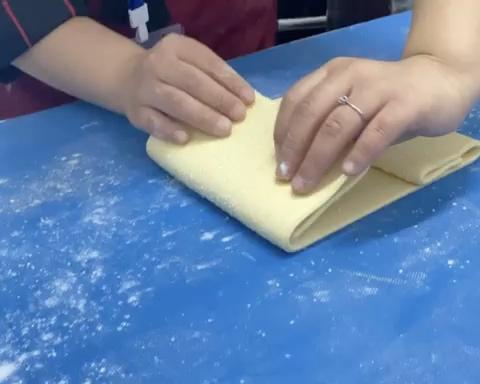
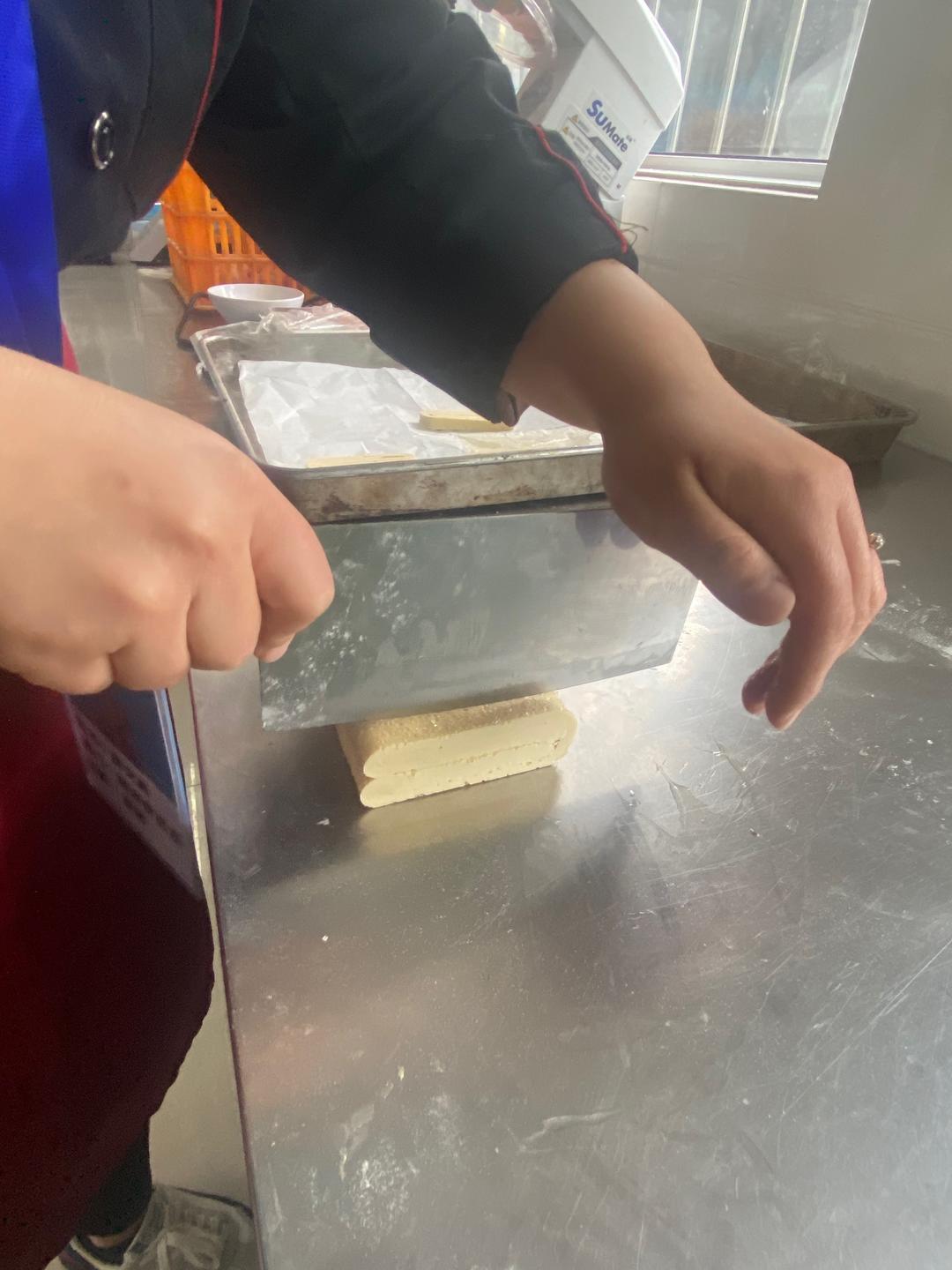
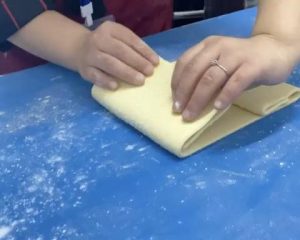
Mark the long edge into 6 equal portions. Fold the dough back and forth over those marks like a paper fan or accordion, so the sugar is trapped between the layers. Freeze the folded block for 30 minutes until firm — this is what lets you slice clean strips.
Step 7 — Slice into Strips
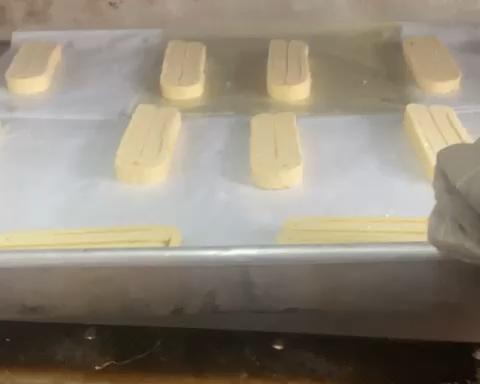
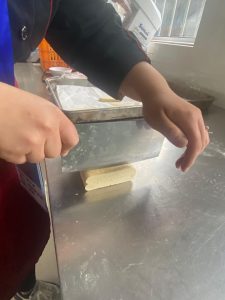
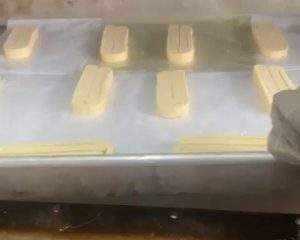
Using a sharp knife, cut the frozen block into 1 cm (about 1/2 in) strips. Arrange them cut-side up on a parchment-lined baking tray, leaving a few centimeters between them — they spread and puff as they bake.
Step 8 — Bake and Flip
Bake at 190°C (375°F) with top and bottom heat for about 15 minutes, then flip each strip over and bake another 15 minutes, until deep golden and caramelized. Adjust the time by a minute or two depending on your oven — you are looking for amber edges and a crisp sound when you tap one.
Step 9 — Cool Until Crisp
Transfer the baked palmiers to a wire rack. They firm up as they cool — the caramelized sugar sets into a glassy shell within a few minutes. Let them cool completely before stacking, or the steam will soften them.
Step 10 — Serve
Serve the butterfly pastry the day you bake it, when the layers are at their shattering best. They are beautiful on a cake stand and impossible to stop eating.
Common Mistakes When Making Butterfly Pastry
1. Butter leaks out during baking. Cause: the butter was too soft, or the dough seams were not sealed. Fix: keep the laminating butter cold but pliable, pinch every seam firmly, and chill between folds whenever the dough feels greasy or resistant.
2. The layers don’t puff and the pastry is flat and tough. Cause: overworked gluten or melted butter layers. Fix: rest the dough before laminating, and never force a roll — if it springs back, chill it for 10 minutes and try again.
3. The sugar burns in spots. Cause: uneven sugar distribution or a hot spot in the oven. Fix: sprinkle the sugar in an even layer and rotate the tray at the flip; lower the temperature slightly if the edges darken too fast.
4. The strips squash when sliced. Cause: the folded block was not frozen enough. Fix: freeze a full 30 minutes until the block is firm to the touch, and use a very sharp knife in one confident cut.
5. The center stays doughy. Cause: the strips were too thick, or the oven was too cool. Fix: cut clean 1 cm strips, bake at the full 190°C (375°F), and don’t crowd the tray so the heat circulates.
6. The pastry goes soft an hour later. Cause: it was stored airtight while still warm. Fix: cool completely on a rack first, and store only once fully crisp.
Variations
Once the technique is yours, the flavor is easy to play with. Dust the dough with cinnamon sugar instead of plain sugar for a churro-style version, or add a pinch of flaky sea salt on top of the caramelized shell for a sweet-salty contrast. For a chocolate twist, brush the rolled sheet with melted dark chocolate before sprinkling the sugar. Matcha powder, black sesame, or crushed peanuts all work as Chinese-style coatings. And if you are in the mood for the fried cousin of laminated pastry, try my crispy taro puffs (wu gok) — a deep-fried, flaky-shelled savory snack that shows off the same love of layers.
Frequently Asked Questions
Do I need a dough sheeter? No. The original recipe uses one for speed and evenness, but a rolling pin produces identical results — just roll each fold to the stated size and keep the dough chilled if it fights back.
Why are my palmiers not flaky? Almost always because the butter melted into the dough during laminating. Work in a cool kitchen, keep the butter cold but pliable, and chill between folds at the first sign of softness.
Can I make the dough ahead? Yes. The folded, unfrozen block keeps in the fridge for 1–2 days wrapped tightly, or in the freezer for up to 3 months. Freeze it flat, then slice straight from frozen when you want fresh-baked palmiers.
What if I don’t have European butter? Regular unsalted butter works fine — just keep it a little colder and expect slightly less dramatic layers. The sugar shell and flavor will still be excellent.
Why does the sugar in this recipe go into the dough instead of on top? Because that is what creates the crackly, caramelized shell. Sugar trapped between layers melts and caramelizes from within as the pastry bakes, giving each layer a thin, glassy, amber coating.
How to Serve
Butterfly pastry is the perfect tea-table sweet: serve it alongside kai kou xiao (smiling sesame cookies) for a spread of Chinese bakery classics, or pair it with cream puffs when you want both crunchy and creamy on the table. It is also lovely crumbled over vanilla ice cream, or simply stacked on a plate with strong coffee. For a Chinese bakery afternoon at home, add traditional Chinese shortbread cookies to the plate — they keep well and balance the palmiers’ caramel with a mellow, crumbly richness. And when you want a softer, cake-like contrast on the same plate, a slice of pumpkin chestnut pound cake is the perfect companion to the crisp, caramel-shelled pastry.
Storage & Reheat
Baked butterfly pastry is at its peak the day it is made. Store leftovers in an airtight container at room temperature for up to 3 days; if they soften, re-crisp them in a 180°C (350°F) oven for 3–5 minutes and cool before serving. The unbaked folded block freezes beautifully for up to 3 months — slice and bake straight from the freezer, adding 2–3 minutes to the bake time. Do not refrigerate baked palmiers; the fridge draws out moisture and makes them stale faster.
Allergen Notice
This recipe contains gluten (all-purpose flour), egg, and dairy (butter). It is not suitable for a gluten-free, egg-free, or dairy-free diet in this form; dairy-free margarine-style butter substitutes do not laminate the same way and are not recommended here.
Nutrition Disclaimer
Nutrition information is calculated using an ingredient database and should be considered an estimate. In cases where multiple ingredient alternatives are given, the first listed is calculated for nutrition. Garnishes and optional ingredients are not included.
About the Author & Recipe Development
I’m Lin, and I spent over a decade cooking in Chinese restaurant kitchens before I started writing recipes for home cooks. Butter and pastry were never my first language — I grew up on woks — so when I fell in love with the palmiers from the Shanghai International Hotel bakery, I had to learn laminated dough the hard way: in my own kitchen, batch after batch. I tested this recipe with a sheeter and without one, and the version here is the one that produced the cleanest layers and the most even caramel every time, using just a rolling pin and a ruler. The resting times and the flip at 15 minutes are the two details I would never skip.
Authoritative References
For the science of sugar caramelization and the Maillard reaction behind the golden crust, this overview of caramelization from ScienceDirect explains how heat transforms sugar. The layered structure of laminated doughs is covered in this introduction to puff pastry from ScienceDirect.
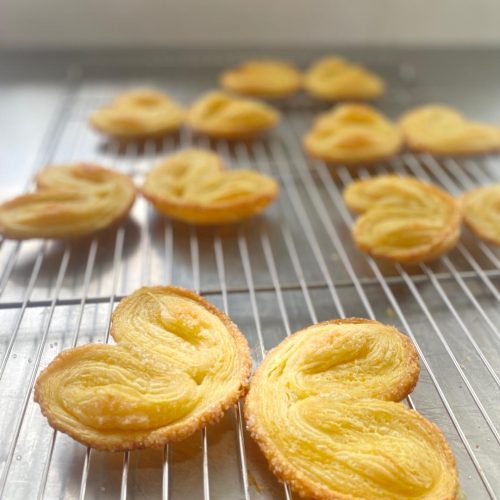
Homemade Butterfly Pastry (Hu Die Su)

Equipment
- Rolling Pin
- Bench Scraper
- Ruler
- Baking Tray with Parchment Paper
Ingredients
For the Dough
- 200 g all-purpose flour about 1 1/2 cups
- 10 g egg wash beaten egg, about 2 tsp
- 108 g water about 1/2 cup
- 10 g unsalted butter softened, about 2 tsp
For Laminating
- 160 g cold unsalted butter high-fat European-style preferred
- 40 g granulated sugar about 3 tbsp, for sprinkling
Instructions
- Mix the flour, egg, water, and softened butter into a smooth dough. Cover with plastic wrap and rest at room temperature about 15 minutes.

- Roll the softened laminating butter between two sheets of plastic into an 18 x 15 cm (7 x 6 in) rectangle, even thickness.

- Roll the dough to 20 x 32 cm (8 x 12.5 in), center the butter, fold the sides over it, and pinch the seam shut firmly.
- Roll to about 20 x 48 cm and do a three-fold (business letter). Rotate 90 degrees and repeat — four three-folds total. Chill 10 minutes between folds if the butter softens. A sheeter set to 20 x 48 cm works; a rolling pin is fine.
- Roll the laminated dough to about 20 x 57 cm (8 x 22.5 in), sprinkle sugar evenly over the surface, and trim to a clean 18 x 56 cm rectangle.
- Mark the long edge into 6 equal portions and fold back and forth like a paper fan, trapping the sugar between layers. Freeze 30 minutes until firm.
- Cut the frozen block into 1 cm strips and arrange cut-side up on a parchment-lined tray with space between them.
- Bake at 190°C (375°F) for about 15 minutes, flip, and bake another 15 minutes until deep golden and caramelized. Adjust for your oven.
- Cool completely on a wire rack until the caramelized shell sets and the pastry turns crisp.
- Serve the day you bake it, when the layers are shattering and crisp.




Leave a Reply