There’s something incredibly satisfying about Enoki mushrooms. If you’ve seen those slender, creamy-white bunches of mushrooms at your local Asian market and wondered, “What exactly do I do with these?” you have come to the right place.
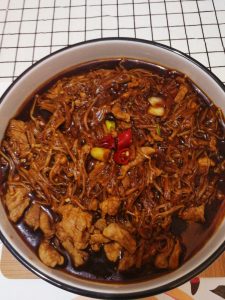
This Pork and Enoki Mushroom Stir-fry (金针菇炒肉, Jīn Zhēn Gū Chǎo Ròu) is a dish that saves me on busy weeknights. It’s savory, texturally interesting—thanks to the slightly crunchy snap of the mushrooms—and comes together in about 20 minutes.

I remember the first time I tried to cook enoki mushrooms back in my college dorm. I treated them like button mushrooms and cooked them until they were sad and stringy. It wasn’t until my mom visited and showed me that they need high heat and a savory sauce to truly shine that I fell in love with them.
This recipe leans heavily on pantry staples. It’s homestyle, unpretentious, and pairs perfectly with a steaming bowl of white rice. If you are looking for a way to introduce more fungi into your diet without the “earthy” taste of heavy mushrooms, this is the gateway recipe for you.
What are Enoki Mushrooms?
Enoki mushrooms, known as Jīn Zhēn Gū (金针菇) or “Golden Needle Mushrooms” in Chinese, are long, thin white mushrooms with tiny caps. Unlike portobellos or shiitakes, which have a meaty, spongy texture, enoki mushrooms are crisp and have a mild, slightly fruity flavor.
They are incredibly popular in East Asian cuisine, used in hot pots, soups, and stir-fries. Because they are so thin, they cook in seconds.
Shopping Tip: When buying enoki mushrooms, look for bunches that are firm and white. Avoid any that look slimy, brown at the base, or smell sour. You can usually find them in the produce section of H-Mart, 99 Ranch, or even Whole Foods and specialized local grocers.
Why This Recipe Works
- Texture Contrast: The “velveted” pork is tender and smooth, which contrasts beautifully with the slightly crunchy, noodle-like texture of the enoki mushrooms.
- Umami Bomb: The combination of soy sauce and the natural amino acids in the mushrooms creates a deep savory flavor without needing heavy stocks.
- Fast: Because both the pork slices and the mushrooms are thin, the actual cooking time is under 5 minutes.
Ingredients
Here is everything you need to make this dish. I’ve included substitutions just in case you don’t have a fully stocked Chinese pantry.
For the Pork & Marinade:
- 6 oz (170g) Pork Loin or Tenderloin: Sliced into thin strips. You can also use pork belly if you prefer a richer taste.
- 1/4 tsp Salt: To season the meat from the inside out.
- 1 tbsp Shaoxing Wine: This removes any “gamey” flavor from the pork. Substitute: Dry sherry or unsalted chicken stock.
- 1 tsp Cornstarch: Essential for “velveting” the meat to keep it juicy.
- 1 tsp Neutral Oil: To coat the meat and prevent sticking.
For the Stir-Fry:
- 7 oz (200g) Enoki Mushrooms: usually 1 standard pack.
- 2 slices Ginger: Fresh is best.
- 2 stalks Scallions (Green Onions): White parts chopped for cooking, green parts for garnish.
- 1-2 Fresh Thai Chilies (Optional): If you like a little kick. Substitute: A pinch of red pepper flakes.
- 2 tbsp Cooking Oil: Vegetable, canola, or grapeseed oil.
The Sauce:
- 1 tbsp Light Soy Sauce: For savory saltiness. Recommended: Pearl River Bridge or Kikkoman.
- 1 tsp Dark Soy Sauce: Primarily for that beautiful caramel color. Optional.
- 1/4 tsp Salt: Adjust to taste.
- 1/4 cup Water: To create a bit of sauce.
- Slurry: 1 tsp Cornstarch mixed with 1 tbsp Water (for thickening).
Equipment
- Wok or Large Skillet: A carbon steel wok is traditional, but a large non-stick skillet works perfectly fine for this delicate mushroom dish.
- Sharp Knife: For slicing the pork thinly.
Ingredient Deep Dive: Enoki Mushrooms vs. Shiitake
While Shiitake mushrooms are meaty and intense, Enoki are delicate and mild. In this recipe, we use Enoki specifically for their ability to absorb the sauce and act almost like noodles. If you substitute Shiitake here, slice them very thinly, but know the texture will be chewier and the flavor earthier.
Mise en Place (Prep Work)
Chinese cooking moves fast—often referred to as “wok hei” or the breath of the wok. You don’t want to be hunting for the soy sauce while your garlic burns.
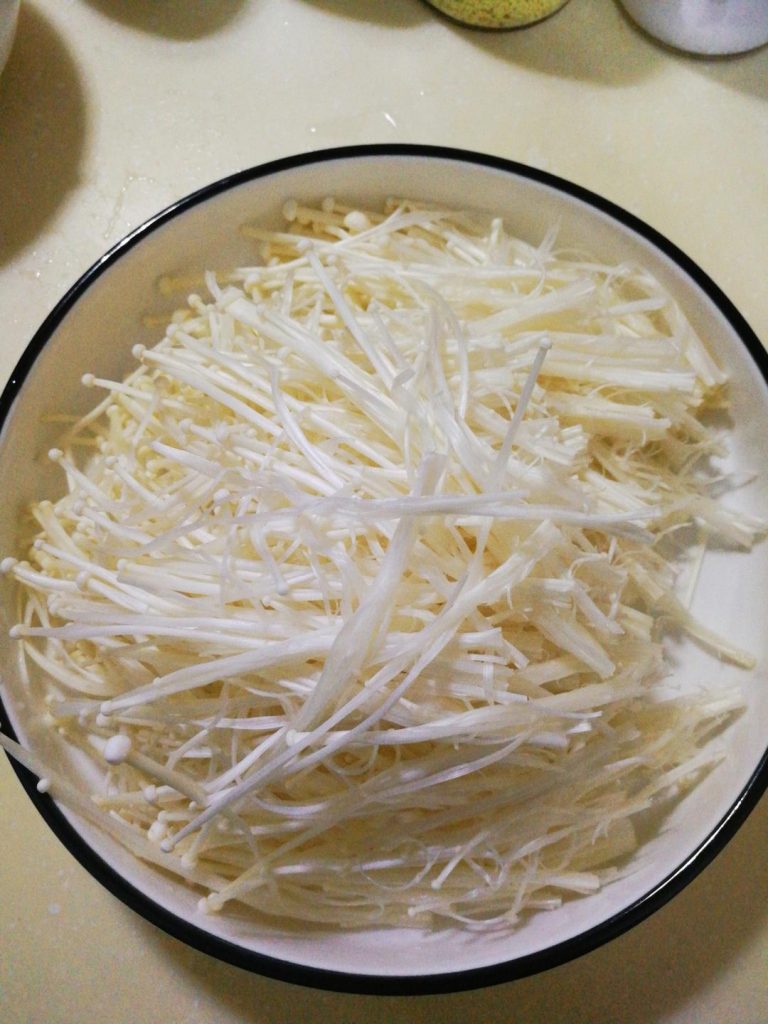
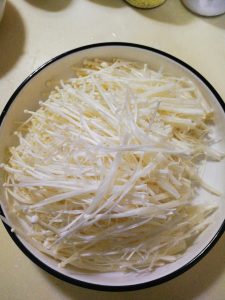
- Prep the Mushrooms: Keep the enoki mushrooms in their packaging to slice off the bottom 1-inch (the root ball) with a knife. Discard the roots. Remove the mushrooms from the bag and gently tear the bunch apart into smaller bite-sized bundles. Rinse them lightly under cold water and drain well.
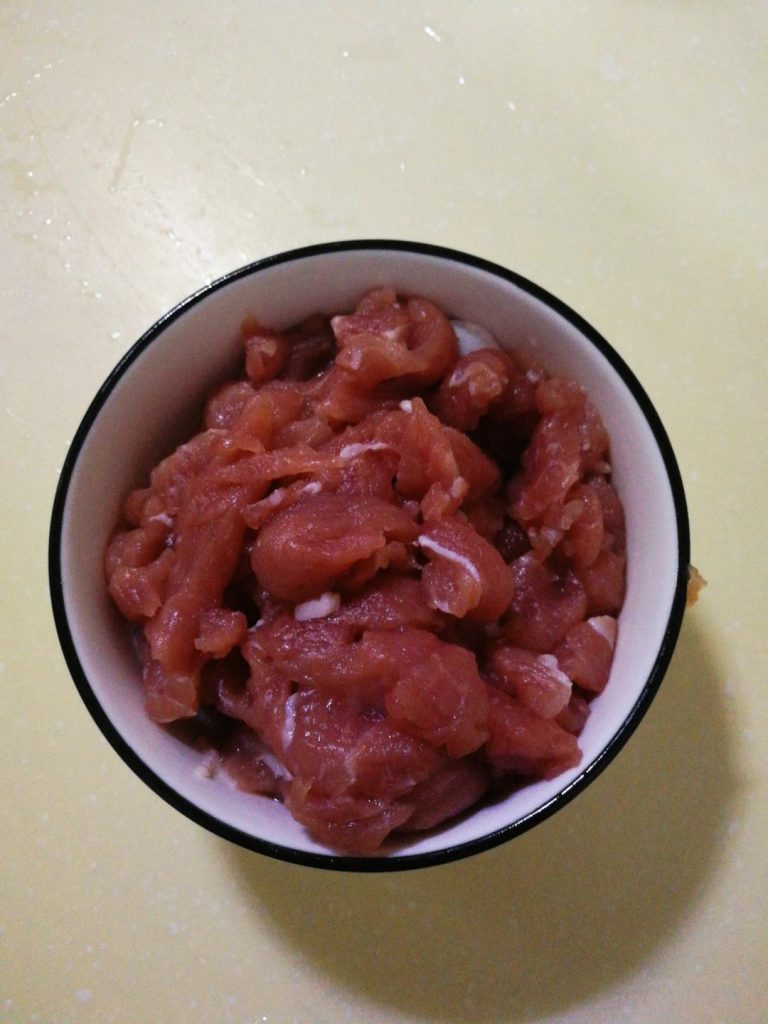
- Slice the Pork: Cut your pork against the grain into thin matchsticks.
- Marinate the Pork: In a small bowl, combine the pork, salt, Shaoxing wine, and cornstarch. Mix well by hand. Let it sit for at least 10 minutes (or up to 30 minutes) while you prep the veggies. This is the “velveting” step that ensures tenderness.
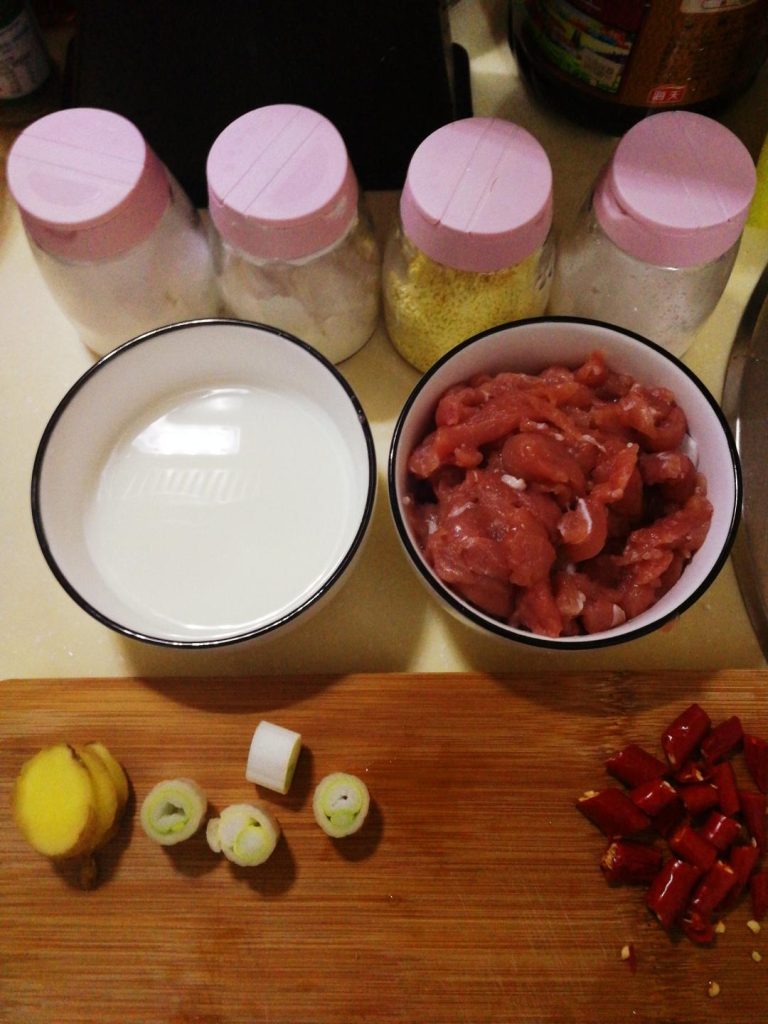
- Aromatics: Slice the ginger, chop the scallions (keep whites and greens separate), and chop the chilies.
Step-by-Step Instructions
Step 1: Sear the Pork Heat your wok or skillet over medium-high heat. Add 1 tablespoon of oil. Add the marinated pork strips. Stir-fry briskly until they turn white and are about 80% cooked (about 1-2 minutes). Expert Tip: Remove the pork from the pan and set it aside on a plate. This prevents it from becoming tough and chewy while the mushrooms cook.
Step 2: Bloom the Aromatics Wipe out the wok if needed. Add another tablespoon of oil and heat it up. Add the ginger slices, scallion whites, and chilies. Stir-fry until fragrant, about 30 seconds. You should smell the aroma filling your kitchen.
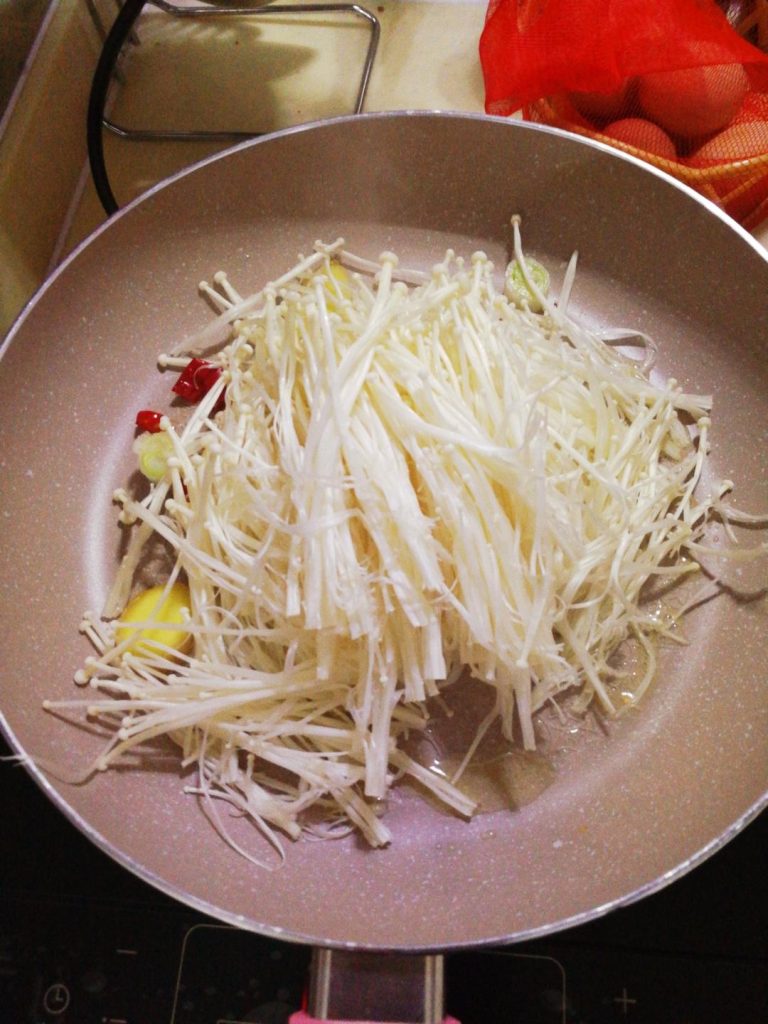
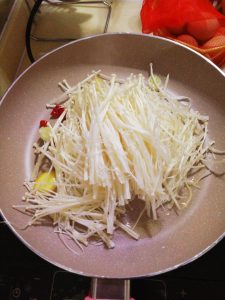
Step 3: Cook the Mushrooms Add the enoki mushrooms to the wok. Stir-fry for 1-2 minutes. They will initially look dry, but they will soften and release their own moisture quickly.
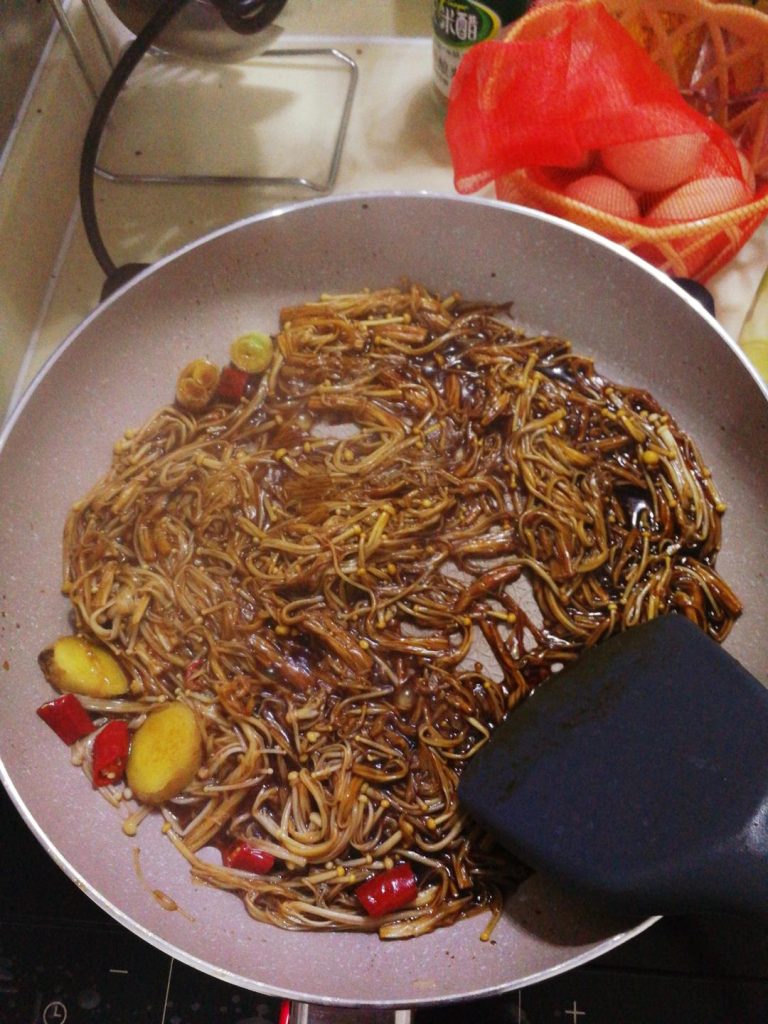
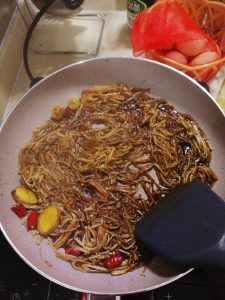
Step 4: Season and Simmer Add the light soy sauce, dark soy sauce, and salt. Pour in the 1/4 cup of water. Stir well to combine. Let it simmer for 1 minute so the mushrooms absorb the flavors.
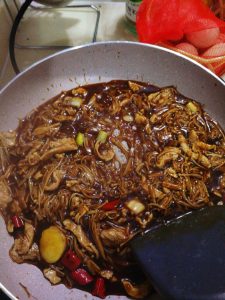
Step 5: Combine and Thicken Add the cooked pork (and any juices on the plate) back into the pan. Stir to mix. Give your cornstarch slurry a quick mix (starch settles) and pour it slowly into the pan while stirring. The sauce should glossy up and thicken almost instantly.
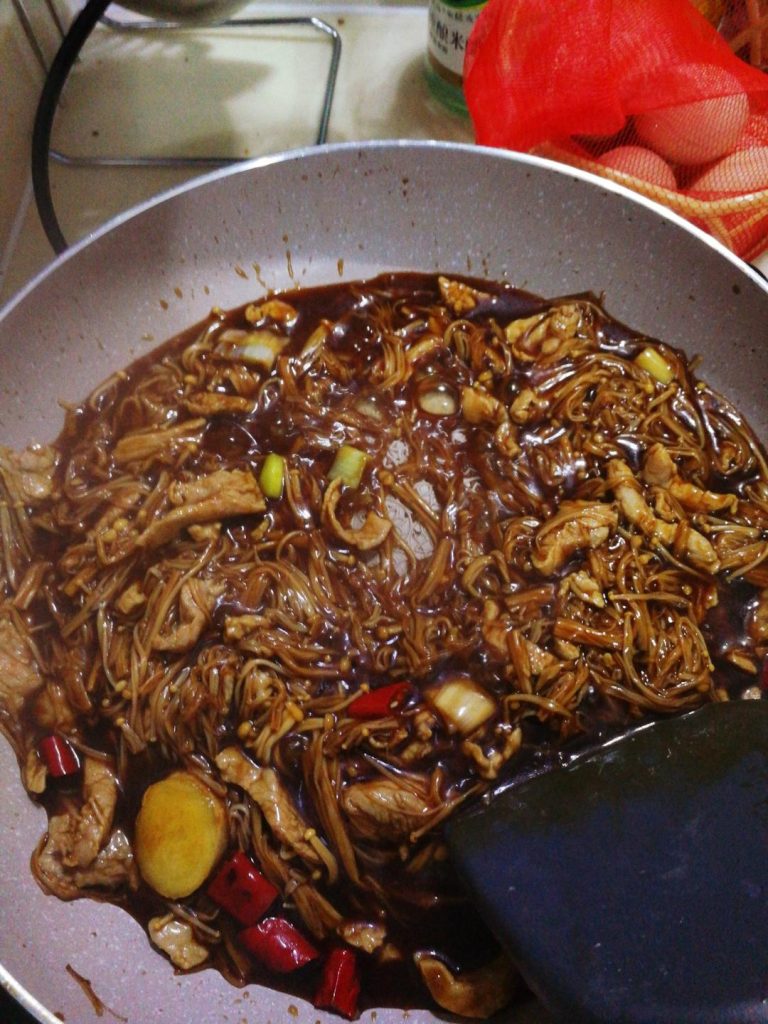
Step 6: Serve Toss in the scallion greens, give it one final mix, and turn off the heat. Serve immediately.
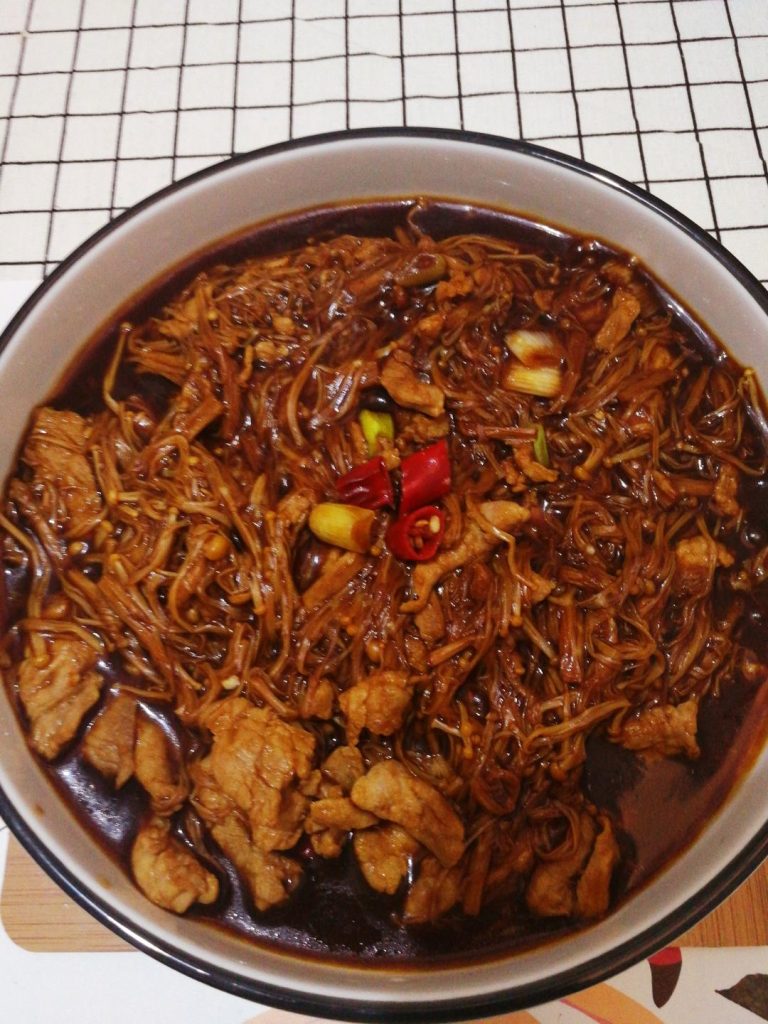
Note on Cooking Time: The original Chinese advice for this dish emphasizes not undercooking enoki mushrooms. They contain a protein called flammutoxin (which is destroyed by heat) and tough fiber. Ensure they are soft and cooked through to avoid digestion issues!
Serving Suggestions
This dish is quite savory and demands a neutral base to soak up the sauce.
- Rice: Steamed Jasmine rice is the gold standard.
- Noodles: You can spoon this over boiled wheat noodles for a quick lunch.
Pairing Ideas: To make this a complete Chinese family meal, I suggest pairing it with:
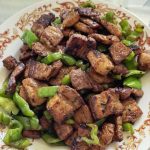
- Stir-Fried Pork with Peppers (For a spicy kick)
- Easy Pan-Fried Tofu with Garlic Sauce (For a vegetarian protein side)
- Simple Clear Beef Noodle Soup (If you want a soup to go with it)
Common Troubleshooting (Our Test Kitchen Notes)
- My sauce is too thick/gloopy: You might have added too much cornstarch slurry or let it boil too long. Add a splash of hot water to thin it out.
- My mushrooms are watery: Enoki mushrooms release water. If your heat was too low, they might steam instead of stir-fry. Make sure your pan is hot before adding them.
- The pork is tough: This usually happens if you skip the marinating step or overcook the pork. Remember to remove the pork after the initial sear!
Food Safety & Storage
- Pork Temperature: Ensure pork reaches an internal temperature of 145°F (63°C).
- Storage: Leftovers can be stored in an airtight container in the refrigerator for up to 3 days.
- Reheating: Reheat in a microwave or a pan. Note that the sauce may thicken in the fridge; add a teaspoon of water when reheating to loosen it up.
Frequently Asked Questions
1. Can I use chicken instead of pork? Absolutely. Chicken breast or thigh sliced into thin strips works perfectly. The marinating process is exactly the same.
2. Is this dish spicy? Only if you add the Thai chilies. Without them, it is a savory, kid-friendly dish.
3. Do I really need to wash the mushrooms? Yes, but gently. Enoki mushrooms are cultivated in bottles/jars, so they are generally clean, but it is good practice to give them a quick rinse to remove any debris. Do not soak them, or they will become waterlogged.

Pork and Enoki Mushroom Stir-fry (Jin Zhen Gu Chao Rou)

Equipment
- Wok or large skillet
- Chef’s knife
Ingredients
Pork & Marinade
- 6 oz pork loin or tenderloin sliced into thin strips (approx. 170g)
- 1/4 tsp salt
- 1 tbsp Shaoxing wine or dry sherry
- 1 tsp cornstarch
- 1 tsp neutral oil
Stir-Fry
- 7 oz enoki mushrooms 1 pack, roots trimmed, separated (approx. 200g)
- 2 slices ginger minced or julienned
- 2 stalks scallions chopped, whites and greens separated
- 1 Thai chili sliced (optional)
- 2 tbsp cooking oil divided
Sauce
- 1 tbsp light soy sauce Kikkoman or similar
- 1 tsp dark soy sauce optional, for color
- 1/4 cup water
- 1 tsp cornstarch mixed with 1 tbsp water (slurry)
Instructions
- Slice the pork into thin strips. In a bowl, mix pork with salt, Shaoxing wine, 1 tsp cornstarch, and 1 tsp oil. Let marinate for 10-15 minutes.

- Trim the root end (about 1 inch) off the enoki mushrooms. Tear them into small bundles, rinse gently, and drain well. Chop scallions (separate whites and greens), ginger, and chili.
- Heat a wok or skillet over medium-high heat with 1 tbsp oil. Add pork and stir-fry until 80% cooked (about 1-2 minutes). Remove pork and set aside.
- Add remaining 1 tbsp oil to the pan. Add ginger, scallion whites, and chili. Stir-fry until fragrant (30 seconds).
- Add enoki mushrooms. Stir-fry for 1-2 minutes until softened.
- Add light soy sauce, dark soy sauce, salt, and 1/4 cup water. Simmer for 1 minute.
- Return the pork to the pan. Stir in the cornstarch slurry slowly to thicken the sauce.
- Toss with scallion greens and serve immediately over rice.
Notes
- Calories: 285 kcal
-
Total Fat: 16g
- Saturated Fat: 3g
- Cholesterol: 55mg
- Sodium: 850mg
-
Total Carbohydrates: 12g
- Dietary Fiber: 2g
- Sugars: 1g
- Protein: 22g
- Potassium: 420mg
- Vitamin A: 150 IU
- Vitamin C: 4mg
- Calcium: 20mg
- Iron: 1.5mg
Important Reminders & Cooking Tips 1. Food Safety Warning (Enoki Mushrooms) Enoki mushrooms must be cooked thoroughly. Unlike button mushrooms which can be eaten raw, enoki mushrooms contain a protein called flammutoxin (which is destroyed by heat) and tough fibers that can be difficult to digest if undercooked. Ensure they are simmered or stir-fried for at least 2–3 minutes until soft and wilted. 2. The “Velveting” Technique Do not skip the cornstarch in the pork marinade. This Chinese technique, known as “velveting,” creates a protective coating that seals in moisture, ensuring the lean pork remains tender and silky rather than turning dry and chewy in the hot pan. 3. Sodium Content This recipe relies on soy sauce for seasoning, which contributes to the sodium level. If you are watching your salt intake, use low-sodium soy sauce and omit the additional 1/4 teaspoon of salt listed in the sauce ingredients. 4. Allergens This recipe contains Soy and Gluten (found in traditional Soy Sauce and Shaoxing Wine).
- Gluten-Free Option: Substitute the soy sauce with Tamari or Coconut Aminos, and use Dry Sherry instead of Shaoxing Wine.







Leave a Reply