There is a moment in every Cantonese wok cook’s life when the ho fun finally behaves — when the wide rice ribbons slide instead of clump, when the soy glaze clings instead of pooling, when the whole thing smells faintly of smoke and sweet wine. That moment is what 干炒鸡河, stir-fried chicken with rice noodles, is all about. It is not a complicated dish. It is a fast one, and speed is exactly what makes it taste the way it does.
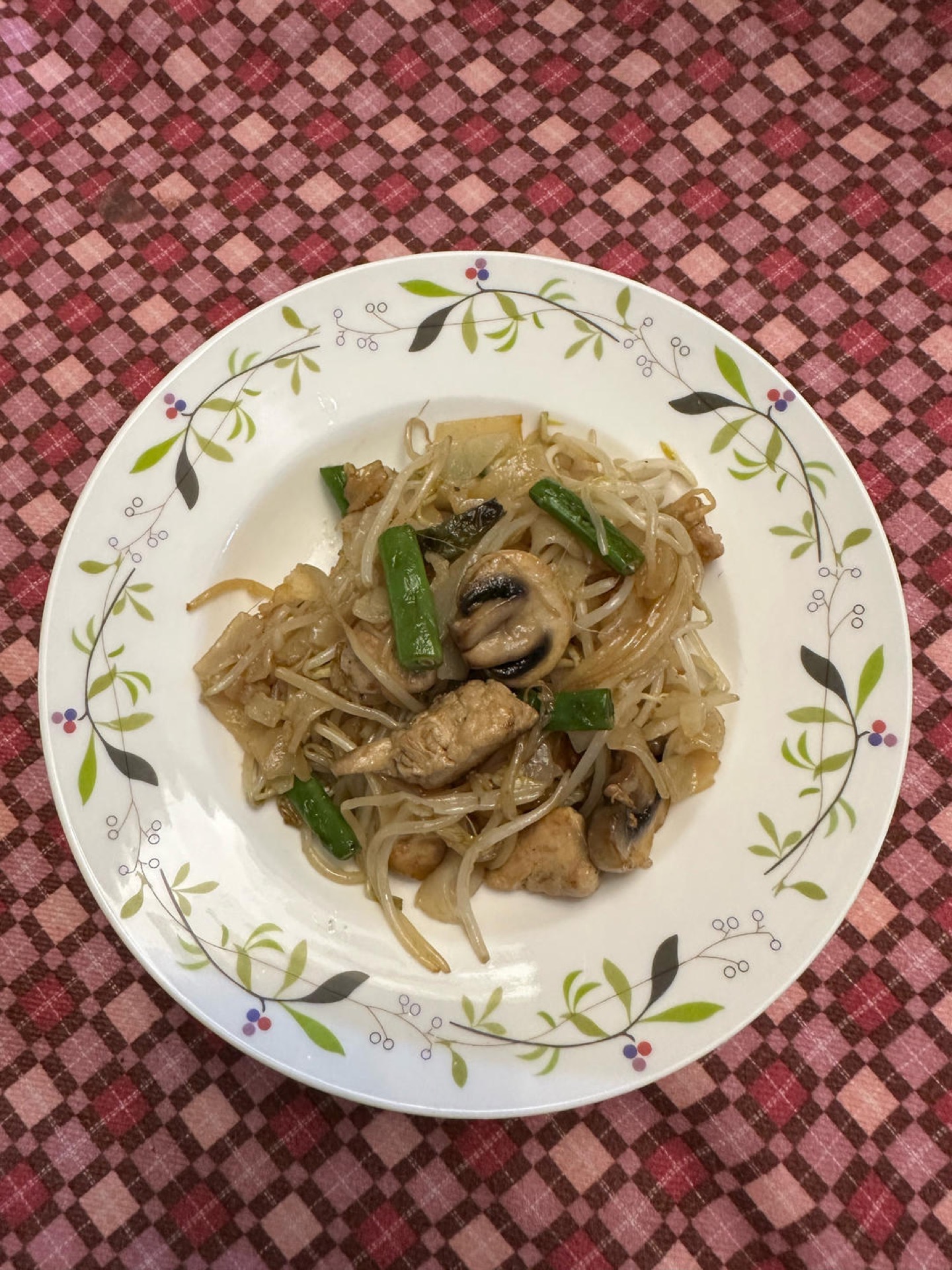
This version leans on a few practical shortcuts without giving up the wok hei that makes restaurant ho fun so addictive. The chicken is cooked first and set aside, the vegetables go in by texture, and the sauce is poured in at the very end so the noodles never turn to paste. If you have ever ordered chicken chow fun at a dim sum restaurant and wondered why yours never tastes quite the same, the answer is usually heat, timing, and the order things hit the pan.
What makes this recipe worth keeping in rotation is how forgiving it is once you understand the rhythm. Dried rice noodles soaked just to pliability, a hot wok, and a sauce that is more about balance than quantity — that is the whole game. It comes together in about thirty-five minutes start to finish, and it works equally well as a weeknight dinner or a lunch you pack for the next day.
What Is 干炒鸡河?
干炒鸡河 (gān chǎo jī hé) is a Cantonese stir-fried rice noodle dish built on ho fun — wide, flat rice noodles — tossed with chicken, aromatics, and a savory soy-based sauce. The word 干 (gān) means “dry,” and that is the defining characteristic: the finished dish should be glossy but not soupy, with each noodle coated rather than swimming. It is the chicken-based cousin of beef chow fun, and it belongs to the same family of wok-tossed rice noodle dishes found across southern China and Southeast Asia.
The technique is what separates a good version from a great one. Unlike wheat noodles, rice noodles have no gluten to hold them together, so they break easily and absorb sauce quickly. That means the cook has to work fast, keep the wok hot, and add liquid in controlled amounts. The reward is a plate of noodles that are chewy, lightly charred in spots, and deeply savory.
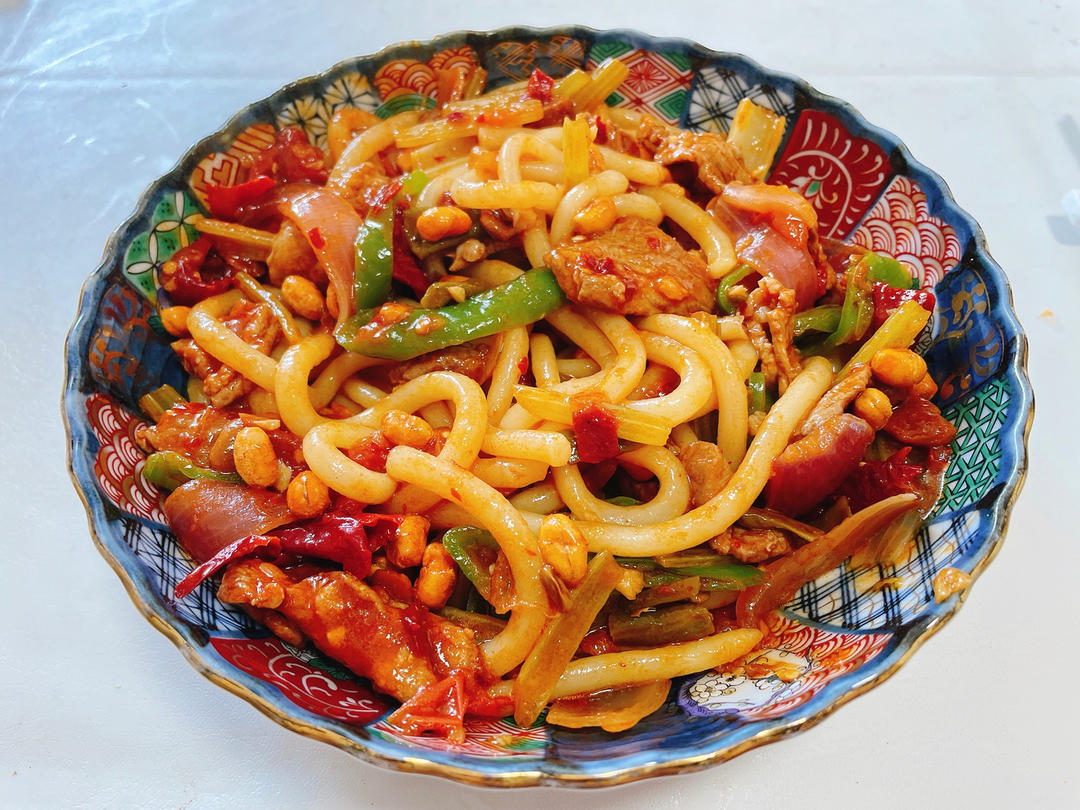
If you love the chew and char of wok-tossed rice noodles, our Xinjiang fried rice noodles take the same technique in a completely different, cumin-scented direction.
1Xinjiang Fried Rice Noodles (Xinjiang Chao Mifen)A spicy, saucy, and chewy rice noodle dish from Western China featuring a rich tomato and bean paste sauce, beef, and crisp vegetables. It is a bold ‘flavor bomb’ that perfectly bridges the gap between a stir-fry and a comforting pasta dish.Check out this recipe
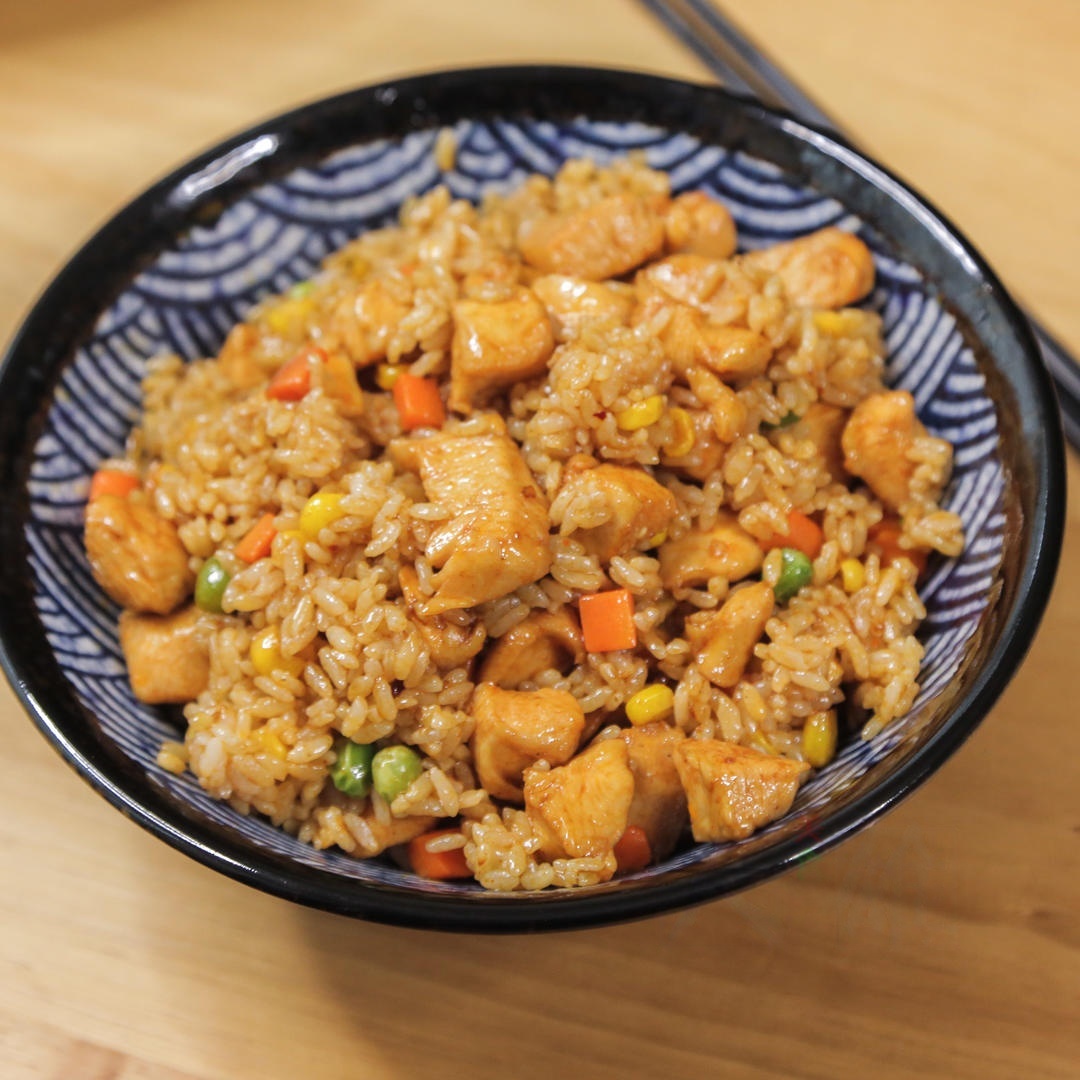
For a Southern-American twist on the same wok-and-rice idea, this new orleans style chicken fried rice is a weeknight-friendly way to use up leftover chicken.
2New Orleans Style Chicken Fried Rice (Orleans Chao Fan)A quick and savory fried rice dish using the famous Chinese “Orleans” roasted wing seasoning. Perfect for using up leftover rice and ready in under 15 minutes.Check out this recipe
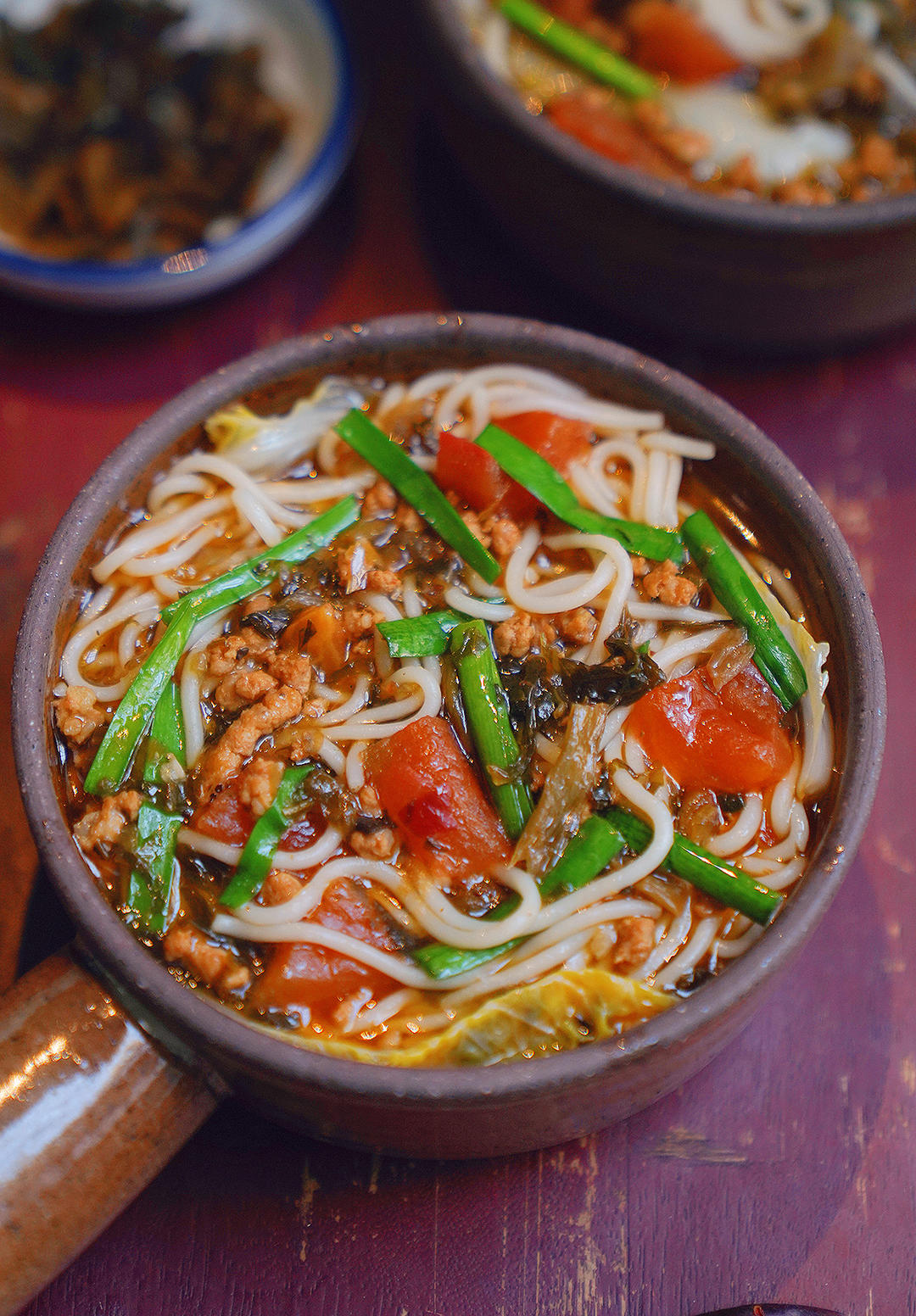
And if you prefer your rice noodles in a brothy, comforting format, Yunnan small pot rice noodles is the recipe to try next.
3Yunnan “Small Pot” Rice Noodles (小锅米线)Make this quick, savory Yunnan "Small Pot" Rice Noodles (小锅米线) at home! This 30-minute soup features tender rice noodles, ground pork, and tangy preserved vegetables in a rich, comforting broth. A family-favorite meal.Check out this recipe
Why This Recipe Works
The biggest problem home cooks run into with ho fun is soggy, broken noodles. This recipe avoids that in three ways. First, the noodles are soaked rather than boiled, so they stay firm enough to survive the wok. Second, the chicken is cooked separately, which means the noodles never sit in raw poultry juices. Third, the sauce goes in at the end, in one quick toss, so the noodles absorb flavor without stewing.
The ingredient order is also deliberate. Green beans go in first because they need the most time. Noodles go in next, when the pan is at its hottest, so they pick up char before any moisture is added. Chicken follows, then the quick-cooking bean sprouts and onion, then the sauce, then the scallion greens at the very end for a fresh, raw edge. Each addition is timed so nothing overcooks and nothing turns limp.
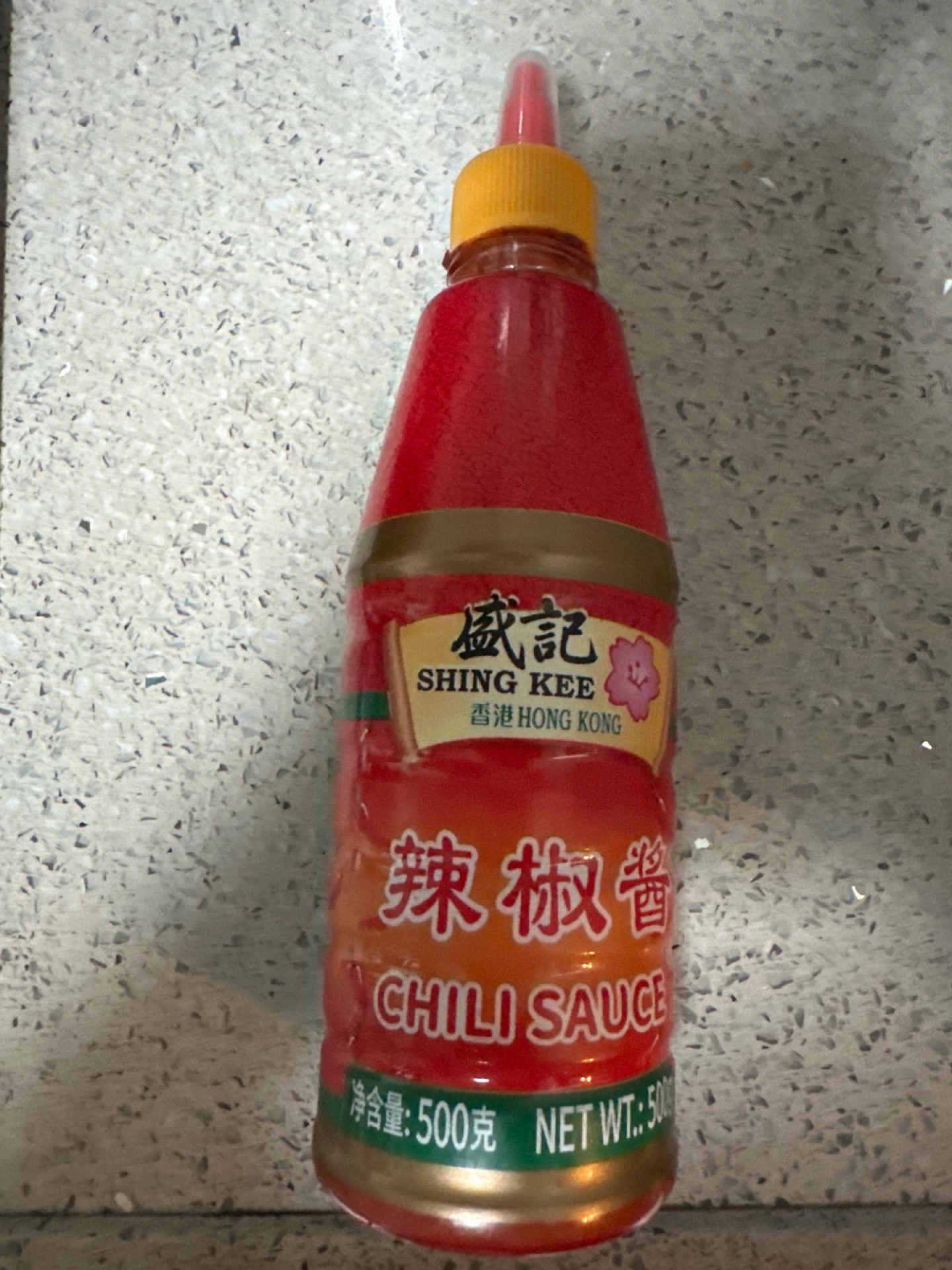
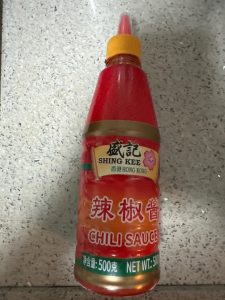
Finally, the sauce is balanced rather than heavy. Oyster sauce brings body, light soy brings salt and umami, Shaoxing wine brings acidity and aroma, and a spoonful of sugar rounds it all out. A little chili sauce is optional but recommended — it lifts the whole dish without making it spicy. The result is a plate of noodles that tastes layered rather than flat.
Equipment Needed
You do not need much for this recipe, but the wok matters. A carbon steel wok is ideal because it can take high heat and develops a natural nonstick patina over time. A large skillet will work in a pinch, but you may need to cook in two batches to avoid steaming the noodles.
Beyond the wok, you will want a cutting board and a sharp knife for the chicken and vegetables, a slotted spoon or spider for lifting the noodles without dragging excess oil, and a small bowl for mixing the sauce ahead of time. A colander is useful for draining the soaked noodles. If you have a wok spatula, use it — it is designed to scoop and toss without tearing delicate rice noodles.
One more thing worth mentioning: have everything prepped and within arm’s reach before you turn on the heat. Once the wok is hot, the cooking happens fast, and there is no time to chop garlic while the noodles are waiting.
Ingredients
This dish comes together from three groups of ingredients: the chicken, the sauce, and the noodles with vegetables. Each one plays a specific role, and small swaps can change the character of the dish considerably.
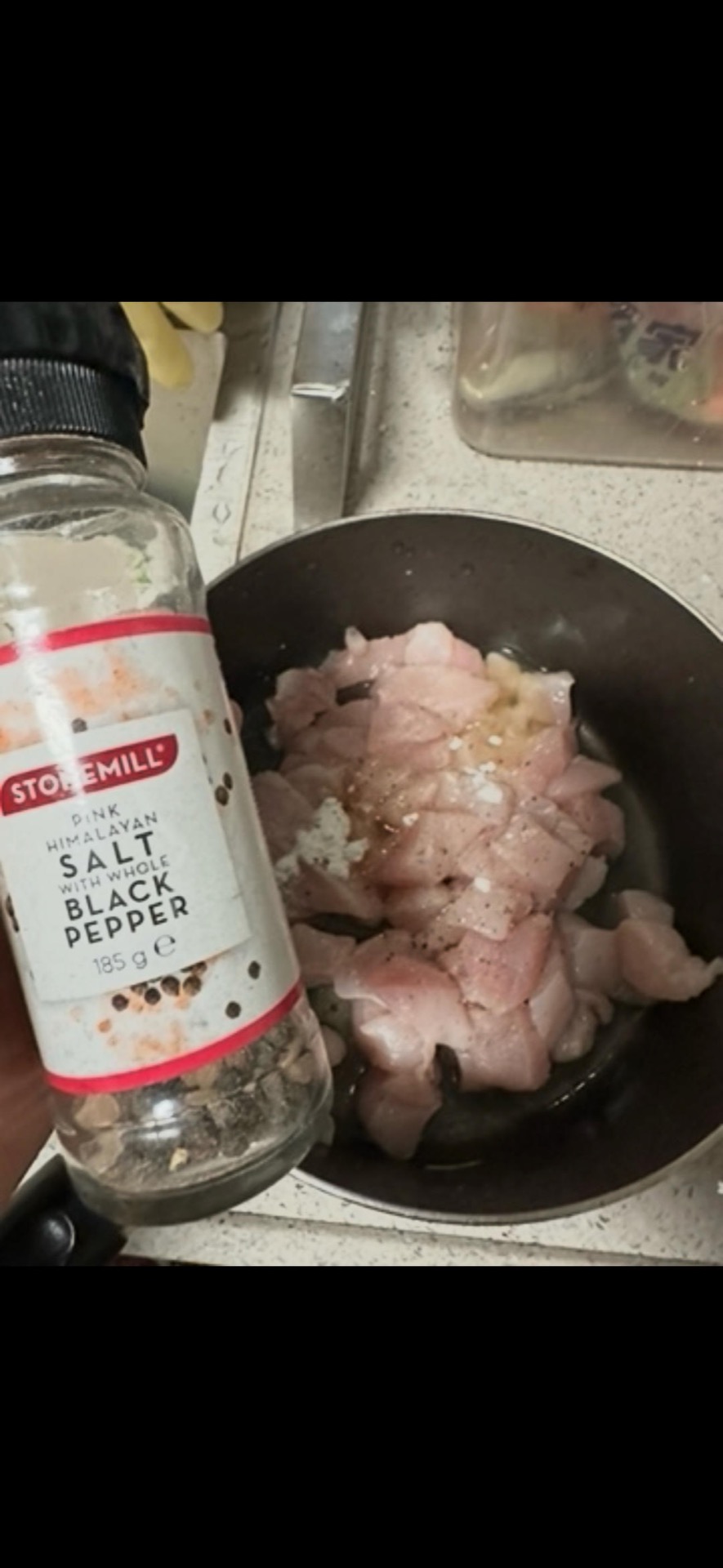
For the chicken, boneless skinless thigh is the best choice because it stays juicy under high heat. Breast meat works too, but it dries out faster, so keep an eye on it. The marinade of Shaoxing wine, soy sauce, and cornstarch is what gives the chicken its silky texture and keeps it from toughening in the wok.
The sauce is a simple blend of oyster sauce, light soy, Shaoxing wine, sugar, and optional chili sauce. Together they create a glossy, savory glaze that coats the noodles without drowning them. If you want to understand why some sauces slide off instead of clinging, our explainer on sauce coating food breaks down the science.
For the noodles and vegetables, wide dried rice noodles are the foundation. Green beans add crunch, white mushrooms add earthiness, bean sprouts add freshness, and onion adds sweetness. Scallions, garlic, ginger, and Thai chili build the aromatic base. Roasted cashews are optional but add a lovely crunch if you are serving this for dinner.
Ingredient Notes
Dried rice noodles come in several widths. For this dish, look for the wide, flat ones labeled “ho fun” or “rice stick” — about half an inch wide. Narrower noodles will work but will not have the same chew. If you can find fresh ho fun at an Asian grocery store, even better; just skip the soaking step and separate the strands gently by hand.
Shaoxing wine is the traditional cooking wine for this dish. If you cannot find it, dry sherry is the closest substitute. Do not use “cooking wine” that contains salt and preservatives — it will throw off the seasoning. Mirin is too sweet, and rice vinegar is too acidic; neither is a good swap here.
Oyster sauce is what gives the dish its body. Vegetarian oyster sauce made from mushrooms is a solid substitute if you avoid shellfish. If you want to explore another fermented sauce that behaves similarly in a wok, our guide to sweet bean sauce is worth a read.
Light soy sauce is preferred over dark soy here because dark soy would turn the noodles almost black and add a molasses-like sweetness. If you only have dark soy, use half the amount and add a pinch of salt to compensate. Tamari works well for a gluten-free version.
Finally, the vegetables are flexible. Green beans can be swapped for snap peas or broccoli florets. White mushrooms can be replaced with shiitake or cremini. Bean sprouts are best fresh; canned ones are too soft. If you have access to cured pork, a few slivers of chinese cured pork belly would be a wonderful addition, though it changes the dish’s character.
Prep & Mise en Place
Start by soaking the dried rice noodles in warm water for about 30 minutes, or until they are pliable but still firm in the center. They should bend without snapping but should not be fully soft. Drain them well and set aside. If you are using fresh ho fun, separate the strands gently and skip this step.
While the noodles soak, cut the chicken into one-inch pieces and toss with Shaoxing wine, soy sauce, and cornstarch. Let it marinate for at least 15 minutes. Meanwhile, whisk together the sauce ingredients in a small bowl and set aside.
Prep the aromatics and vegetables: mince the garlic, julienne the ginger, slice the scallion whites and reserve the greens, slice the Thai chili, trim and cut the green beans, slice the mushrooms, and thinly slice the onion. Leave the bean sprouts whole. Arrange everything in small bowls near the stove.
Cook the chicken according to the method in our Lemon Cashew Chicken recipe, then set it aside on a plate. You can do this up to a day ahead and refrigerate the cooked chicken until you are ready to stir-fry.
Cooking Process
Step 1 — Cook the Chicken
Cook the chicken following the method for Lemon Cashew Chicken, then set it aside. (See the Lemon Cashew Chicken recipe for the full chicken preparation.)
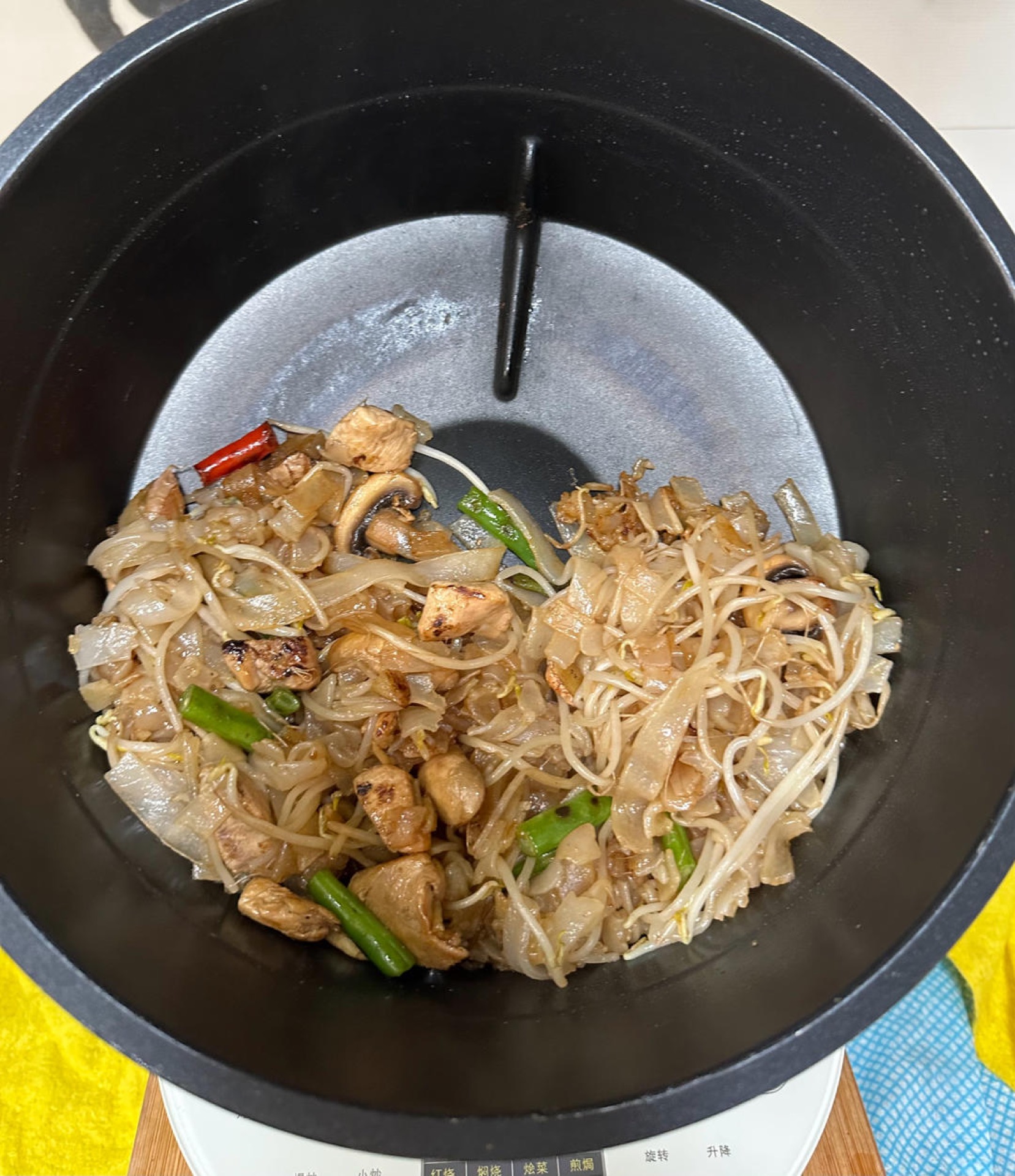
Step 2 — Wok-Fry the Noodles and Vegetables
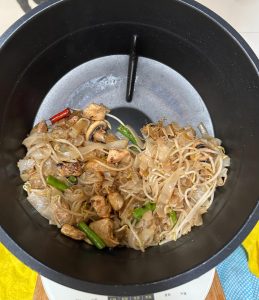
Set the wok to stir-fry mode: add oil, garlic, scallion, Thai chili, and green beans, and cook for 2 minutes; add the rice noodles and stir-fry for 2 minutes; add the cooked chicken and cook for 1 minute; add the bean sprouts and onion and cook for 1 minute; pour in the blended sauce and toss, then add the scallion greens and cook for 30 seconds.
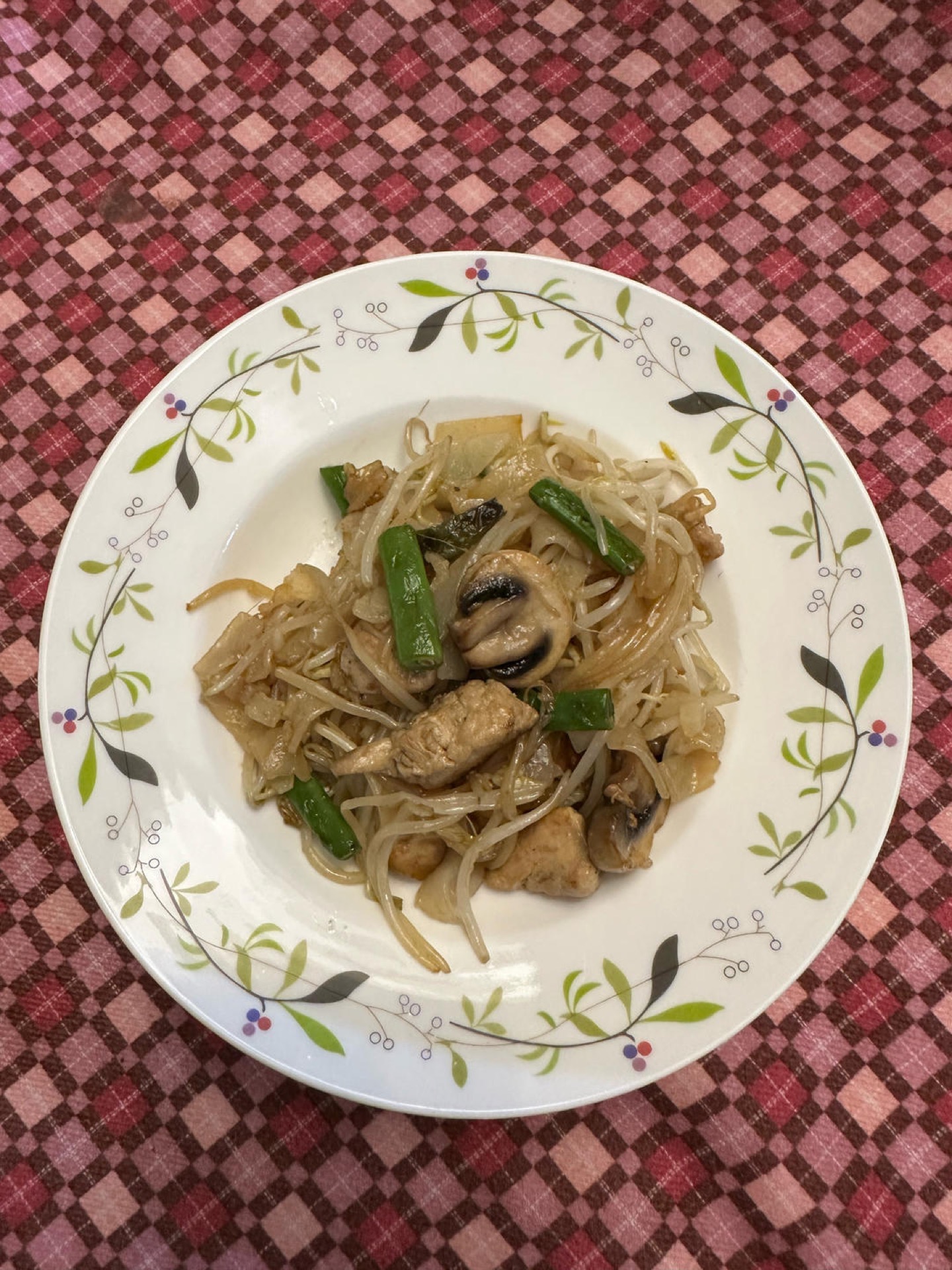
Step 3 — Serve for Lunch
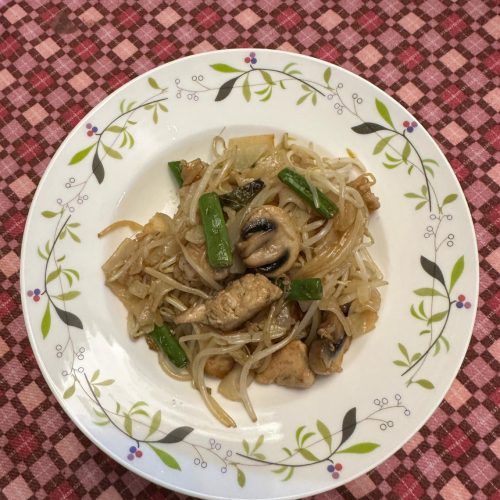
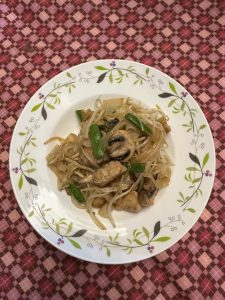
Plate the noodles and serve; this made a satisfying lunch portion.
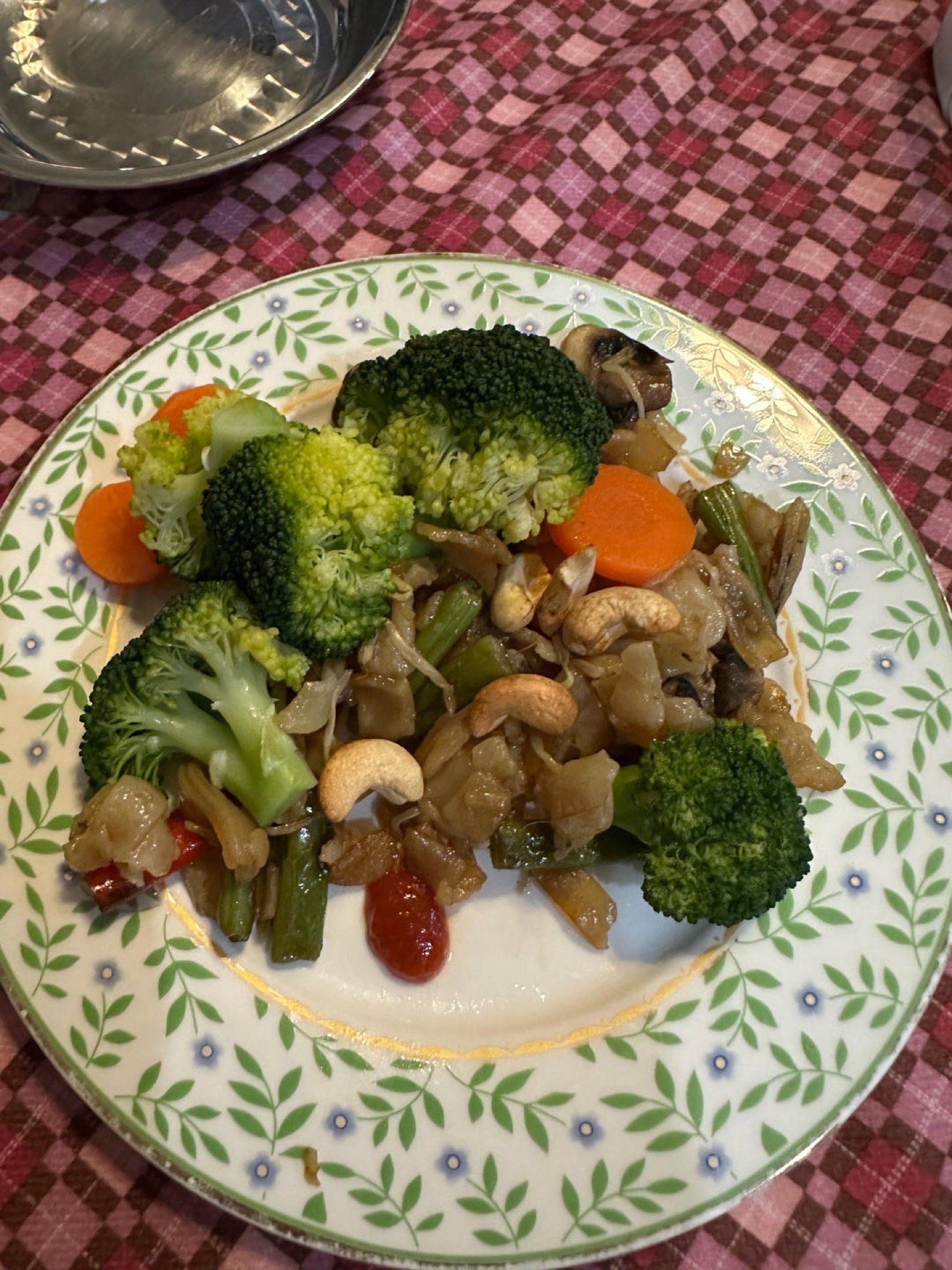
Step 4 — Dinner Variation
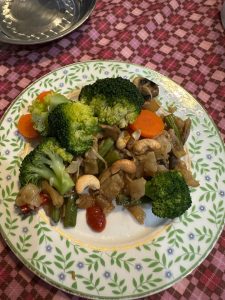
For dinner, continue with the leftovers, adding roasted cashews, extra vegetables, and chili sauce.
Step 5 — The Soul of the Dish
This is the soul of the dish!
Common Mistakes When Making Stir-Fried Chicken with Rice Noodles
1. Over-soaking the noodles. If the noodles sit in water too long, they turn mushy and break apart in the wok. The cause is usually distraction — it is easy to forget them. Fix it by setting a timer for 30 minutes and checking at 20. The noodles should be flexible but still have a slight bite in the center.
2. Using a wok that is not hot enough. A lukewarm wok steams the noodles instead of searing them, which is why home versions often taste flat. The cause is usually adding too much food at once or not preheating long enough. Fix it by heating the wok until a drop of water evaporates on contact, and cook in batches if your wok is small.
3. Adding the sauce too early. If the sauce goes in before the noodles have had a chance to char, the noodles absorb liquid and turn soft. The cause is impatience. Fix it by waiting until the noodles are hot and lightly blistered, then pour the sauce down the side of the wok and toss quickly.
4. Crowding the pan. Too much food in the wok lowers the temperature and creates steam. The cause is trying to cook everything at once. Fix it by cooking the chicken separately and stir-frying the noodles in a single layer, in batches if necessary.
5. Stirring constantly instead of tossing. Constant stirring prevents the noodles from picking up char. The cause is habit. Fix it by letting the noodles sit undisturbed for 30 to 45 seconds at a time, then tossing, so they get those smoky spots that define the dish.
6. Skipping the cornstarch in the marinade. Without it, the chicken releases liquid into the wok and the noodles turn wet. The cause is thinking it is optional. Fix it by always including the cornstarch — it is what gives the chicken its velvety texture and keeps the dish dry.
Variations
The most common variation is beef chow fun, where thinly sliced flank steak replaces the chicken. If you go that route, marinate the beef the same way and stir-fry it quickly over high heat before setting it aside. The rest of the method stays the same.
For a vegetarian version, swap the chicken for firm tofu or seitan and use mushroom-based oyster sauce. Add a handful of snow peas or sliced bell pepper for color. The sauce can stay exactly as written.
If you like heat, increase the Thai chili and add a spoonful of chili oil at the end. For a milder, sweeter profile, add a teaspoon of hoisin sauce to the sauce mixture. Some cooks also add a splash of sesame oil at the very end for aroma, though it should never go into the wok during cooking because it burns easily.
Finally, if you want to explore another classic rice noodle preparation, our recipe for stir fried rice noodles uses similar techniques with a different flavor profile. And for a breakfast-style noodle dish, fried rice noodles from Wenling is a great next project.
Frequently Asked Questions
Can I use fresh ho fun instead of dried rice noodles? Yes, and it is actually preferred if you can find it. Skip the soaking step, separate the strands gently by hand, and reduce the stir-fry time slightly since fresh noodles are already soft.
Why did my noodles break apart in the wok? Rice noodles have no gluten, so they are naturally fragile. Over-soaking, overcrowding the wok, and stirring too aggressively are the usual culprits. Soak just to pliability, keep the wok hot, and toss gently with a wok spatula rather than stirring.
Can I make this dish ahead of time? It is best fresh, but you can prep all the components up to a day ahead — cook the chicken, soak and drain the noodles, chop the vegetables, and mix the sauce. Stir-fry everything just before serving for the best texture.
Is this dish very spicy? Not as written. The Thai chili and chili sauce are optional and can be adjusted to taste. Without them, the dish is savory and slightly sweet, with no real heat.
What can I use instead of oyster sauce? Vegetarian oyster sauce, hoisin sauce, or a mix of soy sauce and a little sugar will all work. Each will change the flavor slightly, but the dish will still be delicious.
How to Serve
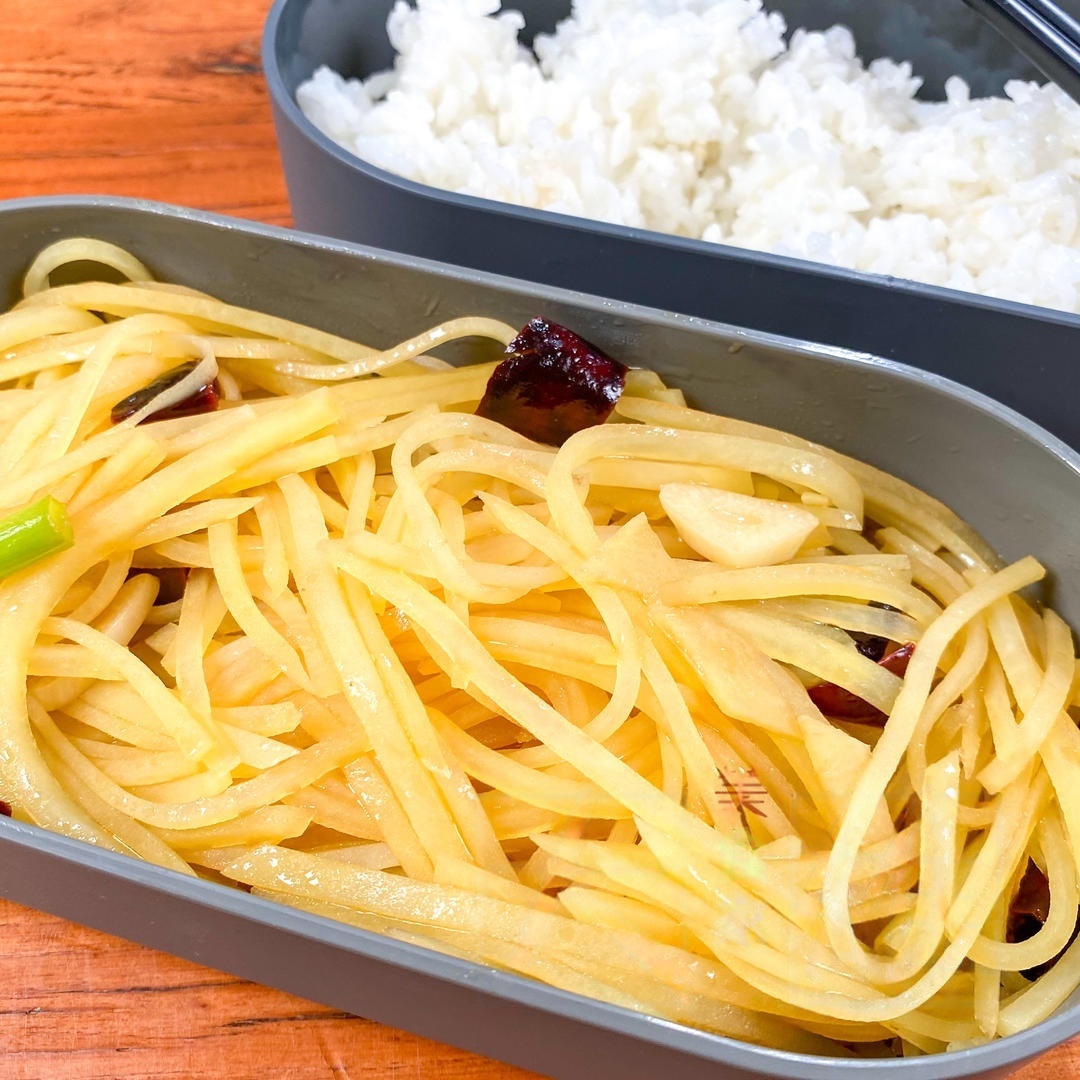
Stir-fried chicken with rice noodles is a complete meal on its own, but it pairs beautifully with a few simple sides. A crisp, vinegar-forward vegetable dish cuts through the richness of the soy glaze — our hot and sour shredded potatoes is a natural match and comes together in minutes.
If you are serving this as part of a larger spread, a light soup or a plate of steamed greens works well alongside it. And for a fun contrast, a savory jianbing guozi on the side turns the meal into a proper Chinese-style brunch.

Storage & Reheat
Store leftovers in an airtight container in the refrigerator for up to 3 days. Rice noodles tend to firm up when cold, so reheat them gently. The best method is a quick toss in a hot wok or skillet with a splash of water or soy sauce to loosen them. A microwave works in a pinch, but cover the bowl to trap steam and prevent the noodles from drying out.
Do not freeze this dish. Rice noodles become grainy and mushy after freezing, and the vegetables lose their texture. If you know you will have leftovers, consider cooking only as much as you plan to eat and storing the components separately.
Reheat chicken to an internal temperature of 165°F (74°C) before serving. According to the USDA safe temperature chart, this is the minimum safe internal temperature for poultry.
Allergen Notice
This recipe contains soy and wheat from the soy sauce and oyster sauce, and it may contain sesame if you use sesame oil. If you are avoiding shellfish, use a vegetarian oyster sauce made from mushrooms. Always check the labels of your sauces, as formulations vary between brands. If you have a severe allergy, consult your physician before substituting ingredients.
Nutrition Disclaimer
Nutrition information is calculated using an ingredient database and should be considered an estimate. In cases where multiple ingredient alternatives are given, the first listed is calculated for nutrition. Garnishes and optional ingredients are not included.
About the Author & Recipe Development
Lin is the recipe developer and writer behind Woks of Love, a site dedicated to honest, home-kitchen-friendly Chinese cooking. This recipe was developed from the Cantonese home tradition of 干炒鸡河, with the goal of making wok-fried rice noodles approachable for cooks who do not have a restaurant-grade burner. It was tested in a home kitchen with a carbon steel wok and a standard gas range, and the timing reflects that setup.
The chicken preparation follows the method used in our Lemon Cashew Chicken recipe, which is designed to keep lean poultry juicy under high heat. The sauce ratio was adjusted several times to find a balance that coats the noodles without making them heavy. If you try the recipe, the comments are always open — feedback from home cooks is what makes each version better.
Authoritative References
For safe handling and cooking temperatures, see the USDA safe temperature chart. For broader food safety guidance, the FDA Food Code is the definitive reference on storage and reheating. For information on rice noodle production and food safety, the WHO food safety fact sheet provides a useful overview.
Stir-Fried Chicken with Rice Noodles (干炒鸡河): Wok-Fired Noodles,

Equipment
- Wok
- Cutting Board
- Slotted Spoon
Ingredients
For the Chicken
- 1 lb chicken thigh boneless, skinless, cut into 1-inch pieces
- 2 tbsp Shaoxing wine or dry sherry
- 1 tbsp soy sauce light soy, or tamari
- 1 tsp cornstarch
For the Sauce
- 1 tbsp oyster sauce
- 2 tbsp soy sauce light soy, or tamari
- 2 tbsp Shaoxing wine or dry sherry
- 1 tbsp sugar
- 1 tsp chili sauce such as sambal oelek, optional
For the Noodles and Stir-Fry
- 8 oz dried rice noodles wide ho fun style
- 2 tbsp neutral oil plus more as needed
- 3 cloves garlic minced
- 4 slices ginger julienned
- 1 scallion white parts sliced, greens reserved
- 1 Thai bird chili sliced, optional
- 2 oz green beans trimmed and cut into 2-inch lengths
- 2 oz white mushrooms sliced
- 1 yellow onion thinly sliced
- 2 oz mung bean sprouts
- 1 scallion green parts, cut into 2-inch lengths
- 2 tbsp roasted cashews optional, for serving
Instructions
- Cook the chicken following the method for Lemon Cashew Chicken, then set it aside. (See the Lemon Cashew Chicken recipe for the full chicken preparation.)

- Set the wok to stir-fry mode: add oil, garlic, scallion, Thai chili, and green beans, and cook for 2 minutes; add the rice noodles and stir-fry for 2 minutes; add the cooked chicken and cook for 1 minute; add the bean sprouts and onion and cook for 1 minute; pour in the blended sauce and toss, then add the scallion greens and cook for 30 seconds.

- Plate the noodles and serve; this made a satisfying lunch portion.

- For dinner, continue with the leftovers, adding roasted cashews, extra vegetables, and chili sauce.
- This is the soul of the dish!












Leave a Reply