A traditional winter staple, this Homemade Chinese Cured Pork Belly (Xian Rou) transforms simple fresh pork into a savory, umami-packed delicacy using sun-drying and Sichuan peppercorns.
Every winter, as the temperature dropped and the air turned crisp, my mother would begin the ritual of making “Yan Rou” (salted meat). It was a tell-tale sign that the Lunar New Year was approaching. While I spent years in culinary school learning complex curing techniques, nothing quite beats the rustic simplicity of Mom’s method.

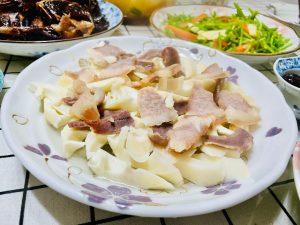
There is a distinct nostalgia in the scent of toasted Sichuan peppercorns and salt. We would steam this cured meat with egg, layer it over fresh bamboo shoots, or stir-fry it with rice cakes for a chewy, savory treat.
As a chef, I live in the contradiction of wanting to eat fresh, science-backed healthy diets while craving these traditional preserved comfort foods. But life is about balance. A little bit of this savory, aromatic cured pork goes a long way in flavoring a dish.
Why This Recipe Works
- Time-Tested Ratio: The salt-to-meat ratio used here (approx 4%) creates a safe cure that preserves the meat while imparting deep flavor, without making it inedibly salty.
- Aromatic Infusion: Toasting the salt with spices before rubbing it onto the meat wakes up the essential oils, penetrating the pork belly more effectively than raw spices.
- Texture Transformation: The combination of a short dry brine (3-4 days) and sun-drying (4-5 days) changes the pork’s texture from soft to firm and waxy (in a good way), concentrating the meat’s natural savoriness.
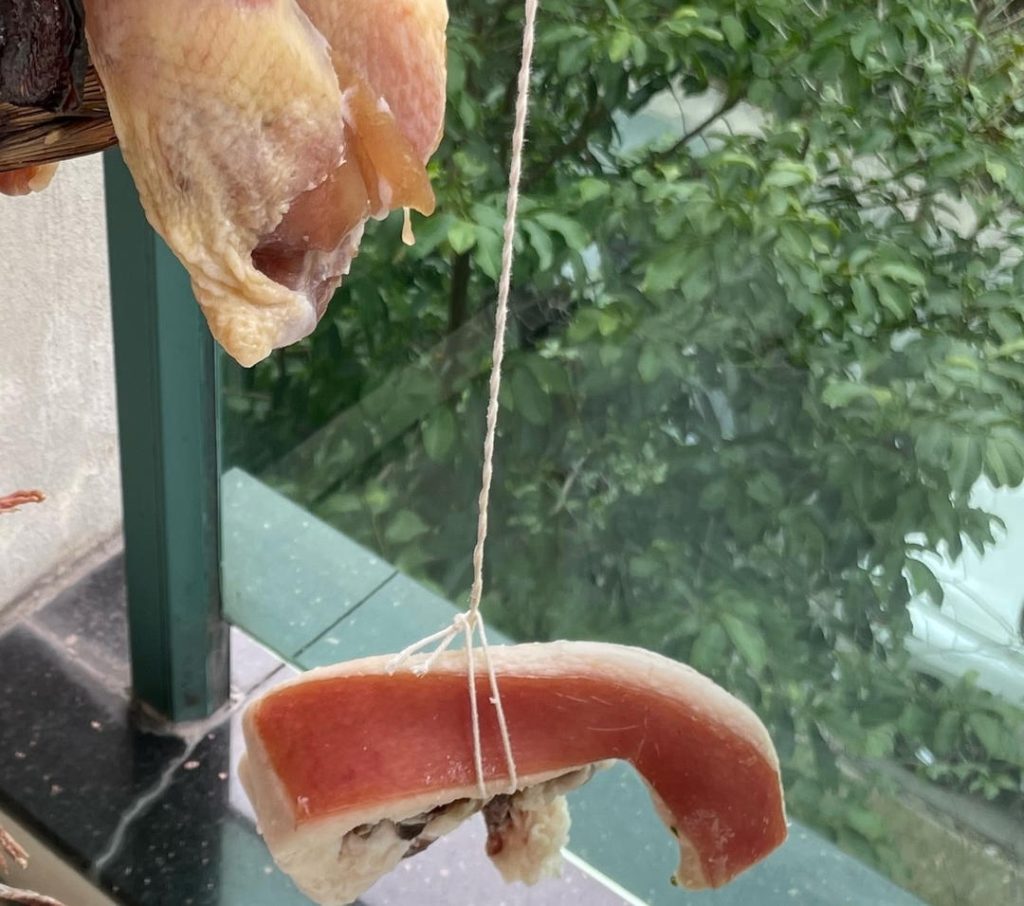
What is Xian Rou (Salted Pork)?
In China, preserved meats are generally categorized as La Rou (cured meat made in the 12th Lunar month). While many versions, particularly in my home province of Sichuan, are smoked over cypress branches, this recipe is a style of Xian Rou (Salted Meat) or “Wind Cured” pork. It relies solely on salt, spices, the sun, and the wind to cure the meat. It is cleaner tasting than smoked versions and highlights the pork’s natural sweetness against the numbing spice of the peppercorns.
Note on Similar Recipes: If you are looking for a tender, braised fresh pork dish rather than a cured one, you might be interested in our classic Braised Pork Belly (Hong Shao Rou). While that dish results in a gelatinous, melt-in-your-mouth texture, this cured pork offers a firm, chewy bite that is perfect for slicing thin and steaming.
About the Author & Recipe Development
I’m Lin, a Sichuan-born chef with over a decade of professional kitchen experience. This recipe was developed based on my mother’s annual winter tradition, but I have standardized the measurements using a kitchen scale to ensure safety and consistency for home cooks in the US and Europe. I have tested this curing method in my home kitchen to verify the drying times, ensuring the pork reaches that perfect “waxy” translucence without spoiling.
Food Safety and Preparation
Curing meat at home requires strict attention to hygiene and weather.
- Temperature: Only attempt this recipe when the daytime temperature is consistently below 50°F (10°C). If it is too warm, the meat will spoil before it dries.
- Flies: You must dry the meat in a place free of flies. I recommend using a mesh hanging net.
- USDA Guidelines: For authoritative information on the safety of dry-cured meats, please refer to the USDA Food Safety and Inspection Service guidelines on hams and food safety.
Key Ingredients
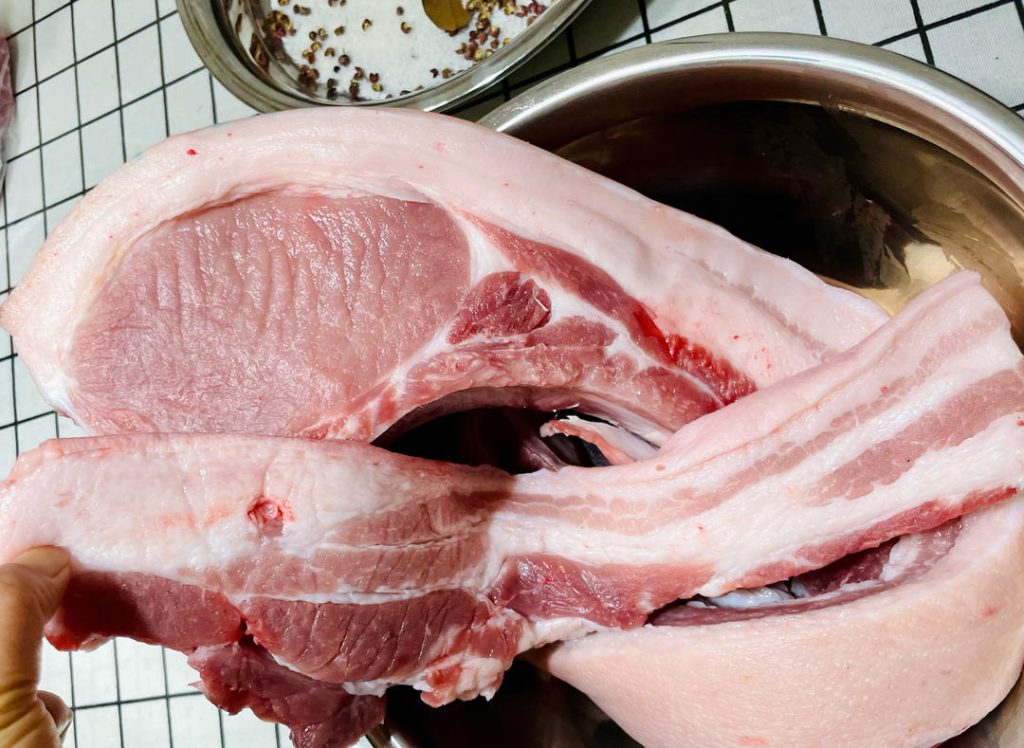
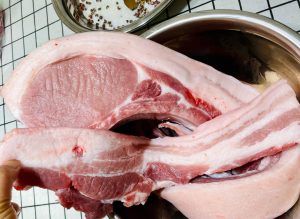
- Pork Belly: You need a high-quality slab of Pork Belly with the skin on. The skin provides structure and texture. Try to get a piece with even layers of fat and lean meat.
- Salt: I recommend using non-iodized sea Salt or kosher salt. The purity of the salt matters in curing.
- Sichuan Peppercorns: Use high-quality red Sichuan peppercorns. They provide a citrusy aroma and a slight numbing sensation that balances the salt.
- Bay Leaves: Two dried Bay Leaves add a subtle herbal backnote to the cure.
Ingredients
- Pork Belly: 5.5 lbs (approx. 2500g), skin-on, cut into strips
- Salt: 3.5 oz (100g)
- Sichuan Peppercorns: 1 handful (approx. 2 tbsp)
- Bay Leaves: 2 leaves
Equipment
- Wok or Skillet: For toasting spices.
- Large Non-Reactive Bowl: For the initial curing phase.
- Kitchen Twine or Meat Hooks: For hanging the pork.
- Mesh Drying Net (Optional but recommended): To keep pests away.
Recipe Notes Before You Start
- Do Not Wash with Water: Do not wash the raw pork with water before curing, as this introduces bacteria that can cause spoilage. If the pork is dirty, wipe it down with a high-proof clear liquor (like vodka or Baijiu).
- Weather Check: Check your 10-day forecast. You need cool, dry, and preferably sunny days. Avoid rainy weeks.
How to Make Homemade Cured Pork Belly
Step 1: Toast the Salt and Spices
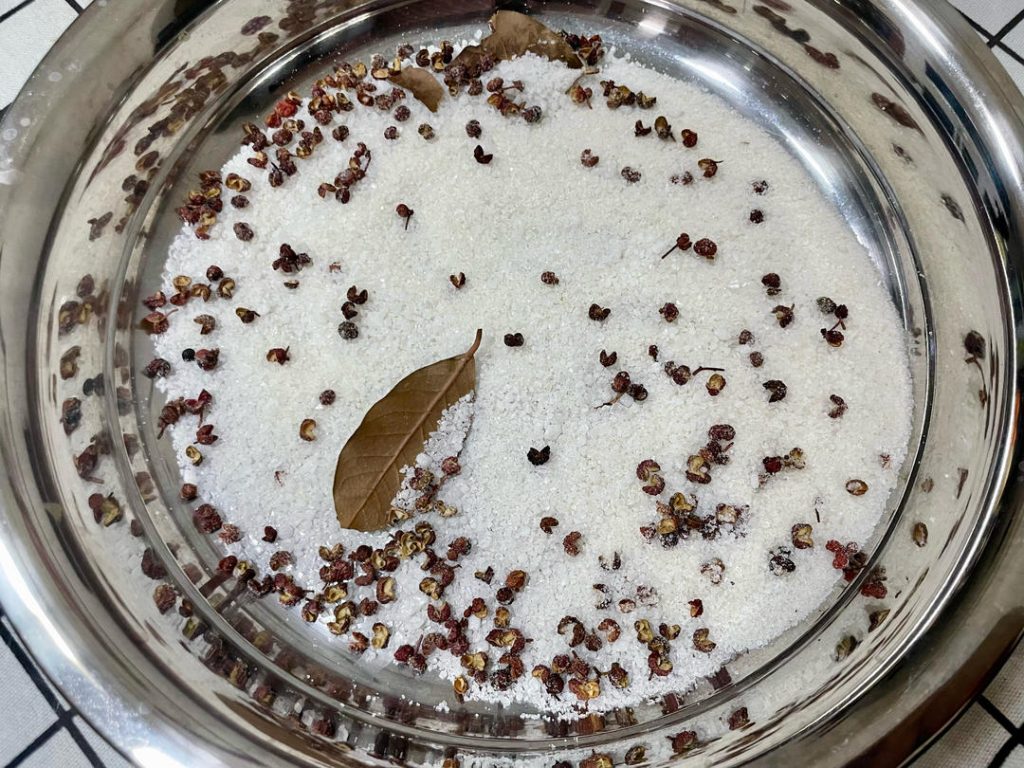
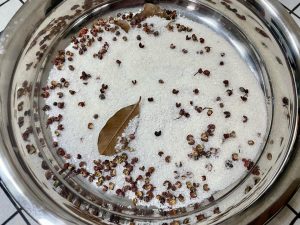
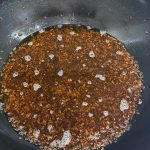
Heat a wok or skillet over medium-low heat. Add the 100g of salt and stir-fry until it turns a slightly warm, off-white or pale yellow color. Turn off the heat. Immediately add the handful of Sichuan Peppercorns and the bay leaves. Stir them into the hot salt using the residual heat to release their aroma. Transfer to a bowl and let it cool completely.
Step 2: Prepare the Meat
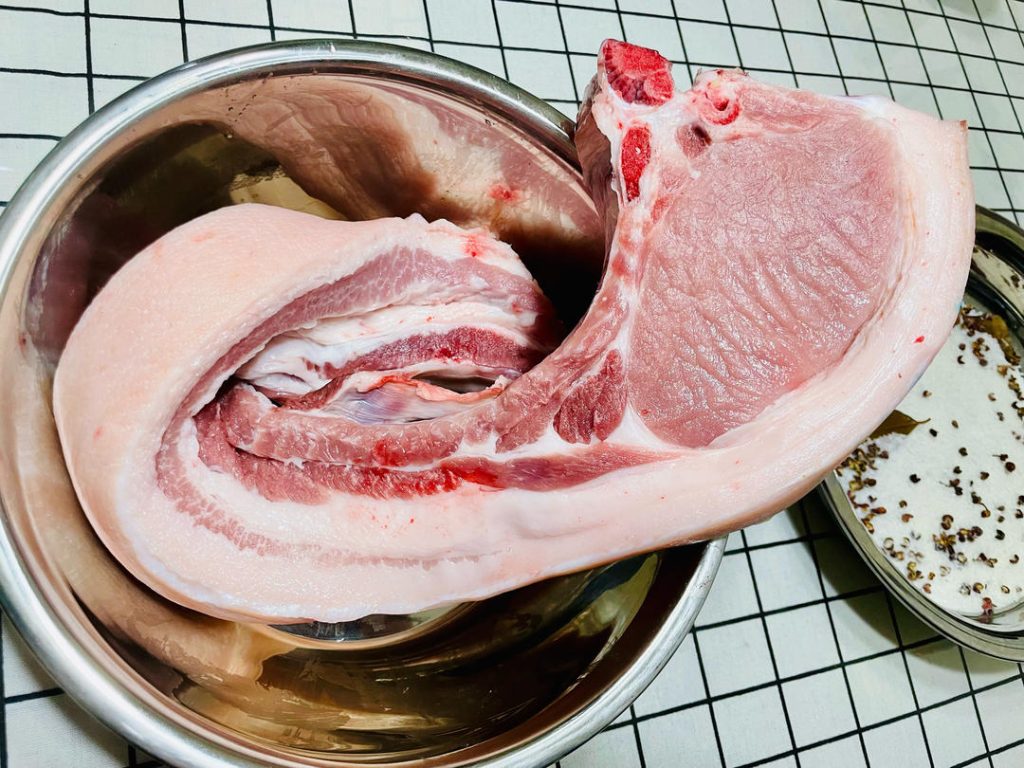
Cut your 5.5 lbs of pork belly into long strips (about 1.5 to 2 inches wide) to ensure even curing and drying. Do not remove the skin.
Step 3: The Dry Cure
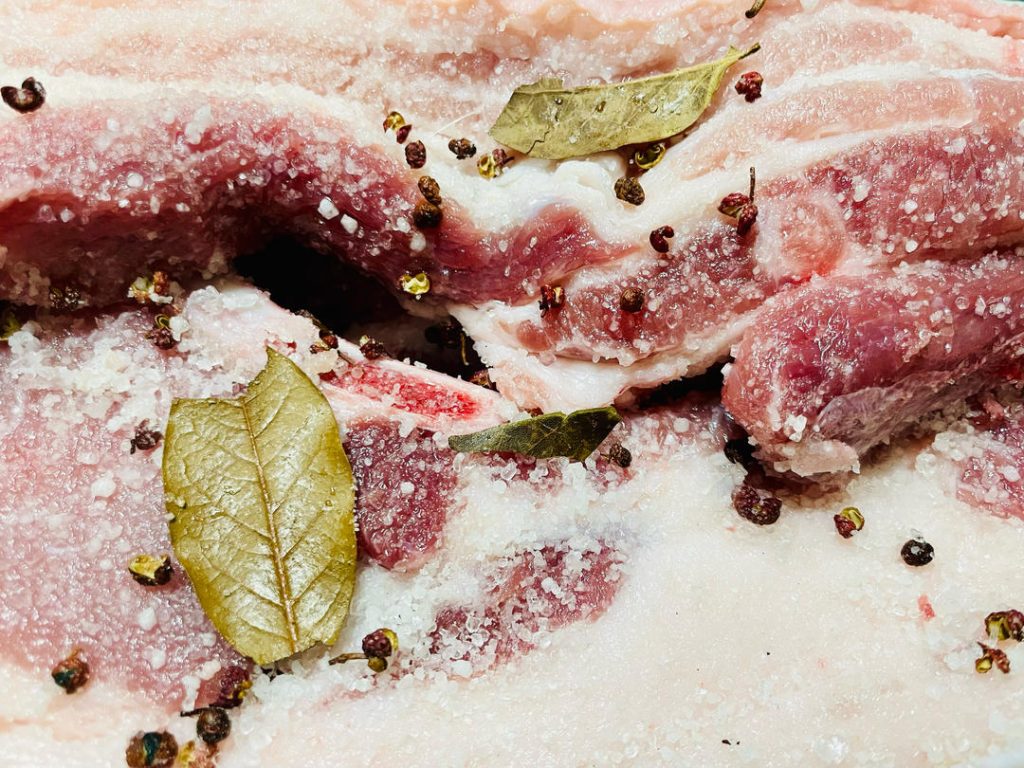
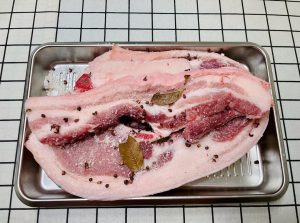
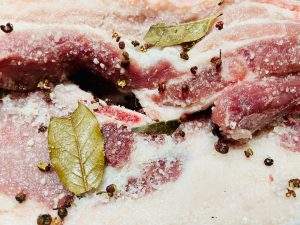
Once the salt mixture is cool, rub it thoroughly over every inch of the pork belly strips. Ensure you get into the crevices and coat the skin. Place the pork in a large bowl or container. Let it cure in a cool place (refrigerator is safest) for 3 to 4 days. Turn the meat once a day to redistribute the juices that will be drawn out.

Step 4: Sun Drying
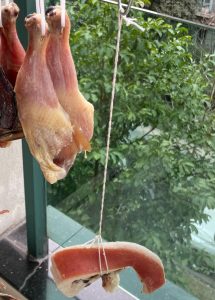
After the curing period, poke a hole in the top of each pork strip and thread kitchen twine through it. Hang the meat outside in a sunny, well-ventilated area. It needs to dry in the sun for 4 to 5 days.
- Visual Cue: The pork is ready when it feels firm to the touch, the fat has turned translucent (amber-colored), and the surface is dry and slightly oily.

Step 5: How to Serve
This meat is raw and cured; it must be cooked before eating.
- Wash: Before cooking, wash the cured pork in warm water to remove excess surface salt and dust.
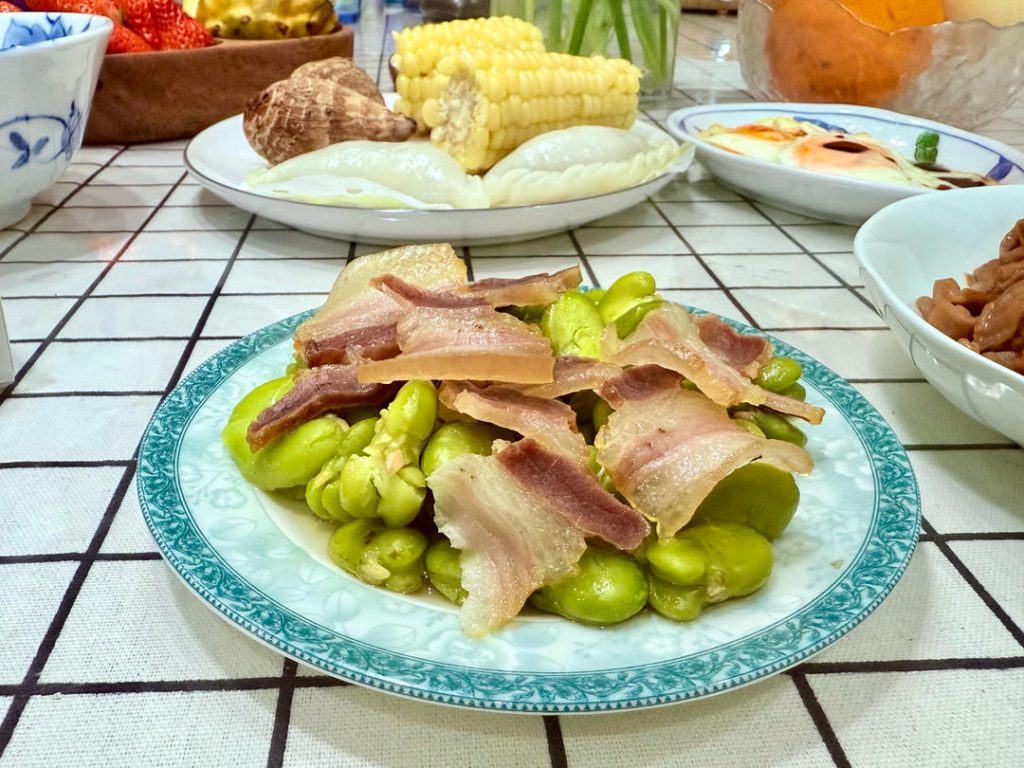
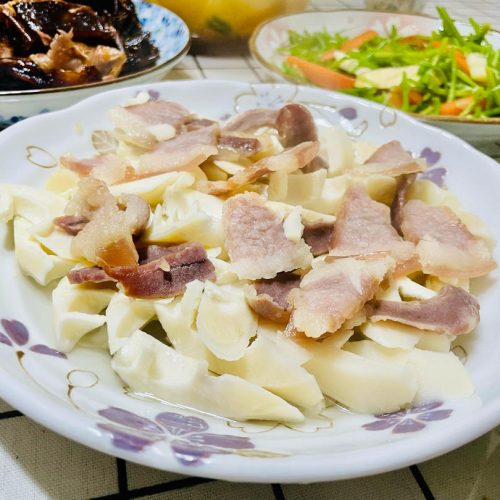
- Steam or Stir-fry: My favorite way is to slice it thinly and steam it. It adds an incredible depth of flavor when placed on top of Steamed Egg with Minced Pork, where the savory oils drip down into the custard. It is also the classic protein used in authentic Cantonese Clay Pot Rice, allowing the fat to render into the crispy rice crust.
Common Mistakes When Making Cured Pork
- Using Iodized Salt: This can give the meat a metallic taste. Stick to sea salt or kosher salt.
- Curing in Humidity: If it rains, bring the meat inside and hang it in a cool, dry room with a fan blowing on it. Do not let it get wet.
- Oversleeping the Cure: Leaving it in the salt bowl for too long (over 5-6 days) can make the meat aggressively salty.
FAQ & Troubleshooting
- Can I smoke this? Yes! After the sun-drying phase, you can cold smoke it with cypress, applewood, or even tea leaves and rice for added flavor.
- What if mold appears? If you see white powdery mold, you can usually wipe it off with alcohol. If the mold is green/black or the meat smells rancid/sour, discard it immediately. This usually happens if the weather is too warm or humid.
- Is it too salty? If your final product is too salty for your taste, soak the chunk of meat in warm salt water (yes, salt water draws out salt via osmosis) for 30 minutes before slicing and cooking.
Serving Suggestions and Pairings
This rich, salty pork needs a bland canvas to shine. It is excellent stir-fried with garlic shoots or winter bamboo shoots. Because the flavor is intense, I like to serve it alongside a lighter soup, such as Simple Clear Beef Noodle Soup or a refreshing bowl of Seaweed Egg Drop Soup to cleanse the palate.
Another pro-tip: If you render the fat from this cured meat, you can use that savory oil to flavor fillings for Vegetable Steamed Dumplings, giving them a meaty kick without adding bulk.
Nutrition Information (Estimate)
- Serving Size: 2 oz (56g)
- Calories: 280 kcal
- Fat: 25g
- Sodium: 1800mg (High due to curing)
- Protein: 10g
- Carbohydrates: 0g
- (Disclaimer: Nutrition information is calculated using an ingredient database and should be considered an estimate. Garnishes and optional ingredients are not included. The sodium content is high due to the curing process, but much of the surface salt is washed off before cooking.)
Homemade Chinese Cured Pork Belly (La Rou)

Equipment
- Wok For toasting spices
- Kitchen Twine For hanging meat
- Large Bowl Non-reactive, for curing
Ingredients
The Cure
- 100 g sea salt or kosher salt (approx 3.5 oz)
- 1 handful Sichuan peppercorns approx 2 tbsp
- 2 bay leaves
The Meat
- 5.5 lbs pork belly approx 2.5kg, skin-on, cut into strips
Instructions
- Toast the Spices: In a dry wok over medium-low heat, stir-fry the salt until it turns slightly yellow. Turn off the heat. Immediately add the Sichuan peppercorns and bay leaves, stirring to release their fragrance. Transfer to a bowl and let cool completely.

- Prep the Pork: Cut the pork belly into long strips about 1.5 to 2 inches wide. Do not wash with water (wipe with high-proof alcohol if necessary).

- Apply the Cure: Rub the cooled salt and spice mixture thoroughly over the pork strips, ensuring the skin and all crevices are coated.

- Cure: Place the pork in a large bowl or container. Let it cure in a refrigerator or a very cool place (below 50°F/10°C) for 3 to 4 days. Turn the meat daily.
- Sun Dry: Poke a hole in one end of each strip and thread with kitchen twine. Hang the pork outside in a sunny, ventilated area for 4 to 5 days.

- Check Doneness: The pork is ready when it is firm, dry to the touch, and the fat has turned translucent/amber.
- Serve: Wash well with warm water to remove surface salt. Slice thinly and steam with bamboo shoots, or stir-fry with vegetables.






Leave a Reply