Braised noodles with green beans is the kind of dish that makes a whole kitchen smell like dinner is almost ready. Pork belly renders down in a hot wok, green beans soften in a savory braise, and fresh noodles go right on top of the whole thing to steam until they have drunk up every last drop of broth. The result is a wok of glossy, savory noodles with tender beans and just enough chew.
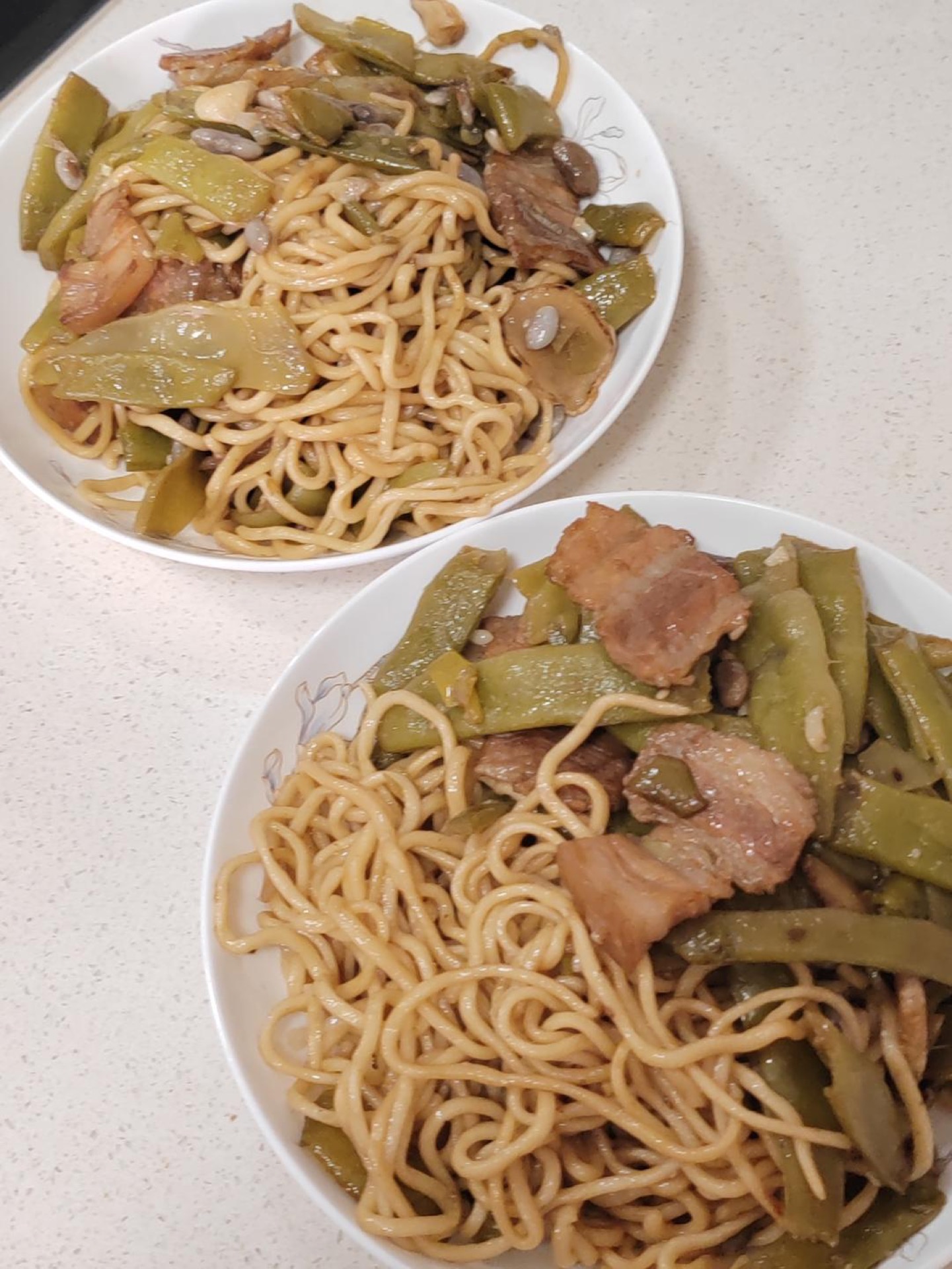
It is a weeknight dish in Henan and Shanxi, but it has the depth of something that simmered all afternoon. If you have ever ordered a bowl of noodles and wished the sauce actually clung to them instead of pooling at the bottom, this is the recipe that fixes that.
What Is Braised Noodles with Green Beans?
Doujiao menmian (豆角焖面) is a northern Chinese one-wok dish of wheat noodles steamed directly over a braise of green beans and pork. “Men” (焖) means to cook covered with steam and trapped moisture, and that single technique is what separates this dish from a stir-fried noodle. The noodles never touch boiling water. They sit on a bed of beans, lid on, and cook in the rising steam while the broth below reduces and concentrates.
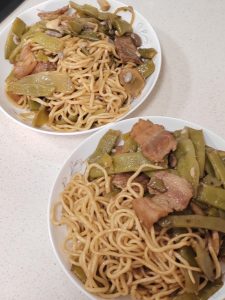
What makes it special is the finish. Once the noodles are tender, you uncover the wok and toss everything together, and the noodles pull the remaining braising liquid up into themselves. You end with dry, shiny, deeply seasoned noodles rather than a soupy bowl. The pork belly gives richness, the green beans give sweetness, and two whole star anise give that warm, faintly sweet backbone that people recognize but can’t quite name.
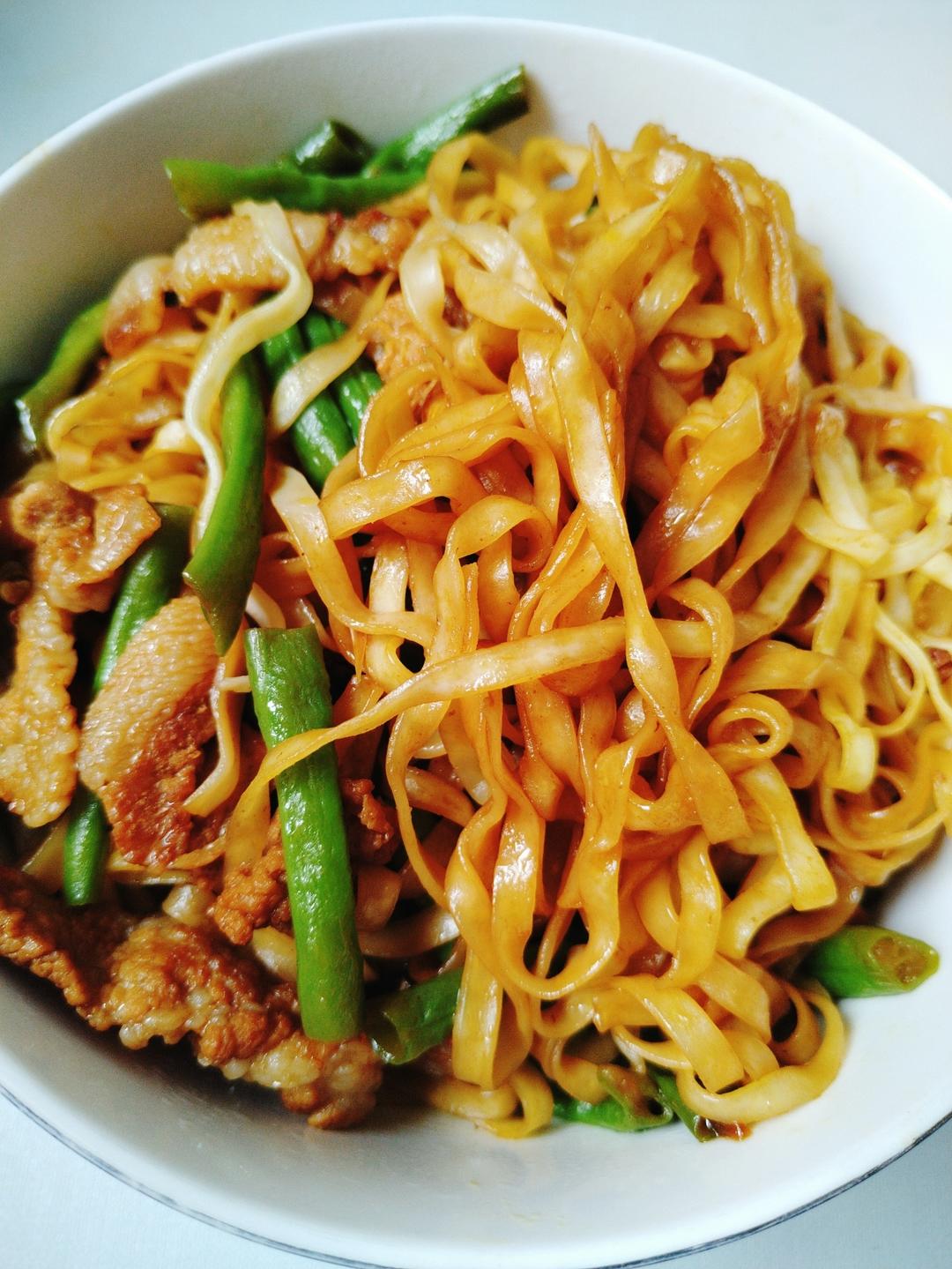
If you love the way noodles soak up a sauce, try Henan steamed noodles, which uses the same steam-and-absorb idea with a slightly different cut of pork and a lighter hand on the aromatics.
1Henan Steamed Noodles with Pork & Green Beans (河南蒸面条)A classic Northern Chinese dish where fresh noodles are steamed twice, first to cook, and a second time to infuse them with a rich, savory pork belly and green bean sauce.Check out this recipe
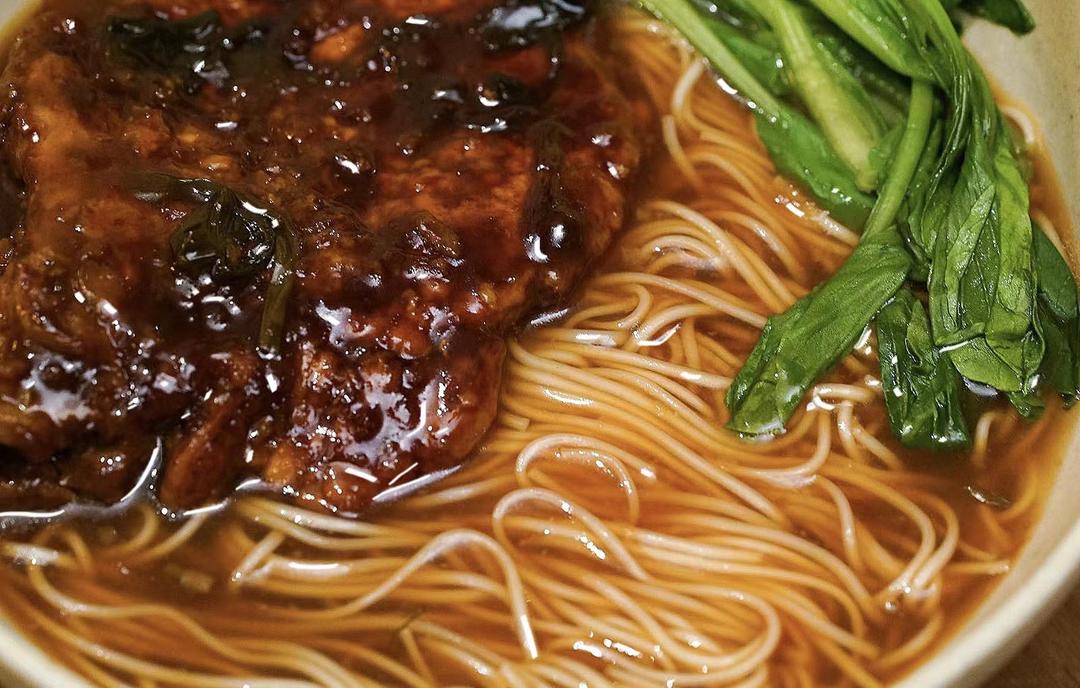
For a bowl that leans sweeter and glossier, scallion braised pork chop noodles braises pork chops until the scallion oil turns the whole pot fragrant.
2Scallion Braised Pork Chop Noodles (Cong Shao Da Pai Mian)A classic Shanghainese comfort dish featuring tenderized bone-in pork chops braised in a rich, aromatic scallion sauce. The noodles are cooked directly in the savory juices, ensuring every strand is packed with flavor.Check out this recipe
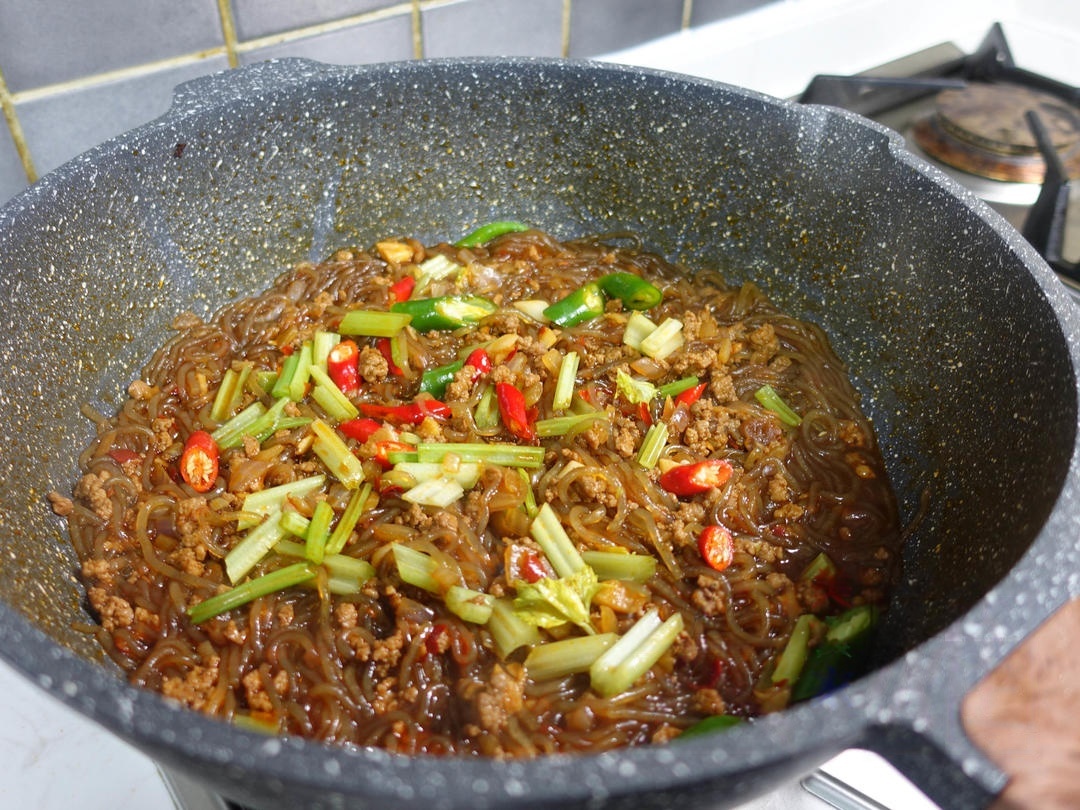
And if you like the braised, savory-sweet profile in a silkier form, braised vermicelli with minced pork swaps wheat noodles for glassy vermicelli that soak up sauce even faster.
3Braised Vermicelli with Minced PorkA rich, savory Sichuan dish featuring chewy sweet potato noodles braised with minced pork and spicy broad bean paste. A perfect comfort meal ready in 30 minutes.Check out this recipe
Ingredient Notes
Pork belly. Skin-on pork belly is traditional and gives the braise body, but you can use skinless belly or even pork shoulder if that is what you have. Slice it thin, about a quarter inch, so it renders quickly and does not turn chewy.
Green beans. Flat Chinese green beans (often sold as yardlong beans or simply “long beans”) are the classic choice, but regular green beans or Romano beans work perfectly. Snap them by hand rather than cutting them; the ragged edge catches sauce better.
Star anise. Two whole pods, no more. This is the ingredient that makes the dish taste like itself, and it is also the easiest one to overdo. Count them so you can fish them out before serving.
Noodles. Fresh wheat noodles, semi-dried noodles, or homemade egg noodles are all correct. What you want is a noodle with some chew and no egg-white-only fragility. Dried Italian-style pasta is the wrong tool here; it releases too much starch and turns the wok gluey.
Soy sauce. Light soy sauce seasons and adds savoriness without darkening the dish too much. If you only have dark soy sauce, use half the amount and add a splash of water.
Ingredients
- 500 g all-purpose flour (if making noodles from scratch), plus extra for dusting
- 2 large eggs
- 130 ml lukewarm water
- 4 g salt, for the dough
- 500 g fresh wheat noodles, or semi-dried noodles
- 400 g skin-on pork belly, cut into thin slices
- 2 whole star anise
- 1 inch ginger, sliced
- 4 cloves garlic, smashed, plus extra minced for finishing
- 2 stalks scallions, cut into segments, plus extra sliced for finishing
- 400 g green beans, ends trimmed and snapped into 2-inch lengths
- 2 tbsp light soy sauce, or tamari
- 1 tsp salt, or to taste
- 500 ml water, enough to fully cover the green beans
Equipment Needed
A wok with a lid is the ideal vessel here, because the high, curved sides let you pile noodles over a braise without them sliding off. A deep skillet or a Dutch oven with a lid also works, though the wider surface means you may need a splash more water.
- Wok with a lid (or a deep lidded skillet)
- Cutting board and knife
- Slotted spoon or spider
- Chopsticks for tossing
- Noodle machine, if making noodles from scratch
Why This Recipe Works
The water level is the whole trick. You add enough liquid to completely cover the green beans, then let it reduce for ten minutes so the beans soften and the broth drops below them. That way, when the noodles go in, they are sitting on beans and steam, not swimming in liquid. Steam cooks them gently and keeps them separate, while the concentrated broth underneath is exactly the amount they can absorb in the final toss.
Rendering the pork belly first does double duty. It gives you the fat that blooms the aromatics, and it gives the braise a porky backbone without any need for stock. The star anise goes in with the aromatics, not at the end, so it has time to infuse the fat and the broth rather than just perfuming the surface.
Steam is a surprisingly precise cooking medium for wheat noodles. According to food science explainers on starch gelatinization, wheat starch softens and swells when it is hydrated and heated past roughly 140°F (60°C) — which is exactly what trapped steam does to a noodle, without the mechanical agitation of boiling that can strip starch into the water and leave noodles gummy.
Prep & Mise en Place
This dish moves fast once the wok is hot, so get everything cut and within arm’s reach first. If you are making noodles from scratch, combine the flour, eggs, water, and salt into a dough, knead until smooth, cover, and let it rest 30 minutes. That rest is not optional: it relaxes the gluten so the dough presses into clean strands instead of tearing.
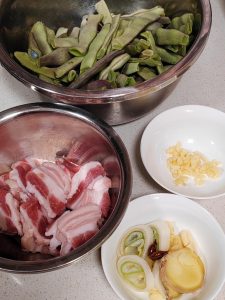
While the dough rests, wash and cut the vegetables. Slice the pork belly thin, cut the scallions into segments, slice the ginger, and smash the garlic into large chunks. Then, separately, mince a small pile of garlic and slice a small pile of scallion for the finish; keep them apart from the cooking aromatics so you do not accidentally fry your finishing garnish.
Snap the green beans into two-inch lengths and set them in a bowl. Measure the soy sauce, salt, and water so you are not hunting for them while the pork is browning. If you are using store-bought noodles, loosen them with your fingers so they go into the wok as separate strands rather than a brick.
Cooking Process
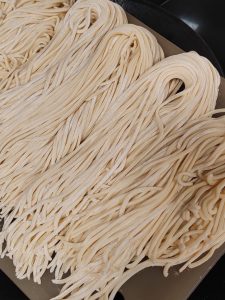
Step 1 — Make the Egg Noodle Dough
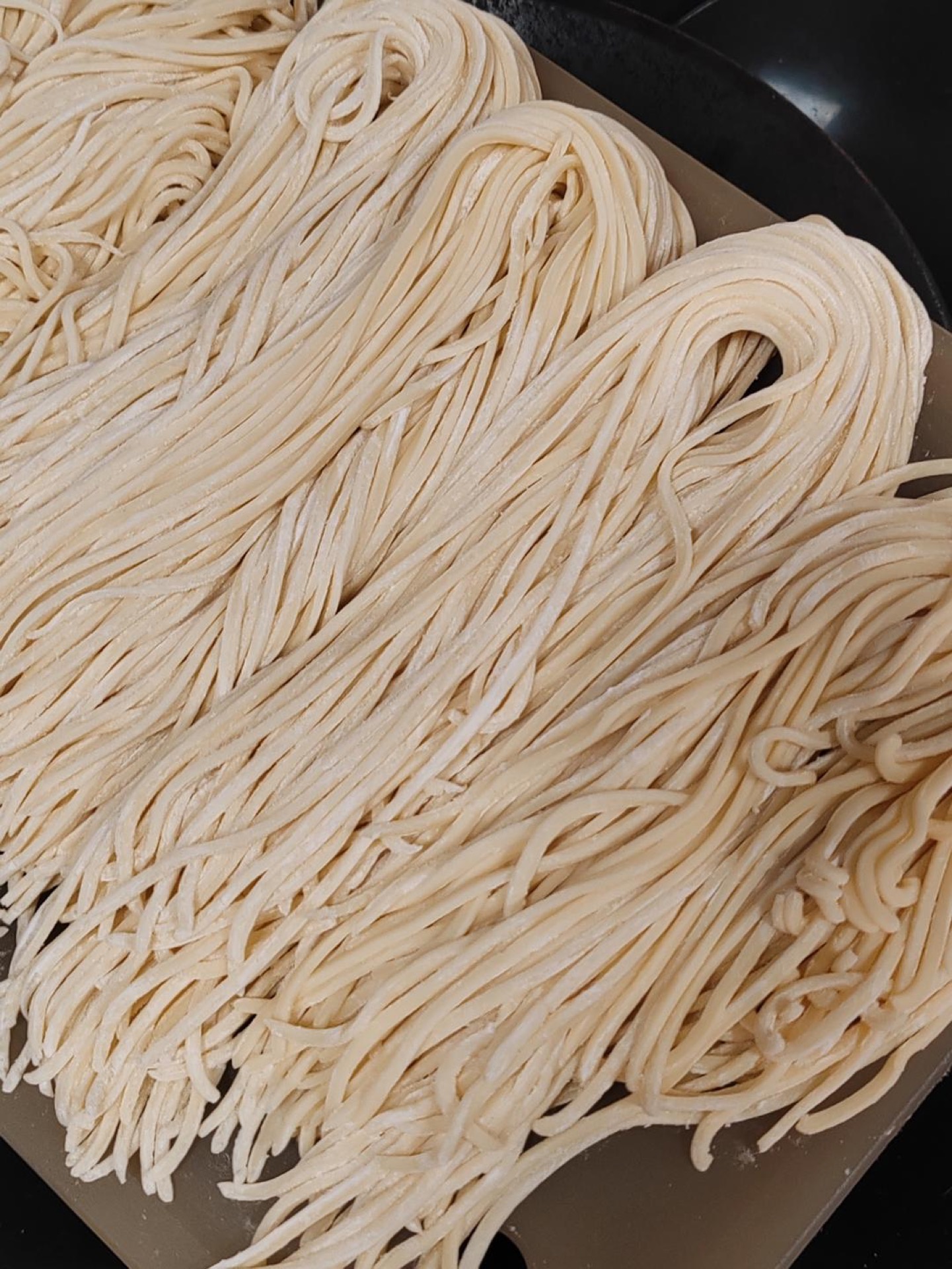
If making noodles from scratch, combine 500 g flour, 2 eggs, 130 g water, and 4 g salt into a dough, knead until smooth, cover, and rest 30 minutes; while it rests, wash and cut the vegetables, then press the dough through a noodle machine on setting 6 into thin strands.
Step 2 — Prep the Aromatics and Pork
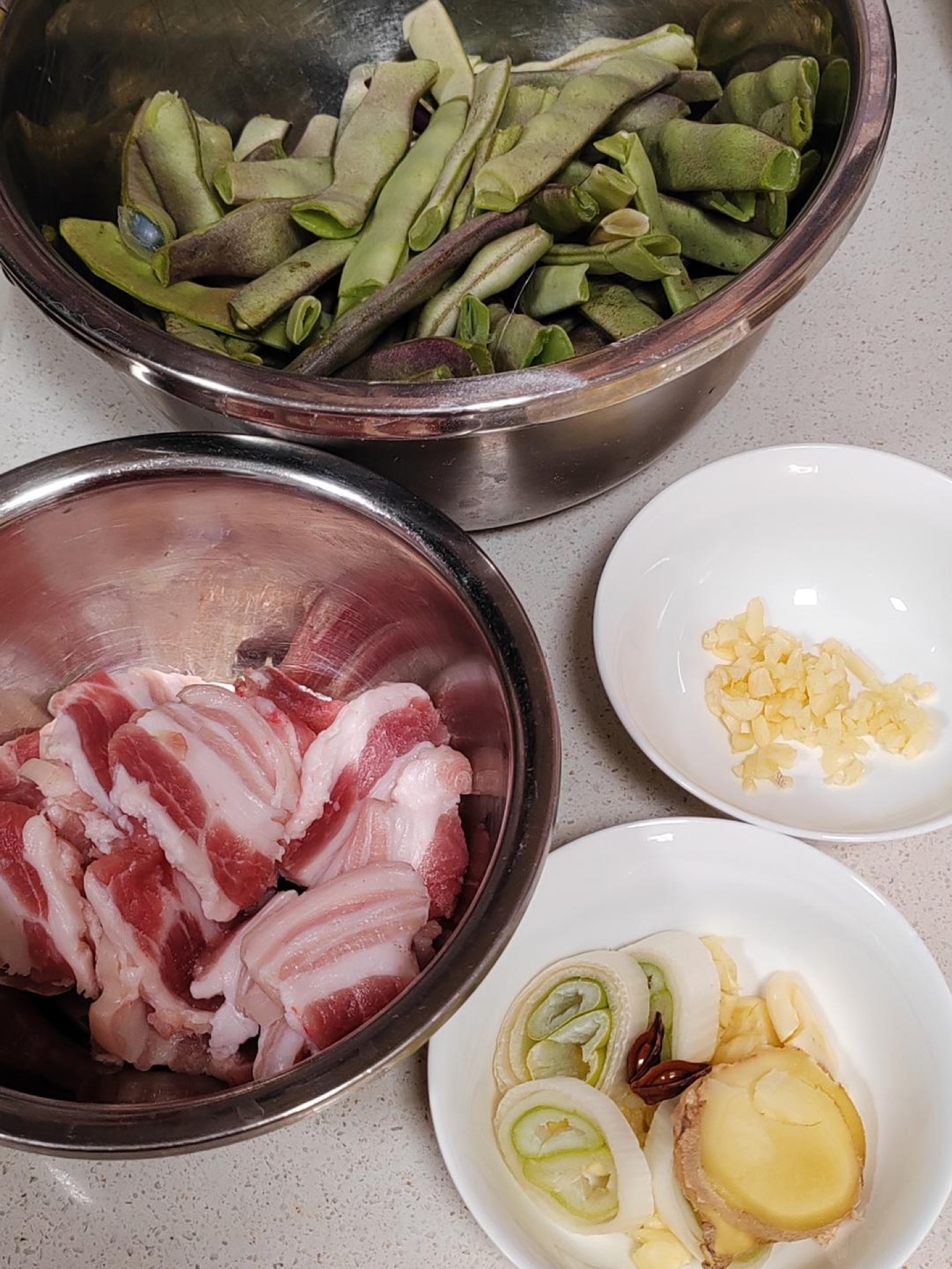
Slice the pork belly thinly, cut the scallions into segments, slice the ginger, smash the garlic and cut it into large chunks, then separately mince a little garlic and slice a little scallion for finishing.
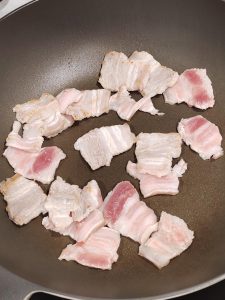
Step 3 — Render the Pork Belly
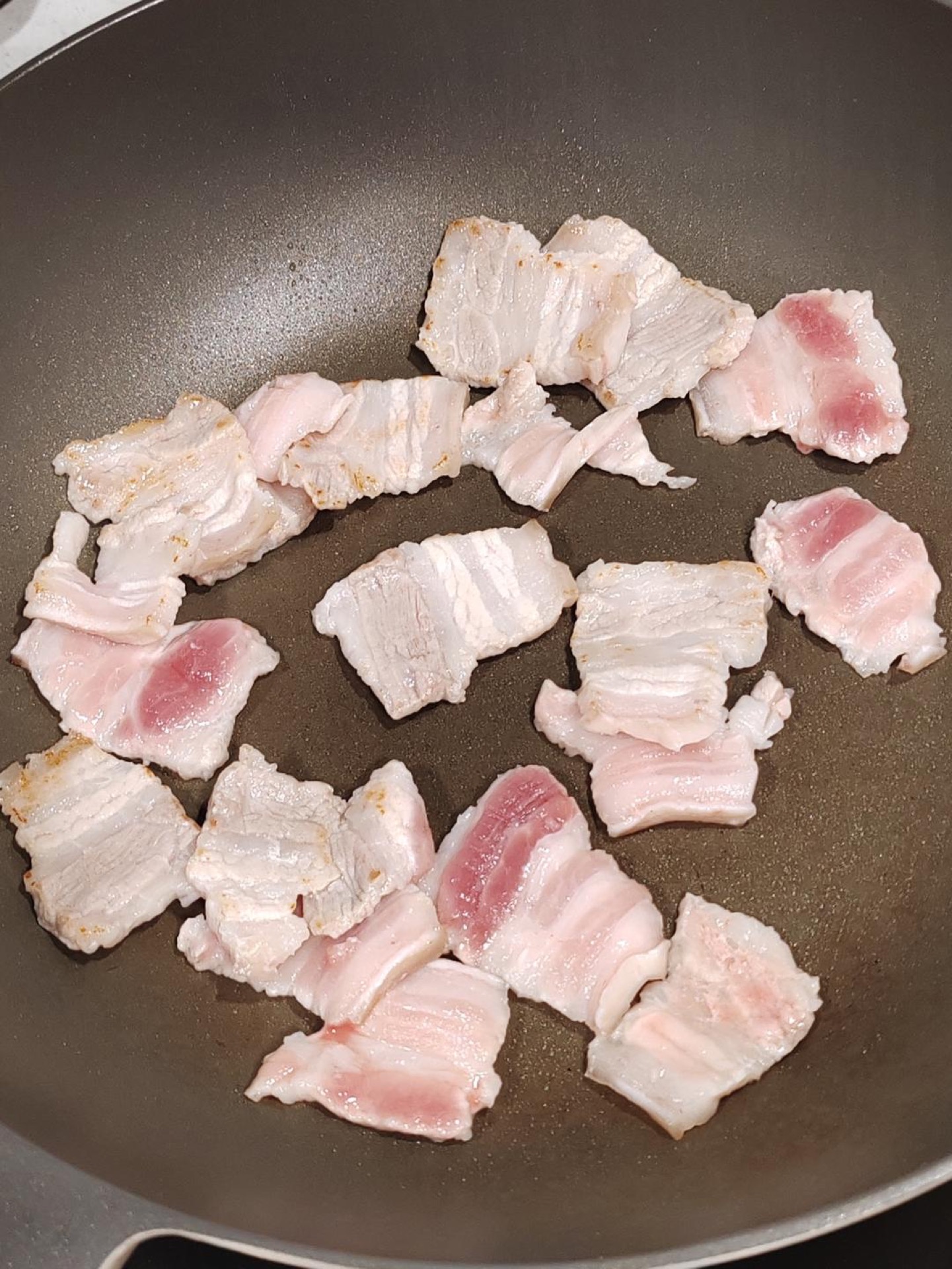
Heat the wok and fry the pork belly until it is fragrant and has released its fat.
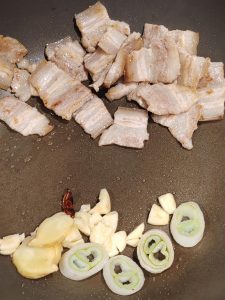
Step 4 — Bloom the Aromatics
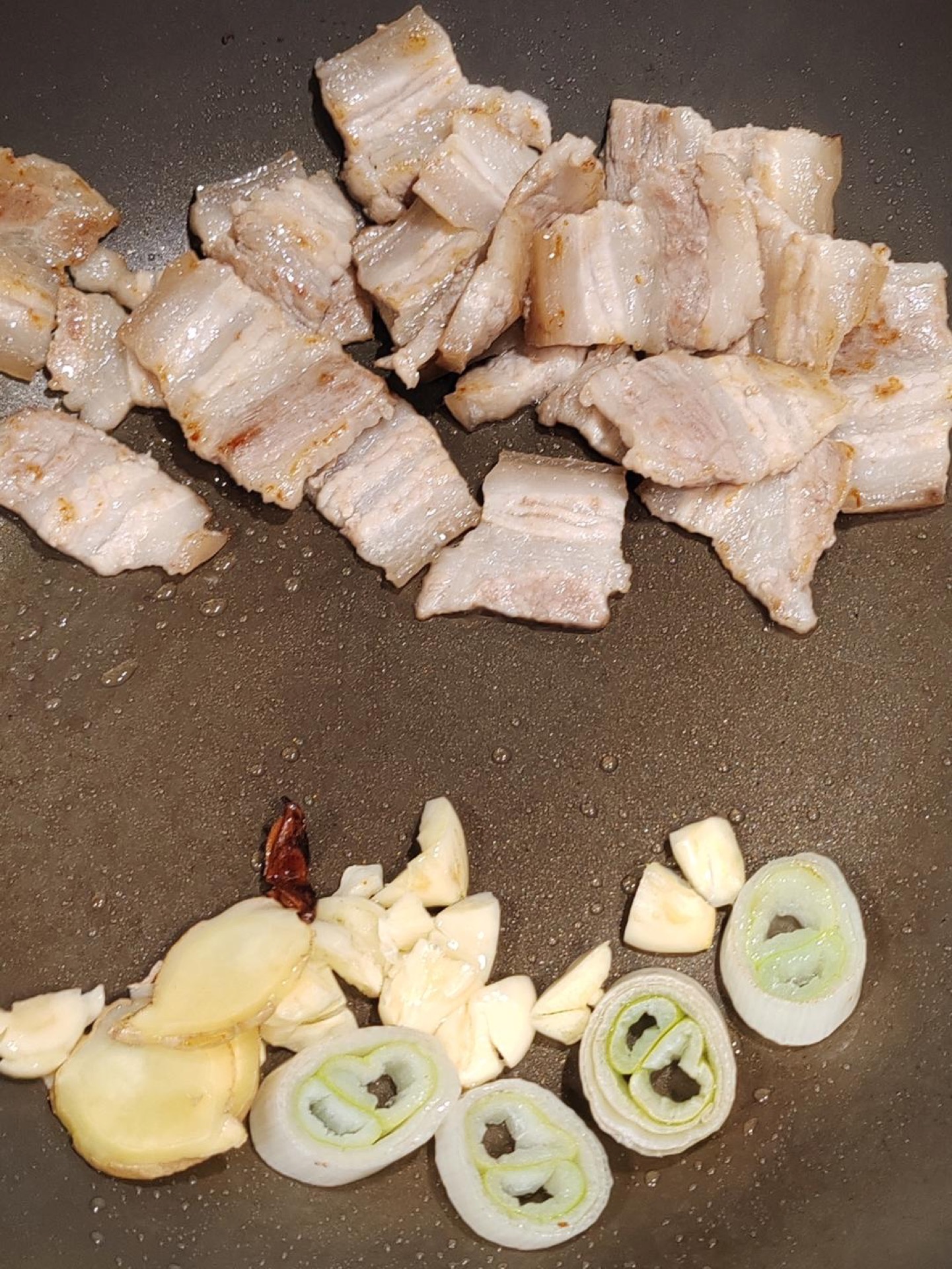
Tilt the wok so the rendered fat pools, and fry the aromatics in that oil, remembering to add the soul ingredient: two star anise.
Step 5 — Braise the Green Beans
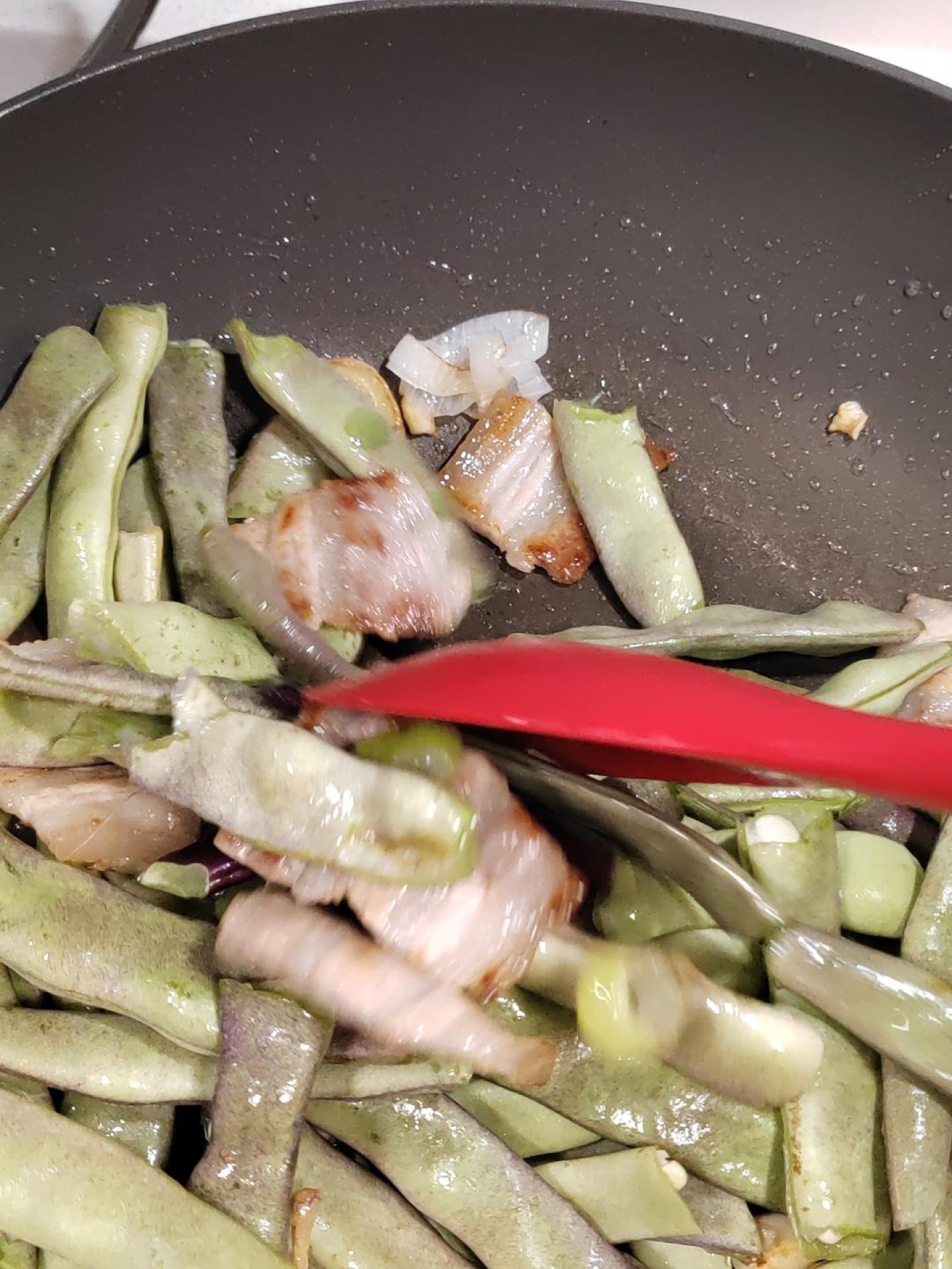
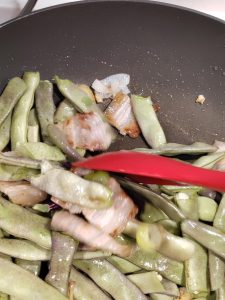
Add the green beans and stir-fry until evenly coated, splash in the soy sauce, add the salt, stir well, then pour in water until the beans are completely submerged; once it boils, cover and simmer over medium-low heat for 10 minutes.
Step 6 — Steam the Noodles on Top
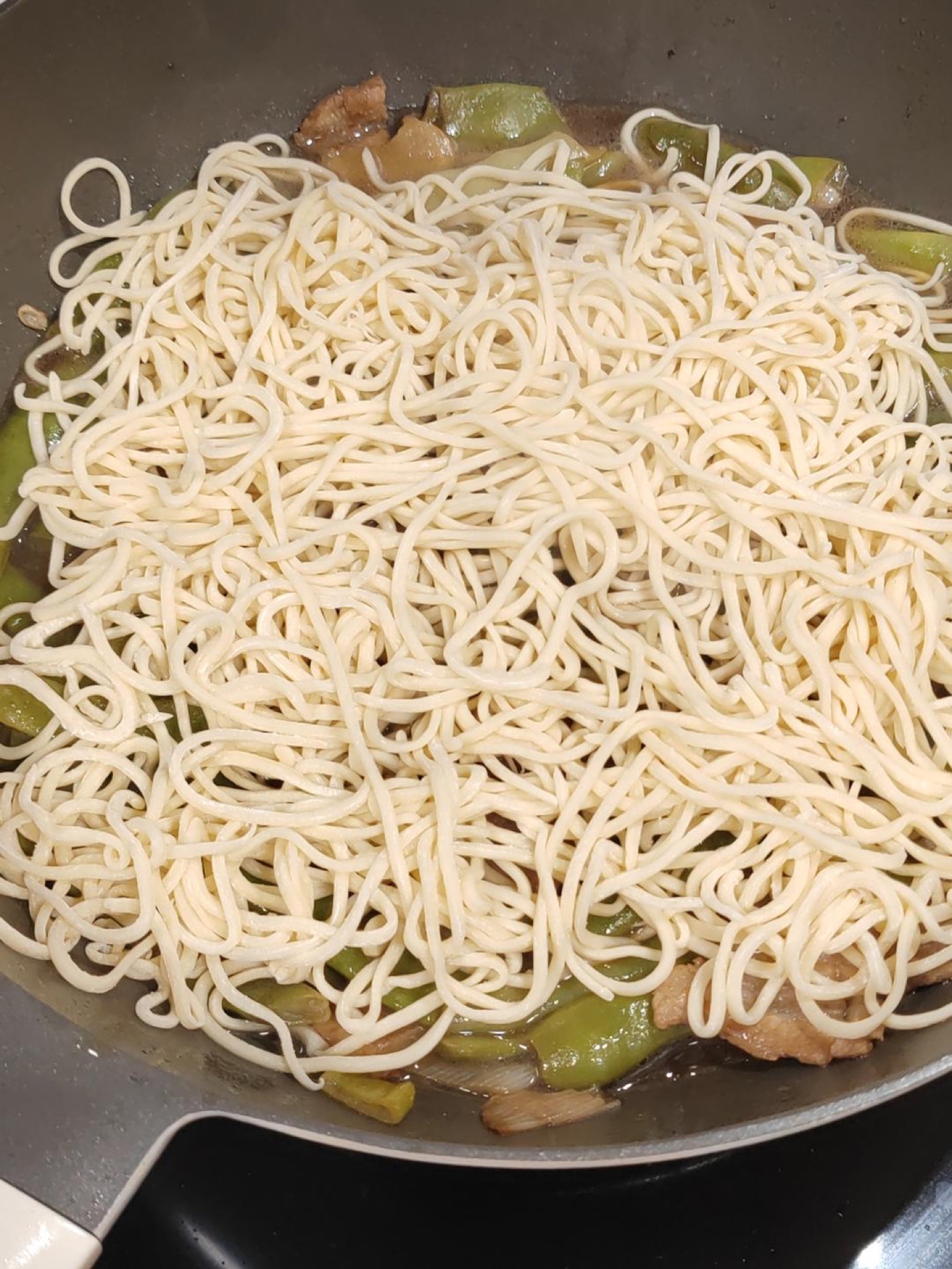
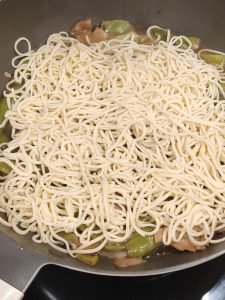
Remove the lid and spread the noodles loosely over the green beans, which should now be soft with the broth sitting beneath them, then cover and steam for about 5 more minutes.
Step 7 — Toss Noodles and Beans Together
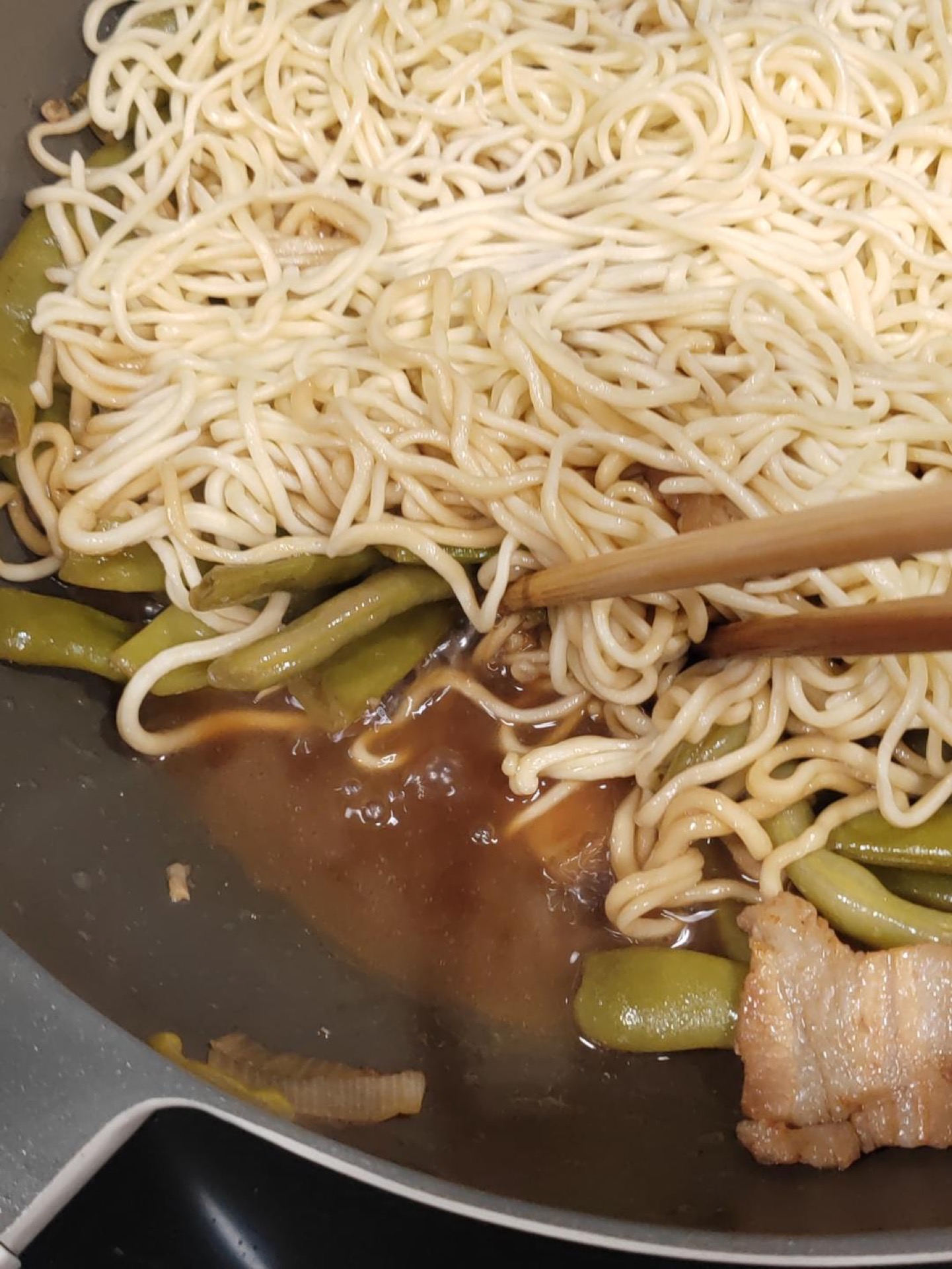
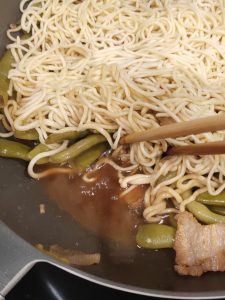
Check the liquid in the wok: tilt it and you should still see some broth, but not too much; now uncover and use chopsticks to lift and toss the green beans and noodles together, and as you toss the noodles will absorb the remaining broth until the wok looks dry and glossy.
Step 8 — Crisp the Bottom and Finish
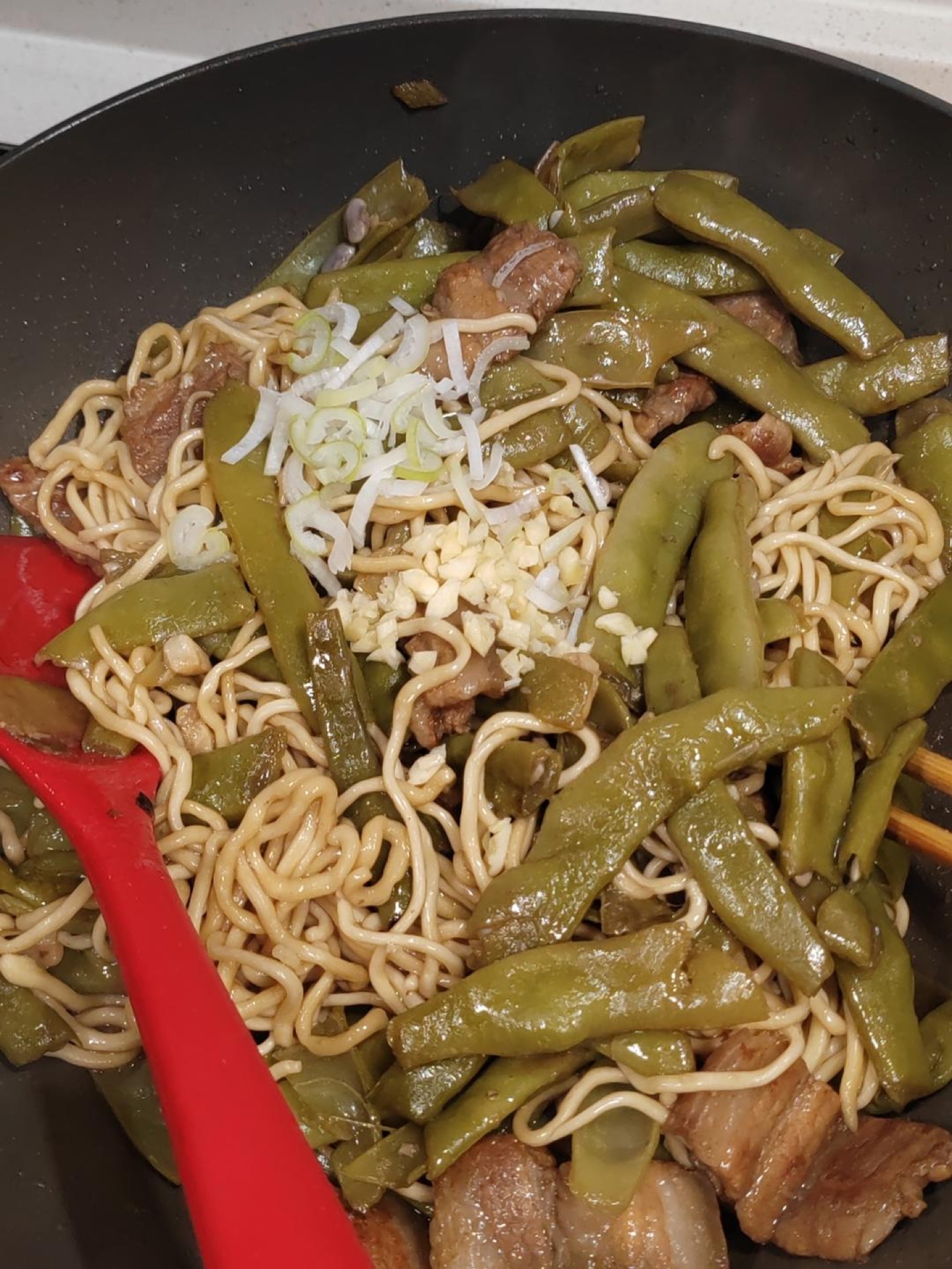
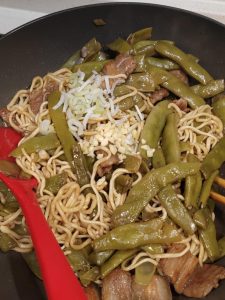
If you like a crispy crust on the bottom, turn the heat to high and toast it briefly, then stir in the minced garlic and sliced scallion, toss to combine, and take it off the heat.
Step 9 — Serve
Plate it up, one plate per person, and enjoy it while it is still fragrant and steaming.
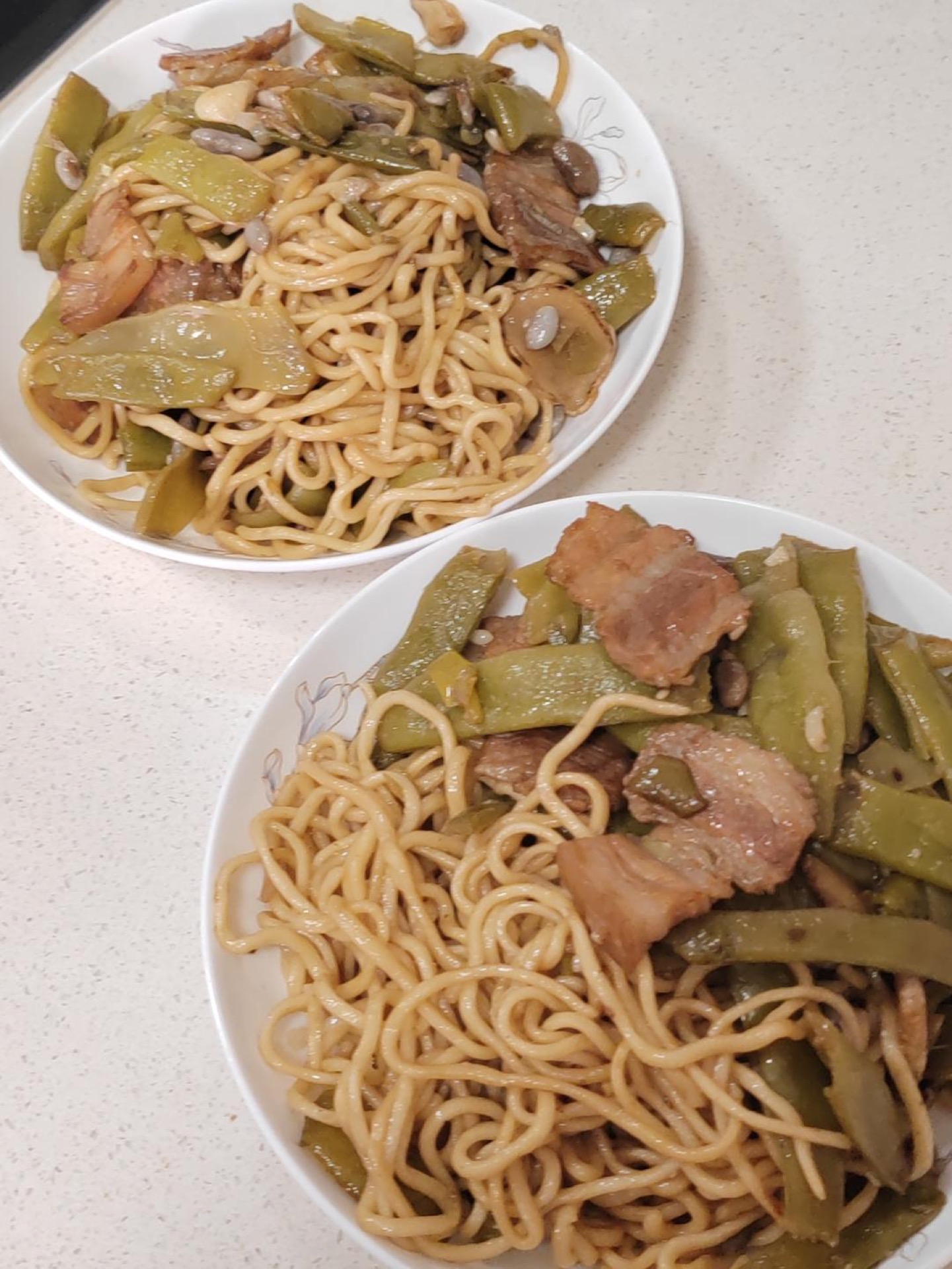
Common Mistakes When Making Braised Noodles with Green Beans
1. Too much liquid left before the noodles go in. If the broth still covers the beans when you add noodles, the noodles boil instead of steam and turn mushy. Fix it by simmering uncovered for another two or three minutes until the liquid sits below the beans.
2. Too little liquid left. The opposite failure: the beans scorch and the noodles have nothing to absorb. Fix it by adding a splash of hot water, swirling the wok, and giving it a minute before the noodles go in.
3. Using the wrong noodles. Dried pasta-style noodles, rice noodles, or very thin wonton noodles all behave differently. Fix it by choosing fresh or semi-dried wheat noodles, or making the egg noodle dough in this recipe.
4. Skipping the resting step on homemade dough. Dough that has not rested fights the noodle machine and comes out ragged. Fix it by giving it a full 30 minutes covered, then pressing it on setting 6 for thin strands.
5. Adding the finishing garlic too early. Minced garlic dumped in at the start burns and turns bitter. Fix it by keeping it aside and stirring it in only after the wok is off the heat or at the very end of the crisp-bottom step.
6. Tossing too aggressively. If you stir hard while the noodles are still firm, they break into short pieces. Fix it by lifting with chopsticks and folding gently, letting the noodles absorb the broth as you go.
Variations
With braised green beans and pork belly. If you already love the flavor pair, borrow the deeper braise from braised green beans with pork belly and simmer the beans a few minutes longer before the noodles go on.
With twice-cooked pork belly. Slicing already-simmered belly and rendering it gives a firmer, more intensely porky bite. Try the technique from twice-cooked pork belly and reduce the initial braise time slightly.
Meatless. Skip the pork, use a neutral oil plus a spoonful of mushroom seasoning, and add a handful of dried shiitake soaked and sliced. The star anise stays.
With eggplant. Swap half the green beans for eggplant wedges for a silkier, sweeter braise, similar in spirit to stir fried eggplant and green beans.
Extra crispy bottom. Leave the wok undisturbed over high heat for 60 to 90 seconds at the end to build a golden crust, then fold it through for contrast.
Frequently Asked Questions
Can I make this with dried noodles instead of fresh? Yes, but choose semi-dried wheat noodles rather than dried Italian pasta. If all you have is fully dried wheat noodles, parboil them for two minutes, drain well, and reduce the braising water by about a quarter cup so the finished dish is not wet.
Do I have to use pork belly? No. Pork shoulder, ground pork, or even chicken thighs work. Pork belly is traditional because the rendered fat carries the star anise, so if you swap it out, add a tablespoon of neutral oil when frying the aromatics.
My noodles clumped together. What went wrong? Almost always too much liquid under them or noodles laid in a tight heap. Loosen the noodles with your fingers, spread them in an even layer, and make sure the broth sits below the beans before they go in.
Can I make this ahead? It is best fresh, but you can braise the pork and beans up to a day ahead, refrigerate, then reheat with a splash of water and steam the noodles just before serving.
How do I keep the green beans bright? Do not overcook them before the noodles go in. Ten minutes covered is enough for standard green beans; if yours are very thin, cut it to seven or eight.
How to Serve
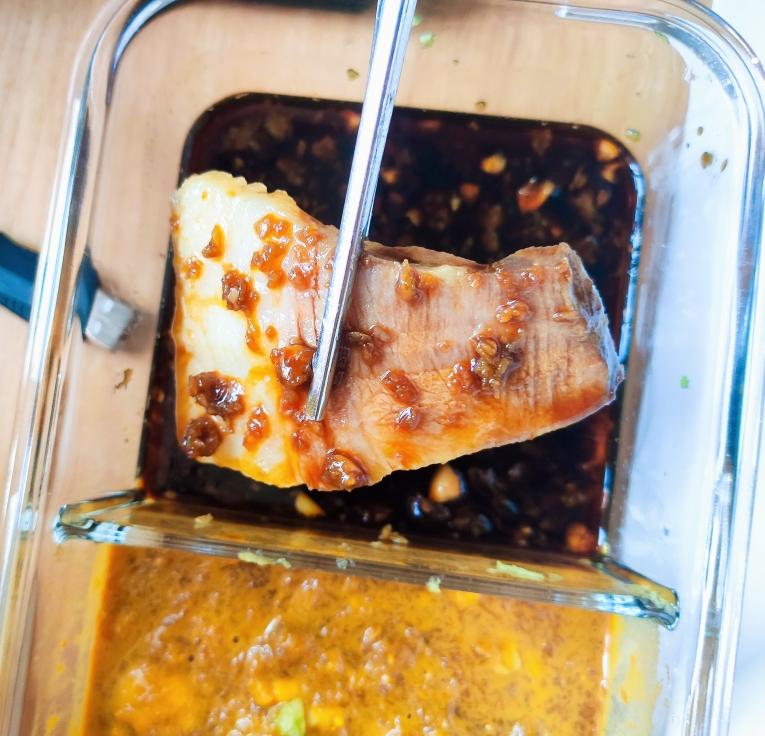
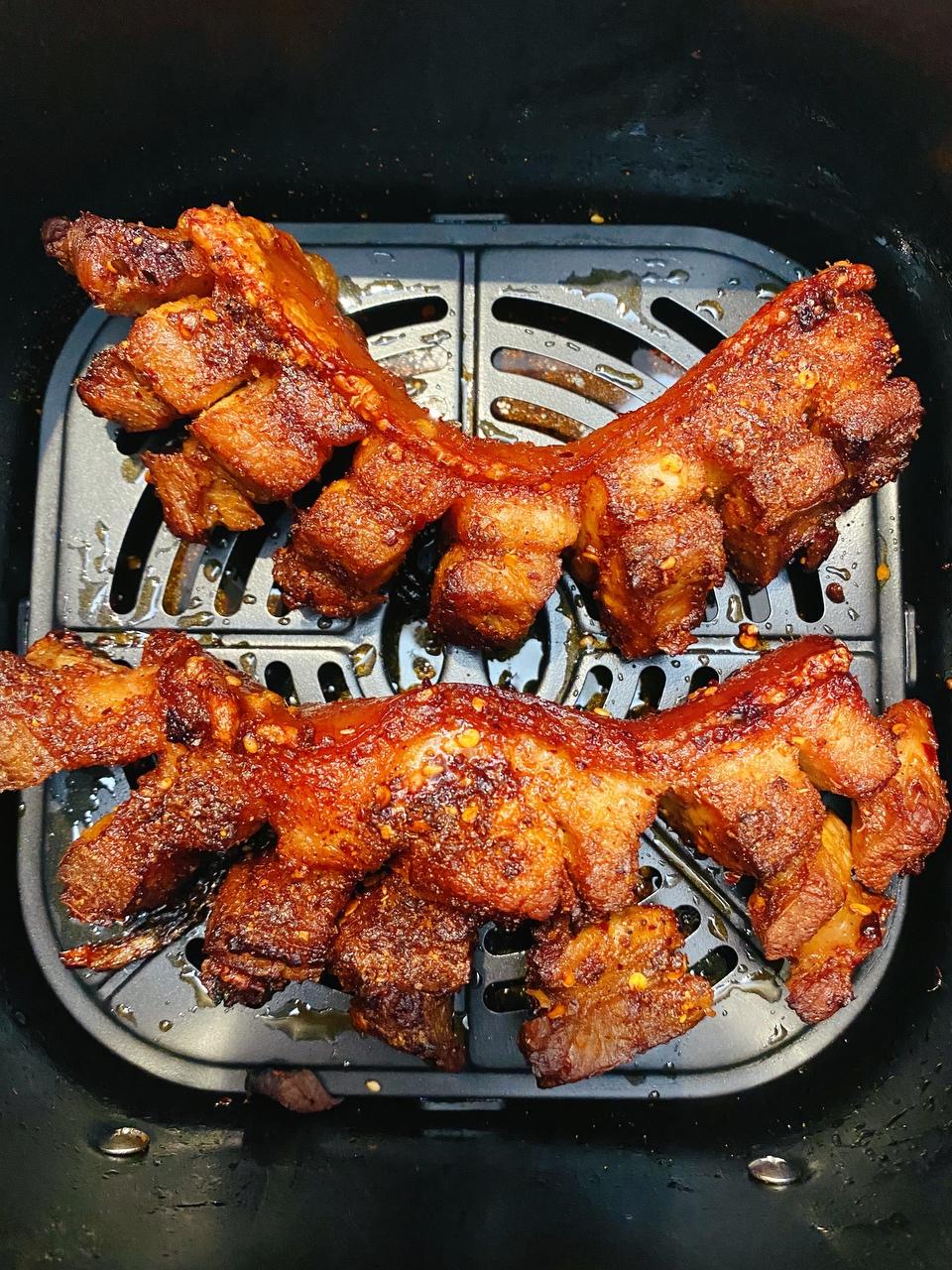
This dish is a complete meal on its own, but it loves a cold, crisp contrast on the table. A plate of poached pork belly with garlic sauce brings a punchy, garlicky chill that cuts straight through the richness of the braise. If you want a second vegetable, a quick stir fried eggplant and green beans doubles down on the same flavors without repeating the dish. And for anyone at the table who wants more meat, a side of air fryer crispy pork belly adds crackling crunch next to all those soft noodles.

Storage & Reheat
Cool leftovers within two hours and refrigerate in an airtight container for up to three days. The noodles will tighten in the fridge, which is normal. Reheat in a covered wok or skillet over medium-low heat with a tablespoon or two of water, tossing gently until steaming hot, about five minutes. A microwave works in a pinch: cover, add a splash of water, and heat in one-minute bursts, fluffing between them.
This dish does not freeze well because the noodles break down on thawing. If you want to plan ahead, freeze the braised pork and beans without the noodles, then steam fresh noodles when you are ready to eat.
Allergen Notice
This recipe contains wheat (noodles, soy sauce), soy, and egg if you use egg noodles. If you are cooking for someone with a soy allergy, use a soy-free soy sauce substitute such as coconut aminos and check your noodle label. If gluten is a concern, use certified gluten-free wheat-free noodles and tamari, and note that the texture will be a little softer.
Nutrition Disclaimer
Nutrition information is calculated using an ingredient database and should be considered an estimate. In cases where multiple ingredient alternatives are given, the first listed is calculated for nutrition. Garnishes and optional ingredients are not included.
About the Author & Recipe Development
Lin grew up watching northern Chinese home cooks cook by feel, and this recipe is her attempt to write down what those cooks never measured: how much water is enough, how long the beans need, and when the noodles are ready to be tossed. It was tested repeatedly in a home wok with both homemade egg noodles and store-bought fresh noodles, and the water level in the braise was adjusted until the noodles came out dry and glossy every time rather than soupy.
Authoritative References
For safe handling and cooking temperatures for pork, see the USDA safe minimum internal temperature chart. For general food safety guidance on cooling and storing cooked leftovers, see the FDA refrigerator and food safety guidance.
Braised Noodles with Green Beans (豆角焖面): Savory Noodles Steamed

Equipment
- Wok
- Cutting Board
- Slotted Spoon
Ingredients
For the Noodles
- 500 g all-purpose flour plus extra for dusting, if making noodles from scratch
- 2 large eggs for the egg noodle dough
- 130 ml water lukewarm
- 4 g salt for the dough
- 500 g fresh wheat noodles or semi-dried noodles, store-bought is fine
For the Braise
- 400 g pork belly skin on, cut into thin slices
- 2 whole star anise the “soul” ingredient
- 1 inch ginger sliced
- 4 cloves garlic smashed, plus extra minced for finishing
- 2 stalks scallions cut into segments, plus extra sliced for finishing
- 400 g green beans ends trimmed, snapped into 2-inch lengths
- 2 tbsp light soy sauce or tamari
- 1 tsp salt or to taste
- 500 ml water enough to fully cover the green beans
Instructions
- If making noodles from scratch, combine 500 g flour, 2 eggs, 130 g water, and 4 g salt into a dough, knead until smooth, cover, and rest 30 minutes; while it rests, wash and cut the vegetables, then press the dough through a noodle machine on setting 6 into thin strands.

- Slice the pork belly thinly, cut the scallions into segments, slice the ginger, smash the garlic and cut it into large chunks, then separately mince a little garlic and slice a little scallion for finishing.
- Heat the wok and fry the pork belly until it is fragrant and has released its fat.
- Tilt the wok so the rendered fat pools, and fry the aromatics in that oil, remembering to add the soul ingredient: two star anise.
- Add the green beans and stir-fry until evenly coated, splash in the soy sauce, add the salt, stir well, then pour in water until the beans are completely submerged; once it boils, cover and simmer over medium-low heat for 10 minutes.
- Remove the lid and spread the noodles loosely over the green beans, which should now be soft with the broth sitting beneath them, then cover and steam for about 5 more minutes.
- Check the liquid in the wok: tilt it and you should still see some broth, but not too much; now uncover and use chopsticks to lift and toss the green beans and noodles together, and as you toss the noodles will absorb the remaining broth until the wok looks dry and glossy.
- If you like a crispy crust on the bottom, turn the heat to high and toast it briefly, then stir in the minced garlic and sliced scallion, toss to combine, and take it off the heat.
- Plate it up, one plate per person, and enjoy it while it is still fragrant and steaming.












Leave a Reply