Hey there! Welcome back to my kitchen.
If there is one question I get asked most often by friends trying to replicate a recipe from their favorite takeout spot or a memory from their travels, it’s this: “Lin, I bought the ribs, I followed the steps, but the texture is just… wrong. It’s dry.”
Let’s be real for a second. The meat aisle in a Western supermarket can be confusing when you have a Chinese recipe in hand. In Chengdu, my parents’ restaurant kitchen didn’t label things “Baby Back” or “St. Louis.” We went by the feel of the meat and the specific dish we were cooking.
Today, I’m putting on my culinary school hat to break down the science of the pig, but I’m keeping it practical for your home kitchen. We are going to solve the “Spare Ribs vs. Baby Back” dilemma once and for all, so your next batch of Sweet and Sour Pork Ribs tastes exactly like it should—sticky, juicy, and perfect.
The “Why”: Anatomy Class in the Kitchen
Why does it matter? It comes down to fat content and connective tissue.
In culinary school, we spent weeks learning about muscle fibers. Here is the logic: muscles that work harder (like the belly area) develop more connective tissue. This tissue needs time and heat to break down into gelatin, which gives you that sticky, lip-smacking texture. Muscles that don’t do much work (like the upper back) are tender but lean; if you cook them too long, they dry out.
Knowing this is the difference between a dry, chewy rib and one that melts in your mouth.
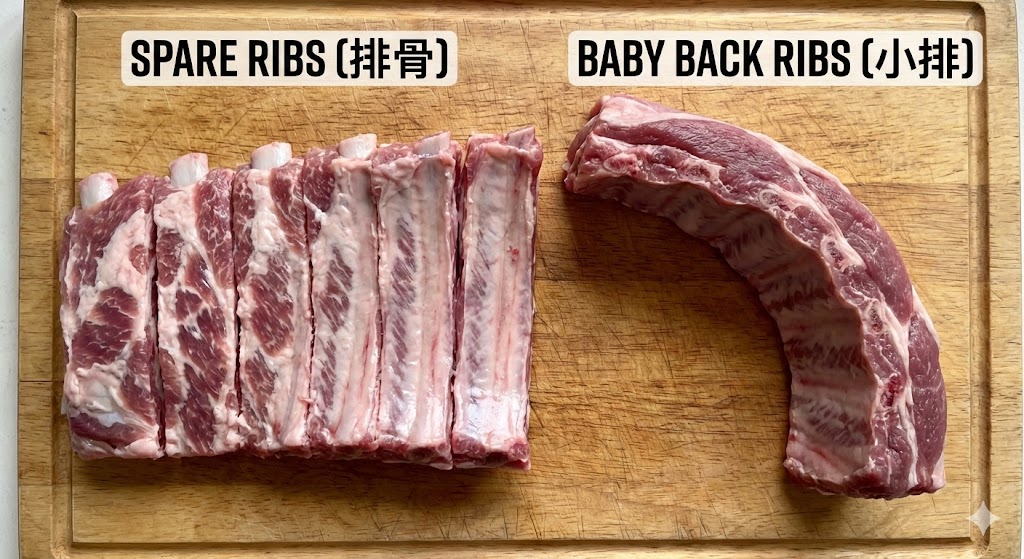
Spare Ribs (The Belly Cut): The King of Flavor
When you eat at a chaotic, loud restaurant in Sichuan and order a clay pot of ribs, you are almost always eating Spare Ribs (or the side rib cut).
- The Anatomy: These come from the belly side of the pig. They are flatter, contain more fat, and crucially, they have cartilage (the soft white bone at the tip).
- The Sensory Cue: Look for meat that has significant white marbling running through it. When raw, it should feel a bit loose and heavy.
- Best Used For: High-heat deep frying or long, slow braising.
If you are planning to make classic Braised Pork Ribs (Hong Shao Paigu), this is the cut you want. The connective tissue melts into the sauce, thickening it naturally without needing too much cornstarch. Similarly, for soups that need a rich depth of flavor, like a comforting Corn and Pork Rib Soup or the traditional Lotus Root and Pork Rib Soup, spare ribs are essential because the fat and bone marrow emulsify into the broth.
Western Kitchen Reality: Spare ribs in the US often come as large “St. Louis Style” slabs. You probably don’t have a meat cleaver heavy enough to chop through the thick bone.
- Lin’s Tip: Ask your butcher to cut them “across the bone” into 1-inch strips. Then, you can easily slice between the bones at home with a standard chef’s knife.
Baby Back Ribs (The Loin Cut): The Tender Choice
Baby back ribs come from high up on the back of the pig, connected to the backbone.
- The Anatomy: These are curved, leaner, and very tender. They cook much faster than spare ribs.
- The Sensory Cue: The meat is lighter pink and feels tighter and bouncier to the touch, almost like a flexed muscle.
- Best Used For: Steaming, quick roasting, or dishes where you want the meat to fall off the bone quickly.
Because steaming is a gentle, moist heat, we often use baby back ribs for dishes like Steamed Pork Ribs with Black Bean Sauce. They stay tender without needing hours of cooking. They are also fantastic for roasted BBQ styles, such as Char Siu (Chinese BBQ Pork), where you want a uniform shape and a tender bite.
The “No Secrets” Warning: Do not try to make traditional deep-fried Sweet and Sour ribs with Baby Backs unless you are very careful. Because they are lean, high heat can turn them into leather shoe soles instantly. Trust me on this.
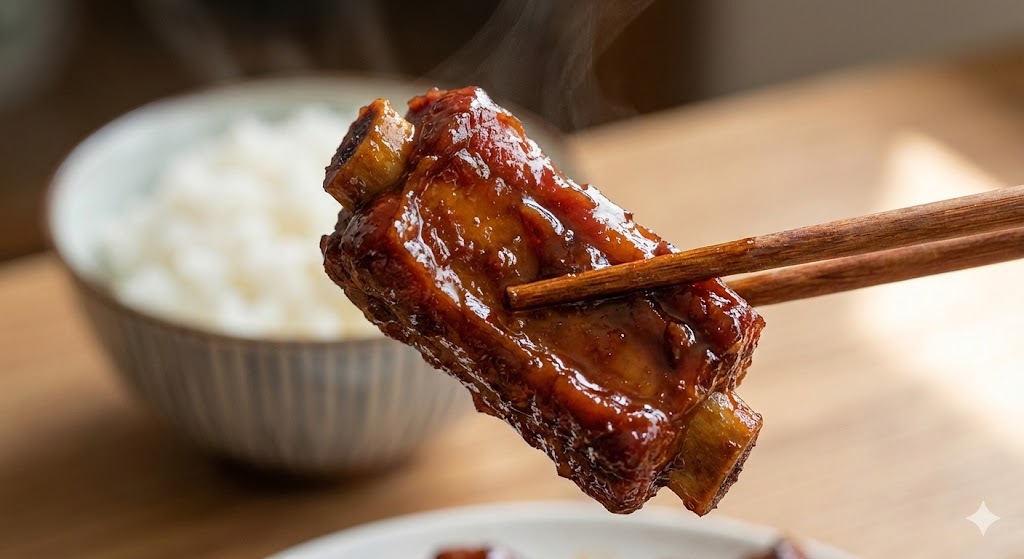
Proactive Troubleshooting: Can I Substitute?
I know what it’s like. You’re at the store, they are out of spare ribs, and you really want to make a braised dish. Can you use Baby Backs instead?
Yes, but you must adjust the timing. If a recipe calls for braising spare ribs for 45 minutes, check your baby back ribs at the 25 or 30-minute mark. If you cook them for the full time, they will fall apart—and not in a good way; they will become stringy.
Also, be honest about the flavor trade-off. You will lose that unctuous, sticky mouthfeel that comes from the melted cartilage of the spare rib. To mimic this, you might need to add a splash of stock or a little extra oil to your wok. If you are looking for a totally different texture that is crispy and dry, you might even try Oven-Baked Garlic Ribs which work surprisingly well with the leaner baby back cut.
Lin’s “No Secrets” Prep Tip: The Water Bath
Regardless of which rib you choose, here is the secret step that professional Chinese kitchens do that most home cooks skip.
You must soak your ribs.
Before you marinate or blanch, soak the cut ribs in cold water for at least 30 minutes. You’ll see the water turn pink/red.
- The Science: This draws out the myoglobin and blood.
- The Result: It removes that “funky” pork smell that many people dislike, and ensures your dishes come out looking clean and bright, not grey and muddy.
After soaking, pat them dry before adding your marinade ingredients like Shaoxing Wine and Light Soy Sauce. This ensures the flavors penetrate deep into the meat fibers.

Ready to Cook?
Now that you know your way around the butcher block, you are ready to tackle the wok. Whether you are craving the rich, fatty comfort of a braise or the delicate bounce of a steamed dim sum dish, choosing the right cut is 80% of the battle.
Grab some ribs, sharpen your knife, and don’t forget to check out my guide on One Pot Rice Cooker Pork Ribs and Rice for those busy weeknights when you want maximum flavor with minimum effort.
Let’s get cooking!
Authoritative References
- The Science of Connective Tissue: Exploratorium – The Science of Cooking Meat. https://www.exploratorium.edu/cooking/meat/meat-science.html
- Pork Cuts Explained: National Pork Board – Pork Cuts Guide. https://www.pork.org/cooking/pork-cuts/
- Maillard Reaction & Browning: Serious Eats – The Food Lab. https://www.seriouseats.com/what-is-maillard-reaction-cooking-science












Leave a Reply