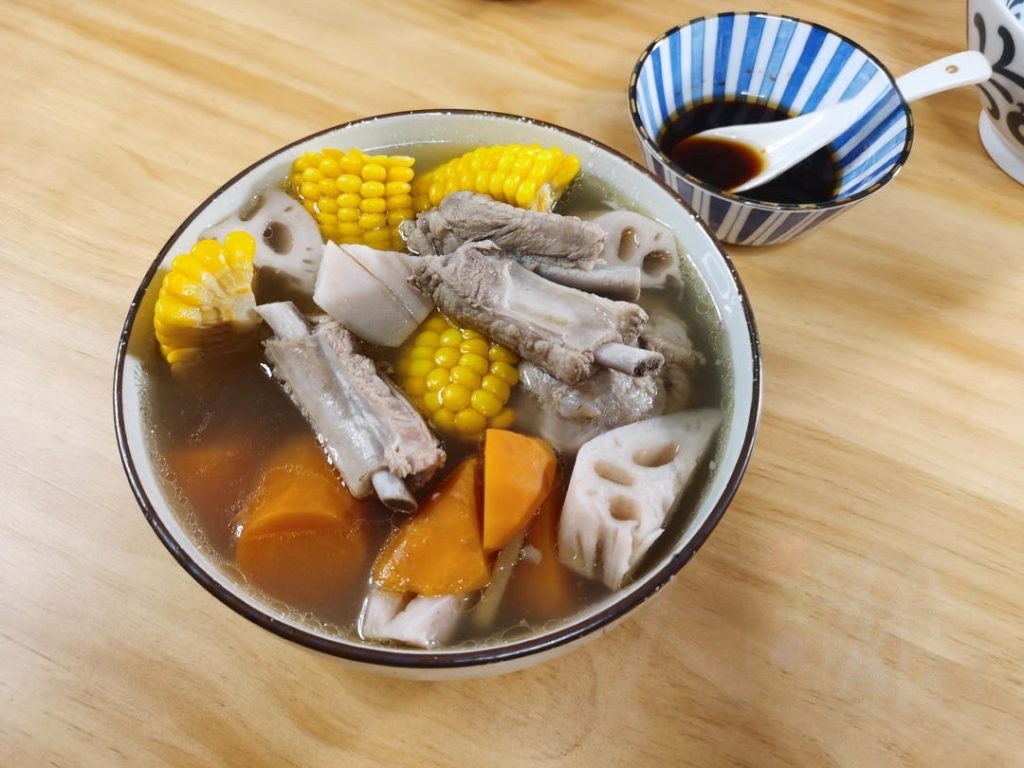
There is a saying in Chinese households: “A meal without soup is not a complete meal.” Growing up in my family’s restaurant in Sichuan, there was always a massive pot of stock simmering away in the back kitchen. However, this Lotus Root and Pork Rib Soup (Lian Ou Pai Gu Tang) holds a special place in my heart as the ultimate home-style comfort food.

It is a “one-pot” wonder where the soup provides hydration and comfort, while the tender pork ribs and root vegetables act as the main course. The magic lies in the balance. The broth is incredibly clear and sweet—thanks to the corn and carrots—while the pork provides a savory depth. We serve the tender ribs with a simple, savory dipping sauce on the side, a technique that allows the soup to remain light while giving the meat a punch of flavor.
If you have tried my Corn and Pork Rib Soup, you will find this recipe familiar, but the addition of lotus root adds a unique texture—starchy, crunchy, and stringy—that is beloved in Chinese culture.
Why This Recipe Works
- Bone Combinations: We use a mix of marrow bones (leg bones) and ribs. The marrow bones provide collagen and body to the broth, while the ribs provide the tender meat for eating.
- Scientific Sweetness: By splitting the corn cobs, we expose the core, allowing the natural sugars to permeate the soup more effectively than leaving them whole.
- Preventing Oxidation: Soaking the cut lotus root in vinegar water prevents it from turning black, ensuring your soup looks appetizingly golden, not muddy.
- Flavor Layering: The addition of Chenpi (dried tangerine peel) and white peppercorns cuts through any greasiness and adds a subtle aromatic warmth that lifts the entire dish.
What is Lotus Root?
Lotus root (Lian Ou) is the edible rhizome of the lotus plant. It has a distinctive appearance with holes running through it like lace. In soups, it takes on a texture similar to a potato but retains a slight crunch. It is rich in fiber and vitamin C. You can usually find it in the produce section of Asian grocery stores, often submerged in water or vacuum-sealed.
Chef’s Tip: When selecting fresh lotus root, look for sections that are heavy for their size, firm, and light brown without soft spots or bad odors.
Key Ingredients
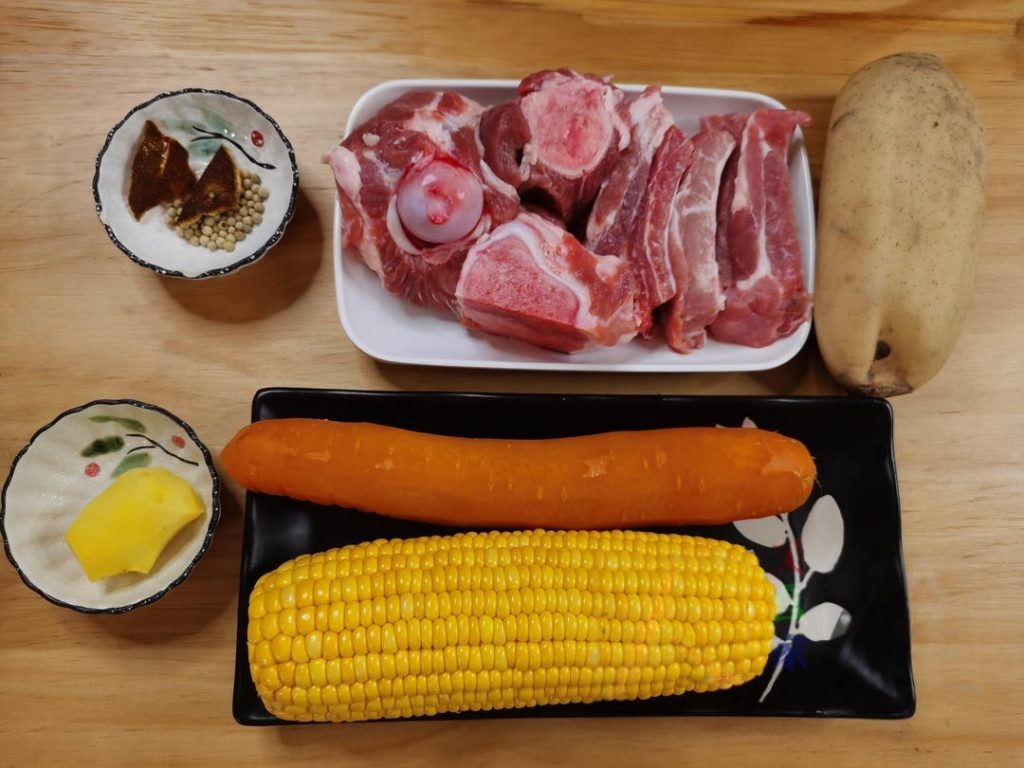
- Pork Ribs & Bones: Use 1 lb (500g) total. I recommend a mix of pork spare ribs (for meat) and pork leg bones/marrow bones (for broth richness). Ask your butcher to cut them into 2-inch chunks.
- Lotus Root: 1 medium section.
- Sweet Corn: 1 ear. The sweetness of the corn balances the savory pork.
- Carrot: 1 medium carrot, for color and extra natural sweetness.
- Ginger: Essential for neutralizing any gaminess in the pork.
- Dried Tangerine Peel (Chenpi): Two small pieces. This adds a faint citrus note that brightens the rich broth. If you can’t find it, you can omit it, but it adds an authentic touch.
- White Peppercorns: Whole peppercorns are preferred for a clean heat.
- Light Soy Sauce: For the dipping sauce. I recommend Pearl River Bridge or Lee Kum Kee.
- Chinese Black Vinegar: Also known as Chinkiang vinegar, for the dipping sauce.
- Sesame Oil: Adds a nutty aroma to the dipping sauce.
Recipe Notes Before You Begin
The Pot Matters: I recommend using a heavy-bottomed pot, a Dutch oven, or a traditional clay pot. These retain heat well and allow for a gentle simmer, which is crucial for a clear broth.
The “Cold Water” Technique: You will notice in the instructions that we blanch the meat starting with cold water. Do not rush this by using hot water. Starting cold allows the blood and impurities to release slowly from the bone as the temperature rises. If you drop raw meat into boiling water, the proteins shock-seal immediately, trapping the impurities inside, which leads to a cloudy, funky-smelling soup.
How to Make Lotus Root and Pork Rib Soup
1. Mise en Place (Prep the Ingredients)
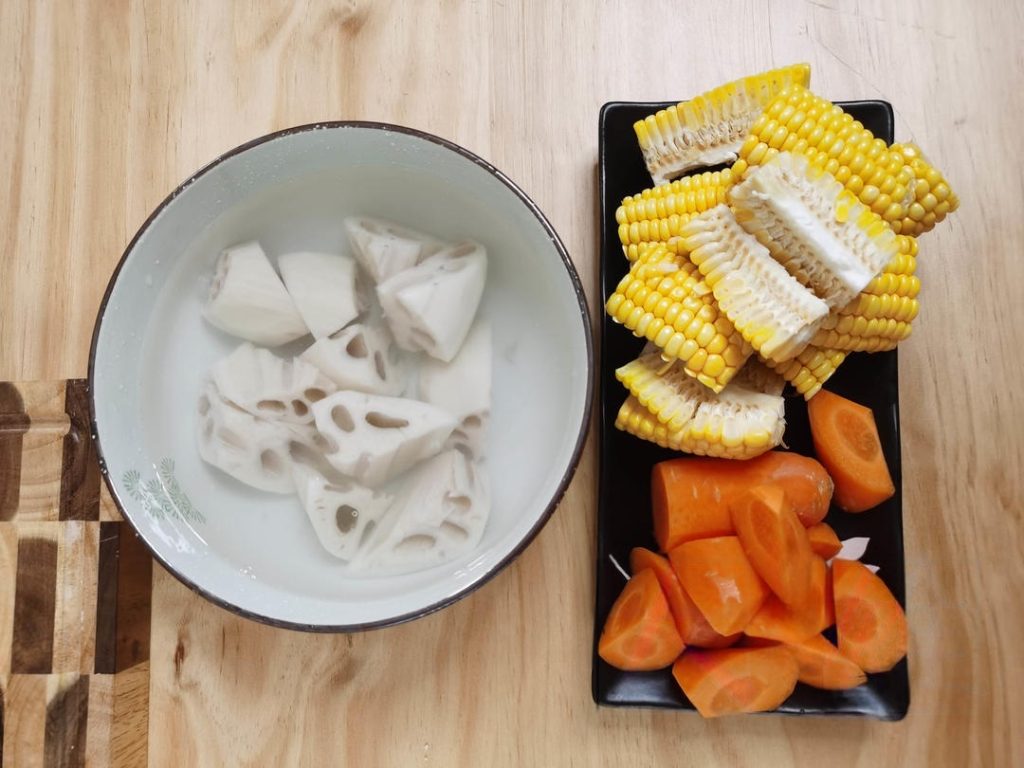
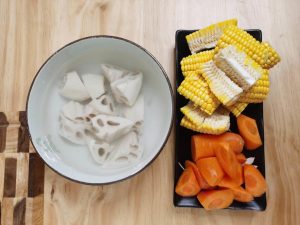
Peel the carrot and cut it into rolling wedges (roll the carrot a quarter turn after each diagonal cut). Cut the corn into segments, then split each segment into quarters lengthwise to expose the cob core—this helps release sweetness.
Peel the lotus root and cut it into irregular chunks (rolling wedges). Immediately submerge the cut lotus root in a bowl of cold water with a few drops of vinegar. This prevents it from oxidizing and turning black. Slice the ginger.
2. Blanch the Pork
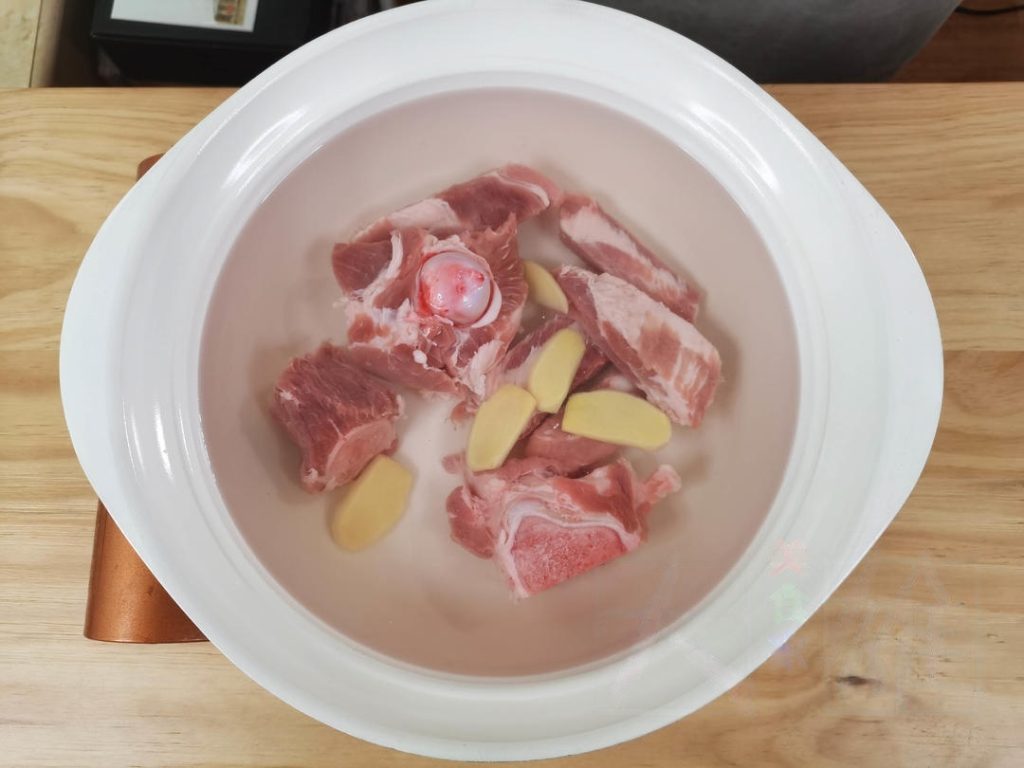
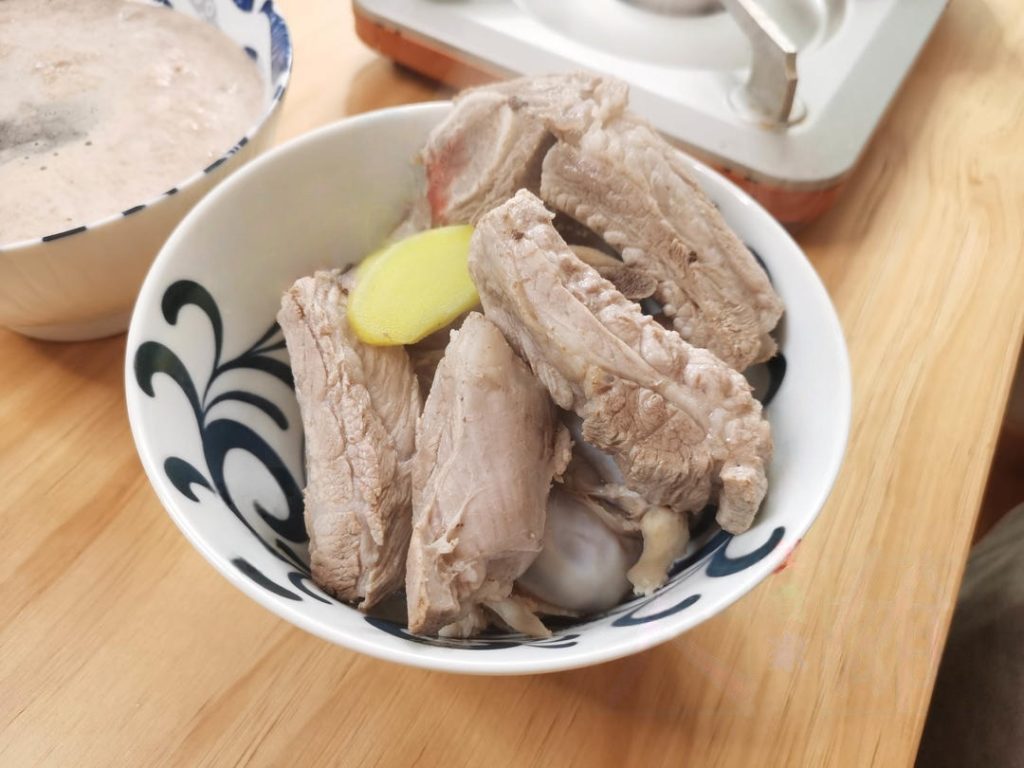
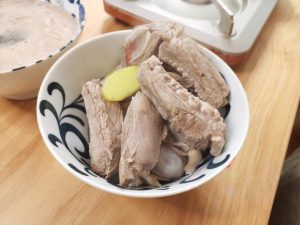
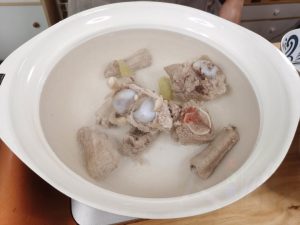
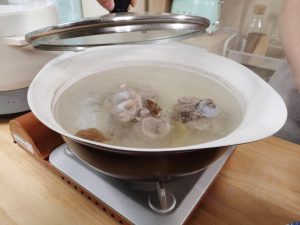
Place the pork ribs and marrow bones into a pot and cover with cold water. Add a few slices of ginger. Bring to a boil over high heat. As it boils, you will see gray foam floating to the top. Skim this off. Let it boil for about 2-3 minutes to ensure all scum is released.
Remove the pork and rinse it thoroughly under warm running water to wash off any stuck-on foam. Discard the blanching water.
3. Simmer the Soup Base
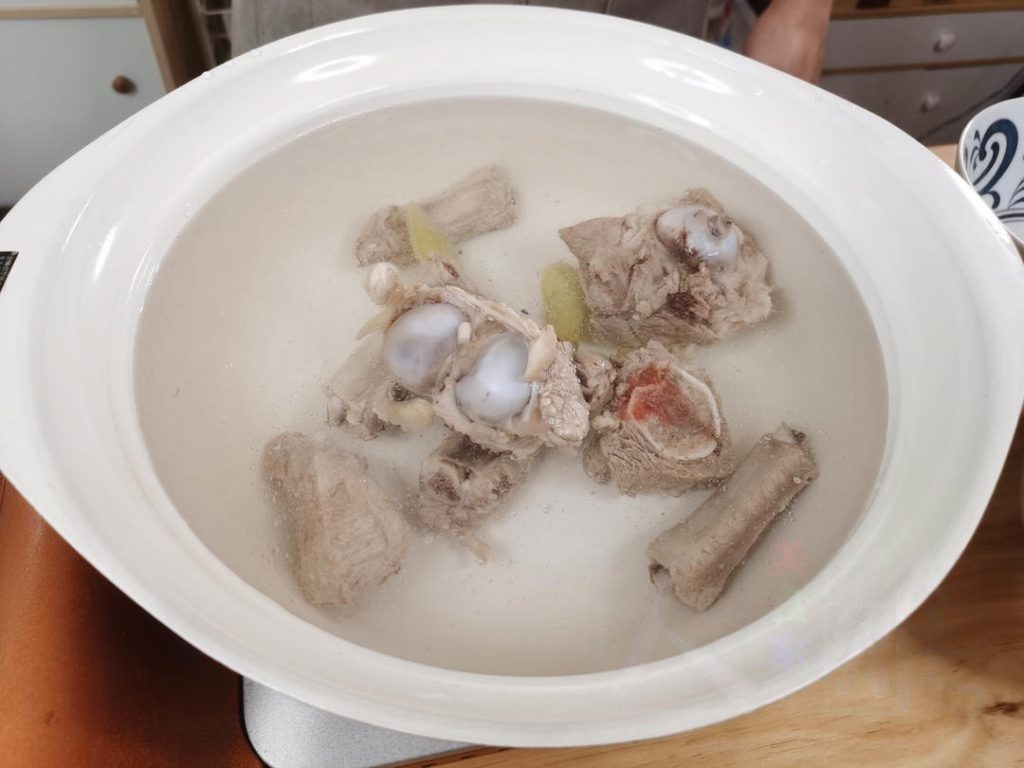
Place the clean, blanched pork and remaining ginger slices into a clean soup pot. Add plenty of fresh water (about 8-10 cups). Bring to a boil, then reduce heat to medium-high and cook for 5 minutes.
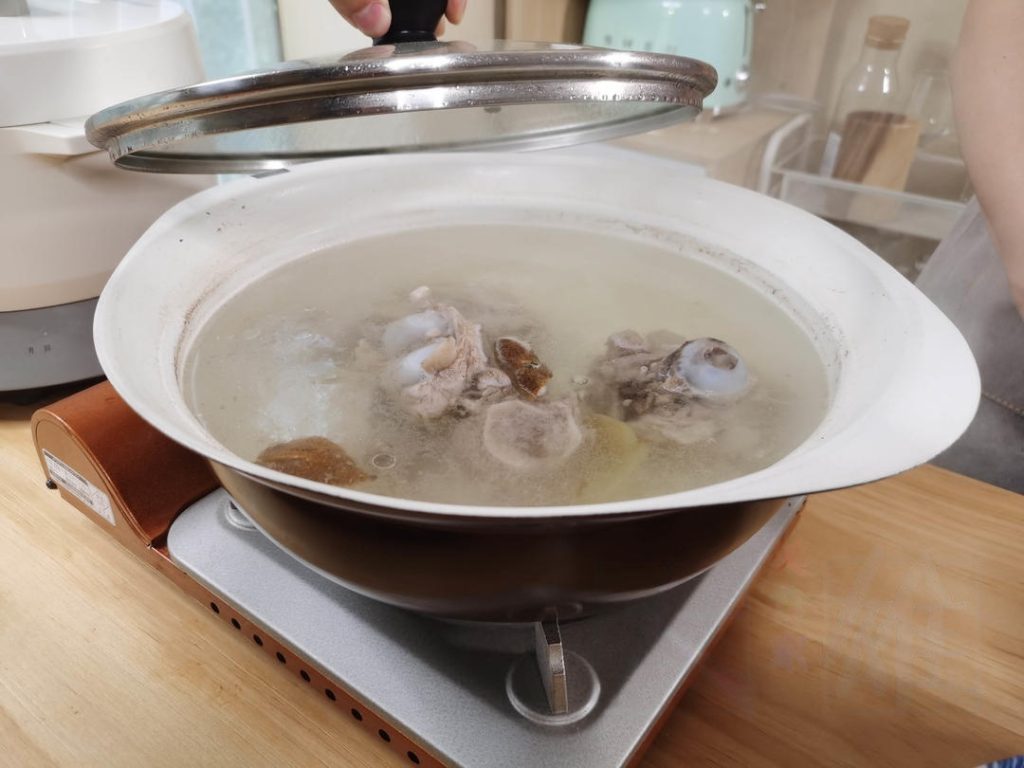
Add the dried tangerine peel (Chenpi), white peppercorns, and just a pinch of salt (about 1/4 tsp—we keep the soup mild because of the dipping sauce). Cover, reduce heat to low, and simmer gently for 50 minutes. (If using an Instant Pot, high pressure for 15 minutes).
4. Add Vegetables
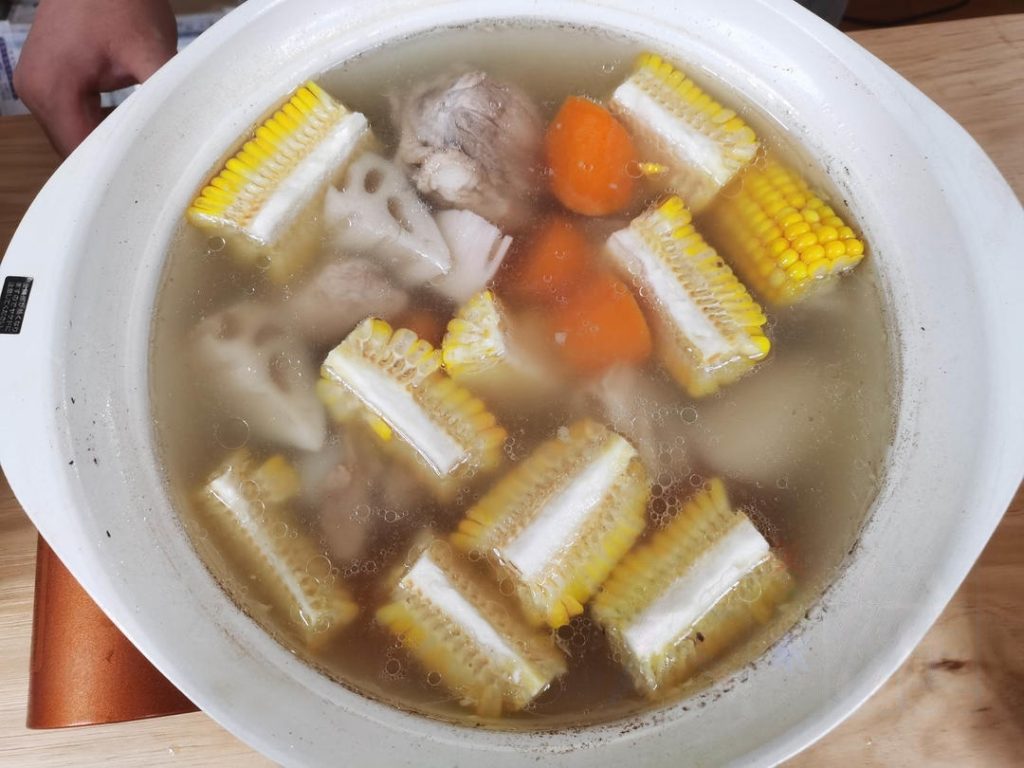
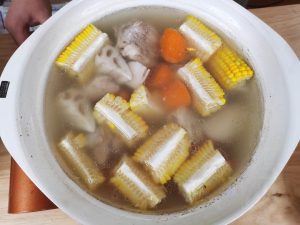
After the pork has simmered, add the drained lotus root, corn, and carrots. Continue to simmer for another 15 minutes.
Why add vegetables later? If you boil the vegetables for the full hour, the corn will lose its texture and the carrots will disintegrate. Adding them in the last 15 minutes ensures everything is perfectly tender.
5. Final Seasoning
Taste the soup. It should be sweet from the corn and savory from the pork. Add salt to taste only if absolutely necessary, but remember, we are serving this with a salty dipping sauce.
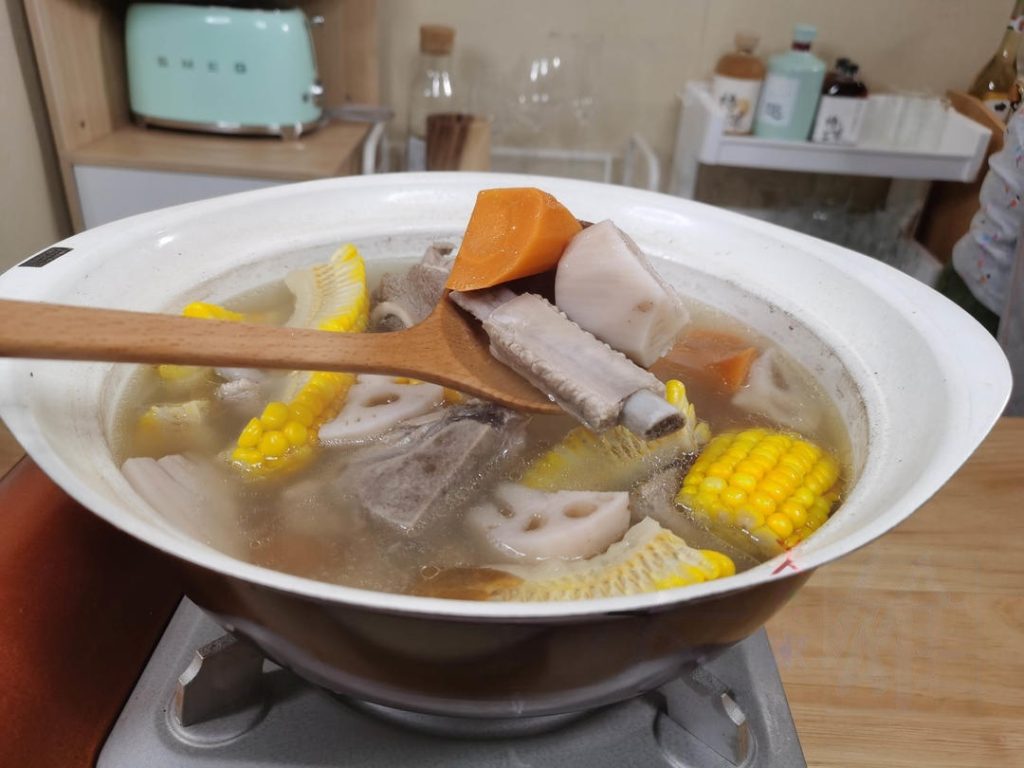
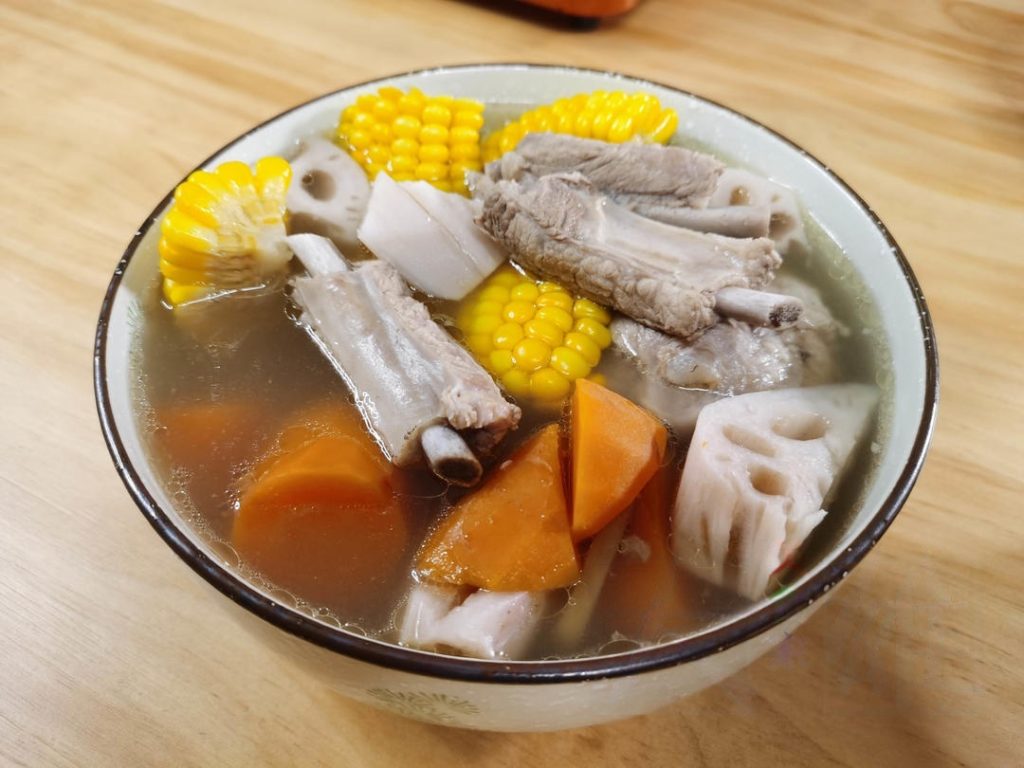
6. Make the Dipping Sauce
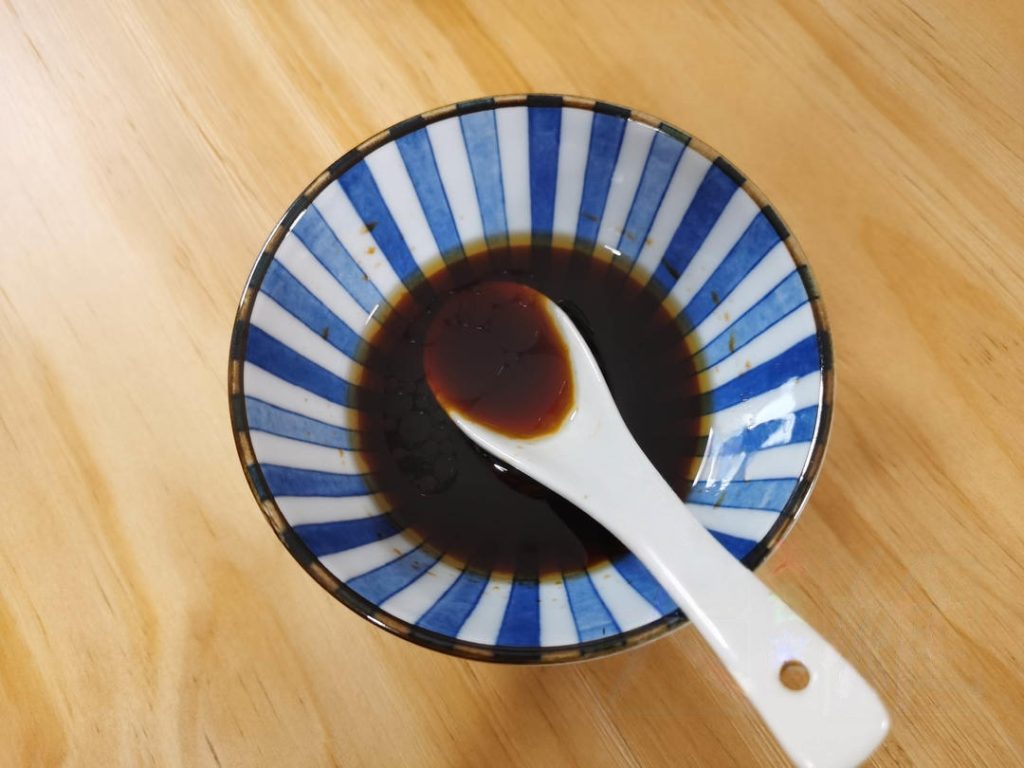
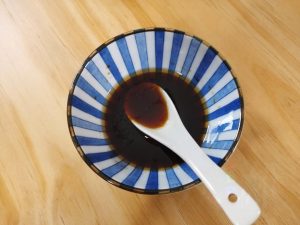
While the soup finishes, mix the dipping sauce in a small bowl:
- 2 tbsp Light Soy Sauce
- 1/2 tbsp Chinese Black Vinegar (or rice vinegar)
- 1/2 tbsp Sesame Oil
- 5 tbsp of the hot soup broth (to dilute and warm the sauce)
You can also add a teaspoon of Homemade Chinese Chili Oil if you like a spicy kick!
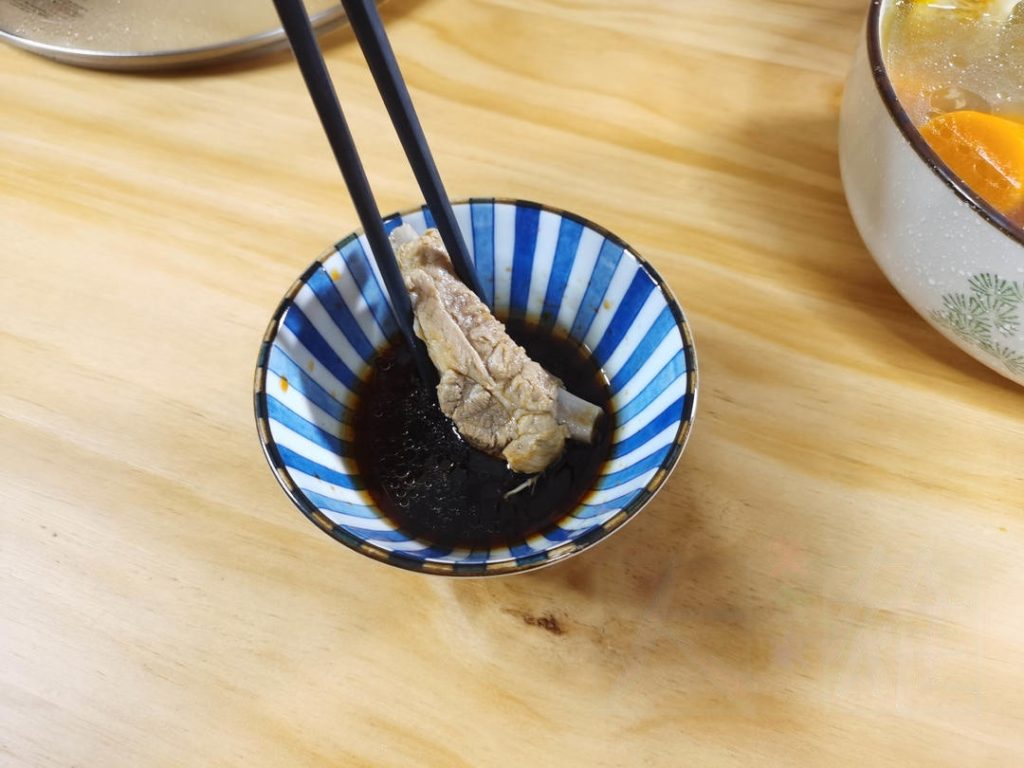
Serving Suggestions
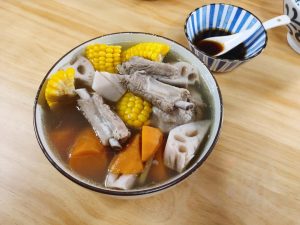
Serve the soup in a large communal bowl or individual soup bowls. Place the dipping sauce in the center or give everyone a small saucer. Pick out the ribs and lotus root, dip them in the sauce, and enjoy the meat and veggies alongside sips of the hot broth.
To make this a complete meal, I recommend serving it with steamed rice and a simple stir-fry. Here are some great options:
- Stir-fried Green Beans with Minced Pork
- Tomato and Egg Stir-fry (A classic comfort food pairing!)
- Braised Pork Ribs with Eggs (If you are a meat lover)
If you have leftover ribs, you can even repurpose them the next day similar to how we use ribs in Steamed Pork Ribs with Black Bean Sauce.
Troubleshooting & FAQ
Why is my soup cloudy? Cloudy soup usually happens if the water was boiling too violently. Once the soup comes to a boil, turn it down to a gentle simmer (small bubbles). Also, ensure you washed the bones thoroughly after blanching.
Can I use frozen lotus root? Yes! Frozen sliced lotus root is a great convenient alternative and often doesn’t require the vinegar soak. Just add it directly to the pot in step 4.
Can I make this in a slow cooker? Absolutely. After blanching the meat, add everything except the carrots and corn to the slow cooker. Cook on low for 6-8 hours. Add the carrots and corn in the last hour of cooking. For more pressure cooker ideas, check out my collection of 14 Pressure Cooker Recipes.
Food Safety and Storage
- Pork Safety: Ensure the pork ribs are cooked through. The meat should pull away from the bone easily. The internal temperature should be well above 145°F (63°C), though for soup, we cook it much longer for tenderness.
- Storage: Store leftover soup in an airtight container in the refrigerator for up to 3 days.
- Reheating: Reheat on the stove over medium heat until boiling. If you used lotus root, it may become slightly softer upon reheating but will still be delicious.
About the Author & Recipe Development
I’m Lin, and I grew up in a restaurant family in Sichuan, China. I spent my childhood peeling garlic and watching my father command the wok. Later, I trained professionally at a culinary institute and spent over a decade working in restaurant kitchens.
This recipe was developed based on the traditional Cantonese method of “slow fire soup” (Lao Huo Tang), but adapted for the home kitchen. I tested the timing of the vegetables to ensure the corn retains its pop and the carrots don’t turn into mush—a common mistake in home cooking.
Authoritative References
- For information on safe pork cooking temperatures, refer to the USDA Food Safety and Inspection Service.
- To understand the nutritional benefits of Lotus Root, you can read more at WebMD’s Guide to Lotus Root.
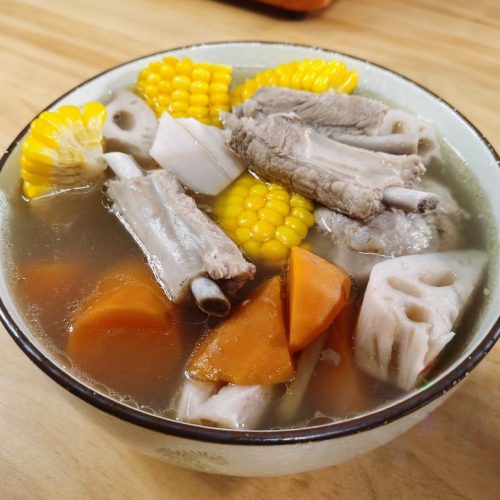
Lotus Root and Pork Rib Soup (Lian Ou Pai Gu Tang)

Equipment
- Large Soup Pot or Dutch Oven
- Cleaver or Chef’s Knife
Ingredients
Soup Ingredients
- 1 lb pork ribs and marrow bones (mixed) ask butcher to cut into 2-inch chunks
- 1 medium lotus root peeled and cut into chunks
- 1 ear sweet corn cut into segments and quartered lengthwise
- 1 medium carrot peeled and cut into rolling wedges
- 1 inch piece ginger sliced
- 2 pieces dried tangerine peel (chenpi) optional
- 6 white peppercorns
- 1/4 tsp salt adjust to taste
- 8 cups water approximate
Dipping Sauce
- 2 tbsp light soy sauce
- 1/2 tbsp Chinese black vinegar or rice vinegar
- 1/2 tbsp sesame oil
- 5 tbsp hot soup broth taken from the pot
Instructions
- Prep ingredients: Cut carrots into rolling wedges. Cut corn into sections and split lengthwise to expose the cob. Peel and cut lotus root into chunks; immediately soak in water with a few drops of vinegar to prevent browning. Slice the ginger.

- Blanch the pork: Place ribs, bones, and a few ginger slices in a pot. Cover with cold water. Bring to a boil. Skim off the gray foam. Boil for 2-3 minutes. Remove pork and rinse thoroughly with warm water. Discard blanching water.
- Start the soup: Place clean pork and remaining ginger in a clean pot. Add about 8-10 cups of fresh water. Bring to a boil, then reduce to medium-high for 5 minutes.
- Simmer: Add dried tangerine peel, white peppercorns, and 1/4 tsp salt. Cover, reduce heat to low, and simmer for 50 minutes (or 15 minutes at high pressure in an Instant Pot).
- Add vegetables: Add the drained lotus root, corn, and carrots to the pot. Simmer for another 15 minutes until vegetables are tender but not mushy.
- Make dipping sauce: While soup finishes, mix soy sauce, vinegar, sesame oil, and 5 tablespoons of the hot soup broth in a small bowl.
- Serve: Taste soup and add a pinch more salt if needed (keep it mild). Serve hot, using the dipping sauce for the pork ribs and lotus root.
Notes
Calories: 320kcal | Carbohydrates: 22g | Protein: 25g | Fat: 16g | Sodium: 850mg | Fiber: 4g Allergen Info: Contains Soy (Soy Sauce), Sesame (Sesame Oil). Gluten-free if using Tamari instead of Soy Sauce. Disclaimer: Nutrition information is calculated using an ingredient database and should be considered an estimate. In cases where multiple ingredient alternatives are given, the first listed is calculated for nutrition. Garnishes and optional ingredients are not included.




Leave a Reply