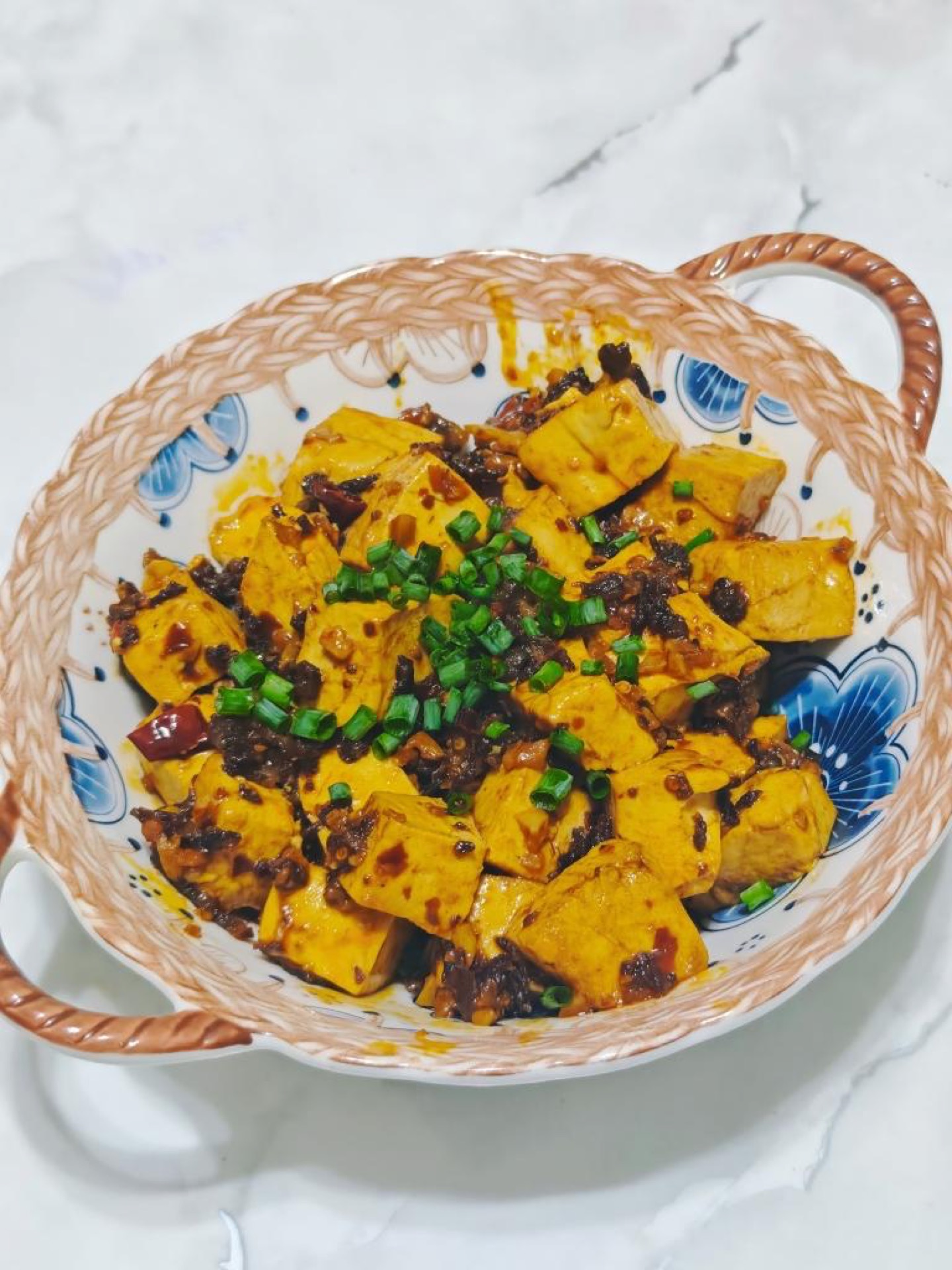
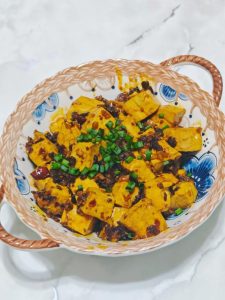
There is a version of mapo tofu that arrives at the table in two textures at once — the tofu so soft it barely holds its shape, and a shower of crisp, salty beef cracklings scattered over the top. That contrast is the whole point of mapo tofu with beef crisp, and it is the reason this dish disappears from the wok faster than almost anything else I cook.
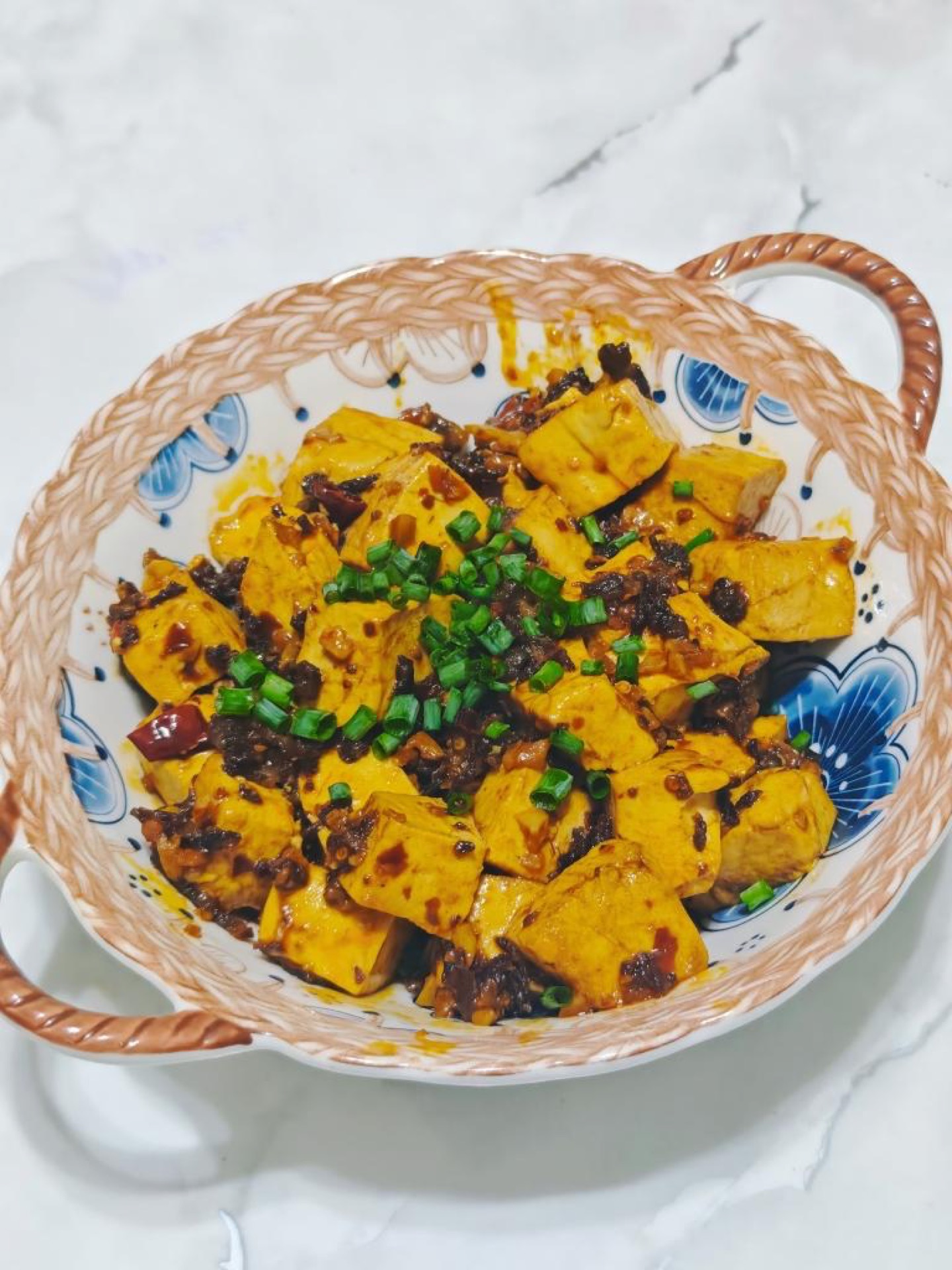
Most home cooks know mapo tofu as a one-pan braise, and it is a great one. But the restaurant version that inspired this recipe — the one chef Deng makes famous on screen — uses three small tricks that change everything: the tofu gets poached in soy water first, the beef gets fried into a crisp instead of simply browned, and the bean pastes get mashed smooth before they hit the fat. None of them take long, and together they turn a good bowl of tofu into a great one.
I have written about mapo tofu before, and that recipe is still the one I make on a weeknight. This one is what I make when I want the version with the crackle on top — the one that makes people stop talking for a second. If you have a block of soft tofu in the fridge and a few ounces of fatty beef in the freezer, you are already most of the way there.
What Is Mapo Tofu with Beef Crisp?
Mapo tofu is a Sichuan dish of silky tofu braised in a sauce of fermented chili bean paste, fermented black beans, garlic, and ground Sichuan peppercorn. The name is usually translated as “pockmarked grandmother’s tofu,” a reference to the legendary cook who is said to have invented it. What makes the dish distinctive is not just the heat but the má — the tingling, buzzing numbness that good Sichuan peppercorn leaves on your lips.
Mapo tofu with beef crisp is a variation in which the beef is treated differently. Instead of being browned and left in the sauce as a soft mince, the beef is chopped fine and fried slowly until the pieces are dry and crunchy, almost like a meaty crackling. Some of that crisp goes back into the sauce at the end, and a little is saved to scatter over the top. The result is a bowl with two textures running through it: soft, trembling tofu and shattering beef.
The trick that separates a home bowl from a restaurant bowl is not the chili — it is the order of operations. Poach the tofu, crisp the beef, bloom the pastes in the rendered fat, then thicken in stages.
If you like the sound of tofu that holds a sauce like this, the same technique shows up in other Sichuan-style tofu dishes. For a milder, savory braise built on mushrooms and soy, braised tofu and mushrooms is a good next step — it uses the same gentle handling but swaps the chili for deep mushroom flavor. When you want something quick and garlicky instead, pan fried tofu with garlic sauce gives you crisp-edged tofu in about fifteen minutes. And if you want tofu to do the heavy lifting alongside meat, rice cooker braised pork ribs with tofu is the low-effort, high-reward route.
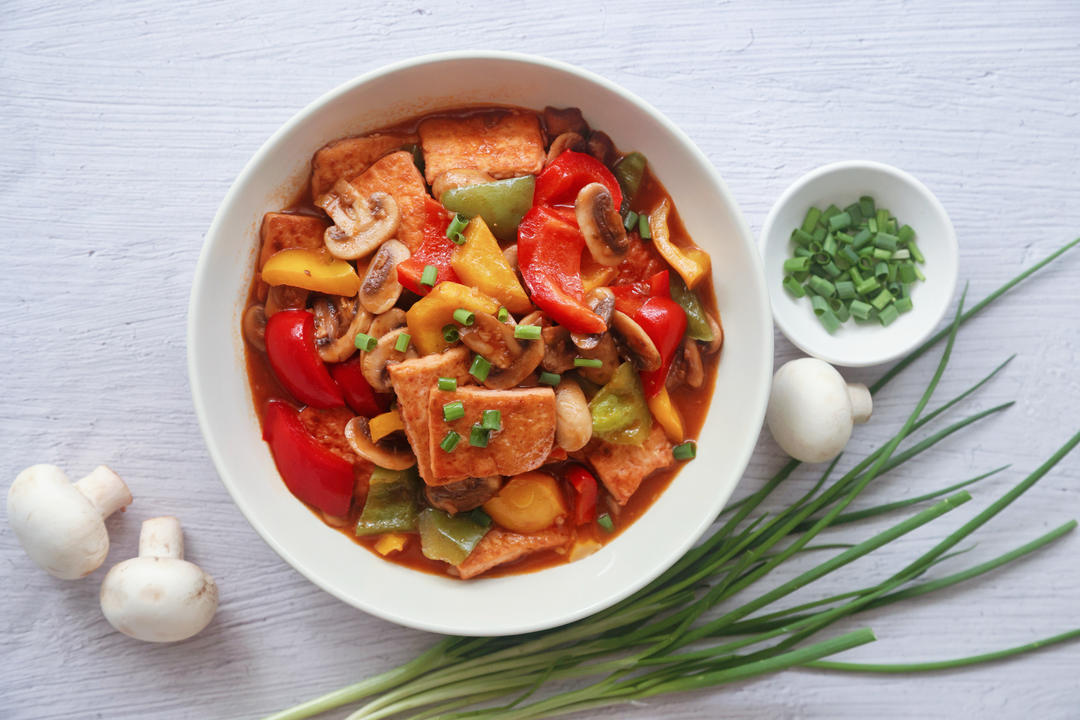
1Braised Tofu and Mushrooms with Savory SauceThis Braised Tofu and Mushrooms recipe uses a secret weapon—Spare Rib Sauce—to create a rich, savory, vegetarian dish that tastes even better than meat. It features pan-fried firm tofu and juicy button mushrooms braised in a glossy, umami-packed glaze.Check out this recipe
Cooked this way once, you will want the next one too: pan fried tofu with garlic sauce starts from the same base and the same pan.
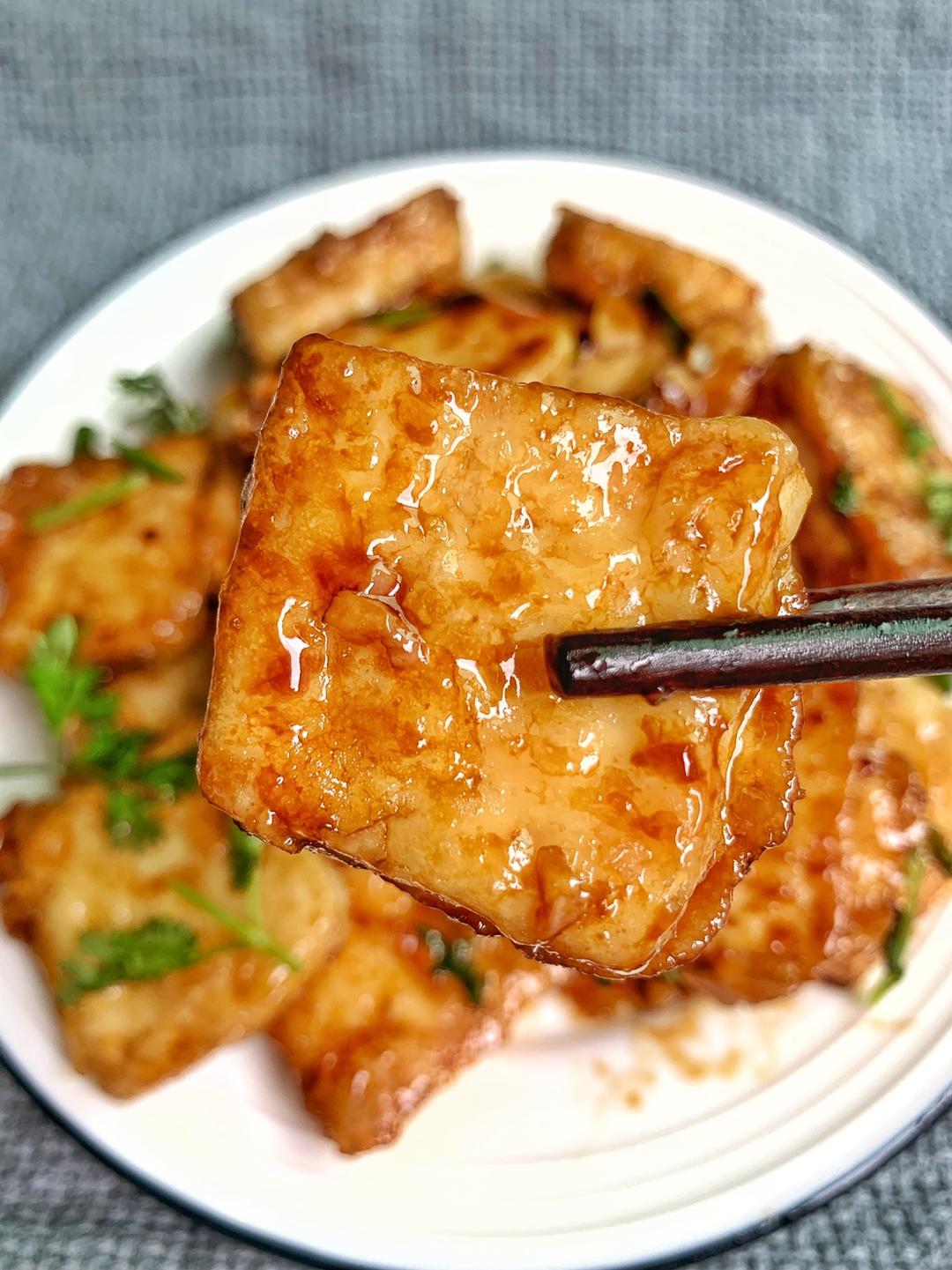
2Easy Pan-Fried Tofu with Garlic Sauce (香煎豆腐)This 15-minute recipe creates unbelievably crispy pan-fried tofu cubes tossed in a rich, savory, and glossy garlic soy sauce. It’s a homestyle Chinese dish that’s fast, easy, and better than takeout.Check out this recipe
For the next cook from the same playbook, rice cooker braised pork ribs with tofu is the recipe I point people to.
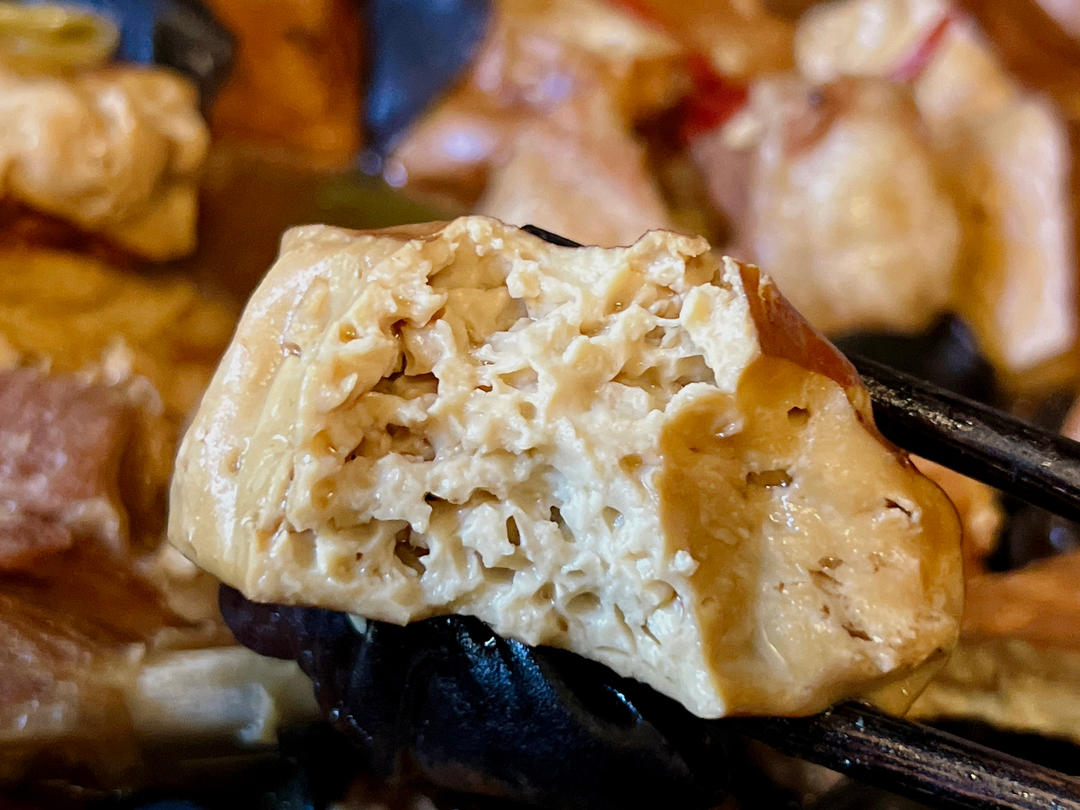
3Easy Rice Cooker Braised Pork Ribs with TofuA comforting, authentic Chinese recipe packed with rich, savory flavors. The rice cooker does all the hard work to tenderize the meat, while the thick dried tofu absorbs the delicious broth.Check out this recipe
Why This Recipe Works
Three small decisions carry this dish, and each one solves a problem that home cooks run into constantly.
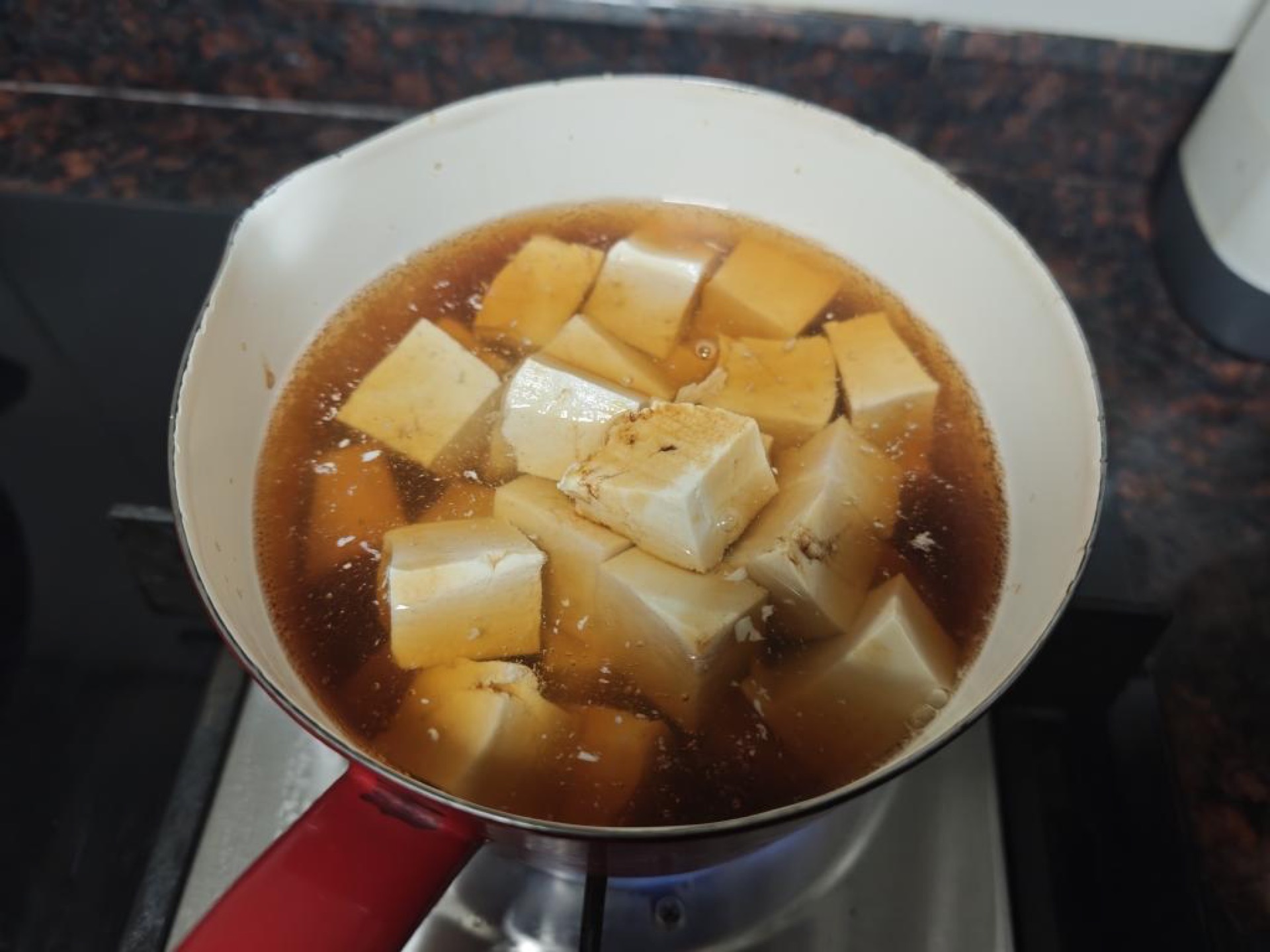
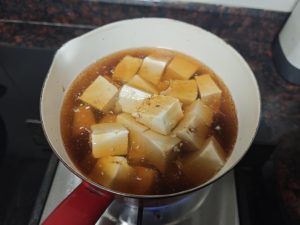
The soy-water poach. Soft tofu straight from the package is watery and cold in the middle, and it releases liquid into the sauce as it cooks. Poaching it briefly in lightly salted soy water seasons the cubes through, firms the surface just enough to survive a braise, and drives out some of that excess water. The tofu comes out silkier, not firmer, and it stops diluting the sauce.
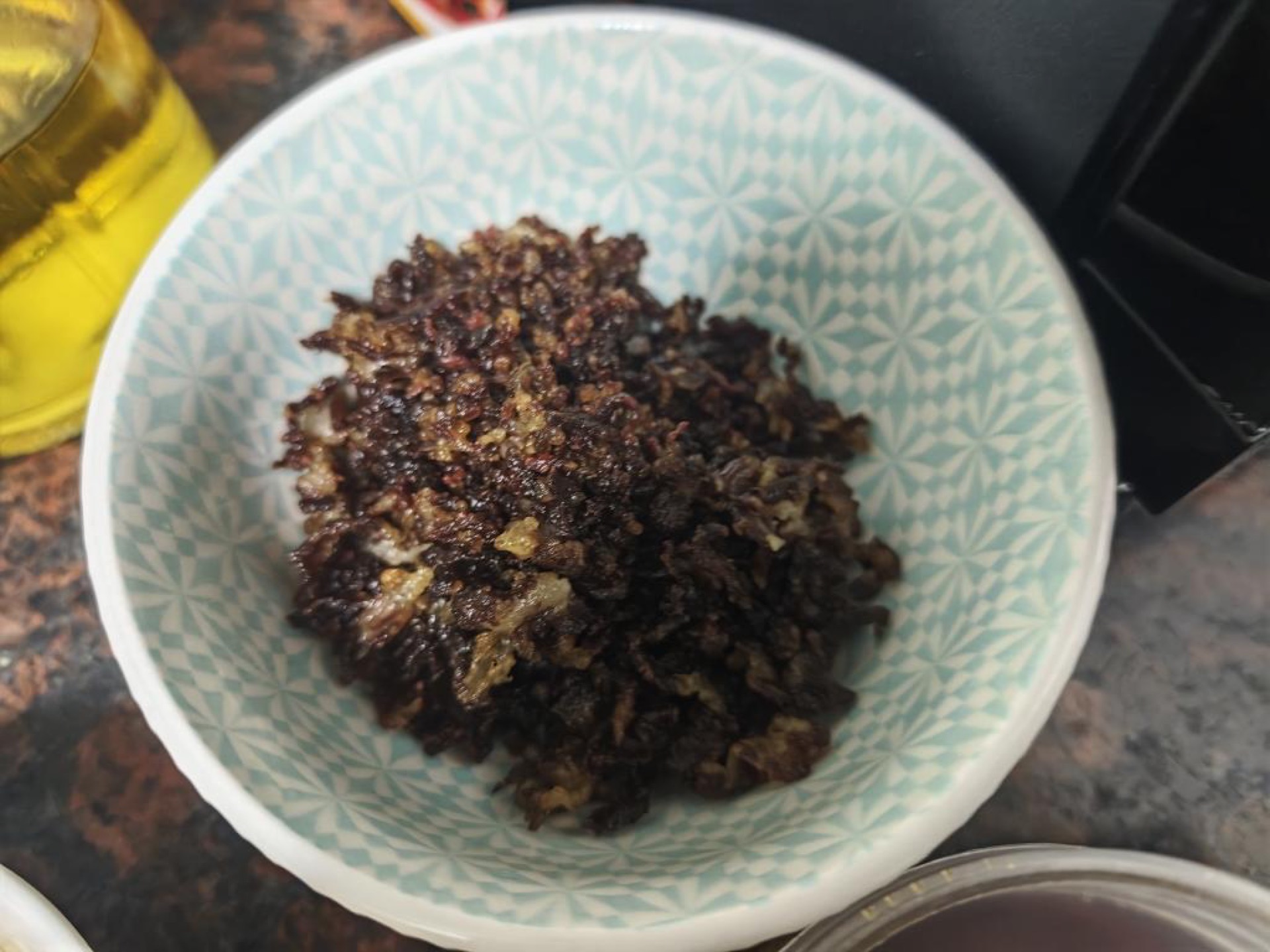
The beef crisp. Browning ground beef gives you flavor, but the texture stays soft. Frying chopped fatty beef slowly until the moisture is gone and the fat has rendered gives you something closer to a condiment — salty, meaty, and crunchy. That crunch is what makes this version memorable, and it is why I always make a little more than I think I need.
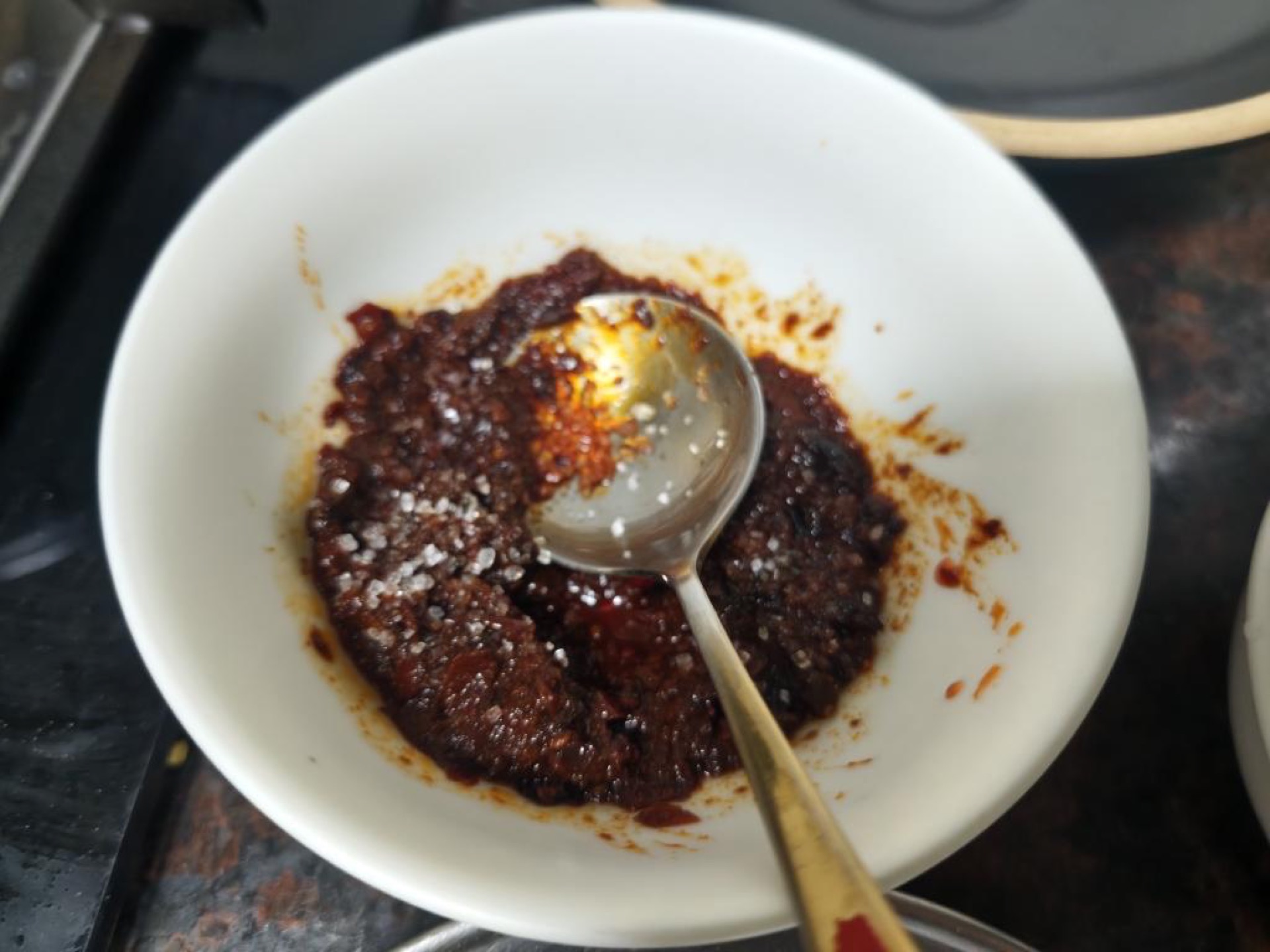
Mashing the pastes. Doubanjiang and fermented black beans are chunky. If you drop them into the wok as they are, you get pockets of salt and chili instead of an even sauce. Mashing them together into a rough paste means they dissolve into the oil immediately, and the red color blooms across the whole pan rather than in spots. If you want to know more about the paste itself, I have a whole guide to doubanjiang.
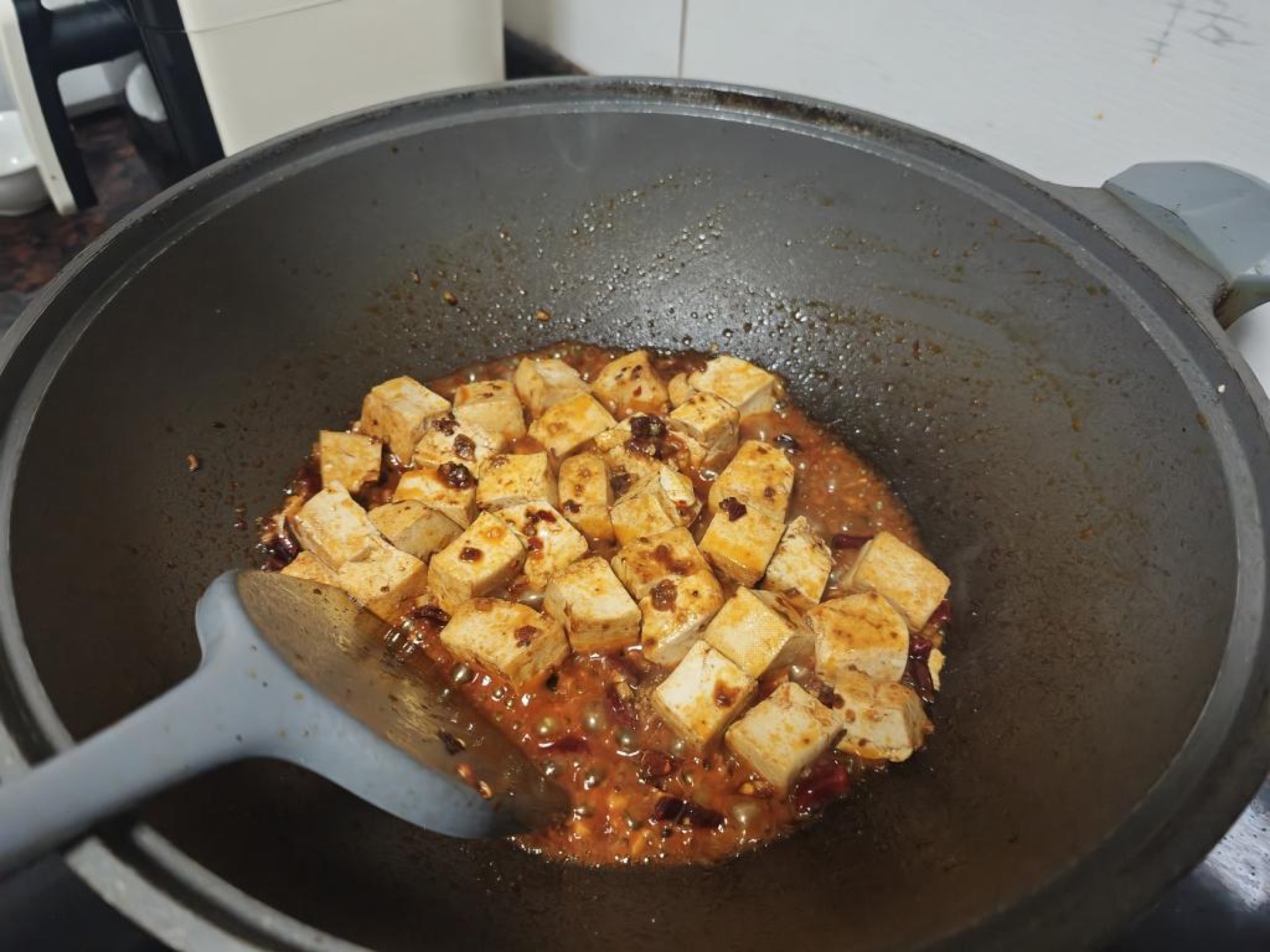
One more thing: the starch goes in stages, not all at once. A single dump of slurry thickens unevenly and can turn gluey. Three or four small additions, each one simmering for a few seconds before the next, gives you a glossy sauce that clings to each cube without turning into a paste.
Equipment Needed
You do not need much for this one, and none of it is specialty equipment.
- A wok or a wide skillet. A carbon steel wok is ideal because the curved sides let you push the tofu gently without crushing it, and the hot center gives the beef a place to crisp. A wide nonstick skillet works too. If your wok needs a refresh, here is how to clean wok surfaces properly so they stay slick.
- A cutting board and a sharp knife. You will be chopping the beef fine and mincing garlic; a sharp knife makes the beef crisp much easier.
- A slotted spoon. For lifting the poached tofu out of the water without breaking it, and for scooping the beef crisp out of the fat.
- A small bowl and a whisk or fork. For mixing the cornstarch slurry so it does not settle.
- A lid or a splatter screen. The chili and wet beef will spit a little; a screen keeps your stovetop clean.
That is the whole list. If you have a wok, a knife, and a spoon, you have everything.
Ingredients
Here is what goes into the bowl. The full amounts are in the recipe card below.
- Soft tofu — one block, about 14 ounces. Silken or soft, not firm. Firm tofu will not give you the trembling texture that makes this dish what it is.
- Thinly sliced fatty beef — about 3 ounces. Hot pot style rolls work beautifully because the fat content is right and the slices are thin enough to chop quickly. Ground beef with a decent fat percentage is a fine substitute.
- Doubanjiang — Sichuan chili bean paste, the backbone of the sauce.
- Fermented black beans — mashed with the doubanjiang. These add a deep, savory funk that balances the chili.
- Garlic — two cloves, minced.
- Ground Sichuan peppercorn — toasted and ground fresh if you can. This is where the numbing sensation comes from.
- Dried chili peppers — a small handful, snipped. I keep a jar of dried chili peppers on hand for exactly this kind of dish.
- Chicken or beef stock — one cup, for the braise.
- Cornstarch and water — for the slurry that thickens the sauce.
- Scallions — thinly sliced, for the finish.
- Soy sauce — for the poaching water, and a little extra if you want it.
Ingredient Notes
On the tofu. Soft tofu is the right choice, but there is a range within “soft.” The block sold as silken in a tetrapak is the most delicate; the block sold as soft in a tub with water is slightly sturdier and easier to handle. Both work. If you can only find medium, use it and reduce the poaching time by a minute so it does not firm up too much.
On the beef. Fat is not optional here. Lean beef will dry out before it crisps, and you will end up with tiny pebbles rather than crunchy shards. Hot pot beef rolls, thinly sliced chuck, or even a well-marbled ground beef all work. If you are using whole slices, stack them and chop across the grain into a coarse mince — you want pieces roughly the size of a grain of rice, not a paste.
On the doubanjiang. Brands vary wildly in salt and heat. Pixian doubanjiang is the gold standard and tends to be deeply fermented and moderately hot. If yours is very salty, cut back on any added soy sauce in the sauce itself. Taste the paste before you commit.
On the Sichuan peppercorn. Buy whole berries and toast and grind them yourself if you possibly can. Pre-ground peppercorn loses its tingle within weeks. Toast the berries in a dry pan for about thirty seconds until fragrant, let them cool, then grind. A little goes a long way, and you can always pass more at the table.
On the stock. Unsalted or low-sodium stock gives you control. If you only have salted stock, hold back on the soy sauce and taste before adjusting.
Prep & Mise en Place
This dish moves fast once the wok is hot, so do all the cutting and measuring before you turn on the burner. Here is the order I use.
First, the tofu. Open the block and drain it. If it is a firm-ish soft tofu, you can press it very gently between paper towels for a few minutes, but do not press hard — you will crack it. Cut it into cubes about one inch across. Set them on a plate.
Second, the beef. If you are using sliced beef, stack a few slices at a time and chop them into a coarse mince. If you are using ground beef, you can skip this. Set it aside in a small bowl.
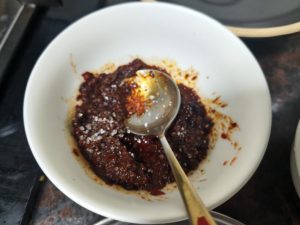
Third, the pastes. Put the doubanjiang and the fermented black beans in a small bowl and mash them together with the back of a spoon until you have a rough, even paste. This takes about a minute and it is worth every second.
Fourth, the aromatics. Mince the garlic. Snip the dried chilies into short pieces and shake out most of the seeds — leaving them in makes the dish noticeably hotter. Measure the ground Sichuan peppercorn.
Fifth, the slurry. Whisk the cornstarch and water together in a small bowl until smooth. Give it another stir right before you use it, because it settles fast.
Sixth, the finish. Slice the scallions and set them aside. Put the stock within reach.
With everything on the counter in the order you will use it, the whole cook takes about twenty minutes.
Cooking Process
Step 1 — Poach the Tofu
Bring the water and soy sauce to a gentle simmer, slide in the tofu cubes, and poach for 3 minutes, then drain carefully and set aside.
Step 2 — Fry the Beef Crisp
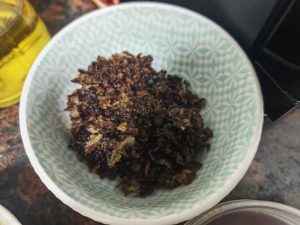
Chop the fatty beef into a coarse mince, then fry it in the wok over medium heat until the bits are dry, rust-colored, and crisp, about 6 to 8 minutes, and scoop them out.
Step 3 — Bloom the Aromatics
Mash the doubanjiang and fermented black beans together, fry them in the rendered beef fat until the oil turns red, then add the garlic, ground Sichuan peppercorn, and dried chili peppers and stir until fragrant.
Step 4 — Braise the Tofu
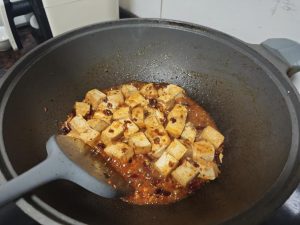
Add the tofu and stock, toss gently to coat, then add the cornstarch slurry in three or four small additions, simmering until the sauce clings to every cube, and fold the beef crisp back in.
Step 5 — Finish and Serve
Scatter the sliced scallions over the top, drizzle with sesame oil if you like, and serve immediately with steamed rice.
Common Mistakes When Making Mapo Tofu with Beef Crisp
These are the ones I see most often, including a few I made myself before I got the hang of this dish.
- Using firm or extra-firm tofu. It seems safer because it holds together, but firm tofu never softens into that silky, custardy texture. The fix: use soft or silken tofu, and handle it gently instead of choosing a sturdier block. The poach firms the surface enough to survive the braise.
- Skipping the soy-water poach. Tofu straight from the package is cold and watery, and it will thin out your sauce as it cooks. The fix: three minutes in barely simmering soy water seasons the cubes and drives off excess moisture. Do not boil hard or the cubes will break.
- Not frying the beef long enough. This is the mistake that costs you the whole point of the dish. Beef that is merely browned is soft; beef that is crisp has had all its moisture cooked off. The fix: keep going past the point where it looks done. The pieces should be dry, rust-colored, and audibly crunchy when you press one with the spoon.
- Dumping the pastes in cold. Chunky paste in a moderately hot wok scorches on the outside and stays raw inside, and you get bitter spots. The fix: mash the pastes smooth first, then fry them in the rendered beef fat over medium heat until the oil turns red and glossy, about a minute.
- Adding all the slurry at once. You get a thick, uneven, gluey sauce with pockets of raw starch. The fix: add the slurry in three or four small additions, stirring gently and letting each one simmer for a few seconds before the next. Stop when the sauce coats the back of a spoon.
- Stirring the tofu like a stir-fry. A hard stir breaks the cubes into curds and you end up with a tofu scramble. The fix: push the tofu around with the back of your spoon or a gentle folding motion, and let the sauce come to the tofu rather than chasing it around the pan.
- Adding the Sichuan peppercorn too early. Ground peppercorn loses its tingle fast in high heat. The fix: add most of it with the aromatics, then finish with a fresh pinch right before serving for the brightest numbing hit.
Variations
With ground pork instead of beef. The classic mapo tofu uses pork, and it is excellent here too. Use the same weight of fatty ground pork and fry it the same way. It crisps a little faster than beef, so start checking at five minutes.
Extra numbing. If you love the tingle, double the ground Sichuan peppercorn and add a small splash of peppercorn oil at the end. Some cooks also bloom whole peppercorns in the oil and fish them out before serving.
Milder for family dinners. Cut the dried chilies to one or two, use a mild doubanjiang, and serve extra chili oil on the side for the adults. The dish still tastes full and savory, just without the burn.
Mushroom version. Swap the beef for finely chopped shiitake and a spoonful of fermented black bean paste, and fry the mushrooms until they are dry and dark. It will not crisp the same way, but it gets close, and the sauce still works beautifully.
With a little sweetness. A quarter teaspoon of sugar stirred into the sauce rounds off the salt and heat. It is not traditional, but it is a useful dial if your doubanjiang is very salty.
Frequently Asked Questions
Can I make this with firm tofu? You can, but the texture changes completely. Firm tofu stays firm and slightly spongy, and it will not give you the soft, custardy bite that defines the dish. If firm is all you have, poach it for only two minutes and expect a heartier, less delicate result.
How do I keep the tofu from breaking? Three things: poach it briefly in soy water to firm the surface, use a slotted spoon to move it, and stir with a gentle folding motion rather than a hard stir. Also, do not overcrowd the wok — a wide pan gives the cubes room.
Is this dish very spicy? It is moderately spicy, and the numbing sensation from the Sichuan peppercorn is a bigger part of the experience than the raw heat. If you are sensitive, cut the dried chilies in half and use a milder doubanjiang. You can always add chili oil at the table.
What can I use instead of doubanjiang? There is no perfect substitute, but a combination of mild chili paste and a spoonful of fermented soybean paste gets you in the neighborhood. Gochujang is sweeter and will change the flavor, so use it only if you like that sweetness.
Can I make the beef crisp ahead of time? Yes. Fry it, drain it well on paper towels, and keep it in an airtight container at room temperature for up to a day. Re-crisp it in a dry pan for thirty seconds before scattering it over the finished dish.
How to Serve
Mapo tofu with beef crisp is made for steamed white rice. The sauce is salty, spicy, and glossy, and rice is the best possible sponge for it. A bowl of plain jasmine rice and a spoon is really all you need, though a plate of quickly stir-fried greens — gai lan, bok choy, or spinach with garlic — rounds out the table nicely.
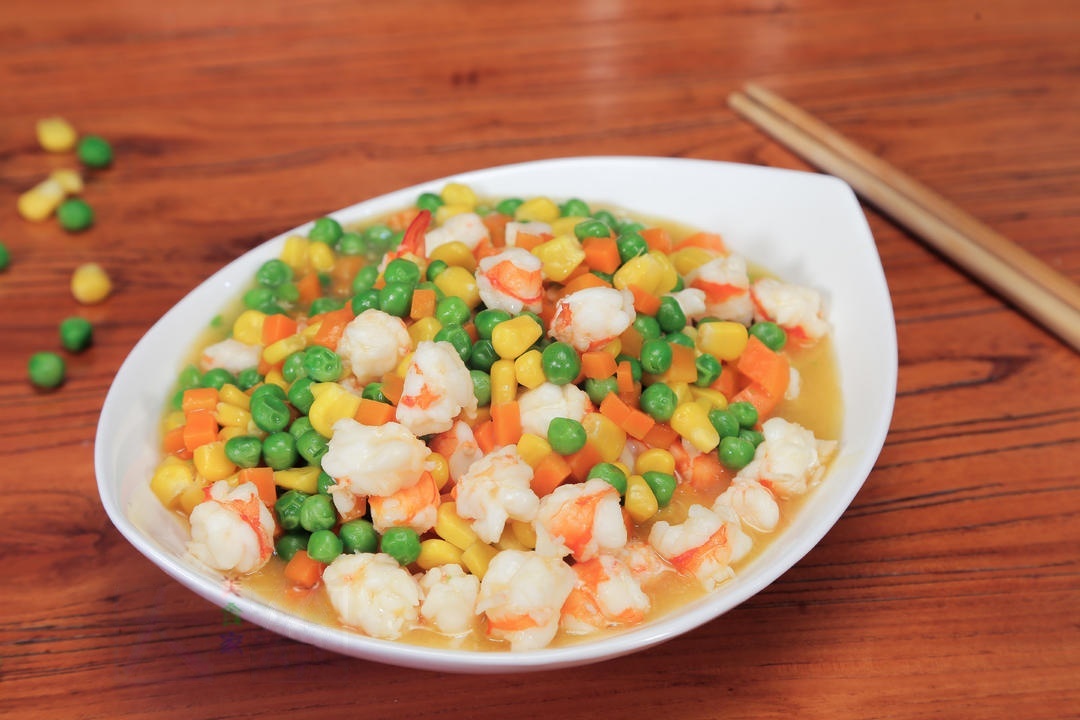
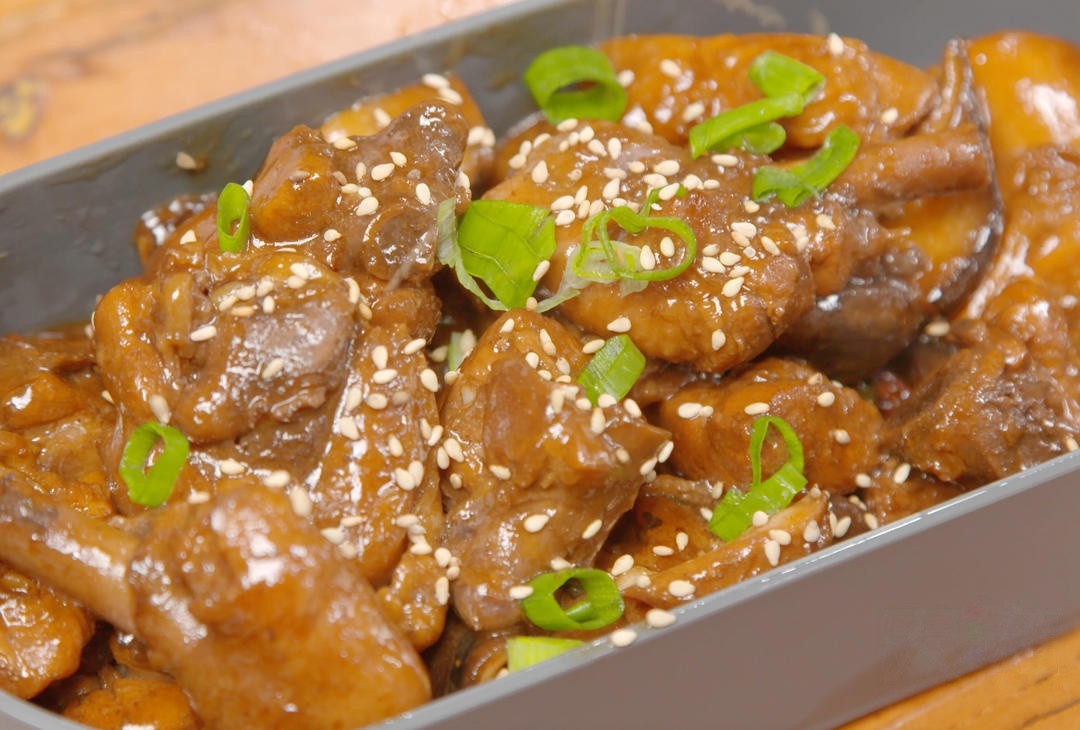
If you want to build a bigger Sichuan-style spread, a mild vegetable dish on the side keeps the heat in balance. colorful shrimp and vegetable stir fry is fast, colorful, and gentle enough to cool the palate between bites. For a heartier second dish, braised chicken with mushrooms brings a deep, savory flavor that plays well next to the chili. And if you want something a little different as a starter, Wuhan san xian dou pi is a lovely, soft, savory plate to open the meal.
One practical note: serve this in shallow bowls, not deep ones, so the tofu does not sit in a puddle and the beef crisp stays crunchy on top. Add the crisp at the very last second, right before the bowl hits the table.
Storage & Reheat
Mapo tofu with beef crisp is at its best right after it is made, but it keeps well enough for a day or two. Let it cool to room temperature, then transfer it to an airtight container and refrigerate for up to three days. The tofu will release a little water as it sits, so the sauce may thin out in the fridge — that is normal.
Reheat gently on the stovetop over low heat, adding a splash of stock or water if the sauce has tightened up too much. Do not microwave it on high, because the tofu will turn rubbery and the cubes will break apart. If you have leftover beef crisp, keep it separate and add it after reheating so it stays crunchy.
I do not recommend freezing this dish. Tofu that has been frozen and thawed becomes spongy and grainy, which is the opposite of what you want here.
Allergen Notice
This dish contains soy from the soy sauce, the doubanjiang, and the fermented black beans. Some brands of soy sauce and bean paste also contain wheat, so check the labels if you are avoiding gluten. If your chili oil or doubanjiang blend includes sesame, that is another allergen to watch for. Serve with awareness, and tell your guests what is in the bowl.
Nutrition Disclaimer
Nutrition information is calculated using an ingredient database and should be considered an estimate. In cases where multiple ingredient alternatives are given, the first listed is calculated for nutrition. Garnishes and optional ingredients are not included.
About the Author & Recipe Development
Hi, I am Lin, the cook and writer behind Woks of Love. I grew up around a wok and have spent years chasing the home-kitchen versions of restaurant dishes that actually work — the ones where the technique is honest and the ingredients are things you can find. This recipe came out of watching chef Deng’s approach to mapo tofu and testing his three tricks in my own kitchen until they held up on a weeknight.
I tested this version several times, adjusting the poaching time, the fat content of the beef, and the number of slurry additions until the sauce coated the tofu evenly without turning gluey. The version here is the one my family asks for, and the one I make when I want the table to go quiet for a minute.
Authoritative References
For food safety guidance on ground beef and leftovers, the USDA safe minimum internal temperature chart is the reference I keep bookmarked. For general handling and storage rules, the FDA Food Code covers the cold-holding and reheating temperatures used above. And for a clear explanation of how starch thickens a sauce and why adding it in stages matters, this food science explainer on starch thickening is a good read.
Mapo Tofu with Beef Crisp (麻婆豆腐): Silky Tofu in Numbing Spicy

Equipment
- Wok
- Cutting Board
- Slotted Spoon
Ingredients
For the Tofu
- 1 block soft tofu about 14 oz, cut into 1-inch cubes
- 2 cups water for poaching
- 1 tbsp soy sauce light soy, for the poaching water
For the Beef Crisp
- 3 oz thinly sliced fatty beef hot pot style, or ground beef with some fat
- 1 tbsp neutral oil for frying
For the Sauce
- 1 tbsp doubanjiang Sichuan chili bean paste
- 1 tbsp fermented black beans lao gan ma style, mashed
- 2 cloves garlic minced
- 1 tsp ground Sichuan peppercorn toasted and ground
- 4 dried chili peppers snipped, seeds shaken out
- 1 cup chicken stock or beef stock
- 2 tbsp water for the starch slurry
- 1 tbsp cornstarch for the slurry
For Finishing
- 2 scallions thinly sliced
- 1 tsp sesame oil optional, for aroma
Instructions
- Bring the water and soy sauce to a gentle simmer, slide in the tofu cubes, and poach for 3 minutes, then drain carefully and set aside.

- Chop the fatty beef into a coarse mince, then fry it in the wok over medium heat until the bits are dry, rust-colored, and crisp, about 6 to 8 minutes, and scoop them out.
- Mash the doubanjiang and fermented black beans together, fry them in the rendered beef fat until the oil turns red, then add the garlic, ground Sichuan peppercorn, and dried chili peppers and stir until fragrant.
- Add the tofu and stock, toss gently to coat, then add the cornstarch slurry in three or four small additions, simmering until the sauce clings to every cube, and fold the beef crisp back in.
- Scatter the sliced scallions over the top, drizzle with sesame oil if you like, and serve immediately with steamed rice.













Leave a Reply