Growing up in my family’s bustling restaurant in Sichuan, the stovetops were always occupied. Consequently, my mother frequently relied on a trusty rice cooker to make our family dinners. This Braised Pork Ribs with Tofu recipe is a direct reflection of her practical wisdom.

It is incredibly easy, requires minimal active cooking time, and delivers deep, comforting flavors. The thick dried tofu acts like a sponge, soaking up the savory meat broth until it becomes outrageously fluffy. Furthermore, finishing the dish on the stove ensures a glossy, restaurant-quality sauce.
What Is Braised Pork Ribs with Tofu?
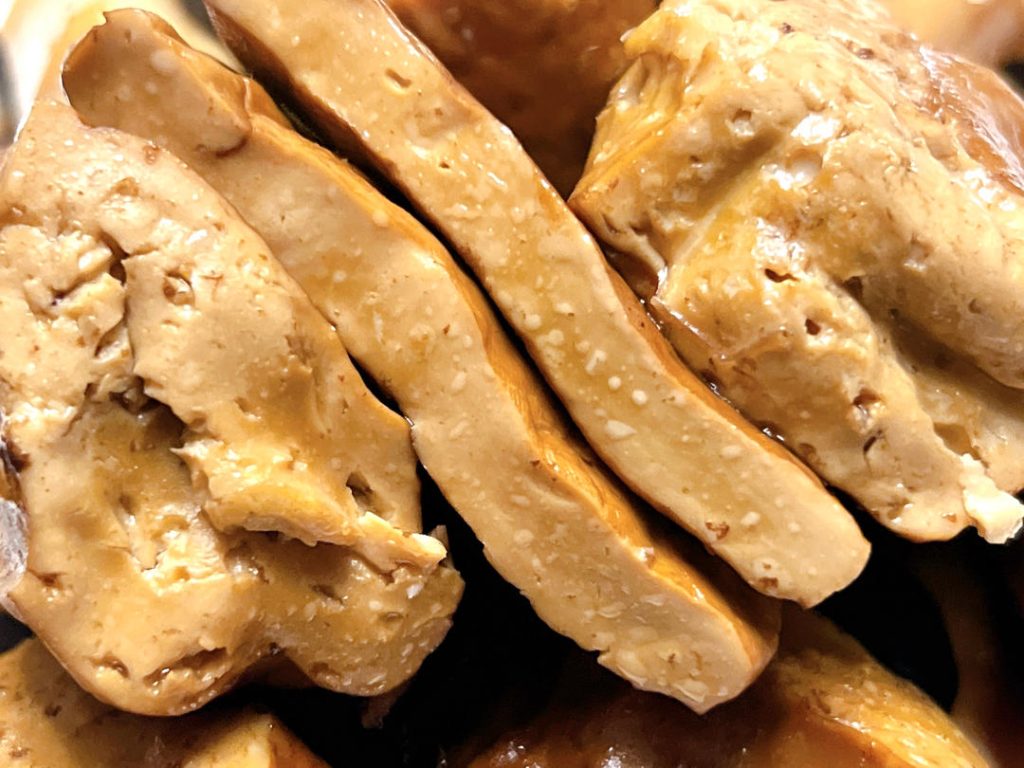
Braised Pork Ribs with Tofu (豆腐干炖肉) is a classic Chinese homestyle comfort food. Instead of standing over a hot wok for hours, home cooks use a rice cooker or slow cooker to slowly tenderize the meat. The combination of fatty pork, earthy wood ear mushrooms, and fragrant spices creates a rich broth.
Unlike Western-Chinese takeout dishes that rely on heavy, sugary glazes, this authentic dish builds complex flavor through slow simmering. The star of the show isn’t actually the meat; rather, it is the thick dried tofu that absorbs all the incredible umami.
Love Braised Dishes? Try These Similar Recipes
If you enjoy the slow-cooked, savory profile of this dish, you might also want to explore our classic Braised Pork Ribs which uses a traditional stovetop method. Alternatively, our hearty Braised Pork with Potatoes offers another fantastic one-pot dinner option.
Why This Recipe Works
- Hands-Off Tenderizing: The rice cooker provides a sealed, even-heating environment. Therefore, the tough connective tissues in the pork break down perfectly without constant monitoring.
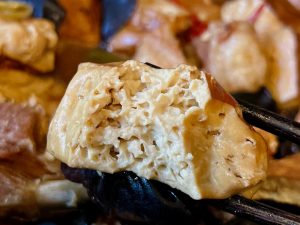
- The Fluffy Tofu Secret: By using thick, soft dried tofu rather than thin varieties, the tofu expands as it simmers. It drinks up the braising liquid, creating a juicy, meaty texture.
- Two-Step Cooking Method: The rice cooker handles the braising, but a quick 5-minute stovetop reduction at the end concentrates the sauce. This is a professional kitchen secret for a beautiful glaze.
Key Ingredients & Substitutions
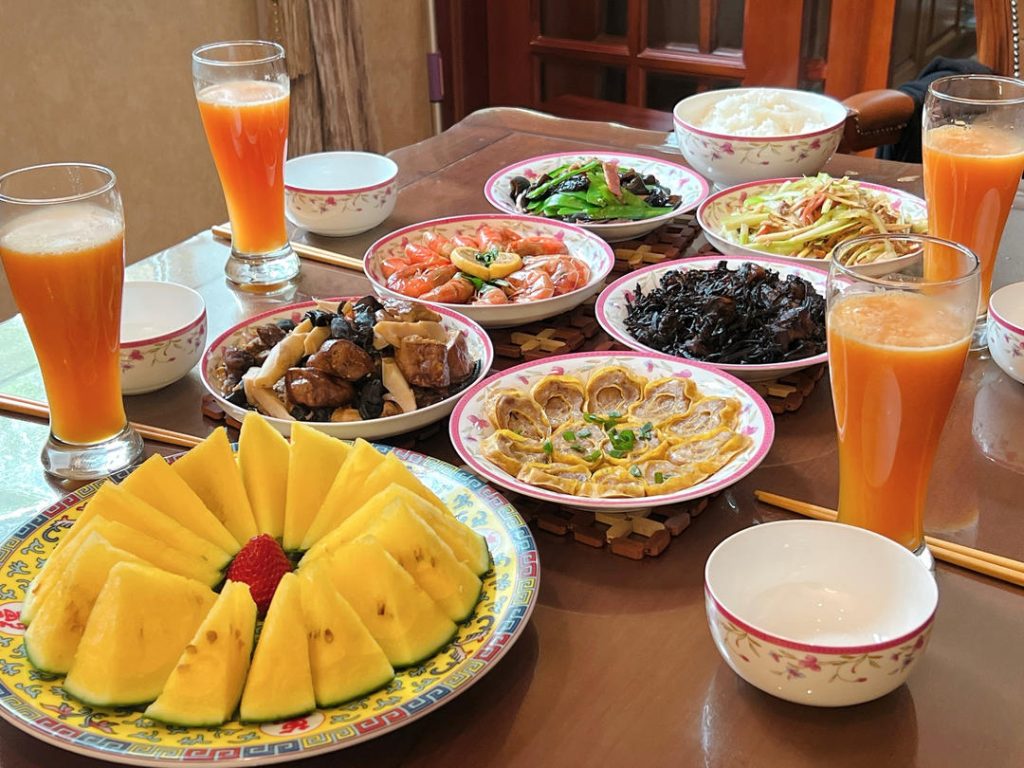
Selecting the right ingredients is crucial for this authentic stew. Here is what you need to know to shop successfully.
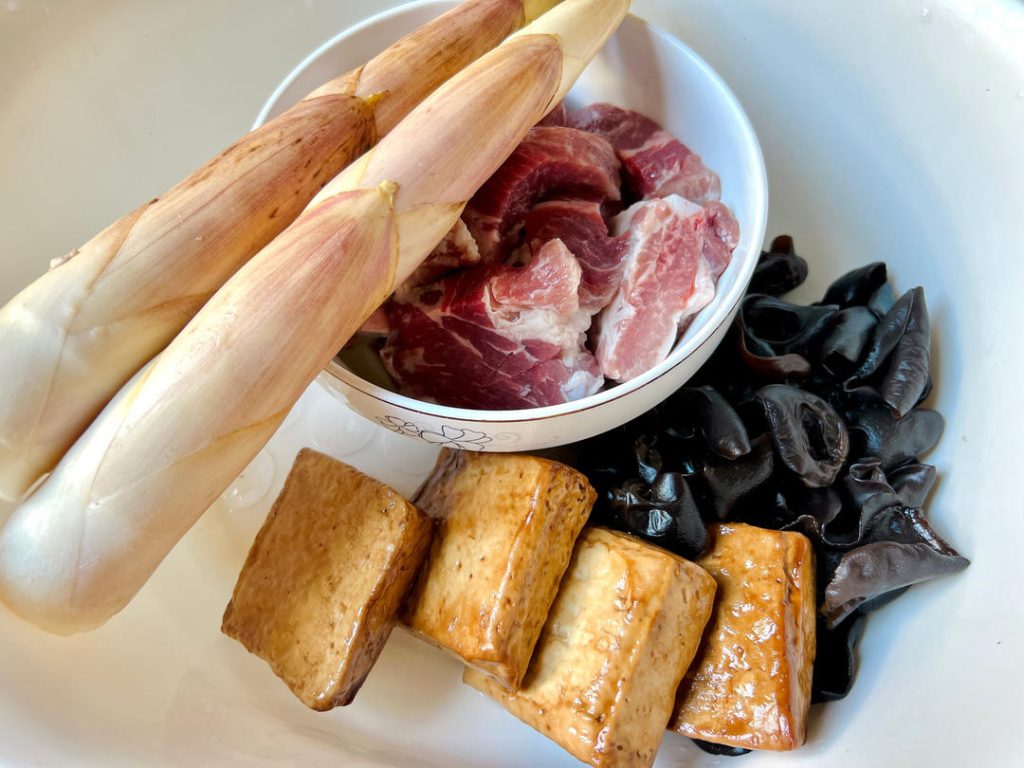
- Pork (Ribs or Belly): You need cuts with enough fat and connective tissue. Spare ribs or pork belly are ideal. Check our Chinese Pork Ribs Guide to choose the best cut.
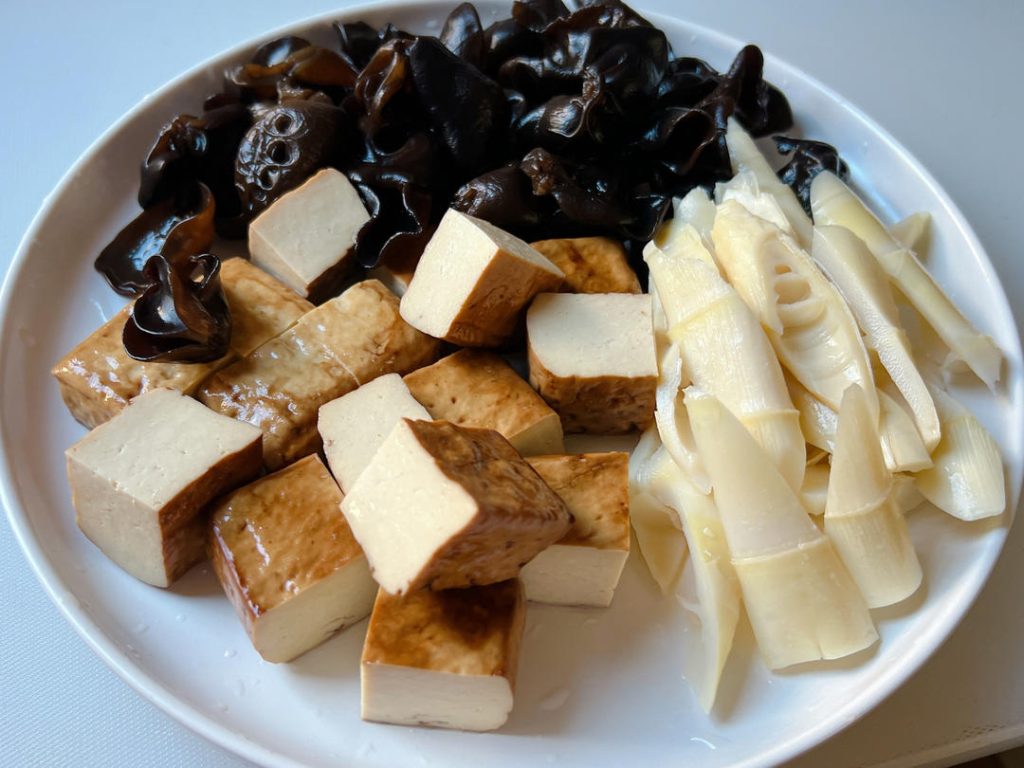
- Thick Dried Tofu (软厚豆干): This is mandatory. You must buy the thick, soft style of dried tofu. Thin pressed tofu will remain dense and hard.
- Wood Ear Mushrooms (黑木耳): These dried fungi add a wonderful crunchy texture. They must be rehydrated before use.
- Bamboo Shoots (笋): Optional, but highly recommended. They provide a sweet, earthy crunch. Fresh or canned both work.
- Aromatics & Spices: Scallions, Star Anise, cassia bark (cinnamon), and bay leaves create the signature aroma.
- Sauces: A combination of Light Soy Sauce for umami, Dark Soy Sauce for color, and Oyster Sauce for a hint of sweetness.
Deeper Dive: Thick vs. Thin Dried Tofu
In my professional culinary training, we strictly categorize tofu by moisture content. For braises, thick and soft dried tofu is essential. When simmered, its internal structure expands, becoming porous and fluffy. Conversely, thin dried tofu is compressed too tightly; it will not absorb the sauce and remains rubbery.
Ingredients
For the Meat & Marinade:
- 1 lb (500g) pork spare ribs or pork belly, cut into 1.5-inch pieces
- 1 tbsp Light Soy Sauce
- 1 tbsp Oyster Sauce
- 1/4 tsp Salt
For the Stew:
- 4 pieces thick, soft dried tofu (软厚豆干), cut into quarters
- 1 small handful dried wood ear mushrooms (黑木耳)
- 2-3 bamboo shoots (sliced) – optional
- 3 scallions (tied into knots)
- 1 piece Chinese cassia bark (or cinnamon stick)
- 1 star anise
- 2 bay leaves
- 1-2 small dried chili peppers – optional
For the Braising Liquid:
- 1 tbsp Light Soy Sauce
- 1 tbsp Dark Soy Sauce
- 2 tbsp Shaoxing Wine
- 1 tbsp sugar
- Water (enough to come just below the top of the ingredients)
Recipe Notes Before You Start
- Equipment needed: A standard rice cooker (3-cup capacity or larger) and a skillet or wok for the final reduction.
- Water Levels: Do not submerge the ingredients completely. Rice cookers trap moisture, meaning very little evaporation occurs during the main cooking phase.
- Allergen Warning: This dish contains soy and wheat (via soy sauce). Use tamari and gluten-free oyster sauce if a gluten-free diet is required.
Mise en Place / Prep
Proper preparation ensures the cooking process goes smoothly. Do not skip the marinating step.
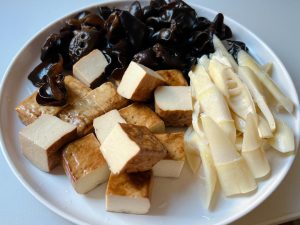
- Hydrate the Mushrooms: Soak the dried wood ear mushrooms in warm water for 30 minutes. Once expanded, trim off any hard woody stems and tear into bite-sized pieces.
- Blanch the Bamboo: If using fresh bamboo shoots, slice them and blanch in boiling water for 3 minutes. This removes their natural astringent bitterness.
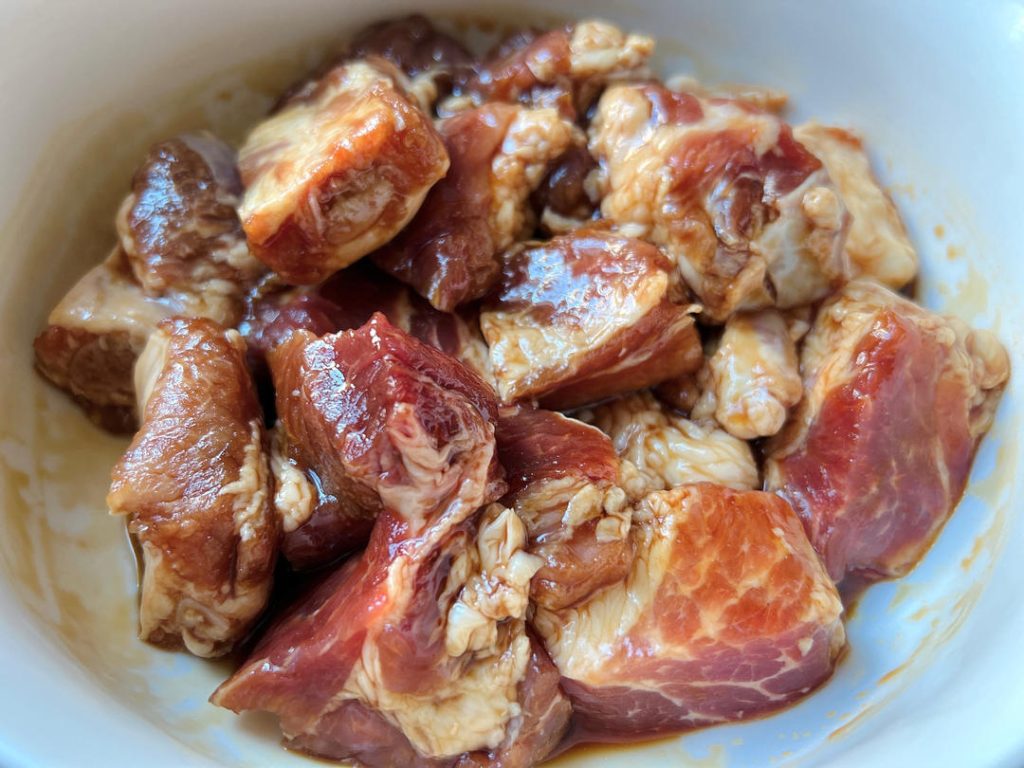
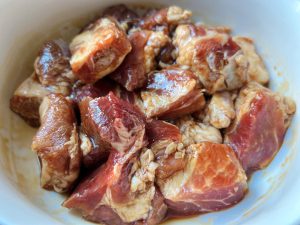
- Marinate the Pork: In a bowl, toss the pork ribs with 1 tbsp light soy sauce, 1 tbsp oyster sauce, and the salt. Let it sit at room temperature for 30 minutes. This base seasoning is critical for flavorful meat.
How to Make Rice Cooker Braised Pork Ribs
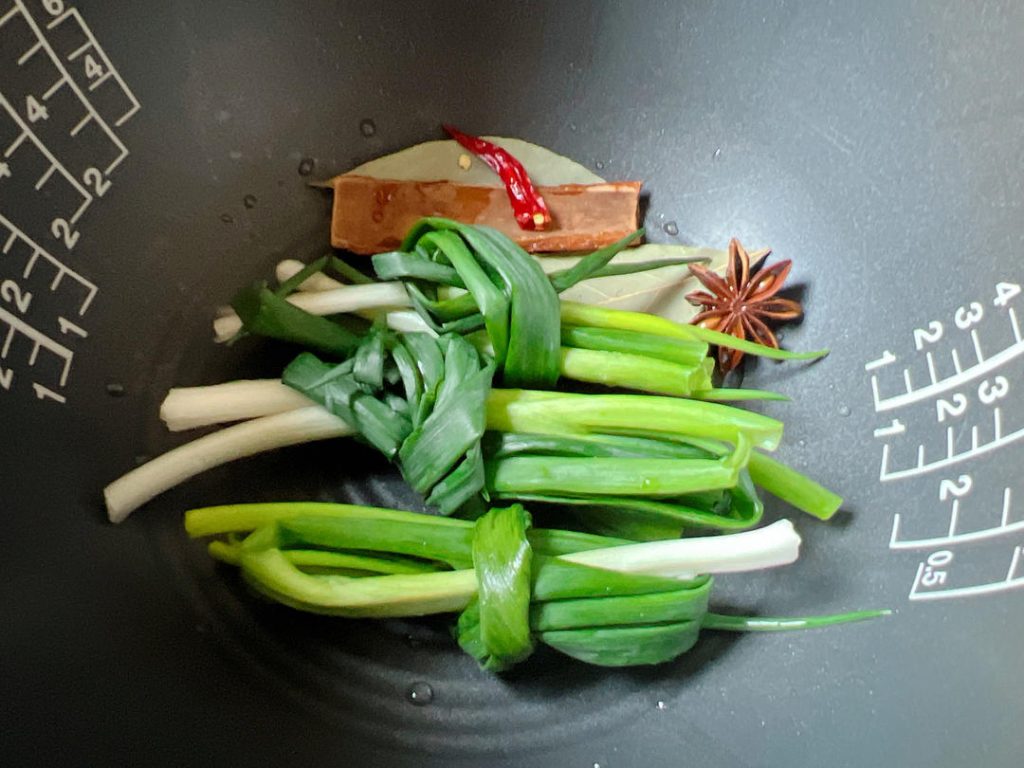
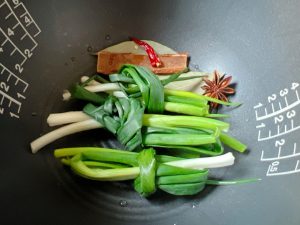
- Layer the Aromatics: Place the scallion knots, cassia bark, star anise, bay leaves, and chilies at the very bottom of your rice cooker pot. Purpose: This prevents the meat from sticking to the bottom and infuses the cooking liquid from the base up.
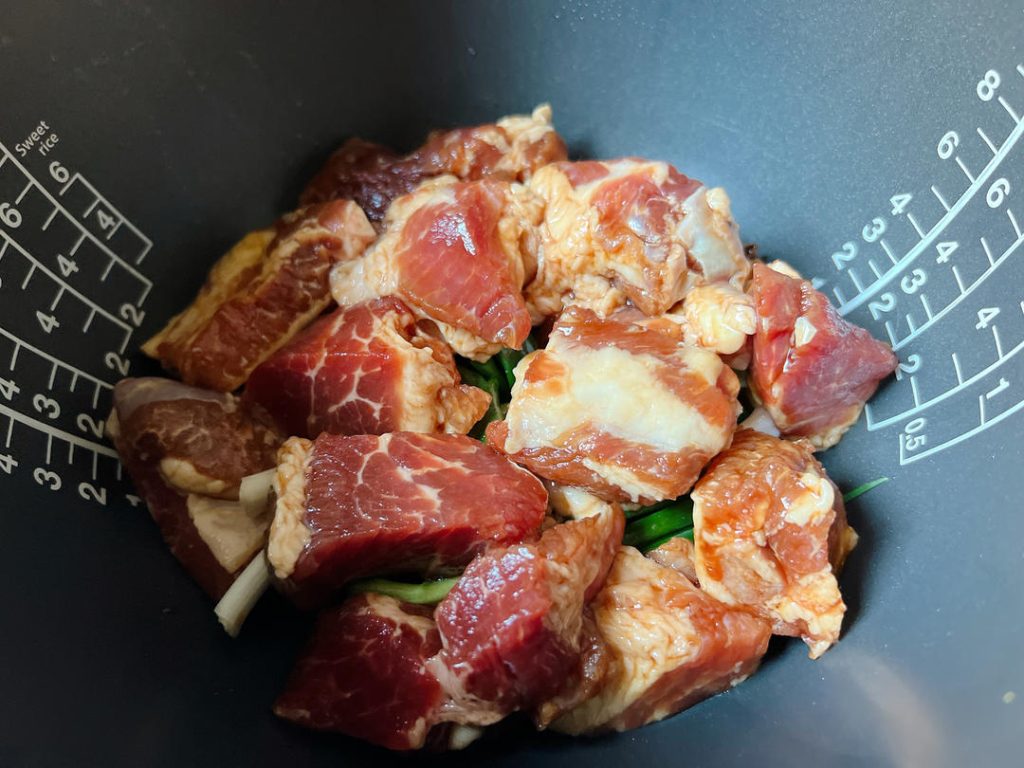
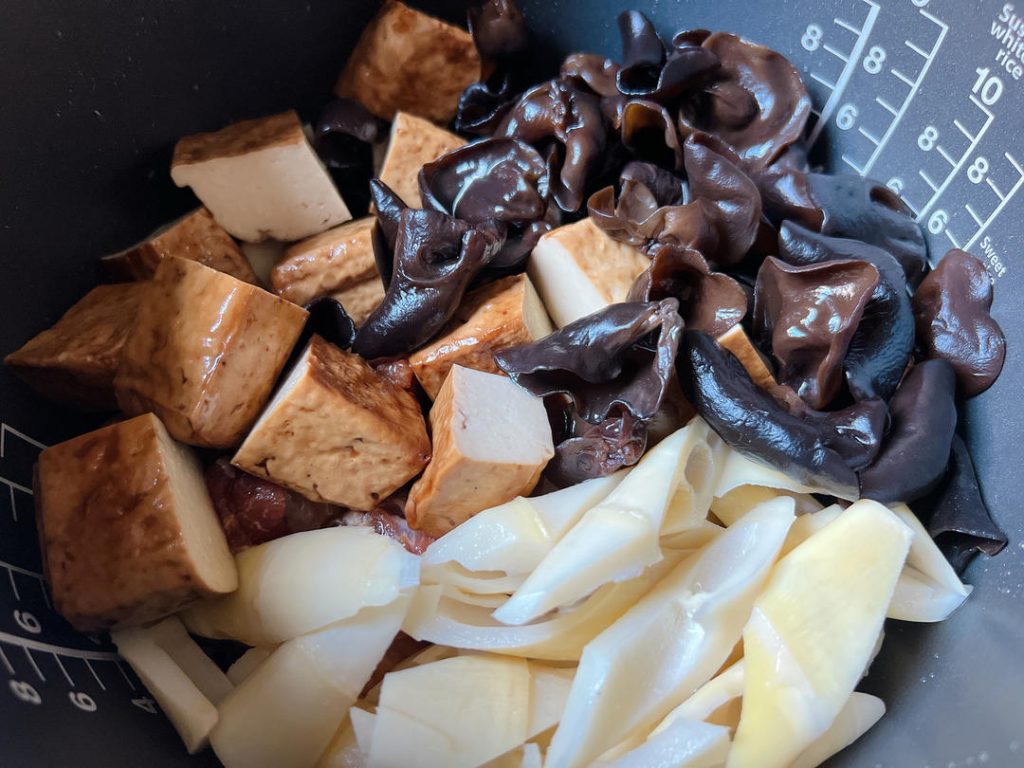
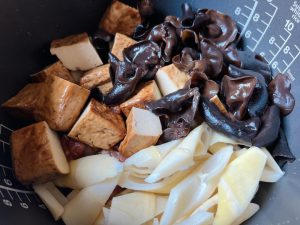
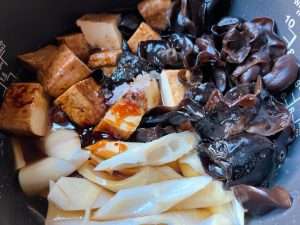
- Add the Ingredients: Neatly layer the marinated pork ribs over the spices. Next, add the quartered thick dried tofu, wood ear mushrooms, and bamboo shoots on top.
- Season and Add Water: Pour in the remaining light soy sauce, dark soy sauce, Shaoxing wine, and sugar. Pour in fresh water until it reaches just below the top layer of ingredients. Visual cue: You should see the water, but the top ingredients should not be swimming.
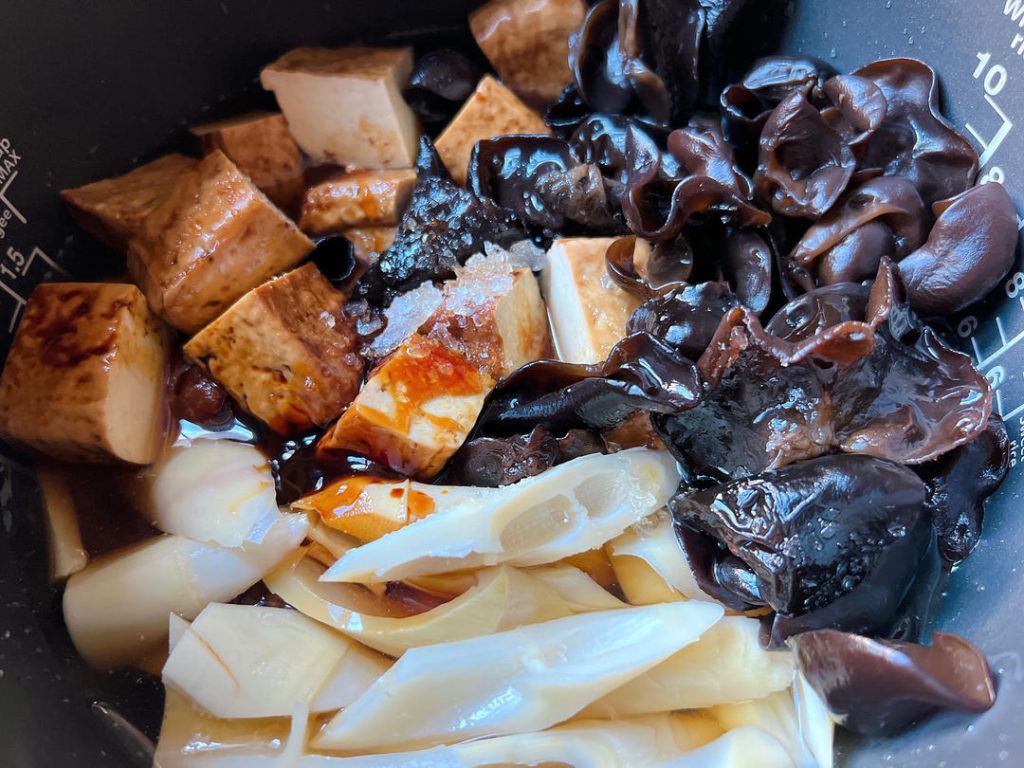
- Braise in the Rice Cooker: Close the lid. Press the “Meat/Stew” function if your cooker has one, or simply press the standard “Cook/White Rice” cycle. Let it run its full course (usually 45-60 minutes).
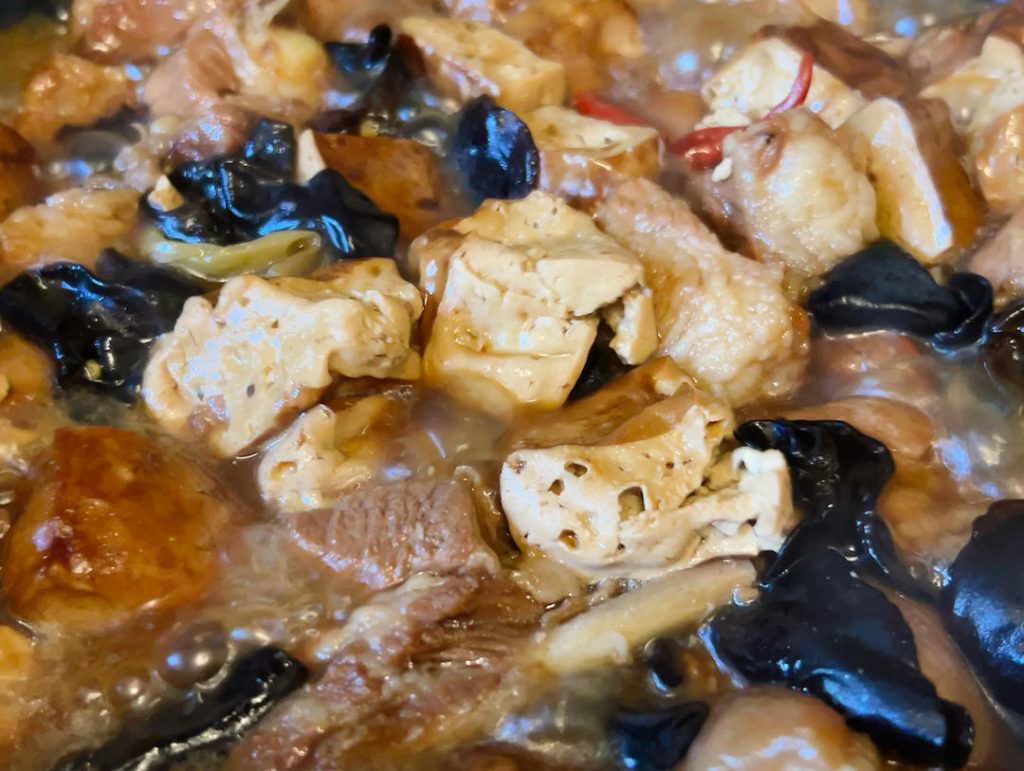
- Reduce on the Stove: Once the rice cooker cycle finishes, the meat will be tender but the sauce will be thin. Transfer the entire contents into a wok or large skillet over medium-high heat on your stove.
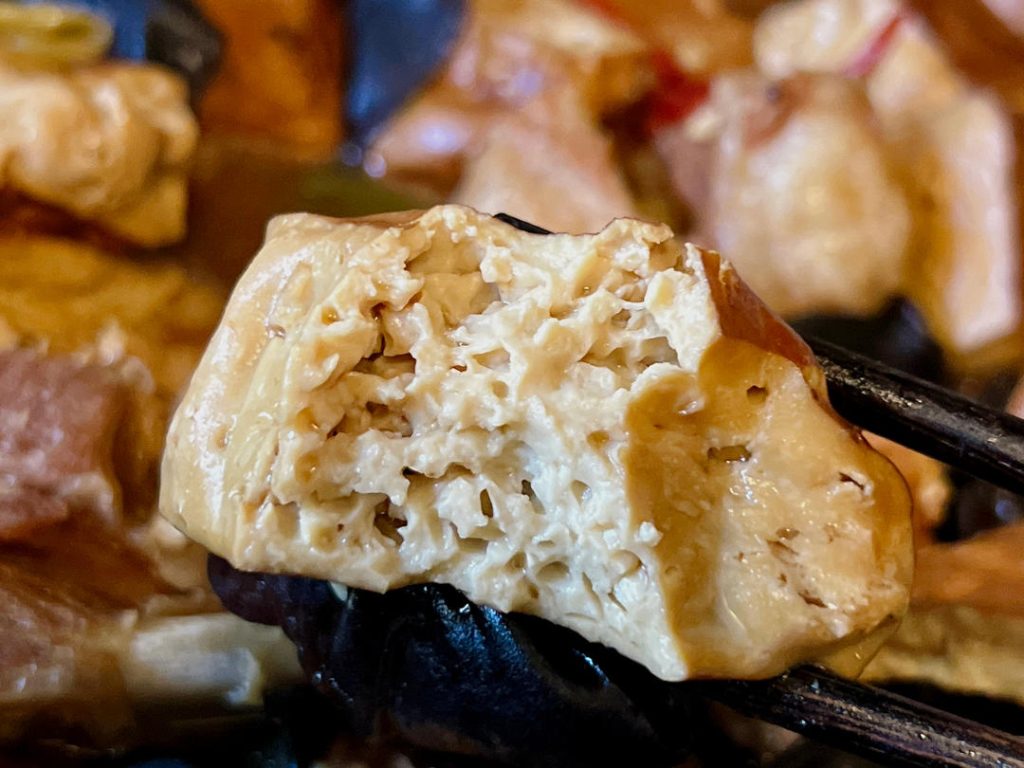
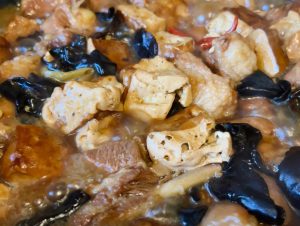
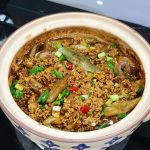
- Thicken the Sauce: Simmer vigorously for 5 to 8 minutes. Gently stir to prevent breaking the fluffy tofu. Visual cue: Stop when the sauce reduces by half, thickens, and heavily coats the pork and tofu with a glossy sheen. Serve immediately.
Common Mistakes When Making Braised Pork Ribs with Tofu
- Using Thin Tofu: As heavily emphasized, thin tofu will ruin the textural experience of this dish. It simply cannot become fluffy.
- Skipping the Stovetop Reduction: Serving straight from the rice cooker results in a watery, diluted flavor. The stovetop reduction is mandatory to concentrate the umami.
- Adding Too Much Water: Because rice cookers don’t vent steam like a stovetop pot, adding too much water turns this into a soup rather than a braised stew.
FAQ / Troubleshooting
Why is my pork still tough after the rice cooker cycle? Some basic rice cookers have very short cycles (under 30 minutes). If your ribs are not fork-tender (reaching an internal temp of 195°F/90°C), simply run the “Cook” cycle a second time before moving to the stove.
Can I skip the Shaoxing wine? Shaoxing wine neutralizes the gamey odor of the pork. If you cannot consume alcohol, substitute it with a splash of unsweetened apple juice mixed with a few drops of rice vinegar.
Why did my tofu break apart during the stovetop reduction? Thick dried tofu becomes very delicate once it puffs up with broth. You must stir very gently, using a pushing motion with the back of your spatula, rather than aggressively tossing.
What if I don’t have a rice cooker? You can simmer this in a heavy-bottomed Dutch oven on the stove over low heat. Cover and cook for 60-75 minutes, adding slightly more water since stovetop cooking evaporates more moisture.
Serving Suggestions
Serve this rich, savory stew directly over a large bowl of freshly steamed jasmine rice. The thickened braising liquid acts as the perfect gravy for the rice.
What to Serve With It
Because this dish is heavy on proteins and earthy umami, you should balance your meal with light, crisp vegetables. I highly recommend pairing this with a simple Garlic Stir-fried Bok Choy or a refreshing Smashed Cucumber Salad to cleanse the palate.
How to Store & Reheat
- Storage: Allow the stew to cool completely. Store leftovers in an airtight container in the refrigerator for up to 4 days. The tofu actually tastes better the next day as it continues to absorb flavors!
- Freezing: You can freeze this dish for up to 2 months. However, note that the texture of the tofu will become slightly spongier upon thawing.
- Reheating: Reheat gently in a saucepan over medium-low heat. Add a splash of water to prevent the sauce from burning. Food Safety Note: Always ensure reheated pork reaches an internal temperature of 165°F (74°C) before consuming.
About the Author & Recipe Development
I am Lin, a professional chef born and raised in Sichuan, China. Growing up in my family’s restaurant kitchen, I learned the foundations of flavor from my father and practical home-cooking techniques from my mother. After formally training at the Sichuan Higher Institute of Cuisine, I spent a decade working in professional kitchens. My goal at Woks of Love is to translate authentic Chinese techniques into accessible, reliable recipes for your home kitchen, testing every recipe multiple times across different stove setups to ensure your success.
Authoritative References
To ensure the highest standards of culinary safety and nutritional accuracy, our kitchen practices align with leading authorities.
- For guidelines on safe pork handling and internal temperature minimums, we reference the USDA Food Safety and Inspection Service.
- To understand the nutritional benefits of tofu and soy products used in our recipes, we consult the Harvard T.H. Chan School of Public Health.
Nutrition Information (Estimate)
- Calories: 420 kcal
- Protein: 28 g
- Fat: 26 g
- Carbohydrates: 12 g
- Fiber: 3 g
- Sodium: 950 mg
- Allergens: Soy, Wheat.
(Disclaimer: Nutrition information is calculated using an ingredient database and should be considered an estimate. Garnishes and optional items are not included. Actual values vary.)
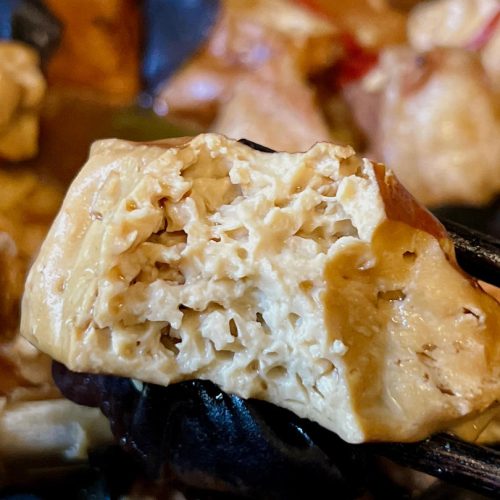
Easy Rice Cooker Braised Pork Ribs with Tofu

Equipment
- Rice Cooker Standard 3-cup capacity or larger.
- Wok or large skillet For the final sauce reduction.
Ingredients
Marinade & Meat
- 1 lb pork spare ribs or pork belly cut into 1.5-inch pieces
- 1 tbsp light soy sauce
- 1 tbsp oyster sauce
- 1/4 tsp salt
Stew Ingredients
- 4 pieces thick soft dried tofu quartered
- 1 handful dried wood ear mushrooms rehydrated and torn
- 2 whole bamboo shoots sliced and blanched (optional)
Aromatics & Spices
- 3 whole scallions tied into knots
- 1 piece Chinese cassia bark or cinnamon stick
- 1 whole star anise
- 2 whole bay leaves
- 1 whole dried chili peppers optional
Braising Liquid
- 1 tbsp light soy sauce
- 1 tbsp dark soy sauce
- 2 tbsp Shaoxing wine
- 1 tbsp sugar
- 1 cup water adjust as needed
Instructions
- Hydrate the dried wood ear mushrooms in warm water for 30 minutes. Blanch sliced bamboo shoots in boiling water for 3 minutes to remove bitterness.

- In a bowl, toss the pork with the marinade ingredients (light soy sauce, oyster sauce, salt). Let sit at room temperature for 30 minutes to tenderize.
- Place the scallion knots, cassia bark, star anise, bay leaves, and chilies at the bottom of the rice cooker pot.
- Layer the marinated pork over the spices. Add the quartered thick dried tofu, hydrated mushrooms, and bamboo shoots on top.
- Add the remaining light soy sauce, dark soy sauce, Shaoxing wine, and sugar. Pour in water until it reaches just below the top layer of ingredients.
- Close the rice cooker and press the ‘Meat/Stew’ function or standard ‘Cook’ cycle. Let it run completely (45-60 minutes).

- Transfer the contents into a wok or large skillet over medium-high heat. Simmer vigorously for 5 to 8 minutes until the sauce reduces, thickens, and glazes the meat and tofu. Serve hot.




Leave a Reply