Hey there!
Let’s talk about the soul of Sichuan heat.
If you walked into my parents’ loud, chaotic restaurant in Chengdu when I was a kid, the first thing that would hit you—before you even saw a table—was the smell. It was my “playground,” and that sharp, toasted, almost fruity aroma of dried chili peppers hitting a hot wok is the perfume of my childhood.

Let’s be real: many people think Chinese food is just about “spicy” heat. But after graduating from culinary school and spending 10 years in professional kitchens, I learned that dried chilies (干红辣椒, gān hóng là jiāo) are a complex spice used to build layers of aroma, color, and depth. Originally brought to China in the 15th century, these peppers are now the backbone of our cooking, with China producing nearly 46% of the world’s supply today.
Why They Work: The Culinary School Logic
In culinary school, I obsessed over the “why”. Why use dried instead of fresh? The drying process concentrates the sugars and the capsaicin (the compound responsible for heat), giving you a smoky, raisin-like undertone that fresh chilies lack.
Because capsaicin is fat-soluble, we fry them in oil to infuse the entire dish with heat. This is the fundamental secret behind my Homemade Chinese Chili Oil.
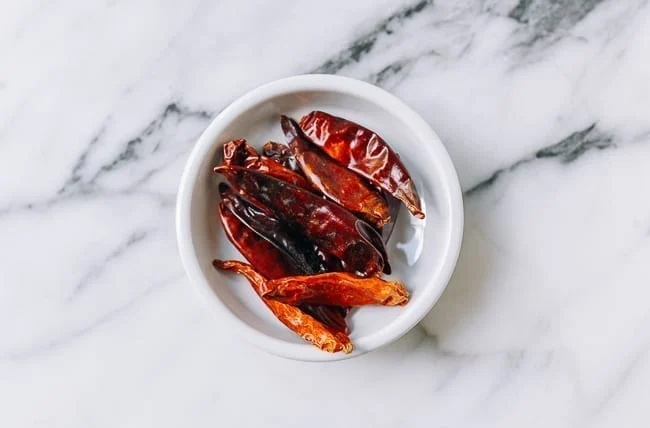
10-Minute Secret: Lin’s “Recipes That Actually Work” Chili Flakes
Stop buying those dusty, flavorless chili flakes from the supermarket. Trust me on this: making your own at home takes 10 minutes and changes everything.
- Selection: Grab a handful of flexible, bright red dried chilies (a mix of Er Jing Tiao for aroma and Facing Heaven for heat is best).
- The Dry Toast: Place them in a cold pan over low heat. No oil! Toss them constantly for 5-8 minutes until they turn a deep ruby red and the scent is toasty enough to make you sneeze.
- The Crunch: Let them cool completely—they will become brittle like a thin cracker.
- The Pulse: Use a mortar and pestle or a spice grinder. Pulse only 3-5 times. You want coarse flakes and visible seeds, not a fine powder!
These are perfect for adding a kick to Smashed Cucumber Salad or finishing a bowl of Hot and Sour Soup.
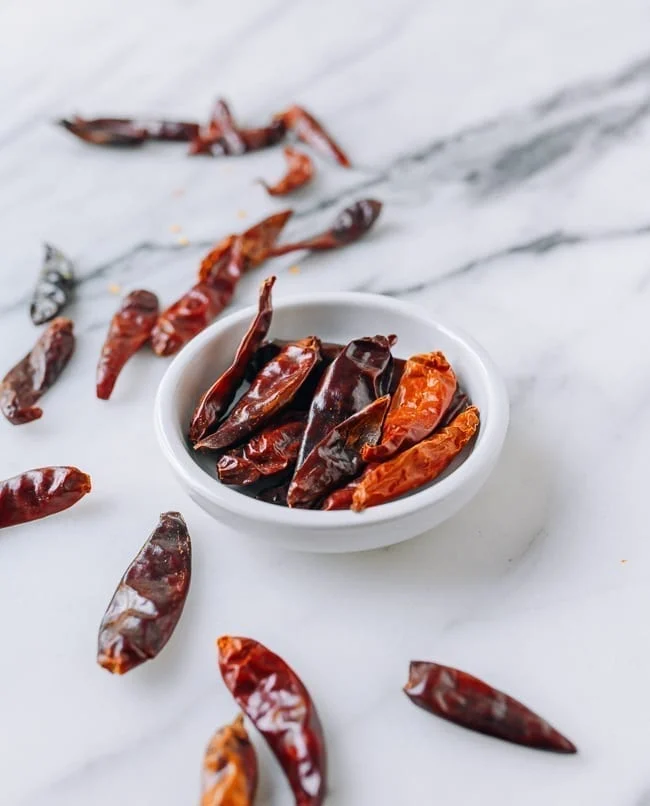
Meet the Varieties: From “Heaven” to Sichuan
- Facing Heaven Chilies (Cháo Tiān Jiāo, 朝天椒): These grow pointing skyward and pack a bright, sharp punch.
- Er Jing Tiao (二荆条): The superstar of Sichuan. They provide a vibrant red color and heavenly fragrance with medium heat. Essential for an authentic Mapo Tofu.
- Tien Tsin Chilies: The most common variety in the West—versatile and clean in flavor.
Sensory Cues: The Chef’s Instinct
When you cook with these, don’t just follow a timer. Listen and smell:
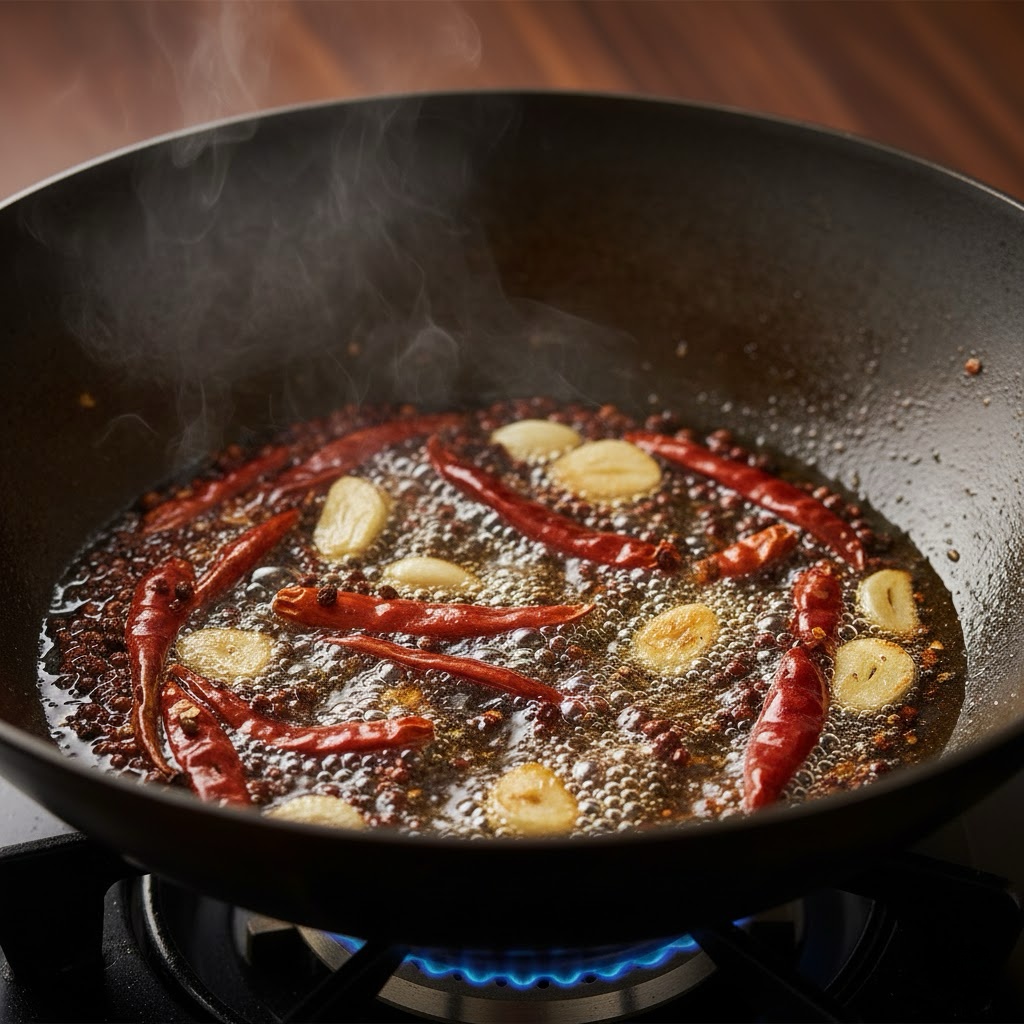
- The Sound: They should sizzle gently when hitting the oil.
- The Color: Watch for them to turn dark red. If they turn black, they are burnt and will taste bitter—toss them and start over!
- The Scent: Fry until the aroma feels sharp and pungent in the back of your throat.
Lin’s “No Secrets” Tip: If you want less heat but all the aroma, keep the chilies whole. If you want a fire-breather, snip them open to let the seeds spill into the oil for Kung Pao Chicken.
Western Kitchen Reality
I know you don’t have a 100,000 BTU restaurant burner. On a standard electric stove, add your chilies after the oil is warm but before it smokes. Because home pans retain heat differently, you might need to pull the pan off the burner for 10 seconds if the chilies start darkening too fast.
Pair these with Chinkiang Vinegar to balance the heat, or use them to build the numbing-spicy profile of Sichuan Boiled Pork Slices.
Authoritative References
- Botanical Classifications: NMSU Chile Pepper Institute
- Chemical Properties of Capsaicin: American Chemical Society (ACS)
- Global Production Statistics: Food and Agriculture Organization of the United Nations (FAO)
Summary Checklist for Home Cooks
| Goal | Action |
| Max Heat | Cut chilies in half; expose the seeds. |
| Fragrance Only | Keep chilies whole; remove before serving. |
| Avoid Bitterness | Don’t let the oil smoke; fry until dark red, not black. |
| Substitution | Use Chile de Árbol if Chinese varieties aren’t available. |





Leave a Reply