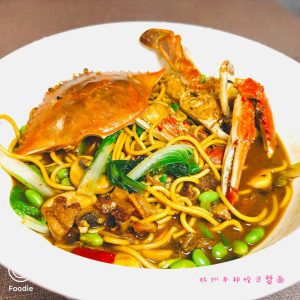
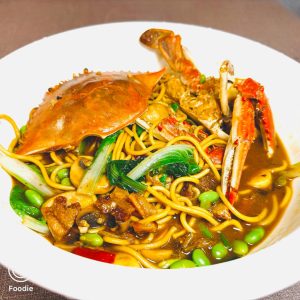
Swimming crab noodles — 梭子蟹面 — are what Hangzhou cooks make the moment the autumn crabs come in fat and full of roe. The crab is seared in a hot wok, then simmered with a whisper of snow vegetable, a splash of Shaoxing wine and just enough water to make a glossy, briny sauce. Springy alkaline noodles go in at the end, soak up that sauce, and turn a simple weeknight wok dish into something you would happily eat in a canal-side noodle shop.
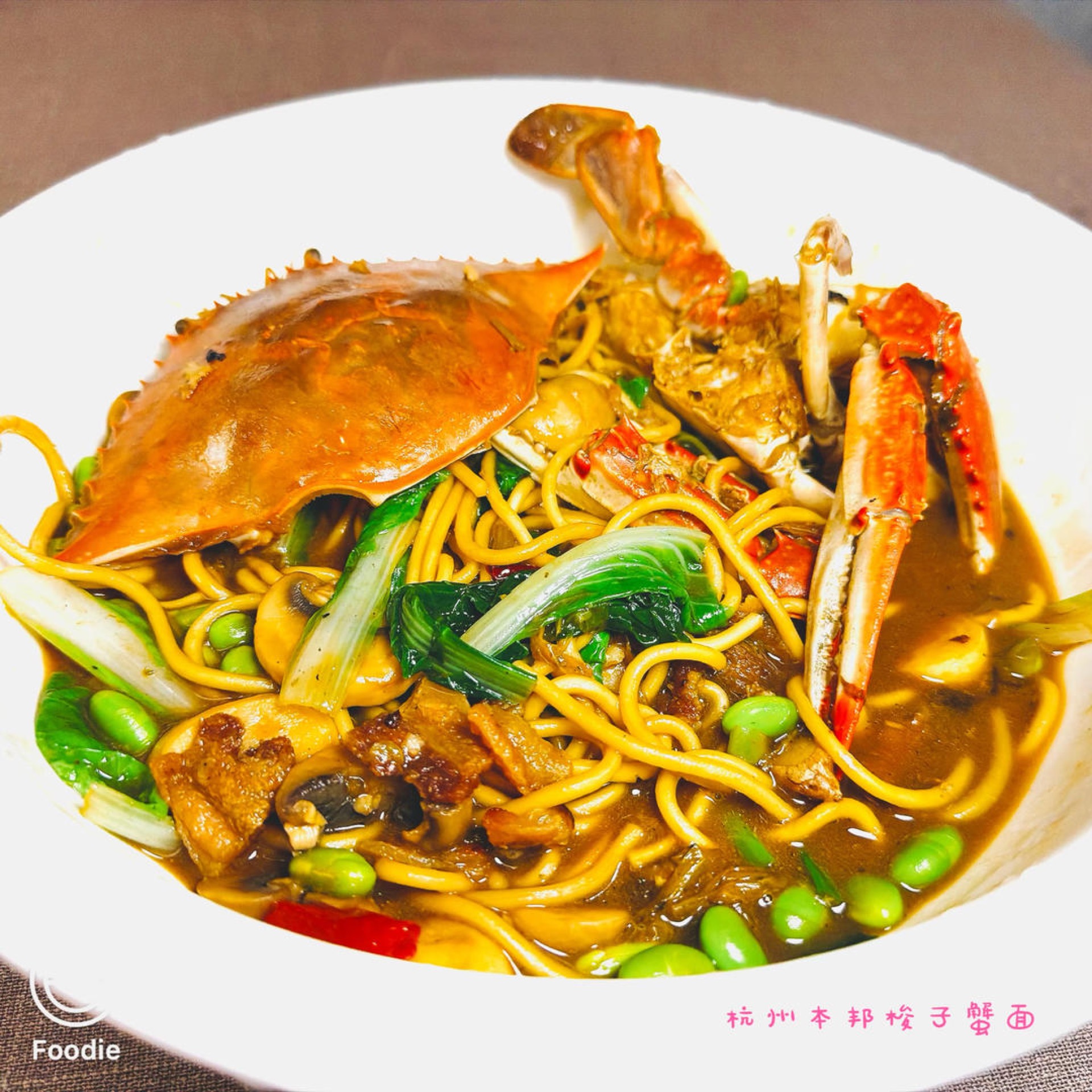
What makes this bowl different from a standard crab noodle soup is the balance. The crab is the star, so everything else — the pork belly, the mushrooms, the greens — is there to support it rather than compete. The snow vegetable, that old Zhejiang pantry trick, adds a savory depth that makes the crab taste more like itself, and the white pepper at the end gives the whole bowl a warm, faintly tingling finish. It is a 35-minute dish, but it eats like something you spent all afternoon on.
If you have ever eaten a bowl of noodles in Hangzhou in October, this is the flavor you remember: sweet crab, springy noodles, and a broth that is more sauce than soup.
What Is Hangzhou Swimming Crab Noodles?
Hangzhou swimming crab noodles, called suozixiemian (梭子蟹面) in Chinese, is a wok-tossed noodle dish built around the swimming crab — a blue-green, paddle-legged crab that is one of the great autumn catches of the East China coast. Unlike a thin, clear seafood broth, the “soup” here is a reduced sauce: crab juices, Shaoxing wine, soy, oyster sauce and a little boiling water, cooked down until it clings to the noodles. The noodles themselves are alkaline noodles — the same springy, faintly yellow wheat noodles used across Zhejiang and Jiangnan — which hold up to the sauce instead of turning to mush.
The dish is a home-style Hangzhou staple rather than a restaurant showpiece, but it follows a classic Jiangnan logic: a sweet, delicate seafood paired with a small amount of cured or fermented seasoning to deepen it. That is exactly what the snow vegetable does here, and why the recipe calls for only a pinch of it. The crab carries its own sweetness; the snow vegetable just makes that sweetness louder.
If you enjoy the way a good seafood noodle bowl balances brininess with a savory, gently sweet sauce, you will also like sour soup noodles, a bright, tangy bowl that comes together in about the time it takes to boil water.
115-Minute Sour Soup Noodles (Suan Tang Mian)This savory, sour, and spicy Suan Tang Mian recipe features a quick broth made with hot oil, vinegar, and soy sauce. A comforting Shaanxi-style noodle soup ready in 15 minutes.Check out this recipe

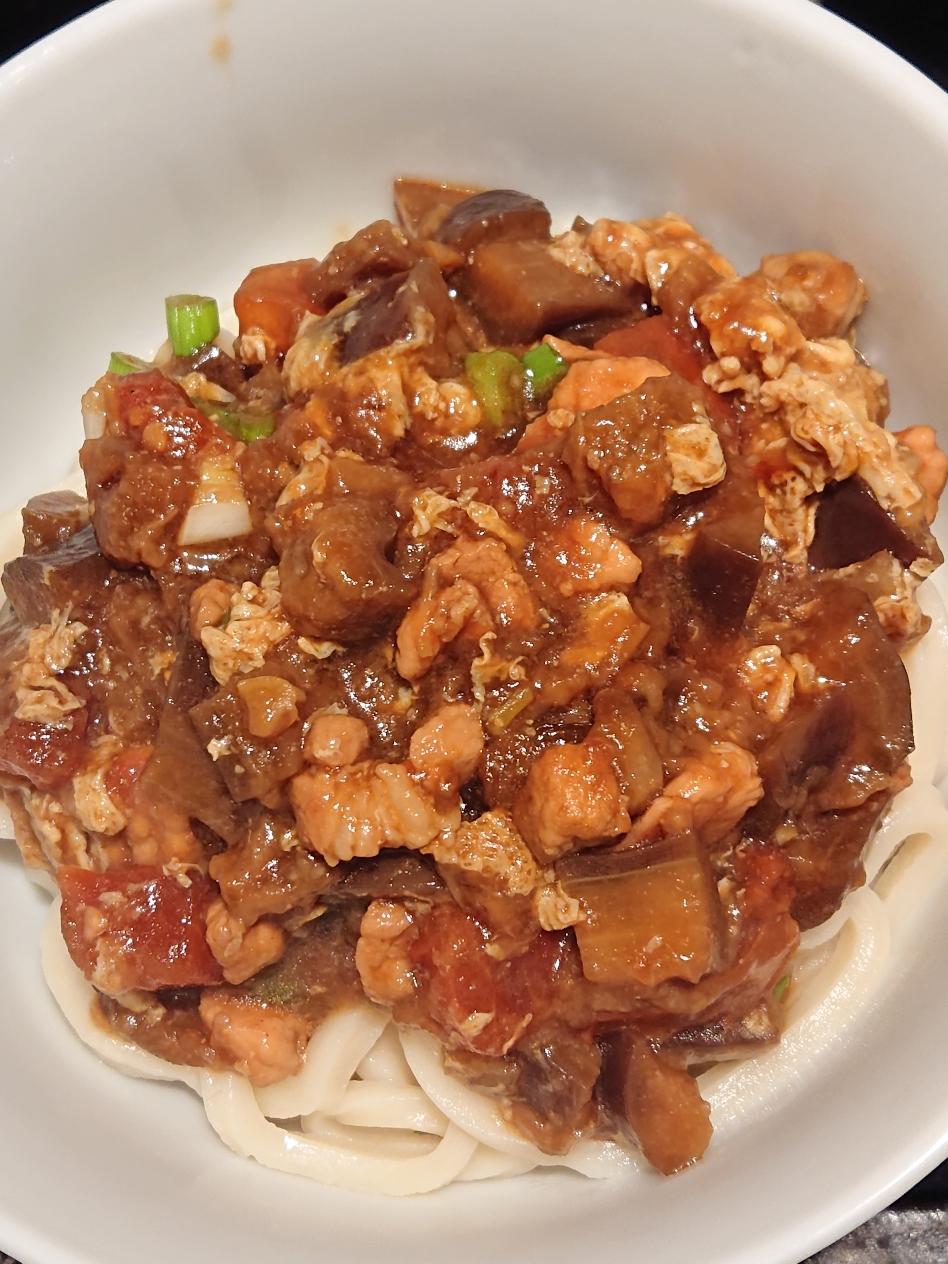
For a slower, deeper noodle bowl with the same Jiangnan comfort, try Beijing eggplant noodle soup, where soft eggplant melts into a rich, savory broth.
2Authentic Beijing Eggplant Noodle Soup (Qie Ding Da Lu Mian)A traditional Northern Chinese homestyle recipe passed down from grandma. This savory, thick gravy features diced eggplant, tomatoes, and pork infused with an aromatic star anise oil.Check out this recipe
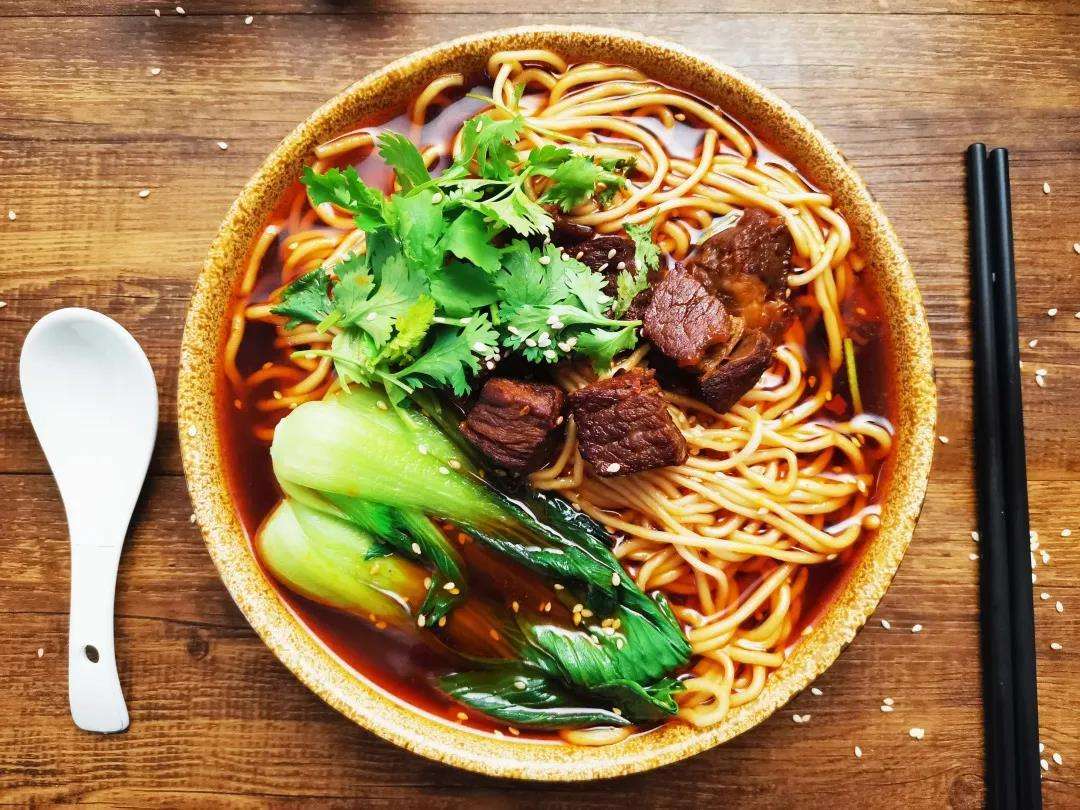
And if you want a noodle bowl with real braising depth, braised beef noodle soup is the one to make next — hours of beefy richness over the same kind of springy noodles.
3Braised Beef Noodle Soup (红烧牛肉面)A deeply comforting, homestyle Braised Beef Noodle Soup (Hong Shao Niu Rou Mian). Tender braised beef in a rich, slightly spicy, and aromatic broth served over chewy noodles.Check out this recipe
Why This Recipe Works
The technique here is built around one idea: protect the crab. Swimming crab meat is delicate and its roe is precious, so the recipe sears the pieces in place before stirring anything. That first sear sets the surface, keeps the meat and roe inside the shell, and builds a browned, savory base in the wok that the sauce will later dissolve into.
The second idea is restraint with the snow vegetable. Snow vegetable (xuecai) is fermented mustard green, and in Zhejiang cooking it functions like an old-fashioned flavor booster — the region’s answer to MSG. A small amount amplifies the crab’s natural glutamates and inosinates without adding a pickled edge. Too much and you have made a different dish entirely.
Finally, the noodles are cooked in two stages: parboiled in a separate pot, rinsed under cold water to stop the cooking and rinse off surface starch, then finished directly in the crab sauce for 90 seconds. That second simmer is what makes the noodles taste like crab instead of tasting like plain noodles with crab on top.
The reason crab and snow vegetable taste so good together is glutamate synergy. Crab is rich in both glutamate and inosinate, and when a glutamate-heavy ingredient meets an inosinate-heavy one, the perceived savoriness multiplies rather than simply adds — a well-documented effect in food science, explained by published research on umami synergy.
Ingredients
For the full measured list, see the recipe card at the bottom of this post. Here is what you are shopping for and why each piece matters.
- Swimming crab (梭子蟹) — about 1.5 lb / 680 g, roughly two medium crabs. Ask your fishmonger to clean and cut them into pieces, and keep the roe. If you can only find cooked crab, this dish will still work but will be less sweet.
- Alkaline noodles — 7 oz / 200 g fresh, or the dried equivalent. These are the springy wheat noodles sold as “thin noodles” or “Shanghai noodles.”
- Seasonal vegetables — edamame and mushrooms here, because they were what the market had. Fresh bamboo shoots are the ideal, but only in season.
- Snow vegetable (雪菜) — 2 tbsp, rinsed and squeezed dry. This is the flavor secret; do not skip it, and do not double it.
- Pork belly — a small amount, sliced thin, to render fat and give the wok a meaty base.
- Shaoxing wine, oyster sauce, light and dark soy, salt, sugar — the seasoning stack. The sugar is tiny: 1 g, just enough to round the edges.
- White pepper — 1 tsp, freshly ground. This is the “soul seasoning” of the dish.
Cooking Process
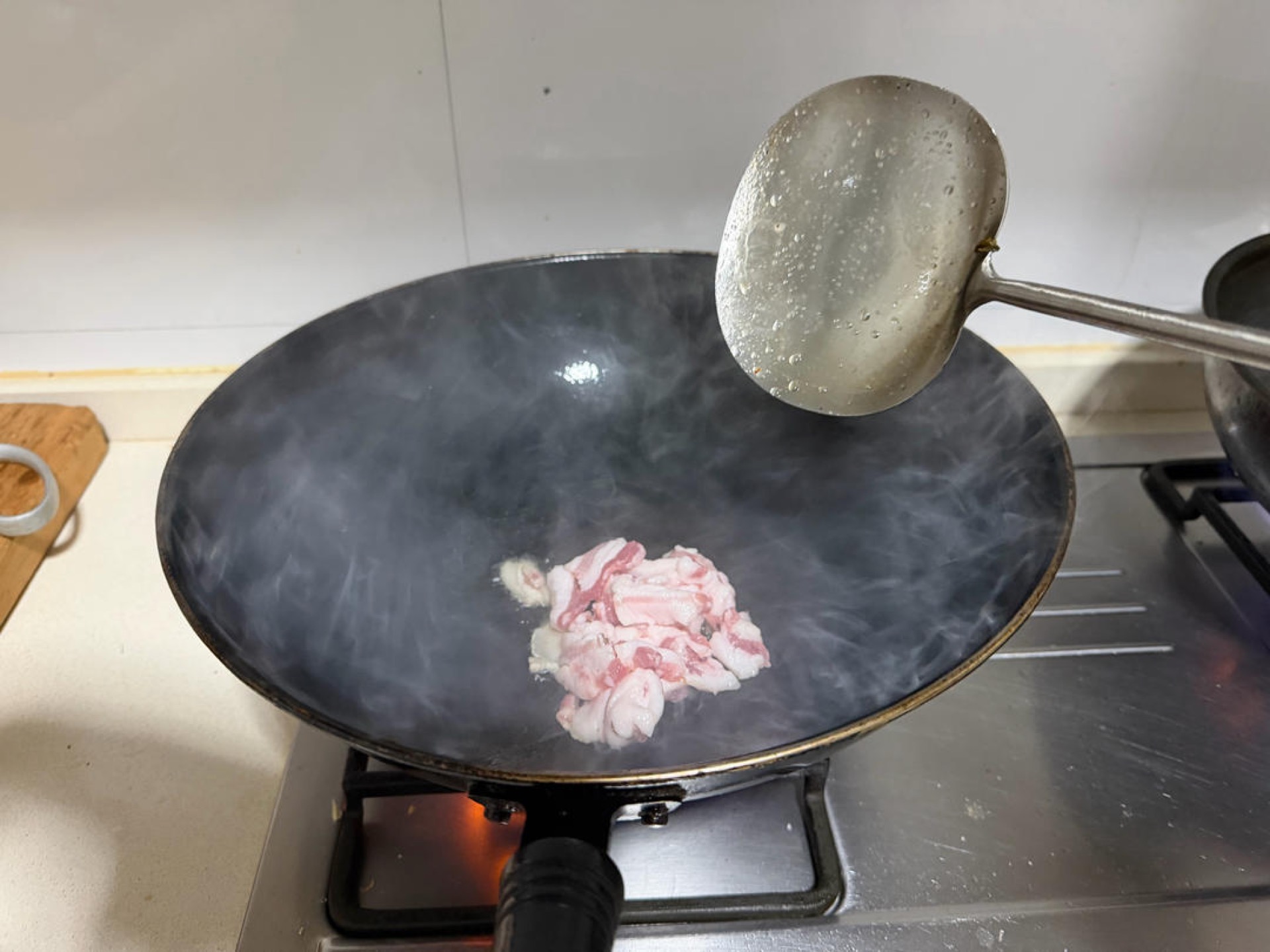
Step 1 — Render the Pork Belly
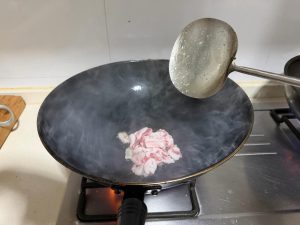
Heat 30 g of rapeseed oil in a wok and add the pork belly, frying slowly until it renders and turns crisp and golden at the edges.
Step 2 — Set the Crab, Then Aromatics
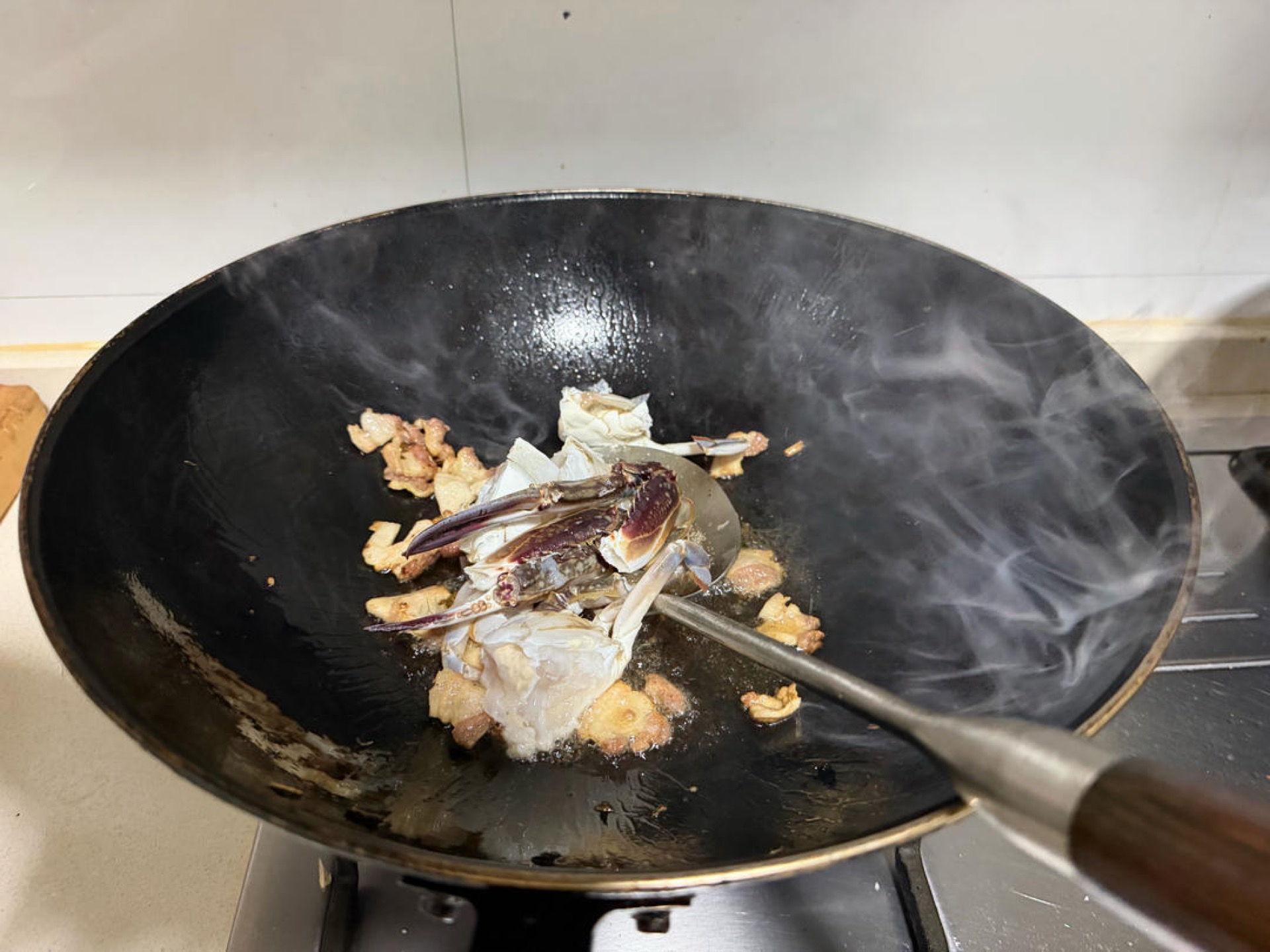
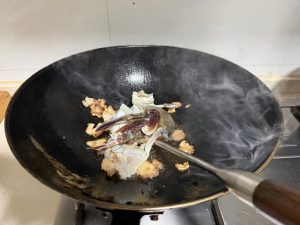
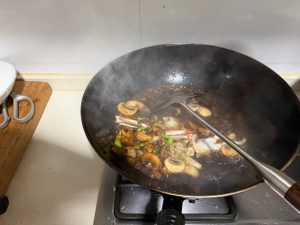
Add the chopped swimming crab and do not stir — let the pieces sear and set in place. Once set, add the garlic, ginger and shallots and fry briefly until fragrant.
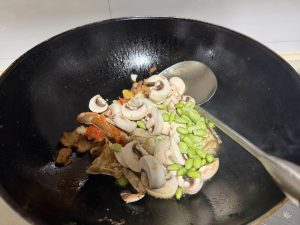
Step 3 — Add Edamame and Mushrooms
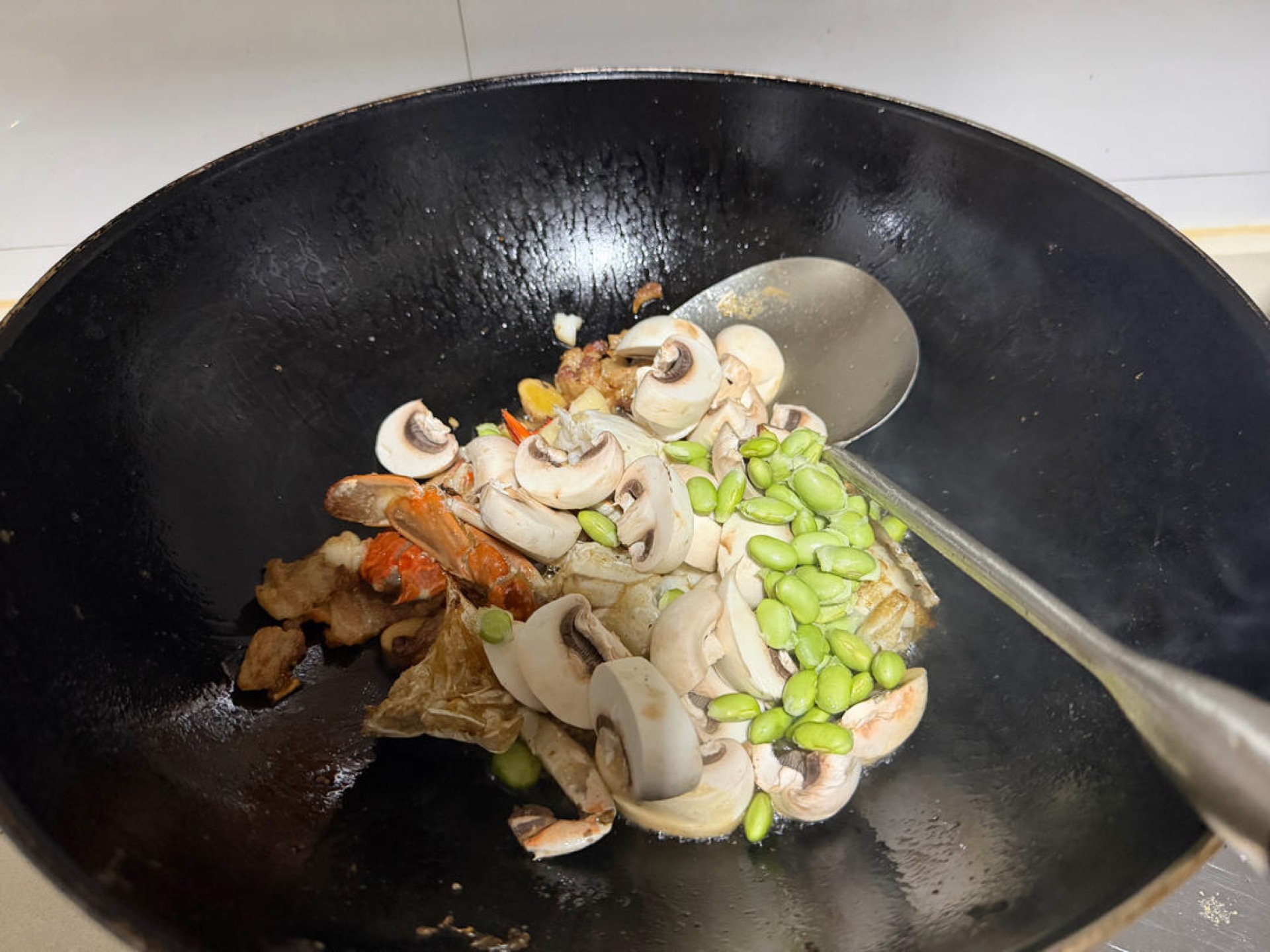
Add the edamame and mushrooms and stir-fry. Fresh bamboo shoots would be even better here; since whip bamboo has finished and winter bamboo has not arrived, there are no good shoots available, and frozen or canned bamboo is not worth eating.
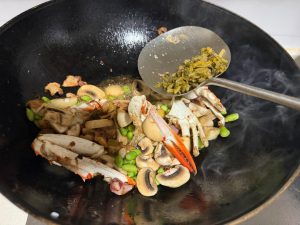
Step 4 — A Pinch of Snow Vegetable
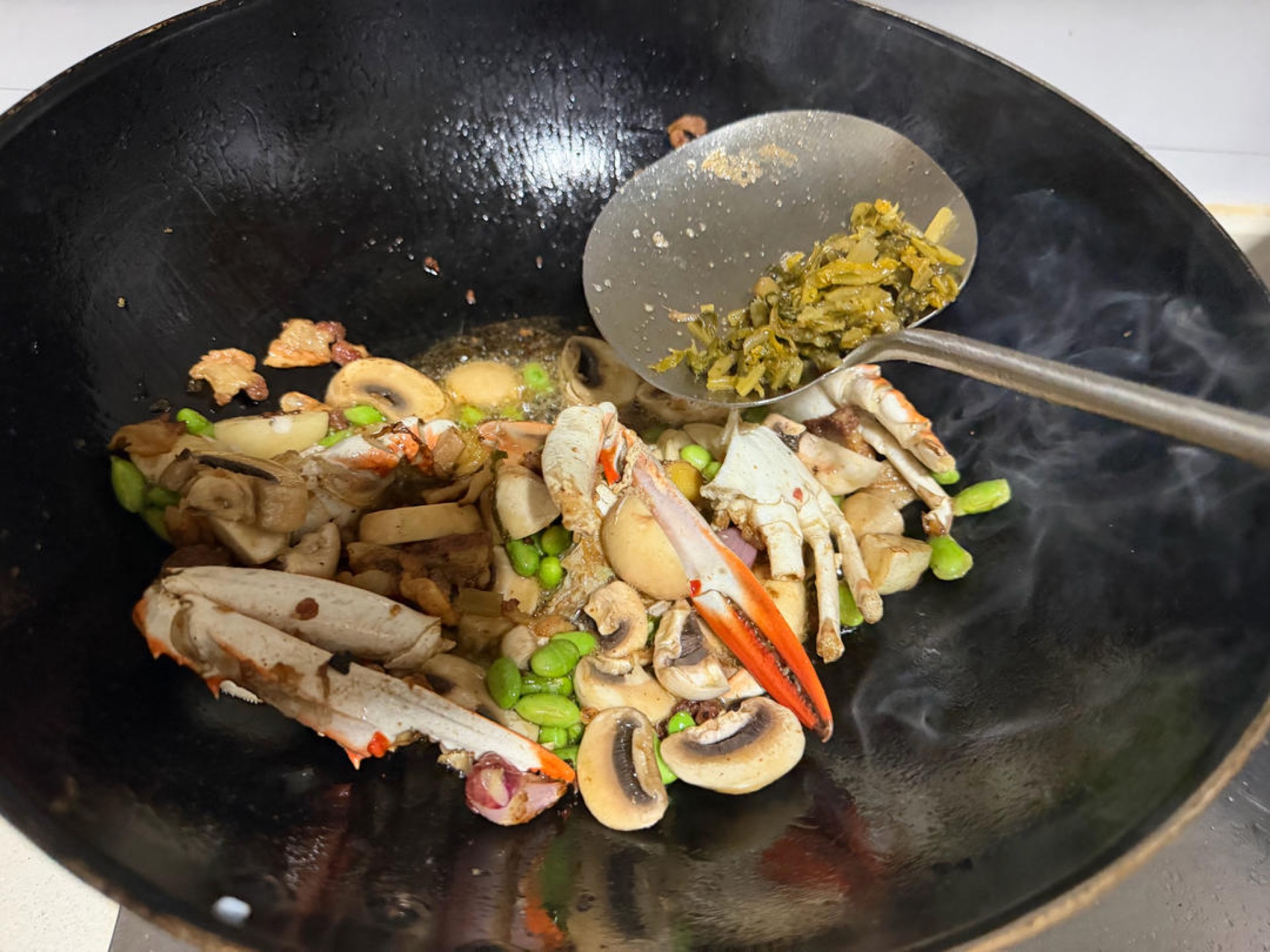
Add just a little snow vegetable to lift the flavor — snow vegetable is the old Zhejiang way of making MSG. The sweetness of swimming crab comes from its mix of glutamate and inosinate, and unlike glutamate-rich snow vegetable, crab’s savoriness carries a faint sweetness. Be careful not to add too much snow vegetable and let it steal the show — we are not making pian er chuan.
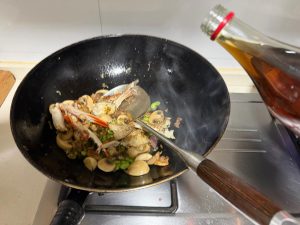
Step 5 — Wine Around the Wok
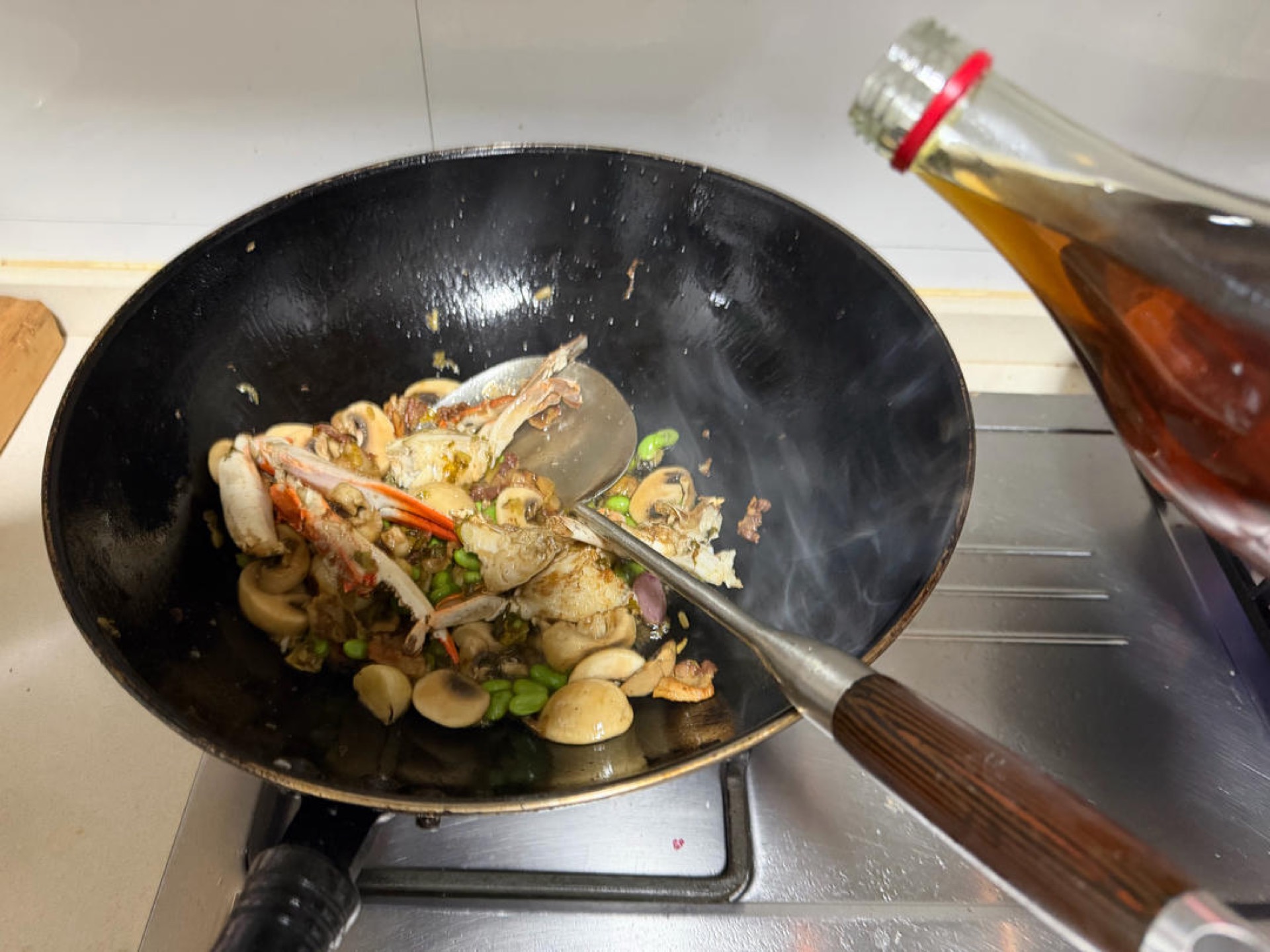
Pour the Shaoxing wine in a circle around the rim of the wok.
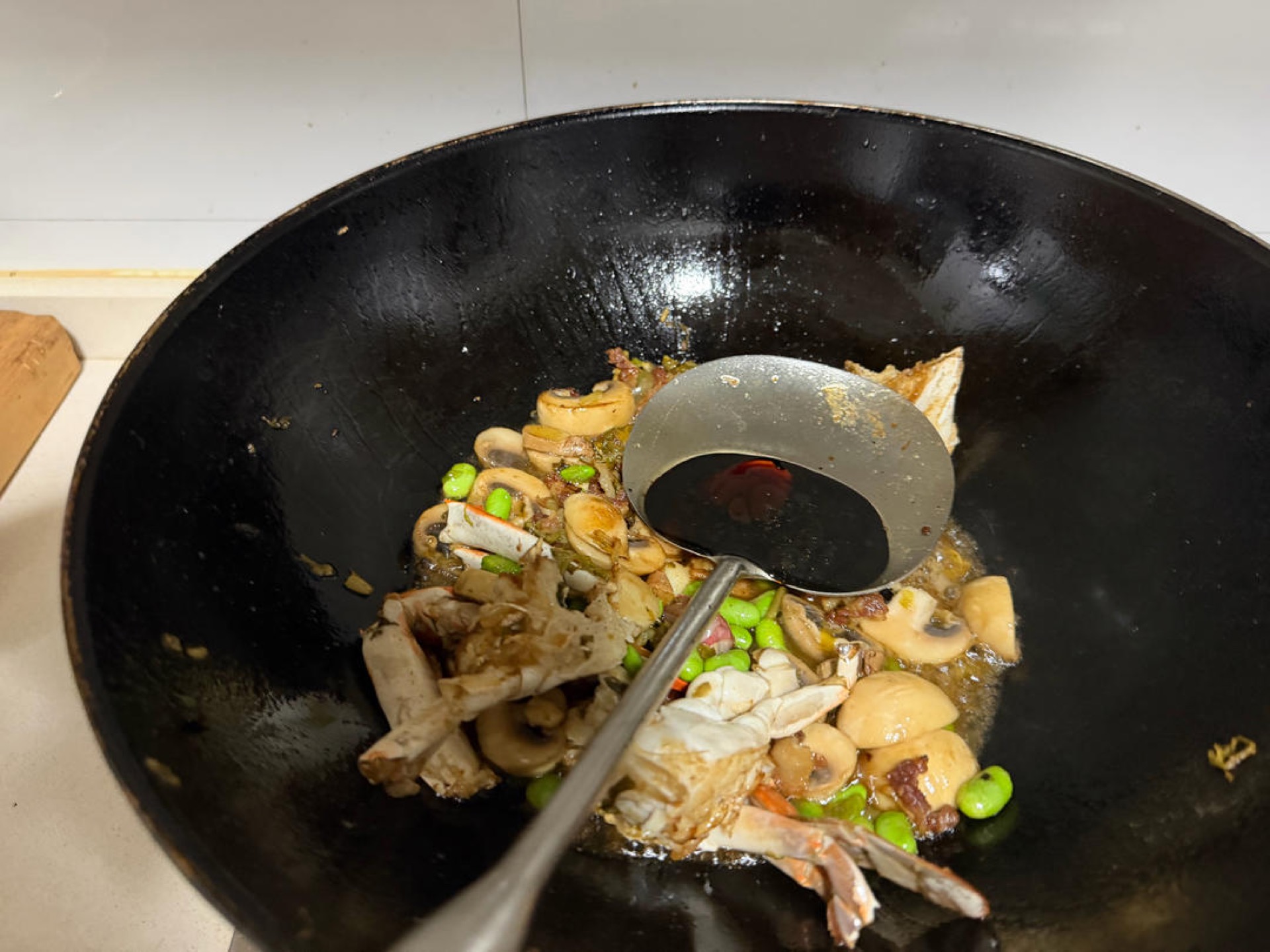
Step 6 — Season the Base
Season with 10 g oyster sauce, 15 g light soy sauce, 7.5 g dark soy sauce, 2 g salt and 1 g sugar.
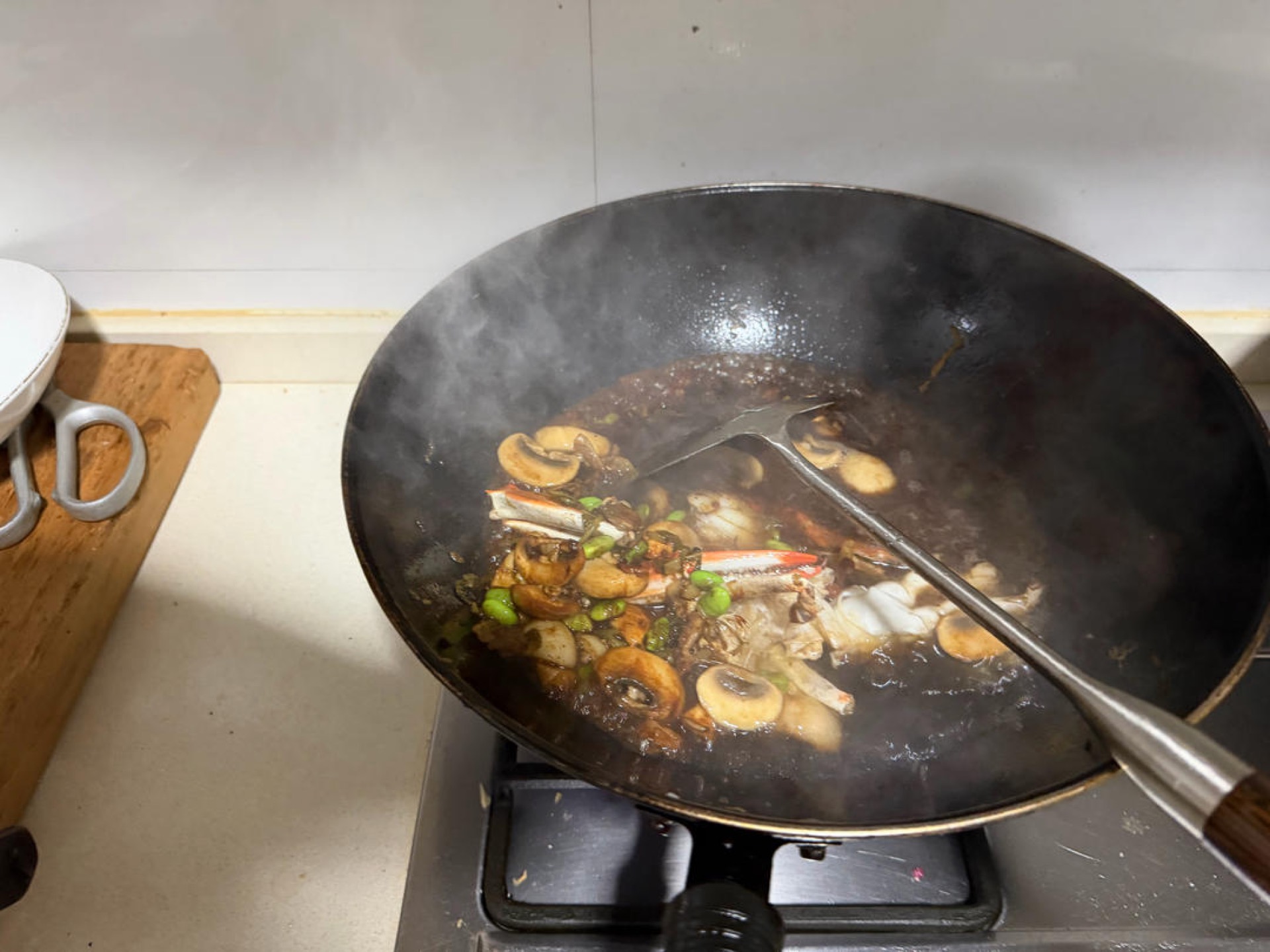
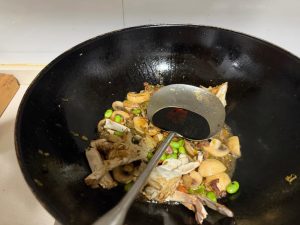
Step 7 — Add Boiling Water
Pour in boiling water and bring to a boil.
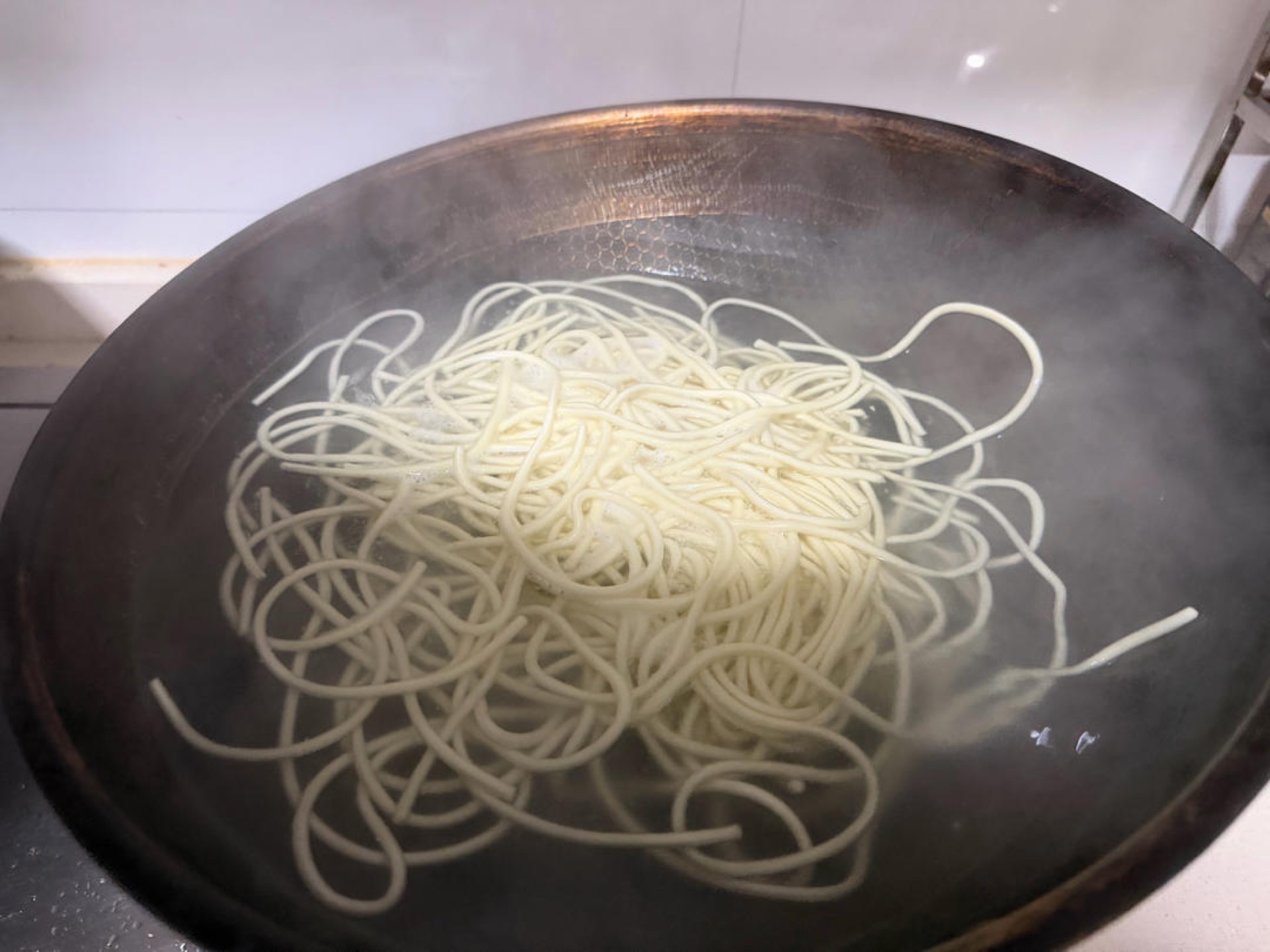
Step 8 — Boil the Noodles in Parallel
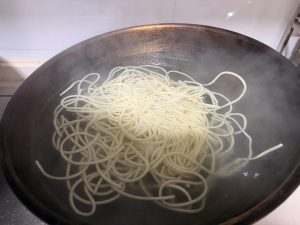
While the topping cooks, bring a second pot of water to a boil and add the alkaline noodles. This step must run at the same time as the previous one, seamlessly.
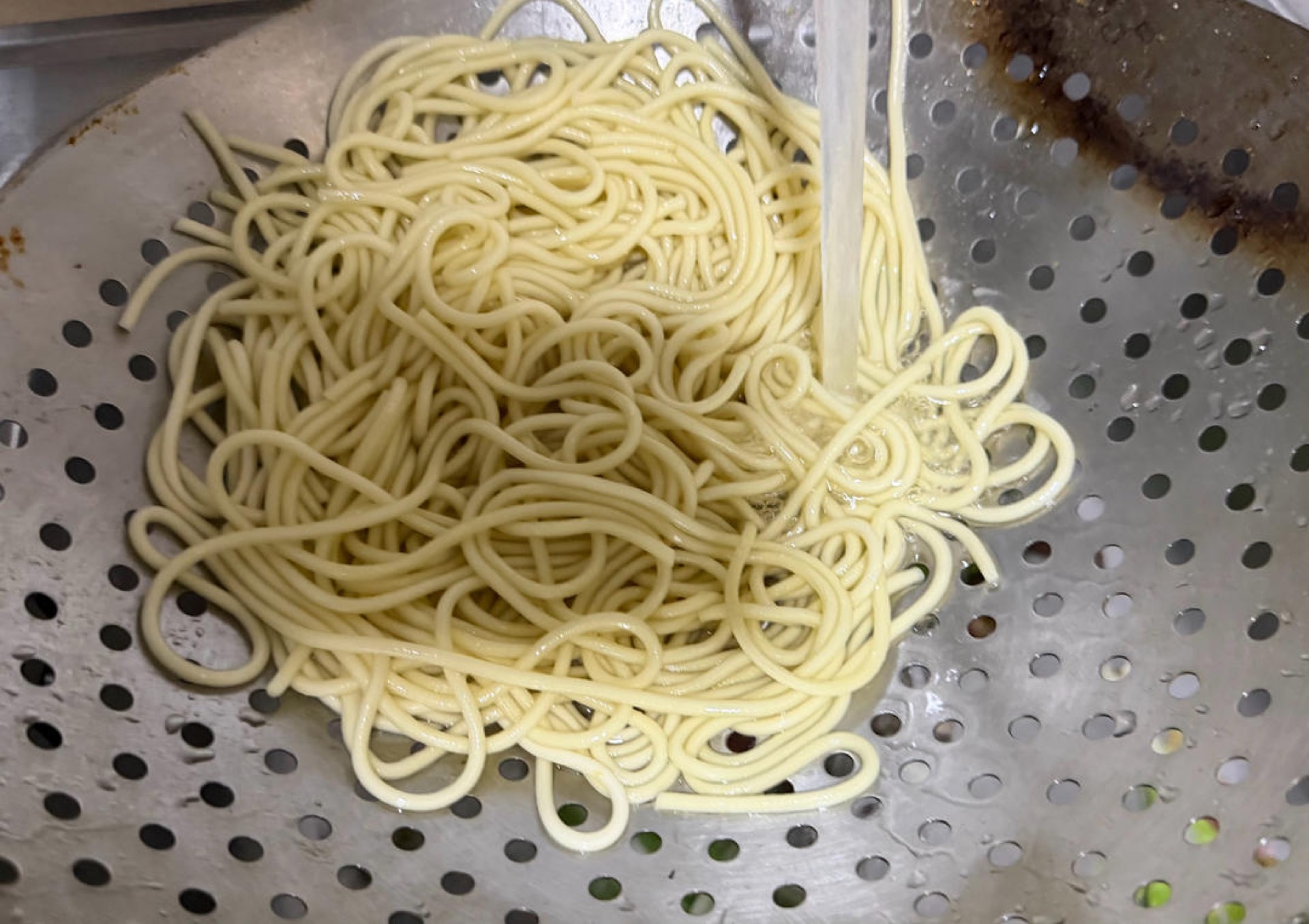
Step 9 — Rinse the Noodles
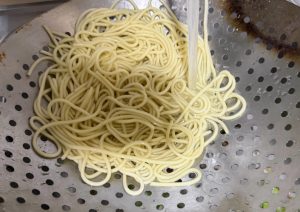
When the water comes back to a boil, scoop the noodles out and rinse them under cold water.
Step 10 — Simmer the Noodles in the Sauce
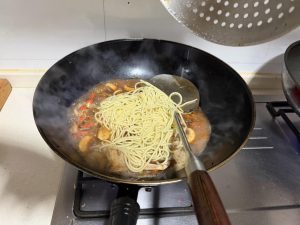
Add the noodles to the wok and cook over the highest heat for 90 seconds — that is enough.
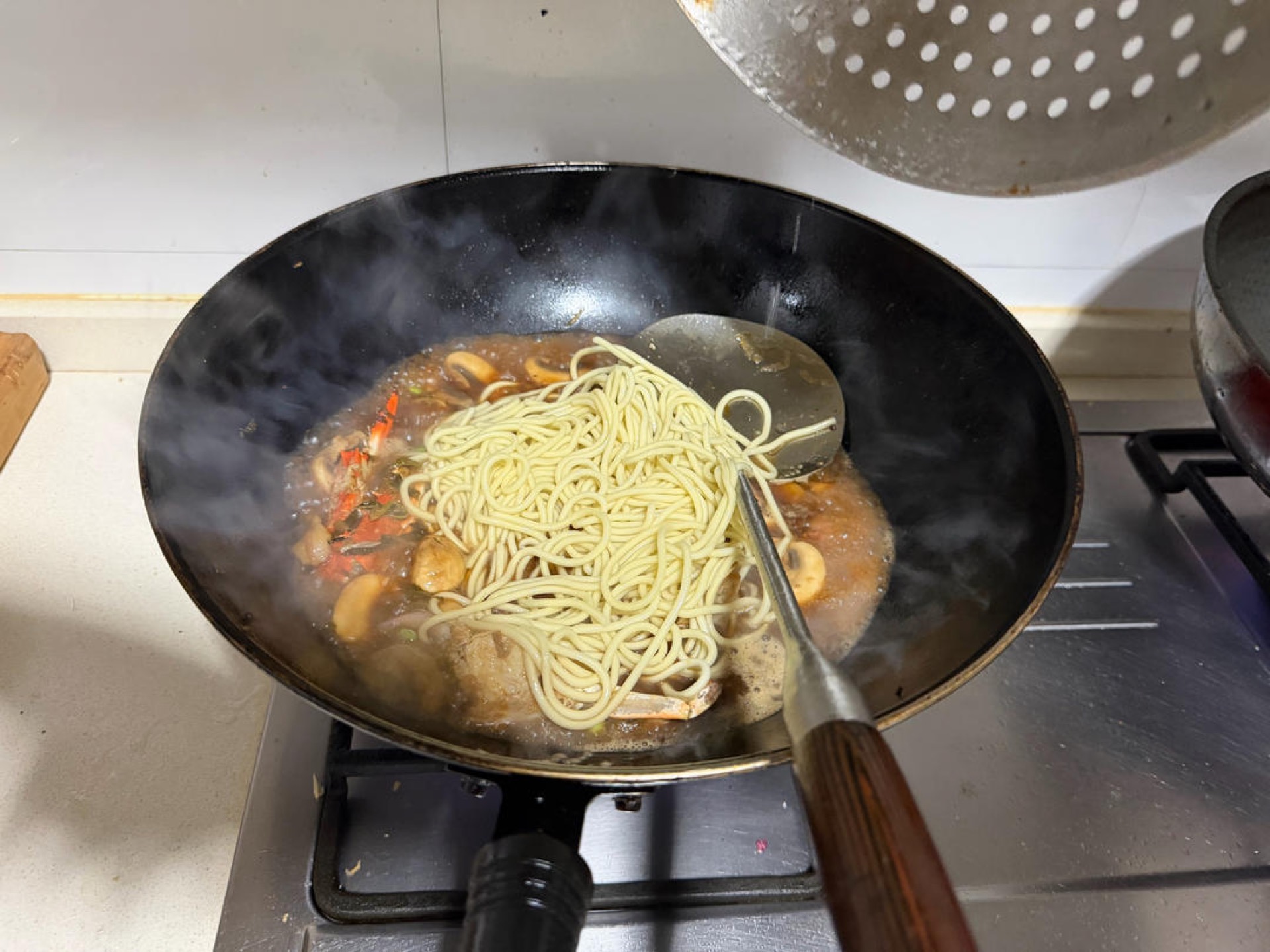
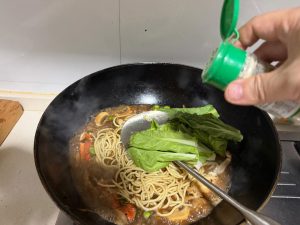
Step 11 — Greens and White Pepper
Add the leafy greens and the soul seasoning — 1 g of white pepper.
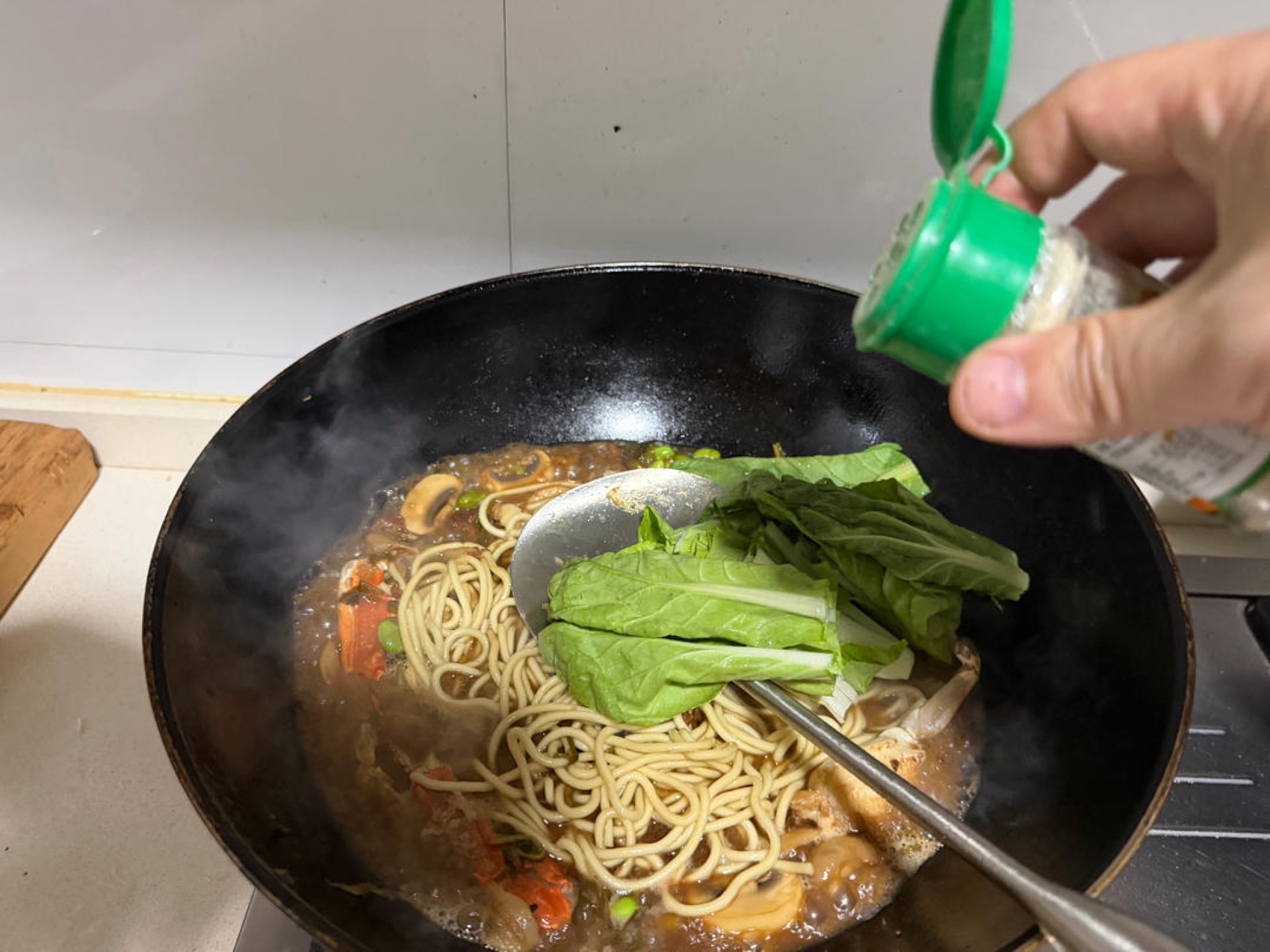
Step 12 — Reduce and Serve
The greens are done 30 seconds after they hit the wok. Reduce the broth a little, scatter chopped scallions over the top and serve.
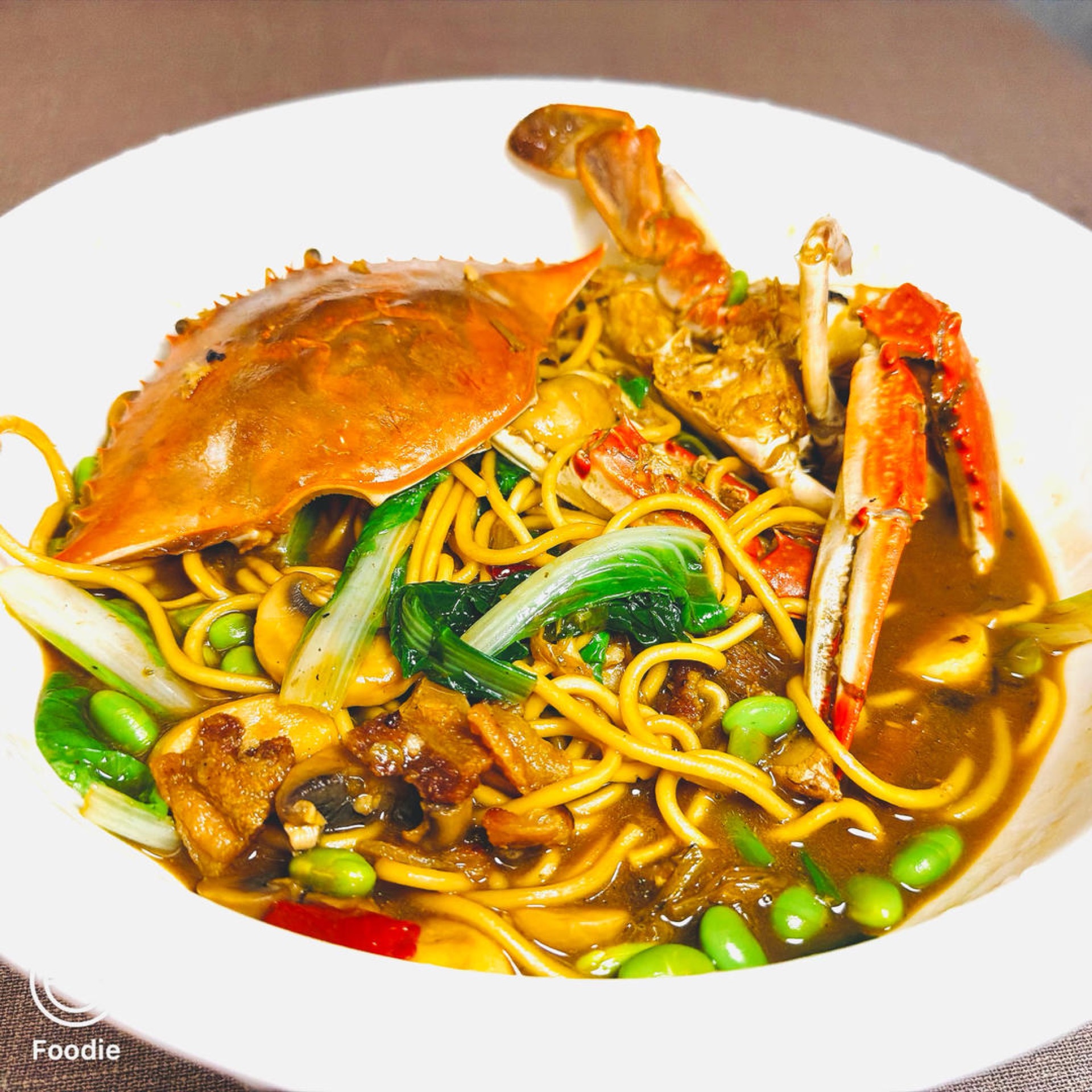
Common Mistakes When Making Hangzhou Swimming Crab Noodles
1. Stirring the crab immediately. The crab goes into the wok and then stays put. If you start tossing right away, the pieces break apart and the roe and juices bleed into the oil instead of staying in the shell. Let each piece sear until it sets, then add the aromatics.
2. Using too much snow vegetable. The recipe says a little, and it means a little. Snow vegetable is salty and pungent; a heavy hand turns a delicate crab bowl into a pickled-vegetable noodle soup. Two tablespoons, rinsed and squeezed, is the ceiling.
3. Overcooking the noodles. Alkaline noodles go from springy to soft fast. Parboil only until the water returns to a boil, rinse immediately under cold water, and then finish them in the sauce for no more than 90 seconds. If you cook them fully in the first pot, they will be limp by the time they reach the table.
4. Not running the two pots at the same time. The noodle pot and the wok need to be working in parallel. If you boil the noodles first and then start the crab, the noodles sit and cool while the sauce reduces, and the finished bowl loses its seamless texture.
5. Adding cold water instead of boiling water. Cold water drops the wok temperature and stalls the sauce. Use boiling water from a kettle so the wok stays hot and the crab juices emulsify into the liquid.
6. Skipping the white pepper. It sounds like a garnish, but the white pepper is what makes the bowl taste finished. Add it with the greens, not after plating.
7. Crowding the wok. If your wok is small or your crab is large, cook the crab in two batches. A crowded wok steams the crab instead of searing it, and you lose the browned base that gives the sauce its depth.
How to Serve
Serve the noodles immediately, in deep bowls, with the crab pieces arranged on top and plenty of sauce spooned over. A small dish of black vinegar on the side is traditional for crab, and a plain cucumber salad or quick-pickled radish cuts through the richness nicely.
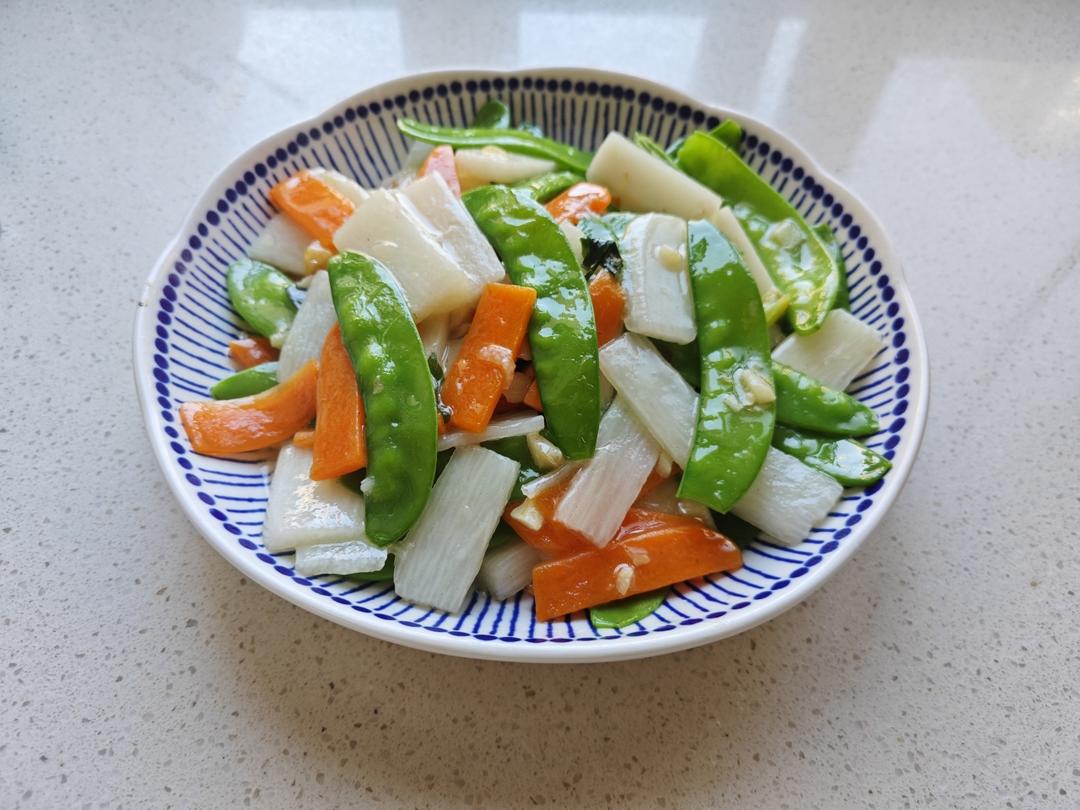
For a fuller table, our stir fried snow peas and Chinese yam is a crisp, clean vegetable side that balances the richness of the crab sauce. If you want another seafood-forward dish to round out the meal, pig blood curd with tofu brings a completely different texture and a deep, savory broth that regular readers of this site tend to love.
And if you are feeding a crowd and want something to nibble while the noodles cook, a plate of vegetable steamed dumplings or crispy pork and chive potstickers keeps everyone happy at the table.

Storage & Reheat
Crab noodles are best eaten the day they are made. If you do have leftovers, cool them quickly and refrigerate in a sealed container for up to 2 days. The noodles will absorb the sauce and soften, so expect a different texture on day two.
To reheat, add a splash of water or stock to a wok or saucepan and warm gently over medium heat until steaming, about 3 to 4 minutes. Do not microwave on high — the crab will toughen and the noodles will go rubbery. Reheat to an internal temperature of 165°F (74°C).
Do not refreeze crab that has already been thawed.
Allergen Notice
This dish contains crustacean shellfish (crab), wheat and gluten (alkaline noodles, soy sauce) and soy (soy sauce, oyster sauce). Oyster sauce is made with mollusks, so it is also a shellfish allergen for some people. If you are cooking for someone with a shellfish allergy, this recipe is not adaptable — the crab is the dish.
Nutrition Disclaimer
Nutrition information is calculated using an ingredient database and should be considered an estimate. In cases where multiple ingredient alternatives are given, the first listed is calculated for nutrition. Garnishes and optional ingredients are not included.
About the Author & Recipe Development
Lin is the cook and writer behind Woks of Love, where she has been documenting Chinese home cooking — particularly the food of Zhejiang and the Jiangnan region — for years. This recipe comes from the Hangzhou home kitchen tradition of cooking swimming crab in the autumn, when the crabs are fat with roe and the markets are full of them. The version here follows the home method closely: a hot wok, a short ingredient list, and a sauce built from the crab itself rather than from stock.
The recipe has been tested with fresh swimming crab and with frozen, and with both fresh and dried alkaline noodles. The timing in step 10 — 90 seconds at maximum heat — is the number that consistently gives springy noodles coated in sauce rather than soggy ones sitting in broth.
If you liked this, fish fragrant shredded chicken is worth cooking next.
If you liked this, potato braised chicken is worth cooking next.
Authoritative References
For safe handling and cooking temperatures for crab and other seafood, see the FDA guidance on refrigerator thermometers and cold food safety at home, and the USDA’s safe minimum internal temperature chart, which lists 145°F (63°C) for shellfish. For the science behind the umami synergy between crab and snow vegetable, the research summary at the National Center for Biotechnology Information is a good starting point.
Hangzhou Swimming Crab Noodles (梭子蟹面): Savory Crab Over Springy

Equipment
- Wok
- Cutting Board
- Slotted Spoon
Ingredients
For the Crab
- 1.5 lb swimming crab about 2 medium crabs, cleaned and cut into pieces, roe reserved
- 2 tbsp rapeseed oil or any neutral high-smoke-point oil
- 3 oz pork belly thinly sliced
- 4 cloves garlic smashed
- 4 slices ginger thin
- 2 shallots red shallots, sliced
For the Aromatics and Vegetables
- 1/2 cup edamame shelled, fresh or frozen
- 4 oz mushrooms sliced; fresh shiitake or button
- 2 tbsp snow vegetable xuecai, rinsed and squeezed dry
- 2 tbsp Shaoxing wine along the wok edge
For the Sauce
- 2 tbsp oyster sauce
- 1 tbsp light soy sauce
- 1 1/2 tsp dark soy sauce
- 1/2 tsp salt
- 1/4 tsp sugar
- 2 cups hot water boiling
For the Noodles
- 7 oz alkaline noodles fresh or dried, about 100 g per person
- 1 tsp white pepper freshly ground
- 2 cups leafy greens bok choy or baby greens
- 2 scallions chopped, for garnish
Instructions
- Heat 30 g of rapeseed oil in a wok and add the pork belly, frying slowly until it renders and turns crisp and golden at the edges.

- Add the chopped swimming crab and do not stir — let the pieces sear and set in place. Once set, add the garlic, ginger and shallots and fry briefly until fragrant.
- Add the edamame and mushrooms and stir-fry. Fresh bamboo shoots would be even better here; since whip bamboo has finished and winter bamboo has not arrived, there are no good shoots available, and frozen or canned bamboo is not worth eating.
- Add just a little snow vegetable to lift the flavor — snow vegetable is the old Zhejiang way of making MSG. The sweetness of swimming crab comes from its mix of glutamate and inosinate, and unlike glutamate-rich snow vegetable, crab’s savoriness carries a faint sweetness. Be careful not to add too much snow vegetable and let it steal the show — we are not making pian er chuan.
- Pour the Shaoxing wine in a circle around the rim of the wok.
- Season with 10 g oyster sauce, 15 g light soy sauce, 7.5 g dark soy sauce, 2 g salt and 1 g sugar.
- Pour in boiling water and bring to a boil.
- While the topping cooks, bring a second pot of water to a boil and add the alkaline noodles. This step must run at the same time as the previous one, seamlessly.
- When the water comes back to a boil, scoop the noodles out and rinse them under cold water.

- Add the noodles to the wok and cook over the highest heat for 90 seconds — that is enough.
- Add the leafy greens and the soul seasoning — 1 g of white pepper.
- The greens are done 30 seconds after they hit the wok. Reduce the broth a little, scatter chopped scallions over the top and serve.













Leave a Reply