Growing up in my parents’ Sichuan restaurant, people always assume our home-cooked meals were a constant parade of fiery, numbing, and complex dishes. While I love my Mapo Tofu, the truth is, most of our family meals looked a lot more like this: quick, fresh, and focused on texture.
After a long service, my father, a 30-year-cheffing veteran, wanted simplicity. This stir-fry is the perfect example. It’s a classic jiā cháng cài (家常菜), or homestyle dish, that you’ll find on dinner tables all across China.

The star of this dish isn’t a complex sauce; it’s the cuì (脆)—that perfect, satisfying, crisp crunch. It’s light, healthy, and comes together in under 15 minutes. This is the kind of recipe I’ve cooked a thousand times, and it’s one I’m excited to share as a perfect introduction to true Chinese vegetable cooking.
Why You’ll Love This Recipe
- Incredibly Fast: Once your vegetables are prepped, the actual cooking time is less than 5 minutes.
- The Perfect Crunch: We use a classic restaurant technique (blanching and shocking) to guarantee your vegetables stay crisp and vibrant.
- Healthy & Light: It’s a clean, gluten-free, and vegan-friendly dish (just check your bouillon) that lets the vegetables’ natural sweetness shine.
- A Unique Ingredient: It’s a wonderful way to try Chinese Yam, a fantastic and healthy vegetable you might not be familiar with.
What is Chinese Yam (Nagaimo)?
The most unfamiliar ingredient here for a Western kitchen is shān yào (山药), or Chinese Yam.
You are most likely to find it sold under its Japanese name, Nagaimo, in Asian markets like H Mart or 99 Ranch, and sometimes even in the international section of larger grocery stores.
It’s a long, pale root vegetable, often packed in sawdust. Unlike the yams you use for Thanksgiving (which are a type of sweet potato), this yam is not sweet. When raw, it’s crisp like a jicama and has a very unique, slightly slippery texture from a natural mucilage. This “slime” is completely normal and is actually very good for digestion!
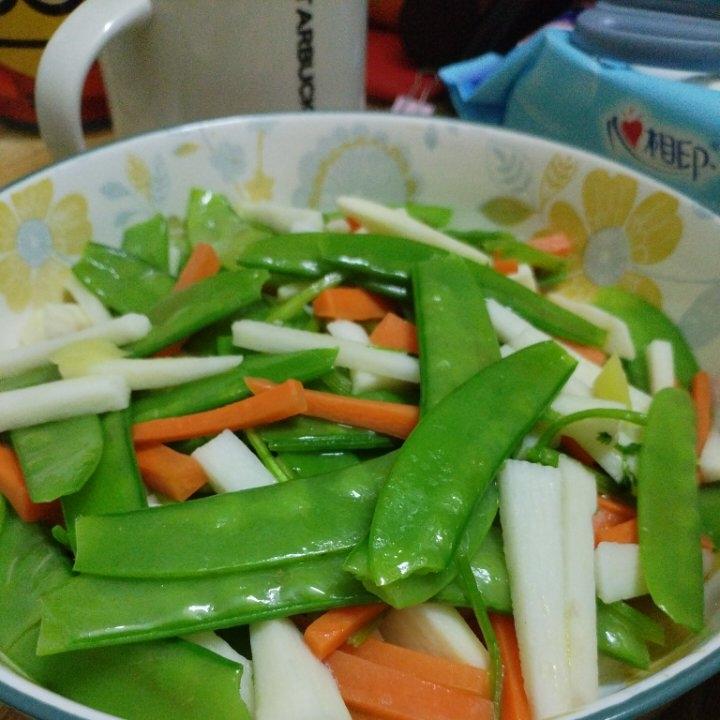
Food Safety & Preparation: Wear Gloves!
The raw mucilage in Chinese Yam can cause a skin reaction for some people, making your hands very itchy. It’s a good practice to wear kitchen gloves when peeling and slicing the yam to avoid any irritation.
If you absolutely can’t find it, you can substitute it with canned sliced water chestnuts (for a similar crunch) or jicama.
The Secret to a Perfect Crunch: Blanching (焯水)
Why do we boil the vegetables for one minute just to fry them later? This is a core technique in Chinese cooking called chāo shuǐ (焯水), or blanching.
- Speed: It par-cooks the dense vegetables (carrot and yam). This allows the final stir-fry to be incredibly fast—just 1 or 2 minutes. A longer stir-fry would stew the vegetables and make them soggy.
- Color: It instantly sets the chlorophyll in the snow peas, making them a beautiful, vibrant green.
- Texture: The second step, shocking them in an ice bath (过凉水, guò liáng shuǐ), is crucial. It stops the cooking process immediately, locking in that perfect, crisp-tender texture.
Don’t skip this! This two-part process is the difference between a sad, limp stir-fry and a restaurant-quality one.
Ingredients
Here’s what you’ll need for this quick stir-fry.
- 1 cup Snow Peas (about 4 oz or 115g): Look for bright green, flat pods. You’ll need to “de-string” them by snapping off the top and pulling the string down the seam.
- 1 cup Chinese Yam (Nagaimo): About half a root. (See notes above for prep and substitutions).
- ½ cup Carrot: About half a medium carrot, for color and a slight sweetness.
- 2 cloves Garlic: Thinly sliced.
- 1 Scallion (Green Onion): Sliced, white and green parts separated.
- 1 tbsp Avocado Oil (or other neutral high-heat oil): Like grapeseed or canola.
For the Sauce (Slurry)
This is a simple “white” sauce that thickens slightly to coat the vegetables.
- 1 tsp Cornstarch: (or Potato Starch). This is what thickens the sauce.
- 1 tsp Salt:
- ¼ tsp MSG (Optional): This is the “secret” to a restaurant-level xiān (鲜), or savory umami boost. You can also use ¼ tsp chicken bouillon powder, a tiny pinch of sugar, or simply omit it.
- 3 tbsp Water:
How to Make Stir-Fried Snow Peas and Yam
The key to any good stir-fry is preparation. The cooking part is a flash in the pan, so have everything ready and by your stove before you turn on the heat.
1. Mise en Place (Preparation)
- Prep Veggies:
- Snow Peas: Snap off the stem end of each pea and pull down to remove the tough string.
- Carrot: Peel and slice thinly into rounds or half-moons.
- Chinese Yam: Put on gloves. Peel the yam’s skin, then slice it into thin rounds or half-moons (similar in thickness to the carrot).
- Aromatics: Thinly slice the garlic and the white part of the scallion. Slice the green part for garnish.
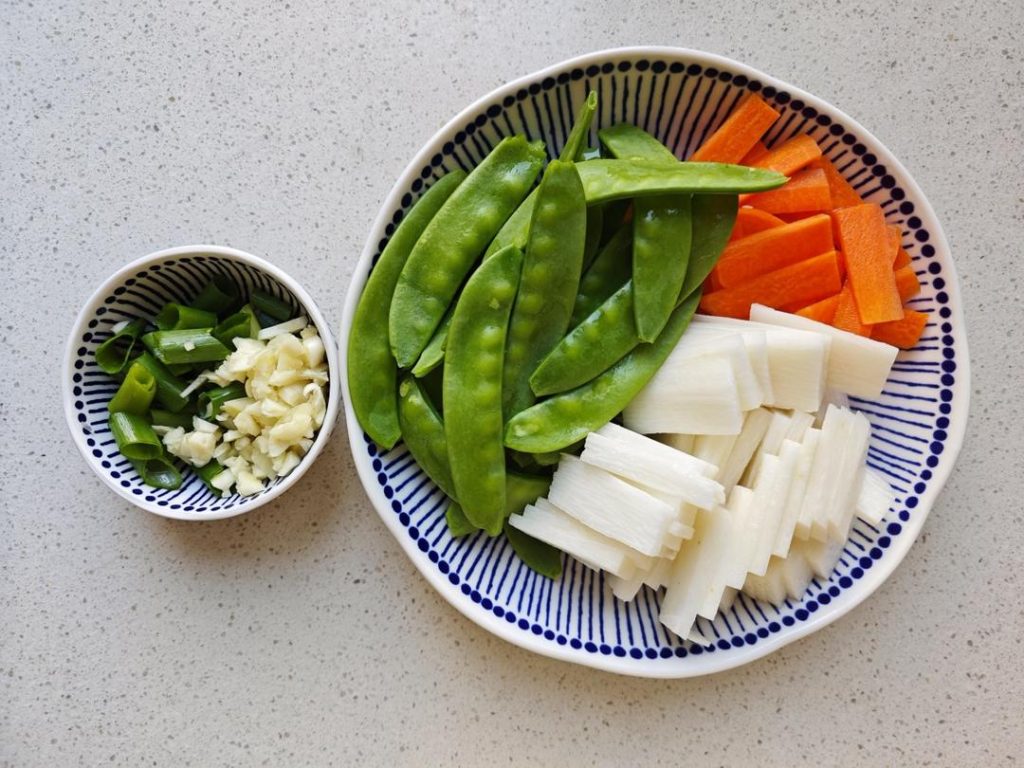
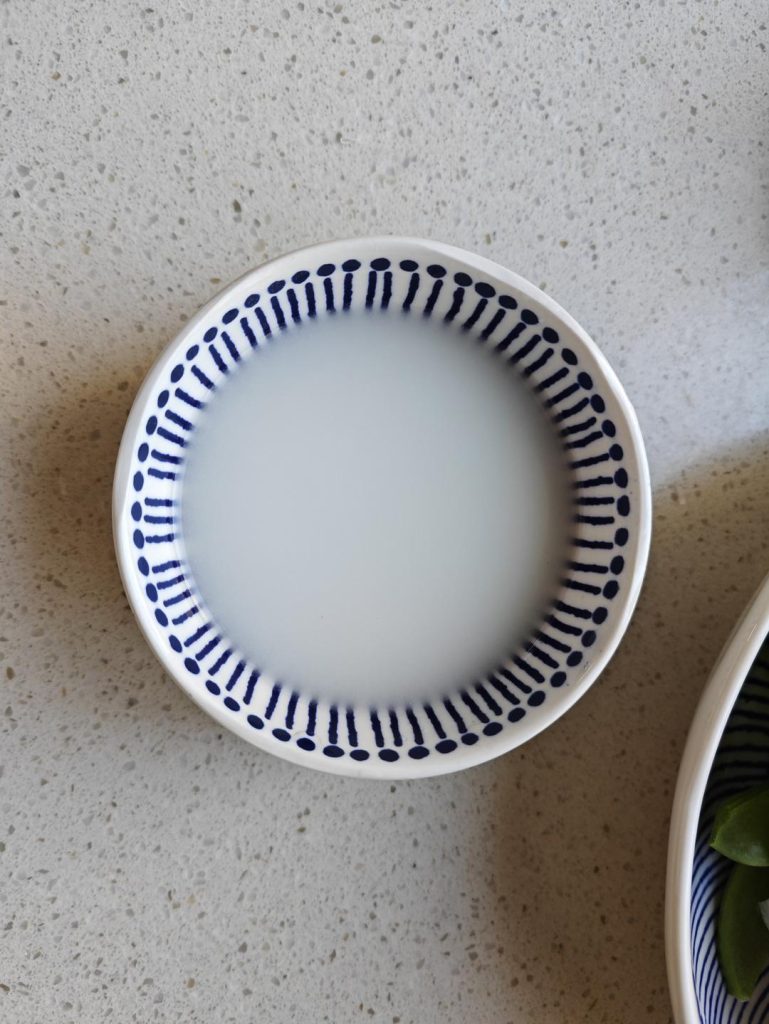
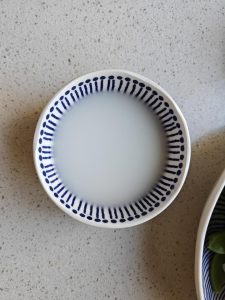
- Make the Sauce: In a small bowl, whisk together the cornstarch, salt, optional MSG, and 3 tbsp of water. Set aside.
- Prep the Ice Bath: Fill a large bowl with cold water and ice cubes.
2. The Blanching Process
- Boil: Bring a medium pot of water to a rolling boil.
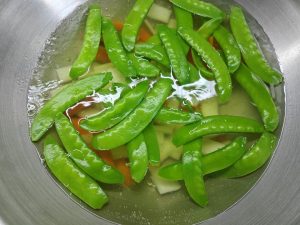
- Blanch: Add all the prepped vegetables (snow peas, carrot, and yam) to the boiling water. Cook for exactly 60 seconds. The snow peas should be bright green.
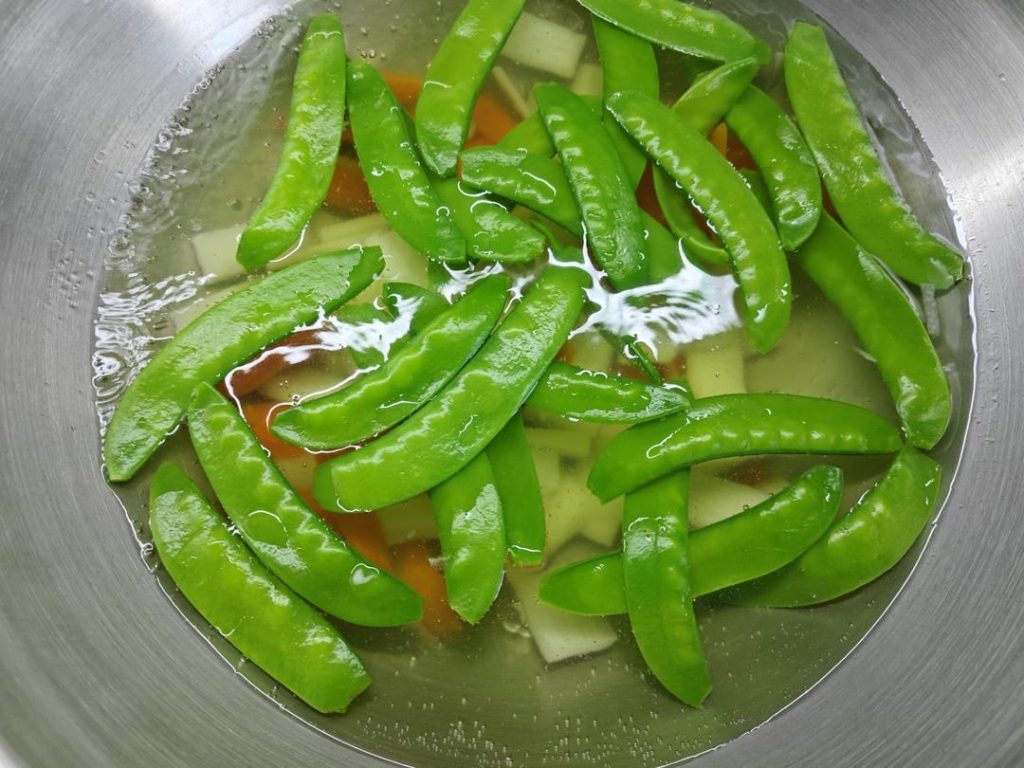
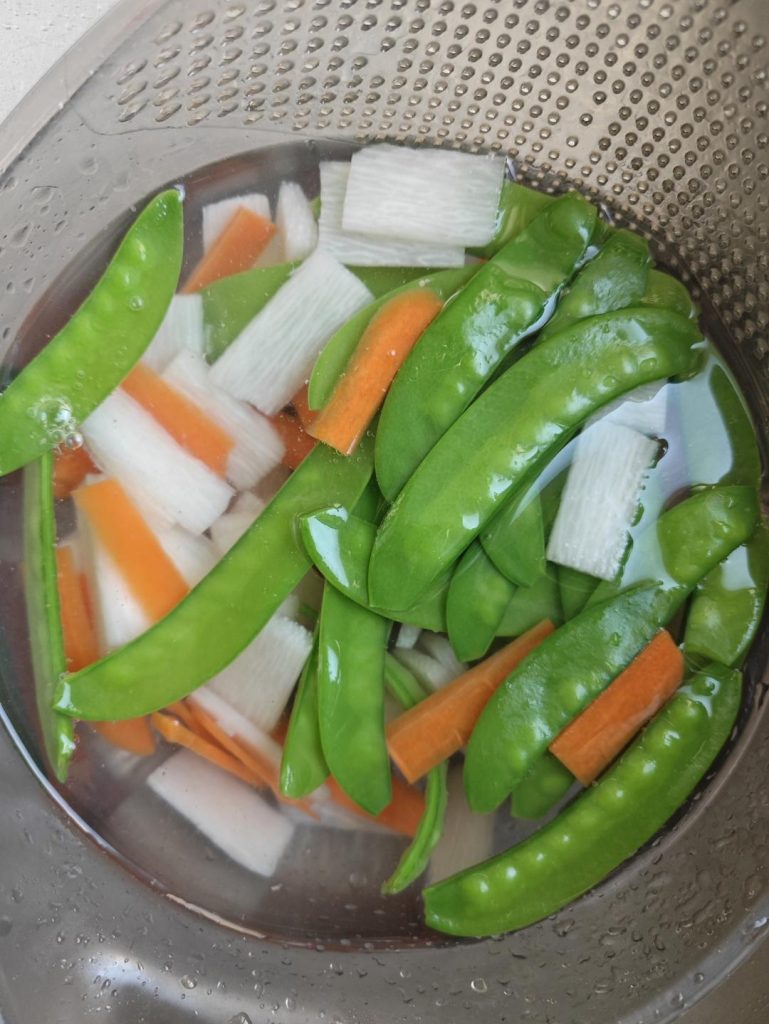
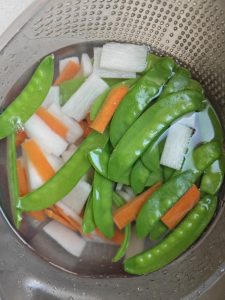
- Shock: Immediately remove the vegetables with a spider strainer or slotted spoon and plunge them directly into the ice bath. Let them cool completely for about 30 seconds.
- Drain: Drain the vegetables well in a colander.
3. The Final Stir-Fry (Less than 2 Minutes!)
- Heat Wok: Place a wok or large skillet over high heat until it’s very hot—a drop of water should sizzle and evaporate instantly.
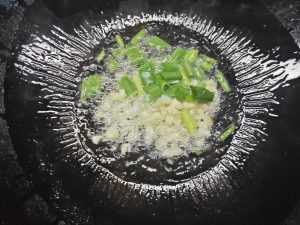
- Aromatics: Add the 1 tbsp of oil and swirl to coat. Add the sliced garlic and the white part of the scallion. Stir-fry for 15-30 seconds until fragrant.

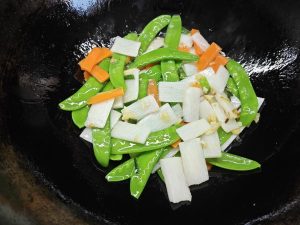
- Veggies In: Add all the drained, blanched vegetables. Toss and stir-fry for 1 minute to heat them through.
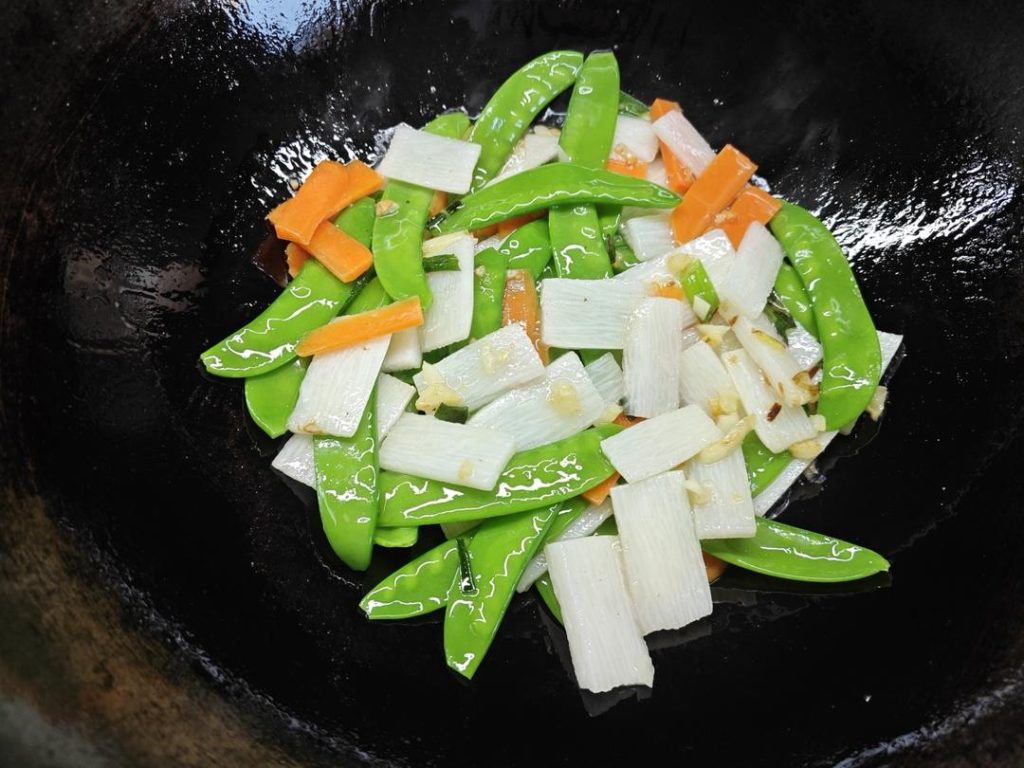
- Sauce In: Give your sauce slurry a quick re-stir (the starch settles!) and pour it into the wok.
- Finish: Toss everything quickly for another 10-30 seconds. The sauce will thicken almost instantly, coating all the vegetables in a light, glossy sheen.
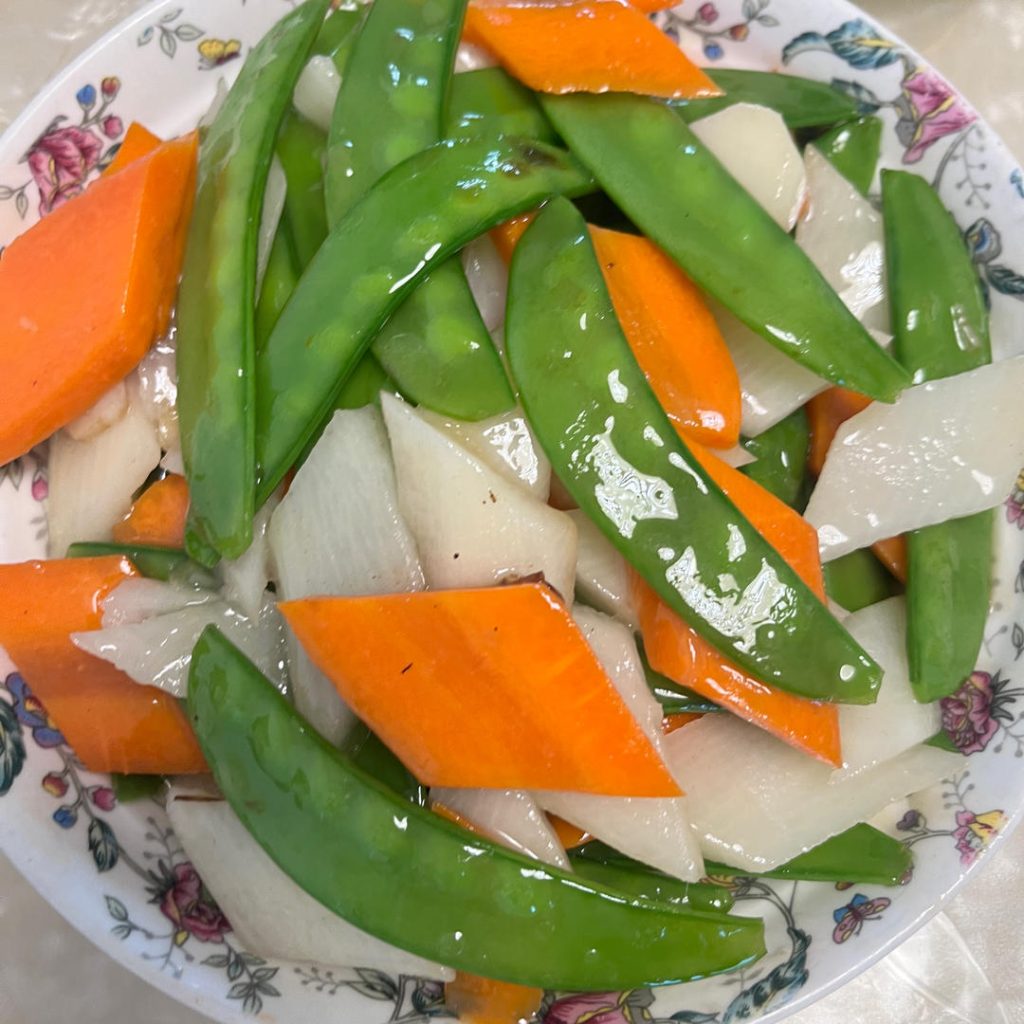
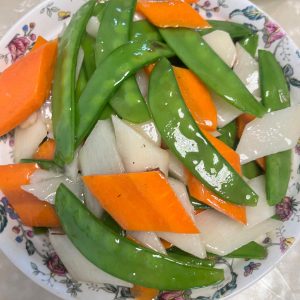
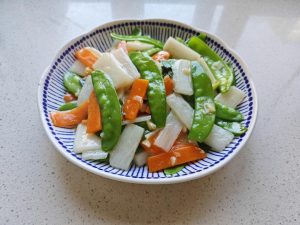
- Serve: Immediately transfer to a plate. Garnish with the green parts of the scallion.
How to Serve
This dish is best served immediately while it’s hot and crisp. It’s a side dish, meant to be eaten with steamed rice.
It’s the perfect light, crunchy counterpart to a rich, savory main dish like Homestyle Braised Pork Belly (Bazi Rou) or Coca-Cola Chicken Wings. While this recipe highlights its crispness, Chinese Yam is also fantastic in soups. For a different take, you can see how it’s used in a Chinese Yam and Corn Soup at China Sichuan Food, another great resource for homestyle recipes.
Storage
Honestly, this dish does not store well. It’s designed to be eaten fresh. Leftovers will lose their crucial crisp texture and become soggy. Given it takes 5 minutes to cook, I recommend making just what you need.
Frequently Asked Questions (FAQ)
Q: My Chinese yam was slimy when I cut it. Is it bad?
A: Not at all! That “slime” is a natural mucilage and a sign that the yam is fresh. It cooks off and is prized for its health benefits. Just remember to wear gloves, as it can make your hands itchy!
Q: Why are my vegetables soggy and not crisp?
A: You likely overcooked them. This can happen in two ways: 1) You blanched them for too long (over 1 minute), or 2) You left them in the stir-fry for too long. The final stir-fry step should be incredibly fast, just long enough to heat through and coat in the sauce.
Q: Can I add protein to this?
A: Absolutely. This makes a great base. For shrimp or thinly sliced chicken, add it to the wok after the aromatics. Stir-fry until 80% cooked, remove, then add your blanched veggies. Fry for 30 seconds, then add the protein back in with the sauce slurry.
Q: Can I use sugar snap peas instead of snow peas?
A: Yes, you can. The flavor will be similar. You may want to slice the sugar snap peas in half diagonally to match the size of the other vegetables.
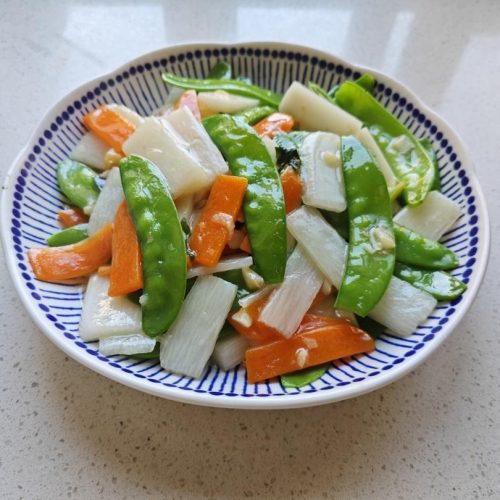
Stir-fried Snow Peas and Chinese Yam (山药炒荷兰豆)

Equipment
- Wok or large skillet For the stir-fry
- Medium pot For blanching the vegetables
- Large Bowl For the ice bath
- Spider Strainer or slotted spoon To transfer vegetables
Ingredients
Main Ingredients
- 1 cup Snow Peas (approx. 4 oz or 115g), strings removed
- 1 cup Chinese Yam (Nagaimo) (approx. 4 oz or 115g), peeled and sliced. Wear gloves!
- 0.5 cup Carrot (approx. 2 oz or 55g), peeled and sliced
- 2 cloves Garlic thinly sliced
- 1 Scallion (Green Onion) white and green parts sliced separately
- 1 tbsp Avocado Oil (or other high-heat neutral oil)
For the Sauce (Slurry)
- 1 tsp Cornstarch (or Potato Starch)
- 1 tsp Salt
- 0.25 tsp MSG (Optional, or 1/4 tsp chicken bouillon powder)
- 3 tbsp Water
Instructions
- Preparation (Mise en Place): Prepare an ice bath. In a small bowl, whisk together all “Sauce (Slurry)” ingredients (cornstarch, salt, optional MSG, water). Set aside.
- Prep Vegetables: Snap the stem ends off the snow peas and pull to remove the strings. Peel and thinly slice the carrot.
- Prep Yam (Wear Gloves): Wearing gloves, peel the Chinese Yam and slice it to a similar thickness as the carrot.
- Blanch & Shock: Bring a medium pot of water to a rolling boil. Add the snow peas, carrot, and Chinese yam. Blanch for exactly 60 seconds.

- Immediately transfer the vegetables to the ice bath to cool completely. Once cool, drain them very well.

- Stir-fry Aromatics: Heat a wok or large skillet over high heat. Add the oil, followed by the sliced garlic and the white parts of the scallion. Stir-fry for 15-30 seconds until fragrant.
- Add Vegetables: Add the drained, blanched vegetables to the wok. Toss and stir-fry for 1 minute to heat through.
- Thicken Sauce: Give the sauce slurry a final stir to re-mix the cornstarch. Pour it into the wok.
- Finish: Continue to toss for 10-30 seconds. The sauce will thicken immediately and coat the vegetables.

- Serve: Transfer to a serving plate, garnish with the green parts of the scallion, and serve immediately.
Notes
- Calories: 85
- Carbohydrates: 15g
- Protein: 2g
- Fat: 5g
- Saturated Fat: 0.5g
- Sodium: 800mg
- Fiber: 3g
- Sugar: 3g












Leave a Reply