I grew up eating Yu Xiang Rou Si (Fish-Fragrant Shredded Pork) in my family’s restaurant in Sichuan. It is one of those quintessential dishes that defines the region’s flavor profile—spicy, sweet, sour, and savory all at once. However, let’s be honest: pork prices can fluctuate, and sometimes we want a leaner, more budget-friendly protein.
That is why I am sharing this Fish-Fragrant Shredded Chicken (Yu Xiang Chicken) recipe today. It uses chicken breast, which is often cheaper and more accessible than pork tenderloin. Many home cooks worry that chicken breast will turn out dry or rubbery in a stir-fry. Don’t worry. I have a specific “cold oil” technique in this recipe that ensures the meat stays incredibly tender—a method I’ve used for over a decade.

This dish delivers that classic, glossy red sauce and addictive flavor you love, but it’s lighter on the wallet and perfect for a weeknight meal.
About the Author & Recipe Development
I’m Lin, the voice behind Woks of Love. Born in Sichuan and raised in a bustling restaurant kitchen, I learned the art of the wok from my father before formally training at a culinary institute in Chengdu. Over the last 10 years, I’ve cooked professionally and developed recipes to bridge the gap between authentic Chinese techniques and Western home kitchens.
For this recipe, I tested the sauce ratios multiple times to replicate the specific flavor memory of my childhood. I also adapted the traditional “oil passing” (deep frying) technique used in restaurants into a home-friendly shallow-fry method that achieves the same velvet texture without the waste.
What is “Fish Fragrant” Flavor?
If you are new to Sichuan cuisine, the name “Fish-Fragrant” (Yu Xiang) can be confusing. There is absolutely no fish in this dish.
The name comes from the traditional aromatics—pickled chili peppers, ginger, garlic, and scallion—that were traditionally used in Sichuanese fish cookery. When these ingredients are combined with vinegar and sugar, they create a complex flavor profile known as Yu Xiang. If you have tried our classic Fish-Fragrant Pork or Fish-Fragrant Eggplant Clay Pot, you know exactly how addictive this sauce is.
Why This Recipe Works
- Velveting Technique: We treat the chicken with cornstarch and oil, sealing in moisture so the breast meat remains juicy, not dry.
- The “Cold Oil” Start: Unlike high-heat searing, starting the chicken in warm oil gently cooks it, preventing the muscle fibers from seizing up and becoming tough.
- Authentic Sauce Ratio: The balance of vinegar, sugar, and soy sauce is carefully calculated to hit that perfect sweet-and-sour note that cuts through the heat of the Doubanjiang.
Key Ingredients & Substitutions
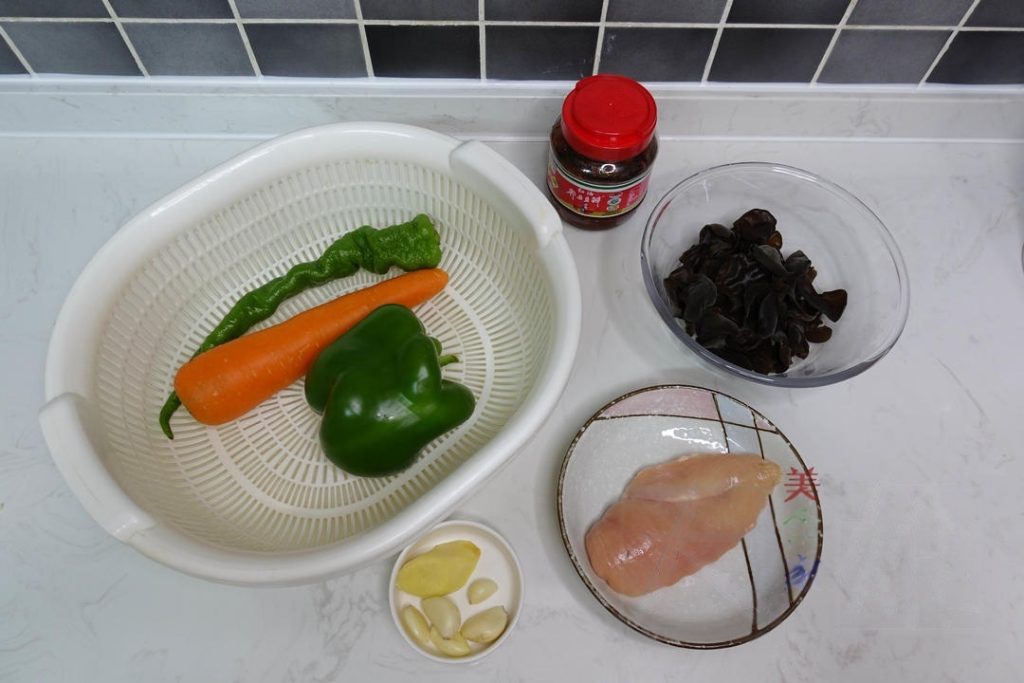
- Chicken Breast: You need about 8-9 oz (250g). Slice it against the grain to ensure tenderness.
- Wood Ear Mushrooms: These add a signature crunch. They are sold dried and need rehydration. If you enjoy cold appetizers, you can use leftovers to make our Wood Ear Mushroom Salad.
- Pixian Bean Paste (Doubanjiang): This is the soul of Sichuan cooking. It provides the red oil and earthy heat.
- Vegetables: We use carrots and bell peppers for color and crunch. You can add hot peppers if you prefer more spice.
- Aromatics: Ginger and garlic are non-negotiable here.
- The Seasonings: You will need Light Soy Sauce, sugar, white pepper, and vinegar (Chinkiang or rice vinegar).
Recipe Notes Before You Begin
- Preparation is Key: Stir-frying happens fast. Once the heat is on, you won’t have time to measure sugar or chop garlic. Have your mise en place ready.
- Wood Ear Mushrooms: Soak them in warm water for 20 minutes before slicing. They expand significantly, so a small handful is enough.
- Spiciness Control: The heat comes from the Doubanjiang and fresh peppers. If you are cooking for kids, skip the fresh hot peppers, but try to keep the bean paste for the authentic flavor.
How to Make Fish-Fragrant Chicken
Step 1: Mise en Place (Prep Work)
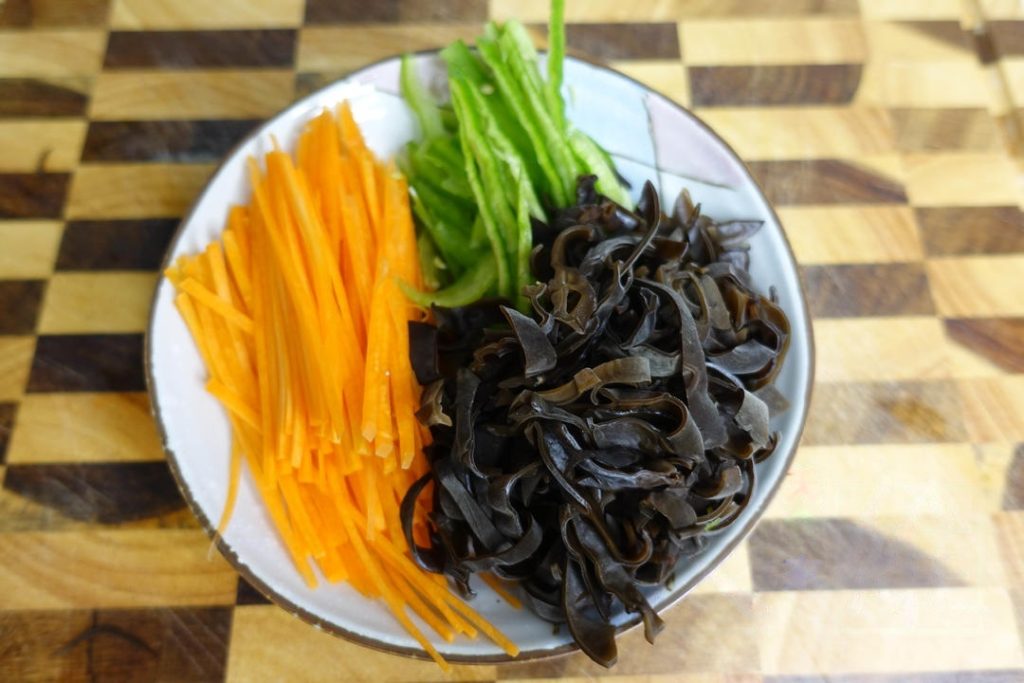
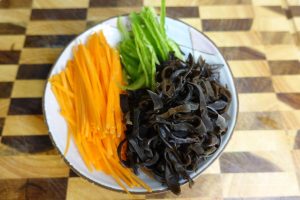
Slice the carrots, bell peppers, and rehydrated wood ear mushrooms into fine shreds. Finely mince the ginger and garlic. If you want extra heat, slice some hot screw peppers or fresh chili peppers.
Step 2: Marinate the Chicken (Velveting)
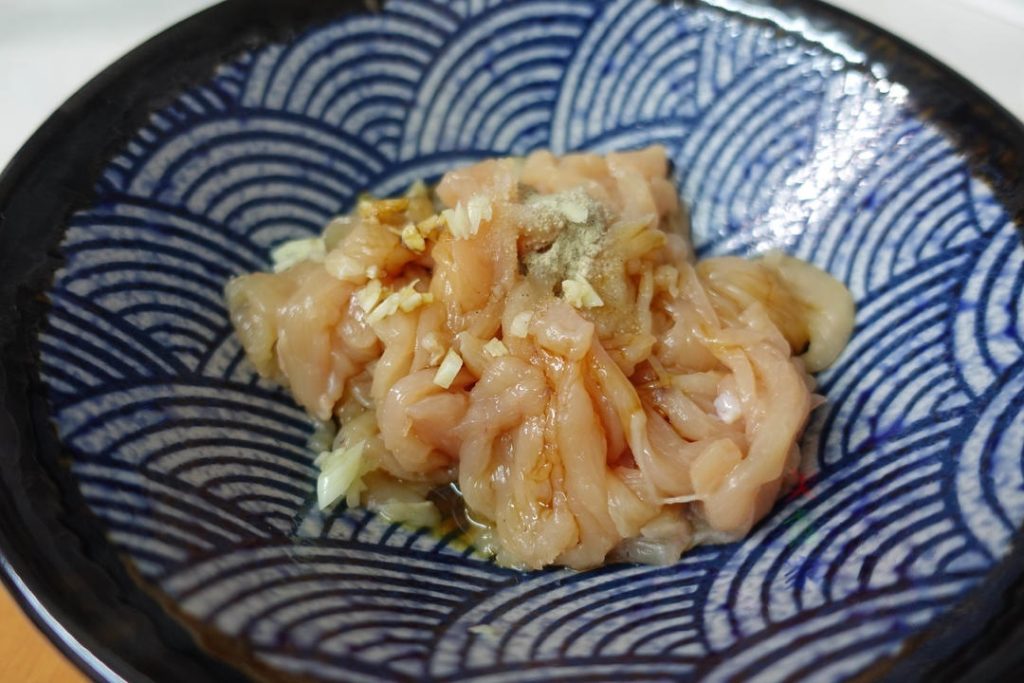
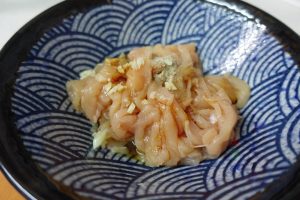
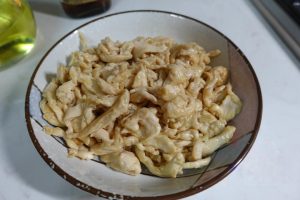
Cut the chicken breast horizontally to make it thinner, then slice it into thin strips against the grain. This shortens the muscle fibers for a softer chew.
In a bowl, mix the chicken with:
- 1 tbsp Light Soy Sauce
- 1/4 tsp salt
- 1 tbsp Shaoxing Wine
- 1/3 tsp white pepper
- A pinch of minced garlic
Mix well by hand. Then, add 2 tsp Cornstarch and mix until the chicken feels sticky. Finally, coat with 1/2 tbsp oil.
Why do this? The oil creates a barrier that prevents the chicken strips from sticking together when they hit the pan.
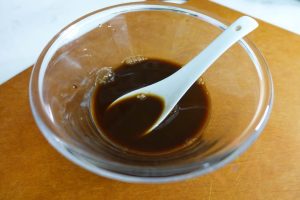
Step 3: Mix the Sauce
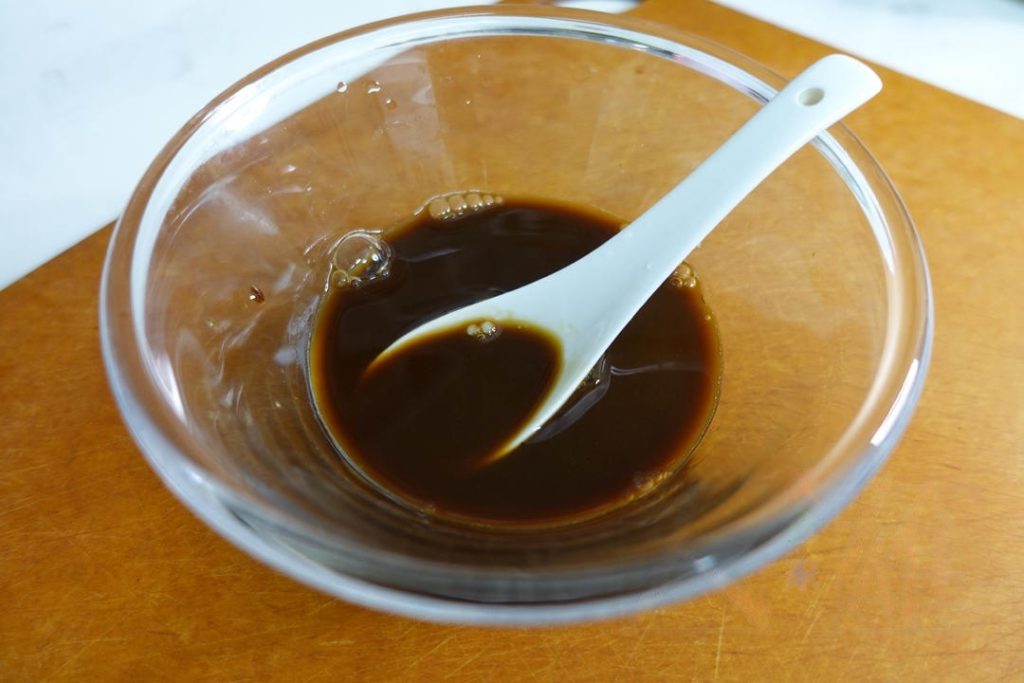
In a small bowl, combine:
- 2 tbsp Light Soy Sauce
- 3 tsp Sugar (or to taste)
- 3 tsp Rice Vinegar or Chinkiang Vinegar
- 3 tsp Cornstarch slurry (1 tsp cornstarch mixed with 2 tsp water)
Stir well to dissolve the sugar. This ensures the flavor is consistent when you pour it into the wok.
Step 4: The “Warm Oil” Cooking Method
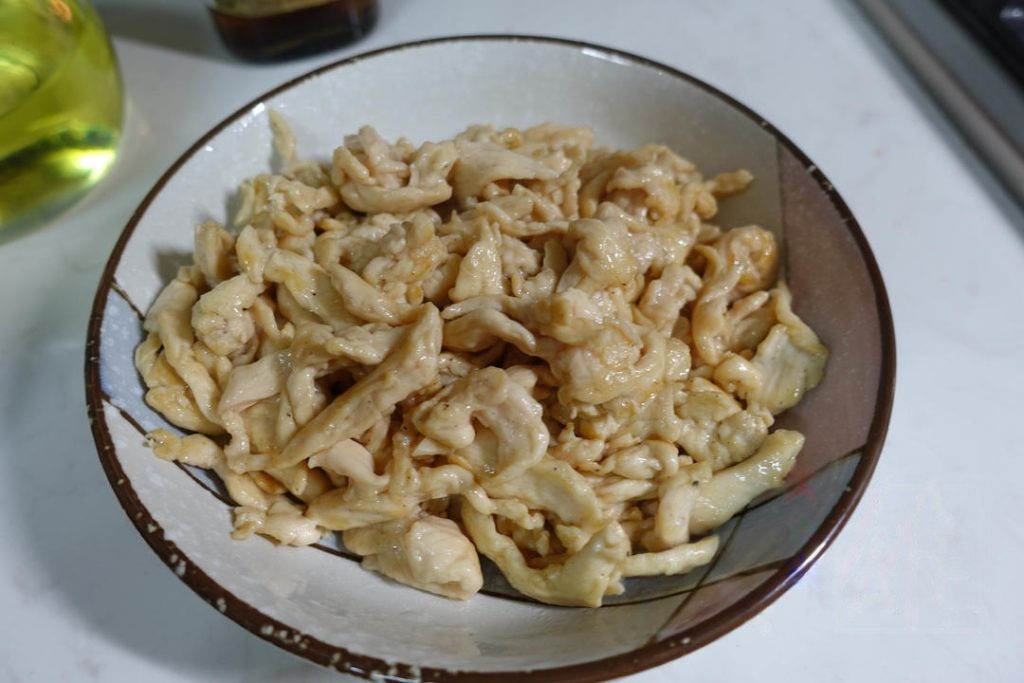
Place your wok or skillet over medium heat. Add about 1 tablespoon of oil. Immediately add the marinated chicken strips. Do not wait for the oil to smoke!
Stir-fry gently. Because the oil isn’t scorching hot, the chicken will separate easily and cook evenly. As soon as the meat turns white (about 1-2 minutes), remove it from the pan immediately.
Tip: Do not overcook here! The chicken will go back into the pan later.
Step 5: Aromatics and Red Oil
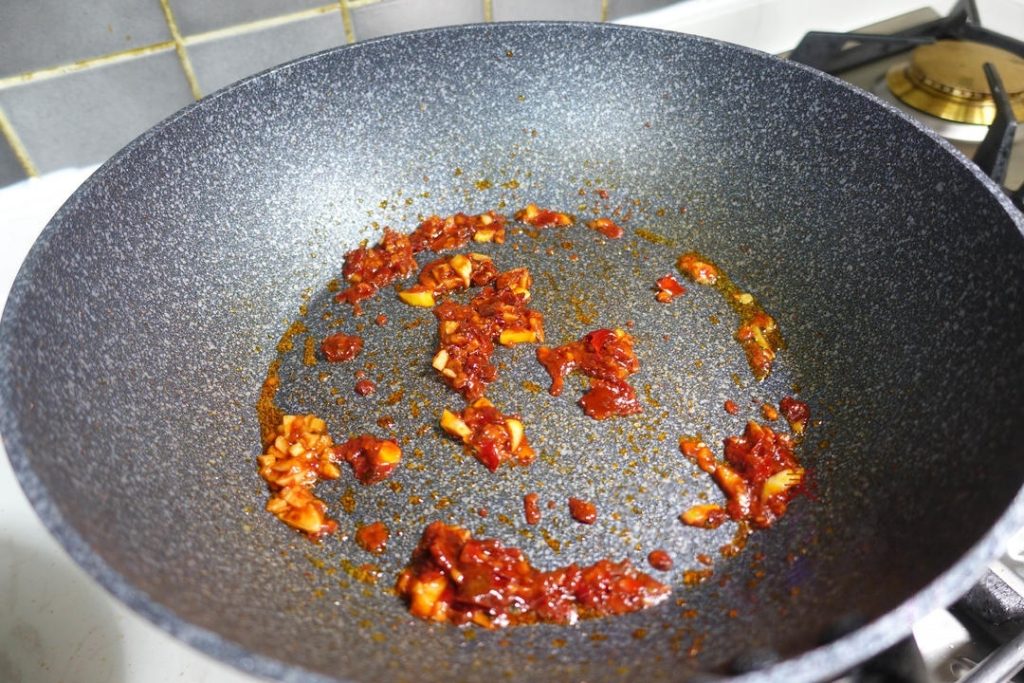
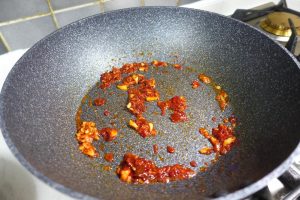
In the same pan (no need to wash it), add another tablespoon of oil. Add the minced ginger and garlic, and stir until fragrant. Add 1 tablespoon of Pixian Doubanjiang and 1 tbsp Shaoxing wine. Stir-fry over low heat until the oil turns red and the sauce smells aromatic. The wine helps remove any raw fermented odor from the bean paste.
Step 6: Stir-fry Vegetables
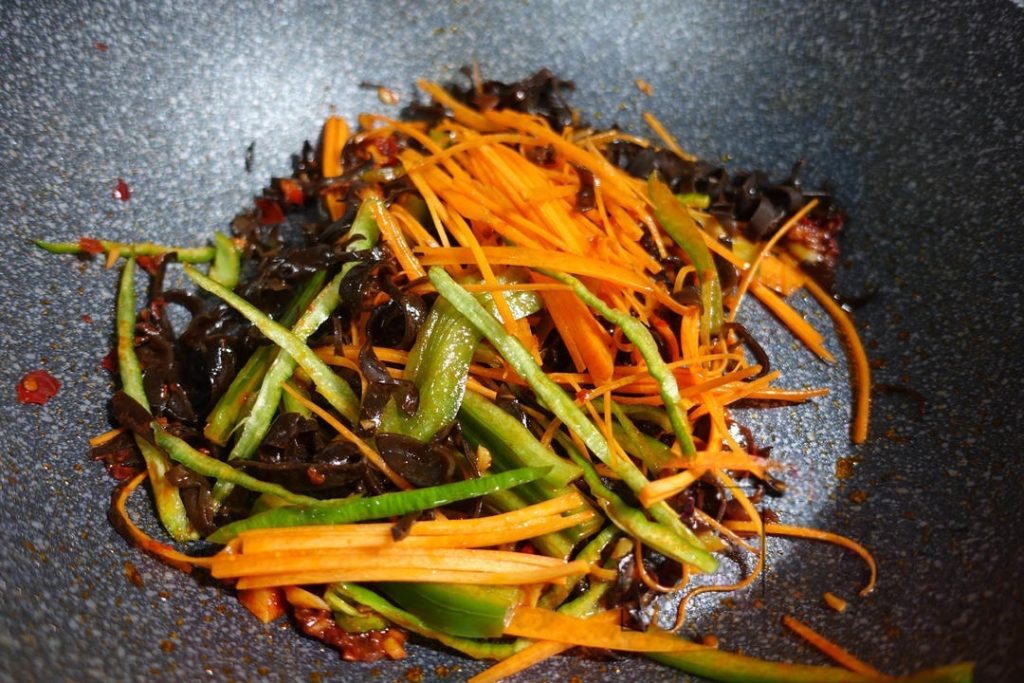
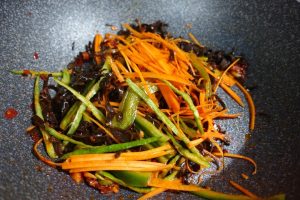
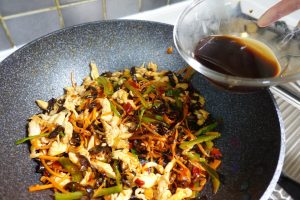
Turn the heat up to high. Add the carrot, wood ear mushrooms, and pepper shreds. Stir-fry for about 2 minutes until they are just tender but still crisp.
Step 7: Final Toss
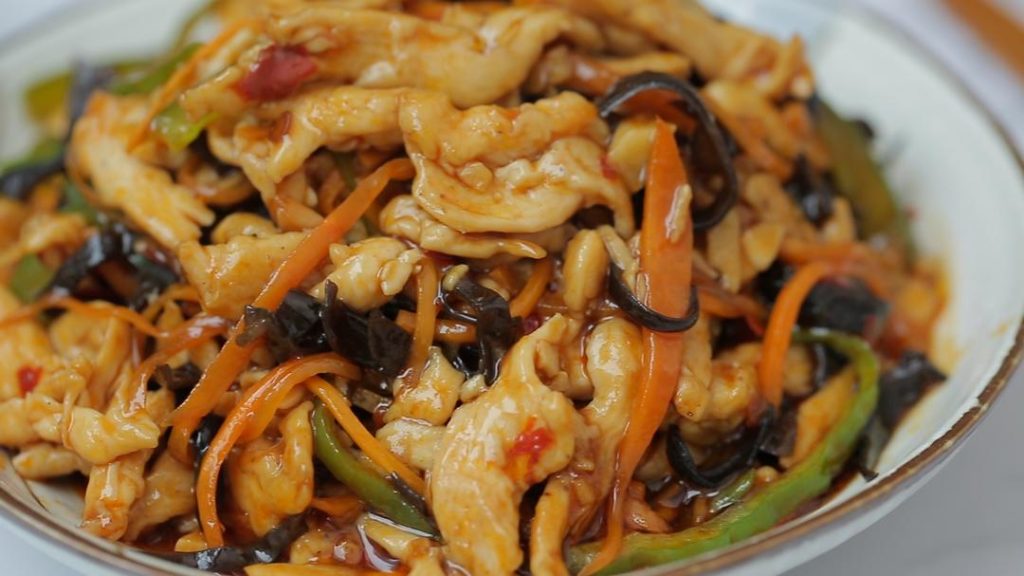
Return the cooked chicken to the pan. Give the sauce a quick stir (cornstarch settles) and pour it into the wok. Toss everything rapidly over high heat. The sauce should thicken instantly and coat every strand of meat and vegetable glossy and bright.
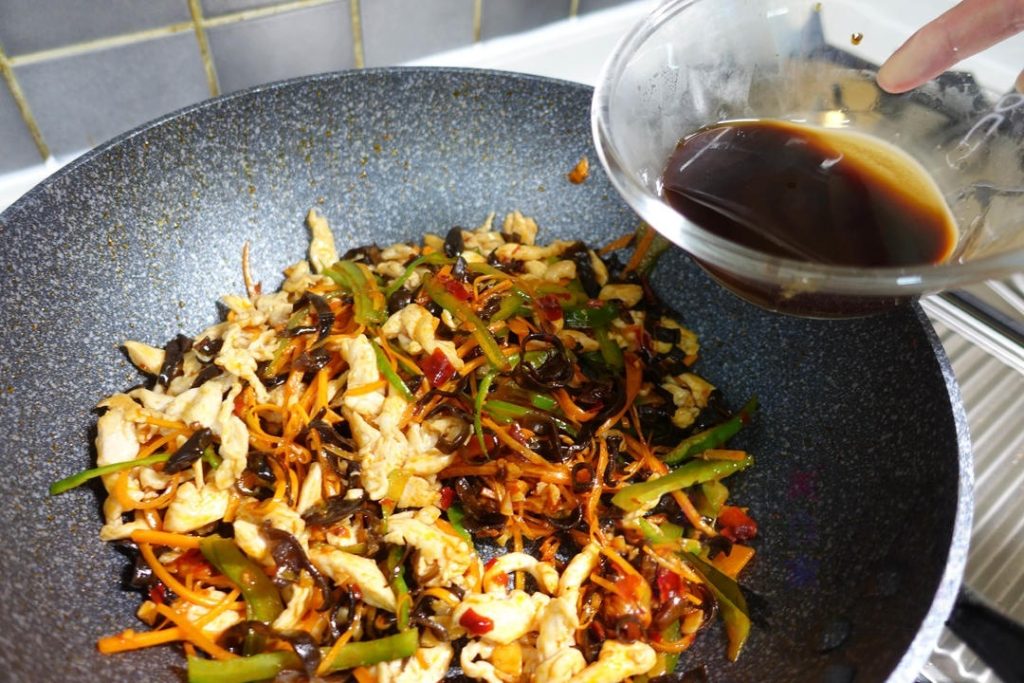
Turn off the heat and serve immediately.
Serving Suggestions
This dish demands steamed white rice to soak up that delicious sweet and sour garlic sauce. To make it a complete Chinese meal, I recommend pairing it with a refreshing cold dish like our Smashed Cucumber Salad to balance the heat.
If you are looking for a soup to go with it, a simple Tomato Egg Drop Soup works wonder.
Common Mistakes When Making This Dish
- Overcooking the Chicken: Chicken breast has very little fat. If you stir-fry it too long in Step 4, it will become dry. Remove it the second it turns white.
- Slicing with the Grain: If you cut parallel to the muscle fibers, the chicken will be chewy. Always cut perpendicular (across) the grain.
- Burning the Garlic: When frying the Doubanjiang and aromatics, keep the heat low. Burnt garlic will make the whole dish taste bitter.
Authoritative References
For more information on the safe handling of poultry and proper internal cooking temperatures, please refer to the USDA Food Safety and Inspection Service. Regarding the preparation of wood ear mushrooms, ensure they are not soaked for prolonged periods at room temperature to prevent bacterial growth; refer to safety guidelines from the Centre for Food Safety.
FAQ & Troubleshooting
Q: Can I use chicken thighs? A: Absolutely. Chicken thighs are naturally juicier and more forgiving. You can use the same marinade process.
Q: I don’t have Doubanjiang. What can I use? A: It is hard to replicate the exact flavor, but you can try mixing chili garlic sauce (like Lee Kum Kee) with a little soybean paste. Or, check out our guide on Doubanjiang for sourcing tips.
Q: Why is my sauce gloopy? A: The cornstarch in the sauce thickens very fast. If it’s too thick, add a splash of water. If it’s too thin, cook it for another 30 seconds.
Q: Is this dish gluten-free? A: Traditionally, no, because of the soy sauce and vinegar. However, you can make it gluten-free by using Tamari and ensuring your Doubanjiang is certified gluten-free. Check out our Gluten-Free Dumplings post for more tips on GF Chinese cooking.
Nutrition Information
- Serves: 2-3
- Prep Time: 15 minutes
- Cook Time: 10 minutes
- Total Time: 25 minutes
Estimated Nutrition (per serving):
- Calories: 320 kcal
- Protein: 28g
- Carbohydrates: 18g
- Fat: 14g
- Sodium: 980mg
- Sugar: 8g
(Disclaimer: Nutrition information is calculated using an ingredient database and should be considered an estimate. In cases where multiple ingredient alternatives are given, the first listed is calculated for nutrition. Garnishes and optional ingredients are not included. Actual values may vary based on specific brands used.)
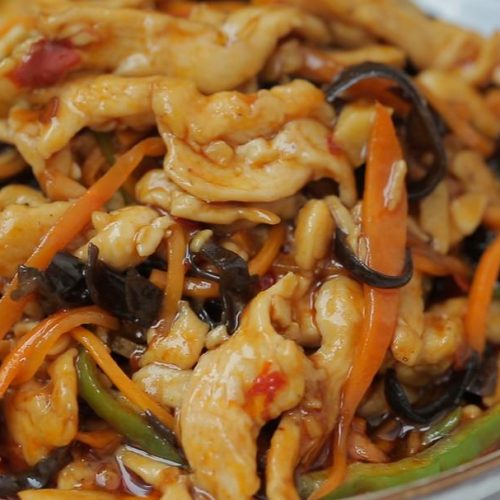
Fish-Fragrant Shredded Chicken (Yu Xiang Chicken)

Equipment
- 1 Wok or large skillet Carbon steel preferred
- 1 Sharp Knife For slicing chicken
Ingredients
Main Ingredients
- 8 oz chicken breast approx. 250g / half a jin
- 0.5 carrot julienned
- 1 handful dried wood ear mushrooms rehydrated and sliced
- 1 green bell pepper sliced into thin strips
- 0.5 hot pepper optional, for spice
- 1 chunk ginger minced
- 5 cloves garlic minced
Chicken Marinade
- 1 tbsp Light Soy Sauce
- 0.25 tsp salt
- 1 tbsp Shaoxing wine or dry sherry
- 0.33 tsp white pepper powder
- 2 tsp cornstarch
- 0.5 tbsp cooking oil to seal the meat
Fish Fragrant Sauce
- 2 tbsp Light Soy Sauce
- 3 tsp sugar
- 3 tsp rice vinegar or Chinkiang vinegar
- 1 tbsp Pixian Doubanjiang spicy bean paste
- 3 tsp cornstarch water 1 tsp starch + 2 tsp water
Instructions
- Prep the ingredients: Slice the carrot, green pepper, wood ear mushrooms, and hot peppers (if using) into thin, uniform shreds. Mince the ginger and garlic finely.

- Marinate the chicken: Slice the chicken breast in half horizontally to thin it out, then cut into thin strips against the grain. In a bowl, mix the chicken with 1 tbsp soy sauce, 1/4 tsp salt, 1 tbsp Shaoxing wine, 1/3 tsp white pepper, and a pinch of minced garlic. Mix well. Add 2 tsp cornstarch and coat evenly. Finally, add 1/2 tbsp oil and mix to prevent sticking.
- Make the sauce: In a small bowl, combine the cornstarch slurry (starch and water), 2 tbsp light soy sauce, 3 tsp sugar, and 3 tsp vinegar. Stir until the sugar is dissolved.
- Cook the chicken (Cold Oil Method): Place a wok over medium heat and add 1 tbsp oil. Immediately add the chicken strips (do not wait for the oil to smoke). Stir constantly. As soon as the chicken turns white (about 1-2 minutes), remove it from the pan. Do not overcook.
- Fry the aromatics: Add another tablespoon of oil to the wok. Add the minced ginger and garlic and fry over low heat until fragrant. Add 1 tbsp Doubanjiang (bean paste) and 1 tbsp cooking wine. Stir-fry gently until the oil turns red and the raw bean smell is gone.
- Stir-fry vegetables: Increase heat to high. Add the carrots, wood ears, and peppers. Stir-fry for about 2 minutes until tender-crisp.
- Combine and serve: Add the cooked chicken back into the wok. Give the sauce a quick stir and pour it in. Toss everything quickly over high heat to coat the ingredients in the sauce. Serve immediately.
Notes
- Make sure the chicken reaches an internal temperature of 165°F (74°C).
- Allergens: Contains Soy, Wheat (from soy sauce/vinegar). For gluten-free, use Tamari and GF vinegar/Doubanjiang.
- Nutrition information is calculated using an ingredient database and should be considered an estimate. In cases where multiple ingredient alternatives are given, the first listed is calculated for nutrition. Garnishes and optional ingredients are not included.
- The "Cold Oil" method is crucial for tender chicken breast. Do not throw the chicken into smoking hot oil or it will toughen up.
- Slice the chicken against the grain to ensure it is not chewy.




Leave a Reply