I’ve seen it dozens of times: a home cook spends hours researching the best carbon steel wok for beginners, follows a seasoning guide perfectly, and produces a beautiful first meal. Then, they take the wok to the sink, scrub it with Dawn soap and a steel wool pad, and leave it to air-dry on the rack. By morning, that gleaming black surface is covered in a fuzzy orange layer of rust.
The frustration is real. Unlike a standard non-stick skillet or a stainless steel pot, a wok is a “living” piece of equipment. If you treat it like a regular dish, it will fight back. Proper cleaning isn’t just about hygiene; it’s about protecting the carbonized layer of oil—the patina—that makes your wok naturally non-stick and capable of producing restaurant-quality results.
Quick Answer: The 60-Second Cleaning Rule
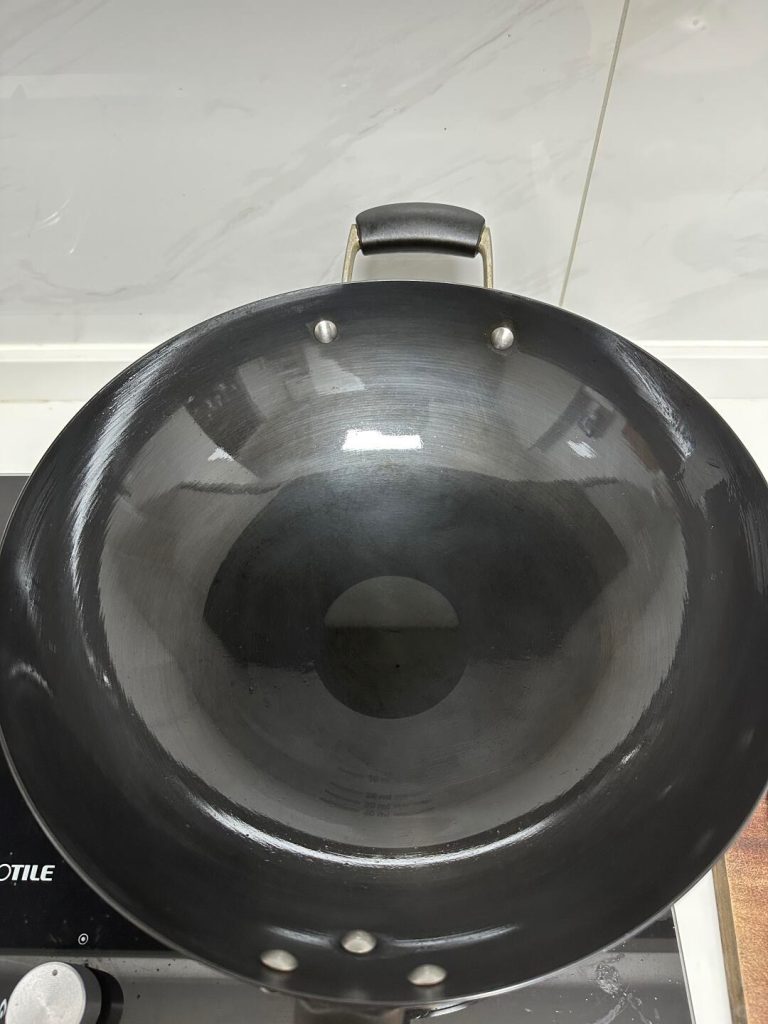
To clean a wok properly, rinse it under hot water (140–160°F / 60–71°C) immediately after cooking. Use a bamboo wok brush or a soft sponge to whisk away food particles—avoiding soap whenever possible. Finally, dry the wok over a high flame on your stove for 30–60 seconds until all moisture evaporates, then rub in a tiny drop of high-smoke-point oil.
Why It Works: The Science of the Patina
Carbon steel is highly reactive. When exposed to oxygen and moisture, it creates iron oxide (rust). However, through the process of polymerization, oils are converted into a hard, plastic-like film called a patina.
- Heat vs. Bacteria: Because we cook at temperatures between 375–450°F (190–230°C), the heat itself sanitizes the wok. A “sterile” soapy scrub is actually counterproductive because it strips the protective oils.
- Thermal Shock: Using hot water on a hot wok prevents the metal from warping.
- Moisture Evaporation: Air-drying is the enemy. Forced evaporation over a burner ensures no microscopic water droplets remain to trigger oxidation.
The Real Kitchen Insight: Lessons from the Line
In my experience working in restaurant kitchens, we never “washed” woks in the western sense. Between orders, a chef uses a ladle of hot water and a bamboo brush, gives it a lightning-fast swirl, tosses the water into the trough, and puts the wok back on the 100,000 BTU burner.
What most beginners don’t realize is that a “clean” wok should still feel slightly seasoned, not stripped bare. In a restaurant, the wok stays hot all day, preventing rust. At home, since your stove likely puts out closer to 12,000–18,000 BTU, you have to be much more intentional about the drying and oiling phase to compensate for the lower heat levels and longer periods of storage.
Essential Tools for Wok Maintenance
You don’t need a chemical cabinet to keep your wok in shape. Here is what I recommend:
- Bamboo Wok Brush: The gold standard. It’s stiff enough to scrape off charred bits but flexible enough not to scratch the patina.
- Hot Water: Never use cold water on a hot wok.
- High-Smoke-Point Oil: Use the same best oil for stir frying you use for cooking—canola, grapeseed, or peanut oil work best. Avoid olive oil or butter, as they go rancid and sticky during storage.
- Soft Sponge (Optional): Only for stubborn residues.
Prep Strategy: Mise en Place for Cleaning
Cleaning starts before you even eat.
- Clear the Sink: Make sure you have enough room to maneuver a 14-inch wok without hitting the faucet.
- Heat the Water: Start the hot water tap early so it’s ready the moment the food hits the serving platter.
- The “Spatula Scrape”: Before taking the wok to the sink, use your best spatula for stir fry to scrape out any loose debris while the pan is still over the heat.
Step-by-Step: How to Clean Your Wok
- The Initial Rinse: Immediately after serving, place the hot wok under a stream of hot water. You should hear a loud hiss as the water hits the metal.
- The Whisk: Use your bamboo brush in a circular motion. The steam created by the hot water helps loosen any protein or starches stuck to the surface.
- The Rinse-Repeat: Dump the murky water and rinse one more time. The surface should feel smooth to the touch. If it feels “gritty,” you haven’t removed all the food.
- The Heat Dry: Place the wet wok back on your stove over medium-high heat. Within 30 seconds, you will see the water droplets “dance” and then vanish.
- The Oil Buffer: Once the wok is bone-dry and slightly smoking, take a paper towel with a half-teaspoon of oil. Rub it all over the interior until the metal gleams, then use a clean side of the towel to buff away any excess.
6 Common Wok Cleaning Mistakes + Fixes
| Mistake | Why It Happens | The Professional Fix |
|---|---|---|
| Using Dish Soap | Habit from washing regular dishes. | Soap dissolves the oil-based patina. Use only hot water. |
| Soaking Overnight | Trying to soften stuck-on rice or sauce. | Guaranteed rust. Use a “simmer scrub” (boil water in the wok) instead. |
| Air-Drying | Assuming it will dry naturally. | Humidity causes oxidation. Always dry over a flame. |
| Using Steel Wool | Wanting to get it “perfectly clean.” | It strips the seasoning back to raw silver metal. Use bamboo or a soft sponge. |
| Ignoring the Bottom | Focusing only on the cooking surface. | The exterior can also rust or develop thick carbon crust. Wipe the bottom too. |
| Oiling a Cold Wok | Applying oil after the wok has cooled down. | The oil won’t bond as well and may become sticky/tacky. Oil while warm. |
Pro Tips: Advanced Wok Care
- Wok vs. Skillet: If you are using a flat pan vs wok for stir fry, the cleaning process is the same for carbon steel, but much easier for cast iron. Woks have thinner walls, meaning they react faster to heat and cool-down.
- The Salt Scrub: If you have extremely stubborn burnt sugar, pour 2 tablespoons of kosher salt into a dry, warm wok and scrub with a paper towel. The salt acts as a gentle abrasive.
- Flavor Layering: A well-cleaned wok carries a hint of “breath” from previous meals. This contributes to the wok hei in your next dish.
Maintenance Mini-Routine
Think of this as your “Daily Zen” for the kitchen:
- Cook and serve.
- Hot water swirl (no soap).
- Bamboo brush whisk.
- Flash dry on high heat.
- Light oil buff.
- Hang it up (don’t stack heavy pots on top of it).
About the Author & Recipe Development
I’m Lin, and I’ve spent over a decade behind the burners of high-volume Chinese restaurants and in the quiet of my own home kitchen. I developed this cleaning guide after testing multiple “Westernized” cleaning methods that resulted in stripped seasoning and uneven heat distribution. This specific routine has been tested on everything from traditional hand-hammered carbon steel to modern flat-bottom woks on electric coils. My goal is to bridge the gap between professional speed and home-kitchen longevity.
Sources & Standards Referenced
- ASTM International – Standard Guide for Cleaning Metals: Provides technical standards on oxidation and surface preparation for carbon steel. https://www.astm.org/standards/cleaning-metals
- USDA Food Safety and Inspection Service – Kitchen Thermometers: Reference for safe water temperatures and heat sanitization. https://www.fsis.usda.gov/food-safety/safe-food-handling-and-preparation
- Culinary Institute of America – Professional Pan Maintenance: Guidelines on maintaining polymerized fats on professional cookware. https://www.ciachef.edu/
Frequently Asked Questions
Can I ever use soap on my wok?
Yes, but only if you’ve cooked something extremely pungent (like fermented fish) or if the wok feels excessively greasy/rancid. If you use soap, you must immediately re-season the wok with oil and heat.
What if I see rust?
Don’t panic. Scrub the rust off with a scouring pad, dry it thoroughly, and follow my guide on how to season a wok properly to restore the surface.
Why is my wok turning blue or purple?
This is a good sign! It’s called “blueing,” a result of heat reacting with the carbon steel to create a protective oxide layer. It’s part of the maturation process.
Is it okay to put my wok in the dishwasher?
Never. A dishwasher will strip the seasoning, cause instant rust, and can even ruin the wooden handles found on many home woks.
How do I prevent a watery stir-fry through cleaning?
If your wok isn’t cleaned properly, old carbon buildup creates “hot spots” that cause food to stick and release water. A smooth, clean patina is essential for moisture control during high-heat cooking.
How to Serve & Store
Once your wok is cleaned and oiled, store it in a dry, well-ventilated area. If you live in a humid climate, consider storing it in a cupboard with a moisture-absorbing packet. A clean wok is the foundation for every great Chinese meal, from a simple vegetable stir-fry to a complex braised dish.
Nutrition & Safety Disclaimer
Nutrition information is an estimate and provided for informational purposes only. When cleaning with high heat, ensure proper ventilation in your kitchen to avoid inhaling smoke from oil. Never leave a heating wok unattended on the stove.








Leave a Reply