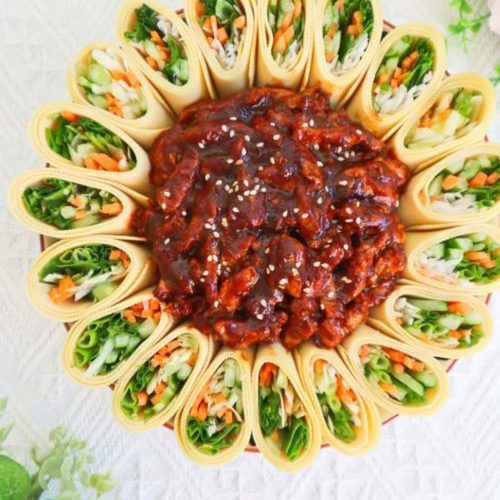
There is a moment in every Beijing kitchen when the smell of tianmianjiang hits a hot wok and the whole room turns. That is the moment shredded pork in sweet bean sauce — jing jiang rou si — starts to become dinner. The pork is sliced into fine strips, marinated until silky, then tossed in a glossy, caramel-dark sauce that clings to every strand. It lands in the middle of a plate ringed with tofu skin rolls packed with cool, crunchy vegetables, and the contrast is the whole point: rich and sweet against fresh and crisp, all in one bite.
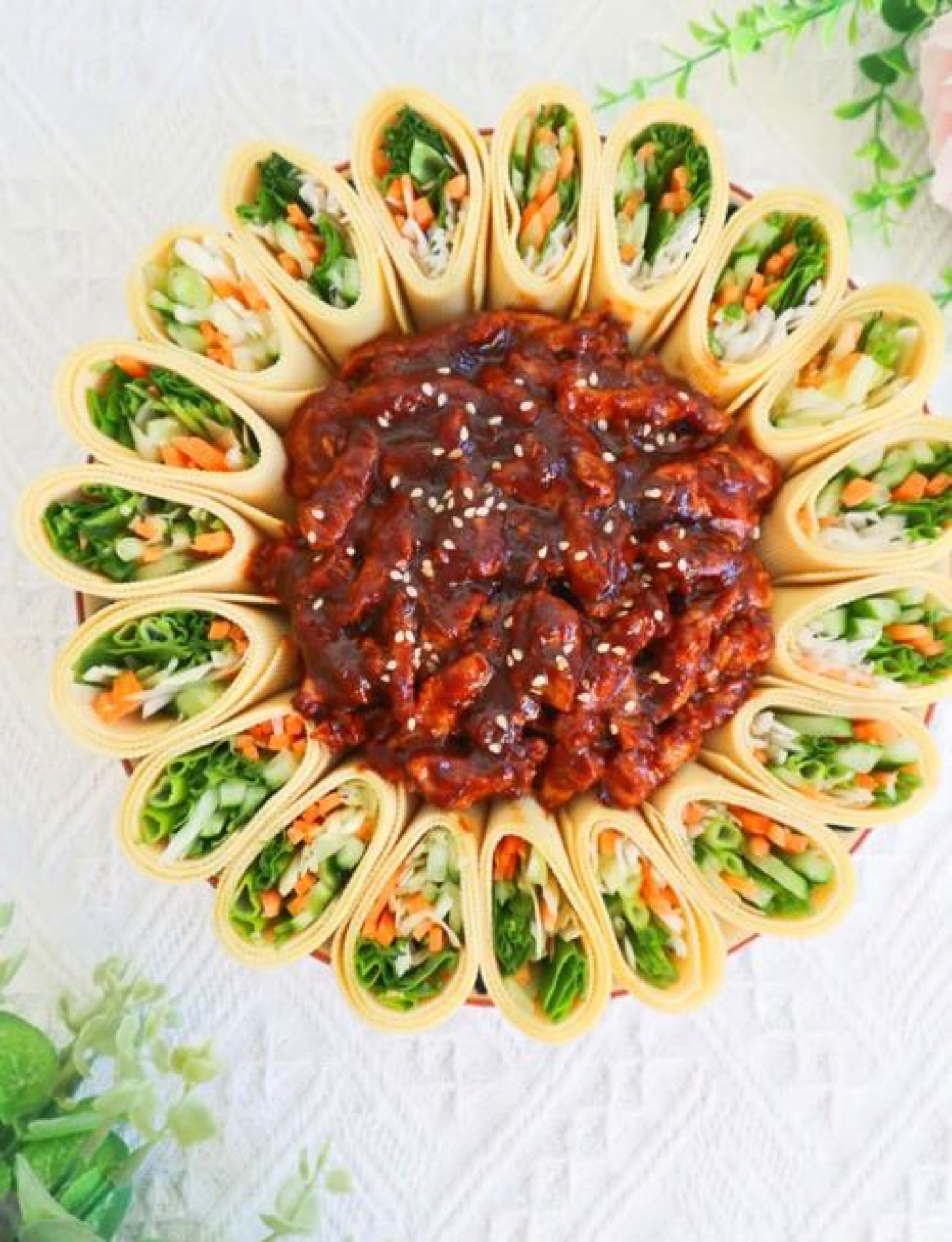
What makes this version a little different from a restaurant plate is the wrapping. Instead of the usual scallion-only garnish, the tofu skin is rolled around carrot, cucumber, onion, and cilantro, then sliced into neat segments that circle the pork. You get a built-in side dish, a built-in garnish, and a built-in way to eat the pork — scoop a little onto a roll segment, fold, and eat.
It is also genuinely fast once you have done the prep. The pork needs a 15-minute marinade, the sauce is a 30-second stir in a bowl, and the actual wok work is under five minutes. That is the kind of dish that earns a permanent spot in the weeknight rotation.
What Is Shredded Pork in Sweet Bean Sauce?
Shredded pork in sweet bean sauce is a classic Beijing stir-fry built on tianmianjiang, the fermented sweet bean paste also used for Peking duck. The pork is cut into thin strips, velveted with salt, soy, water, and cornstarch, then flash-fried and folded into a sauce of tianmianjiang, sugar, dark soy, and sesame oil. The finished dish is sweet, savory, deeply aromatic, and almost lacquered in appearance.
Traditionally it is served with scallion and sometimes thin pancakes or tofu skin, and eaten by wrapping the pork with the garnish. The version here leans into that idea fully: the tofu skin is rolled around julienned vegetables ahead of time, sliced, and plated as a ring, so every serving comes with its own crisp counterpoint. If you want to go deeper on the paste itself, our guide to sweet bean sauce explains exactly what tianmianjiang is and how it behaves in a wok.
Sweet bean sauce is not hoisin and it is not bean paste. It is a wheat-flour-based fermented paste — sweet, salty, and thick — and it is the single ingredient that makes jing jiang rou si taste like jing jiang rou si.
If you have ever ordered this in a Beijing restaurant and wondered why the pork was so tender, the answer is almost always the marinade technique: water worked in a little at a time, then starch, then a film of oil. It is the same velveting method that makes so many Chinese stir-fries feel luxurious, and it is the reason the pork here stays soft even after a hard sear.
The dish sits in the same family as other wok-glazed pork plates, where a fermented sauce does the heavy lifting and the meat is sliced thin enough to cook in seconds. If you enjoy that style, our shredded pork in sweet bean sauce is the more traditional pancake-and-scallion presentation of the very same idea.
For a different but equally satisfying use of the same paste, our sweet bean sauce chicken swaps pork for chicken and keeps the sweet-savory glaze intact. And when you want the paste to do its work in a heartier braise, our savory minced pork sauce turns it into a universal topping that keeps for days in the fridge.
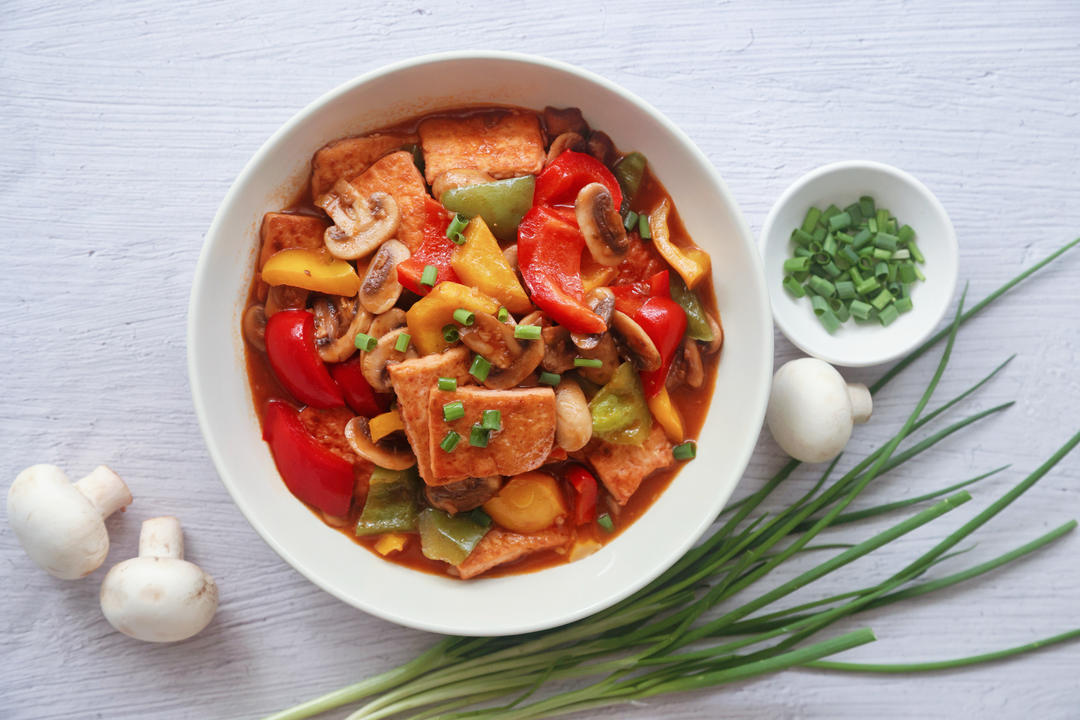
If you like this kind of cooking, my braised tofu and mushrooms is the closest recipe on the site — the same technique and the same pantry.
1Braised Tofu and Mushrooms with Savory SauceThis Braised Tofu and Mushrooms recipe uses a secret weapon—Spare Rib Sauce—to create a rich, savory, vegetarian dish that tastes even better than meat. It features pan-fried firm tofu and juicy button mushrooms braised in a glossy, umami-packed glaze.Check out this recipe
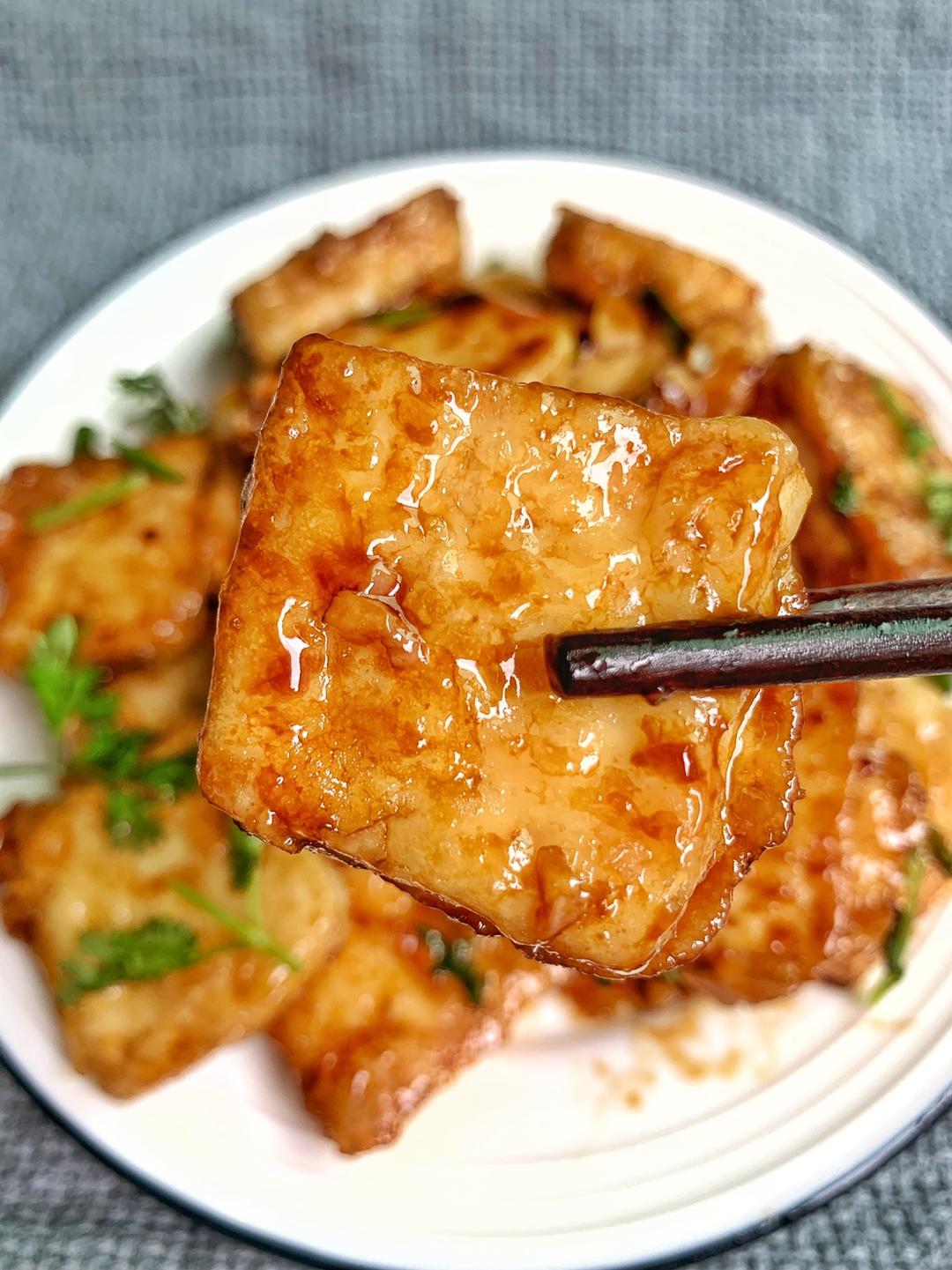
Cooked this way once, you will want the next one too: pan fried tofu with garlic sauce starts from the same base and the same pan.
2Easy Pan-Fried Tofu with Garlic Sauce (香煎豆腐)This 15-minute recipe creates unbelievably crispy pan-fried tofu cubes tossed in a rich, savory, and glossy garlic soy sauce. It’s a homestyle Chinese dish that’s fast, easy, and better than takeout.Check out this recipe
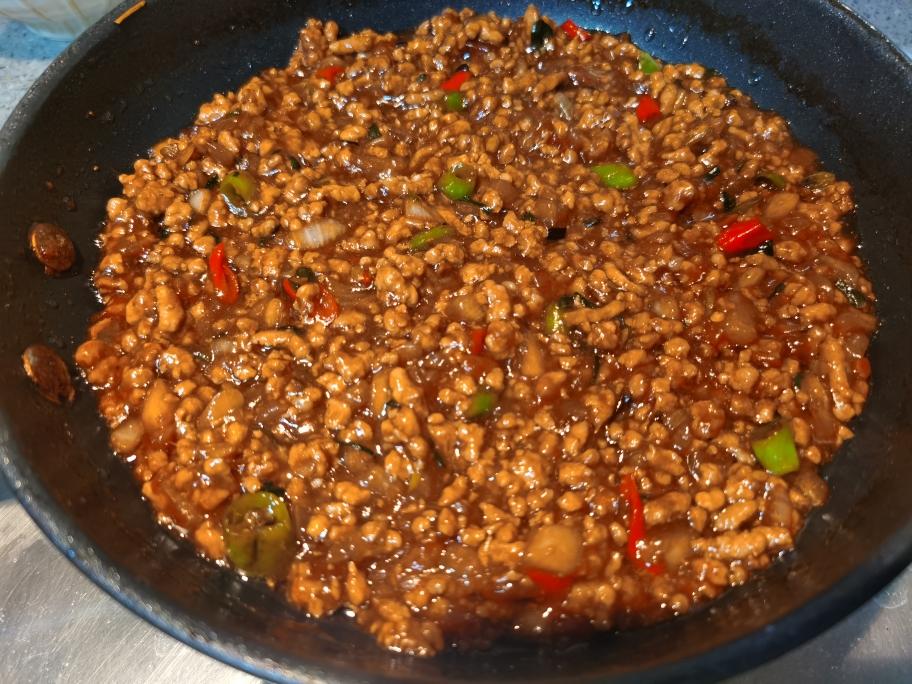
For the next cook from the same playbook, savory minced pork sauce is the recipe I point people to.
3Savory Minced Pork Sauce (Wan Neng Rou Mo Jiang)This “Universal” Minced Pork Sauce (Wan Neng Rou Mo Jiang) is the ultimate 15-minute meal saver. Savory, glossy, and packed with aromatics, it turns plain rice, noodles, or buns into a feast. Based on a classic Chinese home-cooking staple.Check out this recipe
Why This Recipe Works
Three things separate a good jing jiang rou si from a mediocre one, and this recipe is built around all three.
First, the pork is cut with the grain, not against it. It sounds backwards — most stir-fry advice says cut across the grain for tenderness. But for a dish where the strips are meant to hold their shape under a heavy sauce, cutting with the grain gives you strands that stay intact instead of shredding apart. The tenderizing comes from the marinade instead.
Second, the marinade is built in stages. Salt and soy first, stirred in one direction until the surface turns tacky. Then scallion-ginger water, added a spoonful at a time and fully absorbed before the next addition. Then cornstarch to seal it, then oil to keep the strips from sticking to each other. This is the difference between pork that tastes seasoned and pork that tastes like a sauce was poured on top of it.
Third, the sauce is reduced to the right texture before the pork goes back in. Cooking tianmianjiang with water, sugar, and dark soy until it bubbles vigorously and coats a spatula means the glaze is already thick when the pork arrives. The pork only needs a fast toss to pick it up, so it never overcooks in the pan.
The tofu skin ring is the fourth, quieter trick. Because the rolls are assembled and sliced before the wok ever gets hot, plating takes seconds and the vegetables stay cold and crisp against the hot pork.
Equipment Needed
A wok is the right pan here, and a carbon steel one is ideal — it heats fast, holds high heat, and gives you the wide sloping sides you need to toss pork strips without flinging them across the kitchen. A flat-bottomed wok works on a standard home range; if you only have a skillet, use the largest one you own and preheat it thoroughly.
You will also want a sharp chef’s knife and a stable cutting board. The pork needs to be sliced thin and even, and a dull knife will tear the strips instead of cutting them cleanly. A slotted spoon or spider is the easiest way to lift the pork out of the oil after the first fry, leaving the oil behind in the wok.
For the plating, a round serving platter with a slight lip works best — the tofu skin segments ring the edge and the pork sits in the well in the middle. Two small bowls are useful too: one for the marinade stages and one for the mixed sauce.
Ingredients
Here is everything you need for four servings. The pork is the star, but the sauce and the tofu skin ring are what make the plate look and eat like a restaurant dish.
- Pork tenderloin (400 g / about 14 oz) — cut into thin strips with the grain.
- Salt (2 g), white pepper (0.5 g), light soy sauce (5 g) — the seasoning base for the marinade.
- Cornstarch (15 g) — seals the marinade and protects the pork during frying.
- Neutral oil (8 g for the marinade, plus more for the wok) — keeps the strips separate.
- Scallion (30 g) and ginger (8 g) — smashed and steeped in water to make scallion-ginger water.
- Sugar (8 g), sweet bean sauce (40 g), dark soy sauce (10 g), sesame oil (2 g), water (20 g) — the glaze.
- Tofu skin (1 whole sheet) — the wrapper for the vegetable rolls.
- Carrot (1), cucumber (1), onion (1/2), cilantro (1 small handful) — the julienned filling.
Ingredient Notes
Sweet bean sauce (tianmianjiang) is the one ingredient you cannot substitute casually. It is a fermented wheat-flour paste, sweet and salty and thick, and it is what gives the dish its color and its signature flavor. If you can only find a chunky bean paste, blend it smooth first. Our recipe for sweet bean sauce walks through making it from scratch if you want to go that route.
Pork tenderloin is the classic choice because it is lean, mild, and easy to slice into uniform strips. Pork loin works too, and even a well-trimmed piece of shoulder will do if you freeze it briefly to firm it up before slicing. What you want to avoid is any cut with a lot of connective tissue running through it — it will not slice cleanly.
Cornstarch, not flour. Cornstarch gives the pork a slicker, more glassy coating and thickens the sauce more cleanly. If you only have potato starch, that is a fine swap; all-purpose flour is not.
Dark soy sauce is doing color work here, not just flavor. It is what turns the glaze deep mahogany. Light soy alone will taste fine but look pale, so do not skip it.
Tofu skin — sometimes sold as yuba or bean curd sheet — should be pliable, not brittle. If yours is stiff, lay it between damp paper towels for ten minutes and it will soften enough to roll without cracking.
Scallion-ginger water is worth making fresh. It adds a clean, aromatic moisture to the pork that plain water cannot replicate, and it is the reason the marinade smells so good before the pork even hits the pan.
For vegetables, cut everything to roughly the same thickness as a matchstick. Uniformity matters more than any particular combination — the rolls need to lie flat so they slice cleanly.
Prep & Mise en Place
This dish moves fast at the end, so the goal is to have nothing left to do once the wok is hot.
Step one: julienne the vegetables. Cut the carrot, cucumber, and onion into thin, even strips and cut the cilantro into short segments. Keep them cold until you are ready to roll — a few minutes in the fridge keeps them crisp.
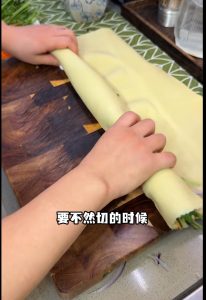
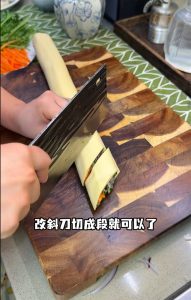
Step two: build the tofu skin rolls. Lay the sheet flat, spread the vegetables in an even layer, and roll it up tightly. The tighter the roll, the cleaner the slices. Cut on a sharp diagonal into segments and arrange them around the rim of your serving plate. Set the plate aside.
Step three: make the scallion-ginger water. Smash the scallion and ginger, cover with water, and squeeze the aromatics with your hand until the water smells fragrant. Strain and set aside.
Step four: slice and marinate the pork. Slice the tenderloin with the grain into thin strips, rinse, and squeeze dry. Season, work in the scallion-ginger water gradually, then the cornstarch, then the oil. Let it sit for 15 minutes.
Step five: mix the sauce. Stir the water, sugar, sweet bean sauce, dark soy, and sesame oil together in a small bowl until completely smooth. Set it within arm’s reach of the wok.
With the plate built, the pork marinating, and the sauce mixed, you are ready. Everything from here is a few minutes of high heat.
Cooking Process
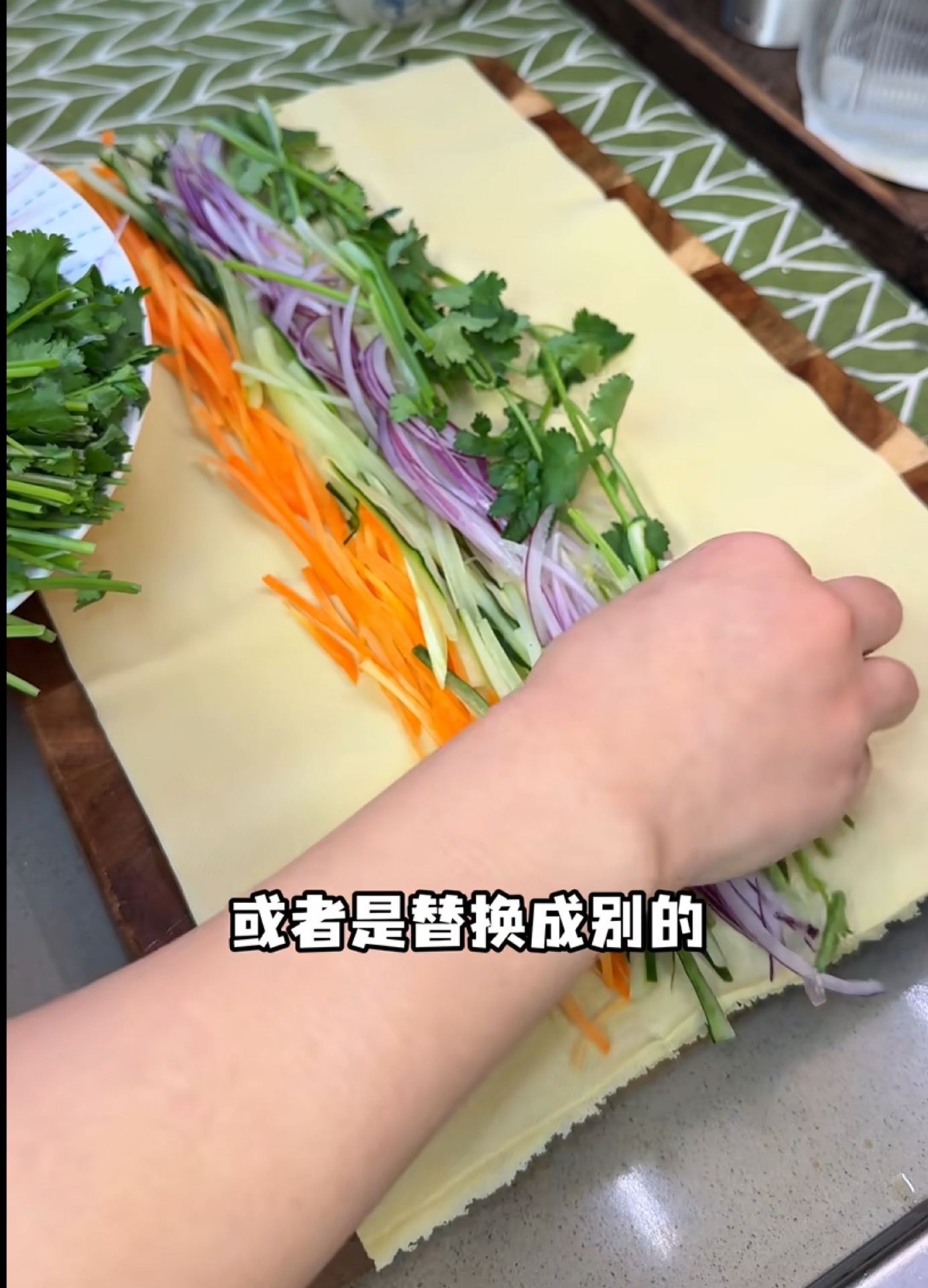
Step 1 — Prep the Wraps
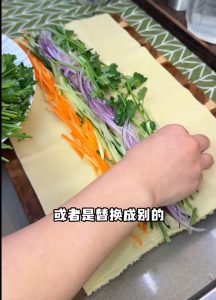
Julienne 1 carrot, 1/2 onion, and 1 cucumber into thin strips, and cut a small handful of cilantro into segments. Lay a whole sheet of tofu skin flat and arrange the vegetables in an even layer across it.
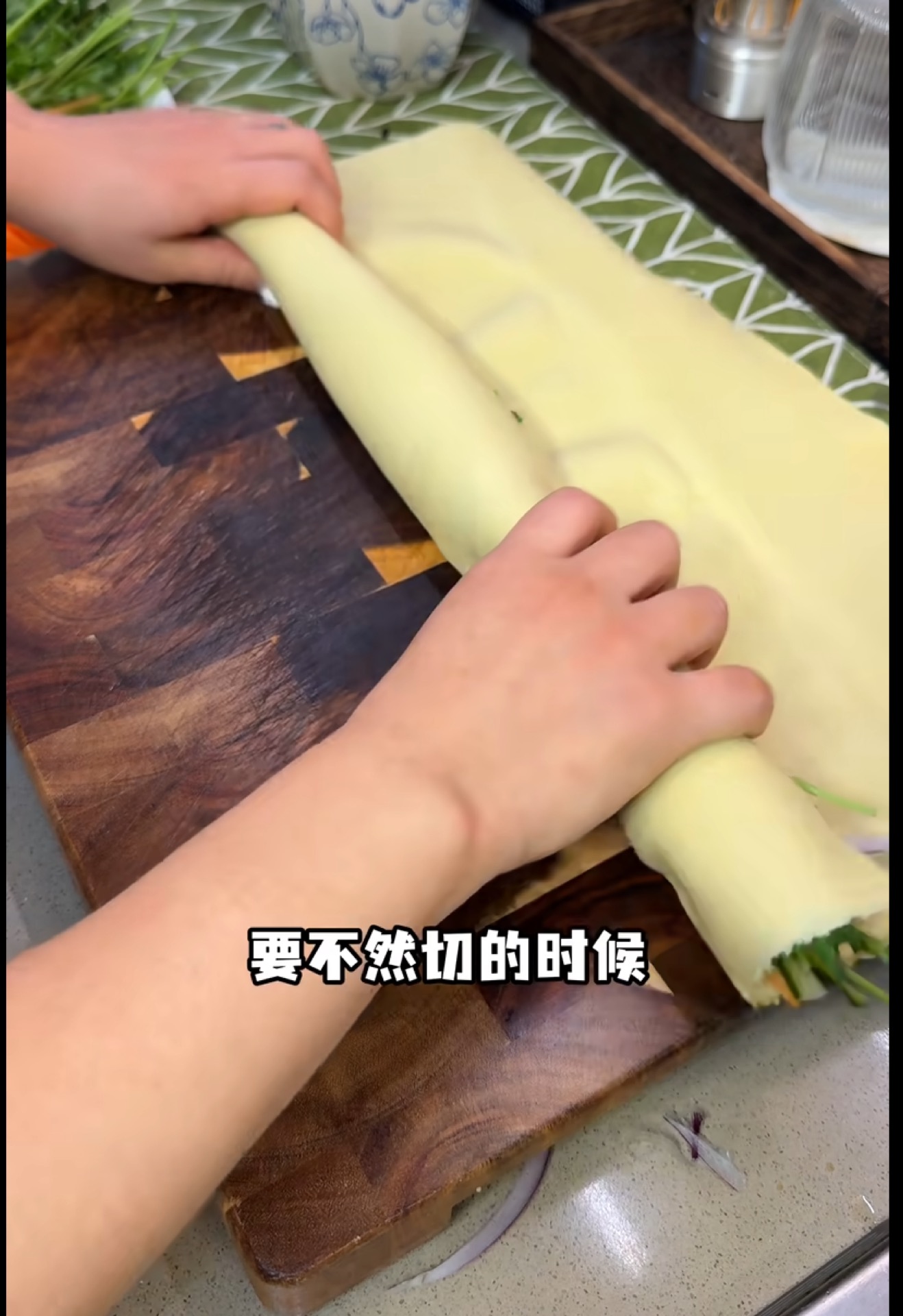
Step 2 — Roll It Tight
Roll the tofu skin up around the filling, pressing firmly as you go so the bundle stays compact and holds together.
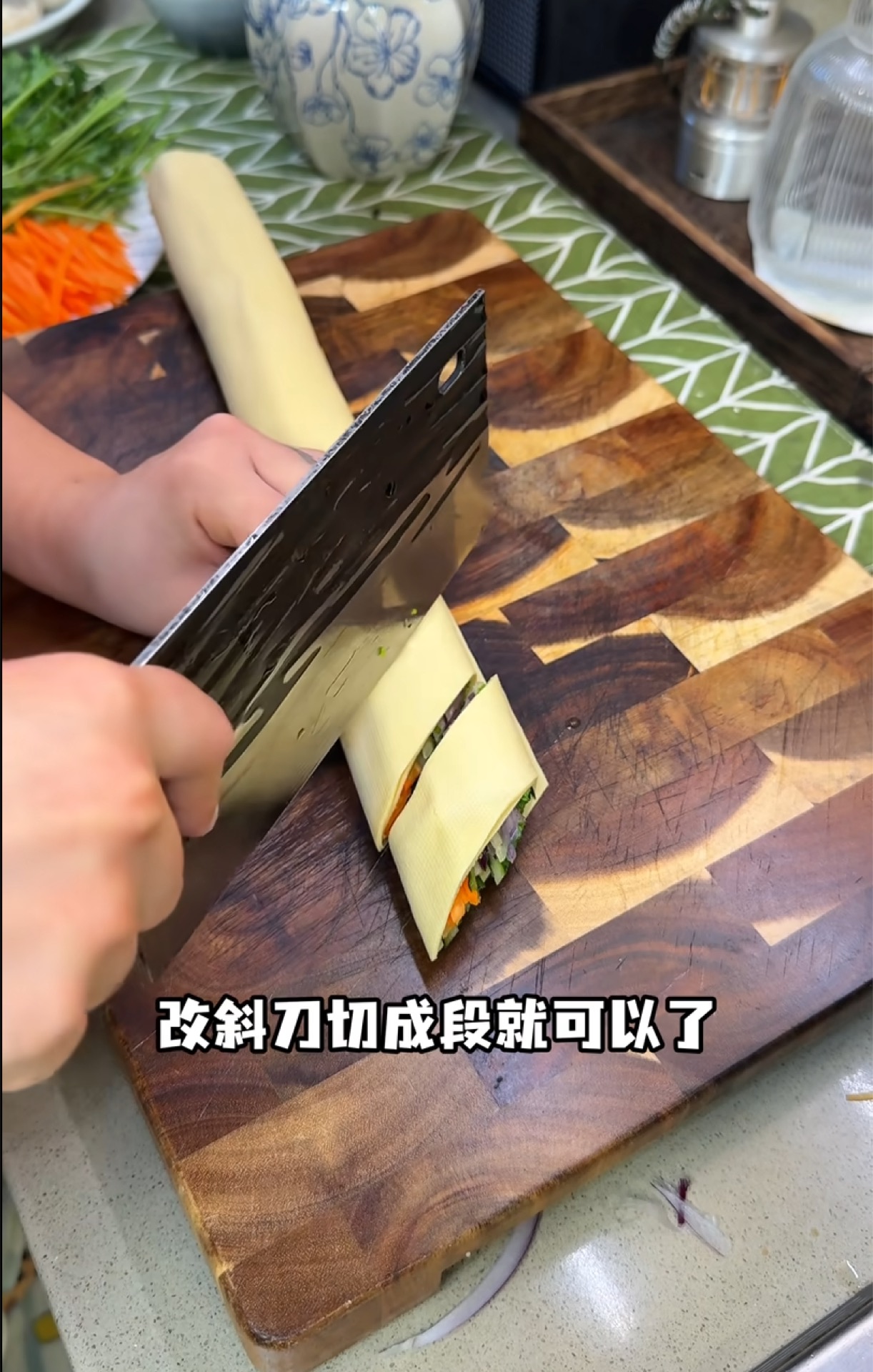
Step 3 — Slice and Plate
Cut the roll on a sharp diagonal into segments, then arrange them in a ring around the outer edge of a serving plate.
Step 4 — Make the Scallion-Ginger Water
Smash 30 g scallion and 8 g ginger with the flat side of a knife, add 30 g water, and squeeze the aromatics with your hand to release their juice. Set the scallion-ginger water aside.
Step 5 — Marinate the Pork
Slice 400 g pork tenderloin with the grain into thin slices, then into strips, always cutting along the grain rather than across it. Rinse the strips in clean water to remove blood, then squeeze them dry. Add 2 g salt, 0.5 g white pepper, and 5 g light soy sauce, and stir in one direction until the pork turns tacky. Work in the scallion-ginger water a little at a time, waiting until each addition is fully absorbed before adding more. Stir in 15 g cornstarch until coated, then 8 g oil, and marinate for 15 minutes.
Step 6 — Mix the Sauce
Combine 20 g water with 8 g sugar, 40 g sweet bean sauce, 10 g dark soy sauce, and 2 g sesame oil in a small bowl and stir until smooth.
Step 7 — Stir-Fry and Glaze
Swirl a little oil around a wok and heat it over high heat. Lower to medium heat, add a generous amount of oil, and heat until a chopstick dipped in the oil gives off small bubbles. Add the pork and separate the strips, stir-frying until the color changes, then remove. Leave the oil in the wok, lower to medium heat, and pour in the sauce. Cook until it thickens, coats a spatula, and bubbles vigorously. Return the pork, turn the heat to high, and toss to reduce the sauce. Spoon the pork into the center of the platter.
Common Mistakes When Making Shredded Pork in Sweet Bean Sauce
1. Cutting the pork against the grain. It feels like the tender move, but it makes the strips fall apart in the sauce. Cause: muscle fibers cut short have nothing holding them together once they are tossed in a heavy glaze. Fix: cut along the grain into thin slices, then along the grain again into strips, and let the marinade do the tenderizing.
2. Dumping all the scallion-ginger water in at once. The pork cannot absorb it that fast, so the excess sits on the surface and the marinade turns soupy. Cause: impatience. Fix: add it a spoonful at a time and stir until each addition disappears into the meat before adding the next.
3. Marinating for only a minute or two. The starch needs time to hydrate and cling. Cause: skipping ahead to the wok. Fix: give it the full 15 minutes — it is the minimum for the coating to set properly.
4. Oil not hot enough before the pork goes in. The strips soak up oil, stick together, and steam instead of searing. Cause: a timid flame or a cold wok. Fix: heat the oil until a chopstick dipped in it releases a steady stream of small bubbles, then add the pork and separate it immediately.
5. Crowding the wok. All 400 g at once in a small pan drops the temperature and the pork releases water. Cause: trying to save a batch. Fix: fry in two batches if your wok is small, removing the first batch before adding the second.
6. Reducing the sauce too little — or too far. Underdone, the glaze slides off the pork; overcooked, it turns bitter and grainy. Cause: not watching the pan. Fix: cook the sauce until it coats a spatula and bubbles in big, slow bursts, then add the pork and toss over high heat just until the sauce clings.
7. Rolling the tofu skin too loosely. Loose rolls fall apart when sliced and the vegetables spill out. Cause: a gentle hand. Fix: press firmly as you roll, and use a sharp knife with a single confident stroke rather than sawing back and forth.
Variations
Classic pancake version. Skip the tofu skin ring and serve the pork with thin Mandarin pancakes, scallion slivers, and cucumber sticks, the way it is most often eaten in Beijing. Wrap at the table and eat with your hands.
Chicken instead of pork. Boneless chicken thigh cut into strips works beautifully and stays juicy through the high-heat toss. The method is identical; just be careful not to overcook it, since thigh dries out faster than tenderloin in a thin cut.
Extra vegetables in the stir-fry. Julienned bamboo shoots, wood ear mushrooms, or thinly sliced bell pepper can go into the wok right before the pork returns. Keep the total volume modest so the sauce still coats everything.
Spicier glaze. Add a teaspoon of doubanjiang or a pinch of crushed dried chili to the sauce for a Sichuan-leaning version. It changes the character of the dish, but it is a very good change.
Lettuce cups. Instead of tofu skin, spoon the finished pork into small lettuce leaves with the julienned vegetables on top. Lighter, messier, and excellent.
Frequently Asked Questions
Can I use hoisin sauce instead of sweet bean sauce? You can, but the dish will taste noticeably sweeter and less fermented. Hoisin is sweeter and has a different base, so reduce the sugar to about 4 g if you make the swap.
Why is my pork tough? Almost always one of two things: the strips were cut against the grain and fell apart, or they were fried too long. The pork only needs to change color in the first fry — it finishes cooking in the sauce.
Do I have to rinse the pork? Rinsing removes surface blood and gives a cleaner-tasting result, and squeezing it dry afterward is what allows the marinade to cling. If you skip the rinse, at least pat the strips very dry.
Can I make this ahead? The tofu skin rolls can be built and sliced a few hours ahead and kept covered in the fridge. The pork can marinate overnight, and the sauce can be mixed up to three days in advance. The stir-fry itself should be done right before serving.
Is this dish very spicy? Not at all. Sweet bean sauce is sweet and savory, not hot. The heat level is entirely up to you if you add chili.
How to Serve
Shredded pork in sweet bean sauce is a centerpiece dish, and it pairs well with anything clean and simple on the side. Steamed white rice is the obvious choice, and a plain bowl of rice is genuinely the best vehicle for the leftover sauce. If you want a second vegetable on the table, a quick garlicky green is ideal.
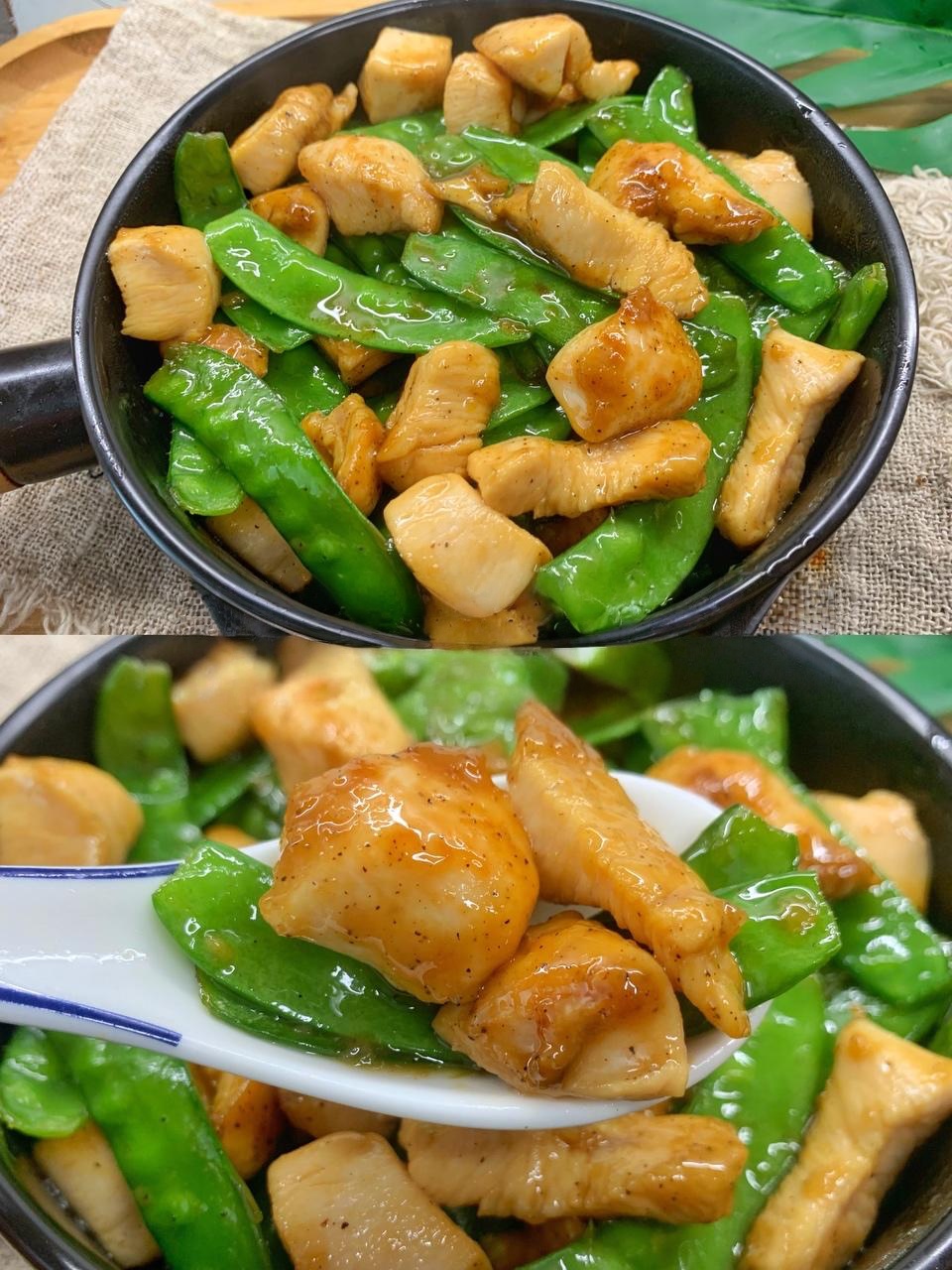
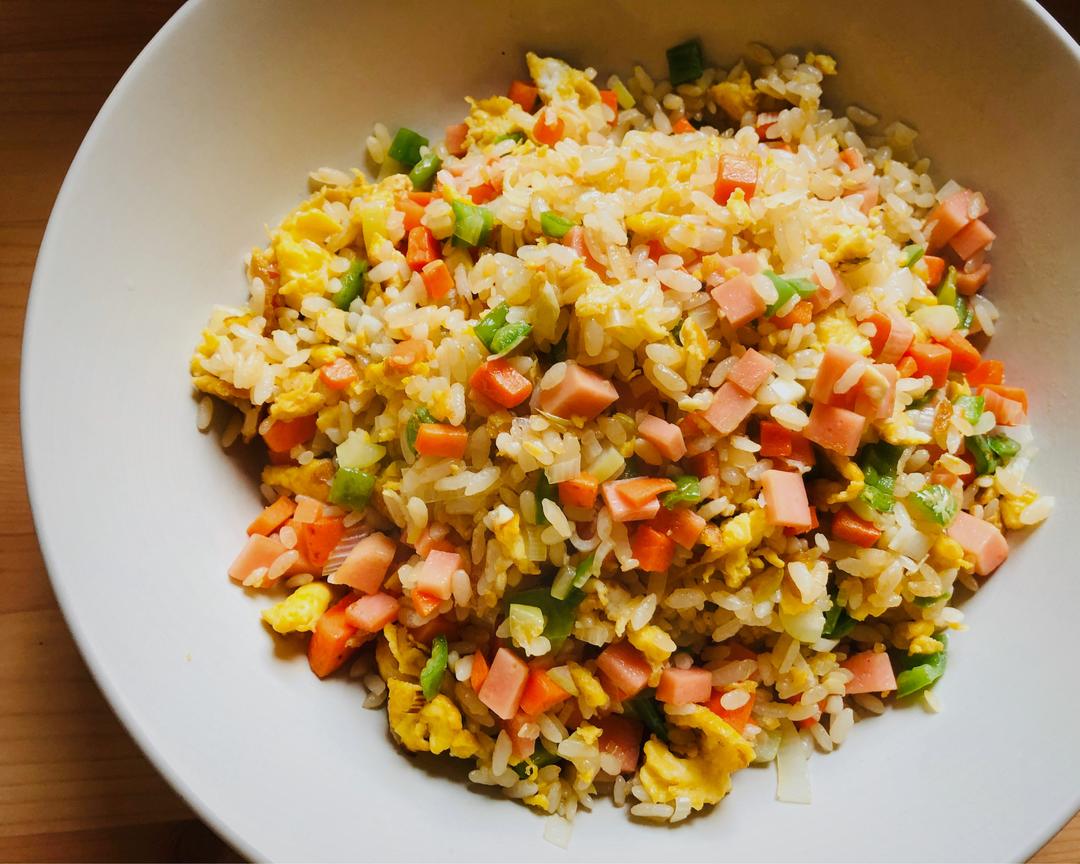
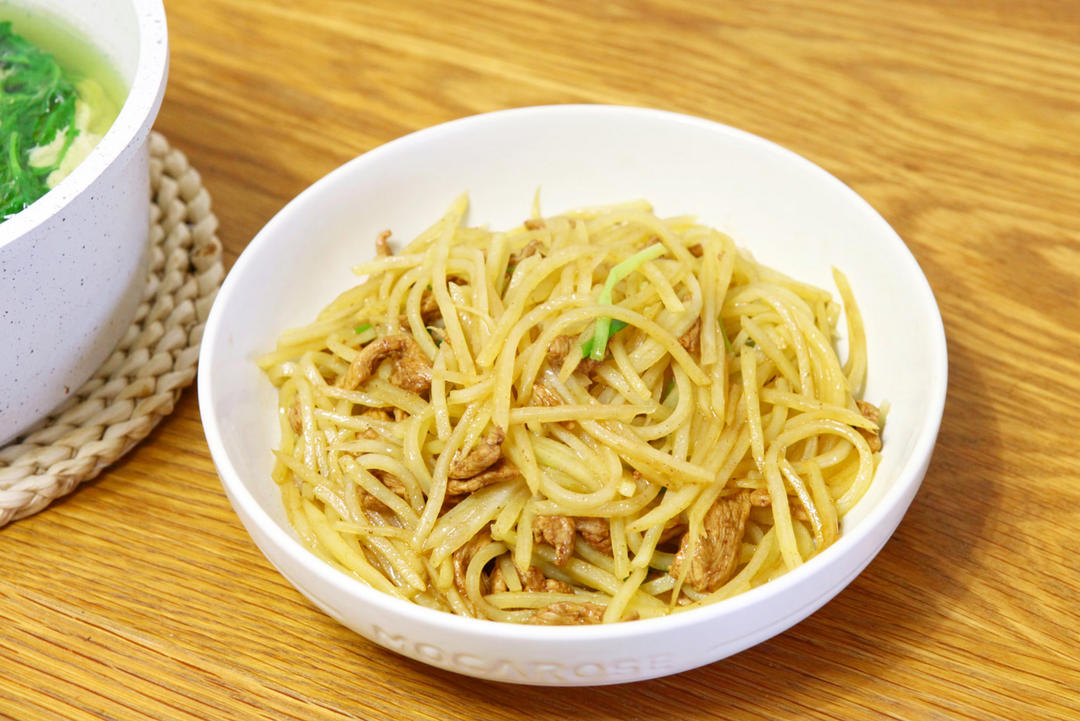
For a fuller Chinese spread, serve it alongside stir fried chicken with snow peas, whose crisp sweetness balances the rich glaze nicely. A plate of Yangzhou fried rice also works well if you want the whole meal to come from one wok. And for a pork-forward table, shredded pork with potatoes is a natural companion dish.
Storage & Reheat
Store leftover pork in an airtight container in the refrigerator for up to 3 days. Keep the tofu skin rolls separate if you have any left — they soften and lose their crunch after a day, though they are still perfectly edible.
Reheat the pork in a wok or skillet over medium heat with a splash of water to loosen the glaze, tossing until it is steaming hot throughout, about 165°F (74°C). The microwave works in a pinch but tends to make the pork rubbery, so the stovetop is worth the extra two minutes.
This dish does not freeze well. The cornstarch coating breaks down on thawing and the pork turns mealy, so plan to eat it within the three-day window.
Allergen Notice
This recipe contains soy (sweet bean sauce, light soy sauce, dark soy sauce, tofu skin) and wheat (sweet bean sauce, soy sauces). Sesame oil is also present. If you are cooking for someone with a soy or gluten allergy, check every label carefully — fermented bean pastes in particular vary widely in their ingredients.
For a gluten-free version, use tamari in place of both soy sauces and source a gluten-free tianmianjiang, or make the paste yourself. Tofu skin is naturally gluten-free but is sometimes processed alongside wheat products, so verify the packaging.
Nutrition Disclaimer
Nutrition information is calculated using an ingredient database and should be considered an estimate. In cases where multiple ingredient alternatives are given, the first listed is calculated for nutrition. Garnishes and optional ingredients are not included.
About the Author & Recipe Development
Lin has been cooking Chinese food at home for over two decades and writing about it on Woks of Love since 2013. This version of jing jiang rou si grew out of a trip through Beijing’s home-style kitchens, where the dish is almost always made with whatever vegetables are in the fridge and a generous spoonful of tianmianjiang. The tofu skin ring here is a nod to the way it is often plated for guests — one plate that carries both the main and its garnish.
The recipe was tested with pork tenderloin from a standard grocery store, a carbon steel wok on a home gas range, and store-bought tianmianjiang. Timing notes reflect that setup; if your stove runs hot or your wok is thin, watch the sauce closely during the reduction stage.
Authoritative References
For safe handling and cooking temperatures for pork, see the USDA safe minimum internal temperature chart. General guidance on cooling and storing cooked leftovers comes from the FDA’s refrigerator and food safety guidance. For background on the fermentation and food-science principles behind sweet bean paste, the WHO food safety fact sheet is a useful general reference.
Shredded Pork in Sweet Bean Sauce (京酱肉丝): Savory Pork Wrapped in

Equipment
- Wok
- Cutting Board
- Slotted Spoon
Ingredients
For the Pork
- 400 g pork tenderloin about 14 oz, cut into thin strips
- 2 g salt about 1/3 tsp
- 0.5 g white pepper about 1/4 tsp
- 5 g light soy sauce about 1 tsp
- 15 g cornstarch about 1 1/2 tbsp
- 8 g neutral oil about 2 tsp, for the marinade
For the Scallion-Ginger Water
- 30 g scallion about 2 tbsp, smashed
- 8 g ginger about 1 tbsp, smashed
- 30 g water about 2 tbsp
For the Sauce
- 20 g water about 4 tsp
- 8 g sugar about 2 tsp
- 40 g sweet bean sauce tianmianjiang, about 2 1/2 tbsp
- 10 g dark soy sauce about 2 tsp
- 2 g sesame oil about 1/2 tsp
For the Wraps and Garnish
- 1 sheet tofu skin whole, about 8 inches square
- 1 carrot julienned
- 1 cucumber julienned
- 0.5 onion thinly sliced
- 1 handful cilantro cut into segments
For Cooking
- as needed neutral oil for wok-frying
Instructions
- Julienne 1 carrot, 1/2 onion, and 1 cucumber into thin strips, and cut a small handful of cilantro into segments. Lay a whole sheet of tofu skin flat and arrange the vegetables in an even layer across it.

- Roll the tofu skin up around the filling, pressing firmly as you go so the bundle stays compact and holds together.

- Cut the roll on a sharp diagonal into segments, then arrange them in a ring around the outer edge of a serving plate.

- Smash 30 g scallion and 8 g ginger with the flat side of a knife, add 30 g water, and squeeze the aromatics with your hand to release their juice. Set the scallion-ginger water aside.
- Slice 400 g pork tenderloin with the grain into thin slices, then into strips, always cutting along the grain rather than across it. Rinse the strips in clean water to remove blood, then squeeze them dry. Add 2 g salt, 0.5 g white pepper, and 5 g light soy sauce, and stir in one direction until the pork turns tacky. Work in the scallion-ginger water a little at a time, waiting until each addition is fully absorbed before adding more. Stir in 15 g cornstarch until coated, then 8 g oil, and marinate for 15 minutes.
- Combine 20 g water with 8 g sugar, 40 g sweet bean sauce, 10 g dark soy sauce, and 2 g sesame oil in a small bowl and stir until smooth.
- Swirl a little oil around a wok and heat it over high heat. Lower to medium heat, add a generous amount of oil, and heat until a chopstick dipped in the oil gives off small bubbles. Add the pork and separate the strips, stir-frying until the color changes, then remove. Leave the oil in the wok, lower to medium heat, and pour in the sauce. Cook until it thickens, coats a spatula, and bubbles vigorously. Return the pork, turn the heat to high, and toss to reduce the sauce. Spoon the pork into the center of the platter.












Leave a Reply