There is a whole category of Chinese home cooking that runs on almost nothing — no soy sauce, no doubanjiang, no oyster sauce, just the ingredients themselves and a pinch of salt. This shrimp tomato egg noodle soup is exactly that kind of bowl. You fry an egg in a wide pool of oil, press shrimp heads into the same oil until the roe bleeds out orange, splash in boiling water, and suddenly you have a broth that tastes like it simmered for an hour. The tomato softens into the liquid, the noodles drink it up, and a single green chili keeps the whole thing from feeling flat.
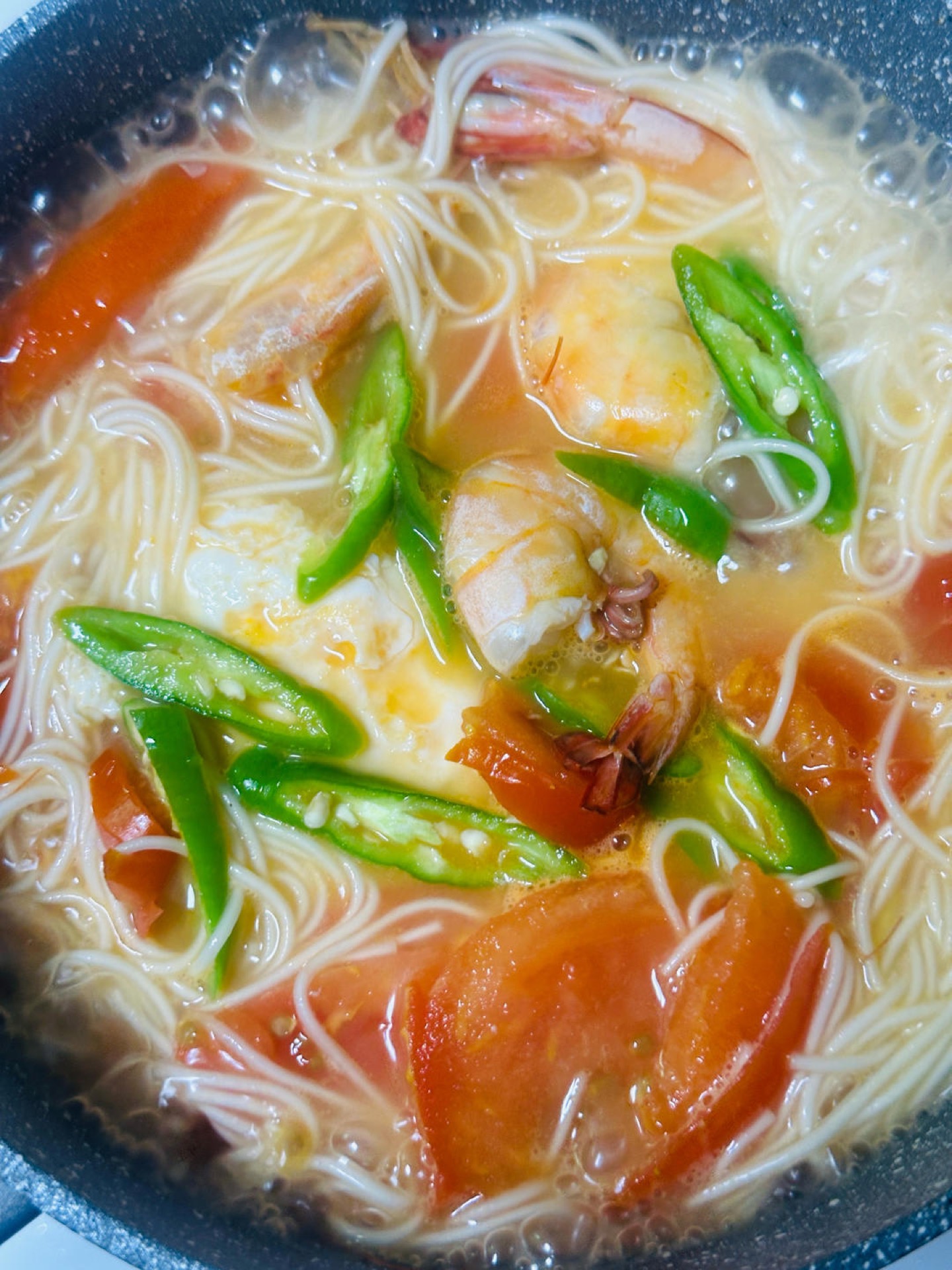
What makes this bowl worth cooking is the sequencing. Nothing here is complicated, but the order matters enormously: the shrimp heads go in before the water, the egg fries in the same oil, the tomato goes in after the noodles so it stays intact, and the chili goes in last so it keeps its bite. Get the order right and a five-ingredient soup tastes like a restaurant bowl. Get it wrong and you have shrimp in bland water.
It is also genuinely fast. From a cold wok to a full bowl is about 20 minutes of cooking, and most of that is waiting for water to boil. If you keep shrimp in the freezer and noodles in the pantry, this is a weeknight dinner that requires no planning at all.
What Is Shrimp Tomato Egg Noodle Soup?
Shrimp tomato egg noodle soup — 虾番茄蛋面, xiā fān qié dàn miàn — is a home-style Chinese noodle soup built on three things: shrimp, tomato, and egg, with thin wheat noodles as the vehicle. It belongs to the same family as the tomato-and-egg dishes that show up on every Chinese family’s table, but here the tomato is not scrambled with the egg. Instead, the egg is fried whole in the wok, the shrimp heads flavor the oil, and the tomato melts into the broth.
The dish is essentially a one-wok operation. The shrimp heads and shells are fried first to release shrimp roe and fat into the oil, which is what gives the finished broth its orange color and deep shellfish sweetness. The fried egg goes in the same oil, so it picks up that shrimp flavor on its underside. Then boiling water hits the wok, the noodles cook directly in the broth, and the tomato and chili go in at the end. Nothing is strained, nothing is discarded, and there is no separate stock pot.
What sets this version apart is the seasoning. Many Chinese noodle soups lean on soy sauce, chicken bouillon, or a spoonful of lao gan ma for depth. This one uses only salt. That is not restraint for its own sake — it is the point. When the broth is built on shrimp roe and a fried egg, extra seasoning muddies the flavor instead of helping it. Salt sharpens what is already there.
Shrimp heads are the single most underused flavor asset in a home kitchen. The hepatopancreas and roe inside the head are rich in fat and free amino acids, which is why frying them in oil produces a deeply savory, orange-tinted base that no amount of shrimp meat can replicate.
That vermicelli version is the closest cousin to this bowl — same shrimp-and-tomato backbone, but simmered longer and served over glass noodles instead of wheat noodles.
If you love the way tomato melts into a noodle broth, that eggplant version is worth cooking next — it is the vegetarian answer to this same bowl.
That beef version is the cold-weather counterpart to this bowl — deeper and richer, but built on the exact same tomato-and-noodle foundation.
If you already cook tomato-forward Chinese soups, this bowl will feel familiar. It sits in the same family as rich tomato shrimp soup with vermicelli, which pushes the same shrimp-and-tomato pairing toward a thicker, more concentrated broth.
1Rich Tomato Shrimp Soup with Vermicelli (No Water Added)A 20-minute Chinese ‘Nong Tang’ (thick soup) that uses blended fresh tomatoes to create a luxurious, waterless broth. Packed with juicy shrimp and slippery glass noodles, it’s a perfect balance of sweet, sour, and savory.Check out this recipe

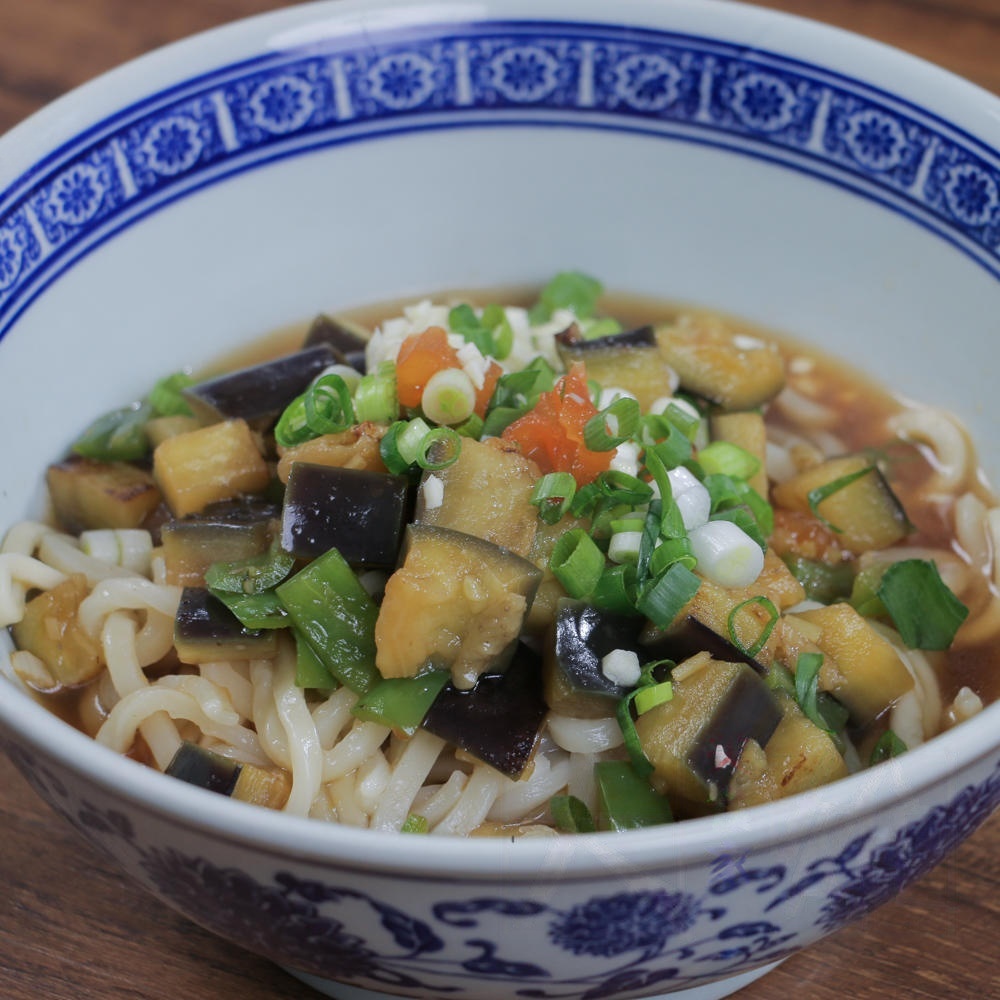
Another natural sibling is eggplant and tomato noodle soup, which swaps the shrimp for silky eggplant and leans on the same slow-softened tomato base.
2Eggplant and Tomato Noodle Soup (Su Qie Ding Mian)This homestyle Eggplant and Tomato Noodle Soup is a savory, vegetarian comfort dish popular in Chinese households. Tender cubes of eggplant and fresh tomatoes are simmered into a rich broth and served over chewy fresh noodles. Ready in 20 minutes!Check out this recipe
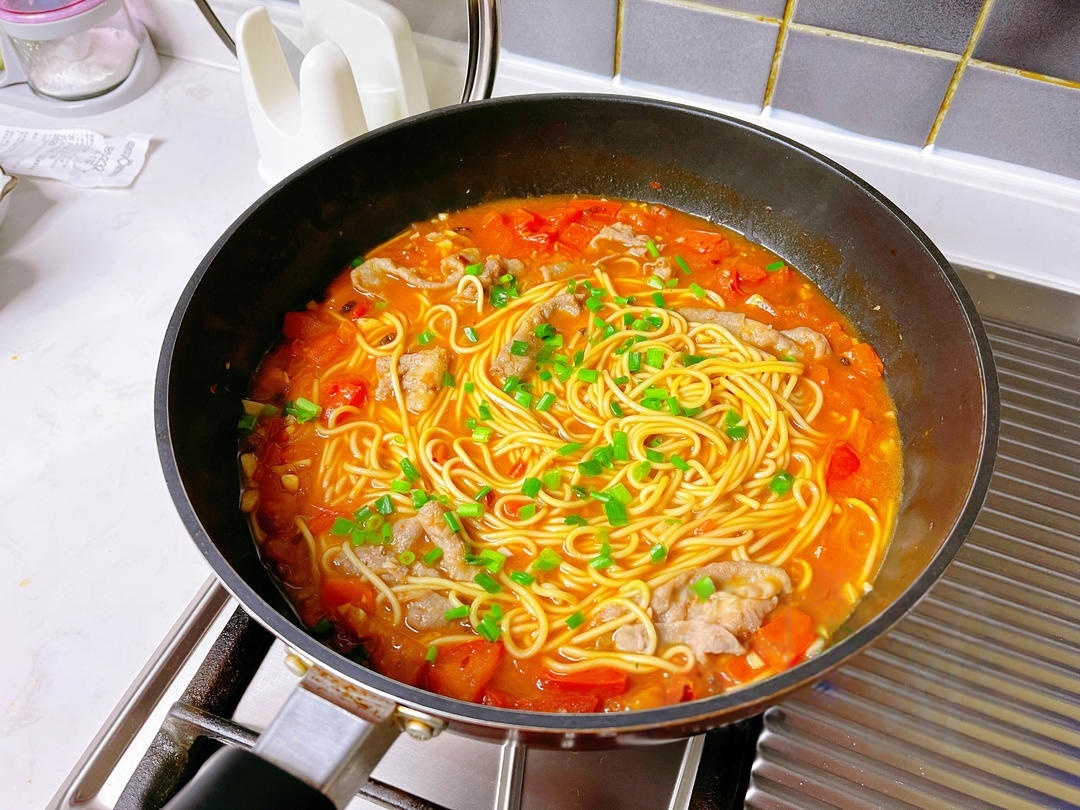
And for a heartier take on the same tomato-noodle formula, tomato beef noodle soup trades shrimp for sliced beef and builds a longer-simmered, beefier broth.
3Tomato Beef Noodle Soup (Fan Qie Fei Niu Mian)A 15-minute miracle meal featuring tender fatty beef and wheat noodles in a rich, savory-sour tomato broth. Authentic Chinese comfort food made easy.Check out this recipe
Ingredient Notes
Five ingredients, and each one has a job. Here is what to look for and what to avoid.
Wild-caught sea shrimp, heads on. This is non-negotiable for the broth. The heads carry the roe and fat that turn the oil orange and give the soup its sweetness. If you can only find headless shrimp, the soup will still work, but you will need to compensate — a teaspoon of shrimp paste or a few dried shrimp simmered in the water will get you part of the way there. Size matters less than freshness; 4 whole large shrimp is plenty for a pot serving four, because they are flavoring the broth as much as they are being eaten.
Egg. One egg, fried in the wok before the water goes in. A fresh egg holds its shape better in a wide pool of oil. The goal is a lacy-edged fried egg with a soft yolk — it will continue to cook in the hot broth, so pull it slightly underdone if you like a runny center.
Tomato. Use the ripest tomato you can find. A pale, hothouse tomato will give you a thin, sour broth with no body. If your tomatoes are less than ideal, a teaspoon of tomato paste stirred in with the wedges will rescue the pot. Cut the tomato into wedges rather than dice — you want it to hold some shape in the finished soup.
Mild green chili. Half a long green pepper, sliced into segments. This is not a heat-forward dish; the chili is there for aroma and a faint vegetal bite. If you want more heat, use a spicier variety, but keep the amount small so it does not overwhelm the shrimp.
Thin wheat noodles. Fresh or dried both work. Thin noodles cook quickly and soak up the broth well. If you use dried, check the package timing and pull them a minute early — they will finish cooking in the hot soup. Egg noodles are a fine substitute, and rice noodles work if you want a gluten-free version, though the texture will be softer.
Salt. The only seasoning. Add it in stages and taste as you go, because the amount you need depends entirely on how much water you added and how salty your noodles are. Start with a teaspoon and adjust from there.
Ingredients
Everything below serves four as a main course or six as a starter bowl. The shrimp are counted whole because the heads matter — if you buy headless shrimp, add a few extra.
- 4 whole wild-caught sea shrimp, heads and shells on, bodies separated from heads
- 1 tablespoon neutral oil, plus more as needed for frying
- 2 slices fresh ginger, julienned
- 1 whole egg
- 1 large ripe tomato, cut into wedges
- Half a mild green chili, sliced into segments
- 6 ounces thin wheat noodles (fresh or dried)
- 4 cups boiling water
- 1 teaspoon salt, or to taste
If you are scaling this up, increase the shrimp and water proportionally but keep the tomato count modest — too much tomato turns the broth acidic and thin. One large tomato per four cups of water is the sweet spot.
Equipment Needed
This is a one-wok dish, which is part of its appeal. You do not need a stock pot, a separate pan for the egg, or a strainer.
- A wok. A carbon steel wok is ideal because it handles high heat and gives you the surface area to fry an egg and press shrimp heads at the same time. A wide skillet or Dutch oven will also work — you want something with enough floor space that the egg and shrimp are not crowded.
- A cutting board. For the tomato, ginger, and chili. Keep the shrimp on a separate plate or board to avoid cross-contamination.
- A slotted spoon. Useful for lifting the fried egg out before the water goes in, and for serving the noodles and shrimp into bowls without dragging all the broth with them.
- A kettle. Not strictly equipment, but boiling the water separately while you fry means the wok never loses its heat when the water goes in. This matters more than it sounds.
If you cook a lot of Chinese food, a wok is the one pan worth owning. Everything from crispy garlic fried shrimp to a whole pan fried yellow croaker with black bean sauce comes out of the same vessel.
Why This Recipe Works
Three things do the heavy lifting here, and none of them are seasoning.
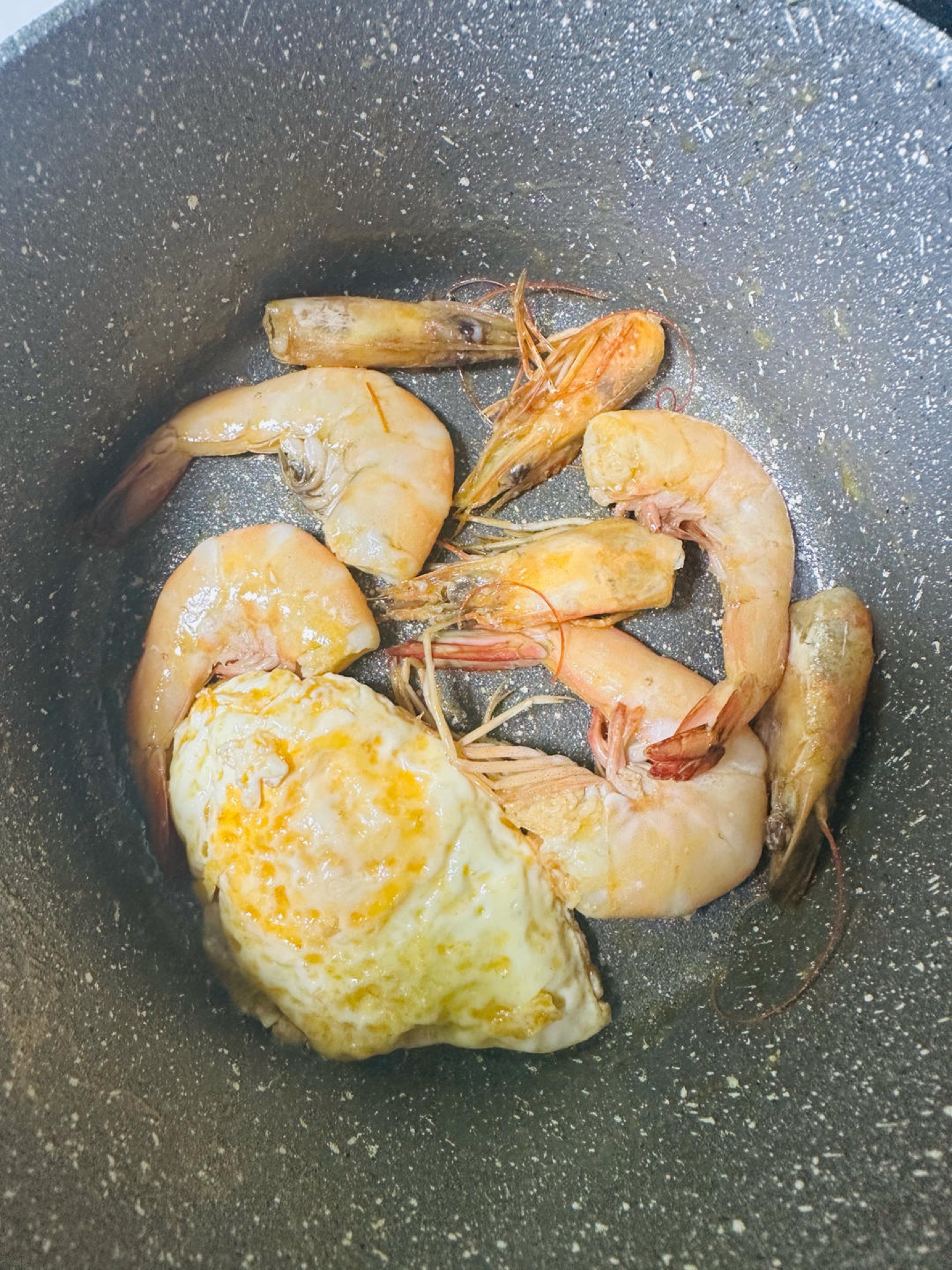
First, the shrimp heads are fried before any liquid goes in. Shrimp heads contain fat, roe, and a high concentration of free amino acids and nucleotides — the same compounds that make shellfish taste sweet and savory at once. Frying them in oil extracts those compounds into the fat, which then coats the egg and emulsifies into the broth when the water hits. This is why the soup tastes like it simmered for an hour when it has been on the heat for fifteen minutes.
Second, the water is added boiling, not cold. Adding cold water to a hot wok drops the temperature and gives the fat time to separate out instead of emulsifying. Boiling water keeps the wok hot, so the shrimp-infused oil disperses into the liquid as tiny droplets rather than pooling on the surface. The result is an opaque, orange-tinted broth instead of a greasy clear one.
Third, the egg is fried in the shrimp oil. A fried egg in a wok develops browned, crispy edges and a rich, almost nutty flavor from the Maillard reaction. Because it fries in the same oil the shrimp heads just flavored, the egg absorbs that shellfish note on its underside. When it sits in the hot broth, it releases some of that flavor back into the soup while staying intact enough to eat as a distinct component.
Salt, added at the end, does the rest. Salt suppresses bitterness and amplifies sweetness, so a well-salted shrimp-tomato broth tastes dramatically sweeter and more shrimp-forward than an undersalted one made from identical ingredients. This is why the recipe calls for tasting before serving — the difference between a flat bowl and a vivid one is often a quarter teaspoon.
Prep & Mise en Place
Because the cooking happens fast and in one wok, everything needs to be ready before the wok gets hot. Set yourself up like this:
- Separate the shrimp. Twist the heads off the bodies and set them aside in one bowl. Peel the bodies if you like, but leaving the shells on the bodies is fine and adds flavor. If you are leaving the shells on, devein the bodies with a small knife.
- Julienne the ginger. Two thin slices, cut into fine matchsticks. No need to peel if the skin is clean.
- Cut the tomato into wedges. Six to eight wedges from a large tomato. Keep them on the cutting board within reach.
- Slice the chili. Half a pepper, cut on the bias into one-inch segments. Set aside with the tomato.
- Boil the water. Fill a kettle with four cups of water and set it to boil before you turn on the wok. It should be ready by the time the shrimp heads are done.
- Have the noodles measured and within reach. If using dried noodles, have them in a bowl next to the wok. If fresh, keep them on the counter.
- Set out the salt. Have it in a small dish so you can add it in stages without fumbling with a box.
Total prep time is about fifteen minutes, and most of it is cutting. Once the wok is hot, the whole dish comes together in under ten minutes of active cooking.
Cooking Process
Step 1 — Fry the Egg and Shrimp Heads
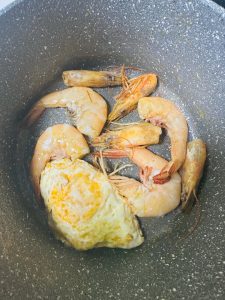
Heat a wok over high heat with a generous amount of oil, fry a fried egg on one side while pressing the shrimp heads on the other to render out the shrimp roe, add the julienned ginger, and sear the shrimp bodies too.
Step 2 — Add Boiling Water
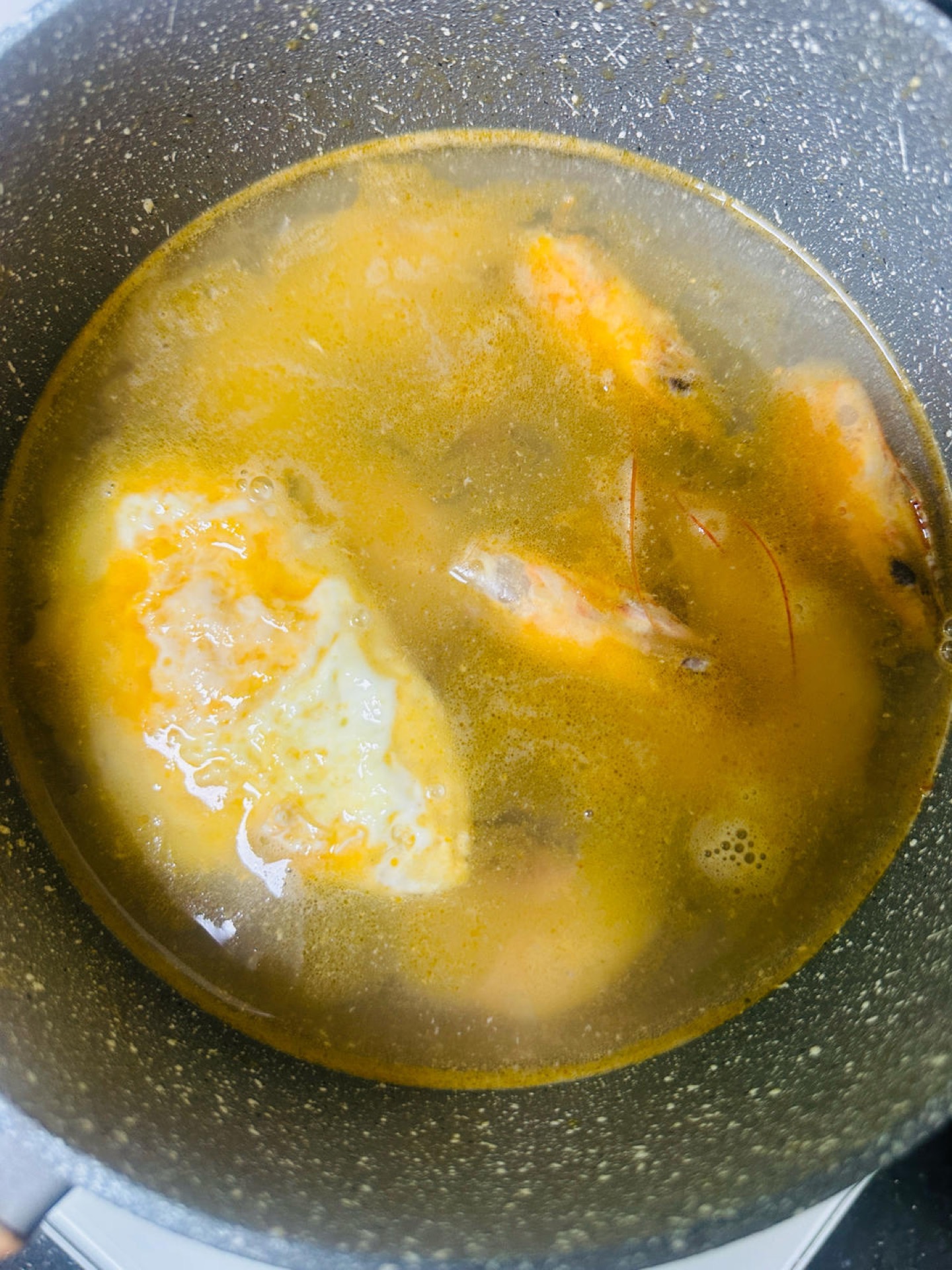
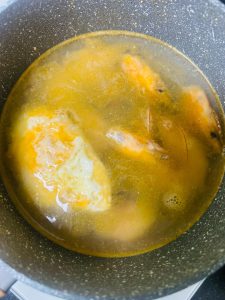
Pour in boiling water and bring it back to a rolling boil over high heat.
Step 3 — Cook the Noodles
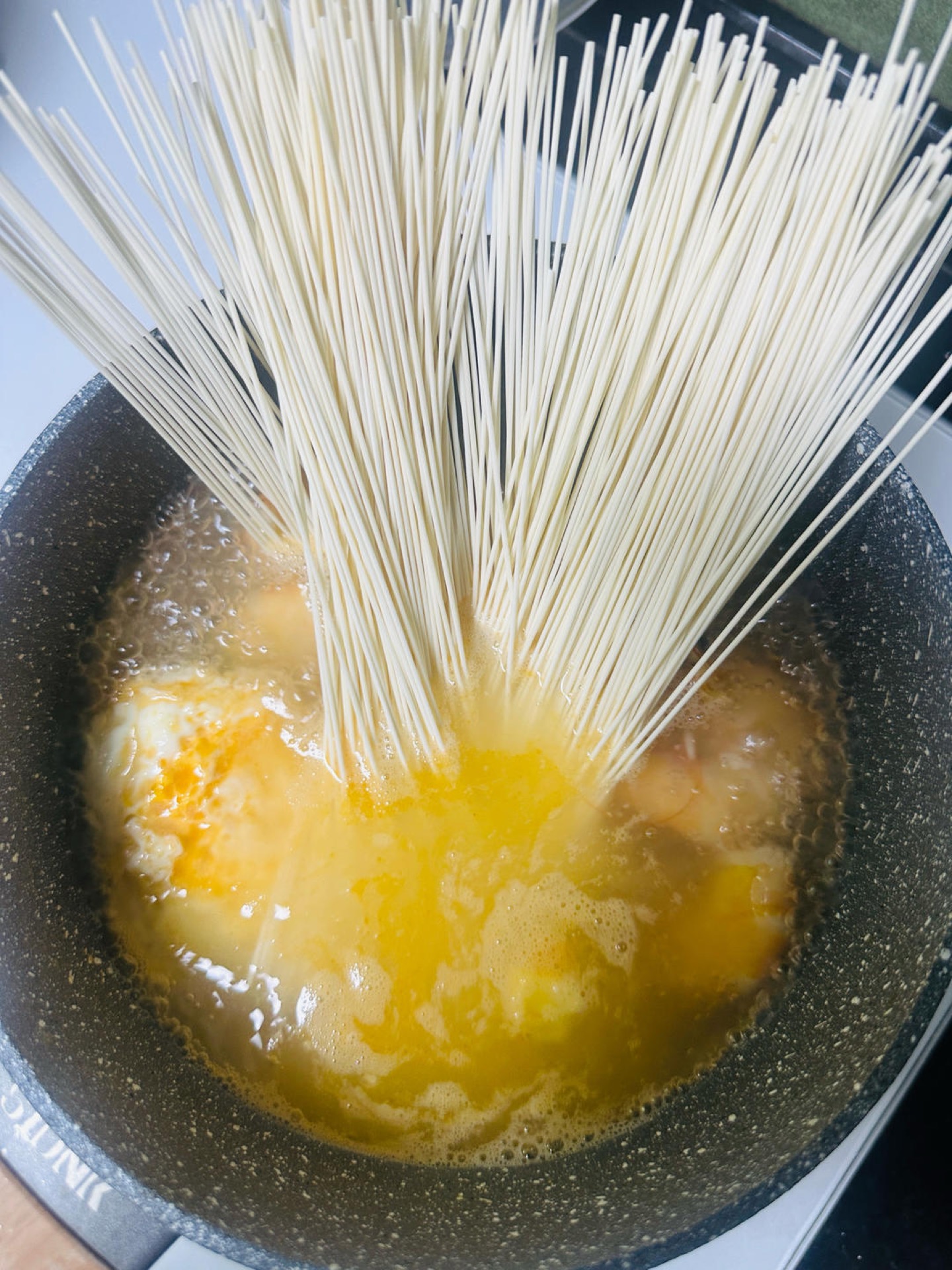
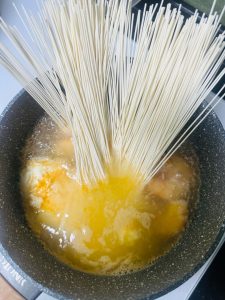
Once the water boils, add the thin noodles, loosen them with chopsticks, and cook until they are half-soft and sink into the broth.
Step 4 — Add Tomato and Salt
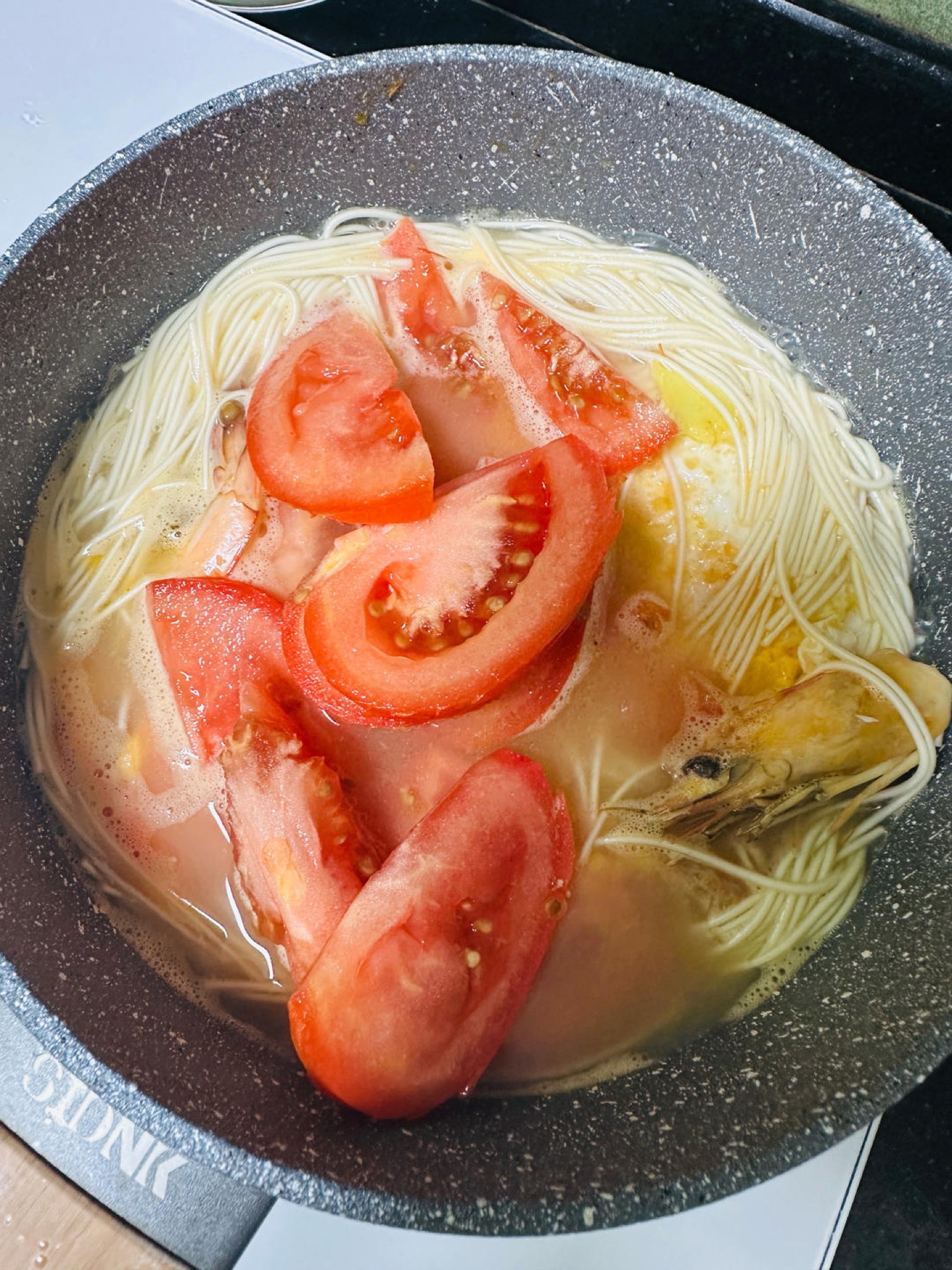
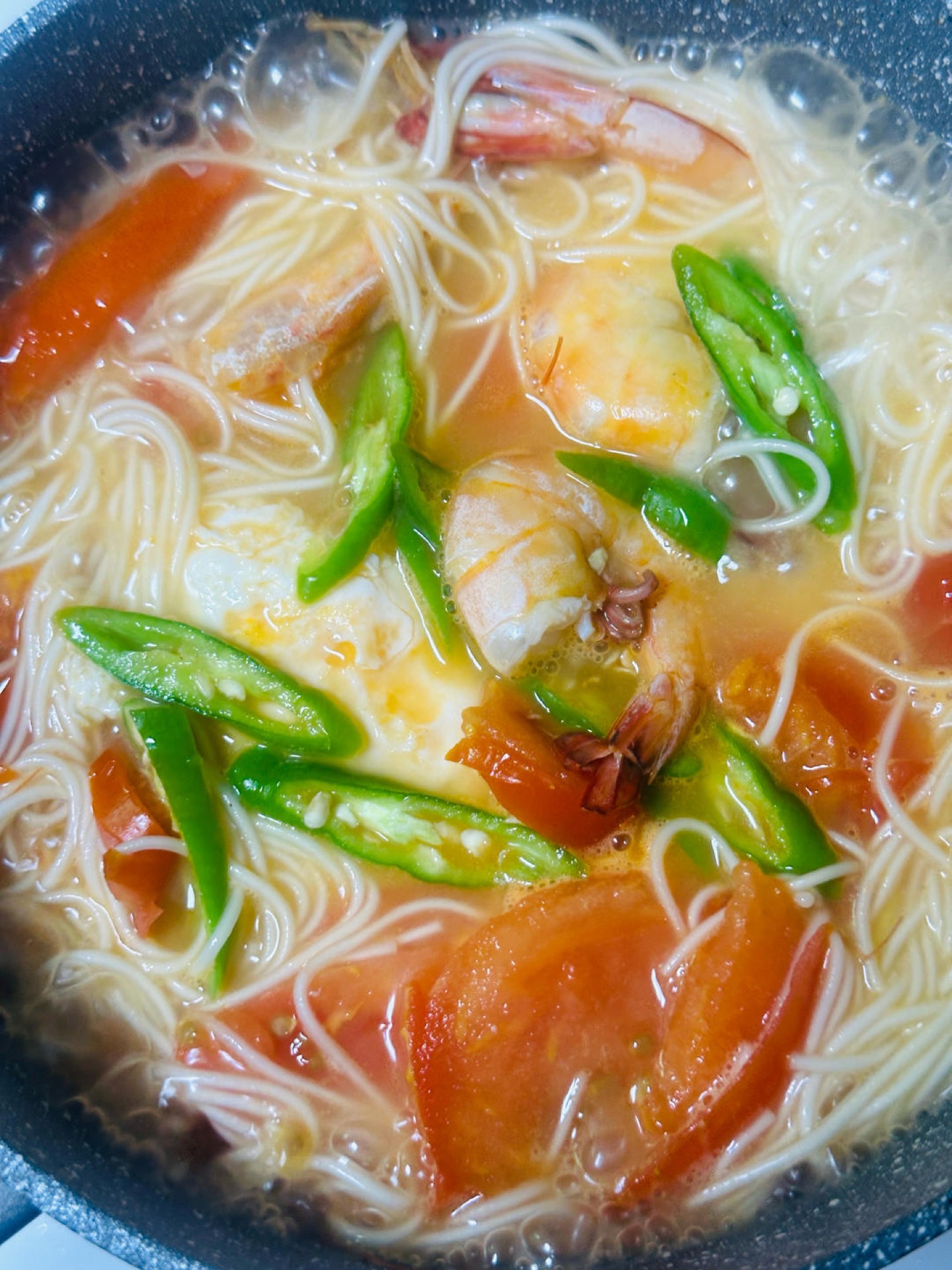
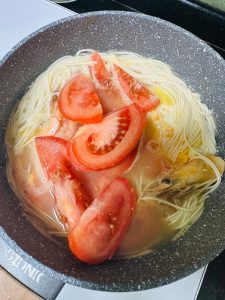
Add the tomato wedges, season with salt, and simmer until the tomato softens.
Step 5 — Add the Chili
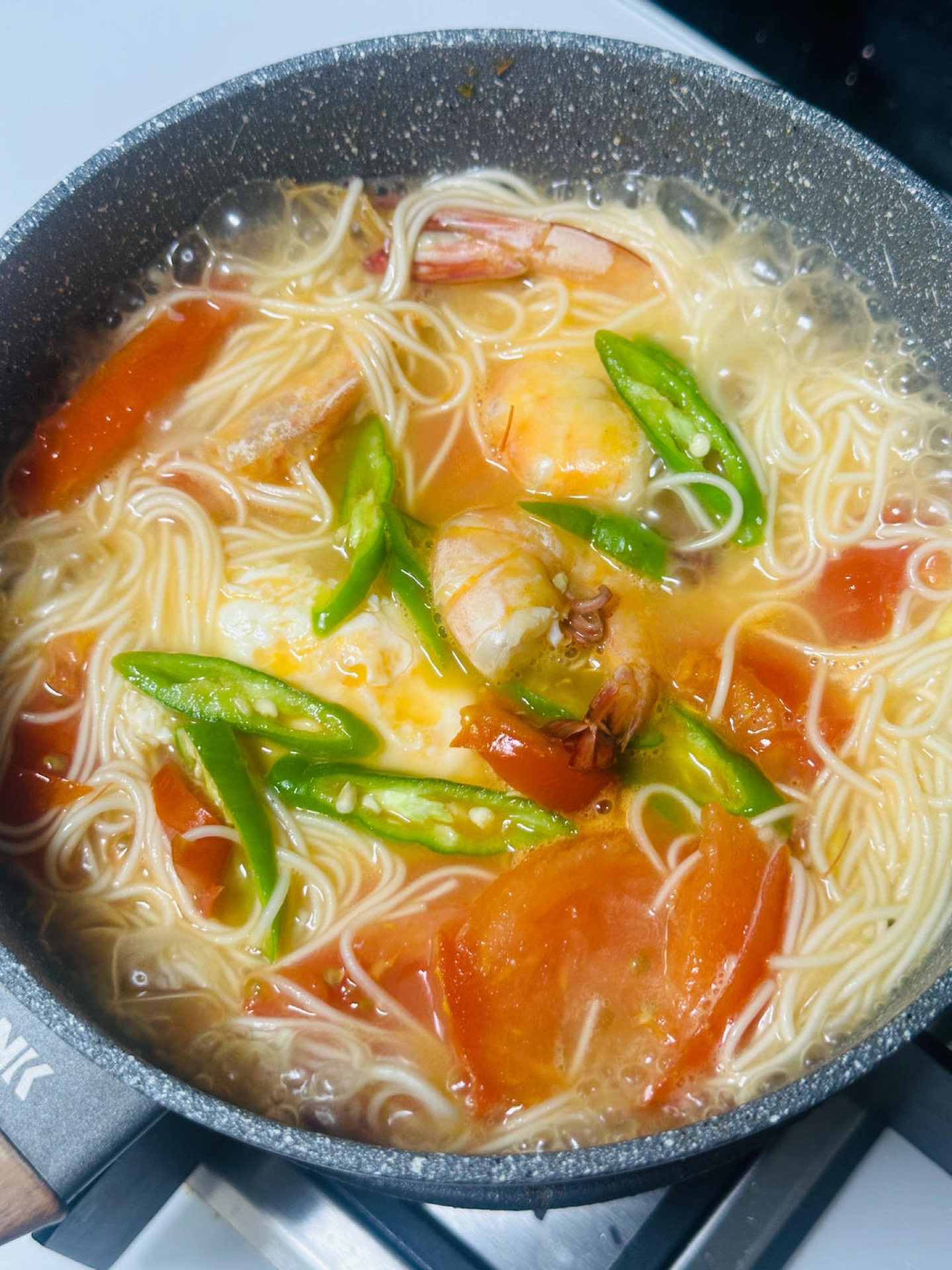
Add the chili segments and simmer briefly.
Step 6 — Serve the Noodles First
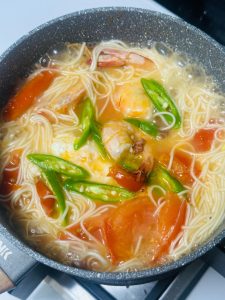
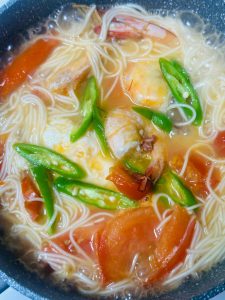
Serve the noodles first and dig in.
Common Mistakes When Making Shrimp Tomato Egg Noodle Soup
This recipe is simple enough that small errors show up clearly in the bowl. Here are the ones that matter most.
- Not enough oil in the wok. The source recipe actually notes this as a self-critique — the cook used too little oil, and the shrimp heads did not fry properly. You need enough oil to comfortably fry an egg and press the shrimp heads into, which means a generous tablespoon or more in a wide wok. If the heads look dry and start to stick, add more oil immediately. The oil is not just a cooking medium here; it is the flavor carrier for the entire broth.
- Adding cold water instead of boiling water. Cold water kills the wok’s heat and lets the shrimp-infused fat separate instead of emulsifying. The broth turns greasy and clear rather than opaque and orange. Boil the water in a kettle while you fry, and pour it in hot.
- Rushing the shrimp heads. The heads need to sit in the hot oil long enough for the roe to render out and the shells to turn pink-orange. Pressing them with a spatula and giving them a full minute or two on each side is what builds the base. Pulling them out early leaves you with bland oil.
- Adding the tomato too early. If the tomato goes in before the noodles, it breaks down completely and the broth turns into a thin, acidic tomato water. Adding it after the noodles are half-cooked keeps the wedges intact and gives the broth a fresher, sweeter tomato note. The recipe sequence matters here.
- Overcooking the noodles. Thin noodles go from al dente to mushy fast. If you are using dried noodles, pull them a minute before the package says they are done — they will finish cooking in the hot broth as you serve. Fresh noodles need even less time, sometimes just two minutes.
- Salting too early or too much. Salt added before the tomato has softened will taste different once the tomato releases its liquid. And because the noodles absorb salt as they cook, an early generous pinch can leave you with an oversalted bowl at the end. Add salt in two stages: a small pinch with the tomato, then a final taste-and-adjust before serving.
Variations
The formula is flexible. Here are a few directions that work well without breaking the dish.
With tomato paste for a deeper broth. If your tomatoes are out of season, stir a teaspoon of tomato paste into the wok with the fresh wedges. It adds body and a concentrated tomato flavor that fresh hothouse tomatoes lack.
With rice noodles for a gluten-free version. Swap the wheat noodles for thin rice vermicelli. Cook them separately and add them to the bowl at serving time, because rice noodles turn to mush if they sit in hot broth for long. The broth itself is naturally gluten-free.
With extra heat. Use a spicier chili, or add a small spoonful of Sichuan roasted chili sauce to the bowl at the table. The roasted chili sauce adds smokiness as well as heat, which pairs well with the shrimp.
With pork for a richer bowl. A few thin slices of pork belly or ground pork, browned before the shrimp heads go in, add a meaty depth. If you go this route, pay attention to the fat content — the ground pork fat ratios guide is a useful reference for how much fat you actually want in the wok.
With a different noodle. If you like the tomato-and-egg pairing, tomato egg noodles is the scrambled-egg version of this same flavor profile, and it is worth cooking side by side to see how the two differ. For a soupier, more vegetable-forward direction, Beijing eggplant noodle soup shows how the same noodle-in-broth logic works with a different vegetable base.
Frequently Asked Questions
Can I make this without shrimp heads? Yes, but the broth will be noticeably lighter. Headless shrimp still give you some flavor, but the roe and fat in the heads are what make the broth orange and deeply savory. To compensate, simmer a few dried shrimp or a teaspoon of shrimp paste in the water before adding it to the wok.
Why does the recipe use only salt? Because the shrimp heads and the fried egg already build a complex, savory base. Soy sauce, bouillon, or oyster sauce would add salt and umami on top of what is already there, which flattens the shrimp flavor instead of highlighting it. Salt alone sharpens the existing sweetness.
Can I use a regular skillet instead of a wok? Yes. A wide skillet or Dutch oven works fine as long as it has enough surface area to fry the egg and press the shrimp heads without crowding. You may need slightly more oil in a skillet because the sides are lower and the oil spreads thinner.
How do I keep the noodles from getting soggy? Cook them just until they are half-soft and sinking into the broth, then serve immediately. If you are not eating right away, cook the noodles separately and add them to the bowl at serving time. Noodles left sitting in hot broth will continue to absorb liquid and soften.
Can I make this ahead of time? The broth can be made a day ahead and refrigerated; it actually improves overnight as the shrimp flavor deepens. Cook the noodles fresh when you are ready to serve. Reheat the broth to a boil, then add the noodles and finish as directed.
How to Serve
Serve this soup in deep bowls, with the noodles and shrimp lifted out first and the broth poured over. The fried egg goes on top, and the tomato and chili segments are distributed evenly. A slotted spoon or a pair of chopsticks plus a soup spoon is the right toolkit.
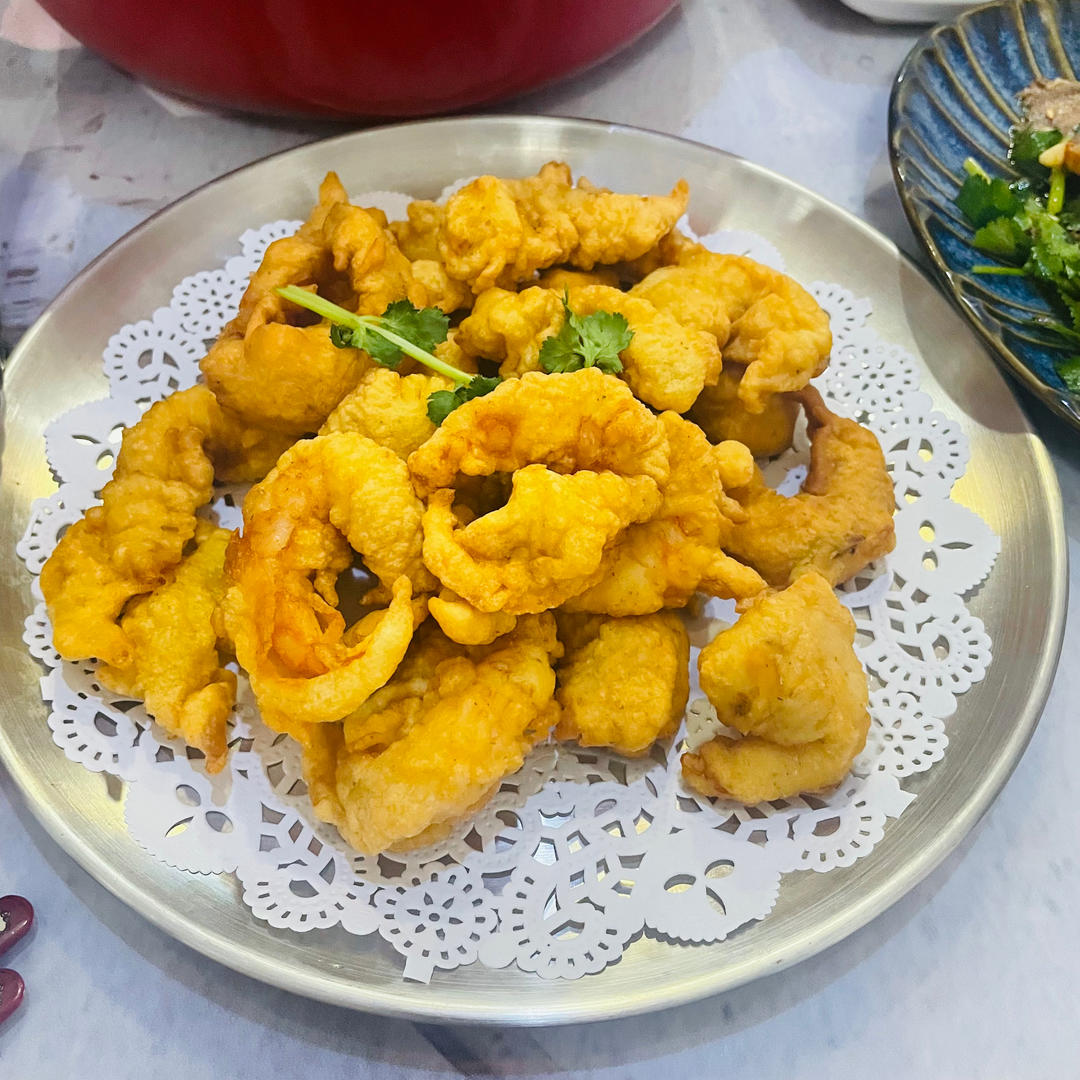
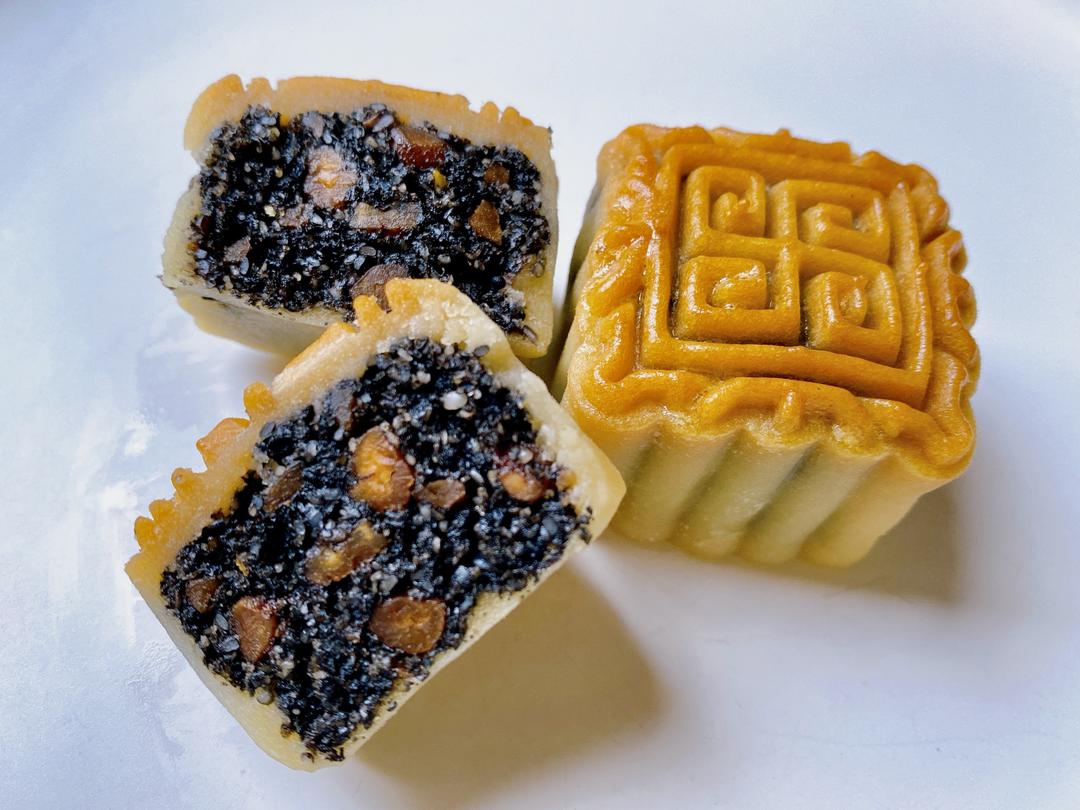
It eats well on its own as a light main course, but it also pairs nicely with a cold vegetable side or a small plate of pickles to cut the richness. If you want to round out the meal with something from the site, a plate of crispy garlic fried shrimp makes a good companion for shrimp lovers, though it does double up on the shellfish. For a sweeter finish, a small portion of black sesame walnut filling works as a dessert alongside the soup.
Storage & Reheat
This soup is best eaten the day it is made, but it stores reasonably well if you keep the components separate.
Refrigerator: Store the broth, noodles, and shrimp in separate airtight containers for up to two days. The broth will gel slightly in the fridge because of the shrimp fat and egg — this is normal and it loosens when reheated. Do not store the noodles in the broth, or they will swell and turn mushy.
Reheating: Bring the broth to a boil in a pot or wok, add the noodles and shrimp, and simmer for a minute or two until everything is steaming hot. If the broth has reduced, add a splash of water. The egg can be reheated in the broth or eaten cold.
Freezing: The broth freezes well for up to two months. Freeze it in a sealed container, thaw overnight in the refrigerator, and reheat to a boil. Do not freeze the noodles.
As with any shellfish dish, do not leave the soup at room temperature for more than two hours, and refrigerate it promptly after the meal.
Allergen Notice
This recipe contains shellfish (shrimp), eggs, and wheat (noodles). The shrimp is the primary allergen and is present in both the broth and the solid ingredients, so there is no way to make this dish shellfish-free without replacing the shrimp entirely.
For a wheat-free version, substitute rice vermicelli for the wheat noodles and cook them separately. The broth itself contains no wheat, soy, or dairy. If you are cooking for someone with a shellfish allergy, this dish is not a candidate for substitution — the shrimp heads are the flavor base, and there is no equivalent replacement that produces the same result.
If you are serving this to guests, ask about allergies before cooking. Shellfish allergies are among the most common and can be severe, and the shrimp here is not a garnish — it is the whole point of the bowl.
Nutrition Disclaimer
Nutrition information is calculated using an ingredient database and should be considered an estimate. In cases where multiple ingredient alternatives are given, the first listed is calculated for nutrition. Garnishes and optional ingredients are not included.
About the Author & Recipe Development
This recipe was developed and tested in the Woks of Love kitchen by Lin, who has spent years documenting the home-style Chinese cooking that does not make it into restaurant menus — the one-wok dinners, the five-ingredient soups, the dishes built on technique rather than a long pantry list. This shrimp tomato egg noodle soup comes from that same tradition: a bowl that depends entirely on the cook’s sequencing and heat control, with almost nothing to hide behind.
The recipe was tested with wild-caught head-on shrimp and fresh thin wheat noodles, and the timing reflects a standard home wok on a gas burner. If your stove runs cooler, expect the frying stage to take a little longer. The salt quantity is deliberately given as a starting point rather than a fixed amount, because the final seasoning depends on the water volume, the noodles, and the tomatoes — taste before you serve.
If you cook this bowl, the one thing worth paying attention to is the shrimp head frying stage. That is where the flavor is made, and it is the step most home cooks rush. Give it the full minute or two it needs, and the rest of the recipe takes care of itself.
Authoritative References
For food safety guidance on cooking shellfish, the FDA food safety guidance for home cooking recommends cooking shrimp to an internal temperature of 145°F (63°C) until the flesh is opaque and firm. The USDA safe minimum internal temperature chart lists the same target for fish and shellfish.
For background on why shrimp heads are so flavorful, the fat and free amino acid content of shrimp hepatopancreas and roe is well documented in food science literature on shellfish flavor development. The FAO’s reference on shrimp and prawn processing covers the composition of shrimp heads and their use in flavor extraction.
Shrimp Tomato Egg Noodle Soup (虾番茄蛋面): Savory Shrimp Broth, Silky

Equipment
- Wok
- Cutting Board
- Slotted Spoon
Ingredients
For the Broth Base
- 4 whole wild-caught sea shrimp heads and shells on, bodies separated
- 1 tbsp neutral oil plus more as needed
- 2 slices fresh ginger julienned
For the Soup
- 1 whole egg for the fried egg
- 1 whole ripe tomato cut into wedges
- 1 mild green chili half a pepper, sliced into segments
- 6 oz thin wheat noodles fresh or dried
- 4 cups boiling water added hot, straight from the kettle
- 1 tsp salt or to taste
Instructions
- Heat a wok over high heat with a generous amount of oil, fry a fried egg on one side while pressing the shrimp heads on the other to render out the shrimp roe, add the julienned ginger, and sear the shrimp bodies too.

- Pour in boiling water and bring it back to a rolling boil over high heat.
- Once the water boils, add the thin noodles, loosen them with chopsticks, and cook until they are half-soft and sink into the broth.
- Add the tomato wedges, season with salt, and simmer until the tomato softens.
- Add the chili segments and simmer briefly.
- Serve the noodles first and dig in.












Leave a Reply