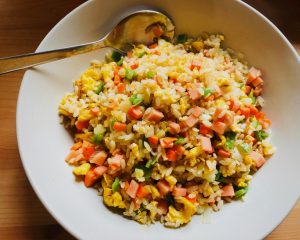
Growing up in Sichuan, my family’s kitchen was always busy, but not every meal was a complex, spicy feast. On busy days, my father would often take whatever was left in the rice cooker and turn it into something magical. This Homestyle Yangzhou Fried Rice (Yangzhou Chao Fan) reminds me of those quick, comforting lunches.

While the banquet version of Yangzhou Fried Rice is famous for its strict knife work and luxurious ingredients like sea cucumber and dried scallops, this homestyle version is what families actually eat. It is colorful, savory, and incredibly satisfying. The combination of savory ham, sweet carrots, and the distinctive aroma of white pepper makes this dish a staple in my own home today. It is essentially a “clean out the fridge” meal that tastes like a luxury.
Why This Recipe
- Speed: It comes together in about 15 minutes if you have your rice prepped.
- Versatility: It uses pantry staples like eggs, ham, and carrots.
- Texture: It balances fluffy rice with the crunch of diced vegetables and tender egg.
- Authenticity: This follows a specific homestyle method tested in Chinese kitchens, ensuring the rice grains remain distinct and flavorful.
What Is Yangzhou Fried Rice?
Yangzhou Fried Rice (扬州炒饭), hailing from Jiangsu province, is perhaps the most famous fried rice dish in China. Traditionally, it is a showcase of knife skills, where all ingredients are cut to the exact size of a grain of rice.
In this homestyle version, we relax the rules slightly to make it accessible for the American or European home cook. Unlike darker, soy-heavy fried rice , Yangzhou style is lighter in color, relying on salt and just a touch of light soy sauce for flavor, allowing the ingredients to shine.
Why This Recipe Works
- Temperature Control: By scrambling the eggs first and removing them, we ensure they remain tender and yellow, rather than overcooked and rubbery.
- Residual Heat: Adding the finely diced vegetables after the rice allows them to cook to a crisp-tender state without becoming mushy, preserving their color.
- Layered Seasoning: Adding salt and white pepper at the end ensures the flavor coats the outside of the rice grains rather than soaking into them.
Key Ingredients & Substitutions
- Leftover Rice: You need “overnight” rice. Fresh rice contains too much moisture and will turn into mush in the wok. Long-grain Jasmine rice is the gold standard here.
- Ham: The recipe calls for standard ham. You can use Smithfield ham, leftover holiday ham, or for a more authentic Cantonese touch, Lap Cheong (Chinese sausage).
- Green Pepper: A green bell pepper works perfectly here. If you want a slight kick, you can substitute with a mild Anahiem pepper.
- Light Soy Sauce: Use a high-quality brand like Pearl River Bridge or Kikkoman. Do not use Dark Soy Sauce, as it will make the rice too dark.
- White Pepper Powder: This is crucial for that “Chinese takeout” flavor. Black pepper is too harsh; white pepper provides an earthy, floral heat.
Ingredients
- Rice: 2 cups cooked rice (approx. 1 large bowl/300g), preferably day-old and chilled.
- Eggs: 2 large eggs.
- Ham: 3 slices (about 2 oz / 60g), diced.
- Scallion: ½ stalk (white and green parts), chopped.
- Carrot: ½ medium carrot, peeled and diced.
- Green Pepper: 1 small green bell pepper, seeded and diced.
- Cooking Oil: 2 tbsp neutral oil (vegetable, canola, or grapeseed).
- Salt: 1 tsp (approx. 6g) or to taste.
- Light Soy Sauce: 1 tbsp.
- White Pepper Powder: ½ tsp (approx. 3g).
(Note: The original recipe calls for “1 bowl” of rice and 6g of salt. For Western measurements, 1 large bowl equates to roughly 2 US cups. 6g of salt is significant, so please adjust based on your ham’s saltiness.)
Recipe Notes Before You Start
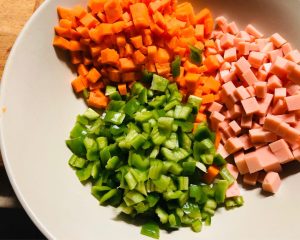
- Dice Uniformly: Try to cut your ham, carrots, and peppers into pieces roughly the same size as peas (about 0.5 cm). This ensures they cook evenly in the short time they are in the wok.
- Break up the Rice: Before cooking, use wet hands to gently break up any large clumps of cold rice. This prevents the rice from breaking during the stir-fry process.
- Stove Heat: If you are using a standard home gas stove, preheat your wok or skillet longer than you think necessary. You want to hear a sizzle the moment ingredients hit the pan.
Mise en Place / Prep
- Rice: Take the rice out of the fridge. Break up clumps.
- Veggies & Meat: Dice the ham, carrots, and green pepper into small, uniform cubes. Chop the scallions finely.
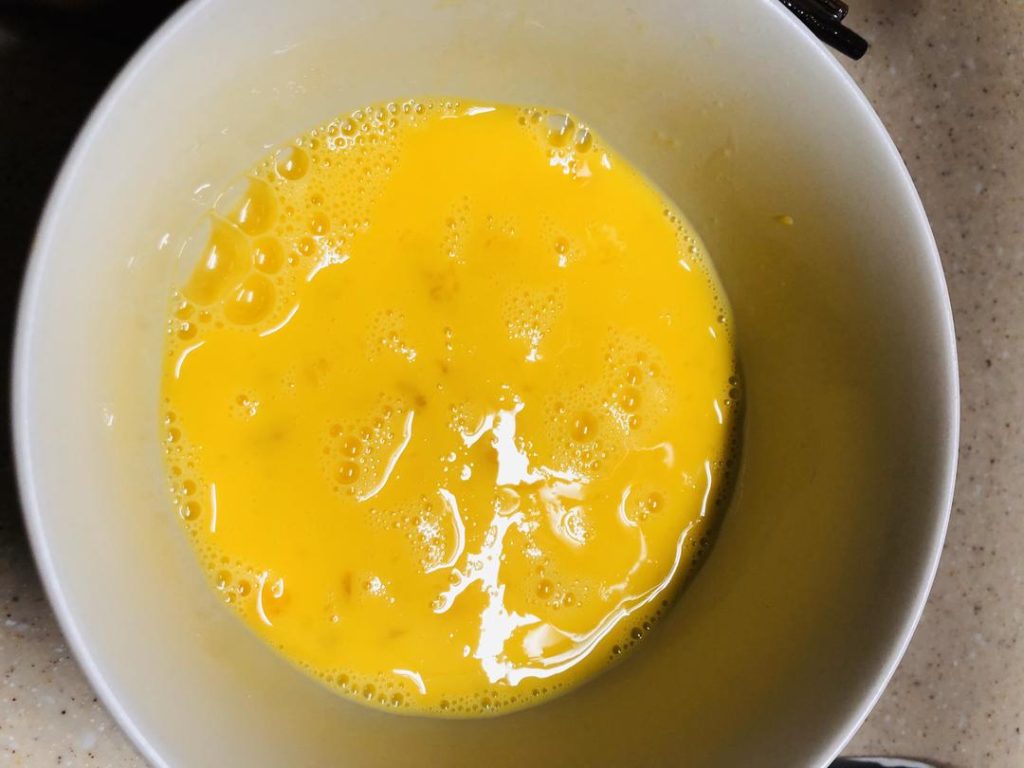
- Eggs: Crack the two eggs into a bowl and beat them thoroughly until the yolk and white are well combined.
- Seasoning Station: Have your salt, soy sauce, and white pepper measured and next to the stove. Fried rice waits for no one!
How to Make Homestyle Yangzhou Fried Rice
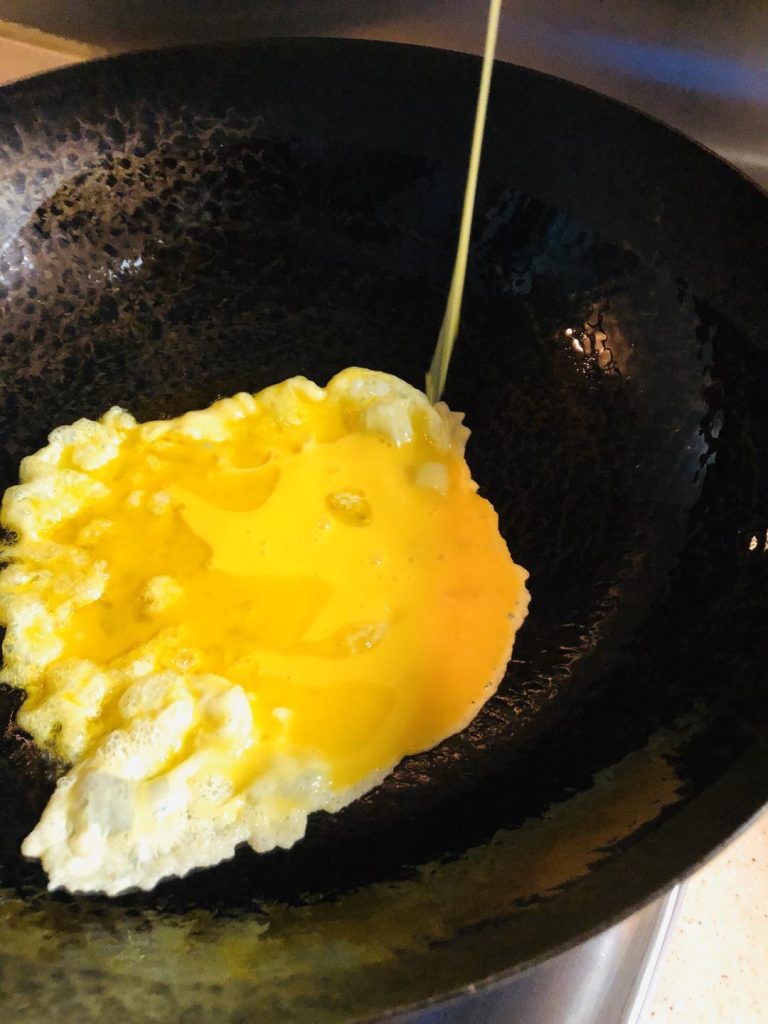
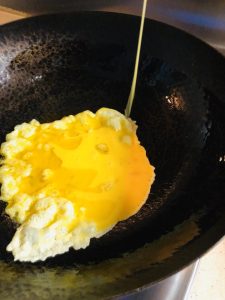
Step 1: Scramble the Eggs Heat your wok or large skillet over medium-high heat. Add 1 tablespoon of oil. When the oil shimmers, pour in the beaten eggs. Rapidly scramble them until they are just set (solidified) but still soft. Chef’s Note: Do not brown the eggs here. We want them fluffy and yellow. remove the eggs from the pan and set aside.
Step 2: Fry the Rice Add another tablespoon of oil to the wok. Add the leftover rice. Use your spatula to press down and break up the rice, stir-frying until the grains are hot and separated.
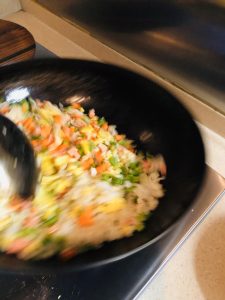
Step 3: Combine Eggs and Veggies Add the cooked eggs back into the pan with the rice. Stir well to break the eggs into smaller pieces. Then, add the diced ham, carrots, and green pepper. Why add veggies now? In this homestyle method, putting the finely diced veggies in with the hot rice allows them to steam-fry. Stir-fry vigorously until the vegetables brighten in color and soften slightly, about 2-3 minutes.
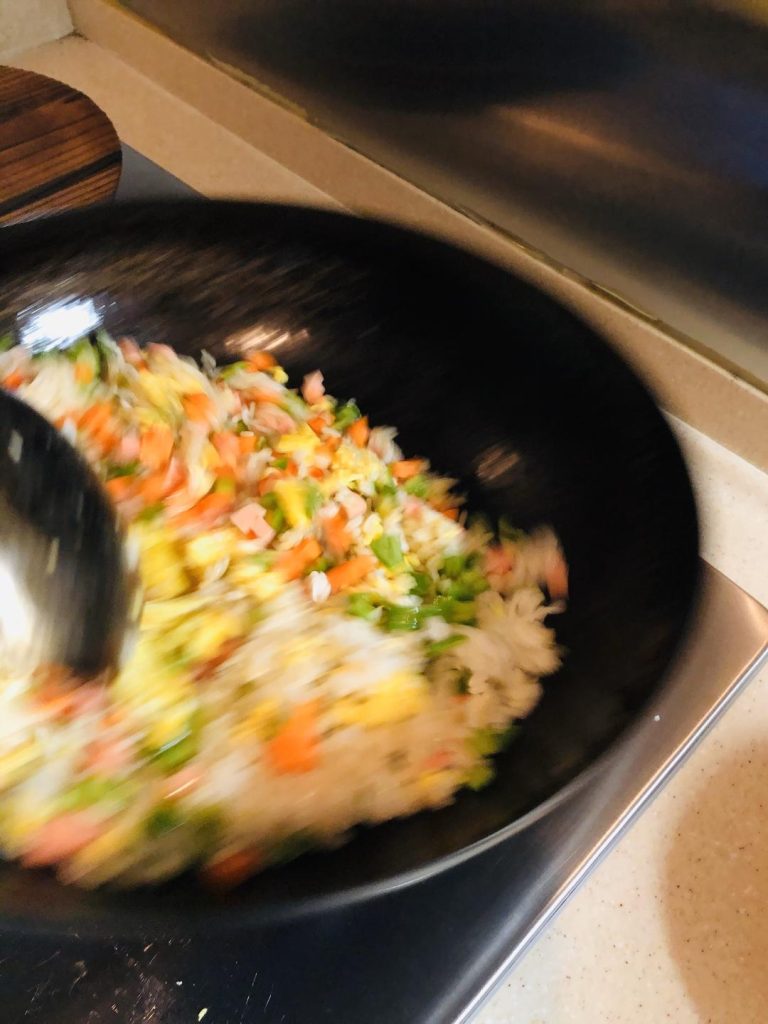
Step 4: Season Drizzle the 1 tablespoon of Light Soy Sauce around the edges of the wok (this creates a savory aroma). Add the 1 tsp salt and ½ tsp white pepper powder. Stir-fry constantly to ensure the white rice turns a uniform, light golden color and the seasoning is distributed evenly.
Step 5: Finish Finally, toss in the chopped scallions. Give everything a final quick toss (about 30 seconds) just to release the scallion aroma. Turn off the heat.
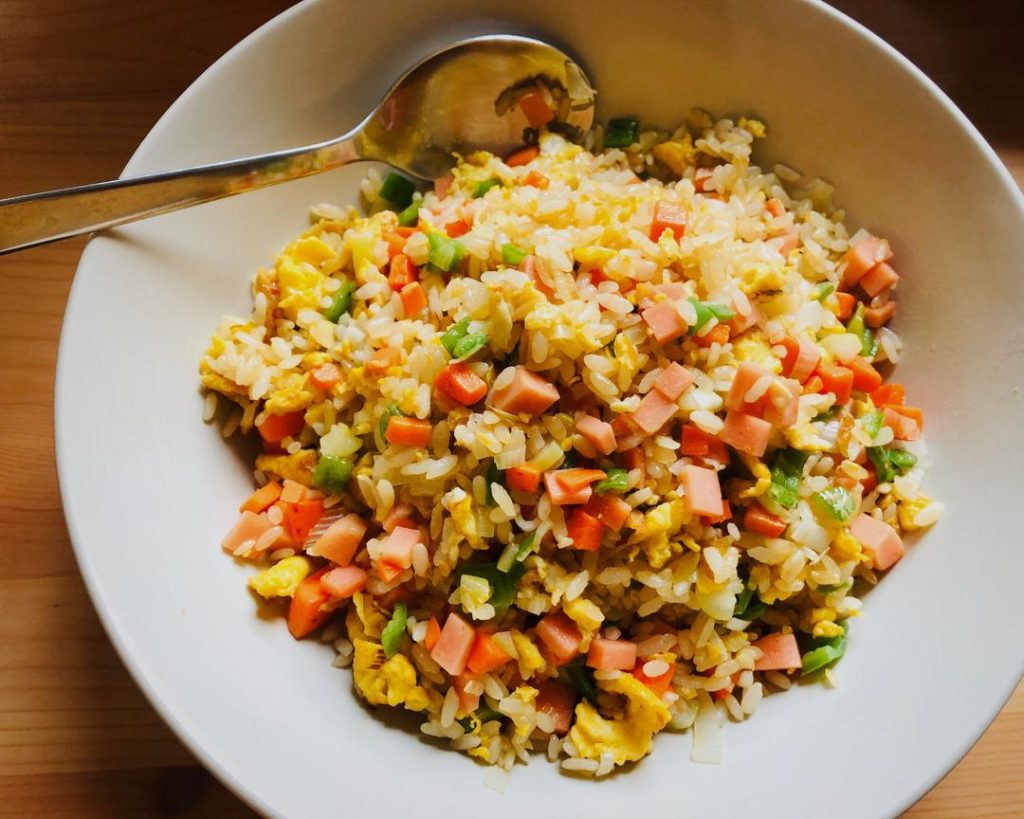
Step 6: Serve Transfer to a serving plate immediately. The rice should be glistening but not greasy, with distinct grains.
Tips for Success
- The “Jumping” Rice: You know your fried rice is ready when the grains start to “dance” or pop slightly in the pan. This indicates the excess moisture has evaporated.
- Don’t Overcrowd: If you double this recipe, cook it in batches. Overcrowding the pan lowers the temperature and steams the rice instead of frying it.
- Carrot Texture: If you prefer very soft carrots, you can blanch the diced carrots in boiling water for 1 minute before adding them to the fried rice. However, the traditional stir-fry method retains a nice crunch.
FAQ / Troubleshooting
Q: Why is my fried rice mushy?
A: This usually happens if you use fresh, hot rice or if you overcrowd the pan. Always use day-old rice that has dried out in the fridge.
Q: Can I use brown rice?
A: Yes! For a healthier twist, you can use brown rice. See our guide on Perfect Egg Fried Rice for more tips on rice textures.
Q: I don’t have a wok. Can I use a skillet?
A: Absolutely. A wide, non-stick skillet works great. Just make sure to preheat it well.
Q: Is this gluten-free?
A: To make this gluten-free, simply swap the regular soy sauce for Tamari or a Gluten-Free Soy Sauce.
How to Store & Reheat
- Storage: Store leftovers in an airtight container in the refrigerator for up to 3 days.
- Reheating: Microwave with a damp paper towel over the top to steam the moisture back into the grains, or re-fry in a pan for 2-3 minutes.
- Freezing: Fried rice freezes surprisingly well. Portion into bags and freeze for up to one month.
Food Safety and Preparation
- Rice Safety: Cooked rice can grow bacteria (Bacillus cereus) if left at room temperature for too long. Cool your rice quickly and get it into the fridge within an hour of cooking.
- Allergens: This recipe contains Eggs and Soy. If using ham, check labels for Gluten or Nitrates if you are sensitive.
Pairing Suggestions
This dish is a meal in itself, but it goes wonderfully with a soup or a simple vegetable side to make a complete Chinese dinner.
- Soup: Try pairing this with our Tomato Egg Drop Soup. The acidity of the tomato cuts through the richness of the fried rice.
- Vegetable: A plate of Stir-fried Lettuce with Garlic adds a refreshing crunch.
- Protein: If you want extra protein, Salt and Pepper Pork Chops are a classic companion.
Nutrition Information (Per Serving)
This data is based on a serving size of half the recipe (serves 2).
- Calories: 420 kcal
- Total Fat: 18g
- Saturated Fat: 4g
- Cholesterol: 195mg
- Sodium: 1250mg (Note: High sodium due to ham and soy sauce; adjust added salt to taste)
- Total Carbohydrates: 48g
- Dietary Fiber: 3g
- Sugars: 3g
- Protein: 16g
Disclaimer: Nutrition information is calculated using an ingredient database and should be considered an estimate. In cases where multiple ingredient alternatives are given, the first listed is calculated for nutrition. Garnishes and optional ingredients are not included. Actual values may vary depending on the specific brand of ham and soy sauce used.
Food Safety & Preparation Notes
Cooking Temperature: Ensure eggs are cooked until fully set (no runny liquid) to minimize the risk of Salmonella, although they will continue to cook when mixed with the hot rice. The internal temperature of the dish should reach 165°F (74°C) during the final stir-fry.ed is calculated for nutrition. Garnishes and optional ingredients are not included.)
“Fried Rice Syndrome” (Rice Safety): This is the most critical safety tip for this dish. Cooked rice left at room temperature can grow Bacillus cereus, a bacteria that produces toxins which survive reheating.
Tip: Never leave cooked rice out for more than 1 hour. Cool it quickly and refrigerate it. Use rice that has been refrigerated for at least 12 hours for the best texture and safety.
Allergen Warning:
Eggs: This recipe contains eggs.
Soy & Gluten: Traditional Light Soy Sauce contains both soy and wheat gluten. To make this gluten-free, substitute with Tamari.
Nitrates/Additives: Ham often contains nitrates and other preservatives. Check the packaging if you have sensitivities.
Sodium Caution: The original recipe calls for ~6g of salt plus soy sauce and salty ham. This can result in a very salty dish. I highly recommend tasting the rice before adding the full amount of salt listed, especially if your ham is cured or very salty.
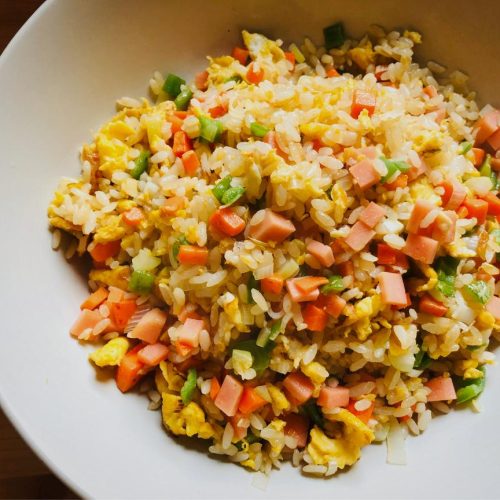
Homestyle Yangzhou Fried Rice (Yangzhou Chao Fan)

Equipment
- 1 Wok or large skillet Carbon steel preferred for wok hei
- 1 Spatula Wooden or metal depending on pan
- 1 Chef’s knife For dicing vegetables
Ingredients
Fried Rice
- 2 cups cooked rice day-old, cold (approx 300g)
- 2 large eggs beaten
- 3 slices ham diced (approx 60g)
- 0.5 stalk scallion chopped
- 0.5 medium carrot peeled and diced
- 1 small green bell pepper seeded and diced
- 2 tbsp neutral oil divided use
- 1 tbsp light soy sauce
- 1 tsp salt approx 6g, adjust to taste
- 0.5 tsp white pepper powder approx 3g
Instructions
- Beat the two eggs in a bowl. Dice the ham, carrot, and green pepper into small, uniform cubes. Chop the scallions.

- Heat 1 tablespoon of oil in a wok over medium-high heat. Pour in the eggs and scramble until just set (solidified). Remove eggs from the wok and set aside.

- Add the remaining 1 tablespoon of oil to the wok. Add the leftover rice and stir-fry, using the spatula to break up clumps.
- Add the cooked eggs back to the wok and break them up into smaller pieces. Add the diced ham, carrots, and green pepper.
- Stir-fry everything together until the vegetables change color and soften slightly (about 2-3 minutes).
- Add 1 tablespoon light soy sauce, 1 teaspoon salt, and 1/2 teaspoon white pepper powder. Stir-fry evenly to distribute seasonings.
- Add the chopped scallions, toss briefly for 30 seconds, and turn off the heat. Serve immediately.
Notes
- Calories: 420 kcal
-
Total Fat: 18g
- Saturated Fat: 4g
- Cholesterol: 195mg
- Sodium: 1250mg (Note: High sodium due to ham and soy sauce; adjust added salt to taste)
-
Total Carbohydrates: 48g
- Dietary Fiber: 3g
- Sugars: 3g
- Protein: 16g
Disclaimer: Nutrition information is calculated using an ingredient database and should be considered an estimate. In cases where multiple ingredient alternatives are given, the first listed is calculated for nutrition. Garnishes and optional ingredients are not included. Actual values may vary depending on the specific brand of ham and soy sauce used.Food Safety & Preparation Notes
-
“Fried Rice Syndrome” (Rice Safety): This is the most critical safety tip for this dish. Cooked rice left at room temperature can grow Bacillus cereus, a bacteria that produces toxins which survive reheating.
-
Tip: Never leave cooked rice out for more than 1 hour. Cool it quickly and refrigerate it. Use rice that has been refrigerated for at least 12 hours for the best texture and safety.
-
Tip: Never leave cooked rice out for more than 1 hour. Cool it quickly and refrigerate it. Use rice that has been refrigerated for at least 12 hours for the best texture and safety.
-
Allergen Warning:
- Eggs: This recipe contains eggs.
- Soy & Gluten: Traditional Light Soy Sauce contains both soy and wheat gluten. To make this gluten-free, substitute with Tamari.
-
Nitrates/Additives: Ham often contains nitrates and other preservatives. Check the packaging if you have sensitivities.
- Sodium Caution: The original recipe calls for ~6g of salt plus soy sauce and salty ham. This can result in a very salty dish. I highly recommend tasting the rice before adding the full amount of salt listed, especially if your ham is cured or very salty.
- Cooking Temperature: Ensure eggs are cooked until fully set (no runny liquid) to minimize the risk of Salmonella, although they will continue to cook when mixed with the hot rice. The internal temperature of the dish should reach 165°F (74°C) during the final stir-fry.



Leave a Reply