Some nights you want a plate of food that tastes like it came from a home kitchen rather than a restaurant — quick, a little rustic, and built from whatever is fresh. That is exactly what chao he cai delivers: a handful of bean sprouts, a nest of sweet potato noodles, three eggs, and a bunch of chives, all thrown into one screaming-hot wok. It is the kind of dish a northern Chinese family makes on an ordinary Tuesday, and it comes together faster than you would expect.
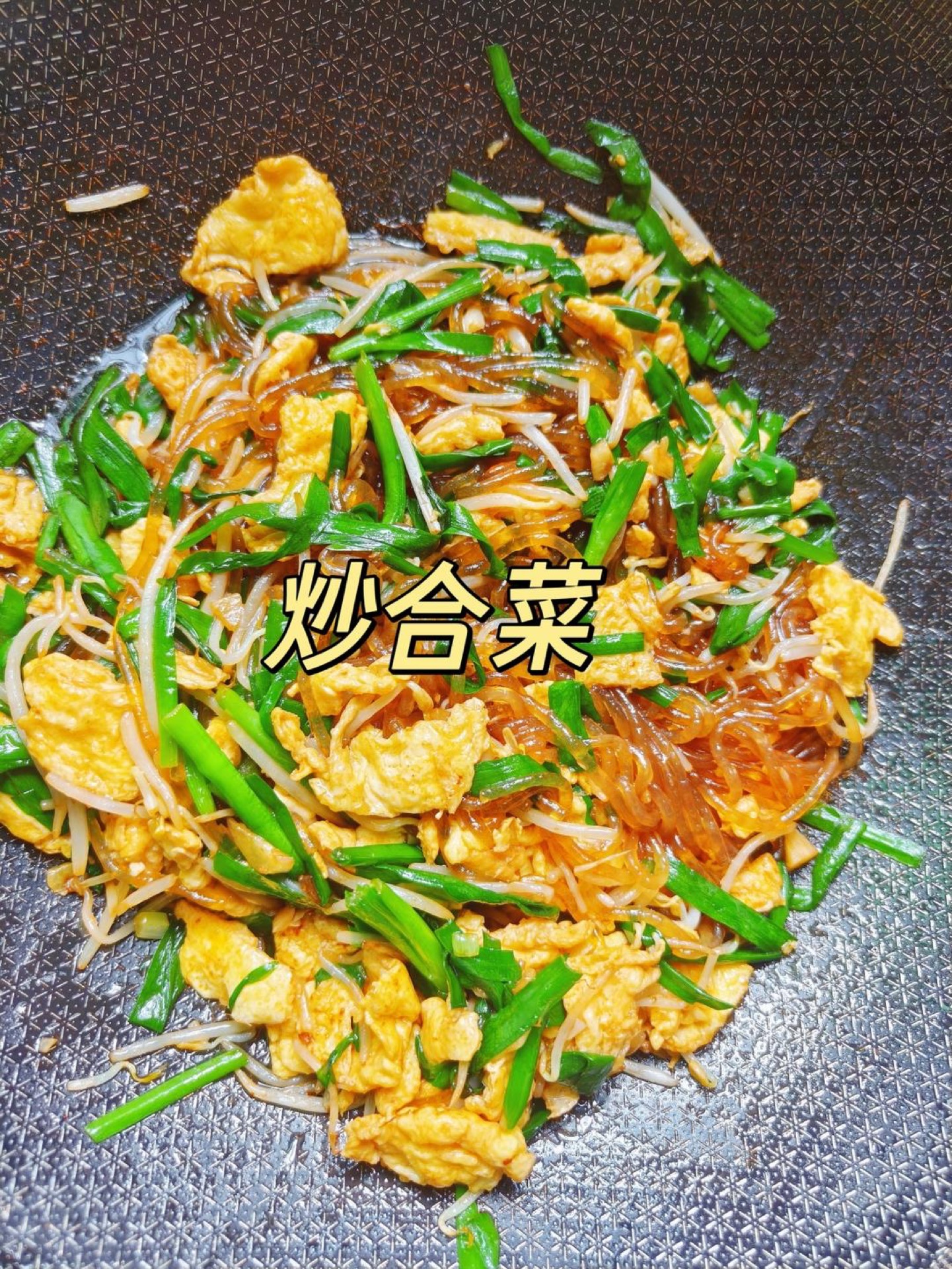
The name says it all. 炒 means stir-fry, 合 means to combine or blend, and 菜 just means vegetables — so 炒合菜 is literally “stir-fried mixed vegetables.” It is a home cook’s answer to a fridge full of odds and ends, and it has been on northern Chinese tables for generations, especially in early spring when chives and sprouts are at their best.
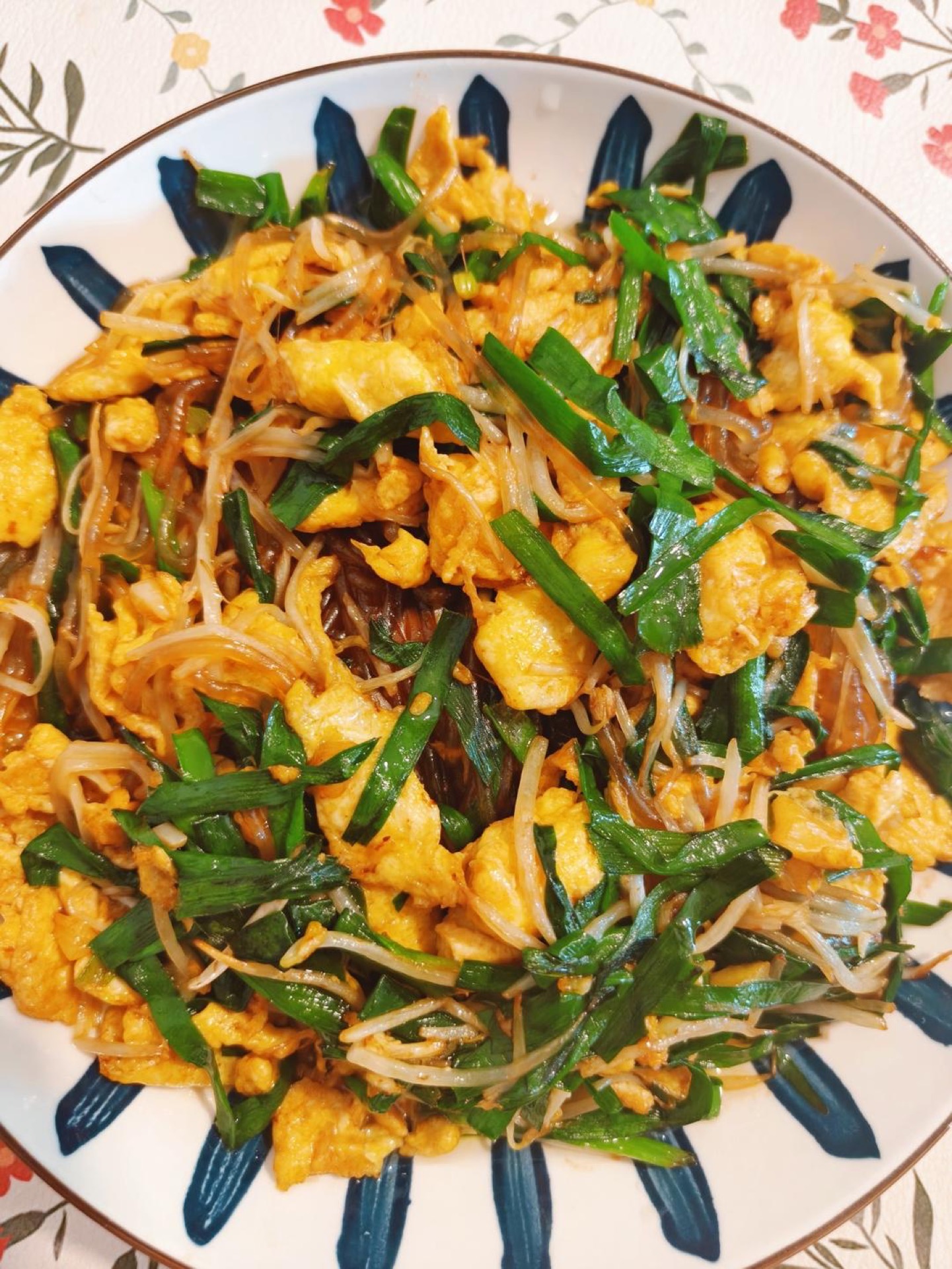
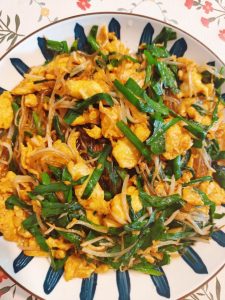
What makes this version worth cooking is the balance of textures. The bean sprouts stay snappy, the noodles turn silky and savory, the eggs are soft and golden, and the chives bring that faint allium sweetness that ties everything together. Nothing is complicated, but the details matter, and this recipe walks you through every one of them.
What Is Home-Style Stir-Fried Mixed Vegetables?
Chao he cai is a northern Chinese home dish — a “mixed stir-fry” that traditionally gathers spring vegetables, eggs, and noodles into a single wok. The classic trio is bean sprouts, Chinese chives, and scrambled eggs, with sweet potato noodles added to make it more substantial. It is not a restaurant banquet dish; it is everyday food, served alongside rice or rolled into a thin pancake.
The dish belongs to the same family of quick, high-heat stir-fries as fried rice noodles and chow mein: chewy noodles, crisp vegetables, and a savory sauce that clings to every strand. Where it differs is its lightness — there is no heavy sauce, just soy, oyster sauce, and a touch of bouillon letting the vegetables speak for themselves.
In northern China, chao he cai is often eaten wrapped in a thin pancake called a chun bing, especially around the start of spring. The crisp sprouts and soft noodles make a filling that holds together beautifully.
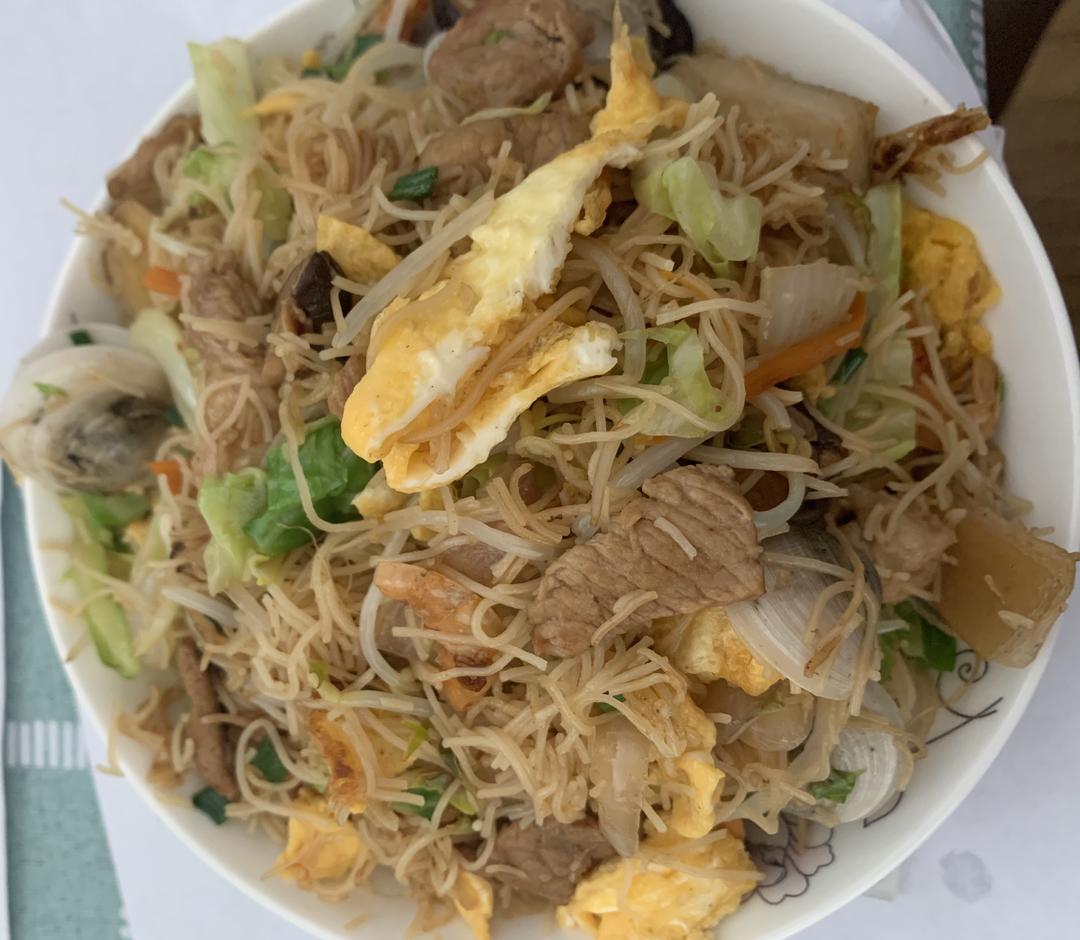
If you enjoy this style of noodle-and-vegetable stir-fry, our stir fried rice noodles follow the same philosophy of high heat and simple seasoning.
1Authentic Stir-Fried Rice Noodles (Chao Mi Fen): Chef’s SecretLearn a professional chef’s secret ‘Tan’ method for perfectly bouncy, non-mushy Authentic Stir-Fried Rice Noodles (Chao Mi Fen). An easy 25-minute weeknight dinner.Check out this recipe
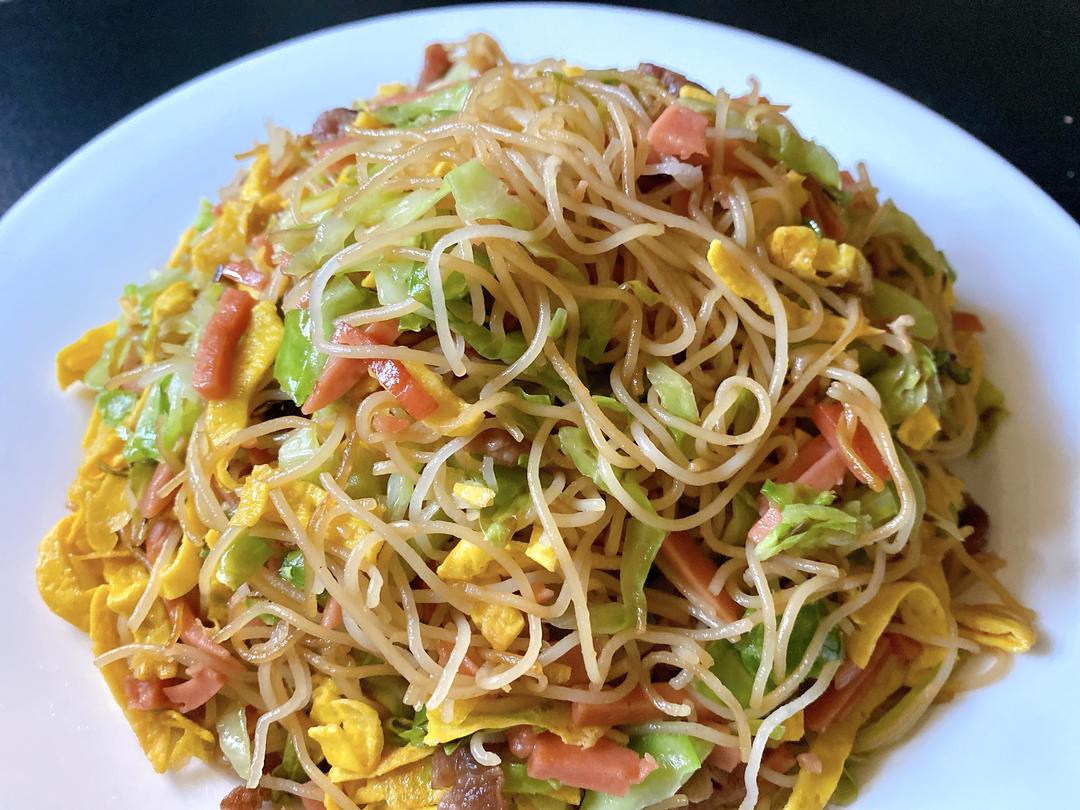
Another favorite in the same family is our pork chow mein with soft fried egg, which shows how well egg and noodles work together in a wok.
2Pork Chow Mein with Soft-Fried EggA restaurant-style Pork Chow Mein loaded with assorted vegetables and topped with a creamy, runny fried egg. The perfect satisfying noodle stir-fry for a quick dinner.Check out this recipe
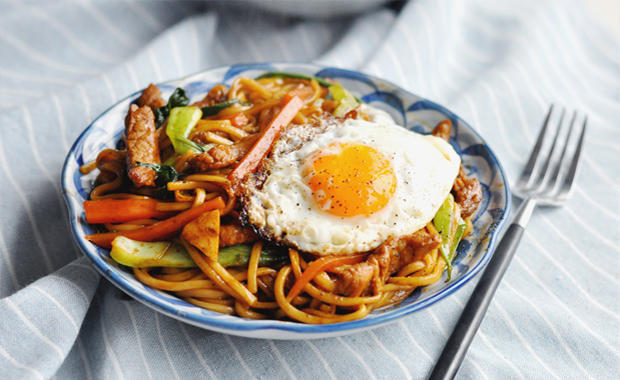
And if you like the chewy texture of rice vermicelli, our fried rice noodles is a great next dish to try.
3Authentic Wenling Fried Rice Noodles (Chao Mi Mian)A classic Zhejiang breakfast street food. These delicate rice noodles are loaded with pork, dried shrimp, and vegetables, all tossed together for an umami-packed meal.Check out this recipe
Why This Recipe Works
The single most important trick here is dressing the noodles before they hit the wok. Sweet potato noodles are sticky when wet, and if you dump them straight into hot oil they clump into a rubbery knot. Tossing them with dark soy sauce and a spoonful of oil first coats every strand, seasons them through, and keeps them separate.
Second, the eggs are cooked and removed before the vegetables go in. If you scramble them in the same pan and then add the sprouts, the eggs overcook and turn rubbery while you wait for the vegetables to soften. Cooking them first and folding them back at the end keeps them tender.
Third, everything happens over the highest heat you can manage. Bean sprouts are mostly water, and low heat makes them steam and go limp. A ripping-hot wok sears them so they stay crunchy. If you want to understand what that high-heat sear actually does to flavor, our guide to how to get wok hei explains the science behind it.
Finally, the chives go in last. They need only seconds to soften and release their aroma. Any longer and they turn dull and stringy.
Equipment Needed
A wok is ideal because its curved sides let you toss everything without spilling, and it concentrates heat at the bottom. A large skillet or cast-iron pan works fine if you do not own a wok — just make sure it is wide enough that the vegetables are not piled up and steaming.
You will also want a cutting board and a sharp knife for the chives, a slotted spoon or spider for moving the eggs and noodles in and out of the wok, and a small bowl for mixing the seasoning. A pair of long chopsticks or a spatula makes tossing easier. Have everything within arm’s reach before you turn on the heat, because once the wok is hot there is no time to go hunting for the soy sauce.
Ingredients
This dish uses a short list of everyday ingredients, most of which you may already have. The full measurements are in the recipe card below.
- Sweet potato noodles — also sold as Korean japchae noodles or 红薯粉丝. They turn translucent and chewy when cooked.
- Bean sprouts — mung bean sprouts are traditional; use them fresh and rinse them well.
- Eggs — three large eggs, beaten until smooth.
- Chinese chives — flat, garlicky, and milder than Western chives. Garlic chives work too.
- Dark soy sauce — for tossing the noodles and giving them color.
- Light soy sauce — for the main seasoning.
- Oyster sauce — adds depth and a faint sweetness.
- Chicken bouillon — a small amount rounds out the flavor; mushroom bouillon works for a vegetarian version.
- Salt and cooking oil — neutral oil such as peanut, canola, or vegetable.
Ingredient Notes
Sweet potato noodles vs. glass noodles. These are not the same as mung bean thread noodles, which are thinner and cook faster. Sweet potato noodles are thicker, chewier, and hold up better to stir-frying. If you can only find bean threads, reduce the soaking time and expect a softer texture.
Bean sprouts. Look for sprouts that are firm, white, and dry to the touch. If they smell sour or look slimy, discard them. Rinse and drain them thoroughly — excess water will cool your wok and make them steam.
Chinese chives. These are flatter and wider than the chives sold in small bunches for garnish. If you cannot find them, garlic chives are the closest substitute. Ordinary chives will work but have a much milder flavor, so use a generous handful.
Oyster sauce. Vegetarian oyster sauce made from mushrooms is widely available and swaps in one-for-one. If you skip it entirely, add an extra splash of light soy sauce and a pinch of sugar.
Dark soy sauce. Do not substitute regular soy sauce here. Dark soy is thicker, less salty, and mostly there for color. Without it the noodles stay pale.
Prep & Mise en Place
Soak the sweet potato noodles in warm water for about 30 minutes, or until they bend without snapping. They should be fully pliable but still firm — they will finish cooking in the wok. Drain them well, then toss with the dark soy sauce and cooking oil until every strand is coated.
While the noodles soak, rinse and drain the bean sprouts, cut the chives into two-inch lengths, and beat the eggs with a pinch of salt. Mix the light soy sauce, oyster sauce, and bouillon together in a small bowl so you can pour it in one motion later.
Set everything out in the order you will use it: noodles, eggs, sprouts, chives, sauce. This is the whole secret to a stir-fry that comes together in five minutes instead of fifteen.
If you are serving this with rice, start it now — see our guide to the best rice for fried rice for tips on choosing and cooking a firm, separate-grained rice that suits stir-fries.
Cooking Process
Step 1 — Soak and Toss the Noodles
Soak the sweet potato noodles in warm water until soft and pliable, then drain well and toss them with 1/2 tablespoon dark soy sauce and 1 tablespoon cooking oil to keep them from sticking together.
Step 2 — Coat the Noodles Evenly
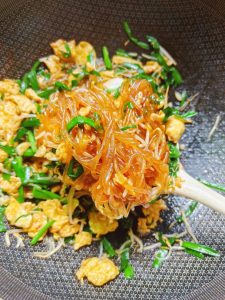
Toss again so every strand is coated with the dark soy sauce and oil, which prevents clumping and gives the noodles their deep amber color.
Step 3 — Scramble the Eggs
Beat the eggs, pour them into a hot oiled wok, scramble until just set, then transfer to a plate and set aside.
Step 4 — Stir-Fry the Bean Sprouts
Add a little more oil to the wok, then add the bean sprouts and stir-fry over high heat until they just turn translucent and lose their raw bite.
Step 5 — Add Noodles, Egg, and Chives
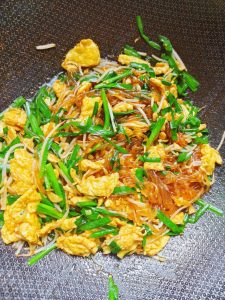
Add the dressed sweet potato noodles, the scrambled eggs, and the chives to the wok.
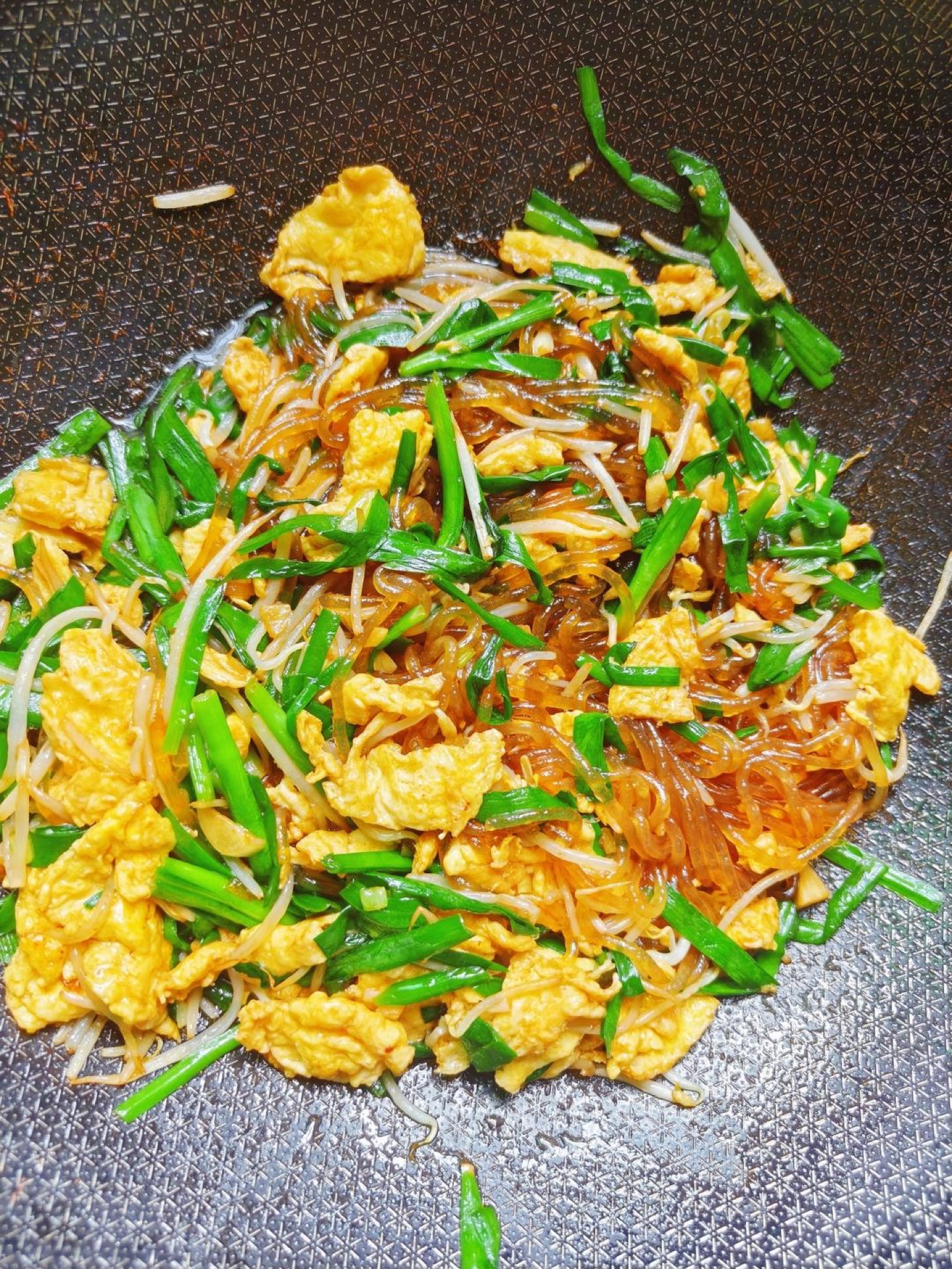
Step 6 — Season and Toss
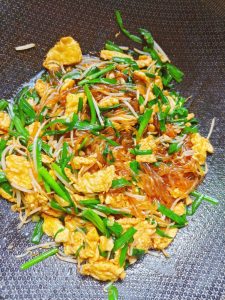
Add the salt, light soy sauce, oyster sauce, and chicken bouillon, then stir-fry over high heat, tossing constantly to combine.
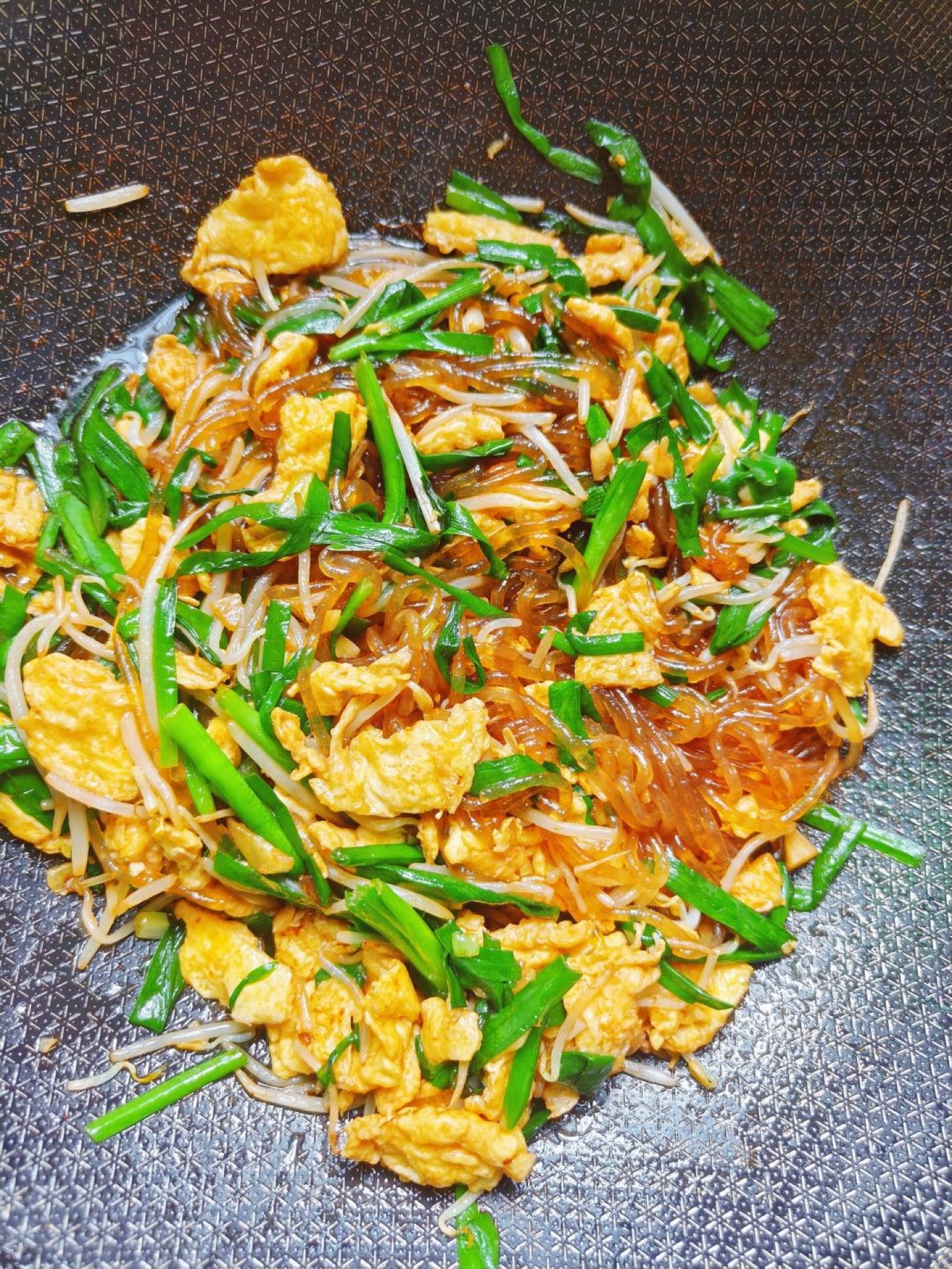
Step 7 — Finish When the Chives Wilt
The dish is done as soon as the chives have softened and turned bright green; take the wok off the heat right away.
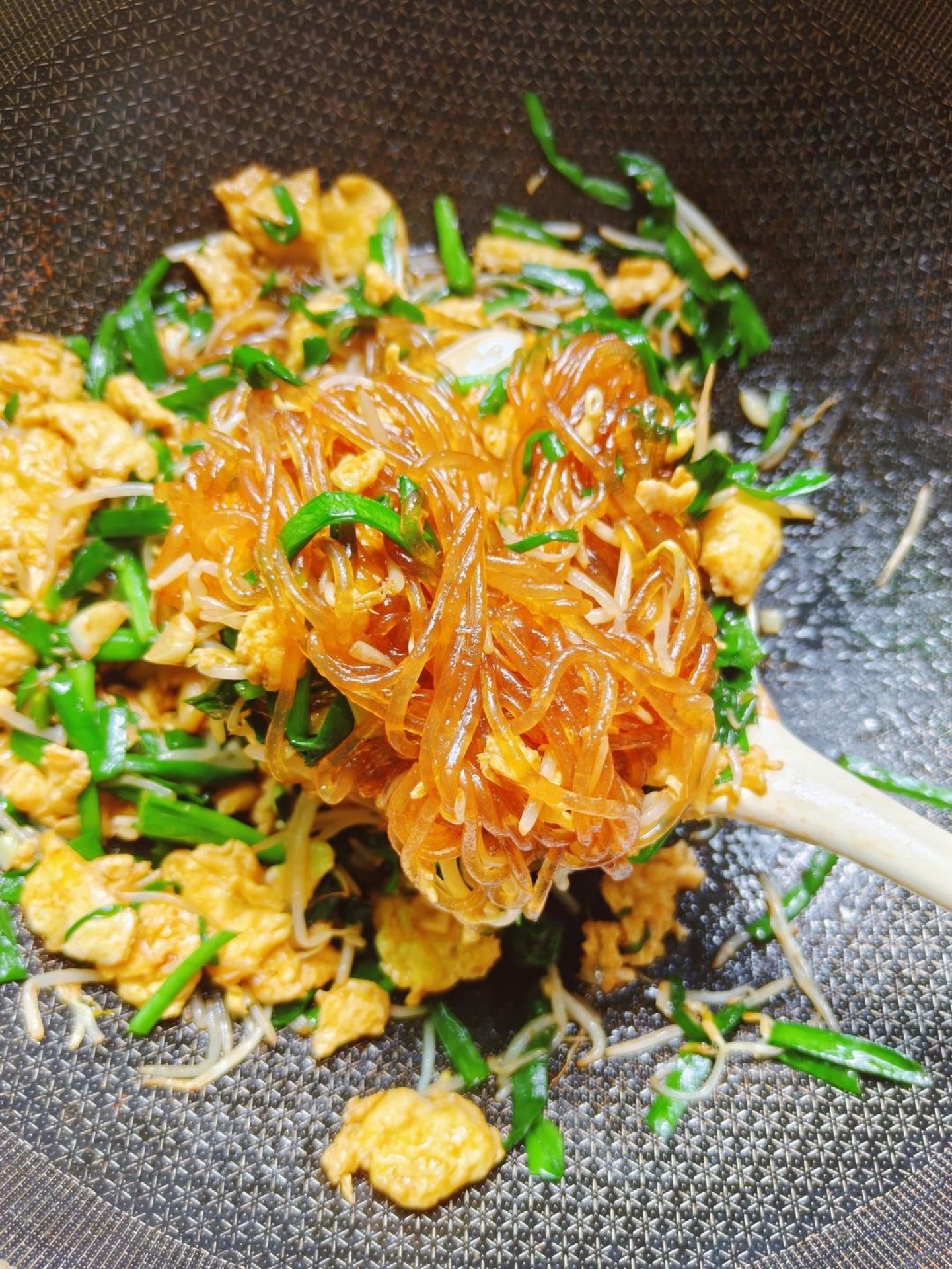
Step 8 — Plate It Simply
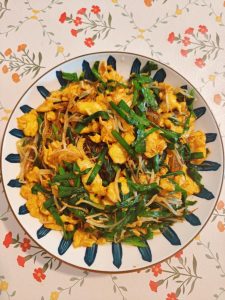
Transfer everything to a serving plate while it is still hot, since the cooking really is this straightforward.
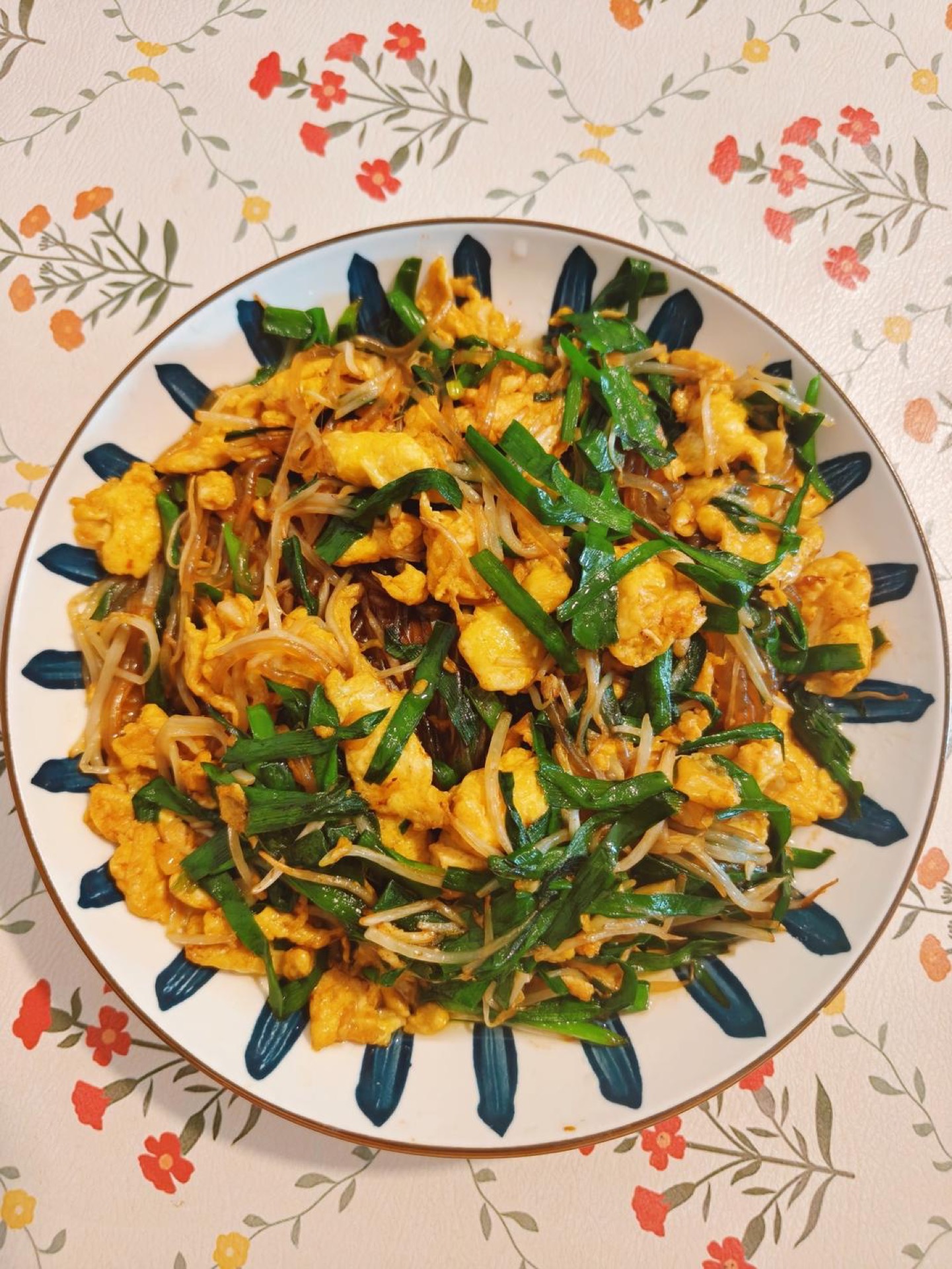
Step 9 — Serve and Enjoy
The bean sprouts stay crisp and the noodles soak up all the seasoning, so serve immediately while the texture is at its best.
Common Mistakes When Making Home-Style Stir-Fried Mixed Vegetables
1. Skipping the oil-and-soy toss on the noodles. Wet sweet potato noodles stick to each other and to the wok. The cause is surface starch; the fix is to drain them well and toss with dark soy and oil before cooking, which coats each strand and keeps them separate.
2. Cooking the eggs with the vegetables. If the eggs go in with the sprouts, they overcook while the vegetables finish. The cause is timing; the fix is to scramble the eggs first, remove them, and fold them back in at the very end.
3. Crowding the wok. Too much food in the pan drops the temperature and everything steams instead of searing. The cause is volume; the fix is to cook in batches or use the largest wok or skillet you own, and never more than the recipe calls for.
4. Using low heat. Bean sprouts release water when they cook slowly, turning limp and watery. The cause is insufficient heat; the fix is to preheat the wok until a drop of water evaporates on contact and to keep the flame high throughout.
5. Overcooking the chives. Chives go from bright and fragrant to dull and stringy in under a minute. The cause is leaving them in too long; the fix is to add them at the very end and pull the wok off the heat the moment they soften.
6. Adding the sauce too early. Soy sauce and oyster sauce contain sugar, which burns quickly over high heat. The cause is timing; the fix is to add the sauce only after the noodles and vegetables are already in the wok, then toss fast and serve.
Variations
With pork. Thin strips of pork loin or belly, marinated briefly and stir-fried first, turn this into a heartier main. If you want the meat to stay tender, our guide to how to velvet chicken for stir fry covers the same velveting technique that works for pork.
With tofu. Cubes of firm tofu, pan-fried until golden, make a satisfying vegetarian version. Our braised tofu with mushrooms and pork shows how well tofu takes on savory sauces, and the same principle applies here.
Spicier. A spoonful of chili bean paste or a few dried chilies added with the aromatics gives the dish a gentle heat. If you like that style, our braised tofu with fresh chilis and minced pork is a good reference for balancing chili with savory sauce.
With other vegetables. Carrots, shredded cabbage, wood ear mushrooms, or spinach can all stand in for part of the sprouts. Keep the total volume the same so the wok stays hot.
Frequently Asked Questions
Can I use regular glass noodles instead of sweet potato noodles? Yes, but they cook much faster. Soak them only until barely pliable, and add them to the wok at the very end so they do not turn to mush.
Do I have to soak the noodles first? Yes. Dried sweet potato noodles are too hard to cook through in a quick stir-fry. Soaking softens them so they finish in the wok without turning gluey.
How do I keep the bean sprouts crunchy? Dry them well, use the highest heat, and cook them for under two minutes. Crowding the pan or cooking on low heat is what makes them soggy.
Can I make this vegetarian? Absolutely. Use mushroom bouillon and vegetarian oyster sauce, and skip the egg or replace it with pan-fried tofu.
What if I do not have Chinese chives? Garlic chives are the closest match. Regular chives or the green tops of scallions will work in a pinch, though the flavor will be milder.
How to Serve
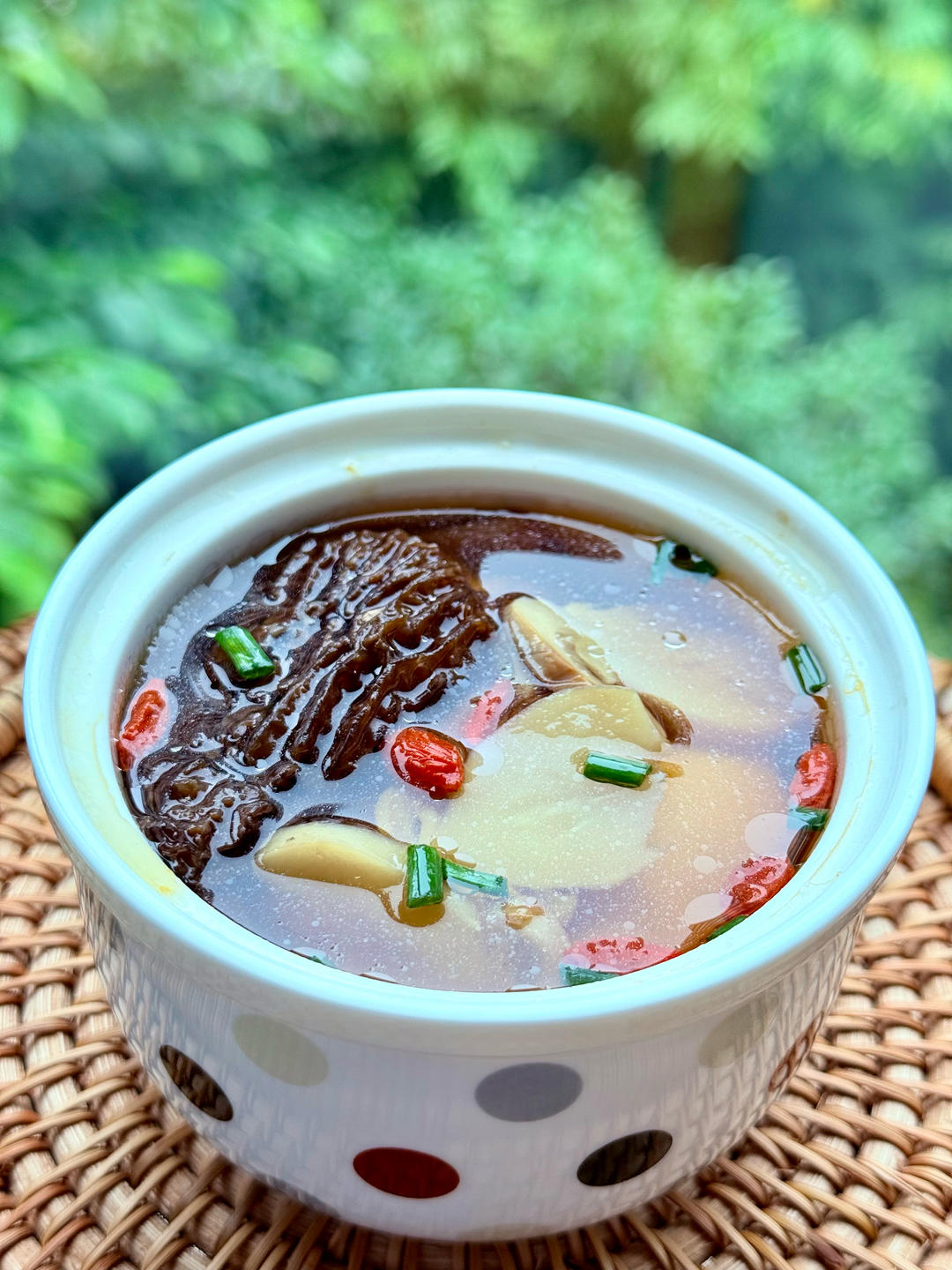
Chao he cai is a natural partner for steamed white rice, but it is also excellent rolled into a thin pancake or served alongside a simple soup. For a warming bowl on the side, our nanchang clay pot soup with minced pork egg is a lovely pairing that echoes the egg and pork flavors here.
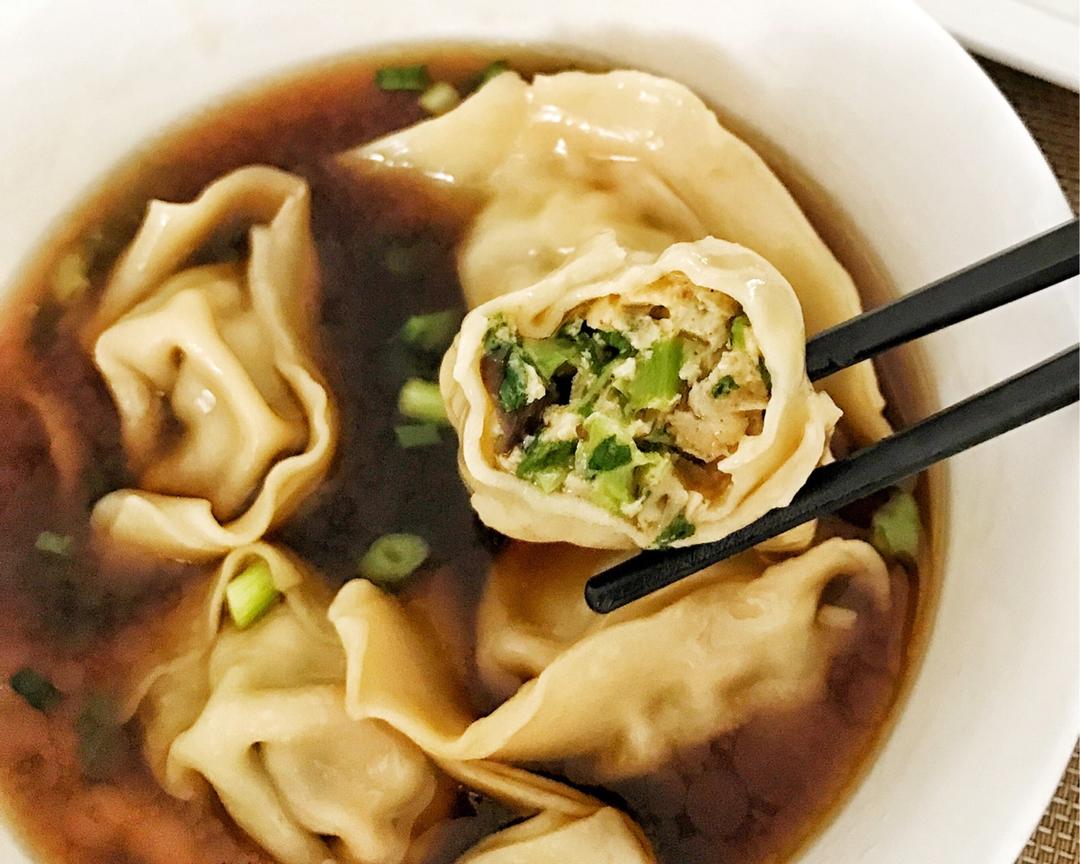
If you want to round out the table with something hand-made, our Shanghai pork and vegetable wontons make a satisfying companion dish, especially for a weekend meal.
Storage & Reheat
This dish is best eaten fresh, but leftovers keep well. Cool it completely, then store in an airtight container in the refrigerator for up to three days. The noodles will absorb some of the sauce and soften slightly overnight.
To reheat, warm a wok or skillet over high heat with a teaspoon of oil, add the leftovers, and toss for two to three minutes until steaming hot. Avoid the microwave if you can — it makes the bean sprouts limp and the eggs rubbery. If you must use one, cover the bowl and heat in short bursts, stirring between them.
I do not recommend freezing this dish. The bean sprouts and chives lose their texture entirely once thawed.
Allergen Notice
This recipe contains soy and wheat (from soy sauce), egg, and may contain sesame depending on the oil you use. Oyster sauce typically contains shellfish, so use a mushroom-based vegetarian oyster sauce if you are avoiding shellfish. Always check the labels on your bouillon and sauces, as some brands contain hidden wheat, soy, or MSG.
Nutrition Disclaimer
Nutrition information is calculated using an ingredient database and should be considered an estimate. In cases where multiple ingredient alternatives are given, the first listed is calculated for nutrition. Garnishes and optional ingredients are not included.
About the Author & Recipe Development
Hi, I’m Lin, the cook and writer behind Woks of Love. I grew up watching my mother and grandmother cook northern Chinese home food, and chao he cai was one of the first dishes I learned to make on my own. It is the kind of recipe that teaches you how a wok works: how heat moves, how timing matters, and how a few simple ingredients can taste like so much more than the sum of their parts.
I developed this version to be forgiving for home cooks working with supermarket ingredients. The proportions have been tested with both Chinese-brand sweet potato noodles and the Korean japchae noodles sold in most grocery stores, and the timing works for a standard home wok as well as a large skillet. If you make it, I would love to hear how it turns out.
Authoritative References
For safe handling and cooking temperatures, see the FDA Food Code, which sets the 160°F (71°C) standard for cooked eggs. For general food safety guidance on storing and reheating leftovers, the USDA leftovers and food safety guidance is a useful reference. For more on the science of high-heat stir-frying and flavor development, see Serious Eats on wok heat management.
Home-Style Stir-Fried Mixed Vegetables (炒合菜): Crisp, Tender, and

Equipment
- Wok
- Cutting Board
- Slotted Spoon
Ingredients
For the Noodles
- 1 small handful sweet potato noodles about 3 oz, dried
- 1/2 tbsp dark soy sauce for tossing the noodles
- 1 tbsp cooking oil neutral, for tossing the noodles
For the Stir-Fry
- 3 large eggs beaten
- 1 small handful bean sprouts about 2 cups, rinsed and drained
- 1 small handful Chinese chives about 1 cup, cut into 2-inch lengths
- 2 tbsp cooking oil divided, for the wok
For the Seasoning
- 1/2 tsp salt or to taste
- 1 tbsp light soy sauce
- 1 tbsp oyster sauce
- 1/2 tsp chicken bouillon or mushroom bouillon
Instructions
- Soak the sweet potato noodles in warm water until soft and pliable, then drain well and toss them with 1/2 tablespoon dark soy sauce and 1 tablespoon cooking oil to keep them from sticking together.
- Toss again so every strand is coated with the dark soy sauce and oil, which prevents clumping and gives the noodles their deep amber color.
- Beat the eggs, pour them into a hot oiled wok, scramble until just set, then transfer to a plate and set aside.
- Add a little more oil to the wok, then add the bean sprouts and stir-fry over high heat until they just turn translucent and lose their raw bite.
- Add the dressed sweet potato noodles, the scrambled eggs, and the chives to the wok.

- Add the salt, light soy sauce, oyster sauce, and chicken bouillon, then stir-fry over high heat, tossing constantly to combine.
- The dish is done as soon as the chives have softened and turned bright green; take the wok off the heat right away.
- Transfer everything to a serving plate while it is still hot, since the cooking really is this straightforward.
- The bean sprouts stay crisp and the noodles soak up all the seasoning, so serve immediately while the texture is at its best.












Leave a Reply